Showing posts with label UK. Show all posts

Thursday, April 09, 2015

UK: 2015 Civil Risks Register

image


# 9917


Since 2008 the UK government has produced, and updated every two years, a National Risk Register For Civil Emergencies – essentially a short list of disaster scenarios (man-made & natural) that the Cabinet Office believe to be genuine threats.  The Cabinet Office describes it as:


The National Risk Register of Civil Emergencies (NRR) is the unclassified version of the National Risk Assessment (NRA), a classified assessment of the risks of civil emergencies facing the UK over the next five years. The NRR is a public resource for individuals and organisations wishing to be better prepared for emergencies.


Since emergency preparedness is a big part of this blog, knowing what governments view as their greatest disaster threats can go a long way in helping us decide how, and for what, we should be preparing.  


There are regional differences that must be considered -  the UK is not prone to major earthquakes, tornadoes, or Hurricanes –  so those who live in areas that are must adjust accordingly.


The UK has divided their disaster risks into three broad categories:

  1. Malicious or Terrorist Attacks
  2. Natural Hazards
  3. Major Accidents


This document bases its assessment on each scenario on the likelihood of it happening over the next five years and on the consequences or impacts to the population. They use what the NRA and NRR consider to be a ‘reasonable worst case’ scenario, while  `highly implausible scenarios’ are excluded.


Plausibility for terrorist attack scenarios are rated from low to high, while (broad) numerical odds are offered for the other types of disasters.  In either case, the impact factor is rated from 1 (low) to 5 (maximum).


Despite the airtime and attention that terrorism gets, the following chart shows that most `terrorist-related’ scenarios cluster the overall impact in the mid-range, with probabilities running from medium-low to high.  A truly catastrophic terrorist attack is only accorded a medium-low probability.

image


When it comes to `high impact and high probability’ events, the following chart (highlight mine) shows that Pandemic Influenza stands alone atop the list.  While thermonuclear war or an asteroid impact could conceivably wreak more havoc on our planet, neither are considered to be anywhere near as likely as a severe pandemic.


 image

From the section on Pandemic Influenza, they write:


Pandemic influenza

2.3 Influenza pandemics are natural phenomena that have occurred over the centuries, and most recently in 2009 in the shape of the H1N1 influenza pandemic. There are other influenza strains in circulation globally, such as H5N1 (avian influenza) which emerged in South East Asia in 1996 and caused millions of deaths among poultry and several hundred human deaths. The consensus view among experts is that there is a high probability of another influenza pandemic occurring. It is impossible to forecast its timing or the nature of its impact.


Emerging infectious diseases

2.4 Over the past 25 years, more than 30 new, or newly recognised, infections have been identified around the world, although the likelihood of a new disease spreading to the UK is low. A recent example of a newly emerged infectious disease is SARS (Severe Acute Respiratory Syndrome), which emerged in Asia in November 2002 and posed a global health threat.


Consequences


2.5 Consequences may include:
  • in the case of pandemic influenza, half the UK population potentially being infected, with between 20,000 and 750,000 additional deaths potentially by its end
  • around 2,000 people infected in the case of a new/emerging infectious disease, with some 100 additional deaths potentially by its end
  • in the absence of early or effective interventions to deal with a pandemic, significant social and economic disruption, significant threats to the continuity of essential services, lower production levels, and shortages and distribution difficulties.


It is no coincidence that a severe pandemic has ranked at the top of almost every list of highly disruptive national security threats in recent years (see 2011 OECD Report: Future Global ShocksUK: Civil Threat Risk Assessment, Influenza Pandemic As A National Security Threat).    


image

Credit - HHS Interim Pre-Pandemic Planning Guidence: Community Strategy For Pandemic Influenza Mitigation In the United States.


Considered just as likely to occur – but carrying a lower impact – are events such as:

  • Severe Space Weather  (see NASA: The Solar Super Storm Of 2012)
  • Weather Extremes (Cold weather & Heavy snow  or Heat wave)
  • Poor Air quality events
  • Explosive Volcanic Eruptions (impacting, but outside of the UK)
  • Storms and Gales

Considered somewhat less  likely, but with potentially higher impacts for the UK, are extreme coastal flooding and widespread electrical outages (see  GridEx 2013 Preparedness Drill). 


Without electricity, gas pumps won’t work, credit & debit cards are useless (got cash?), and refrigerated foods may quickly begin to spoil (in your home, and in the store).  For those who depend on electric heat during the winter or those who rely on medical devices – like oxygen generators – a prolonged outage could have deadly implications.


Our dependence upon our modern infrastructure, just in time deliveries, and a continuous supply of electricity makes all of us particularly vulnerable to any sudden interruption.  And as this risk assessment shows, there are a lot of things that could impact those resources. 


And this list is far from being all-inclusive.  The proverbial Black Swan Event  – the one no one really saw coming – is always a possibility.


Which is why agencies here in the United States -  like the HHS, CDC, FEMA, Ready.gov and others - work each day to convince citizens of the importance of being prepared for the unexpected, and why I devote a fair amount of this blog to everyday preparedness.

image


Given the broad range of potential disaster scenarios it doesn’t make sense to `prepare for a pandemic’ or `prepare for an earthquake’, since neither may show up when the wheel of misfortune is spun for your community. 


Instead, it makes sense to maintain a general level of preparedness against `all threats’.


As a former paramedic, I can’t stress enough the importance of having a good first aid kit at home, and another one in your car.  And just as importantly, learning how to properly use one. Taking a first-aid course, and CPR training, are both investments that could pay off big someday, for you, and for your loved ones. 
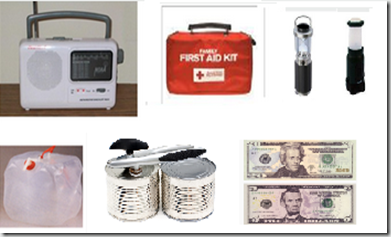
image

Basic kit : NWS radio, First Aid Kit, Lanterns, Water & Food & cash


And every home should have no less than a 72-hour supply of emergency food and water, for all of its occupants (including pets!).  This is a bare minimum, here in the United States many agencies and organizations recommend that households work towards having a 10-day supply of food, water, and emergency supplies on hand (see When 72 Hours Isn’t Enough)

.

Although I’ve covered a great many specifics for becoming better prepared (see NPM14: Infrastructure Failure Preparedness & NPM14: When You’ve Got To `Get Out Of Dodge’ In A Hurry), there is one prep I consider to be the most important of all.


Having – and being – a `disaster buddy’.


In NPM14: In an Emergency, Who Are You Going To Call?, I wrote that a `Disaster Buddy’ is simply someone you have prearranged that you can call on during a crisis, and who in turn, can call on you if they need help.


None of this is to suggest you should be sitting around worrying about the myriad of possible disaster scenarios.  Worrying never solved anything. You should be preparing – sensibly – instead. 


After all, preparing is easy . . . it’s worrying that is hard.

Monday, March 16, 2015

Defra: Update On HPAI Avian Flu In Europe, America & The Middle East

image


# 9834


An indication of how quickly things are changing, although this document was put online today and carries a March 13th release date, HPAI H5 has been reported in a 10th American State (Kansas) since this report was written.


After the great H5N1 diaspora of 2005-2006, where the virus spread from 15 countries to more than 60 in two years, it began to recede in most places, becoming endemic in just a handful. 


While remaining a perennial concern in places like China, Indonesia, India, and Egypt . . . the feared global expansion of HPAI H5N1 stopped almost as abruptly as it began. And except for occasional appearances in Japan, Korea, and Nigeria, the virus settled into an uneasy status quo.


But a little over a year ago a new HPAI H5 virus appeared in Korean Poultry; H5N8.  In short order it was detected in Japan, and China, and within months turned up in Europe, Taiwan, Canada, and now the United States.   As a world traveling HPAI virus, H5N8 has picked up where H5N1 stalled out.


Added to this, we’ve significant H7N9 activity in China, a record setting outbreak of human H5N1 infections in Egypt, and a growing roster of new reassortant avian flu viruses bubbling up in China (see China: H5 AI Rising).


Due to this rapidly changing avian threat, for the second month in a row the UK government has issued an avian flu update.


Department for Environment, Food and Rural Affairs Animal & Plant Health Agency Veterinary & Science Policy Advice Team - International Disease Monitoring
Updated Outbreak Assessment


Update on Highly Pathogenic Avian Influenza: Europe, America and the Middle East 13th March 2015

Ref: VITT/1200 HPAI Europe, America and Middle East

Disease Report


No further outbreaks of H5N8 highly pathogenic avian influenza (HPAI) in Italy,
Netherlands, Germany or the UK.


Hungary reported a single outbreak of H5N8 HPAI earlier this month in Bekes region. The affected premises contained 16 day old fattener ducks in which clinical signs were observed, probably related to the young age of the birds as in adults birds infected with the same strain of virus, clinical signs have been relatively mild in cases to date. Disease control measures were put in place and no further spread was reported.


Bulgaria reported an outbreak of H5N1 HPAI in a backyard flock in Burgas region and also in three more wild birds (Dalmatian pelican, Pelecanus crispus, Rock dove, Columba livia and a Black headed gull, Larus ridibundus). Sequence data has confirmed this is related to the Central Asian strains circulating in wild birds and associated with the last poultry and wild bird incursions Europe in 2010. Disease control measures were put in place.

Israel has reported further cases of H5N1 HPAI in poultry: five more outbreaks in Hamerkaz in commercial poultry (turkeys and broilers). Disease control measures are in place. Sequence data has confirmed this is a poultry-adapted strain found in this region previously and closely related to strains associated with outbreaks in Egypt. Department for Environment, Food and Rural Affairs Animal & Plant Health Agency Veterinary & Science Policy Advice Team - International Disease Monitoring

USA continues to report avian influenza. A further outbreak of H5N8 HPAI in commercial birds (a mixed duck and chicken premises) has been reported in California. H5N2 HPAI has been reported from commercial premises in Idaho, Washington State, Minnesota, Missouri and Arkansas. The most recent outbreaks in Mid-USA are all in commercial turkeys and represent a large geographic jump in disease distribution to the centre of the country which suggests a corresponding spread of H5N2 HPAI in wild birds into the Central Flyway as well as a the Pacific Flyway. Sequence data for the virus isolated from the turkey cases showed 99% similarity to wild bird viral sequences. Wild bird cases of H5N8 and H5N2 HPAI continue to be reported within the Pacific Flyway States.


Situation Assessment In addition to the outbreaks and wild bird cases reported in Europe, the Middle East and America, there are still multiple virus subtypes circulating in Asia (Japan, China, Republic of Korea, Myanmar, Vietnam) as well as Nigeria (H5N1 HPAI) and a significant increase in outbreaks of H5N1 HPAI in Egypt (for further information on the situation in Egypt, see the FAO report at


http://www.fao.org/ag/againfo/programmes/en/empres/news_060315.html) .

image

Recently the WHO has Department for Environment, Food and Rural Affairs Animal & Plant Health Agency Veterinary & Science Policy Advice Team - International Disease Monitoring produced a warning about the increase in avian influenza viruses in terms of both circulation and diversity emphasising that vigilance is required in case of a potential increase in human infection, but it should be emphasised that of the recently reported outbreaks of H5N8 HPAI, none have caused spill-over infection into humans (WHO, 2015).

Nevertheless cases of human infection are still occurring, with H5N1 HPAI in Egypt and China and three cases of H5N6 HPAI in China, while avian influenza H7N9 continues to cause human cases in China. The recent report of two human cases of H7N9 in travellers returning from China to Canada demonstrates the risk of carriage by humans to new areas. Nevertheless the co-circulation of multiple lineages and subtypes of H5 HPAI within different continents will likely result in further genetic diversity within this group of viruses with unknown implications for its maintenance and spread.

Conclusion The continuing outbreaks of HPAI and LPAI occurring across the EU and wider afield, means the likelihood of the UK having another outbreak remains increased for the upcoming weeks. It would not be unexpected to see a degree of seasonality in the timing of the outbreaks but for the time being we would like to remind all poultry keepers to maintain high standards of biosecurity and report any suspect clinical signs promptly. For reports of wild birds (any number of swans, ducks and geese or >5 other birds) found dead by the public, please notify the Defra helpline on 03459 33 55 77 and see the Gov.uk website for more information: https://www.gov.uk/avian-influenza-bird-flu

Monday, February 02, 2015

Defra: Avian H7 Virus Found In Hampshire Poultry

image


# 9664


Stressing that this is supposedly a less worrisome (albeit, not fully identified) subtype of avian flu, DEFRA today has announced the detection of what they suspect is H7N7 at a chicken farm southern County of Hampshire, England.


A low severity case of avian flu has been confirmed in chickens at a farm in Hampshire.

Chickens

A low severity case of avian flu has been confirmed in chickens at a farm in Hampshire and robust action is being taken to prevent any spread of the disease, which poses very low risk to human health.

Tests have confirmed the outbreak as a low severity H7 strain of the disease, a much less severe form than the H5N8 strain found at a Yorkshire duck farm in November. There are no links between the two cases.

A 1km poultry movement restriction zone has been imposed and the birds at the commercial chicken breeding farm are to be culled as part of our tried and tested procedures for responding swiftly and thoroughly when an outbreak occurs.

The advice from Public Health England is that the risk to public health is very low, and the Food Standards Agency has said there is no food safety risk for consumers.

Chief Vet Nigel Gibbens said:

We have taken immediate action to contain this outbreak as part of our robust procedures for dealing swiftly with avian flu. This is a low severity form of the virus and we are taking action to ensure that the disease does not spread or develop into a more severe form. We are investigating the possible sources of the outbreak.

I would urge poultry keepers in the surrounding area to be vigilant for any signs of disease and to ensure they are maintaining good biosecurity on their premises.

Nick Phin, Director for Centre for Infectious Disease Surveillance and Control said:

Based on what we know about this strain of avian influenza and the actions that have been taken, the risk to human health in this case is considered very low. Public Health England continues to work closely with Defra throughout this investigation.

A spokesperson for the Food Standards Agency said:

On the basis of current scientific evidence, Food Standards Agency advice is that avian (bird) flu does not pose a food safety risk for UK consumers.

Laboratory investigations on the outbreak indicate that it is the N7 sub-type of H7 but this will need to be confirmed in further testing.


Although characterizing this as a `low severity’ virus, it isn’t at all clear whether this is a LPAI or HPAI virus.  Hopefully we’ll get more information once additional testing is completed, and  the OIE report is filed.


Although the UK had dealt with other H7 strains (H7N2, H7N3) in the past, it wasn’t until 2008 that England reported an H7N7 outbreak to the OIE (see UK: Outbreak Identified As H7N7).


Until H7N9 turned up (amazingly, less than 2 years ago), H7 avian viruses didn’t get a lot of respect as a human health threat.   Human infections were uncommon, and when they were detected, they tended to be mild. 


Often little more than sniffles and conjunctivitis.


The `exception’ occurred in 2003, in the Netherlands, where an outbreak of H7N7 infected at least 89 people, killing one. Details on that cluster were reported in the December 2005 issue of the Eurosurveillance Journal.

Human-to-human transmission of avian influenza A/H7N7, The Netherlands, 2003

M Du Ry van Beest Holle, A Meijer, M Koopmans3 CM de Jager, EEHM van de Kamp, B Wilbrink, MAE. Conyn-van Spaendonck, A Bosman

An outbreak of highly pathogenic avian influenza A virus subtype H7N7 began in poultry farms in the Netherlands in 2003. Virus infection was detected by RT-PCR in 86 poultry workers and three household contacts of PCR-positive poultry workers, mainly associated with conjunctivitis.


Roughly 30 million birds residing on more than 1,000 farms were culled to control the outbreak. One person - a veterinarian who visited an infected farm – died a week later of respiratory failure.


More recently (and more typically), in 2013, we saw three poultry workers in Italy infected with H7N7 (see ECDC Update & Assessment: Human Infection By Avian H7N7 In Italy).  All three experienced mild symptoms (primarily conjunctivitis), although one did report muscle aches and chills.


While normally credited with producing mild symptoms in humans – H7N7 - like all influenza viruses, is constantly mutating and evolving.


But for now, H7N7 is believed to pose only a minimal risk to human health.   For more on H7 viruses, you may wish to revisit  Brief History Of H7 Avian Flu Infections.

Tuesday, November 18, 2014

Defra: H5N8 Confirmed In Yorkshire

image
Yorkshire – Credit Wikipedia


# 9339


Although it has been widely suspected for the past couple of days, in the past few minutes Defra (UK’s Department of Environment, Food and Rural Affairs) has confirmed that the outbreak of bird flu at a Yorkshire duck farm is of the same subtype as the recent outbreaks at poultry farms in Germany and the Netherlands.


Avian flu (bird flu) outbreak in duck breeding farm in Yorkshire

Defra has confirmed a case of avian flu in a duck breeding farm in Yorkshire.

placeholder

On 16 November Defra confirmed a case of avian flu (bird flu) in a duck breeding farm in Yorkshire. The strain has now been confirmed as H5N8, which is a very low risk to human health and no risk to the food chain.

Key information

These links will provide guidance to poultry keepers and to the public.

Latest news

18 November - update on cull of poultry at affected farm.

As part of our robust action in response to the confirmed case of avian flu, the culling of 6,000 ducks is underway on the affected farm in east Yorkshire .The cull is to prevent the spread of potential infection, and is being carried out in a safe and humane manner by fully trained APHA staff. Our response to this outbreak follows tried and tested procedures for dealing with avian flu outbreaks and we expect the cull to be completed later today.

Additionally, our animal health laboratory at Weybridge has confirmed that the outbreak in East Yorkshire is the H5N8 strain. The advice from the Chief Medical Officer and Public Health England remains that the risk to public health is very low. The Food Standards Agency have said there is no food safety risk for consumers.

Background

Immediate action has been taken to control the outbreak including introducing a 10km restriction zone and a complete cull of all 6,000 birds on the farm to prevent any potential spread of infection.

The case confirmed on Sunday afternoon has been identified as a H5 avian flu strain and tests are being run to identify the exact strain of the disease. Public Health England have confirmed the risk to public health is extremely low and we have ruled out the H5N1 strain that is infectious for humans.

Investigations are now ongoing to discover whether the outbreak is linked to cases found in Netherlands and Germany with further test results expected over the coming days.

The UK has a strong track record of controlling and eliminating previous outbreaks of avian flu and all action will be taken to control this outbreak to prevent a further spread of the disease.

The restriction zone bans movements of all poultry, products and waste within the area. Poultry must be housed or isolated in the zone. Bird gatherings (fairs, shows, exhibitions) are banned and game birds cannot be released.

For media enquiries only please contact Defra press office on 02072386007. For other enquiries contact the Defra Helpline: 03459 33 55 77

If anyone suspects any strain of avian influenza you must contact your nearest Animal and Plant and Health Agency (APHA) office.

(Continue . . .)

Monday, November 17, 2014

Defra: Yorkshire Bird Flu Tentatively Identified As H5 Subtype

image 
Yorkshire – Credit Wikipedia


# 9336


Europe’s third bird flu outbreak in less than two weeks has been tentatively identified as an H5 variety – although further testing is required to nail down the exact subtype.  The two earlier outbreaks (Germany & The Netherlands) were both H5N8 – a new, upstart virus that previously had only appeared in Korea and Northeastern China.


Defra (the UK’s Department of Environment, Farming & Rural Affairs) has ruled out the highly pathogenic H5N1 virus, but that leaves a small rogues gallery of other H5 subtypes as possibilities – including H5N8.   Other possibilities include H5N2 and (less likely) H5N3.


Since I went into some detail yesterday on the recent rise, and spread, of avian flu viruses in Asia (see FAO On The Potential Threat Of HPAI Spread Via Migratory Birds), I’ll not repeat that here.   Below you’ll find the Defra statement on the Yorkshire outbreak.


Avian flu outbreak in duck breeding farm in Yorkshire

From:
Department for Environment, Food & Rural Affairs and Animal and Plant Health Agency
First published:
17 November 2014
Part of:
Protecting animal health and preventing disease, including in trade, Food and farming and Wildlife and animal welfare

Defra has confirmed a case of avian flu outbreak in a duck breeding farm in Yorkshire.

placeholder

Defra has confirmed a case of avian flu outbreak in a duck breeding farm in Yorkshire with very low risk to human health and no risk to the food chain.

Immediate action has been taken to control the outbreak including introducing a 10km restriction zone and a complete cull of all 6,000 birds on the farm to prevent any potential spread of infection. The case confirmed on Sunday afternoon has been identified as a H5 avian flu strain and tests are being run to identify the exact strain of the disease. Public Health England have confirmed the risk to public health is extremely low and we have ruled out the H5N1 strain that is infectious for humans.

Further advice from the Food Standards Agency is that avian flu does not pose a food safety risk for UK consumers.

Investigations are now ongoing to discover whether the outbreak is linked to cases found in Netherlands and Germany with further test results expected over the coming days. The UK has a strong track record of controlling and eliminating previous outbreaks of avian flu and all action will be taken to control this outbreak to prevent a further spread of the disease.

The restriction zone bans movements of all poultry, products and waste within the area. Poultry must be housed or isolated in the zone. Bird gatherings (fairs, shows, exhibitions) are banned and game birds cannot be released.

For media enquiries only please contact Defra press office on 02072386007. For other enquiries contact the Defra Helpline: 03459 33 55 77

If anyone suspects any strain of avian influenza you must contact your nearest Animal and Plant and Health Agency (APHA) office.

Sunday, November 16, 2014

UK: Bird Flu Reported On Yorkshire Duck Farm

image

Source Defra 


# 9334


Although there is no official notice yet on the UK’s Defra website, as the graphic above illustrates, Defra has just posted updated guidance on spotting and reporting signs of avian flu infection. 


The British press – including the BBC below – are carrying preliminary reports however, of an outbreak of an unidentified subtype of avian flu at a duck farm in Yorkshire.


This report comes on the heels of the Netherland’s H5N8 outbreak reported earlier today, and two human infections with HPAI H5N1 in Egypt, also reported today.  Both incidents come just 9 days after Germany reported Europe’s first outbreak of H5N8.


This morning, we also looked at growing concerns over the emergence and spread to other countries, of HPAI from China (see FAO On The Potential Threat Of HPAI Spread Via Migratory Birds).


While the subtype in Yorkshire has not been identified, some news reports are saying that HPAI H5N1 has been eliminated.  Hopefully we’ll get clarification overnight or in the morning.


Case of bird flu confirmed at Yorkshire duck farm

16 November 2014 Last updated at 19:16 ET

A case of bird flu has been confirmed at a duck breeding farm in east Yorkshire, officials have said.

The Department for Environment, Food and Rural Affairs (Defra) said the risk to public health was very low. A cull of poultry is being carried out at the site and an exclusion zone is in place.

The strain has not been confirmed, but the deadly H5N1 form has been ruled out by Defra officials.

The virus spreads between birds and, in rare cases, can affect humans.

The exclusion zone around the farm will prevent all poultry and poultry waste being transferred in or out of the area. All poultry will also be isolated.

(Continue . . .)


Friday, October 10, 2014

UK Statement On Airport Screening For Ebola

placeholder

Credit UK.gov


# 9174


Three days ago the UK government was still openly resisting the idea of screening inbound passengers for Ebola symptoms  (see Ebola surveillance and contingency planning ongoing in UK) - but between public and media pressures to `do something’, and seeing the United States and Canada announce targeted enhanced screening (see Airport Screening Fact Sheet) – the decision to go ahead has finally been made.


While airport screening may be reassuring to the public, many public health experts question the value of these types of interventions, as they did little to prevent the importation of either SARS or the 2009 H1N1 pandemic virus  (see Why Airport Screening Can’t Stop MERS, Ebola or Avian Flu).


Given the limited scope, and targeted nature of these screenings (as they stand today, anyway) – while I don’t expect them to be terribly effective – I don’t view them as being a complete waste of time, either. 


It is possible that some symptomatic cases might be detected and isolated before they can spread the disease, and the contact information gleaned from recent travelers to West Africa might be helpful to public health officials.


Still, no one should be overly reassured by these measures.  They have a low probability of ultimately preventing Ebola – or any other infectious disease – from entering a country.


Here then is the statement from UK.GOV.


A statement on the introduction of screening at UK travel destinations has been issued following advice from the Chief Medical Officer.

A Downing Street spokesperson said:

“The UK is continuing to monitor the outbreak of Ebola closely, including the protection of the UK against people travelling here who may be infected.

Airport screening at airports in Liberia, Sierra Leone and Guinea has been in place for some weeks to ensure all passengers leaving affected countries are checked.

Further screening has been kept under review throughout this period and advice from the Chief Medical Officer today is that enhanced screening arrangements at the UK’s main ports of entry for people travelling from the affected regions - Liberia, Sierra Leone and Guinea - will offer an additional level of protection to the UK.

Enhanced screening will initially be implemented at London’s Heathrow and Gatwick airports and Eurostar terminals and will involve assessing passengers’ recent travel history, who they have been in contact with and onward travel arrangements as well as a possible medical assessment, conducted by trained medical personnel rather than Border Force staff. Passengers will also be given advice on what to do should they develop symptoms later.

As the Chief Medical Officer’s advice makes clear, these measures will help to improve our ability to detect and isolate Ebola cases. However, it is important to stress that given the nature of this disease, no system could offer 100% protection from non-symptomatic cases.

It is important to remember that the overall risk to the public in the UK continues to be very low, and the UK has some of the best public health protection systems in the world with well-developed and well-tested systems for managing infectious diseases when they arise. Contingency planning is also underway including a national exercise and wider resilience training to ensure the UK is fully prepared.”

Advice from the Chief Medical Officer

The Chief Medical Officer said:

“In line with international health requirements, exit screening arrangements have already been implemented in the affected countries in west Africa to ensure that any passenger showing signs of Ebola is prevented from leaving the country.

Although the risk to the UK remains low, in view of the concern about the growing number of cases, it is right to consider what further measures could be taken, to ensure that any potential cases arriving in the UK are identified as quickly as possible. Rapid access to healthcare services by someone infected with Ebola is not only important for their health but also key to reducing the risk of transmission to others.

These measures could include a further UK based package of measures to identify and assess the health status of passengers arriving from the affected countries and to ensure that those individuals know what to do should they be taken ill whilst in the UK.

We remain alert and prepared, should an Ebola case be identified here. We have well tested processes in place but anything that means that people are more likely to present early are to be welcomed.”

Thursday, August 28, 2014

UK Govt. Strongly Advises Against Travel To Sierra Leone, Liberia & Guinea

image

Source OCHA


# 9014


A change in the advice  by the UK’s Foreign Office today now advises against all but essential travel to the three primary Ebola-stricken nations, and warns that as conditions deteriorate and air service to the region diminishes, it may become increasingly difficult for people to leave.


Foreign Office Sierra Leone, Guinea and Liberia travel advice update

Published 28 August 2014

The UK has changed its travel advice to Sierra Leone, Guinea and Liberia. Foreign Office advises against all but essential travel to these countries.

placeholder

The UK advises against all but essential travel to Sierra Leone, Guinea and Liberia due to the ongoing Ebola outbreak and the impact this is having on commercial flights and medical facilities. British Airways have suspended flights to Sierra Leone and Liberia until 31 December due to the deteriorating public health situation and some other airlines have also suspended flights to these countries.

If you are a British national in these countries, you should stay in contact with your employer or host organisation about the support that they can provide to you while you are in the country or should you wish to leave. You should be aware that the narrowing range of commercial flight options and growing restrictions on travel in the region may make it difficult to leave, particularly at short notice, and consider your own plans in this context.

Full travel advice to these countries can be found here.


The entry for Liberia reads (in part):


Due to the narrowing commercial options for flights and the impact on medical facilities, the FCO advise against all but essential travel to these countries, except for those involved in the direct response to the Ebola outbreak.


The CDC has issued strong travel warnings to the region as well, and updated their advice on August 26th.

image

Updated: August 26, 2014

CDC urges all US residents to avoid nonessential travel to Liberia, Guinea, and Sierra Leone because of unprecedented outbreaks of Ebola in those countries. CDC recommends that travelers to these countries protect themselves by avoiding contact with the blood and body fluids of people who are sick with Ebola.

Warning Level 3, Avoid Nonessential Travel
  • Updated Ebola in Sierra Leone Updated August 26, 2014 CDC urges all US residents to avoid nonessential travel to Sierra Leone, Guinea, and Liberia because of unprecedented outbreaks of Ebola in those countries. CDC recommends that travelers to these countries protect themselves by avoiding contact with the blood and body fluids of people who are sick with Ebola. Read More >>
  • Updated Ebola in Liberia Updated August 26, 2014 CDC urges all US residents to avoid nonessential travel to Liberia, Guinea, and Sierra Leone because of unprecedented outbreaks of Ebola in those countries. CDC recommends that travelers to these countries protect themselves by avoiding contact with the blood and body fluids of people who are sick with Ebola. Read More >>
  • Updated Ebola in Guinea Updated August 26, 2014 CDC urges all US residents to avoid nonessential travel to Guinea, Liberia, and Sierra Leone because of unprecedented outbreaks of Ebola in those countries. CDC recommends that travelers to these countries protect themselves by avoiding contact with the blood and body fluids of people who are sick with Ebola. Read More >>

Sunday, August 17, 2014

UK: Updated Pandemic Response Plan & Exercise Cygnus

image

Credit ECDC – 125 years of  Pandemic  History


# 8963


Although it is not often front and center in the news, or in the daily threats messaging from most governments, an influenza pandemic is considered among the most likely high-impact global threats that we could face in the foreseeable future. 


Earlier this year, in Influenza Pandemic As A National Security Threat,  we looked at a threats assessment by the Director Of National Intelligence that included:


Worldwide Threats Assessment – published January 29th, 2014,

(Excerpt)

Health security threats arise unpredictably from at least five sources: 

  • the emergence and spread of new or reemerging microbes;
  • the globalization of travel and the food supply;
  • the rise of drug-resistant pathogens;
  • the acceleration of biological science capabilities and the risk that these capabilities might cause inadvertent or intentional release of pathogens; and
  • adversaries’ acquisition, development, and use of weaponized agents. 


In December of 2012 the U.S. National Intelligence Council released a report called  "Global Trends 2030: Alternative Worlds" that tries to anticipate the global shifts that will likely occur over the next two decades (see Black Swan Events).  Number one on their hit parade?


Global Trends 2030's potential Black Swans

1. Severe Pandemic

"No one can predict which pathogen will be the next to start spreading to humans, or when or where such a development will occur," the report says. "Such an outbreak could result in millions of people suffering and dying in every corner of the world in less than six months."


Similarly, last year the UK’s National Risk Registry of Civil Emergencies listed Influenza at their nation’s #1 threat.

The highest priority risks


2.2 The following are considered by the Government to be the highest priority risks of emergency, taking both likelihood and impact into account:


Pandemic influenza – This remains the most significant civil emergency risk. The outbreak of H1N1 influenza in 2009 (‘swine flu’) did not match the severity of the scenario that we plan for and is not necessarily indicative of future pandemic influenzas; the three influenza pandemics of the 20th century (1918–19, 1957–58 and 1968–69) all had differing levels of severity. The 2009 H1N1 pandemic does not change the risk of another pandemic emerging (such as an H5N1 (‘avian flu’) pandemic) or mean that the severity of any future pandemics will be the same as the 2009 H1N1 outbreak.


The threat of another influenza pandemic consistently ranks higher than that of a major cyber/terrorist attack, solar flare, or nuclear/WMD war – and is considered all but inevitable by many experts (although the timing & severity are unknown).


Yet for the public it remains a distant and rarely considered threat.


In the middle part of the last decade there was a big push to prepare for a pandemic, by both the public and private sector.  The fear back then was the H5N1 `bird flu’, but instead we were blindsided by a much milder H1N1 pandemic in 2009.


While not a walk in the park, the 2009 pandemic failed to live up to the early hype, and given these tough economic times - and the false perception that modern pandemics are unlikely to be severe - many businesses have now put pandemic planning on the back burner.


Ironically, the risk of a severe influenza pandemic today is arguably much greater than it was in 2006. 


Back then, we were essentially worried about the H5N1 avian flu virus, that had infected (at that time) only about 300 people, killing roughly 60% of them.  Over the past two or three years we’ve seen an explosion of novel flu & respiratory viruses jumping to humans including: 

  • H7N9
  • MERS-CoV
  • H10N8
  • H5N6
  • H6N1
  • H9N2
  • Swine Variant H3N2v, H1N1v, H1N2v


And, as we discussed in the past (see H2N2: What Went Around, Could Come Around Again), close relatives of older pandemic strains still circulate in the wild as well,  and could return someday.


And of course, there’s always VIRUS X . . the one we don’t know about, yet.


On Friday Public Health England released an updated  Pandemic influenza response plan, which can be downloaded in the two PDF files below.


This PHE plan describes the staff roles for all directorates during the 5 pandemic phases: detection, assessment, treatment, escalation and recovery (DATER).

Documents

Pandemic influenza response plan

PDF, 1.01MB, 88 pages

Pandemic influenza strategic framework

PDF, 299KB, 19 pages

Detail

This plan and the learning from the national multiagency pandemic influenza Exercise Cygnus in late 2014, will inform the further development of comprehensive and integrated plans in delivering an effective and sustainable response across the organisation.

This system of cross-organisational working will deliver the resources, science and leadership required during the pandemic in order to support the staff and organisational response from local and national centres, and laboratories.


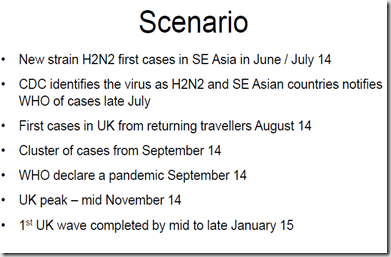
Mentioned above is Exercise Cygnus, which in October will test over three days the readiness of the UK to respond to a serious pandemic threat.  Some excerpts from an overview of the exercise follow:


image


image

image


Interestingly, they have chosen to revive the H2N2 virus which last emerged in 1957 as a pandemic, and disappeared (in humans) in 1968 when it was supplanted by the H3N2 virus.  Anyone born after 1968 would have little or no immunity to this virus.  


As we’ve discussed previously (see Are Influenza Pandemic Viruses Members Of An Exclusive Club?) – while we worry about the H5 & H7 avian flu strains – only H1, H2, and H3 viruses have been known to cause pandemics in the past 125 years.


In 2006 and 2007 a lot of businesses and organizations invested considerable time and money into creating comprehensive pandemic plans.  Most of those have probably not been updated – or even looked at – since the 2009 pandemic, and many are woefully in need of updating.  


Businesses change, people move on, supplies are used up and not replaced. That dust covered plan buried in your bottom drawer may not be as relevant or useful today as it was when it was first created. 


And of course, there are many new companies and entities that weren’t around 8 years ago, and plenty more that never created a plan in the first place.


While no one can predict when, how severe, or what virus will spark the next pandemic -  the risks of seeing a severe pandemic have not diminished.  Which is why everyone – not just government agencies, and healthcare facilities – should give some thought as to how they would deal with a large scale epidemic or even a pandemic.

image

Credit CDC 

Last October, in Pandemic Preparedness: Taking Our Cue From The Experts, I wrote about personal and business pandemic preparedness, which included numerous links to governmental guidance documents, and an excellent 20 minute video produced by Public Health - Seattle & King County -  called Business Not As Usual .

If you’ve not seen this movie, or haven’t seen it recently, it is well worth taking the time to watch it.

image

You’ll also find a long list of preparedness resources available on this page as well:


Another good resource comes from the Trust for America’s Health.

image

Credit TFAH It's Not Flu As Usual Brochure


Having a good pandemic/disaster plan could easily spell the difference between a business weathering a pandemic or going out of business.  Making this a good time to drag your plan out, and make sure that it is adequate to the task.


For more information on pandemic planning, you may want to revisit:


Pandemic Planning For Business
NPM13: Pandemic Planning Assumptions
The Pandemic Preparedness Messaging Dilemma

Friday, July 04, 2014

UK PHE Reports Imported Case Of CCHF

image

Photo Credit- CDC


# 8805


A recurring theme in public health is just how quickly, and easily, that `exotic’ diseases can cross vast oceans or borders, given our modern air travel industry and our penchant for international travel (see The Global Reach Of Infectious Disease). 


The introduction of Chikungunya to the Caribbean last fall, and the ensuing (and ongoing) epidemic, are almost certainly the result of an infected traveler coming from an endemic region of the world.


Similarly the reintroduction of Dengue to South Florida in 2009, and the arrival of West Nile Virus in New York in 1999, are both thought to have arrived via infected international travelers, and both (probably after multiple introductions) have managed to gain a foothold in the United States.


More dramatically, but with less public health impact, earlier this year we saw the first North American importation of H5N in a nurse returning from China (see H5N1 In Canada: A Matter Of Import), while a few months later we saw Minnesota: Rare Imported Case Of Lassa Fever.


The good news is - despite their fearsome reputations - neither of these two diseases are easily spread between humans, and no secondary infections were reported.


The continual importation of measles has seen us go from the near-elimination of the virus in this country in 2000 to this year’s CDC Telebriefing: Worst US Measles Outbreak In 20 YearsAnd the most recent Arbovirus surveillance report lists thus far for 2014  the detection of 24 imported cases of Dengue, 52 imported cases of Chikungunya, and 20 imported cases of Malaria . . . in Florida alone.


Given this track record, no one should be terribly surprised to learn that the Public Health England reported yesterday their second known case of imported CCHF (Crimean-Congo Hemorrhagic Fever).   While CCHF can be transmitted from one human to another, it requires contact with infected blood or bodily fluids, and so it isn’t easily done.


Crimean-Congo haemorrhagic fever case identified in UK

From: Public Health England

History: Published 3 July 2014

Part of: Public health

PHE is aware of a laboratory-confirmed case of CCHF in a UK traveller who was bitten by a tick while on holiday in Bulgaria.

PHE sign

The patient is responding well to treatment and there is no risk to the general population.

As a precautionary measure, close contacts of the patient, including hospital staff involved in the patient’s care, will be given health advice and encouraged to contact their GP if they experience symptoms.

Although Crimean-Congo haemorrhagic fever (CCHF) can be acquired from an infected person, this would require direct contact with their blood or body fluids and the risk even for close contacts is considered very low.

This is the second laboratory-confirmed case of CCHF in the UK, following the diagnosis in 2012 of CCHF in a UK resident who had recently returned from Afghanistan.

CCHF is the commonest viral haemorrhagic fever worldwide. It is not found in the UK but is endemic in many countries in Africa, the Middle East, Asia and Eastern Europe, including Turkey and Bulgaria.

People most at risk are agricultural workers, healthcare workers and military personnel deployed to endemic areas. CCHF is most often transmitted by a tick bite but can also be spread through contact with infected patients or animals.

Dr Tim Brooks, Head of Public Health England’s (PHE’s) Rare and Imported Pathogens Laboratory (RIPL) said:

It’s extremely rare to see a case of Crimean-Congo haemorrhagic fever in the UK, and it’s important to note there is no risk to the general population. As a precaution, close contacts of the patient will be contacted and monitored, but the risk of transmission is very low and would require direct contact with bodily fluids.


The first imported case of CCHF in the UK, mentioned above, was a 38-year old man who flew into Glasgow, Scotland from the Middle East (see Update: CCHF Patient In Scotland Dies).


While uncommon in Western Europe, this tickborne virus is widely distributed across parts of Eastern Europe, the former Soviet Union, the Mediterranean, central Asia, southern Europe, Africa, the Middle East, and the Indian subcontinent.

image

Credit WHO


CCHF is a Nairovirus in the family Bunyaviridae, and was first described in the Crimea in 1944.  Later it was also isolated in the Congo (1969) – hence the name.


CCHF is normally transmitted to humans via the bite of a tick, or via contact with the blood of infected animals, although there have been reports of nosocomial (in hospital) transmission as well (see 2010  WHO report on Pakistan).


Today’s story isn’t so much about one rare imported case of CCHF, but about how important it is that we anticipate, and prepare for, the inevitable arrival of many more imported diseases. 


Which is why the CDC, along with other international public (and animal) health agencies are involved in a series of initiatives to improve global health surveillance & emergency response in this age of rising infectious diseases.  The rationale for which is explained on the CDC’s Global Health Website at:


Why Global Health Security Matters

Disease Threats Can Spread Faster and More Unpredictably Than Ever Before

(Excerpt)

A disease threat anywhere can mean a threat everywhere. It is defined by

  • the emergence and spread of new microbes;
  • globalization of travel and trade;
  • rise of drug resistance; and
  • potential use of laboratories to make and release—intentionally or not—dangerous microbes.

(Continue . . .)

Friday, March 28, 2014

PHE: Transmission Of Bovine TB From Felines To Humans - UK

image


# 8410


Readers with good memories will recall that back in 2010 I wrote a blog called Badgers? We Don’t Need No Stinkin’ Badgers!, that looked at a controversial plan to cull badgers in the UK in an attempt to reduce the wildlife reservoir of Mycobacterium bovis which is the cause of tuberculosis in cattle (known as bovine TB).


M. bovis is also capable of infecting humans (mainly through unpasteurized milk), although famers in contact with infected cattle are at risk as well.


In fact, of the three type of Tuberculosis bacteria (Mycobacterium bovis, M. avium, and M. tuberculosis – the most prevalent strain in humans), M. bovis has the largest host range – being capable of infecting just about all warm-blooded vertebrates.


Last year, a study appeared in the CDC’s EID Journal that attempted to estimate the global burden of M. bovis infection in humans (see Zoonotic Mycobacterium bovis–induced Tuberculosis in Humans), and found that while the number was small (roughly 1 per 100,000 pop.) - it was not insignificant – particularly in areas of the world where unpasteurized milk is still widely consumed.


DEFRA calls Bovine TB one of the biggest challenges facing UK cattle industry, and cites the following key facts:

    • 5.5 Million – total number of TB tests on cattle in England in 2011.
    • 28,000 – approximate number of cattle slaughtered for TB control in England in 2012.
    • 3,900 – approximate number of new TB incidents in 2012 (herds where at least one animal tests positive for bovine TB, when the herd had previously been TB free).
    • 11.5% of cattle herds in England were under cattle movement restrictions at some point in 2011 (the 2012 statistics will be published once additional quality assurance checks have been completed).
    • 23.6% of cattle herds in the South-West were under cattle movement restrictions at some point in 2011 (the 2012 statistics will be published once additional quality assurance checks have been completed).
    • £500 million – the amount it has cost the taxpayer to control the disease in England in the last 10 years.
    • £1 billion – estimated cost of TB control in England over the next decade without taking further action.
    • £34,000 – the average cost of a TB breakdown on a farm, of which around £12,000 falls to the farmer.


While many farmers see badgers as the primary source of their bovine TB woes, and blame them for reintroducing the disease into their herds each year, conservation and animal rights groups strongly disagree, and argue that the badger is the victim here.


They maintain that cow-to-cow transmission is the primary route of infection, and that badgers usually get the disease from cattle – not the other way around.


Four years, and a pilot culling program later, and the controversy still reigns. Recent media coverage has run the gamut from TB strategy about much more than badger culling – Paterson -Farmers Guardian to MPs vote overwhelmingly to halt badger cull in EnglandThe Guardian.


Adding a new dynamic to an already complex and contentious debate, yesterday Public Health England released a report on two rare human infections with M. bovis – both associated with an outbreak in cats – which likely became infected via contact (directly or indirectly) with badger setts (dens). 


The feline outbreak is described in a letter published in the BMJ’s Veterinary Journal called Mycobacterium bovis infection in cats by Nigel Gibbens, which prompted a full epidemiological investigation.  A brief excerpt:


BETWEEN December 2012 and March 2013, a veterinary practice in Newbury (west Berkshire) diagnosed nine cases of Mycobacterium bovis infection in domestic cats. In seven of those cases the diagnosis was confirmed by bacteriological culture. The nine affected cats belonged to different households and six of them resided within a 250 metre radius. The animals presented with mycobacterial disease of variable severity including anorexia, non-healing or discharging infected wounds, evidence of pneumonia and different degrees of lymphadenopathy. The latest information is that six of the cats have been euthanased or have died. The three surviving animals are undergoing treatment and are reported to be responding. At the time of writing, no new cases had been detected in local cats since March 2013.


PHE published the following press release on their website yesterday regarding the epidemiological investigation that turned up two probable cases where humans contracted M. bovis from cats.


Cases of TB in domestic cats and cat-to-human transmission: risk to public very low

Published 27 March 2014

Two people in England have developed tuberculosis after contact with a domestic cat infected with ‘Mycobacterium bovis’ (‘M. bovis’), Public Health England (PHE) and the Animal Health and Veterinary Laboratories Agency (AHVLA) have announced.’‘M. bovis’ is the bacterium that causes tuberculosis (TB) in cattle (bovine TB) and in other species.

Nine cases of ‘M. bovis’ infection in domestic cats in Berkshire and Hampshire were investigated by AHVLA and PHE during 2013. PHE offered TB screening to 39 people identified as having had contact with the infected cats as a precautionary measure. 24 contacts accepted screening. Following further investigations, a total of 2 cases of active TB and 2 cases of latent TB were identified. Latent TB means they had been exposed to TB at some point but they did not have active disease. Both cases of active TB disease have confirmed infection with ‘M. bovis’ and are responding to treatment.

There have been no further cases of TB in cats reported in Berkshire or Hampshire since March 2013. PHE has assessed the risk of transmission of ‘M. bovis’ from cats to humans as being very low.

Dr Dilys Morgan, head of gastrointestinal, emerging and zoonotic diseases department at PHE, said:

It’s important to remember that this was a very unusual cluster of TB in domestic cats. ‘M. bovis’ is still uncommon in cats - it mainly affects livestock animals. These are the first documented cases of cat-to-human transmission, and so although PHE has assessed the risk of people catching this infection from infected cats as being very low, we are recommending that household and close contacts of cats with confirmed ‘M. bovis’ infection should be assessed and receive public health advice.”

The findings of the animal health aspects of this investigation are published in The Veterinary Record today, 27 March 2014.


Molecular analysis at AHVLA showed that ‘M. bovis’ isolated from the infected cats and the human cases with active TB infection were indistinguishable, which indicates transmission of the bacterium from an infected cat. In the other cases of latent TB infection, it is not possible to confirm whether these were caused by ‘M. bovis’ or the source of their exposure.


Transmission of ‘M. bovis’ from infected animals to humans can occur by inhaling or ingesting bacteria shed by the animal or through contamination of unprotected cuts in the skin while handling infected animals or their carcasses.


Professor Noel Smith, Head of the Bovine TB Genotyping Group at AHVLA, said:

Testing of nearby herds revealed a small number of infected cattle with the same strain of ‘M. bovis’ as the cats. However, direct contact of the cats with these cattle was unlikely considering their roaming ranges. The most likely source of infection is infected wildlife, but cat-to-cat transmission cannot be ruled out.”

Cattle herds with confirmed cases of bovine TB in the area have all been placed under movement restrictions to prevent the spread of disease.


Local human and animal health professionals are remaining vigilant for the occurrence of any further cases of disease caused by ‘M. bovis’ in humans, cats or any other pet and livestock animal species.

(Continue . . . )


The PHE also released a HAIRS Risk Assessment, where they characterized the risk to public health as:


A Very low risk of transmission of M. bovis from cats to humans.


Although the risk of acquiring TB from a domestic cat in the UK is exceedingly low, and even less likely here in the United States, this report illustrates how animals – both wild and domestic – can carry and transmit zoonotic infections to humans.


This intersection of man and other species, and their sharing of viruses (zoonotic transmission), has increasingly been recognized as a driving factor in emerging infectious diseases, and even the creation of pandemics.


The age of emerging infectious diseases in humans really began in earnest about 10,000 years ago when humans began to domesticate – and live in close proximity to – other animals (see The Third Epidemiological Transition).


Measles probably evolved from canine distemper and/or the Rinderpest virus of cattle. Tuberculosis, which now infects 1/3rd of humanity, likely jumped from domesticated goats and cattle.  And influenza’s all seem to have an origin in waterfowl.


Other zoonotic nasties include Babesiosis, Borrelia (Lyme), Nipah, Hendra, Malaria, Hantavirus, Ebola, Leptospirosis, Q-Fever, bird flu . . . the list is long and growing.


Roughly 70% of the infectious diseases that afflict man today are believed to have begun in some other species, and new ones (think MERS-CoV, H7N9, H5N1, SFTS, etc. ) continue to show up each year. We live in an amazingly complex and interconnected world, where what happens in a live poultry market in China, a camel stable in Saudi Arabia, or a pig farm in Mexico can ultimately impact the health of people around the world.


So we watch these spillovers of diseases from animals to humans – no matter how rare, or small they may be – with considerable interest.