Showing posts with label PHAC. Show all posts

Friday, September 05, 2014

CCDR: Ebola Preparedness Guidance For Canada

image

Credit CDC PHIL


# 9041


With West Africa’s Ebola spiraling out of control in Guinea, Sierra Leone and Liberia – and making inroads into Nigeria and Senegal – the expectation is that it is simply a matter of time before a few cases are `exported’  to countries outside of Africa – possibly including countries in North America and Europe.


We’ve previously looked at a number of CDC  Guidance documents for the handling of suspected or confirmed Ebola cases (see here, here, and here).


Yesterday, Canada’s PHAC published an Ebola-centric issue of their CCDR (Canada Communicable Disease Report) , with overviews and guidance documents for health care providers.


CCDR: Volume 40-15, September 4, 2014

For readers interested in the PDF version, the document is available for download or viewing: CCDR: Volume 40-15, September 4, 2014 (PDF document - 665 KB - 1 page)

» How to download PDF documents


Special theme issue: Ebola preparedness in Canada

This issue is focused on steps that can be taken to prepare for the possibility of caring for a patient with Ebola virus disease (EVD) and provides links to key documents recently posted on the Public Health Agency of Canada website. This guidance is based on currently available scientific evidence and expert opinion and is subject to change as new information becomes available. It should be read in conjunction with relevant provincial, territorial and local legislation, regulations and policies. The guidance documents identified in this issue have been developed based on the Canadian situation and may differ from that developed by other countries. Clinical guidelines for Canada are in development and should be available in the near future.

Overview

What do health professionals need to know about Ebola?
Be vigilant for the recognition, reporting and prompt investigation of patients with symptoms of Ebola virus disease (EVD) and other similar diseases that can cause viral haemorrhagic fevers.

Case definition and reporting

National Case Definition: Ebola Virus Disease (EVD)
Accurately identify patients who may be at risk of EVD.

Ebola Virus Disease Case Report Form

Submit this form to public health authorities in the province or territory where the EVD patient is receiving care (PDF Document).
Provincial/territorial health authorities will notify the Public Health Agency of Canada.

Guidance

Interim Guidance – Ebola Virus Disease: Infection Prevention and Control Measures for Borders, Healthcare Settings and Self-Monitoring at Home
Establish appropriate precautions for patients who may have EVD. These may need to be adapted to local requirements.

Public Health Management of Cases and Contacts of Human Illness Associated with Ebola Virus Disease (EVD)
Ensure that potential EVD cases and contacts are accurately identified and managed to prevent future transmission of the disease.

Tuesday, March 25, 2014

PHAC Statement On The Saskatchewan Patient In Isolation

image

Credit WHO


# 8401


Canada’s Public Health Agency has posted the following statement regarding the negative test findings on a `suspected’ imported case of Ebola in a person who had recently returned from Western Africa. 


Word of his negative results had been announced earlier today (see Crofsblog  Canada: Sick man in Saskatoon tests negative for Ebola, but we now have an `official statement’.


The cause of this person’s illness remains undetermined, but he has tested negative for the most worrisome types of viral hemorrhagic fever (Ebola, Marburg, Lassa, Crimean Congo Hemorrhagic Fever).


Statement from the Deputy Chief Public Health Officer

Saskatchewan Illness

Ottawa, ON

Last night, the Public Health Agency of Canada’s National Microbiology Laboratory confirmed that the patient in Saskatchewan does not have Ebola, Lassa, Marburg or Crimean Congo virus. Testing continues to diagnose the patient’s illness.

The risk to Canadians remains very low. In addition, the ruling out of those four hemorrhagic viruses significantly reduces the risk to the people who have been in close contact with the patient while the patient has exhibited symptoms.

To be clear, there are no confirmed cases of Ebola or any other hemorrhagic viruses in Canada. In fact, there has never been a confirmed case of a hemorrhagic virus in this country.

If a case were ever confirmed in Canada, the Public Health Agency of Canada would alert Canadians immediately and put measures in place to protect the public.

Thank you

Contacts

Michael Bolkenius
Office of the Honourable Rona Ambrose
Federal Minister of Health
(613) 957-0200

Media Relations
Public Health Agency of Canada
(613) 957-2983


Public Health Canada also released this travel advisory on the Ebola outbreak in Western Africa yesterday.


Ebola Outbreak in Guinea

Released: March 24, 2014

Travel Health Notice

The Ministry of Health of Guinea has notified the World Health Organization (WHO) of a rapidly evolving outbreak of Ebola haemorrhagic fever in forested areas in south eastern Guinea. As of March 22, 2014, a total of 49 cases have been reported, of which 29 were fatal.

Cases have been reported in Guekedou, Macenta, Nzerekore and Kissidougou districts. In addition, in Conakry three suspected cases, including two deaths, are under investigation. Four health care workers are among the victims. Reports of suspected cases in border areas of Liberia and Sierra Leone are being investigated.

The Ministry of Health of Guinea together with the WHO and other partners have initiated measures to control the outbreak and prevent further spread. WHO does not recommend that any travel or trade restrictions be applied to Guinea in relation to this outbreak.

Ebola haemorrhagic fever is a rare and severe viral disease. The virus can infect both humans and non-human primates (monkeys, gorillas, etc.). When infected, people can get very sick, with fever and pains, and may bleed from different parts of the body (i.e., haemorrhage).

Although the risk is low for most travellers, the Public Health Agency of Canada recommends travellers in Guinea avoid direct contact with blood or bodily fluids of a person or corpse infected with the Ebola virus. Also, avoid contact with or handling an animal suspected of having Ebola haemorrhagic fever.

Recommendations

Consult a health care provider or visit a travel health clinic at least six weeks before you travel.

  1. Avoid direct contact with blood and other bodily fluids of people with Ebola haemorrhagic fever or unknown illnesses.
    • Avoid direct contact with bodies of people who died of Ebola haemorrhagic fever or unknown illnesses.
    • Avoid unprotected sexual intercourse with an infected person or a person recovering from Ebola haemorrhagic fever.
    • Avoid contact with any objects, such as needles, that have been contaminated with blood or bodily fluids.
    • Health care workers should practise strict infection control measures including the use of personal protective equipment (i.e., gowns, masks, goggles and gloves).
  2. Avoid close contact with or handling of wild animals.
    • The following animals may be carriers: chimpanzees, gorillas, monkeys, forest antelope, pigs, porcupines, duikers and fruit bats.
    • Remember, both live and dead animals can spread the virus.
    • Avoid handling wild meat.
  3. Know the symptoms of Ebola haemorrhagic fever and see a health care provider if they develop.
    • Seek medical attention immediately, if a fever and any other symptoms arise during or after travel.
    • Be sure to tell your healthcare provider that you have travelled to a region where Ebola haemorrhagic fever was present.

Thursday, January 09, 2014

PHAC: Speaking Notes Of H5N1 Technical Briefing

image

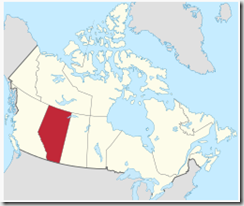
Alberta, Canada – Credit Wikipedia


# 8146


Yesterday’s announcement of North America’s first (imported) case of H5N1 in Alberta was the focus of a technical briefing from Canada’s Health Minister Rona Ambrose and Canada’s deputy chief public health officer, Dr. Gregory Taylor yesterday.


Below you’ll find the speaking notes (posted on the PHAC website) of both of their remarks.


Speaking Notes for the Honourable Rona Ambrose Minister of Health

January 8, 2014
Ottawa, ON

H5N1 Technical Briefing

Good afternoon. I am Rona Ambrose, Canada’s Minister of Health.

I am here to confirm North America’s first human case of H5N1, also known as avian flu.

The Public Health Agency of Canada has confirmed that a resident of Alberta, Canada who recently returned from a trip to China, has died of H5N1.

The health system did everything it could for this individual and our thoughts are with the family at this time.

The risk of H5N1 to Canadians is very low as there is no evidence of sustained human-to-human transmission. Importantly, this is not part of the seasonal flu, which circulates in Canada every year. This is an isolated case.

Our Government and the Public Health Agency of Canada is committed to disease surveillance and is working closely with its public health partners across the country and around the world.

The Public Health Agency of Canada continues to work closely with Alberta Health and other provincial health authorities to ensure the health and safety of Canadians.

The Public Health Agency has notified China, the World Health Organization and other international partners about the case, in keeping with our commitment under the International Health Regulations.

Our Government will work closely with its national and international partners, including the World Health Organization.

The Agency will continue to work with Chinese authorities to follow up on the source and circumstances of this infection.

We are holding today’s technical briefing to deliver a clear message to Canadians, the risk of getting H5N1 is very low. This is not the regular seasonal flu. This is an isolated case

Our Government is committed to ensuring that Canadians have up-to-date, accurate information and we will continue to communicate in an open and transparent way.

Now I’ll turn it over to Dr. Gregory Taylor, our deputy chief public health officer for Canada.

Speaking Notes – Deputy Chief Public Health Officer

January 8, 2014
Ottawa, ON

H5N1 Technical Briefing

Thank you Minister.

I would like to echo the Minister’s comments in extending our condolences to the family and friends of this individual.

H5N1 influenza is not the same as the seasonal flu.

This is the first and only confirmed human case of H5N1 in North America.

The risk of transmission is very low. There is no evidence of sustained human-to-human transmission.

H5N1 is an avian form of influenza which has been found to circulate among birds, mainly poultry. It has been found in birds in Asia, Europe, Africa and the Middle East.

There has only been less than 650 human cases of H5N1 in 15 countries over the last decade, primarily in people who were exposed to infected birds.

The illness it causes in humans is severe and kills about 60 per cent of those who are infected.

No other illnesses of this type have been identified in Canada since the traveller returned from China.

This is an isolated case.

The individual began to feel unwell on a return flight from Beijing to Vancouver (Air Canada 030) and Vancouver to Edmonton (Air Canada 244) on December 27.

The symptoms worsened and the individual was hospitalized, and passed away on January 3.

The Public Health Agency of Canada was notified on January 5th of the case, by Alberta. Our National Microbiology Lab in Winnipeg received specimens yesterday.

Last night, January 7th, lab results confirmed this was H5N1. This morning Canadian officials have been in contact with the World Health Organization.

The patient’s family is not showing any signs of illness. There is no evidence of human-to-human transmission on airplanes.

All evidence is indicating that this is one isolated case in an individual who was infected following exposure in China.

Although we don’t know at this time how the individual contracted the virus, for Canadians travelling abroad – in keeping with our travel health advice – we recommend:

If you are travelling to an area where any avian influenza is a concern:

  1. avoid high-risk areas such as poultry farms and live animal markets;
  2. avoid unnecessary contact with birds, including chickens, ducks and wild birds;
  3. avoid surfaces that may have bird droppings or secretions on them; and
  4. ensure that all poultry dishes are well cooked, including eggs .

Thank you

Thursday, October 24, 2013

PHAC: Interim Guidelines For Surveillance Of MERS-COV & H7N9 In Canada

Coronavirus

Photo Credit NIAID


# 7896


Although no H7N9 or MERS cases have been detected in North America, and currently the PHAC (Public Health Agency of Canada) considers the risks to Canadians to be low at this time,  Canada – like the United State’s CDC – is gearing up surveillance procedures in order to be able to detect  introduction of the virus at the earliest opportunity.


Yesterday, PHAC released two new Interim guidelines for National Surveillance on these emerging viruses.


October 23, 2013  Interim National Surveillance Guidelines for Human Infection with Avian Influenza A(H7N9)

October 23, 2013I Interim National Surveillance Guidelines for Human Infection with Middle East Respiratory Syndrome Coronavirus (MERS-CoV)


You’ll find that both documents follow the same format, but are customized for each virus.  A few brief excerpts from the MERS-CoV Guidance  follow, but you’ll probably want to examine both documents in their entirety.


Surveillance Goals and Objectives

Given the evidence to date, the main goal of public health response is early detection and containment.

To accomplish this goal, following national surveillance objectives have been developed:

  1. Detect human cases of MERS-CoV infection in Canada
  2. Monitor the incidence and the geographical distribution of new cases over time
  3. Describe and monitor changes in the epidemiological and virological features of the disease(e.g. clinical features and progression, morbidity, mortality, incubation period, mode of transmission, at risk populations)
  4. Notify and disseminate information to stakeholders in order to facilitate timely and appropriate public health activities
Case Definition

The Public Health Agency of Canada has developed case definitions for classification and reporting of human cases of MERS-CoV. They are located on the Public Health Agency of Canada website.

Case Identification and Interview

Laboratory-confirmation of a MERS-CoV case is an immediate trigger to launch a thorough investigation. However, because collection, shipment, and testing of specimens often require several days or longer, the investigation may need to begin before laboratory test results are available for suspected cases. Even if laboratory-confirmation is not possible, an investigation should still be launched if a patient is strongly suspected to have MERS-CoV infection.

The patient and/or family members (if the patient is too ill to be interviewed or has died) should be interviewed within the first 24–48 hours of the investigation to collect basic demographic, clinical, and epidemiological information. A sample case investigation/reporting form for the interview can be found on the Public Health Agency’s website. Provinces and territories may choose to use this form, or a similar form developed for use within their jurisdiction.

Essential Basic Information

Within 24 hours of notification, the following priority data elements (Box 1) should be submitted on the initial case report form or through electronic methods for confirmed and probable cases (within 24 hours of PT notification)Footnote 1.

image

Contact Monitoring

Close contacts of confirmed or probable cases should be identified and monitored for the appearance of respiratory symptoms for 14 days after last exposure to the confirmed or probable case, while the case was symptomatic. Any contact that becomes ill with symptoms compatible with MERS-CoV in that period of time should be tested for MERS-CoV. Ring testing (testing those with closest and most prolonged contact) should be considered, and a subset of those with progressively less contact should be identified to evaluate transmissibility and evidence of asymptomatic infection.

A line-listing of all contacts and exposed persons that records demographic information, date of first and last common exposure or date of contact with the confirmed or probable case, and date of onset if fever or respiratory symptoms develop should be maintained. The common exposures and type of contact with the confirmed or probable case should be thoroughly documented for any contacts that become infected with MERS-CoV.

Additional information can be found in the Interim Guidance for Public Health Management of Human Illness Associated with MERS-CoV.

Enhanced Surveillance

Surveillance in the setting under investigation should be enhanced to detect cases that might arise subsequent to the discovery of the index case. The geographical area targeted will need to be assessed and defined by the suspected exposures of the confirmed case under investigation. The duration of the enhanced surveillance will depend on the findings of the investigation and whether there is evidence indicating that sustained transmission may be occurring in the area. A minimum of one month of enhanced surveillance is a reasonable starting point.

Enhancements include:

  • Establish mechanisms for rapid transfer of specimens to the National Microbiology Laboratory (NML)
  • Inform clinicians in the community of the need for increased vigilance and triggers for identification and notification
  • Increase testing for MERS-CoV of SARI cases at) local health care facilities in the area under investigation.
  • If resources allow, consider some testing of milder cases of influenza-like illness presenting to surveillance sites.

(Continue . . . )

PHAC also updated their Public Health Advisory on MERS-CoV for Canadians earlier today:

Public Health Notice: Middle East Respiratory Syndrome Coronavirus (MERS-CoV)

24 Oct 2013
Information is reviewed on a regular basis and updated as required.

Why you should take note

Since April 2012, cases of the Middle East Respiratory Syndrome Coronavirus (MERS-CoV) have been identified in eight countries: the United Kingdom (UK), Jordan, Qatar, Saudi Arabia, the United Arab Emirates, France, Tunisia and Italy. The initial cases in the UK, France, Tunisia and Italy were linked to travel to the Middle East.

Coronaviruses are the cause of the common cold, but can also be the cause of more severe illnesses with flu-like symptoms, including Severe Acute Respiratory Syndrome (SARS), with some cases resulting in death. This new virus is not the SARS virus. Additional cases of this new strain of coronavirus are expected. Official numbers are available hereExternal site.

Risk to Canadians

The risk to Canadians is low. This virus does not appear to spread easily from person to person.

At the same time, we do not yet fully understand exactly how people become infected with MERS-CoV. Experts are still investigating its source and how it spreads.

In the cases where it has appeared to have spread between people, those cases involved close contacts: family members, co-workers, fellow patients and healthcare workers.

Federal and provincial laboratories have been testing specimens and there are currently no cases in Canada.

Canadians can help protect themselves against these types of viruses by following some general measures:

  • Avoid close contact with anyone showing signs of illness (such as coughing and sneezing);
  • Cough and sneeze in your arm rather than your hand;
  • Wash your hands often and thoroughly;
  • Stay at home when sick.

(Continue . . . )


Note: The United States issued similar interim guidance for MERS-CoV in August (see CDC HAN Update On MERS-CoV) and for H7N9 in June (see CDC: Updated H7N9 Guidance Docs).

Tuesday, July 30, 2013

PHAC: Lyme Disease Risk Increasing In Canada

Female blacklegged ticks in various stages of feeding. Note the change in size and colour.

Female blacklegged ticks in various
stages of feeding. Note the change in
size and colour.-  Credit PHAC


#7527


Lyme disease, spread by infected ticks, has become a major vector-borne disease in the United States with nearly 35,000 confirmed or suspected cases reported in 2011 (cite Reported Cases of Lyme Disease by Year, United States, 2002-2011).


While cases have been reported in Canada (Lyme became a reportable disease there in 2009), they have run about 1/100th the rate seen in the United States (just 258 cases in 2011).


But those numbers may poised to increase, according to the following public health notice posted today by the PHAC, as infected ticks appear to be spreading into new regions of Canada.


Public Health Notice: Lyme disease

Why you should take note

Lyme disease is a serious illness spread by the bite of certain ticks; specifically, blacklegged ticks. Ticks are small, insect-like parasites that feed on the blood of animals, including humans. In regions where blacklegged ticks are found, people can come into contact with ticks by brushing against vegetation while participating in outdoor activities, such as, hiking, camping and gardening. When a tick bites, it attaches to the skin and the bite is usually painless. For most Canadians, the risk of getting Lyme disease is fairly low, but is increasing.


Risk to Canadians

The Public Health Agency of Canada, in partnership with provincial and territorial public health authorities, conducts surveillance for Lyme disease in Canada and studies show the risk of the disease is growing in this country. Risk occurs in parts of Manitoba, Ontario, southern Quebec, New Brunswick, Nova Scotia and southern British Columbia, and is increasing in south eastern and south central Canada due to spread of populations of the ticks that carry the bacterium that causes Lyme disease.


You are most at risk of being exposed to Lyme disease in the regions listed above where blacklegged and western blacklegged ticks are found. But migratory birds can also carry these ticks to other parts of Canada. Current research tells us that blacklegged ticks may be establishing themselves in new areas that are not identified yet. This may mean that risk of Lyme disease may occur over broader regions of Canada than we are presently aware of.


Although blacklegged ticks can be active throughout much of the year in some locations, your risk of acquiring Lyme disease, especially in areas where tick populations are established, is greatest during the summer months when younger ticks are most active.


Lyme disease is much more common in the United States than in Canada, with risk areas in the Midwest and northeastern states. In 2011, approximately 35,000 cases of Lyme disease were reported in the United States compared to approximately 258 cases in Canada for the same year.


(Continue . . . )


As Public Health Canada’s Lyme FAQ explains, black legged ticks carry and can transmit more than just Lyme disease:


Although rarer than Lyme disease, there are other infections that can also be contracted from blacklegged ticks. These include Anaplasma phagocytophilum, the agent of human granulocytic anaplasmosis; Babesia microti, the agent of human babesiosis and Powassan encephalitis virus. Most of the precautions outlined above will also help to protect individuals from these infections.


The CDC lists a growing number of diseases carried by ticks in the United States, including: Anaplasmosis, Babesiosis , Ehrlichiosis, Lyme disease, Rickettsia parkeri Rickettsiosis, Rocky Mountain Spotted Fever (RMSF), STARI (Southern Tick-Associated Rash Illness), Tickborne relapsing fever (TBRF), Tularemia, and 364D Rickettsiosis.


We’ve discussed a number these in the past, including:


Referral: Maryn McKenna On Babesia And The Blood Supply

NEJM: Emergence Of A New Bacterial Cause Of Ehrlichiosis

New Phlebovirus Discovered In Missouri

tick . . . tick . . . tick . . .

Minnesota: Powassan Virus Fatality


When you consider the wide panoply of diseases carried by ticks it makes sense to avoid tick bites whenever possible.


This from the Minnesota Department of Health.


image

Lastly, the CDC offers the following advice:


Preventing Tick Bites

While it is a good idea to take preventive measures against ticks year-round, be extra vigilant in warmer months (April-September) when ticks are most active.

Avoid Direct Contact with Ticks
  • Avoid wooded and bushy areas with high grass and leaf litter.
  • Walk in the center of trails.
Repel Ticks with DEET or Permethrin
  • Use repellents that contain 20% or more DEET (N, N-diethyl-m-toluamide) on the exposed skin for protection that lasts up to several hours. Always follow product instructions. Parents should apply this product to their children, avoiding hands, eyes, and mouth.
  • Use products that contain permethrin on clothing. Treat clothing and gear, such as boots, pants, socks and tents. It remains protective through several washings. Pre-treated clothing is available and remains protective for up to 70 washings.
  • Other repellents registered by the Environmental Protection Agency (EPA) may be found at http://cfpub.epa.gov/oppref/insect/.
Find and Remove Ticks from Your Body
  • Bathe or shower as soon as possible after coming indoors (preferably within two hours) to wash off and more easily find ticks that are crawling on you.
  • Conduct a full-body tick check using a hand-held or full-length mirror to view all parts of your body upon return from tick-infested areas. Parents should check their children for ticks under the arms, in and around the ears, inside the belly button, behind the knees, between the legs, around the waist, and especially in their hair.
  • Examine gear and pets. Ticks can ride into the home on clothing and pets, then attach to a person later, so carefully examine pets, coats, and day packs. Tumble clothes in a dryer on high heat for an hour to kill remaining ticks.

Saturday, April 27, 2013

PHAC Guidance On Handling H7N9 Cases

image image

N-95 Respirator         Surgical Facemask


# 7197


Yesterday the Public Health Agency Of Canada  published a set of Interim Guidance - Avian Influenza A(H7N9) Virus documents dealing with infection prevention and control in acute care settings.


Compared to the guidance released last week by the United States (see CDC Interim H7N9 Infection Control Guidelines), the Canadian version is far less stringent.


The CDC Interim H7N9 Infection Control Guidelines, call for fitted N95 respirators, gowns, gloves, and eye protection as a minimum level of PPEs (personal protective equipment) for all HCWs who may have contact with potential or confirmed H7N9 patients.


Additionally, confirmed or suspected patients are to be placed in an Airborne Infection Isolation Room (AIIR) whenever possible.


Below you’ll find excerpts that illustrate some of the differences:


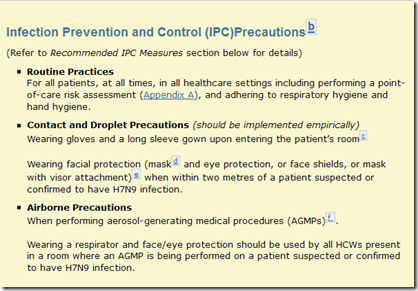
Infection Prevention and Control Guidance for Acute Care Settings

image

Notes
Footnote a
Acute care - A facility/setting where a variety of inpatient services is provided, which may include surgery and intensive care.  For the purpose of this document, acute care also includes ambulatory care settings such as hospital emergency departments, and free-standing ambulatory (day) surgery or other day procedures (e.g., endoscopy) centres.
Footnote b
IPC measures included in this interim guidance are considered the minimum recommendations; a point-of-care risk assessment approach (Appendix A) should be used by the HCW prior to every patient interaction, to determine what level of respiratory, and other personal protection, supports the use of additional measures where indicated.
Footnote c
Patient's room, cubicle or designated bedspace.
Footnote d
Surgical or procedure masks.
Footnote e
Historically, H7 influenza A viruses have shown a marked ocular tropism and have been associated with conjunctivitis in humans, with occasional cases leading to more severe illness. The importance of use of eye protection/face shields/visors should be reinforced as part of IPC precautions for this virus.
Footnote f
Whenever possible AGMPs should be performed in an airborne infection isolation room.

PATIENT PLACEMENT AND ACCOMMODATION

Patients suspected or confirmed to have H7N9 infection should be cared for in single rooms, if possible, with designated private toilets and patient sinks.   If cohorting is necessary, only patients who are confirmed to have H7N9 infection should be cohorted together.  Infection prevention and control signage should be placed at the room entrance indicating contact and droplet precautions required upon entry to the room.  Airborne infection isolation rooms should be used for aerosol-generating medical procedures whenever possible.


<SNIP>


PERSONAL PROTECTIVE EQUIPMENT
Personal protective equipment (PPE) for contact and droplet precautions should be provided outside the room of the patient suspected or confirmed to have H7N9 infection.  HCWs, families and visitors should use the following PPE:


Gloves

Gloves should be worn upon entering the patient’s room (for care of the patient and for contact with the patient’s environment).  Gloves should be removed and discarded into a no-touch waste receptacle.


Hand hygiene should be performed after removing gloves, upon exiting the patient’s room.


Gowns


A long-sleeved gown should be worn upon entering the patient’s room.  The gown should be removed and discarded into a no-touch receptacle.

Hand hygiene should be performed after removing gowns, upon exiting the patient’s room.


Facial protection

Facial protection (masks and eye protection, or face shields, or mask with visor attachment) should be worn when within two metres of a patient suspected or confirmed with H7N9 infection. Facial protection should be removed after gloves and gown before leaving the patient’s room and discarded in a hands-free waste and linen receptacle within the room.

Hand hygiene should be performed after removing gloves and gown, before removing facial protection, and after leaving the room.

In a shared room/cohort setting of patients with confirmed H7N9 infection, facial protection may be worn for the care of successive patients.


Respiratory Protection

Wearing a respirator is recommended when performing aerosol generating medical procedures on a patient suspected or confirmed with H7N9 infection (refer to Section 12).


HCWs should use a point-of-care risk assessment approach (

Appendix A) before each patient interaction to evaluate the likelihood of exposure.


<SNIP>


AEROSOL GENERATING MEDICAL PROCEDURES (AGMPs)


AGMPs should be performed on patients suspected or confirmed to have H7N9 infection only if medically necessary.  The number of HCWs present during an AGMP should be limited to only those essential for patient care and support.  A respirator and face/eye protection is recommended for all HCWs present in a room where an AGMP is being performed on a patient suspected or confirmed to have H7N9 infection.


AGMPs should be performed in airborne infection isolation rooms, whenever feasible.  If not feasible, AGMPs should be carried out using a process and in an environment that minimizes the exposure risk for HCWs, ensuring that non-infected patients/visitors and others in the healthcare setting are not unnecessarily exposed to the H7N9 virus.


The most striking differences between the CDC and the PHAC recommendations are the minimum standards for respiratory protective gear for HCWs in contact with H7N9 cases (U.S. = N95, Canada =Surgical/procedure Mask) and the preferred placement of patients (US= AIIR, Canada = Private room).


The Canadian recommendations do call for  N95 respirators for HCWs performing AGMPs.


Admittedly, we have finite supplies of N95 respirators and shortages are likely during a severe pandemic, and the availability of AIIR facilities would dwindle quickly during an epidemic of any size.


So in practical terms, the tougher U.S. guidelines would likely need some adjustments once a certain threshold of cases are reached.


As far as relative merits of surgical masks versus N95 respirators are concerned, we’ve covered this contentious debate often, including:


Influenza Transmission, PPEs & `Super Emitters’

Study: Aerosolized Influenza And PPEs
Study: Longevity Of Viruses On PPEs
Why Size Matters
IOM: PPEs For HCWs 2010 Update

Wednesday, December 29, 2010

PHAC: Lessons Learned From The 2009 Pandemic


# 5188


Today, the Public Health Agency of Canada (PHAC) and Health Canada released a 106 page report in PDF format, outlining the lessons learned from Canada’s response to the H1N1 pandemic.


While stating that – overall, Canada’s response was effective - the authors have identified 34 areas for improvement.


You can read the summary, excerpts from the report, or download the entire document at the PHAC website below:


Lessons Learned Review: Public Health Agency of Canada and Health Canada Response to the 2009 H1N1 Pandemic


For readers interested in the full version of this report, the document is available for downloading or viewing:

Lessons Learned Review: Public Health Agency of Canada and Health Canada Response to the 2009 H1N1 Pandemic PDF Version

 November 2010

Download the PDF

The information in this report was obtained by the Public Health Agency of Canada Evaluation Services Directorate through a review of relevant material and a series of interviews. This report does not draw exhaustive or definitive conclusions on all the activities leading up to or taken by various individuals or entities during the H1N1 pandemic response.


Rather, the observations in this report are meant to give senior management of the Public Health Agency of Canada and Health Canada a general overview of what worked well in response to this particular event and what needs further refinement to be better prepared for future pandemics and other national public health events.