Showing posts with label Canada. Show all posts

Monday, May 04, 2015

OIE Notification Of First H5N8 Detection In Canadian Wild Bird

image


# 10,006


Just about two weeks after the outbreak of HPAI H5N2 in British Columbia’s Fraser Valley began we saw the first reports of HPAI H5N8 & H5N2 Detected In Washington State Wild Birds, recorded in Whatcom County along the Canadian Border only a few miles south of the infected Canadian poultry farms.

image

Whatcom County, WA


While only a closely related H5N2 strain has been reported in Canadian poultry and wild birds, the assumption has been pretty much that H5N8 must have at least passed through the area last fall, even though it had not shown up in surveillance.


On the American side of the border, of 59 wild bird isolates identified thus far, 18 have been H5N8, 3 have been H5N1, and the rest have been H5N2.


Today the OIE has announced that a juvenile American Wigeon, collected near Abbotsford, BC in February (very near the Whatcom County border), has tested positive for a wholly Eurasian H5N8 virus, very similar to the one collected in Washington State (see  USGS: Genetic Analysis Of North American Reassortant H5N1 Virus From Washington State).


You’ll note that although we are just now hearing about it, this bird was collected in February. The surprise here isn’t that H5N8 has finally been detected in Canada, but that it has taken this long to confirm it. 


This from the OIE.


image

Source of the outbreak(s) or origin of infection

  • Contact with wild species

Epidemiological comments


Canada conducts surveillance for avian influenza in wild birds. In addition, enhanced surveillance was undertaken in wild birds in response to the event in poultry (H5N2) in the province of British Columbia (BC) in December 2014.

This sample was collected in February 2015 as part of the enhanced surveillance undertaken by BC. The sample was received from the BC provincial laboratory by the Canadian Food inspection Agency (CFIA) National Centre for Foreign Animal Disease (NCFAD) on 25 March 2015 for further testing. The results confirmed HPAI H5N8 virus with an IVPI of 2.73. Sequencing of the H5N8 virus isolated indicates it is a wholly Eurasian H5N8 and very similar to the H5N8 virus that was isolated from the gyrfalcon in Washington State in December 2014.

This is the first report of a H5N8 HPAI virus detection in Canada. This virus has NOT been found in commercial poultry anywhere in Canada. In accordance with the Terrestrial Animal Health Code Article 10.4.1, Member Countries should not impose bans on the trade of poultry commodities in response to notification of influenza A virus in wild birds.

Monday, February 09, 2015

OIE Notification On Canadian H5N1 Detection

image


# 9692


Although we discussed it at some length yesterday (see H5N1 Detected In B.C. Backyard Flock), we now have the OIE Notification which includes some additional epidemiological and sequencing information that indicates this H5N1 is very similar to the H5N1 virus detected last month in a green-winged teal in Whatcom County, Washington (see OIE: New Reassortant HPAI H5N1 In North America)

image

image


Source of the outbreak(s) or origin of infection

  • Unknown or inconclusive
  • Contact with wild species

Epidemiological comments
This new outbreak was detected in a backyard poultry flock in the Avian Influenza Primary Control Zone (PCZ) in the province of British Columbia (BC), in the same area as the previous outbreaks of HPAI H5N2 reported in December 2014. All susceptible animals on site were humanely destroyed. The National Centre for Foreign Animal Disease (CFIA - Winnipeg) reported NAI H5 RRT-PCR positive results on 4 February 2015 and partial sequencing of H5 and N1 segments on 5 February.

The virus involved is a HPAI H5N1 virus with the H5 gene segment derived from the Eurasian lineage, and N1 derived from North American lineage based on partial sequence. The H5 gene segment is very similar to the reassortant H5N2 in BC and the H5 in the H5N1 reassortant virus detected in a wild green-winged teal just south of the border in Washington State, USA. In addition, the N1 gene segment is very similar to North American wild bird viruses and nearly identical, over the very small fragment sequenced this far, to the N1 in the H5N1 virus detected in a green-winged teal mentioned above.

Based on the limited partial sequence of the H5 and N1 gene segments obtained this far, it appears very likely that this is the same or a very similar virus to the recent reassortant H5N1 virus in Washington State but more sequencing will be needed to make a final conclusion. This virus has NOT been reported in any commercial poultry flock in Canada. It is important to note this HPAI H5N1 virus is different from the strain circulating in Asia. It is a reassortant virus with the N1 from a North American wild bird virus. The Canadian Food Inspection Agency (CFIA) continues to monitor the situation and implement strict movement restrictions in the PCZ. Ongoing surveillance is in place in all of Canada. All provinces, with the exception of the PCZ in British Columbia, remain free of Notifiable Avian Influenza in poultry.


As I pointed out yesterday, this is a new reassortment, not the same H5N1 that has plagued China, Southeast Asia, and the Middle East over the past decade. 


While carrying the same HA/NA designations as its more infamous Asian cousin -  this subtype is comprised of gene segments from the Eurasian (EA) H5N8 virus, along with genetic contributions from North American (AM) avian viruses.


Our knowledge of how this new reassortant virus will behave in poultry, and in humans, is very limited at this time. Other reassortants carrying this H5 gene segment (H5N8, H5N2) have not yet been shown to pose a health risk to humans.  


Whether that holds true with this virus remains to be seen.


For now the CDC is taking a cautious approach to all of of these recently arrived HPAI viruses, and has issued guidance for the testing, and prophylactic treatment of those exposed. 


CDC Interim Guidance For Testing For Novel Flu
CDC Interim Guidance On Antiviral Chemoprophylaxis For Persons With Exposure To Avian Flu

Friday, January 30, 2015

H7N9 Confirmed In 2nd B.C. Patient

image

Credit Wikipedia


# 9646


On Monday we learned of the first known imported case of H7N9 into North America (see PHAC Statement On Canada’s Imported H7N9 Case) when a woman, recently returned from China with her husband, developed flu-like symptoms and was tested by her doctor in Vancouver.  


Her husband briefly developed flu-like symptoms as well, and also suspected as having been infected. Neither were sick enough to be hospitalized, self-isolated at home, and are now recovered.


Last night it was announced that the husband’s tests had come back positive for H7N9 infection. He developed symptoms about a day before his wife, suggesting they had a shared exposure, but the exact route of their infection remains unknown.  


None of these patient’s close contacts have developed symptoms, and given H7N9’s incubation period, authorities believe it unlikely any additional cases will arise in Canada linked to this event.


This from Helen Branswell.


H7N9 bird flu case confirmed in 2nd B.C. patient

Couple believed to have contracted virus in recent trip to China

By Helen Branswell, The Canadian Press Posted: Jan 29, 2015 9:24 PM PT Last Updated: Jan 29, 2015 9:28 PM PT

A British Columbia man has been confirmed as Canada's second case of H7N9 bird flu.

The unidentified man and his wife are believed to have contracted the virus during a recent trip to China.

They are the first North Americans known to have been infected with this virus.

B.C.'s deputy provincial health officer says the positive test result was confirmed late Thursday by the National Microbiology Laboratory in Winnipeg.

(Continue . . .)


It is remarkable that these cases were diagnosed at all, given their mild symptoms and their occurring during the midst of a very busy regular flu season. 


While 30% of known H7N9 cases have died, this is essentially the mortality rate among those sick enough to be hospitalized and tested.  Unknown is how many mild or moderate cases occur each winter in China, that are never picked up by surveillance.


That two travelers should return from China with mild symptoms suggests that mild or moderate cases are more common than we know .Something that the researchers at the University of Hong Kong have been saying for the past 18 months.


In Lancet: Clinical Severity Of Human H7N9 Infection) we saw a study that proposed, after roughly 130 cases were confirmed in the spring of 2013, that:


Our estimate that between 1500 and 27 000 symptomatic infections with avian influenza A H7N9 virus might have occurred as of May 28, 2013, is much larger than the number of laboratory-confirmed cases.


How accurate these estimates are is unknown, but it is highly likely that the official case counts under-represent the real burden of H7N9, perhaps by a sizable margin.


Somewhat more reassuring, we’ve seen a relatively low number of family clusters or contacts of known cases test positive for the virus, suggesting a low human-to-human transmission rate.  For now, direct contact with infected birds is believed the primary route of infection.


That said, a study published earlier this week (see EID Journal: H7N9 Antibodies In Close Contacts Of Known Cases) looked at 225 close contacts of confirmed H7N9 cases in China, and found 22 (9.8%) with elevated HI H7N9 antibody titers (>1:40). 

All of these seropositive contacts were asymptomatic.


All of which means we still have major gaps in our understanding of how fast and how far this virus is spreading in China.  And given the amount of travel to and from Asia, we should not be surprised to see future introductions of H7N9, and other novel flu viruses, to North America.

Monday, January 26, 2015

PHAC Statement On Canada’s Imported H7N9 Case

image

Photo Credit- CDC


# 9631


In a case smacking of deja flu - just over a year after North America’s first imported case of H5N1 (in a traveler recently returned from China) - we learn of our first imported case of H7N9, this time in the Vancouver area.


Crof has a report from the Globe and Mail (see Canada: BC resident confirmed with H7N9; relative may be a second case),  and Helen Branswell has a little bit more in her report Canada finds case of H7N9 bird flu in traveller; first in North America.


Canada’s PHAC has posted this statement:

Government of Canada and British Columbia confirm case of H7N9 avian influenza in Canada

B.C. case is the first documented case of H7N9 in humans in Canada

The Honourable Rona Ambrose, Minister of Health, Canada’s Chief Public Health Officer, Dr. Gregory Taylor, Terry Lake, British Columbia’s Minister of Health and Dr. Bonnie Henry, British Columbia’s Deputy Provincial Health Officer today confirmed that an individual in B.C. has tested positive for the H7N9 avian influenza strain. The individual recently returned to Canada from China. This is the first documented case of H7N9 infection in a human in North America.

The risk to Canadians of getting sick with H7N9 is very low as evidence suggests that it does not transmit easily from person-to-person.

The individual is a resident of British Columbia and was not symptomatic during travel and only became sick after arrival in Canada. The individual did not require hospitalization and is currently recovering from their illness, in self-isolation.

All close contacts of the individual have been identified and their health is being monitored by provincial public health authorities. The Canadian healthcare system has strong procedures and controls in place to respond to and control the spread of infectious diseases and protect healthcare workers.

The diagnosis of H7N9 was confirmed by both B.C.'s provincial laboratory and the Agency’s National Microbiology Laboratory in Winnipeg.

The Agency works closely with its national and international partners, including the WHO, to track all types of flu activity in Canada and around the world.

Though the individual was not symptomatic, and H7N9 does not transmit easily from person-to-person, the Agency is committed to ensuring Canadians have all the information they need, as a result, we are sharing the flight number.  The individual was on Air Canada flight 8.

Quick Facts
  • H7N9 is a type of avian influenza virus that has been seen in people in China since 2013. Almost all of the cases reported contact with poultry, usually in live poultry markets.
  • To date, the H7N9 strain has not been detected in birds in Canada.
  • The Agency’s Travel Health Notices on www.travel.gc.ca provide information on how to protect yourself from avian influenza while abroad.
  • There is no risk of catching the virus by eating well-cooked poultry. Canada does not import raw poultry or raw poultry products from China.
  • Canadians can help protect themselves and their loved ones from the flu in general by:
    • Getting an annual influenza shot
    • Washing hands frequently;
    • Covering coughs and sneezes;
    • Keeping common surfaces clean; and
    • Staying home when sick.
  • The Agency has notified China, the World Health Organization and other international partners about the case, in keeping with our commitment under the International Health Regulations.
Quotes

“Today we are confirming the first case of H7N9 in humans in North America.   We continue to work with our national and international partners to track infectious disease outbreaks in Canada and around the world to ensure the health and safety of Canadians.  Public Health Agency of Canada continues to advise and emphasize that H7N9 does not spread easily from person to person and the risk remains very low.”

Honourable Rona Ambrose
Minister of Health

"The Agency is in close contact with the provincial public health authority to monitor the situation in B.C. and is committed to providing Canadians with accurate and up-to-date information about H7N9 infections and about how Canadians can protect themselves from avian and seasonal influenzas at home and abroad. The risk of H7N9 to Canadians is very low as there is no evidence of sustained human-to-human transmission.”

Dr. Gregory Taylor
Chief Public Health Officer of Canada

“I would like to reassure British Columbians that while we have identified the first case of influenza H7N9 here in BC, the risk to the public remains very low. This strain does not transmit easily from person to person, and I am pleased to report that the patient is recovering. I would like to send my best wishes to them, and would also like to thank our dedicated public health officials for their commitment to protecting the health and safety of all British Columbians.”

Terry Lake
Minister of Health, British Columbia

“This represents the first time that we have confirmed influenza H7N9 in North America, but it is a strain that we in the public health community have been watching closely since 2013. I would like to stress that the risk remains very low to the public. This individual did not need to be hospitalized, and is recovering well at home, away from the public. Public health officials are doing comprehensive follow up with contacts to ensure that there is no further spread.”

Dr. Bonnie Henry
Deputy Provincial Health Officer

Interestingly, the confirmed and the suspected case both experienced only mild illness, and neither required hospitalization.  Another clue that suggests the number of cases in China are likely far greater than are being picked up by their hospital based surveillance – a prospect we discussed at some length yesterday.


The arrival of H7N9 to North America is hardly unexpected, given our increasingly mobile society and the lengthy (3-10 day) incubation period of these viruses.


In 2014 alone, in addition to the spread of Ebola, we’ve seen the importation of H5N1 into Canada, imported MERS-CoV cases in the United States (along with 20+ other countries), imported H7N9 to Taiwan and Hong Kong, imported CCHF in the UK, and Lassa fever in a traveler in Minneapolis, and Chikungunya which has infected 1 million people in the Caribbean over the past twelve months.


And frankly, these are just the highlights.


Welcome to the new normal, and to one of the best reasons in the world for maintaining a strong public health system.

Saturday, January 03, 2015

Canada FluWatch Report Week 51

image

Map of overall influenza/ILI activity level by province and territory, Canada, Week 51


# 9526


Due to the Holidays our regularly scheduled Friday CDC FluView report will be released on Monday, but all signs are pointing to another hefty increase in flu activity across the country. Influenza surveillance and reporting during the second half of December is always problematic, and the data often lags behind by an extra week or so getting to the CDC.


We do have Canada’s latest FluWatch report – which reflects their flu activity as of December 20th. 


Not surprisingly, they too are seeing an increasingly tough flu season, with H3N2 far and away the predominant flu strain, and with most of the H3 viruses examined a poor match for this year’s flu vaccine (see HAN Advisory On `Drifted’ H3N2 Seasonal Flu Virus).

Between it being an H3N2 year – a subtype which often produces more severe seasons than H1N1 – and reduced vaccine effectiveness, there are concerns that the next couple of months may be particularly rough (see Early Data Suggests Potentially Severe Flu Season).


Some excepts from a much longer, data rich report:


FluWatch report: December 14 to December 20, 2014 (Week 51)

Posted 2015-01-02

 Overall Summary

  • In week 51, laboratory detections of influenza increased sharply for the fifth consecutive week. The majority of laboratory detections continued to be reported in AB, ON and QC; but with increasing activity in SK and NL.
  • A(H3N2) continues to be the most common type of influenza affecting Canadians. In both laboratory detections and hospitalizations, the majority of cases have been among seniors ≥65 years of age.
  • Similar to the previous week, there were a large number of newly-reported laboratory-confirmed outbreaks of influenza: 125 influenza outbreaks in 7 provinces, of which 94 were in long-term care facilities (LTCF).
  • The rate of antiviral prescriptions more than doubled from the previous week, increasing especially among seniors.

Influenza and Other Respiratory Virus Detections

In week 51, the number of positive influenza tests increased sharply to 2,833 influenza detections (29.1% of tests), predominantly due to influenza A (Figure 2). To date, 97% of influenza detections have been influenza A, and 99.8% of those subtyped have been A(H3) (Table 1). The timing of the season and predominant A(H3N2) subtype is similar to the pattern observed during the 2012-13 influenza season when percent positive for influenza peaked in week 52 (35%). To date, among the cases of influenza with reported age, the largest proportion was in adults ≥65 years of age (56%) (Table 2).

Figure 2. Number of positive influenza tests and percentage of tests positive, by type, subtype and report week, Canada, 2014-15


Influenza Strain Characterizations

During the 2014-2015 influenza season, the National Microbiology Laboratory (NML) has characterized 59 influenza viruses [37 A(H3N2), 2 A(H1N1) and 20 influenza B]. Influenza A (H3N2): When tested by hemagglutination inhibition (HI) assay, 31 of the 37 A(H3N2) viruses characterized were antigenically similar to A/Switzerland/9715293/2013, which is the influenza A(H3N2) component recommended for the 2015 Southern Hemisphere influenza vaccine. One was antigenically similar to A/Texas/50/2012, which is the influenza A(H3N2) component recommended for the 2014-15 influenza vaccine. The remaining five A(H3N2)viruses showed reduced titer to A/Texas/50/2012.

Additionally, 112 A(H3N2)viruses were unable to be tested by HI assay; however, sequence analysis showed that 111 belonged to a genetic group that typically shows reduced titers to A/Texas/50/2012. Influenza A(H1N1): Two A(H1N1) viruses characterized were antigenically similar to A/California/7/2009, which is the influenza A(H1N1) component recommended for the 2014-15 influenza vaccine. Influenza B: Of the 20 influenza B viruses characterized, 17 viruses were antigenically similar to the vaccine strain B/Massachusetts/2/2012. Three viruses showed reduced titers with antiserum produced against strains recommended for the seasonal influenza vaccine (Figure 4).

Figure 4. Influenza strain characterizations, Canada, 2014-2015, N = 59

The NML receives a proportion of the number of influenza positive specimens from provincial laboratories for strain characterization and antiviral resistance testing. Characterization data reflect the results of haemagglutination inhibition (HAI) testing compared to the reference influenza strains recommended by WHOExternal site.

The recommended components for the 2014-2015 northern hemisphere trivalent influenza vaccine include: an A/California/7/2009(H1N1)pdm09-like virus, an A/Texas/50/2012 (H3N2)-like virus, and a B/Massachusetts/2/2012-like virus (Yamagata lineage). For quadrivalent vaccines, the addition of a B/Brisbane/60/2008-like virus is recommended.


Despite its reduced effectiveness, the CDC continues to recommend that people get the flu shot – partially because it may provide some modicum of protection against this drifted flu strain, but mostly because we often see a wave of Influenza B late in the flu season, and the shot can help protect against that virus.


Beyond that, practicing good flu hygiene; Staying home when sick, washing your hands, covering your coughs, and disposing of your tissues properly are all important habits to maintain during this flu season.

Saturday, December 20, 2014

Canada: FluWatch Week 50


image

Credit Canada’s FluWatch 


# 9468


Yesterday we looked at the CDC’s latest FluView Week 50 report, and so this morning a quick peek at flu conditions north of the border. 


Like in the United States, Canada is seeing sharply increased flu activity, and the vast majority of H3N2 viruses tested are falling into the `drifted’ category – making them a poor match to this year’s vaccine (see HAN Advisory On `Drifted’ H3N2 Seasonal Flu Virus).


Here then are some excepts from a much larger report:


FluWatch report: December 7 to 13, 2014 (Week 50)

Posted 2014-12-19

 Overall Summary

  • In week 50, laboratory detections of influenza increased sharply for the fourth consecutive week. The majority of laboratory detections continued to be reported in AB, ON and QC; but with increasing activity in SK, MB and NL.
  • A(H3N2) continues to be the most common type of influenza affecting Canadians. In both laboratory detections and hospitalizations, the majority of cases have been among seniors ≥65 years of age.
  • Similar to the previous week, there were a large number of newly-reported laboratory-confirmed outbreaks of influenza: 72 influenza A outbreaks in 8 provinces, of which 57 were in long-term care facilities (LTCF).
  • To date, the NML has found that the majority H3N2 influenza specimens are not optimally matched to the vaccine strain which may result in reduced vaccine effectiveness against the H3N2 influenza virus. However, the vaccine can still provide some protection against H3N2 influenza illness and can offer protection against other influenza strains such as A(H1N1) and B.

<SNIP>

Figure 2. Number of positive influenza tests and percentage of tests positive, by type, subtype and report week, Canada, 2014-15

<SNIP>

Influenza Strain Characterizations

During the 2014-2015 influenza season, the National Microbiology Laboratory (NML) has characterized 30 influenza viruses [13 A(H3N2), 2 A(H1N1) and 15 influenza B]. When tested by hemagglutination inhibition (HI) assay, one influenza A (H3N2) virus was antigenically similar to A/Texas/50/2012, two influenza A (H1N1) viruses were antigenically similar to A/California/7/2009 and 12 influenza B viruses were antigenically similar to the B/Massachusetts/2/2012 (Yamagata lineage) recommended by the WHO for the 2014-15 seasonal influenza vaccine. Five influenza A(H3N2) viruses and three influenza B viruses showed reduced titers to antisera produced against strains recommended for the seasonal influenza vaccine. Seven of the 13 influenza A (H3N2) viruses were antigenically similar to the A/Switzerland/9715293/2013, which is the influenza A/H3N2 component recommended for the 2015 Southern Hemisphere influenza vaccine (Figure 4). Additionally, 58 A(H3N2) viruses were unable to be tested by HI assay; however, sequence analysis showed that 57 belonged to a genetic group that typically shows reduced titers to A/Texas/50/2012.

Figure 4. Influenza strain characterizations, Canada, 2014-2015, N = 30

 (Continue . . .)


Although the timing of the peak of flu season varies from year to year, often we see a big jump in numbers right after students return to their classrooms in the new year.  


This week’s FluWatch also carries this statement regarding the outbreak of H5N2 in poultry in British Columbia:


Avian Influenza A(H5)
The Canadian Food Inspection Agency (CFIA) is continuing its investigation into an outbreak of highly pathogenic avian influenza H5N2 virus in British Columbia's Fraser Valley. To date, there have been ten infected premises. As part of regular investigation activities, CFIA is fully tracing movements in and out of these sites. This may lead to further premises being identified and depopulated, which would not be unexpected. While there are no reports of H5N2 related illness in humans, as a precautionary measure public health officials are monitoring workers who are exposed to affected poultry. Avian influenza viruses do not pose risks to food safety when poultry and poultry products are properly handled and cooked. Avian influenza rarely affects humans that do not have consistent contact with infected birds. Further information on the outbreak is provided on the following CFIA.

CFIA - Notifiable Avian Influenza

Friday, September 05, 2014

CCDR: Ebola Preparedness Guidance For Canada

image

Credit CDC PHIL


# 9041


With West Africa’s Ebola spiraling out of control in Guinea, Sierra Leone and Liberia – and making inroads into Nigeria and Senegal – the expectation is that it is simply a matter of time before a few cases are `exported’  to countries outside of Africa – possibly including countries in North America and Europe.


We’ve previously looked at a number of CDC  Guidance documents for the handling of suspected or confirmed Ebola cases (see here, here, and here).


Yesterday, Canada’s PHAC published an Ebola-centric issue of their CCDR (Canada Communicable Disease Report) , with overviews and guidance documents for health care providers.


CCDR: Volume 40-15, September 4, 2014

For readers interested in the PDF version, the document is available for download or viewing: CCDR: Volume 40-15, September 4, 2014 (PDF document - 665 KB - 1 page)

» How to download PDF documents


Special theme issue: Ebola preparedness in Canada

This issue is focused on steps that can be taken to prepare for the possibility of caring for a patient with Ebola virus disease (EVD) and provides links to key documents recently posted on the Public Health Agency of Canada website. This guidance is based on currently available scientific evidence and expert opinion and is subject to change as new information becomes available. It should be read in conjunction with relevant provincial, territorial and local legislation, regulations and policies. The guidance documents identified in this issue have been developed based on the Canadian situation and may differ from that developed by other countries. Clinical guidelines for Canada are in development and should be available in the near future.

Overview

What do health professionals need to know about Ebola?
Be vigilant for the recognition, reporting and prompt investigation of patients with symptoms of Ebola virus disease (EVD) and other similar diseases that can cause viral haemorrhagic fevers.

Case definition and reporting

National Case Definition: Ebola Virus Disease (EVD)
Accurately identify patients who may be at risk of EVD.

Ebola Virus Disease Case Report Form

Submit this form to public health authorities in the province or territory where the EVD patient is receiving care (PDF Document).
Provincial/territorial health authorities will notify the Public Health Agency of Canada.

Guidance

Interim Guidance – Ebola Virus Disease: Infection Prevention and Control Measures for Borders, Healthcare Settings and Self-Monitoring at Home
Establish appropriate precautions for patients who may have EVD. These may need to be adapted to local requirements.

Public Health Management of Cases and Contacts of Human Illness Associated with Ebola Virus Disease (EVD)
Ensure that potential EVD cases and contacts are accurately identified and managed to prevent future transmission of the disease.

Wednesday, June 25, 2014

Hantaviruses: Of Mice And Men

Striped field mouse (Apodemus agrarius)


# 8780


While relatively rare, one of the infectious diseases that we tend to hear more about during the summer months is Hantavirus, mostly because during the summer people are more likely to come in contact with mice, and their leavings.  


Overnight, the Canadian Press carried the following report on a recent fatal case in Saskatchewan.


Saskatchewan adult dies from hantavirus; health officials urge caution

REGINA — The Canadian Press

Published Tuesday, Jun. 24 2014, 7:51 PM EDT

Health officials in Saskatchewan say an adult from the southern part of the province is dead after contracting hantavirus.

Hantavirus infection is rare and is transmitted by breathing in airborne particles from the droppings, urine and saliva of infected deer mice.

Exposure can happen when people are camping, opening their cottage, getting an RV or boat ready for the season, moving woodpiles or cleaning out buildings.

“We know that this person had cleaned out an outdoor building. I actually don’t know whether it was a garage or a cabin ... and it was a building that was likely to have had an opportunity to be infested with mice,” Denise Werker, Saskatchewan’s deputy chief medical health officer, said Tuesday.

No details were released about the age or gender of the person who died.

Werker said the death underscores the message that everyone should be careful.

(Continue . . . )


You may recall that in the fall of 2012, we followed an outbreak at Yosemite National Park (see MMWR: Yosemite Hantavirus) which resulted in 10 infections, and 3 deaths. 


Hantaviruses’ are a collective term for a group of viruses carried by various types of  rodents - that vary in distribution, symptomology, and severity around the world.


While in North America, the `Sin Nombre’  virus typically causes a severe form of pneumonia called HPS (Hantavirus Pulmonary Syndrome) and is fatal in about 30% of time, in Europe the Puumala virus, which is carried by the bank vole (Myodes glareolus), is rarely fatal (<1%) in humans.


As you can see by the CDC map below, Hantavirus infections in the United States are most common west of the Mississippi, although the total reported over the past 21 years is less than 640 cases.

image


Although first detected in soldiers during the Korean War (see Hantavirus: An Emerging Infectious Disease), Hantavirus was first identified in the United States in the early 1990s. For a fascinating look at that epidemiological investigation, you may wish to visit: 


Tracking a Mystery Disease:
The Detailed Story of Hantavirus Pulmonary Syndrome


While the odds of contracting Hantavirus are slim -given the high mortality rate - it is well worth heeding the following advice from public health agencies. Canada’s Occupational Safety & Health Agency CCOHS, recommends:


What occupations are at risk?

Cases of Hantavirus infection contracted in Canada and the United States have been associated with these activities:

  • Sweeping out a barn and other ranch buildings
  • Trapping and studying mice
  • Using compressed air and dry sweeping to clean up wood waste in a sawmill
  • Handling grain contaminated with mouse droppings and urine
  • Entering a barn infested with mice
  • Planting or harvesting field crops
  • Occupying previously vacant dwellings
  • Disturbing rodent-infested areas while hiking or camping
  • Living in dwellings with a sizable indoor rodent population

For workers that might be exposed to rodents as part of their normal job duties, employers are required to comply with relevant occupational health and safety regulations in their jurisdiction. Typically, employers are required to develop and implement an exposure control plan to eliminate or reduce the risk and hazard of Hantavirus in their workplace.

How can we prevent exposure to Hantavirus?

There are no vaccines against Hantavirus. Since human infection occurs through inhalation of contaminated material, clean-up procedures must be performed in a way that limits the amount of airborne dust. Treat all mice and droppings as being potentially infected. People involved in clean-up activities where there are not heavy accumulation of droppings should wear disposable protective clothing and gloves (neoprene, nitrile or latex-free), rubber boots and a disposable N95 respirator. For cleaning up rodent contaminated areas with heavy accumulations of droppings it is necessary to use powered air-purifying (PARP) or air-supplied respirators with P100 filters and eye or face protection to avoid contact with any aerosols.

Dead mice, nests and droppings should be soaked thoroughly with a 1:10 solution of sodium hypochlorite (household bleach). Bleach kills the virus and reduces the chance of further transmission. The contaminated material should be placed in a plastic bag and sealed for disposal. Disinfect by wet-wiping all reusable respirator surfaces, gloves, rubber boots and goggles with bleach solution. All disposable protective clothing, gloves and respirators should be placed in plastic bags and sealed for disposal. Please contact your local environmental authorities concerning approved disposal methods.

Thoroughly wash hands with soap and water after removing the gloves.

For more information on how you can prevent rodent infestations, the following information is available on the CDC Rodents site. And for more information, the CDC offers a 16 page PDF  on Hantavirus, which is available on their Hantavirus Main page.

image

Thursday, January 09, 2014

WHO GAR Update On Canadian H5N1 Fatality

image

A colorized transmission electron micrograph of Avian influenza A H5N1- Cynthia Goldsmith


# 8051


Just about 24 hours after the news broke of North America’s first imported case of H5N1 (see Alberta Canada Reports Fatal (Imported) H5N1 Infection) the World Health Organization has published an update on their GAR (Global Alert & Response) page.  


While this update doesn’t add a whole lot we didn’t already know, it does confirm that close contacts, including healthcare workers, are receiving PEP (Post Exposure Prophylaxis) antivirals, and to date, all contacts remain asymptomatic.


The idea behind PEP is that once someone is identified as having a novel influenza virus, that those people who have been exposed to the patient are given a 10-day prophylactic course of antiviral medications. PEP is also often used to protect poultry cullers who may be exposed when disposing of infected birds.


For more on how antivirals like oseltamivir can be used to prevent infection after exposure, you wish to revisit my 2008 blog Pandemic PEP Talk.


Human infection with avian influenza A(H5N1) virus - update

Disease outbreak news

9 January 2014 - WHO has been informed by Canada of a laboratory-confirmed case of human infection with avian influenza A(H5N1) virus in a previously healthy adult, who was first symptomatic on 27 December 2013 and died 3 January 2014.


The person visited Beijing, China, from 6 to 27 December 2013 and returned to Canada on 27 December 2013. The individual was symptomatic during travel with malaise and feeling feverish. The person travelled with one other individual who is well.


Laboratory test was conducted at the Alberta Provincial Lab and confirmed by Canada's National Microbiology Laboratory.


The person had no known exposure to poultry or other animals, nor to ill individuals.


Close contacts, including household contacts and health care workers, are under observation and have received antiviral post-exposure prophylaxis. All contacts have been asymptomatic to date. Follow-up of the airline passengers is also ongoing.


This is the first case of human infection with avian influenza A(H5N1) virus reported in Canada and the first confirmed human case in the Americas Region.


Globally there have been a total of 649 cases and 385 deaths reported, including this latest case.


WHO does not advise special screening at points of entry with regard to this event, nor does it recommend any travel or trade restrictions.

CDC Statement On 1st H5N1 Case In North America

image

Global H5N1 cases & Deaths - Credit CDC


# 8149


Although the risk of seeing additional avian flu cases in Canada (or the United States) as a result of yesterday’s announced H5N1 fatality in Alberta, Canada is considered low, the CDC released the following lengthy and informative statement last night on this case, including a good deal of background on avian flu viruses.


First Human Avian Influenza A (H5N1) Virus Infection Reported in Americas

January 8, 2014 – Canada has reported the first case of human infection with avian influenza A (H5N1) virus ever detected in the Americas. The case occurred in a traveler who had recently returned from China. H5N1 virus infections are rare and these viruses do not spread easily from person to person. Most of the 648 human cases of H5N1 infections that have been detected since 2003 have occurred in people with direct or close contact with poultry. The Centers for Disease Control and Prevention (CDC) considers that the health risk to people in the Americas posed by the detection of this one case is very low. CDC is not recommending that the public take any special actions regarding H5N1 virus in response to this case. For people traveling to China, CDC recommends that people take the same protective actions against H5N1 as recommended to protect against H7N9 or other avian influenza A viruses. This information is available on the CDC website at Travelers Health: Avian Flu (Bird Flu).


According to Canadian health officials, the patient, who died on January 4, 2014, recently traveled to Beijing, China, where avian influenza A H5N1 is endemic among poultry. This is the first detected case of human infection with avian influenza A H5N1 virus in North or South America. It also is the first case of H5N1 infection ever imported by a traveler into a country where this virus is not present in poultry. No such H5N1 viruses have been detected in people or in animals in the United States.


While human infection is rare, it often results in serious illness with very high mortality (60%). CDC has recommended enhanced surveillance measures to detect possible cases of H5N1 in this country since 2003. In 2007, “novel influenza A infections” such as H5N1, became nationally notifiable diseases in the United States. Novel influenza A virus infections include all human infections with influenza A viruses that are different from currently circulating human seasonal influenza H1 and H3 viruses. Rapid reporting of human infections with novel influenza A viruses facilitates prompt detection and characterization of influenza A viruses and accelerates the implementation of effective public health responses.


While the current risk from H5N1 viruses is very low and CDC believes it unlikely that cases of H5N1 have occurred in the United States, CDC will send out a reminder to clinicians in this country about when and how to test for H5N1 infection. The recommendations for testing for H5N1 are similar to those for H7N9 and include recent travel (within 10 days) to a country with H5N1 virus infections in birds or people. The guidance for H7N9 is posted on the CDC website at Human Infections with Novel Influenza A (H7N9) Viruses.


According to CDC, more concerning for Americans right now is seasonal flu, which is widespread in much of the country. The agency urges people who have not gotten their seasonal flu vaccine this season to get vaccinated now. A seasonal vaccine will protect you against seasonal flu viruses.


As mentioned previously, avian influenza A H5N1 is endemic in poultry in China. Since 2003, 45 cases of human infection with H5N1 have been reported in China and 30 (67%) have died. Affected persons have ranged in age from 2 years to 62 years, with an average age of 26 years. Most of the reported cases have had poultry exposure.


The detection of one isolated case of H5N1 virus infection in a returned traveler does not change the current risk assessment for an H5N1 pandemic. A pandemic would only result if the H5N1 virus were to gain the ability to spread efficiently from person-to-person and there is no indication that this has occurred.


CDC is in close contact with Canadian public health partners and has offered laboratory and other support as needed. The agency will continue to monitor this situation closely and work with public health partners to rapidly test any incoming specimens and advise local and state authorities regarding control measures if needed. Long-term preparedness measures against H5N1 include the existence of a stockpile of H5N1 vaccine in the Strategic National Stockpile.

(Continue . . . )

PHAC: Speaking Notes Of H5N1 Technical Briefing

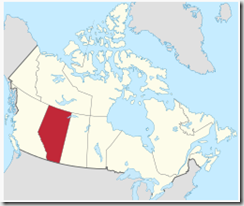
image

Alberta, Canada – Credit Wikipedia


# 8146


Yesterday’s announcement of North America’s first (imported) case of H5N1 in Alberta was the focus of a technical briefing from Canada’s Health Minister Rona Ambrose and Canada’s deputy chief public health officer, Dr. Gregory Taylor yesterday.


Below you’ll find the speaking notes (posted on the PHAC website) of both of their remarks.


Speaking Notes for the Honourable Rona Ambrose Minister of Health

January 8, 2014
Ottawa, ON

H5N1 Technical Briefing

Good afternoon. I am Rona Ambrose, Canada’s Minister of Health.

I am here to confirm North America’s first human case of H5N1, also known as avian flu.

The Public Health Agency of Canada has confirmed that a resident of Alberta, Canada who recently returned from a trip to China, has died of H5N1.

The health system did everything it could for this individual and our thoughts are with the family at this time.

The risk of H5N1 to Canadians is very low as there is no evidence of sustained human-to-human transmission. Importantly, this is not part of the seasonal flu, which circulates in Canada every year. This is an isolated case.

Our Government and the Public Health Agency of Canada is committed to disease surveillance and is working closely with its public health partners across the country and around the world.

The Public Health Agency of Canada continues to work closely with Alberta Health and other provincial health authorities to ensure the health and safety of Canadians.

The Public Health Agency has notified China, the World Health Organization and other international partners about the case, in keeping with our commitment under the International Health Regulations.

Our Government will work closely with its national and international partners, including the World Health Organization.

The Agency will continue to work with Chinese authorities to follow up on the source and circumstances of this infection.

We are holding today’s technical briefing to deliver a clear message to Canadians, the risk of getting H5N1 is very low. This is not the regular seasonal flu. This is an isolated case

Our Government is committed to ensuring that Canadians have up-to-date, accurate information and we will continue to communicate in an open and transparent way.

Now I’ll turn it over to Dr. Gregory Taylor, our deputy chief public health officer for Canada.

Speaking Notes – Deputy Chief Public Health Officer

January 8, 2014
Ottawa, ON

H5N1 Technical Briefing

Thank you Minister.

I would like to echo the Minister’s comments in extending our condolences to the family and friends of this individual.

H5N1 influenza is not the same as the seasonal flu.

This is the first and only confirmed human case of H5N1 in North America.

The risk of transmission is very low. There is no evidence of sustained human-to-human transmission.

H5N1 is an avian form of influenza which has been found to circulate among birds, mainly poultry. It has been found in birds in Asia, Europe, Africa and the Middle East.

There has only been less than 650 human cases of H5N1 in 15 countries over the last decade, primarily in people who were exposed to infected birds.

The illness it causes in humans is severe and kills about 60 per cent of those who are infected.

No other illnesses of this type have been identified in Canada since the traveller returned from China.

This is an isolated case.

The individual began to feel unwell on a return flight from Beijing to Vancouver (Air Canada 030) and Vancouver to Edmonton (Air Canada 244) on December 27.

The symptoms worsened and the individual was hospitalized, and passed away on January 3.

The Public Health Agency of Canada was notified on January 5th of the case, by Alberta. Our National Microbiology Lab in Winnipeg received specimens yesterday.

Last night, January 7th, lab results confirmed this was H5N1. This morning Canadian officials have been in contact with the World Health Organization.

The patient’s family is not showing any signs of illness. There is no evidence of human-to-human transmission on airplanes.

All evidence is indicating that this is one isolated case in an individual who was infected following exposure in China.

Although we don’t know at this time how the individual contracted the virus, for Canadians travelling abroad – in keeping with our travel health advice – we recommend:

If you are travelling to an area where any avian influenza is a concern:

  1. avoid high-risk areas such as poultry farms and live animal markets;
  2. avoid unnecessary contact with birds, including chickens, ducks and wild birds;
  3. avoid surfaces that may have bird droppings or secretions on them; and
  4. ensure that all poultry dishes are well cooked, including eggs .

Thank you

Wednesday, January 08, 2014

Alberta Canada Reports Fatal (Imported) H5N1 Infection

 image

Alberta, Canada – Credit Wikipedia


# 8141


The story is only about 30 minutes old, and details are still emerging, but we have word of the first fatal case of H5N1 in North America, that of a Chinese traveler who recently died in an Alberta hospital, and who was subsequently tested and found to have been infected with the H5N1 virus.


Our first stop is an announcement issued by the government of Alberta followed by excerpts from a Canadian Press news report.


Avian influenza death confirmed in Alberta

Jan 08, 2014 Media inquiries

Health Minister Fred Horne released the following statement today regarding Alberta’s first rare and isolated case of avian influenza.

Results that were received from the provincial laboratory on Monday, and confirmed by the National Microbiology Laboratory on Tuesday, indicate that an Albertan has died from H5N1 avian influenza.

This individual travelled to China in December. Upon returning to Alberta, this person was admitted to hospital on Jan. 1 and passed away on Jan. 3.   

“I would like to extend my condolences to the family for the loss of their loved one. I also want to thank our health care workers and our Chief Medical Officer of Health for their swift action and for their close co-ordination with the Government of Canada,” said Health Minister Fred Horne.

“This is a very rare and isolated case,” said Dr. James Talbot, Alberta’s Chief Medical Officer of Health. “Avian influenza is not easily transmitted from person to person. It is not the same virus that is currently present in seasonal influenza in Alberta.

“Public health has followed up with all close contacts of this individual and offered Tamiflu as a precaution. None of them have symptoms and the risk of developing symptoms is extremely low. Precautions for health care staff were also taken as part of this individual’s hospital treatment.   

“I expect that with the rarity of transmission and the additional precautions taken, there will be no more cases in Alberta.”

In 2013, there were 38 world-wide cases of H5N1 avian influenza reported to the World Health Organization and 24 deaths.


This next report comes from  The Canadian Press - ONLINE EDITION

Fatal case of H5N1 bird flu reported in Alberta, first North American case

By: The Canadian Press

Wednesday, Jan. 8, 2014 at 3:12 PM | Comments: 0

OTTAWA - Federal public health officials say a fatal human case of H5N1 bird flu has been reported in Canada, the first such case in North America.

Health Minister Rona Ambrose says the case, which was located in Alberta, was an isolated one and that the risk to the general public is small.

"The risk of getting H5N1 is very low," Ambrose told a hastily assembled news conference in Ottawa via conference call.

"This case is not part of the seasonal flu, which circulates in Canada every year."

The H5N1 strain is unrelated to the seasonal flu outbreak, Ambrose added.

Health officials say the victim had travelled to China last month and was hospitalized after returning to Alberta on Jan. 1, then died two days later.

They say that while it remains unclear how the person contracted the virus, there is no evidence of human-to-human transmission.

(Continue . . .)


While contact tracing will be done, at this point there’s no indication of onward transmission of the virus in North America.  I expect  we’ll be getting more details in the coming hours.

 
Stay tuned.

Tuesday, July 30, 2013

PHAC: Lyme Disease Risk Increasing In Canada

Female blacklegged ticks in various stages of feeding. Note the change in size and colour.

Female blacklegged ticks in various
stages of feeding. Note the change in
size and colour.-  Credit PHAC


#7527


Lyme disease, spread by infected ticks, has become a major vector-borne disease in the United States with nearly 35,000 confirmed or suspected cases reported in 2011 (cite Reported Cases of Lyme Disease by Year, United States, 2002-2011).


While cases have been reported in Canada (Lyme became a reportable disease there in 2009), they have run about 1/100th the rate seen in the United States (just 258 cases in 2011).


But those numbers may poised to increase, according to the following public health notice posted today by the PHAC, as infected ticks appear to be spreading into new regions of Canada.


Public Health Notice: Lyme disease

Why you should take note

Lyme disease is a serious illness spread by the bite of certain ticks; specifically, blacklegged ticks. Ticks are small, insect-like parasites that feed on the blood of animals, including humans. In regions where blacklegged ticks are found, people can come into contact with ticks by brushing against vegetation while participating in outdoor activities, such as, hiking, camping and gardening. When a tick bites, it attaches to the skin and the bite is usually painless. For most Canadians, the risk of getting Lyme disease is fairly low, but is increasing.


Risk to Canadians

The Public Health Agency of Canada, in partnership with provincial and territorial public health authorities, conducts surveillance for Lyme disease in Canada and studies show the risk of the disease is growing in this country. Risk occurs in parts of Manitoba, Ontario, southern Quebec, New Brunswick, Nova Scotia and southern British Columbia, and is increasing in south eastern and south central Canada due to spread of populations of the ticks that carry the bacterium that causes Lyme disease.


You are most at risk of being exposed to Lyme disease in the regions listed above where blacklegged and western blacklegged ticks are found. But migratory birds can also carry these ticks to other parts of Canada. Current research tells us that blacklegged ticks may be establishing themselves in new areas that are not identified yet. This may mean that risk of Lyme disease may occur over broader regions of Canada than we are presently aware of.


Although blacklegged ticks can be active throughout much of the year in some locations, your risk of acquiring Lyme disease, especially in areas where tick populations are established, is greatest during the summer months when younger ticks are most active.


Lyme disease is much more common in the United States than in Canada, with risk areas in the Midwest and northeastern states. In 2011, approximately 35,000 cases of Lyme disease were reported in the United States compared to approximately 258 cases in Canada for the same year.


(Continue . . . )


As Public Health Canada’s Lyme FAQ explains, black legged ticks carry and can transmit more than just Lyme disease:


Although rarer than Lyme disease, there are other infections that can also be contracted from blacklegged ticks. These include Anaplasma phagocytophilum, the agent of human granulocytic anaplasmosis; Babesia microti, the agent of human babesiosis and Powassan encephalitis virus. Most of the precautions outlined above will also help to protect individuals from these infections.


The CDC lists a growing number of diseases carried by ticks in the United States, including: Anaplasmosis, Babesiosis , Ehrlichiosis, Lyme disease, Rickettsia parkeri Rickettsiosis, Rocky Mountain Spotted Fever (RMSF), STARI (Southern Tick-Associated Rash Illness), Tickborne relapsing fever (TBRF), Tularemia, and 364D Rickettsiosis.


We’ve discussed a number these in the past, including:


Referral: Maryn McKenna On Babesia And The Blood Supply

NEJM: Emergence Of A New Bacterial Cause Of Ehrlichiosis

New Phlebovirus Discovered In Missouri

tick . . . tick . . . tick . . .

Minnesota: Powassan Virus Fatality


When you consider the wide panoply of diseases carried by ticks it makes sense to avoid tick bites whenever possible.


This from the Minnesota Department of Health.


image

Lastly, the CDC offers the following advice:


Preventing Tick Bites

While it is a good idea to take preventive measures against ticks year-round, be extra vigilant in warmer months (April-September) when ticks are most active.

Avoid Direct Contact with Ticks
  • Avoid wooded and bushy areas with high grass and leaf litter.
  • Walk in the center of trails.
Repel Ticks with DEET or Permethrin
  • Use repellents that contain 20% or more DEET (N, N-diethyl-m-toluamide) on the exposed skin for protection that lasts up to several hours. Always follow product instructions. Parents should apply this product to their children, avoiding hands, eyes, and mouth.
  • Use products that contain permethrin on clothing. Treat clothing and gear, such as boots, pants, socks and tents. It remains protective through several washings. Pre-treated clothing is available and remains protective for up to 70 washings.
  • Other repellents registered by the Environmental Protection Agency (EPA) may be found at http://cfpub.epa.gov/oppref/insect/.
Find and Remove Ticks from Your Body
  • Bathe or shower as soon as possible after coming indoors (preferably within two hours) to wash off and more easily find ticks that are crawling on you.
  • Conduct a full-body tick check using a hand-held or full-length mirror to view all parts of your body upon return from tick-infested areas. Parents should check their children for ticks under the arms, in and around the ears, inside the belly button, behind the knees, between the legs, around the waist, and especially in their hair.
  • Examine gear and pets. Ticks can ride into the home on clothing and pets, then attach to a person later, so carefully examine pets, coats, and day packs. Tumble clothes in a dryer on high heat for an hour to kill remaining ticks.

Saturday, April 27, 2013

PHAC Guidance On Handling H7N9 Cases

image image

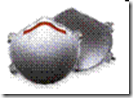
N-95 Respirator         Surgical Facemask


# 7197


Yesterday the Public Health Agency Of Canada  published a set of Interim Guidance - Avian Influenza A(H7N9) Virus documents dealing with infection prevention and control in acute care settings.


Compared to the guidance released last week by the United States (see CDC Interim H7N9 Infection Control Guidelines), the Canadian version is far less stringent.


The CDC Interim H7N9 Infection Control Guidelines, call for fitted N95 respirators, gowns, gloves, and eye protection as a minimum level of PPEs (personal protective equipment) for all HCWs who may have contact with potential or confirmed H7N9 patients.


Additionally, confirmed or suspected patients are to be placed in an Airborne Infection Isolation Room (AIIR) whenever possible.


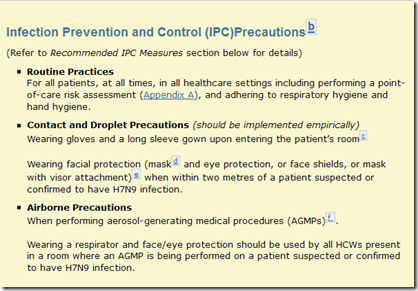
Below you’ll find excerpts that illustrate some of the differences:


Infection Prevention and Control Guidance for Acute Care Settings

image

Notes
Footnote a
Acute care - A facility/setting where a variety of inpatient services is provided, which may include surgery and intensive care.  For the purpose of this document, acute care also includes ambulatory care settings such as hospital emergency departments, and free-standing ambulatory (day) surgery or other day procedures (e.g., endoscopy) centres.
Footnote b
IPC measures included in this interim guidance are considered the minimum recommendations; a point-of-care risk assessment approach (Appendix A) should be used by the HCW prior to every patient interaction, to determine what level of respiratory, and other personal protection, supports the use of additional measures where indicated.
Footnote c
Patient's room, cubicle or designated bedspace.
Footnote d
Surgical or procedure masks.
Footnote e
Historically, H7 influenza A viruses have shown a marked ocular tropism and have been associated with conjunctivitis in humans, with occasional cases leading to more severe illness. The importance of use of eye protection/face shields/visors should be reinforced as part of IPC precautions for this virus.
Footnote f
Whenever possible AGMPs should be performed in an airborne infection isolation room.

PATIENT PLACEMENT AND ACCOMMODATION

Patients suspected or confirmed to have H7N9 infection should be cared for in single rooms, if possible, with designated private toilets and patient sinks.   If cohorting is necessary, only patients who are confirmed to have H7N9 infection should be cohorted together.  Infection prevention and control signage should be placed at the room entrance indicating contact and droplet precautions required upon entry to the room.  Airborne infection isolation rooms should be used for aerosol-generating medical procedures whenever possible.


<SNIP>


PERSONAL PROTECTIVE EQUIPMENT
Personal protective equipment (PPE) for contact and droplet precautions should be provided outside the room of the patient suspected or confirmed to have H7N9 infection.  HCWs, families and visitors should use the following PPE:


Gloves

Gloves should be worn upon entering the patient’s room (for care of the patient and for contact with the patient’s environment).  Gloves should be removed and discarded into a no-touch waste receptacle.


Hand hygiene should be performed after removing gloves, upon exiting the patient’s room.


Gowns


A long-sleeved gown should be worn upon entering the patient’s room.  The gown should be removed and discarded into a no-touch receptacle.

Hand hygiene should be performed after removing gowns, upon exiting the patient’s room.


Facial protection

Facial protection (masks and eye protection, or face shields, or mask with visor attachment) should be worn when within two metres of a patient suspected or confirmed with H7N9 infection. Facial protection should be removed after gloves and gown before leaving the patient’s room and discarded in a hands-free waste and linen receptacle within the room.

Hand hygiene should be performed after removing gloves and gown, before removing facial protection, and after leaving the room.

In a shared room/cohort setting of patients with confirmed H7N9 infection, facial protection may be worn for the care of successive patients.


Respiratory Protection

Wearing a respirator is recommended when performing aerosol generating medical procedures on a patient suspected or confirmed with H7N9 infection (refer to Section 12).


HCWs should use a point-of-care risk assessment approach (

Appendix A) before each patient interaction to evaluate the likelihood of exposure.


<SNIP>


AEROSOL GENERATING MEDICAL PROCEDURES (AGMPs)


AGMPs should be performed on patients suspected or confirmed to have H7N9 infection only if medically necessary.  The number of HCWs present during an AGMP should be limited to only those essential for patient care and support.  A respirator and face/eye protection is recommended for all HCWs present in a room where an AGMP is being performed on a patient suspected or confirmed to have H7N9 infection.


AGMPs should be performed in airborne infection isolation rooms, whenever feasible.  If not feasible, AGMPs should be carried out using a process and in an environment that minimizes the exposure risk for HCWs, ensuring that non-infected patients/visitors and others in the healthcare setting are not unnecessarily exposed to the H7N9 virus.


The most striking differences between the CDC and the PHAC recommendations are the minimum standards for respiratory protective gear for HCWs in contact with H7N9 cases (U.S. = N95, Canada =Surgical/procedure Mask) and the preferred placement of patients (US= AIIR, Canada = Private room).


The Canadian recommendations do call for  N95 respirators for HCWs performing AGMPs.


Admittedly, we have finite supplies of N95 respirators and shortages are likely during a severe pandemic, and the availability of AIIR facilities would dwindle quickly during an epidemic of any size.


So in practical terms, the tougher U.S. guidelines would likely need some adjustments once a certain threshold of cases are reached.


As far as relative merits of surgical masks versus N95 respirators are concerned, we’ve covered this contentious debate often, including:


Influenza Transmission, PPEs & `Super Emitters’

Study: Aerosolized Influenza And PPEs
Study: Longevity Of Viruses On PPEs
Why Size Matters
IOM: PPEs For HCWs 2010 Update