Showing posts with label Saudi Arabai. Show all posts

Monday, May 04, 2015

Saudi Arabia Reports 1 New MERS Case

image


#10,005


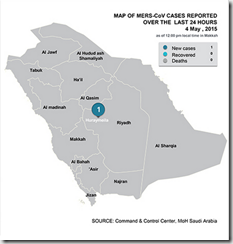
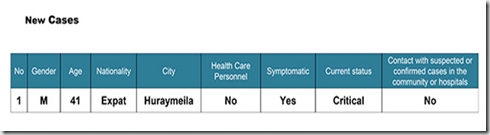
The unexpected lull in MERS cases in Saudi Arabia continues, with only sporadic cases being reported.  Today’s case involves a 41 year-old ex-pat male in critical condition, with no known exposure cited.

image 


This time last year we were seeing dozens of new cases each week, many as a result of nosocomial outbreaks in large medical facilities.  While 2015 started off with more cases in the first quarter than last year, we’ve seen a remarkable drop in cases over the past 30 days.

Tuesday, February 24, 2015

Postcards From The MERS Twitterverse

image

# 9748


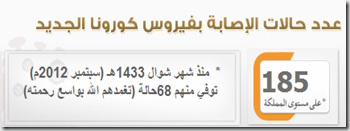
Between the rising case counts of the past couple of weeks, yesterday’s WHO Mission statement which cited critical lapses in our understanding of how the MERS coronavirus transmits, a new report that suggests 90% of camels in the region may be infected, and a new statement by the Saudi MOH on diagnosing the virus – Arabic twitter traffic  (hashtag  كورونا  aka `Corona’) is really humming this morning.


I’m currently seeing 30 to 40 tweets a minute, with the camel story making up the bulk of the activity. 


While zoonotic transmission of the coronavirus has been suspected for at least 18 months (see Aug 2013’s  Lancet: Camels Found With Antibodies To MERS-CoV-Like Virus), and the evidence has mounted since then (see CIDRAP: More Evidence for Camel-to-Human MERS-CoV Transmission), the general public has been slow to accept the idea that the beloved symbol of their nation could harbor a deadly disease.


A concept made even harder to accept due to the widespread belief in the healthful effects of camel’s milk and urine in the treatment of disease.


Despite the increased warnings (see Saudi Ministry Of Agriculture Issued Warnings On Camels) urging breeders and owners to limit their contact with camels, and to use PPEs (masks, gloves, protective clothing) when in close contact with their animals, we continue to see occasional stories in the Saudi Press `exonerating camels’ as a source of the disease.


All of which makes today’s report, claiming that Saudi Health: 90% of Ebel Gulf infected with Corona a major twitter topic.   Note : `Ebel’, `Apple’, and `Beauty’ are all common translations from the Arabic for `camel’.


media//version4_9998545667.jpg

WASHINGTON: US Undersecretary of the Saudi Ministry of Health for Preventive Health Dr. Abdullah Asiri "that 90% of Ebel Gulf countries infected with Corona."

He pointed out that 50% of the beauty in Al-Ahsa region east of the kingdom carrying "Corona" in the respiratory secretions, stressing that the person who infected mixer beauty colds, exhibition of transmitting the virus to a family member without showing symptoms

(Continue . . . )


Despite the growing body of evidence, the recent PSA videos from the MOH (see below), and continued warnings to avoid contact and to wear PPEs around `beauty’,  public acceptance of the notion remains slow in coming.


Also trending are comments about, and links to, a statement posted by the Saudi MOH today on laboratory testing, and the need for isolation of, MERS cases.


image


D.nsrin Sherbini: symptoms of respiratory viruses and virus (Corona) are similar

05 May 1436

Advisory infectious diseases and epidemics, Dr. Nasrin Sherbini confirmed that the only way to make sure the infection (Corona) is through a laboratory test, and that there are no symptoms that can differentiate between respiratory viruses such as influenza virus (Corona); all of them are similar.

She added that the virus (Corona) is transmitted through droplets of a cough or sneeze of an infected for Mkhaltin person has a direct and close to, or touch the membranes of the eyes, nose and mouth after touching places them spray the patient; therefore must contacts monitoring after the patient isolate them, and hasten the detection and screening at the emergence of symptoms such as high fever or symptoms of flu or pneumonia Kdik of breath and chest pain and the like.

This came during the hosting of the National Center for Media and Health Education of the Ministry of Health within the activities of the awareness campaign to introduce the virus (Corona) that causes respiratory syndrome Middle East (MERS.COV).

She noted that many studies supports that beauty is one of the sources (Corona), and that the transmission of the virus is through the respiratory tract, the spray camels and their secretions often and not by drinking milk, but preferably limited to drinking milk and dairy products, pasteurized only, and when having to drink milk directly from the camels and other livestock must be well boiled. They must take the necessary contacts of a camel wearing protective face precautions (nose and eyes), especially when approaching them directly and exposure to secretions and Rmazha or righteousness.

Attributed the high rate of infection among people with chronic diseases in cases recorded since the emergence of the virus to the general health situation of people with chronic diseases and weak immunity; making them more susceptible to infection than others.

It is worth mentioning that the National Center for Media and health education will continue to host a group of doctors and specialists from all health sectors until 06/05/1436 AH, via toll-free telephone Center 8,002,494,444 and the calculation of the ministry on Twitter saudimoh;  to respond to queries from callers and answer their questions about HIV (Corona ), where it will be on Wednesday hosted d. Future newborn, consultant infectious diseases, from 1:00 pm until 3:00 pm


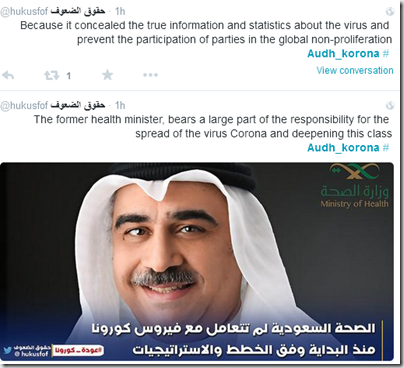
While much of the Arabic twitter traffic appears `coordinated’  (tons of re-tweets of `official’ messages, or `safe’ news stories) occasionally accusatory tweets show up, such as the pair below laying blame on the previous MOH.
image


After seeing big declines in twitter traffic regarding MERS in the last half of 2014, the past few days have seen a sizable reawakening of public interest.


A trend that is likely to only increase as the expected spring wave accelerates over the next several months.
Friday, February 13, 2015

Saudi MOH: 8 More MERS Cases


image


# 9709


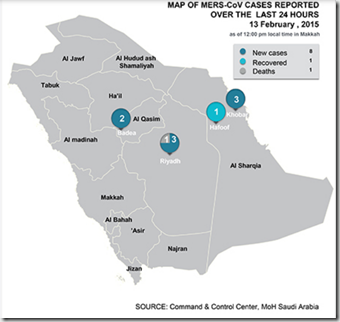
The abrupt escalation in MERS cases continues today with 8 more announced by the Saudi MOH, bringing our three day total to 20 and our February total to 32. 


MERS appears to be off to an earlier start this year. Less than halfway through the month of February, and we have already far exceeded last year’s total for the month.


Four cases are linked to nosocomial exposure, while two others are under investigation.  One case is a HCW.  Riyadh and Khobar each report 3 cases, while Badea-Qseem reports 2.


image

image

Friday, October 17, 2014

WHO MERS Update – Saudi Arabia

Photo: ©FAO/Ami Vitale

Credit FAO


# 9206


While are understandably focused on Ebola, there are other emerging viral infections out there that could – if they they began to spread efficiently among humans – pose an even bigger global threat than Ebola.  Among those are the various flavors of avian flu (H5N1, H7N9, H5N6, etc.) and the MERS coronavirus.


Although the number of MERS cases has dropped over the summer, we continue to see a small trickle of cases in Saudi Arabia.  The latest World Health Organization update lists 7 new cases, 4 of whom report frequent contact with camels or camel products.


The exact role of camels in the transmission of MERS to humans has yet to be established, but increasingly camels are being viewed as a  likely zoonotic source of the virus (see EID Journal: Replication & Shedding Of MERS-CoV In Inoculated Camels).


Last September we saw the KSA MOH Reiterates Camel Warnings On MERS.


Middle East respiratory syndrome coronavirus (MERS-CoV) – Saudi Arabia

Disease outbreak news
16 October 2014

The National IHR Focal Point of Saudi Arabia (SAU) has reported additional laboratory-confirmed cases of infection with Middle East respiratory syndrome coronavirus (MERS-CoV) to WHO.

Epidemiological update

Between 29 September and 11 October 2014, 7 additional cases of MERS-CoV infection were reported, including 1 death, with details as follows:

  • A 69 year old male from Taif City who developed symptoms on 17 September 2014. The patient has comorbidities and his possible contact with animals and consumption of raw camel products is currently under investigation.
  • A 65 year old male from Jubail City who developed symptoms on 24 September 2014. The patient has comorbidities, frequent contact with camels and frequently consumes raw camel milk.
  • A 70 year old male from Alhenakiah City who developed symptoms on 24 September 2014. The patient has comorbidities, frequent contact with camels and frequently consumes raw camel milk.
  • A 60 year old male from Geiya city who developed symptoms on 1 October 2014. The patient has comorbidities, frequent contact with camels and frequently consumes raw camel milk.
  • A 51 year old male from Haradh City who developed symptoms on 30 September 2014. The case died on 05 October 2014. The patient had comorbidities, frequent contact with camels and frequently consumed raw camel milk.
  • A 77 year old male from Taif City who developed symptoms on 3 October 2014. The patient has comorbidities and became infected while hospitalized.
  • A 50 year old non-national male from Najran City who developed symptoms on 3 October 2014. He reported no history of contact with animals, but resides in an area with heavy presence of camel farms.

The tracing of household contacts is ongoing for these cases.

In addition, the deaths of 4 previously reported MERS-CoV cases from Saudi Arabia were also reported.

Cases identified in SAU following a retrospective review

Following a retrospective review of laboratory records in non-Ministry of Health hospitals, the National IHR Focal Point of SAU has also reported 19 additional cases of MERS-CoV infection, including 11 deaths. Of the additional cases, 1 occurred in August 2013, 2 occurred in March 2014, 10 occurred in April 2014 and 6 occurred in May 2014.

Of the additional cases reported by SAU, 79% (15 people) are Saudi nationals. Sixteen of the reported cases resided in Jeddah, 2 in Kharj and 1 in Dhahran. The median age is 56 years (ranging from 27 to 89), 68% (13/19) were men, and 11% (2/19) of the reported cases were health care workers.

The retrospective identification of these 19 cases does not alter the pattern and dynamic of the epidemic and the global risk assessment remains unchanged.

In addition, SAU notified WHO of 1 false positive case reported in a cohort of cases that occurred between 11 April - 9 June 2014. SAU also reported that 1 case had been reported twice and was therefore a duplicate case.

Globally, 877 laboratory-confirmed cases of infection with MERS-CoV including at least 317 related deaths have been reported to WHO. The total case count removes the false positive case and the duplicate case reported above.

Friday, September 12, 2014

Saudi MOH: 2 New MERS Cases

image


# 9069


While our attentions are rightfully focused on the Ebola epidemic in West Africa, it wasn’t so many months ago when the MERS Coronavirus on the Arabian peninsula was dominating infectious disease headlines.  Over the past couple of months, we’ve only seen a small trickle of cases reported, but as today’s report from the Saudi MOH shows – the virus hasn’t disappeared entirely.


image


Given that we are roughly 3 weeks away from the start of the annual Hajj, and three million religious pilgrims are expected to descend upon the Holy sites of Saudi Arabia during the first half of October, we are particularly wary of any uptick in MERS reports.


This year, in addition to concerns that they might export some MERS cases, Saudi officials are also worried that Ebola cases could arrive as pilgrims, and last month we saw the Gulf States Meet To Discuss Ebola Precautions For The Upcoming Hajj.


Last July, in  EID Journal: Respiratory Viruses & Bacteria Among Pilgrims During The 2013 Hajj, we looked at the extraordinarily high percentage of Hajjis (approx. 80%)  who leave Saudi Arabia with some type of respiratory infection.  The vast majority of these respiratory infections were due to either rhinoviruses or influenza, with a smaller number of cases of pneumonia.


Whether or not MERS infections appear during the Hajj, public health agencies around the world are going to be taxed by the sheer volume of symptomatic (with `something’) travelers returning from the Middle East this fall.  


Most (hopefully, all) will have something mundane, like seasonal influenza or the common cold, but the potential for seeing something more serious cannot be ignored.


For those contemplating making the Hajj this year, the CDC urges practicing enhanced precautions and provides specific travel advice , including required and recommended vaccinations.

image

Tuesday, August 05, 2014

Saudi MOH: Testing Possible Ebola Suspect

image 


# 8916


With the escalating Ebola crisis in Western Africa, and an increased awareness of the potential of seeing infected travelers land in other areas of the globe, we can expect to see a steady stream of reports like the one below announcing the testing of `suspected Ebola’ cases.


Most will likely turn out to have something less dire, like Dengue or malaria.  But the possibility of Ebola in travelers coming from West Africa cannot be ignored.


While I’m not inclined to post every suspected case being tested in this blog (they will get plenty of coverage elsewhere), today we’ve a report from the Saudi Ministry of Health regarding a suspected case recently arrived in Jeddah from Sierra Leone.


As Jeddah was ground zero for this year’s big MERS outbreak in Saudi Arabia, and is very near the Holy city of Mecca,  this one has enough crossover interest to be worthy of posting. 


As the MOH statement indicates, there are a lot of possibilities other than Ebola.


Saudi Arabia Testing Blood Samples of Suspected Ebola Case

05 August 2014

A Saudi man whose travel history includes a recent business trip to Sierra Leone presented with symptoms of viral hemorrhagic fever last night at a hospital in Jeddah.

The source of his infection could be one of several viruses, including Ebola virus because of his recent travel to a country in which there is an active outbreak of the disease.

The patient, 40, is in critical condition. He has been moved to a tertiary care center with advanced isolation and infection-control capabilities.

Preliminary testing at a specialized laboratory in Saudi Arabia was negative for Dengue virus.

Additional tests are underway to determine if the source of the infection is yellow fever, Alkhumra or another virus. MOH is also submitting samples for Ebola virus testing at an international reference lab at the recommendation of the World Health Organization.

Some viral hemorrhagic fevers are found in Saudi Arabia, however there has never been a case of Ebola virus in the Kingdom.

This case was detected by the Ministry’s surveillance system, which was established within the Command & Control Center and includes real-time monitoring and self-reporting by medical facilities across the Kingdom.

Saudi Arabia announced in April that it is not issuing visas for the 2014 Hajj and Umrah to pilgrims from Sierra Leone, Liberia and Guinea due to these countries suffering from an Ebola outbreak.

Medical workers are monitoring travelers at airports and seaports across the Kingdom.

Wednesday, April 23, 2014

Saudi MOH: 2nd Update Today – 13 New MERS Cases

image


# 8519


My thanks to Helen Branswell, @FluTrackers and @Ironorehopper for tweeting this latest update from the Saudi Ministry of Health where – for the second time today – they’ve released a double-digit update.  This time, they have 13 new cases on the list, bringing the day’s total to 24.


While the number of cases is concerning, one very good sign is the increase in the amount of information this update is providing on each case.  A nice summary at the top, and individual case details (including dates of hospital admission), are welcome additions to this latest release.


Hopefully this will be a sign of continued better organization, and more openness, from the Saudi Ministry of Health.


Of particular note with this release, the MOH is acknowledging 4 more cases in the Holy City (Mecca), which  must be a concern for those planning on making the pilgrimage this year (Umrah or Hajj) and for its organizers.  Also, only one HCW case (fatal) was reported, as well as only 1 asymptomatic case, bucking recent trends that have seen a large surge in both types of cases.


(Health) record (13) case infected with Corona

The total number of confirmed cases recently: 13

Distribution of cases, cities of the Kingdom:

 5 cases in Riyadh city

 2 two in Jeddah

 4 cases in the Holy City

 If one in Madinah

 one case reported by the who representative in Jordan for hypnotic Saudi citizen

• Distribution of cases at hospitals in Saudi Arabia

 5 cases in the military hospital in Riyadh.

 If one at King Faisal specialist hospital in Jeddah

 If one in a hospital in Medina

 If one in the security forces hospital in the Holy City

 3 cases in Al Noor hospital in Makkah

• Health status of cases:

 one case without symptoms

 3 stable situations and hypnotic in suites

 If one stable Jordan

 6 cases in intensive care

 2 deaths

• Details of cases

1/80-year citizen, has diabetes and high blood pressure and chronic renal failure and cancer in the blood, entered the military hospital in Riyadh on 28/3/2014, died in date 22 April 2014.

2/def 69 years, has diabetes and high blood pressure, entered a military hospital in Riyadh on 18 April 2014 complaining of symptoms of diabetic foot, then was hit by pneumonia, hypnotic in hospital on artificial respiratory.

3/a 70 years old, has a heart disease and chronic lung disease entered a military hospital in Riyadh on 4 April 2014 with pneumonia, hypnotic in hospital on artificial respiratory.

4/citizen 72 years, has diabetes and high blood pressure, entered a military hospital in Riyadh on 5 April 2014 and then was hit by pneumonia hypnotic in hospital on artificial respiratory.

5/an 88 years has diabetes, hypertension and stroke, the military hospital in Riyadh on 27/3/2014 and then was hit by pneumonia and his condition is stable.

6/41-year citizen contacts of the confirmed case in Jeddah and there are no symptoms.

7/def 74 years, entered King Faisal Hospital in Jeddah on 14 April 2014 suffer symptoms of anemia, symptoms of pneumonia on 20 April 2014 hypnotic in intensive care.

8/46-year citizen entered the security forces hospital in the Holy City on 21 April 2014 with respiratory symptoms sedation in intensive care.

9/68 citizen entered the Al Noor hospital in Makkah on 12 April 2014, a sample negative on 14 April 2014, became positive on 22 April 2014 hypnotized in intensive care.

10/moatamer Turkish nationality, 65, entered the hospital in the Holy City with respiratory symptoms, his health stable.

11/sexuality Klaus's 52-year resident income of Al Noor hospital in Makkah on 18/4/2014 died on 22 April 2014.

12/13 year old citizen who has asthma, he developed respiratory symptoms on 9/4/2014, entered a hospital in Medina on 21st April 2014 stable condition.

13/the case reported by the who representative in Jordan for a 25 years in Burwood, the Ministry was informed of the positive test result, still in Jordan and stable condition.

• Two deaths of two patients were suspected and confirmed and condition is as follows:

  • resident working in the health field in Al-kharj, 45, and suffering from chronic illness and sadly passed away on 21st April 2014
  • a 29-year-old was infection and died in King Fahd Hospital in Jeddah on 22 April 2014

Friday, April 11, 2014

Saudi MOH Announces 3 New MERS Cases (1 Fatal)

image

# 8462


While I was away from my desk for an hour the Saudi MOH posted an update (at midnight their time) describing three additional cases in Jeddah (see Saudi MOH Announces 3 More MERS-CoV Cases In Jeddah and Saudi MOH Statement On Jeddah Cluster for earlier reports on this cluster).


In addition to seeing more mild or asymptomatic infections being reported, in recent weeks we have also seen a younger cohort of patients than we’ve seen in the past, with many cases being in their twenties or thirties.


Health: 3 cases of HIV (SK) new in Jeddah

11/10/1435

Within the framework of epidemiological investigation and ongoing follow-up by the Ministry of health for virus "SK" causes AIDS Middle East MERS CoV respiratory Ministry announces the registration of three cases of the virus in Jeddah.

The first resident at the age of 45, have passed away may he rest in peace.

And the second resident working in the health field 28 years old and do not have symptoms.

And the third to citizen works for health 25 years old and had no symptoms.

Thursday, April 10, 2014

Saudi MOH Announces 3 More MERS-CoV Cases In Jeddah

image


# 8458


While the Saudi Twitterverse has been rife with (unconfirmed) rumors of additional MERS cases (see yesterday’s MERS, The Twitterverse & MOH Damage Control) over the past 24 hours, we have an announcement late this afternoon from the Saudi MOH confirming three more cases from Jeddah.


Few details are provided, so we don’t know exactly how – epidemiologically speaking - these cases fit into the previously announced outbreak (see Saudi MOH Statement On Jeddah Cluster).  None of these cases are listed as working in the health sector.


Health: registration 3 cases of HIV (Corona) new in Jeddah

06/10/1435

In the context of the work of epidemiological investigation and ongoing follow-up carried out by the Ministry of Health for the virus, "Corona" that causes respiratory syndrome Middle East MERS CoV Ministry announces the registration of three cases of HIV infection in Jeddah.

The first citizen at the age of 70 years and receiving treatment for intensive care, asking God to him a speedy recovery.

The second citizen at the age of 34 years and his condition is stable.

The third citizen at the age of 29 years and his condition is stable.

Note that it has been examined 220 samples during the last period, and tests showed it negative, except for the three cases mentioned above.

WHO MERS-CoV Update KSA & UAE – April 10th

Coronavirus

Photo Credit NIAID


# 8456


The World Health Organization has posted an update on the MERS coronavirus, with details on 5 recent cases (4 from Saudi Arabia, 1 from the UAE).  The two cases from Jeddah are part of a much larger event (see Saudi MOH Statement On Jeddah Cluster) which has received considerable attention over the past couple of days, and additional case information is expected.


Middle East respiratory syndrome coronavirus (MERS-CoV) – update

Disease Outbreak News

10 April 2014 - The Ministries of Health of Saudi Arabia and the United Arab Emirates (UAE) recently announced additional laboratory-confirmed cases of infection with Middle East respiratory syndrome coronavirus (MERS-CoV).

The 4 additional laboratory-confirmed cases reported to WHO by the Ministry of Health of Saudi Arabia on 28 March and 2 April 2014 include:
  • A 26 year-old man from Jeddah. He became ill on 22 March, was hospitalised on 23 March, and died on 6 April.
  • A 26 year-old man from Jeddah. He became ill on 16 March and has been hospitalised since 25 March.
  • A 77 year-old woman from Riyadh region. She became ill on 25 March and is currently in a stable condition. She is not known to have a history of exposure to animals.
  • A 59 year-old man from Riyadh region who became ill on 22 March, 2014. He is not known to have contact with animals or a known case.
The additional laboratory-confirmed case reported to WHO by the Ministry of Health of the UAE on 30 March includes:
  • A 64 year-old man from Abu Dhabi with underlying medical conditions. He became ill on 21 March, was hospitalised on 25 March and died on 30 March. He had underlying medical conditions. He did not have contact with a previously laboratory-confirmed case, but has had exposure to animals. The patient visited a camel farm in Harb city in Saudi Arabia on 10 March and visited Nezwa city in Oman for a day on 20 March. He owned an animal farm in the UAE with poultry and sheep, but had no recent visit to the farm. Investigation into the family and health care contacts is ongoing.

Globally, from September 2012 to date, WHO has been informed of a total of 211 laboratory-confirmed cases of infection with MERS-CoV, including 88 deaths.

(Continue . . .)

Tuesday, December 31, 2013

WHO MERS-CoV Update – Dec 31st


image

Coronavirus – Credit CDC PHIL


# 8116


The World Health Organization has published an end-of-year MERS-CoV update that catches us up with five recent cases announced out of Saudi Arabia and two cases from the UAE.  The latest case from the UAE is the (asymptomatic) wife of a case announced last week, who is reported now as having died.


31/12/2013

Middle East respiratory syndrome coronavirus (MERS-CoV) – update


Disease outbreak news


31 December 2013 – On 25 December 2013, WHO has been informed of five additional laboratory-confirmed case of Middle East Respiratory Syndrome coronavirus (MERS-CoV) in Saudi Arabia.

One of the cases is a 57 year-old male from Riyadh who was hospitalized on 17 December,  2013 and is currently in an Intensive Care Unit (ICU). He was laboratory confirmed on 19 December,  2013. He has underlying chronic diseases. There are no known exposures to animals or a laboratory-confirmed case, and the case has no history of traveling outside Riyadh region.

Second case is a 73 year-old male national, from Riyadh who developed respiratory symptoms and was transferred to an intensive care unit on 25 November 2013, and died on 17 December 2013. On 19 December 2013, he was laboratory confirmed for MERS-CoV. There are no known exposures to animals or a laboratory-confirmed case. In addition, he has no history of travel outside of Riyadh

Three additional cases (two males and one female) are health care workers who have not reported any symptoms.

On December 26, WHO has been informed of one new confirmed case of MERS CoV from the United Arab Emirates (UAE).  In addition, UAE announced the death of the 68 year old male reported on 22 December 2013.

The new case is a 59 year-old female from Sharjah, and is the wife of the 68 year old male reported on 22 December, 2013. She is reported to have no symptoms, no history of contact with animals and no travel history. She is currently in hospital under isolation. Other contacts have been screened and are negative for MERS-CoV.

Globally, from September 2012 to date, WHO has been informed of a total of 176 laboratory-confirmed cases of infection with MERS-CoV, including 74 deaths.

Based on the current situation and available information, WHO encourages all Member States to continue their surveillance for severe acute respiratory infections (SARI) and to carefully review any unusual patterns.

Health care providers are advised to maintain vigilance. Recent travellers returning from the Middle East who develop SARI should be tested for MERS-CoV as advised in the current surveillance recommendations.

Patients diagnosed and reported to date have had respiratory disease as their primary illness. Diarrhoea is commonly reported among the patients and severe complications include renal failure and acute respiratory distress syndrome (ARDS) with shock. It is possible that severely immunocompromised patients can present with atypical signs and symptoms.

Health care facilities are reminded of the importance of systematic implementation of infection prevention and control (IPC). Health care facilities that provide care for patients suspected or confirmed with MERS-CoV infection should take appropriate measures to decrease the risk of transmission of the virus to other patients, health care workers and visitors.
All Member States are reminded to promptly assess and notify WHO of any new case of infection with MERS-CoV, along with information about potential exposures that may have resulted in infection and a description of the clinical course. Investigation into the source of exposure should promptly be initiated to identify the mode of exposure, so that further transmission of the virus can be prevented.

People at high risk of severe disease due to MERS-CoV should avoid close contact with animals when visiting farms or barn areas where the virus is known to be potentially circulating. For the general public, when visiting a farm or a barn, general hygiene measures, such as regular hand washing before and after touching animals, avoiding contact with sick animals, and following food hygiene practices, should be adhered to.

WHO does not advise special screening at points of entry with regard to this event nor does it currently recommend the application of any travel or trade restrictions.

WHO has convened an Emergency Committee under the International Health Regulations (IHR) to advise the Director-General on the status of the current situation. The Emergency Committee, which comprises international experts from all WHO Regions, unanimously advised that, with the information now available, and using a risk-assessment approach, the conditions for a Public Health Emergency of International Concern (PHEIC) have not at present been met.

Tuesday, November 26, 2013

WHO MERS-CoV Update – Nov 26th


image

Photo Credit - WHO


# 8010


Overnight the World Health Organization released a new MERS Coronavirus update with details on three previously announced cases from Saudi Arabia. 


I’m pleased to note that this update contains more details (in particular, onset and hospitalization dates) than we’ve normally seen coming out of the Saudi Ministry of Health.  Hopefully this is the start of a welcome trend.


Of these three cases, two died.  I’ve excerpted the case information.  Follow the link to read the entire update.


Middle East respiratory syndrome coronavirus (MERS-CoV) - update

Disease outbreak news

26 November 2013 - WHO has been informed of an additional three laboratory-confirmed cases of infection with Middle East respiratory syndrome coronavirus (MERS-CoV) in Saudi Arabia.


The first patient is a 73-year-old woman with underlying medical conditions from Riyadh who became ill on 12 November 2013, was hospitalized on 14 November 2013 and died on 18 November 2013. The second patient is a 65 year-old man with an underlying medical condition from Jawf region who became ill on 4 November 2013 and was hospitalized on 14 November 2013. The third patient is a 37-year-old man from Riyadh who became ill on 9 November 2013, was hospitalized on 13 November 2013 and died on 18 November 2013. None of the three patients had exposure to animals or contact to a previously laboratory-confirmed case with MERS-CoV.


Globally, from September 2012 to date, WHO has been informed of a total of 160 laboratory-confirmed cases of infection with MERS-CoV, including 68 deaths.

(Continue . . . )


Tuesday, November 12, 2013

ProMed Mail: Dr. Memish On Saudi MERS Patient & Camel Testing

image

Coronavirus – Credit CDC PHIL


# 7965

In a follow up to a story which we’ve been following since yesterday (see KSA MERS Investigation: Testing The Beast, Not The Beauty & MERS-CoV: CIDRAP & Dr. Mackay On The Saudi Camel Connection), ProMed Mail has published this afternoon an email from Dr. Ziad Memish , Deputy Minister for Public Health for the Kingdom of Saudi Arabia, that provides some additional details.


I’ve only included some excerpts, you’ll want to follow the link to read the entire release, including commentary by the editors at ProMed.


Published Date: 2013-11-12 13:01:10
Subject: PRO/AH/EDR> MERS-CoV - Eastern Mediterranean (85): animal reservoir, camel, susp, official
Archive Number: 20131112.2051424

MERS-COV - EASTERN MEDITERRANEAN (85): ANIMAL RESERVOIR, CAMEL, SUSPECTED, OFFICIAL

A ProMED-mail post http://www.promedmail.org
ProMED-mail is a program of the International Society for Infectious Diseases http://www.isid.org

Date: Tue 12 Nov 2013
From: Ziad Memish <zmemish@yahoo.com> [edited]


The Saudi Ministry of Health [MoH] continues to follow carefully all new cases of MERS-CoV diagnosed in KSA [Kingdom of Saudi Arabia] with routine contact tracing of all contacts inclusive of family contacts and HCWs [healthcare workers] who cared for the patient. On 7 Nov 2013 the Saudi MoH reported a new case: a 43-year-old male from Jeddah, who developed symptoms on 27 Oct 2013. He sought medical treatment on 3 Nov 2013. He is currently in an intensive care unit. The patient does not have any underlying chronic disease. He has no recent travel history outside of Jeddah. He had significant contact with animals but no contact with a known positive human case. To complete the investigation extensive environmental/animal contact sources were pursued. Camels owned by the patient which were symptomatic with fever and rhinorrhea were tested for MERS-CoV and tested positive

This is the 1st time that a camel related to a case tests positive for MERS-CoV by PCR. Further testing is ongoing to sequence the patient and the camel virus and compare genetic similarity level to conclude causality.

(Continue . . .)

Thursday, October 31, 2013

WHO MERS-CoV Update – Oct 31st

image

Photo Credit – WHO


# 7926


My thanks to Gregory Hartl – spokesperson for the World Health Organization – for tweeting the link to the latest update on the MERS Coronavirus.   Today’s report catches up with four recently reported cases, one from Oman, and three from Saudi Arabia.


Middle East respiratory syndrome coronavirus (MERS-CoV) - update

Disease outbreak news

31 October 2013 - WHO has been informed of an additional four laboratory-confirmed cases of infection with Middle East respiratory syndrome coronavirus (MERS-CoV). These include the first laboratory-confirmed case from Oman and three additional laboratory-confirmed cases from Saudi Arabia.

The patient in Oman is a 68-year-old man from Al Dahkliya region who became ill on 26 October 2013 and was hospitalized on 28 October 2013. Preliminary epidemiological investigations revealed that he did not recently travel outside the country. However, investigations are currently ongoing to determine what exposures might be responsible for his infection

Of the three patients including one death reported from the Eastern Region in Saudi Arabia, one is a woman and two are men. The three patients, one of whom is a health care worker, had underlying medical conditions. Their ages range from 49 to 83 years old. All three patients reported having no contact with animals prior to their illness, while one patient was reported to have been in contact with a previously laboratory-confirmed case.

Globally, from September 2012 to date, WHO has been informed of a total of 149 laboratory-confirmed cases of infection with MERS-CoV, including 63 deaths.

Based on the current situation and available information, WHO encourages all Member States to continue their surveillance for severe acute respiratory infections (SARI) and to carefully review any unusual patterns.

(Continue  . . .)

Saturday, October 26, 2013

Saudi MOH Announces Three New MERS-CoV Cases


image


# 7906


My thanks to @Ironorehopper on Flutrackers for tweeting the head’s up on this update, posted on the Saudi Ministry of Health Arabic Coronavirus page.  One case is described as a close contact of a previously confirmed case, while another is a health care worker.  No contact information is provided on the third case.


Of note, the last update on Saudi English language coronavirus page is more than 3 weeks old.  The last four announcements have only been posted on the Arabic side.


Health: Registration 3 cases of infection with HIV (Corona) New in the Eastern Region

12/22/1434

In the framework of the epidemiological investigation and ongoing follow-up carried out by the Ministry of Health for HIV (Corona) that causes respiratory syndrome Middle East MERS-CoV Ministry announces the registration of three cases infected with the virus in the Eastern Province.

First of citizenship at the age of 83 years, close contact with a confirmed case and has several chronic diseases and receive intensive care treatment and in stable condition.

Second resident working in the health sector at the age of 54 years old, and has a chronic illness and receiving treatment for intensive care and in a stable condition.

Third citizen at the age of 49 years, receiving intensive care treatment and his condition is stable. We wish for all healing.

Thursday, October 24, 2013

WHO: MERS-CoV Update - Oct. 24th

Middle East respiratory syndrome coronavirus (MERS-CoV)

Photo Credit WHO

# 7895


The World Health Organization has released a  MERS Coronavirus update, which add 5 cases from Saudi Arabia since the last Saudi update (see WHO MERS-CoV Update – October 14th).  Two of those cases are relatively recent, while three hail from back in September.  


Patient details provided by the Saudi MOH remain frustratingly limited and vague, which makes it increasingly difficult to maintain independent line lists of cases. These gaps in the data are particularly apparent when you compare this release update to the level of detail offered in last week’s WHO update on the recent Qatari case (see WHO MERS-CoV Update – Qatar).   .


Middle East respiratory syndrome coronavirus (MERS-CoV) - update

Disease outbreak news

24 October 2013 - WHO has been informed of two laboratory-confirmed cases of Middle East respiratory syndrome coronavirus (MERS-CoV) infection in Saudi Arabia on 18 and 19 October 2013, and three laboratory-confirmed cases in 18 September 2013.

Of the five laboratory-confirmed cases, two died. The ages of the five patients range from 35 to 83 years old; four men and one woman; two from Medinah and three Riyadh. Four patients had underlying medical conditions. Two patients reported having no contact with a laboratory-confirmed case or with animals prior to becoming ill.

Globally, from September 2012 to date, WHO has been informed of a total of 144 laboratory-confirmed cases of infection with MERS-CoV, including 62 deaths.

(Continue  . . . )

Saturday, October 19, 2013

KSA Announces New MERS-CoV Case

image


# 7979


For the second day in a row the Kingdom of Saudi Arabia’s Ministry of Health has announced a new MERS case, this time, from the Eastern Region.   The patient is a reported to be a citizen, 54 years old, with `several chronic diseases’ and no recent history of travel.


The arabic that  when translated resulted in the word `Pfyrus’, using a different translation program,  appears to mean ` virus or viral’.  A h/t to @Ironorehopper for tweeting the update.


Discover infected Pfyrus situation Corona's New in the Eastern Region

12/15/1434

In the framework of Investigation epidemiological and continuous follow-up carried out by the Ministry of Health for HIV (Corona) that causes AIDS Middle East respiratory MERS-CoV Ministry announces the registration of the case infected with the virus in the Eastern Province of the citizen is coming from the area of ​​Riyadh at the age of 54 years old, and had no history of travel outside the regions Eastern and Riyadh recently, and has several chronic diseases and receives the necessary care intensive care. God asking him a speedy recovery.

The Hajj & MERS: An Optimistic Assessment

image

Credit Wikipedia


# 7877


Judging by the number of re-tweets, there’s a bit of celebration on twitter today – possibly premature – over a story appearing in El Ahram.  Dr Ala Din Alwan - Director of the Eastern Mediterranean Region, World Health Organization - is quoted saying that Saudi officials had successfully prevented the transmission of the MERS coronavirus to the 1.5 million Hajj pilgrims who are now headed home.


While I certainly hope he is right, given a 10-day plus incubation period of this coronavirus and its ability to infect asymptomatically, we really don’t know how successful the Saudi’s were in preventing transmission.


If in three or four weeks, new cases haven’t popped outside of Saudi Arabia, then I will be far more convinced. 


You can read the machine translated article at the link below:


World Health Organization (WHO): Saudi Arabia has succeeded in protecting the 1.5 million pilgrims from the corona virus and epidemic diseases

Said Dr Ala Din Alwan, director of the Eastern Mediterranean Region, World Health Organization (WHO) that the Saudi authorities succeeded in preventing the spread of epidemics and viruses private Coruna center of more than 1.5 million pilgrims during the Hajj season.

The announcement came ahead of Alwan leave Cairo on Saturday on his way to Amman to participate in some activities of the regional organization.

(Continue . . . )

Friday, October 04, 2013

WHO MERS-CoV Update – October 4th

Middle East respiratory syndrome coronavirus (MERS-CoV)

Photo Credit WHO


# 7835


The World Health Organization has published the following DON (Disease Outbreak News) report on their Global Alert & Response (GAR) page, adding six cases (3 women, 3 men) – one with mild symptoms and the others hospitalized.


The use of an age spread, instead of listing actual ages,  makes it difficult to match all of  these cases up to third party line-listings like FluTrackers MERS Case List, but the 14 year old is probably FT case #140  and the 79 year-old likely FT case # 139. 


Middle East respiratory syndrome coronavirus (MERS-CoV) - update

Disease outbreak news

4 October 2013 - WHO has been informed of an additional six laboratory-confirmed cases of Middle East respiratory syndrome coronavirus (MERS-CoV) infection in Saudi Arabia.


The six new patients are from Riyadh region with ages from 14 to 79 years old, of which three are women and three men. The dates of onset of the patients range from 15 to 26 September 2013. One patient has mild symptoms while the others are hospitalized. Three patients are contacts of previously confirmed cases with MERS-CoV, two are reported to have had no exposure to animals or a confirmed case, and there is no information on exposure of one patient.


Globally, from September 2012 to date, WHO has been informed of a total of 136 laboratory-confirmed cases of infection with MERS-CoV, including 58 deaths.


Based on the current situation and available information, WHO encourages all Member States to continue their surveillance for severe acute respiratory infections (SARI) and to carefully review any unusual patterns.


Health care providers are advised to maintain vigilance. Recent travellers returning from the Middle East who develop SARI should be tested for MERS-CoV as advised in the current surveillance recommendations.

(Continue . . .)

Thursday, October 03, 2013

Saudi Minister Details MERS-CoV Plans For The Hajj

image

Credit Wikipedia


# 7831


With thousands of religious pilgrims already arrived in Saudi Arabia, and nearly 2 million expected to arrive over the next couple of weeks for the Hajj, concerns over the potential international spread of the MERS coronavirus is palpable among public health officials around the globe.  The Saudi government – in addition to ramping up their own surveillance and medical infrastructure – is doing what it can to quell those concerns.


Unfortunately, what we seem to be getting is a `Don’t worry, be happy’  message, as evidenced by the following English language report from Al Arabiya, which assures that `ministry has prepared for the Coronavirus by providing vaccines and medications’.


The only problem is, there are no approved medications or vaccines for MERS.


In fairness, every year the Saudis mount an impressive public health response to the the annual Hajj and Umrah pilgrimages, and this year they appear to have greatly expanded those efforts due to the MERS threat.  Dealing with the medical needs of four million Hajj pilgrims each year, many with pre-existing medical conditions, over the span of a month is quite an accomplishment.


I’d be more comforted, however, if we were seeing better  epidemiological data on the MERS cases coming out of the Saudi MOH.


Last Update: Thursday, 3 October 2013 KSA 15:32 - GMT 12:32

Saudi minister unveils plans to ensure hajj pilgrims’ safety

Thursday, 3 October 2013

Al Arabiya

Saudi Minister of Health Abdullah al-Rabeea said on Wednesday that his ministry has devised a thorough plan to ensure the safety of pilgrims during this year’s hajj season.

“We expanded the presence of healthcare workers, a total of 22,000, at all facilities in Mecca, Medina and (other) holy sites in order to follow up on all cases that may (medically) pose a threat to pilgrims,” Rabeea told Al-Arabiya.

The also said that the ministry's preparations for this year's hajj season began at the end of last year's season, adding that the aim of early preparations is to detail all previous mistakes and thus avoid them during this year.

(Continue . . .)