Showing posts with label Wind. Show all posts

Thursday, April 23, 2015

Bird Flu’s Airborne `Division’

image

30 of 44 Minnesota Farms Are from 3 Counties


# 9970


With H5N2 reported in 16 states, and 44 farms affected in Minnesota alone, the question over exactly how this virus is moving through so many farms – despite enhanced biosecurity – looms large.  Migratory birds are viewed as having introduced the virus to the local environment, but how they would have infected so many farms is unknown.


Human activity (such as the movement of people, products, or equipment between farms) may factor into some of these outbreaks, but thus far investigators have not announced this to be the case.


One idea under consideration is possibility that the virus could at times become `airborne’, carried by dust and spread by the wind from farm to farm.  While the evidence for this is occurring with bird flu scant right now, this isn’t a new idea, and has been proven to occur with other viruses.  


First an audio snippet from yesterday’s USDA/CDC presser, where USDA Chief Veterinarian John Clifford discusses the possibility:

image


Although there is a good deal of division over whether this actually happens in the real world, we have a fair amount of `supportive’ information suggesting it is possible.  The science of all of this even has a name; aerobiology the study of how bacteria, fungal spores, pollen and even viruses can be passively transported in the air.


Pollen, fungal spores, and even bacteria are usually hardier organisms than viruses, and the ability of the wind to disperse these types of organic particles intact over considerable distances is already well established.  


Viruses, however, are more prone to desiccation, and UV damage – are unable to replicate outside of a suitable host – and are therefore considered more `fragile’.   Despite these limitations we’ve seen some research indicating that avian flu viruses – under the `right conditions’ – can persist in the environment for impressive periods of time.


During the summer of 2010, in a blog called Of Ducks, And Feathers, And H5N1 we looked at a study that determined that the H5N1 virus may persist on the dropped feathers from infected ducks and that they may spread the virus to the environment. 


At 4°C (39F) the virus was detectable for 160 days, while at the higher temperature 20°C (68F), the virus was detected for 15 days.


Also in 2010 (see Viruses Blowin’ In The Wind?)  we saw a report in the journal Environmental Health Perspectives, that suggested that it was possible for H5N1 (or any Influenza A virus) to be transported across long (hundreds of kilometers) distances in the air.


Although researchers demonstrated influenza RNA could be detected in ambient air samplings, they didn’t establish that the virus remained viable over long distances.


In early 2012 we looked at a study published in the journal Influenza and Other Respiratory Viruses that examined environmental samples taken in Cambodia between April 2007 and February 2010 during several bird flu outbreaks (see Environment: a potential source of animal and human infection with influenza A (H5N1) virus Gutiérrez, Buchy et al.)

Out of 246 samples taken around farms with outbreaks, 19% of dust, mud and soil samples showed contamination from the H5N1 virus, although it was not known if those viruses remained viable.


Again, in 2012, in EID Journal: Persistence Of H5N1 In Soil, we looked at a study that found that some types of soil are more conducive to avian flu virus survival than others, with composted soil being particularly effective.


More on point, in December of 2012  (see Barnstorming Avian Flu Viruses?) we looked at a study in the Journal of Infectious Diseases called Genetic data provide evidence for wind-mediated transmission of highly pathogenic avian influenza that found patterns that suggested farm-to-farm spread of the 2003 H7N7 in the Netherlands due to the prevailing wind.


Another study of the same outbreak, Modelling the Wind-Borne Spread of Highly Pathogenic Avian Influenza Virus between Farms (PloS One 2012), found that windborne transmission could have accounted for up to 24% of the transmission over distances up to 25 km


While fascinating, perhaps even compelling, all of these studies are lacking a `smoking gun’ ; proof that viable avian flu viruses have been carried meaningful distances on dust or debris to infect another region.


Nevertheless, we’ve seen numerous instances where the `dust’ (desiccated chicken manure, feathers, etc.) from chicken farms has been strongly suspected as having spread bird flu – at least for a distance of several hundred yards.  For some human bird flu cases in Indonesia and China, the only known exposure has been listed as living near, or simply walking past, a poultry farm or live market.


While scientists are still divided over the `windborne spread’ of avian flu, a couple of pieces of addtiional evidence to consider are that  the USDA/APHIS Overview of the FMD Response Plan: The Red Book lists Foot & Mouth Disease (FMD) as being windborne, stating:


FMDV has also been known to spread through windborne transmission, where the virus infects naïve animals located some miles from known infected animals without any history of contact. The distance of windborne transmission over land surfaces depends on the atmospheric conditions and the amount of virus emitted into the air by the infected animals. Sources suggest FMDV may spread to distances of approximately 60 kilometers over land in favorable conditions and potentially even greater distances over water.


And just last year, in Evidence of infectivity of airborne porcine epidemic diarrhea virus and detection of airborne viral RNA at long distances from infected herds authors Carmen Alonso, Dane P Goede, Robert B Morrison, Peter R Davies, Albert Rovira, Douglas G Marthaler and Montserrat Torremorell wrote:

Results indicated presence of infectious PEDV in the air from experimentally infected pigs and genetic material of PEDV was detected up to 10 miles downwind from naturally infected farms. Airborne transmission should be considered as a potential route for PEDV dissemination.


In 2008, when I first wrote about the possible spread of bird flu long distances on the wind, I was admittedly pretty skeptical of the idea.  Today, with a lot more supportive research available, the idea that avian flu viruses might be transported for tens of miles on the wind doesn’t seem as far fetched.


Proving it, however, isn’t going to be easy task. 


According to a CIDRAP NEWS report last night, however, (see USDA hopes weather will help as H5N2 outbreaks mount) co-authored by Robert Roos and Lisa Schnirring, the USDA is investigating the possibility of commissioning an air sampling study to look for the virus near infected farms.


Hopefully this research will get green-lighted, and will lead to some definitive answers on how these viruses are hop scotching their way across the Midwest farmscape.

Friday, February 27, 2015

Oman Worries Over H5N1 Blowin’ In The Wind

image

Dust Movement Across The Globe – Credit NASA


# 9764


An unusual story has appeared in Omani press his week, where worries are expressed that avian flu (or MERS) might be carried in from other regions via the long-lived dust storms that frequent the Middle East during the spring.


While there isn’t a lot of evidence to support the notion that viable avian flu viruses could be carried sucessfully over long distances by dust storms, the idea isn’t completely far-fetched.


Some viruses have been documented capable of traveling significant distances on the wind. As an example, the USDA/APHIS  Overview of the FMD Response Plan: The Red Book lists Foot & Mouth Disease (FMD) as being windborne, stating:


FMDV has also been known to spread through windborne transmission, where the virus infects naïve animals located some miles from known infected animals without any history of contact. The distance of windborne transmission over land surfaces depends on the atmospheric conditions and the amount of virus emitted into the air by the infected animals. Sources suggest FMDV may spread to distances of approximately 60 kilometers over land in favorable conditions and potentially even greater distances over water.


Granted, FMDV is more heat tolerant than influenza viruses, but this shows it is possible for viruses to be carried – intact – for hundreds of kilometers.  First a link to the Oman story, then I’ll be back with some more research on the long distance propagation of viruses via the wind.


Oman health: Dust storms pose risks of bird flu; hospitals under siege

by Rahul Das | February 24, 2015 , 9 : 32 pm GST  Muscat: Hospitals in Oman say they are under siege as the changing weather has sparked off health alerts, even as a specialist warned that the walls of dust that barrelled across the Sultanate can transmit a variety of airborne infections, including bird flu.


Dr Thashli Thankachen, physician – internal medicine, Lifeline Medical Centre, said that the dreaded bird flu can drift in a sandstorm from an affected area to another region not previously under an epidemic attack.

"Viruses, bacteria and fungal spores are blown over from one place to another place along with climatic fluctuations increasing the risk of a whole range of infections like respiratory tract infections, conjunctivitis and influenza, in addition to  Severe Acute Respiratory Syndrome (SARS),  foot  and mouth disease, brain fever (Meningitis) etc," he told the Times of Oman on Tuesday.


The warning was issued after hospitals and clinics witnessed a significant increase in footfalls of patients after the temperature dropped by 18° Celsius in the last 72 hours in Muscat.

(Continue . . . )


Long time readers will recall that back in January of 2008 I wrote a blog called The Virus My Friend, Is Blowin' In The Wind where I cast a dubious eye upon claims by the Indian Government that the bird flu virus (H5N1) was being blown by the wind across the border from neighboring Bangladesh, and was infecting hapless Indian Poultry.


It wasn’t impossible, of course.  And I went into some of the other types of pathogens (mostly fungi and bacteria) that are known to travel in the wind.


Of course, bacteria and fungi can be pretty hearty organisms.  Viral particles are usually far more fragile; more susceptible to UV rays, desiccation, and are further encumbered by being unable to replicate outside of a host.


Fast forward to May of 2010 (see Viruses Blowin’ In The Wind?) and we saw a report in the journal Environmental Health Perspectives, that suggested that it was possible for H5N1 (or any Influenza A virus) to be transported across long (hundreds of kilometers) distances in the air.


Although researchers demonstrated influenza RNA could be detected in ambient air samplings, they didn’t establish that the virus remained viable over long distances.


In December of 2012 we revisited the idea again (see Barnstorming Avian Flu Viruses?) when we looked at a study in the Journal of Infectious Diseases called Genetic data provide evidence for wind-mediated transmission of highly pathogenic avian influenza that found patterns that suggested farm-to-farm spread of the 2003 H7N7 outbreak due to the prevailing wind.


Another study of the same outbreak, Modelling the Wind-Borne Spread of Highly Pathogenic Avian Influenza Virus between Farms (PloS One 2012), found that windborne transmission could have accounted for up to 24% of the transmission over distances up to 25 km


We have also seen studies indicating that the H5N1 virus can – under the right environmental conditions – remain viable for hours or even days in the environment (see EID Journal: Persistence Of H5N1 In Soil and H5N1: Hiding In Plain Sight


So, the science is far being a slam-dunk one way or the other on the issue.   Short-distance carriage (20-30km) seems plausible, and while I’m somewhat skeptical, longer-distance travel doesn’t seem to have been completely ruled out. 


But it would probably take ideal environmental conditions - and a coalescing of a lot of unlikely factors – for an infectious dose of H5N1 to successfully migrate across several hundred kilometers of desert on the back of an Arabian dust storm. 

Tuesday, May 28, 2013

Hurricane Preparedness Week & The Tale Of The Tape

image


# 7326


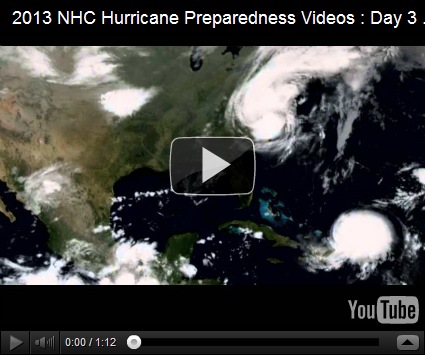
Today marks day 3 of NOAA’s National Hurricane Preparedness Week, and today’s emphasis is on hurricane force winds, and the extensive damage they can cause.


While storm surge is the greatest concern to those living in low-lying coastal areas, hurricane force winds can extend a hundred miles or more inland during a landfalling hurricane. Often hurricanes spin off tornadoes when they come ashore as well.


Hurricanes are measured by the Saffir-Simpson Scale, which bases their strength on sustained wind speeds.   Anything CAT 3 or higher is considered a major hurricane.


image


Even a CATEGORY 1 storm can spin up tornadoes, or produce wind gusts substantially stronger than their sustained wind speeds.  Older Mobile homes, RVs, and even some conventionally built structures may not withstand a CAT 1 storm.


And while great strides have been made over the past few decades in forecasting the path (out to about 48-72 hrs) of hurricanes, meteorologists are far less able to predict intensity changes of these storms. 


Just before landfall in 2004, Hurricane Charlie unexpectedly changed direction and ramped up from a moderate CAT 2 to storm to a major CAT 4 in just three hours, leaving coastal residents no time for evacuations.


If you live in a vulnerable area, you need to be aware of your evacuation zone, many of which have been recently revised due to a better understanding of storm surge, flooding, and wind damage risks.


Whether you stay, or leave, you’ll probably want to secure your home as best you can before high winds arrive. And this year emergency managers are once again reminding the public of the folly and futility of taping their windows in advance of a hurricane.


Up until the 1970s, it was pretty much standard advice to homeowners to tape plate glass windows to keep them from shattering, but that advice was discredited, and has not been part of hurricane prep advice for 30 years.


Not only does taping windows provide a false sense of security, it can bind shards of flying glass into larger, and more dangerous, projectiles.


Still, the myth hangs on.


A video that I’ve highlighted in the past, from the Pinellas County Office of Emergency Management demonstrates just how useless masking, or duct taping your your windows really is during a storm .


Friday, December 14, 2012

Barnstorming Avian Flu Viruses?

image

Photo Credit – FAO


# 6782


My thanks to Helen Branswell this morning for tweeting the link to a new study that suggests that avian influenza viruses can be spread over considerable distance by the wind.  


Long time readers will recall we’ve visited this question a couple of times before. We’ll review those, but first, the new study which looked at the extensive outbreak of H7N7 in the Netherlands in 2003.


From the Journal of Infectious Diseases (the full study is behind a pay wall), we get a fair idea of their findings via the Abstract.


Genetic data provide evidence for wind-mediated transmission of highly pathogenic avian influenza

Rolf J.F. Ypma1, Marcel Jonges, Arnaud Bataille, Arjan Stegeman3, Guus Koch4, Michiel van Boven1, Marion Koopmans1,W. Marijn van Ballegooijen1 and Jacco Wallinga

Outbreaks of highly pathogenic avian influenza in poultry can cause severe economic damage, and represent a public health threat. Development of efficient containment measures requires an understanding of how these influenza viruses are transmitted from one farm to the next. However, the actual mechanisms of inter-farm transmission are largely unknown.


Dispersal of infectious material by wind has been suggested, but never demonstrated, as a possible cause of transmission between farms. Here we provide statistical evidence that the direction of spread of avian influenza A(H7N7) is correlated with the direction of wind at date of infection.


We find the direction of spread by reconstructing the transmission tree for a large outbreak in the Netherlands in 2003, using detailed genetic and epidemiological data. We conservatively estimate the contribution of a possible wind-mediated mechanism to the total amount of spread during this outbreak to be around 18%.


Although it occurred nearly 10 years ago, this outbreak of H7N7 continues to interest scientists, as it represents the largest cluster of human infection by H7 flu virus we’ve seen. 


This report from the December 2005 issue of the Eurosurveillance Journal.


Human-to-human transmission of avian influenza A/H7N7, The Netherlands, 2003

M Du Ry van Beest Holle, A Meijer, M Koopmans3 CM de Jager, EEHM van de Kamp, B Wilbrink, MAE. Conyn-van Spaendonck, A Bosman

An outbreak of highly pathogenic avian influenza A virus subtype H7N7 began in poultry farms in the Netherlands in 2003. Virus infection was detected by RT-PCR in 86 poultry workers and three household contacts of PCR-positive poultry workers, mainly associated with conjunctivitis.


More than 30 million birds residing on more than 1,000 farms were culled to control the outbreak.


One person - a veterinarian who visited an infected farm – died a week later of respiratory failure. The rest of the symptomatic cases were relatively mild.


Normally, when avian flu manages to spread among local farms, we think of transport mechanisms like the farm-to-farm movement of infected birds or eggs, or of contaminated or infected personnel or equipment, or even a bird or small mammal vector.


The idea that the virus might be blown (likely carried on dust, or some other particulate) – while unproven -  has come up before.


Back in January of 2008 I wrote a blog called The Virus My Friend, Is Blowin' In The Wind where I cast a dubious eye upon claims by the Indian Government that the bird flu virus (H5N1) was being blown by the wind across the border from neighboring Bangladesh, and was infecting hapless Indian Poultry.


It wasn’t impossible, of course.  And I went into some of the other types of pathogens (mostly fungi and bacteria) that are known to travel in the wind.


Then in May of 2010 (see Viruses Blowin’ In The Wind?) we saw a report in the journal Environmental Health Perspectives, that suggested that it was possible for H5N1 (or any Influenza A virus) to be transported across long distances in the air.


Although researchers demonstrated influenza RNA could be detected in ambient air samplings, they didn’t establish that the virus remained viable over long distances.


But we have seen studies indicating that the H5N1 virus can – under the right environmental conditions – remain viable for hours or even days in the environment (see EID Journal: Persistence Of H5N1 In Soil and H5N1: Hiding In Plain Sight)


Lending at least a little credence to the idea that they might survive on the wind long enough to infect downwind farms.


It has also been suggested that dried chicken droppings (`poultry dust’) may also serve to spread the virus, and Indonesian authorities have mentioned this as a possible vector (see Indonesian Updates And Vector Concerns).


Hong Kong authorities also mentioned the possibility (of at least short-range windborne transmission) in a highly detailed epidemiological report issued by the University of Hong Kong, on the outbreak of H5N1 on a solitary chicken farm in the New Territories in 2008.


Epidemiology Report of the Highly Pathogenic Avian Influenza H5N1 Outbreak in December 2008 in a Chicken Farm in Ha Tsuen, New Territories


Excerpt

(ii) The strong winds and gust from the north and north-east from 4 to 6 December 2008 could have deposited potentially contaminated dust and leaves from the trees into the nearby shed no. 17 via its north opening. These contaminated materials could then have gathered at the corner of the shed where the initial high mortality in poultry occurred.


So . . . while none of this is a slam dunk proving wind-borne transmission of viable avian (or any other flu) viruses, we have at least some credible evidence that suggests it may have happened.


How big of a factor this plays in the spread of viruses remains to be seen.


But it does provide investigators another avenue of epidemiological query when multiple farms in close proximity are infected with avian influenza.


Note: `Barnstorming’ is an Americanism that some of my readers may not be familiar with.  It refers to the early days of aviation when pilots would fly to rural areas, land in farmer’s fields, and sell rides, or put on an air show for the locals.