Showing posts with label avian flu. Show all posts

Monday, May 25, 2015

Be Prepared For Surprises (Redux)

image

WHO IHR Infographic


# 10,086


Last February, after a year of unprecedented emergence of new flu subtypes, the remarkable and rapid spread of HPAI H5 viruses to Europe and North America, and several months of Egypt dealing with the worst human H5N1 outbreak in history, the World Health Organization released a blunt assessment called:


Warning signals from the volatile world of influenza viruses

February 2015

The current global influenza situation is characterized by a number of trends that must be closely monitored. These include: an increase in the variety of animal influenza viruses co-circulating and exchanging genetic material, giving rise to novel strains; continuing cases of human H7N9 infections in China; and a recent spurt of human H5N1 cases in Egypt. Changes in the H3N2 seasonal influenza viruses, which have affected the protection conferred by the current vaccine, are also of particular concern.

(Continue . . .)


The entire report is well worth reading, but after warning that H5 viruses were currently the most obvious threat to health, they also advised:

Warning: be prepared for surprises

Though the world is better prepared for the next pandemic than ever before, it remains highly vulnerable, especially to a pandemic that causes severe disease. Nothing about influenza is predictable, including where the next pandemic might emerge and which virus might be responsible. The world was fortunate that the 2009 pandemic was relatively mild, but such good fortune is no precedent.


While the point being made here by the WHO is that we could easily be blindsided by a newly emerged or recently mutated influenza strain, that isn’t the only way we can be caught off guard by another global health emergency.


There is nothing new in the fact that many countries endeavor to `manage’ the release of bad news to their best advantage, but these past six months have seen an noticeable escalation in `strategic reporting’  from two of the hardest hit bird flu regions in the world; Egypt (H5N1) and China (H7N9). 


The size and trajectory of both avian flu outbreaks have been difficult to gauge due to their respective MOH’s decisions to delay, or withhold information.  Neither of which imbues one with a lot of trust regarding what little they do report.


The reporting on MERS cases out of Saudi Arabia, quite frankly, won’t win any awards either.   But at least they do report on a daily basis (most of the time).


And there are a lot of countries from which we hear little or nothing (think: Indonesia, Cambodia, North Korea, etc.) that may or may not be dealing with outbreaks.   While we can always hope that `no news is good news’, experience has often shown otherwise.


Granted,  the WHO, FAO, and other agencies do post outbreak summaries (constrained by whatever information is provided and authorized for release by these reporting countries), but they are often delayed, redacted, or woefully lacking in details (see WHO: A Very Brief H7N9 Update – China).


There are legal requirements for reporting, but the reality is, we are a long way from having any semblance of a working,  global, cohesive disease surveillance system.  


In 2005 the World Health Organization adopted the IHR (International Health Regulations) that – among other things - requires countries to develop mandated surveillance and testing systems, and to report certain disease outbreaks and public health events to WHO.


Although the agreement went into force in 2007, member states had until mid- 2012 to meet core surveillance and response requirements. Most nations failed to meet that deadline, as explained below by the WHO:


A majority of States Parties, however, have requested and obtained a two-year extension to this deadline and, in exceptional circumstances, may be granted an additional extension, not exceeding two years.


That extension – not to exceed two years – expired last summer, but by February of 2014 the writing was already on the wall, and another 2 year extension was authorized (see WHO: IHR & Global Health Security) pushing the deadline  for final implementation of the IHR to 2016.  

A couple of days ago the WHO tweeted:

image


While this year’s WHA has ratified the Committee’s recommendation to extend the deadline to 2016 to all countries that need more time to implement the Regulations, there is already talk of needing another extension. 


I suspect when the phrase `herding cats’  was first coined, it was in reference to getting 190 politically motivated member nations of the World Health Assembly to buckle down and actually complete a common (and badly needed) goal.


Last February’s WHO warning was specifically about the ability of influenza viruses to evolve unpredictably and surprise us.


But the recent lack of transparency in disease reporting from China, Egypt, and elsewhere  - combined with a failure of 2/3rds of the world’s governments to meet the IHR minimum core surveillance and response requirements – means that we have more than a few good additional reasons to heed the caveat:


Be prepared for surprises


Tuesday, May 19, 2015

OIE Statement On Avian Influenza: A Call For Stronger Biosecurity

image


# 10,066


In 2005 and 2006 we saw a huge expansion in the geographic range of the HPAI H5N1 virus – with the number of countries reporting outbreaks (or detections in wild birds) blooming to more than 60 worldwide.  For reasons not well understood, that expansion halted – and receded – in 2008 and the years that followed.


By 2010, only 18 countries reported H5N1

In 2011, that dropped to 16 countries

In 2012 it dropped again to only 15 countries

And by 2013 only 13 countries reported the virus


It seemed as if HPAI H5 was on the decline, and while a new H7N9 virus emerged in China in the spring of 2013, it wasn’t showing any imminent signs of spreading beyond the eastern provinces.


But then a new H5N8 virus emerged in China and Korea in early 2014, followed quickly by an H5N6 virus in China, Laos,and Vietnam.  The H5N8 virus began spreading via migratory birds – much as H5N1 did in the middle of the last decade – and we were suddenly seeing new reassortants appear (H5N2, H5N3, H5N1).


By the end of 2014, the number of countries reporting one or more types of HPAI H5 had jumped back up to 20, and in the first 5 months of 2015, at least 28 nations have reported HPAI H5.  


Although the introduction of a new, highly mobile H5N8 virus is no doubt a big reason behind this sudden spurt in avian flu, the venerable H5N1 virus is suddenly showing new vigor as well, turning up in a number of countries (i.e. Bulgaria, Nigeria, Niger, Bukino Faso, Hungary, etc.) that haven’t seen it in seven or eight years.


All of which leads us to a statement – released today by the OIE – recognizing this recent surge in the avian flu threat, and calling for stronger farm biosecurity measures worldwide.


The OIE recommends stronger farm biosecurity measures to curb the spread of avian influenza worldwide

Since early 2014, outbreaks of avian influenza (“bird flu”) involving different strains of the virus have been reported in more than 35 countries around the globe. Tens of millions of poultry have died as a result of these outbreaks, either naturally or due to the application of  stamping out measures. While it is not unusual for the avian influenza virus to circulate, particularly among wild birds, the recent upsurge in outbreaks worldwide reaffirms the need for better implementation of the intergovernmental standards adopted by the OIE’s 180 member countries on avian influenza surveillance, early detection, rapid response to outbreaks and prevention and control, especially farm biosecurity and, where appropriate, poultry vaccination.

Paris, 19 May 2015 – The global epizootic (epidemic outbreak in animals) of avian influenza subtype H5N1 that emerged in early 2004 resulted in the death of tens of millions of poultry. Several hundred human cases* were also detected, more than half of which proved fatal. Back then, this essentially animal epidemic was widely publicised for fear of the strain mutating into a form easily transmissible from person to person, which might have led to a global spread of the disease in humans.

Fortunately, the virus strain remained stable and the dreaded pandemic was averted. Based on this experience and the adoption of dedicated intergovernmental standards by the delegates of OIE member countries, many national animal health services have learned to manage outbreaks of avian influenza and contain them rapidly.


However, the apparent lull in the few years between then and 2014 should not make us lose sight of other recent episodes.


The H7N9 strain that emerged in China in early 2013 possessed surprising new characteristics. It was the very first time that a “low pathogenic” strain (i.e. one causing low mortality in poultry) proved capable of infecting humans, causing more than one hundred cases in just a few months. After live poultry markets were pinpointed as sites for virus multiplication and amplification, facilitating its transmission to humans, the interim measure of closing such markets led to a rapid improvement in the situation, but without resolving the problem altogether.


The following year, a new “highly pathogenic” strain of the avian influenza virus – H5N8 – was discovered in Korea and China, reaching Japan soon afterwards. From there the strain probably spread with migratory wild birds to India, Europe, Canada and later the United States of America. At present, the United States are also facing an epidemic of avian influenza H5N2, which has killed more than 30 million poultry countrywide in the space of a few months. No human cases associated with the H5N8 or H5N2 strain have so far been reported.


A large number of H5N1 outbreaks have also been confirmed in many West African countries in recent months. H5N1 continues to be endemic in Egypt, while new cases have occurred in Israel and Palestine.

To prevent the disease from spreading, it is vital to implement OIE-recommended biosecurity measures in farms, in commerce and in live bird markets, disease surveillance and early detection. While the role of wild birds as reservoirs and vectors of the virus has been highlighted in these various epidemics, other factors of transmission, especially among poultry farms, could rise to prominence unless appropriate precautions are taken.

The recent increase in avian influenza outbreaks in the Americas, Africa and Europe, and their persistence in Asia, has made it necessary for OIE member countries’ Veterinary Services to implement all the planned prevention measures at the farm level to address each specific local situation.

*Source: World Health Organization (WHO)

Thursday, May 07, 2015

Referral: McKenna Blogs On Avian Flu

image

Credit MBAH


# 10,021


Few of my readers will need an introduction to author and blogger Maryn McKenna, who now writes for National Geographic.  The archive of her long-running Wired Superbug blog contains some of the best coverage of the growing antibiotic resistance issues facing modern medicine . Her award winning book Superbug: The Fatal Menace of MRSA is a superlative and eye-opening read.


And Maryn is certainly no stranger to the topics of avian flu and the safety of our food supply.


So, knowing when it is better just make a quick introduction and step quickly aside, I will simply point you towards Maryn’s Nat Geo blog today, entitled:


The Avian Flu Epidemic: Massive Impact, Uncertain Future

by Maryn McKenna

You might have to be an avid reader of medical journals—or a poultry farmer—to notice that the United States is in the midst of a slow-motion disease disaster.

The disease is avian influenza, and though it has not, as yet, affected any people, it is wreaking havoc nonetheless. As of Monday, almost 26 million chickens and turkeys have either died, or been killed to keep the disease from spreading. Three states—Iowa, Minnesota and Wisconsin—have declared states of emergency. Layoffs have begun at poultry farms, and the industry is warning that there may not be enough surviving turkeys to  fill tables at Thanksgiving. The federal government has released $330 million in emergency funds, and in Minnesota, the National Guard has been called out.

(Continue . . . )

Friday, May 01, 2015

Iowa Governor Declares State-Wide Bird Flu Emergency, MN reports 2 More Farms Hit

image

Credit Wikipedia


# 10,000


During a 4pm (EDT) press conference today, Iowa Governor Terry E. Branstad announced the declaration of a statewide state of emergency due to the ongoing avian flu outbreak affecting millions of chickens and turkeys in his state. 


This afternoon, Iowa Agriculture officials are also reporting four more farms with probable H5N2 infection, raising the total to 21 farms, across 10 counties.   Roughly 16 million birds have died, or will be culled, in Iowa alone – roughly 25% of that state’s layer population.


While the threat to human health is considered low at this time, this state of Emergency will allow the governor to authorize the use of state money and resources to track and monitor cases, restrict and monitor the movement of poultry, and to safely dispose of millions of dead birds.


Here is the statement from the Governor’s Office.


Branstad declares state of emergency in Iowa

Date: May 01, 2015

Iowa Gov. Terry E. Branstad today was joined by Iowa Secretary of Agriculture Bill Northey and Iowa Department of Homeland Security and Emergency Management Director Mark Schouten to provide an update on the ongoing efforts to stop the avian influenza outbreak in Iowa. In addition, Gov. Branstad announced that he is declaring a state of emergency in Iowa. The disaster proclamation can be viewed here.

“While the avian influenza outbreak does not pose a risk to humans, we are taking the matter very seriously and believe declaring a state of emergency is the best way to make all resources available,” said Branstad. “Even before the virus began in Iowa, our office was monitoring the outbreak in other states. We’ll continue our work – as we’ve been doing since the first outbreak in Buena Vista County – in hopes of stopping the virus’ aggressive spread throughout Iowa.”

At time of press, 21 sites spanning 10 Iowa counties have cases that are either presumed positives or confirmed positives. The counties include: Buena Vista, Cherokee, Clay, Kossuth, Madison, O’Brien, Osceola, Pocahontas, Sac and Sioux.

“Iowa’s poultry farms are an important part of our state’s agriculture industry.  This disease is having a far reaching impact and, unfortunately, it has continued to spread.  We have seen tremendous support and coordination from state, federal and local partners and this emergency declaration will allow the state to continue to respond aggressively to this disease outbreak,” Northey said.

In addition, Gov. Branstad today declared a state of emergency due to the outbreak. The proclamation is effective immediately and will continue until May 31, 2015, at 11:59 p.m., unless sooner terminated or extended by the governor.

The proclamation of disaster emergency can be read below and does the following:

  • 1.      Activates the disaster response and recovery aspect of the Iowa Homeland Security and Emergency Management Department’s (HSEMD) Iowa Emergency Response Plan.
  • 2.      Authorizes the use and deployment of all available state resources, supplies, equipment, and materials as are deemed reasonably necessary by the Iowa Secretary of Agriculture and Land Stewardship (IDALS) and Iowa HSEMD in order to do the following:
  • A.      Track and monitor instances of confirmed highly pathogenic avian influenza  throughout the state of Iowa and the country,
  • B.      Establish importation restrictions and prohibitions in respect to animals suspected of suffering from this disease,
  • C.      Rapidly detect any presumptive or confirmed cases of highly pathogenic avian influenza within Iowa’s borders, 
  • D.     Contain the spread of highly pathogenic avian influenza within our state through depopulation, disinfections, and disposal of livestock carcasses,
  • E.      Engage in detection activities, contact tracking, and other investigatory work to stop the spread of highly pathogenic avian influenza within our state, and
  • F.       Eliminate the disease in those disaster counties where it has been found and lessen the risk of this disease spreading to our state as a whole.
  • 3.      Temporarily authorizes the Iowa HSEMD, the Iowa Department of Transportation (DOT), the Iowa Department of Public Safety (DPS), the Iowa Department of Natural Resources (DNR), Iowa Department of Public Health (IDPH), other state agencies, and local law enforcement agencies and private contractors employed by the same to remove and/or dispose of live animals and animal carcasses on publicly or privately owned land when those live animals and/or carcasses threaten public health or safety.
  • 4.      Authorizes the Iowa HSEMD, the Iowa DOT, the Iowa DPS, the Iowa DNR, IDPH, other state agencies, and local law enforcement agencies to implement stop movement and stop loading restrictions and other control zone measures as are reasonably deemed necessary, including establishing buffer zones, checkpoints, and cleaning and disinfecting operations at checkpoints and borders surrounding any quarantine areas established by the IDALS or at any other location in the state of Iowa, in order to stop the spread of this contagious disease.
  • 5.      Authorizes state agencies to assist the IDALS in disinfection, depopulation, and livestock carcass disposal efforts.
  • 6.      Temporarily waives restrictions to allow for the timely and efficient disposal of poultry carcasses.
  • 7.      Temporarily suspends the regulatory provisions pertaining to hours of service for commercial vehicle drivers hauling poultry carcasses infected with or exposed to highly pathogenic avian influenza or while hauling loads otherwise related to the response to this disaster during its duration, subject to certain conditions outlined in the disaster proclamation.

(Continue . . . )


Meanwhile, Minnesota is reporting two additional (presumed) positive poultry operations, bringing that state’s total to 72 farms, and just under 4 million birds affected.


image

Referral: CIDRAP NEWS Recaps The Latest Avian Flu Outbreaks

image


# 9996


I was away from my desk for a few hours yesterday, and wasn’t able to to my usual summary of the latest H5N2 news, but luckily we have an excellent overview from CIDRAP NEWS Editor Robert Roos.  


Minnesota reports three additional farms infected, and their first detection of the virus in a wild bird, but the worst effects are being felt in Iowa.


Avian flu taking big toll in Iowa; virus found in Minnesota hawk

Robert Roos

Apr 30, 2015

Nine more outbreaks in Iowa put that state's losses at a quarter of the state's 60 million layer hens.

Nine more H5 avian influenza outbreaks that were reported on Iowa poultry farms in the past 2 days, combined with previous outbreaks, will mean the loss of about a quarter of the state's 60 million layer hens, state officials said today.

In addition, Minnesota officials today announced three more turkey-farm outbreaks and reported finding the virus in a dead hawk, the first known wild-bird infection in the state that has by far the most poultry outbreaks.

Six outbreaks in one Iowa county

The Iowa Department of Agriculture and Land Stewardship (IDALS) reported four outbreaks late yesterday and added five more today. Six of them are in Buena Vista County in the northwestern part of the state.

Initial testing pointed to a highly pathogenic (HP) H5 virus, but there was little doubt that it would be confirmed as H5N2. At an afternoon press conference, Iowa Agriculture Secretary Bill Northey said birds on all the farms are showing clinical signs, "so we highly suspect they'll come back with N2" confirmed.

(Continue . . .)

Wednesday, April 01, 2015

USGS: Alaska - A Hotspot For Eurasian Avian Flu Introductions

image


# 9891


Although the arrival of HPAI H5 viruses of Eurasian origin to North America this winter was met with surprise, it wasn’t a completely unexpected event.  For years we’ve watched as the USGS and  the U.S. Fish and Wildlife Service in Alaska have worked to test and track bird migrations and the avian influenza viruses they carry.


In 2008, in USGS: Genetic Evidence Of The Movement Of Avian Influenza Viruses From Asia To North America, we saw evidence that suggested migratory birds play a larger role in intercontinental spread of avian influenza viruses than previously thought.


A couple of years later, in Where The Wild Duck Goes, we looked at a USGS program that used Satellite Tracking To Reveal How Wild Birds May Spread Avian Flu.  While it was H5N8 that finally made the jump to north America, at the time, the HPAI fear was from the H5N1 virus . From the report:


“Because northern pintails in Alaska exchange influenza viruses with Asian birds, movement of the H5N1 virus into eastern Russia would increase the risk for its transmission to North America via wild birds -- such as the northern pintail -- that migrate between continents,” said Hupp.


Although Atlantic crossing migratory birds are considered potential vectors of avian flu (see The North Atlantic Flyway Revisited), the relatively short distance between Alaska and Siberia – a preferred summer nesting spot for many migratory species – makes the Pacific flyway particularly vulnerable.


Yesterday a new study was published in the Journal Virology which provides even more evidence of this intercontinental avian influenza exchange program.


Dispersal of H9N2 influenza A viruses between East Asia and North America by wild birds

Andrew M. Rameya, , , Andrew B. Reevesa, Sarah A. Sonsthagena, Joshua L. TeSlaab, Sean Nasholdb, Tyrone Donnellya, Bruce Caslerc, Jeffrey S. Hallb

Highlights

• 2924 wild bird samples from western Alaska were screened for influenza A viruses.

• Among 90 viral isolates recovered were two viruses of the H9N2 subtype.

• H9N2 subtype isolates were nearly identical with viruses from China and South Korea.

• Results provide evidence for intercontinental viral dispersal by migratory birds.

Abstract

Samples were collected from wild birds in western Alaska to assess dispersal of influenza A viruses between East Asia and North America. Two isolates shared nearly identical nucleotide identity at eight genomic segments with H9N2 viruses isolated from China and South Korea providing evidence for intercontinental dispersal by migratory birds.


Additional background information is provided by the following USGS press release.


New Technology Helps Identify Dispersal of Avian Flu Virus between Asia and Alaska


Released: 3/31/2015 1:00:00 PM

ANCHORAGE, Alaska — In a new study published today, scientists from the U.S. Geological Survey and U.S. Fish and Wildlife Service harnessed a new type of DNA technology to investigate avian influenza viruses in Alaska.  Using a “next generation” sequencing approach, which identifies gene sequences of interest more rapidly and more completely than by traditional techniques, scientists identified low pathogenic avian influenza viruses in Alaska that are nearly identical to viruses found in China and South Korea.

The viruses were found in an area of western Alaska that is known to be a hot spot for both American and Eurasian forms of avian influenza.

“Our past research in western Alaska has shown that 70 percent of avian influenza viruses isolated in this area were found to contain genetic material from Eurasia, providing evidence for high levels of intercontinental viral exchange,” said Andy Ramey, a scientist with the USGS Alaska Science Center and lead author of the study.  “This is because Asian and North American migratory flyways overlap in western Alaska.”

The new study, led by the USGS, found low pathogenic H9N2 viruses in an Emperor Goose and a Northern Pintail.  Both of the H9N2 viruses were nearly identical genetically to viruses found in wild bird samples from Lake Dongting, China and Cheon-su Bay, South Korea.

“These H9N2 viruses are low pathogenic and not known to infect humans, but similar viruses have been implicated in disease outbreaks in domestic poultry in Asia,” said Ramey.

There is no commercial poultry production in western Alaska and highly similar H9N2 virus strains have not been reported in poultry in East Asia or North America, so it is unlikely that agricultural imports influenced this result.

The finding provides evidence for intercontinental movement of intact avian influenza viruses by migratory birds. The USGS recently released a publication about the detection of a novel highly pathogenic H5N8 virus in the U.S. that is highly similar to the Eurasian H5N8 viruses. This suggests that the novel re-assortment may be adapted to certain waterfowl species, enabling it to survive long migrations. That virus, and associated strains, have now spread from early detections in wild and domestic birds in Pacific states to poultry outbreaks in Minnesota, Missouri and Arkansas.

“The frequency of inter-hemispheric dispersal events of avian influenza viruses by migratory birds may be higher than previously recognized,” said Ramey.

While some of the samples for the project came from bird fecal samples collected from beaches at Izembek National Wildlife Refuge, most of the samples came from sport hunters.

“For the past several years, we’ve worked closely with sport hunters in the fall to obtain swab samples from birds and that has really informed our understanding of wildlife disease in this area,” said Bruce Casler, formerly a biologist with the USFWS Izembek National Wildlife Refuge and a co-author of the study. None of the viruses found in harvested birds from Izembek Refuge are known to infect humans, but hunters should always follow safe meat handling and cooking guidelines when processing wild game.

The paper, “Dispersal of H9N2 influenza A viruses between East Asia and North America by wild birds” was published today in the journal Virology. A summary of all samples collected at the Izembek Refuge will be described in a subsequent publication.

Additional information about avian influenza can be found at the following web sites:


For years the rallying cry that `Sick birds don’t fly’ has been used to argue that migratory birds aren’t to blame for the spread of the virus, even though it has been shown that some species of birds (particularly ducks) can carry – and presumably spread – the virus asymptomatically.


A recent statement by the UN CMS/FAO Co-Convened Scientific Task Force on Avian Influenza and Wild Birds maintains that typically the spread of HPAI virus is via contaminated poultry, poultry products and inanimate objects although wild birds may also play a role.


We explored the often bitter debate between the poultry industry and conservationists over the role of migratory birds in spreading avian flu in Bird Flu Spread: The Flyway Or The Highway?, and while poultry industry practices often factor heavily, it is hard to refute the notion that wild birds are at least partially responsible.


For more on the role of migratory birds, you may wish to revisit:


Erasmus Study On Role Of Migratory Birds In Spread Of Avian Flu

PNAS: H5N1 Propagation Via Migratory Birds

EID Journal: A Proposed Strategy For Wild Bird Avian Influenza Surveillance

PLoS One: North Atlantic Flyways Provide Opportunities For Spread Of Avian Influenza Viruses

Tuesday, March 24, 2015

HK CHP Avian Flu Report: 2 Weeks Without An H7N9 Case Report

image


# 9856


Compared to the first two waves of H7N9 in China, where we saw daily reports from affected provinces which included both case counts and rudimentary epidemiological information, this year’s reporting has been less detailed and far more haphazard. 


Some provinces have just reported an aggregate total in their end of month infectious disease reports, while others have dumped `bulk’ case announcements at irregular intervals (see Jiangsu Province’s Uncertain H7N9 Count).


All of which has made it very difficult to compare this year’s outbreak to previous years. As I mentioned last week, in H7N9: No News Is . . . . Curious, for the past couple of weeks H7N9 case reporting has gone strangely silent.   As the first two H7N9 waves didn’t end until May, an abrupt halt in case in early March is unexpected.


Today, Hong Kong’s CHP has published their latest Avian Influenza Report, and for the second week in a row, confirm that no new H7N9 cases have been reported by the Chinese Mainland since March the 9th.  


Avian Influenza Report (Volume 11, Number 12 (Week 12))

Summary


1. There were no new human cases of avian influenza A(H5N1) reported by the World Health Organization (WHO)#. One new human case of avian influenza A(H5N1) involving a 34-year-old man from Yunnan Province was reported by the National Health and Family Planning Commission (NHFPC) on March 23, 2015.


2. From 2010 to 2014, 32 to 62 confirmed human cases of avian influenza A(H5N1) were reported to WHO annually (according to onset date). In 2015 (as of March 23, 2015), 89 cases were reported by WHO* and two additional cases were reported by NHFPC.


3. Since the previous issue of Avian Influenza Report, there were no new human cases of avian influenza A(H7N9). Since March 2013 (as of March 23, 2015), there were a total of 638 cases reported.

image


It is certainly possible that fewer infections are being recorded this winter, and interventions such as the closing of live poultry markets have dramatically reduced transmission.  It is also worth noting that more spring-like weather has returned to many areas of Eastern China over the past several weeks, which could be a mitigating factor.


But this precipitous drop in reporting also comes – perhaps coincidentally – at the same time we saw a major study appear in the Journal Nature  (see Dissemination, Divergence & Establishment of H7N9 In China) warning that the H7N9 virus was evolving rapidly, and that it posed a growing pandemic threat.


China is, of course, required to notify the World Health Organization of new H7N9 cases under the terms of the IHR, but how and when they choose to publically disclose case information – even to Hong Kong’s CHP - is pretty much up to them. 


If we are truly seeing a less active, and truncated H7N9 wave, then that would be good news indeed.  But the inconsistent reporting out of China these past few months makes it difficult to assume the best based simply on the absence of data.

Saturday, March 21, 2015

HK SCEZD: Management Of Contacts of Human Avian Flu Cases

image


# 9851


With 13 imported H7N9 cases over the past two winters, several brushes with H5N1 over the years, and even an occasional H9N2 infection popping up, Hong Kong has a good deal of experience dealing with avian flu cases.


They have also followed up on hundreds of close contacts of these cases, and have even set aside a holiday camp as a quarantine facility (see Hong Kong: Epidemiological Update On Imported H7N9 Case).


Yesterday Hong Kong’s SCEZD (Scientific Committee on Emerging and Zoonotic Diseases) released the following guidance on the management of close contacts of avian flu cases.


20 March 2015

Latest recommendations from SCEZD on management of close contacts of cases of human infection with avian influenza 

The Centre for Health Protection (CHP) of the Department of Health announced today (March 20) the latest recommendations by the Scientific Committee on Emerging and Zoonotic Diseases (SCEZD) on management of close contacts of cases of human infection with avian influenza.


Based on review of the recommendations on contact tracing for human infection with avian influenza cases by the World Health Organization, and experiences and practices of other health authorities, the SCEZD recommends the CHP to continue to conduct contact tracing of contacts of confirmed human cases of avian influenza. Antiviral prophylaxis with oseltamivir (tamiflu) should be given to the close contacts at an appropriate treatment dose for five days.  Medical surveillance is to be undertaken for 10 days after the last exposure, where the close contacts should report to CHP promptly if fever or any respiratory symptom develops.


Moreover, close contacts should wear a face mask for 10 days since last exposure to a confirmed case while the case was infectious. There are no restrictions for work or other daily activities during the surveillance period. If the close contacts are contraindicated / intolerant to or refuse antiviral prophylaxis with oseltamivir, they should be put under quarantine for 10 days since last exposure.


"The above recommendations are based on the most current scientific understanding of the risk of human-to-human transmission of avian influenza A (H7N9) virus, which also apply to human infections with other types of avian influenza viruses with low risk of human-to-human transmission, like avian influenza A (H5N1)," a spokesman for CHP explained.

The SCEZD notes that avian influenza viruses may change unpredictably, including its transmissibility and pathogenicity. It advises CHP to closely monitor the latest scientific development on avian influenza viruses and review the above recommendations if in future new scientific evidence suggests changes in the potential of human-to-human transmission and antiviral susceptibility.

The public may visit the CHP's pages about avian influenza below for more information:
* The avian influenza page (
www.chp.gov.hk/en/view_content/24244.html);
* The weekly Avian Influenza Report (
www.chp.gov.hk/en/view_content/3879.html); and
* Global statistics and affected areas of avian influenza (
www.chp.gov.hk/files/pdf/global_statistics_avian_influenza_e.pdf).

Ends/Friday, March 20, 2015

Friday, February 06, 2015

Erasmus Study On Role Of Migratory Birds In Spread Of Avian Flu

image

Major Global Migratory Flyways – Credit FAO


# 9678


Ever since the avian H5N1 virus began its big move in 2005-2006 - where it abruptly spread out of a handful of southeast Asian countries to more than 50 new countries in Europe, the Middle East and Western Africa - there has been a long (and often bitter) debate over the role of wild and/ migratory birds in the spread of avian flu.


Governments and poultry producers have often been quick to blame migratory birds when outbreaks occur, while conservationists have pointed fingers directly at the poultry producers, citing crowded factory farms, poor biosecurity, and poultry transportation and smuggling as the prime factors.


Not having a bird in this fight, it seems perfectly reasonable to me that both play major roles in the spread of avian flu.  But there seems little in the way of common ground for these opposing groups.


When the H5N8 virus erupted in South Korean poultry and wild birds in January of last year, the government announced that Migratory Birds Likely Source Of H5N8 Outbreak.  Just 24 hours later, in H5N8 Spreads, Debate Over Source Intensifies, we saw the UN’s Scientific Task Force on Avian Influenza and Wild Birds quickly respond with a statement saying:


There is currently no evidence that wild birds are the source of this virus and they should be considered victims not vectors ” and that “. . . focusing attention on wild birds can misdirect critical resources away from effective disease control and result in negative conservation outcomes and loss of biodiversity.”


When H5N8 turned up in unexpectedly in Europe last fall, the same task force issued another statement in December, softening their position every so slightly, by granting:


Typically, spread of HPAI virus is via contaminated poultry, poultry products and inanimate objects although wild birds may also play a role.


They included the following recommendations:

  • a. conduct thorough epidemiological evaluation to determine the true source of the virus including possible transmission through national and international poultry trade, and mechanisms of transmission among domestic and wild birds;
  • b. regardless of the source of infection, focus disease control actions on affected farms, with the aim of minimising the risk of disease spread to other poultry farms and/or wildlife, ensuring that affected and nearby farms are biosecure to prevent wildlifepoultry contact;
  •  c. ensure there is no consideration of killing of wild birds or negatively affecting wetland habitats as potential disease control measures; and
  • d. recognise that focussing attention on wild birds, to the exclusion of other potential viral vectors, can misdirect critical resources away from effective disease control and result in continued spread among poultry populations and economic losses to farmers and national income, as well as negative conservation outcomes and loss of biodiversity.


The then went on to present their rationale for why avian viruses are unlikely to have traveled rapidly via birds from east to west when migratory routes are predominantly north-south corridors.

In all fairness, I would point out that these migratory routes overlap, which would seem to afford ample opportunities for lateral movement of viruses.


But at the same time we are seeing nearly 700 poultry farms in Taiwan battling a multi-subtype outbreak of HPAI H5 - and while likely introduced to the island by migratory birds – it stretches credulity that infected wild birds paid personal visits to each of them.


Once introduced into a region’s poultry, outbreaks often appear to be exacerbated by lapses in biosecurity and the movement of poultry products, transport, or personnel.  Something we looked at last November in Bird Flu Spread: The Flyway Or The Highway?


Entering this fray today are researchers from Erasmus University, including Ron Fouchier, who have an article in Science Magazine, that is alas, mostly behind a pay wall.  We do have some additional details available via the BBC, however.  First the link:


How a virus travels the world

Josanne H. Verhagen, Sander Herfst,  Ron A. M. Fouchier

In November and December 2014, highly pathogenic avian influenza (HPAI) viruses of the H5 subtype originating from China were detected in poultry and wild birds in various countries of Asia and Europe, and, for the first time, in North America. These incursions of newly emerging HPAI H5 viruses constitute a threat to animal and potentially human health and raise questions about the routes of transmission.


From the BBC:


'Wild birds may spread flu virus'

By Helen Briggs Environment Correspondent

Migratory birds may be spreading viruses that cause bird flu around the world, say scientists.

<SNIP>

"More poultry outbreaks could occur in the future, especially in countries that are ill-prepared," a team led by Dr Ron Fouchier wrote in the journal, Science.

"Despite the currently low public health risk, the outbreaks should be monitored closely, given that several animal species are susceptible and that influenza viruses are generally unpredictable."

Wild birds with long migratory routes should be monitored for exposure to H5N8 and control measures in poultry should be updated, as they appear to be "insufficient", they added.

Scientists are also investigating other ways that bird flu viruses can spread around the world, including through illegal poultry trade and contamination of vehicles or equipment.

(Continue . . . )


The BBC story goes on to point out that the science isn’t settled, and the European Food Safety Authority recently stated the route of spread of the disease remained uncertain.


On the other hand, our own USDA APHIS (Animal Plant Health Inspection Service) is far less ambiguous when discussing the recent arrival of HPAI H5 viruses to the Pacific Northwest.  In Update on Avian Influenza Findings in the Pacific Flyway last Modified: Feb 4, 2015, they state:


The H5N8 virus originated in Asia and spread rapidly along wild bird migratory pathways during 2014, including the Pacific flyway.  In the Pacific flyway, the H5N8 virus has mixed with North American avian influenza viruses, creating new mixed-origin viruses.  This is not unexpected.  These mixed-origin viruses contain the Asian-origin H5 part of the virus, which is highly pathogenic to poultry.  The N parts of these viruses came from North American low pathogenic avian influenza viruses.


Somehow, despite the preponderance of evidence, I suspect this debate is nowhere near being settled.

Tuesday, February 03, 2015

Taiwan’s H5 Outbreak Continues: 655 Farms Affected, 2M+ Culled

Photo: ©FAO/Tariq Tinazay

Credit FAO


# 9667


Despite Taiwan’s reassurance on the effectiveness of their poultry biosecurity measures, just a little over three weeks after their first farm infection was announced (see Taiwan: HPAI H5N2 Outbreak in Pingtung County), their mixed- subtype HPAI H5 outbreak has now spread to more than 650 farms, and has resulted in the culling of more than 2 million birds.


While the H5N8 virus was believed introduced by migratory birds, the post mortem analysis on how this virus has managed to spread so quickly, and to so many farms, will be of considerable interest.


As the following report notes, we are just a couple of week from the spring festival (aka Lunar New Year), an extended holiday that traditionally features both massive travel across Asia and the liberal consumption of poultry.  For more on the public health challenges of this New Year’s celebration, you may wish to revisit last week’s Health Vigilance Urged For China’s Spring Festival.


This from Xinhua News.


Over 2 million poultry culled in Taiwan

Feb 03,2015

TAIPEI, Feb. 2 (Xinhua) -- More than 2.14 million chicken, ducks and geese have been culled in Taiwan as one of the most severe avian flu outbreaks in a decade continues to cause huge losses, Taiwan's agriculture authority said on Monday.

Of all tested farms, 655 in 14 cities or counties have been confirmed as infected with H5 strains of the virus.

All cities and counties in the island have been required to complete their epidemic prevention plans for the Spring Festival period by Friday. Lunar New Year, which falls on Feb.19 this year, usually sees a surge in transportation and consumption of poultry and eggs.

As part of epidemic prevention, culls and disinfection of farms were carried out in affected areas, particularly in Changhua, Yunlin, Chiayi, Tainan and Pingtung.

Tuesday, January 27, 2015

Media Reports: Bird Flu In Bulgaria

image


*** UPDATED: ***  0900 hrs

At least 1 media report now identifies the subtype as H5N1

We have taken measure along Bulgaria’s Black Sea coast over bird flu: doctor

# 9632


The Bulgarian Ministry of Agriculture & Food website remains silent, and nothing has appeared yet on the OIE Alerts page, but the Bulgarian press is rife this morning with reports of the discovery of bird flu (subtype not named) in a dead pelican in or near the Poda Protected Area located south of the port city of Bourgas on the Black Sea. 

Poda is described on Wikipedia as:

. . .  a biologically important area as a resting station for many of the migratory birds who use the Eastern European migratory route, Via Pontica; as well as an important nesting habitat for many breeding species


Local media reports the Minister of Agriculture either already has, or will hold a press conference later today.  The most details I’ve found come from the following short announcement from Focus News Agency:


Tsvetan Dimitrov, MAF: Joined bird flu in the region of Burgas

27 January 2015 | 12:53 | Agency "Focus"

Sofia. Four days ago in the city of Burgas found dead birds. That said, during a special press conference, Deputy Minister of Agriculture and Food Tsvetan Dimitrov, reporter Agency "Focus" . He explained that they found two dead birds - Pelican and seagull. In his words, after this research has found that the pelican is avian flu. Deputy Minister Dimitrov assured that there is nothing wrong with the situation and had taken all measures.

Xenia PEEVA


Although none of this is `official’ until a report has been filed with the OIE, the media reports are consistent and are quoting officials with the Ministry of Food & Agriculture.


There is no word as to what laboratory did the testing, or what variety of avian flu was detected.  


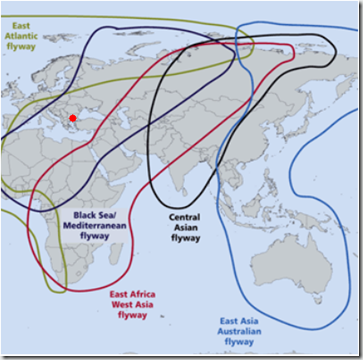
Bulgaria (red dot in map below) lies almost centered in the NE/SW oriented Black Sea / Mediterranean Flyway, which runs from northern Russia to western and central Africa.  This flyway crosses south central Europe where H5N8 has recently emerged, and across the Middle East and Nigeria – both regions having reported H5N1 recently, and on numerous occasions in the past.

image


You’ll notice that while these migratory bird flyways run essentially north to south – they overlap – which could allow for the lateral (east-west) movement of avian viruses over time as well.  Viruses that are endemic in the East Asia Australian Flyway could conceivably seep into the Central Asian Flyway, and from there move further west into the East African or Black Sea flyways.


Last November, in The North Atlantic Flyway Revisited, we looked at the ability of seabirds to carry avian flu viruses, along with the potential for lateral creep of flu viruses across overlapping flyways.


To finish up, a sampling of some other press reports from Bulgaria:


Registered bird flu in Burgas

DARIK News - ‎

A little earlier today the Ministry of Agriculture and Food said in Burgas is a case of bird flu . The ministry called an emergency press conference. It will be attended by Deputy Minister of Agriculture ...

Case of bird flu has been registered in Burgas

Дневник - ‎

In Burgas is no case of bird flu , officials BTV, citing information from the Ministry of Agriculture and Food (MAF). This is the first proven strain of bird flu in Bulgaria. According to the ...

Registered bird flu in Burgas

Nova News -

Case of bird flu was registered in Burgas, announced the Ministry of Agriculture and Food. The winner of the infection is a pelican bird's corpse was found in the protected area "Poda" near Burgas. This is the first proven ...


Sunday, January 25, 2015

Health Vigilance Urged For China’s Spring Festival

image

Credit CDC


# 9626


In China, it is often called Chunyun, Chinese New Year, or simply, The Spring Festival.  In Korea it is called Seollal. While in Vietnam it is celebrated as Tết Nguyên Đán ; the Feast of the First Morning.  Tết for short.


By whatever name, the Lunar New Year is undoubtedly the most important holiday in all of Asia


Each year it inspires the largest migration of humans on the planet as hundreds of millions flee the big cities and return to their home towns for a few days to attend a reunion dinner with their families - preferably on the eve of the lunar New Year.


The entire Spring festival travel season begins about 2 weeks before the Lunar New Year, and runs for about 6 weeks. With the New Year falling on February 19th this year, we are 10 days from the start of an event which could see more than 3 billion passenger journeys – mostly by crowded train –  across Asia over the next 60 days.


Ducks, geese, and chickens figure prominently at many of these family dinners, and the live markets do tremendous business during this time of year.  Many cities are therefore reluctant to halt the trade in live birds until after the New Year.


As all of this occurs during the height of the regular flu season, and concurrent with China’s winter spike in avian flu cases, public health agencies are understandably alert to the possibility of seeing a post-holiday surge in illnesses, including influenza, measles, malaria, tuberculosis and food poisoning


In 2010, in The Impact Of Mass Gatherings & Travel On Flu Epidemics , we looked at a study  published in BMC Public Health, that looked at and attempted to quantify the impacts of mass gatherings and holiday travel on the spread of an influenza epidemic.


And in 2011, in Viruses With A Ticket To Ride, we looked at research that appeared in BMC Infectious Diseases, that looked at the incidence of ARI (Acute Respiratory Infection) presenting within 5 days of train or tram travel in the UK. They found that recent  bus  or  tram  use  within  five  days  of  symptom  onset  was  associated  with  an  almost  six-fold  increased  risk  of  consulting  for  ARI.

While seemingly a strong finding, this observational study was limited by its small size, the fact that it was only conducted in a single location (Nottingham, UK), and that it was conducted during a normal flu season, not a pandemic.

The good news is, that while mass gatherings may provide greater opportunities for disease outbreaks, history has shown that major epidemic outbreaks have been a rarity (for a notable exception, see The Impact Of Mass Gatherings & Travel On Flu Epidemics).


While the risks of seeing a major disease outbreak in any given year are small, public health authorities must anticipate and prepare for the worst.  A few days ago Taiwan’s CDC issued the following advisory for those intending to travel to mainland China.


Press Releases

As H7N9 outbreak escalates in China, Taiwan CDC reminds travelers visiting China to heighten vigilance for avian flu

( 2015-01-22 )

As the ongoing H7N9 outbreak in China escalates and the winter break and the Chinese New Year Holiday are fast approaching, the Taiwan Centers for Disease Control (Taiwan CDC) reminds travelers visiting China to heighten their vigilance for avian influenza and practice good personal hygiene and avoid contact with poultry and birds and consume only thoroughly cooked poultry and eggs in order to ward off infection.

In light of a significant increase in the number of H7N9 cases (29), which were confirmed in mostly Fujian Province and Guangdong Province, China, last week, Taiwan CDC has issued a travel notice of Level 2: Alert for avian influenza to Xinjiang Uyghur Autonomous Region, Jiangsu Province, Zhejiang Province, Guangdong Province, Fujian Province, Shanghai City, and Jiangxi Province, and a travel notice of Level 1: Watch for avian influenza to the other provinces and cities in China, excluding Hong Kong and Macau.

<SNIP>

Taiwan CDC once again urges travelers visiting China to practice good personal hygiene such as washing hands frequently and putting on a mask when coughing and take preventive measures such as avoiding direct contact with poultry and birds or their droppings/dead bodies, and consuming only thoroughly cooked poultry and eggs. If influenza-like illness symptoms develop upon arriving in Taiwan, please voluntarily notify the airline crew and the quarantine officer at the quarantine station in the airport. If symptoms such as fever and cough develop after returning to Taiwan, please put on a surgical mask and seek immediate medical attention.  Moreover, please inform the physician of the recent travel and exposure history to facilitate diagnosis and treatment. For more information, please visit the Taiwan CDC website at http://www.cdc.gov.tw or call the toll-free Communicable Disease Reporting and Consultation Hotline, 1922 (or 0800-001922).


And for some health and safety tips from America’s CDC, we have following from the CDC Travelers Health Website.


Lunar New Year 

image

Released: January 13, 2015

The Year of the Goat begins on February 19, 2015, and many travelers will visit Asia to celebrate the Lunar New Year. If you are traveling to Asia, plan ahead for a safe and healthy trip.

Every destination has unique health issues of which travelers need to be aware. To find specific information about the places you are traveling, visit our destination pages. In addition to being up-to-date on routine vaccines, you will find vaccine and medicine recommendations, along with many other tips for safe and healthy travel.

What can travelers do to protect themselves?

Before your trip:

  • Schedule an appointment with your healthcare provider at least 4–6 weeks before you depart. Talk to your doctor or nurse about vaccines and medicines recommended for your destination. Travelers who want to reduce their risk of seasonal flu should receive the flu vaccine at least 2 weeks before departure. See the Travel Clinics webpage for help in finding a travel medicine clinic near you.
  • Consider travel health and medical evacuation insurance.
  • Pack a travel health kit.

During your trip:

  • Choose safe transportation: Motor vehicle crashes are the #1 killer of healthy US citizens in foreign countries. Read about ways to prevent transportation injuries by visiting the Road Safety page.
  • Reduce your exposure to germs: Wash your hands often, and avoid contact with people who are sick. Read more about reducing your exposure to germs in the “Stay Healthy and Safe” section of the destination page.
  • Prevent mosquito bites: Diseases spread by mosquitoes, such as malaria, dengue, chikungunya, and Japanese encephalitis, are common throughout Asia. Read more about ways to prevent bug bites by visiting the Avoid Bug Bites page. You may also need to take prescription medicine to protect against malaria or get a vaccine against Japanese encephalitis. Talk to your doctor or nurse about prevention steps that are right for you and your destination.
  • Follow food and water safety guidelines: Eating contaminated food and drinking contaminated water can cause illnesses such as hepatitis A, typhoid fever, and travelers’ diarrhea. Read about how to prevent these diseases by visiting the Safe Food and Water page on the Travelers’ Health website.
  • Do not touch birds, pigs, or other animals, and avoid farms and poultry markets: Bird flu strains, such as H7N9 and H5N1, are flu viruses that have been seen in China.
  • If you feel sick during your trip:
    • Talk to a doctor or nurse if you feel seriously ill, especially if you have a fever.
    • For more information about medical care abroad, see Getting Health Care Abroad.
    • Avoid contact with other people while you are sick.

After your trip:

  • If you are not feeling well after your trip, you may need to see a doctor. If you need help finding a travel medicine specialist, see Find a Clinic. Be sure to tell your doctor about your travel, including where you went and what you did on your trip. Also tell your doctor if you were bitten or scratched by an animal while traveling.
  • If your doctor prescribed antimalarial medicine for your trip, keep taking the rest of your pills after you return home. If you stop taking your medicine too soon, you could still get sick.
  • Malaria is always a serious disease and may be deadly. If you become ill with a fever either while traveling in a malaria risk area or for up to 1 year after you return home, you should seek immediate medical attention and should tell the doctor about your travel history.
  • For more information, see Getting Sick after Travel


While each year public health agencies gear up for the Hajj, The Lunar New Year, the Super Bowl, and other mass gathering events - and rarely does anything really bad happen - the old adage is true.


`When public health works, nothing happens’.

Tuesday, December 23, 2014

EID Journal: A Proposed Strategy For Wild Bird Avian Influenza Surveillance

image

Major Global Migratory Flyways – Credit FAO


# 9476


Six weeks ago, in Bird Flu Spread: The Flyway Or The Highway?, we looked at the ongoing  debate over the role that migratory birds play in the global spread of avian influenza viruses.  A week later, in H5N8: A Case Of Deja Flu?, we compared the recent spread of H5N8 to the 2005-2006 geographic expansion of H5N1.


While poultry producers are often quick to blame wild or migratory birds, not everyone agrees, with a recent statement by the UN CMS/FAO Co-Convened Scientific Task Force on Avian Influenza and Wild Birds stating that typically the spread of HPAI virus is via contaminated poultry, poultry products and inanimate objects although wild birds may also play a role.


The reason this debate continues (aside from partisan interests on both sides of the debate) is that we lack an ongoing coordinated global surveillance system to show us exactly how these viruses traveled.  While many countries conduct surveillance, it is often sporadic, reactive, and the standards and methods employed vary widely.


Yesterday the EID Journal carried a letter from a number of international experts (representing the USDA, OIE, St. Jude Children’s Research Hospital, WHO, EcoHealth Alliance, etc.) calling for a coordinated effort to study these viruses in wild and migratory birds.


Online Report

Global Avian Influenza Surveillance in Wild Birds: A Strategy to Capture Viral Diversity

Catherine C. Machalaba, Sarah E. Elwood, Simona Forcella, Kristine M. Smith, Keith Hamilton, Karim B. Jebara, David E. Swayne, Richard J. Webby, Elizabeth Mumford, Jonna A.K. Mazet, Nicolas Gaidet, Peter Daszak, and William B. KareshComments to Author

Abstract

Wild birds play a major role in the evolution, maintenance, and spread of avian influenza viruses. However, surveillance for these viruses in wild birds is sporadic, geographically biased, and often limited to the last outbreak virus.

To identify opportunities to optimize wild bird surveillance for understanding viral diversity, we reviewed responses to a World Organisation for Animal Health–administered survey, government reports to this organization, articles on Web of Knowledge, and the Influenza Research Database. At least 119 countries conducted avian influenza virus surveillance in wild birds during 2008–2013, but coordination and standardization was lacking among surveillance efforts, and most focused on limited subsets of influenza viruses.

Given high financial and public health burdens of recent avian influenza outbreaks, we call for sustained, cost-effective investments in locations with high avian influenza diversity in wild birds and efforts to promote standardized sampling, testing, and reporting methods, including full-genome sequencing and sharing of isolates with the scientific community.

(Continue . . . )


This letter contains a long, detailed overview of the current state of surveillance, and offers suggestions as to how a cost-effective surveillance network could be created, so you’ll want to read the entire article 


They conclude by writing:


The cost of avian influenza virus outbreaks in poultry is substantial; outbreaks of influenza A(H5N1) virus during 2004–2009 caused US $30 billion in damage (29), and the frequency of highly pathogenic avian influenza outbreaks in poultry appears to be increasing (11). Rather than sporadically releasing large amounts of funding for wild bird surveillance when specific avian influenza viruses emerge, sustained national, regional, and global investments can provide the targeted baseline level of systematic surveillance we propose. Many countries, especially where avian influenza virus diversity in wild birds is highest, are already investing in some form of avian influenza virus surveillance in wild birds.

Current efforts should be refined by leveling the investment roller coaster that has funded subtype-specific wild bird surveillance toward a lower-cost but long-term investment in collecting and sequencing wild bird avian influenza viruses. Global coordinating bodies, such as OFFLU (a network linking influenza experts and laboratories working with poultry and swine influenzas and World Health Organization expertise) (13), provide collaborative forums for government agencies and researchers to compile and share sequences and isolates. For wild bird avian influenza viruses specifically and all influenza viruses, we would be remiss not to work toward coordinated surveillance to support more effective assessment, preparation, and response for emerging influenza viruses that pose potential public health threats.