Monday, November 05, 2012

FEMA: Quashing Rumors


image


# 6697


Yesterday in Caveat Twitter, I wrote about some of the false stories and rumors circulating – often on social media sites – surrounding the recovery effort with Hurricane/Hybrid Sandy.


Today, FEMA has posted several new rumors on their FEMA BLOG that need to be dispelled.


Rumor Control

There is a lot of misinformation circulating on social networks. Check here for an on-going list of rumors and their true or false status.

  • November 5: There was an inaccurate report on a radio station discussing a tent city for sheltering at Monmouth Park race track in New Jersey.  This is FALSE.  There are tents set up at Monmouth Park for first responders and utility and construction workers as a place to rest, take a break and receive food and water.  If you are in need of shelter, visit the American Red Cross FIND OPEN SHELTERS by visiting, www.redcross.org/find-help/shelter.
  • November 5: There are message boards and traffic on social media sites related to FEMA distributing cash cards to individuals affected by Hurricane Sandy.  This is FALSE.  Individuals in declared counties affected by Sandy should register for assistance by visiting www.disasterassistance.gov or calling 1-800-621-FEMA.
  • November 5: There are reports that FEMA is paying $1,000 to go to New York and New Jersey to clean up debris.  This is FALSE.  For information on how to volunteer and assist with Hurricane Sandy recovery efforts, visit: www.serve.gov/sandy/


I would urge everyone to visit FEMA’s #rumors page before re-tweeting, or posting, any recovery information that comes from an unofficial source, or that sounds the least bit dodgy. 

Pigeon Droppings

image 

Bihar State – Credit Wikipedia


# 6696


Last winter India was plagued with numerous stories of wild bird die offs that were largely blamed on the avian flu virus (see Media Report: H5N1 Killing Crows In Jharkhand).


By mid-December the Indian Veterinary Research Institute (IVRI), Bhopal, confirmed that the H5N1 virus was behind at least some of these deaths. (see EpiSouth eweb_195_15_12__11.pdf).


Over the next few months, more reports came in, involving thousands of dead birds (see The Kolkata Crow Mystery & H5N1: A Murder Of Crows) that spread across several northern states.


While it is fair to say that the H5N1 virus was widely suspected, it is not clear how many were actually confirmed by laboratory testing.


On February  6th,2012 official notification was made to the OIE of H5N1 virus detections in crows from four states; Jharkhand, Maharashtra, Orissa, and Bihar.

image

image


By the end of spring, reports of fresh H5N1 outbreaks in poultry - and wild bird die offs - came to a close in India, and the subject of bird flu dropped off the front pages.  With the return of fall weather, however, the bird flu virus is back in the news (see Bangalore, India: H5N1 in Turkeys).


And today we’ve  a report – once again from Bihar – of a fresh bird die-off, although this time the victims are not crows, but pigeons.


At this point, no testing has been done, so the cause of this die off is not known.  H5N1 is a possibility, but by no means is it the only one.


Pigeons are generally regarded as being far less susceptible to the H5N1 virus than many other bird species (see Role of Terrestrial Wild Birds in Ecology of Influenza A Virus (H5N1), but they are not completely immune.


Earlier this year (see WHO Updates H5N1 In Egypt & Indonesia), two human H5N1 deaths in Indonesia were linked to direct contact with pigeons. Other pigeon-related cases from the past include:


  •  In February of 2006, a 14 year-old pigeon handler in Iraq reportedly died from H5N1
  • The April 2006 CDC's EID Journal Avian Influenza H5N1 in Naturally Infected Domestic Cats, describes a domestic cat that died after eating an infected pigeon. 
  • In May of 2006, a 39 year-old man died after reportedly cleaning pigeon feces from blocked roof gutters at his home.


Any mass bird die off in an area where the H5N1 virus is endemic is worthy of investigation, but there are many other diseases that can kill pigeons. The Paramyxovirus (PMV) which has recently caused such a stir among pigeon fanciers in Australia and Newcastle virus are just two.


And pigeons (along with other terrestrial birds) may be affected by environmental factors, such as pesticides, and contaminated feed.


With all of these caveats, here is the report from the Times of India, which includes the somewhat unusual speculation from a veterinarian that faulty `mobile phone towers’ may be responsible for these deaths.


Over 500 pigeons drop dead in Bihar village

IANS | Nov 5, 2012, 05.41PM IST

PATNA: More than five hundred pigeons suddenly dropped dead at a village in Bihar's Bhagalpur district over the last four days, causing residents, some of them pigeon-keepers, to fear that something was amiss.


District officials are still to visit the site and conduct an inquiry.


Over 500 pigeons died mysteriously in Bath village near Sultanganj in Bhagalpur, about 250 km from the state capital.

(Continue . . . )


The history in India has been that officials are often slow to investigate reports of bird deaths, in poultry, and in the wild. Often, by the time an investigation is launched, the birds have been incinerated or are too decomposed, to examine.


So we’ll have to wait to see what, if any, answers are forthcoming on this event.

Sunday, November 04, 2012

Saudi Arabia MOH Announces Third Coronavirus Case


image

Coronavirus – Credit CDC PHIL


# 6695


Just after the Hajj has ended and pilgrims are returning home, Saudi Arabia’s Ministry of Health has announced the detection, and recovery of, a third case infected with the novel Coronavirus (see Coronavirus: WHO Update & Genome Sequence) first announced in September.


Details are scant, including when this case was detected. Other than the location (Riyadh), and the fact that the patient appears to have recovered, we know very little at this point.


A machine translation of the announcement posted today on the Saudi MOH website follows. Despite its length, it reveals little:


Discovery of the first case of infection Corona citizen in a hospital in the city of Riyadh

December 19, 1433

Continuation of what you do and the Ministry of Health of the survey and epidemiological and surveillance and preventive for all infectious diseases, as part of its efforts to maintain the health and safety of citizens and residents, in line with the approach of transparency adopted by the ministry with all citizens and the media, and a desire to see everyone updated on the situation with regard to these diseases ; Ministry wishes to announce the discovery of a case of getting infected with Corona citizen in a hospital in the city of Riyadh; were suspected in his case, and was immediately conduct tests and analyzes necessary for him in the laboratories of the ministry. As the sample was sent to a specialized laboratory outside the Kingdom, noting that the patient did not leave the Riyadh area.


The results were confirmed for a positive situation; Therefore, the ministry at the time to take all actions and precautionary measures to deal with this situation, and in accordance with the norms of scientific and medical WHO guidelines, as well as recommended by the National Scientific Committee for Infectious Diseases, whose membership includes specialized consultants representing all sectors of health government.


The Ministry wishes to point out that the patient had received appropriate treatment, and recovered, and that the health status of reassuring not to worry; where are these cases individually, and equal most people infected with the virus to heal - God willing - after providing supportive therapy appropriate for such this topic cases like viruses that cause for respiratory infections such as influenza and other seasonal. The Ministry wishes to reassure everyone that it continues to follow developments in the situation about this virus in coordination with international organizations and international medical bodies and regional organizations. May God protect our country from all evils, and the pleasures of all-time health and wellness.


Reuters is carrying the following report this afternoon on this latest development:


Saudi confirms third case of newly discovered SARS-like virus

ABU DHABI | Sun Nov 4, 2012 11:51am EST

(Reuters) - A Saudi citizen in the capital Riyadh is the world's third confirmed case of a newly discovered SARS-related virus but he has now recovered from his illness, the official Saudi Press Agency reported on Sunday.

(Continue . . )


UPDATE:  After posting this blog, I see that ProMed Mail has a few more details, via a correspondence from Ziad A Memish, MD Deputy Minister for Public Health & Director WHO Collaborating Center for Mass Gathering Medicine. 


Although I’ve received the email alert, this update does not appear to be on the ProMed website yet.  I’ll post a link when it becomes available.


Adding to what we already heard:


  • This case was initially hospitalized for pneumonia, and after testing negative for the usual suspects, was tested for the novel coronavirus.
  • This new case has no epidemiological links to the 2 other cases.
  • The patient is now out of intensive care, and is said to be recovering.
  • There are no secondary cases detected, but investigations continue.
  • The patient visited a farm a week before the illness struck.


Hopefully a more detailed report will be provided to the World Health Organization, or the media, in the near future.

NWS: Possible Coastal Storm Mid-Week


image

Source CDC


# 6694


As I mentioned on Thursday (see A Worrisome Mid-Week Forecast), computer models are increasingly indicating a coastal storm/Nor’easter for the Mid-Atlantic & New England states later this week.


Not only will this increase the misery factor for residents and rescue workers dealing with the aftermath of Sandy, for those without power or heat temperatures and wind chills may drop dangerously low.


This is the latest Hazardous Weather Outlook from the New York NWS, issued early this morning:

HAZARDOUS WEATHER OUTLOOK


NATIONAL WEATHER SERVICE NEW YORK NY
339 AM EST SUN NOV 4 2012

THIS HAZARDOUS WEATHER OUTLOOK IS FOR SOUTHERN CONNECTICUT...NORTHEAST NEW JERSEY AND SOUTHEAST NEW YORK.

.DAY ONE...TODAY AND TONIGHT.

TEMPERATURES TONIGHT ARE EXPECTED TO FALL INTO THE 20S AND 30S.


THOSE WITHOUT POWER SHOULD PLAN FOR ANOTHER COLD NIGHT.

.DAYS TWO THROUGH SEVEN...MONDAY THROUGH SATURDAY.

LOW TEMPERATURES MONDAY NIGHT ARE EXPECTED TO FALL INTO THE 20S.


THOSE WITHOUT POWER SHOULD BE PREPARED FOR ANOTHER COLD NIGHT.

THERE IS THE POTENTIAL FOR A COASTAL STORM TO IMPACT THE TRI-STATE REGION WEDNESDAY AND THURSDAY.

THIS STORM HAS THE POTENTIAL TO BRING STRONG GUSTY WINDS...RAIN/WINTRY PRECIPITATION...COASTAL FLOODING AND ADDITIONAL BEACH EROSION TO THE TRI-STATE AREA.


STAY TUNED FOR THE LATEST FORECASTS.


The 7 day forecast for Newark, NJ gives a pretty good idea of the expected progression of the weather.

image


The concern here isn’t just for the cold, for every year we get tragic reports of people who either started a house fire, or succumbed to Carbon Monoxide poisoning, while trying to heat their homes during a power outage.


The sources of CO are numerous; faulty furnaces, snow blocked car exhaust pipes, attempts to use generators inside the house or garage . . . and the use of CO producing emergency heat sources all contribute to the winter body count.


The CDC’s MMWR released a report in 2005 called Unintentional Non--Fire-Related Carbon Monoxide Exposures --- United States, 2001—2003 that stated:


During 2001--2003, an estimated 15,200 persons with confirmed or possible non--fire-related CO exposure were treated annually in hospital EDs. In addition, during 2001--2002, an average of 480 persons died annually from non--fire-related CO poisoning. Although males and females were equally likely to visit an ED for CO exposure, males were 2.3 times more likely to die from CO poisoning. Most (64%) of the nonfatal CO exposures occurred in homes. Efforts are needed to educate the public about preventing CO exposure.


The CDC maintains a webpage on Carbon Monoxide, which you can access here, and has this short video on what they call the `quiet killer’.


Caveat Twitter


image 


# 6693


As if the job facing local, state, and Federal emergency officials dealing with the aftermath of Hurricane/Hybrid Sandy were not enough of a challenge, FEMA is reporting that some people are spreading misinformation on social media platforms like Twitter, and Facebook.


This from last night’s FEMA BLOG.


Rumor Control

There is a lot of misinformation circulating on social networks. Check here for an on-going list of rumors and their true or false status.

  • November 3: There have been recent blog posts and social media traffic expressing that FEMA is out of bottled water.  This is FALSE.  We are providing water to our state partners for distribution.
    For New York locations and times of food and water distribution centers and daytime warming centers, visit
    www.nyc.gov.
  • November 3: There have been calls and posts from citizens related to the failure of the Old Bridge Township water system in Old Bridge, New Jersey. This is FALSE. The Old Bridge Municipal Utilities Authority (OBMUA) has reported that the water system is stable and safe and that there are no usage restrictions currently in place.
  • November 3: Food stamps being given out to residents of New York and New Jersey as a part of FEMA assistance. This is FALSE. For information on the types of assistance available to those impacted by Sandy, call 1-800-621-FEMA.
  • November 2: There is a spike of traffic related to FEMA hiring cleanup crews in both New York and New Jersey. This is FALSE. For information on how you can volunteer in these communities visit Serve.gov/sandy


The fault here doesn’t lie with the medium, but with the messenger. Why anyone would deliberately mislead people already suffering from a disaster is beyond my understanding, but some extremely small number of people out there do.


Most experts agree that Twitter, Facebook, and other social media platforms have provided excellent service during this, and other, crises.


As I wrote, more than three years ago in It Depends who you follow, being selective about who you follow on twitter – or `friend’ on Facebook – is your best defense against inane, annoying, or misleading messages.


During a crisis, like last week’s storm, many of us opened up our feeds using  hashtags like #SANDY or #Frankenstorm to try to gather as much information as we could from multiple sources. 


While useful, it is important to remember that this temporarily invites strangers into our feed, removing the filter of `trusted friends’ we normally maintain in our social media lives. 


All of which means that Caveat Lector – or in this case - Caveat Twitter, must be our guide. 


I’m a huge fan of twitter, and I used it every day.


But to avoid compounding a felony, I always think twice before re-tweeting a message from someone I don’t know well enough to trust. 

Saturday, November 03, 2012

Unreasonable Expectations

 image 

Breezy Point and Rockaway, NY - Credit FEMA


# 6692


A couple of headlines from the local/regional section of the New York Times tell the tale.


Hardship Strains Emotions in New York
By JAMES BARRON and KEN BELSON

The region approached a breaking point on Friday as the collective spirit that prevailed in the first few days after Hurricane Sandy gave way to angry complaints of neglect and unequal treatment.

Anger Grows at Response by Red Cross
By DAVID M. HALBFINGER

The American Red Cross struggled on Friday to reassure beleaguered New York City residents that its disaster-relief efforts were at last getting up to speed.


These are difficult times for many victims of Sandy, and millions are cold, hungry, and miserable. With a winter storm forecast for the middle of next week and millions still without power, patience is understandably in short supply.  


Despite years of warnings, I’m sure many never really believed this could happen in New York City.


But it can, and it will again.  If not in New York, in another major American city. it’s really only a matter of time.


For years the American Red Cross, FEMA, Ready.gov, and just about everyone else in emergency services has urged that individuals and families be prepared to deal for at least 72 hours after a major disaster. 


The operative words being, `at least’.  And with good reason. 


The logistics of delivering emergency assistance to millions of people - while hampered by bad weather, crippled communications, damaged infrastructure, and stressed supply chains - all within the first three days of a major disaster, are daunting, and in some cases impossible.


With hurricanes and storms, agencies usually know several days in advance and are able to  pre-position equipment, personnel, and supplies.


Some disasters, like earthquakes, come without warning. And so response times may be even longer.


Federal officials know that it would be better if every individual and family had 5 days - or even a week’s worth - of food & water and other essentials in their home.  


But so few follow the advice to prepare for 72 hours, asking for more is thought to be unlikely to do much good.


Since I’m not on the ground in New York or New Jersey, I can’t speak to the criticisms being lodged against relief workers there.  Some of these complaints may be valid.


I suspect some stem from the public’s unreasonable expectations of what can actually be done in the hours and days immediately following a disaster.


Having worked in emergency services, I’m confident that the vast majority of responders are doing the best they can, under extraordinarily stressful circumstances, with the resources they have available.


Many of these relief worker’s homes and families have been impacted by this storm, and yet they are devoting their time and energy to helping others. 


It’s their job, I’m sure some will argue.  And that’s true.  But many of these people are volunteers.


The lesson here is that large scale disasters are messy, complicated affairs. The government possesses no magic wand that can erase the damage and eliminate the suffering overnight.


To expect that to happen, and to expect it will all to go flawlessly in a chaotic environment, is more than just unreasonable. It’s a fantasy.  Some problems can’t be fixed immediately, no matter how much money, and how many resources, you throw at it.


Knowing that, and knowing – despite the best efforts of the combined agencies responding – that it may be 3, 5, or even 7 days before emergency aid can get fully deployed, the best option is to be ready to deal with the first week after a disaster.


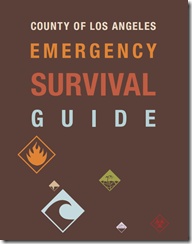
Last year in When 72 Hours Isn’t Enough, I highlighted  a colorful, easy-to-follow, 100 page `survival guide’ released by Los Angeles County, that covers everything from earthquake and tsunami preparedness, to getting ready for a pandemic.


The guide may be downloaded here (6.5 Mbyte PDF).

While designed specifically for the nearly 10 million residents of Los Angeles County, this guide would be a valuable asset for anyone interested in preparing for a variety of hazards.
image


And in Los Angeles, the advice is to have emergency supplies (food, water, etc) to last up to 10 days. In my humble opinion, 2-weeks in an earthquake zone isn’t overkill.


And I can’t overstress the importance of having, and being, a Disaster Buddy.


True, help will begin to arrive within 48 to 72 hours of most disasters, but as we saw with Hurricane Katrina, and now Sandy, relief efforts can take time. Having extra supplies means you are in a better position to offer help to a friend, a neighbor, a relative, or your community.


And in the wake of a major disaster, you’ll find there are better things to be doing with your time than queuing up for hours waiting for water and food distributions.


While the standard advice to prepare for 3 days is a good start, if you are capable of doing more (and not everyone is), you really should.


During a crisis, relief agencies will have their hands full trying to help those who were unable to prepare, or who lost their preps due to the disaster.


By being better prepared, you take some of the burden off relief agencies, which will allow them to concentrate their efforts on helping those less able to help themselves.


And by being prepared, you are in a better position to help others.


And that’s a win-win situation.


For you, your family, and your community.