Showing posts sorted by date for query NDM-1. Sort by relevance Show all posts

Saturday, September 12, 2020

Flying Blind In the Age Of Pandemics & Emerging Infectious Diseases

 image

WHO IHR Infographic

#15,451

Nearly 10 years, and more than 10,000 blog entries ago, in The Third Epidemiological Transition  I wrote about the work of anthropologist and researcher George Armelagos (May 22, 1936 - May 15, 2014) of Emory University who proposed 25 years ago that since the mid-1970s the world has entered into an age of newly emerging infectious diseases, re-emerging diseases and a rise in antimicrobial resistant pathogens.

Since publishing that blog we've seen a steady stream of new infectious disease threats emerge, including MERS-COV, avian H7N9, H5N6, H5N8, H5Nx, H10N8 (and others), new swine flu threats (EA H1N1), epidemics of vector borne illnesses like Zika and Chikungunya, several major Ebola outbreaks in Africa, and our second pandemic in just over a decade (COVID-19). 

To this short list we can also add re-emerging diseases, like Cholera, measles, Dengue, and scarlet fever - all of which have either blossomed or expanded their range - over the past decade, along with spread of antimicrobial resistant pathogens (e.g. NDM-1 Carbapenem resistance, MCR-1 Colistin Resistance, Acinetobacter baumannii, Carbapenem-resistant Enterobacteriaceae (CRE)) whose proliferation have led to stark warnings that the World Faces A `Post-Antibiotic Era’..

In order to improve surveillance and reporting, in 2005 – two years after the SARS epidemic, and during the early years of H5N1’s emergence – the World Health Organization produced the first major revision to the IHR (International Health Regulations) in 35 years, which was voted upon and approved to go into effect in 2007.
With expanded global travel and trade, along with a growing number of emerging disease threats, it was glaringly obvious the world needed a more cohesive, and cooperative approach to managing emerging infectious diseases.
The new 2005 IHR required – among other things – that countries develop mandated surveillance and testing systems, and that they report certain disease outbreaks and public health events to WHO in a timely manner.

The reality is that 15 years later many countries have still failed to implement these mandated systems, and that every couple of years the WHO has granted `extensions' to countries who have not complied.  Timely reporting of outbreaks, and sharing of viruses, by many countries has been haphazard at best since there are few penalties for ignoring the IHR (see Adding Accountability To The IHR).

From Indonesia’s refusal to share H5N1 virus samples to the Saudi’s chronic foot dragging on MERS, to China's slow rolling of releasing H7N9 information, we’ve seen many examples where the spirit – and at times the actual letter – of the 2005 IHR has been ignored by member nations.

But despite this chequered and often frustrating history of IHR compliance, I can't recall anytime in the past 15 years of blogging when the day-to-day flow of infectious disease information has seemed as compromised as it is today. 

Since the global emergence of COVID-19 last spring, reporting and surveillance on other emerging disease threats has declined sharply. While some of this may be due to prioritization of already scarce resources to the pandemic, that doesn't change the fact that we are flying blind in many parts of the world. 

A few examples include:

Saudi Arabia hasn't updated their MERS-CoV surveillance page since Epi Week 22 (May 31st), when they were reportedly dealing with a hospital outbreak. Worse, WHO EMRO - which had managed to post monthly reports of MERS in the Middle East even during past `information blackouts' by the Saudi MOH, hasn't posted an update since January 2020.


The World Health Organization did publish a DON report in early July (see WHO DON: Middle East respiratory syndrome coronavirus (MERS-CoV) – Saudi Arabia), which provide details on the cases reported in May. No other Middle Eastern countries have reported any MERS-CoV cases since March. 

While it is possible MERS-CoV activity has vanished, it isn't terribly likely.  And prior to January of this year, MERS-COV was considered the coronavirus with the greatest pandemic potential. 

Moving on to influenza. For months global reporting of influenza has been practically non-existent.  The latest `map' of flu activity (see below) is blank, with the exception of North America.  


All summer, the WHO Influenza report has carried a disclaimer:

The current influenza surveillance data should be interpreted with caution as the ongoing COVID-19 pandemic have influenced to varying extents health seeking behaviours, staffing/routines in sentinel sites, as well as testing priorities and capacities in Member States. The various hygiene and physical distancing measures implemented by Member States to reduce SARS-CoV-2 virus.
The most recent Influenza Report out of WHO EMRO was from Epi week 11. 


While we are getting somewhat better information out of the ECDC (see ECDC: Influenza Virus Characterisation - Summary Europe, July 2020), the number of samples submitted by EU countries has been far lower than normal this summer.  

Although influenza activity may be truly suppressed globally, we are going into the next flu season with a dearth of data on its evolution since last winter. 

Even reporting on serious agricultural diseases - like African Swine Fever - has fallen by the wayside, particularly in Asia.   

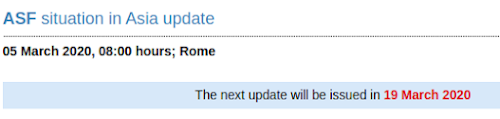
The UN FAO's most recent update on ASF in Asia was released on March 5th, with the next update promised in 2 weeks time.  Since then . . . silence. 
African Swine Fever has killed somewhere between 1/3rd and 1/2 of the world's swine, has increased food insecurity around the globe, and poses a constant threat to spread to the Americas (see USDA Enhances Domestic ASF Surveillance Efforts).   

Six months without an update from the FAO is less than reassuring. 

According to Hong Kong's CHP, there hasn't been an H7N9, H5N6, or H5N1 human infection reported globally in over a year.  While that may very well be true, against the backdrop of diminished reporting on African Swine Fever since March, one has to take any other absence of data with a grain of salt. 

With the world reeling from COVID-19, supply chains badly disrupted, and many economies teetering on the brink we find ourselves in a precarious position. One that would be only worsened if we get blindsided by another emerging disease threat. 

Whether `reasonable', unavoidable, or simply politically expedient, the growing lapses in disease reporting around the world should give us all pause.  As should our general lack of preparedness for the `next one'.

The notion that we won't get hit again is only a continuation of the years of magical thinking that left us unprepared for COVID-19. 

And given we are solidly in the age of emerging infectious diseases,  we simply can't afford any more of that. 

Thursday, December 12, 2019

Eurosurveillance: XDR Klebsiella pneumoniae ST307 Outbreak, North-Eastern Germany, June to October 2019


Credit CDC - Vital Signs


#14,573


Each year we draw a little closer to a long-predicted, but highly plausible `post-antibiotic era', where even common infections become resistant to most antibiotics, and something as simple as a scraped knee, or elective surgery, could be deadly.
Completely resistant infections have - so far - been extraordinarily rare, with a few - often last resort drugs - still being effective.
But this year we've seen two particularly worrisome nosocomial outbreaks in Europe, which are as notable for their spread as for their etiology.  

The first (see June 2019's ECDC Rapid Risk Assessment: Large Outbreak of NDM-producing CRE in Tuscany Region, Italy), involved a multi-hospital outbreak of Carbapenum resistant CRE in the Tuscany region of Italy. 
As of May, seven Tuscan hospitals had notified a total of 350 cases.The ECDC put the risk of further spread within Italy as `high', while the risk of cross border spread was deemed `moderate'. 
Four months later, in Oct. 7th's ECDC CDTR: Extensively drug-resistant (XDR) Klebsiella pneumonia, we looked at another European outbreak - involving (XDR) K. pneumoniae, affecting four hospitals in the northeast of the state of Mecklenburg-West Pomerania.
Today we've a detailed Eurosurveillance report on this latest event, and while not nearly as large as the Tuscan outbreak, it did spread - despite infection control measures - between a university hospital, two other hospitals and a rehabilitation clinic.
I've posted some excerpts from a much longer report, but you'll want to follow the link to read it in its entirety. I'll have a postscript when you return.


Rapid communication Open Access
Extensively drug-resistant Klebsiella pneumoniae ST307 outbreak, north-eastern Germany, June to October 2019 
Sebastian Haller1, Rolf Kramer1, Karsten Becker5, Jürgen A Bohnert5, Tim Eckmanns1, Jörg B Hans6, Jane Hecht1, Claus-Dieter Heidecke5, Nils-Olaf Hübner5, Axel Kramer5, Kathleen Klaper2, Martina Littmann4, Lennart Marlinghaus6, Bernd Neumann2, Yvonne Pfeifer2, Niels Pfennigwerth6, Simone Rogge4, Katharina Schaufler7, Andrea Thürmer3, Guido Werner2, Sören Gatermann6

Between June and October 2019, a university hospital, two other hospitals and a rehabilitation clinic in north-eastern Germany (Western Pomerania, Greifswald) were affected by an outbreak of extensively drug-resistant (XDR) Klebsiella pneumoniae.

A total of 17 patients were infected or colonised. The aim of this short article is to provide detailed information on the epidemiological and microbiological results of this outbreak investigation, and thereby facilitate comparison with similar outbreaks of this emerging Klebsiella strain on international level.

(SNIP)

This is the first reported nosocomial outbreak of XDR ST307 with NDM-1, OXA-48 and CTX-M-15 in Germany. Despite established hygiene precautions, a university hospital, two other hospitals and a rehabilitation clinic in north-eastern Germany were affected. This may suggest that the outbreak clone is highly adapted to the hospital environment. Microbiological analyses of the outbreak strain are ongoing, preliminary results of susceptibility testing to disinfectants does not suggest increased disinfectant resistance.
The outbreak seemed controlled until week 44 as no new transmissions occurred. In calendar week 44, however, Case 18 was detected through admission screening in the university hospital. This case had been hospitalised during July and September on wards of the university hospital with other cases and had not been screened during these stays. Identification of this case indicates that further unknown cases may exist.
This highlights the need for close information exchange between referral hospitals and for screening of patients that were exposed to one of the outbreak facilities from June 2019 onwards. A new case was also detected through rectal screening in week 45. This case, Case 19, stayed on the ward where current cases are being cohorted and a recent transmission event seems most likely. Again an extended outbreak meeting with all stakeholders was organised in week 46 and barrier precautions were reinforced. Currently data collection of these two recent cases as well as sequencing of the isolates are being conducted. PFGE analysis of the new isolates shows that these belonged to the outbreak strain. As of calendar week 49, there have been no further cases detected.
The mode of transmission is still under investigation, but person-to-person transmission is most likely the relevant route. In this context, the following two steps are especially valuable: ensuring intensified isolation for cases and intensified case searching through systematic extended screening immediately when an outbreak is suspected, to avoid further unrecognised cases. Other outbreaks with similar pathogens have shown that systematic rectal screening is crucial to identifying colonised patients [10]. Early in-depth analysis of the molecular and phenotypic strain features supports decision making processes for treatment and outbreak control.
The first case (index patient) presented no typical risk factors for infection such as a recent hospital stay or recent travel, and is therefore unlikely to be the primary case that brought the outbreak strain into the university hospital. As exemplified by the detection of Case 18, there may have been undetected cases, especially during the early phase of the outbreak. All but one case (of the 19 cases) had a history of hospitalisation in the university hospital, which is the only tertiary hospital in the affected region. Transmissions within the other institutions involved cannot be ruled out. Cooperation between institutions and public health authorities should be intensified, e.g. by fostering close, local collaboration between health facilities, health departments, laboratories and further stakeholders in MDRO-networks. This has already been proven to be successful for controlling outbreaks with other XDR pathogens [11].
The emergence of XDR dramatically limits treatment options. Only a few outbreaks of with the carbapenemase combination of NDM-1 and OXA-48 have been described [12,13].
Furthermore, presence of both carbapenemases NDM-1 and OXA-48 were identified in other sequence types [14,15], but rarely in ST307 [16]. However, CTX-M-15-associated ST307 with OXA-48 and colistin resistance was reported in a Serbian hospital in 2015 [7]. Wyres et al. [17] recently described CTX-M-15-associated ST307 as a highly successful, globally emerging lineage with remarkable level of plasmid conservation.
Clinical and laboratory staff need to increase vigilance in order to improve early detection of XDR outbreaks. Early extensive screening and a high level of isolation precautions are needed to avoid further spread of these pathogens. As consequence of this outbreak, the detection of an XDR enterobacterial strain in an area with low endemicity emphasizes the need for increased awareness and risk mitigation measures to avoid transmission events.
        (Continue. . . .)


Carrying genes encoding for both NDM-1 (New Delhi metallo-ß-lactamase-1) and OXA-48 carbapenemases, this new, highly resistant resistant strain  becomes even harder to treat and control.
As time goes by, these bacteria continue to learn new ways to undermine our antibiotic armamentarium.  
Complicating matters, these AMR abilities can be transferred via Plasmids – tiny snippets of DNA that can be easily transferred between different types of bacteria (see Study: Adaptation Of Plasmids To New Bacterial Species). 
It may help if you think of plasmids as vehicles that can travel between different types of bacteria, and the resistance genes (like NDM-1) as one of its passengers.
While most current resistant infections are still treatable - antimicrobial resistance already impacts millions of lives each year around the globe. The CDC's HAI ( healthcare-associated infections) website describes the insidious spread of CRE in the United States over the past 20 years.

Tracking CRE in the United States

Bacteria are constantly finding new ways to avoid the effects of antibiotics. For example, some Enterobacteriaceae can produce enzymes called carbapenemases that break down antibiotics including carbapenems, making the drugs ineffective. Carbapenem antibiotics are typically reserved to treat multidrug-resistant bacterial infections, so when bacteria develop resistance to them, treatment options can be extremely limited.

As of 2018, CDC is tracking carbapenemase enzymes in CRE using data generated by the Antibiotic Resistance Laboratory Network (AR Lab Network) and CDC laboratories. The AR Lab Network is not a surveillance network and therefore does not represent testing of every isolate in each state.
The AR Lab Network routinely tests for the following carbapenemases:
  • K. pneumoniae carbapenemase (KPC): This was first identified in the United States around 2001 and is the most common carbapenemase in the United States.
  • New Delhi Metallo-beta-lactamase (NDM): A less common carbapenemase in the United States but concerning because it can be resistant to even more antibiotics than KPC.
  • Verona Integron-Enconded Metallo-beta-lactamase (VIM): A less common carbapenemase in the United States but concerning because it can be resistant to even more antibiotics than KPC.
  • Imipenemase (IMP): A less common carbapenemase in the United States but concerning because it can be resistant to even more antibiotics than KPC.
  • Oxacillinase-48-like (OXA-48-like): A less common carbapenemase in the United States.

While I cover AMR topics from time to time in this blog, I can heartily recommend CIDRAP's Antimicrobial Stewardship Project as the best place to learn about the growing global threat of AMR.
You'll also want to check out the CIDRAP-ASP Youtube Channel, which has more than 24 hours of lectures and webinars on Antimicrobial stewardship.
Some of my more recent blogs on the threat of antibiotic resistance include:

WHO Update - Carbapenem-resistant Pseudomonas aeruginosa Infection – Mexico
UK Launches 5-year Action Plan Against Antimicrobial Resistance
WHO Report: Wide Differences In Antibiotic Use Between Countries

The Lancet: Attributable Deaths & Disability Due To Infections With Antibiotic-Resistant Bacteria - EU 2015

mBio: The Gathering Storm: Is Untreatable Typhoid Fever on the Way?
WHO: First Global Antimicrobial Surveillance System (GLASS) Report


Monday, October 07, 2019

ECDC CDTR: Extensively drug-resistant (XDR) Klebsiella pneumoniae - Germany

Credit CDC - Vital Signs


#14,450

Although novel viral respiratory pathogens - like influenza and MERS-CoV - pose the greatest risk of a sudden pandemic, growing antibiotic resistance is no less of a threat to human health, albeit on a longer time scale. 
Pandemics tend to produce a sharper, more dramatic impact, but over time antimicrobial resistance (AMR) could prove far deadlier.
Each year we draw a little closer to a long-predicted, but highly plausible `post-antibiotic era', where even common infections become resistant to most antibiotics, and something as simple as a scraped knee, or elective surgery, could be deadly. 
Completely resistant infections have been - thus far - extraordinarily rare, with a few - often last resort drugs - still being effective.
In 2017, however, the MMWR published a report on a fatal infection - of a patient who had previously been hospitalized in India, and then later in Nevada - which proved resistant to all 26 types of antibiotics approved for use in the United States.
The organism in question was identified as a pan-resistant CRE (Carbapenem-resistant Enterobacteriaceae), specifically Klebsiella pneumoniaeK. Pneumoniae’s opportunistic qualities – attacking those with weakened immune systems - makes it an important, and difficult to control, hospital acquired infection.
Four months ago in ECDC Rapid Risk Assessment: Large Outbreak of NDM-producing CRE in Tuscany Region, Italy, we looked at a multi-hospital outbreak of Carbapenum resistant CRE in the Tuscany region of Italy. While difficult to treat, these infections were not - as in the case of the fatal case in Nevada - pan resistant.
The ECDC put the risk of further spread within Italy as `high', while the risk of cross border spread was deemed `moderate'.
This morning the ECDC's Communicable Disease Threats Report (CDTR) describes a new CRE outbreak - this time in Germany - of an extensively drug-resistant (XDR) K. pneumoniae, affecting four hospitals in the northeast of the state of Mecklenburg-West Pomerania.

Extensively drug-resistant (XDR) Klebsiella pneumoniae

Opening date: 3 October 2019
Latest update: 4 October 2019

± Germany ±

Epidemiological summary

The Robert Koch Institute reports an outbreak of extensively drug-resistant (XDR) K. pneumoniae , carrying the genes encoding for the OXA-48 and NDM-1 carbapenemases and resistant to colistin.
As of 2 October 2019, 17 cases in four hospitals in the northeast of the state of Mecklenburg-West Pomerania have been reported: six cases of infections and eleven cases of carriage of the bacterium. The involved K. pneumoniae strain is resistant to all penicillins, cephalosporins, carbapenems, quinolones, aminoglycosides as well as fosfomycin and colistin, but susceptible to chloramphenicol, tigecycline (limited susceptibility) and cefiderocol (antibiotic in development, not yet approved for use in the EU/EEA).

Source: RKI | Regional health authority

ECDC assessment


This outbreak affecting four hospitals in Germany is another event highlighting the worsening situation and the high risk for further spread of highly-resistant, hospital-adapted strains of carbapenem-resistant Enterobacteriaceae in the EU/EEA. The extensively drug-resistant (XDR) profile of this outbreak strain is of concern due to the very few remaining treatment options.

EU/EEA-wide enhanced control efforts are needed as was recently outlined in an ECDC rapid risk assessment on carbapenem-resistant Enterobacteriaceae (27 September 2019).
Timing is, as they say, everything. And this report comes barely 10 days after the ECDC's publication of an updated 17-page RRA (Rapid Risk Assessment) on CRE in the EU.

Risk assessment
Carbapenem resistance in Enterobacteriaceae such as Klebsiella pneumoniae and Escherichia coli poses a significant threat to patients and healthcare systems in all European Union/European Economic Area (EU/EEA) countries. Carbapenem-resistant Enterobacteriaceae (CRE) infections are associated with high mortality, primarily due to delays in administration of effective treatment and the limited availability of treatment options.
Hypervirulent carbapenem-resistant K. pneumoniae strains have been reported presenting an additional threat with a potential for global dissemination. The spread of high risk clones and plasmids carrying carbapenemases in healthcare settings is a major cause of the spread of CRE in EU/EEA countries.
Recent events of cross-border importation after patient transfer and large regional outbreaks as well as the worsening epidemiologic situation of carbapenemase-producing CRE in the EU/EEA highlight the high risk for further spread of CRE and the need for enhanced control efforts. Options for control are outlined in the respective section below.
- EN - [PDF-774.27 KB]
While most infections are still treatable - AMR isn't some obscure future threat -  as it already impacts millions of lives each year around the globe.

In 2015 the CDC estimated that – in the United States alone – at least 23,000 people die each year due to antibiotic resistant infections (see CDC’s Vital Signs: A Coordinated Approach To Curb The Spread Of Antibiotic Resistance).

image


While I cover AMR topics from time to time in this blog, I can heartily recommend CIDRAP's Antimicrobial Stewardship Project as the best place to learn about the growing global threat of AMR.
You'll also want to check out the CIDRAP-ASP Youtube Channel, which has more than 24 hours of lectures and webinars on Antimicrobial stewardship.
Some of my more recent blogs on the threat of antibiotic resistance include:
WHO Update - Carbapenem-resistant Pseudomonas aeruginosa Infection – Mexico
UK Launches 5-year Action Plan Against Antimicrobial Resistance
WHO Report: Wide Differences In Antibiotic Use Between Countries

The Lancet: Attributable Deaths & Disability Due To Infections With Antibiotic-Resistant Bacteria - EU 2015

mBio: The Gathering Storm: Is Untreatable Typhoid Fever on the Way?
WHO: First Global Antimicrobial Surveillance System (GLASS) Report

Wednesday, June 05, 2019

ECDC Rapid Risk Assessment: Large Outbreak of NDM-producing CRE in Tuscany Region, Italy

Credit CDC - Vital Signs


#14,111


It’s been nearly 9 years since The Lancet published a study (see NDM-1: A New Acronym To Memorize)  by Walsh, Toleman, Livermore, et al. that awakened the world to the emergence and growing prevalence of the NDM-1 (New Delhi metallo-β-lactamase) enzyme that can make many types of bacteria resistant to a wide spectrum of antibiotics - including Carbapenems.
Carbapenems are newer generation beta-lactam antibiotics (a class that includes penicillins, cephalosporins, cephamycins, and carbapenems) that are usually reserved as an antibiotic of last resort.
Complicating matters, this enzyme is carried by a plasmid – a snippet of portable DNA  - that can be transferred to other types of bacteria (see Study: Adaptation Of Plasmids To New Bacterial Species) in a shared environment.

Since then, we've watched the spread - not only of NDM-1 - but of other NDM variants (see First Imported Case Of NDM-4 Reported In Hong Kong) around the globe, often in travelers recently returned from the Indian Subcontinent (see VOA News report  Concerns Mount Over India's Role In Incubating Drug-Resistant Bacteria). 
Completely resistant infections have been - thankfully - extraordinarily rare, with other - often last resort drugs - still being effective.
In 2017, however, the MMWR published a report on a fatal infection - of a patient who had previously been hospitalized in India, and then later in Nevada - which proved resistant to all 26 types of antibiotics approved for use in the United States.
The organism in question was identified as a pan-resistant CRE (Carbapenem-resistant Enterobacteriaceae), specifically Klebsiella pneumoniaeK. Pneumoniae’s opportunistic qualities – attacking those with weakened immune systems - makes it an important, and difficult to control, hospital acquired infection.
All of which brings us to a new ECDC RRA (Rapid Risk Assessment) on a very large, multi-hospital, outbreak of Carbapenum resistant CRE in the Tuscany region of Italy. While difficult to treat, these infections are not - as in the case of the fatal case in Nevada - pan resistant. 
The ECDC puts the risk of further spread within Italy as `high', while the risk of cross border spread is currently `moderate'.
This is a long, and detailed report.  I've only included the summary, so follow the link to read it in its entirety.   When you return, I'll have a postscript:

Rapid risk assessment: Regional outbreak of New Delhi metallo-betalactamase-producing carbapenem-resistant Enterobacteriaceae, Italy, 2018–2019 Risk assessment
4 Jun 2019
Summary
A large outbreak of New Delhi metallo-beta-lactamase (NDM)-producing carbapenem-resistant Enterobacteriaceae (CRE) has been reported from the Tuscany region in Italy. Between November 2018 and May 2019, seven Tuscan hospitals notified a total of 350 cases.
Due to its size and the resulting change in the epidemiology of CRE, the reported outbreak is a significant event, despite previous endemicity of Klebsiella pneumoniae carbapenamase (KPC)-producing CRE in this geographic area. The change in the type of carbapenemase further reduces treatment options because NDM-producing CRE are not susceptible to some of the new beta-lactam/beta-lactamase inhibitor combinations such as ceftazidime-avibactam and meropenem-
vaborbactam.
Numerous reported outbreaks and examples of cross-border transmission of NDM-producing CRE in the European Union/European Economic Area (EU/EEA) demonstrate the transmission potential of NDM-producing CRE in European healthcare systems. Outbreaks such as the one in Tuscany present a risk for cross-border transmission and further spread to other EU/EEA countries, especially since the affected area is a major tourist destination.
Given the previous rapid establishment of KPC-producing CRE in Italy (which resulted in an endemic situation), the risk for further spread of NDM-producing CRE from the current outbreak is considered to be high for Italy and moderate for cross-border spread to other EU/EEA countries.
Sporadic cases of community acquisition of NDM-producing CRE have also been described for other European countries. However, the introduction and dissemination of these bacteria have mainly been associated with healthcare settings. Therefore, the risk of acquisition of NDM-producing CRE related to this outbreak is likely restricted to persons with recent healthcare contact.
        (Continue . . . .)

 
In addition to death and taxes, two more inevitabilities of life are:
1) the world will someday face another pandemic and   
2) evolutionary pressures due to overuse and misuse of antibiotics will continue to erode our limited armamentarium of these lifesaving drugs.
Pandemics tend to produce a sharper, more dramatic impact, but over time antimicrobial resistance (AMR) could prove far deadlier.

Each year we draw a little closer to a long-predicted, but highly plausible `post-antibiotic era', where even common infections become resistant to most antibiotics, and something as simple as a scraped knee, or elective surgery, could be deadly. 
Considerable efforts are underway to try and stave off that day (see CIDRAP's Antimicrobial Stewardship Project), but inappropriate prescribing or use of antibiotics, rampant (and unnecessary) use in farm animals, and the plethora of fake or adulterated antibiotics sold around the world threaten to undermine their success.
 Some of my more recent blogs on the threat of antibiotic resistance include:

WHO Report: Wide Differences In Antibiotic Use Between Countries

The Lancet: Attributable Deaths & Disability Due To Infections With Antibiotic-Resistant Bacteria - EU 2015

Pakistan Media Reports: Scores Of `Counterfeit' Drugs Removed From Punjab Hospitals

mBio: The Gathering Storm: Is Untreatable Typhoid Fever on the Way?
Global AMR Threat: Centrally Approved & Unapproved Antibiotic Formulations Sold In India
WHO: First Global Antimicrobial Surveillance System (GLASS) Report

You'll also want to check out the CIDRAP-ASP Youtube Channel, which has more than 24 hours of lectures and webinars on Antimicrobial stewardship. 

Monday, February 05, 2018

Global AMR Threat: Centrally Approved & Unapproved Antibiotic Formulations Sold In India


#13,122

The global spread antimicrobial resistance (AMR) has been of great concern for years, but gained new prominence just over 7 years ago  when The Lancet published a study (see NDM-1: A New Acronym To Memorize)  by Walsh, Toleman, Livermore, et al. that awakened the world to the emergence and growing prevalence of the NDM-1 (New Delhi metallo-β-lactamase) enzyme.
Widely found on the Indian sub-continent, but increasingly found around the globe, this enzyme can make many types of bacteria resistant to a wide spectrum of antibiotics.
Of particular concern, this enzyme (and others like it) can be carried by a plasmid – a snippet of portable DNA  - that can be horizontally transferred to other types of bacteria (see Study: Adaptation Of Plasmids To New Bacterial Species), conveying resistance to them as well. 

Six months after the first Lancet article - in April, 2011 - the same researchers published another study that found the NDM-1 enzyme in 4% of New Delhi’s sampled drinking water sources, and 30 per cent of the sewage tested. Most alarmingly, the researchers also identified 11 new species of bacteria carrying the NDM-1 gene, including strains which cause cholera and dysentery.

Since then, we've seen scattered variants of NDM-1 emerge around the globe, including  NDM-2, NDM-4, NDM-5, NDM-7 and NDM-9  along side a growing list of other resistant  pathogens including CRE (Carbapenem-resistant Enterobacteriaceae) and mcr-1 (see MCR-1: The Return Of The Plasmids).
The rise of antibiotic resistance - including these emerging NDM enzymes - has long been linked to the overuse and misuse of antibiotics. A practice that is still widespread in many parts of the world, but has been particularly rampant on the Indian sub-continent.
In 2014, in EID Journal: Acquisition of Drug Resistant Genes Through International Travel, we looked at a study from the Netherlands tested that 122 healthy travelers both before and after making an international trip for evidence that they carried one of (several) antimicrobial resistance-inducing genes.
They found a high rate of resistance genes in the commensal gut bacteria of returning travelers – particularly those visiting Southeast Asia and the Indian subcontinent .
After years of denials, delays, and debate, in 2014 India finally placed restrictions on the sale of antibiotics without a prescription (see Times of India report 46 drugs under strict prescription norm) although reports since then have left serious doubts as to how well these regulations were being enforced.
Today we've a new study, published in the British Journal of Clinical Pharmacology, that finds despite new regulations, the levels of illicit and unapproved antibiotic formulations manufactured and sold in India continues to climb.
A link to and some excerpts from the study, followed by a link to a press release from Queen Mary University of London. You'll want to read both in their entirety, after which I'll post some additional links at the end.
Threats to global antimicrobial resistance control Centrally approved and unapproved antibiotic formulations sold in India

Accepted manuscript online: 4 February 2018Full publication history
DOI: 10.1111/bcp.13503 View/save citation
Cited by (CrossRef): 0 articles Last updated 05 February 2018

Introduction

Rising antimicrobial resistance (AMR) is a global health crisis. India has among the highest resistance rates and antibiotic consumption internationally. Extensive use of fixed dose combination (FDC) antibiotics and of unapproved formulations are claimed contributory factors but there has been no systematic examination of formulations or volumes sold.
Objective

To investigate the regulatory approval status and sales volumes of systemic antibiotics marketed in India.


Methods


This was an ecological study using regulatory records in India, the UK and US to determine the approval status in each country of systemic antibiotic FDC and single drug formulations (SDFs) marketed in India. Pharmatrac® sales data were used to determine the formulations and volumes sold in India (2007-2012), branded-product numbers, and manufacturers.
Results

Of 118 systemic antibiotic FDC formulations marketed in India, 43(36%) were approved but 75 (64%) had no record of regulatory approval; 5(4%) formulations were approved in the UK and/or US. Almost half of formulations (58/118,49%) comprised dual antimicrobials, most unapproved in India (43/58,74%), and many pharmacologically problematic. In contrast, 80/86(93%) SDFs were approved in India and over two-thirds in the UK and/or US.

Total antibiotic sales increased by 26% from 2056 Million-Units (2007-08) to 2583 Million-Units (2011-12). FDC sales rose by 38% versus 20% for SDFs. By 2011-12, FDCs comprised one-third of sales (872 Million-Units). Over one-third of FDCs sold (300.26 Million-Units, 34.5%) were of unapproved formulations. Multi-National Companies manufactured unapproved formulations and accounted for 19% of FDC and of SDF sales annually.


Conclusions

Sales in India of antibiotic FDCs, including unapproved formulations, are rising. In the context of increasing AMR rates nationally and globally, unapproved antibiotic FDCs undermine India's national AMR strategy and should be banned from sale.
         (Continue . . . )

Multinational companies continue to produce unregulated antibiotics in India

Millions of unapproved antibiotics are being sold in India, according to a new study by researchers at Queen Mary University of London and Newcastle University.
5 February 2018
The research, published today in the British Journal of Clinical Pharmacology, found that multinational companies continued to manufacture many unapproved formulations, despite pledging to tackle rising antimicrobial resistance.

These findings highlight serious hurdles for controlling antimicrobial resistance in India, which has among the highest antibiotic consumption rates and sales in the world, and has had parliamentary investigations into failures of the country’s drug regulatory system.
The researchers examined figures for fixed dose combination (FDC) antibiotics (formulations composed of two or more drugs in a single pill) and single drug formulation (SDF) antibiotics (composed of a single drug) on the market in India.
Exacerbating antimicrobial resistance

Of 118 different formulations of FDCs being sold in India between 2007 and 2012, the team found that 64 per cent (75) were not approved by the national drugs regulator, the Central Drugs Standard Control Organisation (CDSCO), even though the sale of unapproved new medicines is illegal in India. Only five of the formulations were approved in the UK or US.
(SNIP)
Lead author Dr Patricia McGettigan from Queen Mary's William Harvey Research Institute said: “Selling unapproved, unscrutinised antibiotics undermines measures in India to control antimicrobial resistance. Multinational companies should explain the sale of products in India that did not have the approval of their own national regulators and, in many cases, did not even have the approval of the Indian regulator.”
         (Continue . . . .)


Other recent blogs on this growing global threat include:

WHO: First Global Antimicrobial Surveillance System (GLASS) Report
WHO: The World Is Running Out Of Antibiotics

Eurosurveillance: Mcr-One, Two, Three And Counting
MMWR: Fatal Pan-Drug Resistant CRE - Nevada 2016
mBio: 1st Colistin & Carbapenem Resistant E. Coli Infection In A U.S. Patient
Eurosurveillance: Identification Of A Novel Colistin-Resistant MRC-2 Gene In E Coli - Belgium, 2016
CDC HAN: Alerting Healthcare Facilities Of 1st MCR-1 Gene Detection In US Patient


Thursday, August 03, 2017

Eurosurveillance: Mcr-One, Two, Three And Counting


#12,655


Almost two years ago (Nov 2015) the news broke (see MCR-1: The Return Of The Plasmids) of the discovery of a new antibiotic resistance gene in China - dubbed mcr-1 - that conveys resistance to Colistin. 
At that time the initial samples with the MCR-1 resistance gene were still susceptible to Carbapenems, meaning they could still be treated.
The concern is that eventually one or more of these resistant bacteria could eventually develop pandrug-resistance - where no effective treatment option remains.

Completely resistant infections have been - thankfully - rare, although in March of last year, in The Lancet's Emergence of the mcr-1 colistin resistance gene in carbapenem-resistant Enterobacteriaceae, we saw a report from China on two K pneumoniae isolates that carried the MCR-1 gene and the gene for NDM-5, providing it near pandrug resistance.  

Since then, MCR-1 has been found to exist globally, and joins the growing ranks of antimicrobial resistant organisms (MRSA, CRE, NDM-1, etc.) that threaten to overwhelm our dwindling arsenal of effective antibiotics.
Last summer, only 7 months after mcr-1 was identified, we learned of a variant dubbed mcr-2 (see Eurosurveillance: Identification Of A Novel Colistin-Resistant MRC-2 Gene In E Coli - Belgium, 2016).
Today the ECDC's Eurosurveillance Journal brings us an editorial, and 3 papers on the detection of a third mcr variant: mcr-3 . . .  followed by a paper on yet another variant; mcr-4.
Almost predictably, this mcr gene is following the same general pattern we've seen with NDM-1 (which now has variants including  NDM-2, NDM-4, NDM-5, NDM-7 and NDM-9.).
Some excerpts from the editorial, followed by links to all four papers.  This is definitely an issue of Eurosurveillance you'll want to read in its entirety.
Editorials
 Plasmid-encoded colistin resistance: mcr-one, two, three and counting

by J Kluytmans

In November 2015, the first description of plasmid-mediated colistin resistance (mcr-1 gene) was reported from China in food animals, food and humans [1]. Many reports from all over the world have followed since. The reported rates vary considerably, ranging from sporadic findings up to 67% in Escherichia coli isolates fromTunisian chicken [2]. However, the rates have been consistently higher in livestock than in humans. This points to a reservoir in animals with spill over to humans.
Until recently, colistin use in humans has been limited but it has been used extensively in veterinary medicine for decades, both as curative treatment and for prevention of disease [3]. The amount of use in livestock varies enormously. In Europe, for example, in 2013, the annual colistin sales in some countries exceeded 20 mg per population corrected unit (PCU) while in other countries the sales were below 1 mg/PCU. Following the detection of mcr-1, the European Medicines Agency updated their advice on the use of colistin in humans and animals [3] with the aim of reducing the use in animals by 65% in the coming years. Quantitative targets of 5 mg/PCU and 1 mg/PCU have been set for a reduction in high and medium consuming countries, respectively.
In the summer of 2016, a group from Belgium reported a new variant of the plasmid-mediated colistin resistance gene, mcr-2 [3]. Xavier et al. studied colistin-resistant E. coli strains from pigs and calves and found mcr-2 more frequently than mcr-1. +In this issue of Eurosurveillance, there are three reports on a third variant, mcr-3. In one of the studies, mcr-3 was detected in an E. coli isolate from a patient with a bloodstream infection who had recently visited Thailand [4]. The travel history in combination with the extended-spectrum beta-lactamase (ESBL) marker in the same strain (CTX-M55) strongly suggests that the patient acquired this multi-resistant E. coli in Asia.
        (Continue . . . )
Not mentioned in the above editorial is the 4th Rapid Communications on today's list, describing yet another new mcr variant; mcr-4.  These articles just went live, and I've not  had time to read and absorb them, but I expect to spend time later today and tomorrow doing so.  


Follow the links to read:

Rapid communications
Novel mcr-3 variant, encoding mobile colistin resistance, in an ST131 Escherichia coli isolate from bloodstream infection, Denmark, 2014
by L Roer, F Hansen, M Stegger, UW Sönksen, H Hasman, AM Hammerum
A novel variant of the plasmid-borne colistin resistance gene mcr-3 was detected on an IncHI2 plasmid in an ST131 CTX-M-55-producing Escherichia coli isolate from a Danish patient with bloodstream infection in 2014. The discovery of novel plasmid-borne genes conferring resistance to colistin is of special interest since colistin has reemerged as an important drug in the treatment of infections with multidrug-resistant Gram-negative bacteria


Abstract
Plasmid-borne colistin resistance gene mcr-3 in Salmonella isolates from human infections, Denmark, 2009–17

by E Litrup, K Kiil, AM Hammerum, L Roer, EM Nielsen, M Torpdahl
This report describes one Salmonella isolate harbouring both mcr-1 and mcr-3. We also found nine other Salmonella isolates positive for the plasmid-borne colistin resistance gene, mcr-3. The strains were isolated from patients in Denmark between 2009 and 2017 and five of the patients had travelled to Asia. In addition to mcr-3, all strains were found positive for blaTEM-1, strA, strB, sul2 and tet(A) or tet(B), and most strains were positive for blaCTX-M-55 and qnrS.


Abstract
Co-occurrence of colistin-resistance genes mcr-1 and mcr-3 among multidrug-resistant Escherichia coli isolated from cattle, Spain, September 2015

by M Hernández, MR Iglesias, D Rodríguez-Lázaro, A Gallardo, NM Quijada, P Miguela-Villoldo, MJ Campos, S Píriz, G López-Orozco, C de Frutos, JL Sáez, M Ugarte-Ruiz, L Domínguez, A Quesada
 Colistin resistance genes mcr-3 and mcr-1 have been detected in an Escherichia coli isolate from cattle faeces in a Spanish slaughterhouse in 2015. The sequences of both genes hybridised to same plasmid band of ca 250 kb, although colistin resistance was non-mobilisable. The isolate was producing extended-spectrum beta-lactamases and belonged to serotype O9:H10 and sequence type ST533. Here we report an mcr-3 gene detected in Europe following earlier reports from Asia and the United States.

Abstract
Novel plasmid-mediated colistin resistance mcr-4 gene in Salmonella and Escherichia coli, Italy 2013, Spain and Belgium, 2015 to 2016
by A Carattoli, L Villa, C Feudi, L Curcio, S Orsini, A Luppi, G Pezzotti, CF Magistrali

A novel mcr colistin resistance gene was identified in a strain of Salmonella enterica, monophasic variant of serovar Typhimurium (4,5,12:i:- ), isolated from a pig at slaughter in Italy in 2013, and in Escherichia coli strains collected during routine diagnostic of post-weaning diarrhoea in pigs from Spain and Belgium in 2015 and 2016. Immediate implementation of mcr-screening including this novel gene variant is required for Salmonella and E. coli from humans and food-producing animals in Europe.


This issue also contains a detailed surveillance and outbreak report from Italy on  KPC-carbapenemase spreading among outpatients.

Surveillance and outbreak report


Evolving beta-lactamase epidemiology in Enterobacteriaceae from Italian nationwide surveillance, October 2013: KPC-carbapenemase spreading among outpatients

Thursday, May 25, 2017

World Bank: World Ill-Prepared For A Pandemic

http://www.worldbank.org/en/news/infographic/2017/05/23/from-panic-neglect-to-investing-in-health-security-financing-pandemic-preparedness-at-a-national-level


#12,486


During the middle of the last decade (2006-2008) there was a decided push for global pandemic preparedness as H5N1 bird flu loomed large in Asia and the Middle East. Here in the United States every state, and every federal agency, was tasked with developing a written plan.

But it wasn't just here in America. Around the world governments, agencies, and large businesses invested in preparedness.  A few examples (out of hundreds) include:
Hong Kong : Exercise Redwood - 2009
Pandemic Video Roundup - 2009
UK Exercise: PPE Usage In A Pandemic –2008
Singapore: Public Involvement In Financial Sector Pandemic Drill –2008
UK: Lessons Learned From Winter Willow – 2007

Then the preparedness movement was hit by a double whammy.  
  • First, the financial crisis of 2007-2008, which forced many private sector entities to put pandemic planning on the back burner. After all, it is hard for a company to justify worrying that the creek might rise when their business is already in flames. 
  • And second, the 2009 H1N1 pandemic.  One that - while bad - was less severe than originally feared.  This convinced some that the fears over H5N1 were over hyped, and placated others who felt we'd `had our pandemic', and another one wasn't likely for decades. 
In the wake of the 2009 pandemic, H5N1 - which had spread rapidly during 2005-2008 - had begun to pull back to a handful of countries (Egypt, Indonesia, China, Vietnam, etc.).   The number of reported human infections dropped from 115 in 2006, to 48 in 2010, to only 32 in 2012.

There were other threats emerging - like MERS-CoV on the Arabian Peninsula - and the occasional oddball viral discovery (see mBio: A Mammalian Adapted H3N8 In Seals, CDC: Bat Flu Q&A), along with the ever growing threat from antimicrobial resistant bacteria (see EID Journal: Extensively Drug Resistant NDM Bacteria In The Environment – Dhaka, 2012).
But outside of the corridors of major public health agencies like the CDC, WHO, OIE & FAO, and CHP, and the conference rooms of major think tanks like CIDRAPTFAH, The World Bank, and the UK Civil Threats Registry, the threat of a major pandemic  pretty much fell off the world's threat radar. 
That is, until 2014, when MERS flared in Saudi Arabia, Ebola erupted in West Africa, and a trio of new HPAI bird flu viruses (H5N8, H5N6, H7N9) - along with a revived H5N1 virus - began to wreak havoc around the globe.

Ebola infected at least 28,000 people, killing more than 11,000MERS in 2014 saw a 5-fold increase (n=960) over the previous year.  And 2014 saw 320 H7N9 cases in China, and an increase in H5N1 cases in Egypt prior to their record-setting 2015 outbreak.
Since then we've seen the spread and devastation from mosquito borne viruses like Zika, Chikungunya, Dengue and Yellow Fever, new genotypes of bird flu viruses emerging in both China and Europe, two major epizootics (2015 North America and 2016-17 Europe), this year's record H7N9 epidemic wave, and the emergence of new bacterial resistance (mcr-1) and even a new resistant fungal threat (C. auris).
Suddenly, the threat of a global pandemic seems far more imminent, and since then we've seen a rise in the number of cautionary reports. 

Are We Prepared to Help Low-Resource Populations Mitigate a Severe Pandemic?
Community Pandemic Mitigation's Primary Goal : Flattening The Curve
WHO: Candidate Vaccines For Pandemic Preparedness
The Blue Ribbon Study Panel Report on Biodefense
World Bank Poll: Majority Believe World Is Not Ready For A Pandemic


Today, we've a 131 page working paper from The World Bank, which warns that far too many nations have let pandemic preparedness slide, and that the world remains ill-prepared to face even a moderately severe pandemic.

Given its size, I've only had time to quickly peruse this document, but what I've seen looks promising.

PRESS RELEASE

After Ebola and Zika, Most Countries Still Not Prepared for a Pandemic 
May 25, 2017

New report outlines how to break the cycle of ‘panic and neglect’ and finance country-level pandemic preparedness

GENEVA, May 25, 2017 – Despite progress made since the Zika and Ebola crises, a report released today by the International Working Group on Financing Preparedness (IWG), established by the World Bank, shows that most countries are not adequately prepared for a pandemic, and the world is still doing too little to finance recommended actions to strengthen pandemic preparedness. 

The report, entitled From Panic and Neglect to Investing in Health Security: Financing Pandemic Preparedness at a National Level, lays out 12 recommendations to ensure the adequate financing of the capabilities and infrastructure required to prevent, identify, contain, and respond to infectious disease outbreaks. Many countries chronically underinvest in critical public health functions like disease surveillance, diagnostic laboratories, and emergency operations centers, which enable the early identification and containment of outbreaks. So far, 37 countries have completed the rigorous peer-reviewed assessments, called the Joint External Evaluation (JEE), of their preparedness capacities to identify their gaps and needs. But that leaves 162 countries that have not. Moreover, only two of the countries that have completed this assessment have used the results to devise costed plans. The report urges national governments to prioritize financing preparedness in their domestic budgets, as should international donors. 

Not investing enough in pandemic preparedness puts lives at risk and is bad economics. A severe pandemic could result in millions of deaths and cost trillions of dollars, and even smaller outbreaks can cost thousands of lives and cause immense economic damage. The most conservative estimates suggest that pandemics destroy 0.1 to 1.0 percent of global GDP, on par with other global threats such as climate change. Recent economic work suggests that the annual global cost of moderately severe to severe pandemics is roughly $570 billion, or 0.7 percent of global income.


(Continue . . . )

The abstract and link to the report:

From panic and neglect to investing in health security : financing pandemic preparedness at a national level (English)

Abstract Deadly infectious pandemics will mark humanity's future, as they have shaped its past. Neither individual governments nor the global community can entirely prevent the emergence of infectious threats. But we can be much better prepared.
This report by the International Working Group on Financing Preparedness (IWG) proposes ways in which national governments and development partners can finance investments in country and regional preparedness and response capacities for pandemics and other health emergencies. Preparedness for pandemics refers to health and non-health interventions, capabilities, and capacities at community, country, regional, and global levels. Their purpose is to prevent, detect, contain and respond to the spread of disease and other hazards, mitigating social disruptions and limiting risks to international travel and trade
  • 2017/05/01 15:05:01
  • Working Paper
  • 115271
  • 1
  • 1
  • World
  • The World Region
  • 2017/05/24 15:04:56
  • Disclosed
  • From panic and neglect to investing in health security : financing pandemic preparedness at a national level