Showing posts sorted by date for query Tashiro. Sort by relevance Show all posts

Friday, January 09, 2015

Taiwan: HPAI H5N2 Outbreak in Pingtung County

image


# 9553


Taiwan can be added to the growing list of recent HPAI (highly pathogenic avian influenza) outbreaks in poultry, with word this morning that a large egg farm in Pingtung County – in the far south of the island – has begun culling more than 120,000 birds after the  H5N2 virus was confirmed.


First, this brief notice from Hong Kong’s government:


Taiwan's Pingtung eggs ban entry

January 9, 2015

Taiwan authorities announced the outbreak of highly pathogenic H5N2 in Pingtung County subtype of avian influenza, CFS announced immediate entrance to the county's ban eggs.

It should be because of bird flu, the center in November 2012, August 2013 and December last year, has announced a ban on Taiwan and Penghu, Hualien and Ilan egg import ban is still in force.

Centre will closely monitor the OIE news about bird flu outbreak in Taiwan, to act according to the local epidemic.


Meanwhile Taiwan's Central News Agency (Focus Taiwan) is reporting:

120,000 chickens to be culled after avian flu confirmed

2015/01/09 19:40:05

Taipei, Jan. 9 (CNA) All of the 120,000 chickens on a farm in Pingtung County will be culled after some have been confirmed infected with highly-pathogenic H5N2 avian influenza, the county government said Friday.

(Continue . . . )


Reports suggest that this outbreak may have begun sometime in December, and that eggs have been shipped from the farm after the virus emerged.  Once cooked, however, the virus would be deactivated.


HPAI H5N2 is believed to pose very little risk to human health, although those with long memories will recall that we’ve seen a small number of seroprevalence studies that have found elevated H5N2 antibody titers – particularly among poultry workers.


J Epidemiol. 2008;18(4):160-6. Epub 2008 Jul 7.

Human H5N2 avian influenza infection in Japan and the factors associated with high H5N2-neutralizing antibody titer.

Ogata T, Yamazaki Y, Okabe N, Nakamura Y, Tashiro M, Nagata N, Itamura S, Yasui Y, Nakashima K, Doi M, Izumi Y, Fujieda T, Yamato S, Kawada Y.

Arch Virol. 2009;154(3):421-7. Epub 2009 Feb 3.

Serological survey of avian H5N2-subtype influenza virus infections in human populations.

Yamazaki Y, Doy M, Okabe N, Yasui Y, Nakashima K, Fujieda T, Yamato S, Kawata Y, Ogata T.


While suggestive of (possibly sub-clinical) prior H5N2 infection (note: other factors might be associated antibody positivity), there is precious little evidence to link any significant or serious human illness to the H5N2 virus. After an earlier HPAI H5N2 outbreak in Taiwan back in 2012 we saw assurances from the WHO: Human Risk From H5N2 Is Low. 


Of course, the caveat holds that influenza viruses are constantly changing.  What was true last year, or even last week, may not hold true forever.


But for now, much like the HPAI H5N8 virus, H5N2 is viewed as primarily a threat to birds, and not to humans.

Thursday, December 04, 2014

Media: Canadian Bird Flu Outbreak Identified As H5N2

image

Map Credit FAO


# 9411


After several days of anticipation – and a good deal of public speculation that Canada’s Fraser Valley bird flu outbreak might have been due to either H5N1 or H5N8 – it was revealed today that this outbreaks is the somewhat less alarming – but far from benign – H5N2 subtype.


The Canadian Press - ONLINE EDITION

Tests confirm avian influenza strain at B.C. farms as H5N2: source

By: The Canadian Press

Thursday, Dec. 4, 2014 at 12:58 PM

VANCOUVER - Tests results have confirmed the strain of avian influenza that has killed poultry on at least two farms in southwestern British Columbia is H5N2.

A turkey farm and a chicken farm located in the Fraser Valley were placed under quarantine earlier this week after the H5 virus was detected, but officials were still awaiting confirmation of the specific subtype.

(Continue . . .)


As of this posting, there is no official statement on the CFIA (Canadian Food Inspection Agency) website, and a more complete analysis of the virus will probably take several days.


On Tuesday, in Fraser Valley B.C. Culling Poultry After Detecting H5 Avian Flu, I described 2 previous H5N2 outbreaks in the same region of Canada – one in 2005 and another in 2009. In 2010, we saw Low-path H5N2 confirmed in Manitoba.  All three outbreaks were quickly contained.


H5N2 is generally found in wild birds, usually as an LPAI (Low pathogenic avian influenza) strain, but when it is introduced into large poultry populations it can evolve into a HPAI. 


It was for this reason that  OIE made both High and Low path H5 & H7 poultry outbreaks a reportable event back in 2004, and why quarantine and immediate culling are the preferred course of action whenever it either is detected. We’ve seen a number of HPAI and LPAI H5N2 outbreaks in the past, notably in Taiwan, China, Canada, the United States, Korea, Japan, and Mexico.


While not normally thought of as a serious threat to public health (see WHO: Human Risk From H5N2 Is Low), we have seen some limited evidence that H5N2 might be able to infect humans.


Nearly three years ago, in Taiwan: Three Poultry Workers Show H5N2 Antibodies, we looked at a report that three poultry workers and officials working in animal quarantine have tested positive for antibodies for the H5N2, but all remained healthy and asymptomatic (note: refer to article for other possible causes of seropositivity).


Some earlier H5N2 studies include:


J Epidemiol. 2008;18(4):160-6. Epub 2008 Jul 7.

Human H5N2 avian influenza infection in Japan and the factors associated with high H5N2-neutralizing antibody titer.

Ogata T, Yamazaki Y, Okabe N, Nakamura Y, Tashiro M, Nagata N, Itamura S, Yasui Y, Nakashima K, Doi M, Izumi Y, Fujieda T, Yamato S, Kawada Y.

Arch Virol. 2009;154(3):421-7. Epub 2009 Feb 3.

Serological survey of avian H5N2-subtype influenza virus infections in human populations.Yamazaki Y, Doy M, Okabe N, Yasui Y, Nakashima K, Fujieda T, Yamato S, Kawata Y, Ogata T.


While these reports are suggestive of prior H5N2 human infection – particularly among poultry workers – we haven’t seen any good evidence that it has produced significant or serious human illness. 


However, in Human H5N2 bird flu infection: fact or fallacy? (May 2014) by Beuy Joob and Viroj Wiwanitkit, published in the Asian Pac J Trop Biomedicine, the authors argue:


 . . . . the cross species infection from avian to mammal of H5N2 virus has already been confirmed in pigs and the possibility for further genetic reassortment to cause new H5N2 virus that might be highly virulent to human beings is also proposed[9]. It is no doubt that the special concern and appropriate surveillance on the possible emerging human H5N2 bird flu is needed.


Which simply reminds us that influenza viruses are moving targets.  What you can say about one today, may . . .or may not . . .hold true tomorrow.


As far as this current outbreaks is concerned – while there is no such thing as a `good’ H5 avian flu outbreak in poultry – if you were forced to choose between having an H5N1, H5N8, or an H5N2 outbreak . . . .  I’m certain most poultry producers would choose H5N2.

Tuesday, February 04, 2014

Korea: Asymptomatic H5N1 Seropositive Cullers In Previous Outbreaks

image

Photo Credit – CDC PHIL


# 8266


There’s a bit of controversy brewing today as it has emerged that 10 people in Korea – involved in the culling of poultry during H5N1 outbreaks in 2003 and 2006 -  developed antibodies to the bird flu virus . . . yet were never admitted as having been `infected’ by the Korean government.


First the report (h/t Gert van der Hoek on FluTrackers) from the Korean Broadcasting System (KBS).


Asymptomatic Human Carriers of AI Confirmed in S. Korea

Write : 2014-02-04 09:09:57 Update : 2014-02-04 19:00:37

The government has confirmed it discovered cases of humans infected with avian influenza during previous outbreaks in South Korea.


The Korea Centers for Disease Control and Prevention confirmed ten people who culled birds during outbreaks in 2003 and 2006 had antibodies for the H5N1 strain of avian influenza.

The discovery of antibodies in those people means they were infected with the virus at some point, but the disease control agency said they were “asymptomatic carriers” who displayed no symptoms.

The government confirmed infections of bird flu in dead migratory birds throughout the country last month.


Another report from the Korea Times today, brings us badly timed government assurances that the new H5N8 virus is `unlikely to infect humans’,  as it also carries details of this story.


'Bird flu unlikely to infect people'

2014-02-04 16:55

By Nam Hyun-woo

(Excerpt)

 It said that there have been no reported cases of human infection from other avian influenza subtypes in Korea, such as H5N1 and H7N9, which have killed people in overseas outbreaks.

However, concern is growing over the CDC’s methods of determining human infection.

The national disease control center follows the World Health Organization’s standard when it assesses a human infection case. The WHO determines a person has been infected with avian influenza only when they show symptoms of acute respiratory disease. People who are asymptomatic, even though the virus has infiltrated their body, are not deemed cases of human infection.

When the H5N1 strain swept the country in 2003-2004 and 2006-2007, the CDC found antibodies in the blood serum of 10 people who had slaughtered chickens.

The fact that they had antibodies shows that their immune system was countering a viral infection.

“Since those 10 people showed no symptoms, they were not counted as human infection cases,” an official at the CDC said.

There is admittedly a range of opinions when it comes to defining whether someone is – or has been – infected with by a virus, but one can’t help but feel that the `higher standard’ employed here was more for political expedience than for scientific merit. 


When it comes to a virus like H5N1, there is considerable advantage in being able to say that `no human infections’   have been detected.


At issue is whether serological testing - testing for post-exposure antibodies - is a valid indication of viral infection.  And given the emphasis we’ve seen on the need for serological testing to quantify the impact of just about every viral outbreak, you’d have to believe the answer is in the affirmative.


There are, of course, limits to serological tests, just as there are to PCR and viral cultures.  No test is perfect.  


Disagreements exist over what constitutes a `positive’  serological test (usually defined as a 4-fold increase in post-exposure antibody titer levels), and there are always concerns over potential cross-reactive antibodies and false positives.


But serological studies are generally regarded as the best way to determine the incidence of infection in a population, as you don’t have to depend upon a `perfect catch’ of a biological sample while the patient is actively shedding virus particles. 


Not stated in today’s articles are the antibody titer levels detected in these 10 cases, so there could be some wiggle room there. 


But it is also likely that these cullers were placed on Tamiflu while they were working with infected birds, which would probably have affected the antibody titers they developed, as well as suppressing any outward symptoms.  


In the past we’ve often seen seroprevalence studies used to quantify avian flu infections in humans, including:


So it is hard to argue that the detection of antibodies – even in asymptomatic cases – wasn’t worthy of mention, even if the official determination was they were not `infected’.


While hardly a game changer, and not terribly surprising given other H5N1 studies we’ve seen -  this is scientific data and it should have been disclosed in a timely fashion - not held back for a decade.


If for no other reason than now – as Korea finds itself in the midst of another avian flu crisis – everyone will be wondering what other `hidden asterisks’  are attached to government assurances.


As I’m not a virologist or an epidemiologist, I’ll leave it to those more qualified to argue the relative merits of using serological test results, or the exclusion of asymptomatic cases, in case definitions.   


Hopefully we’ll get far more expert reaction from Dr. Ian Mackay on all of this later today.


UPDATE:  Ian has now posted his thoughts at:


Why have a case definition that seems designed to miss transmission events?

Friday, January 24, 2014

H5N8: Korea Testing More Migratory Birds

image

Credit U.S. Fish and Wildlife Service


# 8216


And while we’ve been primarily concentrating on the H7N9 virus situation in China this morning, we’ve also this report from Korea on the testing of migratory birds for the H5N8 virus, and concerns that it may spread further.


This video report from Arirang News, after which I’ll return with a bit more.

 Transcript:

As flocks of migratory birds make their way around Korea this winter, it seems they are both the carriers and the victims of the latest bird flu outbreak.

On Friday, local officials announced that more ducks had been found dead in a city closer to Seoul, in the central province of Chungcheongnam-do.

And.. further south in the nation's port city of Busan, officials are testing to see if a group of dead birds found there also tests positive for the latest H5N8 strain of bird flu.

As the birds' exact cause of death is being determined, officials have confirmed that still another group of ducks found dead in a river in Chungcheongnam-do Province was infected with the H5N8 strain of the AI virus.

This is the first confirmation that AI has spread to other regions in the country.

(Continue . . .)


For now, we’ve no evidence to suggest this H5N8 virus poses a substantial risk to human health, although our experience with its more famous avian cousin – H5N1 – certainly dictates caution.


Other H5 avian viruses, such as H5N2, have only demonstrated a very limited ability to infect humans.


Eighteen months ago, in Taiwan: Three Poultry Workers Show H5N2 Antibodies, we looked at a report that three poultry workers and officials working in animal quarantine have tested positive for antibodies for the H5N2, but all remained healthy and asymptomatic (note: refer to article for other possible causes of seropositivity).


Some earlier H5N2 studies suggestive of prior H5N2 human infection – particularly among poultry workers – include:

J Epidemiol. 2008;18(4):160-6. Epub 2008 Jul 7.

Human H5N2 avian influenza infection in Japan and the factors associated with high H5N2-neutralizing antibody titer.

Ogata T, Yamazaki Y, Okabe N, Nakamura Y, Tashiro M, Nagata N, Itamura S, Yasui Y, Nakashima K, Doi M, Izumi Y, Fujieda T, Yamato S, Kawada Y.

Arch Virol. 2009;154(3):421-7. Epub 2009 Feb 3.

Serological survey of avian H5N2-subtype influenza virus infections in human populations.Yamazaki Y, Doy M, Okabe N, Yasui Y, Nakashima K, Fujieda T, Yamato S, Kawata Y, Ogata T.


Still, we haven’t seen any good evidence that H5N2 has produced significant or serious human illness. 


The caveat being, that up until the emergence of H7N9 in March of this year, H7 avian flu viruses had been generally regarded as posing a minor threat to human health as well.


Which, when you combine it with the massive economic losses to the poultry industry, makes the rapid and intense response to bird flu outbreaks  – such as we are seeing  with H5N8 in South Korea right now – the prudent course of action.

Thursday, January 09, 2014

Eurosurveillance: Community Cluster Of Antiviral Resistant pH1N1 in Japan

image

Photo Credit – Wikipedia


# 8150


While it’s not easy to find anything good to say about a pandemic influenza virus, the 2009 pH1N1 strain had at least one saving grace; unlike the old seasonal H1N1 strain it replaced, it was overwhelming sensitive to Neuraminidase Inhibitor (NAI) antiviral drugs like oseltamivir (Tamiflu ®) and zanamivir (Relenza ®).


In 2006 we only saw a smattering of oseltamivir resistant seasonal H1N1 cases, almost always attributed to `spontaneous mutations’  within a patient receiving the drug.  While of concern to the patient being treated, it appeared to be poorly transmissible.


In the 2006-2007 flu season, laboratories found no resistant strains in Europe or Japan, and in less than 1% of samples from the United States.


Resistance in this viral strain was mostly caused by a mutation called H275Y, where a single amino acid substitution (histidine (H) to tyrosine (Y)) occurs at the neuraminidase position 275.


(Note: some scientists use 'N2 numbering' (H274Y) and some use 'N1 numbering' (H275Y))


The following year, during the 2007-2008 flu season, oseltamivir resistant viruses suddenly took flight, and by the spring of 2008 roughly 25% of European samples tested showed the H275Y mutation (see Increased Tamiflu Resistance In Seasonal Influenza).


By December of 2008 nearly all of the samples tested in the United States were resistant to oseltamivir and the CDC was forced to issue major new guidance for the use of antivirals (see CIDRAP article With H1N1 resistance, CDC changes advice on flu drugs).


The arrival of a the pandemic H1N1 in the spring of 2009 effectively removed this resistant strain from circulation, and in the five ensuing years, nearly 99% of the  pH1N1 viruses tested have remained sensitive to NA inhibiting drugs.  The latest FluView report (week 52) indicated that of 910 viruses tested, only 10 showed signs of NA Inhibitor resistance.


image

While 99% sensitivity is an excellent batting average in any league, 5 of the 10 resistant viruses were detected in Louisiana and Mississippi, suggesting a geographic clustering of cases.


Although we have seen some signs the pH1N1 might be figuring its way around our arsenal of antivirals, most often this occurs after a patient is placed on antivirals, occasionally resulting in a spontaneous mutation within the host. 


But we have seen some signs of community spread of resistant pH1N1 as well.


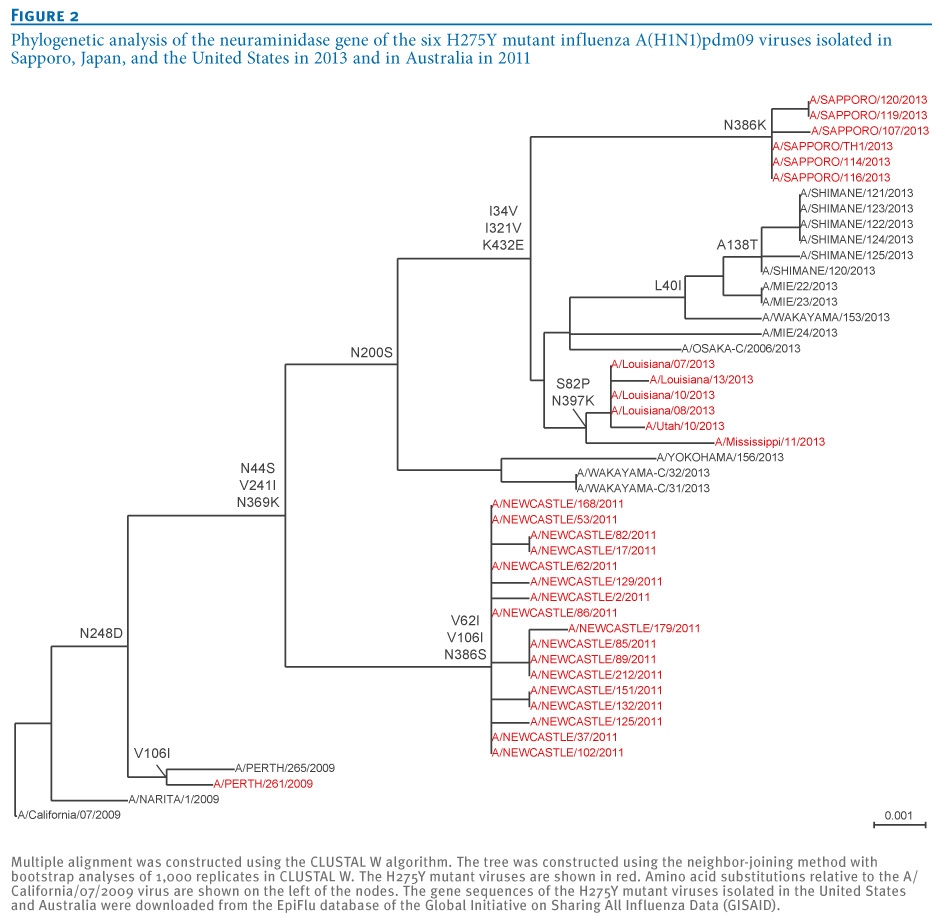
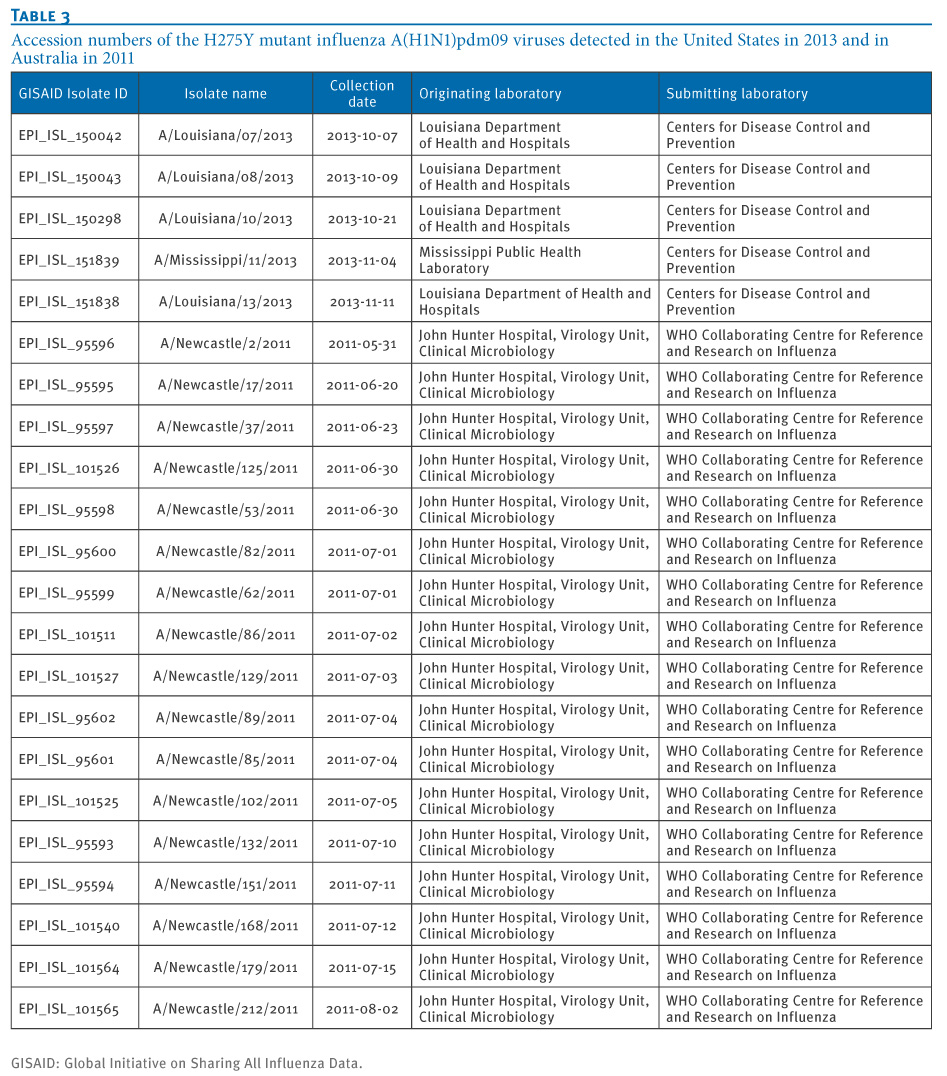
Readers with good memories will recall that in December of 2011, in NEJM: Oseltamivir Resistant H1N1 in Australia, we looked at a cluster of oseltamivir (Tamiflu ®) resistant H1N1 viruses in and around the Newcastle area of New South Wales.


The lead author of that NEJM correspondence was Aeron C. Hurt, Ph.D. from the World Health Organization (WHO) Collaborating Centre for Reference and Research on Influenza, North Melbourne, VIC, Australia.  


What Hurt and his colleagues found was evidence for the sustained community transmission of a resistant strain of the H1N1pdm09 virus.

After analyzing viral samples pulled from 182 patients seen in emergency departments, intensive care units, and doctor’s offices in New South Wales between May and August of 2011, they found 29 (16%) carried the H275Y resistance mutation.


In 2011, we also saw reports of a `mildly resistant’ version of pH1N1 – with a different mutation S247N (serine (S) to asparagine (N)) mutation at the neuraminidase position 247) – showing up with some frequency in  Australia, Brunei and Singapore (see Eurosurveillance: A `Mildly’ Resistant Strain of H1N1 Emerges).


But neither of these strains has gained much traction globally, and the World Health Organization still reports only about 2% of samples tested are resistant to our frontline antiviral drugs.


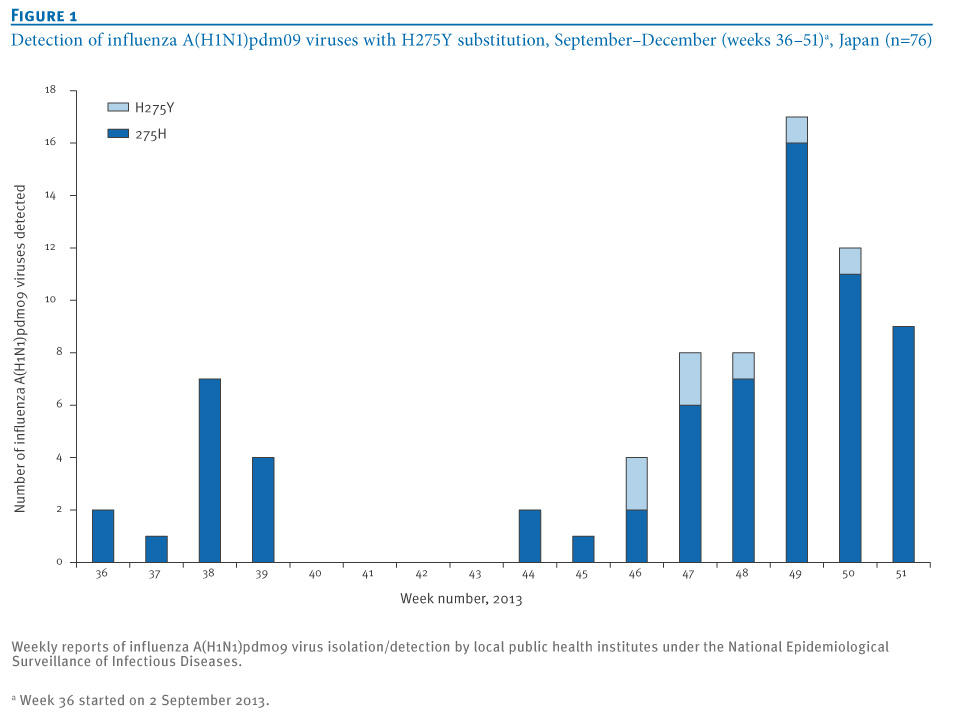
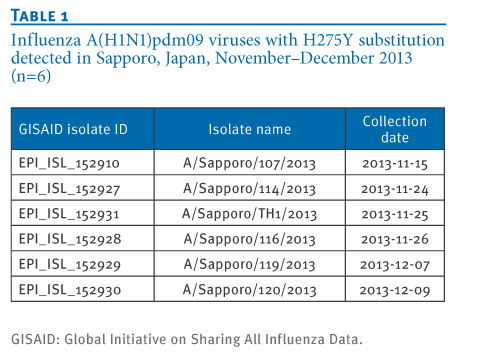
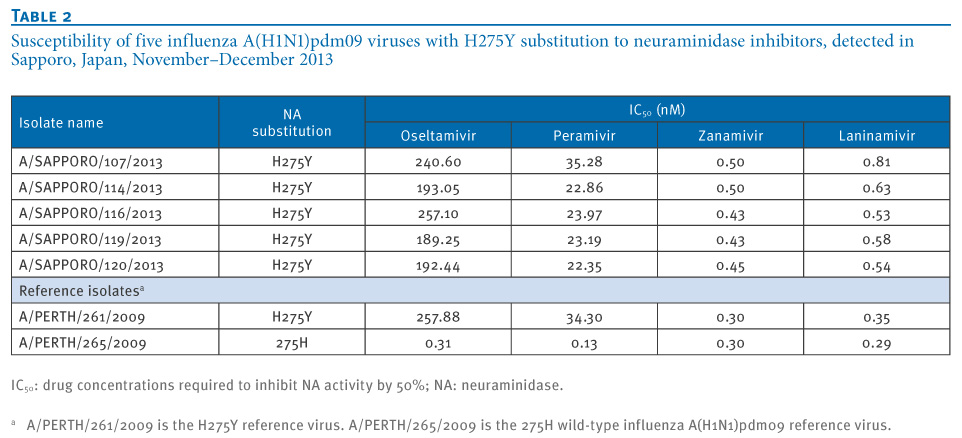
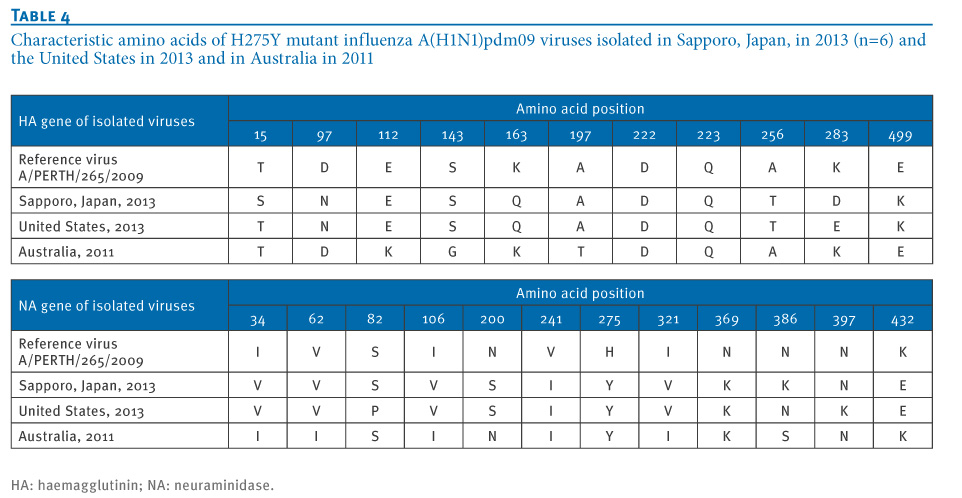
Today, we’ve a Rapid Communications  in the journal Eurosurveillance that details a recent community cluster of resistant pH1N1 (with the H275Y mutation) in Sapporo, Japan.  Six genetically similar viruses were detected, although none of the patients had known contact with each other, which suggests a resistant strain may be starting to spread in that region.


Rapid communications

A community cluster of influenza A(H1N1)pdm09 virus exhibiting cross-resistance to oseltamivir and peramivir in Japan, November to December 2013

E Takashita1, K Ejima1, R Itoh1, M Miura1, A Ohnishi2, H Nishimura3, T Odagiri1, M Tashiro ()1

  1. Influenza Virus Research Center, National Institute of Infectious Diseases, Tokyo, Japan
  2. Sapporo City Institute of Public Health, Hokkaido, Japan
  3. Virus Research Center, Sendai Medical Center, Miyagi, Japan

Citation style for this article: Takashita E, Ejima K, Itoh R, Miura M, Ohnishi A, Nishimura H, Odagiri T, Tashiro M. A community cluster of influenza A(H1N1)pdm09 virus exhibiting cross-resistance to oseltamivir and peramivir in Japan, November to December 2013. Euro Surveill. 2014;19(1):pii=20666. Available online: http://www.eurosurveillance.org/ViewArticle.aspx?ArticleId=20666
Date of submission: 30 December 2013


Six influenza A(H1N1)pdm09 viruses were detected in Sapporo, Japan, between November and December 2013. All six viruses possessed an H275Y substitution in the neuraminidase protein, which confers cross-resistance to oseltamivir and peramivir. No epidemiological link among the six cases could be identified; none of them had received neuraminidase inhibitors before specimen collection. The haemagglutinin and neuraminidase genes of the six viruses were closely related to one another, suggesting clonal spread of a single resistant virus.

(Continue . . .)

In their discussion, the authors write:

It has been shown that oseltamivir-resistant influenza A(H1N1) virus infection reduced the effectiveness of oseltamivir and this tendency was more apparent in children 0 to 6 years old [14-16]. Among patients from whom oseltamivir- and peramivir-resistant A(H1N1)pdm09 viruses have been detected in Japan, the percentage with no known exposure to NA inhibitors has increased significantly, from 16% during the pandemic period to 44% during the post-pandemic period [2]. These observations may suggest that human-to-human transmission with H275Y mutant viruses has increased gradually in the post-pandemic period. Consequently, surveillance of antiviral-resistant influenza viruses should be continued and strengthened, particularly for the choice of antiviral drugs.


Since 2009 we’ve seen sporadic cases of antiviral resistance show up in the new H1N1 virus, but only rarely have we seen clusters that suggest limited community spread.  So we are nowhere near the level of concern over antiviral resistance that we experienced in 2008.


That said,  we know that pharmacological victories over viruses and bacteria have always been fleeting at best. Pathogens – given enough time – have demonstrated a keen ability to evade each new generation of drugs we throw at them.


A reminder that in our ongoing battle against infectious diseases, that nature always bats last.

Sunday, December 22, 2013

Details & Background On the H5N2 Poultry Outbreak In Hebei Province

image

Photo Credit CRIENGLISH


# 8099


When it comes to variety, avian influenzas come in more flavors than you’ll find in a Baskin-Robbins store. Which explains  why in the past couple of months our attentions have been divided between H5N1 in Cambodia and Indonesia, H7N9 in Mainland China, an upstart H10N8 (again in China), and now H5N2 in Hebei Province, China.


While we worry most about H5N1 and H7N9 – primarily because both have been shown to produce severe illness and even death in humans – all H5 and H7 varieties are of concern, since these subtypes have a history of morphing from low-pathogenic strains to highly pathogenic strains if not controlled.  


Which is why all H5 and H7 outbreaks are reportable to the OIE, and quarantine and immediate culling are the preferred course of action.


Yesterday China reported an outbreak of H5N2 at a poultry farm in Baoding City, Hebei Province.  Reports today indicate that more than 120,000 birds have been culled, and that 11 people who were in direct contact with the poultry have been placed in isolation (and probably given Tamiflu ®), but none have shown signs of infection.


First a report from Sina  News, then I’ll be back with more on the history of H5N2


Hebei people infected with H5N2 bird flu yet (Alt Translation Hebei infection of H5N2 avian flu nobody has yet been)

CNA (2013-12-22 18:18)

(CNA Taipei 22 (Xinhua)) Hebei Baoding Nanshiqu officials said today, raising the local chicken farm H5N2 bird flu has been effectively controlled occurred, 11 were in direct contact with the relevant chickens were isolated observation, it was not found infected.

China News Service reported, Baoding Nanshiqu Agriculture Secretary Zhang Guang pointed out that, in addition to the above measures, culling chickens participating Nanshiqu work were monitored twice daily, were not unusual. Meanwhile, the official has the region's comprehensive agricultural and sideline products and fragmented market of live poultry trade to clean up and banned.

Zhang also said that the official and farm stocks of eggs into the marketing ruin handling , disposal of tracing the source of the product sold. Meanwhile, the live poultry within 3-5 km range chicken farm near the outbreak, have been carried out culling.

H5N2 outbreak was discovered south downtown Baoding Zhu Village tiger phoenix chicken farm was built in 1992, is a self-employed business , keeping more than 120,000 laying hens only, no chickens. 4000 chickens on the 17th because the epidemic of death was November 27 to buy from overseas. 1021222


It should be noted that we’ve seen both HPAI (Highly pathogenic) and LPAI (Low Pathogenic) H5N2 outbreaks in the past, notably in Taiwan, Canada, the United States, Korea, Japan, and Mexico.


The isolation (and usually, antiviral treatment) of those who have been in direct contact with infected birds is standard procedure, and should not be viewed as being particularly alarming.  While not normally thought of as a serious threat to public health (see WHO: Human Risk From H5N2 Is Low), we have seen some limited evidence of H5N2’s ability to infect humans in recent years.


Eighteen months ago, in Taiwan: Three Poultry Workers Show H5N2 Antibodies, we looked at a report that three poultry workers and officials working in animal quarantine have tested positive for antibodies for the H5N2, but all remained healthy and asymptomatic (note: refer to article for other possible causes of seropositivity)..  


Some earlier H5N2 studies include:


J Epidemiol. 2008;18(4):160-6. Epub 2008 Jul 7.

Human H5N2 avian influenza infection in Japan and the factors associated with high H5N2-neutralizing antibody titer.

Ogata T, Yamazaki Y, Okabe N, Nakamura Y, Tashiro M, Nagata N, Itamura S, Yasui Y, Nakashima K, Doi M, Izumi Y, Fujieda T, Yamato S, Kawada Y.

Arch Virol. 2009;154(3):421-7. Epub 2009 Feb 3.

Serological survey of avian H5N2-subtype influenza virus infections in human populations.Yamazaki Y, Doy M, Okabe N, Yasui Y, Nakashima K, Fujieda T, Yamato S, Kawata Y, Ogata T.


While these reports are suggestive of prior H5N2 human infection – particularly among poultry workers – we haven’t seen any good evidence that it has produced significant or serious human illness. 


The caveat being, that up until the emergence of H7N9 in March of this year, H7 avian flu viruses had been generally regarded as posing a minor threat to human health, and until this past week, we’d never seen a human infection with the H10N8 virus.


With influenza viruses, the only constant is change.  What may be relatively benign today, may become virulent or increase its host range tomorrow.


Which makes the rapid and intense response to bird flu outbreaks  – such as we are seeing  with H5N2 in China right now – the prudent course of action.

Friday, April 12, 2013

Eurosurveillance: Genetic Analysis Of Novel H7N9 Virus

image

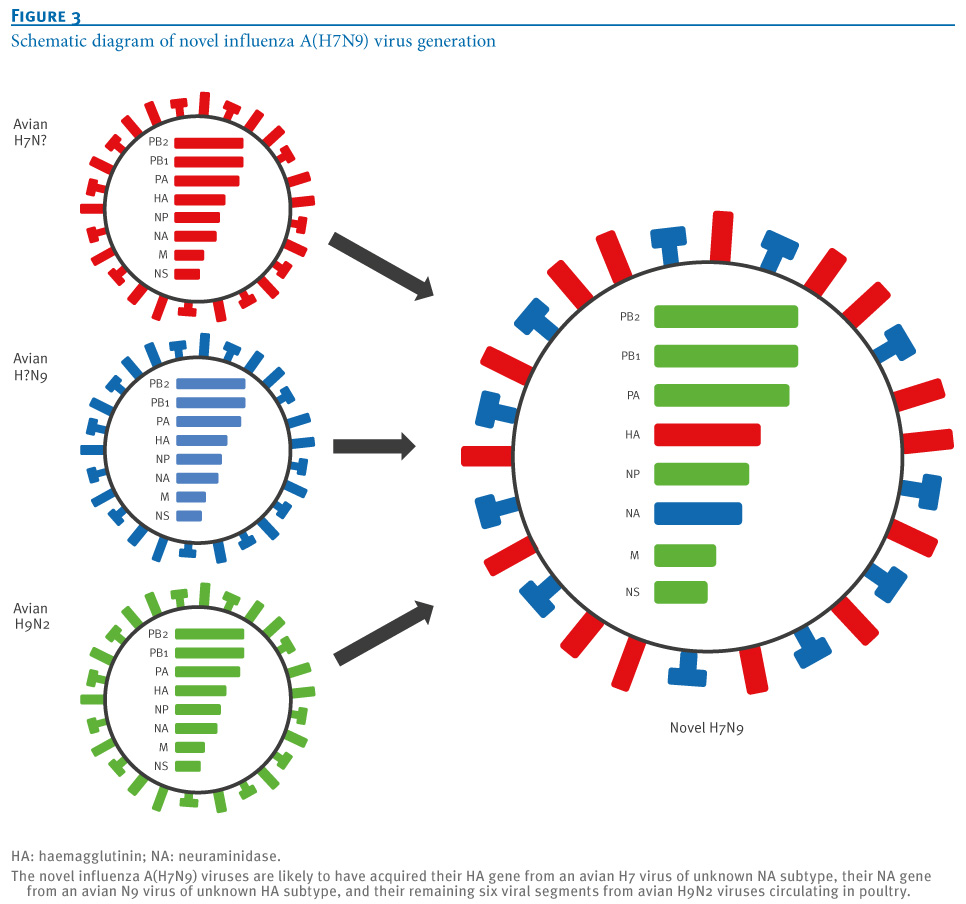
The H7N9 Reassortment – Credit Eurosurveillance


# 7118


Less than two weeks after the announcement from China that they had isolated a novel H7N9 virus from a handful of patients, we are seeing a flood of scientific analyses describing the virus and its impact.


A few examples from the past two days include:


NEJM On The H7N9 Virus
OIE: H7N9 Represents An `Exceptional Situation’
Eurosurveillance: The Implications Of H7N9 For Europe


Adding to this growing knowledge base is an exploration of the genetic makeup of this viral hybrid, produced  by researchers primarily based in Japan. 


Attached to this research you’ll find such familiar names as Yoshihiro Kawaoka and Masato Tashiro. 


Eurosurveillance, Volume 18, Issue 15, 11 April 2013

Rapid communications

Genetic analysis of novel avian A(H7N9) influenza viruses isolated from patients in China, February to April 2013

T Kageyama, S Fujisaki, E Takashita, H Xu, S Yamada, Y Uchida, G Neumann, T Saito, Y Kawaoka, M Tashiro


Novel influenza viruses of the H7N9 subtype have infected 33 and killed nine people in China as of 10 April 2013. Their haemagglutinin (HA) and neuraminidase genes probably originated from Eurasian avian influenza viruses; the remaining genes are closely related to avian H9N2 influenza viruses. Several characteristic amino acid changes in HA and the PB2 RNA polymerase subunit probably facilitate binding to human-type receptors and efficient replication in mammals, respectively, highlighting the pandemic potential of the novel viruses.


The abstract above is both brief and simplified, but be assured you’ll find ample details in the main body of the paper, which is well worth reading in its entirety.


Briefly, researchers found several worrying genetic changes, including the discovery of mammalian-adapting mutations in the RBS (receptor-binding site) of the surface HA protein. 


The authors describe their findings:


The amino acid sequence of the receptor-binding site (RBS) of HA determines preference for human- or avian-type receptors.


At this site, A/Shanghai1/2013 encodes an S138A mutation (H3 numbering; Figure 4, Table 3), whereas A/Shanghai/2/2013, A/Anhui/1/2013, the two avian isolates, and the virus from the environmental sample encode G186V and Q226L mutations; any of these three mutations could increase the binding of avian H5 and H7 viruses to human-type receptors [12-14].


The finding of mammalian-adapting mutations in the RBS of these novel viruses is cause for concern. The A/Hangzhou/1/2013 isolate encodes isoleucine at position 226, which is found in seasonal influenza A(H3N2) viruses.


In addition, all seven influenza A(H7N9) viruses possess a T160A substitution (H3 numbering; Table 3) in HA, which is found in recently circulating H7 viruses; this mutation leads to the loss of an N-glycosylation site at position 158 (H3 numbering; position 149 in H7 numbering), which results in increased virus binding to human-type receptors [15].


We’ve discussed receptor binding often in the past (see Study: Dual Receptor Binding H5N1 Viruses In China & PLoS: Human-Type H5N1 Receptor Binding In Egypt) but to review:


image

Flu Virus binding to Receptor Cells – Credit CDC


Human adapted influenza viruses have an RBS - Receptor Binding Site (the area of its genetic sequence that allows it to attach to, and infect, host cells) that – like a key slipping into a padlock -`fit’ the receptor cells commonly found in the human upper respiratory tract; the alpha 2,6 receptor cell.


Avian adapted flu viruses, like the H5N1 virus, bind preferentially to the alpha 2,3 receptor cells found in the gastrointestinal tract of birds.


While there are some alpha 2,3 cells deep in the lungs of humans, for an influenza to be successful in a human host, most researchers believe it needs to a able to bind to the a 2,6 receptor cell.


Another item generating concern is finding the (E627K) substitution in the (PB2) protein; The swapping out of the amino acid Glutamic acid (E) at position 627 for Lysine (K).


Glutamic acid (E) at this position is a hallmark of avian influenza viruses, and is believed to make the virus better adapted to replicate at the higher temperatures commonly found in birds (41C).


Human flu viruses normally have Lysine (K) at position 627.  That mutation supposedly makes the virus better adapted to replicate at the lower temperatures (roughly 33C) normally found in the upper human respiratory tract.


Again, the authors write:


Lysine at position 627 of the polymerase PB2 protein is essential for the efficient replication of avian influenza viruses in mammals [16] and has been detected in highly pathogenic avian influenza A(H5N1) viruses and in the influenza A(H7N7) virus isolated from the fatal case in the Netherlands in 2003 [17]. PB2-627K is rare among avian H9N2 PB2 proteins (i.e. it has been found in only five of 827 isolates). In keeping with this finding, the avian and environmental influenza A(H7N9) viruses analysed here encode PB2-627E. By contrast, all four human H7N9 viruses analysed here encode PB2-627K.


Antiviral susceptibility can often be inferred from various genetic changes, although this is an imprecise science. All 7 viruses showed signs of resistance to the older Amantadine-type ion channel inhibitors, while one had changes often associated with oseltamivir (Tamiflu ®) resistance. 


The authors write:


Based on the sequences of their NA proteins, all H7N9 viruses analysed here, with the exception of A/Shanghai/1/2013, should be sensitive to neuraminidase inhibitors (Table 3).


However, the R294K mutation in the NA protein of A/Shanghai/1/2013 is known to confer resistance to NA inhibitors in N2 and N9 subtype viruses [20], and is therefore of great concern.


There is a good deal more to be gleaned from this paper, but in conclusion the authors write:


In conclusion, we here present a biological evaluation of the sequences of the avian influenza A(H7N9) viruses that caused fatal human infections in China.


These viruses possess several characteristic features of mammalian influenza viruses, which are likely to contribute to their ability to infect humans and raise concerns regarding their pandemic potential.

Tuesday, April 02, 2013

Nature: Declan Butler On The H7N9 Virus Sequences


image

Site of recent H7N9 infections


# 7054


Declan Butler, writing for the Journal Nature, has commentary and opinions on the H7N9 virus from a pair of heavy hitters in the world of virology; Malik Peiris & Masato Tashiro.


Too good to synopsize, so I’ll just step aside and invite you to read:


Nature | Breaking News

Novel deadly bird flu virus kills two in China.

Declan Butler

02 April 2013


Scientists worldwide are racing to assess the pandemic potential of an H7N9 flu virus that has killed at least two people in China.


Scientists and public health officials worldwide are on alert after China announced on Easter Sunday that two people had died and a third had been seriously sickened from infections with a new avian flu virus, H7N9, that has never been seen before in humans.


The emerging, if preliminary, analyses of the viruses' genomes point to the possible spectre of a pathogen that might spread silently in poultry without causing serious disease. That would make the virus difficult to monitor even as it causes serious disease in humans.

(Continue . . . )


Note: Link repaired.

Monday, April 23, 2012

Taiwan: Three Poultry Workers Show H5N2 Antibodies


image

Photo Credit – FAO


# 6297


There are several variations of this news report floating across the wires this morning, but in the end, it may turn out that there is less to this story than at first appears.


The gist of the story is that three poultry workers and/or animal quarantine officers who worked at a farm where the H5N2 virus was recently discovered have tested positive for antibodies to the H5N2 virus.


H5N2, while an avian influenza virus, is currently considered a far less dangerous pathogen than its infamous cousin, H5N1.


But all H5 viruses (along with H7s) are reportable to the OIE because of their potential to evolve into more dangerous viruses, particularly when they are allowed to proliferate in large flocks of poultry.


First a link to the Taiwan story, then I’ll return with more:


3 poultry workers, quarantine officers show antibodies for H5N2


2012/04/22 21:05:42

Taipei, April 22 (CNA) The Centers for Disease Control (CDC) confirmed Sunday that three poultry workers and officials working in animal quarantine have tested positive for antibodies for the H5N2 strain of avian influenza.

However, all three people are healthy and none have developed any flu symptoms, CDC Deputy Director-General Chou Jih-haw said, adding that there is no public health risk of human-to-human transmission.

(Continue . . .)


While antibodies to the H5N2 virus have been detected a few times in humans in the past, the virus has never been shown to cause illness in human hosts. 


A couple of studies in the past include:


J Epidemiol. 2008;18(4):160-6. Epub 2008 Jul 7.

Human H5N2 avian influenza infection in Japan and the factors associated with high H5N2-neutralizing antibody titer.

Ogata T, Yamazaki Y, Okabe N, Nakamura Y, Tashiro M, Nagata N, Itamura S, Yasui Y, Nakashima K, Doi M, Izumi Y, Fujieda T, Yamato S, Kawada Y.

Arch Virol. 2009;154(3):421-7. Epub 2009 Feb 3.

 
Serological survey of avian H5N2-subtype influenza virus infections in human populations.

Yamazaki Y, Doy M, Okabe N, Yasui Y, Nakashima K, Fujieda T, Yamato S, Kawata Y, Ogata T.


While suggestive of prior H5N2 infection, there is precious little evidence to link any significant or serious human illness to the H5N2 virus.


Complicating the story out of Taiwan is the fact that, starting in 2010, Taiwan began offering soon-to-expire H5N1 vaccine to high risk members of their population, including poultry workers and animal quarantine officers. 


See Focus Taiwan article from Sept 1st, 2010 titled CDC begins national bird flu vaccination program for details.


So while it is possible that these three workers acquired H5N2 antibodies from direct exposure to infected poultry, it may simply be that their tests are showing cross-reactivity to H5N1 antibodies created by the bird flu vaccine they received.


It has also been suggested that a history of seasonal influenza vaccinations could produce H5N2-neutralizing antibody positivity as well.


Which leaves us with an intriguing story, but one with a lot of possible holes in it.


For more on the H5N2 virus in Taiwan, you may wish to revisit:


WHO: Human Risk From H5N2 Is Low
Taiwan: H5N2 At Poultry Farm

Friday, March 09, 2012

WHO: Human Risk From H5N2 Is Low

image

Photo Credit – FAO


# 6212


In Taiwan there’s a huge row going on over the alleged cover-up by some government officials of highly pathogenic H5N2 infections in that nation’s poultry (see AsiaOne news Taiwan agency intentionally delays action on H5N2: Recording).


H5N2, while an avian influenza virus, is currently considered a far less dangerous pathogen than its infamous cousin, H5N1.


But all H5 viruses (along with H7s) are reportable to the OIE because of their potential to evolve into more dangerous viruses, particularly when they are allowed to proliferate in large flocks of poultry.


Understandably, there is some public concern in Taiwan now that it appears that some H5N2 infected poultry may have made it into the food chain.


Today, Gregory Hartl, spokesperson for the WHO’s  Global Global Alert and Response Network, is quoted by the Focus Taiwan News Channel offering some reassurance on the public health threat of the virus.


Little chance of H5N2 affecting humans: WHO


2012/03/09 13:20:38

Brussels, March 8 (CNA) A World Health Organization (WHO) official said Thursday that there have been no confirmed cases of avian flu virus H5N2 affecting humans, and the possibility of it seriously affecting human health like the more virulent H5N1 has done is low.


Gregory Hartl, spokesman for the WHO's Global Alert and Response Network, told CNA that H5N2 is one of many avian flu viruses and is unpredictable, but so far there have been no confirmed cases of H5N2 avian virus in humans.

(Continue . . .)


Hartl goes on to say that there may have been some undetected human infections with the H5N2 virus, and that it could someday become a more serious health threat, but for now the risk from the virus is low.


Those with long memories will recall that are a small number of seroprevalence studies that have found elevated H5N2 antibody titers – particularly among poultry workers.


J Epidemiol. 2008;18(4):160-6. Epub 2008 Jul 7.

Human H5N2 avian influenza infection in Japan and the factors associated with high H5N2-neutralizing antibody titer.

Ogata T, Yamazaki Y, Okabe N, Nakamura Y, Tashiro M, Nagata N, Itamura S, Yasui Y, Nakashima K, Doi M, Izumi Y, Fujieda T, Yamato S, Kawada Y.

Arch Virol. 2009;154(3):421-7. Epub 2009 Feb 3.

Serological survey of avian H5N2-subtype influenza virus infections in human populations.

Yamazaki Y, Doy M, Okabe N, Yasui Y, Nakashima K, Fujieda T, Yamato S, Kawata Y, Ogata T.


While suggestive of (possibly sub-clinical) prior H5N2 infection (note: other factors might be associated antibody positivity), there is precious little evidence to link any significant or serious human illness to the H5N2 virus.


That, as Gregory Hartl points out, could change over time.


Which is why the OIE, FAO, and the World Health Organization view outbreaks of avian influenza in poultry seriously – even when it isn’t the dreaded H5N1 virus.

Thursday, February 16, 2012

WHO Releases List Of Participants At H5N1 Meeting In Geneva


# 6148


Today the World Health Organization released the names of the 22 scientists invited to participate in the first technical consultation on H5N1 research currently being held in Geneva.


Reading like a WHO’s Who of global influenza specialists, this august group of scientists will meet behind closed doors over the next two days to discuss the fate of two research papers by Fouchier and Kawaoka that detail how they created a transmissible (in ferrets) strain of H5N1 in the lab.


Technical consultation on H5N1 research issues

WHO Headquarters, Geneva
16-17 February 2012

List of participants

Professor Tjandra Y. Aditama
Director-General of Disease Control and Environmental Health, Ministry of Health
Indonesia

Dr Philip Campbell
Editor-in-Chief Nature
United Kingdom

Dr Nancy Cox
Director, WHO Collaborating Center for Surveillance, Epidemiology and Control of Influenza, Centers for Disease Control and Prevention
United States of America

Dr Anthony Fauci
Director, National Institute of Allergy and Infectious Diseases (NIAID) National Institutes of Health (NIH)
United States of America

Professor Ron Fouchier
Institute of Virology, Erasmus Medical Center
Netherlands

Professor Didier Houssin
President, French Evaluation Agency for Research and Higher Education (AERES)
France

Dr Barbara Jasny
Deputy Editor for Commentary, Science/AAAS
United States of America

Dr Yoshihiro Kawaoka
Influenza Research Institute, University of Wisconsin
United States of America

Dr Paul Keim
Acting Chair, National Science Advisory Board for Biosecurity (NSABB), Division Director, Pathogen Genomics, Northern Arizona University
United States of America

Professor Anne Kelso
Director, WHO Collaborating Centre for Reference and Research on Influenza
Australia

Dr Willem Luytjes
National Institute for Public Health and the Environment (RIVM)
The Netherlands

Dr Le Thi Quynh Mai
Head of Virology Department, National Institute of Hygiene and Epidemiology (NIHE)
Viet Nam

Dr John McCauley
Director, WHO Collaborating Centre for Reference and Research on Influenza, National Institute for Medical Research
United Kingdom

Professor A.D.M.E. Osterhaus
Head, Institute of Virology, Erasmus Medical Center
Netherlands

Dr Malik Peiris
WHO H5 Reference Laboratory, Department of Microbiology, University of Hong Kong
Hong Kong Special Administrative Region of China

Dr Vivi Setiawaty
Head of Virology, National Institute of Health Research and Development (NIHRD)
Indonesia

Dr Yuelong Shu
Director, WHO Collaborating Centre for Reference and Research on Influenza, Chinese Center for Disease Control and Prevention
China

Professor Jerome Singh
Head of Ethics and Health Law, Nelson R. Mandela School of Medicine
South Africa

Dr Masato Tashiro
Director, WHO Collaborating Centre for Reference and Research on Influenza, National Institute of Infectious Diseases
Japan

Dr Trihono
Director General, National Institute of Health Research and Development (NIHRD)
Indonesia

Dr Philip Van Dalen
Cluster Coordinator, Infectious Diseases, Ministry of Health, Welfare and Sport
Netherlands

Dr Richard Webby (not present 16 February 2012)
Director, WHO Collaborating Centre for Studies on the Ecology of Influenza in Animals, St. Jude Children's Research Hospital
United States of America

Sunday, March 05, 2006

No News is . . .


Well, actually there is news. It just has been pushed off the front pages by a barrage of other stories. Bush in India/Pakistan. A tit for tat civil war brewing in Iraq. The Oscars. . .

Somehow, over the past few days, Avian Flu has fallen by the wayside among the mainstream media. Perhaps it's the lack of access to the hot zones, after all, many are in remote (and dangerous) areas of the world. Iraq, Nigeria, Indonesia, China . . . none of which are exactly reporter friendly.

Still, the threat continues to grow.

International avian flu specialists gathered in Taipei yesterday to give an update on the spread of the disease.

Masato Tashiro, director of the Department of Viral Diseases and Vaccine Control at the National Institute of Infectious Diseases in Tokyo, warned that cases in which the virus transmitted from birds to humans had begun to rise recently and human-to-human virus transmissions are likely to be seen in the near future.

"Avian-human transmission happens sporadically, but the number of cases are increasing," Tashiro said, "Flu viruses are constantly undergoing mutations, which could result in human-to-human virus transmissions, which is the worst case scenario."

Comforting.

In Germany, a dead cat was found to be infected with H5N1. Not really surprising, as a couple of dozen tigers in the far east died after zoo keepers fed them infected chickens. But in France and Germany, the public is being advised to keep their cats indoors, their dogs on a leash, and not to allow cats to sleep in their beds.

Cat lovers by the hundreds are now dumping their beloved pets at shelters for `adoption or disposal'.

In Azerbaijan, a family of six is reportedly ill with `viral pneumonia'. Officials admit they are concerned this may be another cluster of Avian Flu. Awaiting test results.

Local media in Puerto Rico are reporting a family of 5 that may have avian flu, but right now, this is an unconfirmed rumor. I have doubts as to it's reliability, so just file that one away as a `maybe'.


Chinese officials continue to warn of a `massive outbreak' of bird flu, and say the the situation is `fairly grave'. Film at 11.

And my favorite hotspot, Indonesia, continues to report cases . . . and deaths. Officially, up to about 70 people now. And roughly 1 death a day in the media attributed to avian flu.

And finally, there's this. . .

The WHO has announced a meeting of the Public health experts in Geneva next week for quick action to head off a potential influenza pandemic. This three-day conference is called as a Hong Kong official reported another possible human case of H5N1 avian flu in China, involving a 32-year-old man who died yesterday.

The international body stated: "Even if the pandemic cannot be stopped, public health interventions might buy time to allow countries to further strengthen their response systems, as well as accelerating the production of pandemic vaccine."

THANK GOD WE HAVE A VACCINE!

Oh, wait. No vaccine, maybe not for another year or two.

Nevermind.