Saturday, August 31, 2019

Arch. Virology: Genome Sequence Of A Novel Reassortant H3N3 Avian Influenza Virus


image


#14,275


The remarkable ability of influenza viruses to constantly evolve, reassort, and adapt to new host species makes it the most constant pandemic threat facing humanity. 
And while we watch the more exotic wild H5, H7, and H10 avian flu viruses with justified concern, over more than a century, we've only seen human pandemics from H1, H2, and H3 viruses. 
As we've discussed often over the past few years (see Are Influenza Pandemic Viruses Members Of An Exclusive Club?), the progression of human influenza pandemics over the past 130 years has been H2, H3, H1, H2, H3, H1, H1 . . . .

Simply put, novel H1, H2, and H3 flu viruses appear to have fewer barriers to overcome in order to jump to humans - and while they may not prove as virulent as H5 & H7 avian subtypes - that puts them at or near the top of our pandemic threats list. 
In addition to the 2009 H1N1 pandemic, over the past two decades we've seen a number of new H1, H2, and H3 viruses appear in birds, swine, dogs, seals, and even mink. 
While some people have suggested we are overdue for an H2 pandemic (see J.I.D.: Population Serologic Immunity To H2N2 For Pandemic Risk Assessment), H1 and H3 reassortants are still very much in play.

A few recent blogs on H3 viruses in the wild include:
Emerg. Infect. & Microbes: Novel Triple-Reassortant influenza Viruses In Pigs, Guangxi, China
Genome Announce.: Novel Avian H3N2 Virus Isolated From Domestic Ducks - China, 2016
I&ORV: Triple-Reassortant Novel H3 Virus of Human/Swine Origin Established In Danish Pigs
J. Virol: Novel Reassortant Human-like H3N2 & H3N1 Influenza A Viruses In Pigs
Sci Rpts: Receptor Cell Binding Of Seal H3N8

This week, the Archives of Virology has published details of a novel H3N3 avian influenza virus (AIV) which was collected from South Korea in 2016; a reassortment of both domestic and wild AIVs. The HA gene was most closely related to avian H3N8, while the NA gene closely related to those seen in H10 viruses.
Complete genome sequence of a novel reassortant H3N3 avian influenza virus

While there's no evidence that this particular H3N3 virus poses an enhanced risk to humans, it falls into a suspect cohort of viruses, and H3N3 viruses in the past have been found to infect mammals, including pigs and seals.
Characterization of Avian H3N3 and H1N1 Influenza A Viruses Isolated from Pigs in Canada - 2001
The appearance of H3 influenza viruses in seals - 1995
Most of the influenza reassortment that occurs in birds, pigs, seals, and other mammals goes on out of sight, and without our knowledge.  Luckily, most of these genetic field experiments are doomed to fail, as the bulk of these viruses are unable to compete against established strains. 
Every once in awhile, however, this rolling of the genetic dice produces a new, and biologically `fit' virus against which humans have little or no immunity, and another pandemic erupts. 
So we monitor emerging viruses like this one with considerable interest.   

Japan MAFF: 39th Farm Outbreak Of Classical Swine Fever


#14,275

Japan's MAFF reports the 5th Classical Swine Fever (CSF) farm outbreak for this month of August, bringing the country's total to 39 farms since the virus re-emerged - after an absence of 26 years - just shy of a year ago. 
While similar to African Swine Fever (ASF), CSF is caused by a different virus (genus Pestivirus, family Flaviviridae). Neither pose a direct threat to human health, although both can be devastating to the swine industry.
First, today's (translated) outbreak report, followed by some excepts from the latest OIE report, which lists the number of infected wild boar that have been detected from 6 prefectures.

Confirmation of suspected affected animals of swine fever in Aichi Prefecture, about (39 case was in Japan)

Ryowa first year August 31,
the Ministry of Agriculture, Forestry and Fisheries
Was subjected to a cleanliness check inspection of swine fever in pig farm in Toyota City, Aichi Prefecture in the domestic 35 cases eyes of movement restricted area, today, suspected affected animals has been confirmed in one farm.
We are taken all possible measures for the quarantine measures for the disease.
Interview in the field, thank you for your cooperation as strictly refrain from such that there is a risk that cause the spread of the disease.
1. Overview of the occurrence farm
Location: Toyota City, Aichi Prefecture
breeding situation: 247 head
2. Background
(1) Aichi Prefecture, August 29 (Thursday), in order to perform a clean confirmation inspection of swine fever in pig farms in the prefecture Toyota City in the domestic 35 cases eyes of movement restricted area, - site by animal health inspectors we conducted the inspection.
(2) that same day, because the suspicion of swine fever is caused by the inspection at the Livestock Hygiene Service Center in one farm, was subjected to a thorough examination, today (August 31 (Saturday)), which is suspected affected animals of swine fever There was found.
(Continue . . . .)

Summary of the wild boar surveillance (as of 14th August) 
  • [Gifu prefecture (since 13th of September 2018)] Tested (RT-PCR): 1,914 wild boars (368 dead and 1,546 captured), Positive: 841 (275 dead and 566 captured) 
  • [Aichi prefecture (since 14th of September 2018)] Tested (RT-PCR): 797 wild boars (36 dead and 761 captured), Positive: 65 wild boars (16 dead and 49 captured) 
  • [Nagano prefecture (since 14th of September 2018)] Tested (RT-PCR): 212 wild boars (89 dead and 123 captured) Positive: 59 (29 dead and 30 captured)
  • [Mie prefecture (since 14th of September 2018)] Tested (RT-PCR): 131 wild boars (15 dead and 116 captured), Positive: 4 (0 dead and 4 captured) 
  • [Fukui prefecture (since 14th September 2018)] Tested (RT-PCR): 39 wild boars (5 dead and 34 captured), Positive: 7 (0 dead and 7 captured) 
  • [Toyama prefecture (since 14th September 2018)] Tested (RT-PCR): 29 wild boars (9 dead and 20 captured) Positive: 4 (3 dead and 1 captured) 
  • [Other 37 prefectures (since 14th of September 2018) Tested (RT-PCR): 352 wild boars (265 dead and 87 captured) Positive: 0

While Gifu Prefecture remains the epicenter of this (nearly year-long) outbreak, we've seen not only a geographic expansion, but an acceleration of outbreaks over the past few months.
It took Japan more than 5 months (164 days) to report their first 10 farm outbreaks, but we've seen that number nearly quadruple since mid-February, with 29 new outbreaks over the past 191 days.
And as they battle CSF, Japan remains alert for any signs of ASF (African Swine Fever), which has already devastated the pig industries of China, Vietnam, and Mongolia and has recently moved into Laos, Cambodia, and North Korea.

NHC Key Messages On Major Hurricane Dorian


#14,274

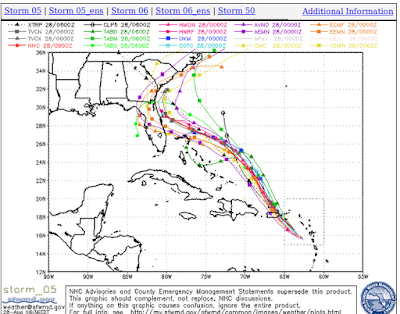
I mentioned yesterday that a `precious few' computer models suggested Dorian could turn north before striking Florida, but most were still focused on a South Florida Landfall.
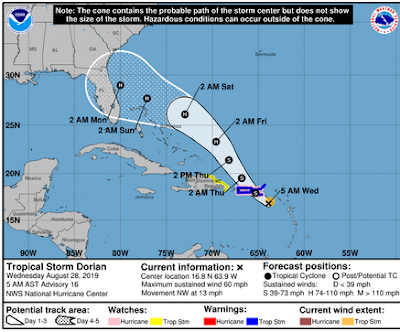
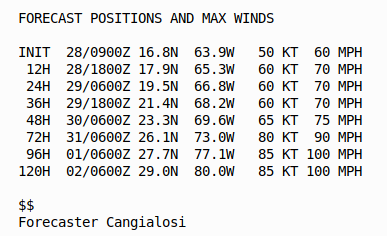
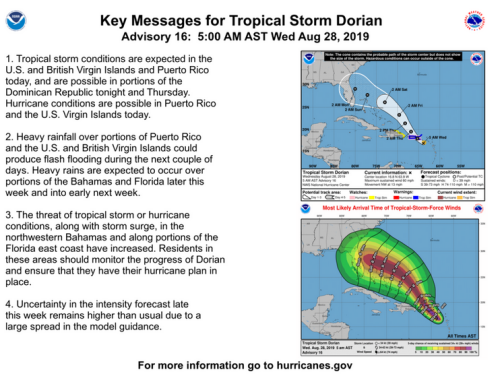
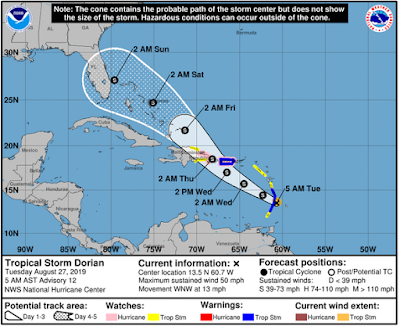
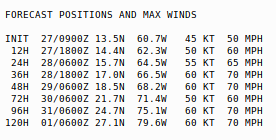
While a lot can still change in next few days, those models appear to be gaining in numbers and credibility, and today's 5am Forecast keeps the worst of Dorian off the east coast of Florida and shifts its impact to north of Savannah.
But a shift west of as little as 80 to 100 miles could change that scenario completely. A big chunk of Florida is still within the 3-day cone of uncertainty, and by days four and five, the bulk of 3 states are under the gun.

This morning's NHC Forecast Discussion states:
The track forecast becomes much more problematic after 48 h. The global models the NHC normally uses, along with the regional HWRF and HMON models, have made another shift to the east to the point where none of them forecast Dorian to make landfall in Florida. However, the UKMET ensemble mean still brings the hurricane over the Florida peninsula, as do several GFS and ECMWF ensemble members.
The new track forecast for 72-120 h will be moved eastward to stay east of the coast of Florida, and it lies between the old forecast and the various consensus models. Additional adjustments to the forecast track may be necessary later today if current model trends continue. It should be noted that the new forecast track does not preclude Dorian making landfall on the Florida coast, as large portions of the coast remain in the track cone of uncertainty. Also, significant impacts could occur even if the center stays offshore.

So, while I'm hoping Florida has dodged a bullet - it is by no means a sure thing - and even if true, Dorian could still pose a significant threat further up the east coast.  Residents in Georgia and the Carolinas need to follow the progress of this storm.

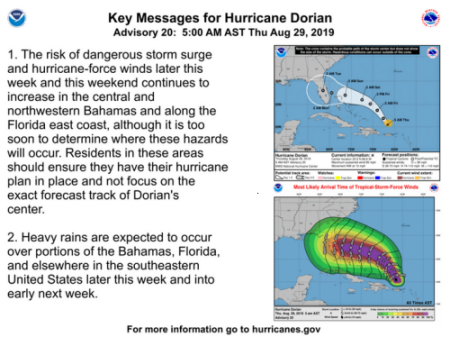
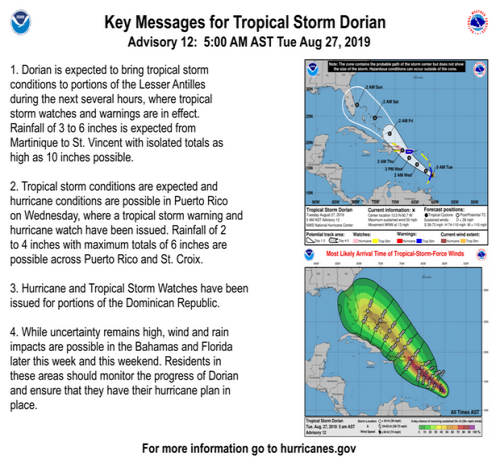
This morning's key messages reminds Floridians that ` Life-threatening storm surge and devastating hurricane-force winds are still possible along portions of the Florida east coast by the early to middle part of next week . . . .', and that they should continue to have their hurricane plans in place.


We are just now moving into the peak of the Atlantic Hurricane Season (see graphic below), and it could last another 45 to 60 days. During that time, we could easily see several more hurricanes threaten the mainland of the United States.

If you prepared for Dorian, and it turns away, count your blessings and then consider it a good `dry run' for what could come in the next couple of months.

image


If you live anywhere where in `hurricane country' and haven't done so already, now is a good time to visit NOAA's Weather-Ready Nation  2019's Hurricane Preparedness week web page, and decide what you need to do now to keep you, your family, and your property safe during the coming tropical season.

Your primary source of forecast information should always be the National Hurricane Center in Miami, Florida.  The National Hurricane center will issue major updates today at 11am, 5pm, and again at 11pm.
These are the real experts, and the only ones you should rely on to track and forecast the storm.
If you are on Twitter, you should also follow @FEMA, @NHC_Atlantic, @NHC_Pacific and @ReadyGov and of course take direction from your local Emergency Management Office.


Friday, August 30, 2019

CDC HAN Advisory On Severe Pulmonary Disease Associated with Using E-Cigarette Products


Credit CDC


#14,273

Two weeks ago the CDC published a COCA (Clinician Outreach and Communication Activity) clinical action report on Unexplained Vaping-Associated Pulmonary Illness, describing recent reports of  unexplained severe pulmonary disease which appeared to be linked to e-cigs or vaping.
We revisited the story just over a week ago, in CDC Update: Investigation Into Severe Pulmonary Disease Linked To Vaping, where we learned that the number of cases has increased to more than 150 people from 16 states.
While there are still a lot of unanswered questions, today the CDC has released a HAN (Health Alert Network) Advisory, with background, details on the outbreak (now 215+ cases reported from 25 states), and recommendations for Clinicians, public health officials and the public.

Follow the link below to read the full HAN Advisory.

https://emergency.cdc.gov/han/HAN00421.asp

Severe Pulmonary Disease Associated with Using E-Cigarette Products

Distributed via the CDC Health Alert Network
August 30, 2019, 0935 AM ET (9:35 AM ET)
CDCHAN-00421

Summary

The Centers for Disease Control and Prevention (CDC) is providing: 1) background information on the forms of e-cigarette products, 2) information on the multistate outbreak of severe pulmonary disease associated with using e-cigarette products (devices, liquids, refill pods, and cartridges), and 3) clinical features of patients with severe pulmonary disease. This health advisory also provides recommendations for clinicians, public health officials, and the public based on currently available information.
General Background

E-cigarettes typically contain nicotine, most also contain flavorings and other chemicals, and some may contain marijuana or other substances. They are known by many different names and come in many shapes, sizes and device types. Devices may be referred to as “e-cigs,” “vapes,” “e-hookahs,” “vape pens,” “mods,” tanks, or electronic nicotine delivery systems (ENDS). Some e-cigarette devices resemble other tobacco products such as cigarettes; some resemble ordinary household items such as USB flash drives, pens, and flashlights; and others have unique shapes. Use of e-cigarettes is sometimes referred to as “vaping” or “juuling.” E-cigarettes used for dabbing are sometimes called “dab” pens.

E-cigarettes can contain harmful or potentially harmful substances, including nicotine, heavy metals (e.g., lead), volatile organic compounds, and cancer-causing chemicals. Additionally, some e-cigarette products are used to deliver illicit substances; may be acquired from unknown or unauthorized (i.e., “street”) sources; and may be modified for uses that could increase their potential for harm to the user. For example, some e-cigarette pods or cartridges marketed for single use can be refilled with illicit or unknown substances. In addition, some e-cigarette products are used for “dripping” or “dabbing.” Dripping involves dropping e-cigarette liquid directly onto the hot coils of an e-cigarette which can result in high concentrations of compounds (e.g., tetrahydrocannabinol [THC] and cannabinoid compounds). Dabbing involves superheating substances such as “budder”, butane hash oil (BHO), and “710” that contain high concentrations of THC and other plant compounds (e.g., cannabidiol [CBD]).

Youth, young adults, pregnant women, as well as adults who do not currently use tobacco products should not use e-cigarettes. E-cigarettes containing nicotine have the potential to help some individual adult smokers reduce their use of and transition away from cigarettes. However, e-cigarettes are not currently approved by the Food and Drug Administration (FDA) as a quit smoking aid, and the available science is inconclusive on whether e-cigarettes are effective for quitting smoking.

Outbreak Background
As of August 27, 2019, 215 possible cases have been reported from 25 states and additional reports of pulmonary illness are under investigation. One patient (in Illinois) with a history of recent e-cigarette use was hospitalized on July 29, 2019 with severe pulmonary disease and died on August 20, 2019. Although the etiology of e-cigarette-associated pulmonary disease is undetermined, epidemiologic investigations in affected states are ongoing to better characterize the exposures, demographic, clinical, and laboratory features and behaviors of patients. All patients have reported using e-cigarette products. The exact number is currently unknown, but many patients have reported using e-cigarettes containing cannabinoid products such as THC or CBD.

Based on reports from several states, patients have experienced respiratory symptoms (cough, shortness of breath, or chest pain), and some have also experienced gastrointestinal symptoms (nausea, vomiting, or diarrhea) or non-specific constitutional symptoms (fatigue, fever, or weight loss). Symptoms typically develop over a period of days but sometimes can manifest over several weeks. Gastrointestinal symptoms sometimes preceded respiratory symptoms. Fever, tachycardia, and elevated white blood cell count have been reported in the absence of an identifiable infectious disease. Many patients have sought initial care in ambulatory settings, some with several visits, before hospital admission.

Radiologic findings have varied and are not present in all patients upon initial presentation. Bilateral pulmonary infiltrates and diffuse ground-glass opacities have been reported. Many patients required supplemental oxygen, some required assisted ventilation and oxygenation, and some were intubated. Some patients have been treated with corticosteroids with demonstrated improvement. Antimicrobial therapy alone has not consistently been associated with clinical improvement. Assessment for infectious etiologies has been completed in many patients without an identified infectious cause. Several patients from one state have been diagnosed with lipoid pneumonia based on clinical presentation and detection of lipids within bronchoalveolar lavage samples stained specifically to detect oil.

All patients have reported using e-cigarette products and the symptom onset has ranged from a few days to several weeks after e-cigarette use. Within two states, recent inhalation of cannabinoid products, THC or cannabidiol, have been reported in many of the patients. To date, no single substance or e-cigarette product has been consistently associated with illness. CDC is working closely with state health departments to facilitate collecting product specimens for testing at the U.S. FDA Forensic Chemistry Center.

(Continue . . . )

A Prescription For Disaster


#14,272

Although I've mentioned it before (see here), 14 years ago - five weeks after Katrina devastated New Orleans - I was there with my brother, trying to retrieve what little we could from his ground floor French Quarter apartment. 
Also on his list was getting refills on a prescription from his local pharmacy. But weeks after the storm, the power was still out across the city, his Mom & Pop pharmacy was still shuttered and vacant, and his doctor had not returned to the city.
Like so many other displaced persons from Katrina, he not only lost everything, he was faced with having to find a new doctor in a strange town, just to get a prescription filled.
For him, it was an inconvenience, but for those with more pressing medical needs, it could have had much more serious implications. 
The AMA, FEMA, and others (including this blog) have long extolled the virtues of keeping a `disaster stash' of essential prescription medicines; enough for at least 2 weeks.

From  FEMA's Special Needs Require Special Preparation

“Disaster preparedness is not a ‘one size fits all’ concept,” said Federal Coordinating Officer Gracia Szczech. “People with special needs may require special attention and preparation. Everyone needs to get a kit, make a plan and be informed.
Considerations for people responsible for disabled individuals:
  • For those on respirators or other electric-powered medical equipment, make prior arrangements with your physician or check with your oxygen supplier about emergency plans, and be sure to have electrical back-up for any medical equipment.
  • Maintain a two-week supply of items such as dressings, nasal cannulas and suction catheters.
  • Maintain a two-week supply of both prescription and non-prescription medications.
  • Keep copies of your medical records.
  • Keep copies of prescriptions for medical equipment, supplies and medications.
  • Keep extra contact lenses and supplies, extra eyeglasses and extra batteries for hearing aids.
  • Make plans now to have accessible transportation in case of evacuation.
  • Shelters may be limited in accommodations to meet some of the needs of those with disabilities. Prepare ahead of time to ensure you will have what you need.
Luckily, since Hurricane Katrina, some changes have been made that allow people living in an expected impact area to obtain an emergency supply of medications before the storm arrives.

From the Governor's Emergency Declaration (Executive Order Number 19-189) signed on Wednesday afternoon.
G. In accordance with section 465.0275, Florida Statutes, pharmacists may dispense up to a 30-day emergency prescription refill of maintenance medication to persons who reside in an area or county covered under this Executive Order and to emergency personnel who have been activated by their state and local agency but who do not reside in an area or county covered by this Executive Order.
I've just come from my local pharmacy, where I ordered refills on my meds, and will pick them up tomorrow. My pharmacist offered this advice:  
Do it now.  By Monday, it may be too late - or at the least - very difficult to get your prescriptions filled.
For the uninsured, after a Federal Disaster Declaration (which hasn't happened with Dorian yet), a federal program called EPAP will go into action.  If you think you may qualify, you ought to visit the EPAP website while the power and internet are still up, to find out how to apply.
The Emergency Prescription Assistance Program
The Emergency Prescription Assistance Program, or EPAP, helps people in a federally-identified disaster area who do not have health insurance get the prescription drugs, vaccinations, medical supplies, and equipment that they need. This program helps people and communities better cope with a disaster and reduces stress on the healthcare system.

People who are eligible for EPAP can file a claim at more than 72,000 retail pharmacies across the United States and its territories for prescription items that were lost, stolen, or destroyed because of a disaster.

EPAP is only available when it is activated.

EPAP helps people affected by a disaster who do not have health insurance. The program provides access to:


Nearly 50 percent of Americans take at least one prescription drug, and nearly a quarter take three or more. Many of these people rely on their medications to control chronic conditions like heart disease and diabetes, manage depression, and control pain. When a disaster strikes, medications can get lost or damaged, putting people’s health and well-being at risk and straining local healthcare systems.

Eligible people can receive a free 30-day supply of their medications when EPAP is activated. Prescriptions can be renewed under EPAP for free every 30 days for as long as EPAP is active. People can also use the program to receive vaccinations or to replace certain medical supplies or some forms of medical equipment that were lost or damaged because of the emergency or while evacuating. EPAP only covers items prescribed by a licensed healthcare provider.

EPAP is authorized in Sections 403 and 502(a) of the Robert T. Stafford Disaster Relief and Emergency Assistance Act (Stafford Act), 42 USC 5170b and 5192(a) or under the authorities of the National Disaster Medical System to provide emergency medical care to individuals affected by public health emergencies and catastrophic events that overwhelm the response capacity of state and local emergency medical systems.
Those who are dependent upon home oxygen, IVs, or other lifesaving medical equipment should contact their suppliers for more information, or plan to evacuate to a special needs shelter or somewhere outside of the impact area.
While the future impact of Dorian remains unknown, it has the potential to cause severe disruptions across a wide area of the state for days, if not weeks.
Anything you can do now to make your life easier during and after the storm, may well pay major dividends in the weeks to come.

NHC 5am Key Messages On Hurricane Dorian

https://www.nhc.noaa.gov/refresh/graphics_at5+shtml/090144.shtml?cone#contents


#14,271

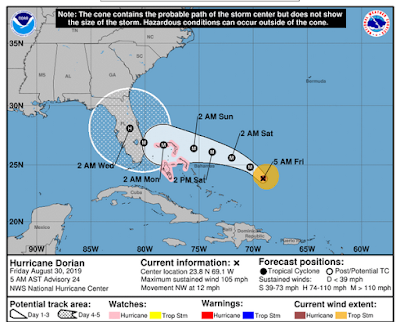
As this morning's NHC forecast map above shows, the position of Hurricane Dorian 5 days from now could be anywhere within a circle nearly 500 miles wide; ranging from Key West to Apalachicola to Southeastern Georgia.
This is the dilemma facing Florida's residents, and its Emergency Response teams. While Florida's Southeast coast appears to be the most likely target in this morning's forecast, nearly the entire state is in play.
Wherever Dorian makes landfall, the forecast is for a major slowdown in forward speed 4 or 5 days from now, which means a prolonged pounding for potentially millions of Floridians and a strong likelihood of inland flooding.

 
Even though I live north of Tampa, local stores are already selling out of water, batteries, and other hurricane supplies. I'm seeing small lines at gasoline stations, my local home improvement store was doing brisk business yesterday, and I'm sure the scramble for supplies in South Florida is even more frantic.

A great deal of uncertainty remains - including a precious few models that turn the storm away from the coast or cross over into the Gulf of Mexico - but the bulk of the computer guidance is focused on South Florida.


Wherever landfall occurs, Dorian is expected to be a very powerful, slow moving hurricane, and life threatening conditions are likely across a wide area.  This morning's key messages from the National Hurricane Center reads:

https://www.nhc.noaa.gov/refresh/graphics_at5+shtml/090144.shtml?key_messages#contents


The slowdown in forward motion puts landfall still 4 days out, and a lot can change over the next 96 hours.  Dorian could be stronger or weaker than currently forecast, it could move north or south of its current track, and its forward speed could change as well.

Beyond preparing for Dorian's arrival, you should check in often with the National Hurricane Center (major updates at 5am, 11am, 5pm, 11pm), and follow Floridadisaster.org on Twitter.

https://twitter.com/FLSERT/with_replies?ref_src=twsrc%5Etfw%7Ctwcamp%5Eembeddedtimeline%7Ctwterm%5Eprofile%3AFLSERT&ref_url=https%3A%2F%2Fwww.floridadisaster.org%2F


While it's Florida under the gun this week, Hurricane season is just starting to ramp up.  If you live anywhere in the islands, or along the Gulf or Atlantic coast, now is the time to prepare in case Erin, Fernand, Gabrielle, or Humberto decide to pay a visit over the next couple of months.

Thursday, August 29, 2019

Preparedness: Knowing When To Get Out Of Dodge


#14,270

Like 20 million other Floridians, I am watching the progress of Hurricane Dorian closely, as it poses a very real threat to life and property.  Over the next couple of days - in addition to preparing my home for the storm - I'll have to decide if (and when) I'll evacuate.
Evacuating is never an easy decision, and the current ambiguity in Dorian's future path isn't doing us any favors.  Five days out, and landfall could still occur as far south as the Florida Keys, and as far North as Georgia.
What is fairly certain, however, is that Dorian has the makings of being a Major Hurricane at landfall- and while the highest winds will be near the eye - life threatening conditions can occur across a much wider swath.

While I don't live near the coast - my humble abode - which is an older manufactured home surrounded by large, and very creaky oak trees - sits roughly under the 2am Tuesday Morning position. 
Not a place one would want to ride out a CAT 1 storm or better storm.
Luckily, because I have a small network of `Disaster Buddies', I have a couple of places where my cat and I could go, not counting motels and public shelters. If you are interested, I detailed my last (2017 Irma) evacuation in A Post Irma Update.

With the entire state of Florida under the gun - and over the Labor Day Weekend to boot - finding a place to go is going to be a problem for many residents. What direction do you go, and how far?  Motel rooms are going to be scarce, gasoline will be in short supply, and traffic will be murder.
Now is the time to be making arrangements for where you will go - and how you will get there - even though no watches or warnings have been issued.
While I probably won't pull the trigger on my own evacuation until Sunday afternoon, my bags will be packed and my gas tank will be filled long before then.  Hurricanes can change forward speed, and direction, making the current time table subject to change. 
I'm also prepared to deal with a week or more without power, running water, or internet.  Both at my home, and my disaster buddy's home.  Its not fun, but its the reality of post-hurricane life in Florida. 
This morning's Key Messages from the National Hurricane Center - quite understandably - stress the uncertainty of the forecast and the need to prepare.


https://www.nhc.noaa.gov/refresh/graphics_at5+shtml/084434.shtml?key_messages#contents


Last May, in Day 2 - Develop an Evacuation Plan of National Hurricane Preparedness Week, we discussed how to plan to evacuate before your region is threatened.  Deciding what you will do, where you will go, and how you will get there -  now . . . instead of at the last minute.

This from Weather.gov.

Develop an Evacuation Plan (Hurricane Preparedness)

Monday, May 6th


The first thing you need to do is find out if you live in a storm surge hurricane evacuation zone or if you’re in a home that would be unsafe during a hurricane. If you are, figure out where you’d go and how you’d get there if told to evacuate. You do not need to travel hundreds of miles. Identify someone, perhaps a friend or relative who doesn’t live in a zone or unsafe home, and work it out with them to use their home as your evacuation destination. Be sure to account for your pets, as most local shelters do not permit them. Put the plan in writing for you and those you care about.
Maps of evacuation zones courtesy of Federal Alliance for Safe Homes (FLASH) 
Florida residents and visitors should visit https://www.floridadisaster.org/ for tips on preparing and - if necessary - evacuating. 

Evacuations and Shelters

Should you go or should you stay?

One of the most important decisions made during an emergency situation is whether to evacuate or stay in your home or current location. Determining factors such as your unique circumstances and the nature of the emergency should be carefully evaluated before either option is decided upon. As a person with disabilities/special needs or a caretaker of individuals with special needs, your disaster plan should consider and have options for both situations. It is also important to use all the information you can from local officials or the news to determine if there is immediate danger. Use your best judgment as no one knows your needs as well as you do.
However, certain emergency and disaster situations require immediate evacuation. If you are specifically ordered to evacuate, it is vital you do so immediately. If your daily activities require additional travel time or transportation assistance, your emergency plan should include prior travel arrangements.

Have a Pet Plan

The best way to protect your family from the effects of a disaster is to have a disaster plan. If you are a pet owner or have larger animals (i.e. livestock) it is important that you also consider their needs when developing your disaster plan.
If you evacuate your home, DO NOT LEAVE YOUR PETS OR ANIMALS BEHIND. It is unlikely for pets or larger animals to survive on their own. If by some chance they do, you may not be able to find them when you return. Prepare now and protect your family and pets before the next disaster strikes.
Service animals who assist people with disabilities are allowed in Red Cross shelters. It may be difficult, to find shelter for your animals in the midst of a disaster, so plan ahead. Do not wait until disaster strikes to do your research. Many communities are developing pet friendly shelter plans, check to see if your local emergency shelter plan includes pets.

As you might expect, I'm going to be pretty busy the next few days, and my `regular' blogging schedule will likely suffer. There is also a pretty good chance that I'll be without power, or internet, for some time after the storm passes. 
If that happens, you can click the following link to read some of my past PREPAREDNESS BLOGS.
As always, you'll find that FluTrackers, Crof,  CIDRAP, and Dr. Ian Mackay are excellent resources for keeping up with Infectious Disease reports. 

Wednesday, August 28, 2019

Hurricane Preparedness: Assembling Supplies

image


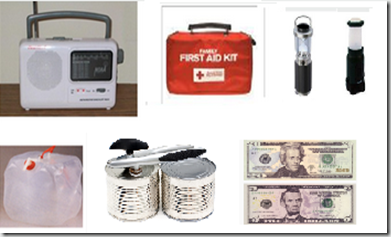
Basic kit : NWS radio, First Aid Kit, Lanterns, Water & Food & cash


#14,267


The big lesson from last year's Hurricane Michael is that intensity forecasts are not always as reliable as we'd like to believe.

Early on Monday, October 8th 2018, Tropical Storm Michael was centered over the western tip of Cuba, with tropical storm force winds of 70 MPH.The forecast was for the storm to strengthen to CAT 2 (110 MPH) winds, as it moved towards an expected Thursday landfall on the Florida panhandle.
While the NHC made a remarkably accurate forecast track, things did  not go exactly as forecast.
The following day, the forecast was increased to a CAT 3, and on Wednesday morning - just hours before landfall - came the news that Michael Was Now A Cateogry 4 storm. Since then, post storm analysis has convinced NOAA to upgrade Hurricane Michael To CAT 5 at landfall.
I provide this recap - not to criticize the forecasters - but to remind people that hurricanes are complex systems and forecasts are not perfect. If a storm is only expected to be a CAT 3, in the back of my head I consider that it could be CAT 5 on arrival.
Hopefully Dorian won't come anywhere near CAT 5 intensity, but the truth is, we won't know how big of threat it will present to Florida or the Southeastern United States for several more days.  
And by then, options for preparing may be limited.
This year, Floridadisaster.org is now recommending a minimum of a 7 day supply of emergency food, water, prescriptions, and other necessities. And I'm sure they wouldn't be unhappy to see you extend that to 14 days.
Even though the storm may last only 12 hours, the impact on people's lives can extend for days, weeks, and even months. Outside assistance will eventually arrive, but it will be limited at first, and for some people it could take days to reach them.
Having the ability to fend for yourselves, your families, and hopefully helping your neighbors for a week or longer can go a long way towards reducing the mental and physical effects of any disaster.

Last May, in National Hurricane Preparedness Week: Day 3 - Assemble Your Supplies, we looked at Weather.gov's recommendations'.

Assemble Disaster Supplies (Hurricane Preparedness)
Tuesday, May 7th


You’re going to need supplies not just to get through the storm but for the potentially lengthy and unpleasant aftermath. Have enough non-perishable food, water and medicine to last each person in your family a minimum of three days. Electricity and water could be out for at least that long. You’ll need extra cash, a battery-powered radio and flashlights. Many of us have cell phones, and they all run on batteries. You’re going to need a portable crank or solar powered USB charger.


While where you live, and your local threat environment, may dictate some changes, my general goals for personal and family preparedness include:
  • A battery operated NWS Emergency Radio to find out what was going on, and to get vital instructions from emergency officials
  • A decent first-aid kit, so that you can treat injuries
  • Enough non-perishable food and water on hand to feed and hydrate your family (including pets) for the duration
  • A way to provide light when the grid is down.
  • A way to cook safely without electricity
  • A way to purify or filter water
  • A way to stay cool (fans) or warm when the power is out.
  • A small supply of cash to use in case credit/debit machines are not working 
  • An emergency plan, including meeting places, emergency out-of-state contact numbers, a disaster buddy,  and in case you must evacuate, a bug-out bag
  • Spare supply of essential prescription medicines that you or your family may need
  • A way to entertain yourself, or your kids, during a prolonged blackout

Riding out a disaster often boils down to unscheduled camping - for days, or sometimes weeks - in your home, at a friends house, in a community shelter, or possibly even in your backyard.  
The better prepared you are, the less traumatic the experience is likely to be for you, and your family.
In addition to the standard food, water, Rx meds, and First Aid kit, I've expanded my disaster kit to include items that will hopefully make my next post-hurricane experience a little more comfortable.

As I wrote earlier this year in Preparedness: Some Emergency Power Solutions, it is a relatively easy task to set up a simple solar charging system.
No, you won’t keep the A/C or refrigerator running on a budget system, but you can keep your LED lantern batteries, cell phone, iPod or iPad, or notebook computer running.
The physical and psychological impacts stemming from the hardships following a disaster are quite real (see Post-Disaster Sequelae), and a modicum of creature comforts can go a long ways towards mitigating their effect.
The bottom line is - no matter what the emergency - the advantage will always go to those who are best prepared.


NHC 5am Key Messages On T.S. Dorian

https://www.nhc.noaa.gov/refresh/graphics_at5+shtml/084950.shtml?cone#contents


#14,266


Still four days from expected landfall, Tropical Storm Dorian - which is expected to become a hurricane after it passes Puerto Rico - has pretty much all of the Florida peninsula under the gun.

This morning's 5am forecast has moved the forecast track, and landfall, further north and has increased the storm's expected intensity to a CAT 2 Hurricane 96 hours from now - but cautions that:
`Uncertainty in the intensity forecast late this week remains higher than usual due to a large spread in the model guidance.'
While it appears that the upper east coast of Florida is at greatest risk right now, with each model run (see below) the forecast track (and intensity) may change, and so anyone who lives between the Florida Keys and South Carolina should be paying attention.


https://www.sfwmd.gov/weather-radar/hurricane-model-plots


At least one of these models brings Dorian directly over my home, while others put it so far away, I probably wouldn't feel any impact at all. Such is the reality  of life in Florida during Hurricane Season . . .  you may not get hit, but most year's you'll find yourself inside the cone . . .  sometimes more than once.

Reason enough to prepare every year, and to be ready to evacuate if the need arises.   From today's 5am Discussion from the National Hurricane Center:
Nearly all of the intensity models show Dorian becoming a hurricane in about 2 days, with additional strengthening beyond that time. The NHC intensity forecast is increased from the previous one, especially at the longer forecast times, to be in better agreement with the latest models. This forecast, however, is still on the lower end of the guidance envelope, so additional upward adjustments could be needed if the guidance trends persists. It is also worth noting that the global models show Dorian increasing in size by the time it nears the southeast U.S.

A lot could happen between now and Labor Day to impact Dorian's track and intensity - and while the storm could lose strength - the NHC is not ruling out a much bigger storm than currently forecast.
Regardless of its eventual path and intensity, the media is going to start beating the drums louder today - and anyone who hasn't prepared needs to do so now - before the essentials (batteries, water, canned food, plywood, etc.) vanish from store shelves.
This morning's Key Messages from the NHC follow:

https://www.nhc.noaa.gov/refresh/graphics_at5+shtml/084950.shtml?key_messages#contents


While there are some great weather resources on the internet, your primary source of forecast information should always be the National Hurricane Center in Miami, Florida. 
These are the real experts, and the only ones you should rely on to track and forecast the storm.
If you are on Twitter, you should also follow @FEMA, @NHC_Atlantic, @NHC_Pacific and @ReadyGov and of course take direction from your local Emergency Management Office.


As for this blog, it looks like I'll be kicking off my National Preparedness Month coverage a couple of days early this year. 


Tuesday, August 27, 2019

PLoS One: Transient Depression of Myocardial Function After Influenza Virus Infection

http://www.nfid.org/idinfo/influenza/cta-dangers-of-influenza-in-adults-with-chronic-health-c.pdf
From NFID Report


#14,265

Over the past decade we've seen growing evidence that influenza (and other severe respiratory infections) can trigger other serious - and sometimes fatal - events, including heart attacks and strokes.

These adverse events may occur during, and up to several weeks after, infection. A few recent blogs on the topic include:
https://www.ices.on.ca/~/media/Images/News_releases/2018/KwongFluHeartAttack.ashx?la=en-CA

Readers with long memories will recall that in 2010 we looked at a Study: EKG Abnormalities With Novel H1N1 Infection, that found unexpected electrical changes in the heart during H1N1 infection, even among patients without a history of cardiac problems.

The authors of the study (Akritidis N, Mastora M, Baxevanos G, et al.) wrote:
EXCERPT:

Of the 50 patients, 14 (28%) exhibited ECG changes on admission. Nine patients presented with T-wave inversions, while ST-segment depression was observed on the electrocardiograms of 6 patients.

The presence of ECG changes did not correlate with age, gender, co-morbidities, the laboratory profiles of the patients, or the coexistence of lower respiratory tract involvement. 

(Continue . . . )

Fast forward to today, and we've a new open access research article published in PLoS One, that finds transient myocardial function changes among a small group of influenza patients studied.

Research Article
Transient depression of myocardial function after influenza virus infection: A study of echocardiographic tissue imaging
Takahide Ito ,Kanako Akamatsu , Shu-ichi Fujita , Yumiko Kanzaki, Akira Ukimura , Masaaki Hoshiga

Published: August 23, 2019 https://doi.org/10.1371/journal.pone.0221628
Abstract

Background

Influenza virus infection (IVI) was reported to be associated with minor cardiac changes, mostly those detected on electrocardiogram with and without elevated blood markers of myocardial injury; however, the characteristics of myocardial involvement in association with IVI are poorly understood. This study used echocardiographic tissue imaging (tissue Doppler, strain, and strain rate) to evaluate changes in left atrial (LA) and left ventricular (LV) myocardial function after IVI.

Methods and results

We examined 20 adult individuals (mean age, 43 years) at 2 and 4 weeks after diagnosis of IVI. For myocardial functional variables, we obtained LV global longitudinal strain (GLS), LV early diastolic strain rate (e'sr), LA strain, and LA stiffness (E/e’/LA strain), in addition to data on tissue Doppler (s’, e’, and a’) and myocardial performance index. Blood markers of myocardial injury were also examined.
During follow-up, there were no significant changes in global chamber function such as LV ejection fraction, E/e’, and LA volume. However, significant changes in myocardial function were observed, namely, in s’ (8.0 ± 1.6 cm/s to 9.3 ± 1.5 cm/s; p = 0.01), e’ (10.2 ± 2.8 cm/s to 11.4 ± 3.0 cm/s; p <  0.001), e’sr (1.43 ± 0.44 1/s to 1.59 ± 0.43 1/s; p = 0.005), and LA strain (35 ± 8% to 40 ± 12%; p = 0.025), and the myocardial performance index (0.52 ± 0.20 to 0.38 ± 0.09; p = 0.009), but not in a’, LA stiffness, or GLS. Cardiac troponin T and creatinine kinase isoenzyme MB were not elevated significantly at any examination.

Conclusions

Myocardial dysfunction during IVI recovery appeared to be transient particularly in the absence of myocardial injury. Echocardiographic tissue imaging may be useful to detect subclinical cardiac changes in association with IVI.

(Continue . . . )

This is admittedly a small study, and among its limited cohort the observed myocardial function changes were transient. A much larger study would be needed to evaluate the full range of cardiac involvement and outcomes associated with influenza virus infection (IVI). 
It does, however, offer more evidence that influenza virus infection can, and does, affect cardiac function. And impacts that might prove benign in a healthy patient could conceivably pose a tipping point for someone with preexisting cardiac deficits.
Despite providing only modest protection - particularly in the elderly - receipt of the flu vaccine has been linked to reduced cardiovascular events, and lower mortality.  A few recent studies include:
  • A 2019 Study of COPD patients found lower mortality rates, less critical illness, and a 38% reduction in influenza-related hospitalizations in vaccinated vs unvaccinated populations.
None of these studies are total slam dunks, and the results may be skewed by confounders not considered by their authors, but they are highly suggestive of some added value beyond (hopefully) just preventing the flu.

All good enough reasons why I'll be rolling up my sleeve when the flu vaccine becomes available this fall.  Hopefully you'll consider doing so as well. 


NHC: Key Messages On Tropical Storm Dorian

https://www.nhc.noaa.gov/refresh/graphics_at5+shtml/085601.shtml?cone#contents


#14,264


Tropical Storm Dorian has lost a little of its punch overnight, and so the hurricane threat to Puerto Rico and the Dominican Republic 48 hours from now appears lessened, but not eliminated.  
The 5am NHC forecast continues to show Dorian maintaining tropical storm strength as it enters the Southern Bahamas and moves towards Florida over labor day weekend.
https://www.nhc.noaa.gov/text/refresh/MIATCDAT5+shtml/270854.shtml?
Practically speaking, there is little difference between a 70 MPH tropical storm and a 75 MPH Cat 1 Hurricane.  Both have the potential to ruin your whole day, and should be respected. 
The caveat to all of this is the biggest improvements in hurricane forecasting have come in refining track guidance, while predicting future intensity changes remains a major challenge (see NOAA: 2018 Hurricane Michael Upgraded To CAT 5).
Some of this morning's models hint at a stronger storm 4 or 5 days from now, while others suggest the system may be weakened by its passage over the islands of Puerto Rico and Hispaniola. 

Although the hurricane threat to Florida this weekend now still appears to be modest, the National Hurricane Center is urging residents in the path of this system to monitor its progress and make sure their hurricane plans are in place.


https://www.nhc.noaa.gov/refresh/graphics_at5+shtml/085601.shtml?key_messages#contents

Since I may be impacted by this storm I'll be reviewing my hurricane plans and preps, and since we are just getting into the heart of the 2019 Hurricane season, I'd recommend everyone who lives in `Hurricane Country' (see map below) to do the same.


September is National Preparedness Month - and as I do every year - I'll be posting new, and updated, blogs on how you, your family, and your community can become better prepared to deal with a disaster.

As preview, and since disasters don't wait, a few recent hurricane preparedness blogs may help to get you started:
CDC EPIC: Hurricane Preparedness Webinar

Preparedness: Some Emergency Power Solutions
National Hurricane Preparedness Week: Day 3 - Assemble Your Supplies
National Hurricane Preparedness Week: Day 1 - Determine Your Risk

Monday, August 26, 2019

WHO: Monkeypox In The DRC

Credit WHO


#14,263


One tends not to worry about the creek rising when their house is already on fire, so we've heard relatively little about the DRC's other ongoing epidemics during their year-long battle with Ebola. 
But the WHO AFRO weekly Outbreaks and Emergencies Bulletin currently lists 4 other disease outbreaks, in addition to their ongoing humanitarian crisis;  Cholera, Measles, Monkeypox, and Poliomyelitis (cVDPV2).
https://apps.who.int/iris/bitstream/handle/10665/326465/OEW33-1218082019.pdf


The latest Monkeypox summary reads:
Since the beginning of 2019, a cumulative total of 3 015 monkeypox cases, including 64 deaths (CFR 2.1%) were reported from 111 health zones in 16 provinces. In week 29 (week ending 21 July 2019), 112 cases and one death were reported nationally. Sankuru province reported 63% of cases during the reporting week.
While there is no mention of how many of these are `confirmed cases', 3000+ suspected or probable cases in just over 6 months is worthy of our attention.

The name `monkeypox’ is a bit of a misnomer. It was first detected (in 1958) in laboratory monkeys, but further research has revealed its primary hosts to be rodents or possibly squirrels.
Humans can contract it in the wild from an animal bite or direct contact with the infected animal’s blood, body fluids, or lesions, but consumption of under cooked bushmeat is also suspected as an infection risk.
Human monkeypox was first identified in 1970 in the DRC, and since then has sparked small, sporadic outbreaks in the Congo Basin and Western Africa. It produces a remarkably `smallpox looking' illness in humans, albeit not as deadly. The CDC's Monkeypox website states:
The illness typically lasts for 2−4 weeks. In Africa, monkeypox has been shown to cause death in as many as 1 in 10 persons who contract the disease.
Human-to-human transmission is also possible.  This from the CDC’s Factsheet on Monkeypox:
The disease also can be spread from person to person, but it is much less infectious than smallpox. The virus is thought to be transmitted by large respiratory droplets during direct and prolonged face-to-face contact. In addition, monkeypox can be spread by direct contact with body fluids of an infected person or with virus-contaminated objects, such as bedding or clothing.
According to the CDC there are two distinct genetic groups (clades) of monkeypox virus—Central African and West African. West African monkeypox - which has been spreading recently in Nigeria - is associated with milder disease, fewer deaths, and limited human-to-human transmission.
The more severe form of Monkeypox is most commonly found in the Central Africa countries of the DRC and the CAR - where outbreaks have been on the rise for years - presumably because smallpox vaccinations (which provided up to 85% protection) were halted in the late 1970s.
As the percentage of vaccinated members of the community dwindles, the risks of outbreaks are only expected to increase (see 2010 PNAS study Major increase in human monkeypox incidence 30 years after smallpox vaccination campaigns cease in the Democratic Republic of Congo).
 
Routine vaccination against smallpox ended in the United States in 1972, and worldwide by the end of that decade. Today more than half of the world's population is unvaccinated, and the level of protection remaining among those vaccinated 50+ years ago is highly suspect.

All of which makes the potential evolution and spread of monkeypox of growing international concern.
In 2013, the DRC reported a 600% increase in cases over both 2011, and 2012 (see EID Journal:Extended H-2-H Transmission during a Monkeypox Outbreak) . The authors also cite a higher attack rate, longer chains of infection, and more pronounced community spread than have earlier reports.

Like all viruses, Monkeypox continues to evolve and diversify, as discussed in the 2014 EID Journal article Genomic Variability of Monkeypox Virus among Humans, Democratic Republic of the Congo, where the authors cautioned:
Small genetic changes could favor adaptation to a human host, and this potential is greatest for pathogens with moderate transmission rates (such as MPXV) (40). The ability to spread rapidly and efficiently from human to human could enhance spread by travelers to new regions.
Although monkeypox is normally restricted to small outbreaks in Africa, in 2003 we saw a rare outbreak in the United States when a Texas animal distributor imported hundreds of small animals from Ghana, which in turn infected prairie dogs that were subsequently sold to the public (see MMWR Update On Monkeypox 2003).
By the time that outbreak was quashed, the U.S. saw 37 confirmed, 12 probable, and 22 suspected human cases. Among the confirmed cases 5 were categorized as being severely ill, while 9 were hospitalized for > 48 hrs; although no patients died (cite).
Nigeria saw its first Monkeypox outbreak in nearly 40 years in the fall of 2017, while last September the UK saw two imported cases from Nigeria (see  Eurosurveillance Rapid Comms: Two cases of Monkeypox imported to the UK) and a month later Israel: MOH Confirmed An Imported Monkeypox Case).
And in May of this year (see Singapore MOH: 1st Imported Case Of Monkeypox (ex Nigeria), we saw yet another exported case. 
While exported cases have been rare, these examples show how easily Monkeypox can turn up in non-endemic areas, and potentially spread.

Nearly 4 months ago, in CDC: The 8 Zoonotic Diseases Of Most Concern In The United States, we looked at a newly published One Health Zoonotic Disease Prioritization report, that characterized and ranked 56 zoonotic threats to the United States based on potential impact and likelihood of occurring.
The 8 zoonotic diseases of most concern in the U.S. were:
But also on that list Ebola came in as #16Crimean-Congo Hemorrhagic Fever landed 15thNipah was 20th, and Monkeypox was 29th. As outbreaks ebb and flow around the world, it is likely that these rankings will change over time. 
The Monkeypox virus - particularly the Central African clade - represents a genuine public health concern, albeit not as horrific as the tabloid press would have us believe.
For additional reading, a couple more on-topic studies include:
MMWR: Emergence of Monkeypox — West and Central Africa, 1970–2017
The Lancet: Genomic Characterisation Of Human Monkeypox Virus In Nigeria