Sunday, January 31, 2021

Australia: Perth, Peel & South West Region Ordered Into 5-Day Lockdown Over Feared Community Variant Case


#15,765

While it may seem an extreme response to those who live in countries where COVID-19 (and its variants) already run rife, nations - like Australia - that have managed to keep a lid on the pandemic for nearly a year are willing to take drastic actions to prevent its spread in the community. 


Two weeks ago we saw a huge response following the detection of the UK variant in a previously quarantined traveler in Brisbane (see Queensland: Incident Response Following Cluster Of COVID Variant B.1.1.7 In Brisbane Hotel), while today we are seeing a similar scenario unfold in Perth, nearly 3,600 km to the west.

This time, the lockdown is over a security guard who worked at a quarantine hotel - where at least one B.1.1.7 (UK) variant case is sequestered - who tested positive.  While genomic sequencing hasn't been performed on the security guard's virus sample yet, authorities are taking no chances. 

First the WA (Western Australia) Health Department announcement, followed by the WA government lockdown announcement. 

COVID-19 update 31 January 2021

WA Health today confirmed that a security guard who works at a State Supervised Quarantine Facility (hotel) has been diagnosed with COVID-19.

The guard, a man in his 20’s, worked at the Four Points Sheraton Hotel on Tuesday 26 January, Wednesday 27 January, when he could have acquired the infection, and was diagnosed with COVID-19 overnight.

This indicates that the guard likely acquired the infection while at the hotel. Exactly how the infection was acquired remains under investigation.

He developed symptoms on Thursday 28 January and phoned in sick and did not go to work at the quarantine facility.

COVID-19 was detected following the man’s mandatory day seven swab.

He had tested negative for COVID-19 on January Friday 15, January Sunday 17 and Saturday January 23.

There is a known case of UK B.1.1.7 variant strain in quarantine at the hotel.

The man’s immediate household contacts have been contacted, tested and placed in isolation at State managed quarantine facilities to complete a 14-day quarantine period in a quarantine facility. All three have tested negative this morning.

The man was believed to be infectious at the following locations:

https://healthywa.wa.gov.au/Articles/A_E/Coronavirus/Locations-visited-by-confirmed-cases

Anyone who was at the above locations during the specified times is urged to attend a COVID-19 clinic for testing and remain in quarantine while awaiting the test result.

Close contacts will be contacted by public health officials and asked to quarantine for 14 days.

All State managed Covid clinics will increase staffing and extend their opening hours to cope with increased demand in the next few days.

This case will be reported in tomorrow’s case numbers, as the result came through following the end of the 24-hour reporting period.

The Department of Health reported no new cases of COVID-19 in yesterday’s reporting cycle. Today’s State’s total officially stands 902.

WA Health is monitoring 12 active cases and 881 people have recovered from the virus in WA.

Yesterday 519 people presented to WA COVID clinics – 514 were assessed and 514 swabbed.

To date 17 cases of variant strains have been detected (13 B.1.1.7 strain and 4 B.1.351 strain). Five of these cases remain active in hotel quarantine.

Visit WA Health’s HealthyWA website for the latest information on COVID-19.

Media contact: 9222 4333
Follow us on Twitter: @WAHealth

Note: The cases of variant strains reported above are not new cases. Genome sequencing – to define the strain of the virus – is a separate laboratory process carried out after someone who tests positive to COVID-19. All cases, regardless of strain, are managed by WA’s public health experts. The strains previously reported as the UK variant strain and South African variant strain will now be referred to as B.1.1.7 and B.1.351 respectively.

An updated breakdown of cumulative COVID-19 tests performed in WA will be released on Monday.


Details on the 5-day lockdown follow.

Perth, Peel and South West region enters lockdown from 6pm, 31 January 2021

Effective from 6pm tonight until 6pm Friday, 5 February 2021, the Perth metropolitan area, Peel and South West regions will enter a lockdown.

The following restrictions apply for the lockdown period:
  • People should not leave Perth, Peel or the South West during this period
  • People can enter Perth, Peel or the South West only to access or deliver essential health and emergency services and other essential requirements
  • Non-residents currently in Perth, Peel and the South West are required to remain until the end of the restriction period however if you must leave for serious reasons you are to then return home immediately, stay home and get tested if symptoms develop
  • Restaurants, cafes, pubs and bars to provide takeaway service only
  • Elective surgery and procedures for categories 2 and 3 will be suspended from Tuesday, 2 February. Category 1 and urgent category 2 surgery will continue
  • No visitors will be allowed in homes unless caring for a vulnerable person or in an emergency
  • No visitors to hospitals or residential aged care and/or disability facilities
  • No weddings permitted
  • Funerals are limited to 10 people
  • Travel remains prohibited within remote Aboriginal communities.
Masks are to be worn at all times when outside of your place of residence, this includes at workplaces and on public transport. For more information about masks, see the Healthy WA website (this is an external website).

Schools will be closed for this week. Term 1, 2021 was due to start from February 1 but that will be postponed by one week.

The following facilities in the Perth, Peel and South West regions will need to close:
  • Schools, universities, TAFEs and education facilities
  • Pubs, bars and clubs
  • Gyms and indoor sporting venues
  • Playgrounds, skate parks and outdoor recreational facilities
  • Cinemas, entertainment venues, and casinos
  • Beauty therapy services, parlour or salon including hairdressers, barbershop, nail salon, tattoo parlour, spa or massage parlour
  • Large religious gatherings and places of worship
  • Libraries and cultural institutions

People will be required to stay at home unless they need to:
  • work because they can’t work from home or remotely;
  • shop for essentials like groceries, medicine and necessary supplies;
  • medical or health care needs including compassionate requirements and looking after the vulnerable; and
  • exercise within their neighbourhood, but only with one other person and only for one hour per day.
The lockdown has been introduced due to the detection of a positive COVID-19 case in a hotel quarantine worker.

A list of locations the confirmed case visited is available on the Department of Health’s website (this is an external website). People who were at these places on these dates must go and get tested. Additionally, anyone who lives or works in the Falkirk Avenue Maylands shopping centre precinct should present for a test.

WA COVID clinic operating hours will be extended as part of a testing surge. Testing locations are available on the Healthy WA website (this is an external website).

CDC: New Facemask Requirements On Public Transportation - Effective Feb 2nd, 2021


Credit CDC - Your Guide To Masks

#15,763

As COVID-weary as we might be a year into this pandemic crisis, we find ourselves facing new threats with the emergence and recent arrival of several new - and potentially more dangerous - COVID variants. 
 
While the B.1.1.7 (aka `UK') variant was first announced in the U.S. more than a month ago, over the past week three states have reported two new variants (B.1.351 from South Africa, and  P.1 from Brazil). 

All three are believed to have attributes that could prolong, or intensify, the pandemic.  And while their ultimate impact remains uncertain, these are unlikely to be the last big changes we will see in the SARS-CoV-2 virus.  

In hopes of slowing the spread of these new variants, and to reduce transmission of the `wild type' COVID across the country, on Tuesday February 2nd, 2021 new federal rules regarding mask wearing will go into effect for all travelers into, within, or out of the United States, e.g., on airplanes, ships, ferries, trains, subways, buses, taxis, and ride-shares.

We've two announcements from the CDC. 

CDC requires wearing of face masks while on public transportation and at transportation hubs
Press Release

For Immediate Release: Saturday January, 30, 2021
Contact: Media Relations
(404) 639-3286

As the COVID-19 pandemic continues to surge in the United States, CDC is implementing provisions of President Biden’s Executive Order on Promoting COVID-19 Safety in Domestic and International Travel and will require the wearing of masks by all travelers into, within, or out of the United States, e.g., on airplanes, ships, ferries, trains, subways, buses, taxis, and ride-shares. The mask requirement also applies to travelers in U.S. transportation hubs such as airports and seaports; train, bus, and subway stations; and any other areas that provide transportation. Transportation operators must require all persons onboard to wear masks when boarding, disembarking, and for the duration of travel. Operators of transportation hubs must require all persons to wear a mask when entering or on the premises of a transportation hub.

This action is to further prevent spread of the virus that causes COVID-19 and to further support state and local health authorities, transportation partners, and conveyance operators to keep passengers, employees, and communities safe.

Today’s order from CDC is part of a comprehensive, science-driven, U.S. government response to the COVID-19 pandemic. One component of the whole-of-government response is taking actions related to reducing virus spread through travel. Transmission of the virus through travel has led to—and continues to lead to—interstate and international spread of the virus.

“America’s transportation systems are essential,” said CDC Director Dr. Rochelle P. Walensky, MD, MPH. “Given how interconnected most transportation systems are across our nation and the world, when infected persons travel on public conveyances without wearing a mask and with others who are not wearing masks, the risk of interstate and international transmission can grow quickly.”

Traveling on public transportation increases a person’s risk of getting and spreading COVID-19 by bringing people in close contact with others, often for prolonged periods, and exposing them to frequently touched surfaces. Face masks help prevent people who have COVID-19, including those who are pre-symptomatic or asymptomatic, from spreading the virus to others. Masks also help protect the wearer by reducing the chance they will breathe in respiratory droplets carrying the virus.

“CDC recommends that non-essential travel be avoided; however, for those who must travel, additional measures are being put in place to help prevent the spread of the virus,” said Dr. Walensky. “Masks are most likely to reduce the spread of COVID-19 when they are widely and consistently used by all people in public settings.”

This order will be effective on February 2, 2021. For more information on the Order or to view frequently asked questions, visit: https://www.cdc.gov/quarantine/masks/mask-travel-guidance.html

More details on the specifics of this order follow:

Federal Register Notice: Wearing of face masks while on conveyances and at transportation hubs


The Centers for Disease Control and Prevention (CDC) issued an Order pdf icon[PDF – 11 pages] on January 29, 2021 requiring the wearing of masks by travelers to prevent spread of the virus that causes COVID-19. Conveyance operators must also require all persons onboard to wear masks when boarding, disembarking, and for the duration of travel. Operators of transportation hubs must require all persons to wear a mask when entering or on the premises of a transportation hub.

This Order must be followed by all passengers on public conveyances (e.g., airplanes, ships, ferries, trains, subways, buses, taxis, ride-shares) traveling into, within, or out of the United States as well as conveyance operators (e.g., crew, drivers, conductors, and other workers involved in the operation of conveyances) and operators of transportation hubs ( e.g., airports, bus or ferry terminals, train or subway stations, seaports, ports of entry) or any other area that provides transportation in the United States.

People must wear masks that cover both the mouth and nose when awaiting, boarding, traveling on, or disembarking public conveyances. People must also wear masks when entering or on the premises of a transportation hub in the United States.

This Order pdf icon[PDF – 11 pages] will be effective on February 1, 2021 at 11:59 pm (EST).

The following are attributes of masks needed to fulfill the requirements of the Order. CDC will update this guidance as needed.
  • A properly worn mask completely covers the nose and mouth.
  • Cloth masks should be made with two or more layers of a breathable fabric that is tightly woven (i.e., fabrics that do not let light pass through when held up to a light source).
  • Mask should be secured to the head with ties, ear loops, or elastic bands that go behind the head. If gaiters are worn, they should have two layers of fabric or be folded to make two layers.
  • Mask should fit snugly but comfortably against the side of the face.
  • Mask should be a solid piece of material without slits, exhalation valves, or punctures.

The following attributes are additionally acceptable as long as masks meet the requirements above.
  • Masks can be either manufactured or homemade.
  • Masks can be reusable or disposable.
  • Masks can have inner filter pockets.
  • Clear masks or cloth masks with a clear plastic panel may be used to facilitate communication with people who are hearing impaired or others who need to see a speaker’s mouth to understand speech.
  • Medical masks and N-95 respirators fulfill the requirements of the Order.
The following do not fulfill the requirements of the Order.
  • Masks worn in a way that does not cover both the mouth and nose
  • Face shields or goggles (face shields or goggles may be worn to supplement a mask that meets above required attributes)
  • Scarves, ski masks, balaclavas, or bandannas
  • Shirt or sweater collars (e.g., turtleneck collars) pulled up over the mouth and nose.
  • Masks made from loosely woven fabric or that are knitted, i.e., fabrics that let light pass through
  • Masks made from materials that are hard to breathe through (such as vinyl, plastic or leather)
  • Masks containing slits, exhalation valves, or punctures
  • Masks that do not fit properly (large gaps, too loose or too tight)
Additional guidance on the use of masks to slow the spread of COVID-19 is available on CDC’s website.

Saturday, January 30, 2021

Maryland Becomes 2nd State To Detect The COVID B.1.351 (South African) Variant


Credit Wikipedia


#15,762

Earlier today we looked at the CDC's latest update on COVID variants in the United States, and Maryland was one of 30 states to already have detected the B.1.1.7 (aka `UK) variant, while the P.1 (Brazilian) and B.1.351 (South African) variants had only been detected in a single state each (1 case in Minnesota & 2 cases in South Carolina). 

All of these numbers are expected to be massive undercounts, since genomic sequencing is currently only performed on about 1 in 300 positive test results.  As testing ramps up, these numbers are expected to climb. 

Both the South African and Brazilian variants are believed - like the UK variant - to be more transmissible. But additionally, they carry the E484K mutation - which has been linked to reduced antibody recognition, which is feared might increase reinfection risks and potentially lower the effectiveness of current vaccines.

On the past couple of hours the Governor of the State of Maryland has announced that state's first detection of the B.1.351 (South African) variant in a resident who lives in Baltimore. This case has not traveled internationally, making it very likely this variant is already transmitting in the community. 

The statement from the Governor's office follows.

Governor Hogan Announces South African COVID-19 Variant Identified in Maryland
ANNAPOLIS, MD—Governor Larry Hogan today announced that state health officials have confirmed a case of COVID-19 caused by the new B.1.351 variant of the SARS-CoV-2 virus in a Maryland resident. The new variant’s presence in Maryland was confirmed by the Maryland Department of Health in consultation with the U.S. Centers for Disease Control and Prevention (CDC).
The B.1.351 variant has not been shown to cause more severe illness or increased risk of death when compared to other variants. The variant is believed to be more transmissible than other strains.
Additional research is still required to determine the effectiveness of available vaccines against the B.1.351 variant. However, initial evidence suggests that vaccines are still likely to be protective against the variant. It is also expected that currently available diagnostic tests will detect the B.1.351 variant.
“State health officials are closely monitoring the B.1.351 variant of SARS-CoV-2 in the state,” said Governor Hogan. “We strongly encourage Marylanders to practice extra caution to limit the additional risk of transmission associated with this variant. Please continue to practice standard public health and safety measures, including mask wearing, regular hand washing, and physical distancing.”
The case announced today involves an adult living in the Baltimore metro region. The individual has not traveled internationally, making community transmission likely. Comprehensive contact tracing efforts are underway to ensure that potential contacts are quickly identified, quarantined, and tested.
The B.1.351 variant was initially detected in South Africa. It was first identified in the United States on January 28 through two cases in South Carolina.
Viruses constantly change, or mutate, and new variants of viruses are expected to occur over time. The B.1.351 variant is the second variant of SARS-CoV-2 identified in Maryland. The first variant identified in Maryland was B.1.1.7—commonly known as “the UK variant”—which MDH announced that it identified on January 12. Seven total cases of B.1.1.7 have been identified in Maryland since that time. The CDC tracks case counts of different virus strains identified in the United States on its website.
COVID-19 information and resources are available at covidLINK.maryland.gov. COVID-19 data are available at coronavirus.maryland.gov.

Brazil: Fiocruz Technical Note - SARS-CoV-2 P.1 Variant In Amazonas State


Amazonas State, Brazil - Credit Wikip

#15,761

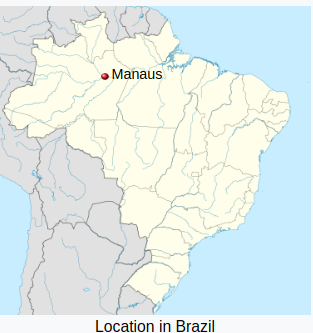
Amazonas state, in Northwestern Brazil, saw some of the highest COVID attack rates on the planet last spring, and by late 2020  seroprevalence studies conducted in Manaus, the capital and largest city in Amazonas, indicated 3/4ths of the population had already been infected with the virus and were presumably immune. 

Which is why their recent and dramatic resurgence of the epidemic (see Brazil: Amazonas Transfers 235 COVID Cases To Other States Amid Critical Oxygen Shortage), coupled with the rise of a new COVID variant - dubbed P.1 (see Virological: Another E484K South American Variant To Ponder) has raised so much concern.

Two days ago, in The Lancet: Resurgence of COVID-19 in Manaus, Brazil, Despite High Seroprevalence, we looked at the possible causes, and potential ramifications, of this new wave of infections in Amazonas. 

While it is possible that previous infection rates were overestimated, it appears more likely that some combination of these other factors are at work:

A) preexisting immunity has waned over time;

B) the new P.1 variant is evades prior immunity from earlier variants (see Brazil MOH Confirms Reinfection With COVID Variant P.1 In Amazonas);

C) the new P.1 variant is vastly more transmissible than earlier variants

Today we've a new report from FIOCRUZ (Fundação Oswaldo Cruz) that provides the latest genomic sequencing data from Amazonas state, which finds that the P.1 variant has rapidly overtaken all other variants in the region, jumping from 51% of all sequenced samples in December to 91% by the first half of January. 


Fiocruz technical note addresses Sars-CoV-2 and new variant in AM

1/29/2021

Fiocruz Amazonia

Technical Note prepared by the Leônidas & Maria Deane Institute (ILMD / Fiocruz Amazônia) and the State of Amazonas Health Surveillance Foundation (FVS-AM), through the Central Public Health Laboratory of Amazonas (Lacen-AM), points out that in this In January, the new variant of Sars-CoV-2, P.1, was identified in 91% of the genomes sequenced in Amazonas, which makes it the most prevalent in the state today.

Since March 2020, with the emergence of the first cases of Covid-19 in Amazonas, the monitoring and genetic characterization of Sars-CoV-2 has been carried out by the Virology Laboratory at Fiocruz Amazônia, coordinated by researcher Felipe Naveca and team; in addition, the laboratory contributes to the State in carrying out a molecular diagnosis of the disease and in the development of Genomic Surveillance actions for Sars-CoV-2 circulating in Amazonas.

250 genomes have already been sequenced, 177 from Manaus and the other 73 from 24 municipalities in the interior (Anori, Autazes, Barreirinha, Caapiranga, Carauari, Careiro, Iranduba, Itacoatiara, Jutaí, Lábrea, Manacapuru, Manaquiri, Manicoré, Maués, Nova Olinda do Norte, Parintins, Presidente Figueiredo, Rio Preto da Eva, Santa Isabel do Rio Negro, Santo Antônio do Içá, São Gabriel da Cachoeira, Tabatinga, Tapauá and Urucará).

Eighteen Sars-CoV-2 strains were identified in Amazonas, B.1.1.28 (33.6%), B.1.195 (18.8%), B.1.1.33 (11.6) %) and, since December 2020, the emergence of the P.1 strain (new Brazilian variant), which jumped from 51% of the samples sequenced in December, to 91% of the samples sequenced by the first half of January 2021.

The technical note also notes the detection of two substitution events for the main circulating lines in Amazonas: B.1.195 to B.1.1.28 and then to P.1.

Studies in the field of virology carried out by Fiocruz Amazônia receive support from Fiocruz, the National Council for Scientific and Technological Development (CNPq) and the Amazonas State Research Support Foundation (Fapeam). FVS-AM and Lacen-AM are partners in all research on emerging viruses.

Access the full technical note .

See information on the epidemiological situation of Amazonas .


The 11-page PDF full technical note is published in Portuguese, and while many will find it useful to (translate) and read in its entirety, I've posted the translated conclusions below.

Conclusions and highlights of genomic surveillance of the new coronavirus in Amazonas, Fiocruz partnership - FVS-AM.
  • Obtaining and disseminating the first SARS-CoV-2 genome in the northern region of Brazil in March 2020;
  • Detection of two replacement events for the main circulating strains, B.1.195 to B.1.1.28 and then to P.1;
  • Confirmation of the origin of the new variant (P.1) from line B.1.1.28 of Amazonas;
  • Urgent need to confirm the outcome of cases infected by P.1;
  • Confirmation of the second case of reinfection by SARS-CoV-2 in Brazil, the first by the new variant described in the world;
  • Identification of the circulation of variant P.1 in 11 municipalities in Amazonas: Manaus, Rio Preto da Eva, Careiro, Anori, São Gabriel da Cachoeira, Iranduba, Rio Preto da Eva, Presidente Figueiredo, Tabatinga, Careiro, Manacapuru. This data reinforces that genomic surveillance actions must always involve samples from the interior of the state.
  • Identification of a substantial increase in the frequency of the P.1 line (51% December samples, for 91% of the sequenced samples up to 1/13/2021). It should be noted that the P.1 line was found for the first time in sample from a patient collected on 12/04/2020.
  • Strengthening of the Genomic Health Surveillance Network in the State of Amazonas, an initiative promoted by FAPEAM; x 250 complete high quality genomes generated by Amazonians since March 2020, favoring the strengthening of a local S, T & I chain place to face new challenges.
Version 2. On 01/28/2021

CDC COVID Variant Update: 437 Detections Across 31 States


SARS-CoV2  Variants of Concern - ECDC

 #15,760

Just over a month ago, on December 29th, Colorado's governor announced the 1st detection of the more transmissible B.1.1.7 COVID variant in the United States - a variant which first began raising alarm bells in the UK in mid-December.

While surveillance and genomic testing for COVID variants remains severely limited in the United States, in just over 30 days two more variants (South African B.1.351 and Brazil's P.1) have been detected (in South Carolina & Minnesota), along with 435 B.1.1.7 (aka `UK' variants) spread across 30 states. 

These numbers undoubtedly massively under represent the presence of COVID variants circulating in this country, and don't (yet) count homegrown variants such as the CAL.20C (see PrePrint: Emergence of a novel SARS-CoV-2 strain (CAL.20C) in Southern California, USA) that is rapidly gaining ground in California. 

Despite these surveillance shortcomings, the number of variants reported has more than doubled over the past 7 days (see last weekend's CDC: Updated B.1.1.7 COVID Variants In The United States (n=195)).

Two weeks ago, in MMWR: Emergence Of SARS-CoV-2 B.1.1.7 Lineage — United States, Dec 29, 2020–Jan 12, 2021, we looked at forecasts that the highly transmissible B.1.1.7 variant could become dominant in the United States by March.  

When coupled with last week's announcement from the UK government that B.1.1.7 might be be linked to 30%-40% higher mortality (see UK: NERVTAG paper on COVID-19 variant of concern B.1.1.7), the UK variant is rightfully viewed as the most immediate threat. 

But longer-term, the South African and Brazilian variants - which carry the E484K mutation - may prove the bigger problem, as early reports suggest they may partially negate the impact of current vaccines and antibody therapies.  

Even longer-term, the rise of additional variants of concern would not be unexpected. Viruses evolve in order to survive. We should expect no less from SARS-CoV-2. 

Overnight the CDC published their updated COVID Variant interactive map.  Once again, Florida and California are reporting the lion's share of B.1.1.7 variants.  

That said, some states are looking harder for variants than others, and no one should assume that states reporting zero (or very low) numbers that these variants are not present. 


Friday, January 29, 2021

CDC FluView Week 3: 1st Novel Flu (H3N2v) of 2021 - Wisconsin


CREDIT CDC

#15,759

Between social distancing, face covers, hand hygiene and a potential suppressive impact from the coronavirus itself, seasonal flu in the United States is at historical low levels for this time of year (see chart below).


One of the few opportunities these days to be infected by an influenza virus - particularly a novel swine-origin flu virus - is on a farm.   And today the CDC announces the first such detected infection of 2021.  

Novel Influenza A Virus

One human infection with a novel influenza A virus was reported by Wisconsin. This person was infected with an influenza A(H3N2) variant (A(H3N2)v) virus. The patient is a child < 18 years of age, was not hospitalized, and has completely recovered from their illness. Investigation into the source of the infection revealed that the child lives on a farm with swine present. This is the first influenza A(H3N2)v virus infection detected in the United States in 2021.

Early identification and investigation of human infections with novel influenza A viruses are critical so that the risk of infection can be more fully understood and appropriate public health measures can be taken. Additional information on influenza in swine, variant influenza infection in humans, and strategies to interact safely with swine can be found at http://www.cdc.gov/flu/swineflu/index.htm

Additional information regarding human infections with novel influenza A viruses can be found at http://gis.cdc.gov/grasp/fluview/Novel_Influenza.html.
Since 2005, over 465 human `swine variant' infections (H1N1v, H1N2v or H3N2v) have been documented in the United States, with over 300 of those reported in 2012. H3N2v viruses have been, by far, the most common - followed by H1N2v and then H1N1v.

This past year we've seen a big drop in novel flu reports in the United States, almost certainly due to the shuttering of county and state fairs which have previously been linked to large outbreaks. 

While most swine variant infections don't appear to transmit well in humans, the CDC's IRAT (Influenza Risk Assessment Tool) lists 3 North American swine viruses as having at least some pandemic potential (2 added in 2019).
 
H1N2 variant [A/California/62/2018]  Jul   2019   5.8  5.7 Moderate
H3N2 variant [A/Ohio/13/2017]          Jul   2019   6.6  5.8 Moderate
H3N2 variant [A/Indiana/08/2011]      Dec 2012   6.0  4.5 Moderate 

The CDC's Risk Assessment for these viruses reads:

Sporadic infections and even localized outbreaks among people with variant influenza viruses may occur. All influenza viruses have the capacity to change and it’s possible that variant viruses may change such that they infect people easily and spread easily from person-to-person. The Centers for Disease Control and Prevention (CDC) continues to monitor closely for variant influenza virus infections and will report cases of H3N2v and other variant influenza viruses weekly in FluView and on the case count tables on this website 

H1, H2, and H3 swine-origin flu viruses are not considered `reportable animal diseases' to the OIE - much like many avian flu viruses (H9N2, H6N1, H3N1, H10N8) - and even though they may pose some risk of human infection, are poorly tracked.

Which means the next swine-origin or avian influenza pandemic could be brewing unnoticed just about anywhere in the world - and like we saw in 2009 - our only clue will come when large numbers of sick people start showing up at hospitals. 

Recently China's EA H1N1 `G4' virus has garnered a lot of attention (see ECDC Risk Assessment: Eurasian avian-like A(H1N1) swine influenza viruses), as have other swine variant viruses round the globe (Brazil: Paraná Health Reports Novel H1N2 Flu Case).

Our overall lack of flu this winter is a good thing - as it makes things far less complicated during the COVID-19 pandemic and flu is a killer in its own right - but there is a potential downside.

One that is mostly theoretical right now, but is at least plausible. 

The longer we go without seasonal influenza, the lower community immunity to seasonal H1N1 and H3N2 drops.  As long as there is very little flu circulating, that isn't a problem, but presumably influenza will eventually return in the years ahead.

 And that could mean that the next real flu season we see could be a particularly severe one. 

And there are studies that suggest that novel flu viruses may have a better chance of emerging when seasonal influenza activity is low, and community immunity to influenza is reduced (see PLoS Comp. Bio.: Spring & Early Summer Most Likely Time For A Pandemic,).

As I say, its mostly theoretical.  

But this COVID pandemic has changed the viral status quo of our world in ways we are just beginning to fathom, and we should be prepared for surprises going forward.

CDC Unveils New COVID Variant(s) Interactive Map Format


 The CDC's Old Format

#15,758

Over the past three days two previously undetected COVID variants have been reported in the United States for the first time (see Minnesota DOH Statement On 1st Detection Of Brazilian P.1. COVID Variant In the United States and South Carolina Dept Of Health Statement On 1st Detection of COVID Variant B.1.351 In The United States), joining the already widespread B.1.1.7 (aka `UK' variant), which has been detected in 26 states. 

Although not scheduled for an update until this evening, last night the CDC unveiled a new map format that now accommodates multiple variant types (see below).  Incidence (by state) is now color coded, and a variant-by-state table has been added. 

Given the likelihood of additional variants arriving (or emerging domestically) in the weeks and months ahead, this is a welcome and timely change.  After the break I'll have excerpts from the CDC's latest update on variants of concern. 


Emerging SARS-CoV-2 Variants
Updated Jan. 28, 2021 
Multiple SARS-CoV-2 variants are circulating globally. Several new variants emerged in the fall of 2020, most notably:
  • In the United Kingdom (UK), a new variant of SARS-CoV-2 (known as 20I/501Y.V1, VOC 202012/01, or B.1.1.7) emerged with a large number of mutations. This variant has since been detected in numerous countries around the world, including the United States (US). In January 2021, scientists from UK reported evidence[1] that suggests the B.1.1.7 variant may be associated with an increased risk of death compared with other variants. More studies are needed to confirm this finding. This variant was reported in the US at the end of December 2020.
  • In South Africa, another variant of SARS-CoV-2 (known as 20H/501Y.V2 or B.1.351) emerged independently of B.1.1.7. This variant shares some mutations with B.1.1.7. Cases attributed to this variant have been detected in multiple countries outside of South Africa. This variant was reported in the US at the end of January 2021. 
  • In Brazil, a variant of SARS-CoV-2 (known as P.1) emerged that was first was identified in four travelers from Brazil, who were tested during routine screening at Haneda airport outside Tokyo, Japan. This variant has 17 unique mutations, including three in the receptor binding domain of the spike protein. This variant was detected in the US at the end of January 2021.
Scientists are working to learn more about these variants to better understand how easily they might be transmitted and the effectiveness of currently authorized vaccines against them. New information about the virologic, epidemiologic, and clinical characteristics of these variants is rapidly emerging.
CDC, in collaboration with other public health agencies, is monitoring the situation closely. CDC is working to detect and characterize emerging viral variants. Furthermore, CDC has staff available to provide technical support to investigate the epidemiologic and clinical characteristics of SARS-CoV-2 variant infections. CDC will communicate new information as it becomes available.
 
A more technical description of these variants follows:
Emerging Variants

B.1.1.7 lineage (a.k.a. 20I/501Y.V1 Variant of Concern (VOC) 202012/01)

This variant has a mutation in the receptor binding domain (RBD) of the spike protein at position 501, where the amino acid asparagine (N) has been replaced with tyrosine (Y). The shorthand for this mutation is N501Y. This variant also has several other mutations, including:
  • 69/70 deletion: occurred spontaneously many times and likely leads to a conformational change in the spike protein
P681H: near the S1/S2 furin cleavage site, a site with high variability in coronaviruses. This mutation has also emerged spontaneously multiple times.
  • This variant is estimated to have first emerged in the UK during September 2020.
  • Since December 20, 2020, several countries have reported cases of the B.1.1.7 lineage, including the United States.
  • This variant is associated with increased transmissibility (i.e., more efficient and rapid transmission).
  • In January 2021, scientists from UK reported evidence[1] that suggests the B.1.1.7 variant may be associated with an increased risk of death compared with other variants.
  • Early reports found no evidence to suggest that the variant has any impact on the severity of disease or vaccine efficacy.[2],[3],[4]
B.1.351 lineage (a.k.a. 20H/501Y.V2)
  • This variant has multiple mutations in the spike protein, including K417T, E484K, N501Y. Unlike the B.1.1.7 lineage detected in the UK, this variant does not contain the deletion at 69/70.
  • This variant was first identified in Nelson Mandela Bay, South Africa, in samples dating back to the beginning of October 2020, and cases have since been detected outside of South Africa, including the United States
  • The variant also was identified in Zambia in late December 2020, at which time it appeared to be the predominant variant in the country.
  • Currently there is no evidence to suggest that this variant has any impact on disease severity.
  • There is some evidence to indicate that one of the spike protein mutations, E484K, may affect neutralization by some polyclonal and monoclonal antibodies.[4],[5]

P.1 lineage (a.k.a. 20J/501Y.V3)
  • The P.1 variant is a branch off the B.1.1.28 lineage that was first reported by the National Institute of Infectious Diseases (NIID) in Japan in four travelers from Brazil, sampled during routine screening at Haneda airport outside Tokyo.
  • The P.1 lineage contains three mutations in the spike protein receptor binding domain: K417T, E484K, and N501Y.
  • There is evidence to suggest that some of the mutations in the P.1 variant may affect its transmissibility and antigenic profile, which may affect the ability of antibodies generated through a previous natural infection or through vaccination to recognize and neutralize the virus.
    • A recent study reported on a cluster of cases in Manaus, the largest city in the Amazon region, in which the P.1 variant was identified in 42% of the specimens sequenced from late December.[5] In this region, it is estimated that approximately 75% of the population had been infected with SARS-CoV2 as of October 2020. However, since mid-December the region has observed a surge in cases. The emergence of this variant raises concerns of a potential increase in transmissibility or propensity for SARS-CoV-2 re-infection of individuals.
  • This variant was identified in the United States at the end of January 2021.

Preprint: Pervasive Transmission of E484K & Evidence of SARS-CoV-2 Co-infection in Rio Grande do Sul, Brazil


Credit Wikipedia

#15,757

Over the past few weeks most of our South American COVID attentions have been focused on the variant driven epidemic in Amazonas state in Northwest Brazil, but Brazil is an immensely large, populous (211 million people), and geographically diverse country. 

What happens with the COVID virus in Amazonas can differ greatly from what goes on in Rio De Janeiro nearly 3,000 km to the south and east. 

A little over 3 weeks ago we looked at early reports of a COVID variant in Argentina bearing the E484K mutation which had first been detected in Rio De Janeiro, Brazil. Relatively little is currently known about the spread of these - and likely other - COVID variants in Brazil. 

E484K - which has been detected in both the South American and South African variants - has been linked to reduced antibody recognition, which is feared might increase reinfection risks and potentially lower the effectiveness of current vaccines.

All of which brings us to a new preprint that examines the COVID variants circulating in the Southern Brazilian state of Rio Grande do Sul, and finds growing viral diversity along with evidence of at least two different coinfections with B.1.1.28 (E484K) and two other lineages (B.1.1.248 and B.1.91). 

The B.1.1.28 lineage has undergone considerable changes in the past few months, resulting in several new branches, including the P.1 variant. These researchers have also identified a new variant - dubbed VUI-NP13L - which is currently under investigation.

The picture we get is of a virus undergoing significant evolution and continued diversification, and while not all of these variants will end up being `biologically fit enough' to compete on the world stage, several have already demonstrated robust transmissibility and the possibility of antigenic escape. 

The first confirmation of co-infections with different lineages of COVID adds yet another layer of complexity - and uncertainty - about the ways that SARS-CoV-2 could evolve going forward. 

A Reuters report overnight quotes lead researcher Fernando Spilki as saying “These co-infections can generate combinations and generate new variants even more quickly than has been happening" and  “It would be another evolutionary pathway for the virus". 

I've only included the Abstract and a small excerpt from the discussion, so follow the link to read the paper in its entirety. 

Pervasive transmission of E484K and emergence of VUI-NP13L with evidence of SARS-CoV-2 co-infection events by two different lineages in Rio Grande do Sul, Brazil

Ronaldo da Silva Francisco Jr, L. Felipe Benites, Alessandra P Lamarca, Luiz G P de Almeida, Alana Witt Hansen, Juliana Schons Gularte,  Meriane Demoliner,  Alexandra L Gerber,  Ana Paula de C Guimarães,  Ana Karolina Eisen Antunes,  Fagner Henrique Heldt,  Larissa Mallmann,  Bruna Hermann,  Ana Luiza Ziulkoski, Vyctoria Goes,  Karoline Schallenberger,  Micheli Fillipi,  Francini Pereira,  Matheus Nunes Weber,  Paula Rodrigues de Almeida,  Juliane Deise Fleck, Ana Tereza R Vasconcelos, Fernando Rosado Spilki
Abstract

Emergence of novel SARS-CoV-2 lineages are under the spotlight of the media, scientific community and governments. Recent reports of novel variants in the United Kingdom, South Africa and Brazil (B.1.1.28-E484K) have raised intense interest because of a possible higher transmission rate or resistance to the novel vaccines. Nevertheless, the spread of B.1.1.28 (E484K) and other variants in Brazil is still unknown. 

In this work, we investigated the population structure and genomic complexity of SARS-CoV-2 in Rio Grande do Sul, the southernmost state in Brazil. Most samples sequenced belonged to the B.1.1.28 (E484K) lineage, demonstrating its widespread dispersion. 

We were the first to identify two independent events of co-infection caused by the occurrence of B.1.1.28 (E484K) with either B.1.1.248 or B.1.91 lineages. Also, clustering analysis revealed the occurrence of a novel cluster of samples circulating in the state (named VUI-NP13L) characterized by 12 lineage-defining mutations. 

In light of the evidence for E484K dispersion, co-infection and emergence of VUI-NP13L in Rio Grande do Sul, we reaffirm the importance of establishing strict and effective social distancing measures to counter the spread of potentially more hazardous SARS-CoV-2 strains.

Highlights
  • The novel variant B.1.1.28 (E484K) previously described in Rio de Janeiro is currently spread across the southernmost state of Brazil;
  • The novel variant VUI-NP13L was also identified by causing a local outbreak in Rio Grande do Sul;
  • B.1.1.28 (E484K) is able to establish successful coinfection events co-occurring simultaneously with different lineages of SARS-CoV-2.
(SNIP)

(Excerpt)

The present work demonstrates a pervasive spread of B.1.1.28 (E484K), the possibility of occurrences of co-infection events and emergence of a novel SARS-CoV-2 lineage (VUI-NP13L) across the state of Rio Grande do Sul. The impact of the mutation E484K is still not fully understood; however, its strong association with escaping neutralizing antibodies highlights the necessity for development studies to better establish mechanisms of viral infection. Our results not only increase the number of sequences from the state, but also shed light on an important seeding event between distant Brazilian regions.


Thursday, January 28, 2021

South Carolina Dept Of Health Statement On 1st Detection of COVID Variant B.1.351 In The United States


Mutation of SARS-CoV2 - current variants of concern - ECDC

#15,756

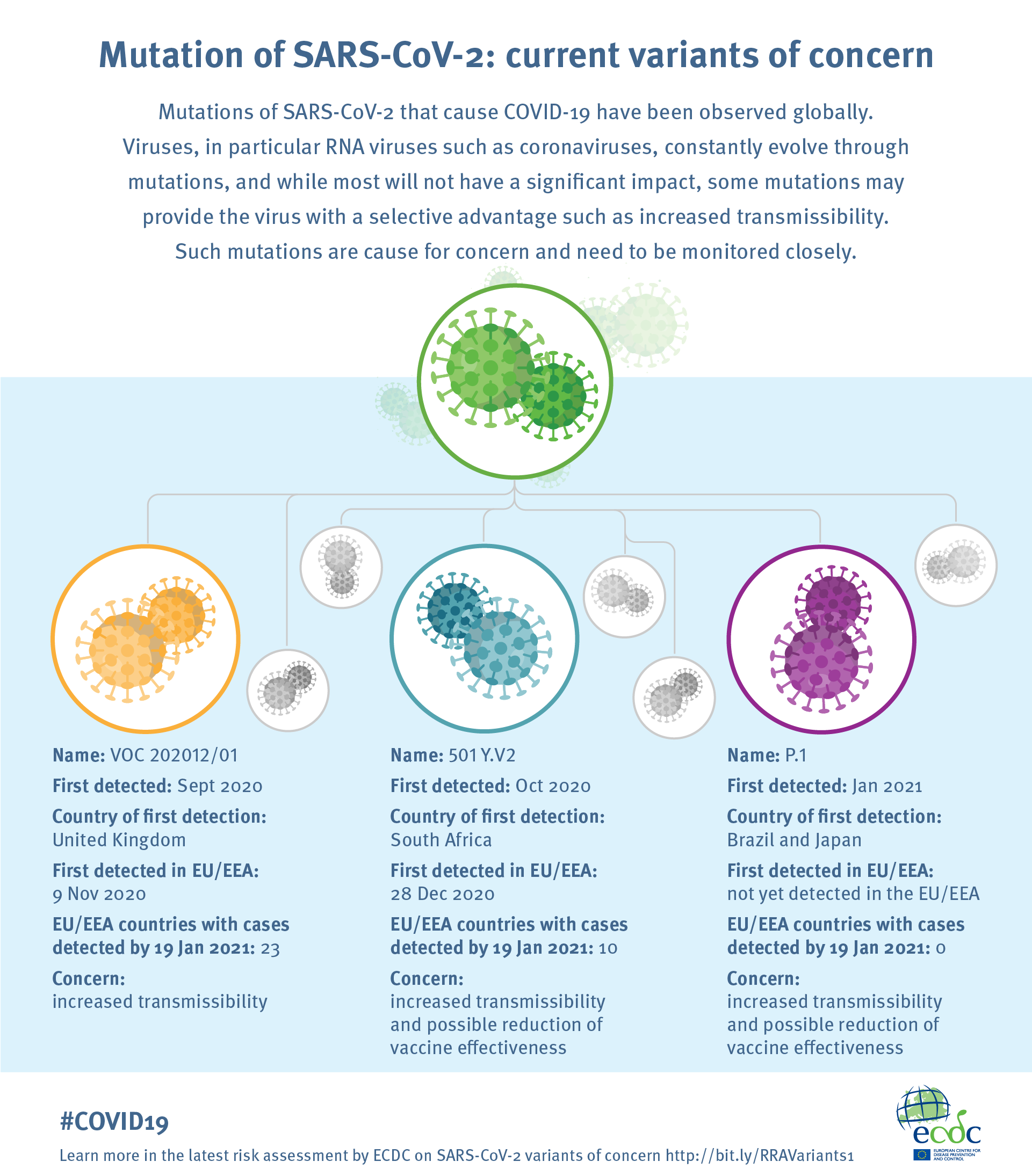
The announcement earlier today from South Carolina's Department of Health and Environmental Control (DHEC) confirms what has been widely suspected the past few weeks, that all 3 of the VOCs (Variants of Concern) emerging from the UK, Brazil, and South Africa have made it to the United States. 

Genomic testing for variants is still quite limited in the United States, and so only a small number of variants have been detected.  As testing ramps up, the number of detections is expected to rise. 

As of Wednesday night, 315 cases of the B.1.1.7 (aka `UK') variant have been reported in the United States (see map below), with Florida and California tied at 92 cases each.

While on Tuesday we saw the Minnesota DOH Statement On 1st Detection Of Brazilian P.1. COVID Variant In the United States.

The detection of the B.1.351 (aka `South African') variant was viewed as being just a matter of time, given that it has already been reported in more than 30 countries around the world.  

Both the South African and Brazilian variants carry the E484K mutation - which has been linked to reduced antibody recognition, which might increase reinfection risks and potentially lower the effectiveness of current vaccines.

Of particular note, South Carolina's DHEC reported two cases today - from different parts of the state - who are without epidemiological links or recent travel histories. 

South Carolina Public Health Officials Detect Nation’s First Known Cases of the COVID-19 Variant Originally Detected in South Africa 

Dr. Traxler: We Must All Recommit to Stopping the Spread – Wear a Mask, Stay Six Feet Apart

COLUMBIA, S.C. — The South Carolina Department of Health and Environmental Control (DHEC) announced today the detection of two cases associated with the SARS-CoV-2 variant that first emerged recently in South Africa. These are the first two cases of this variant in the United States.

Viruses are constantly changing, leading to the emergence of variants. Variants are closely monitored for their ability to spread faster or cause more disease. South Carolina public health officials were notified late yesterday by the Centers for Disease Control and Prevention (CDC) of a South Carolina sample that was tested at LabCorp and determined to be the B.1.351 variant originally identified in South Africa. Also, DHEC's Public Health Laboratory tested samples on Jan. 25 and yesterday identified a separate case of the same variant. Since June 2020, DHEC's Public Health Laboratory has been performing tests of random samples in order to identify any instances of the variant viruses. DHEC’s Public Health Laboratory will continue to conduct this important sampling to identify any other changes in the virus.

Experts agree that existing vaccines work to protect us from this variant, even if we don’t know precisely how effective they are. At this time, there’s no evidence to suggest that the B.1.351 variant causes more severe illness.

“The arrival of the SARS-CoV-2 variant in our state is an important reminder to all South Carolinians that the fight against this deadly virus is far from over,” said Dr. Brannon Traxler, DHEC Interim Public Health Director. “While more COVID-19 vaccines are on the way, supplies are still limited. Every one of us must recommit to the fight by recognizing that we are all on the front lines now. We are all in this together.”

At this point in time, there is no known travel history and no connection between these two cases. Both are adults; one from the Lowcountry and one from the Pee Dee region. To protect their privacy, no further information will be released.

The B.1.351 variant has been identified in more than 30 countries but these are the first cases of this variant identified in the United States. Other states have had cases of another, called B.1.1.7, originally identified in United Kingdom. Both variants originally detected in the United Kingdom and South Africa spread easier and quicker than the majority of SARS-CoV-2 variants.

The South Africa and United Kingdom variants emerged independently from each other and have different characteristics. Most variants do not change how the virus behaves and many disappear.

“We know that viruses mutate to live and live to mutate,” Dr. Traxler said. “That’s why it’s critical that we all continue to do our part by taking small actions that make a big difference. These include wearing our masks, staying at least six feet apart from others, avoiding large crowds, washing our hands, getting tested often, and when we can, getting vaccinated. These are the best tools for preventing the spread of the virus, no matter the strain.”

DHEC, in coordination with the CDC, will continue to watch out for COVID-19 variants. Public health officials will provide more information as it becomes available.

Safe and effective vaccines and following public health guidance are how to win the fight against COVID-19. For more information about the COVID-19 vaccine go to scdhec.gov/vaxfacts. For the latest information about COVID-19, go to scdhec.gov/COVID19.

The Lancet: Resurgence of COVID-19 in Manaus, Brazil, Despite High Seroprevalence


#15,755

We've been following the impact of a new wave of COVID this winter in Amazonas State, Brazil (see Brazil: Amazonas Transfers 235 COVID Cases To Other States Amid Critical Oxygen Shortage), and the rise of new COVID Variants in the region for several weeks. 


Making this outbreak even more remarkable are recent studies that suggest the population of Manaus, the capital and largest city in Amazonas, already had a high seroprevalence level of COVID following a heavy wave of the virus last spring (see Three-quarters attack rate of SARS-CoV-2 in the Brazilian Amazon during a largely unmitigated epidemic. Science. 2020; 371: 288-292).
With 76% of the population estimated to have already been infected with SARS-CoV-2 - enough to presumably supply some degree of `herd immunity' - another large outbreak raises serious questions about durability of acquired immunity, and/or antigenic changes to the virus in the region. 
All of which brings us to a relatively brief comment, published yesterday in The Lancet, that proposes 4 non-exclusive possibilities behind this resurgence. 
  1. The SARS-CoV-2 attack rate could have been overestimated during the first wave, leaving the population below the herd immunity threshold until the beginning of this latest wave. 
  2. Acquired immunity against SARS-CoV-2 may already have begun to wane in the community as it is now 7 to 8 months after the first wave.
  3. Brazil has reported both the UK B.1.1.7 and the indigenous P.1. variant (and more recently a P.2 variant), some of which may evade immunity acquired from previous variants of the virus.
  4. These new variants may have a higher transmissibility than previous variants.
Whether driven by declining immunity in the general population, or increased transmissibility or antigenic escape by new variants (or a combination of both), the concern is that other regions may be faced wotj similar resurgences in the coming months. 

The following article discusses the pros and cons of each of these possibilities and the importance of determining the efficacy of existing COVID-19 vaccines against these new variants.  

AJOG: Disease Severity, Pregnancy Outcomes and Maternal Deaths With Patients With SARS-CoV-2 - Washington State


CDC MMWR Sept 2020 

#15,754

Historically, pregnant women and their unborn offspring are among the hardest hit during influenza pandemics (see 2009's Pregnancy & Flu: A Bad Combination), and even seasonal flu in known to hit pregnant women harder than non-pregnant women. 

Since the emergence of COVID-19 similar concerns have been raised over SARS-CoV-2 infection, and while the evidence has been limited, some early studies/reports include:
MMWR: Two New Reports On Pregnancy & COVID-19
The CDC maintains a Data on COVID-19 during Pregnancy website, but cautions that:
Because only about a third of case report forms include information on pregnancy status, these numbers likely do not include all pregnant women with COVID-19 in the United States and must be interpreted with caution. The completeness of this variable continues to improve each week.
 

A November MMWR (Update: Characteristics of Symptomatic Women of Reproductive Age with Laboratory-Confirmed SARS-CoV-2 Infection by Pregnancy Status — United States, January 22–October 3, 2020) found that `. . . pregnant women were significantly more likely than were nonpregnant women to be admitted to an intensive care unit . .'.

While their absolute risks for severe outcomes was deemed fairly low, pregnant women were more likely to require invasive ventilation and/or ECMO - and were more likely to die - than non-pregnant women.

Today we've a new study/analysis published in the American Journal of Obstetrics and Gynecology (AJOG) by researchers at Washington State University that finds that pregnant women are at significantly greater risk from SARS-CoV-2 infection than non-pregnant women. 

I've only reproduced the abstract, so follow the link to read the full PDF version. 
Disease Severity, Pregnancy Outcomes and Maternal Deaths among Pregnant Patients with SARS-CoV-2 Infection in Washington State

Erica M. Lokken, PhD, MS Emily M. Huebner, MS G. Gray Taylor, BA Sylvia M. LaCourse, MD, MPH Kristina M. Adams Waldorf, MD

For the Washington State COVID-19 in Pregnancy Collaborative

Published:January 26, 2021DOI:https://doi.org/10.1016/j.ajog.2020.12.1221

STRUCTURED ABSTRACT

Background

Evidence is accumulating that coronavirus disease 2019 (COVID-19) increases the risk for hospitalization and mechanical ventilation in pregnant patients and for preterm delivery. However, the impact on maternal mortality and whether morbidity is differentially affected by disease severity at delivery and trimester of infection is unknown.

Objectives

To describe disease severity and outcomes of SARS-CoV-2 infections in pregnancy across Washington State including pregnancy complications and outcomes, hospitalization, and case fatality.

Study Design

Pregnant patients with a polymerase chain reaction confirmed SARS-CoV-2 infection between March 1 and June 30, 2020 were identified in a multi-center retrospective cohort study from 35 sites in Washington State. Sites captured 61% of annual state deliveries. Case fatality rates in pregnancy were compared to COVID-19 fatality rates in similarly aged adults in Washington State using rate ratios and rate differences. Maternal and neonatal outcomes were compared by trimester of infection and disease severity at the time of delivery.

Results


The principal study findings were:
1) among 240 pregnant patients in Washington State with SARS-CoV-2 infections, 1 in 11 developed severe or critical disease, 1 in 10 were hospitalized for COVID-19, and 1 in 80 died;
2) the COVID-19-associated hospitalization rate was 3.5-fold higher than in similarly-aged adults in Washington State [10.0% vs. 2.8%; rate ratio (RR) 3.5, 95% confidence interval (CI) 2.3-5.3];
3) pregnant patients hospitalized for a respiratory concern were more likely to have a comorbidity or underlying conditions including asthma, hypertension, type 2 diabetes, autoimmune disease, and Class III obesity;
4) three maternal deaths (1.3%) were attributed to COVID-19 for a maternal mortality rate of 1,250/100,000 pregnancies (95%CI 257-3,653);
5) the COVID-19 case fatality in pregnancy was a significant 13.6-fold (95%CI 2.7-43.6) higher in pregnant patients compared to similarly aged individuals in Washington State with an absolute difference in mortality rate of 1.2% (95%CI -0.3-2.6); and
6) preterm birth was significantly higher among women with severe/critical COVID-19 at delivery than for women who had recovered from COVID-19 (45.4% severe/critical COVID-19 vs. 5.2% mild COVID-19, p<0.001).

Conclusions

COVID-19 hospitalization and case fatality rates in pregnant patients were significantly higher compared to similarly aged adults in Washington State. This data indicates that pregnant patients are at risk for severe or critical disease and mortality compared to non-pregnant adults, as well as preterm birth.