Wednesday, September 28, 2022

`Catastrophic' CAT 4 Hurricane Ian Bearing Down On Southwest Florida


#17,032

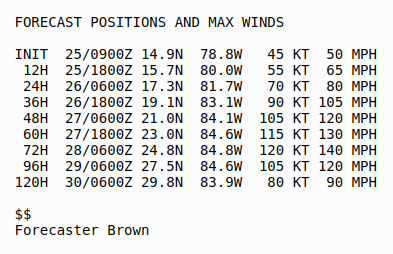
Overnight Hurricane Ian underwent an eyewall replacement, and emerged stronger (140 mph) for it, now only 18 hours or so from landfall in Southwest Florida.  While this new trajectory largely spares the Tampa Bay area from a devastating hit, Ft. Myers, Port Charlotte, and Venice are not going to be so lucky. 

Since Ian is expected to slow to a crawl as it approaches landfall, this is likely to be a long-duration event (up to 24 hours) for many people.  Rain totals are likely to be extreme, and with the ground already soaked by summer rains, inland flooding is going to a problem. 

Power outages are likely to be extensive, even far from landfall, as tropical storm force winds extend outward up to 175 miles from the center (see map below).  Spin up tornadoes are also possible as the storm makes landfall. 

First the 5 am KEY MESSAGES from the NHC.


For those in the direct path of this storm, this is a life threatening event, and even for those farther removed, the impacts (inland flooding, days without power, empty store shelves, etc.) are likely to be significant. 

To put Ian's size into perspective, it has been raining heavily for several hours where I live (just north and east of Tampa), and the storm is still 190 miles to my southwest.  It should pass 40 miles to my east, as a greatly weakened CAT 1 storm, in about 24 hours. 

Given the soaked ground, and the winds predicted, I fully expect the power to be out here for several days or longer.  While I no longer need to `bug out' for safety reasons, my `Disaster Buddy' and evac destination has asked me to come anyway, because I'm better prepared (see Hurricane Preparedness: Some Simple Off-The-Shelf Solar Solutions For Power Outages) for a prolonged grid down scenario. 

So I'll be loading my car with my bug out supplies, and leaving in a few hours. But this time, I'm pretty confident I'll have an intact home to return to in a few days, which makes me far luckier than my fellow Floridians further down the state. 

I'll have my laptop with me, and will try to post some blogs, but may be hampered by power and/or internet outages.  I'll try to get word to Sharon Sanders at FluTrackers (who is also in the path) on our status on Thursday. 

In the meantime, I highly recommend you check FluTrackers and CIDRAP News for the latest infectious disease news, and I'll catch you on the flip side.

Tuesday, September 27, 2022

Major Hurricane Ian Battering Cuba - Next Stop Florida


#17,031

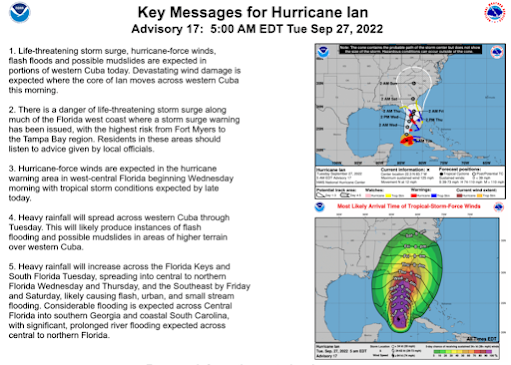
There's been another shift east in the National Hurricane Center's forecast track for Hurricane Ian, with the 5 am advisory putting the center over southern Tampa Bay 48 hours from now as a slow moving CAT 3 storm.  

That said, there is still a fair amount of uncertainty - and a wider-than-usual spread in the cone - for where Ian may be two days from now.  Further shifts in the track (east or west) are still possible. 

Should Ian stay on this track, the storm surge in the bay could exceed 10 feet (see map below). If Ian should curve a little further east, and make landfall south of Tampa, some of this surge would be reduced. But coastal flooding is going to be a big story with this storm, either way.


All things being even, it is better to be on the left (weaker) side of a land falling hurricane, particularly on the coast.

But the swath of destruction from a major hurricane can be 100 miles wide or more, and extend inland for hundreds of miles, meaning that you don't have to be hit directly to be impacted.

This morning's KEY MESSAGES from the NHC follow, after which I'll have a brief personal postscript.


While there may still be a reprieve for me, this morning's track puts a slightly weakened Ian on top of my humble abode around noon on Thursday. 

Since I'm in a mandatory situation, I'll be packing and staging what I can today to load in the car tomorrow morning, to bug out to my `Disaster Buddy's' place 40 miles away (see In An Emergency, Who Has Your Back?).

This will be my second evacuation in 5 years, and while it is always difficult, I'm thankful I have a comfortable place to go, and won't be sleeping on a gymnasium floor at a public shelter. 

I'm also glad I've embraced a `preparedness lifestyle', and have solar panels, USB batteries, LED lights, a NWS Emergency radio, and other preps to get me - and my `buddy' - through a prolonged grid down situation (see #NPM21: The Neverending Road To Preparedness).

While it is Florida that is under the gun today, tomorrow or next week it could be California, or New York, or somewhere in the American Midwest.  Disasters can strike with little or no warning anywhere in the world.  

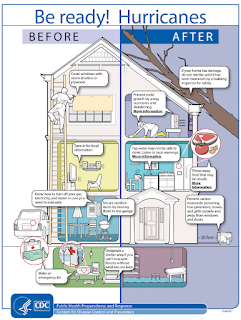
    So . .  if a disaster struck your region today, and the power went outstores closed their doors, and water stopped flowing from your kitchen tap for the next 7 to 14 days . . . you are you prepared with:

    • A battery operated NWS Emergency Radio to find out what was going on, and to get vital instructions from emergency officials
    • A decent first-aid kit, so that you can treat injuries
    • Enough non-perishable food and water on hand to feed and hydrate your family (including pets) for the duration
    • A way to provide light when the grid is down.
    • A way to cook safely without electricity
    • A way to purify or filter water
    • A way to handle basic sanitation and waste disposal. 
    • A way to stay cool (fans) or warm when the power is out.
    • A small supply of cash to use in case credit/debit machines are not working
    • An emergency plan, including meeting places, emergency out-of-state contact numbers, a disaster buddy, and in case you must evacuate, a bug-out bag
    • Spare supply of essential prescription medicines that you or your family may need
    • A way to entertain yourself, or your kids, during a prolonged blackout

    If not, you've got some important work to do. Some good places to get started include:

    FEMA http://www.fema.gov/index.shtm

    READY.GOV http://www.ready.gov/

    AMERICAN RED CROSS http://www.redcross.org/


    Monday, September 26, 2022

    After The Storm Passes


    #17,030

    With Hurricane Ian expected to to impact much of the Florida peninsula later this week, many people are rightfully concerned about evacuating, or riding out the storm at home. But as we've discussed many times, the dangers from a hurricane often increase in the days and weeks after the storm has passed, due to injuries or illness that occur during the `recovery' period.

    Some of the many dangers include:
    One of the most common, and dangerous threats comes from floodwaters which may linger for days, or even weeks following the storm. Waters that may contain toxic chemicals, dangerous viruses and bacteria, and hidden hazards like snakes, rats, and broken glass, sharp metal, or even live electrical wires.

    The CDC maintains a web page on the dangers of Flood Waters or Standing Waters.

    Stay out of floodwater
    Floodwaters contain many things that may harm health. We don’t know exactly what is in floodwater at any given point in time. Floodwater can contain:
    • Downed power lines
    • Human and livestock waste
    • Household, medical, and industrial hazardous waste (chemical, biological, and radiological)
    • Coal ash waste that can contain carcinogenic compounds such as arsenic, chromium, and mercury
    • Other contaminants that can lead to illness
    • Physical objects such as lumber, vehicles, and debris
    • Wild or stray animals such as rodents and snakes

    Exposure to contaminated floodwater can cause:
    • Wound infections
    • Skin rash
    • Gastrointestinal illness
    • Tetanus
    • Leptospirosis (not common)
    It is important to protect yourself from exposure to floodwater regardless of the source of contamination. The best way to protect yourself is to stay out of the water.

    If you come in contact with floodwater:
    • Wash the area with soap and clean water as soon as possible. If you don’t have soap or water, use alcohol-based wipes or sanitizer.
    • Take care of wounds and seek medical attention if necessary.
    • Wash clothes contaminated with flood or sewage water in hot water and detergent before reusing them.
    If you must enter floodwater, wear rubber boots, rubber gloves, and goggles.

    One of my most vivid memories from standing in the French Quarter of New Orleans in 2005 - a few weeks after Hurricane Katrina - was the staggering number of refrigerators and freezers dragged out to the curbs - filled with rotting food - waiting to be hauled away.

    With the power likely to be out for days, there is a real danger of food poisoning. 

    The USDA maintains a Food Safety and Inspection website with a great deal of consumer information about how to protect your food supplies during an emergency, and how to tell when to discard food that may no longer be safe to consume.

    Find out how to keep food safe during and after an emergency, such as a flood, fire, national disaster, or the loss of power.

    Provides materials, including videos and podcasts, on ensuring food safety during emergencies.
    [resources available in Spanish]

    Proper safety precautions to keep food and water safe. [available in Spanish and French]

    Includes tips for making water safe to drink and storing food.


    Is food in the refrigerator safe during a power outage? Use this chart to find out.

    Is thawed or partially thawed food in the freezer safe to eat? Use this chart as a guide.

    Chainsaw accidents also figure prominently after many weather-related disasters, as many people with little experience find themselves clearing driveways and rooftop of fallen branches. The CDC maintains a chainsaw safety web page:
    Preventing Chain Saw Injuries During Tree Removal After a Disaster

    Stay Safe

    • Wear proper protective clothing and glasses.
    • Choose the proper size of chain saw to match the job.
    • Operate, adjust, and maintain the saw according to manufacturer’s instructions.
    • Take extra care in cutting “spring poles” trees or branches that have been bent, twisted, hung up on, or caught under another object during a high wind.
    • Be sure that bystanders are at a safe distance from cutting activities.
    • Check around the tree or pole for hazards, such as nails, power lines, or cables, before cutting.
    Each year, approximately 36,000 people are treated in hospital emergency departments for injuries from using chain saws. The potential risk of injury increases after hurricanes and other natural disasters, when chain saws are widely used to remove fallen or partially fallen trees and tree branches.
    (Continue . . .)

    Gasoline generators, along with improvised cooking and heating facilities, can put people at risk of Carbon Monoxide poisoning. Each year, hundreds of Americans die from exposure to this odorless and colorless gas.

    With the possibility of widespread power outages the potential for this sort of preventable tragedy in the post-storm period can’t be ignored.

    In Carbon Monoxide: A Stealthy Killer I wrote in depth on the issue, but a few tips from the CDC include:

    You Can Prevent Carbon Monoxide Exposure
    • Do have your heating system, water heater and any other gas, oil, or coal burning appliances serviced by a qualified technician every year.
    • Do install a battery-operated CO detector in your home and check or replace the battery when you change the time on your clocks each spring and fall. If the detector sounds leave your home immediately and call 911.
    • Do seek prompt medical attention if you suspect CO poisoning and are feeling dizzy, light-headed, or nauseous.
    • Don't use a generator, charcoal grill, camp stove, or other gasoline or charcoal-burning device inside your home, basement, or garage or near a window.
    • Don't run a car or truck inside a garage attached to your house, even if you leave the door open.
    • Don't burn anything in a stove or fireplace that isn't vented.
    • Don't heat your house with a gas oven.
    And as a last stop on our post-storm safety tour, a visit to the CDC’s Emergency Preparedness and Response website, which provides advice on a variety of post-storm topics including electrical and fire hazards, mosquitoes, mold, unstable buildings and structures, and the dangers posed by wild and stray animals.

    While many believe the worst will be over once the storm has passed, in truth, often the biggest challenges are found during the days and weeks that follow.

    For more preparedness information I would invite you to visit:

    FEMA http://www.fema.gov/index.shtm
    READY.GOV http://www.ready.gov/
    AMERICAN RED CROSS http://www.redcross.org/

    Hurricane Watches Raised Along Florida West Coast


    #17,029

    This morning the National Hurricane Center upgraded Ian to a CAT 1 Hurricane as it steams northwesterly towards the western tip of Cuba and then into the eastern Gulf of Mexico.  As the tracking map above illustrates, in 72 hours Ian is expected to be a major hurricane and knocking on West Central Florida's door. 

    The map below shows the 5 am watches and warnings, and while the hurricane watch only extends from from north of Englewood to the Anclote River (including Tampa Bay) that will likely be expanded further northward later today.


    Even though we are only 3 days from a possible landfall (4 days, if Ian stays off the coast), there is still a wide divergence between the models, with the GFS HWRF, and HMON staying further west, and tracking towards Appalachia Bay.  The UKMET and ECWMF bring the storm ashore either at, or just south of, Tampa Bay. 

    A shift of even a few miles east or west of the projected track could make a huge difference in the impacts to the Tampa Bay area.  

    Regardless of its exact path, Ian is expected to be a major hurricane with an expanding wind field as it approaches Florida, and widespread power outages, coastal (and inland) flooding, and wind damage can be expected across a wide swath of the peninsula. 

    If you live in (or even near) the path of this storm, you should be checking your local (county) EOC (Emergency Operations Center) often for local evacuation information and guidance, and be preparing for Ian's arrival.   

    The Key Messages from the NHC this morning read:


    Since I live well within the cone, I'm preparing to `bug out' to a safer location (ironically, closer to the coast, but in a much more substantial building) - probably on Wednesday morning - and so my blogging may be a bit limited for the next couple of days. 

    There is a very good chance I'll be without internet, or power, for some time after the storm passes.  How long will depend on the exact path this storm takes, and how strong Ian is when he arrives.  But I expect several days to a week or longer. 

    Tampa Bay is particularly vulnerable to storm surge, but has managed to avoid a direct hit by a major hurricane for more than 100 years (1921).  Hopefully we'll get lucky again. 

    Stay tuned. 

    Sunday, September 25, 2022

    T.S. Ian NHC Update & Some Disaster Prep Tips


    #17,028

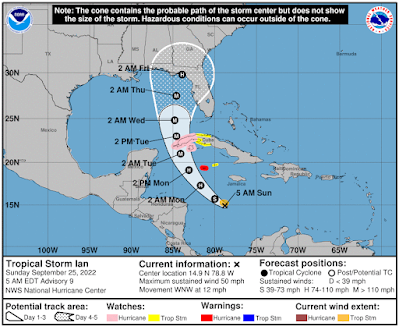
    While the track of (potential) major hurricane Ian (now just a T.S.) has shifted slightly to the west since yesterday, models are still sharply divided on where this storm goes 4 days from now, with the heavily populated west coast of Florida still in play. 

    The further north this system goes before making landfall, the less favorable conditions are expected to become, so a weaker storm would be expected in the panhandle than we'd likely see here on the west coast. 

    The 5 am Discussion from the NHC describes the uncertainties in the forecast, then summarizes:

    Ian is expected to remain a major hurricane when it moves generally northward across the eastern Gulf of Mexico during the middle of the week, but uncertainty in the long-term track and intensity forecast is higher than usual. Regardless of Ian’s exact track and intensity, there is a risk of dangerous storm surge, hurricane-force winds, and heavy rainfall along the west coast of Florida and the Florida Panhandle by the middle of the week, and residents in Florida should ensure they have their hurricane plan in place, follow any advice given by local officials, and closely monitor updates to the forecast.

    While this forecast assumes a north Florida landfall of a weakening (but still potent) storm, any turn to the right could bring a much more powerful storm into west central Florida. 

    Even if Ian stays off the coast, the further north this systems moves, the more its wind field is expected to expand. That could produce serious coastal flooding, and create widespread power outages across much of the peninsula. 

    While I may still be forced to evacuate, a more westerly track may allow me to safely stay home, although I could be without power, water, or internet for days. The last time we were under this much of a threat (see 2017's  A Post Irma Update), my power was out for 4 days, and store shelves were bare for more than a week. 

    Even though I maintain year-round preparedness, I spend extra time in May - just prior to hurricane season - making sure my supplies are topped off, and my equipment is in proper order.  Mostly that involves filling water storage containers with fresh water, and making sure all my rechargeable batteries are fully charted. 

    Since it has been 4 months, I spent yesterday charging my box of AA and AAA rechargeable batteries, doing laundry,  and packing and organizing some `bug out' bags in case I need them. 

    If I can avoid a direct hit by Ian, I'll probably only have to contend with `forced camping' in my home for a few days, something that I'm well equipped to do. 

    I've got 60 gals of water stored, 2+ weeks of simple heat-and-eat meals, ample LED lights and lanterns, a propane stove, battery operated fans, solar panels, and an MP3 player filled with hundreds of hours of music, audio books, and OTR (Old Time Radio) shows from the 1940's and 1950's. 

    Since nearly all natural disasters involve power outages, I've invested in an array of `off-the-shelf' solar items, including fans, LED lanterns, several USB battery packs, and a 21 watt Solar panel (see Some Simple Off-The-Shelf Solar Solutions For Power Outages).


    While these USB based systems won't run the air conditioner, refrigerator, or microwave, they can keep cell phones and tablets charged, provide light, fans, and even communications equipment running during an extended power outage. 

    Since I use a CPAP, in 2020 I cobbled together a way to keep that running for 5 or 6 nights (see My New (And Improved) Solar Battery Project (for CPAP)), using a pair of Deep Cycle AGM 12 volt battery ($67), 2 - 7 amp solar charge controllers, and my two 40 watt solar panels.


    Each battery has its own dedicated solar charge controller with a snap connector for a solar panel, dual 12 volt outlets, and a 150 watt 110 volt inverter. my initial setup. 
    Although a CPAP can be run off the inverter, it is far more power efficient to run it off a 12 volt outlet (using the correct 12 volt adapter plug).  I should get 2 maybe 3  (7-hour) nights off a fully charged battery, and - with two batteries - my solar panels are likely able to keep up with keeping them charged.

    While it would have been easier to by an off the shelf `solar generator' that would do (for under $1000) what all of my chargers/batteries/inverters can do, my system has the advantage of being modular and repairable. If I had to, I could cannibalize one system to fix the other. 

    In the preparedness community, the old saying is `One is none, and two is one'. Meaning you don't risk you life on having only plan A. Having a 1 year factory warranty on a new piece of technology is great, but it doesn't do you much good when the power is out, and your inverter starts smoking. 

    Of course, if you aren't comfortable building your own system, buying one off the shelf is your next best option. 

    Admittedly, many of my preps are more for comfort and convenience, than for survival. But the physical and psychological impacts stemming from the hardships following a disaster are quite real (see Post-Disaster Sequelae), and a modicum of creature comforts can go a long ways towards mitigating their effects.

    But that can only happen if you plan ahead. 

    Nature: Long-term Neurologic Outcomes of COVID-19


     Credit CDC

    #17,027

    More than two years ago (April 2020), in JAMA: Neurologic Manifestations Of Patients With Severe Coronavirus Disease, we saw the first major report on the neurological impact of COVID-19 infection, one which found that more than 1/3rd of a study group (n=214) hospitalized in Wuhan, China showed signs of neurological involvement.

    Findings that led some researchers over that first summer of COVID to wonder; Are we facing a crashing wave of neuropsychiatric sequelae of COVID-19? Neuropsychiatric symptoms and potential immunologic mechanisms by Emily A. Troyer, Jordan N. Kohn, and Suzi Hong.

    Despite narratives attempting to dismiss COVID as `no worse than influenza', we continue to see evidence of long-term damage in some patients from SARS-CoV-2 infection.  Dubbed `Long-COVID', or Post-COVID Syndrome, studies have suggested that 1 in 5 adults may be affected. 

    Post-COVID sequelae may include cardiovascular, renal, pulmonary, neurological, and endocrine disorders. A few (of many) studies over the past few months include:


    There is also some evidence (see Outcomes of SARS-CoV-2 Reinfection) suggesting that the more times a person is reinfected with COVID - even when the illness is mild - the greater the chances of developing serious (even fatal) post-COVID sequelae.  

    Seven months ago we looked at a report (see Nature: Long-term Cardiovascular Outcomes of COVID-19 by Yan Xie, Evan Xu, Benjamin Bowe & Ziyad Al-Aly) that described long-term cardiac damage among COVID survivors.  Today, we've a new report in Nature by 3 of those 4 authors, on long-term Neurologic impacts among Post-COVID patients. 

    This is a lengthy, and highly detailed report, and I've only post the Abstract and some highlights from the Discussion.  Follow the link to read it in its entirety.  I'll have a postscript when you return. 
     
    Open Access
    Evan Xu, Yan Xie & Ziyad Al-Aly

    Abstract

    The neurologic manifestations of acute COVID-19 are well characterized, but a comprehensive evaluation of postacute neurologic sequelae at 1 year has not been undertaken. Here we use the national healthcare databases of the US Department of Veterans Affairs to build a cohort of 154,068 individuals with COVID-19, 5,638,795 contemporary controls and 5,859,621 historical controls; we use inverse probability weighting to balance the cohorts, and estimate risks and burdens of incident neurologic disorders at 12 months following acute SARS-CoV-2 infection.
     
    Our results show that in the postacute phase of COVID-19, there was increased risk of an array of incident neurologic sequelae including ischemic and hemorrhagic stroke, cognition and memory disorders, peripheral nervous system disorders, episodic disorders (for example, migraine and seizures), extrapyramidal and movement disorders, mental health disorders, musculoskeletal disorders, sensory disorders, Guillain–Barré syndrome, and encephalitis or encephalopathy

    We estimated that the hazard ratio of any neurologic sequela was 1.42 (95% confidence intervals 1.38, 1.47) and burden 70.69 (95% confidence intervals 63.54, 78.01) per 1,000 persons at 12 months. The risks and burdens were elevated even in people who did not require hospitalization during acute COVID-19. Limitations include a cohort comprising mostly White males. Taken together, our results provide evidence of increased risk of long-term neurologic disorders in people who had COVID-19.

    (SNIP)

    Discussion

    In this study involving 154,068 people who had COVID-19, 5,638,795 contemporary controls and 5,859,621 historical controls, which altogether correspond to 14,064,985 person-years of follow up, we show that beyond the first 30 days of infection, people with COVID-19 are at increased risk of an array of neurologic disorders spanning several disease categories including stroke (both ischemic and hemorrhagic), cognition and memory disorders, peripheral nervous system disorders, episodic disorders, extrapyramidal and movement disorders, mental health disorders, musculoskeletal disorders, sensory disorders and other disorders including Guillain–Barré syndrome, and encephalitis or encephalopathy. The risks and burdens were evident in subgroups based on age, race, sex, obesity, smoking, ADI, diabetes, chronic kidney disease, hyperlipidemia, hypertension or immune dysfunction. The risks were evident even in people who did not need hospitalization during the acute phase of the infection and increased according to the care setting of the acute phase of the disease from nonhospitalized to hospitalized to admitted to intensive care. The findings were consistent in comparisons involving the contemporary control group and the historical control group. The results were robust to challenge in sensitivity analyses; the application of negative-exposure and negative-outcome controls yielded results consistent with prior expectations. Altogether, our results show that the risks and burdens of neurologic disorders in the COVID-19 group at 12 months are substantial. The long-term consequences of SARS-CoV-2 infection should be taken into account in devising policies for managing the ongoing pandemic, and developing exit strategies for a postpandemic era. Health systems should consider these findings in capacity planning and in designing clinical care pathways to address the care needs of people who survive the acute phase of COVID-19.

    More than 2 years into the COVID-19 global pandemic, it is abundantly clear that infection with SARS-CoV-2 may result in a broad array of long-term disorders9,10,11,12,13,14. Our report adds to this growing body of evidence by providing a comprehensive account of the neurologic consequences of COVID-19 at 12 months. 

    Given the colossal scale of the pandemic, and even though the absolute numbers reported in this work are small, these may translate into a large number of affected individuals around the world—and this will likely contribute to a rise in the burden of neurologic diseases. This places more emphasis on the continued need for multipronged primary prevention strategies through nonpharmaceutical interventions (for example, masking) and vaccines to reduce—to the extent possible—the risk of contracting SARS-CoV-2. There is also an urgent need to develop long-term sustainable strategies to prevent mass infection with SARS-CoV-2 and to determine whether and how these long-term neurologic (and other) complications could be prevented or otherwise mitigated in people who are already infected with SARS-CoV-2.

              (SNIP)

    In conclusion, our report provides a comprehensive analysis of neurologic outcomes at 12 months. We show increased risk of an array of neurologic disorders spanning several neurologic disease categories including stroke (both ischemic and hemorrhagic), cognition and memory disorders, peripheral nervous system disorders, episodic disorders, extrapyramidal and movement disorders, mental health disorders, musculoskeletal disorders, sensory disorders, and other disorders including Guillain–Barré syndrome, and encephalitis or encephalopathy. The risks were evident in all examined subgroups and were evident even in people who were not hospitalized during the acute phase of the disease. Altogether, the findings call for attention to the long-term neurologic consequences of SARS-CoV-2 infection. Both healthcare system planning, and more broadly, public policy making, should take into account the long-term neurologic (and other) consequences of infection with SARS-CoV-2. 

              (Continue . . . )

    Two years ago, in The Lancet: COVID-19: Can We Learn From Encephalitis Lethargica?, we looked at the still unexplained increase in neurological disorders in the decade following the 1918 pandemic. A cruel epidemic that affected millions worldwide. 

    While a direct link to the H1N1 influenza virus has never been established, many researchers believe it was caused by a viral infection (see Evidence for an enterovirus as the cause of encephalitis lethargica).

    It may take another 5 or 10 years before we can accurately assess the impact of COVID infection on society's health and well being. But current evidence suggests that COVID - even when it only produces mild acute illness - is an infection best avoided whenever possible. 

    Which is why I'm still wearing a face mask in public, and am keeping current with my booster shots. 

    Saturday, September 24, 2022

    T.S. Ian Expected To Threaten Gulf Coast As A Major Hurricane


    #17,026

    A U.S. landfall is still 4 or 5 days away - and the projected path could still shift left or right by a hundred miles or more - but right now everyone in Florida should be making plans for an unwelcome visitor the middle of next week. 

    Conditions are are favorable for T.S. Ian to become a major hurricane once it gets over the very warm waters of the Gulf of Mexico, and many areas along Florida's west coast are low lying, and vulnerable to storm surge. 

    The major computer forecast models (GFS, EURO, CMC, etc.) are not in full agreement on where this storm goes, so you'll want to check the latest NHC updates often. 

    Full updates are released at 11 am, 5 pm, 11 pm and 5 am, with intermediate updates at 8 am, 2 pm, 8 pm and 2 am.  

    Anyone in the projected path of this storm should be keeping close tabs on the forecast, and reviewing their hurricane (and/or evacuation) plans this weekend (see  #NatlPrep: When Evacuation Is The Better Part of Valor).

    Since I live in a mandatory evacuation area, I've already discussed my `bug out' plans with my Disaster Buddy (see In An Emergency, Who Has Your Back?), but I won't make the decision to pack the car, and get out, until Monday night. 

    As grim as evacuating can be, I'm very thankful I have a place to go. 

    For now, the National Hurricane Center has issued the following Key Messages for those living in the path of this storm.


    Friday, September 23, 2022

    CDC FluView Reports Another Novel Swine Variant (H1N2v) Infection


    #17,025

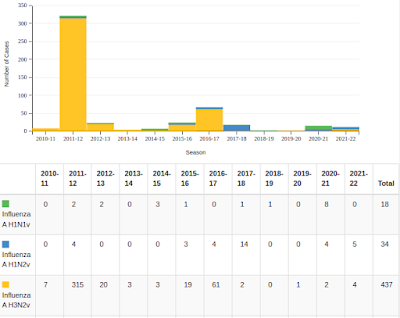
    Prior to the 2017-18 flu season, H3N2v viruses made up more than 90% of all human swine variants reported in the United States (since 2010).  H1N1v and H1N2v each accounted for less than 3% of all known cases. 

    Since 2017-18, however, H1N2v has become the dominant strain reported (n=23), outpacing H3N2v by more than 2 to 1. 

    That said, the number of H1N2v infections being reported these past few years pales in comparison to some of the banner years (2012 with 315, and 2016-17 with 61) H3N2v infections.  Most swine variant infections likely go unreported, however, since most people are never tested for mild or even moderate flu-like illnesses. 

    Today's FluView Week 37 provides the following brief report on the 5th H1N2v infection of this summer.

    Novel Influenza A Virus

    A human infection with a novel influenza A virus was reported by the Georgia Department of Public Health. The patient was infected with an influenza A(H1N2) variant (A(H1N2)v) virus. The patient is <18 years of age, was not hospitalized, and has recovered from their illness. An investigation by local public health officials found that the patient had swine contact and had attended agricultural fairs prior to their illness onset. Additional investigation did not identify respiratory illness in any of the patient’s household contacts. No person-to-person transmission of A(H1N2)v virus associated with this patient has been identified.

    A total of eight human infections with variant novel influenza A viruses have been reported in the United States in 2022, including three H3N2v (West Virginia) and five H1N2v (Georgia, Michigan, Ohio, Oregon, Wisconsin) viruses. When an influenza virus that normally circulates in swine (but not people) is detected in a person, it is called a “variant influenza virus.” Most human infections with variant influenza viruses occur following exposure to swine, but human-to-human transmission can occur. It is important to note that in most cases, variant influenza viruses have not shown the ability to spread easily and sustainably from person to person.

    Early identification and investigation of human infections with novel influenza A viruses are critical so that the risk of infection can be understood, and appropriate public health measures can be taken.

    Additional information on influenza in swine, variant influenza virus infection in humans, and guidance to interact safely with swine can be found at www.cdc.gov/flu/swineflu/index.htm.

    Additional information regarding human infections with novel influenza A viruses can be found at http://gis.cdc.gov/grasp/fluview/Novel_Influenza.html.


    Although it is rare to see swine variant viruses spread efficiently in humans, and most cases are mild or moderate, the CDC's IRAT (Influenza Risk Assessment Tool) lists 3 North American swine viruses as having at least some pandemic potential (2 added in 2019). 

    H1N2 variant [A/California/62/2018]  Jul   2019   5.8  5.7 Moderate
    H3N2 variant [A/Ohio/13/2017]          Jul   2019   6.6  5.8 Moderate
    H3N2 variant [A/Indiana/08/2011]      Dec 2012   6.0  4.5 Moderate 

    The pandemic risk from swine variant viruses is low, but not zero, as these viruses continue to reinvent themselves as they circulate in pigs. 

    For more on this summer's swine variant uptick, you may wish to revisit:

    EID Journal: Shortening Duration of Swine Exhibitions to Reduce Risk for Zoonotic Transmission of Influenza A Virus

    CDC HAN #00473: Variant Influenza Virus Infections: Recommendations for Identification, Treatment, and Prevention for Summer and Fall 2022

    CDC FluView Week 33: Ohio Reports the 5th Novel Swine Variant (H1N2v) Virus of 2022

    CDC FluView Week 31: 2 More Novel H3N2v Cases Reported Out of West Virginia


    Florida Watches As T.D. #9 Forms South of Cuba


    #17,024

    With the caveat that models continue to shift back and forth, and this proto-storm is still 5 or 6 days out, this morning the National Hurricane Center in Miami has put much of Florida in the path of a potential CAT 2 hurricane next week. 

    As I'm currently in said path, I'll be spending much of my weekend preparing to evacuate, although I'm hoping the storm will continue to shift east and away from me.  I don't expect to have a really good sense of its track, or land falling intensity, until Saturday night or Sunday.  

    And while it is Florida that is under-the-gun first, this storm could slide up the eastern seaboard late next week, so a lot of people should be watching its progress over the next few days.  Key messages this morning from the NHC follow:


    While this blog, and many other internet sources (I follow and trust Mark Sudduth's Hurricane Track, and Mike's Weather page), will cover this storm, your primary source of forecast information should always be the National Hurricane Center in Miami, Florida.

    These are the real experts, and the only ones you should rely on to track and forecast the storm.

    If you are on Twitter, you should also follow @FEMA, @NHC_Atlantic, @NHC_Pacific and @ReadyGov and of course take direction from your local Emergency Management Office.

    WHO Recommended 2023 Southern Hemisphere Flu Vaccine Composition

    #17,023


    Twice each year international influenza experts meet to discuss recent developments in human and animal influenza viruses around the world, and to decide on the composition of the next influenza season’s flu vaccine. Due to the time it takes to manufacture and distribute a vaccine, decisions on which strains to include must be made six months in advance.

    Which means the composition of the northern hemisphere’s vaccine must be decided upon in February of each year, while decisions on the southern hemisphere’ vaccine are made in September.

    Even during normal times this is a formidable task, but over the last 30 months it has been complicated by the COVID pandemic, which has greatly suppressed global flu activity and forced many countries to put influenza surveillance on the back burner.

    In 2021, we saw between a 50-to-100-fold reduction in influenza submissions to reference laboratories (see ECDC: Influenza Virus Characterisation - July 2021), and while those number have substantially improved in 2022, some gaps remain.  The WHO explains in their FAQ.

    What impact has the COVID-19 pandemic had on GISRS influenza surveillance? Influenza surveillance was disrupted during the early stages of the COVID-19 pandemic but has since recovered in most countries. In the 2019-2020 influenza season, over four million clinical specimens worldwide were tested and reported to WHO, and more than 8000 representative influenza viruses were shared with the WHO CCs for further analyses.

    While more clinical specimens were tested globally during 2020 and 2021, there were reduced numbers of influenza detections and consequently fewer viruses were available to be shared. In 2022, influenza virus detections have returned to pre-COVID-19 pandemic levels in many countries in the southern hemisphere. A(H3N2), A(H1N1)pdm09, and B/Victoria-lineage influenza B viruses have been detected in several countries. A sufficient number of influenza viruses have been available for characterization to support WHO recommendations for vaccine composition for the southern hemisphere.

    Today the WHO has announced their recommendations for the 2023 Southern Hemisphere's flu vaccine, which keeps 3 of the 4 strains included in this year's Northern & Southern Hemisphere's vaccines, but replaces the 2019 H1N1 strain for a newer A/Sydney/5/2021 (H1N1)pdm09-like virus.


    Recommended composition of influenza virus vaccines for use in the 2023 southern hemisphere influenza season

    23 September 2022 | Meeting report


    Download (729.3 kB)

    Overview

    It is recommended that quadrivalent vaccines for use in the 2023 southern hemisphere influenza season contain the following:
     
    Egg-based vaccines
    • an A/Sydney/5/2021 (H1N1)pdm09-like virus;
    • an A/Darwin/9/2021 (H3N2)-like virus;
    • a B/Austria/1359417/2021 (B/Victoria lineage)-like virus; and
    • a B/Phuket/3073/2013 (B/Yamagata lineage)-like virus.

    Cell culture- or recombinant-based vaccines
    • an A/Sydney/5/2021 (H1N1)pdm09-like virus;
    • an A/Darwin/6/2021 (H3N2)-like virus;
    • a B/Austria/1359417/2021 (B/Victoria lineage)-like virus; and
    • a B/Phuket/3073/2013 (B/Yamagata lineage)-like virus.

    It is recommended that trivalent vaccines for use in the 2023 southern hemisphere influenza season contain the following:

    Egg-based vaccines
    • an A/Sydney/5/2021 (H1N1)pdm09-like virus;
    • an A/Darwin/9/2021 (H3N2)-like virus; and
    • a B/Austria/1359417/2021 (B/Victoria lineage)-like virus.
    Cell culture- or recombinant-based vaccines
    • an A/Sydney/5/2021 (H1N1)pdm09-like virus;
    • an A/Darwin/6/2021 (H3N2)-like virus; and
    • a B/Austria/1359417/2021 (B/Victoria lineage)-like virus

    We never know how good of a match each year's flu vaccine will end up being for circulating strains until at least half-way through the flu season.  For the Northern Hemisphere, that means January or February. 

    But it is somewhat comforting that the WHO has enough confidence to retain the H3N2 component in this fall's vaccine in next year's Southern Hemisphere vaccine. 

    While flu vaccines are far from perfect, and can’t promise 100% protection, getting vaccinated – along with practicing good flu hygiene (washing hands, covering coughs and/or wearing a mask & staying home if sick) – remains your best strategy for avoiding the flu and staying healthy this winter.

    And given some of the early warning signs suggesting a difficult flu season ahead (see South Korean CDC Issues Unusual Early Seasonal Flu Warning), is worth getting now, before flu season ramps up. 

    Thursday, September 22, 2022

    Vietnam MOH Warns On Adenovirus

     https://www.cdc.gov/adenovirus/index.html

    #17,022

    Although it is still a bit early to see large outbreaks of influenza in the Northern Hemisphere, following two years of relatively little flu - and the nearly total abandonment of pandemic mitigation efforts - many experts are expecting the robust return influenza this winter. 

    Australia has just come off an Early and Impressive Flu Season, and we've seen out-of-season outbreaks this summer in Asia (see China NIC Report: Summer Influenza Surge In Southern China and Vietnam: Summer Flu Continues - Tamiflu In Short Supply, New Restrictions On Use). 

    Just last week South Korea Issued an Unusual Early Seasonal Flu Warning, and while flu activity remains low in the United States, it never really went away over the summer (see latest FluView map below).

    Over the past year we've also seen a steep rise in RSV outbreaks around the world - particularly among very young children - and more recently, CDC HAN advisories on non-influenza respiratory disease outbreaks.

    CDC HAN #00473: Severe Respiratory Illnesses Associated with Rhinoviruses and/or Enteroviruses Including EV-D68 – Multistate, 2022

    CDC HAN Advisory: Recent Reports of Human Parechovirus (PeV) in the United States—2022

    To all of this we can add the following warning from Vietnam's MOH on a recent spike in adenovirus infections, which have claimed at least 6 lives since August.  

    (translated)
    Strengthening prevention and control of diseases caused by adenovirus

    22/09/2022 

    According to a report by the National Children's Hospital, from the beginning of 2022 to now, 412 cases of adenovirus disease have been detected, of which 76% (324 cases) indicated hospitalization, the number of cases tends to increase. From August 2022 to now, 06 deaths have been recorded.

    In the face of the increasing number of children infected with Adeno virus, in order to actively strengthen measures to prevent and control the epidemic, on September 21, 2022, the Department of Preventive Medicine - Ministry of Health sent an Official Letter to the Institute comrades. Director of Institute of Hygiene and Epidemiology, Pasteur Institute, Director of Health Departments of provinces and cities on strengthening prevention and control of diseases caused by adenovirus, including the following main contents:

    1. Departments of Health of provinces and centrally run cities

    - Directing medical units to strengthen surveillance and early detection of disease cases and outbreaks of Adeno virus, implement and thoroughly handle outbreaks, and limit the spread to a large area. Report timely and fully the epidemic situation according to regulations of the Ministry of Health.

    - Direct medical examination and treatment establishments to well perform the work of collecting, isolating, treating and giving first aid to patients, minimizing the number of deaths; strictly implement infection control and prevention of cross-infection; instructing the patient's caregivers and the patient's family members about the risk of infection and compliance with measures to prevent infection; prevent the spread and outbreak of outbreaks at medical examination and treatment establishments.

    - Strengthen communication of measures to prevent disease caused by adenovirus in the mass media and risk communication, with a focus on recommended contents for infection prevention (practice good environmental sanitation and hygiene). school, personal hygiene, wash hands with soap and clean water; cover mouth and nose when coughing and sneezing; do not share personal items with sick people, especially those with secretions of the sick person ...).

    2. Institute of Hygiene and Epidemiology, Pasteur Institute

    - The National Institute of Hygiene and Epidemiology has urgently coordinated with the National Children's Hospital to review, investigate and analyze the epidemiology of cases of adenovirus infection and death at the National Children's Hospital, and promptly report them. report and propose preventive solutions.

    - The Institutes of Hygiene and Epidemiology, Pasteur Institute strengthen close monitoring of epidemic situation of localities in charge to analyze, assess risks, identify and forecast the epidemic situation, promptly advise the Ministry of Health on appropriate and effective epidemic prevention measures for each locality in the area in charge; organize dissemination, training, guidance, direction, inspection and urging provinces and cities to well perform disease surveillance and promptly implement epidemic prevention and control measures.

    Adenoviruses - of which there are more than 4 dozen serotypes - are a common cause of (generally mild) respiratory illnesses in both adults and children. We have, however, seen severe outbreaks in the past.

    We've looked at severe adenovirus outbreaks in the past, including:
    All reasons why we should be practicing good flu hygiene (washing hands, covering coughs, & staying home if sick) as a year-round habit, even if you've had your flu shot.