Showing posts with label COCA. Show all posts

Tuesday, May 19, 2015

Upcoming COCA Call: Diseases of Food Animals Threaten Global Food Security

image

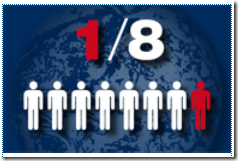
1 person in 8 is Undernourished Photo Credit – FAO


# 10,067


With tens of millions of birds in the United States destroyed (or soon to be) due to our worst HPAI outbreak in history, several recently introduced porcine diseases (see mBio: A Novel Pathogenic Mammalian Orthoreovirus In Diarrheic American Pigs) killing piglets, and a long list of other exotic or emerging epizootic diseases around the globe, concerns over the safety and viability of the world’s food supply are mounting.


Although the United States can absorb the kind of poultry loses we’ve taken these past few months, many resource limited regions have been severely tested by outbreaks of avian flu, FMD, and other food animal diseases.


Next week the CDC will sponsor a COCA Call that delves into the challenges of controlling these outbreaks, and why they seem to be occurring with more frequency.


While primarily of interest to healthcare providers, COCA (Clinician Outreach Communication Activity) calls are designed to ensure that practitioners have up-to-date information for their practices.  The audio from these calls are posted several days after they are held.  You can access COCA calls going back to 2012 at this link.


First the link to next week’s presentation, after which I’ll have a bit more:


Emerging and Exotic Diseases of Food Animals Threaten Global Food Security


Image of Continuing Education Credits abbreviation. = Free Continuing Education

Date:Thursday, May 28, 2015

Time:2:00 - 3:00 pm (Eastern Time)

Join by Phone:

  • 800-369-2062 (U.S. Callers)
  • 517-308-9046 (International Callers)

Passcode:1302224

Join by Webinar:https://www.mymeetings.com/nc/join.php?i=PW3643037&p=1302224&t=c

Presenter(s)

James A. Roth, DVM, PhD, Diplomate ACVM
Clarence Hartley Covault Distinguished Professor
Director, Center for Food Security and Public Health
Executive Director, Institute for International Cooperation in Animal Biologics
College of Veterinary Medicine
Iowa State University

Overview

New diseases of food animals are emerging at an increasing rate and are spreading regionally and globally. Many of the same factors leading to emergence of human diseases are responsible for the emergence of animal diseases, and many of the animal diseases are zoonotic. The challenges of controlling emerging food animal diseases are very different in intensive animal agriculture and small holder animal production and depend upon the veterinary and public health infrastructure available. During the COCA call, participants will learn about reasons for the increasing rate of emergence of food animal diseases, some specific examples, challenges for their control, and implications for public health and food security.

Objectives

At the conclusion of the session, the participant will be able to accomplish the following:

  • Review recent examples of emerging diseases of food animals
  • Discuss reasons for emergence and dissemination of diseases of food animals
  • Describe challenges for control of zoonotic and non-zoonotic food animal diseases
  • Suggest infrastructure changes needed to improve prevention and control of food animal diseases

Call Format

  • Audio conference call on 5/28/15: 2:00 - 3:00 PM
  • Web-on-demand training after 3:00 PM on 5/28/15
  • Materials: PowerPoint slide set


Previously we’ve explored some of the choices made by governments around the world to protect their animal food sources – not all of which have worked out as well as they might have hoped.


Two years ago in Food Insecurity, Economics, And The Control Of H7N9, we looked at some country’s decision to go with poultry vaccination instead of culling to control avian flu - despite OIE warnings that vaccination of poultry cannot be considered a long-term solution (see Does OIE recommend vaccination of animals to control the disease?).


Since then we’ve seen a number of studies suggesting that the proliferation of new avian flu viruses over the past couple of years may have arisen from the continued use of outmoded or ineffectual vaccines (see The HPAI Poultry Vaccine Dilemma).


As you might guess, this is a complex problem with answers are neither easy or clear cut.  For more on global food insecurity, you may wish to visit the FAO’s most recent report:


The State of Food Insecurity in the World 2014

The State of Food Insecurity in the World 2014 presents updated estimates of undernourishment and progress towards the Millennium Development Goal (MDG) and World Food Summit (WFS) hunger targets. A stock-taking of where we stand on reducing hunger and malnutrition shows that progress in hunger reduction at the global level and in many countries has continued but that substantial additional effort is needed in others.

Sustained political commitment at the highest level is a prerequisite for hunger eradication. It entails placing food security and nutrition at the top of the political agenda and creating an enabling environment for improving food security and nutrition. This year’s report examines the diverse experiences of seven countries, with a specific focus on the enabling environment for food security and nutrition that reflects commitment and capacities across four dimensions: policies, programmes and legal frameworks; mobilization of human and financial resources; coordination mechanisms and partnerships; and evidence-based decision-making.

Thursday, March 26, 2015

COCA Call Today: Disaster/Emergency Preparedness For Clinicians

image

Credit CDC


# 9865


A reminder that today:  March 26, 2015 at 2:00pm EST, the CDC will hold a COCA call on disaster and emergency preparedness for clinicians.


Emergency Preparedness for Clinicians - From Guidelines to the Front Line

Image of Continuing Education Credits abbreviation. = Free Continuing Education

Date:Thursday, March 26, 2015

Time:2:00 – 3:00 PM (Eastern Time)

Participate by Phone:

  • 888-323-9813 (U.S. Callers)
  • 212-547-0291 (International Callers)

Passcode:3257688

Participate by Webinar:https://www.mymeetings.com/nc/join.php?i=PW1955511&p=3257688&t=c

Presenter(s)

Michael D. Christian, MD, MSc
Chief Safety Officer
Vice Chair, Disaster Network
Niagara Health System

Niranjan (Tex) Kissoon, MD, FRCPC, FAAP, MCCM, FACPE
Vice President, Medical Affairs
BC Children’s Hospital
Professor, Pediatric and Surgery
University of British Columbia
Vancouver, BC

Lewis Rubinson, MD, PhD, FCCP
Associate Professor
University of Maryland School of Medicine
Director of the Critical Care Resuscitation Unit
R Adams Cowley Shock Trauma Center

Timothy Uyeki, MD, MPH, MPP
Chief Medical Officer
Influenza Division
National Center for Immunization and Respiratory Diseases
Clinical Team Lead, Ebola Response
Centers for Disease Control and Prevention

Overview

Natural disasters, industrial accidents, terrorism attacks, and pandemics all have the capacity to result in large numbers of critically ill or injured patients. A barrage of patients with various clinical needs can quickly exhaust the care delivery capacity of a healthcare system. It is important for clinicians to have a disaster response plan that addresses approaches to maintaining quality care during times of patient surge and resource scarcity. During this COCA Call, participants will learn about the series of suggestions that focus on the management of multiple critically ill patients during a disaster or pandemic, and the importance of collaboration among front-line clinicians, hospital administrators, professional societies, and public health or government officials.

Objectives

At the conclusion of the session, the participant will be able to accomplish the following:

  • Outline the five main levels of disaster preparedness and response from the American College of Chest Physicians’ Guidelines for Care of the Critically Ill and Injured during Pandemics and Disasters
  • Discuss the importance of pediatric emergency preparedness for both pediatric and non-pediatric providers
  • Identify key lessons learned from the recent Ebola outbreak for improving emergency preparedness in North American
  • Describe ways clinicians and public health practitioners can collaborate to respond to disasters and pandemics
Additional Resources


While primarily of interest to healthcare providers, COCA (Clinician Outreach Communication Activity) calls are designed to ensure that practitioners have up-to-date information for their practices.  The audio from these calls are posted several days after they are held.  You can access COCA calls going back to 2012 at this link.

Saturday, March 14, 2015

Upcoming COCA Call: Disaster/Emergency Preparedness For Clinicians

image

Credit CDC


# 9827


We’ve been fortunate the past few years that we’ve not seen a major natural disaster, terrorist attack, industrial accident, or epidemic outbreak seriously stress our medical delivery system. 


The United States hasn’t seen a major (CAT 3+) landfalling hurricane in almost a decade, we’ve seen reduced tornado activity for the past three years, and we thankfully haven’t seen a really serious earthquake in more than 20 years. 


But like all lucky streaks, this one will end at some point.  And so the CDC is putting together two programs this month (see yesterday’s blog CDC Grand Rounds: Childhood Emergency Preparedness – March 17th) designed to help clinicians prepare for dealing with disasters, triage issues, and patient surge scenarios.


On Thursday, March 26, 2015 at 2:00pm EST, the CDC will hold a COCA call on disaster and emergency preparedness for clinicians.


While primarily of interest to healthcare providers, COCA (Clinician Outreach Communication Activity) calls are designed to ensure that practitioners have up-to-date information for their practices.  The audio from these calls are posted several days after they are held.  You can access COCA calls going back to 2012 at this link.


Emergency Preparedness for Clinicians - From Guidelines to the Front Line

 Image of Continuing Education Credits abbreviation. = Free Continuing Education

Date:Thursday, March 26, 2015

Time:2:00 – 3:00 PM (Eastern Time)

Participate by Phone:

  • 888-323-9813 (U.S. Callers)
  • 212-547-0291 (International Callers)

Passcode:3257688

Participate by Webinar:https://www.mymeetings.com/nc/join.php?i=PW1955511&p=3257688&t=c

Presenter(s)

Michael D. Christian, MD, MSc
Chief Safety Officer
Vice Chair, Disaster Network
Niagara Health System

Niranjan (Tex) Kissoon, MD, FRCPC, FAAP, MCCM, FACPE
Vice President, Medical Affairs
BC Children’s Hospital
Professor, Pediatric and Surgery
University of British Columbia
Vancouver, BC

Lewis Rubinson, MD, PhD, FCCP
Associate Professor
University of Maryland School of Medicine
Director of the Critical Care Resuscitation Unit
R Adams Cowley Shock Trauma Center

Timothy Uyeki, MD, MPH, MPP
Chief Medical Officer
Influenza Division
National Center for Immunization and Respiratory Diseases
Clinical Team Lead, Ebola Response
Centers for Disease Control and Prevention

Overview

Natural disasters, industrial accidents, terrorism attacks, and pandemics all have the capacity to result in large numbers of critically ill or injured patients. A barrage of patients with various clinical needs can quickly exhaust the care delivery capacity of a healthcare system. It is important for clinicians to have a disaster response plan that addresses approaches to maintaining quality care during times of patient surge and resource scarcity. During this COCA Call, participants will learn about the series of suggestions that focus on the management of multiple critically ill patients during a disaster or pandemic, and the importance of collaboration among front-line clinicians, hospital administrators, professional societies, and public health or government officials.

Objectives

At the conclusion of the session, the participant will be able to accomplish the following:

  • Outline the five main levels of disaster preparedness and response from the American College of Chest Physicians’ Guidelines for Care of the Critically Ill and Injured during Pandemics and Disasters
  • Discuss the importance of pediatric emergency preparedness for both pediatric and non-pediatric providers
  • Identify key lessons learned from the recent Ebola outbreak for improving emergency preparedness in North American
  • Describe ways clinicians and public health practitioners can collaborate to respond to disasters and pandemics

Additional Resources

Sunday, December 14, 2014

COCA Call Dec 15th: EMS & Ebola – Transporting Patients

image


# 9437


Although there are some hopeful signs of progress in the fight against Ebola – at least in some regions of West Africa – the potential for having infected individuals arrive in this country will likely persist for many months to come. While we’ve seen a good deal of training information already for hospitals and emergency rooms, it is often falls to the local EMS system to make first contact with a symptomatic Ebola patient. 


Tomorrow the CDC will hold what I expect will be a well attended COCA call dedicated to EMS transporting of suspected or confirmed Ebola patients.  For those unable to listen in live – or if attendance exceeds system capacity – this presentation will be archived for later viewing.  


The PDF slide presentation for tomorrow’s call  can be downloaded in advance.   Full details can be found at the following link.


Date:Monday, December 15, 2014

Time:2:00 – 3:00 PM (Eastern Time)

How to Participate:

  • Join early. Lines open 15 minutes before the live call
  • When possible dial in as a group
  • High interest call. If lines reach capacity, listen on demand a few days after the live call

Join By Phone:

  • 888-972-6898 (U.S. Callers)
  • 630-395-0194 (International Callers)

Passcode:5076538

Join by Live Audio Web Streaming:(Listen only)


http://event.on24.com/r.htm?e=904387&s=1&k=03FDB410EBC7591029B2E4F85D2F0F3F

Access on Demand: Call materials (slides, audio, and transcript) will be posted to this webpage a few days after the live call

Presenter(s)

Drew E. Dawson
Director
Office of Emergency Medical Services
National Highway Traffic Safety Administration
US Department of Transportation
Alexander Isakov, MD, MPH
Director
Section of Prehospital and Disaster Medicine
Emory University School of Medicine
John J. Lowe, PhD
Associate Director of Research
Nebraska Biocontainment Patient Care Unit
University of Nebraska Medical Center
P.J. Schenarts, MD, FACS
Professor & Vice Chairman of Surgery
Chief of Trauma, Surgical Critical Care & Emergency Surgery
University of Nebraska College of Medicine
Medical Director, Omaha Fire EMS

Overview

Healthcare systems across the United States are actively preparing to treat patients with Ebola. Emergency Medical Services (EMS) play an important role in the identification, assessment, and transportation of suspected or confirmed patients with Ebola. As designated treatment facilities, Emory University Hospital and the University of Nebraska Medical Center have received patients with confirmed Ebola. During this COCA Call, clinicians will learn about the field experiences of EMS personnel in the two jurisdictions and discuss unique planning considerations for EMS.

Objectives

At the conclusion of the session, the participant will be able to accomplish the following:

  • Discuss the unique field experiences of EMS personnel in two jurisdictions who transported patients with Ebola.
  • Describe training, equipment, policy, and procedural considerations related to Ebola for EMS personnel.
  • Identify partners to include in planning for the transport of patients suspected or confirmed to have Ebola.

Call Materials

Additional Resources

Call Format

  • Audio conference call on 12/15/14: 2:00 - 3:00 PM
  • Web-on-demand training after 3:00 PM on 12/15/14
  • Materials: PowerPoint slide set

(Continue . . .)


While primarily of interest to clinicians and healthcare providers, COCA (Clinician Outreach Communication Activity) calls are designed to ensure that practitioners have up-to-date information for their practices.  For those who may have missed them, some earlier Ebola-related COCA calls (now archived and available online) include:

COCA Call : Caring For Ebola Patients – A Nursing Perspective
COCA Call: Approaches to Clinical Management for Patients with Ebola
Hospital Ebola Preparedness COCA Call Now Online
CDC COCA Call: Ebola Preparations For Hospitals - Transcript & Audio

Sunday, November 23, 2014

COCA Call Monday: Caring For Ebola Patients – A Nursing Perspective

image


# 9363


While the United States is currently `Ebola-free’, that is a status that is unlikely to persist in the long run.  Additional Ebola cases will undoubtedly be evacuated to US facilities, and as we’ve already seen twice, infected individuals can also arrive in this country unaware that they have been infected.


While the US response wasn’t always perfect, it is nonetheless reassuring that neither unplanned introduction of the virus led to infections in the general public, and that our public health system was able to track, monitor, and manage hundreds of potential contacts.


As specialist treatment units like Emory University and the University of Nebraska Medical Center gain more experience, they continue to share it with others (see earlier CDC COCA Call : What U.S. Hospitals Can Learn From Emory & UNMC On Ebola).  Tomorrow afternoon, the CDC will present a new COCA Call presenting clinical management experiences of nurses who have worked with Ebola patients both at UNMC and Emory University.


Primarily of interest to clinicians and healthcare providers, COCA (Clinician Outreach Communication Activity) calls are designed to ensure that practitioners have up-to-date information for their practices.


Caring for Patients with Ebola in U.S. Hospitals: A Nursing Perspective


Image of Continuing Education Credits abbreviation. = No Continuing Education

Date: Monday, November 24, 2014

Time:2:00 – 3:00 PM (Eastern Time)

Participate by Phone:

  • 888-972-6898 (U.S. Callers)
  • 630-395-0194 (International Callers)

Passcode:5076538

Join by Live Audio Web Streaming: (Listen only)


http://event.on24.com/r.htm?e=897795&s=1&k=6DF1465EA1BB9109F0973F486C334C3C

Moderator

Mary Wakefield, PhD, RN
Administrator
Health Resources and Services Administration
U.S. Department of Health and Human Services

Presenter(s)

Clinical Team Member
Ebola Response
Centers for Disease Control and Prevention

Nurse Leaders
Emory Healthcare
Atlanta, Georgia

Nurse Leaders
University of Nebraska Medical Center
Omaha, Nebraska

Overview

Health care organizations across the country are preparing to respond to the possibility of Ebola cases in their communities. Several U.S. hospitals have treated patients with the disease and can provide important information to other health care workers related to personal protective equipment, staffing models, and critical care nursing. During this COCA Call, clinicians will learn about the clinical management experiences of nurses who cared for patients with Ebola at Emory Healthcare and Nebraska Medical Center.

Call Materials

Thursday, October 09, 2014

COCA Call Transcript & Audio On Neurological Illness In Children Now Online

image


#9172


The transcripts & audio from last week’s very important COCA Call on recent cases of  Neurologic Illness with Limb Weakness in Children that has appeared coincident to the recent EV-D68 outbreaks around the nation are now available online. 


If you are a clinician – and you haven’t heard this hour-long presentation – now is your opportunity.


I blogged the latest information from the CDC this morning on these cases in CDC Update On Investigation Into Acute Neurological Illness Of Unknown Etiology In Kids.


Neurologic Illness with Limb Weakness in Children 

Presenter(s)

Daniel Feikin, MD
Chief
Epidemiology Branch
Division of Viral Diseases
National Center for Immunization and Respiratory Diseases - CDC

Steve Oberste, PhD
Chief
Polio and Picornavirus Laboratory Branch
Division of Viral Diseases
National Center for Immunization and Respiratory Diseases – CDC

Overview

CDC is working closely with partners in Colorado and other state and local health departments to investigate an acute neurologic illness of unknown etiology occurring in children. Characterized by focal limb weakness and abnormalities of the spinal cord gray matter on MRI, a cluster of these illnesses was first reported from Colorado in September, 2014. These neurological findings are coincident with an increase of respiratory illnesses among children. During this COCA Call, clinicians will learn about the latest situation, surveillance, and CDC clinical guidance for testing, patient evaluation and case reporting.

Call Materials

Thursday, October 02, 2014

COCA Call Friday: Neurologic Illness with Limb Weakness in Children

image

Credit CDC – Non Polio-Enteroviruses


# 9141


Although a causal link has not been established, the recent outbreak of EV-D68 which has rapidly spread across the nation has been tentatively associated with a number of children presenting with varying degrees of neurological illness, including limb weakness or paralysis.


Last Friday we saw a CDC HAN: Acute Neurologic Illness with Focal Limb Weakness of Unknown Etiology in Children issued, and tomorrow the CDC will hold a COCA (Clinician Outreach Communication Activity) call to ensure that practitioners have up-to-date information for their practices.


Neurologic Illness with Limb Weakness in Children

 Image of Continuing Education Credits abbreviation. = No Continuing Education

Date: Friday, October 3, 2014

Time:2:00 – 3:00 PM (Eastern Time)

Participate by Phone:

  • 888-831-8979 (U.S. Callers)
  • 415-228-4881 (International Callers)

Passcode:2142380

Presenter(s)

Daniel Feikin, MD
Chief
Epidemiology Branch
Division of Viral Diseases
National Center for Immunization and Respiratory Diseases - CDC

Steve Oberste, PhD
Chief
Polio and Picornavirus Laboratory Branch
Division of Viral Diseases
National Center for Immunization and Respiratory Diseases – CDC

Overview

CDC is working closely with partners in Colorado and other state and local health departments to investigate an acute neurologic illness of unknown etiology occurring in children. Characterized by focal limb weakness and abnormalities of the spinal cord gray matter on MRI, a cluster of these illnesses was first reported from Colorado in September, 2014. These neurological findings are coincident with an increase of respiratory illnesses among children. During this COCA Call, clinicians will learn about the latest situation, surveillance, and CDC clinical guidance for testing, patient evaluation and case reporting.

Monday, September 15, 2014

CDC: EV-D68 COCA Call Tomorrow

image


# 9077


The EV-D68 virus has only been confirmed in six states, but another 15 states are reporting clusters of respiratory illness they suspect may be due to this rarely seen enterovirus, and are awaiting test results (see CDC EV-D68 Update & FAQ). EV-D68 is not a `reportable’ illness, and so it is likely the virus is more widespread than official reports thus far indicate.


While most who contract this respiratory infection will experience nothing worse than a bad `cold’, some serious illnesses have been reported – particularly among children with asthma.


Late Friday night the CDC issued a HAN (Health Alert Network) Advisory on the outbreak (see CDC HAN Advisory On EV-D68) and tomorrow afternoon the CDC will hold a COCA Call as well. Although primarily of interest to clinicians, the CDC holds frequent COCA (Clinician Outreach Communication Activity) calls which are designed to ensure that practitioners have up-to-date information for their practices.


Enterovirus D68 in the United States: Epidemiology, Diagnosis & Treatment


Date:Tuesday, September 16, 2014

Time:2:00 – 3:00 PM (Eastern Time)

Participate by phone

Audio Bridge Line:

  • 888-995-9727 (U.S. Callers)
  • 210-234-0034 (International Callers)

Passcode:7753493


Presenter(s)

Susan Gerber, MD
Medical Epidemiologist
Division of Viral Diseases
National Center for Immunization and Respiratory Diseases - CDC

Mary Anne Jackson, MD, FAAP
Division Director, Infectious Disease
Children’s Mercy Hospital & Clinics
Professor of Pediatrics
University of Missouri-Kansas City School of Medicine

Daniel Johnson, MD, FAAP
Associate Professor of Pediatrics
University of Chicago Medicine
Comer Children’s Hospital

Overview

Hospitals across the U.S., especially in Missouri and Illinois, are seeing more children with severe respiratory illness caused by enterovirus D68 (EV-D68). Several states are also investigating similar clusters of severe respiratory illness. There are no vaccines for preventing EV-D68 infections. Clinicians should consider EV-D68 as a potential cause of clusters of severe respiratory illness, particularly in children. During this COCA call, clinicians will learn about the current EV-D68 situation in the U.S., laboratory testing, reporting suspected clusters, and approaches to prevention and treatment.

Objectives

At the conclusion of the session, the participant will be able to accomplish the following:

  • Discuss the current EV-D68 situation in the United States, including clusters in Missouri and Illinois
  • Describe the procedures for laboratory testing and reporting clusters of suspected cases
  • Explain prevention and treatment strategies to address EV-D68

Thursday, August 07, 2014

CDC COCA Call: Ebola Preparations For Hospitals - Transcript & Audio

image

Credit CDC


# 8927


On Tuesday the CDC held a very well attended COCA Call for hospitals on how to prepare for dealing with Ebola cases. I know a lot of people who were interested, were not able to listen in live.  Today the CDC has posted the transcript, and audio file, which can be accessed at the link below.


What U.S. Hospitals Need to Know to Prepare for Ebola Virus Disease

Date:Tuesday, August 5, 2014

Time:2:00 – 3:00 PM (Eastern Time)

Presenter(s)

Barbara Knust, DVM, MPH
Epidemiologist
Division of High Consequence Pathogens and Pathology
National Center for Emerging and Zoonotic Infectious Diseases ─ CDC

David Kuhar, MD
Medical Officer
Division of Healthcare Quality Promotion
National Center for Emerging and Zoonotic Infectious Diseases ─ CDC

Overview

The recent Ebola virus disease (or Ebola hemorrhagic fever) outbreak in West Africa has increased the possibility of patients traveling from the impacted countries to U.S. hospitals. Additionally, two American citizens with Ebola virus disease are being medically evacuated to the United States to receive care in a U.S. hospital. During this COCA Call, clinicians will receive updates on the status of the outbreak in West Africa and guidance on what steps U.S. healthcare facilities can take to prepare for the possibility of caring for a patient with Ebola virus disease.

Call Materials

Monday, August 04, 2014

CDC COCA Call On Ebola Tomorrow: What Hospitals Need To Know

image

Credit Wikipedia


# 8914


Tomorrow the CDC will hold a COCA call for clinicians and hospital staff  on the Ebola virus.  Although primarily of interest to clinicians, the CDC holds frequent COCA (Clinician Outreach Communication Activity) calls which are designed to ensure that practitioners have up-to-date information for their practices.


What U.S. Hospitals Need to Know to Prepare for Ebola Virus Disease


Date:Tuesday, August 5, 2014

Time:2:00 – 3:00 PM (Eastern Time)

Audio Only:There are no presentation slides and registration is not required.

  • 888-809-8972 (U.S. Callers)
  • 517-319-9299 (International Callers)

Passcode:1075122

Presenter(s)

Barbara Knust, DVM, MPH
Epidemiologist
Division of High Consequence Pathogens and Pathology
National Center for Emerging and Zoonotic Infectious Diseases ─ CDC

David Kuhar, MD
Medical Officer
Division of Healthcare Quality Promotion
National Center for Emerging and Zoonotic Infectious Diseases ─ CDC

Overview

The recent Ebola virus disease (or Ebola hemorrhagic fever) outbreak in West Africa has increased the possibility of patients traveling from the impacted countries to U.S. hospitals. Additionally, two American citizens with Ebola virus disease are being medically evacuated to the United States to receive care in a U.S. hospital. During this COCA Call, clinicians will receive updates on the status of the outbreak in West Africa and guidance on what steps U.S. healthcare facilities can take to prepare for the possibility of caring for a patient with Ebola virus disease.

Sunday, July 13, 2014

Family Pets, Zoonoses & An Upcoming COCA Call

image

The undisputed ruler of my house


# 8829


An oft-repeated factoid in this blog is that 70% of the infectious diseases plaguing humans began in other species, and then adapted to people. Most of these diseases only began to appear in humans after we – as a species – began to domesticate animals roughly 10,000 years ago (see The Third Epidemiological Transition).


That process continues to this day, with new zoonotic diseases emerging practically every year.  The list over just the past few years includes MERS-CoV, H7N9, H10N8, H6N1, Swine Variant Viruses, SFTS, and the Heartland Virus


All of which illustrates the importance of the `One Health Concept’, where human, animal, and environmental health are all viewed as being interconnected (see the One Health Initiative website). And while we watch these exotic emerging diseases coming from the wild (or agriculture) with concern, in truth, your next zoonotic disease exposure may just as easily come via your family pet.


This week, the media has been filled with reports of an exceedingly rare case of  Pneumonic plague found in a Colorado resident and pet dog, and while the chain of transmission in this case isn’t entirely clear, we’ve seen other cases where pets have picked up infected fleas and brought plague home with them.

image

Credit CDC Plague fact sheet


Earlier this year, in Transmission Of Bovine TB From Felines To Humans – UK, we looked at a report on two rare human infections with M. bovis – both associated with an outbreak in cats – which likely became infected via contact (directly or indirectly) with badger setts (dens).


Although you are more likely to be infected from undercooked meat or unwashed fruits and vegetables than from your family pet, in Toxoplasmosis: Some Intriguing Para-Cites, we looked at the risks of zoonotic transmission from this fascinating parasite back in 2012.


And it will probably surprise a lot of my readers that every year about 200 people are infected with flea-borne typhus in the United States (mostly in California, Hawaii, or Texas), often brought home by a family pet.  This from the California Department of Public Health:

What animals can carry the typhus bacteria?

In the United States, rats, opossums, and other small mammals can carry the typhus bacteria. Rat fleas (Xenopsylla cheopis) and cat fleas (Ctenocephalides felis) are most commonly associated with disease transmission. Fleas may become infected when they feed on these animals and then can transmit the bacteria to humans, pet dogs, and cats.


And perhaps most infamously, a little over a decade ago – the United States experienced an unprecedented outbreak of Monkeypox  - when an animal distributor imported hundreds of small animals from Ghana, which in turn infected prairie dogs that were subsequently sold to the public (see 2003 MMWR Multistate Outbreak of Monkeypox --- Illinois, Indiana, and Wisconsin, 2003).


Although plague, typhus, TB, Monkeypox, and rabies infections are all possible (albeit rare) zoonotic infections, far more likely are the risks of contracting enteric (intestinal) infections from pathogens carried by animals - including household pets - such as Salmonella, E.coli, and Cryptosporidium. 


  • In June of 2012, in That Duck May Look Clean, But . . . , I wrote about a CDC investigation into an outbreak of Salmonella Montevideo involving 66 persons across 20 states linked to the handling of live poultry (baby chicks or ducklings or both) sold via mail-order hatcheries and  agricultural feed stores.
  • Similar warnings have gone out in the past regarding Human Salmonella Infections Linked to Small Turtles.  Like poultry, reptiles and amphibians can sometimes carry and spread the salmonella bacteria, which makes good hand hygiene particularly important after handling them.


All of which serves as a lead up to a CDC COCA Call, scheduled for next Thursday (July 17th), called:


Love the Pets, Not the Germs: CDC Update on Enteric Zoonoses 

Image of Continuing Education Credits abbreviation. = Free Continuing Education

Date:Thursday, July 17, 2014         Time: 2:00 – 3:00 PM (Eastern Time)

Participate by phone

Audio Bridge Line: 888-913-9971

Participant Code: 7400152

International number:212-547-0138

Participate by webinar

https://www.mymeetings.com/nc/join.php?i=PW7286673&p=7400152&t=c

Presenter(s)

Kara Jacobs Slifka, MD, MPH
Epidemic Intelligence Service Officer
Division of Foodborne, Waterborne, and Environmental Diseases
National Center for Emerging & Zoonotic Infectious Diseases
Centers for Disease Control and Prevention

Colin Basler, DVM, MPH
Epidemic Intelligence Service Officer
Division of Foodborne, Waterborne, and Environmental Diseases
National Center for Emerging & Zoonotic Infectious Diseases
Centers for Disease Control and Prevention

Overview

Enteric illnesses are common, costly, preventable, and increasingly attributable to animal contact. Animals provide many benefits to people; however, even clean and healthy animals may be responsible for spreading germs such as Salmonella, E.coli O157:H7, and Cryptosporidium, some of the frequent causes of diarrheal illness in children and adults. During this COCA call, clinicians will learn about enteric zoonoses, and the ‘One Health’ approach to helping patients prevent illness and maintain optimal health.


For more on family pets and zoonotic diseases you may wish to revisit:


Disease Transmission At The Human-Animal Interface

How Parrot Fever Changed Public Health In America

Saturday, June 21, 2014

The Tick Borne Identity

image

Tickborne Diseases of The United States – CDC


# 8768


While mosquito-borne diseases are getting a publicity boost due to the recent arrival of Chikungunya to the Americas (see Florida Surveillance: Imported Chikungunya, Dengue, Malaria)ticks  - and the myriad of diseases they can carry, are back in the news again as well.


Last night CIDRAP NEWS carried a summary of a recent PLoS One study (Co-Infection of Blacklegged Ticks with Babesia microti and Borrelia burgdorferi Is Higher than Expected and Acquired from Small Mammal Hosts) that found that nearly 7% of deer ticks  sampled in upstate New York carried both Lyme bacteria (B burgdorferi) and a malaria-like parasite called Babesia microti.

And earlier this year, a researcher at  the University of North Florida – Dr. Kerry Clarkpublished a paper showing that two strains of Borrelia are present in the ticks in the Southeastern states (Florida & Georgia) – areas not commonly thought of as being `Lyme territory’ - and are capable of causing human illness.


Press Release for Tuesday, May 13, 2014

UNF Professor Confirms Lyme Disease in Humans from Southern States

Media Contact: Joanna Norris, Director
Department of Public Relations
(904) 620-2102

Dr. Kerry Clark, associate professor of public health at the University of North Florida, and his colleagues have found additional cases of Lyme disease in patients from several states in the southeastern U.S. These cases include two additional Lyme disease Borrelia species recently identified in patients in Florida and Georgia.


Overall, 42 percent of 215 patients from southern states tested positive for some Lyme Borrelia species. More than 90 cases of Lyme infection were confirmed among patients from Florida, Georgia, North Carolina, Texas and Virginia. Of these southern cases, 69 percent were found to have infection with B. burgdorferi, 22 percent with B. americana and 3 percent with B. andersonii.


“For years, medical practitioners and the public have been told that Lyme disease is rare to nonexistent in the southern United States. Our earlier research demonstrated that Lyme disease bacteria were present in animals and ticks in our region,” said Clark. “The more recent evidence shows that the disease is also present in human patients in the South, and suggests that it’s common among patients presenting with signs and symptoms consistent with the clinical presentation of Lyme disease recognized in the northeastern part of the country.”

(Continue . . . )


Of particular note, the authors indicate that patients infected with these two strains of Borrelia may not be reliably detected using standard Lyme tests.


Something, that if validated, might help explain the large number of people who have complained of Lyme-like illness, but have tested negative for the disease.


In 2012, The Heartland Virus – a New Phlebovirus Discovered In Missourimade headlines when it was detected in two Missouri farmers with no epidemiological links and living 60 miles apart. Last March (see MMWR: Heartland Virus Disease — United States, 2012–2013) we saw an update from the CDC indicating that 6 more cases had been identified (5 in Missouri, 1 in Tennessee). 


And  at the end of last month, we saw Oklahoma DOH Reports 1st Heartland Virus Fatality. Like many vector-transmitted diseases, the Heartland Virus is likely under-reported.


Last year, the CDC revised their Estimate Of Yearly Lyme Disease Diagnoses In The United States, indicating that the number of Lyme Disease diagnoses in the country is probably closer to 300,000 than the 30,000 that are officially reported each year to the CDC. 


The CDC lists a growing number of diseases carried by ticks in the United States, including: Anaplasmosis, Babesiosis , Ehrlichiosis, Lyme disease, Rickettsia parkeri Rickettsiosis, Rocky Mountain Spotted Fever (RMSF), STARI (Southern Tick-Associated Rash Illness), Tickborne relapsing fever (TBRF), Tularemia, and 364D Rickettsiosis.


And not only are the number of known tickborne diseases increasing, so are the number of ticks.  This all-too-common report comes from WPRI.com, in Rhode Island.


Despite harsh winter, tick count expected to grow

By Sara Lapointe with Angie Angers Published: June 20, 2014, 2:49 pm

KINGSTON, R.I. (WPRI) — Summer is here and tick season is fast approaching.

The University of Rhode Island’s tick expert and Director of the URI Center for Vector-Borne Disease, Tom Mather, says that even though you may have trouble noticing the tiny deer ticks in the woods, there are “really a lot of them out there right now.” The nymphal deer tick counts are 85 percent higher than average over the past 5 years.

(Continue . . . )


The reasons behind an increase in ticks in recent decades are complex, and not completely understood, but some of the factors commonly cited are:


  • Warmer winters;
  • Encroachment of humans into rural and suburban areas;
  • A decrease in the use of insecticides.


In 2011, in NRDC Report: Climate Change and Health Threats, we looked at a study that suggested that climate change could exacerbate a number of vector-borne illnesses.


Last April, in anticipation of this summer’s tick season, the CDC held a COCA Call on Tickborne diseases, with an emphasis on Lyme Disease and Rocky Mountain Spotted Fever. Although primarily of interest to clinicians, this presentation would be of interest to many in the public health arena. 

This webinar is archived on the CDC site.


Tickborne Diseases: A Springtime Review of Diagnosis, Treatment and Prevention

Date:Thursday, April 10, 2014

Presenter(s)

Christina Nelson, MD, MPH
Medical Epidemiologist
Bacterial Diseases Branch
National Center for Emerging and Zoonotic Infectious Diseases
Centers for Disease Control and Prevention

Naomi Drexler, MPH
Epidemiologist
Rickettsial Zoonoses Branch
National Center for Emerging and Zoonotic Infectious Diseases
Centers for Disease Control and Prevention

Overview

From May through July, people get tick bites and tickborne diseases more often than any other time of year in the United States. In 2012, over 4,000 cases of Rocky Mountain spotted fever and 30,000 cases of Lyme disease were reported to CDC. Tickborne diseases can cause symptoms that range from mild to life-threatening. Early recognition and treatment of tickborne diseases decreases the risk of serious complications. During this COCA call, CDC subject matter experts will describe the signs and symptoms, treatment, management, and prevention of tickborne diseases in the U.S., with an emphasis on Lyme disease and Rocky Mountain spotted fever.

(Continue . . . )


Given the smorgasbord of  of diseases carried by ticks it makes sense to avoid their bites whenever possibleThis advice from the Minnesota Department of Health.

image


And for some more Tick-borne disease related blogs, you may wish to revisit:


PHAC: Lyme Disease Risk Increasing In Canada

EID Journal: Novel Bunyavirus In Livestock – Minnesota

Korean CDC On SFTS Cases

Referral: Maryn McKenna On Babesia And The Blood Supply

NEJM: Emergence Of A New Bacterial Cause Of Ehrlichiosis

tick . . . tick . . . tick . . .

Minnesota: Powassan Virus Fatality

Thursday, June 19, 2014

Reminder: COCA Call Today On Naegleria Fowleri & Cryptosporidium

image

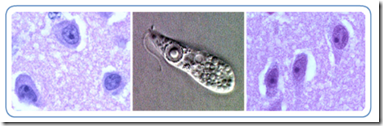
L & R: Trophozoites of N. fowleri in brain tissue, stained with H&E. Center: Ameboflagellate trophozoite of N. fowleri. Credit: DPDx


#8760


A reminder that later today (June 19th) at 2pm EDT, the CDC will conduct an online COCA call on two important waterborne pathogens;  Naegleria Fowleri – which, while rare, can cause an almost always fatal brain infection - and Cryptosporidium.


This call is particularly important for clinicians, as last year, for the first time – two children who received an investigational drug called miltefosine  - survived. (see MMWR: CDC Imports Investigational Drug For Amoebic Infections).


But to be effective, this infection must be recognized early, and treatment initiated as soon a possible.  Hence the need to get the world out to clinicians on this important development.


Healthy Swimming: Prevent and Treat Infections Caused by Brain-Eating Amebas and Chlorine-Tolerant Parasites

Image of Continuing Education Credits abbreviation. = Free Continuing Education

Date:Thursday, June 19, 2014

Time:2:00 – 3:00 PM (Eastern Time)

Dial:888-233-9077 (U.S. Callers)
             773-799-3915 (International Callers)

Passcode:4972213

Webinar:https://www.mymeetings.com/nc/join.php?i=PW2017964&p=4972213&t=c

Presenter(s)

Jennifer Cope, MD, MPH
Medical Epidemiologist
Waterborne Disease Prevention Branch
National Center for Emerging and Zoonotic Infectious Diseases ─ CDC

Michele Hlavsa, RN, MPH
Epidemiologist
Waterborne Disease Prevention Branch
National Center for Emerging and Zoonotic Infectious Diseases ─ CDC

Overview

Swimming and other water-related activities are popular during the summer. However, Naegleria fowleri, known as the brain-eating ameba, may be present in warm freshwater and can result in primary amebic meningoencephalitis (PAM) – a rare disease that is almost always fatal. Additionally, the chlorine-tolerant parasite Cryptosporidium, is one of the most frequent causes of waterborne disease among humans in the United States. During this COCA call, clinicians will learn about PAM and diarrhea resulting from Cryptosporidium, how to prevent these diseases, and what to do if you suspect your patient has one of them.

(Continue . . . )


For some of my earlier blogs on Naegleria Fowleri, you may wish to check out:


Naegleria Fowleri: Rare, Deadly & Avoidable

Louisiana: St. Bernard Parish Water Supply Tests Positive For Naegleria Fowleri

Florida Reports Naegleria fowleri Infection


And for more on Cryptosporidium, you may wish to revisit these blogs:

Eurosurveillance: More Tales From The Crypto

More Tales From The Crypto

UK: Return To The Crypto

Friday, June 13, 2014

Upcoming COCA Call: Naegleria Fowleri & Cryptosporidium Prevention And Treatment

image

L & R: Trophozoites of N. fowleri in brain tissue, stained with H&E. Center: Ameboflagellate trophozoite of N. fowleri. Credit: DPDx


# 8738


Two serious summer-time related infections are often linked to recreational swimming; Cryptosporidium and PAM (Primary Amoebic Meningoencephalitis) associated with Naegleria fowleri infection.  Of the two, Cryptosporidium is by far the most common, but PAM (until recently) has been considered almost invariably fatal.


Nearly every summer we follow sporadic cases of both (see Naegleria Fowleri: Rare, Deadly & Avoidable & Tales From The Crypto), but this year, there is important news regarding the treatment of PAM.


Last year, for the first time in 3 decades, we saw survivors of PAM in the United States – two children – who had received an investigational drug called miltefosine. Last year the CDC announced:

Clinicians: CDC now has an investigational drug called miltefosine available for treatment of free-living ameba (FLA) infections caused by Naegleria fowleri, Balamuthia mandrillaris, and Acanthamoeba species. If you have a patient with suspected FLA infection, please contact the CDC Emergency Operations Center at 770-488-7100 to consult with a CDC expert regarding the use of this drug.


But to be effective, this infection must be recognized early, and treatment initiated as soon a possible.  Hence the need to get the world out to clinicians on this important development.


Next week the CDC will hold a COCA (Clinician Outreach Communication Activity) call for clinicians on both Cryptosporidium and Naegleria.  While primarily of interest to clinicians, others in health-related fields may find these web events of interest as well.  Details follow:


Healthy Swimming: Prevent and Treat Infections Caused by Brain-Eating Amebas and Chlorine-Tolerant Parasites

Image of Continuing Education Credits abbreviation. = Free Continuing Education

Date:Thursday, June 19, 2014

Time:2:00 – 3:00 PM (Eastern Time)

Dial:888-233-9077 (U.S. Callers)
             773-799-3915 (International Callers)

Passcode:4972213

Webinar:https://www.mymeetings.com/nc/join.php?i=PW2017964&p=4972213&t=c

Presenter(s)

Jennifer Cope, MD, MPH
Medical Epidemiologist
Waterborne Disease Prevention Branch
National Center for Emerging and Zoonotic Infectious Diseases ─ CDC

Michele Hlavsa, RN, MPH
Epidemiologist
Waterborne Disease Prevention Branch
National Center for Emerging and Zoonotic Infectious Diseases ─ CDC

Overview

Swimming and other water-related activities are popular during the summer. However, Naegleria fowleri, known as the brain-eating ameba, may be present in warm freshwater and can result in primary amebic meningoencephalitis (PAM) – a rare disease that is almost always fatal. Additionally, the chlorine-tolerant parasite Cryptosporidium, is one of the most frequent causes of waterborne disease among humans in the United States. During this COCA call, clinicians will learn about PAM and diarrhea resulting from Cryptosporidium, how to prevent these diseases, and what to do if you suspect your patient has one of them.

Objectives

At the conclusion of the session, the participant will be able to accomplish the following:

  • Describe the epidemiology, clinical features, diagnostic testing, and treatments available
  • Discuss the steps that can be taken to prevent PAM and cryptosporidiosis
  • State the protocol for contacting CDC to obtain clinical consultation, diagnostic testing, and the investigative drug miltefosine for treatment of PAM caused by Naegleria fowleri

Additional Resources


And for more on Cryptosporidium, you may wish to revisit these blogs:


Eurosurveillance: More Tales From The Crypto
More Tales From The Crypto
UK: Return To The Crypto