Showing posts with label Florida. Show all posts

Thursday, July 17, 2014

CDC Statement On 1st Locally Acquired Chikungunya In United States

image


# 8845


Building on the earlier report from Florida’s Department of Health (See Florida DOH Announces 1st Locally Acquired Chikungunya Cases In U.S.) we have the following statement from the CDC regarding the potential for additional spread of this mosquito borne virus which only arrived in the Americas 7 months ago.


After the CDC report, I’ll be back with a bit more.


First Chikungunya case acquired in the United States reported in Florida

Photo: mosquito.

Seven months after the mosquito-borne virus chikungunya was recognized in the Western Hemisphere, the first locally acquired case of the disease has surfaced in the continental United States. The case was reported today in Florida in a male who had not recently traveled outside the United States. The Centers for Disease Control and Prevention is working closely with the Florida Department of Health to investigate how the patient contracted the virus; CDC will also monitor for additional locally acquired U.S. cases in the coming weeks and months.

Since 2006, the United States has averaged 28 imported cases of chikungunya (chik-un-GUHN-ya) per year in travelers returning from countries where the virus is common. To date this year, 243 travel-associated cases have been reported in 31 states and two territories. However, the newly reported case represents the first time that mosquitoes in the continental United States are thought to have spread the virus to a non-traveler. This year, Puerto Rico and the U.S. Virgin Islands reported 121 and two cases of locally acquired chikungunya respectively.

“The arrival of chikungunya virus, first in the tropical Americas and now in the United States, underscores the risks posed by this and other exotic pathogens,” said Roger Nasci, Ph.D., chief of CDC’s Arboviral Diseases Branch. “This emphasizes the importance of CDC’s health security initiatives designed to maintain effective surveillance networks, diagnostic laboratories and mosquito control programs both in the United States and around the world.”

Chikungunya virus is transmitted to people by two species of mosquitoes, Aedes aegypti and Aedes albopictus. Both species are found in the southeastern United States and limited parts of the southwest; Aedes albopictus is also found further north up the East Coast, through the Mid-Atlantic States and is also found in the lower Midwest.

CDC and the Florida Department of Health are assessing whether there are additional locally acquired cases and are providing consultation to the public on ways to prevent further spread of the virus by controlling mosquitoes and educating people about personal and household protection measures to avoid mosquito bites. CDC has asked state health departments to report cases of chikungunya to help track the virus in the United States. Local transmission occurs when a mosquito bites someone who is infected with the virus and then bites another person.

It is not known what course chikungunya will take now in the United States. CDC officials believe chikungunya will behave like dengue virus in the United States, where imported cases have resulted in sporadic local transmission but have not caused widespread outbreaks. None of the more than 200 imported chikungunya cases between 2006 and 2013 have triggered a local outbreak. However, more chikungunya-infected travelers coming into the United States increases the likelihood that local chikungunya transmission will occur.

Outbreaks of chikungunya have been previously reported from countries in Africa, Asia, Europe, India, and the Middle East, and on the French side of the Caribbean island of St. Martin. The virus spread quickly in St. Martin through the Caribbean in December 2013 and into South and Central America. Local transmission has been reported in 23 countries in the hemisphere prior to the U.S. case. 

People infected with chikungunya virus typically develop fever and joint pain. Other symptoms can include muscle aches, headaches, joint swelling or rash. Travelers returning from areas with chikungunya activity and those living in areas where the virus has been reported in the United States should seek medical care if they experience chikungunya symptoms. Health care providers in areas with reported cases should be on the alert for possible cases. People infected with chikungunya should protect themselves by wearing insect repellents, using air conditioning or window and door screens to keep mosquitoes out, wearing long pants and long-sleeved shirts when possible, and emptying standing water outside your home. Protecting yourself and others  from mosquito bites during the first few days of illness can help prevent other mosquitoes from becoming infected and reduce the risk of further spread.

Infection with chikungunya virus is rarely fatal, but the joint pain can often be severe and debilitating. This virus is not spread person to person. There is no vaccine and no specific treatment for infection, but research is underway in both areas. Patients recover in about a week, although long-term joint pain occurs in some people. According to CDC, infection is thought to provide lifelong immunity.

For more information, visit www.cdc.gov/chikungunya. For more information about preventing mosquito bites, visit www.cdc.gov/chikungunya/prevention/index.html.


Up until about a decade ago, Chikungunya was a rarely seen mosquito-borne virus pretty much limited to central and eastern Africa.  All of that changed in 2005 when it jumped to Reunion Island in the Indian Ocean, where it reportedly infected about 1/3rd of that island’s population (266,000 case out of  pop.770,000) in a matter of a few months.


From there, apparently aided and abetted by a recent mutation that allowed it to be carried by the Aedes Albopictus `Asian tiger’ mosquito (see A Single Mutation in Chikungunya Virus Affects Vector Specificity and Epidemic Potential), it quickly cut a swath across the Indian ocean and into the Pacific.


All of that changed about 7 months ago, when one (or more) infected travelers apparently arrived on the French Part of St. Martins, introducing the virus into the local mosquito population.  On December 10th there were 2 confirmed, 4 probable and 20 suspected cases of chikungunya on the island.


Since then, literally hundreds of thousands of infections have been reported across the Caribbean and even into Central and South America. 


The arrival of Chikungunya to the Americas has been anticipated for some time, and the CDC & PAHO produced a 161 page guide on preparing for its arrival 3 years ago (see Preparedness and Response for Chikungunya Virus Introduction in the Americas).


Last May, in Florida Prepares For Chikungunya we looked at local preparations for its arrival.  Given its climate, its position as the gateway to the Caribbean, and that it receives millions of tourists every year -  Florida was considered a likely first US battleground against any CHKV invasion. 


The good news is that mosquito borne illnesses like Chikungunya, West Nile Fever, and Dengue  are largely preventable.


While the overall risk of contracting a mosquito-borne illness anywhere in the United States remains very small, with no vaccines available, and scattered cases of Dengue, West Nile Virus, EEE, SLEV, and now the arrival of Chikungunya - Florida’s Health departments urge people to always follow the `5 D’s’:

image

Florida DOH Announces 1st Locally Acquired Chikungunya Cases In U.S.

image

One of two highly competent vectors in the Americas


# 8844


Although it has been expected for several months, it is now official.  Chikungunya has been locally acquired in the United States, with Florida’s Department of Health reporting two recent cases in South Florida.


FOR IMMEDIATE RELEASE Contact: DOH Communications

July 17, 2014 (850) 245-4111

FLORIDA DEPARTMENT OF HEALTH CONFIRMS FIRST LOCALLY ACQUIRED CASES OF CHIKUNGUNYA FEVER


~ Drain standing water to stop mosquitoes from multiplying ~
~ Cover skin with clothing or repellent ~
~ Cover doors and windows with screens to keep mosquitoes out ~

TALLAHASSEE – The Florida Department of Health today confirmed the first cases of locally acquired chikungunya (\chik-en-gun-ye) fever, one in Miami Dade County and the other in Palm Beach County. Chikungunya is a disease spread by bites from infected Aedes aegypti or Aedes albopictus mosquitoes. If a person is infected and bitten by a mosquito, that mosquito may later spread the infection by biting another person. Chikungunya is not contagious from person to person, is typically not life threatening and will likely resolve on its own.


“The Department has been conducting statewide monitoring for signs of any locally acquired cases of chikungunya.” said Dr. Anna Likos, State Epidemiologist and Disease Control and Health Protection Director. “We encourage everyone to take precautions against mosquitoes to prevent chikungunya and other mosquito-borne diseases by draining standing water, covering your skin with clothing and repellent and covering doors and windows with screens.”


Aedes mosquitoes are day biters which can lay eggs in very small water containers. Early detection of the symptoms and preventing mosquitoes from multiplying and biting will help prevent the disease. Symptoms of chikungunya include sudden onset of high fever (>102⁰F), severe joint pain mainly in the arms and legs, headache, muscle pain, back pain and rash. Symptoms appear on average three to seven days after being bitten by an infected mosquito. Most patients feel better after a few days or weeks, however, some people may develop long-term effects. Complications are more common in infants younger than a year old; those older than 65; and people with chronic conditions such as diabetes and hypertension.


If you experience symptoms of chikungunya fever, consult with your health care provider immediately and protect yourself against further mosquito bites. A person infected with chikungunya should stay indoors as much as possible until symptoms subside to prevent further transmission. Avoiding mosquito bites while you are sick will help to protect others from getting infected. Use mosquito netting to protect children younger than two months.


Chikungunya fever does not often result in death; however, some individuals may experience persistent joint pain. There is currently no vaccine or medication to prevent chikungunya fever.


DRAIN standing water to stop mosquitoes from multiplying.


 Drain water from garbage cans, house gutters, buckets, pool covers, coolers, toys, flower pots
or any other containers where sprinkler or rain water has collected.
 Discard old tires, drums, bottles, cans, pots and pans, broken appliances and other items that
aren't being used.
 Empty and clean birdbaths and pet's water bowls at least once or twice a week.

 Protect boats and vehicles from rain with tarps that don’t accumulate water.
 Maintain swimming pools in good condition and appropriately chlorinated. Empty plastic swimming pools when not in use.

COVER skin with clothing or repellent.


 Wear shoes, socks, long pants and long-sleeves.
 Apply mosquito repellent to bare skin and clothing.
 Always use repellents according to the label. Repellents with DEET, picaridin, oil of lemon eucalyptus and IR3535 are effective.
COVER doors and windows with screens to keep mosquitoes out.
 Keep mosquitoes out of your house. Repair broken screens on windows, doors, porches, and patios.
To learn more about the chikungunya virus, visit
www.floridahealth.gov/diseases-and-conditions/mosquito-borne-diseases/chikungunya.html.


The Florida Department of Health works to protect, promote & improve the health of all people in Florida through integrated state, county, & community efforts.


Follow us on Twitter at @HealthyFla and on Facebook. Follow us on Twitter at @HealthyFla and on Facebook. For more information about the Florida Department of Health please visit www.floridahealth.gov.
###

Wednesday, July 09, 2014

Florida: Miami Reports 1st Locally Acquired Dengue Case Of 2014

image


# 8819


Although details are scant at this time, and a press conference is promised for 1:30 this afternoon, local media in Miami Florida (and now the local health department) are reporting the first locally acquired case of Dengue in Florida for 2014.  First the report, from the local NBC News affiliate, followed by a link to the health department announcment:


Miami-Dade Dengue Fever Case is 1st of 2014

Wednesday, Jul 9, 2014  |  Updated 12:11 PM EDT The first locally acquired case of Dengue Fever in Miami-Dade in 2014 has been confirmed, state health officials said Wednesday.

The patient was diagnosed based on symptoms and confirmed by laboratory tests and has fully recovered from the illness, the Florida Department of Health said in a statement.

More details on the case will be given at an afternoon news conference.

(Continue . . . )

Press Releases

July 9, 2014

First Locally Acquired Case of Dengue Fever in Miami-Dade County in 2014

FOR IMMEDIATE RELEASE

MEDIA AVAILABILITY

First Locally Acquired Case of Dengue Fever in Miami-Dade County in 2014

(Miami, July 9, 2014) – Florida Department of Health in Miami-Dade County officials received confirmation of the first locally acquired case of Dengue Fever in Miami-Dade County in 2014.

The individual was diagnosed with Dengue Fever based on symptoms and confirmed by laboratory tests. The individual has fully recovered from this illness.

The Florida Department of Health in Miami-Dade County will hold media availability (information as follows).

Who: Lillian Rivera, RN, MSN, PhD

Administrator

Florida Department of Health in Miami-Dade County

Edhelene (Gigi) Rico, MPH

Epidemiologist

Florida Department of Health in Miami-Dade County

Chalmers Vasquez

Mosquito Control Operations Manager

Miami-Dade County Public Works and Waste Management Department

Date: Wednesday, July 9, 2014

Time: 1:30 p.m.

(Continue . . . )

Up until 2009, Florida had kept dengue at bay for  6 decades.  But one (or likely, more than one) infected international travelers arrived in Key West, and the virus seeded into the local mosquito population (see MMWR: Dengue Fever In Key West).


Since then, we’ve seen sporadic locally acquired dengue cases in south Florida(see Florida: Dengue Forces Suspension Of Blood Donations In Two Counties), likely due to repeated `reseeding’ of the virus among local mosquito populations.


In 2013, Florida recorded 120 imported cases of Dengue (plus 23 locally acquired cases).  


So far, in 2014, Florida has reported 24 imported cases of Dengue (see the most recent arbovirus surveillance report). 

Wednesday, June 18, 2014

Vulnerable To Vibrio

image

Credit Florida DOH


# 8758


While it is not always appreciated by tourists (and even some locals) here in Florida - once you step out of the tightly controlled environs of our mega-amusement parks - some of our best attractions can carry with them some unexpected hazards.


Parts of Florida remain as wild, and potentially dangerous, as it was a hundred years ago.


Hence admonitions not to feed, taunt, or otherwise engage our sizable population of alligators, warnings to beachgoers to shuffle your feet while wading to ward off horseshoe crabs, and caveats about ours being the lightning capital of the United States (4 lightning related deaths already in 2014).


Not all of our local hazards are as vicious as alligators, or as vivid as lightning bolts.  Some are microscopic, and can hide in  the warm waters of the Gulf coast and in contaminated seafood. 


Such is a bacteria called Vibrio Vulnificus.  


Ingestion of Vibrio vulnificus can cause gastrointestinal symptoms, but for healthy people, rarely causes serious illness.  The State of Florida warns, however: Vibrio vulnificus infections can be a serious concern for people who have weakened immune systems, particularly those with chronic liver disease


The most common route of infection is by eating raw or undercooked shellfish (oysters, mainly). Which is why I’ll take my oysters deep fried or steamed, thank you.


It is also possible to contract this infection from swimming, or wading, in contaminated waters.  From the CDC’s Vibrio Vulnificus website:


V. vulnificus can cause an infection of the skin when open wounds are exposed to warm seawater; these infections may lead to skin breakdown and ulceration. Persons who are immunocompromised are at higher risk for invasion of the organism into the bloodstream and potentially fatal complications.


These skin infections can prove quite nasty, and the press often refers to it as a `flesh eating bacteria’.   Antibiotics and extensive debridement of necrotic tissue are the standard treatments, and in some instances amputation is required.


It should be noted that millions of people swim in the Gulf and Atlantic waters off Florida every year, and only a small handful are affected. Frankly, you have a far better chance of drowning than acquiring this bacterial infection.


Nevertheless . . . . a handful of people do each year.


In order to remind the public of the dangers and to reduce the incidence of infection, yesterday Florida’s Department of Health released the following announcement:


FOR IMMEDIATE RELEASE          Contact: DOH Communications June 17, 2014            (850) 245-4111

HEALTH OFFICIALS ENCOURAGE AWARENESS OF POTENTIAL BACTERIA IN COASTAL WATERS


TALLAHASSEE – The Florida Department of Health urges Floridians with certain health conditions to avoid eating raw oysters and exposing open wounds to seawater and estuarine water, which may harbor bacteria called Vibrio vulnificus. Occurring naturally in the warm coastal waters, particularly during the summer months, Vibrio vulnificus has the potential to cause serious illness.


Persons who have wounds, cuts or scratches and wade in estuarine areas or seawater where the bacteria might be present can become ill. Symptoms of Vibrio vulnificus in wound infections typically include swelling, pain and redness at the wound site.


Other symptoms of Vibrio vulnificus infection include; nausea, vomiting, abdominal pain, diarrhea, fever, chills, and the formation of blistering skin lesions. Individuals experiencing these symptoms should contact a physician immediately for diagnosis and treatment.


Individuals with liver disease, including Hepatitis C and cirrhosis, are most at risk for developing serious illness from Vibrio vulnificus obtained from eating raw oysters. Others who should avoid consuming raw shellfish are those with hemochromatosis (iron overload), diabetes, cancer, stomach disorders or any illness or treatment that weakens the immune system. Thoroughly cooking oysters, either by frying, stewing, or roasting eliminates harmful bacteria and viruses in the meat. Consuming raw oysters that have undergone a post-harvest treatment process to eliminate the bacteria can also reduce the risk of illness.


A total of 41 cases of Vibrio vulnificus were reported during 2013 and to date this year there have been six cases, four due to the infection of an open wound and two from consuming raw shellfish.  For more information, please view this

Vibrio vulnificus fact sheet:  


Despite the dangers, and considering we have 80 million yearly visitors, and 20 million residents, surprisingly few run afoul of our natural hazards.  For that, public education and awareness is probably the biggest mitigating factor, something actively pursued by both the Florida Department of Health and Florida’s Division of Emergency Management.

For some of my earlier posts on Vibrio, you may wish to revisit:

Vibrio Vulnificus: Rare, But Sometimes Deadly
Flood Dangers Run Deep

Tuesday, June 17, 2014

Florida Surveillance: Imported Chikungunya, Dengue, Malaria

image

Source Florida Arbovirus Surveillance – Week 24


# 8754


If you want to gauge the latest fashion trends, you go to Paris.  If you are looking for the latest in bleeding edge technology, you go to Silicon Valley. But if you are interested in monitoring imported mosquito-borne disease threats to the United States, the place to pitch your tent is Florida. 


With well over 80 million visitors each year, Florida is the top travel destination in the world.  


And many of those travelers come from places around the world where dengue, malaria, and chikungunya are endemic. Which means that nearly every week, some number of infected travelers unpack their bags in Florida.


Up until 2009, Florida had kept dengue at bay for  6 decades.  But one (or likely, more) infected international travelers arrived in Key West, and the virus jumped into the local mosquito population (see MMWR: Dengue Fever In Key West).


Since then, we’ve seen sporadic locally acquired dengue cases in south Florida(see Florida: Dengue Forces Suspension Of Blood Donations In Two Counties), likely due to repeated `reseeding’ of the virus among local mosquito populations.


The concern is, that the same thing could happen with malaria, or the recently emerged Chikungunya virus, which is now exploding across the Caribbean.


In 2013, Florida recorded 120 imported cases of Dengue (plus 23 locally acquired cases), 53 imported cases of malaria (0 local cases), and 0 imported cases of Chikungunya.  


Today, the Florida Department of Health’s weekly Arbovirus surveillance report – Week 24 has come out, and we find – while no locally transmitted cases have been reported – travel associated dengue, malaria, and chikungunya cases continue to rise.


Over the past week, four new malaria importations, and 17 new Chikungunya importations were reported.


International Travel-Associated Dengue Fever Cases: Twenty-four cases of dengue with onset in 2014 have been reported in individuals with travel history to a dengue endemic country in the two weeks prior to onset. Countries of origin were: Bolivia, Brazil (2), Caribbean, Cuba (8), Dominican Republic (4), Guadeloupe, Honduras, Puerto Rico (3), Trinidad, and Venezuela (2). Counties reporting cases were: Alachua, Broward (2), Clay, Hillsborough (3), Marion, Miami-Dade (10), Orange, Osceola (3), Pinellas, and Seminole. Four of the cases were reported in non-Florida residents.


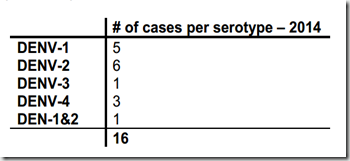
In 2014, 16 of the 24 cases of dengue reported in Florida have been serotyped by PCR. Additional serotyping and strain typing are being conducted.

image 

International Travel-Associated Chikungunya Fever Cases: Forty-two cases of chikungunya with onset in 2014 have been reported in individuals with travel history to a chikungunya endemic country or area experiencing an outbreak in the two weeks prior to onset. Countries of origin were: Dominica, Dominican Republic (8), Haiti (31), and Martinique (2). Counties reporting cases were: Brevard, Broward (7), Charlotte, Clay, Duval (2), Flagler, Hillsborough (3), Lake, Lee, Leon, Miami-Dade (7), Orange (3), Osceola, Palm Beach (7), Pasco, Santa Rosa, Seminole, St. Lucie, and Volusia. Eight of the cases were reported in non-Florida residents.

International Travel-Associated Malaria Cases:  Eighteen cases of malaria with onset in 2014 have been reported. Countries of origin were: Angola, Dominican Republic, Equatorial New Guinea (2), Ghana, Guatemala, India, Ivory Coast (2), Kenya, Sierra Leone (4), Sudan, Uganda (2), and multiple sub-Saharan African countries (1). Counties reporting cases were: Broward (4), Duval, Escambia, Hernando, Hillsborough (3), Miami-Dade (2), Okaloosa, Orange, Osceola, Palm Beach, Pasco, and Santa Rosa. Two of the cases were reported in non-Florida residents.


Thirteen cases (72%) were diagnosed with Plasmodium falciparum. Three cases (17%) were diagnosed with Plasmodium vivax.One case (5.5%) was diagnosed with Plasmodium malariae. One case (5.5%) was diagnosed with Plasmodium Ovale.


The good news is, despite repeated introductions this spring, we’ve not seen any local transmission of these mosquito-borne diseases in Florida. The not-quite-so-good news is our mosquito season is really just getting started.


While there are no vaccines available for these viruses, these are still largely preventable diseases. Local Health departments urge people to always follow the `5 D’s’ of prevention:

image

Monday, May 19, 2014

Florida DOH: Orlando MERS Case Released From Hospital

Coronavirus

Photo Credit NIAID


# 8639


Good news from the Orange County and Florida Department of Health concerning our recently imported MERS case.  He has been been given a clean bill of health and has been released from the hospital.  


While all known close contacts have tested negative for the MERS virus, we shall be very interested in hearing about any serological test results in the weeks to come.


UPDATE: May 19, 2014 MERS-CoV Update

FOR IMMEDIATE RELEASE Contact: DOH-Orange Communications

May 19, 2014 407-858-1429 or 407-858-1418

Orlando Health- Katie Dagenais

407-242-0305

Florida Department of Health and Orlando Health

PROVIDE UPDATE ON MErs-CoV IN FLORIDA

~Patient discharged from the hospital~

Tallahassee – The first patient in Florida with Middle East Respiratory Syndrome Coronavirus (MERS-CoV) infection has been discharged from the hospital in Orange County. The patient has now tested negative for MERS-CoV and has recovered from the virus. All health care workers and household contacts who had contact with the patient were tested for MERS-CoV and all of those results have come back negative. There is no broad risk of MERS-CoV infection for the general public, and no threat to those traveling to the Orlando area.

The Florida Department of Health continues to work closely with Dr. P. Phillips Hospital and the Centers for Disease Control and Prevention (CDC) to ensure appropriate follow up, and to protect the health of all residents and visitors in Florida. Surveillance, contact investigation and testing continue, following standard public health protocols.

The information line for the public at the Florida Department of Health in Orange County is 407-858-1490. Information from the CDC for the public is available by calling 800-232-4636.

For more information, please visit DOH’s Online Newsroom- http://newsroom.doh.state.fl.us/2014/05/12/mers-cov-2/ or view the following resources:

http://www.who.int/csr/disease/coronavirus_infections/en/


Monday, May 12, 2014

Florida DOH Press Release On MERS Case

image

Coronavirus – Credit CDC PHIL


# 8611


In a follow up to the CDC’s press conference on the second imported MERS case to the United States, Florida’s Department of Health   (h/t Pathfinder on FluTrackers), has released the following statement:


FOR IMMEDIATE RELEASE Contact: DOH Communications
May
12, 2014 (850) 245-4111

HEALTH OFFICIALS CONFIRM FIRST MERS-CoV CASE IN FLORIDA


Florida Department of Health working with CDC and Hospital Officials

  • Questions from the Central Florida media will be addressed this afternoon by health officials and hospital representatives at the office of the Florida Department of Health in Orange County located at 6101 Lake Ellenor Drive, Orlando.
  • The information line for the public at the Florida Department of Health in Orange County is 407-858-1490.
  • Information from the CDC for the public is available by calling 800-232-4636.


Tallahassee – The Florida Department of Health today confirmed the first Florida case of Middle East Respiratory Syndrome Coronavirus (MERS-CoV) infection in a patient at an Orlando hospital.

“The Florida Department of Health is working closely with hospital officials and the Centers for Disease Control and Prevention (CDC) to ensure appropriate care of the patient and protect the health of all residents and visitors in Florida,” said Dr. John Armstrong, State Surgeon General and Secretary of Health. “There is no broad risk to the health of the general public.”


“The Florida Department of Health in Orange County is taking all necessary steps to protect and inform the public,” said Dr. Kevin Sherin, Director for the Florida Department of Health in Orange County. “Our office has set up an information line to address any questions and we will continue to work closely with the hospital to ensure the safety of our community.”

“The patient is in good condition and is improving,” said Antonio Crespo, MD, Infectious Disease Specialist and Chief Quality Officer for Dr. P. Phillips Hospital. “We are taking every precaution, but believe the risk of transmission from this patient is very low since his symptoms were mild and he was not coughing when he arrived at the hospital.”


The patient is visiting the United States from Saudi Arabia. The patient first flew to London and then through Boston and Atlanta, arriving in Orlando on May 1. The patient was hospitalized on May 9 and was placed in isolation once MERS-CoV was suspected. Efforts are underway to make contact with any individuals who had close contact with the patient during travel or in the Orlando area. The patient remains in stable condition and is receiving appropriate care.


MERS-CoV infection is a viral respiratory illness that was first reported in Saudi Arabia in 2012. MERS-CoV transmission has occurred in hospital settings, but there is no evidence of sustained spread in communities. How the virus emerged is unknown. There is no available vaccine or specific treatment for the virus.

Symptoms of MERS-CoV are similar to those of the flu and include

  • Congestion
  • Cough
  • Fever over 100.4
  • Shortness of breath
  • Pneumonia
  • Body aches
  • Diarrhea


MERS-CoV is a reminder of the precautions that everyone can take to protect themselves, their
families, and their communities from any communicable diseases:

  • Wash your hands often with soap and water. If soap and water are not available, use an
    alcohol-based hand sanitizer.
  • Avoid touching your eyes, nose, and mouth. Germs spread this way.
  • Stay at home when you are sick, and avoiding close contact with sick people.

For more information, please visit the following websites:

The Department works to protect, promote and improve the health of all people in Florida
through integrated state, county and community efforts.

Follow us on Twitter at @HealthyFla and on Facebook. For more information about the Florida

Department of Health please visit www.floridahealth.gov .

Florida Prepares For Chikungunya

image

One of two highly competent vectors in the Americas


# 8606


While MERS and Avian Flu may eventually prove a more dangerous viral foe, for the Caribbean, Florida, and potentially other parts of North America a trio of exotic mosquito borne viruses pose a more immediate threat; West Nile, Dengue, and the new kid on the block . . . the Chikungunya Virus (CHKV).


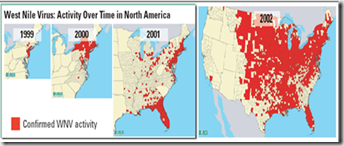
West Nile arrived in New York City 15 years ago, and and very quickly began to spread across the nation.  Today it has been reported in all 48 contiguous states.

image

From the USGS Factsheet on West Nile Virus


The headline last spring from the CDC was DVBID: 2012 Record Number Of West Nile Fatalities, where at least 243 deaths were recorded out of more than 5,000 infections. Given that most people experience only mild symptoms, and only the most serious are ever reported,  the actual number of WNV infections was certainly in the tens of thousands.


Dengue, while a more recent arrival and claiming fewer victims in the United States, showed up in 2009 (see MMWR: Dengue Fever In Key West) after an absence of roughly 60 years, and over the past five years has been sporadically seen in Florida (see Florida: Dengue Forces Suspension Of Blood Donations In Two Counties), Texas, and last November we even saw a case of Locally Acquired Dengue In New York City.


In 2009 the Natural Resources Defense Council (NRDC) released a report outlining the risks that Dengue could re-establish itself in North America, that included this map showing the areas of the United States that are vulnerable to the introduction of Dengue.

image

Northern climes are far less likely to see dengue take hold than say, Florida or Southern Texas. Still, in the 18th and 19th century, both Malaria and Yellow Fever were endemic up and down the mid-Atlantic coast.


While Dengue and WNV will both be watched carefully during the upcoming mosquito season, the sudden arrival of Chikungunya into the Caribbean last fall (see CDC Update On Chikungunya In The Caribbean) has added a new threat to the mix. 


Last month in Study: Chikungunya’s Growing Threat To The Americas, we looked at predictions that CHKV might be coming to a mosquito near you, an eventuality anticipated by the CDC/PAHO three years ago in their 161-page guide on preparing for the arrival of Chikungunya to the Americas (see Preparedness and Response for Chikungunya Virus Introduction in the Americas).


According to the ECDC, Chikungunya – which while rarely fatal, can cause prolonged fever and polyarthralgias (joint pain) - has now spread to more than a dozen Caribbean nations, and has caused more than 30,000 probable and confirmed infections (cite) over the past  6 months.


As you might expect, given its climate, its position as the gateway to the Caribbean, and that it receives millions of tourists every year -  Florida is considered a likely first US battleground against any CHKV invasion.  As part of their preparations for this unwelcome arrival, the Florida Department of Health recently held an Interagency Webinar on the CHKV threat.


 Florida’s DOH Chikungunya Website contains some excellent resource materials from that webinar, including:


image


April 1st Interagency Webinar Presentations

Florida Surveillance and Response CHIK  (1.1 MB PDF)

Mosquito Control Measures CHIK (2.0 MB PDF)

Epidemiology and Medical Importance CHIK (PDF)

For a recording of the April 1st training please contact Epi.Training@flhealth.gov and list "CHIK Training" in subject line.


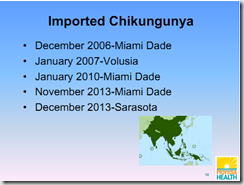
Although we’ve seen sporadic cases of viremic CHKV infected travelers to the United States in the past (see 2011 CID Journal report Chikungunya Fever in the United States: A Fifteen Year Review of Cases), those numbers have been small (109 between 1995- 2009), and so far (unlike dengue and WNV), we haven’t seen any evidence of local transmission.

image 

Imported CHKV in Florida – FL DOH


But with CHKV now in the Americas, the number of CHKV infected travelers to the United States will certainly increase,  and any who are viremic (producing large quantities virus in their blood) while visiting regions where suitable mosquito vectors are present, could potentially introduce the virus to the local mosquito population.


Which is precisely what happened in Northern Italy in 2007, when a single infected traveler returning from India provided a blood meal to a local mosquito that set off a chain of infection that eventually affected 300 people (see It's A Smaller World After All).


One of the best reviews of CHKV that I’ve seen can be found in the slide presentation - Epidemiology and Medical Importance CHIK (PDF) – a few excerpts which you will find below:

image

image


image

image

image

image


Chikungunya, like Dengue, WNV and other mosquito borne illnesses are largely preventable.


While the overall risk of contracting a mosquito-borne illness anywhere in the United States remains very small, with no vaccines available, and scattered cases of Dengue, West Nile Virus, EEE, SLEV, and now the specter of Chikungunya arriving in the near future - Florida’s Health departments urge people to always follow the `5 D’s’:

image


Good advice in Florida this during this spring and summer, and anyplace else mosquitoes can be found.

Thursday, October 03, 2013

Vibrio Vulnificus: Rare, But Sometimes Deadly

image

Credit Florida DOH


# 7830


As a native Floridian who has lived a good deal of his life aboard boats or near the ocean, I’m quite aware of both the lure - and the hazards - of Florida’s waters.  Like anyplace else, we have our fair share of local dangers.  But the ones that tourists tend to worry about;  alligator or shark attacks are actually quite rare.


A bit more common – but not well appreciated - are some of the naturally occurring pathogens that can be found in our local salt and fresh waters (but not restricted only to Florida). 


While exceeding rare, the `killer amoeba’  called Naegleria Fowleri gets a lot of press attention each summer, as its victims are usually children, and the outcome is almost always fatal.  We generally see 2 or 3 cases a year across the southern states each year, usually linked to swimming in stagnant freshwater lakes or ponds.  


In mid-August, in Florida Reports Naegleria fowleri Infection we learned of an 12-year-old boy with the infection, in July (see Arkansas: Naegleria fowleri Shuts Water Park) the victim was a 12-year-old girl, while just last month, in Louisiana: St. Bernard Parish Water Supply Tests Positive For Naegleria Fowleri  we saw the rare acquisition of the parasite from tap water.


But there is another waterborne pathogen, called Vibrio vulnificus, that is a naturally occurring bacteria that can be found in the warm coastal waters of the gulf coast states (Alabama, Florida, Louisiana, Texas and Mississippi). Over the past week, local and national media have reported on  26 infections, and 9 fatalities this year in Florida. 


An active year, but hardly a record.  As in 2011 Florida reported 35 cases, and 13 deaths.


Ingestion of Vibrio vulnificus can cause gastrointestinal symptoms, but for healthy people, rarely causes serious illness.  The State of Florida warns, however: Vibrio vulnificus infections can be a serious concern for people who have weakened immune systems, particularly those with chronic liver disease


The most common route of infection is by eating raw or undercooked shellfish (oysters, mainly).  Between 1988 and 2003, Florida reported 157 Vibrio infections from oyster consumption. Of those,  nearly half (45%) died.  

.image

Which is why I’ll take my oysters deep fried or steamed, thank you.


It is also possible to contract this infection from swimming, or wading, in contaminated waters.  From the CDC’s  Vibrio Vulnificus website:


V. vulnificus can cause an infection of the skin when open wounds are exposed to warm seawater; these infections may lead to skin breakdown and ulceration. Persons who are immunocompromised are at higher risk for invasion of the organism into the bloodstream and potentially fatal complications.


These skin infections can prove quite nasty, and the press often refers to it as a `flesh eating bacteria’.   Antibiotics and extensive debridement of necrotic tissue are the standard treatments, and in some instances amputation is required.


It should be noted that millions of people swim in the Gulf and Atlantic waters off Florida every year, and only a small handful are affected. Frankly, you have a far better chance of drowning than acquiring this bacterial infection.   Nevertheless . . . .


In 2007, V. vulnificus became a reportable illness to the CDC, and so surveillance and reporting has become more detailed.  Here, from the State of Florida Department of Health, is a breakdown of V. vulnificus infections in the state over the past 6 years.


Below is a breakdown of cases in Florida since 2008:

2008 = 15 cases, 5 deaths

2009 = 24 cases, 7 deaths

2010 = 32 cases, 10 deaths

2011 = 35 cases, 13 deaths

2012 = 27 cases, 9 deaths

2013 = so far 26 cases, 9 deaths and of those deaths:

  • 2 – unable to determine exposure history
  • 3 – consumed raw oysters
  • 4 – likely exposure to seawater

2013 deaths occurred in the following counties:

  • Broward (2 qty.)  Flagler  Glades  Lee  Leon  Monroe  Okaloosa  Walton


This from the Florida’s DOH press release of October 1st, 2013.


How common is Vibrio vulnificus infection?

Vibrio vulnificus is a rare cause of disease, but it is also underreported. Between 1988 and 2006, the Centers for Disease Control and Prevention (CDC) received reports of more than 900 Vibrio vulnificus infections from the Gulf Coast states, where most cases occur.  Before 2007, there was no national surveillance system for Vibrio vulnificus, but CDC collaborated with Alabama, Florida, Louisiana, Texas and Mississippi to monitor the number of cases in the Gulf Coast region.  In 2007, infections caused by Vibrio vulnificus and other vibrio species became nationally notifiable.

What are some tips for preventing Vibrio vulnificus infections?

  • Do not eat raw oysters or other raw shellfish.
  • Cook shellfish (oysters, clams, mussels) thoroughly.
  • For shellfish in the shell, either a) boil until the shells open and continue boiling for 5 more minutes, or b) steam until the shells open and then continue cooking for 9 more minutes. Do not eat those shellfish that do not open during cooking. Boil shucked oysters at least 3 minutes, or fry them in oil at least 10 minutes at 375°F.
  • Avoid cross-contamination of cooked seafood and other foods with raw seafood and juices from raw seafood.
  • Eat shellfish promptly after cooking and refrigerate leftovers.
  • Avoid exposure of open wounds or broken skin to warm salt or brackish water, or to raw shellfish harvested from such waters.
  • Wear protective clothing (e.g., gloves) when handling raw shellfish.


And as a final note, with a tropical system trying to wind up in the Gulf of Mexico this weekend, V. vulnificus infections are a particular concern after a hurricane or tropical storm,  as salt or brackish waters can be forced up onto land, and people may be wading through it during the recovery effort.    


The follow excerpt is  from the CDC’s Vibrio vulnificus After a Disaster webpage.


Concerns in hurricane-affected areas

Persons with immunocompromising conditions and especially those with chronic liver disease should avoid exposure of open wounds or broken skin to warm salt or brackish water, and avoid consuming undercooked shellfish harvested from such waters. More information on caring for wounds may be found in the fact sheet Emergency Wound Care After a Natural Disaster available on the CDC Hurricane website.

After a coastal flood disaster, large numbers of persons with illnesses that affect their resistance to infection may be exposed to seawater. Injury prevention is especially important for high-risk persons. Wounds exposed to seawater should be washed with soap and water as soon as possible, infected wounds should be seen by a doctor, and clinicians should aggressively monitor these wounds.

<SNIP>

Further information about Vibrio vulnificus can be found in Management of Vibrio vulnificus Wound Infections.

Thursday, September 12, 2013

Florida: Dengue Forces Suspension Of Blood Donations In Two Counties

image

Credit Martin County Health Department


# 7758


In a follow up to a report from a couple of weeks ago (see Florida: Dengue Count Rises To 8) the latest State of Florida Arbovirus Surveillance report indicates:


In 2013, a total of 16 cases of locally acquired dengue have been reported.

Fifteen cases of dengue have been reported as acquired in Martin County with onsets in July (4) and August (11), 2013. Of these 15 cases, nine are residents of Martin County; four are residents of St. Lucie County; and two are out-of-state visitors. One case of dengue has been reported as acquired in Miami-Dade County by a Miami-Dade resident with onset in August, 2013.

image

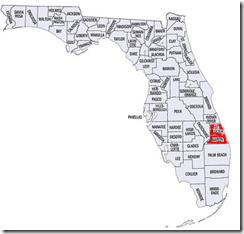
Location St. Lucie & Martin Counties

Since it is possible to be infected with Dengue, yet show no signs of illness, and since the virus can be carried and transmitted by blood, out of an abundance of caution the largest blood collection agency in the region has temporarily announced suspension of blood donations in Martin & St. Lucie county.


Oneblood.org released the following press release (and video), yesterday.

Blood Center to Temporarily Halt Collections in Martin and St. Lucie Counties

Proactive Steps Taken Due to Dengue Fever

(Orlando, Florida | September 11, 2013) As a proactive and precautionary measure, OneBlood is temporarily suspending blood collection operations in Martin and St. Lucie counties in Southeast Florida until further notice.  The decision comes after more than a dozen cases of Dengue Fever have been reported by the Florida Department of Health in these two counties over the past several weeks.

“Safety of the blood supply is our number one priority,” said Dr. Rita Reik, Chief Medical Officer for OneBlood.  “We will resume blood collections in Martin and St. Lucie counties once it is determined the threat of Dengue Fever has been minimized,” Reik said.

OneBlood will remain in close contact with the Florida Department of Health and the Food and Drug Administration (FDA) and will be alerted should additional cases of Dengue Fever be reported. 

Blood collections in other areas of OneBlood’s service area remain operational.  The blood center urges people living in areas not impacted by Dengue Fever to please donate and help ensure safe and available blood for local hospitals and their patients.

The public should take great comfort in knowing our local blood supply is safe and meets the highest possible standards mandated by the FDA.

Blood donations profoundly affect the lives of patients in our community and in many cases one donation can save up to three patients. For more information about donating blood and to find a donor center near you visit www.oneblood.org.


Earlier this year, the CDC’s EID Journal published a dispatch on the safety of Australia’s blood supply  following sporadic outbreaks of Dengue in that country. Their finding was the odds of contracting dengue through a blood transfusion was low, but not non-existent.


Dispatch

Implications of Dengue Outbreaks for Blood Supply, Australia

Helen M. FaddyComments to Author , Clive R. Seed, Jesse J. Fryk, Catherine A. Hyland, Scott A. Ritchie, Carmel T. Taylor, Kathryn L. Van Der Merwe, Robert L.P. Flower1, and William J.H. McBride1
Abstract

Dengue outbreaks have increased in size and frequency in Australia, and transfusion-transmitted dengue poses a risk to transfusion safety. Using whole blood samples collected during the large 2008–2009 dengue epidemic, we estimated the risk for a dengue-infectious blood donation as ≈1 in 7,146 (range 2,218–50,021).

Dengue causes >50 million infections per year worldwide; however, the true incidence is expected to be higher given that asymptomatic infection is possible (1). Dengue virus types 1–4 (DENV-1–4) are emerging or reemerging in many regions of the world (1,2), including Australia (3). One of the largest epidemics in at least 50 years occurred in Queensland, Australia, during 2008–2009, with separate outbreaks in Cairns (and surrounding regions; DENV-2, DENV-3; 2008–2009), Innisfail (DENV-4; 2009), and Townsville (DENV-1, DENV-3; 2009), totaling >1,000 confirmed clinical cases (3).

(Continue . . . )


And in 2009, the Journal of Transfusion Medicine published a 55 page (open access) study  Is Dengue A Threat To The Blood Supply?, from which the following excerpt was lifted.


RISK OF TRANSFUSION-TRANSMITTED DENGUE

(EXCERPT)

Increased prevalence in the population increases the risk that blood will be collected from a viraemic donor during the asymptomatic or subclinical phase of infection. Transmission of dengue through blood collected from asymptomatic donors has been demonstrated in the two reports from Hong Kong and Singapore, both occurring during the height of epidemics in these countries (Chuang et al., 2008; Tambyah et al., 2008). Blood services in countries experiencing dengue epidemics will need to decide whether stronger measures are needed to protect the blood supply.

(Continue . . . )


Meanwhile, the Martin County Health Department has issued a number of Dengue alerts and updates:


image


Prior to 2009, Florida had gone 6 decades without recording a locally acquired case.


Although the number of dengue cases reported in Florida remains very low, since Florida is home to two mosquito species that can transmit Dengue (Aedes aegypti & Aedes albopictus), and each year we see dozens of visitors arrive who are viremic (have the virus in their blood) – the ingredients are there to reintroduce local transmission of the disease.


For now, the the overall risk of contracting a mosquito-borne illness in Florida (or elsewhere in the United States) remains small, but sporadic reports of Dengue (along with West Nile, EEE, SLEV, and other rare arboviral threats) are a good enough reason that everyone should remember to follow the `5 D’s’ of mosquito safety:

image

Saturday, August 24, 2013

Florida: Dengue Count Rises To 8

image

Martin, St. Lucie & Miami Dade Counties


# 7597


A follow up to last weeks report (see Florida: Three Dengue Cases Reported),  Martin County has reported an additional 3 dengue fever cases and yesterday Miami Dade county reported their first infection of 2013.


Dengue had plagued the state of Florida until after World War II, but was eradicated as a result of an aggressive post-war mosquito spraying program. 


Dengue returned in 2009 to the Florida Keys, probably imported by a traveler who had recently visited another country where the virus is endemic.  A local mosquito bit that visitor, and then went on to transmit the virus to others.


At least 28 people contracted Dengue in Key West that year (some asymptomatic or mild infections were likely never reported), and the virus returned in 2010 with even greater numbers; infecting 65 – including 1 person in Broward County, and another in Miami-Dade County.


2011 and 2012 saw major reductions in case counts – likely due to mosquito control efforts and PSAs on mosquito safety - and we’d not seen any cases this year until last week.


Our first stop is Miami-Dade County’s Dengue alert, issued yesterday.


August 23, 2013

THE FLORIDA DEPARTMENT OF HEALTH IN MIAMI-DADE COUNTY ISSUES A MOSQUITO-BORNE DISEASE ADVISORY FOR MIAMI-DADE COUNTY


FOR IMMEDIATE RELEASE
MOSQUITO-BORNE DISEASE ADVISORY ISSUED FOR MIAMI-DADE COUNTY

--First Confirmed Locally Acquired Dengue Case in Miami-Dade County in 2013--

Miami, August 23, 2013 - Today, the Florida Department of Health in Miami-Dade County has issued a mosquito-borne illness advisory for Miami-Dade County. The first locally acquired Dengue Fever case in 2013 has been confirmed in an 18-year-old male.

Symptoms of Dengue Fever may include headache, fever, fatigue, dizziness, weakness, pain behind the eyes, joint pain, and confusion. Health care providers should contact their county health department if they suspect an individual may meet the case definition for a mosquito-borne illness. Miami-Dade County Mosquito Control and the Florida Department of Health in Miami-Dade County continue surveillance and prevention efforts and encourage everyone to take basic precautions to help limit exposure by following the department of health recommendations.

(Continue . . . )


Martin County’s Health Department reported an additional case on Thursday (bringing their total to 4), but last night local media reported that three more cases had been diagnosed.  This from WPTV.


MARTIN COUNTY: 3 additional cases of dengue cases confirmed in Martin County, bringing total to 7

Posted: 08/23/2013
By: Evan Axelbank

MARTIN COUNTY, Fla - Three new cases of  Dengue Fever have been reported on the Treasure Coast, bringing the total number of cases there to seven.


Though health officials say all seven patients have recovered, doctors say there's real concern of new people getting sick across the state.


(Continue . . .)


As Florida is home to two mosquito species that can transmit Dengue (Aedes aegypti & Aedes albopictus), and each year we see dozens of visitors arrive who are viremic (have the virus in their blood) – the ingredients are there to reintroduce local transmission of the disease.


The State of Florida’s latest Arbovirus Surveillance Report lists :


Imported Dengue:

Sixty-three cases of dengue with onset in 2013 have been reported in individuals with travel history to a dengue endemic country in the two weeks prior to onset. Countries of origin were: Angola, Bangladesh, Barbados, Bolivia, Brazil (3), The Caribbean, Columbia (3), Costa Rica (2), Dominican Republic (5), Haiti (2), Honduras, Indonesia, Jamaica (4), Nigeria, Panama, Philippines (2), Puerto Rico (31) and Saint Martin (2).

Counties reporting cases were: Alachua, Brevard, Broward (4), Clay, Duval, Indian River,Lake, Lee, Miami-Dade (19), Orange (12), Osceola (5), Palm Beach (8), Pasco, Pinellas, Seminole (3), St. Lucie and Volusia (2). Nine of the cases were reported in non-Florida residents. In 2013, 39 of the 66 cases of dengue reported in Florida have been serotyped by PCR. Additional serotyping and strain typing are being conducted.

# of cases per serotype – 2013

DENV-1   28

DENV-2    0

DENV-3    3

DENV-4    8


Puerto Rico, which is dealing with another major Dengue outbreak this year (see Puerto Rico: Dengue Levels Continue Above Epidemic Level), appears to be the origin of nearly half of the imported cases this year.

Puerto Rico Dengue Surveillance through Week 26

image


After the 2009 Key West outbreak the CDC’s MMWR  published on Locally Acquired Dengue, which had this to say about imported cases:

Cases of dengue in returning U.S. travelers have increased steadily during the past 20 years (8). Dengue is now the leading cause of acute febrile illness in U.S. travelers returning from the Caribbean, South America, and Asia (9).


Many of these travelers are still viremic upon return to the United States and potentially capable of introducing dengue virus into a community with competent mosquito vectors.


In 2009 the Natural Resources Defense Council (NRDC) released a report outlining the risks that Dengue could re-establish itself in North America, that included this map showing the areas of the United States that are vulnerable to the introduction of Dengue.

image


For now, the the overall risk of contracting a mosquito-borne illness in Florida (or elsewhere in the United States) remains small, but sporadic reports of Dengue (along with West Nile, EEE, SLEV, and other rare arboviral threats) are a good enough reason that everyone should remember to follow the `5 D’s’ of mosquito safety:

image