Showing posts with label Food Insecurity. Show all posts

Tuesday, May 19, 2015

Upcoming COCA Call: Diseases of Food Animals Threaten Global Food Security

image

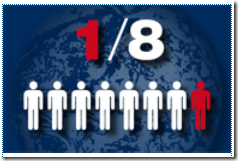
1 person in 8 is Undernourished Photo Credit – FAO


# 10,067


With tens of millions of birds in the United States destroyed (or soon to be) due to our worst HPAI outbreak in history, several recently introduced porcine diseases (see mBio: A Novel Pathogenic Mammalian Orthoreovirus In Diarrheic American Pigs) killing piglets, and a long list of other exotic or emerging epizootic diseases around the globe, concerns over the safety and viability of the world’s food supply are mounting.


Although the United States can absorb the kind of poultry loses we’ve taken these past few months, many resource limited regions have been severely tested by outbreaks of avian flu, FMD, and other food animal diseases.


Next week the CDC will sponsor a COCA Call that delves into the challenges of controlling these outbreaks, and why they seem to be occurring with more frequency.


While primarily of interest to healthcare providers, COCA (Clinician Outreach Communication Activity) calls are designed to ensure that practitioners have up-to-date information for their practices.  The audio from these calls are posted several days after they are held.  You can access COCA calls going back to 2012 at this link.


First the link to next week’s presentation, after which I’ll have a bit more:


Emerging and Exotic Diseases of Food Animals Threaten Global Food Security


Image of Continuing Education Credits abbreviation. = Free Continuing Education

Date:Thursday, May 28, 2015

Time:2:00 - 3:00 pm (Eastern Time)

Join by Phone:

  • 800-369-2062 (U.S. Callers)
  • 517-308-9046 (International Callers)

Passcode:1302224

Join by Webinar:https://www.mymeetings.com/nc/join.php?i=PW3643037&p=1302224&t=c

Presenter(s)

James A. Roth, DVM, PhD, Diplomate ACVM
Clarence Hartley Covault Distinguished Professor
Director, Center for Food Security and Public Health
Executive Director, Institute for International Cooperation in Animal Biologics
College of Veterinary Medicine
Iowa State University

Overview

New diseases of food animals are emerging at an increasing rate and are spreading regionally and globally. Many of the same factors leading to emergence of human diseases are responsible for the emergence of animal diseases, and many of the animal diseases are zoonotic. The challenges of controlling emerging food animal diseases are very different in intensive animal agriculture and small holder animal production and depend upon the veterinary and public health infrastructure available. During the COCA call, participants will learn about reasons for the increasing rate of emergence of food animal diseases, some specific examples, challenges for their control, and implications for public health and food security.

Objectives

At the conclusion of the session, the participant will be able to accomplish the following:

  • Review recent examples of emerging diseases of food animals
  • Discuss reasons for emergence and dissemination of diseases of food animals
  • Describe challenges for control of zoonotic and non-zoonotic food animal diseases
  • Suggest infrastructure changes needed to improve prevention and control of food animal diseases

Call Format

  • Audio conference call on 5/28/15: 2:00 - 3:00 PM
  • Web-on-demand training after 3:00 PM on 5/28/15
  • Materials: PowerPoint slide set


Previously we’ve explored some of the choices made by governments around the world to protect their animal food sources – not all of which have worked out as well as they might have hoped.


Two years ago in Food Insecurity, Economics, And The Control Of H7N9, we looked at some country’s decision to go with poultry vaccination instead of culling to control avian flu - despite OIE warnings that vaccination of poultry cannot be considered a long-term solution (see Does OIE recommend vaccination of animals to control the disease?).


Since then we’ve seen a number of studies suggesting that the proliferation of new avian flu viruses over the past couple of years may have arisen from the continued use of outmoded or ineffectual vaccines (see The HPAI Poultry Vaccine Dilemma).


As you might guess, this is a complex problem with answers are neither easy or clear cut.  For more on global food insecurity, you may wish to visit the FAO’s most recent report:


The State of Food Insecurity in the World 2014

The State of Food Insecurity in the World 2014 presents updated estimates of undernourishment and progress towards the Millennium Development Goal (MDG) and World Food Summit (WFS) hunger targets. A stock-taking of where we stand on reducing hunger and malnutrition shows that progress in hunger reduction at the global level and in many countries has continued but that substantial additional effort is needed in others.

Sustained political commitment at the highest level is a prerequisite for hunger eradication. It entails placing food security and nutrition at the top of the political agenda and creating an enabling environment for improving food security and nutrition. This year’s report examines the diverse experiences of seven countries, with a specific focus on the enabling environment for food security and nutrition that reflects commitment and capacities across four dimensions: policies, programmes and legal frameworks; mobilization of human and financial resources; coordination mechanisms and partnerships; and evidence-based decision-making.

Tuesday, September 02, 2014

FAO Alert: Ebola Outbreak Threatens Food Security In West Africa

image 


# 9027


One of the scenarios we’ve looked at previously surrounding severe epidemics or pandemics involves disruptions in the supply and/or production chain, leading to shortages, price hikes, and severe economic downturns. All of which can lead to even greater misery and loss of life. 


We’ve discussed this cascade effect a number of times, including in the Supply Chain Of Fools, and in the CIDRAP Coal Report, which looked at crucial preparedness gaps in the United States that could lead to disruptions in the electrical grid during a severe pandemic.


The Ebola virus in West Africa has infected fewer than 10,000 people (official counts are 3,500 but are likely low) -  a small fraction of a single percent of the population – but the impact of the outbreak is literally being felt by millions.


Quarantines and checkpoints are limiting movement of people and goods, many residents are afraid to leave their homes, the affected countries are increasingly isolated from international travel and trade, and as a result many shops and other businesses are closed.


In many ways we are seeing on a small scale some of the types of social and economic impacts the world might face during a particularly severe pandemic. 


With crucial  harvests of rice, maize, millet & sorghum set to begin shortly, and the logistic nightmare imposed by the epidemic, the FAO today is warning that a major food crisis may lay ahead for the region:


Special Alert on Ebola in West Africa - FAO's Global Information and Early Warning System (GIEWS)

. image
(Continue . . .)


Here is the news release from the FAO on this alert:


West Africa: Ebola outbreak puts harvests at risk, sends food prices shooting up

Agriculture in affected countries under significant strain, says new FAO special alert

Photo: ©Zoom Dosso/AFP

An empty street market in Monrovia's West Point district, 20 August 2014.

2 September 2014, Rome - Disruptions in food trade and marketing in the three West African countries most affected by Ebola have made food increasingly expensive and hard to come by, while labor shortages are putting the upcoming harvest season at serious risk, FAO warned today.


In Guinea, Liberia, and Sierra Leone, quarantine zones and restrictions on people's movement aimed at combating the spread of the virus, although necessary, have seriously curtailed the movement and marketing of food. This has lead to panic buying, food shortages and significant food price hikes on some commodities, especially in urban centers, according to a special alert issued today by FAO's Global Information and Early Warning System (GIEWS).


At the same time, the main harvest season for two key crops - rice and maize - is just weeks away. Labor shortages on farms due to movement restrictions and migration to other areas will seriously impact farm production, jeopardizing the food security of large numbers of people, the alert says.


Generally adequate rains during the 2014 cropping season had previously pointed to likely favorable harvests in the main Ebola-affected countries. But now food production - the areas most affected by the outbreak are among the most productive in Sierra Leone and Liberia - stands to be seriously scaled back.


Likewise, production of cash crops like palm oil, cocoa and rubber - on which the livelihoods and food purchasing power of many families depend - is expected to be seriously affected.


"Access to food has become a pressing concern for many people in the three affected countries and their neighbors," said Bukar Tijani, FAO Regional Representative for Africa. "With the main harvest now at risk and trade and movements of goods severely restricted, food insecurity is poised to intensify in the weeks and months to come. The situation will have long-lasting impacts on farmers' livelihoods and rural economies," he added.


Major spikes in food prices

Guinea, Liberia and Sierra Leone are all net cereal importers, with Liberia being the most reliant on external supplies. The closure of some border crossings and the isolation of border areas where the three countries intersect - as well as reduced trade from seaports, the main conduit for large-scale commercial imports - are resulting in tighter supplies and sharply increasing food prices.


In Monrovia, Liberia, a recently conducted rapid market assessment indicates that prices of some food items have increased rapidly - for example, in Monrovia's Redlight Market the price of cassava went up 150 percent within the first weeks of August.


"Even prior to the Ebola outbreak, households in some of the affected areas were spending up to 80 percent of their incomes on food," said Vincent Martin, Head of FAO's Dakar-based Resilience Hub, which is coordinating the agency's response. "Now these latest price spikes are effectively putting food completely out of their reach. This situation may have social repercussions that could lead to subsequent impact on the disease containment."


The depreciation of national currencies in Sierra Leone and Liberia in recent months is expected to exert further upward price pressure on imported food commodities.

Response efforts

To meet short-term food relief needs, the UN World Food Programme (WFP) has launched a regional emergency operation targeting some 65,000 tonnes of food to 1.3 million people.

At the same time, FAO's special alert says that "rapid assessments are required to identify the type of measures that are feasible to mitigate the impact of labour shortages during the harvesting period and for related post-harvest activities."
And measures to revive internal trade are essential to ease supply constraints and mitigate further food price increases, it notes.

Preventing further loss of human life and stopping the spread of the virus remain the top priorities at this time. FAO has joined the coordinated UN effort to support affected countries, is in daily communication with WHO and other key actors, and has personnel in West Africa aiding technical and logistical efforts.

It is critical that rural communities understand which practices pose the highest risks of human-to-human transmission as well as the potential spill-over from wildlife. Toward that end, FAO has activated its networks of local animal health clubs, community animal health workers, producer organizations, forestry contacts and agriculture extension and rural radio services to help UNICEF and WHO communicate risk to affected populations.

Friday, March 21, 2014

Guangdong Province: On The Strengthening Of H7N9 Bird Flu Prevention

image

Photo Credit – FAO


# 8391


Despite nearly 400 (known) human infections across China, the H7N9 avian influenza virus is more than just a public health problem, as it poses serious social, economic and political challenges for the Chinese government as well. 


Simply put, with 1.3 billion mouths to feed, anything that threatens China’s food supply could have enormous destabilizing effects on that nation. 


China, which produces more poultry than anyplace else on earth, reportedly raises in excess of 15 Billion birds (cite Vaccines for pandemic influenza as of 2005) each year. Any avian virus, or a culling policy to control that virus, that seriously threatens their poultry industry also raises the specter of mass hunger in the world’s most populous nation.


And hunger, as China’s leaders know, often leads to social unrest and political instability.


For years China has battled the H5N1 virus, relying primarily upon vaccines, and culling of those birds that fall ill.  But this new H7N9 virus doesn’t produce visible symptoms in poultry, making it extraordinarily difficult to detect, and effective poultry vaccines are not yet readily available. 


Up until recently, the H7N9 virus had been only detected in live bird markets, a few wild birds sampled, and in humans.


The announcement yesterday that it had been detected in a poultry farm (see H7N9 Detected On Guangdong Poultry Farm) has understandably raised the ante, and Guangdong’s Department of Agriculture has now released a 5-point plan to address the emergency.


First excerpts (slightly reformatted for readability) from report from Yangcheng Evening News, after which I’ll be back with a bit more:


H7N9 detected in poultry farms in Zhuhai

2014-03-20 08:37:39 Source: Yangcheng Evening News Online No Comment

Guangdong Provincial Department of Agriculture issued a circular requiring local and actively promote the listing of central slaughtering poultry chilled

<SNIP>

Meanwhile, the Provincial Department of Agriculture issued "on the strengthening of H7N9 bird flu prevention and control of emergency," which requires the country:

  • First, strengthen poultry farms and poultry markets of H7N9 avian influenza surveillance, focusing on strengthening the scale farms, farming-intensive areas and monitoring of poultry wholesale market work. Found positive for H7N9 avian influenza in poultry farms, in a timely manner as required quick disposal.
  • The second is to strengthen the quarantine of poultry origin, slaughter and quarantine supervision and circulation. Assist departments in implementing zero overnight poultry poultry market system, while there are plans to guide sales of live poultry purchased live poultry and live bird handling day unsold work, live poultry to prevent backflow into poultry farms.
  • Third, the practical implementation of large-scale farming enterprises within the jurisdiction of the contact person designated to work the system to guide farms (households) to strengthen the integrated management of disease prevention, strengthen environmental and entry and exit of vehicles disinfection and decontamination and disposal of prohibited appearances poultry farms reflux.
  • Fourth is to strengthen emergency duty, prepared to deal with sudden outbreaks of the preparatory work.
  • Fifth, actively promote the transformation and upgrading of the poultry industry, and vigorously promote the standardization of poultry farms, and actively promote centralized slaughtering poultry cold fresh market.


Foshan: From July to gradually ban live poultry trade

From the beginning of July this year, will be piloted in Foshan central slaughtering of live poultry, cold chain distribution, chilled market. In other words, the future will gradually Foshan residents can not buy from the market of live chickens, ducks and geese.

(Continue . . . )


The move away from live-markets to the sale of `chilled’ birds has been attempted before in China, but has always met with a good deal of public opposition (see 2009 blog China Announces Plan To Shut Down Live Poultry Markets In Many Cities).  Purchasing live market birds is deeply ingrained in the Chinese culture, as it reassures the buyer that the bird is both fresh and healthy.  


Their ambitious plan, announced 5 years ago to `shut live poultry markets in all large and medium-sized cities throughout China’, was eventually abandoned.


That said, the evidence that closing live-bird markets reduces the spread of the H7N9 virus (at least for now) is pretty solid (see The Lancet: Poultry Market Closure Effect On H7N9 Transmission), making it the obvious first step in breaking the chain of transmission. 


While all of the possible vectors of the H7N9 virus haven’t been identified, a paper that was published this week in the Journal of Virology, points the finger squarely at chickens and quail as the most likely suspects.


Role of poultry in spread of novel H7N9 influenza virus in China

Mary J. Pantin-Jackwood, Patti J. Miller, Erica Spackman, David E. Swayne, Leonardo Susta, Mar Costa-Hurtado and David L. Suarez

Exotic and Emerging Avian Disease Research Unit, Southeast Poultry Research Laboratory, Agricultural Research Service, USDA, Athens, GA

IMPORTANCE The recent outbreak of H7N9 in China has resulted in a number of human infections with a high case fatality rate. The source of the viral outbreak is suspected to be from poultry, but definitive data for the source of the infection is not known. This study provides experimental data to show that quail and chickens are susceptible to infection and shed large amounts of virus and are likely important in the spread of the virus to humans. Other poultry species, including Muscovy ducks, can be infected and shed virus, but are less likely to play a role of transmitting the virus to humans. Pigeons were previously suggested as a possible source of virus because of isolation of virus from several pigeons in poultry markets in China, but experimental studies show they are generally resistant to infection and are unlikely to play a role in spread of the virus.


As we’ve seen with H5N1 in China, Indonesia, and Egypt, and the H5N8 virus recently emerged in Korea – once a well adapted avian virus gets a toehold in commercial poultry flocks – it can be very difficult to eradicate or contain.


And given the rate of spread of this virus, the risks to poultry industries – and to local food supplies – may well eventually expand beyond the confines of China (see Vietnam Girds Against H7N9 As H5N1 Spreads).


While we worry primarily about the H7N9 virus becoming a pandemic threat, it needn’t make that evolutionary jump to have a profound effect on the peoples of Asia, and conceivably, the rest of the world.