Showing posts with label Poultry. Show all posts

Monday, April 27, 2015

New Scientist: The Downsides To Using HPAI Poultry Vaccines

image

Poultry Vaccination - Photo Credit OIE


# 9983


Last week, in The HPAI Poultry Vaccine Dilemma,  I wrote at some length on the problems inherent in turning to a poultry vaccine to control the HPAI H5 viruses spreading across North America.


This is a topic we’ve looked at repeatedly over the years, including in 2012’s Egypt: A Paltry Poultry Vaccine and 2009’s  Indonesia: Debate Over Poultry Vaccination.


Last November we looked at an EID Journal dispatch - Subclinical Highly Pathogenic Avian Influenza Virus Infection among Vaccinated Chickens, China – which addressed many of these concerns, and what they called  the `multiple disadvantages of HPAI mass vaccination, including the creation of vaccine-escape flu variants


Although HPAI vaccines can often prevent serious illness in poultry flocks, they often fail to prevent viruses from spreading, and eventually evolving into new strains.  As these new variants appear, the vaccines become even less effective – turning their use into a gigantic slippery slope. 


One that China, Egypt, Vietnam, and Indonesia have been unable to get off, despite warnings from the OIE that poultry vaccines must be considered a `short-term solution’ and counties must have an `exit strategy’ (see Avian influenza and vaccination: what is the scientific recommendation?).


Although the USDA has steadfastly supported quarantine and culling as the preferred method of dealing with bird flu in the United States, nervous poultry producers are calling for a vaccine option.  


So I’m happy to report that the New Scientist has weighed in on this issue today as well, with an article by Debora MacKenzie.  Follow the link to read:


US farms hit by bird flu – but a vaccine might make things worse

17:08 27 April 2015 by Debora MacKenzie

For similar stories, visit the US national issues and Bird Flu Topic Guides

Bird flu is rampaging across the Midwestern US this week. So far 8 million chickens and turkeys have been destroyed to stop the spread of H5N2, an offspring of Asia's H5N1 bird flu. Minnesota, the top US turkey producer, declared an agricultural emergency after announcing infected farms almost daily for two weeks. Iowa, the top egg producer, killed 3.8 million hens on one farm alone.

US agriculture officials hope the outbreaks will diminish as summer warmth and sunshine destroys flu viruses in the environment. But their bird flu problems may be only beginning. Wild ducks could infect the rest of the continent next autumn.

And while H5N2, unlike H5N1, seems to pose little threat to humans, the $45 billion US poultry industry is already suffering, as China, South Korea and Mexico ban US produce. Producers are calling for a poultry vaccine, and the US Department of Agriculture says it is developing one. But that might just make the problem worse by encouraging the spread of "silent" infections.

(Continue . . .)

Wednesday, April 22, 2015

The HPAI Poultry Vaccine Dilemma

image

Poultry Vaccination - Photo Credit OIE


# 9967


Overnight Reuters (see U.S. could use vaccines being developed to fight bird flu in poultry) and the AP (see With bird flu spreading, USDA starts on potential vaccine) have issued reports that echo and update a story we saw from CIDRAP News several weeks ago (see USDA at work on poultry vaccine for H5N8, H5N2) – that the United States may need to reconsider its policy on the use of HPAI H5 poultry vaccines.


It should be quickly noted that any decision to use HPAI H5 vaccines in poultry is still months away, and their use would likely be limited, and targeted (as in ring vaccination around infected farms), rather than as a broad based open-ended vaccination plan. 


Throughout the United States, and indeed, most of the world, the preferred method of controlling H5 and H7 avian flu outbreaks in poultry has been immediate quarantine and the culling of infected or exposed birds. 


While vaccination may seem an easy solution to a vexing problem, the experience over the past 10 years hasn’t been entirely positive.


For some countries – mostly in Asia and the Middle East – where H5N1 has caused huge losses for a decade, poultry vaccines have long been an attractive option.  This, despite repeated warnings from the OIE that vaccination of poultry cannot be considered a long-term solution to combating  avian flu (see Does OIE recommend vaccination of animals to control the disease?)


“Any decision to use vaccination must include an exit strategy, i.e. conditions to be met to stop vaccination”. – OIE on H7N9 Poultry Vaccines.


According to 2012’s Impact of vaccines and vaccination on global control of avian influenza by David Swayne, more than 113 billion poultry vaccine doses were used from 2002 to 2010. Five countries accounted for 99% of vaccine used: 1) China (90.9%), 2) Egypt (4.6%), 3) Indonesia (2.3%), 4) Vietnam (1.4%), and 5) Hong Kong Special Administrative Region (< 0.01%).


With the exception of Hong Kong, all of these countries remain firmly entrenched with H5 viruses after more than a decade of avian flu vaccine use, and none show any signs of looking for the recommended `exit’.


While it can be argued that these vaccines have saved millions of poultry from culling, have prevented financial ruin for farmers, and has lessened food instability in developing areas of the world, there has also been a downside. 


Poultry vaccines don’t always prevent disease – sometimes they only mask the symptoms of infection, and that can not only allow viruses to spread stealthily, it can also put human health at risk.


In 2009 Professor C.A. Nidom, of the Institute of Tropical Disease, Airlangga University, Indonesia warned against relying on poultry vaccines to control Indonesia’s bird flu problem (see Indonesia: Debate Over Poultry Vaccination), while  Zhong Nanshan, a hero of the SARS outbreak and respiratory disease specialist in China, warned that vaccinated poultry can still become infected (and possibly transmit) the H5N1 virus.


Chinese expert issues new bird flu warning

www.chinaview.cn 2009-02-06 17:59:50

GUANGZHOU, Feb. 6 (Xinhua) -- A leading Chinese expert on respiratory diseases has warned the public to be aware that poultry can be infected with the bird flu virus but show no symptoms.

"Special attention should be paid to such animals, including those that have been vaccinated," said Zhong Nanshan.

"The existing vaccines can only reduce the amount of virus, rather than totally inactivating it," he said.

(Continue . . . )


More recently, in 2012’s Egypt: A Paltry Poultry Vaccine, a study conducted by the Virology department at St. Jude Children’s Research Hospital  looked at the effectiveness of six commercially available H5 poultry vaccines deployed in Egypt, and found only one (based on a locally acquired H5N1 seed virus) actually appeared to offer protection. 


Over the past 6 months roughly 180 Egyptians have contracted H5N1 from contact with infected poultry, and we’ve seen  reports of large numbers of poultry outbreaks – even among previously vaccinated poultry (see Egypt H5N1: Poultry Losses Climbing, Prices Up 25%).


Poorly matched vaccines, often inconsistently or haphazardly applied, have increasingly been linked to driving vaccine-escape flu variants, and may be at least partially responsible for the sudden proliferation of new avian flu subtypes we’ve seen emerge over the past couple of years (H5N3, H5N5, H5N6, H5N8, H7N9, H10N8, etc. ).


Last November the EID Journal dispatch Subclinical Highly Pathogenic Avian Influenza Virus Infection among Vaccinated Chickens, China  addressed these exact concerns (bolding mine):


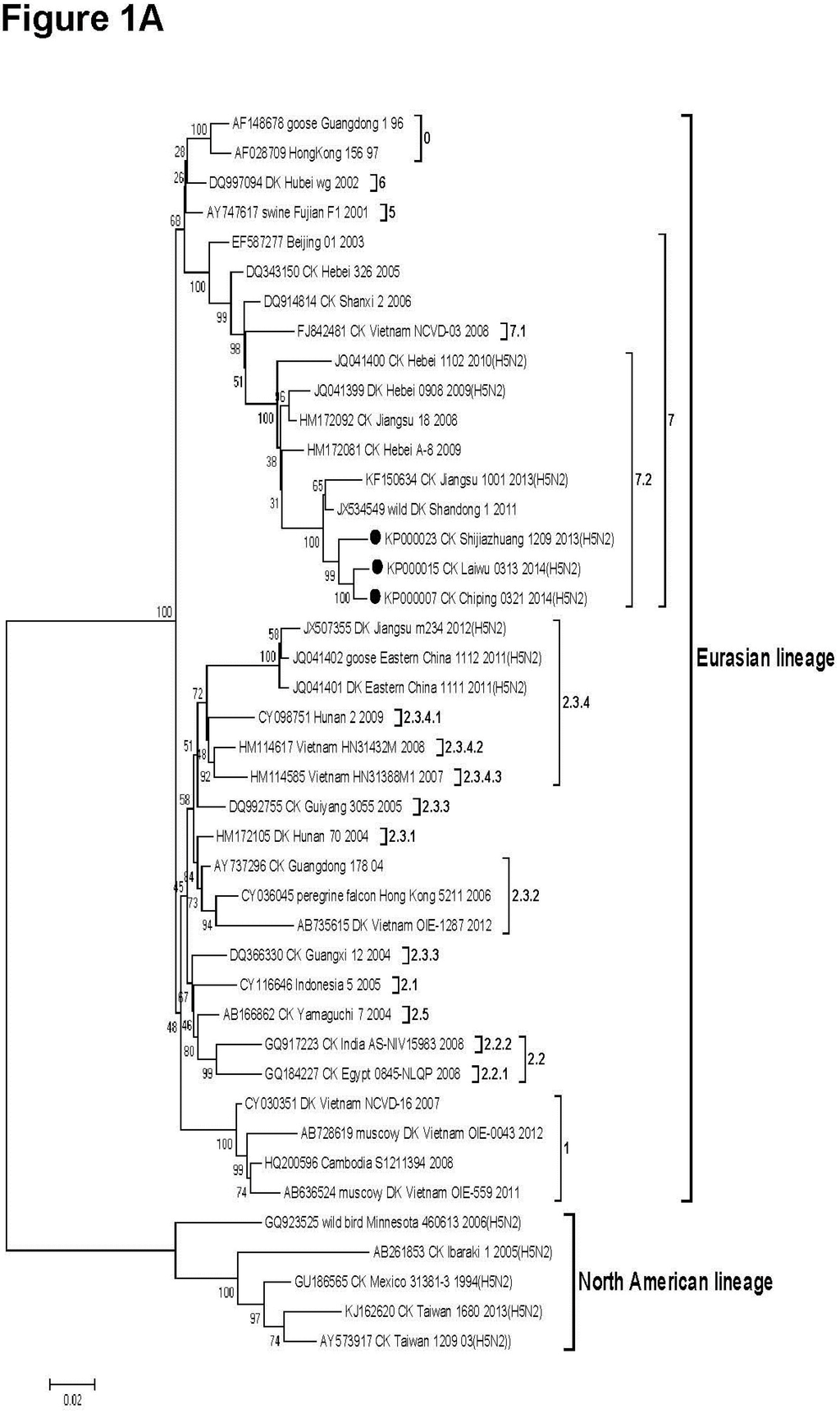
HPAI mass vaccination played a crucial role in HPAI control in China. However, this study demonstrated multiple disadvantages of HPAI mass vaccination, which had been suspected (13,14). For example, this study showed that H5N1 subtype HPAI virus has evolved into multiple H5N2 genotypes, which are all likely vaccine-escape variants, suggesting that this virus can easily evolve into vaccine-escape variants.

This observation suggests that HPAI mass vaccination, which is highly effective in the beginning of an outbreak, may lose its effectiveness with time unless the vaccine strains are updated. Moreover, this study showed that vaccinated chicken flocks can be infected with vaccine-escape variants without signs of illness.


Last month, in Recombinant H5N2 Avian Influenza Virus Strains In Vaccinated Chickens, which stated in its cautionary discussion (bolding mine):


In this study, three H5N2 influenza virus strains isolated from chickens were identified as novel reassortants with a highly pathogenic viral genotype. Surprisingly, the affected birds had been vaccinated with killed influenza vaccines but still showed characteristic clinical symptoms of avian influenza and eventually died.

These results are in agreement with previous work indicating that AIVs can continue genetic evolution under vaccination pressure [20]. Moreover, this study highlights the importance and necessity of periodic reformulation of the vaccine strain according to the strains circulating in the field in countries where vaccines are applied to control avian influenza.


One can’t know how things would have played out in Egypt or China had they not elected to rely so heavily on H5 avian flu vaccines, but there is enough evidence of a long-term downside to give one at least a little pause.  


The USDA has always focused on prevention and containment when it comes to H5 and H7 avian flu in this country, and it is pretty obvious they would rather not to have to go down the avian flu vaccine path if they can avoid it. 


One obvious economic downside is that vaccinated poultry may not be readily accepted by foreign markets, since it hinders testing for the virus.


But given the speed of H5’s spread this winter and its potential impact on the poultry industry, new strategies must at least be explored and considered, even those that have some potential downside to them.   


Given the less-than-sterling outcomes we’ve seen in China and Egypt with their poultry vaccination schemes - and the difficulty of `exiting’  once embarking down that vaccine road - the USDA will  have a lot they must consider before deciding on whether and what to recommend regarding the use of avian flu vaccines here in the United States.


Stay tuned.

Tuesday, March 10, 2015

HPAI Bird Flu Suspected In Arkansas Poultry

image

Testing poultry in Arkansas.


# 9807


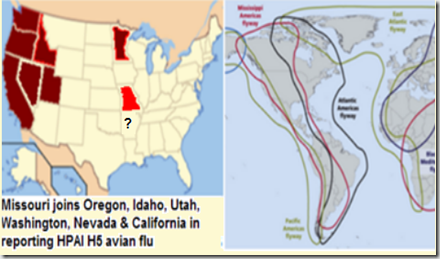
Ever since HPAI H5 viruses arrived in the Pacific Northwest last fall we’ve seen it continue to spread both south, and east, carried by wild and migratory birds. Six days ago the HPAI H5 virus was reported at a Minnesota turkey farm, and just two days ago it turned up at two Missouri poultry farms.


We’ve now a news report this evening suggesting that it may have been detected at a poultry farm in Arkansas.  


As I wrote yesterday in Missouri Dept. Ag. Statement On Avian Flu At Missouri Turkey Farm, the arrival of HPAI to Missouri is particularly troubling as that state, and several adjacent states (most notably Arkansas), are among the biggest producers of poultry in the nation.


At this point, it is just a suspicion, and we’ll have to wait for test results.  Details are scant, but here is the report from Reuters.


UPDATE 1-Suspected bird flu in Arkansas poultry threatens exports

Tue Mar 10, 2015 7:29pm EDT (Updates with details on discovery, comments)

By Tom Polansek and P.J. Huffstutter

(Reuters) - A suspected case of avian influenza has been identified in poultry in Arkansas, the third-largest U.S. turkey producer and home to Tyson Foods Inc , the nation's biggest chicken company, the U.S. Department of Agriculture said on Tuesday.

The infection, if confirmed, threatens to widen trading bans from countries such as Taiwan, Singapore and Nicaragua that have already restricted U.S. poultry exports due to bird flu outbreaks in states ranging from Minnesota and Missouri to California.

"There is a suspect case in Arkansas, but testing is ongoing," USDA spokeswoman Lyndsay Cole said.

(Continue . . . )


Meanwhile, earlier this afternoon the USDA posted the following confirmation of the second Missouri Farm’s infection with H5N2.


USDA Confirms Highly Pathogenic H5N2 Avian Influenza in Commercial Turkey Flocks in Missouri


CDC considers the risk to people from these HPAI H5 infections in wild birds, backyard flocks
and commercial poultry, to be low


WASHINGTON, March 10, 2015 -- The United States Department of Agriculture’s (USDA) Animal and Plant Health Inspection Service (APHIS) has confirmed the presence of highly pathogenic H5N2 avian influenza (HPAI) in two separate commercial turkey flocks in Missouri. The flocks are located in Jasper County and Moniteau County, within the Mississippi flyway where this strain of avian influenza has previously been identified. CDC considers the risk to people from these HPAI H5 infections in wild birds, backyard flocks and commercial poultry,  to be low.


Samples from the turkey flocks, which experienced increased mortality, were tested at the Missouri Department of Agriculture Veterinary Diagnostic Laboratory and the APHIS National Veterinary Services Laboratories in Ames, Iowa confirmed the findings. APHIS is working closely with the Missouri Department of Agriculture on a joint incident response.

State officials quarantined the affected premises and the remaining birds on the properties will be depopulated to prevent the spread of the disease. Birds from the involved flocks will not enter the food system. No human infections with these viruses have been detected at this time. The Missouri Department of Agriculture is working directly with poultry workers at the affected facility to ensure that they are taking the proper precautions.

As a reminder, the proper handling and cooking of poultry and eggs to an internal temperature of 165 ˚F kills bacteria and viruses. As part of existing avian influenza response plans, Federal and State partners are working jointly on additional surveillance and testing in the nearby area. The United States has the  strongest AI surveillance program in the world, and USDA is working with its partners to actively look for the disease in commercial poultry operations, live bird markets and in migratory wild bird populations.


USDA will be informing the World Organization for Animal Health (OIE) as well as international trading partners of this finding. USDA also continues to communicate with trading partners to encourage adherence to OIE standards and minimize trade impacts. OIE trade guidelines call on countries to base trade restrictions on sound science and, whenever possible, limit restrictions to those animals and animal products within a defined region that pose a risk of spreading disease of concern.

These virus strains can travel in wild birds without them appearing sick. People should avoid contact with sick/dead poultry or wildlife. If contact occurs, wash your hands with soap and water and change clothing before having any contact with healthy domestic poultry and birds.

(Continue . . . )


For more on the migratory expansion of these highly pathogenic H5 avian viruses, you may wish to revisit a blog I posted earlier today, called:


J. Virol: Spread & Persistence Of Avian Flu Viruses In The Mississippi Flyway

Wednesday, March 04, 2015

Study: Recombinant H5N2 Avian Influenza Virus Strains In Vaccinated Chickens

image

Photo Credit – FAO


# 9780


At the risk of sounding like a broken record, we’ve another study today that has documented multiple novel, recombinant H5N2 avian flu viruses circulating in vaccinated Chinese poultry.


China, which has relied predominantly on a poultry vaccination policy to control avian flu, has managed to protect their poultry flocks from excess mortality and morbidity, but – as we discussed previously (see EID Journal: Subclinical HPAI In Vaccinated Poultry – China – now finds itself with multiple clades and subtypes of HPAI in circulation and a roster of poultry vaccines that are slowly losing their effectiveness.


This isn’t just a problem in China, as we’ve seen similar results in Egypt (see Egypt: A Paltry Poultry Vaccine) and  Indonesia (see Indonesia: Debate Over Poultry Vaccination) as well.  


While quarantine and aggressive culling is the recommended HPAI control strategy, for countries with high food insecurity and a heavy reliance upon poultry, vaccines have long been an attractive option   And for the past decade they have been heavily employed in nations where bird flu has become endemic.


According to 2012’s Impact of vaccines and vaccination on global control of avian influenza by David Swain, more than 113 billion poultry vaccine doses were used from 2002 to 2010. Five countries accounted for 99% of vaccine used: 1) China (90.9%), 2) Egypt (4.6%), 3) Indonesia (2.3%), 4) Vietnam (1.4%), and 5) Hong Kong Special Administrative Region (< 0.01%).


The problem comes when these vaccines are either improperly applied, or not updated to deal with constantly evolving flu strains, which can drive the creation of vaccine-escape variant viruses.   


A task that becomes more difficult every year as the number of new, reassortant viruses increase.

The OIE (World Organization For Animal Health) has been long aware of the potential of vaccines to hide infection, and potentially drive viral evolution, warning that vaccination of poultry cannot be considered a long-term solution to combating the avian flu virus.


In 2009 the OIE advised:

The use of vaccination could last several years; however it will only be effective if it is applied to all poultry (chickens, hens, ducks, turkeys, geese, quails…) and through appropriate methods, particularly the use of a permanent cold chain. Vaccines should be produced in accordance with international quality standards prescribed in the OIE manual of diagnostic tests and vaccines for terrestrial animals.

As soon as national Veterinary Services are fully operational for early detection and rapid response using biosecurity measures in infected premises vaccination must be stopped; it is not recommended to use vaccination as a long term control measure since very often it contributes to hide the presence of the virus.

Any vaccination campaign must include an “exit strategy” i.e. a return to classic disease control measures.

In 2013, the OIE reiterated this advice in Questions and Answers on influenza A(H7N9), stating:


Does OIE recommend vaccination of animals to control the disease?

When appropriate vaccines are available, vaccination aims to protect the susceptible bird populations from potential infection. Vaccination reduces viral excretions by animals and the virus’ capacity to spread. Vaccination strategies can effectively be used as an emergency effort in the face of an outbreak or as a routine measure in an endemic area. Any decision to use vaccination must include an exit strategy, i.e. conditions to be met to stop vaccination.


Despite these warnings, none of the nations that now use 99% of the world’s poultry vaccines appear willing (or able) to move towards that recommended `exit’.  


First, a link and some excerpts  from a recently published open-access study in Viruses, after which I’ll return with a bit more:


Genomic and Phylogenetic Characterization of Novel, Recombinant H5N2 Avian Influenza Virus Strains Isolated from Vaccinated Chickens with Clinical Symptoms in China

Huaiying Xu, Fang Meng , Dihai Huang , Xiaodan Sheng, Youling Wang, Wei Zhang , Weishan Chang , Leyi Wang   and Zhuoming Qin

View Full-Text   |   Download PDF [1601 KB, uploaded 25 February 2015]   |   Browse Figures

Abstract: Infection of poultry with diverse lineages of H5N2 avian influenza viruses has been documented for over three decades in different parts of the world, with limited outbreaks caused by this highly pathogenic avian influenza virus. In the present study, three avian H5N2 influenza viruses, A/chicken/Shijiazhuang/1209/2013, A/chicken/Chiping/0321/2014, and A/chicken/Laiwu/0313/2014, were isolated from chickens with clinical symptoms of avian influenza.

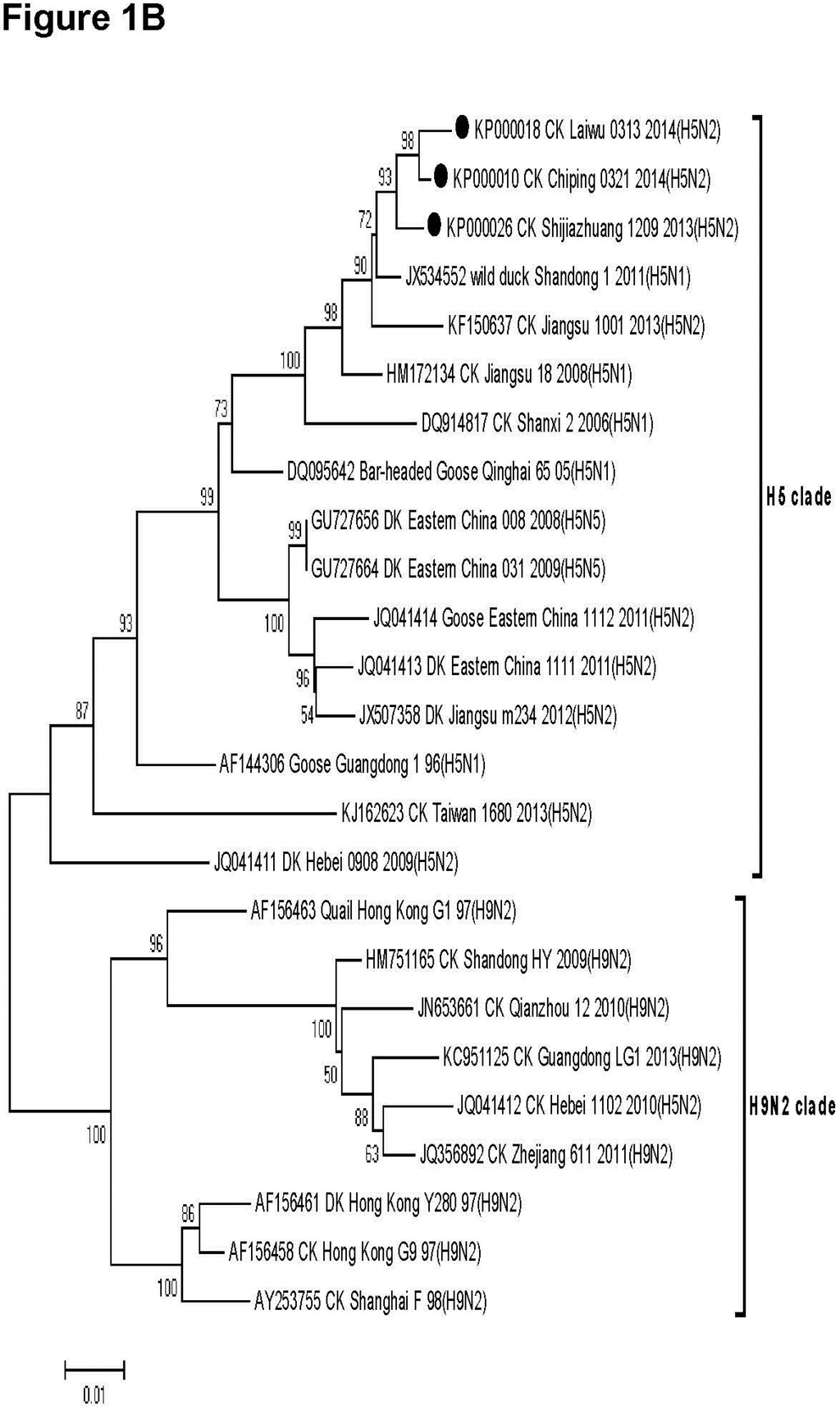
Complete genomic and phylogenetic analyses demonstrated that all three isolates are novel recombinant viruses with hemagglutinin (HA) and matrix (M) genes derived from H5N1, and remaining genes derived from H9N2-like viruses. The HA cleavage motif in all three strains (PQIEGRRRKR/GL) is characteristic of a highly pathogenic avian influenza virus strain.

These results indicate the occurrence of H5N2 recombination and highlight the importance of continued surveillance of the H5N2 subtype virus and reformulation of vaccine strains.

<SNIP>

Discussion

In this study, three H5N2 influenza virus strains isolated from chickens were identified as novel reassortants with a highly pathogenic viral genotype. Surprisingly, the affected birds had been vaccinated with killed influenza vaccines but still showed characteristic clinical symptoms of avian influenza and eventually died.

These results are in agreement with previous work indicating that AIVs can continue genetic evolution under vaccination pressure [20]. Moreover, this study highlights the importance and necessity of periodic reformulation of the vaccine strain according to the strains circulating in the field in countries where vaccines are applied to control avian influenza.

Therefore, we recommend that routine surveillance to monitor the influenza viral evolution in the field be carried out in combination with a comprehensive control program and vaccination as opposed to vaccination programs alone.

(Continue. . . )


The `elephant in the room’ is that 10 years ago, when most of these countries elected to rely primarily on poultry vaccinations to control H5N1, there was only one HPAI H5 virus of concern; H5N1.   Now we now have at least a half dozen subtypes (H5N1, H5N2, H5N3, H5N6, H5N5,  H5N8) and literally dozens of clades between them.


This rapid growth is likely due in no small part to the continued use of outdated, poorly matched poultry vaccines which only hid symptoms in birds, and allowed viruses to continue to circulate and reassort. 


But it isn’t just me saying that.  Last November the EID Journal dispatch Subclinical Highly Pathogenic Avian Influenza Virus Infection among Vaccinated Chickens, China  addressed these concerns, and suggested a way forward:


HPAI mass vaccination played a crucial role in HPAI control in China. However, this study demonstrated multiple disadvantages of HPAI mass vaccination, which had been suspected (13,14). For example, this study showed that H5N1 subtype HPAI virus has evolved into multiple H5N2 genotypes, which are all likely vaccine-escape variants, suggesting that this virus can easily evolve into vaccine-escape variants.

This observation suggests that HPAI mass vaccination, which is highly effective in the beginning of an outbreak, may lose its effectiveness with time unless the vaccine strains are updated. Moreover, this study showed that vaccinated chicken flocks can be infected with vaccine-escape variants without signs of illness.

<SNIP>

We propose that the only way out of this dilemma is to strengthen the strategy published previously, which covers the following components: education, biosecurity, rapid diagnostics and surveillance, and elimination of infected poultry (14). Mass vaccination should be used as an additional tool within this 4-component strategy, not in place of the 4 components.


Supposedly the definition of insanity is doing the same thing over and over again and expecting different results.


While a case can be made for the continued use of poultry vaccines in countries where these viruses are raging, a pattern of increasing risks and decreasing returns makes it imperative that modifications to these strategies are made before we vaccinate ourselves into a very unenviable corner.

Sunday, February 22, 2015

Egypt H5N1: Poultry Losses Climbing, Prices Up 25%

image


# 9739


Ideally, the Ministries of Health (and agriculture) around the world would be quick to release detailed disease outbreak information, both to their own public, and to the international community. Sadly, there are often economic, political, and societal priorities that can trump full and timely disclosure.


There are notification rules in place – such as the International Health Regulations (IHR) adopted in 2007– but eight years later many countries have yet to meet even the core surveillance and response requirements (see WHO: IHR & Global Health Security) and have requested repeated extensions.


And as a purely practical matter, sovereign nations are pretty much on the honor system when it comes to reporting disease outbreaks.  And finally, their ability to conduct good surveillance varies greatly, as does their political will.


Up until a month ago Egypt’s Ministry of Health was doing a laudable job announcing H5N1 cases (50 over a 60 day period), that closely mirrored media reports, and that always included a YTD total (cases, fatalities, under treatment & recovered).


That format changed after the report of January 22nd (see Egypt’s MOH Confirms 21st H5N1 Case), and since then official updates have been infrequent, have listed a fraction of the cases mentioned by the media, and glaringly no longer include YTD numbers.


Presumably timely case reports are still being made to the World Health Organization under the IHR, and we will be privy to that information at some point, but the WHO only issues H5N1 reports once a month or so (the last one was January 26th)


Media reports – including statements by local Governorate officials – continue, albeit without details and YTD tallies.  Sharon Sanders’s conservatively curated  FluTrackers 2015 Egypt H5N1 Case List has the number of cases this year approaching 60, but the real number could well be higher.


The focus of the MOH, and much of the media, appears to have shifted from reporting cases to reporting on the government’s efforts, and progress, in combating the avian flu threat. No doubt in hopes of calming an increasingly alarmed population.


When human avian flu reports become difficult to pin down, we often look at `secondary indicators’, including outbreaks in wild birds and commercial poultry, poultry price increases or shortages, or reductions in feed imports. 


And here we’ve seen almost daily stories about the impact that H5N1 is having on Egypt’s poultry industry.  Losses are reportedly as high as 70% on some farms, and the price of poultry has jumped by 25% in recent weeks – in part due to cold weather losses – but mostly due to bird flu.


As point of reference for the following reports, an `Egyptian pound’ is roughly .13 cents US.  So 20 pounds per Kilo is about $2.60 USD.


A couple of reports from the Egyptian press describe the situation.


Poultry industry collapse .. and mortality farms exceed 70%

Muhammad Ali

Sunday 22/02/2015 - 11:55

Currently facing the poultry industry a severe crisis threatens to collapse and loss of investments worth more than 28 billion pounds, and the displacement of about two million workers, especially with the bypass mortality rates of all farms 70% of the size of the flocks of poultry, which caused the rise in poultry prices are crazy for up to 20 pounds per kilo due to lack of supply.

Dr. Nabil Darwish, head of Poultry Federation, the industry is already facing currently a major crisis and losses Halal current season beyond and a half billion pounds at least, now, educators are living a real tragedy on the national level, both in farm systemic committed or random farms.

He Darwish it is time to develop a real plan to address the crises of the poultry industry on top of which protect them from diseases, particularly the avian flu, which has become a disaster for the industry and the control of high feed prices and the provision of gas to the farmer for the purpose of heating.

He pointed out that the General Union of Poultry Producers has prepared a full funding any industry to promote and protect national plans through compensation avian influenza Ministry of Agriculture Fund, which exists by about 800 million pounds.

Vice President of Poultry Division: 6.5 pounds higher net prices because of the flu .. and I demand to open the door of import

Joseph Ganzouri

22-2-2015 | 16:00

Abul Fotouh Congratulations, vice president of the Division of poultry Cairo Chamber of Commerce, the high prices of poultry by 25%, which jumped retail price of 16 pounds last month to 22.5 pounds because of the deaths of mothers poultry, after being infected with bird flu.

It warns Congratulations from the widening gap between consumer needs and supply in the market, particularly as the deficit is estimated at 800 thousand chickens per day, demanding quickly import of poultry parts for a specific period to close the gap of domestic production.

He continued: "We are embarking on the holy season, and possible import of poultry parts for a specified period, to import shall be in accordance the conditions and standards under the supervision of the Egyptian General - Authority for Veterinary Services

These sorts of reports can be particularly probative when you consider that much of Egypt’s commercial poultry is supposedly vaccinated against H5N1, suggesting either lapses in vaccination (or worse) reduced vaccine effectiveness.


The most recent FAO/EMPRES Animal Influenza Update # 636 lists:

A total of 66 outbreaks occurred in household poultry, 9 in commercial farms and 1 detected in a live bird market (LBM); 5 outbreaks occurred in vaccinated farms, the rest were in unvaccinated birds.


Update #635 lists 1 outbreak in a vaccinated farm, while Update # 634 lists 3 outbreaks among vaccinated ducks and chickens.


In 2012, in Egypt: A Paltry Poultry Vaccine, we looked at a study – conducted by the Virology department at St. Jude Children’s Research Hospital -  appearing in the journal Poultry Science, that looks at the effectiveness of six commercially available H5 poultry vaccines currently deployed in Egypt.


Of the 6 vaccines tested, only one (based on a locally acquired H5N1 seed virus) actually appeared to offer protection.  We’ve seen similar vaccine performance issues in China, Vietnam, and Indonesia in the past.


While poultry vaccination has been adopted by a number of countries to control their avian flu problems, they are an imperfect solution for the control of avian viruses (for earlier blogs see OIE: Countries That Vaccinate Poultry Need An `Exit Strategy' & Food Insecurity, Economics, And The Control Of H7N9).


Admittedly,  the impact of H5N1 on Egypt’s poultry industry doesn’t tell much about the current impact the virus is having on human health, but it does give us a pretty good feel for just how well entrenched the virus has become, and how difficult the task of controlling this virus is likely to be.

Wednesday, February 18, 2015

Referral: VDU Blog On Closure Of Guangdong’s Live Markets

Photo: ©FAO/Tariq Tinazay

Credit FAO


# 9725


Amid news of another H7N9 case reported from Guangdong Province (see CHP notified of additional human case of avian influenza A(H7N9) in Guangdong),  Dr. Ian Mackay weighs in with a blog on the importance of closing live bird markets (LBMs)  in China in order to reduce the spread of the virus.


Follow the link to read:


Guangdong sees sense among the feathers...

Guangdong province in southern China is suspending its poultry markets. All of them. From 15-Feb to 28-Feb.[1] While the closures are only for 2-weeks, this will be very important for stopping human cases of avian influenza, particularity of the H7N9 subtype, during the bustling spring period in China.

Live poultry market closures also remove a traditional dish of fresh cooked chicken. One can be certain that no-one will die because of the substitution of frozen or factory prepared chicken for a fresh chicken, even if chefs don't succumb to the tantrums of last year and refuse to prepare dishes made from anything but fresh market-selected poultry. One can be equally certain that if the markets remain operating during the peak season for influenza virus circulation as they have been, that human infections, and deaths, due to H7N9 infections, will also continue

(Continue . . . )


Last summer, in CDC: Risk Factors Involved With H7N9 Infection we looked at a case-control study conducted by an international group of scientists, including researchers from both the Chinese and the US CDC which concluded.


Exposures to poultry in markets were associated with A(H7N9) virus infection, even without poultry contact. China should consider permanently closing live poultry markets or aggressively pursuing control measures to prevent spread of this emerging pathogen. 


In October of 2013 we saw another study (see The Lancet: Poultry Market Closure Effect On H7N9 Transmission) which found:


Closure of LPMs reduced the mean daily number of infections by 99% (95% credibility interval 93—100%) in Shanghai, by 99% (92—100%) in Hangzhou, by 97% (68—100%) in Huzhou, and by 97% (81—100%) in Nanjing. Because LPMs were the predominant source of exposure to avian influenza A H7N9 virus for confirmed cases in these cities, we estimated that the mean incubation period was 3·3 days (1·4—5·7).


Despite the evidence that it would greatly reduce the transmission of the virus, closing LMBs is a hard sell to the Chinese public. Purchasing live market birds is deeply ingrained in the culture, as it reassures the buyer that the bird is both fresh and healthy. 


China, Indonesia, and other countries have attempted to close or strictly regulate live bird markets in the past – only to be met with tremendous public resistance (see 2009 blog China Announces Plan To Shut Down Live Poultry Markets In Many Cities)


That ambitious plan, announced more than 5 years ago to `shut live poultry markets in all large and medium-sized cities throughout China’, obviously never happened.


While the temporary closure of markets Guangdong will hopefully reduce the impact of this year’s H7N9 outbreak, as Ian points out temporary closures are only expected to provide temporary relief.  

Friday, January 09, 2015

CFIA Update: No New HPAI Outbreaks In British Columbian Poultry

image

Credit CFIA


# 9552


It has been a while since we’ve seen an update from CFIA – Canada’s Food Inspection Agency – on the H5N2 outbreak in British Columbia, but sometimes no news is good news. Last night the agency posted the following statement asserting that no new poultry outbreaks have been detected since December 19th.


Update on avian influenza situation in British Columbia

January 8, 2015

The Canadian Food Inspection Agency (CFIA) is continuing its response to an outbreak of avian influenza in British Columbia’s Fraser Valley.

No new sites have been identified since December 19, 2014, and depopulation of the infected premises is complete. The Agency is monitoring the progress of disposal of dead birds, and cleaning and disinfection of barns, vehicles, equipment and tools on the infected premises.

The CFIA continues to work closely with the Province of British Columbia, the owners of the infected birds, and the poultry industry to manage this outbreak. Surveillance of domestic poultry within the primary control zone is ongoing. Movement restrictions for poultry and poultry products are still in place. Compensation for affected farmers is rolling out on schedule.

Disease control measures will remain in place for 21 days after the cleaning and disinfection of all confirmed infected premises is complete, providing there have been no positive results from surveillance activities.

Strict surveillance will continue in the area for the next 90 days. If no additional cases of avian influenza are found within this period, the zone can be considered free of avian influenza.

The CFIA continues to urge poultry farmers to take an active role in protecting their flocks by employing strict biosecurity measures on their property, and to immediately report any suspicious symptoms.

Avian influenza viruses do not pose risks to food safety when poultry and poultry products are properly handled and cooked.

For more information on avian influenza and measures poultry farmers can take to protect their flocks, please visit the CFIA web site at inspection.gc.ca.


CFIA List of Infected Commercial & Non-Commercial Premises

image


While there are optimistic signs that British Columbia’s poultry outbreak has been contained, with recent detections of HPAI H5 viruses in wild and migratory birds Washington, Oregon, and California, concerns remain over just how much of a threat they will pose to Canadian and American poultry interests in the future.

Thursday, January 08, 2015

H5 HPAI Poultry Quarantine In Parts Of Washington State

image


# 9549


While poultry producers in Europe, Asia, and Canada have had to deal with the disruptions and economic losses brought on by numerous outbreaks of highly pathogenic of avian influenza over the dozen years, the United States has gotten off pretty lucky.


There was a pretty good scare in Texas in 2004, when – for the first time in 20 years -  an outbreak of HPAI (H5N2)  affected a flock of about 7,000 chickens in south-central Texas.  


But that outbreak was quickly contained, and no humans were infected.


Until a little over a month ago the Eurasian lineage of H5 avian flu virus had never been reported in North America, but after an outbreak of HPAI H5N2 was detected in British Columbia, we’ve seen reports of HPAI H5N2 and H5N8 among birds in the Pacific Northwest (see Avian Flu Suspected In 2nd Washington State Backyard Flock).


Because of repeated detections of HPAI H5 in local wild and migratory birds, the Washington State Department of Agriculture has imposed a temporary quarantine on poultry sales and movement in parts of Benton and Franklin County.


For immediate release:
Jan. 7, 2015
Contact: Hector Castro
(360) 902-1815
WASHINGTON STATE DEPARTMENT OF AGRICULTURE
P.O. Box 42560, Olympia, Washington 98504-2560
This news release is also available as a
PDF.


WSDA sets quarantine to control poultry movement in Tri-Cities area

OLYMPIA — The Washington State Department of Agriculture (WSDA) today adopted an emergency rule to establish a quarantine zone for avian influenza that includes parts of Benton and Franklin counties, covering an area of roughly 20 miles around two locations where avian influenza has been identified in flocks of mixed poultry and other birds.


The quarantine area restricts the movement of eggs, poultry or poultry products out of the identified zone. Exemptions will be made for operations that obtain special permits and meet specific criteria. Visit www.agr.wa.gov/lawsrules/rulemaking for the complete rule and a detailed map.


On Jan. 2, WSDA activated a multi-agency response plan following the confirmation of highly pathogenic H5N2 avian influenza in domestic birds in a Benton County flock. Later, a second infected flock was identified in the area. Work was completed Jan. 6 at both locations to control the spread of the virus. The joint team of WSDA and U.S. Department of Agriculture officials will now work to clean and disinfect the two sites.


USDA plans to increase the amount of testing of poultry and other domestic birds within an area identified as 10 kilometers around the two flocks.


WSDA has not identified any new cases of avian influenza. The virus has not been found in commercial poultry anywhere in Washington or the United States. Washington’s commercial poultry industry has a robust avian influenza testing program and WSDA conducts weekly surveillance testing and health inspections at live bird markets in the state.


The biggest risk continues to be the presence of two highly pathogenic strains of avian influenza (H5N2 and H5N8) in migratory wild waterfowl populations. WSDA is encouraging bird owners to protect their domestic birds from contact with wild waterfowl and remain vigilant in their biosecurity measures.

There is no immediate public health concern due to the avian influenza virus detected. Avian influenza does not affect poultry meat or egg products, which remain safe to eat. As always, both wild and domestic poultry should be properly cooked.


Deaths or illness among domestic birds should be reported to the WSDA Avian Health Program at 1-800-606-3056. For wild birds, contact the Washington State Department of Fish and Wildlife at 1-800-606-8768.

# # #


While neither of these recently detected HPAI H5 subtypes are currently believed to pose a serious risk to human health, these HPAI outbreaks can cost the poultry industry – and the local economy – tens of millions of dollars. 


Some excerpts from the declaration from WSDA.


The establishment of HPAI would be costly to the poultry industry, consumers and taxpayers. Eradication of an HPAI outbreak in the northeastern states in the mid-1980s resulted in the destruction of 17 million birds at a cost of nearly $65 million. The disease can spread rapidly from flock to flock. In some instances, strains of HPAI can be infectious to people.

The USDA, APHIS works to keep NAI from becoming established in the United States. The director of agriculture, pursuant to authorities in chapter 16.36 RCW, has determined that the containment and eradication of NAI is necessary to protect the commercial poultry industry, small poultry farms and poultry fanciers of the state of Washington. Birds species that are potential hosts for NAI include chickens, turkeys, ratites, waterfowl, pigeons, doves and other domestic fowl as well as game birds including pheasants, partridge, chukars, quail, and grouse. Migratory waterfowl have proved to be the natural reservoir for this disease.

WAC 16-51-300 Prohibition on moving poultry, eggs, and poultry products, and specified
farm products within or from the quarantine zone established for NAI.

(1) Movement of living or dead poultry, eggs, or poultry products within or from the quarantine zone for NAI is prohibited, unless a permit has been issued by the department pursuant to WAC 16-51-800. Poultry may be moved within property that is one premises under the control of one person so long as that movement does not cross the boundary of a quarantine zone established by this chapter. Dead poultry or other dead birds can be transported to an approved landfill or an incinerator for disposal when secured within two plastic bags in compliance with WAC 16-51- 700. (2) Poultry shows or sales may not be held within the quarantine zone unless permissible per WAC 16-51-200 or by a special permit issued under WAC 16-51-800.


Wednesday, December 31, 2014

Hong Kong: Update On Investigation Into H7 Infected Poultry

Photo: ©FAO/Tariq Tinazay

Credit FAO


# 9518


This time last year Hong Kong’s SFH (Secretary of Food & Health), Dr. Ko Wing-man was taking a lot of heat from mainland Chinese officials over his insistence on performing both serological and PCR spot checks on shipments of imported poultry from neighboring provinces (see Dr. Ko Wing-man On H7N9 Testing Of Poultry).


While serological tests can determine if a bird has ever been exposed to and infected by a specific virus (very handy for viruses like H7N9 that produce no symptoms in birds), PCR testing must be used to determine if a bird is actively infected, and able to spread the virus.


Mainland officials have lobbied extensively against serological testing, feeling that a positive result would unfairly malign their poultry industry, and cause unnecessary culling of their product.


In the past 24 hours, a new batch of poultry arrived in Hong Kong and a handful of tested samples showed a positive result via serology, but negative by PCR.  The positive serological results were viewed (rightfully so) as a red flag, which led Hong Kong to perform PRC testing on a larger number of birds, and last night the results were announced (see Imported Poultry PCR Positive For H7 Avian Flu).


Today Hong Kong is busy culling birds, and doing contact tracing and surveillance on those people who may have been exposed to infected birds. Two reports,  first a statement by Dr. Ko Wing-man on the situation, followed by a progress report on local contact tracing efforts.


SFH on result of H7 PCR tests of imported live chickens

Following is the transcript of remarks made by the Secretary for Food and Health, Dr Ko Wing-man, at a media session on result of H7 Polymerase Chain Reaction (PCR) tests (genetic testing) of imported live chickens at the lobby of West Wing, Central Government Offices, this morning (December 31):


Reporter: (On the testing result of samples from a consignment of imported live chickens)


Secretary for Food and Health: On December 30, the Government found in a consignment of imported live chickens a number of samples tested positive in H7 avian influenza (AI) serology tests, whilst all swab samples collected from the same consignment of live chickens were tested negative in H7 Polymerase Chain Reaction tests. According to our risk management mechanism, we collected 120 additional swab samples from the same consignment of live chickens to conduct PCR tests. Shortly before now, the results were back. A number of samples were tested positive for H7 AI. Accordingly, we kicked off a number of public health measures to prevent the risk of spreading of H7N9 virus.

Firstly, the Agriculture, Fisheries and Conservation Department (AFCD) has declared the Cheung Sha Wan Temporary Wholesale Poultry Market as an infected place. It will be closed for 21 days. This will mean that supply of live poultry from the Mainland will also have to be suspended for the same period of time. After the 21-day suspension period, the index registered farm of this particular consignment of poultry has to be verified that it is safe in terms of bio-security measures before resuming supply of live chicken to Hong Kong.

AFCD will also arrange to cull all the live poultry, around 15 000 in total, in the Cheung Sha Wan Temporary Wholesale Poultry Market, starting this morning.

AFCD will then conduct inspections and collect additional samples for testing from all of the 29 registered live poultry farms in Hong Kong to ensure that they are not affected by H7 AI. We will then channel the local live chickens to the Ta Kwu Ling Checkpoint before they could be dispatched to the retail points.  

Reporter: (On whether the Mainland authorities could step up their inspections at poultry farms)


Secretary for Food and Health: Hong Kong Government is always in very close collaboration with the relevant Mainland authorities. Our Mainland counterparts have been doing a lot in terms of safeguarding the health of live poultry to be supplied to Hong Kong. In fact, the supply chain of live poultry for Hong Kong is entirely segregated from other live poultry on the Mainland. You are right that this is not the first time that we have detected a positive H7 AI specimen from the live poultry supplied from the Mainland. This time is special. It is the first time that we have utilised the serology tests which helped us in detecting a batch of live poultry affected by H7 virus.    
(Please also refer to the Chinese portion of the transcript.) 

Ends/Wednesday, December 31, 2014
Issued at HKT 09:23


Update on contact tracing for imported live chickens positive for avian influenza A(H7)


The Centre for Health Protection (CHP) of the Department of Health today (December 31) reported the latest updates on contact tracing after samples of live chickens imported from the Mainland tested positive for avian influenza A(H7) virus, and again urged the public to maintain strict personal, food and environmental hygiene both locally and during travel.

In collaboration with the Food and Environmental Hygiene Department and the Agriculture, Fisheries and Conservation Department, the CHP's epidemiological investigations have so far identified one close contact who is a poultry worker at Cheung Sha Wan Temporary Wholesale Poultry Market (CSWTWPM), and 77 other contacts including a lorry driver who transported the involved consignment of live chickens, poultry workers and staff at CSWTWPM and Man Kam To Animal Inspection Station, and workers involved in the poultry culling operation.

The CHP is tracing these contacts and will monitor their health conditions. Among them, a member of staff at CSWTWPM developed sore throat and his specimen tested negative for influenza A virus.

"Enhanced surveillance of suspected human cases in public and private hospitals is ongoing," a spokesman for the CHP remarked.

"Poultry workers, who have prolonged exposure to live poultry, might have higher risks of contracting the virus from infected poultry and hence increased risks of genetic reassortment of the virus. Poultry workers have been recommended by the CHP's Scientific Committee on Vaccine Preventable Diseases as one of the priority groups and have been covered in the Government Vaccination Programme under which they are eligible for free influenza vaccination. We advise them to get vaccinated early as it is one of the effective means to prevent influenza-associated complications and hospitalisations," the spokesman added.

Letters to doctors and hospitals will be issued to alert them to the latest situation.

The National Health and Family Planning Commission and the health authorities of Guangdong and Macau have been informed.

Poultry workers and cullers in doubt may call the CHP's avian influenza hotline (2125 1111) for enquiries and it operates from 9am to 6pm.

Ends/Wednesday, December 31, 2014
Issued at HKT 18:11

Tuesday, December 30, 2014

Hong Kong: Imported Poultry PCR Positive For H7 Avian Flu

image


# 9517


Several hours ago, in Hong Kong: Positive H7 Serological Test On Imported Chickens, we saw a report that several chickens among a batch of imported poultry from mainland China had tested positive (by serology) for H7, but that they were not PCR positive, which would indicate active infection.


Extended PCR testing was immediately ordered on 120 birds from this shipment, and apparently those results show some of the birds to be actively infected with the H7 virus. 


Although it is nearly 4am in Hong Kong, the announcement  was quickly published on the HK Government Info Website, along with the steps that would be immediately taken to prevent further spread of the virus.


Live poultry imported from Mainland tested positive for H7 avian influenza virus


The Government today (December 31) confirmed that a number of samples from a consignment of live chickens from a registered farm in Huicheng District of Huizhou in Guangdong were positive in H7 avian influenza (AI) Polymerase Chain Reaction (PCR) tests.


The Secretary for Food and Health, Dr Ko Wing-man, said that the Hong Kong Special Administrative Region Government (HKSARG) had decided to implement contingency measures in accordance with the Preparedness Plan for Influenza Pandemic on the Serious Response Level to prevent the virus from spreading and safeguard public health.

The Agriculture, Fisheries and Conservation Department (AFCD) has declared the Cheung Sha Wan Temporary Wholesale Poultry Market as an infected place. All of the some 15 000 live poultry in the market will be culled starting from this morning. The market will also be closed for 21 days (counting from the next day following completion of the culling operation) for thorough cleansing and disinfection. During the closure period, trading of live poultry will be suspended.

"During the closure of the wholesale market, AFCD would inspect all local farms and collect more samples for testing. Upon confirmation that all local chicken farms are not affected by AI, local chickens could be dispatched to retail points via the Ta Kwu Ling Checkpoint," Dr Ko said.

In accordance with the consensus reached with the Mainland on the handling of H7 AI cases, the HKSAR Government has notified the relevant Mainland authorities of the incident to facilitate investigation of the source of infection. Supply of live poultry from the index registered farm would be suspended, during which the relevant inspection and quarantine authorities will conduct investigation at the farm concerned and ascertain that the farm has met all of the biosecurity and management requirements. Upon expiry of the 21-day suspension period, the relevant inspection and quarantine authorities will notify the HKSAR Government of the investigation result. The farm concerned will resume supply of live poultry to Hong Kong only upon acceptance of the investigation result by both sides.  


AFCD, the Food and Environmental Hygiene Department and the  Centre for Food Safety (CFS) will also strengthen the surveillance and control measures against H7N9 along the supply chain of live poultry.

Dr Ko stressed, "The HKSAR Government has built up a resilient and stringent system and collaborated closely with the Mainland authorities for the surveillance and control of AI. We have since April 2013 introduced the PCR testing for H7 AI, and since January 2014 introduced the H7 serological testing to strengthen early warning against AI."

"All live poultry supplied to Hong Kong markets, whether locally reared or imported, are subject to stringent inspection and quarantine procedures.  Animal health certificates would be issued only if the test results are satisfactory. Prior to leaving the farms, the poultry are put under quarantine and are required to pass PCR and serology tests for AI to show that the poultry carry sufficient level of antibodies against H5; are free of any AI virus and do not bear AI clinical symptoms.

"After the live poultry have entered Hong Kong, CFS will collect blood and swab samples from the live poultry at the Man Kam To Animal Inspection Station and pass the samples to AFCD's Veterinary Laboratory for testing. The detection of positive H7 AI samples in imported live poultry in the current case demonstrates that the testing system has achieved what it is designed to do, namely reducing the risk of infected birds entering our retail markets and performing its gate-keeping role for protecting public health," he added.


The Centre for Health Protection (CHP) of the Department of Health would contact poultry wholesalers and workers in the Man Kam To Animal Inspection Station and the Cheung Sha Wan Temporary Wholesale Poultry Market to follow up on their health condition. CHP and the Hospital Authority will remind all doctors in Hong Kong and healthcare workers in public hospitals to stay vigilant and should report immediately if there is any suspected avian influenza case.


Dr Ko appealed to the public again to maintain good personal and environmental hygiene, including washing hands frequently, wearing masks when feeling unwell, avoiding contact with live poultry or visiting live poultry markets in the affected districts, revealing their travel history to doctors and not bringing poultry to Hong Kong illegally, which are important and effective measures for preventing diseases.

Ends/Wednesday, December 31, 2014
Issued at HKT 02:37
NNNN


Hong Kong: Positive H7 Serological Test On Imported Chickens

Photo: ©FAO/Tariq Tinazay

Credit FAO


# 9515


The 7 million+ residents of Hong Kong consume more poultry than can be produced locally, so every week a large quantity of live poultry is imported from neighboring Guangdong Province. In order to protect both the residents, and the poultry operations, in Hong Kong a small number of chickens in each batch is tested – both by PCR and by Serology – for avian flu viruses.


While PCR testing can tell if there is a current infection, serology can show evidence of earlier infections.   And that can help define just how big a problem a virus is becoming.


Testing is particularly important for H7N9, as the virus does not cause symptoms in poultry, but can be deadly for humans. Often we only first learn of an outbreak in poultry when exposed humans fall ill. 


Last year the use of both testing methods by Hong Kong led to considerable political friction, as powerful mainland agricultural interests felt the serological tests were unfairly prejudicial against their product (see  Hong Kong: Dr. Ko Wing-man On H7N9 Testing Of Poultry).  

Today we learn that a small number of imported chickens have tested positive by serology (but not PCR) for the H7 virus, and that additional PCR testing is underway to determine if there are any actively infected birds in this shipment.  Results should be available in a few hours.


Samples of imported live chickens tested positive in serological tests for H7 avian influenza

The Government today (December 30) found in a consignment of imported live chickens a number of samples tested positive in H7 avian influenza (AI) serological tests, whilst all swab samples collected from the same consignment of live chickens were tested negative in H7 Polymerase Chain Reaction (PCR) tests. According to the established risk management protocol, the relevant government departments are now collecting 120 additional swab samples from the same consignment of live chickens to conduct PCR testing.  Preliminary results will be available around midnight at the earliest.


The serological test serves as a surveillance measure on birds or farms to determine if they have been infected with H7 AI in the past. While a positive result in serological test reflects the fact that the live poultry have been infected in the past, it does not mean the concerned chickens are carrying AI virus at the time when being tested. To ascertain if individual birds are carrying AI virus, the accepted protocol is to rely mainly on PCR testing for H7 AI which is currently in use.


If the additional 120 swab samples are all tested negative in the H7 PCR tests, it reflects that the consignment of live chickens is not carrying AI virus and can be released to the market. For good measure, the Hong Kong Government will notify the relevant Mainland authorities for strengthened surveillance and investigation on the registered farm concerned.  After both sides have agreed on the investigation result, the farm in question may continue to supply live poultry to Hong Kong.


If any of the additional 120 swab samples is tested positive in the H7 PCR tests, it would suggest that the consignment of live chickens carries H7 AI virus.  The Government will accordingly activate the AI contingency plan.

Ends/Tuesday, December 30, 2014
Issued at HKT 20:55
NNNN

PNAS: Evolution Of H9N2 And It’s Effect On The Genesis Of H7N9

image

Photo Credit – FAO


# 9514


We’ve a nifty piece of avian flu research which appears this week in PNAS, that looks at the continued evolution of H9N2 in Chinese poultry, and how that may have prompted  the emergence of the H7N9 virus during the spring of 2013.


A joint effort of several Chinese science institutions and the St. Jude Children's Research Hospital, this study features Jinhua Liu, Ph.D., of the College of Veterinary Medicine at the China Agricultural University, and Dr. Robert Webster as co-corresponding authors.


Regular readers of this blog are aware that the avian H9N2 virus – which has been rife in Asian poultry for the past couple of decades – has been a major contributor to the creation of new avian viruses. Of the viruses we are currently watching with the most concern – H5N1, H7N9, H5N6, and H10N8 – all  share several important features (see Study: Sequence & Phylogenetic Analysis Of Emerging H9N2 influenza Viruses In China):

    • They all first appeared in  Mainland China
    • They all  have come about through viral reassortment in poultry
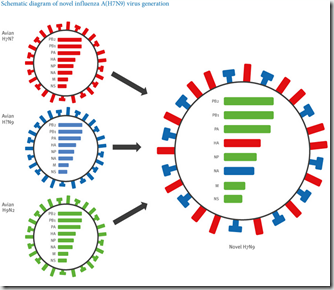
    • And most telling of all, while their HA and NA genes differ - they all carry the internal genes from the avian H9N2 virus


Last January, The Lancet carried a report entitled Poultry carrying H9N2 act as incubators for novel human avian influenza viruses by Chinese researchers Di Liu a, Weifeng Shi b & George F Gao that warned:

Several subtypes of avian influenza viruses in poultry are capable of infecting human beings, and the next avian influenza virus that could cause mass infections is not known. Therefore, slaughter of poultry carrying H9N2—the incubators for wild-bird-origin influenza viruses—would be an effective strategy to prevent human beings from becoming infected with avian influenza.


Last May, in EID Journal: H7N9 As A Work In Progress, we looked at a study that found the H7N9 avian virus continues to reassort with local H9N2 viruses, making the H7N9 viruses that circulated in wave 2 genetically distinct from those that were seen during the 1st wave.

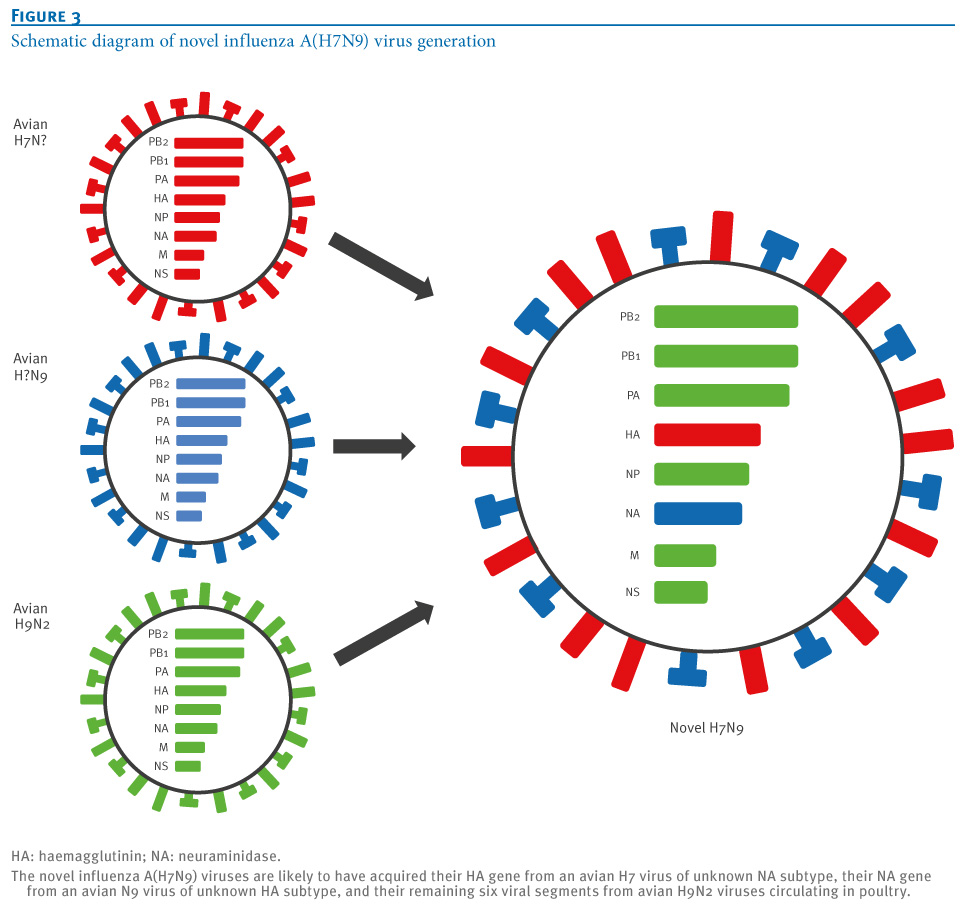
Although categorized by their two surface proteins (HA & NA) Influenza A viruses have 8 gene segments (PB2, PB1, PA, HA, NP, NA, M1, M2, NS1, NS2).
image

H7N9 carries 6 genes from H9N2Credit Eurosurveillance


And while we have only seen a handful of human infections with H9N2 (see Hong Kong: Isolation & Treatment Of An H9N2 Patient), it is also true that in areas where this virus is most common, testing and surveillance for the virus is extremely limited.  Like so many other novel viruses, we can only guess at is true burden in the human population.


While it’s impact on emerging avian flu viruses has been well documented, the reasons behind it’s influence have been less than clear. 


Today, however, we have research that shows a new, better adapted genotype  (G57) of the H9N2 virus has emerged  – one that evades the poultry vaccines currently in use – and that it has become widespread among vaccinated Chinese poultry since 2010.


This spread has provided more opportunities for reassortment, and so we see more avian viruses emerging.


First the Abstract from the study, followed by some excerpts from a St. Jude Children’s Research Hospital press release, after which I’ll return with a bit more.


Evolution of the H9N2 influenza genotype that facilitated the genesis of the novel H7N9 virus

Juan Pua,b,1, Shuoguo Wangc,1, Yanbo Yind,1, Guozhong Zhanga, Robert A. Carterc, Jinliang Wanga, Guanlong Xua, Honglei Suna, Min Wanga, Chu Wena, Yandi Weia, Dongdong Wangd, Baoli Zhue, Gordon Lemmonc, Yuannian Jiaoc, Susu Duanb, Qian Wanga, Qian Dua, Meng Suna, Jinnan Baoa, Yipeng Suna, Jixun Zhaoa, Hui Zhangf, Gang Wuc, Jinhua Liua,2, and Robert G. Websterb,2


Significance

The emergence of human infection with a novel H7N9 avian influenza reassortant in China raises a pandemic concern. However, it is not fully understood how these H9N2 chicken viruses facilitated the genesis of the novel H7N9 viruses. Here we show that a “fittest” genotype (G57) emerged with changed antigenicity and improved adaptability in chickens. It became predominant in vaccinated farm chickens and caused widespread outbreaks before the H7N9 virus emergence, increasing reassortment between H9N2 and other subtype viruses and finally providing all of their internal genes to the novel H7N9 viruses. The prevalence and variation of H9N2 influenza virus in farmed poultry could provide an important early warning of the emergence of novel reassortants with pandemic potential.

Abstract

The emergence of human infection with a novel H7N9 influenza virus in China raises a pandemic concern. Chicken H9N2 viruses provided all six of the novel reassortant’s internal genes. However, it is not fully understood how the prevalence and evolution of these H9N2 chicken viruses facilitated the genesis of the novel H7N9 viruses. Here we show that over more than 10 y of cocirculation of multiple H9N2 genotypes, a genotype (G57) emerged that had changed antigenicity and improved adaptability in chickens. It became predominant in vaccinated farm chickens in China, caused widespread outbreaks in 2010–2013 before the H7N9 viruses emerged in humans, and finally provided all of their internal genes to the novel H7N9 viruses. The prevalence and variation of H9N2 influenza virus in farmed poultry could provide an important early warning of the emergence of novel reassortants with pandemic potential.


Tracing evolution of chicken flu virus yields insight into origins of deadly H7N9 strain


Memphis, Tennessee, December 29, 2014

An international research team has shown how changes in a flu virus that has plagued Chinese poultry farms for decades helped create the novel avian H7N9 influenza A virus that has sickened more than 375 people since 2013. The research appears in the current online early edition of the scientific journal Proceedings of the National Academy of Sciences.

The results underscore the need for continued surveillance of flu viruses circulating on poultry farms and identified changes in the H9N2 virus that could serve as an early warning sign of emerging flu viruses with the potential to trigger a pandemic and global health emergency. The work focused on the H9N2 chicken virus, which causes egg production to drop and leaves chickens vulnerable to deadly co-infections. Scientists at St. Jude Children’s Research Hospital and the China Agricultural University, Beijing, led the study.

Researchers used whole genome sequencing to track the evolution of the H9N2 chicken virus between 1994 and 2013. The analysis involved thousands of viral sequences and showed that the genetic diversity of H9N2 viruses fell sharply in 2009. From 2010 through 2013 an H9N2 virus emerged as the predominant subtype thanks to its genetic makeup that allowed it to flourish despite widespread vaccination of chickens against H9N2 viruses.

Evidence in this study suggests the eruptions set the stage for the emergence of the H7N9 avian virus that has caused two outbreaks in humans since 2013, with 115 confirmed deaths. The H9N2 infected chickens likely served as the mixing vessel where H9N2 and other avian flu viruses from migratory birds and domestic ducks swapped genes, researchers noted. The resulting H7N9 virus included six genes from the H9N2.

"Sequencing the viral genome allowed us to track how H9N2 evolved across time and geography to contribute to the H7N9 virus that emerged as a threat to human health in 2013," said Robert Webster, Ph.D., a member of the St. Jude Department of Infectious Diseases. He and Jinhua Liu, Ph.D., of the College of Veterinary Medicine at the China Agricultural University, are co-corresponding authors.

"The insights gained from this collaboration suggest that tracking genetic diversity of H9N2 on poultry farms could provide an early warning of emerging viruses with the potential to spark a pandemic," Webster said.

(Continue . . .)


If all of this sounds vaguely familiar, last April in Study: Sequence & Phylogenetic Analysis Of Emerging H9N2 influenza Viruses In China, we saw H9N2 viruses collected from two Chinese Provinces (Zhejiang & Guangdong) in late 2011 showed signs of evolving antigenically away from the vaccine strain, with a majority of isolates (14 out of 18) showing an amino acid change in the receptor binding site suggestive of an enhanced ability to bind to human receptor cells.


While poultry vaccination has been adopted by a number of countries to control their avian flu problems, there are distinct downsides to relying on vaccines for the control of avian viruses (for earlier blogs see OIE: Countries That Vaccinate Poultry Need An `Exit Strategy' & Food Insecurity, Economics, And The Control Of H7N9).


While vaccines can often protect poultry against illness - with increasingly diverse and rapidly evolving avian flu viruses - they can’t always prevent infection.  Particularly if they aren’t updated often.


The end result being that subclinical infections can go undetected, viruses continue to circulate unnoticed, and new variants or reassortants continue to emerge. These failures are not limited to the H9N2 vaccines, as we’ve seen similar results with H5 vaccines as well (see EID Journal: Subclinical HPAI In Vaccinated Poultry – China &  Egypt: A Paltry Poultry Vaccine). 


There are, unfortunately, no simple solutions.


Countries like China, Indonesia, Vietnam, and Egypt – places where avian flu viruses are well entrenched in both commercial and home raised poultry - rely heavily on poultry vaccines. They view the immediate culling of infected birds, the standard control practice for most of the rest of the world, as being impractical and fear the social and economic impacts of such a policy.


The problem is, as new avian flu subtypes, clades, and sub clades emerge, the vaccines in use inevitably lose the battle, and over time that can lead to a snowball effect where the number of viruses in circulation escalate rapidly.


Given the recent emergence of H7N9, H10N8, H5N6, H5N8 and H5N3, one has to wonder just how much faster this snowball will roll over the next few years.