Showing posts with label Malaria. Show all posts

Saturday, April 18, 2015

Early Signs Of Artemisinin-Resistant Malaria In Africa

Plasmodium falciparum in human blood – credit Wikipedia


# 9955


One of the realities of our never-ending battle against infectious diseases is that these organisms are able to evolve, and adapt, at an amazing rate, and that the antivirals, antibiotics, and other drugs in our arsenal of therapeutic drugs can – over time – lose some or all of their effectiveness.


Antibiotic resistance has been the greatest concern, and in recent years we’ve seen some antiviral drugs falter badly (Amantadine, a stalwart against influenza for decades, became unusable in 2005), often due to poor stewardship.


Anti-malarial drugs are not immune to this sort of evolutionary obsolescence, and any loss in effectiveness would put millions of people at risk of serious illness or even death.  Spread by mosquitoes, and caused by a parasite  – Plasmodium – Malaria is common in much of the world including Sub-Saharan Africa, Asia and the Americas.  


There are four microscopic protozoan parasites in the genus Plasmodium (P. vivax, P. falciparum, P. malariae and P. ovale) that cause malaria in humans around the world.  Of these Plasmodium falciparum is generally the most serious.


The parasites multiply in the liver and infect red blood cells, resulting in recurrent fevers and headaches - and in severe cases - coma and death.  Despite advances, Malaria remains an extremely serious problem in Africa, where 1 in 5 childhood deaths is due to the disease. According to the WHO’s 10 Facts on Malaria:


About 3.2 billion people – almost half of the world's population – are at risk of malaria. In 2013, there were about 198 million malaria cases (with an uncertainty range of 124 million to 283 million) and an estimated 584 000 malaria deaths (with an uncertainty range of 367 000 to 755 000). Increased prevention and control measures have led to a reduction in malaria mortality rates by 47% globally since 2000 and by 54% in the WHO African Region.


According to the WHO, the best available treatment - particularly for P. falciparum malaria - is artemisinin-based combination therapy (ACT).  Earlier treatment options such as choloroquine - the cheapest and for years the most commonly used drug - and the combination of sulfadoxine-pyrimethamine  have slowly lost their effectiveness. .


Of concern, since about 2007 evidence of resistance to the newer drug regimen ACT  has been showing up on the Cambodian-Thai border, and more recently in Myanmar (see MYANMAR: Anti-malarial drug resistance "hotspots" identified).


For now, ACT seems to be working in Africa, but the following press release from the London School of Hygiene & Tropical Medicine, suggests that success may be in danger. Researchers report finding Plasmodium falciparum malaria parasites with a mutation to the gene Ap2mu were less sensitive to artemisinin.


The abstract and full text to the dauntingly titled study - The Mu Subunit of Plasmodium falciparum Clathrin-Associated Adaptor Protein 2 Modulates In Vitro Parasite Response to Artemisinin and Quinine – is available from Antimicrobial Agents and Chemotherapy


Fortunately we also have the following  press release to go along with it.

New genetic mutation could signal start of malaria drug resistance in Africa

London School of Hygiene & Tropical Medicine

Early indicators of the malaria parasite in Africa developing resistance to the most effective drug available have been confirmed, according to new research published in Antimicrobial Agents and Chemotherapy.

Researchers at the London School of Hygiene & Tropical Medicine found Plasmodium falciparum malaria parasites with a mutation to the gene Ap2mu were less sensitive to the antimalarial drug artemisinin.

A study in 2013, also led by the School, suggested an initial link between a mutation in the ap2mu gene and low levels of malaria parasites remaining in the blood of Kenyan children after they had been treated.[1] However, further research was needed to confirm if these genetic characteristics represented an early step towards resistance.

In the new study, researchers genetically altered the malaria parasite in the laboratory to mutate ap2mu in the same way that had been observed in Kenya. They found the altered parasite was significantly less susceptible, requiring 32% more drug to be killed by artemisinin. The genetically altered parasite was also 42.4% less susceptible to the traditional antimalarial drug, quinine.

Earlier this year a different research group discovered mutations in the gene kelch13 which were linked to reduced susceptibility to artemisinin combination treatment in South East Asia.[2] Historically, resistance to antimalarial medicines has emerged in South East Asia and then spread to Africa. But these new findings suggest a different route to drug resistance may be developing independently in Africa.

Lead researcher Dr Colin Sutherland, Reader in Parasitology at the London School of Hygiene & Tropical Medicine, said: "Our findings could be a sign of much worse things to come for malaria in Africa. The malaria parasite is constantly evolving to evade our control efforts. We've already moved away from using quinine to treat cases as the malaria parasite has become more resistant to it, but if further drug resistance were to develop against our most valuable malaria drug, artemisinin, we would be facing a grave situation.

"We now know that the gene ap2mu is an important factor in determining how well our drugs kill malaria parasites. We will be conducting laboratory and field studies to more accurately measure the impact of mutations in the ap2mu gene. We hope our findings will help understand resistance of malaria to drugs, and potentially be an important tool for monitoring malaria treatment in the future."

The World Health Organization estimates more than half a million people die from malaria every year, mostly children under five. Plasmodium falciparum is the most deadly form of the malaria parasite.


If nature weren’t capable enough on its own, helping these parasites along in their arms race has been the fact that a large percentage of the anti-malarial drugs used in Asia and sub-Saharan Africa are either fake, or are of inferior quality (see Lancet: 1/3rd Of Malaria Drugs Fake Or Sub-Standard).


Using drugs that contain too little of their intended active ingredient can contribute to pathogens developing increased and widespread resistance over time.


This is a big enough problem that the CDC maintains a webpage devoted to Counterfeit and Substandard Antimalarial Drugs: Information for Travelers.


With World Malaria Day set for April 25th, we can expect to hear a good deal more about this devastating and often deadly disease over the next week.

Saturday, December 29, 2012

Study: Statins & Cerebral Malaria

image

Photo Credit CDC


# 6808


Increasingly, statins – common cholesterol lowering drugs – are being looked at for their inflammation-reducing properties in the treatment of other diseases.


Long time readers of this blog will recall that Dr. David Fedson - former Professor of Medicine at the University of Virginia School of Medicine and formerly Director of Medical Affairs, Aventis Pasteur MSD – has advocated research into the potential role of low-cost statins during an influenza pandemic (see Lancet: David Fedson On Statins For Pandemic Influenza).


For more on statins, and how they might be used against pandemic influenza, you may wish to revisit:


Study: Statins, Influenza, & Mortality

Another Study On Statins And Pneumonia

Dr. David Fedson: The Case For Using Statins In A Pandemic

Statins Revisited


A couple of years ago we saw a video presentation at the 2010 ICAAC Conference called A Role for Statins in Infectious Disease? #ICAAC) (excerpt below).


Statins are well-known as a class of drugs that are used to help lower cholesterol but recent evidence suggests they might be good for more than your heart. They may play a role in preventing and treating certain bacterial infections including pneumonia and sepsis. Presenters at ICAAC discuss the latest research on the potential of these drugs.

  • Reimar Thomsen, Aarhus University Hospital, Aalborg, Denmark
  • Matthew Falagas, Alfa Institute of Biomedical Sciences, Athens, Greece
  • Nasia Safdar, University of Wisconsin, Madison, WI, United States


These presenters suggest that statins may directly affect viruses and fungi, as well as help dampen the body’s inflammatory response. One study discussed found a 30% reduction in 30-day pneumonia mortality among patients already on statins.


The caveat being that much of the evidence for statins efficacy comes from in vitro studies, or observational studies that can sometimes be influenced by what is known as the `healthy user bias’.  


Simply put, patients who are already on statins when they develop pneumonia, sepsis, or influenza may be more likely to have a healthy lifestyle than those not on statins, potentially skewing the results.


Still, the results to date have been intriguing, if not totally convincing.


Which brings us to a a new study, appearing in PloS Pathogens, that looks at the potential role of statins in the treatment of cerebral Malaria.


According to the WHO:

There were about 219 million cases of malaria in 2010 and an estimated 660 000 deaths. Africa is the most affected continent: about 90% of all malaria deaths occur there.


Between 2000 and 2010, malaria mortality rates fell by 26% around the world. In the WHO African Region the decrease was 33%. During this period, an estimated 1.1 million malaria deaths were averted globally, primarily as a result of a scale-up of interventions.


Rarely mentioned in all of these figures are the (often life-long) neurological sequelae that cerebral malaria may produce, particularly among children.


These may include blindness, epilepsy, decreased motor skills, hearing impairment, aphasia (loss of speech), and behavioral problems, as noted in the following BMC Research Note.


Severe neurological sequelae and behaviour problems after cerebral malaria in Ugandan children

Richard Idro, Angelina Kakooza-Mwesige, Stephen Balyejjussa, Grace Mirembe, Christine Mugasha, Joshua Tugumisirize and Justus Byarugaba

Conclusions

In addition to previously described neurological and cognitive sequelae, severe behaviour problems may follow cerebral malaria in children. The observed differences in patterns of sequelae may be due to different pathogenic mechanisms, brain regions affected or extent of injury. Cerebral malaria may be used as a new model to study the pathogenesis of ADHD.


The PloS Pathogens study, which looks at the potential use of statins for cerebral malaria in a murine (mouse) model, involved infecting lab mice with the malaria parasite, and then treating half of them with just chloroquine, and the other half with chloroquine and Lovastatin. 


Mice that received the combination treatment saw a significantly reduced rate of post-infection cognitive dysfunction.


Statins Decrease Neuroinflammation and Prevent Cognitive Impairment after Cerebral Malaria

Patricia A. Reis mail, Vanessa Estato, Tathiany I. da Silva, Joana C. d'Avila, Luciana D. Siqueira, Edson F. Assis, Patricia T. Bozza, Fernando A. Bozza, Eduardo V. Tibiriça, Guy A. Zimmerman, Hugo C. Castro-Faria-Neto

Author Summary

Cerebral malaria (CM) is the direst consequence of Plasmodium falciparum infection. Cognitive impairment is a common sequela in children surviving CM. Identification of adjunctive therapies that reduce the complications of CM in survivors is a priority. Statins have been suggested for the treatment of neuroinflammatory disorders due to their pleiotropic effects.


Here, we examined the effects of lovastatin on neuroinflammation in experimental CM, and its effect on the prevention of cognitive impairment. Lovastatin reduced adhesion and rolling of leukocytes in brain vessels, inhibited blood-brain barrier disruption, and reversed decreases in cerebral capillary density. Lovastatin also inhibited ICAM-1 and CD11b mRNA expression while increasing HMOX-1 mRNA levels. Proinflammatory cytokines and markers of oxidative stress were lower in the brains of infected mice treated with lovastatin.


Lovastatin administered together with antimalarial drugs during the acute phase of the disease-protected survivors from impairment in both contextual and aversive memory 15 days after infection. Similar results were observed in a model of bacterial sepsis.


Our findings support the possibility that statins may be valuable pharmacologic tools in treatment of patients with neuroinflammation associated with severe systemic inflammatory syndromes. Clinical trials with statins in CM and sepsis should be speedily considered to examine this point.


Of course, what works in mice isn’t guaranteed to work in humans.  The authors caution:


These models may provide important insights into the pathogenesis of cognitive dysfunction associated with cerebral malaria and related disorders that may be relevant to human conditions [7]. While differences between murine models of CM and the human syndrome are often emphasized [10], [11], there are also important similarities [3], [7], [12][14]. Nevertheless, caution must be exerted when translating experimental findings to the clinical scenario.


The VOA has a nice write up of this study (see Mice Study Indicates Cholesterol Drug Might Help Treat Serious Malaria Cases), including an interview with one of the authors, who recommends that:


Zimmerman recommends lovastatin be added to treatments for malaria as well as for sepsis, a systemic blood infection commonly known as blood poisoning that sickens and threatens the lives of more people worldwide than cerebral malaria.


The problem with statins is that these are are cheap, generic drugs.  They provide little financial incentive for their manufacturers to mount expensive human trials in order to prove their effectiveness against malaria, pneumonia, sepsis, or influenza.


So, while the evidence continues to suggest benefits to using statins for `off label’ purposes,  real proof of their effectiveness may be a long time in coming.

Monday, December 17, 2012

WHO: World Malaria Report 2012


# 6787


The World Health Organization released a report today warning that a drop in global funding to fight malaria threatens to reverse "remarkable recent gains" against one of the world’s biggest infectious diseases.


According to the WHO:


There were about 219 million cases of malaria in 2010 and an estimated 660 000 deaths. Africa is the most affected continent: about 90% of all malaria deaths occur
there.


Between 2000 and 2010, malaria mortality rates fell by 26% around the world. In the WHO African Region the decrease was 33%. During this period, an estimated 1.1 million malaria deaths were averted globally, primarily as a result of a scale-up of interventions.


Follow the links to read the press release, and to download the various reports.


Slowdown in the fight against malaria


Panos/J. Matthews

17 December 2012 -- After a rapid expansion of malaria prevention and control programmes between 2004 and 2009, global funding to fight malaria levelled off between 2010 and 2012. According to the World malaria report 2012, a funding slowdown could reverse recent gains in the fight against one of the world’s leading infectious killers.


World Malaria Report 2012

The World Malaria Report 2012 summarizes information received from 104 malaria-endemic countries and other sources, and updates the analyses presented in the 2011 report. It highlights the progress made towards the global malaria targets set for 2015 and describes current challenges for global malaria control and elimination.

This report is embargoed until 14.00 CET, Monday 17 December 2012.

Tuesday, May 22, 2012

Lancet: 1/3rd Of Malaria Drugs Fake Or Sub-Standard


image

Credit  CDC 


# 6339


An eye-opening report from The Lancet today, which indicates that a large percentage of the anti-malarial drugs used in Asia and sub-Saharan Africa are either fake, or are of inferior quality.


Ominously, using drugs that contain too little of their intended active ingredient can contribute to pathogens developing increased and widespread resistance over time.


The problem isn’t new, but is apparently more widespread than previously thought.   The authors divided `Poor Quality’ drugs into three categories.


  • Falsified (fraudulently manufactured with fake packaging and usually no or a wrong active pharmaceutical ingredient)
  • Substandard (products resulting from poor manufacturing with no intent to deceive, usually with inadequate or too much active pharmaceutical ingredient);
  • Degraded (good-quality drugs that are degraded by poor storage after leaving the factory)


Follow the link to the Lancet article (full access with free registration) is below.


Poor-quality antimalarial drugs in southeast Asia and sub-Saharan Africa

Gaurvika ML Nayyar BS , Joel G Breman MD , Paul N Newton MRCP , James Herrington PhD

Summary

Poor-quality antimalarial drugs lead to drug resistance and inadequate treatment, which pose an urgent threat to vulnerable populations and jeopardise progress and investments in combating malaria. Emergence of artemisinin resistance or tolerance in Plasmodium falciparum on the Thailand—Cambodia border makes protection of the effectiveness of the drug supply imperative.


We reviewed published and unpublished studies reporting chemical analyses and assessments of packaging of antimalarial drugs. Of 1437 samples of drugs in five classes from seven countries in southeast Asia, 497 (35%) failed chemical analysis, 423 (46%) of 919 failed packaging analysis, and 450 (36%) of 1260 were classified as falsified.

(Continue . . . )


A problem of longstanding, the CDC’s website has more on the problem of fake Malaria drugs, and what steps travelers should take if the must purchase medication abroad.


Counterfeit and Substandard Antimalarial Drugs
What Are They?

Counterfeit (fake) antimalarial or other drugs are deliberately made to look like brand name drugs. However, they may have no active ingredients, they may have less than the required amount of active ingredient, or they may contain ingredients which are not what is described on the package label. Counterfeiters tend to focus on the more expensive brands. Substandard drugs are found even among cheaper products, because some manufacturers try to avoid costly quality control and good manufacturing practices.

The quality of commercially available drugs varies greatly in malaria-endemic countries:

  • The amount of the active ingredient can vary due to lack of regulations and poor quality control practices in many of these countries.
  • Some pills may release very little if any drug due to poor formulation techniques.
  • Chemical break-down of some drugs can occur due to poor storage conditions, especially in warm and humid tropical climates.
  • Some drugs may be contaminated with other substances.
  • Counterfeiters may also obtain expired drugs and repackage them with new expiration dates.
Where Do You Find Them?

Worldwide prevalence of counterfeit and substandard products is summarized in a Drug Quality Report matrix by the U.S. Pharmacopeia Drug Quality and Information (USP DQI) Program. Information on domestic (U.S.) issues regarding counterfeit and poor-quality drugs is provided by the U.S. Food and Drug Administration.


For example, in Cambodia in 1999, counterfeit antimalarial drugs were responsible for the deaths of at least 30 people. A 2001 survey in Southeast Asia showed that among 104 tablets presented as the antimalarial drug artesunate, 38% did not contain any artesunate.

When Buying Drugs, Take the Following Precautions

  • Travelers should buy in their home country all the medicines they will need before their trip.
  • Travelers should write down the drug's generic and brand names as well as the name of the manufacturer. In case they run out, they can look for the correct product.
  • Make sure that the drug is in its original packaging.
  • Inspect the packaging because many times poor quality printing indicates a counterfeited product.
  • Be suspicious of tablets that have a peculiar odor, taste, or color, or that are extremely brittle

Tuesday, August 23, 2011

ECDC: Local Malaria Acquisition In Greece


# 5775


While malaria was once common across much of Europe, by the middle of the last century better mosquito control measures had nearly eliminated the scourge from almost all of Europe.


In recent years most reported cases have been imported by travelers returning from regions where the parasite is endemic, or in a few cases were the result of what is termed `airport malaria’.


Airport Malaria (see report `Airport malaria' -- cause for concern in the US) occurs when an infected mosquito is transported aboard an airliner from a malaria-endemic country and it survives long enough to seek blood meals from and transmit the disease to ,those in or around an airport.


There remain a few European countries where malaria remains endemic, and the World Health Organization  hopes to eliminate the disease by the 2015.


Elimination from the WHO European Region by 2015

The WHO European Region aims to interrupt the transmission of malaria and eliminate the disease from the remaining 5 countries affected by malaria by 2015: Azerbaijan, Kyrgyzstan, Tajikistan, Turkey, and Uzbekistan. The number of reported cases has dropped dramatically, from 90 712 in 1995 to only 176 in 2010.


Eliminating malaria from the Region by 2015 is a realistic and attainable goal. Turkmenistan attained malaria-free status in 2010, and Armenia is expected to follow in 2011.


But every once in awhile, a few cases of malaria show up in areas where the disease has been declared eradicated, as is the case this summer in Greece.


While not considered to be an area at high risk, earlier this week the CDC issued a travel announcement regarding a few cases of autochthonous P. Vivax malaria transmission that have been reported over the past couple of months.


Announcement Malaria Cases: Greece

The Centers for Disease Control and Prevention (CDC) has received a report, from the GeoSentinel Surveillance system of a confirmed case of Plasmodium vivax malaria in a person who traveled to Elos and Skala in southern Greece around the last week of July.  The traveler had no history of travel to any malaria-endemic areas.


Greece has been malaria free since 1974; however according to Greek health authorities, since June 2011, a total of 6 malaria cases have been reported in persons with no history of travel to a malaria-endemic area.  All cases were confirmed to be P. vivax and occurred in the southern region (Peloponnesus) of the country, specifically in Laconia and Evoia districts.


The Hellenic CDC of Greece has responded by enhancing its surveillance system and intensifying mosquito control in affected areas, raising awareness among health care providers and hospitals about early malaria diagnosis and treatment, and educating the public about prevention of mosquito bites.


Because malaria risk in Greece is limited, and the country has implemented control measures, at this time CDC is not recommending that travelers to Greece take an antimalarial drug.  However, measures to prevent mosquito bites should be taken, such as using insect repellent when outdoors, and staying in an air-conditioned or well-screened area, or sleeping under an insecticide treated bed net during the peak biting period for mosquitoes (dusk and dawn).


This notice will be updated as new information becomes available.


Today, the ECDC issued a four-page risk assessment on these cases, and concurs that the risk is relatively low, and pretty much confined to Evrotas in the district of Lakonia (and potentially Chalkida in Evoia).


Technical reports - 23 Aug 2011

Rapid Risk Assessment Malaria Greece

Available as PDF 

ABSTRACT

Greece reports six cases of Plasmodium vivax infection in Evrotas, Lakonia, Peloponnese region, and Chalkida in Evoia since June 2011. The main risk related to the current event is to persons living in, visiting and working in the particular area of Evrotas in the district of Lakonia (and potentially Chalkida in Evoia, though more information is needed) in Greece. The local transmission of P. vivax malaria to humans is believed to have occurred here over the last three years and is likely to continue producing annual clusters of human cases. However, the risk for further extension of malaria transmission into the EU related to this event is considered low at present.


In recent years we’ve also seen a few scattered cases of locally acquired malaria in places like Germany, France, and Spain.


Given the repeated introductions of the malaria parasite into Europe via international travel, and the availability of reasonably competent vectors across the region, rare local transmission is not completely unexpected.


And it isn’t just malaria.


Dengue, West Nile Virus, Chikungunya, and yellow fever all have the potential for limited spread in Europe.


You may recall, in 2007 we saw an outbreak of Chikungunya in Northern Italy.


I told the story in It's A Smaller World After All, but the crux of the story was a traveler, returning from India, brought the virus back to Italy which led to more than 290 cases being reported in the province of Ravenna, which is in northeast Italy.


In March of 2010 the journal Eurosurveillance carried a series of articles on vector borne diseases and their potential to impact those living in Europe. One of the articles, Yellow fever and dengue: a threat to Europe? by P. Reiter, had this to say about the future of vector-borne illnesses in Europe.


The history of dengue and yellow fever in Europe is evidence that conditions are already suitable for transmission. The establishment of Ae. albopictus has made this possible, and the possibility will increase as the species expands northwards, or if Ae. aegypti is re-established.


The epidemic of chikungunya in northern Italy in 2007 [8,49] confirms that Ae. albopictus is capable of supporting epidemic transmission, although laboratory studies indicate that the strain of virus involved was particularly adapted to this species [50,51].


Nevertheless, it is not unreasonable to assume that climatic conditions that permit malaria transmission will also support transmission of yellow fever and dengue, in which case transmission could extend into northern Europe [52].

As these tropical viruses and parasites are continually being introduced back into the EU (along with the United States, and many other countries) by way of international travel, that increases the chances that one could someday become established in a new territory.


Reason enough to take basic precautions against mosquitoes, no matter where you are in the world.

Saturday, May 14, 2011

Another Message Of Import


Note:  Google’s Blogger Platform experienced a prolonged outage Thursday-Friday and so I’ve been  unable to update this blog for a couple of days.

I’ll be on the road either later today or early tomorrow, and so it will be Sunday night or Monday morning before I’m back to my regular blogging schedule.


# 5554


image

Aedes albopictus (Asian Tiger) Mosquito

Dark blue: Native range
Dark green: introduced (as of December 2007)


In the UK (and much of Europe), Dengue, Chikungunya, Yellow Fever, and Malaria remain imported illnesses. These countries, while not mosquito-free, aren’t normally home to the species that readily transmit these serious tropical diseases.


But in recent years, one of these disease vectors – the Asian Tiger Mosquito - has made inroads into many temperate countries (including Italy, France, and the eastern half of the United States) increasing the likelihood of local transmission.


In fact, a Chikungunya outbreak occurred  – in all places – Northern Italy in 2007.


I told the story in It's A Smaller World After All, but the crux of the matter being that a traveler, returning from India, brought the virus to Italy which led to more than 290 cases reported in the province of Ravenna, which is in northeast Italy.

The UK’s HPA has this to say about the introduction of the Asian Tiger Mosquito to Britain.

The Asian Tiger Mosquito (Aedes albopictus) has been identified by the Health Protection Agency as an insect that could potentially arrive in the UK. If this were to happen and if the mosquito became established, then it could cause a greater biting nuisance and may become involved in the transmission of disease.


To date there have been no confirmed reports of the mosquito in the UK and the public health risk remains low. Suspected sightings occur every summer, but thus far have always been identified as the endemic species Culiseta annulata.


In March of 2010 Eurosurveillance carried a series of articles on vector borne diseases and their potential to impact those living in Europe. One of the articles, Yellow fever and dengue: a threat to Europe? by P. Reiter, had this to say about the future of vector-borne illnesses in Europe.


The history of dengue and yellow fever in Europe is evidence that conditions are already suitable for transmission. The establishment of Ae. albopictus has made this possible, and the possibility will increase as the species expands northwards, or if Ae. aegypti is re-established.


The epidemic of chikungunya in northern Italy in 2007 [8,49] confirms that Ae. albopictus is capable of supporting epidemic transmission, although laboratory studies indicate that the strain of virus involved was particularly adapted to this species [50,51].


Nevertheless, it is not unreasonable to assume that climatic conditions that permit malaria transmission will also support transmission of yellow fever and dengue, in which case transmission could extend into northern Europe [52].


In order for an epidemic of Chikungunya, Yellow Fever, Dengue, or Malaria to occur in a previously unaffected area you need a competent vector (the right species of mosquito), and you need the (usually repeated) introduction of the causative pathogen into the mosquito population.


As the above Eurosurveillance article points out - 1.2 million people who live in the UK visit the Indian subcontinent, with average stays of 29 days) and, after malaria, dengue infection is the second most frequent reason for hospitalisation after their return


These tropical viruses are continually being introduced back into the UK (and other countries), increasing the chances that at some point they could become transmitted to others by the local mosquito population.


Which brings us to a recent HPA (Health Protection Agency) report on the rapidly increasing number of imported Dengue cases into the UK.


Dengue fever cases double among UK travellers

11 May 2011

Reports of dengue fever, a mosquito-borne infection, have more than doubled in UK travellers from 166 reported cases in 2009 to 406 in 2010, according to new figures from the Health Protection Agency (HPA).


Dengue fever does not occur in the UK and the highest proportion of cases were associated with travel to India - 84 cases (21 per cent) and Thailand - 61 cases (15 per cent).


This increase in dengue reports is coupled with a 34 percent rise in the number of reported cases of chikungunya, another mosquito borne infection, which rose from 59 cases in 2009 to 79 in 2010. Nearly 50 per cent of these cases were associated with travel to India.


Both diseases are endemic in Asia and Africa and dengue is also common in many other parts of the world including South America, Central America and the Caribbean and the Western Pacific.


These imported cases aren’t just a concern for the UK, of course.


Last summer, the CDC has issued a Health Advisory via their HAN (Health Alert Network) primarily to inform health care providers of the possibility of seeing Dengue Fever in returning visitors from areas where the virus is being seen.


This is an official
CDC HEALTH ADVISORY

Distributed via Health Alert Network
Sunday, July 25, 2010, 22:35 EDT (10:35 PM EDT)
CDCHAN-00315-2010-07-25-ADV-N

Increased Potential for Dengue Infection in Travelers Returning from International and Selected Domestic Areas

Summary

Dengue virus transmission has been increasing to epidemic levels in many parts of the tropics and subtropics. Travelers to these areas are at risk of acquiring dengue virus and developing dengue fever (DF) or the severe form of the disease, dengue hemorrhagic fever (DHF).


The return of locally acquired dengue fever to Florida in 2009 after a 6 decade absence was no doubt due to repeated introductions of the virus by travelers coming from countries where the virus is endemic.


You can find the CDC MMWR report on the reemergence of Dengue in Key West HERE.


In mid-June of 2010 the MMWR came out with a new report on Travel Associated Dengue in the United States between 2006 and 2008.


This surveillance pre-dates the Key West outbreak, and as the study reports, `Clinically recognized cases of travel-associated dengue likely underestimate the risk for importation because many dengue infections are asymptomatic or mildly symptomatic’.


The link  is Travel-Associated Dengue Surveillance --- United States, 2006—2008.

The explosive growth of Dengue around the world is well illustrated by the following graph from the World Health Organization.

Average annual number of dengue cases reported to the World Health Organization - has steadily increased since the 1950s, with 908 cases average reported between 1950 and 1959 and 968,564 cases average reported annually between 2000 and 2007.

What this graph doesn’t indicate is another doubling of dengue cases has taken place over the past 5 years.  


For now, major outbreaks of Dengue, Chikungunya, Malaria, or Yellow Fever remain unlikely in the United States and Europe.


Conditions that are conducive to these kinds of epidemics, however, continue to evolve; Dense urban populations, climate change, increased international travel, and the expanding range of mosquito vectors.


So the advice offered by this week’s HPA announcement by Dr Jane Jones, head of the HPA's travel and migrant health section, is worth taking to heart:


"These figures demonstrate that the importance of taking precautions to avoid mosquito bites extends to protecting against other infections, not just malaria. Unlike for malaria where drugs can be taken to prevent infection, there is no such option available to prevent either dengue or chikungunya.

Although the overall risk of contracting a mosquito-borne illness in the United States remains very small, scattered cases of Dengue (along with West Nile, EEE, SLEV, and other rare arboviral threats) are why Florida health departments continue to urge people to remember to follow the `5 D’s’:


image


Good advice in Florida, and anyplace else mosquitoes can be found.


Sunday, April 24, 2011

World Malaria Day


# 5517


Monday, April 25th is World Malaria Day. 


Malaria is mosquito-borne infectious disease caused by a parasite – Plasmodium – and is common in much of the world including Sub-Saharan Africa, Asia and the Americas.  


Plasmodium falciparum in human blood – credit wikipedia


There are four microscopic protozoan parasites in the genus Plasmodium (P. vivax, P. falciparum, P. malariae and P. ovale) that cause malaria in humans around the world.  Of these Plasmodium falciparum is generally the most serious.


The parasites multiply in the liver and infect red blood cells, resulting in recurrent fevers and headaches - and in severe cases - coma and death.


Malaria is an extremely serious problem in Africa, where 1 in 5 childhood deaths is due to the disease. According to the WHO’s 10 Facts on Malaria:


An African child has on average between 1.6 and 5.4 episodes of malaria fever each year. And every 30 seconds a child dies from malaria.


The World Health Organization describes tomorrow’s World Malaria Day this way:


World Malaria Day

25 April 2011

In 2009, about 3.3 billion people - half of the world's population - were at risk of malaria. Every year, this leads to about 250 million malaria cases and nearly 800 thousand deaths. People living in the poorest countries are the most vulnerable.


World Malaria Day - which was instituted by the World Health Assembly at its 60th session in May 2007 - is a day for recognizing the global effort to provide effective control of malaria. It is an opportunity:

  • for countries in the affected regions to learn from each other's experiences and support each other's efforts;
  • for new donors to join a global partnership against malaria;
  • for research and academic institutions to flag their scientific advances to both experts and general public; and
  • for international partners, companies and foundations to showcase their efforts and reflect on how to scale up what has worked.
Related links


While there are medicines available to combat the disease, over time the parasites have developed resistance to many of the older drugs. 

According to the WHO:


Resistance of Plasmodium falciparum to choloroquine, the cheapest and the most used drug is spreading in almost all the endemic countries.


Resistance to the combination of sulfadoxine-pyrimethamine which was already present in South America and in South-East Asia is now emerging in East Africa.


And since about 2007, evidence of resistance to a newer drug regimen known as ACT (Artemisinin Combination Therapy), has been showing up on the Cambodian-Thai border.  


Most recently, the same resistance has been observed in Myanmar, as we learn from this IRIN feature article.


MYANMAR: Anti-malarial drug resistance "hotspots" identified

Photo: Wikipedia

Malaria is a leading cause of death in Myanmar

BANGKOK, 19 April 2011 (IRIN) - Health experts had barely finished one project to contain anti-malarial drug resistance along the Thai-Cambodia border when their attention was drawn to Myanmar, where early warning signs suggest a waning influence of the anti-malarial drug Artemisinin.

(Continue . . . )


Although a far greater problem in the developing world, the CDC’s latest MMWR provides us with a surveillance report on Malaria in the United States for 2009.


Here is a link and an excerpt:


Malaria Surveillance --- United States, 2009

Surveillance Summaries

April 22, 2011 / 60(SS03);1-15

CDC received reports of 1,484 cases of malaria, including two transfusion-related cases, three possible congenital cases, one transplant case and four fatal cases, with an onset of symptoms in 2009 among persons in the United States.


This number represents an increase of 14% from the 1,298 cases reported for 2008. Plasmodium falciparum, P. vivax, P. malariae, and P. ovale were identified in 46%, 11%, 2%, and 2% of cases, respectively. Thirteen patients were infected by two or more species. The infecting species was unreported or undetermined in 38% of cases.


Among the 1,484 cases 1,478 were classified as imported.


Malaria, like Dengue and Chikungunya, are increasingly becoming concerns in the developed world, including the United States and parts of Europe. 


While relatively uncommon, locally acquired cases of Malaria do occur in the United States.  Late last year we saw a suspected case in Jacksonville Florida (see Florida: Locally Acquired Malaria Case Suspected).


In 2006, the CDC issued a guide for the investigation of Malaria in the United States, that included the following data on cases between 1957 and 2003.


September 8, 2006 / 55(RR13);1-9

Locally Acquired Mosquito-Transmitted Malaria: A Guide for Investigations in the United States

EXCERPT

In the United States, approximately 1,000--1,500 cases of malaria are reported annually to CDC (3). Nearly all of the cases diagnosed in the United States are imported from regions of the world where malaria is endemic. However, a limited number of cases also are acquired through local mosquito borne transmission.


From 1957, when the Malaria Branch started conducting malaria surveillance, to 2003, a total of 63 domestic outbreaks have occurred, constituting 156 cases (annual range: 1--32) that resulted from locally acquired mosquitoborne transmission (Figure 1) (4--11).


Of the 63 outbreaks, the highest number of cases occurred in California (17 [27%]) (Figure 2). Outbreaks also have occurred in 23 states. Since approximately 1991, a trend has developed in which outbreaks have occurred in more populated areas (e.g., urban and suburban areas). P. vivax has been the predominant species involved (47 [74.6%] of 63), followed by P. falciparum (seven [11.1%] of 47), and P. malariae (five [10.6%] of 47) (Figure 3).


To finish up our preview of World Malaria Day we have a CDC Grand Rounds video from November of 2010.


Malaria Eradication: Back to the Future


Tune in to Malaria Eradication: Back to the Future, in CDC’s Public Health Grand Rounds monthly series, presented November 18, 2010.


You’ll hear four current and former CDC malaria experts discuss review the history of the malaria eradication campaign (1950s-70s), discuss current control successes and challenges, and explore strategies to eliminate, and eventually eradicate, this deadly disease, which caused approximately 860,000 deaths in 2008.

Watch this Video Watch: Malaria Eradication: Back to the Future [CDC | YouTube]

Thursday, November 18, 2010

WHO: Global Report On Antimalarial Efficacy And Drug Resistance


# 5067


The World Health Organization today has released a new report on the drugs used to treat malaria, along with an appeal to nations to monitor and report any emergence of malarial drug resistance.


Roughly half the world’s population lives in areas where they risk infection from the malaria parasite.


Each year, roughly 250 million people are infected, and nearly a million people die from the disease  (source WHO 10 Facts on Malaria).


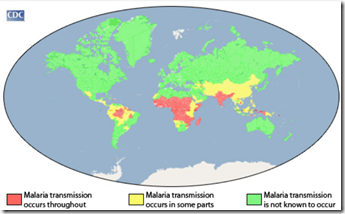
image

CDC Malaria Map.

Map Legend:

Legend


Over the past couple of years, a new artemisinin resistant form of malaria has appeared along the Cambodian-Thailand border, prompting concerns that it could spread.  


Hence the call for heightened monitoring and urgent requests that nations halt the use of oral artemisinin alone for the treatment of uncomplicated falciparum malaria, and use it as part of a drug cocktail instead.   


First the news release, then a link to the report.


News release


WHO calls on malaria-endemic countries to strengthen monitoring of antimalarial drug efficacy

National monitoring essential step in preventing the emergence of malaria drug resistance

18 NOVEMBER 2010 | GENEVA -- WHO is calling on countries to be increasingly vigilant in monitoring antimalarial drug efficacy in order to allow for early detection of artemisinin resistance.1 This is one among several conclusions of the Global report on antimalarial drug efficacy and drug resistance: 2000–2010, released today. The report is based on 1100 studies conducted by national malaria control programs and research institutes over the ten-year period.


The report estimates that only 34% of malaria-endemic countries are complying with WHO recommendations to routinely monitor the efficacy of first- and second-line antimalarial medicines.2

"A greater political commitment to support and sustain national monitoring of the efficacy of antimalarial medicines is critical to prevent a wider emergence of artemisinin resistance", said Dr Pascal Ringwald of the Drug Resistance and Containment Unit, within WHO's Global Malaria Programme and one of the report authors.

Resistance to artemisinin

In February 2009, WHO confirmed that resistance to artemisinin had emerged on the Cambodia-Thailand border. Although patients infected were cured following treatment with an artemisinin-based combination therapy (ACT), the recovery took more time. In artemisinin-resistant areas, the high cure rates observed depend heavily on the efficacy of the non-artemisinin component of the combination.


Nonetheless, the report found that ACTs currently recommended by national malaria control programmes remain efficacious in treating malaria, with cure rates generally greater than 90%. In countries where the currently recommended ACT has a cure rate of less than 90%, policy change is ongoing to implement an efficacious replacement treatments for malaria.


"The emergence of artemisinin resistance on the Cambodia-Thailand border has been a wake-up call to the world to prevent its spread, increase monitoring, and preserve ACTs as the only effective treatment we have for falciparum malaria", said Dr Robert Newman, Director of WHO's Global Malaria Programme. "Prompt action will be critical to sustain progress in malaria control and achieve the health-related Millennium Development Goals."


(Continue . . .)


Global report on antimalarial efficacy and drug resistance: 2000-2010

Authors: WHO
Publication date: 2010
Languages: English
ISBN: 9789241500470


Download [pdf 2Mb]
Questions and Answers [pdf 186kb]
Overview

This report provides a comprehensive, global overview of antimalarial drug efficacy and the resistance of malaria parasites to the antimalarial medicines used between 2000 and June 2010. Policy-makers in national ministries of health will benefit from this document, as it provides both a global and a regional picture of the efficacy of the antimalarial medicines currently used in national treatment programmes. In addition, the report will be a reference for scientists, enhancing their understanding of the complexity of antimalarial drug resistance.

Friday, November 12, 2010

Pathological Flyers


# 5050


Each year, more than 17 million commercial airline flights transport hundreds of millions of people across the globe.


In 2007, London's Heathrow Airport saw 68 million passengers pass through their gates, and they were only the third busiest airport in the world.  The ten most active airports worldwide handled well over a half billion passengers last year.


You can literally travel from just about any two cities (with airports) anywhere in the world in 24 hours or less. No longer are the oceans, or distance, a protection against diseases normally seen only in remote areas of the world.


They are only a short airplane ride away.


The video above, which as been making the rounds for several years, was made by ZHAW (Zürcher Hochschule für Angewandte Wissenschaften) or The Zurich University of Applied Sciences. It is a simulation (using real data) showing 24 hours of air traffic around the world. 


A few recent examples of internationally imported infectious diseases include:


  • The 2009 influenza pandemic spread rapidly, in large part, due to the heavy spring break air travel in and out of Mexico during the initial outbreak.

  • Earlier this summer Broward County, Florida and this week, Miami reported their first cases of locally acquired dengue fever in more than half a century – no doubt imported by someone who had visited a country where that virus is endemic.

  • The Florida keys has seen more than 50 dengue cases this year, and once again, the introduction of the virus undoubtedly came from a tourist or a resident returning from overseas.

  • In 2007, a small region of northern Italy saw – of all things – an outbreak of Chikungunya – after a resident returned from a visit to India with the virus, eventually spreading to 290 people.

  • The recent outbreak of Cholera in Haiti turns out to be an Asian strain, strongly suggesting that it was imported by a traveler from that part of the globe.

  • Earlier this year the CDC  also issued a Health Advisory via their HAN (Health Alert Network) primarily to inform health care providers of the possibility of seeing Dengue Fever in returning visitors from areas where the virus is being seen. (see Puerto Rico: Dengue Surveillance Update)

  • And similarly, earlier this summer (see A Message Of Import), Australia issued warnings to vacationers returning from Bali who may have been exposed to a `range of infectious diseases, including mosquito borne diseases like Dengue fever, gastroenteritis, sexually transmissible infections, and rabies.’


Well . . . you get the idea.  


Public health officials increasingly have their hands full trying to track and contain diseases that are showing up in places where they’ve never been seen before – primarily because of our highly mobile society.


Maryn McKenna addressed some of these issues last week in Traveling? Get your shots, take your pills, which is well worth taking the time to read.  


Go ahead, I’ll wait.


All of which serves as prelude to a study that appears in the October 30th edition of Pharmacotherapy, and has been reprinted for all to read in Medscape Today.


Mosquito-borne illnesses in travelers: a review of risk and prevention.

Mirzaian E, Durham MJ, Hess K, Goad JA.

Pharmacotherapy. 2010 Oct;30(10):1031-43.

Abstract

In 2008, residents of the United States made 12 million visits to developing countries in Asia, South America, Central America, Oceania, the Middle East, and Africa. Due to the presence of Anopheles, Aedes, and Culex mosquitoes, travel to these destinations poses a risk for diseases such as malaria, yellow fever, and Japanese encephalitis that cause significant morbidity and mortality.

(Continue . . .)


For an excellent short-course in mosquito borne diseases, and what we can help do to prevent them, follow these links for the full study.


Thursday, October 21, 2010

Lancet: India's Invisible Malaria Burden


# 4996


A pair of articles this morning published today in The Lancet  (hat tip Arkanoid Legent for the link) that may help illuminate the real impact of Malaria in India and that likely have broader implications as well.


It’s a subject we’ve covered before; our difficulty in accurately estimating the number of victims from different diseases.


In this case, the disease is Malaria, which the World Health Organization has estimated claims about 15,000 lives each year in India.


Using the somewhat controversial technique of `verbal autopsies’, a new multi-year study has come up with a startlingly higher estimate.


The authors suggest that the `real’ number is likely an order of magnitude higher – estimating 205 000 malaria deaths per year with plausible lower and upper estimates ranging from 125 000 to 277 000.


Millions of people die each year around the world without ever receiving modern medical care. Living in mostly rural areas of developing countries, they are often buried quickly with no cause of death identified.


In many cases, if estimates of disease mortality are conducted at all in developing countries, those estimates are based upon limited urban sampling and then extrapolated to the country’s whole population.


Verbal autopsies are a technique used by the World Health Organization, and others, to try to determine the cause of death based on interviews with family members, friends and neighbors.


While not as precise as a conventional autopsy, this method has been used and refined over the years (see  A standard verbal autopsy method for investigating causes of death in infants and children) with input from such prestigious entities as The Johns Hopkins School of Hygiene and Public Health and The London School of Hygiene and Tropical Medicine.


From this report:


A verbal autopsy is a method of finding out the cause of a death based on an interview with next of kin or other caregivers. In order for verbal autopsies to be comparable, they need to be based on similar interviews, and the cause of death needs to be arrived at in the same way in all cases.


In recent years, verbal autopsies have been used more widely to provide information on cause of death in areas where civil registration and death certification systems are weak, and where most people die at home without having had contact with the health system. This type of interview is often the only way to find out about the cause of death.


Which brings us to today’s study appearing in the early Online edition of the Lancet.  You’ll need to be registered (it’s free & easy) to access the full text.


Adult and child malaria mortality in India: a nationally representative mortality survey

Neeraj Dhingra, Prabhat Jha, Vinod P Sharma, Alan A Cohen, Raju M Jotkar, Peter S Rodriguez, Diego G Bassani, Wilson Suraweera, Ramanan Laxminarayan, Richard Peto

Preview |Summary | Full Text | PDF

Despite uncertainty as to which unattended febrile deaths are from malaria, even the lower bound greatly exceeds the WHO estimate of only 15 000 malaria deaths per year in India (5000 early childhood, 10 000 thereafter). This low estimate should be reconsidered, as should the low WHO estimate of adult malaria deaths worldwide.


From the abstract, a couple of excerpts that describe the methods and their results.


Methods

Full-time non-medical field workers interviewed families or other respondents about each of 122 000 deaths during 2001—03 in 6671 randomly selected areas of India, obtaining a half-page narrative plus answers to specific questions about the severity and course of any fevers. Each field report was sent to two of 130 trained physicians, who independently coded underlying causes, with discrepancies resolved either via anonymous reconciliation or adjudication.

Findings

Of all coded deaths at ages 1 month to 70 years, 2681 (3·6%) of 75 342 were attributed to malaria. Of these, 2419 (90%) were in rural areas and 2311 (86%) were not in any health-care facility.


<SNIP>


The adjudicated results show 205 000 malaria deaths per year in India before age 70 years (55 000 in early childhood, 30 000 at ages 5—14 years, 120 000 at ages 15—69 years); 1·8% cumulative probability of death from malaria before age 70 years. Plausible lower and upper bounds (on the basis of only the initial coding) were 125 000—277 000.


Perhaps the most startling statistic was that 86% of these supposed malarial deaths occurred outside of any formal health care facility.    


In an accompanying commentary (below), its authors state that this report – and growing evidence from other studies – should give the WHO and others `pause for thought’  and later, that `evidence is increasing that the scale of the burden has been greatly under-estimated’.


But the authors also caution that verbal autopsies `remain an imperfect method for the estimation of malaria mortality’, and these `unexpected findings’  require further investigation.


India's invisible malaria burden

Simon I Hay, Peter W Gething, Robert W Snow

Preview | Full Text | PDF


The problem of undercounting (or in reality, under-estimating) the burden of disease extends far beyond just malaria, and spans the globe.


Here in the United States, we are only able to roughly estimate the number of influenza deaths each year, and those estimates are subject to considerable debate.


The much bandied about global fatality number from the 2009 pandemic – roughly 18,000 reported to the WHO – is used blithely (and perhaps, disingenuously) by the media to depict the impact of the outbreak even though no one in public health seriously believes that number to be accurate.


But agencies, governments, and the media thrive on numbers and will use (and often portray as reasonably accurate) whatever number they have until a `better’ number becomes available.


Which is how we saw an estimate of 1,000 barrels of oil a day being leaked into the Gulf of Mexico this summer gradually expand to 5,000 barrels - and then after several months - was eventually increased to over 40,000 barrels a day.


But of course, no one really knows the `right’ number.


And the same could be said for the right number of H5N1 infections around the world, the true count of locally acquired Dengue in the United States, or how many people are really affected by Lyme disease in this country.


As the CDC graphic below shows, only the `tip of the pyramid’ of practically any disease actually gets reported to the health department or CDC.  


Even when a disease is `reportable’. 

surveillance

Which is why you always have to look for that pesky asterisk, and the footnote or disclaimer, when reporting on estimates and statistics.


The old joke says that `87.63% of all statistics are made up’.


While it might be more accurate to say that `x% of all statistics are based on incomplete, and possibly inaccurate data’, the point is worth making.


If it is repeated often enough, a statistic becomes `accepted fact’, even though it may be flawed by an order of magnitude.


And when economic, healthcare, or other policy decisions are based on bad, or incomplete data we usually get bad decisions.


Of course, `good numbers’ are hard to find. Sometimes, impossible.


And admittedly, my faith in the accuracy of techniques like verbal autopsies is limited. I’ve assisted in real autopsies where the cause of death was indeterminable, so interviewing relatives after-the-fact is bound to return less-than-optimal results. 


But until a better method can be devised, I accept they may provide better insight (a relative term) into the burden of diseases like malaria in areas where clinical testing remains unavailable.


So, as with the previous estimate of 15,000 deaths a year from malaria in India, I take these new estimates with a large grain of salt.


While we must sometimes use numbers that we know may be less-than-accurate  . . .  good reporting dictates that we clearly come out and say so.  


Even if it `bogs down’, or complicates the narrative of a story.


Otherwise, we are simply compounding a scientific felony.