Showing posts with label Pandemic. Show all posts

Tuesday, April 21, 2015

Viral Creep In Second Decade Of The 21st Century

image

Photo Credit- CDC


# 9965


Eleven years ago the Report of the WHO/FAO/OIE Joint Consultation on Emerging Zoonotic Diseases, convened in Geneva, defined an emerging zoonosis as ‘a zoonosis that is newly recognised or newly evolved, or that has occurred previously but shows an increase in incidence or expansion in geographical, host or vector range’


Last year, in Emerging zoonotic viral diseases  L.-F. Wang (1, 2) * & G. Crameri wrote:


The last 30 years have seen a rise in emerging infectious diseases in humans and of these over 70% are zoonotic (2, 3). Zoonotic infections are not new. They have always featured among the wide range of human diseases and most, e.g. anthrax, tuberculosis, plague, yellow fever and influenza, have come from domestic animals, poultry and livestock. However, with changes in the environment, human behaviour and habitat, increasingly these infections are emerging from wildlife species.


Patterns that were predicted nearly two decades ago by well respected anthropologist and researcher George Armelagos (May 22, 1936 - May 15, 2014) - of Emory University - who wrote Disease in human evolution: the re-emergence of infectious disease in the third epidemiological transition. National Museum of Natural History Bulletin for Teachers 18(3)


I wrote at some length back in 2011 on The Third Epidemiological Transition, which Dr. Armelagos called the age of re-emerging infectious diseases, a concept he expanded upon in 2010 in The Changing Disease-Scape in the Third Epidemiological Transition, where he wrote:


It is characterized by the continued prominence of chronic, non-infectious disease now augmented by the re-emergence of infectious diseases. Many of these infections were once thought to be under control but are now antibiotic resistant, while a number of “new” diseases are also rapidly emerging. The existence of pathogens that are resistant to multiple antibiotics, some of which are virtually untreatable, portends the possibility that we are living in the dusk of the antibiotic era. During our lifetime, it is possible that many pathogens that are resistant to all antibiotics will appear. Finally, the third epidemiological transition is characterized by a transportation system that results in rapid and extensive pathogen transmission.


In other words, the emergence of MERS-CoV, H5N1, Nipah, Hendra, Lyme Disease, H7N9, H5N6, H10N8, NDM-1, CRE, etc. are not temporary aberrations. They are the new norm, and we should get used to seeing more pathogens like these appear in the coming years.


The emerging infectious diseases are considered such an important threat that the CDC maintains as special division – NCEZID (National Center for Emerging and Zoonotic Infectious Diseases) – to deal with them. According to the NCEZID:

Emerging means infections that have increased recently or are threatening to increase in the near future. These infections could be

  • completely new (like Bourbon virus, which was recently discovered in Kansas or MERS, Middle East Respiratory Syndrome).
  • completely new to an area (like chikungunya in Florida).
  • reappearing in an area (like dengue in south Florida and Texas).
  • caused by bacteria  that have become resistant to antibiotics, like MRSA (methicillin-resistant Staphylococcus aureus), C. difficile, or drug-resistant TB.


Over the past 36 months we’ve seen:

  • A novel Coronavirus (MERS-CoV) emerge in the Middle East
  • Several new avian flu strains have emerged and jumped to humans, including H7N9, H5N6, H10N8, and H6N1
  • Chikungunya arrived in the Americas, and has already infected well over 1 million people. 
  • Several new tickborne diseases have emerged (Heartland Virus, Bourbon Virus, SFTS) in the United States and around the world. 
  • Last summer a new variant of a rarely seen EV-D68 virus swept across the United States, sickening hundreds of thousands of kids and leaving more than 100 paralyzed.


And in the wings we have a number of epizootic diseases – like HPAI H5N2, H5N8, canine H3N2, H10N7 and H3N8 in seals – that while they haven’t jumped to humans, have at least some potential to do so in the future.


Although our awareness of some of these threats is no doubt enhanced by our improved surveillance and testing capabilities, there are reasons to believe the number of zoonotic threats facing us are increasing faster today than we’ve seen in the past.


Additionally, some zoonotic threats – like Lyme disease – are now recognized as being far more prevalent than previously appreciated.  In 2013, the CDC revised their Estimate Of Yearly Lyme Disease Diagnoses In The United States, indicating that the number of Lyme Disease diagnoses in the country is probably closer to 300,000 than the 30,000 that are officially reported each year to the CDC.


While exotic diseases have always existed and plagued mankind, never before has mankind been so able to aid and abet their global spread, via our increasingly mobile society.  


Chikungunya was undoubtedly introduced by viremic travelers to the Caribbean in the fall of 2013, who inadvertently `seeded’ the virus into the local mosquito population.  Since then there have been well over 1.3 million infections in the Americas – spanning more than 3 dozen nations - and millions more will undoubtedly be infected in the years to come.  

image


Presumably Dengue arrived in South Florida in 2009 in a similar fashion, as did West Nile Virus to NYC in the late 1990s. Earlier this year we learned of two travelers who returned to Vancouver infected with the H7N9 virus.  A year previously, a nurse died in Alberta, Canada after contracting H5N1 while on a visit to China. 


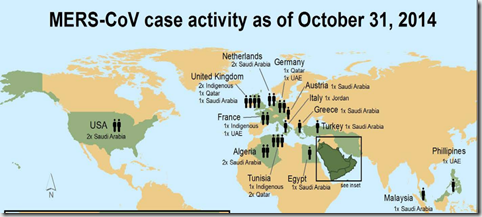
And we’ve seen a handful of Ebola and MERS cases travel via aircraft to the United States, Europe, and the Philippines over the past year.


While vector-borne illnesses like West Nile, Dengue, and Chikungunya have done the best so far, there is really no way to know what the `next big thing’ in global infectious disease spread will be.  As the CDC’s Global Health Website puts it:


Why Global Health Security Matters

Disease Threats Can Spread Faster and More Unpredictably Than Ever Before

(Excerpt)

A disease threat anywhere can mean a threat everywhere. It is defined by

  • the emergence and spread of new microbes;
  • globalization of travel and trade;
  • rise of drug resistance; and
  • potential use of laboratories to make and release—intentionally or not—dangerous microbes.

(Continue . . .)


A recent Assessment by the Director of National Security (see DNI: An Influenza Pandemic As A National Security Threat) found the global spread of infectious diseases – along with cyber attacks, terrorism, extreme weather events, WMDs, food and water insecurity, and global economic concerns.- constitutes a genuine threat to national security.


As we discussed last year,  in The New Normal: The Age Of Emerging Disease Threats, the reality of life in this second decade of the 21st century is that disease threats that once were local, can now spread globally in a matter of hours or days.


We’ve been lulled into a false sense of security since the last pandemic was relatively mild, and the feeling is they only come around every 30 or 40 years.  But viruses don’t read calendars, or play by `mostly likely worst-case scenario rules’  that are adopted by most planning committees.


The time has come to take pandemic planning seriously again, not because of one specific threat like MERS or H5N1, but because there’s a growing list of pathogens with pandemic potential queuing up around the globe.


All of which makes this a good  time for agencies, organizations, businesses, communities, and families to dust off their pandemic plans, review them, and make any needed refinements.  


You do have a pandemic plan, don’t you?


For some recent pandemic preparedness blogs, you may wish to revisit:


Do You Still Have A CPO?
Pandemic Planning For Business
NPM13: Pandemic Planning Assumptions
The Pandemic Preparedness Messaging Dilemma

Sunday, April 12, 2015

CID: CDC Modeling Efforts in Response to a Potential Pandemic

Credit - HHS Interim Pre-Pandemic Planning Guidance: Community Strategy For Pandemic Influenza Mitigation In the United States.


# 9930


The journal Clinical Infectious Diseases has published a large supplement on the challenges of responding to an influenza pandemic  that is – sadly – mostly behind a pay wall.  We do have excerpts and abstracts to draw on, and even with this limited access, can glean some salient points.


The entire issue is called:


CDC Modeling Efforts in Response to a Potential Public Health Emergency: Influenza A(H7N9) as an Example

Volume 60 suppl 1 May 1, 2015


And we get a pretty good overview of the rationale behind these pandemic modeling exercises in:


Standardizing Scenarios to Assess the Need to Respond to an Influenza Pandemic
  • Martin I. Meltzer, Manoj Gambhir, Charisma Y. Atkins, and David L. Swerdlow
  • Clin Infect Dis. (2015) 60 (suppl 1): S1-S8 doi:10.1093/cid/civ088

An outbreak of human infections with an avian influenza A(H7N9) virus was first reported in eastern China by the World Health Organization on 1 April 2013 [1]. This novel influenza virus was fatal in approximately one-third of the 135 confirmed cases detected in the 4 months following its initial identification [2], and limited human-to-human H7N9 virus transmission could not be excluded in some Chinese clusters of cases [3, 4]. There was, and still is, the possibility that the virus would mutate to the point where there would be sustained human-to-human transmission. Given that most of the human population has no prior immunity (either due to natural challenge or vaccine induced), such a strain presents the danger of starting an influenza pandemic.

In response to such a threat, the Joint Modeling Unit at the Centers for Disease Control and Prevention (CDC) was asked to conduct a rapid assessment of both the potential burden of unmitigated disease and the possible impacts of different mitigation measures. We were tasked to evaluate the 6 following interventions: invasive mechanical ventilators, influenza antiviral drugs for treatment (but not large-scale prophylaxis), influenza vaccines, respiratory protective devices for healthcare workers and surgical face masks for patients, school closings to reduce transmission, and airport-based screening to identify those ill with novel influenza virus entering the United States. This supplement presents reports on the methods and estimates for the first 5 listed interventions, and in this introduction we outline the general approach and standardized epidemiological assumptions used in all the articles.

(Continue . . . )


First some links to the accompanying pandemic modeling studies, after which I’ll return with a bit more.


The late George E. P. Box (18 October 1919 – 28 March 2013) - Professor Emeritus of Statistics at the University of Wisconsin - is often credited with coining the familiar adage:


All models are wrong, but some models are useful.”


While imperfect, we use computer models every day to try to mathematically simulate real-life events; everything from highway traffic flow to weather forecasting. Rare events - like pandemics - with a limited data-set of information are particularly difficult to model. 


Over the years we’ve discussed the different pandemic assumptions adopted by various state and federal agencies, and they have been – quite frankly – all over the map.


While the most severe pandemic in modern history (1918) produced a 2.5% mortality rate, and killed approximately 675,000 Americans, no one really knows what the next severe pandemic will bring. So we’ve seen a lot of models.


Two years ago, the 2009 Northern Command Pandemic Plan (see SciAm story Pandemic Flu Plan Predicts 30% of U.S. Could Fall Ill) was declassified with its estimates that during a moderately severe pandemic 30% of the population could fall ill, 3 million could require hospitalization, and 2 million Americans could die.


In 2008 the HHS outlined their vision of the likely impact in the United States of a severe pandemic (see A Tale Of Two Scenarios).   As you’ll see, the numbers of hospitalizations anticipated during a severe pandemic is quite a bit higher than the Northcom plan.

The HHS defined a severe pandemic as:

    • An attack rate of 30% (90 million Americans sickened)
    • 50% (45 million) requiring outpatient medical care
    • 11% (9.9 million) requiring hospitalization
    • 745,000 requiring mechanical ventilation
    • 1.9 million deaths (2.1% fatality ratio)


In this round of modeling, in Estimating the Potential Effects of a Vaccine Program Against an Emerging Influenza Pandemic—United States, the authors elected to go with two  (considerably less severe) scenarios:


    1. 20% Attack Rate, a .5% hospitalization rate, and a case fatality rate of .08%
    2.  30% Attack Rate, a 4.2% hospitalization rate, and a case fatality rate of .53%


Scenario #1 would equate to a Category 1 pandemic using the 2008 HHS guidelines (see graphic at top of blog), and scenario #2 would reach Category 3 intensity.  Using that standard, the 1918 pandemic was a Category 5.


While a more severe pandemic is certainly possible, the experience of the last 100 years suggests that mild to moderate pandemics are more common, and that truly severe pandemics are outlier events.  


And based on even the moderately-severe pandemic scenarios presented in these papers, the challenges of procuring and distributing adequate supplies of vaccines, antivirals, ventilators, and masks would be considerable. 


One of the topics we’ve discussed often in the past has been the limited supply of PPEs (Personal Protective Equipment) like N95 masks, and the impact running out of these would have on the healthcare delivery system during a pandemic (see NIOSH: Options To Maximize The Supply of Respirators During A Pandemic).


We’ve seen estimates that many regions would exhaust their supplies of PPEs within 2 or 3 weeks.


Our Strategic National Stockpile has hundreds of millions of N95 and surgical masks in reserve, but the numbers needed as envisioned by the Potential Demand for Respirators and Surgical Masks During a Hypothetical Influenza Pandemic in the United States run into the billions.


From their Results and Conclusions:

Assuming that 20% to 30% of the population would become ill, 1.7 to 3.5 billion respirators would be needed in the base case scenario, 2.6 to 4.3 billion in the intermediate demand scenario, and up to 7.3 billion in the maximum demand scenario (for all scenarios, between 0.1 and 0.4 billion surgical masks would be required for patients). For pandemics with a lower attack rate and fewer cases (eg, 2009-like pandemic), the number of respirators needed would be higher because the pandemic would have longer duration. Providing these numbers of respirators and surgical masks represents a logistic challenge for US public health agencies. Public health officials must urgently consider alternative use strategies for respirators and surgical masks during a pandemic that may vary from current practices.


The take away from all of this is that we don’t have to see a Category 5, 1918-style pandemic to severely test our public health delivery system. 


Even a moderately-severe pandemic would provide more than enough challenges.


And until we can reasonably meet those – there’s probably not much to be gained by modeling more extreme worst-case scenarios.

Wednesday, March 25, 2015

WER: Development Of Candidate Vaccine Viruses For Pandemic Preparedness

image

H5 Clade Diversity Around the Globe – Credit WHO


# 9860


From time to time, the World Health Organization makes recommendations on new candidate influenza vaccine viruses (CVVs) for investigation and consideration, in case one of these emerging viruses begins to show pandemic potential.  The last time we looked at this was early in the Winter of 2014 (see Moving Viral Targets), where the WHO proposed that 2 new (H5N1 & H9N2) candidate vaccine viruses be developed.


Influenza A viruses are categorized by two proteins they carry on their surface; their HA (hemagglutinin) and NA (neuraminidase), resulting in subtypes like  H5N1, H7N9, or H3N2. 


While the list continues to expand, currently we know of 18 different HA proteins and 11 different NA proteins, making many different subtype combinations possible, although many of these combinations have yet to be observed in nature.


Within each strain, there are often genetic groupings called clades, and within each clade- subclades – and within each of these, many variants may exist.   And over time these clades, subclades, and variants may evolve antigenically enough away from its predecessors to require a reformulated vaccine.


This constant evolution of influenza viruses is illustrated quite nicely in the NIAID video Influenza: Get the (Antigenic) Drift.


Over the past decade more than two dozen H5N1 candidate influenza vaccine viruses have either been developed or proposed, and with the recent emergence of H5N8, H5N2, H5N3 and H5N6 and the continued evolution of H5N1, that roster continues to grow.

This week, the WHO’s Weekly Epidemiological Record (WER) published  a new review of currently circulating zoonotic influenza viruses, and their recommendations for two new vaccine virus candidates (both H5’s), one based on the recent changes observed in Egypt’s H5N1 virus, and the other based on the recent introduction of H5N8 into North America. 


Antigenic and genetic characteristics of zoonotic influenza viruses and  development of candidate vaccine viruses for pandemic preparedness


February 2015


The development of representative candidate influenza vaccine viruses CVVs, coordinated by WHO, remains an essential component of the overall global strategy for pandemic preparedness.


Zoonotic influenza viruses continue to be identified and often evolve both genetically and antigenically, leading to the need to update CVVs for pandemic preparedness purposes. Changes in the genetic and antigenic characteristics of these viruses, their relationship to existing CVVs, and the associated potential risks for public health, justify the need to select and develop new CVVs.


Selection and development of CVVs are the first steps towards timely vaccine production and do not imply a recommendation for initiating manufacture. National authorities may consider the use of one or more of these CVVs for pilot lot vaccine production, clinical trials and other pandemic preparedness purposes based on their assessment of public health risk and need.

This document summarizes the genetic and antigenic characteristics of recent zoonotic influenza viruses and related viruses circulating in animals, and updates information on the availability of CVVs. Institutions that wish to receive these CVVs should contact WHO at gisrswhohq@who.int or the institutions  listed in announcements published on the WHO website

<SNIP>

Influenza A(H5) candidate vaccine viruses


Based on the available antigenic, genetic and epidemiologic data, A/Egypt/N04915/2014-like (clade 2.2.1) and A/gyrfalcon/Washington/41088-6/2014-like (clade 2.3.4.4) CVVs are proposed. The available and pending A(H5) CVVs are listed in Table 5. National authorities may consider the use of one or more of these A(H5) CVVs for pilot lot vaccine production, clinical trials and other pandemic preparedness purposes based on their assessment of public health risk and need. As the  viruses continue to evolve, new A(H5) CVVs may be developed.

(Continue . . . )


This document also reviews H7N9, H9N2, H5N6, and various swine variant (H1N1v, H3N2v) activity around the globe, and determines that no additional CVVs are required for these viruses at this time.

Thursday, March 12, 2015

H7N9: Primus Inter Pares?

image

  Credit Eurosurveillance


# 9813


Although well known (and respected) by infectious disease geeks, yesterday’s publication in Nature: Dissemination, Divergence & Establishment of H7N9 In China has suddenly thrust this H7 avian flu virus into the limelight, casting it in the role of the potentially driving the next influenza pandemic.


It isn’t alone, of course.  There are other pandemic contenders out there, including the venerable H5N1 virus.


But H7N9’s rapid spread, and growing genetic diversity in China – combined with its ability to infect humans – has seemingly elevated it to the level of  Primus inter pares – or `first among equals’ – in the pandemic flu world. 


Overnight we’ve seen a plethora of headlines heralding the threat:


H7N9 bird flu has the makings of a pandemic virus, scientists warn

Scientists warn H7N9 bird flu may pose pandemic threat

Bird Flu Mutating in China, Threatens Pandemic

Report: H7N9 bird flu has makings of pandemic


While yesterday’s report in Nature provides more information, and includes a stern warning about its implications, this isn’t the first study to cast H7N9 in a possible pandemic role.  Very early on after it appeared in China in the spring of 2013 we began to hear warnings from scientists, and over the past couple of years, we’ve followed the virus’s evolution.


In June of 2014, in Eurosurveillance: Genetic Tuning Of Avian H7N9 During Interspecies Transmission, we saw evidence of the genetic diversity, and continual evolution, of the H7N9 virus in Mainland China.  Researchers found that at least 26 separate genotypes had emerged, mostly during the first wave, through a process they called `genetic tuning’.


Yesterday’s report expands that array of genotypes to 48, divided among three well defined clades, and even includes a previously unrecognized subtype – H7N6 - in chickens.  Previously, during the first wave in 2013, a new H7N7 virus was also recognized (see Nature: Genesis Of The H7N9 Virus).


The power, and the threat, of H7N9 isn’t simply that it could pick up the `right’ mutations and become fully transmissible in humans, thereby sparking a pandemic.   It’s that H7N9 is genetically malleable enough to serve as a stepping stone – or bridge – to a completely new subtype. 


As we’ve seen over the past couple of years with the sudden expansion of the HPAI H5 universe – which now encompasses H5N1, H5N2, H5N3, H5N5, H5N6, and H5N8 -  H7N9 seems poised to grow the H7 flu line as well.


Two years ago we really only had one avian flu virus we worried about; H5N1.  But in the spring of 2013 the novel flu field was joined by the unexpected arrival of highly pathogenic (in humans) H7N9 virus, which spread stealthily, and asymptomatically in chickens.  


And over the next 12 months, we saw a parade of new subtypes begin to emerge, including H6N1, H10N8, H5N2, H5N3, H5N6 and H5N8.


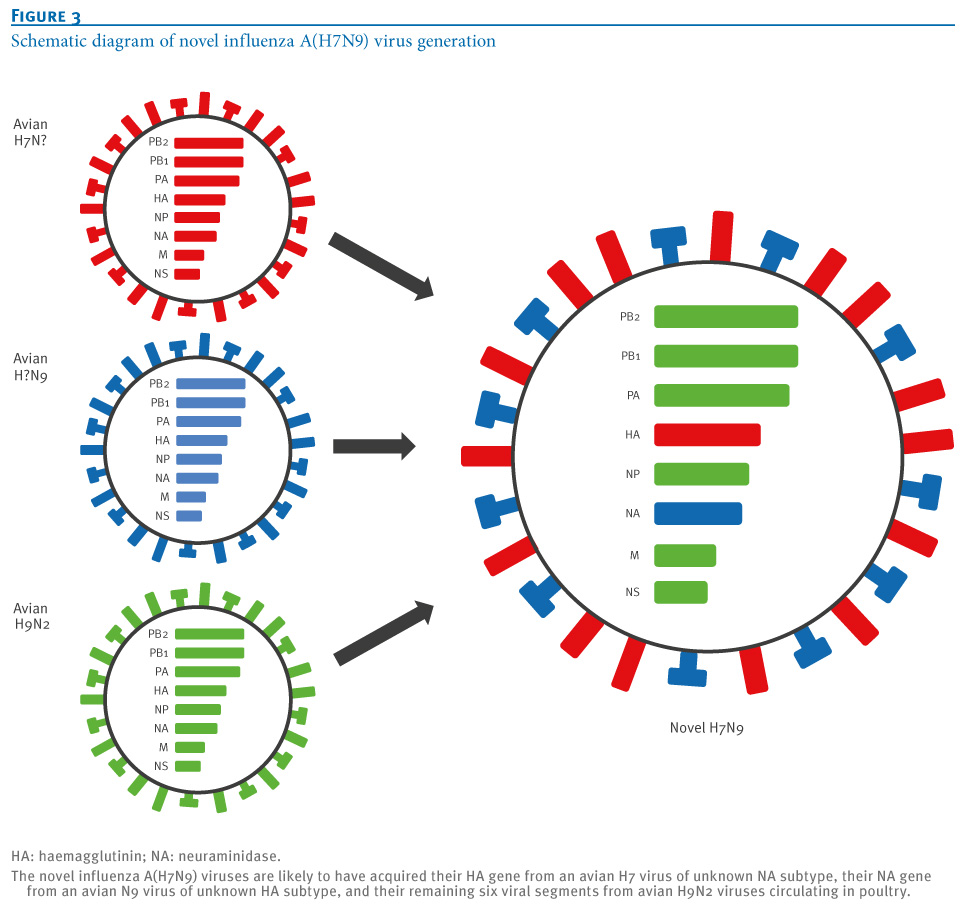
The process by which these new subtypes evolve is called reassortment, and that can happen anytime a single host is simultaneously infected with two different flu subtypes. 

image


For avian viruses, birds are the obvious host of choice, while swine flu viruses reassort primarily in pigs.  But any susceptible host can produce a reassortant virus, including dogs, cats, horses, and humans.  


Fortunately, most reassortant viruses are evolutionary dead ends – unable compete against existing viruses.  But increasingly over the past few years, we are seeing `biologically fit’ reassortants emerge, capable of holding their own, and even thriving in the wild.


Last month, in HK’s Dr. Ko Wing-man On Flu Reassortment Concerns, we looked at the very real concerns expressed by Hong Kong’s Director of their Centre for Health Protection, that H7N9 could reassort with H3N2 during their particularly heavy flu season.


It is not an unreasonable concern.  While rarely detected, co-infections with two flu subtypes do occur, and probably more often than we suspect.  


Previously, in the Lancet: Coinfection With H7N9 & H3N2, we saw the first evidence of co-infection with the newly emerged H7N9 virus and a seasonal flu virus in a human. While last October, in EID Journal: Human Co-Infection with Avian and Seasonal Influenza Viruses, China, we looked at co-infections in 2 patients in Hangzhou, in January 2014.


In all of three of these cases, no reassortant virus was detected.


But In 2011,  an influenza co-infection in Canada led to the creation of a unique hybrid reassorted virus (see Webinar: pH1N1 – H3N2 A Novel Influenza Reassortment), although it was not passed on to anyone else.


In recent years we’ve seen a growing list of novel (avian, swine, canine, even seal) flu viruses emerge (H5N3, H5N2, H5N5, H5N6, H5N8, H7N9, H10N8, H10N7, H3N8, H6N1, H1N1v, H1N2v, H3N2v, etc. . .), and each carries some risk of reassortment. 


With other novels viruses, or with human viruses. Or conceivably both.


Over the past couple of years, the number of novel flu threats has grown dramatically, and that growth spurt shows no signs of abating.  With more and more influenza subtypes, clades - and genotypes within these clades - circulating,  Nature’s laboratory gets more `interchangeable parts’  to play with. 


While a pandemic may not be imminent, given the amount of `viral chatter’ we are hearing, the threat level is certainly elevated.  And by the time it is obvious that a pandemic threat has emerged, our `lead time’ to prepare may be down to weeks.


Two weeks ago, the World Health Organization released a statement called Warning signals from the volatile world of influenza viruses   where they cautioned:

Warning: be prepared for surprises

Though the world is better prepared for the next pandemic than ever before, it remains highly vulnerable, especially to a pandemic that causes severe disease. Nothing about influenza is predictable, including where the next pandemic might emerge and which virus might be responsible. The world was fortunate that the 2009 pandemic was relatively mild, but such good fortune is no precedent.


Whether the next big global health crisis stems from H7N9, H5N1, a new flu reassortant, MERS-CoV, or `Virus X’ – the one we don’t know about . . .  yet – our level of preparedness will, in large measure, determine its impact.


Now is the time for agencies, organizations, businesses, communities, and families to dust off their pandemic plans, review them, and make any needed refinements.  


You do have a pandemic plan, don’t you?


For some recent pandemic preparedness blogs, you may wish to revisit:


Do You Still Have A CPO?
Pandemic Planning For Business
NPM13: Pandemic Planning Assumptions
The Pandemic Preparedness Messaging Dilemma

Thursday, February 26, 2015

Do You Still Have A CPO?

image

125 Years of Pandemics – Credit ECDC 


# 9756


Although the next pandemic may not arrive for years, or even decades, the next big global health crisis could just as easily emerge this year or next. While many think we’ve `already had our pandemic’,  there is no mandated minimum `time out’ period between these global events.


We’ve seen 6 influenza pandemics over the past 120 years (plus several `close calls’ in 1951, 1975, 1976 see  Pseudo Pandemics And Viral Interlopers), and in recent years we’ve seen a sharp increase in the number of viral threats in circulation (Influenzas, coronaviruses, etc.). 


Last year, the Director of the CDCDr Thomas Frieden – weighed in on the pandemic threat in a special piece he penned for CNN News (see CDC Director Frieden: On Preventing A Pandemic).  He wrote:

While it is impossible to know when another pandemic will occur, few scientists doubt that it will happen again.  Pandemics have swept the globe for centuries, and show no signs of abating despite our modern medical advances.


According to respected anthropologist and researcher George Armelagos of Emory University, we have entered the age of re-emerging infectious diseases which he has dubbed The Third Epidemiological TransitionDr. Armelagos describes this trend in his 2010 paper The Changing Disease-Scape in the Third Epidemiological Transition.


It is characterized by the continued prominence of chronic, non-infectious disease now augmented by the re-emergence of infectious diseases. Many of these infections were once thought to be under control but are now antibiotic resistant, while a number of “new” diseases are also rapidly emerging. The existence of pathogens that are resistant to multiple antibiotics, some of which are virtually untreatable, portends the possibility that we are living in the dusk of the antibiotic era. During our lifetime, it is possible that many pathogens that are resistant to all antibiotics will appear. Finally, the third epidemiological transition is characterized by a transportation system that results in rapid and extensive pathogen transmission.


In other words, the emergence of MERS-CoV, H5N1, Nipah, Hendra, Lyme Disease, H7N9, H5N6, H10N8, NDM-1, CRE, etc. are not temporary aberrations. They are the new norm, and we should get used to seeing more like these appear in the coming years.


In December of 2012 the U.S. National Intelligence Council released a report called  "Global Trends 2030: Alternative Worlds" that tries to anticipate the global shifts that will likely occur over the next two decades (see Black Swan Events). Number one on their hit parade?

Global Trends 2030's potential Black Swans

1. Severe Pandemic

"No one can predict which pathogen will be the next to start spreading to humans, or when or where such a development will occur," the report says. "Such an outbreak could result in millions of people suffering and dying in every corner of the world in less than six months."

The threat of another influenza pandemic is consistently ranked higher by most governments than a major cyber/terrorist attack, solar flare, or nuclear/WMD war – and is considered all but inevitable by many experts.


A decade ago, we saw a massive global push for pandemic preparedness, and many groups selected a CPO; a Chief Pandemic Officer.  Someone in their business, organization, or family - whose job it was to coordinate their pandemic plan  (see Quick! Who's Your CPO?)..


Unfortunately, since the 2009 pandemic was perceived by many as being mild and the next event thought years away, many corporate, organizational, or agency pandemic plans haven’t been updated – or in many cases even looked at – in years.


While it may sit on the back-burner for most people, Ready.gov and FEMA continue to urge pandemic preparedness.  This from Ready.gov:


Pandemic

Inspire others to act by being an example yourself, Pledge to Prepare & tell others about it!

Pledge to Prepare

You can prepare for an influenza pandemic now. You should know both the magnitude of what can happen during a pandemic outbreak and what actions you can take to help lessen the impact of an influenza pandemic on you and your family. This checklist will help you gather the information and resources you may need in case of a flu pandemic.

Plan for a Pandemic

  • Store a two week supply of water and food. During a pandemic, if you cannot get to a store, or if stores are out of supplies, it will be important for you to have extra supplies on hand. This can be useful in other types of emergencies, such as power outages and disasters.
  • Periodically check your regular prescription drugs to ensure a continuous supply in your home.
  • Have any nonprescription drugs and other health supplies on hand, including pain relievers, stomach remedies, cough and cold medicines, fluids with electrolytes, and vitamins.
  • Get copies and maintain electronic versions of health records from doctors, hospitals, pharmacies and other sources and store them, for personal reference. HHS provides an online tool intended to help people locate and access their electronic health records from a variety of sources. http://healthit.gov/bluebutton
  • Talk with family members and loved ones about how they would be cared for if they got sick, or what will be needed to care for them in your home.
  • Volunteer with local groups to prepare and assist with emergency response.
  • Get involved in your community as it works to prepare for an influenza pandemic.


If you are an employer, you should know that OSHA considers it your responsibility to provide a safe workplace and has produced specific guidance on preparing workplaces for an Influenza Pandemic  along with Guidance for Protecting Employees Against Avian Flu

image


Meanwhile, Flu.gov – the government’s influenza pandemic portal – has these (and other) documents available for business pandemic preparedness:


 They also say in their community preparedness section:


Pandemic Flu 

The federal government cannot prepare for or respond to the challenge of a flu pandemic alone. Your community can develop strategies that reduce the impact and spread of pandemic flu.

Faith-Based & Community Organizations Pandemic Influenza Preparedness Checklist (PDF – 68.91 KB)

Lista de Preparacion para una Pandemia de Gripe Tanto para Organizaciones Comunitarias como Religiosas (PDF – 268 KB)

Community Strategy for Pandemic Influenza Mitigation (PDF – 10.3 MB)

Plan Now to Be Ready for the Next Flu Pandemic (PDF – 213.55 KB)

The Next Flu Pandemic: What to Expect (PDF – 226.83 KB)


image

image

Their advice (and this is for before a pandemic threat becomes imminent).

image


And if you follow only one link from this blog post, I’d recommend the following 20 minute video produced by Public Health - Seattle & King County -  called Business Not As Usual .

image

If you’ve not seen this movie, or haven’t seen it recently, it is well worth taking the time to watch it.


If preparing for a pandemic seems like a lot of work, you’re right. 


This it isn’t something you want to start doing after a pandemic threat has already appeared. Pandemic planning should be part of your (company, agency, even family) overall disaster & recovery plan, and if you haven’t updated that recently, you (or your CPO) have a fair amount of work to do.  


For more information on pandemic planning, you may want to revisit:

Pandemic Planning For Business
NPM13: Pandemic Planning Assumptions
The Pandemic Preparedness Messaging Dilemma
Sunday, December 07, 2014

The Year Of Spreading Dangerously

image


# 9420


In addition to providing the usual scourges of malaria, dengue, seasonal influenza, antibiotic resistant bacteria and pneumonia, 2014 has provided us with a number of new, or sometimes simply transplanted, disease threats around the world.  


A reminder that in our highly mobile and interconnected world, a disease threat anywhere can easily become a disease threat everywhere. 


The tone for the new year was set during the opening days of January when we saw North America’s first imported case of H5N1 ex-China (see Alberta Canada Reports Fatal (Imported) H5N1 Infection).  During that same week, Hong Kong was dealing with imported cases of H9N2 (link) and H7N9 (link) while Taiwan was dealing with an imported H7N9 infection (see  A Bit More On Taiwan’s Imported H7N9 Case).


Although  these cases were contained they served to remind us how easily a novel flu virus can hop a plane and travel from one country to the next.


The first cases (2 confirmed, 4 probable, 20 suspected) of Chikungunya on the French part of St. Martins were reported in early December of last year, likely imported by a viremic tourist, but by early January it was apparent that the virus was thriving, and spreading across the Caribbean courtesy of a highly competent local mosquito vector.

The ECDC reported as of 9 January 2014:

  • 201 probable or confirmed cases in Saint Martin (FR);
  • 2 confirmed cases in Saint Martin (NL);
  • 48 probable or confirmed cases in Martinique;
  • 25 probable or confirmed cases in Saint Barthélemy;
  • 10 probable or confirmed cases including one imported case from Saint Martin in Guadeloupe;
  • 1 confirmed case imported from Martinique in French Guiana.


Within weeks there would be thousands of cases, and within months hundreds of thousands. From these humble beginnings, in less than a year, the latest PAHO surveillance report (December 5th, 2014) puts the number who have been infected in the Americas now at just under 1 million people – although that is likely an undercount.


Of some solace, while painful and sometimes debilitating, Chikungunya has a fairly low mortality rate.  Still hundreds have died, and thousands have suffered long-term disability due to the virus. 


Although there have only been 11 locally acquired cases in the continental United States (all in Florida), this year more than 1,900 visitors have tested positive for the virus, increasing the odds that CHKV will eventually take up residence in North America.  


We’ve seen similar expansion of Dengue this year, with major new outbreaks in China and Japan.


While we were watching  the second wave of H7N9 accelerate in China, on January 17th we learned of the first outbreak of a new subtype of avian flu; H5N8 (see Media Reporting Korean Poultry Outbreak Due To H5N8) – which over the next several months would result in the culling of more than 13 million birds.


Currently only a threat to poultry, this virus has – over the first 11 months – spread as far east as Japan and as far west as the UK, likely carried by migratory birds.  Where it shows up next is anyone’s guess.

image

H5N8 Branching Out To Europe & Japan


Adding complexity to last winter’s bird flu season, we also saw three human infections with a new H10N8 virus (see Jiangxi Province Reports Second H10N8 Infection), and later in the spring, with a never-before-seen HPAI H5N6 virus (see Sichuan China: 1st Known Human Infection With H5N6 Avian Flu).


Both are wild cards for the upcoming winter season, but will have to be watched carefully for further spread.  H5N6, in particular, has been widely reported in poultry across both China and Vietnam in recent months.


And while H7N9 set worrisome new records for human infections during its second wave (n=322 cases vs 134 cases) last winter and spring, on the Arabian Peninsula MERS was also setting new records, and expanding its geographic range as well. 


The United States saw two imported cases last May, but it wasn’t alone, as more than a dozen nations have seen imported cases from the Middle East. With a distinct seasonal pattern, we can probably expect another surge in MERS cases after the new year.

image

image

Credit BCCDC


And while bird flu and MERS kept us busy during the first half of 2014, since the summer the first regional epidemic of Ebola – and in an area (West Africa) where it had never previously sparked an outbreak – became the big infectious disease threat of the year. 


With at least 17,000 infected (estimates range up to 2.5x’s official counts) and more than 6,000 dead, this Ebola outbreak continues to re-write the rules of how Ebola is expected to behave. 

image

Credit WHO Roadmap Dec 3rd.


While the effect of this epidemic on nations in western Africa has been nothing less than devastating, so far the impact from exported cases to the United States and Europe has been fairly limited.  It has, however, necessitated the creation of an extensive and expensive surveillance and reporting system here in the U.S., and around the globe.


A far lesser threat, here is the United States we saw an outbreak of a rarely-seen non-polio enterovirus (EV-D68) starting last August -first reported in Kansas City - but quickly spreading across the nation.  While most only saw mild illness, at the same time we saw  a few dozen children experience a rare form of paralysis thought to be linked to the virus (see CIDRAP: Likely That Polio-like Illness & EV-D68 Are Linked).


There were others, of course.  One off’s like the imported case of Lassa Fever in Minneapolis, MN and an imported case of CCHF (ex-Bulgaria) to the UK. 


Like embers drifting from a distant fire, most of the time these disease introductions burn out without harm, but they nonetheless harbor some potential to ignite where ever they land.


The reality of life in this second decade of this new century is that disease threats that once were local, can now spread globally in a matter of hours or days, thanks to our highly mobile society. 


And as our population and mobility have grown, so have the number of emerging infectious disease threats.  Something that was foretold two decades ago by anthropologist and researcher George Armelagos of Emory University, which I described in considerable detail in The Third Epidemiological Transition.


Earlier this year, we looked at an assessment by the Director Of National Intelligence who includes emerging infectious diseases and  Influenza Pandemic As A National Security Threat. 

From that report:

Worldwide Threats Assessment – published January 29th, 2014,

(Excerpt)

Health security threats arise unpredictably from at least five sources: 

  • the emergence and spread of new or reemerging microbes;
  • the globalization of travel and the food supply;
  • the rise of drug-resistant pathogens;
  • the acceleration of biological science capabilities and the risk that these capabilities might cause inadvertent or intentional release of pathogens; and
  • adversaries’ acquisition, development, and use of weaponized agents. 

Infectious diseases, whether naturally caused, intentionally produced, or accidentally released, are still among the foremost health security threats.  A more crowded and interconnected world is increasing the opportunities for human, animal, or zoonotic diseases to emerge and spread globally.  Antibiotic drug resistance is an increasing threat to global health security.  Seventy percent of known bacteria have now acquired resistance to at least one antibiotic, threatening a return to the pre-antibiotic era.


While we’ve heard the warnings for years, 2014 seems to have accented the message; global health security is truly a national security issue.


The obvious hotspots to watch right now center around China, Africa and the Middle East, but the 2009 H1N1 pandemic and this year’s EV-D68 outbreak show that our own backyard can be a fertile viral proving ground as well.


The rise or emergence of disease threats like  MERS-CoV, H5N1, Nipah, Hendra, Lyme Disease, Ebola, H7N9, H10N8, H5N8, H5N6, NDM-1, CRE, etc. doesn’t appear to be a temporary aberration – but rather an ongoing trend - and so we need to be thinking about our local and global response to these threats.


And while you and I may not be able to do much personally about the international health response, we can ensure our families, friends, and businesses are better prepared to deal with whatever comes down the pike next.


Some earlier blogs on pandemic preparedness you may find worth re-visiting include:


MMWR: Updated Preparedness and Response Framework for Influenza Pandemics
It’s Not Just Ebola
NPM14: Because Pandemics Happen
Pandemic Planning For Business


Because,  if what’s past is prologue, then 2015 could prove to be an even more challenging year when it comes to the emergence and expansion of infectious disease threats around the world.  

Tuesday, November 11, 2014

Lessons From Three Months Of Dealing With Ebola In The United States

image

Photo Credit- CDC


# 9306


Later today, America’s last hospitalized Ebola patient – Dr.  Craig Spencer – will be released from the New York Hospital where he has been treated for the past 3 weeks, cured of his Ebola virus infection (see Maggie Fox’s report Last U.S. Ebola Patient Is Cured: Dr. Craig Spencer to Be Released).  


Since the epidemic still rages in West Africa, our respite may be short-lived.  Our next Ebola case could literally step off an airplane at anytime.


But the next time we’ll have an advantage we didn’t have last August when the first patient arrived in the US -  we’ll have a track record of dealing successfully with the virus. 

  • To date, the United States has dealt with 9 Ebola cases, and of those, 8 have recovered.  Only one case – that of Thomas Duncan who arrived from Liberia in September– resulted in a death.  For a disease that was expected to kill anywhere between 50%-90% percent of its victims, an 88% success rate is a reassuring result. 
  • Despite two separate unplanned introductions of the virus (Duncan & Spencer) – both of whom had contact with others after becoming symptomatic – only two secondary cases resulted.  Both were nurses who treated Mr. Duncan before his diagnosis was confirmed (Nina Pham & Amber Joy Vinson)
  • Of the hundreds of public contacts of Duncan, Spencer, and the two nurses from Texas – not a single Ebola infection resulted. 
  • Despite initial concerns and protests - in hospitals that knew they were receiving an Ebola patient – no secondary transmission occurred.


Arguably, we’ve gotten lucky more than once over the past 90 days, and there are no guarantees that the next introduction of the virus will turn out as well as these previous ones have. 


The next imported case might spread the virus further before seeking medical care, or the next hospital (prepared or not) may not be as exacting in their infection control procedures. 


But at least we will know going in that a good outcome with our modern public health system is not only possible, it appears likely.  And that should calm some of the public’s jitters the next time, particularly if the media shows a bit more restraint in their handling of the subject. 


A little less P.T. Barnum and a little more Edward R. Murrow would go a long way.


But none of this suggests that we can be complacent, or that Ebola doesn’t pose a threat to America.  Sparks will continue to fly off the viral conflagration in Africa as long as that epidemic rages, and some will inevitably land in developed countries like the United States and in Europe.


While they may do some initial damage, there they will likely be contained.  Regardless of the outcome, they will prove both expensive and very inconvenient.


More ominously, some sparks may land in nations far less able to contain the virus – places like India, Pakistan, or some of the mega-cities of Africa or Asia – with the potential of seeing another regional hotspot for Ebola transmission emerge. 


Simply put, if the virus isn’t contained in West Africa, it could become an endemic global threat for years to come with potentially horrendous economic, societal, and public health impacts we can only begin to guess at.


While the good news is we seem reasonably able to handle a limited number of Ebola sparks landing in our country, the bad news is we seem far from ready to deal with a real pandemic threat. As scary as Ebola is, it doesn’t have the `legs’  to spread the way that a respiratory virus – like a novel influenza (or perhaps a coronavirus) – can.


While the governments of the world quietly prepare, creating  and testing dozens of candidate vaccines (see NIH: H7N9 Vaccine Candidate Works Much Better With An Adjuvant), and holding major training exercises (see UK: Updated Pandemic Response Plan & Exercise Cygnus) the private sector – which was so engaged in pandemic planning 8 or 9 years ago - seems to have lost interest, and remains dangerously unprepared to deal with a virulent and fast moving pandemic virus.


The biggest lesson from Ebola is one I fear we haven’t learned yet. 


That the shot across our bow from Ebola should be a head’s up, a hint of things to come.  That the next global public health threat may move far quicker, and be much harder to contain, than Ebola.


And that the smart money is on being well prepared – both in the public and  private sector – for when that inevitably happens.


For some earlier blogs on pandemic preparedness, you may wish to revisit:


MMWR: Updated Preparedness and Response Framework for Influenza Pandemics
It’s Not Just Ebola
NPM14: Because Pandemics Happen
Pandemic Planning For Business

Tuesday, October 28, 2014

Sandman & Lanard On Ebola & Failures Of Imagination

image
Credit CDC PHIL


# 9258


Yesterday author, blogger, and scary disease girl extraordinaire Maryn McKenna featured a long-read by risk communications experts Dr. Peter Sandman & Dr. Jody Lanard (see her wired blog The Grim Future if Ebola Goes Global) on the conversation that no one in authority seems willing to have right now: 


What happens if Ebola is not contained in West Africa?


First, a strong recommendation to read the analysis by Sandman & Lanard in its entirety if you haven’t already, after which I’ll have a bit more.


Ebola: Failures of Imagination

by Jody Lanard and Peter M. Sandman

The alleged U.S. over-reaction to the first three domestic Ebola cases in the United States – what Maryn McKenna calls Ebolanoia – is matched only by the world’s true under-reaction to the risks posed by Ebola in Liberia, Sierra Leone, and Guinea. We are not referring to the current humanitarian catastrophe there, although the world has long been under-reacting to that.

We will speculate about reasons for this under-reaction in a minute. At first we thought it was mostly a risk communication problem we call “fear of fear,” but now we think it is much more complicated.

(Continue . . . )

 
Highly recommended.


Admittedly, I too have found it hard to paint a bleak picture of where this Ebola epidemic could lead – partially, I think as a subconscious pushback against the over-the-top fear mongering that is all too rampant online, and partially due to my deep-seated ex-paramedic mindset of `No matter how bad things get, don’t get rattled, just carry on.’


And to be very clear, while my crystal ball is cracked and fogged up badly, my `bleak picture’ isn’t one of massive Ebola epidemics sweeping across the nation, or mass graves in the developed world.  


While there are respiratory pathogens out there capable of such carnage, I don’t believe Ebola (in its present incarnation, anyway) to be one of them.

NOTE: The `weasel wording’ in the previous sentence is 100%  intentional, as I think it is important to push back against the absolute assurances constantly being uttered by nervous officials.  

Previously, in An Appropriate Level Of Concern Over Ebola In The US,  I wrote:


That is not to say we won’t see impacts from this epidemic.  We already have – in Dallas – and I quite expect we will again.  We could certainly see limited spread here, and even small clusters of cases.  And while it won’t be pretty, and the response may not be perfect,  I have enough faith in our public health infrastructure to believe they would be able to control it.

Now, if Ebola ever finds a way to spread through the mega-cities of Africa, India, Pakistan, or some other high-population, low resource region of the world – the economic, societal, and political destabilization that could occur might change both the nature, and degree, of this epidemic’s threat to the developed world. 


A veiled vision, cloaked in ambiguity, that only tentatively hints at what failure to contain the virus in Africa could mean to the rest of the world.  Hindered, no doubt, by my own personal `failure of imagination’, and by the difficulties of accurately projecting the impact of a slow-motion strain wreck. 


An epidemic that spreads inexorably – not over weeks or months – but potentially over years.


Spreading more like HIV, TB, or Hepatitis than what we might expect from an emerging pandemic virus. Unlike those scourges, however, Ebola kills very quickly – in a matter of days – which increases its immediate impact.


How that might play out on the global stage six months or a year from now is very tough to envision, but in a world already roiled in crises, its impact can’t be ignored.


Over the years we’ve looked at the real possibility of seeing a Black Swan Event – a  world-changing incident that few, if anyone, had predicted. The phrase was coined by Nassim Nicholas Taleb in his 2004 book Fooled By Randomness, and expanded upon in his 2007 book The Black Swan.


Black swan events can arise in a lot of different ways, and various national security documents over the years have analyzed, and warned about, many possible scenarios. 


  • A Pandemic
  • A Cyber Attack
  • A Financial Crisis
  • A Geomagnetic Storm
  • Social Unrest/Revolution


It is no coincidence that a severe pandemic ranks at the top of almost every list of highly disruptive national security threats (see 2011 OECD Report: Future Global ShocksUK: Civil Threat Risk Assessment, Influenza Pandemic As A National Security Threat).   


Is Ebola a black swan event?   I honestly don’t know. But it could be if it isn’t contained.


And right now, despite the upbeat messaging that `we know how to stop Ebola’, there are too many unknowns to be overly confident in the outcome.  Some may say that `failure is not an option’, but the truth is, history is replete with failures.  


We just tend to call them something else in the history books.


When my wife and I moved aboard our cruising sailboat in 1986, we immediately purchased a combination inflatable dingy/life raft.  We didn’t plan on sinking, but we also knew the ocean might have other plans for us. So with the kind of fatalism only longtime liveaboard sailors can muster, we christened it  `Plan B’.  


I’m happy to report it was never used for anything more desperate than rowing ashore to pick up another case of beer.   But it was there, equipped and ready, for any emergency.


While I hope we don’t ever need it, we need to be thinking about what our collective Plan B will be, if Ebola isn’t contained in West Africa. And that means thinking about, publicly talking about, and planning for the kind of disruptions that might occur if the virus makes its way to the mega-cities of Africa,  India, China, or South America.


Eight years ago the governments of the world urged agencies, organizations, businesses, and individuals to take a good hard look at their daily operations, and plan on how they would cope during a severe influenza pandemic. Since the relatively mild pandemic of 2009, the idea of pandemic planning has largely fallen to neglect.


Now might be a very good time to dust off your old pandemic plans, update them as necessary, and encourage others to do so.


Because, if Ebola doesn’t turn out to be the next great global public health crisis, there are plenty of other contenders waiting in the wings that could.