Showing posts with label West Nile Virus. Show all posts

Friday, July 11, 2014

Wolbachia, West Nile Virus & An Unexpected Result

image

Credit Wikpedia


# 8824


Three years ago the mosquito-disease control world was abuzz with news of a promising new method to prevent mosquitoes from carrying, and passing on, dengue to humans. It involved infecting mosquitoes with Wolbachia, a bacterium commonly carried by a variety of insects around the world, and then releasing them into the wild.


Scientists discovered that when mosquitoes are infected with Wolbachia, their lifespan was halved and their ability to transmit dengue was greatly reduced, although the exact mechanism behind those effects wasn’t understood.


And given that, for mosquitoes – Wolbachia is a sexually transmitted disease – it was expected that wouldn’t take long after releasing a relatively small number of infected mozzies to start a local epidemic. We looked at some of these early trials back in 2011, with A Mosquito STD To Fight Dengue & A Sexually Transmitted Disease Cure).


And the early results were impressive. In early 2011 scientists in Queensland, Australia began releasing thousands of Wolbachia infected mosquitoes each week into the remote communities of Gordonvale and Yorkeys Knob, and within weeks infected mosquitoes overran the uninfected mosquito population in both test environments.


When an infected male mosquito mates with an uninfected female, the resultant fertilized eggs will fail to mature due to an abnormality known as cytoplasmic incompatibility (CI). Only the offspring from the union between already infected parents survive.


Since the Wolbachia infection is passed down from one generation to the next, that was expected to give the Wolbachia infected mosquitoes quite an evolutionary advantage.


And over the past couple of years hopes have even been raised that Wolbachia might be used to control malaria as well, as laboratory studies showed that infected anopheles stephensi mosquitoes developed resistance to malarial infection.


Wolbachia Invades Anopheles stephensi Populations and Induces Refractoriness to Plasmodium Infection

Guowu Bian1,2, Deepak Joshi1, Yuemei Dong3, Peng Lu1, Guoli Zhou1, Xiaoling Pan1, Yao Xu1, George Dimopoulos3, Zhiyong Xi1,4,*

+Wolbachia is a maternally transmitted symbiotic bacterium of insects that has been proposed as a potential agent for the control of insect-transmitted diseases. One of the major limitations preventing the development of Wolbachia for malaria control has been the inability to establish inherited infections of Wolbachia in anopheline mosquitoes. Here, we report the establishment of a stable Wolbachia infection in an important malaria vector, Anopheles stephensi. In A. stephensi, Wolbachia strain wAlbB displays both perfect maternal transmission and the ability to induce high levels of cytoplasmic incompatibility. Seeding of naturally uninfected A. stephensi populations with infected females repeatedly resulted in Wolbachia invasion of laboratory mosquito populations. Furthermore, wAlbB conferred resistance in the mosquito to the human malaria parasite Plasmodium falciparum.


While Wolbachia’s stock is riding high, yesterday a study published in PLoS Neglected Tropical Diseases raises a bit of an unexpected red flag. 


Researchers from Penn State, the University of Maryland, New York’s DOH and the State University of New York at Albany infected Culex tarsalis mosquitoes with Wolbachia and then allowed them to dine on West Nile Virus infected blood, fully expecting to see the same reduction in viral carriage as observed with dengue. 


Instead, they found quite the opposite:


Wolbachia Enhances West Nile Virus (WNV) Infection in the Mosquito Culex tarsalis

Brittany L. Dodson, Grant L. Hughes, Oluwatobi Paul, Amy C. Matacchiero, Laura D. Kramer, Jason L. Rasgon mail

Published: July 10, 2014  DOI: 10.1371/journal.pntd.0002965

Abstract

Novel strategies are required to control mosquitoes and the pathogens they transmit. One attractive approach involves maternally inherited endosymbiotic Wolbachia bacteria. After artificial infection with Wolbachia, many mosquitoes become refractory to infection and transmission of diverse pathogens. We evaluated the effects of Wolbachia (wAlbB strain) on infection, dissemination and transmission of West Nile virus (WNV) in the naturally uninfected mosquito Culex tarsalis, which is an important WNV vector in North America. After inoculation into adult female mosquitoes, Wolbachia reached high titers and disseminated widely to numerous tissues including the head, thoracic flight muscles, fat body and ovarian follicles.

Contrary to other systems, Wolbachia did not inhibit WNV in this mosquito. Rather, WNV infection rate was significantly higher in Wolbachia-infected mosquitoes compared to controls. Quantitative PCR of selected innate immune genes indicated that REL1 (the activator of the antiviral Toll immune pathway) was down regulated in Wolbachia-infected relative to control mosquitoes. This is the first observation of Wolbachia-induced enhancement of a human pathogen in mosquitoes, suggesting that caution should be applied before releasing Wolbachia-infected insects as part of a vector-borne disease control program.

Author Summary

Current methods to control mosquitoes and the pathogens they transmit are ineffective, partly due to insecticide and drug resistance. One novel control method involves exploiting naturally occurring Wolbachia bacteria in insects. Wolbachia are bacterial symbionts that are attractive candidates for mosquito-borne disease control due to their ability to inhibit pathogens infecting humans. Additionally, Wolbachia affects insect reproduction to facilitate its own transmission to offspring, which has been exploited to establish the bacterium in naturally uninfected field populations. Most Wolbachia pathogen control research has focused on Aedes and Anopheles mosquitoes, but Culex mosquitoes also transmit pathogens that affect human health.

We evaluated impacts of Wolbachia infection on West Nile virus (WNV) in the naturally uninfected mosquito Culex tarsalis. Wolbachia was able to efficiently establish infection in Cx. tarsalis but contrary to other studies, Wolbachia enhanced rather than inhibited WNV infection. Enhancement occurred in conjunction with suppression of mosquito anti-viral immune gene expression. This study indicates that Wolbachia control strategies to disrupt WNV via pathogen interference may not be feasible in Cx. tarsalis, and that caution should be used when releasing Wolbachia infected mosquitoes to control human vector-borne diseases.


Skipping down to the discussion section of the study, the authors write:

To our knowledge this is first study showing Wolbachia can potentially enhance a vector-borne pathogen that causes human disease. Our results, combined with other Wolbachia enhancement studies [17]–[20], [46]–[47], suggest that field deployment of Wolbachia-infected mosquitoes should proceed with caution.

Wolbachia effects on all potential pathogens in the study area should be determined. Additionally, several studies have shown that Wolbachia is capable of horizontal transfer to other insect species which could have unforeseen effects on non-target insects [52]–[54].

A lack of understanding of Wolbachia-pathogen-mosquito interactions could impact efficacy of disease control programs. Cx. tarsalis is a competent vector for many human pathogens, and further studies that assess alternative Wolbachia strains and viruses in Cx. tarsalis may elucidate the importance of host background on pathogen interference phenotypes in this medically important mosquito species.


None of this knocks Wolbachia out of the running as a potential control for dengue or malaria, two of the greatest impact infectious diseases in the world. This is a preliminary study, based on a single strain of Wolbachia in a single species of mosquito, and much more research is needed. 


It does, however, remind us that there are a great many more variables in the wild than can be accounted for inside the laboratory. 


And that when contemplating `bio-engineering’  - no matter how noble the goal - one must always consider the law of unintended consequences and proceed with caution.

Friday, June 13, 2014

CDC West Nile Surveillance

image

West Nile Virus Transmission Cycle


# 8737


As a kid growing up in Florida, mosquito bites were as common as freckles; everybody had ’em. Sure, they were irritating. . . sometimes even maddening . . . but other than exceedingly rare cases of arboviral encephalitis (EEE, SLEV, Lacrosse, etc. ), they were not considered to present a serious health hazard. 


At least not since dengue, malaria and yellow fever were successfully eradicated in the 1920s and 1930s.


But in recent years, mosquitoes have returned as a public health concern, due to the introduction (or in some cases, re-introduction) of exotic diseases into local mosquito population.   And not just in Florida, but around the nation.


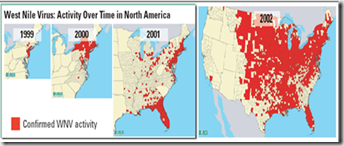
While right now all eyes are on the burgeoning Chikungunya epidemic in the Caribbean, and the ever expanding range of Dengue,  fifteen years ago another exotic disease – West Nile Virus – arrived (likely via infected travelers from the Middle East) in New York City, and since then it has become endemic across the lower 48 states and into Canada (see WNV: The Economic Costs Of An Invasive Arbovirus).

image

From the USGS Factsheet on West Nile Virus


Unlike Chikungunya – which primarily affects humans and non-human primates – WNV is primarily a disease of birds.  Humans and horses are considered `incidental’ infections (see WNV vs CHIKV: A Host Of Differences).


Incidental or not, West Nile Fever, the least severe form of the disease probably infects more than 100,000 Americans every year, although most are so mildly affected the person has no idea they have the virus. 


Neuroinvasive cases (which present with meningitis, encephalitis, or flaccid Paralysis), while less common, are severe enough that they nearly always result in hospitalization and diagnosis, and so they are considered the best indicator of the scope of each year’s epidemic. 


In 2012, the United States saw nearly 3,000 cases of neuroinvasive WNV, and 286 deaths (see DVBID: 2012 Record Number Of West Nile Fatalities).


Each summer the CDC produces weekly surveillance reports on WNV activity (in humans, birds, and animals). 


These reports tend to lag behind actual events by a week or so (fatalities even more so, since some cases may be hospitalized for weeks before succumbing), but they give us an excellent idea of how the WN season is progressing around the country.


Although the West Nile season is just beginning, we’ve our first look at the CDC’s  2014’s surveillance:


image

image


While vector-borne diseases don’t often the the respect that `airborne’ pathogens get, they undoubtedly sicken and kill more people every year than any other infectious disease. 


The UN’s Millennium Project estimates 300 to 500 million Malaria infections every year, with a up to 2.7 million deaths.


Which is a greater disease impact each and every year than the last two influenza pandemics (1968 & 2009) put together.


Add in millions more Dengue and Chikungunya cases, and the recent sharp increase in tick-borne diseases as well, and the case can be made that emerging vector-borne diseases represent a major, and often underappreciated, challenge to public health.


The CDC offers specific advice on preventing West Nile and other mosquito-borne diseases, including Chikungunya, Dengue, and EEE:


image of spraying insect repellent

Prevention & Control

The most effective way to avoid West Nile virus disease is to prevent mosquito bites. Be aware of the West Nile virus activity in your area and take action to protect yourself and your family.

Wednesday, September 25, 2013

DVBID: West Nile Virus Update

image


# 7810


The CDC’s DVBID (Division of Vector Borne Infectious Diseases) has updated their West Nile numbers as reported to them through September 24th, and while these numbers continue to climb, they are far below where we were this time last year. The latest summary reads:


As of September 24, 2013, 48 states and the District of Columbia have reported West Nile virus infections in people, birds, or mosquitoes. A total of 1,135 cases of West Nile virus disease in people, including 44 deaths, have been reported to CDC. Of these, 529 (47%) were classified as neuroinvasive disease (such as meningitis or encephalitis) and 606 (53%) were classified as non-neuroinvasive disease.


Mild cases – called West Nile Fever – often go undiagnosed, with probably only 2%-3% being identified, whereas neuroinvasive cases (which present with meningitis, encephalitis, or flaccid Paralysis) are severe enough that they almost always result in hospitalization and diagnosis.


Neuroinvasive cases are considered a better indicator of the scope of each year’s epidemic, and the map below shows the states hardest hit this year by this more severe form of the illness.


image


As it can take several weeks after a person becomes infected before they are diagnosed and reported to the CDC – and deaths may occur months after infection - the numbers reported as of today are considered `lagging indicators’.  Still, this time last year, the numbers were roughly triple what has been reported to date (see 9/25/12 DVBID Update On West Nile Virus).


Texas. which bore the brunt of last year’s WNV activity (1868 cases, 89 deaths) has only reported 66 cases this summer, and 4 fatalities.


Comparatively speaking, we are seeing a milder season, and with October just a week away, the peak season for West Nile Virus is about over.


But infected mosquitoes are still out there, and so the risk of infection has not gone away entirely. A good reason to heed the advice of our local health departments to  follow the `5 D’s’ of mosquito protection.

image

Wednesday, July 17, 2013

JAMA: The 2012 West Nile Encephalitis Epidemic in Dallas, Tx


image


# 7487

Although West Nile Virus (WNV) activity was high across much of the country in 2012, the hardest hit area was Dallas County, Texas, where at least 19 people died from the severe form of this mosquito borne infection called Neuroinvasive West Nile Disease.


Mild cases – called West Nile Fever – often go undiagnosed, with probably only 2%-3% being identified. You’ll find some of my coverage of last year’s outbreak in Texas in the following blogs:


CDC Telebriefing on West Nile Virus
Updating the Texas West Nile Outbreak
Dallas West Nile Update


Nationally, the CDC reported last May:


Final 2012 West Nile virus update:

In 2012, all 48 contiguous states, the District of Columbia, and Puerto Rico reported West Nile virus infections in people, birds, or mosquitoes. A total of 5,674 cases of West Nile virus disease in people, including 286 deaths, were reported to CDC. Of these, 2,873 (51%) were classified as neuroinvasive disease (such as meningitis or encephalitis) and 2,801 (49%) were classified as non-neuroinvasive disease. The numbers of neuroinvasive, non-neuroinvasive, and total West Nile virus disease cases reported in 2012 are the highest since 2003.


It is estimated that only about 20% of the people who are infected with WNV develop symptoms, and the vast majority of those only experience a mild flu-like illness. Accordingly, mild, asymptomatic, or non-neuroinvasive infections are likely vastly undercounted.


The more severe `neuroinvasive’ form of WNV can produce symptoms that include headache, stiff neck, confusion, coma, convulsions, and even paralysis.


According to the CDC’s WEST NILE SYMPTOMS Q&A page.


What are the symptoms of West Nile virus disease?

No symptoms in most people. Most people (70-80%) who become infected with West Nile virus do not develop any symptoms.


Febrile illness in some people. About 1 in 5 people who are infected will develop a fever with other symptoms such as headache, body aches, joint pains, vomiting, diarrhea, or rash. Most people with this type of West Nile virus disease recover completely, but fatigue and weakness can last for weeks or months.


Severe symptoms in a few people. Less than 1% of people who are infected will develop a serious neurologic illness such as encephalitis or meningitis (inflammation of the brain or surrounding tissues). The symptoms of neurologic illness can include headache, high fever, neck stiffness, disorientation, coma, tremors, seizures, or paralysis.


Recovery from severe disease may take several weeks or months. Some of the neurologic effects may be permanent. About 10 percent of people who develop neurologic infection due to West Nile virus will die.


Which brings us to a research article (which you can read in its entirety) that appeared in JAMA yesterday on the Dallas epidemic, that finds correlations between an unusually mild winter, the early detection of WNV bearing mosquitoes, and the likelihood of seeing a major WNV outbreak.


The 2012 West Nile Encephalitis Epidemic in Dallas, Texas FREE

Wendy M. Chung, MD, SM1; Christen M. Buseman, PhD, MPH1; Sibeso N. Joyner, MPH1; Sonya M. Hughes, MPH1; Thomas B. Fomby, PhD4; James P. Luby, MD2; Robert W. Haley, MD3

Conclusions and Relevance Large West Nile virus epidemics in Dallas County begin early after unusually warm winters, revisit similar geographical distributions, and are strongly predicted by the mosquito vector index. Consideration of weather patterns and historical geographical hot spots and acting on the vector index may help prevent West Nile virus–associated illness.


The outbreak, which reached its peak in early August, was eventually brought under control after aerial spraying began in week 32 (see chart below).

image


Despite some initial public concerns over the use of aerial insecticides, surveillance of local emergency rooms did not detect any increase in ER visits for respiratory symptoms or rashes following airborne spraying.


In addition to the study you’ll find a short (4 minute) video by Dr. WM Chung, lead author of the study. 


image


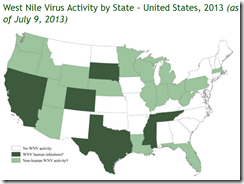
Although it is too early in the summer to know what kind of WNV season 2013 will bring, the CDC’s DVBID reports the following activity:


image

Preliminary Maps & Data for 2013

As of July 9, 2013, 25 states and the District of Columbia have reported West Nile virus infections in people, birds, or mosquitoes. A total of 14 cases of West Nile virus disease in people, including two deaths, have been reported to CDC. Of these, five (36%) were classified as neuroinvasive disease (such as meningitis or encephalitis) and nine (64%) were classified as non-neuroinvasive disease.


Which is why health departments across the nation urge people to follow the `5 D’s’ of mosquito protection:

image

Saturday, May 25, 2013

Texas: First West Nile Case Of 2013

image

Photo Credit CDC 


#7319


Last year Texas endured a record-setting outbreak of West Nile Virus – spread by mosquitoes - recording 1869 cases and 89 death (see DVBID: 2012 Record Number Of West Nile Fatalities). While the entire country saw record numbers of WNV in 2012, roughly 1/3rd of all cases were diagnosed in Texas.


Nationwide, the numbers came in at:


Total cases                5,674 cases

Neuroinvasive cases   2,873 (51%)   

Mild cases                  2,801 (49%)

Deaths                          286


Neuroinvasive cases (which present with meningitis, encephalitis, or flaccid Paralysis) are severe enough that they result in hospitalization and diagnosis, and so they are considered the best indicator of the scope of each year’s epidemic.


Most people only end up with a mild, often sub-clinical infection, and never know they were infected. 


For every mild case diagnosed, there may be another 50 cases that go unreported.  


Yesterday the Texas Department of State Health Services released two statements on West Nile threat; one announcing their first diagnosed case of the year, and another warning that people need to start taking mosquito precautions now that summer is upon us.


Texas Confirms First West Nile Case of the Season

News Release
May 24, 2013

The Texas Department of State Health Services today confirmed the state’s first case of West Nile illness of the season. DSHS is urging people to take precautions to reduce the risk of contracting West Nile virus, a mosquito-borne illness.


West Nile illness was confirmed in an adult male from Anderson County. The patient is recovering from the neuroinvasive form of the disease. Additional details about the patient are not being released to protect the patient’s identity.


“This is a serious illness that can take a long-lasting toll,” said Dr. David Lakey, DSHS Commissioner. “Last season was unprecedented, with record numbers of cases and deaths reported in Texas. People need to do all they can to protect themselves from mosquito bites.”


Last year, Texas reported 1,868 human cases of West Nile illness, including 89 deaths.


State health officials said there is no way to predict the severity of this year’s season. The intensity of West Nile virus activity in Texas fluctuates from year to year and depends on a variety of factors including the weather, the numbers of birds and mosquitoes that maintain and spread the virus and human behavior. The season can last up until the first hard freeze of the year.

(Continue . . .)

DSHS Urges Precautions to Reduce West Nile Exposure

News Release
May 24, 2013

As Memorial Day approaches and people are spending more time outdoors, the Texas Department of State Health Services urges people to take precautions to reduce the risk of contracting West Nile virus, a mosquito-borne illness.


Last year, Texas reported 1,868 human cases of West Nile illness, including 89 deaths. State health officials said there is no way to predict the severity of this year’s season. The intensity of West Nile virus activity in Texas fluctuates from year to year and depends on a variety of factors including the weather, the numbers of birds and mosquitoes that maintain and spread the virus and human behavior. The season can last up until the first hard freeze of the year.

To reduce exposure to West Nile virus:

  • Use an approved insect repellent every time you go outside and follow the instructions on the label. Among the EPA-approved repellents are those that contain DEET, picaridin, IR3535 or oil of lemon eucalyptus.
  • Regularly drain standing water, including water collecting in empty cans, tires, buckets, clogged rain gutters and saucers under potted plants. Mosquitoes that spread WNV breed in stagnant water.
  • Wear long sleeves and pants at dawn and dusk when mosquitoes are most active.
  • Use air conditioning or make sure there are screens on all doors and windows to keep mosquitoes from entering the home.

Symptoms of the milder form of illness, West Nile fever, can include headache, fever, muscle and joint aches, nausea and fatigue. People with West Nile fever typically recover on their own, although symptoms may last for several weeks. Symptoms of the more serious form, West Nile neuroinvasive disease, can include those of West Nile fever plus neck stiffness, stupor, disorientation, tremors, convulsions, muscle weakness and paralysis. Up to 80 percent of people infected with the virus will have no symptoms.

(Continue . . .)


Given its severity (and that of less common mosquito borne diseases in the U.S., like EEE, Dengue, SLEV), it makes sense to take steps to protect yourself and your family.


So today would be a good day to go around and look for likely breeding places in, and around your home. This should become a weekly habit – at least during mosquito season.


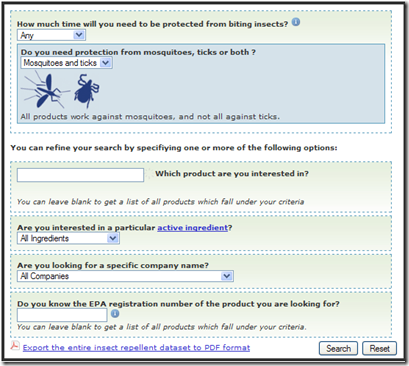
And to help you with warding off these pests, we’ve an interactive insect repellant search engine developed by the EPA that will that will allow you to input your needs and it will spit out the best repellants to use.


image

(click image to go to search engine)

Tuesday, May 14, 2013

DVBID: 2012 Record Number Of West Nile Fatalities


image

# 7273


Last December in DVBID: Final West Nile Report For 2012, we saw a preliminary accounting of last year’s West Nile virus impact across the country.  From all appearances, 2012 appeared on track to be a record year.


Total cases                5,387 cases

Neuroinvasive cases   2,734 (51%)   

Mild cases                  2,653 (49%)

Deaths                          243


Neuroinvasive cases (which present with meningitis, encephalitis, or flaccid Paralysis) are severe enough that they result in hospitalization and diagnosis, and so they are considered the best indicator of the scope of each year’s epidemic.


Mild cases – called West Nile Fever – often go undiagnosed, with probably only 2%-3% being identified.


Meaning that with more than 2,600 mild cases reported, the true incidence was probably in excess of 100,000 infections.


Yesterday the CDC released their Final West Nile virus national surveillance data for 2012 - which adds in several hundred cases not counted in December, along with more than 40 additional deaths – making 2012 the deadliest year for West Nile in the United States since it first arrived in 2009.


This from the CDC.


Final 2012 West Nile virus update:

In 2012, all 48 contiguous states, the District of Columbia, and Puerto Rico reported West Nile virus infections in people, birds, or mosquitoes. A total of 5,674 cases of West Nile virus disease in people, including 286 deaths, were reported to CDC. Of these, 2,873 (51%) were classified as neuroinvasive disease (such as meningitis or encephalitis) and 2,801 (49%) were classified as non-neuroinvasive disease. The numbers of neuroinvasive, non-neuroinvasive, and total West Nile virus disease cases reported in 2012 are the highest since 2003.


 image

The press release from the CDC follows:


CDC releases final West Nile virus national surveillance data for 2012

What

The Centers for Disease Control and Prevention (CDC) today released the final 2012 national surveillance data for West Nile virus activity.  To access the information, please visit www.cdc.gov/westnile.


A total of 5,674 cases of West Nile virus disease in people, including 286 deaths, were reported to CDC from 48 states (excluding Alaska and Hawaii).  Of all West Nile virus disease cases reported, 2,873 (51 percent) were classified as neuroinvasive disease (e.g., meningitis, encephalitis, or acute flaccid paralysis). The dates of illness onset (when the patients’ illness began) ranged from March through December 2012.


The numbers of neuroinvasive, non-neuroinvasive, and total West Nile virus disease cases reported in 2012 are the highest since 2003. The number of deaths is the highest since cases of WNV disease were first detected in the United States in 1999.


Where

In 2012, 62 percent of all reported West Nile virus cases—were concentrated in California, Louisiana, Michigan, Mississippi, , Oklahoma, South Dakota, and Texas.  Texas reported 33 percent of all reported West Nile virus cases in 2012.


Last summer’s outbreak likely resulted from  many  factors, including higher-than-normal temperatures that influenced mosquito and bird abundance, the replication of the virus in its host mosquitoes, and interactions of birds and mosquitoes in hard-hit areas. Because the factors that lead to West Nile virus disease outbreaks are complex, CDC cannot predict where and when they will occur.


Additional Information


Each spring, CDC releases the final West Nile virus case surveillance data for the previous year. The data include confirmed and probable human disease cases reported to ArboNET by state and local health departments. ArboNET is the national, electronic surveillance system established by CDC to assist states in tracking illness caused by West Nile virus and other viruses transmitted by mosquitoes or ticks.


Last year's large outbreak is a reminder that it is important for people to protect themselves from West Nile virus, especially as we head into summer and mosquitoes become more active. The best way to prevent West Nile virus disease is to avoid mosquito bites:

  • Use insect repellents when you go outdoors.  Use repellents containing DEET, picaridin, IR3535, and para-menthane-diol (PMD) because these repellents provide longer-lasting protection than other products.  Always follow the instructions on the label.
  • Wear long sleeves and pants at dawn and dusk when many mosquitoes are most active.
  • Repair or install screens on windows and doors.  Use air conditioning, if you have it.
  • Help reduce the numbers of mosquitoes around your home.  Empty standing water from items such as gutters, flowerpots, buckets, and kiddie pools. Change birdbaths weekly.


With summer temperatures rising across much of the United States, mosquito season cannot be far behind. So, if you live in, or are visiting one of these areas,  many health departments urge you to follow the `5 D’s’. 


image


Once again, this summer we’ll be keeping an eye on the level of West Nile, EEE, Dengue, and other arbovirus activity around the country.

Thursday, December 13, 2012

DVBID: Final West Nile Report For 2012

image


# 6779


While final numbers won’t be available until the spring, 2012 looks like it will go down as one of the most active West Nile Fever seasons since the virus arrived in North America in 1999.


The CDC’s  DVBID has released their final tally of cases for 2012 on their West Nile Update Page.  They summarize the season thusly:


2012 West Nile virus update: December 11

This will be the last update for 2012 until final data are available in the spring of 2013.

As of December 11, 2012, 48 states have reported West Nile virus infections in people, birds, or mosquitoes. A total of 5,387 cases of West Nile virus disease in people, including 243 deaths, have been reported to CDC. Of these, 2,734 (51%) were classified as neuroinvasive disease (such as meningitis or encephalitis) and 2,653 (49%) were classified as non-neuroinvasive disease.


The 5,387 cases reported thus far in 2012 is the highest number of West Nile virus disease cases reported to CDC through the second week in December since 2003. Eighty percent of the cases have been reported from 13 states (Texas, California, Louisiana, Illinois, Mississippi, South Dakota, Michigan, Oklahoma, Nebraska, Colorado, Arizona, Ohio, and New York) and a third of all cases have been reported from Texas.


Neuroinvasive cases (which present with meningitis, encephalitis, or flaccid Paralysis) are severe enough that they result in hospitalization and diagnosis, and so they are considered the best indicator of the scope of each year’s epidemic.


Mild cases – called West Nile Fever – often go undiagnosed, with probably only 2%-3% being identified.


Meaning that with more than 2,600 mild cases reported, the true incidence was probably in excess of 100,000 infections.


Hardest hit this year was Texas, with more than 1,700 cases and 76 deaths. Far behind, but in second place, was California with 461 cases and 16 deaths. 


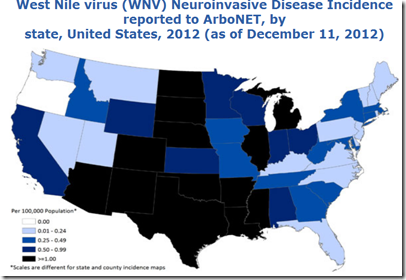
Nevertheless, the highest incidence of neuroinvasive disease occurred along the Gulf Coast and into the upper Mid West.


image


Earlier this year the CDC indicated they would be taking a look at this year’s WNV season to see if any changes have occurred in the virus to account for this sudden spike in activity. 


While West Nile season has passed for most of the country, there are still a few areas where mosquitoes are still active.  So, if you live in, or are visiting one of these areas, the advice by many health departments to follow the `5 D’s’ remains intact. 

image

Wednesday, October 24, 2012

DVBID: West Nile Cases Continue To Mount

image


# 6659


While the peak in transmission of the West Nile Virus probably occurred more than a month ago, cases – and fatality reports – continue to come in at a near-record pace. 


This is not entirely unexpected, given the incubation time for the virus (2-15 days), delays in processing local and state reports, and the reality that some patients may succumb after weeks or even months of treatment.


Today’s update from the CDC’s DVBID summarizes the latest numbers below:


2012 West Nile virus update: October 23

As of October 23, 2012, 48 states have reported West Nile virus infections in people, birds, or mosquitoes. A total of 4,725 cases of West Nile virus disease in people, including 219 deaths, have been reported to CDC. Of these, 2,413 (51%) were classified as neuroinvasive disease (such as meningitis or encephalitis) and 2,312 (49%) were classified as non-neuroinvasive disease.


The 4,725 cases reported thus far in 2012 is the highest number of West Nile virus disease cases reported to CDC through the fourth week in October since 2003. Almost 70 percent of the cases have been reported from eight states (Texas, California, Louisiana, Mississippi, Illinois, South Dakota, Michigan, and Oklahoma) and over a third of all cases have been reported from Texas.


The 20% increase in deaths – up from 183 last week, to 219 this week - is indicative of fatality reports being a lagging indicator.


In contrast, the number of new neuroinvasive cases rose only by 120, or about 5%.  Perhaps a sign that the number of new cases is beginning to decline.  


Neuroinvasive cases (which present with meningitis, encephalitis, or flaccid Paralysis) are severe enough that they result in hospitalization and diagnosis, and so they are considered the best indicator of the scope of each year’s epidemic.


Mild cases – called West Nile Fever – often go undiagnosed, with probably only 2%-3% being identified.


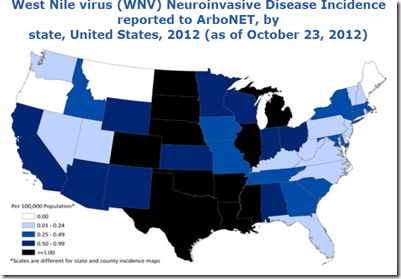
The states hardest hit by the neuroinvasive illness continue to center around the middle of the country, with Texas accounting for roughly 1/3rd of all of the serious WNV infections (n=742) in the nation.


image


Even though cooler fall weather has reduced mosquito activity across much of the country - with no vaccine, and the virus now endemic across much of the country - health departments continue to urge people to follow the `5 D’s’ of protection anytime mosquitoes may be active:


image

Wednesday, October 03, 2012

DVBID: West Nile Infections Continue Record Pace

image

Credit DVBID


# 6604


The DVBID (Division of Vector Borne Infectious Diseases) has updated their West Nile numbers as reported to them through October 2nd, and as expected the number of new cases, and deaths, continues to rise.


2012 West Nile virus update: October 2

As of October 2, 2012, 48 states have reported West Nile virus infections in people, birds, or mosquitoes. A total of 3,969 cases of West Nile virus disease in people, including 163 deaths, have been reported to CDC. Of these, 2,010 (51%) were classified as neuroinvasive disease (such as meningitis or encephalitis) and 1,959 (49%) were classified as non-neuroinvasive disease.


The 3,969 cases reported thus far in 2012 is the highest number of West Nile virus disease cases reported to CDC through the first week in October since 2003. Almost 70 percent of the cases have been reported from eight states (Texas, California, Louisiana, Mississippi, South Dakota, Michigan, Oklahoma, and Illinois) and a third of all cases have been reported from Texas.


The record pace continues, and we can expect – given incubation period of 2 or 3 weeks, and since some people may succumb only after weeks of illness – that we will see these numbers continue to rise for the next couple of months.


The incidence level of the more serious neuroinvasive form of West Nile disease – which can produce encephalitis, meningitis, and/or acute flaccid paralysis – is illustrated by the following chart. 


image


Although the peak period of transmission for WNV may have passed, infected mosquitoes are still out there and are still biting and infecting people.


So we still need to heed the advice of our local health departments to  follow the `5 D’s’ of mosquito protection:

image


And finally, to find out about the West Nile threat in your area, you can visit the DVBID website below:

Links to State and Local Government West Nile Virus Web Sites


Click on a state to link directly to their West Nile virus Web page.

See list below for additional city-level and main State Health Department Web sites.

Image: West Nile Virus Map of States with links to their West Nile Virus pages

Wednesday, September 26, 2012

DVBID Update On West Nile Virus


image

Source DVBID


# 6586


While the big infectious disease news this week has been the novel coronavirus that has killed one Saudi, and seriously sickened a Qatari man, there are other infectious disease threats we follow, including West Nile Disease.


The DVBID has updated their West Nile website, and while the number of new infections is beginning to decline, 13 additional deaths have been reported via ArboNet in the last week.


2012 West Nile virus update: September 25

As of September 25, 2012, 48 states have reported West Nile virus infections in people, birds, or mosquitoes. A total of 3,545 cases of West Nile virus disease in people, including 147 deaths, have been reported to CDC. Of these, 1,816 (51%) were classified as neuroinvasive disease (such as meningitis or encephalitis) and 1,729 (49%) were classified as non-neuroinvasive disease.


The 3,545 cases reported thus far in 2012 is the highest number of West Nile virus disease cases reported to CDC through the last week in September since 2003. Seventy percent of the cases have been reported from eight states (Texas, Mississippi, South Dakota, Michigan, California, Louisiana, Oklahoma, and Illinois) and 38 percent of all cases have been reported from Texas.


It should be noted that the latest numbers reported via ArboNet may lag behind the most recent totals being reported by each state.  


Case in point: Texas,  which is shown to have  1345 cases and 52 deaths in today’s report, is reporting somewhat higher numbers on their website:


image

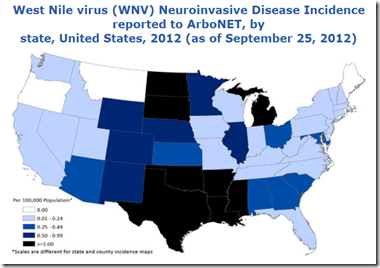
The incidence level of the more serious neuroinvasive form of West Nile disease – which can produce encephalitis, meningitis, and/or acute flaccid paralysis – is illustrated by the following chart. 


image 


Although the peak period of transmission for WNV may have passed, infected mosquitoes are still out there and are still biting and infecting people.


So we still need to heed the advice of our local health departments to  follow the `5 D’s’ of mosquito protection:

image

Wednesday, September 12, 2012

CDC West Nile Update: Sept 12th

image

Source  DVBID 


# 6551


For the fourth week in a row, the CDC hosted a teleconference on the ongoing West Nile Virus outbreak across the nation, today featuring Lyle R. Petersen, M.D., M.P.H.  and Roger S. Nasci, PhD of the CDC’s DVBID.


While hopeful that we may have reached the peak of this year’s West Nile season (based on historical trends), the CDC says new infections (and deaths) are expected to continue to rise over the next couple of months.


The number of neuroinvasive cases reported to date is the highest number ever recorded in the United States through the second week of September.


As of yesterday, more than 2630 WNV infections have been reported via ArboNet – an increase of roughly 35% over last week’s numbers.  Of those, 1405 involve the more serious neuroinvasive disease.


Neuroinvasive cases (which present with meningitis, encephalitis, or flaccid Paralysis) are severe enough that they almost always result in hospitalization and diagnosis, and so they are considered a better indicator of the scope of each year’s epidemic.


Mild cases – called West Nile Fever – often go undiagnosed, with probably only 2%-3% being identified.


Since it can take several weeks after a person becomes infected before they are diagnosed and reported to the CDC – and deaths may occur months after infection - the numbers reported as of today are considered `lagging indicators’. 


The CDC expects, based on the numbers today, that this will end up being the worst year for the WNV since it arrived in the United States in 1999.


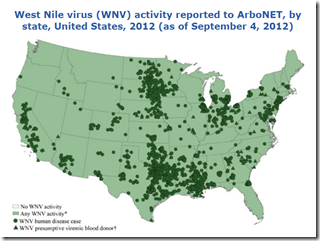
Only Hawaii & Alaska have not reported the WNV in either humans, animals, or mosquitoes. The bulk of the cases this year have been seen across just 6 states; Texas  Mississippi, Louisiana, Oklahoma, South Dakota and Michigan.

image

Of the 2,636 WNV cases, 1,405 (53%) were reported as neuroinvasive disease cases and 1,231 (47%) were reported as nonneuroinvasive disease cases. Three hundred and eighty five WNV presumptive viremic blood donors (PVDs) have been reported at this time.- Cite DVBID


With no vaccine, and the virus now endemic across much of the country - health departments are urging people to follow the `5 D’s’ of mosquito protection:

image

To find out about the West Nile threat in your area, you can visit the DVBID website below:

Links to State and Local Government West Nile Virus Web Sites

Click on a state to link directly to their West Nile virus Web page.

See list below for additional city-level and main State Health Department Web sites.


Image: West Nile Virus Map of States with links to their West Nile Virus pages


The CDC is investigating why this year’s outbreak has been so severe, and hopes to release a report with their findings before next year’s WNV season.


A transcript, and audio recording of today’s conference will be posted later today on the CDC NEWSROOM webpage.


UPDATE:  Transcript & Audio are now posted.

image

Thursday, September 06, 2012

CDC West Nile Update


image

Credit DVBID


# 6539


I was away from my desk yesterday for the CDC’s  teleconference update on West Nile activity across the nation, but Lisa Schnirring for CIDRAP News  has an excellent overview.   


West Nile virus cases continue record pace

Lisa Schnirring * Staff Writer

Sep 5, 2012 (CIDRAP News) – The number of West Nile virus cases in the United States this year has jumped by about 25% in the past week, and though new reports are still coming in at a record pace, Texas—the hardest hit state—is seeing some promising signs that interventions such as aerial spraying are working.

(Continue . . .)


The transcript of this teleconference and an audio file is now available on the CDC Newsroom webpage.

image


Texas, which has been particularly hard hit this year, has now reported 40 deaths, and a record 495 neuroinvasive cases this year.


Neuroinvasive cases (which present with meningitis, encephalitis, or flaccid Paralysis) are severe enough that they result in hospitalization and diagnosis, and so they are considered a better indicator of the scope of each year’s epidemic.


Mild cases – called West Nile Fever – often go undiagnosed, with probably only 2%-3% being identified.


As you can see from the chart below, while 44 states have reported human infections with the West Nile Virus this year, it is the middle of the country that is being hardest hit by neuroinvasive WNV.


image

Credit DVBID


Vector-borne illnesses like West Nile Virus, EEE (Eastern Equine Encephalitis), Dengue, Lyme Disease, Babesia, Powassan Virus, and even the newly reported Heartland Virus (see also Maryn McKenna’s report) are becoming increasingly common across the United States.


Many scientists believe that as climate change occurs, we will see more of these mosquito, flea, tick, and biting fly transmitted diseases here, and in the European Union.


To give you an idea how quickly a new, vector-borne disease like West Nile can spread, the WNV only arrived in the United States twelve years ago and in a few short few years had invaded all 48 contiguous states.


From the USGS Factsheet on West Nile Virus

image


Prevention is the key.


West Nile Virus is now endemic across most of the United States and the prudent move is to take the recommended precautions against mosquito bites.


image


And ticks, which can also easily transmit diseases, require preventative measures as well.

image

(Credit CDC)


image

Wednesday, August 22, 2012

CDC Telebriefing on West Nile Virus


image


# 6510


A public health situation we’ve been following here for the past several weeks (see here, here, here, and here) was the subject of a CDC telebriefing today; the unusually high incidence of West Nile infections across the country, but most noticeably in Texas.


According to the CDC’s Dr. Lyle R. Petersen, director of the DVBID at the CDC, 2012 may be on track to be the worst yet in the 13 year history of the virus in the United States.


Yesterday, the CDC’s DVBID division updated their numbers through August 21st, indicating:


2012 West Nile virus update: as of August 21

Thus far in 2012, 47 states have reported West Nile virus infections in people, birds, or mosquitoes. A total of 1118 cases of West Nile virus disease in people, including 41 deaths, have been reported to CDC. Of these, 629 (56%) were classified as neuroinvasive disease (such as meningitis or encephalitis) and 489 (44%) were classified as non-neuroinvasive disease.


The 1118 cases reported thus far in 2012 is the highest number of West Nile virus disease cases reported to CDC through the third week in August since West Nile virus was first detected in the United States in 1999. Approximately 75 percent of the cases have been reported from 5 states (Texas, Mississippi, Louisiana, South Dakota, and Oklahoma) and almost half of all cases have been reported from Texas.


Of the 1118 cases, nearly half (n=537) are from Texas, and 26 deaths so far this year have been recorded in the Lone Star State. Hard hit Dallas county reported their 11th fatality yesterday.


Elsewhere across the nation, 38 other states have reported West Nile infections in humans, and deaths have been reported across 16 states.


Of note, Louisiana has reported 6 fatalities and Oklahoma has reported 3.


Today’s telebriefing featured Lyle R. Petersen, M.D. and the transcript should be posted on the CDC’s media site tonight or tomorrow (now available at this link).


Lisa Schnirring writing for CIDRAP NEWS has an excellent summary of today’s briefing:


CDC reports surge in US West Nile virus activity

Lisa Schnirring * Staff Writer

Aug 22, 2012 (CIDRAP News) – The United States is experiencing a dramatic rise in the cases of West Nile virus (WNV) infections over the past month, with record-setting numbers expected over the next several weeks and the US Centers for Disease Control and Prevention (CDC) warning people to take key preventive steps.


So far, 38 states have reported human cases, but the epicenter is Texas, which has reported half of the WNV infections. The CDC said so far it has received reports of 1,118 cases, including 629 people with the neuroinvasive form of the disease. Nationally, 41 deaths have been reported.

(Continue . . .)


Given that the WNV season doesn’t usually peak until mid-August, and it can take 2 to 3 weeks for symptoms to develop, many more cases are expected over the next few months.


While 80% of those infected don’t show symptoms, last week WEBMD carried a report (see New West Nile Threat: Kidney Disease) about research conducted by Baylor University West Nile expert Kristy O. Murray, PhD, DVM.


Dr. Murray’s research (see Persistent Infection with West Nile Virus Years after Initial Infection) suggests long-term sequelae may develop among a significant percentage of those who are infected with the West Nile Virus – even among those infected asymptomatically.


Dr. Murray was awarded an NIH grant in 2011 to study the effects of chronic WNV infection on the kidneys and central nervous system.


Reason enough to take seriously the recommendations from health departments across the nation that urge people to follow the `5 D’s’ of mosquito protection:

image

To find out about the West Nile threat in your area, you can visit the DVBID website below:

Links to State and Local Government West Nile Virus Web Sites

 Image: West Nile Virus Map of States with links to their West Nile Virus pages

And as a final note, the CDC recently updated their information on mosquito repellants.

Updated Information regarding Insect Repellents