Showing posts with label World Health Day. Show all posts

Monday, April 07, 2014

WPRO World Health Day Video: Small Bite, Big Threat

image

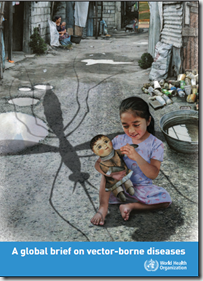
Global brief on vector-borne diseases
pdf, 4.45 Mb


# 8441


Globally, the World Health Organization estimates that one out of two people are at risk of contracting a vector-borne illness; diseases carried by mosquitoes, ticks, biting flies, and freshwater snails.  Globally Malaria infects more than 200 million people each year - killing over 600,000 - while 40% of the world’s population is now at risk of Dengue. 


Add in the considerable burdens of schistosomiasis, lymphatic filariasis, Japanese encephalitis and a bevy of other VBDs (Vector-borne diseases) and you’ll understand why the WHO has dedicated World Health Day: 2014 to highlighting these preventable infections.


While their greatest impact is undoubtedly in the least developed, poorest nations of the world - we’ve seen ample evidence that oceans, borders, and technology cannot prevent their spread around the globe. 


West Nile Virus arrived in North American in 1997 and since then has become endemic across the lower 48 states and into Canada (see WNV: The Economic Costs Of An Invasive Arbovirus), while Dengue fever has made exploratory incursions into Florida (see MMWR: Dengue Fever In Key West), Texas and and only last fall resulted in a case of Locally Acquired Dengue In New York City.


Chikungunya’s recent arrival in the Caribbean (see Chikungunya Update & CDC Webinar Online) now has many researchers concerned that it is well positioned to threaten North America in the months or years ahead. 


The CDC’s: Estimate Of Yearly Lyme Disease Diagnoses In The United States is now believed closer to 300,000 than to the 30,000 cases officially reported each year, while newly discovered vector borne diseases – like the Heartland Virus and SFTS () – provide sobering hints that there are likely many more emerging VBDs yet to be discovered.


As part of World Health Day, WPRO – the Western Pacific Region Office of the World Health Organization – has produced a video on the burden of Vector borne diseases in the Western Pacific, which you can access from the link below:


World Health Day 2014: Small bite, big threat

Video

Summary

For World Health Day 2014, a special film was commissioned to highlight the challenges posed by a number of vector-borne diseases in the Western Pacific Region, along with stories from the frontlines depicting how WHO supports Member States in tackling these diseases. In "Small Bite, Big Threat", filmmaker Mark Hammond captures several stories showing how collaboration between governments and civil society, supported by WHO, is vital in addressing malaria, dengue, schistosomiasis, lymphatic filariasis and Japanese encephalitis.

Authors

WHO Regional Office for the Western Pacific

Publication details

Publication date: 6 April 2014
Languages: English


While exotic diseases like Ebola, Marburg, and Avian Influenza garner the most headlines, in terms of actual impact on human health, they all pale in comparison to VBDs like malaria or dengue.  To learn more about these threats, and how you can help prevent them, set aside some time today to visit the WHO’s World Health Day website:

image


  And for some earlier blogs on VBDs, you may wish to revisit:


ECDC Updates Chikungunya & Zika Virus Outbreaks – March 17th

The Risks Of Chikungunya Outbreaks In The United States

DVBID: 2012 Record Number Of West Nile Fatalities

Wednesday, April 02, 2014

World Health Day 2014: Vector-Borne Diseases

image

Global brief on vector-borne diseases
pdf, 4.45 Mb


# 8423


Each year the World Health Organization adopts a new theme for World Health Day, which is celebrated on April 7th.  This year, the focus is on vector-borne diseases (VBDs), and the slogan is `Small bite, big threat’. 


Vectors are small organisms like mosquitoes, ticks, biting flies, certain bugs, and freshwater snails that can carry – and transmit to man – zoonotic diseases such as dengue, WNV, malaria, leishmaniasis, Lyme, yellow fever, and Chagas (among others).

VBDs are considered preventable diseases, yet they exact a major toll on human health every year.  Half of the world’s population live in regions where these diseases are endemic, and increased international travel, trade and migration increase those risks each year.


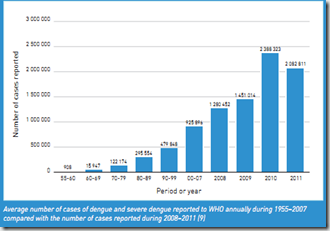
Regular readers of this blog are well aware of the inexorable spread of Dengue, West Nile Virus, and Chikungunya around the globe in recent years, with Dengue seeing a 30-fold increase over the past 50 years (see chart below).

image


In 2009, after an absence of sixty years, Dengue showed up again in Florida (see  MMWR: Dengue Fever In Key West), and is now making inroads in Texas as well.  Repeated introductions by travelers who are infected (viremic), continue to reseed the mosquito population, helping to establish new territories for this rapidly spreading virus.


Chikungunya, practically unknown a decade ago, exploded across the Indian Ocean in 2005 and has now arrived in the Caribbean (see Chikungunya Update & CDC Webinar Online), and many expect to see it in the United States (and possibly Europe) in the near future. 


The story is much the same for West Nile Virus, Lyme Disease, Chagas, and others. Once rare, or geographically restricted to the tropics, these diseases are branching out as well.


While a great deal of progress was made in the middle of the last century against vector-borne diseases, primarily due to the introduction of more effective insecticides, in recent years the tide has slowly turned. 


DDT – considered to be the most effective of the chemical pesticides – was banned in many countries by the 1970s, and since then many insect species have developed immunity against the newer replacements.  Similarly, some insects are beginning to develop a resistance to the repellants (ie. DEET), which are commonly in use (see From the `Nature Bats Last’ Dept).


As we’ve seen with antibiotics and antivirals, once man builds a better mouse trap, nature invariably sets to work on creating a better mouse.


This year’s global health day is focused on the prevention of these vector-borne diseases.  For more on this year’s campaign, follow the links below:


Preventing and controlling vector-borne disease

A research project on improving community members’ understanding of how mosquitoes breed in open water containers and encouraging them to reduce the number of unnecessary containers, Thailand

WHO/TDR

28 March 2014 -- Vector-borne diseases are one of the greatest contributors to human mortality and morbidity in tropical settings and beyond. Although significant progress is being made in combating some diseases such as malaria, lymphatic filariasis and Chagas disease, other diseases such as dengue continue to spread at an alarming pace. This global brief provides details on the vectors and the diseases they cause and recommends what governments, local authorities, community groups, and individuals can do to prevent disease.

Global brief on vector-borne diseases


And for more on vector-borne diseases, you may wish to revisit some of these earlier blogs:


ECDC Updates Chikungunya & Zika Virus Outbreaks – March 17th
Locally Acquired Dengue In New York City

CDC: Estimate Of Yearly Lyme Disease Diagnoses In The United States

Korean CDC On SFTS Cases

WHO: Neglected Tropical Diseases

Thursday, April 07, 2011

WHO Unveils 6-Point Plan To Preserve Antibiotic Effectiveness


# 5474


On this World Health Day for 2011 the World Health Organization has released their 6-point plan to help protect and preserve our fragile pharmaceutical defenses against bacterial pathogens.


World Health Day – 7 April 2011

Antimicrobial resistance: no action today, no cure tomorrow

image

Antimicrobial resistance is not a new problem but one that is becoming more dangerous; urgent and consolidated efforts are needed to avoid regressing to the pre-antibiotic era.


For World Health Day 2011, WHO is introducing a six-point policy package to combat the spread of antimicrobial resistance.

World Health Day 2011: policy briefs

    For more on all of this the WHO has released the following press statement:


    World Health Day 2011

    Urgent action necessary to safeguard drug treatments

    News release

    6 April 2011 | Geneva - Drug resistance is becoming more severe and many infections are no longer easily cured, leading to prolonged and expensive treatment and greater risk of death, warns the WHO on World Health Day. Under the theme "Combat Drug Resistance", WHO calls for urgent and concerted action by governments, health professionals, industry and civil society and patients to slow down the spread of drug resistance, limit its impact today and preserve medical advances for future generations.

    On the brink of losing miracle cures

    “The message on this World Health Day is loud and clear. The world is on the brink of losing these miracle cures,” said WHO Director-General Dr Margaret Chan. “In the absence of urgent corrective and protective actions, the world is heading towards a post-antibiotic era, in which many common infections will no longer have a cure and, once again, kill unabated.”

    Measures to combat drug resistance

    Today, WHO is publishing a policy package that sets out the measures governments and their national partners need to combat drug resistance. The policy steps recommended by WHO include:

    • develop and implement a comprehensive, financed national plan
    • strengthen surveillance and laboratory capacity
    • ensure uninterrupted access to essential medicines of assured quality
    • regulate and promote rational use of medicines
    • enhance infection prevention and control
    • foster innovation and research and development for new tools.

       (Continue . . . )

    ECDC: Situation Update On Antimicrobial Resistance


    # 5473


    Today is World Health Day and the focus this year is on the building threat of antimicrobial resistance.  Marc Sprenger, Director of the ECDC, provides us today with his Situation update on antibiotic resistance’.


    You can read some brief highlights to his speech, given today to Members of the European Parliament (MEPs) at this link.

    Director Sprenger emphasized three areas for action.


    1. Development of new classes of antibiotics
    2. Better hygiene in hospitals and clinics
    3. And the prudent use of antibiotics


    You can view the 9-slide presentation by clicking the image below:


    image


    As Director Sprenger warns, doctors are running out of ammunition to combat bacterial infections.  Drugs that worked yesterday are rapidly losing their effectiveness against today’s rapidly evolving bacteria.


    He sums the situation up this way:


    “Europe, and indeed the world, desperately needs new antibiotics. If we do not act today, then tomorrow the nightmare becomes reality.

    We will see increasing numbers of patients with untreatable infections.”

    Wednesday, April 06, 2011

    Referral: McKenna On World Health Day


    # 5467


    As I noted in my blog yesterday World Health Day 2011, Maryn McKenna is Flublogia’s go-to person for all things antimicrobial. While her SUPERBUG Blog  covers an eclectic range of subjects, its primary focus has always been on antibiotic use, misuse, and resistance.


    Her book SUPERBUG: The Fatal Menace of MRSA serves as a badly needed wakeup call on the rising tide of resistant organisms (not just MRSA).


    With tomorrow’s World Health Day focusing on global antimicrobial resistance, it is not surprising that Maryn is all over the topic.  So I’ll just step out of the way and refer you to:


    World Health Day: Time to tackle resistance

    Tuesday, April 05, 2011

    World Health Day 2011


    # 5462


    Thursday, April 7th, is World Health Day 2011 and this year the focus is on antimicrobial resistance, a growing threat that has the potential to affect each and every one of us.


    The World Health Organization (WHO) and the CDC - along with other public health organizations around the world – will use this year’s event to promote sane antibiotic usage and awareness of antimicrobial resistance in a variety of ways.


    From the WHO.


    World Health Day – 7 April 2011

    Antimicrobial resistance: no action today, no cure tomorrow

    Arrow hits the bulls-eye of a target with slogan: Combat drug resistance - no action today, no cure tomorrow

    Antimicrobial resistance is not a new problem but one that is becoming more dangerous; urgent and consolidated efforts are needed to avoid regressing to the pre-antibiotic era.


    On World Health Day 2011, WHO will introduce a six-point policy package to combat the spread of antimicrobial resistance.

    (Continue . . . )


    Resources for World Health Day
    Posters
    Vertical
    Horizontal
    Related links


    From the CDC.


    World Health Day 2011: Antimicrobial Resistance

    Photo: A man with prescription medicine.Antimicrobial resistance is one of the world's most pressing public health threats. Today, CDC joins the World Health Organization and other health partners in recognizing World Health Day, which focuses on antimicrobial resistance.


    Antimicrobials include antibiotics, antivirals, antifungals, and other medications used to treat life-threatening diseases. Antimicrobial resistance occurs when germs change in a way that reduces or eliminates the effectiveness of drugs to treat them. Widespread overuse and inappropriate use of antimicrobials is fueling an increase in antimicrobial-resistant organisms (germs). Increased resistance is compromising the effectiveness of these important treatments. As resistance increases, the patient's risk for complications or death from infection also increases.

    Photo: A heathcare professional wit ha patient

    We all have a role to play in preventing antimicrobial resistance. Patients, healthcare providers, hospital administrators, industry, and policy makers can work together to promote appropriate antimicrobial use – ultimately saving lives. Here's how you can help:

    How Patients Can Protect Themselves from a Drug-Resistant Infection

    • Do not demand antibiotics or other medications when a doctor says they are not needed.
    • Do not take medications prescribed for someone else. Taking the wrong medicine can delay correct treatment or allow germs to become resistant to the treatment and multiply.
    • If your doctor prescribes medication for you or your child:
      • Do not skip doses.
      • Do not save any medications for the next time you or your child gets sick.
    • Take medications as directed. Always follow your doctor's instructions.

         (Continue . . . )


    Perhaps the single best place to learn about the dangers and impact of antimicrobial resistance is from our favorite `scary disease girl’  Maryn McKenna and her terrific book on the subject  SUPERBUG: The Fatal Menace Of MRSA.

    Superbug (MRSA) Book


    I reviewed Maryn’s book more than a year ago, have re-read it again since that time, and regularly use it as a reference book.


    In short, Highly Recommended.


    Maryn’s blog SUPERBUG is also the go-to place to read about all things antimicrobial resistant.


    A few of my own efforts over the past year on the growing problem of antimicrobial resistance include:


    While we often hear of potential threats to our health that – quite frankly – are rare and unlikely, antimicrobial resistance is neither.  


    It already has a major impact on our health care system, and that impact is growing by the day.


    We literally risk losing our front line drugs against a variety of aggressive and deadly pathogens. 


    Unless we face the problem now, and change our cavalier attitude on the use of antibiotics, we face a future where effective lifesaving antibiotics may be increasingly difficult to find.