Showing posts with label Vector Borne Diseases. Show all posts

Monday, April 07, 2014

WPRO World Health Day Video: Small Bite, Big Threat

image

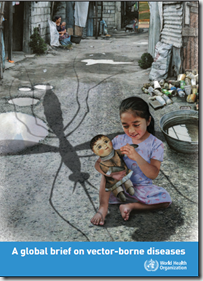
Global brief on vector-borne diseases
pdf, 4.45 Mb


# 8441


Globally, the World Health Organization estimates that one out of two people are at risk of contracting a vector-borne illness; diseases carried by mosquitoes, ticks, biting flies, and freshwater snails.  Globally Malaria infects more than 200 million people each year - killing over 600,000 - while 40% of the world’s population is now at risk of Dengue. 


Add in the considerable burdens of schistosomiasis, lymphatic filariasis, Japanese encephalitis and a bevy of other VBDs (Vector-borne diseases) and you’ll understand why the WHO has dedicated World Health Day: 2014 to highlighting these preventable infections.


While their greatest impact is undoubtedly in the least developed, poorest nations of the world - we’ve seen ample evidence that oceans, borders, and technology cannot prevent their spread around the globe. 


West Nile Virus arrived in North American in 1997 and since then has become endemic across the lower 48 states and into Canada (see WNV: The Economic Costs Of An Invasive Arbovirus), while Dengue fever has made exploratory incursions into Florida (see MMWR: Dengue Fever In Key West), Texas and and only last fall resulted in a case of Locally Acquired Dengue In New York City.


Chikungunya’s recent arrival in the Caribbean (see Chikungunya Update & CDC Webinar Online) now has many researchers concerned that it is well positioned to threaten North America in the months or years ahead. 


The CDC’s: Estimate Of Yearly Lyme Disease Diagnoses In The United States is now believed closer to 300,000 than to the 30,000 cases officially reported each year, while newly discovered vector borne diseases – like the Heartland Virus and SFTS () – provide sobering hints that there are likely many more emerging VBDs yet to be discovered.


As part of World Health Day, WPRO – the Western Pacific Region Office of the World Health Organization – has produced a video on the burden of Vector borne diseases in the Western Pacific, which you can access from the link below:


World Health Day 2014: Small bite, big threat

Video

Summary

For World Health Day 2014, a special film was commissioned to highlight the challenges posed by a number of vector-borne diseases in the Western Pacific Region, along with stories from the frontlines depicting how WHO supports Member States in tackling these diseases. In "Small Bite, Big Threat", filmmaker Mark Hammond captures several stories showing how collaboration between governments and civil society, supported by WHO, is vital in addressing malaria, dengue, schistosomiasis, lymphatic filariasis and Japanese encephalitis.

Authors

WHO Regional Office for the Western Pacific

Publication details

Publication date: 6 April 2014
Languages: English


While exotic diseases like Ebola, Marburg, and Avian Influenza garner the most headlines, in terms of actual impact on human health, they all pale in comparison to VBDs like malaria or dengue.  To learn more about these threats, and how you can help prevent them, set aside some time today to visit the WHO’s World Health Day website:

image


  And for some earlier blogs on VBDs, you may wish to revisit:


ECDC Updates Chikungunya & Zika Virus Outbreaks – March 17th

The Risks Of Chikungunya Outbreaks In The United States

DVBID: 2012 Record Number Of West Nile Fatalities

Wednesday, April 02, 2014

World Health Day 2014: Vector-Borne Diseases

image

Global brief on vector-borne diseases
pdf, 4.45 Mb


# 8423


Each year the World Health Organization adopts a new theme for World Health Day, which is celebrated on April 7th.  This year, the focus is on vector-borne diseases (VBDs), and the slogan is `Small bite, big threat’. 


Vectors are small organisms like mosquitoes, ticks, biting flies, certain bugs, and freshwater snails that can carry – and transmit to man – zoonotic diseases such as dengue, WNV, malaria, leishmaniasis, Lyme, yellow fever, and Chagas (among others).

VBDs are considered preventable diseases, yet they exact a major toll on human health every year.  Half of the world’s population live in regions where these diseases are endemic, and increased international travel, trade and migration increase those risks each year.


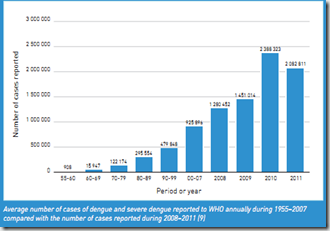
Regular readers of this blog are well aware of the inexorable spread of Dengue, West Nile Virus, and Chikungunya around the globe in recent years, with Dengue seeing a 30-fold increase over the past 50 years (see chart below).

image


In 2009, after an absence of sixty years, Dengue showed up again in Florida (see  MMWR: Dengue Fever In Key West), and is now making inroads in Texas as well.  Repeated introductions by travelers who are infected (viremic), continue to reseed the mosquito population, helping to establish new territories for this rapidly spreading virus.


Chikungunya, practically unknown a decade ago, exploded across the Indian Ocean in 2005 and has now arrived in the Caribbean (see Chikungunya Update & CDC Webinar Online), and many expect to see it in the United States (and possibly Europe) in the near future. 


The story is much the same for West Nile Virus, Lyme Disease, Chagas, and others. Once rare, or geographically restricted to the tropics, these diseases are branching out as well.


While a great deal of progress was made in the middle of the last century against vector-borne diseases, primarily due to the introduction of more effective insecticides, in recent years the tide has slowly turned. 


DDT – considered to be the most effective of the chemical pesticides – was banned in many countries by the 1970s, and since then many insect species have developed immunity against the newer replacements.  Similarly, some insects are beginning to develop a resistance to the repellants (ie. DEET), which are commonly in use (see From the `Nature Bats Last’ Dept).


As we’ve seen with antibiotics and antivirals, once man builds a better mouse trap, nature invariably sets to work on creating a better mouse.


This year’s global health day is focused on the prevention of these vector-borne diseases.  For more on this year’s campaign, follow the links below:


Preventing and controlling vector-borne disease

A research project on improving community members’ understanding of how mosquitoes breed in open water containers and encouraging them to reduce the number of unnecessary containers, Thailand

WHO/TDR

28 March 2014 -- Vector-borne diseases are one of the greatest contributors to human mortality and morbidity in tropical settings and beyond. Although significant progress is being made in combating some diseases such as malaria, lymphatic filariasis and Chagas disease, other diseases such as dengue continue to spread at an alarming pace. This global brief provides details on the vectors and the diseases they cause and recommends what governments, local authorities, community groups, and individuals can do to prevent disease.

Global brief on vector-borne diseases


And for more on vector-borne diseases, you may wish to revisit some of these earlier blogs:


ECDC Updates Chikungunya & Zika Virus Outbreaks – March 17th

Locally Acquired Dengue In New York City

CDC: Estimate Of Yearly Lyme Disease Diagnoses In The United States

Korean CDC On SFTS Cases

WHO: Neglected Tropical Diseases

Tuesday, June 11, 2013

Thailand’s Dengue Epidemic


image

Healthmap  Dengue map


# 7483


Last January in WHO: Neglected Tropical Diseases, we looked at a progress report on the global battle against NTDs (Neglected Tropical Diseases) that found – among other things – Dengue is the fastest spreading vector-borne viral disease today, having increased 30-fold around the world in the past 50 years.


Almost unheard of outside of a few tropical ports in the early 1950s - driven by the post WWII travel boom – dengue fever has now shown up in more than 60 countries.  


This year Thailand is having a particularly bad time of it, having already reported 44 deaths, and nearly 40,000 infections.  New cases are being diagnosed at a rate of over 500 each day. 


This from Thailand’s National News Bureau (NNT):


44 dead from dengue fever; people with high fever urged to see doctor

BANGKOK, 11 June 2013 (NNT) – The Department of Disease Control has reiterated its concern over the dengue fever situation in Thailand, cautioning the public not to simply take pills for fever when high fever is present, and to instead visit the doctor.


Disease Control Department Director-General Phonthep Siriwanarangsan said the dengue fever situation is very worrisome because it is now the rainy season. In the past week, an average of 570 people become sick with the disease each day.


Since the beginning of the year, almost 40,000 people have fallen ill with the disease; 50% of this number were children under 15 years of age. 44 people have died from dengue fever so far this year.

(Continue . . .)


On Saturday, the Bangkok Post reported that The Health Ministry expects between 100,000 – 120,000 infections this year – a record – and well above last year’s totals of 74,250 case (79 deaths).


Lest anyone think this is just Thailand’s problem, more than 20 million tourists visit the Land of Smiles each year, and some of them could return home with more than just a T-shirt and memories of a beautiful country.


In Travel-Associated Dengue Surveillance --- United States, 2006—2008, published in the summer of 2010, the MMWR came out with a new report on Travel Associated Dengue in the United States, that stated:


Clinically recognized cases of travel-associated dengue likely underestimate the risk for importation because many dengue infections are asymptomatic or mildly symptomatic


The return of locally acquired dengue fever to Florida in 2009 - after an absence of 6 decades - was no doubt due to repeated introductions of the virus by travelers coming from countries where the virus is endemic.


The CDC’s MMWR in a report in May of 2010 on Locally Acquired Dengue in Key West, had this to say:


Cases of dengue in returning U.S. travelers have increased steadily during the past 20 years (8). Dengue is now the leading cause of acute febrile illness in U.S. travelers returning from the Caribbean, South America, and Asia (9).


Many of these travelers are still viremic upon return to the United States and potentially capable of introducing dengue virus into a community with competent mosquito vectors.


There are 4 different serotypes of the Dengue Fever virus, so a person can become infected several times over their lifetime. Usually, the first infection with a dengue virus results in the milder form of the illness, while more serious illness can occur with subsequent infections.


With no vaccine currently available, it makes sense to take reasonable precautions whenever you are around mosquitoes (and not just in Dengue endemic areas).


After all, you needn’t travel abroad to be exposed to, and possibly sickened by, a mosquito-borne illness.  Last year, nearly 300 Americans died due to West Nile Virus (see DVBID: 2012 Record Number Of West Nile Fatalities).


Those who travel to, or live in areas where mosquitoes are present are reminded that to  follow the `5 D’s’:

image

Tuesday, March 26, 2013

Florida: An Early Case Of EEE


image

Credit FL DOH

# 7031


Although much of the rest of the country has endured a long procession of bitter winter storms, Florida has enjoyed one of its milder winters in recent years. While great for tourists and residents alike, balmy winters make a great environment for mosquitoes as well.


Overnight, local media has been reporting on the EEE (Eastern Equine Encephalitis) infection of an 11 year-old boy from Hillsborough County (Tampa) which began (unusually, even for Florida) in February.


The boy – who is now recovered - spent three days in intensive care after apparently being bitten by an infected mosquito during a field trip to a local nature preserve (see local ABC News coverage).


This marks the first EEE case in Hillsborough County since 2010 (see Third Florida EEE Death in July).  In January of this year, another EEE case was reported in a Levy County resident (see Florida Arbovirus Surveillance Report).


EEE (Triple `E’) is an often serious, but exceedingly rare illness in humans.  It is one of more than 100 kinds of arbovirus (viruses transmitted by arthropods  e.g., Mosquitoes, sandflies, midges, or ticks).


According to the MMWR  (here), between 1999 and 2008 there were a median of seven (range: 3--21) EEE cases (not deaths) reported in the United States each year.


In addition to EEE, West Nile virus (WNV), La Crosse virus (LACV), and St. Louis encephalitis virus (SLEV) also circulate at low levels in the United States.


While the number of yearly cases is low, the distribution of EEE in the United States far ranging. Often, the heaviest EEE activity is reported in northern states.  

 image

You may recall that last October, I blogged on the surprising role that snakes play in the ecology of the EEE virus (see A Disease Detective Story: Figuring Out Where EEE Spends The Winter).


To keep things in perspective, on average 58 people are struck and killed by lightning each year in the United States, and Bee stings account for an additional 40 deaths each year.


Which isn’t to minimize EEE or any of the other arboviruses, or to suggest that people not take precautions against mosquitoes, but is simply a reminder that a lot of the diseases we talk about in this column are pretty rare.


Hillsborough County Health Department has issued a mosquito advisory based on this most recent case.


Human Case of Eastern Equine Encephalitis Confirmed Mosquito-Borne Disease Advisory Issued for Hillsborough County

For Immediate Release
March 25, 2013


Compared to Dengue and West Nile Virus, the ecology and epidemiology of EEE is fairly complicated.


The natural host for the EEE virus are songbirds, which can become infected generally without suffering ill effect.  The virus is spread among these birds by the blood feeding of female mosquitoes (males don’t bite).


After an infected mosquito feeds on a bird, the bird becomes infected and the virus begins reproducing. After a few days, and for only a few days, the bird’s bloodstream contains enough virus to infect subsequent mosquitoes that feed on it.


Culiseta melanura, which means "curly black hairs", is the species of swamp mosquito that serves as the primary vector for this virus among birds.


It, however, isn’t usually predisposed to d to biting humans.


So it generally requires a secondary type of mosquito - one that isn’t quite as picky a feeder - such as the Aedes albopictus or  Coquillettidia perturbans  `salt and pepper’ mosquito, to bite an infected bird in order to move it into the equine or human population.


Humans and horses don’t develop a high enough viral EEE titer in their bloodstream to pass on the virus if they are subsequently bitten by a mosquito, so they are considered a `dead-end host’.


For more on this fascinating topic, there’s an absolutely terrific multimedia presentation on arboviruses in Florida.


It is a narrated slide show, by Rebecca Shultz, the Arthropod-borne Disease Surveillance Coordinator for the Florida Department of Health, and it covers EEE, SLEV, and West Nile Virus.


The presentation runs just over 20 minutes.   The transcript is here.  Click the image below (or this link )to go to the slide show, and turn on your speakers.


Highly recommended.

image


2012 was a near-record year for West Nile Virus across the nation as well, which resulted in at least 5,387  confirmed cases, including 243 deaths(see DVBID: Final West Nile Report For 2012).


image


Which is why the State Health Departments around the nation continue to urge residents and visitors to follow the `5 D’s’:


image

Wednesday, February 20, 2013

Japan Announces 4th SFTS Fatality


image

Photo Credit Wikipedia Tick Species Associated with SFTS in China


# 6952


SFTS or Severe Fever with thrombocytopenia syndrome emerged as a diagnosis in China after outbreaks were identified in Hubei and Henan provinces during the spring and summer of 2009.  While ticks were suspected as vectors, the pathogen behind this disease was not initially known.


In 2011, the NEJM published a study Fever with Thrombocytopenia Associated with a Novel Bunyavirus in ChinaSTFS has been associated with a 12% mortality rate in China.


To date over three hundred Bunyaviruses have been identified, with rodents often cited as carriers. While not all Bunyaviruses are dangerous to humans (some only infect plants), the Bunyavirus family include such nasties as Crimean-Congo hemorrhagic fever, Hantaviruses, and Rift Valley Fever.


Most are spread via arthropod vectors (ticks, mosquitoes & sand flies), with the exception of Hantaviruses (see Hantaviruses Revisited), which are spread via the feces and urine of rodents.


Just three weeks ago (see SFTS Fatality Reported In Japan) we learned of the first known SFTS case in the country of Japan. Just two weeks later, headlines read Japan Reports Two Additional SFTS Fatalities.


Today, news of a 4th confirmed fatality in Japan, and word that 9 more cases are under investigation.  Links to two news report and a Japan Ministry of Health Statement, and then I’ll return with a little more.


Tick-borne virus claimed 4th victim last summer

Jiji Press

A man died in Hiroshima Prefecture last summer after being infected with a tick-borne virus, becoming the fourth known victim of the viral infection in the country, the health ministry said Tuesday

(Continue . . .)


Concern rises over deadly tick-borne virus in Japan

February 20, 2013

THE ASAHI SHIMBUN

A newly identified deadly virus probably transmitted by blood-sucking ticks is causing concern after experts confirmed it in Japan only a few years after it first surfaced in China.


(Continue . . . )


From Japan’s Ministry of Health (warning, awkward machine translation ahead).


Situation in the country confirmed thrombocytopenia syndrome in patients with severe febrile (SFTS)

Recently, "syndrome thrombocytopenia febrile severe (Severe Fever with Thrombocytopenia Syndrome: SFTS)" disease tickborne new response to the fact that cases have been confirmed for the first time in the country, with respect to medical institutions, we have examined the patient similar If you provide information that has been requested through the local government cooperation (Annex 1).


Then out of the case, written by a medical institution, it was a SFTS is confirmed by inspection of the National Institute of Infectious Diseases (. suspected domestic infection. died last summer. Hiroshima adult males) one new case Since, in municipalities across the country that I have provided information effect (Annex 2).
Continue to conduct research and gather information about the disease, in the Ministry of Health, Labour and Welfare, we will take appropriate action.


While the sudden identification of 4 fatal cases linked to a recently discovered virus may be a bit disconcerting, it doesn’t necessarily indicate a new threat has emerged on the Japanese landscape. 


Often detections of a novel infectious disease come about as the inevitable result of better diagnostic tests that can now identify pathogens that - until recently - were misidentified or missed altogether.


Tickborne diseases are on the rise in the United States and around the world, with Lyme disease alone blamed for 20,000+ infections each year (MMWR Lyme Disease --- United States, 2003—2005).

The CDC lists a number of diseases carried by ticks in the United States, including: Anaplasmosis, Babesiosis , Ehrlichiosis, Lyme disease, Rickettsia parkeri Rickettsiosis, Rocky Mountain Spotted Fever (RMSF), STARI (Southern Tick-Associated Rash Illness), Tickborne relapsing fever (TBRF), Tularemia, and 364D Rickettsiosis.


And last year in  New Phlebovirus Discovered In Missouri we learned of another emerging virus carried by ticks, dubbed the `Heartland Virus’.


Whether a new and emerging threat, or simply our ability to finally recognize a long-time nemesis, it makes sense to take precautions against ticks and other vector-borne diseases.


This from the Minnesota Department of Health.

image

Lastly, the CDC offers advice on:


Preventing Tick Bites

While it is a good idea to take preventive measures against ticks year-round, be extra vigilant in warmer months (April-September) when ticks are most active.

Monday, January 14, 2013

The Risks Of Chikungunya Outbreaks In The United States


image

Credit Wikipedia


# 6855


Chikungunya, up until about a decade ago, was a little known mosquito-borne disease first described in Tanganyika in the early 1950s. For the next five decades it was sporadically seen across eastern and central Africa.


That is, until 2005, when Chikungunya made a surprise jump to the Indian Ocean island of RĂ©union. There, it infected nearly 1/3rd of the island’s 770,000 residents (see 2006 EID article Chikungunya Disease Outbreak, Reunion Island) in just a matter of months.


Chikungunya typically produces a fever, severe muscle and joint pain, and headaches. The symptoms usually go away after a few weeks, but some patients can sustain permanent disability, and some deaths have been reported.


In the eight years since that  jump, `Chik’ has spread further across the Indian Ocean, Southeast Asia, and even briefly into northern Italy.


While the virus isn't normally found in Europe, the vector, the Aedes mosquito, is.  All it took was one infected traveler to arrive infected with the virus to start the chain of transmission.


image


I told the story several years ago in It's A Smaller World After All, but the short version is that a traveler, returning from India, brought the virus to Italy in 2007 which led to more than 290 cases reported in the province of Ravenna, which is in northeast Italy.


The concern is that the same sort of introduction could happen elsewhere in Europe, or here in the United States, just as we saw with West Nile Virus in 1999 (see DVBID: Final West Nile Report For 2012) and with Dengue Fever in 2010 (see MMWR: Dengue Fever In Key West)


The two primary mosquito vectors of Chikungunya are the Aedes aegypti and Aedes albopictus (cite WHO FAQ) both of which can be found across many regions of the Americas.

image

Aedes albopictus (Asian Tiger) Mosquito - Wikipedia

Dark blue: Native range
Dark green: introduced (as of December 2007)


The risk is considered great enough that early last year, the CDC and PAHO (Pan American Health Organization) put together a 161-page guide on preparing for the arrival of Chikungunya to the Americas (see Preparedness and Response for Chikungunya Virus Introduction in the Americas).


All of which serves as prelude to a report that appeared last month in PloS Neglected Tropical Diseases called:


Modeling Dynamic Introduction of Chikungunya Virus in the United States

Abstract (reparagraphed for readability)

Chikungunya is a mosquito-borne viral infection of humans that previously was confined to regions in central Africa. However, during this century, the virus has shown surprising potential for geographic expansion as it invaded other countries including more temperate regions.


With no vaccine and no specific treatment, the main control strategy for Chikungunya remains preventive control of mosquito populations. In consideration for the risk of Chikungunya introduction to the US, we developed a model for disease introduction based on virus introduction by one individual. Our study combines a climate-based mosquito population dynamics stochastic model with an epidemiological model to identify temporal windows that have epidemic risk. We ran this model with temperature data from different locations to study the geographic sensitivity of epidemic potential.


We found that in locations with marked seasonal variation in temperature there also was a season of epidemic risk matching the period of the year in which mosquito populations survive and grow. In these locations controlling mosquito population sizes might be an efficient strategy.


But, in other locations where the temperature supports mosquito development all year the epidemic risk is high and (practically) constant. In these locations, mosquito population control alone might not be an efficient disease control strategy and other approaches should be implemented to complement it.


Our results strongly suggest that, in the event of an introduction and establishment of Chikungunya in the US, endemic and epidemic regions would emerge initially, primarily defined by environmental factors controlling annual mosquito population cycles. These regions should be identified to plan different intervention measures.

In addition, reducing vector: human ratios can lower the probability and magnitude of outbreaks for regions with strong seasonal temperature patterns. This is the first model to consider Chikungunya risk in the US and can be applied to other vector borne diseases.

(Continue . . . )


More background on this modeling study is available from the Cornell University Press Office.


Chances seen rising for chikungunya outbreaks in NYC, Atlanta, Miami

ITHACA, N.Y. – Global travel and climate warming could be creating the right conditions for outbreaks of a new virus in this country, according to a new Cornell University computer model.


The model predicts that outbreaks of chikungunya, a painful virus transported by travelers and spread by the invasive Asian tiger mosquito, could occur in 2013 in New York City during August and September, in Atlanta from June through September, and year-round in Miami. The probability of a disease outbreak is correlated with temperature, as warmer weather allows the Asian tiger mosquito to breed faster and grow in numbers, according to the study published in the November issue of PLOS Neglected Tropical Diseases.


According to the simulation, there is a high probability of a chikungunya outbreak if a single infected person arrives in New York in July or August and is bitten by an Asian tiger mosquito. The risks are the same, but with wider time frames, for transmission in Atlanta and Miami, according to the paper.


Asian tiger mosquitoes were introduced to the United States in Texas in the 1980s; they are established up the East Coast into New Jersey and are rising in numbers in New York City. The aggressive mosquito outcompetes local varieties and transmits more than 20 pathogens, including chikungunya and dengue, said Laura Harrington, associate professor of entomology and the study’s senior author.


“The virus is moving in people, and resident mosquito populations are picking it up,” Harrington said.


The model estimates that with typical regional temperatures, a chikungunya outbreak in New York would infect about one in 5,000 people, said Diego Ruiz-Moreno, a postdoctoral associate and the paper’s lead author


“However, this number would increase drastically as temperatures rise due to climate change,” Ruiz-Moreno said.

(Continue . . . )


While this study focused on Chikungunya, much the same could be said about the potential for seeing Dengue, Malaria, or even Yellow Fever making inroads in the United States and Europe. 


In March of 2010 the journal  Eurosurveillance carried a series of articles on vector borne diseases and their potential to impact those living in Europe. One of the articles, Yellow fever and dengue: a threat to Europe? by P. Reiter, had these sobering comments about the future of vector-borne illnesses in Europe.


The history of dengue and yellow fever in Europe is evidence that conditions are already suitable for transmission. The establishment of Ae. albopictus has made this possible, and the possibility will increase as the species expands northwards, or if Ae. aegypti is re-established.


The epidemic of chikungunya in northern Italy in 2007 [8,49] confirms that Ae. albopictus is capable of supporting epidemic transmission, although laboratory studies indicate that the strain of virus involved was particularly adapted to this species [50,51].


Nevertheless, it is not unreasonable to assume that climatic conditions that permit malaria transmission will also support transmission of yellow fever and dengue, in which case transmission could extend into northern Europe [52].


Reason enough that if you live in - or are visiting  - a mosquito prone area, to remember to follow the `5 D’s’  (courtesy Florida Department of Health).


image

Thursday, December 13, 2012

DVBID: Final West Nile Report For 2012

image


# 6779


While final numbers won’t be available until the spring, 2012 looks like it will go down as one of the most active West Nile Fever seasons since the virus arrived in North America in 1999.


The CDC’s  DVBID has released their final tally of cases for 2012 on their West Nile Update Page.  They summarize the season thusly:


2012 West Nile virus update: December 11

This will be the last update for 2012 until final data are available in the spring of 2013.

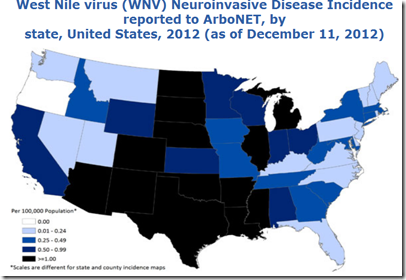
As of December 11, 2012, 48 states have reported West Nile virus infections in people, birds, or mosquitoes. A total of 5,387 cases of West Nile virus disease in people, including 243 deaths, have been reported to CDC. Of these, 2,734 (51%) were classified as neuroinvasive disease (such as meningitis or encephalitis) and 2,653 (49%) were classified as non-neuroinvasive disease.


The 5,387 cases reported thus far in 2012 is the highest number of West Nile virus disease cases reported to CDC through the second week in December since 2003. Eighty percent of the cases have been reported from 13 states (Texas, California, Louisiana, Illinois, Mississippi, South Dakota, Michigan, Oklahoma, Nebraska, Colorado, Arizona, Ohio, and New York) and a third of all cases have been reported from Texas.


Neuroinvasive cases (which present with meningitis, encephalitis, or flaccid Paralysis) are severe enough that they result in hospitalization and diagnosis, and so they are considered the best indicator of the scope of each year’s epidemic.


Mild cases – called West Nile Fever – often go undiagnosed, with probably only 2%-3% being identified.


Meaning that with more than 2,600 mild cases reported, the true incidence was probably in excess of 100,000 infections.


Hardest hit this year was Texas, with more than 1,700 cases and 76 deaths. Far behind, but in second place, was California with 461 cases and 16 deaths. 


Nevertheless, the highest incidence of neuroinvasive disease occurred along the Gulf Coast and into the upper Mid West.


image


Earlier this year the CDC indicated they would be taking a look at this year’s WNV season to see if any changes have occurred in the virus to account for this sudden spike in activity. 


While West Nile season has passed for most of the country, there are still a few areas where mosquitoes are still active.  So, if you live in, or are visiting one of these areas, the advice by many health departments to follow the `5 D’s’ remains intact. 

image

Wednesday, October 03, 2012

DVBID: West Nile Infections Continue Record Pace

image

Credit DVBID


# 6604


The DVBID (Division of Vector Borne Infectious Diseases) has updated their West Nile numbers as reported to them through October 2nd, and as expected the number of new cases, and deaths, continues to rise.


2012 West Nile virus update: October 2

As of October 2, 2012, 48 states have reported West Nile virus infections in people, birds, or mosquitoes. A total of 3,969 cases of West Nile virus disease in people, including 163 deaths, have been reported to CDC. Of these, 2,010 (51%) were classified as neuroinvasive disease (such as meningitis or encephalitis) and 1,959 (49%) were classified as non-neuroinvasive disease.


The 3,969 cases reported thus far in 2012 is the highest number of West Nile virus disease cases reported to CDC through the first week in October since 2003. Almost 70 percent of the cases have been reported from eight states (Texas, California, Louisiana, Mississippi, South Dakota, Michigan, Oklahoma, and Illinois) and a third of all cases have been reported from Texas.


The record pace continues, and we can expect – given incubation period of 2 or 3 weeks, and since some people may succumb only after weeks of illness – that we will see these numbers continue to rise for the next couple of months.


The incidence level of the more serious neuroinvasive form of West Nile disease – which can produce encephalitis, meningitis, and/or acute flaccid paralysis – is illustrated by the following chart. 


image


Although the peak period of transmission for WNV may have passed, infected mosquitoes are still out there and are still biting and infecting people.


So we still need to heed the advice of our local health departments to  follow the `5 D’s’ of mosquito protection:

image


And finally, to find out about the West Nile threat in your area, you can visit the DVBID website below:

Links to State and Local Government West Nile Virus Web Sites


Click on a state to link directly to their West Nile virus Web page.

See list below for additional city-level and main State Health Department Web sites.

Image: West Nile Virus Map of States with links to their West Nile Virus pages

Wednesday, September 26, 2012

DVBID Update On West Nile Virus


image

Source DVBID


# 6586


While the big infectious disease news this week has been the novel coronavirus that has killed one Saudi, and seriously sickened a Qatari man, there are other infectious disease threats we follow, including West Nile Disease.


The DVBID has updated their West Nile website, and while the number of new infections is beginning to decline, 13 additional deaths have been reported via ArboNet in the last week.


2012 West Nile virus update: September 25

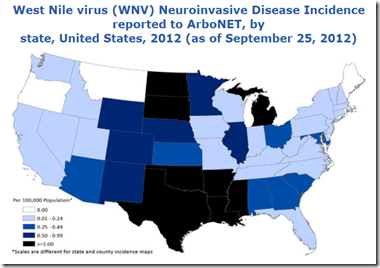
As of September 25, 2012, 48 states have reported West Nile virus infections in people, birds, or mosquitoes. A total of 3,545 cases of West Nile virus disease in people, including 147 deaths, have been reported to CDC. Of these, 1,816 (51%) were classified as neuroinvasive disease (such as meningitis or encephalitis) and 1,729 (49%) were classified as non-neuroinvasive disease.


The 3,545 cases reported thus far in 2012 is the highest number of West Nile virus disease cases reported to CDC through the last week in September since 2003. Seventy percent of the cases have been reported from eight states (Texas, Mississippi, South Dakota, Michigan, California, Louisiana, Oklahoma, and Illinois) and 38 percent of all cases have been reported from Texas.


It should be noted that the latest numbers reported via ArboNet may lag behind the most recent totals being reported by each state.  


Case in point: Texas,  which is shown to have  1345 cases and 52 deaths in today’s report, is reporting somewhat higher numbers on their website:


image

The incidence level of the more serious neuroinvasive form of West Nile disease – which can produce encephalitis, meningitis, and/or acute flaccid paralysis – is illustrated by the following chart. 


image 


Although the peak period of transmission for WNV may have passed, infected mosquitoes are still out there and are still biting and infecting people.


So we still need to heed the advice of our local health departments to  follow the `5 D’s’ of mosquito protection:

image

Thursday, September 06, 2012

CDC West Nile Update


image

Credit DVBID


# 6539


I was away from my desk yesterday for the CDC’s  teleconference update on West Nile activity across the nation, but Lisa Schnirring for CIDRAP News  has an excellent overview.   


West Nile virus cases continue record pace

Lisa Schnirring * Staff Writer

Sep 5, 2012 (CIDRAP News) – The number of West Nile virus cases in the United States this year has jumped by about 25% in the past week, and though new reports are still coming in at a record pace, Texas—the hardest hit state—is seeing some promising signs that interventions such as aerial spraying are working.

(Continue . . .)


The transcript of this teleconference and an audio file is now available on the CDC Newsroom webpage.

image


Texas, which has been particularly hard hit this year, has now reported 40 deaths, and a record 495 neuroinvasive cases this year.


Neuroinvasive cases (which present with meningitis, encephalitis, or flaccid Paralysis) are severe enough that they result in hospitalization and diagnosis, and so they are considered a better indicator of the scope of each year’s epidemic.


Mild cases – called West Nile Fever – often go undiagnosed, with probably only 2%-3% being identified.


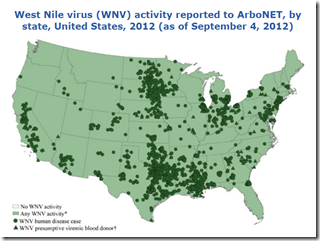
As you can see from the chart below, while 44 states have reported human infections with the West Nile Virus this year, it is the middle of the country that is being hardest hit by neuroinvasive WNV.


image

Credit DVBID


Vector-borne illnesses like West Nile Virus, EEE (Eastern Equine Encephalitis), Dengue, Lyme Disease, Babesia, Powassan Virus, and even the newly reported Heartland Virus (see also Maryn McKenna’s report) are becoming increasingly common across the United States.


Many scientists believe that as climate change occurs, we will see more of these mosquito, flea, tick, and biting fly transmitted diseases here, and in the European Union.


To give you an idea how quickly a new, vector-borne disease like West Nile can spread, the WNV only arrived in the United States twelve years ago and in a few short few years had invaded all 48 contiguous states.


From the USGS Factsheet on West Nile Virus

image


Prevention is the key.


West Nile Virus is now endemic across most of the United States and the prudent move is to take the recommended precautions against mosquito bites.


image


And ticks, which can also easily transmit diseases, require preventative measures as well.

image

(Credit CDC)


image

Wednesday, August 22, 2012

CDC Telebriefing on West Nile Virus


image


# 6510


A public health situation we’ve been following here for the past several weeks (see here, here, here, and here) was the subject of a CDC telebriefing today; the unusually high incidence of West Nile infections across the country, but most noticeably in Texas.


According to the CDC’s Dr. Lyle R. Petersen, director of the DVBID at the CDC, 2012 may be on track to be the worst yet in the 13 year history of the virus in the United States.


Yesterday, the CDC’s DVBID division updated their numbers through August 21st, indicating:


2012 West Nile virus update: as of August 21

Thus far in 2012, 47 states have reported West Nile virus infections in people, birds, or mosquitoes. A total of 1118 cases of West Nile virus disease in people, including 41 deaths, have been reported to CDC. Of these, 629 (56%) were classified as neuroinvasive disease (such as meningitis or encephalitis) and 489 (44%) were classified as non-neuroinvasive disease.


The 1118 cases reported thus far in 2012 is the highest number of West Nile virus disease cases reported to CDC through the third week in August since West Nile virus was first detected in the United States in 1999. Approximately 75 percent of the cases have been reported from 5 states (Texas, Mississippi, Louisiana, South Dakota, and Oklahoma) and almost half of all cases have been reported from Texas.


Of the 1118 cases, nearly half (n=537) are from Texas, and 26 deaths so far this year have been recorded in the Lone Star State. Hard hit Dallas county reported their 11th fatality yesterday.


Elsewhere across the nation, 38 other states have reported West Nile infections in humans, and deaths have been reported across 16 states.


Of note, Louisiana has reported 6 fatalities and Oklahoma has reported 3.


Today’s telebriefing featured Lyle R. Petersen, M.D. and the transcript should be posted on the CDC’s media site tonight or tomorrow (now available at this link).


Lisa Schnirring writing for CIDRAP NEWS has an excellent summary of today’s briefing:


CDC reports surge in US West Nile virus activity

Lisa Schnirring * Staff Writer

Aug 22, 2012 (CIDRAP News) – The United States is experiencing a dramatic rise in the cases of West Nile virus (WNV) infections over the past month, with record-setting numbers expected over the next several weeks and the US Centers for Disease Control and Prevention (CDC) warning people to take key preventive steps.


So far, 38 states have reported human cases, but the epicenter is Texas, which has reported half of the WNV infections. The CDC said so far it has received reports of 1,118 cases, including 629 people with the neuroinvasive form of the disease. Nationally, 41 deaths have been reported.

(Continue . . .)


Given that the WNV season doesn’t usually peak until mid-August, and it can take 2 to 3 weeks for symptoms to develop, many more cases are expected over the next few months.


While 80% of those infected don’t show symptoms, last week WEBMD carried a report (see New West Nile Threat: Kidney Disease) about research conducted by Baylor University West Nile expert Kristy O. Murray, PhD, DVM.


Dr. Murray’s research (see Persistent Infection with West Nile Virus Years after Initial Infection) suggests long-term sequelae may develop among a significant percentage of those who are infected with the West Nile Virus – even among those infected asymptomatically.


Dr. Murray was awarded an NIH grant in 2011 to study the effects of chronic WNV infection on the kidneys and central nervous system.


Reason enough to take seriously the recommendations from health departments across the nation that urge people to follow the `5 D’s’ of mosquito protection:

image

To find out about the West Nile threat in your area, you can visit the DVBID website below:

Links to State and Local Government West Nile Virus Web Sites

 Image: West Nile Virus Map of States with links to their West Nile Virus pages

And as a final note, the CDC recently updated their information on mosquito repellants.

Updated Information regarding Insect Repellents

Saturday, August 18, 2012

EEE: Eastern Equine Encephalitis


image

# 6501


While West Nile Virus is making headlines in Texas and across much of the nation, another mosquito-borne virus – EEE (Eastern Equine Encephalitis) – has the attention of Massachusetts health officials.


On Thursday, the Massachusetts Department of Health & Human Services released the following alert:


State Health Officials Raise EEE Threat Level in Two Communities after Detection of EEE-Positive Mosquitoes

New Bedford and Westborough raised to High; ground spraying to be enhanced

BOSTON — Thursday, August 16, 2012 – The Massachusetts Department of Public Health (DPH) today announced the detection of mammal-biting mosquitoes infected with Eastern Equine Encephalitis (EEE) in New Bedford and Westborough. As a result, health officials have raised the EEE threat level to “High” in these two communities and recommend that outdoor evening events are curtailed there for the remainder of the summer. Ground-based spraying by mosquito control projects is ongoing in both New Bedford and Westborough and will be enhanced.

(Continue. . . )


So far, only one human case of EEE has been detected in Massachusetts this year, and that one is believed to have been acquired out of state. This risk of seeing additional cases, however, is deemed high in communities where human-biting mosquitoes are found to carry the virus.


Although far less common than West Nile Virus, EEE is of concern because it has a high fatality rate (35%), and among the survivors, a large number suffer ongoing neurological problems.


Over the past decade there have been an average of about 7 cases (not deaths) of `Triple E’ in the United States each year (range range: 3—21), which makes EEE an exceedingly rare disease in humans.


But given its severity (and the co-circulation of other mosquito borne diseases like West Nile, La Cross Virus, & SLEV), it makes sense to take steps to protect against mosquito bites – even if your local officials have not issued a warning.


The Florida Department of Health’s advice to protect  against mosquito borne diseases is that people should practice the "5 D's"

Don't go outdoors at DUSK and DAWN when mosquitoes are most active.

DRESS so your skin is covered with clothing

Apply mosquito repellent containing DEET to bare skin and clothing. 

Other effective repellents include picaridin, oil of lemon eucalyptus, and IR3535

Empty containers and DRAIN standing water around your home where mosquitoes can lay eggs.


While the number of yearly cases is low, the distribution of EEE in the United States far ranging.

image


The natural host for the EEE virus are songbirds, which can become infected usually without suffering ill effect.  The virus is spread among these birds by the blood feeding of female mosquitoes (males don’t bite).


After an infected mosquito feeds on a bird, the bird becomes infected and the virus begins reproducing. After a few days, and for only a few days, the bird’s bloodstream amplifies the virus enough to infect subsequent mosquitoes that feed on it.


Culiseta melanura, which means "curly black hairs", is the species of swamp mosquito that serves as the primary vector for this virus among birds.

image 

Culiseta melanura, however, isn’t usually attracted to humans.


So it generally requires a secondary type of mosquito - one that isn’t quite as picky a feeder - such as the Aedes albopictus or  Coquillettidia perturbans  `salt and pepper’ mosquito, to bite an infected bird in order to move it into the equine or human population.


The Transmission cycle is illustrated by the following graphic from the CDC.

image


Humans and horses don’t develop a high enough viral EEE titer in their bloodstream to pass on the virus if they are subsequently bitten by a mosquito, so they are considered to be `dead-end hosts’.


As there is no vaccine against EEE, the best tactic is prevention, and high in that category is the use of mosquito repellants.


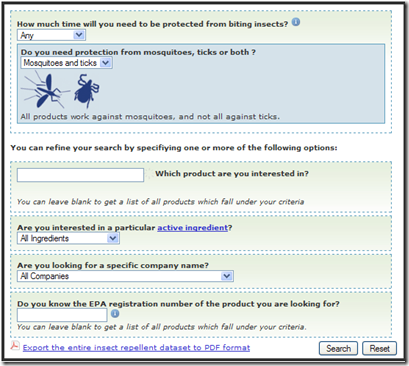
To help you with choosing the right repellant the EPA has developed an interactive insect repellant search engine that will that will allow you to input your needs and it will spit out the best repellants to use.


image

(click image to go to search engine)


For more on Arboviruses in the United States you may wish to revisit this blog from last year:


MMWR: Arboviral Disease Surveillance – 2010

Thursday, August 09, 2012

Dallas West Nile Update


 image


# 6483


While we await today’s MMWR and a briefing this afternoon from the CDC on the H3N2v outbreak in Ohio and Indiana, we’ve three more West Nile Virus (WNV) deaths to report in Dallas County, Texas this week (see Ninth West Nile Virus Related Death in Dallas County August 8, 2012). 


Nationally, as of August 7th, 253 neuroinvasive cases of WNV have been reported to ArboNET, along with 137 non-neuroinvasive WNV infections. 


Of those, roughly half have been reported out of the state of Texas (see CHART).


It is estimated that only about 20% of the people who are infected with WNV develop symptoms, and the vast majority of those only experience a mild flu-like illness. Accordingly, mild, asymptomatic, or non-neuroinvasive infections are likely vastly undercounted.


The more severe `neuroinvasive’ form of WNV can produce symptoms that include headache, stiff neck, confusion, coma, convulsions, and even paralysis.


According to the CDC’s  WEST NILE SYMPTOMS Q&A page.


It is estimated that approximately 1 in 150 persons infected with the West Nile virus will develop a more severe form of disease. Serious illness can occur in people of any age, however people over age 50 and some immunocompromised persons (for example, transplant patients) are at the highest risk for getting severely ill when infected with WNV.

<SNIP>

When someone is infected with West Nile virus (WNV) they will typically have one of three outcomes: No symptoms (most likely), West Nile fever (WNF in about 20% of people) or severe West Nile disease, such as meningitis or encephalitis (less than 1% of those who get infected).

If you develop a high fever with severe headache, consult your health care provider.


While many are concerned this week over an emerging swine flu virus, so far we are not aware of any deaths or serious illness from that flu strain.


The same, sadly, cannot be said about mosquito borne illnesses this summer. 


Reason enough for health departments across the nation to urge people to follow the `5 D’s’ of mosquito protection:

image

To find out about the West Nile threat in your area, you can visit the DVBID website below:

 
Links to State and Local Government West Nile Virus Web Sites

Click on a state to link directly to their West Nile virus Web page.

See list below for additional city-level and main State Health Department Web sites.

Image: West Nile Virus Map of States with links to their West Nile Virus pages