Friday, June 30, 2023

ECDC Risk Assessment: Avian influenza in domestic cats - Poland - 2023


#17,519

It has been 9 days since the first media reports of unusual cat illnesses and deaths began to come out of Poland (see Media Reports Of Unusual Cat Deaths In Poland), and understandably, the spillover of avian flu to dozens (perhaps scores) of companion animals has raised concerns globally. 

As we've seen with other mammalian infection with this new H5N1 clade (2.3.4.4b), it is often fatal, and frequently involves profound neurological symptoms (see Emerging Microbes & Inf.: Neurotropic HPAI H5N1 Viruses with Mammalian Adaptive Mutations in Free-living Mesocarnivores in Canada).

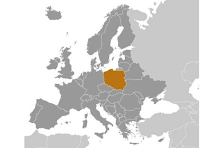
Cats have a long history of being susceptible to H5N1 (see A Brief History Of Avian Influenza In Cats), but this outbreak is notable both for its size and for its geographic range (see map above).  

While no human cases have been reported, surveillance and testing for novel flu viruses is limited, and it is possible some cases have been missed. 

Given what we know - and more importantly, what we don't know - the ECDC's risk assessment below is understandably incomplete.  They are, however, recommending pet owners, and vets, take precautions. 


1. Avian influenza in domestic cats - Poland -2023 

Overview: Update On 28 June 2023, the Polish Chief Veterinary Officer (CVO) issued a press release notifying about a total of 16 cat samples positive for influenza A(H5N1) in the country. Positive samples originate from many cities in Poland (Gdańsk, Gdynia, Pruszcz Gdański, Lublin, Bydgoszcz, Poznań and Warsaw). 

The World Organisation for Animal Health (WOAH) issued a statement on the Polish cat outbreak mentioning that the severe and rapid course of the infection is consistent with reports of A(H5N1) infection in Felidae, and noting that several cases of infection in cats with Influenza A(H5N1) have been reported from Europe and North America in the context of the ongoing panzootic. WOAH stresses the need for more investigations and states that since the cases include both stray and pet cats, exposure to sick wild birds is not considered a likely transmission mode.

In addition, the wide geographical distribution of cases suggests that the primary mode of spread in these cases is not cat-to-cat transmission but rather some other kind of common source. The statement also mentions the need to isolate any suspected cases from other pets due to potential shedding from the gastrointestinal tract, and the need for appropriate personal protective equipment (PPE) for the handlers of such animals. 

Media sources from Poland cite the director of the National Veterinary Institute in Puławy stating that "they have detected two mutations that indicate that the A(H5N1) virus is evolving to multiply more easily in mammals"

Summary 

Since 23 June 2023, media sources referred to several deaths of domestic cats (at least 70) in Poland for which investigations are ongoing. On June 26, the Chief Veterinary Officer of Poland announced in a press release that 11 samples were tested at the National Veterinary Institute in Puławy, of which nine were positive for A(H5N1) influenza virus. The positive samples come from the cities of Poznań, Tricity and Lublin. Sequencing is ongoing. Preliminary studies have ruled out connection to the avian influenza outbreaks in seagulls, that Poland has registered in recent weeks.

No source of infection has been identified yet. An intersectoral meeting between animal and human public health services took place on 26 June. The CVO press release included advice to the public to prevent contact of pet cats with other animals, including keeping them inside homes and avoid contact with footwear used outside, enhanced hand hygiene for all pet cat owners is also advised. 

ECDC assessment: Several uncertainties currently exist as regards the source of infection, the potential of feline-to-feline and felineto-human transmission of the particular A(H5N1) influenza virus strain, as well as regards to the severity of the disease. No human cases have been reported related to this event, however, there are too many uncertainties at this stage to properly assess the risk to the general public.

 ECDC will review its assessment as soon as more information becomes available. 

Actions: ECDC is monitoring this event and has contacted Polish public health authorities and EFSA for further investigation. Last time this event was included in the CDTR: 29 June 2023

So far we've only seen reports of mass cat infections from Poland, but that could easily change.  Hopefully neighboring countries are ramping up surveillance, although that likely isn't an option in Ukraine right now. 

For more on the difficulties of detecting novel flu cases in the community, you may wish to revisit UK Novel Flu Surveillance: Quantifying TTD.  

On Monday of this week the ECDC released timely Guidance: Enhanced Surveillance of Severe Avian Influenza Virus Infections in Hospital Settings, and last week the CDC presented a COCA Call for clinicians on  What Providers Need to Know about Zoonotic Influenza.

Stay tuned. 

One Health: H10Nx Avian Influenza Viruses Detected in Wild Birds in China Pose Potential Threat to Mammals

Graphical Abstract
 

#17,518

Although HPAI H5 viruses are currently at the top of our avian flu worry list, it is far from the only influenza subtype that has pandemic potential. Between 2013 and mid-2017 the world was on edge when more than 1,500 people were infected with (LPAI & HPAI) H7N9 in China (see chart below)

Credit FAO
While the pandemic threat from H7N9 has subsided (due primarily to an intensive poultry vaccination campaign), the virus continues to circulate in the wild and could someday return (see EID Journal: Antigenic Variant of Highly Pathogenic Avian Influenza A(H7N9) Virus, China, 2019.

Similarly, China continues to report sporadic H5N6 infections (often fatal), which have not been as successfully contained by the vaccine (see map below). 
Over the past year we've seen novel H3N8 infections reported in three provinces (1 fatal, 1 severe, 1 mild) (see Characterization of an Emergent Chicken H3N8 Influenza Virus in Southern China: a Potential Threat to Public Health). 

There are others, of course.  We've seen H6N1 infect dogs and jump to at least one human in Taiwan (see Study: Adaptation Of H6N1 From Avian To Human Receptor-Binding), isolated cases of H7N4 in China, and scores of (mostly mild) H9N2 infections.

While it tends to get less attention than the others, H10 viruses have also shown a proclivity for spilling over into mammals (see Avian H10N7 Linked To Dead European Seals), and occasionally, infecting humans.  

A few past blogs include:


Although the number of reported H10 infected humans remains small - possibly due to a lack of surveillance and testing - in 2014's BMC: H10N8 Antibodies In Animal Workers – Guangdong Province, China, we saw evidence that some people may have been infected with the H10N8 virus in China before the first case was recognized.

In the spring of 2019, in JVI: Aerosol Transmission of Gull-Origin Iceland Subtype H10N7 Influenza A Virus in Ferrets, we looked at research that found `. . . .  gull-origin H10N7 virus can be transmitted between ferrets through the direct contact and aerosol routes, without prior adaptation.'

These researchers noted that these viruses `. . .  showed high binding affinity to human-like glycan receptors. . . ', the authors recommended that avian H10 viruses be monitored closely, as they have some pandemic potential. 

All of which brings us to a new study, published by One Health, that looks at the evolution of an array of avian H10 subtypes circulating in China, that also warns that they have pandemic potential.  Due to its length, I've only reproduced the link, Abstract, and Conclusions. 

Follow the link to read it in its entirety.


H10Nx avian influenza viruses detected in wild birds in China pose potential threat to mammals

Xinru Lv a 1, Jingman Tian b 1, Xiang Li a 1, Xiaoli Bai b 1, Yi Li a 1, Minghui Li b, Qing An a, Xingdong Song a, Yu Xu c, Heting Sun c, Peng Peng c, Siyuan Qin c, Zhenliang Zhao a, Rongxiu Qin a, Qiuzi Xu a, Fengyi Qu a, Meixi Wang a, Hua Luo a, Zhen Zhang a, Xiangwei Zeng a…Hongliang Chai

https://doi.org/10.1016/j.onehlt.2023.100515Get rights and content
Under a Creative Commons license

Highlights

• The H10Nx AIVs in wild waterfowl in China were divided into eight genotypes.
• The H10 viruses showed good mammalian adaptation, posing a threat to public health.
• The spatiotemporal spread of the global H10 viruses was described.
• Anatidae was the key species for introducing and spreading H10 AIVs.

Abstract

H10 subtype avian influenza viruses (AIVs) have been isolated from wild and domestic avian species worldwide and have occasionally crossed the species barrier to mammalian hosts. Fatal human cases of H10N8 infections and the recent detection of human H10N3 infections have drawn widespread public attention. In this study, 25 H10Nx viruses were isolated from wild waterfowl in China during a long-term surveillance of AIVs. 

We conducted phylogenetic and phylogeographic studies of the hemagglutinin (HA) genes of global H10 viruses to determine the spatiotemporal patterns of spread and the roles of different hosts in viral transmission. We found the pattern of AIV transmission from wild birds to poultry to humans, and Anatidae have acted as the seeding population in the spread of the virus. Phylogenetic incongruence indicated complex reassortment events and our isolates were divided into eight genotypes (G1–8). 

We also found that the HA genes of the G8 viruses belonged to the North American lineage, indicating that intercontinental gene flow has occurred. Their receptor-binding specificity showed that the G1/4/5/6/7/8 viruses bind to both human-type α2,6-linked sialic acid receptors and avian-type α2,3-linked sialic acid receptors. Mouse studies indicated that the H10Nx isolates replicated efficiently in the respiratory system without preadaptation, but showed low pathogenicity in mice. The H10Nx isolates showed no (G2/4/7) or low pathogenicity (G1/3/5/6/8) in chickens, and the G6 and G8 viruses could be transmitted to chickens through direct contact. 

The asymptomatic shedding of these wild-bird-origin H10Nx isolates in chickens and their good adaptation in mice should increase the ease of their transmission to humans, and they therefore pose a threat to public health. Our findings demonstrate a further understanding of wild bird-origin H10 viruses and provide information for the continuous surveillance of H10 subtype viruses.

         (SNIP)

5. Conclusions

During our long-term active surveillance of AIVs in migratory birds, 25 H10 subtype AIVs were isolated from Anatidae and shorebirds in China from 2013 to 2020. Our study indicated that these viruses revealed eight genotypes, reflecting the complicated reassortant and high level of genetic diversity of them. And these viruses could replicate in mice efficiently without preadaptation, and G4–8 viruses acquired the ability to bind to the human-type receptors, posing a threat to public health. The replication and transmission of the H10 viruses in chickens were limited, and its silence spread in chickens made it difficult to detect. To reduce the emergence of novel reassortant viruses and enzootic influenza viruses, the active surveillance of H10 AIVs wild birds and poultry is required. The early characterization of these viruses can reduce the potential risk of their zoonotic transmission from poultry to humans. The asymptomatic shedding of these wild-bird-origin H10Nx isolates in chickens and their good adaptation in mice should increase the ease of their transmission to humans, and they therefore pose a threat to public health.


Although it can be difficult to worry about the creek rising when your house is already on fire, these `lesser' (read: non-H5N1) viral threats deserve our attention and respect, because any one of them could make an evolutionary breakthrough and suddenly become the next big threat. 

We were blindsided 2009 by swine H1N1, and again in 2019 by COVID. There's no reason to suspect it couldn't happen again.

OFFLU Statement on Avian Flu In Cats In Poland


Editor's Note:  I've been offline since early yesterday morning due to an 18-hour internet outage, otherwise I would have blogged this report yesterday. 

#17,517

OFFLU.org is a joint network of avian influenza expertise formed the FAO (Food and Agriculture Organization) and WOAH (World Organisation for Animal Health) in 2005.  Yesterday they released a brief statement (below) on the recent spate of feline deaths due to HPAI H5N1 in Poland (see previous blogs on this outbreak here, here, and here).

While this statement is based on a June 26th report from Polish officials (superseded by this report on the 28th), it does seem to confirm one aspect of media reportings we've seen; that some indoor cats have been affected as well as outdoor cats. 

 Hopefully we'll get another update today from Poland. 


28 June 2023

Infections with Avian Influenza A(H5N1) virus in cats in Poland 

OFFLU is closely monitoring information from Poland regarding unusual deaths in domestic cats in multiple households throughout the country. These cases have been reported widely in the press during the past week. 

Felidae, both wild and domestic, are known to be susceptible to Influenza A(H5N1) viruses with most cases appearing to be the result of ingestion of infected carcasses of wild birds(Chen et al 2016, Frymus et al 2021). 

A report from the Polish Chief Veterinary Officer issued on 26 June indicated that nine of 11 affected cats subjected to testing were found to be infected with Influenza A(H5N1) virus. The severe and rapid course of the infection is also consistent with reports of this disease in Felidae. Felidae infected with Influenza A(H5N1) viruses can show a range of clinical signs including listlessness, loss of appetite, severe depression, fever, neurological disease, respiratory and enteric signs, jaundice, and death. Clinical signs would be expected to develop within a few days of exposure to the virus. 

Other fatal cases of infection in cats with Influenza A(H5N1) have been reported from Europe and North America during the current clade 2.3.4.4b panzootic including a fatal case of Influenza A(H5N1) reported from a cat in France with dyspnea and nervous signs (Briand et al 2023). Exposure to infected wild birds or poultry were considered the most likely modes of infection. 

It has been shown that Influenza A(H5N1) viruses in the goose/Guangdong/1/96-lineage can invade the body via the intestine in experimentally infected cats and cause extensive damage to endothelial cells lining blood vessels throughout the body. This resulted in damage to multiple organs including the intestine, liver, lung, kidney and brain with multifocal necrosis detected in some organs (Reperent et al 2012). 

Investigations are required to better understand this cluster of cases to assess links between suspected cases and possible routes of exposure, additional testing of sick and dead cats to establish that the virus is present in other cats and the cause of the disease being seen, and rapid genotypic and phenotypic characterisation of detected viruses for evidence of changes likely to indicate capacity to spread between mammals. Investigations are being undertaken at present by Polish authorities. 

Early reports indicated that not all suspect cases had outdoor access suggesting that a direct role from infected wild birds is unlikely as a common source. The wide geographical distribution of suspected cases suggests that the primary mode of spread in these cases is not cat-to-cat transmission. It is likely that infected cats would shed virus via the gut and respiratory tract so any suspected cases should be isolated from other pets, and those handling them should wear appropriate personal protective equipment (PPE). Earlier scientific advice from Europe on preventing influenza A(H5N1) in cats should be considered (Thiry et al 2009). 

OFFLU will continue to monitor this outbreak and provide updated information when available. 

(Continue . . . )


Wednesday, June 28, 2023

Poland Vet. Chief: At least 16 Cats Confirmed H5N1 Positive From Multiple Cities - More Tests Pending


#17,516

We have a brief update from the Chief Veterinary Office in Poland - and while the math is a little fuzzy - it confirms the outbreak of H5N1 among cats in Poland is widespread.  Of 33 samples received by the State Veterinary Institute in Puławy - 19 have been tested - and 15 were positive for H5N1.   

Another positive test has been reported by the Warsaw University of Life Sciences (from Warsaw). While this report only mentions 16 positive findings, they indicate 20 outbreaks have been confirmed, which suggests other samples have tested positive in other labs.

Strikingly, positive results have come from as far afield as Gdańsk, Gdynia, Pruszcz Gdański, Lublin, Bydgoszcz and Poznań.  

While not officially confirmed, Pathfinder on FluTrackers has a media report indicating that two indoor cats in Poznań have tested positive for the virus, along with a warning not to feed cats raw chicken. 

The translated official statement follows:

(translation)

Communication of the IV GLW on the disease of cats
Announcements 2023-06-28

With reference to the announcement of June 26. The Chief Veterinary Officer informs that to the State Veterinary Institute in Puławy to this day until By 3:00 pm, a total of 33 samples from cats from Gdańsk, Gdynia, Poznań, Lublin, Pruszcz Gdański, Nowy Dwór Mazowiecki, Bydgoszcz, Wrocław and the vicinity of Zamość were received.

Positive results were obtained in 15 of the 19 samples already tested. All positive results indicate the genetic material of the H5N1 influenza virus and come from Gdańsk, Gdynia, Pruszcz Gdański, Lublin, Bydgoszcz and Poznań.

In addition, one of the samples tested at the Faculty of Veterinary Medicine at the Warsaw University of Life Sciences, from Warsaw, was positive for H5N1 influenza, which means 20 confirmed outbreaks in the country.

Any new guidelines as well as announcements in the case will be regularly published on the official website ( https://www.wetgiw.gov.pl/main/komunikaty ), in order to provide you with current information .

For now, the exact route of infection isn't known (and may vary from one event to the next), and we've not seen any detailed genetic analysis of the virus.

Stay tuned. 

Florida Issues Statewide Mosquito-borne Illness Alert


#17,515

Yesterday, in CDC HAN: Locally Acquired Malaria Cases Identified in the United States, we looked at recent reports of locally acquired malaria in Florida (n=4) and Texas (n=1).  While we often see mosquito-borne illness alerts during the summer, they are usually issued on a county by county basis. 

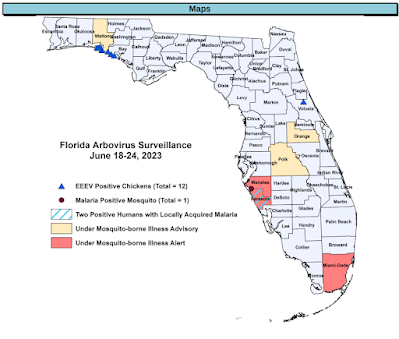
The most recent Florida Arbovirus Surveillance Report (Week 25: June 18-24, 2023) (below) - published over the weekend - only listed 3 counties (Manatee, Sarasota, and Miami-Dade) as being under a mosquito-borne illness alert. 


But yesterday the Florida Health Department expanded that alert to cover the entire state.  While malaria is the current concern, other mosquito-borne illnesses - including West Nile Virus, Dengue and EEE - can also cause significant morbidity and mortality. 

The Florida Department of Health IssuesMosquito-Borne Illnesses Advisory

 Four malaria cases in Sarasota county have been treated and recovered. 

Tallahassee, Fla. – The Florida Department of Health (Department) is issuing a statewide mosquitoborne illness advisory following four confirmed and recovered local cases of malaria in Sarasota County. All individuals have been treated and have recovered. Malaria is transmitted through infected mosquitoes. Residents throughout the state should take precautions by applying bug spray, avoiding areas with high mosquito populations, and wearing long pants and shirts when possible - especially during sunrise and sunset when mosquitos are most active.

The Department continues to work closely with local partners and county mosquito control. Aerial and ground mosquito spraying continues to be conducted in these areas to mitigate the risk of further transmission. 

In Florida, Malaria is transmitted through infected Anopheles mosquitoes. The cause of malaria in these cases has been identified as the Plasmodium vivax species. Effective treatment is readily available through hospitals and other health care providers. Individuals in this area with symptoms of fever, chills, sweats, nausea/vomiting, and headache should seek immediate medical attention. 

The Department advises the public to remain diligent in their personal mosquito protection efforts by remembering to “Drain and Cover.” 

DRAIN standing water to stop mosquitoes from multiplying.

  • Drain water from garbage cans, house gutters, buckets, pool covers, coolers, toys, flowerpots, or any other containers where sprinkler or rainwater has collected. 
  • Discard old tires, drums, bottles, cans, pots and pans, broken appliances and other items that aren't being used. 
  • Empty and clean birdbaths and pet's water bowls at least once or twice a week  
  • Protect boats and vehicles from rain with tarps that don’t accumulate water.  
  • Maintain swimming pools and keep appropriately chlorinated. Empty plastic swimming pools when not in use.

COVER doors and windows with screens to keep mosquitoes out of your house.  

  • Repair broken screening on windows, doors, porches, and patios.

COVER skin with clothing or appropriate repellent. 

  • Clothing - Wear shoes, socks, and long pants and long-sleeves. This type of protection may be necessary for people who must work in areas where mosquitoes are present. 
  • Repellent - Apply mosquito repellent appropriately.

o Always use repellents according to the label. Repellents with DEET, picaridin, oil of lemon eucalyptus, para-menthane-diol, 2-undecanone, and IR3535 are effective.

o Use mosquito netting to protect children younger than 2 months old.

 Tips on Repellent Use  

  • Always read label directions carefully for the approved usage before you apply a repellent.  
  • Apply insect repellent to exposed skin or clothing, but not under clothing.  
  • Treat clothing and gear with products containing 0.5% permethrin. Do not apply permethrin directly to skin.  
  • Some repellents are not suitable for children. Ensure repellent is safe for children and age appropriate: 

    •  Mosquito repellents containing lemon eucalyptus oil or para-menthane-diol should not be used on children under the age of three years. 
    • DEET is not recommended on children younger than two months old.
    •  Avoid applying repellents to the hands of children. 
    •  Parents should apply repellent to their hands first and then transfer it to the child’s skin and clothing.

The Department continues to conduct statewide surveillance for mosquito-borne illnesses, including West Nile virus infections, Eastern equine encephalitis, St. Louis encephalitis, malaria, chikungunya, and dengue. Residents of Florida are encouraged to report dead birds to the Florida Fish and Wildlife Conservation Commission 

For more information on what repellent is right for you, consider using the Environmental Protection Agency’s search tool to help you choose skin-applied repellent products. For more information, visit the Department’s website here.

For some past blogs on these mosquito-borne threats you may want to revisit:

WHO DON: Geographical Expansion of Dengue and CHKV in the Region of the Americas

EID Journal: Hx of Mosquitoborne Diseases In the U.S. & Implications For The Future

Arboviruses: (Already) Coming To America

EID Journal: HPAI A(H5N1) Clade 2.3.4.4b Virus in Domestic Cat, France, 2022

Host Adaptation via serial passage of a virus


#17,514

Influenza A viruses, being negative-sense single-stranded segmented RNA viruses, are prolific but notoriously sloppy replicators. They make millions of copies of themselves while they infect a host, but in the process, often make small transcription errors. 

Most of these `errors' do little to help the virus, and many are detrimental to its survival. 

Those that accidentally favor replication in the host can produce more progeny, and if `fit enough', can drown out the earlier `wild type’ virus in the host. This process is called host adaptation, and while it can be easily accomplished in the laboratory via a classic serial passage study (see graphic above), it occurs in nature all the time. 

Hence our concerns over mammal-to-mammal transmission of avian viruses. The longer the chains of infection, the more likely the virus is to adapt to its new found host.

Yesterday, in A Brief History Of Avian Influenza In Cats, I mentioned a report from early January (see WOAH: France Reports Cat Infected With Avian H5N1), on the discovery of an H5N1 infected cat at a poultry farm in western France. 

The cat was euthanized on December 23rd, but few other details were offered.

Since then we've seen sporadic feline infections with H5N1 in the United States (see here, and here) and Canada (see here), and for the past 7 days we've been following a much larger outbreak in Poland

How large is hard to estimate, but 9 of 11 cats tested (from 3 different cities) were positive for avian H5. We are awaiting further details, including laboratory analyses. 

Today we have a Research Letter published this week in the CDC's EID Journal on last December's feline infection in France.  From it we learn that the animal suffered both respiratory and neurological symptoms, and the virus carried two potentially significant amino acid changes (E627K in PB2 and E26G in NS2), likely the result of host adaptation.

Some excerpts (reformatted for readability) from the report follow, after which I'll have a bit more. 

Volume 29, Number 8—August 2023
Research Letter
Highly Pathogenic Avian Influenza A(H5N1) Clade 2.3.4.4b Virus in Domestic Cat, France, 2022

François-Xavier Briand , Florent Souchaud, Isabelle Pierre, Véronique Beven, Edouard Hirchaud, Fabrice Hérault, René Planel, Angélina Rigaudeau, Sibylle Bernard-Stoecklin, Sylvie Van der Werf, Bruno Lina, Guillaume Gerbier, Nicolas Eterradossi, Audrey Schmitz, Eric Niqueux, and Béatrice Grasland

Abstract

We detected highly pathogenic avian influenza A(H5N1) clade 2.3.4.4b virus in a domestic cat that lived near a duck farm infected by a closely related virus in France during December 2022. Enhanced surveillance of symptomatic domestic carnivores in contact with infected birds is recommended to prevent further spread to mammals and humans.


On December 27, 2022, the avian influenza National Reference Laboratory of the Agency for Food, Environmental and Occupational Health & Safety in France confirmed a case of highly pathogenic avian influenza (HPAI) A(H5N1) clade 2.3.4.4b virus in a domestic cat. The cat lived with a human family next to a breeding duck farm, which had notified the animal health services of possible HPAI on December 9, 2022, after observing a 20% drop in egg production. After HPAI H5N1 clade 2.3.4.4b virus was confirmed at the farm, 8,375 ducks were culled on December 14.
On December 20, the cat displayed disturbances in general condition, including apathy and mild hyperthermia, and was seen by a veterinary surgeon. The cat's condition worsened; pronounced neurologic and respiratory (dyspnea) symptoms appeared, resulting in compassionate euthanasia on December 24. Veterinarians collected sinonasal, tracheal, and anal swab samples after death, and a screening laboratory performed real-time reverse transcription PCR (RT-PCR) targeting the matrix protein and hemagglutinin (H5) genes. The laboratory sent H5-positive tracheal and sinonasal swab samples to the National Reference Laboratory, which confirmed HPAI H5N1 virus by using specific real-time RT-PCR for H5 clade 2.3.4.4b and neuraminidase (N1) genes (Table).

We compared the complete sequence of the HPAI H5N1 virus found in the cat (A/cat/France/22P026544/2022) with other HPAI H5N1 virus sequences circulating in France in the same area, including the virus found in the neighboring duck farm (A/duck/France/22P025647/2022). Phylogenetic analyses of HPAI H5N1 genomes indicated that the virus from the cat belonged to the A/duck/Saratov/29-02/2021–like genotype, which has been the predominant virus genotype circulating in France and Europe since September 2022. The cat virus sequence was directly related to virus sequences identified in the same area in December 2022 (Figure).
Furthermore, the virus isolated from the neighboring duck farm (Figure) had only 2 nt differences (out of 13,507 total nts) compared with the cat virus, resulting in an E627K mutation in polymerase basic protein 2 and E26G mutation in nonstructural protein 2 in the cat virus. The E627K mutation has been described as a major marker of influenza virus adaptation to mammalian hosts (1). The E26G mutation has a possible role in virus adaptation to temperature changes (2).
Since September 2021, a total of 90 sequences of HPAI H5N1 clade 2.3.4.4b viruses detected in mammals have been available in the GISAID EpiFlu database (https://www.gisaid.org), 20 of which have the E627K mutation, most probably indicating a rapid selection of this mutation in mammalian hosts (3). This virulence marker is in addition to those already observed in circulating HPAI H5N1 viruses detected in birds in Europe, such as the PB1-F2 N66S mutation (4).

Since winter 2021–22, the number of reported cases of HPAI H5N1 clade 2.3.4.4b infections in mammals has increased (5,6), likely caused by several factors.
 
  • First, a higher prevalence of HPAI H5 viruses in wild and domestic birds might increase the probability of interactions between infected birds and mammals (scavenging, shared habitat).
  • Second, increased surveillance of avian influenza in wildlife might lead to more detection in mammals.
  • Third, currently circulating viruses might infect mammalian hosts more easily. HPAI H5N1 virus detection in mammals is often linked to clinical signs, such as neurologic symptoms, or death of the animal (3,7).
Few indications of intermammal HPAI H5N1 clade 2.3.4.4b contamination exist with the exception of massive infections in seal colonies in the United States (6) and a mink farm in Spain in 2022 (6,7). In our case report, negative results from serologic and real-time RT-PCR analyses of samples from the dog and other cat in the same household indicate a lack of intermammal transmission.

In conclusion, we show that HPAI H5N1 clade 2.3.4.4b can infect cats; HPAI H5N1 clade 1 and clade 2.2 have been sporadically detected in cats since 2004 (8). The close interactions and proximity of domestic cats and humans and rapid selection of mutations (after 1 passage from bird to mammal) could result in a virus with potential for interhuman transmission, indicating a considerable public health threat.
Given that HPAI H5N1 circulates at high levels in wild and domestic birds, and virus was detected in a domestic cat, we recommend enhanced surveillance of symptomatic domestic carnivores in contact with infected birds to rapidly identify potential transmission events to other domestic animals and prevent further spread to humans. Our report also indicates that adequate protective equipment and barrier measures should be provided to avoid direct transmission of HPAI to persons exposed to infected birds (6,9).

Mr. Briand is a scientist at the National Reference Laboratory for avian influenza and Newcastle disease in France. His research interests focus on phylogeny, virology, and molecular epidemiology, especially for avian influenza and Newcastle disease viruses.

In this case, two significant mutations were detected after only one passage (bird to feline) of the virus. Luckily, most H5N1 spillovers into mammals appear to have been dead-end infections, with few opportunities to expand the `chain' of infection. 

One notable exception came last fall, when we saw a large outbreak of avian H5N1 at a mink farm in Spain (see Eurosurveillance journal report HPAI A(H5N1) Virus Infection in Farmed Minks, Spain, October 2022).  Mink are highly susceptible to both COVID and influenza (see That Touch of Mink Flu (2023 Edition)).

Not only does it appear likely that the H5N1 virus spread efficiently from mink-to-mink, it acquired a rare, and potentially dangerous, mutation (T271A) along the way, one which reportedly `enhances the polymerase activity of influenza A viruses in mammalian host cells and mice'.

In other cases - particularly among marine mammals - intermammal transmission may have occurred, but it is difficult to prove. We've also seen some evidence to suggest that pigs may serve as an intermediate host for avian flu (see Netherlands: Zoonoses Experts Council (DB-Z) Risk Assessment & Warning of Swine As `Mixing Vessels' For Avian Flu).

Unfortunately, much of what happens in the wild goes on out of our sight; the 2009 H1N1 virus circulated virtually unnoticed in pigs for a decade before it abruptly began its world tour, and we know very little about SARS-COV-2 prior to December of 2019. 

While there may still be some `species barrier' that prevents HPAI H5 from making the leap to a human pandemic, rest assured we live in a threat-rich environment. And it only takes one novel virus getting lucky to start us down that path again. 

Tuesday, June 27, 2023

A Brief History Of Avian Influenza In Cats

 
Cats Infected With avian H7N2 - NYC 2016

#17,513

While we await further word from Polish authorities on the recent spate of feline deaths from H5N1 (see Poland Vet. Chief: H5N1 Confirmed In Dead Cats Across Several Regions), it seems an opportune time to review the history of cats and avian influenza. 

Up until 2 decades ago, cats (and dogs) were thought largely immune to influenza A infection. 

But two unrelated events in 2004, half a world apart; 1) the jump of equine H3N8 influenza from horses to Florida greyhounds , and 2) the infection by avian H5N1 of tigers fed infected chickens in Thailand challenged those assumptions almost overnight. 

The following comes from a World Health Organization GAR report from 2006.

28 February 2006

(EXCERPTS)

Several published studies have demonstrated H5N1 infection in large cats kept in captivity. In December 2003, two tigers and two leopards, fed on fresh chicken carcasses, died unexpectedly at a zoo in Thailand. Subsequent investigation identified H5N1 in tissue samples.

In February 2004, the virus was detected in a clouded leopard that died at a zoo near Bangkok. A white tiger died from infection with the virus at the same zoo in March 2004.

In October 2004, captive tigers fed on fresh chicken carcasses began dying in large numbers at a zoo in Thailand. Altogether 147 tigers out of 441 died of infection or were euthanized. Subsequent investigation determined that at least some tiger-to-tiger transmission of the virus occurred.

In the 20 years since then, we've seen this pattern repeated a number of times (see 2016's Fatal H5N1 Infection In Tigers By Different Reassortant Viruses - China). 
 
In 2006, Dr. C.A. Nidom demonstrated that of 500 cats he tested in and around Jakarta, 20% had antibodies for the bird flu virus. In 2007 the FAO warned that: Avian influenza in cats should be closely monitoredand in 2012 the OIE reported on Cats Infected With H5N1 in Israel, although so far no sustained virus transmission in cats or from cats to humans has been observed.

Dogs have been less often found infected by HPAI H5 (Korean H5N8 being an exception), and a study from 2015 may hold some clues as to why.  Dogs, according to this report, are less likely to be sickened by H5N1 than cats.

Greater virulence of highly pathogenic H5N1 influenza virus in cats than in dogs.

Kim HM1Park EHYum JKim HSSeo SH. 

Abstract

Highly pathogenic H5N1 influenza virus continues to infect animals and humans. We compared the infectivity and pathogenesis of H5N1 virus in domestic cats and dogs to find out which animal is more susceptible to H5N1 influenza virus. When cats and dogs were infected with the H5N1 virus, cats suffered from severe outcomes including death, whereas dogs did not show any mortality.

         (Continue . . . )

Perhaps the biggest wake up call came in late 2016 when we saw an avian H7N2 virus sweep through hundreds of cats housed at multiple New York Animal shelters - while also infecting at least two people - demonstrating that that cats can become efficient transmitters of a novel flu virus as well.

In 2020 we looked at a research article, published in the Journal of Clinical Microbiology, that examined the seroprevalence of influenza A in both dogs and cats from shelters and homes in the Netherlands.

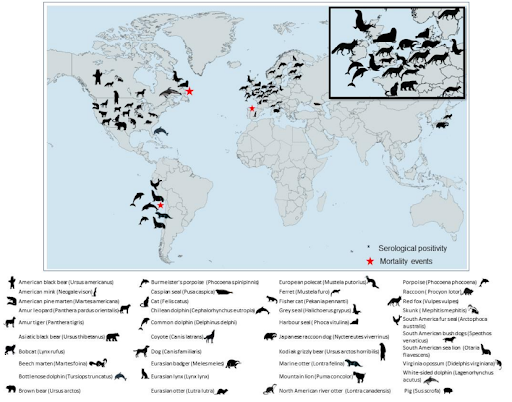
While it is not surprising that evidence of past 2009 H1N1 infection was found in both dogs and cats, researchers also found evidence of avian H5, H7, and H9 virus exposure in cats and dogs (see chart below). 

This is a lengthy and detailed (open access) study, and most of the details will be of greatest interest to virologists.  It does suggest, however, that exposure of companion animals to novel flu strains - even in Europe - is far more common than previously thought.  

Over the past couple of years we've seen the rise, and rapid spread, of a new subclade of H5N1 (2.3.4.4b) which has shown an enhanced ability to spill over into mammals, including dogs and cats. 


In April and May of this year we saw scattered reports from the United States and Canada of cats infected with this new strain of H5N1 (see USDA Update On Mammalian H5 Infections In US - WAHIS report On H5 In Canadian Feral Cat), and last January we saw WOAH: France Reports Cat Infected With Avian H5N1).

While only rarely reported, the evidence suggests these types of infections are more common than we know.

Although there is still much we don't know about the outbreak in cats in Poland, this appears to be one of the largest, and most widespread, outbreaks in domestic cats on record.   

For now, officials are urging people in Poland keep their cats indoors.  Our own CDC has guidance (published before this latest outbreak), which you can access at:

https://www.cdc.gov/flu/avianflu/avian-in-other-animals.htm


If your domestic animals (e.g., cats or dogs) go outside and could potentially eat or be exposed to sick or dead birds infected with bird flu viruses, or an environment contaminated with bird flu virus, they could become infected with bird flu. While it’s unlikely that you would get sick with bird flu through direct contact with your infected pet, it is possible. For example, in 2016, the spread of bird flu from a cat to a person was reported in NYC. The person who was infected [2.29 MB, 4 pages] was a veterinarian who had mild flu symptoms after prolonged exposure to sick cats without using personal protective equipment.

If your pet is showing signs of illness compatible with bird flu virus infection and has been exposed to infected (sick or dead) wild birds/poultry, you should monitor your health for signs of fever or infection.
Take precautions to prevent the spread of bird flu.

As a general precaution, people should avoid direct contact with wild birds and observe wild birds only from a distance, whenever possible. People should also avoid contact between their pets (e.g., pet birds, dogs and cats) with wild birds. Don’t touch sick or dead birds, their feces or litter, or any surface or water source (e.g., ponds, waterers, buckets, pans, troughs) that might be contaminated with their saliva, feces, or any other bodily fluids without wearing personal protective equipment (PPE).
More information about specific precautions to take for preventing the spread of bird flu viruses between animals and people is available at Prevention and Antiviral Treatment of Bird Flu Viruses in People. Additional information about the appropriate PPE to wear is available at Backyard Flock Owners: Take Steps to Protect Yourself from Avian Influenza.


While Poland's outbreak in cats will hopefully end up being short-lived, it is a reminder that H5N1 continues to surprise, and should not be underestimated. 

CDC HAN: Locally Acquired Malaria Cases Identified in the United States


Credit CDC

#17,512

While `big-ticket' infectious diseases with pandemic potential - like COVID, MERS-CoV, and avian influenza - generate the biggest headlines, over the last several decades we've seen the relentless spread of vector borne diseases - like Dengue, Zika, WNV, and Lyme - around the world. 

Most viral (and parasitic) infections have at least a 3 to 15 day incubation period, giving infected travelers a fairly long asymptomatic `window' in which to travel.  Should a viremic visitor be bitten by a competent local vector, there is the possibility the disease may be transmitted on to others. 

The State of Florida issues a weekly arbovirus report which includes imported cases of dengue and malaria, in addition to rare locally acquired cases. In their most recent report (Week 24: June 11-17, 2023) they list 23 known imported cases of malaria in 2023.

2023 International Travel-Associated Malaria Cases: Twenty-three cases of malaria with onset in 2023 have been reported. Countries of origin were: Burundi, Côte D’Ivoire, Democratic Republic of the Congo (2), Equatorial Guinea, Ghana (2), Kenya, multiple countries (4), Nicaragua (2), Nigeria (2), Pakistan, Sierra Leone (2), Sudan, and Uganda (3). Counties reporting cases were: Broward (4), Duval, Hillsborough (4), Lee, Leon (2), Miami-Dade (5), Orange, Osceola, Pinellas (3), and Sarasota. Seven cases were reported in non-Florida residents.

Imported dengue cases are even more common, with Florida reporting 88 so far in 2023. While it doesn't happen often, with enough repeated introductions, there is always a risk these diseases can become endemic.  

Which is exactly what happened a decade ago after Chikungunya began spreading on the French side of St. Martin in the Caribbean (see ECDC Epidemiological Update: Chikungunya Spreads In Caribbean and Into South America).

In recent weeks, and for the first time in two decades, local transmission of malaria has been reported in two different American States (Florida & Texas). Late yesterday the CDC released a HAN Health Advisory for clinicians, public health officials, and the public on these recent cases. 

Due to its length, and technical nature, I've only posted some excerpts.  Those interested in learning more should follow the links below.  I'll have more after the break. 

Locally Acquired Malaria Cases Identified in the United States

Distributed via the CDC Health Alert Network
June 26, 2023, 5:00 PM ET
CDCHAN-00494

Summary

The Centers for Disease Control and Prevention (CDC) is issuing this Health Alert Network (HAN) Health Advisory to share information and notify clinicians, public health authorities, and the public about—
 
  1. Identification of locally acquired malaria cases (P. vivax) in two U.S. states (Florida [4] and Texas [1]) within the last 2 months,
  2. Concern for a potential rise in imported malaria cases associated with increased international travel in summer 2023, and
  3. Need to plan for rapid access to IV artesunate, which is the first-line treatment for severe malaria in the United States.
Background

CDC is collaborating with two U.S. state health departments with ongoing investigations of locally acquired mosquito-transmitted Plasmodium vivax malaria cases. There is no evidence to suggest the cases in the two states (Florida and Texas) are related. In Florida, four cases within close geographic proximity have been identified, and active surveillance for additional cases is ongoing. Mosquito surveillance and control measures have been implemented in the affected area. In Texas, one case has been identified, and surveillance for additional cases, as well as mosquito surveillance and control, are ongoing. All patients have received treatment and are improving. 

Locally acquired mosquito-borne malaria has not occurred in the United States since 2003 when eight cases of locally acquired P. vivax malaria were identified in Palm Beach County, FL (1). Despite these cases, the risk of locally acquired malaria remains extremely low in the United States. However, Anopheles mosquito vectors, found throughout many regions of the country, are capable of transmitting malaria if they feed on a malaria-infected person (2). The risk is higher in areas where local climatic conditions allow the Anopheles mosquito to survive during most of or the entire year and where travelers from malaria-endemic areas are found. 

In addition to routinely considering malaria as a cause of febrile illness among patients with a history of international travel to areas where malaria is transmitted, clinicians should consider a malaria diagnosis in any person with a fever of unknown origin regardless of their travel history. Clinicians practicing in areas of the United States where locally acquired malaria cases have occurred should follow guidance from their state and local health departments. Prompt diagnosis and treatment of people with malaria can prevent progression to severe disease or death and limit ongoing transmission to local Anopheles mosquitos. Individuals can take steps to prevent mosquito bites and control mosquitos at home to prevent malaria and other mosquito-borne illnesses.

Malaria is a serious and potentially fatal disease transmitted through the bite of an infective female anopheline mosquito. Though rare, malaria can also be transmitted congenitally from mother to fetus or to the neonate at birth, through blood transfusion or organ transplantation, or through unsafe needle-sharing practices. Malaria is caused by any of five species of protozoan parasite of the genus Plasmodium: P. falciparum, P. vivax, P. malariae, P. ovale, and P. knowlesi. Worldwide, more than 240 million cases of malaria occur each year (95% in Africa).
Almost all cases of malaria in the United States are imported and occur in people traveling from countries with malaria transmission, many from sub-Saharan Africa and South Asia. Before the COVID-19 pandemic, approximately 2,000 cases of mostly travel-related malaria were diagnosed in the United States each year; approximately 300 people experienced severe disease (most P. falciparum), and 5 to 10 people with malaria died yearly (3). Most imported cases of malaria in the United States are diagnosed during summer and early fall. In 2023, CDC expects summer international travel among U.S. residents will be increasing to pre-COVID-19 pandemic levels (4).
   
Over the past 25 years we've seen CCHF (Crimean-Congo Hemorrhagic Fever) introduced to Western Europe, both Zika and Chikungunya arrive in the Americas, Dengue's return to Florida after 70 years, and the arrival (in 1999) and subsequent spread of West Nile Virus across much of North America.

Add in climate change, and the expanding geographic range of competent vectors (see ECDC invasive mosquito maps), and places previously thought immune to these types of epidemics are increasingly at risk. 

As we've discussed previously (see EID Journal: Hx of Mosquitoborne Diseases In the U.S. & Implications For The Future), the United States has a long history of enduring mosquito-borne epidemics, which were largely eliminated in the 20th century by extensive mosquito control efforts. 

 
Outbreaks of yellow fever reported during 1693–1905 among cities comprising part of present-day United States. - Credit EID Journal

While a remarkable achievement, there are increasing reports of the spread of insecticide resistant mosquitoes (see Science Advances: A Widespread Super–Insecticide-Resistant Aedes aegypti Mosquito in Asia) that threaten to degrade mosquito control efforts in the future.

All reasons why the advice offered to the public in today's HAN advisory (see below) makes sense every summer.


  • Take steps to prevent mosquito bites and control mosquitos at home to protect yourself from any mosquito-borne illness.
  • Before you travel, learn about the health risks and precautions for malaria and other diseases for your destination.
  • If you are traveling internationally to an area where malaria occurs, talk to your healthcare provider about medicines to prevent you from getting malaria.
  • If you have traveled to an area where malaria occurs and develop fever, chills, headache, body aches, and fatigue, seek medical care and tell your healthcare provider that you have traveled.
In addition to old threats like malaria, new vector borne pathogens continue to emerge (see Virulence: Langya henipavirus - Is it a potential cause for public health concern?), and there are likely many more out there yet to be identified.

For more on some of these emerging disease threats, you may wish to revisit: