Showing posts with label BMJ. Show all posts

Friday, April 24, 2015

BMJ Open: Protectiveness (Or Lack, Thereof) Of Reusable Cloth Medical Masks

image

Cloth Masks used during the 1918 Pandemic


# 9973


Over the years we’ve looked repeatedly at the relative protectiveness of PPEs - personal protective equipment (N95s, PAPRs, disposable med/surgical masks) - but due to their rare usage in the developed world, have only infrequently addressed the use of washable cloth or cotton masks, whose use remains ubiquitous in developing countries.


Cloth facemasks went the way of the Dodo bird in U.S. healthcare settings decades ago, replaced by inexpensive disposable surgical masks. Cloth masks are still used by many HCWs – particularly in low resources settings - around the world and would likely be embraced by the public during a pandemic.


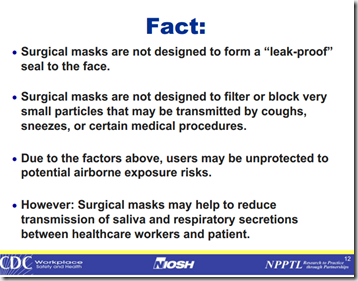
While the level of protection they provide to the wearer has been long debated (see NIOSH Webinar: Debunking N95 Myths & The Great Mask Debate Revisited), given their low cost and the fact that they don’t have to be individually `fitted’, disposable surgical masks are routinely worn by HCWs. 
image

In the developing world, however, disposable PPEs are a luxury that few hospitals can afford. Reusable cloth masks and gowns are frequently employed, even when dealing with highly infectious diseases like measles, novel influenza, or hemorrhagic fevers. 

In the event of a localized epidemic (or worse, a pandemic), disposable PPEs will be quickly be in very short supply. 

At one time the HHS estimated the nation would need an impossible 30 billion masks (27 billion surgical, 5 Billion N95) to deal with a major pandemic (see Time Magazine A New Pandemic Fear: A Shortage of Surgical Masks).


So the question becomes, just how protective are cloth (reusable) face masks?


According to a study, published yesterday by the BMJ Open Journal, is `not very’.    In fact, there is some evidence they may actually increase infection risks.

First a link to the study (again by Chughtai, Seale & MacIntyre, et al.), and some excerpts from the abstract and the UNSW press release.   


BMJ Open 2015;5:e006577 doi:10.1136/bmjopen-2014-006577


A cluster randomised trial of cloth masks compared with medical masks in healthcare workers

C Raina MacIntyre1, Holly Seale1,  Tham Chi Dung2,  Nguyen Tran Hien2,  Phan Thi Nga2,  Abrar Ahmad  Chughtai1,  Bayzidur Rahman1,  Dominic E Dwyer3,  Quanyi Wang4

Published 22 April 2015

Abstract

Objective The aim of this study was to compare the efficacy of cloth masks to medical masks in hospital healthcare workers (HCWs). The null hypothesis is that there is no difference between medical masks and cloth masks.

Setting 14 secondary-level/tertiary-level hospitals in Hanoi, Vietnam.

Participants 1607 hospital HCWs aged ≥18 years working full-time in selected high-risk wards.

Intervention Hospital wards were randomised to: medical masks, cloth masks or a control group (usual practice, which included mask wearing). Participants used the mask on every shift for 4 consecutive weeks.

Main outcome measure Clinical respiratory illness (CRI), influenza-like illness (ILI) and laboratory-confirmed respiratory virus infection.

Results The rates of all infection outcomes were highest in the cloth mask arm, with the rate of ILI statistically significantly higher in the cloth mask arm (relative risk (RR)=13.00, 95% CI 1.69 to 100.07) compared with the medical mask arm. Cloth masks also had significantly higher rates of ILI compared with the control arm. An analysis by mask use showed ILI (RR=6.64, 95% CI 1.45 to 28.65) and laboratory-confirmed virus (RR=1.72, 95% CI 1.01 to 2.94) were significantly higher in the cloth masks group compared with the medical masks group. Penetration of cloth masks by particles was almost 97% and medical masks 44%.

Conclusions This study is the first RCT of cloth masks, and the results caution against the use of cloth masks. This is an important finding to inform occupational health and safety. Moisture retention, reuse of cloth masks and poor filtration may result in increased risk of infection. Further research is needed to inform the widespread use of cloth masks globally. However, as a precautionary measure, cloth masks should not be recommended for HCWs, particularly in high-risk situations, and guidelines need to be updated.


Public Release: 22-Apr-2015

Cloth masks -- dangerous to your health?

University of New South Wales

The widespread use of cloth masks by healthcare workers may actually put them at increased risk of respiratory illness and viral infections and their global use should be discouraged, according to a UNSW study.

The results of the first randomised clinical trial (RCT) to study the efficacy of cloth masks were published today in the journal BMJ Open.

The trial saw 1607 hospital healthcare workers across 14 hospitals in the Vietnamese capital, Hanoi, split into three groups: those wearing medical masks, those wearing cloth masks and a control group based on usual practice, which included mask wearing.

Workers used the mask on every shift for four consecutive weeks.

The study found respiratory infection was much higher among healthcare workers wearing cloth masks.

The penetration of cloth masks by particles was almost 97% compared to medical masks with 44%.

Professor Raina MacIntyre, lead study author and head of UNSW's School of Public Health and Community Medicine, said the results of the study caution against the use of cloth masks.

 (Continue . . . )


The recommendation by MacIntyre et al. is that Health care workers not rely on reusable cloth masks, as their use is associated with an increased risk of infection. The authors list a number of limitations to this study, however, and it isn’t at all clear whether wearing cloth masks was detrimental to HCWs. 


They only showed that  the lowest rates of infection were in the medical mask group, while the highest rates were seen in those wearing the cloth masks. 


And it must be stated that not all cloth masks are created equal (nor are all disposable surgical masks) in terms of quality, fit, and filtration.  Additionally, the question as to whether cloth masks have a legitimate role for the public during an epidemic – as a protection of last resort – is not addressed in this study.  


In 2006, the IOM published a report entitled Reusability of Facemasks During an Influenza Pandemic: Facing the Flu, which addressed the issue of `improvised’ masks during a pandemic, and while not exactly endorsing them, accepts the will likely be necessary.


Regulatory standards require that a medical mask should not permit blood or other potentially infectious fluids to pass through to or reach the wearer’s skin, mouth, or other mucous membranes under normal conditions of use and for the duration of use. It is not clear that cloth masks or improvised masks (e.g., towels, sheets) can meet these standards.

Without better testing and more research, cloth masks or improvised masks can not be recommended as effective respiratory protective devices or as devices that would prevent exposure to splashes.

However, these masks and improvised devices may be the only option available for some individuals during a pandemic. Given the lack of data about the effectiveness of these devices in blocking influenza transmission, the committee hesitates to discourage their use but cautions that they are not likely to be as protective as medical masks or respirators. The committee is concerned that their use may give users a false sense of   protection that will encourage risk-taking and/or decrease attention to other hygiene measures.


Given that supplies of disposable masks in this interpandemic period are plentiful, and their cost is minimal (< .10 each), it isn’t such a bad idea to put back a few boxes of surgical masks in your family’s emergency stockpile, rather than being forced to rely on homemade improvised masks.


But all stockpiles are finite, and if I were down to only having cloth masks at my disposal, I would still  bank on the idea that wearing any mask beats wearing none at all.

Wednesday, July 09, 2014

BMJ: The `Hawthorne Effect’ On Hospital Hand Hygiene Compliance

image

Credit WHO


# 8816


One hundred and sixty-six years ago, a Hungarian physician named Ignaz Semmelweis published a controversial medical book called Etiology, Concept and Prophylaxis of Childbed Fever.  Semmelweis demonstrated that infections could be greatly reduced by simply having doctors wash their hands before performing gynecological exams.


While that makes sense today, at the time his theories were considered radical (Pasteur wouldn’t come up with his `germ theory’ for another 17 years). Besides, it was outrageous to suggest that doctors might actually be causing disease and death among their patients.


Semmelweis was ridiculed, ostracized and eventually forced to leave his hospital post. He died at the age of 47 in an asylum, a broken man. Remarkably,16 decades later, infection control professionals must still continually remind HCWs (Health Care Workers) of the importance of good hand hygiene.


This assessment from the CDC on the burden of Hospital Acquired Infections in the United States is from 2011.

image


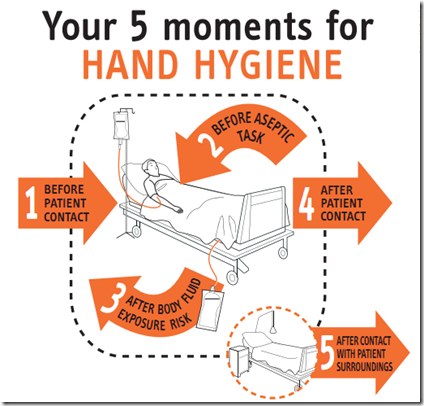
Which is the reason that the CDC, the ECDC, and the World Health Organization (among others) have promoted enhanced hand hygiene as the first – and most basic – step in reducing HAIs.  A few of their campaigns I’ve covered in the past include:


Aye, There’s The Rub
Fomite to Fingers To Face: A Triple Play Combination
A Movement With Five Moments
Global Clean Your Hands Day


And based on a variety of metrics, including onsite auditors – whose job it is to observe and track compliance of HCWs – many hospitals are reporting much better hand hygiene stats.


But we’ve a new study, published in the BMJ, that suggests some of this new-found compliance may be due to observational bias – the so called `Hawthorne Effect’ – where the compliance of `watched’ HCWs may be significantly higher than those not under observation.


First a link to the open access study, which is long, detailed, and worth very much reading in its entirety.


BMJ Qual Saf doi:10.1136/bmjqs-2014-003080

  • Original research

Quantification of the Hawthorne effect in hand hygiene compliance monitoring using an electronic monitoring system: a retrospective cohort study

Open Access

Jocelyn A Srigley1,2, Colin D Furness3,4, G Ross Baker1, Michael Gardam5,6 

Published Online First 7 July 2014

Abstract

Background The Hawthorne effect, or behaviour change due to awareness of being observed, is assumed to inflate hand hygiene compliance rates as measured by direct observation but there are limited data to support this.

Objective To determine whether the presence of hand hygiene auditors was associated with an increase in hand hygiene events as measured by a real-time location system (RTLS).

Methods The RTLS recorded all uses of alcohol-based hand rub and soap for 8 months in two units in an academic acute care hospital. The RTLS also tracked the movement of hospital hand hygiene auditors. Rates of hand hygiene events per dispenser per hour as measured by the RTLS were compared for dispensers within sight of auditors and those not exposed to auditors.

Results The hand hygiene event rate in dispensers visible to auditors (3.75/dispenser/h) was significantly higher than in dispensers not visible to the auditors at the same time (1.48; p=0.001) and in the same dispensers during the week prior (1.07; p<0.001). The rate increased significantly when auditors were present compared with 1–5 min prior to the auditors’ arrival (1.50; p=0.009). There were no significant changes inside patient rooms.

Conclusions Hand hygiene event rates were approximately threefold higher in hallways within eyesight of an auditor compared with when no auditor was visible and the increase occurred after the auditors’ arrival. This is consistent with the existence of a Hawthorne effect localised to areas where the auditor is visible and calls into question the accuracy of publicly reported hospital hand hygiene compliance rates.

(Continue . . . )


You’ll find a summary of this research the following press release from the University Health Network


Health-care worker hand hygiene rates increase three-fold when auditors visible

Hand hygiene rates were found to be three times higher when auditors were visible to healthcare workers than when there were no auditors present, according to a study in a major Canadian acute care hospital.

<SNIP>

The study examined the Hawthorne effect, also known as observation bias – the tendency of people to change their behavior when they are aware of an observer – using an electronic monitoring hand hygiene system in real-time, eliminating many of the biases inherent to human observation. Ultrasound "tags" on soap dispensers transmitted a signal to a nearby receiver each time the levers were pushed, and a time-stamped hand hygiene wash was recorded in a central data base.

<SNIP>

"The difference in hand hygiene rates, when an auditor is present compared to those times when one is not, is huge in this study, and we showed this effect to be very consistent," says Dr. Gardam, who is also an Associate Professor of Medicine at the University of Toronto.

"The magnitude of what we found calls into question the accuracy of directly observed hand hygiene rates and the usefulness of measuring and reporting them," says Dr. Gardam. "That said, human auditing of hand hygiene has been helpful to draw attention to this important preventative measure—we just can't stop focusing on it because our posted rates are not nearly as high as we think they are."

(Continue . . . )


While it stands to reason that `watched’ HCWs are probably more inclined to hit the hallway mounted alcohol dispenser as they walk by, the surprise here is the three-fold difference in compliance levels when auditors are present. This study is subject to a number of limitations (which are described in the BMJ article).


For more on the ongoing battle against HAIs, you may with to revisit:


Assessment Of Hand Hygiene Strategies In US Healthcare Facilities
SHEA Infection Control Recommendations On HCW Attire
Study: Exam Gloves, Dispensers & Bacterial Contamination

Thursday, April 10, 2014

Revisiting Tamiflu Efficacy (Again)


image


# 8455


Just over two years ago in The Tamiflu Controversy Continues, we looked at the ongoing debate over the effectiveness of oseltamivir (Tamiflu ®) in the wake of the release of a Cochrane group analysis that found insufficient evidence to show whether the drug reduces influenza complications and transmission.


Three weeks later the CDC responded with a statement on their Have You Heard? website, which published their rationale for continuing to recommend the use of Oseltamivir for severe influenza.


CDC Recommendations for Influenza Antiviral Medications Remain Unchanged

February 7, 2012 -- A recent review of randomized clinical trial data for the influenza neuraminidase inhibitor antiviral medications published by the Cochrane Collaboration, and two related commentaries [“Rethinking credible evidence synthesis” and “Questions Remain over safety and effectiveness of oseltamivir”] published in the British Medical Journal, raised questions about the value of antiviral medications for the prevention and treatment of influenza. After careful consideration of all available evidence, CDC guidance on the use of antiviral medications remains unchanged. The Centers for Disease Control and Prevention (CDC) continues to recommend the use of the neuraminidase inhibitor antiviral drugs (oral oseltamivir and inhaled zanamivir) as an important adjunct in the prevention and treatment of influenza.

(Continue . . . )

Since then the CDC and the World Health Organization have continued to promote Oseltamivir and other NAI antivirals as important drugs in our limited arsenal against the influenza virus (see November 2013 CDC Research On Benefits Of Antivirals For Uncomplicated Influenza).


Yesterday the BMJ and the Cochrane Group published a new assessment of the antiviral drug Tamiflu, and as they have in the past, cast doubts on its efficacy and on the wisdom of governments around the world stockpiling the drug.

The entire study is available online. You’ll find the link and a small excerpt below:


Oseltamivir for influenza in adults and children: systematic review of clinical study reports and summary of regulatory comments

BMJ 2014; 348 doi: http://dx.doi.org/10.1136/bmj.g2545 (Published 10 April 2014)

Cite this as: BMJ 2014;348:g2545

Tom Jefferson, reviewer, Mark Jones, senior research fellow (biostatistics), Peter Doshi, assistant professor, Elizabeth A Spencer, nutritional epidemiologist, Igho Onakpoya, research fellow in evidence-based practice and pharmacovigilance, Carl J Heneghan, professor

Conclusions In prophylactic studies oseltamivir reduces the proportion of symptomatic influenza. In treatment studies it also modestly reduces the time to first alleviation of symptoms, but it causes nausea and vomiting and increases the risk of headaches and renal and psychiatric syndromes. The evidence of clinically significant effects on complications and viral transmission is limited because of rarity of such events and problems with study design. The trade-off between benefits and harms should be borne in mind when making decisions to use oseltamivir for treatment, prophylaxis, or stockpiling.

The Cochrane Summary is available at:


Neuraminidase inhibitors for preventing and treating influenza in healthy adults and children

Editorial Group: Cochrane Acute Respiratory Infections Group

Published Online: 10 APR 2014


While research purists may applaud their methods, the problem that I (and many others) have with this analysis is that the Cochrane group set the bar very high as to what studies they would consider, excluding many observational studies.


Randomized controlled trials (RCTs) are considered the `gold standard’  for drug research, but these types of studies are expensive and notoriously difficult to conduct ethically when trying to evaluate a potentially life saving drug.


Overnight some elements of the British press have morphed their findings into incendiary headlines, such as this one from the Daily Mail: Ministers blew £650MILLION on useless anti-flu drugs.


Much of this ire has been well-earned through Roche’s long-standing resistance to releasing all of the testing data on their antiviral drug, and that has led to critical editorials in the BMJ, and frequent excoriation in the British press.


For a different perspective, we turn to NBC’s Senior health writer Maggie Fox, who spoke to doctors whose job it is to treat patients with influenza.


Flu Experts Line Up to Defend Tamiflu Against New Study

By Maggie Fox

A team of researchers who have been studying the flu drugs Tamiflu and Relenza released a new report that they say raises new doubts about the benefits of the drugs. But flu experts lined up to defend the medications, which they say can help reduce the most severe and deadly effects of the virus.

The report, published jointly by the influential Cochrane Review and the British Medical Journal, seeks to cast doubt on the widespread use of the two drugs, which doctors give to treat influenza and to prevent it in people who have a high risk of complications.

(Continue . . . )


Despite its critics, there are studies that show that Tamiflu can significantly reduce morbidity and mortality associated with influenza – particularly with severe, or novel infections. Some we’ve looked at in the past include:


Their main finding was antiviral therapy - principally oseltamivir - initiated within 48 hours of onset, reduced the likelihood of severe outcomes, namely admission to a critical care unit or death, by 49 to 65%.


And finally, for those who question the value of Tamiflu in novel flu pandemic, in Study: Antiviral Therapy For H5N1, we saw the largest study to date on outcomes of H5N1 patients who either received, or did not receive, antiviral treatment. The research appears in the IDSA’s Journal of Infectious Diseases. The bottom line is essentially out of 308 cases studied, the overall survival rate was a dismal 43.5%.


But . . . of those who received at least one dose of Tamiflu . . .  60% survived . . .  as opposed to only 24% who received no antivirals.


While we would all prefer to have rock-solid, indisputable evidence based on well-mounted RCTs proving the effectiveness of Oseltamivir, the preponderance of evidence we have today still indicates that NAIs can have a substantial positive therapeutic effect on influenza, particularly in high risk patients or with novel flu strains.


Besides, unless and until better therapeutic options become available, they pretty much the only game in town.

Wednesday, August 14, 2013

BMJ: Risk Factors For Children With Pandemic Flu


image

The chart above (Aug 2012) illustrates the sharp rise in pediatric deaths from flu-related complications during the 2009-2010 H1N1 pandemic seasons in the United States.


# 7571


The BMJ has published this week research from an international team of medical scientists who looked at presenting symptoms and comorbidities of 265 pediatric cases from 79 emergency rooms in 12 countries presenting with the H1N1 pandemic flu. 


The team was able to identify several factors that they could associate with a higher risk of severe infection, complications, or death.


It is hoped that these findings could help guide physician decisions on treatment of children, or their admission to the hospital, in future influenza outbreaks.


First a link to the study (which is available, in full, online) then some excerpts from a news release from the University of Auckland.


Research

Predictors of severe H1N1 infection in children presenting within Pediatric Emergency Research Networks (PERN): retrospective case-control study

BMJ 2013; 347 doi: http://dx.doi.org/10.1136/bmj.f4836 (Published 12 August 2013)

Cite this as: BMJ 2013;347:f4836

Stuart R Dalziel, paediatrician, John MD Thompson, senior research fellow, Charles G Macias, associate professor, Ricardo M Fernandes, paediatrician4, David W Johnson, professor, Yehezkel Waisman, professor, Nicholas Cheng, paediatrician, Jason Acworth, paediatrician, James M Chamberlain, professor, Martin H Osmond, professor, Amy Plint, associate professor, Paolo Valerio, paediatrician, Karen JL Black, paediatrician, Eleanor Fitzpatrick, research coordinator, Amanda S Newton, assistant professor, Nathan Kuppermann, professor, Terry P Klassen, professor for the Pediatric Emergency Research Networks (PERN) H1N1 working group

Abstract

(EXCERPT)

Main outcome measures Severe outcomes included death or admission to intensive care for assisted ventilation, inotropic support, or both. Multivariable conditional logistic regression was used to compare cases and controls, with effect sizes measured as adjusted odds ratios.


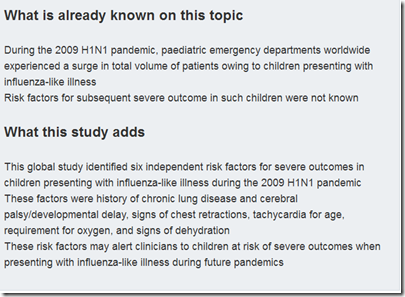
Results 151 (57%) of the 265 cases were male, the median age was 6 (interquartile range 2.3-10.0) years, and 27 (10%) died. Six factors were associated with severe outcomes in children presenting with influenza-like illness: history of chronic lung disease (odds ratio 10.3, 95% confidence interval 1.5 to 69.8), history of cerebral palsy/developmental delay (10.2, 2.0 to 51.4), signs of chest retractions (9.6, 3.2 to 29.0), signs of dehydration (8.8, 1.6 to 49.3), requirement for oxygen (5.8, 2.0 to 16.2), and tachycardia relative to age).

Conclusion These independent risk factors may alert clinicians to children at risk of severe outcomes when presenting with influenza-like illness during future pandemics.

image

(Continue . . . )


The news release from the University of Auckland provides some additional background on this study.


Top risk factors identified for children during influenza pandemics

14 August 2013

Auckland medical scientists have helped to identify crucial risk factors for children most susceptible to life threatening infections from the H1N1 influenza virus.


Lead study author Dr Stuart Dalziel and senior research fellow Dr John Thompson from The University of Auckland worked with an international team of paediatric specialists to identify the risk factors.


It is the first study to detail which clinical factors in children at hospital arrival with influenza-like illness and H1N1 infection, are associated with the progressive risk to either severe infection or death.

<SNIP>

The study, which assessed each patient’s clinical history and physical examination, identified the following predictors of severe H1N1 infection and potentially fatal outcomes in children:

  • History of chronic lung disease
  • History of cerebral palsy/developmental delay
  • Signs of chest retractions (difficulty breathing)
  • Signs of dehydration
  • Requires oxygen to keep blood levels normal
  • Heart rate that exceeds normal range (tachycardia) relative to age

“Having a more accurate idea of what to look for in paediatric cases, especially during a pandemic, would be especially important to clinicians because it provides crucial guidance for those who would be trying to direct the appropriate levels of treatment for many patients in a short time,” said one of the study’s co-authors Nathan Kuppermann, professor and chair of emergency medicine at the University of California.

(Continue . . . )


We’ve seen earlier studies on the impact of the 2009 H1N1 pandemic on children, some of which have produced similar findings.


Study: Kids, Underlying Conditions, And The 2009 Pandemic Flu

Lancet: Pediatric Mortality Related To Pandemic H1N1

Study: Pediatric Neurological Complications With H1N1


While it is axiomatic that - `if you’ve seen one flu pandemic . . . you’ve seen one flu pandemic’ - many of the lessons learned from the last pandemic are still likely to prove useful during the next global health crisis.


Even if the next pandemic differs substantially from what we went through in 2009.

Tuesday, August 06, 2013

BMJ: `Probable Person-to-Person Transmission’ Of H7N9


image


# 7544


A press release today from the British Medical Journal highlights research, scheduled to be published today, that finds at least one instance of `probable person-to-person transmission’ of the H7N9 virus last spring in China.


As we’ve discussed before, when it comes to proving human-to-human (H-2-H) transmission of an emerging virus, the bar is set pretty high.  When there are other, equally plausible explanations (e.g. shared environmental exposures), then H-2-H cannot be assumed.


In this case, researchers not only have a timetable that is suggestive of H-2-H transmission within a family, the two patients (60 y.o. father & 32 y.o. daughter) were found to be infected with almost genetically identical virus strains.


The study has not yet gone live on the BMJ website, so I’ll update this post with a link when one becomes available.   

UPDATE:  The paper is now available (along with a 5 minute video abstract) at the following link.


Probable person to person transmission of novel avian influenza A (H7N9) virus in Eastern China, 2013: epidemiological investigation

BMJ 2013; 347 doi: http://dx.doi.org/10.1136/bmj.f4752 (Published 6 August 2013)

Cite this as: BMJ 2013;347:f4752


Below you’ll find the press release, after which I’ll return with a little more.


First probable person to person transmission of new bird flu virus in China

Tuesday, August 6, 2013 - 11:33

Research: Probable person to person transmission of novel avian influenza A (H7N9) virus in Eastern China, 2013: epidemiological investigation

Editorial: Human to human transmission of H7N9


The first report of probable person to person transmission of the new avian influenza A (H7N9) virus in Eastern China is published on bmj.com today.


The findings provide the strongest evidence yet of H7N9 transmission between humans, but the authors stress that its ability to transmit itself is “limited and non-sustainable.”

<SNIP>

The researchers acknowledge some study limitations, but say that the most likely explanation for this family cluster of two cases with H7N9 infection is that the virus “transmitted directly from the index patient to his daughter.” But they stress that “the virus has not gained the ability to transmit itself sustained from person to person efficiently.”

(Continue . . . )

Although this is the first case where `probable’ H-2-H transmission has been documented, it isn’t the only H7N9 cluster where person-to-person transmission is suspected.


In early April Dr. Michael O’Leary, the World Health Organization’s  representative in China, gave a media briefing where he described three `clusters’ of cases where human-to-human transmission may have occurred (see WHO: Transcript Of Media Briefing On H7N9).


There are 3 clusters officially reported, I mentioned one of them, the one with the father and 2 sons… 2 of whom, the father and the son who did not die, were confirmed H7N9.


So that’s one of the clusters, and we know about another cluster of a parent and a child, where the daughter was caring for the parent who was very sick, and became sick herself with the H7N9.


A third cluster as well, a husband-and-wife cluster. In both of those, people were sick with severe pneumonia, and so were linked clinically. But I think it’s still the case that in both of those, only one of them is so far confirmed, but the investigations are continuing. And then we know about the other are still under active investigation, the more recent situation here in Beijing, the 7-year-girl who is now released from the hospital, an asymptomatic, (meaning he had) no symptoms neighbor.


Laboratory investigation is still underway, but he is suspected as being positive as well. But that child was not ill.


For more details on the first cluster mentioned by Dr. O’Leary (an 87 year old man & his two sons) you may wish to revisit China Confirms H7N9 Shanghai Family Cluster.


Finding one or more clusters of H7N9 among close contacts isn’t terribly surprising. We’ve seen similar limited human-to-human transmission of the H5N1 virus in the past.


But as today’s study points out, numerous contacts of documented cases failed to contract the virus. So for now, at least, the virus appears incapable of transmitting in an efficient and sustained manner.


That good news is tempered somewhat by the studies we’ve seen over the summer (see Lancet: Tropism Of H7N9 In the Human Respiratory Tract , Science: H7N9 Transmissibility Study In Ferrets &  Nature: H7N9 Pathogenesis and Transmissibility In Ferrets & Mice) that suggest the H7N9 virus may not need much in the way of adaptive changes in order to achieve efficient H-2-H transmission in mammals.


Which is why all eyes will be on China this fall to see if the H7N9 virus returns, and how it behaves in round two.

Friday, May 31, 2013

Delving Into The Oseltamivir Dosage Study


image

Photo Credit – Wikipedia


# 7344


One of the concerns during a severe pandemic is our finite supply of antiviral medications. The standard adult dose of oseltamivir (Tamiflu ®) is 75mg twice a day for 5 days, or a course of 10 pills.


But as we’ve seen in Southeast Asia with H5N1 (and more recently with H7N9), many patients have required larger antiviral doses for a longer period of time, and yet many still do not survive.


In 2007, at the height of the H5N1’s expansion, some doctors began treating patients with double the dose for double the time, essentially 40 pills over 10 days (see Prudence and the Pill). 


A rate that is sustainable when cases are few, but would quickly exhaust our stockpiles of antivirals in a severe pandemic.


Which makes the headline being carried by the media this morning, stemming from a study that appeared in the BMJ yesterday, of particular interest:


No benefit of double dose antiviral drug for severe influenza

Findings have major implications for stockpiling drugs during pandemics, say experts


And if you stop there, or simply read the press release, you might come away with the idea that a double dose of oseltamivir (Tamiflu ®) is a waste of time, and valuable resources, when treating an avian flu patient.


But that’s not exactly what the study says.


First, a link to the open access double-blind randomized trial, conducted across 13 hospitals in four southeast Asian countries between 2007 and 2010, comparing the relative effectiveness of the standard dose of oseltamivir (Tamiflu ®) vs a double dose.


Effect of double dose oseltamivir on clinical and virological outcomes in children and adults admitted to hospital with severe influenza: double blind randomised controlled trial

BMJ 2013; 346 doi: http://dx.doi.org/10.1136/bmj.f3039 (Published 30 May 2013)

Cite this as: BMJ 2013;346:f3039


This is actually an impressive, well mounted study, certainly worth reading in its entirety. There were 326 patients, mostly children under the age of 15, enrolled in the trial.


The press release describes their methodology:


Patients received either standard dose oseltamivir (75 mg twice a day or children's equivalent) or double dose (150 mg twice a day or children's equivalent) for five days. Nose and throat swabs were then taken to test for virus levels.


Other outcomes including death, admission to intensive care, and help with breathing (mechanical ventilation) were also assessed.


The researchers found no differences between the treatment groups in virus levels on day five. There were also no differences in deaths or rates of adverse events between the different doses.


The authors mention a few important limitations to this study, including:


  • Most of the patients were children under 15
  • Most of the patients had low or normal BMI
  • Only about 1/5th had underlying conditions
  • Very few adults were included in the study
  • Only 17 (of 326 cases) were H5N1, and of those, only 3 survived to day 5 of the trial.
  • The average delay for treatment for H5N1 patients was 7 days vs. 5 days for seasonal flu
  • All H5N1 cases met the criteria for clinical failure


The authors caution:


Thus, our findings are applicable primarily to the region where the study was conducted and other settings with similar characteristics of influenza epidemiology.


One is left to wonder how well these results would translate to a much older population, one likely to have a higher average BMI, far more (and different) underlying conditions, and in all likelihood would seek treatment sooner than did the patients in this study (average 5-7 days).


But assuming that these factors would not make huge differences in outcomes, the biggest limitation remains the lack of data on H5N1 avian influenza.


Only 17 patients were enrolled, treatment began (on average) a week after falling ill – well beyond the optimal `48 hour window’ - and only three patients survived.


So, while this trial found no value to doubling the dose for seasonal flu, there is insufficient evidence to judge whether doubling the dose for H5N1 (or presumably H7N9) would improve patient survival.


And in an accompanying editorial, Ian Barr and Aeron Hurt of the WHO Collaborating Centre for Reference and Research on Influenza, would appear to agree:


What is clear is that double dose oseltamivir is unlikely to significantly improve the clinical outcomes of severe cases of seasonal influenza, although there were probably insufficient data to determine if this was also true for people infected with A(H5N1).


It is worth noting that last month, in CDC Interim Guidance On H7N9 Antiviral Treatment, we saw the CDC’s recommendation that for hospitalized patients:


The optimal duration and dose of therapy are uncertain in severe or complicated influenza. Pending further data, longer courses of treatment (e.g., 10 days of treatment) should be considered for severely ill hospitalized H7N9 patients.


And in a discussion this morning on this study between Gregory Hartl – spokesperson for the World Health Organization and FluTrackers – Hartl had this to say.


image


While the success rate of treatment with oseltamivir for avian flu has been less than stellar, in Study: Antiviral Therapy For H5N1, we saw the largest study to date on outcomes of H5N1 patients who either received, or did not receive, antiviral treatment.


The research appears in the IDSA’s  Journal of Infectious Diseases. The bottom line is essentially out of 308 cases studied, the overall survival rate was a dismal 43.5%.


But . . . of those who received at least one dose of Tamiflu . . .  60% survived . . .  as opposed to only 24% who received no antivirals.


And importantly, most of these patients did not receive antivirals within the first critical 48 to 72 hours of infection.


Over the next few months I suspect we’ll get a much better idea of the efficacy of oseltamivir for treating avian flu, and optimal dosing in adult patients, from China’s experience with the H7N9 virus.

Wednesday, February 27, 2013

HPA: Pandemrix Vaccine Linked To Childhood Narcolepsy In England

image


# 6971


Pandemrix was the adjuvanted pandemic H1N1 flu shot developed by GlaxoSmithKline (GSK) and distributed to more than 30 countries beginning in the fall of 2009. This vaccine included a squalene-based component called AS03, used as a adjuvant.


Adjuvants are additives that are used to increase the immune response to a vaccine. Their use can allow the `stretching’ of the vaccine supply, as shots can contain a smaller amount of antigens.


While they have been used in Europe and in Canada, adjuvanted flu vaccines have not been licensed for use in the United States.


Roughly a year after the vaccine was deployed, we began to see reports of an unusual rise in the number of children in Finland (a country where Pandemrix was used) diagnosed with a rare neurological disorder called narcolepsy.


For early coverage of this story, you may wish to revisit Finland Suspends Use of Pandemrix Vaccine and EMA To Review Pandemrix Vaccine, both of which I wrote in August of 2010.


Despite some conflicting and incomplete data the European Medicines Agency issued a statement in July of 2011 recommending:


In persons under 20 years of age Pandemrix to be used only in the absence of seasonal trivalent influenza vaccines, following link to very rare cases of narcolepsy in young people.


Finland also convened a Narcolepsy Task Force (see Finland: Task Force Report On Pandemrix-Narcolepsy Link) that confirmed an association – as yet unexplained – between receipt of the vaccine and an increase in narcolepsy in children between the ages of 4 and 19.


In September of 2012, the ECDC released a 164 page technical report called Narcolepsy In Association With Pandemic Influenza Vaccination in which the summary found:


The case–control study confirms an association between vaccination with Pandemrix® and an increased risk of narcolepsy in children and adolescents (5 to 19 years of age) in Sweden and Finland that originally reported on this issue (signalling countries). No such association was found in adults in these two countries.


Fast forward to yesterday, and we have a press release from the HPA on a study – just published in the BMJ - that has also found a link between the Pandemrix vaccine and childhood narcolepsy in the UK. 


First a link to the study, then some excerpts from the HPA release.


Risk of narcolepsy in children and young people receiving AS03 adjuvanted pandemic A/H1N1 2009 influenza vaccine: retrospective analysis

BMJ 2013; 346 doi: http://dx.doi.org/10.1136/bmj.f794 (Published 26 February 2013)

Cite this as: BMJ 2013;346:f794


Conclusion The increased risk of narcolepsy after vaccination with ASO3 adjuvanted pandemic A/H1N1 2009 vaccine indicates a causal association, consistent with findings from Finland. Because of variable delay in diagnosis, however, the risk might be overestimated by more rapid referral of vaccinated children.

(Continue . . . )


While unproven, the authors raise the possibility that the adjuvanted vaccine – rather than directly causing narcolepsy – might have accelerated the process in children who would eventually have gone on to develop the disorder. 


A significant dip in the `background rate’ of narcolepsy over the next few years in countries that saw a spike after 2009 ASO3 vaccination would help give this theory more weight.


A paucity of safety trials on children, and the public’s memories of the 1976 Swine Flu vaccine debacle, led the HHS to decide not to allow adjuvants in the pandemic flu vaccines deployed in the United States, despite urging by the global community.


The HPA has put together the following summary.


Pandemic flu vaccination linked to narcolepsy in UK children

27 February 2013

Health Protection Agency (HPA) scientists have found evidence of an association between Pandemrix flu vaccination and narcolepsy in children in England, according to the findings of a study published in the British Medical Journal. These findings are consistent with previous studies from Finland and Sweden which identified a similar association.


In collaboration with researchers from Papworth and Addenbrooke’s hospitals in Cambridge, the study looked at 75 children aged between four and 18 who were diagnosed with narcolepsy from January 2008 and who attended sleep centres across England. Eleven of these children had been vaccinated with Pandemrix before their symptoms began, seven of these within six months. This suggests a risk of narcolepsy following vaccination with Pandemrix of around one in every 55,000 doses of the vaccine.


The Pandemrix vaccine was recommended for use in children at risk of serious complications from influenza during the pandemic flu outbreak in 2009/10. It was also used occasionally in children during the 2010/11 flu season. Since July 2011 the use of Pandemrix in people under the age of 20 across Europe has been restricted.


Although prior to this study, there was no evidence to suggest an association in the UK, on the basis of the findings from Finland the HPA launched an in depth study in February 2011 with narcolepsy experts across England. This investigated whether there was evidence of an association between narcolepsy and Pandemrix as used in the UK.


Lead author Professor Liz Miller, a consultant epidemiologist with the HPA, said: "These findings suggest there is an increased risk in children of narcolepsy after Pandemrix vaccination and this is consistent with findings from studies in other European countries. However, this risk may be overestimated by more rapid referral of vaccinated cases. Long term follow up of people exposed to Pandemrix is needed before we can fully establish the extent of the association.


“Our findings have implications for the future licensing and use of adjuvanted pandemic vaccines. Further studies to assess the possible risk associated with other vaccines used in the pandemic, including those with and without adjuvants, are also needed to inform the use of such vaccines in the event of a future pandemic.”


Study co-author Dr John Shneerson, consultant physician from the Respiratory Support and Sleep Centre at Papworth Hospital in Cambridge, said: “Narcolepsy is thought to be due to a loss of function of a small group of cells in one of the sleep centres in the brain, as a result of an abnormal reaction of the body’s immune system. Pandemrix may have triggered an immune reaction against the sleep centre cells in those children who were genetically predisposed to develop narcolepsy. This study has been important in helping to shed light on the mechanism of how narcolepsy can develop.”


Narcolepsy is a chronic neurological disorder caused by the brain's inability to control sleep, particularly REM (dream) sleep. It leads to excessive daytime sleepiness usually accompanied by sudden episodes of muscle weakness triggered by strong emotions such as laughter – this is known as cataplexy. Narcolepsy has a genetic component but this has to be triggered by other factors in order for the condition to appear. 20,000 people in the UK are through to have narcolepsy - drug treatment and lifestyle measures are usually effective in relieving the symptoms.

Ends


The exact mechanism behind this Pandemrix-Narcolepsy link remains a medical mystery. Our understanding of this neurological disorder is very limited, as well.  


The absolute risk of a child developing narcolepsy from the Pandemrix flu shot appears appears to be about 1 in 55,000. The authors warn that:


`Our findings have implications for the future licensing and use of adjuvanted pandemic vaccines’.


While a handful of countries had reported increases in post-vaccination narcolepsy, the link between the AS03 adjuvanted vaccine and childhood narcolepsy in the UK has not, until now, been quantified.


This study found the increased risk was similar to that previously reported from Finland.

Wednesday, May 02, 2012

BMJ: H1N1 Vaccination & Fetal Death Rates

image

Photo Credit – CDC


# 6311


One of the persistent myths on the internet is that the 2009 H1N1 vaccine was responsible for `thousands’ of miscarriages. One need only Google `Vaccine + Miscarriage’ to see some of the propaganda out there.


It is a sad but true statistic that in the United States about 1 million women experience a miscarriage every year. That works out to be about 2,500  miscarriages each day.


And if we could vaccinate all of the pregnant women in the country today, tomorrow 2500 would still miscarry.


And most would probably blame the vaccine.


There is no such thing as a 100% benign drug, and so the possibility exists that a vaccine could produce serious adverse side effects. Which is why monitoring systems like VAERS are utilized to try to detect any spike in adverse effects from vaccines.


Over the past 3 years we’ve seen very encouraging reports on the safety of the 2009 pandemic vaccine. Last October in Lancet: Guillain-Barré Syndrome & H1N1 Vaccine In Children) we learned:


Surveillance and reporting systems have not found any unusual pattern of deaths in the United States attributable to the pandemic vaccine, and the oft predicted spike in Guillain-Barré syndrome (GBS) never occurred (see CIDRAP VAERS study finds H1N1 vaccine safety similar to seasonal vaccines').

In fact, the VAERS report cited above found 0 deaths they could link to the pandemic Vaccine. Meanwhile, during the same period the CDC estimated that at least 12,000 (mostly younger) Americans died from the flu.


And today, in the BMJ, we’ve another study of a large cohort of pregnant women in Demark that reassuringly finds no increase in miscarriage among those who received the 2009 H1N1 vaccine.


Vaccination against pandemic A/H1N1 2009 influenza in pregnancy and risk of fetal death: cohort study in Denmark

Published 2 May 2012  BMJ 2012;344:e2794

Abstract (excerpt)

Results The cohort comprised 54 585 pregnancies; 7062 (12.9%) women were vaccinated against pandemic A/H1N1 2009 influenza during pregnancy. Overall, 1818 fetal deaths occurred (1678 spontaneous abortions and 140 stillbirths). Exposure to the H1N1 vaccine was not associated with an increased risk of fetal death (adjusted hazard ratio 0.79, 95% confidence interval 0.53 to 1.16), or the secondary outcomes of spontaneous abortion (1.11, 0.71 to 1.73) and stillbirth (0.44, 0.20 to 0.94). Estimates for fetal death were similar in pregnant women with (0.82, 0.44 to 1.53) and without comorbidities (0.77, 0.47 to 1.25).


Conclusion This large cohort study found no evidence of an increased risk of fetal death associated with exposure to an adjuvanted pandemic A/H1N1 2009 influenza vaccine during pregnancy.


This latest study closely matches the findings of other researchers, such as we saw in  Hong Kong: No Increase In Fetal Death Among Vaccine Recipients.


Ironically, while some seek to demonize the flu vaccine as causing fetal deaths, in October of last year in UK: Pregnancy And Swine Flu a study conducted at Oxford University by the National Perinatal Epidemiology unit found a strong link between infection with the 2009 `swine’ flu and an increased number of stillbirths.


Fetal deaths among women infected with the H1N1 virus were 5 times higher than normal.


Very early into the 2009 H1N1 outbreak – even before the declaration of a pandemic by the World Health Organization – it became apparent that pregnant women were making up a disproportionate number of ICU admissions for influenza, and deaths.


Which is a pattern we’ve seen in pandemic outbreaks in the past (see Pregnancy & Flu: A Bad Combination).


The truth is, the flu virus is a far greater danger to pregnant women and their unborn child than the vaccine.


While the CDC and other public health entities continue to stress the importance of seasonal flu vaccination for pregnant women, there remains reluctance among some pregnant women to get the shot.


Vaccines are drugs, and there is no such thing as a 100% safe and 100% effective drug. Even taking over-the-counter medicines entail some risks.


But the evidence continues to show that flu vaccines are among the safest drugs available, and that most years they can provide decent protection against a serious and potentially deadly illness.


For more reassuring research on the safety profile of modern flu vaccines, you may wish to revisit the following blogs:


Harvard Study Reaffirms Safety Of Flu Vaccine
MJA: Safety Of Flu Shot In Young Children
NEJM: Study On China’s H1N1 Vaccine Safety
Lancet: Immunogenicity and safety Of Adjuvanted Flu Vaccines

Thursday, October 13, 2011

BMJ: Another Pandemrix Study To Ponder


 image

Photo Credit CDC 


# 5897


Whenever there is a hint or a suggestion that a vaccine might have caused some sort of serious side effect, it invariably becomes big news. 


Even when the reports are preliminary, and the evidence less than rock solid, these stories often end up on the front pages of newspapers and quickly become fodder for the anti-vaccination brigade.


When more reassuring vaccine studies come out, they rarely get that kind of media play, since it isn’t the sort of thing that sells newspapers. 


Case in point:


A little over a year ago GSK’s Pandemrix vaccine was associated with a perceived increase in narcolepsy among children and adolescents in Finland. For early coverage of this story, you may wish to revisit Finland Suspends Use of Pandemrix Vaccine and EMA To Review Pandemrix Vaccine, both of which I wrote in August of 2010.


Despite some conflicting and incomplete data the European Medicines Agency issued a statement last July recommending:


In persons under 20 years of age Pandemrix to be used only in the absence of seasonal trivalent influenza vaccines, following link to very rare cases of narcolepsy in young people.


Finland also convened a Narcolepsy Task Force (see Finland: Task Force Report On Pandemrix-Narcolepsy Link) that confirmed an association – as yet unexplained  – between receipt of the vaccine and an increase in narcolepsy in children between the ages of 4 and 19.


Complicating matters, more than a dozen countries reported an increase in narcolepsy during the 2009 pandemic, even those where the adjuvanted vaccine was not used.


You can find details on one such study in Stanford Study Finds Influenza – Narcolepsy Connection  that linked narcolepsy not to the vaccine . . . but to infection by influenza virus itself.


Confused yet?


Alas, science isn’t always neat and tidy.  Good studies take time, and we don’t always get consistent results.


Today, we’ve another study that appears in the BMJ that is a bit more reassuring on the safety of the Pandemrix vaccine, but fails to answer the question of narcolepsy. 


It is called:


Neurological and autoimmune disorders after vaccination against pandemic influenza A (H1N1) with a monovalent adjuvanted vaccine: population based cohort study in Stockholm, Sweden

OPEN ACCESS

Carola Bardage, epidemiologist, Ingemar Persson, professor of pharmacoepidemiology and senior expert, Åke Örtqvist, county medical officer and associate professor, Ulf Bergman, professor of pharmaco-epidemiology and clinical pharmacologist, Jonas F Ludvigsson, paediatrician and epidemiologist, Fredrik Granath, senior biostatistician


This was a population based cohort study conducted in Stockholm, Sweden during the 2009 pandemic where 1,024,019  people were vaccinated with the Pandemrix vaccine and 921,005 remained unvaccinated.


Using the detailed healthcare registers for Stockholm County Council, researchers tracked all admissions to hospitals and visits to specialists for autoimmune or neurological diagnoses.


The conditions flagged in this study included:


  • Guillain-Barré syndrome
  • Bell’s palsy
  • multiple sclerosis
  • polyneuropathy
  • anaesthesia or hypoaesthesia
  • paraesthesia
  • narcolepsy
  • rheumatoid arthritis
  • inflammatory bowel disease (ulcerative colitis, Crohn’s disease)
  • type 1 diabetes


This study further divided this cohort into those who received the vaccine within the first 45 days of its availability, and those who received it later. Those in high risk groups, with comorbid conditions, were more likely to be vaccinated during the first 6 weeks of the vaccination campaign. 


The results (which are far more detailed in the open access report) indicated:


Conclusions

Results for the safety of Pandemrix over 8-10 months of follow-up were reassuring —notably, no change in the risk for Guillain-Barré syndrome, multiple sclerosis, type 1 diabetes, or rheumatoid arthritis.


Relative risks were significantly increased for Bell’s palsy, paraesthesia, and inflammatory bowel disease after vaccination, predominantly in the early phase of the vaccination campaign.


Small numbers of children and adolescents with narcolepsy precluded any meaningful conclusions.


The report summary states:


What is already known on this topic
  • Studies are lacking on adverse events (except for narcolepsy) with any of the three vaccines used in the European Union against H1N1 during the pandemic period

  • Available data are limited to case series or highly selected populations with short follow-up or no control group

What this study adds
  • Excess risks for Bell’s palsy, paraesthesia, and inflammatory bowel disease after H1N1 vaccination with adjuvanted Pandemrix in Sweden were small but significant among more than one million vaccinated, but only in high risk groups targeted for early vaccination and who were likely to have earlier comorbidity

  • The risk of Guillain-Barré syndrome, multiple sclerosis, type 1 diabetes, and rheumatoid arthritis remained unchanged

  • Small numbers of children and adolescents with narcolepsy precluded any meaningful conclusions


While the low number of children and adolescents with narcolepsy may have precluded making any firm conclusions, their scarcity is nonetheless a bit reassuring.


The authors suggest that the small, but statistically significant increase in Bell’s palsy, paraesthesia, and inflammatory bowel disease among the early recipients of the vaccine may be partly, or perhaps entirely, explained by the higher number of high risk patients in that cohort.


We are still left with the mystery of what caused the increase in narcolepsy reported in Finland, of course. And there will no doubt be additional studies that will look at the safety of the Pandemrix vaccine in other regions.


But for now, as the authors state,  the news is `reassuring’.


For previous reports on the safety of (adjuvanted and unadjuvanted) flu vaccines, you may wish to revisit.


IOM Report On Vaccine Safety Concerns


BMJ: No Substantial Link Between Flu Vaccines And Guillain-Barre Syndrome


Lancet: Immunogenicity and safety Of Adjuvanted Flu Vaccines


NEJM: Study On China’s H1N1 Vaccine Safety


Harvard Study Reaffirms Safety Of Flu Vaccine