Showing posts with label Live Markets. Show all posts

Wednesday, February 18, 2015

Referral: VDU Blog On Closure Of Guangdong’s Live Markets

Photo: ©FAO/Tariq Tinazay

Credit FAO


# 9725


Amid news of another H7N9 case reported from Guangdong Province (see CHP notified of additional human case of avian influenza A(H7N9) in Guangdong),  Dr. Ian Mackay weighs in with a blog on the importance of closing live bird markets (LBMs)  in China in order to reduce the spread of the virus.


Follow the link to read:


Guangdong sees sense among the feathers...

Guangdong province in southern China is suspending its poultry markets. All of them. From 15-Feb to 28-Feb.[1] While the closures are only for 2-weeks, this will be very important for stopping human cases of avian influenza, particularity of the H7N9 subtype, during the bustling spring period in China.

Live poultry market closures also remove a traditional dish of fresh cooked chicken. One can be certain that no-one will die because of the substitution of frozen or factory prepared chicken for a fresh chicken, even if chefs don't succumb to the tantrums of last year and refuse to prepare dishes made from anything but fresh market-selected poultry. One can be equally certain that if the markets remain operating during the peak season for influenza virus circulation as they have been, that human infections, and deaths, due to H7N9 infections, will also continue

(Continue . . . )


Last summer, in CDC: Risk Factors Involved With H7N9 Infection we looked at a case-control study conducted by an international group of scientists, including researchers from both the Chinese and the US CDC which concluded.


Exposures to poultry in markets were associated with A(H7N9) virus infection, even without poultry contact. China should consider permanently closing live poultry markets or aggressively pursuing control measures to prevent spread of this emerging pathogen. 


In October of 2013 we saw another study (see The Lancet: Poultry Market Closure Effect On H7N9 Transmission) which found:


Closure of LPMs reduced the mean daily number of infections by 99% (95% credibility interval 93—100%) in Shanghai, by 99% (92—100%) in Hangzhou, by 97% (68—100%) in Huzhou, and by 97% (81—100%) in Nanjing. Because LPMs were the predominant source of exposure to avian influenza A H7N9 virus for confirmed cases in these cities, we estimated that the mean incubation period was 3·3 days (1·4—5·7).


Despite the evidence that it would greatly reduce the transmission of the virus, closing LMBs is a hard sell to the Chinese public. Purchasing live market birds is deeply ingrained in the culture, as it reassures the buyer that the bird is both fresh and healthy. 


China, Indonesia, and other countries have attempted to close or strictly regulate live bird markets in the past – only to be met with tremendous public resistance (see 2009 blog China Announces Plan To Shut Down Live Poultry Markets In Many Cities). 


That ambitious plan, announced more than 5 years ago to `shut live poultry markets in all large and medium-sized cities throughout China’, obviously never happened.


While the temporary closure of markets Guangdong will hopefully reduce the impact of this year’s H7N9 outbreak, as Ian points out temporary closures are only expected to provide temporary relief.  

Tuesday, January 27, 2015

Referral: VDU On Societal Change And H7N9

image

H7N9 Waves – Credit Dr. Ian Mackay VDU Blog


# 9633


With H7N9 surging once again in China (although how badly, is hard to tell), and H5N1 setting `personal best’ records in Egypt this winter, bird flu is back with a vengeance, and we once again find ourselves collectively playing `chicken’ with some very nasty avian threats.  


And if that weren’t enough, in the wings (and legs, breasts, and thighs) are upstarts like H10N8 and H5N6.


The primary conduit of these avian viruses to humans is through direct contact with infected birds - often at live markets - the preferred venue for purchasing meat for hundreds of millions of people around the globe.  Today Dr. Ian Mackay muses on the need for societal change if hope to head off these emerging avian viruses before they figure us out.   


Societal change and H7N9..

The importance of societal change for controlling infectious disease outbreaks really cannot be over-stated. 
For Ebola virus disease, it came down to stopping the tradition of direct contact with the body of those who have died and direct contact in general. For MERS it seems that occasional camel contact triggers insertion of the MERS-CoV virus into hospitals where lax infection prevention and control practices add to the case load.


For influenza A(H7N9) virus cases, it is the habit of obtaining live poultry from retail markets where rare virus-laden chooks are culled and handed over because of a desire to see, choose and purchase the tastiest fresh chicken.

(Continue . . .)


While closing live markets has been proven to reduce the spread of H7N9 (see The Lancet: Poultry Market Closure Effect On H7N9 Transmission), and seems an obvious mitigation step, generations of tradition (and practical considerations in places where home refrigeration is still rare) make it difficult to implement.


We’ve seen China, Egypt, and Indonesia repeatedly try – and fail – to permanently close live markets.


Of course, when it comes to taking what seems like sensible steps to stop the spread of deadly diseases, we in the `Western world’ don’t exactly have clean hands.  Literally.


Lapses in hand hygiene in hospitals still cause tens of thousands of (often fatal) infections each year (see Assessment Of Hand Hygiene Strategies In US Healthcare Facilities  & Hand Hygiene Among Doctors Exposed).

Half of all Americans eschew the flu vaccine every year, and you really don’t want to know the statistics on handwashing in public restrooms (well, if you do, see And Yet, They Still Call It Wellington  & Before You Ask To Borrow Someone’s Cell Phone . . .).


Some days it is hard to be optimistic about the reduction of infectious diseases around the globe when humans seemingly go out of their way to find  ways to aid and abet their spread.  


But on the plus side, as a disease blogger, I’m unlikely to run out of material to write about.

Thursday, December 11, 2014

An Avian Flu Assessment From The Chinese Academy of Sciences

Photo: ©FAO/Tariq Tinazay

Credit FAO


# 9431


Although the Chinese press can often be faulted for selective reporting, since the emergence of the H7N9 virus two years ago we’ve seen some refreshingly straightforward talk coming out of China’s scientific community. 


Unlike with the SARS epidemic of 2003, we’ve seen rapid publication of avian flu papers – both in Chinese and International journals – and a willingness to point out some of the policies (live bird market sales, reliance on vaccination) that have exacerbated the situation.


Today Xinhuanet is carrying a fairly technical (for a newspaper) article written by the Institute of Microbiology, Chinese Academy of Sciences, that touches on many of China’s bird flu issues we’ve addressed here in the past. Namely:

  • H7N9 (and to a lesser extent, H10N8) are circulating asymptomatically in Chinese poultry, but  can produce severe illness and high mortality in humans
  • Being asymptomatic in birds, these viruses are exceedingly difficult to track, or eradicate.
  • These avian viruses continue to rapidly evolve, and reassort (primarily with H9N2), to produce new clades and even new subtypes.
  • The most effective way to prevent human infection is to limit human contact with live birds, particularly through live bird market sales.
  • Good biosecurity measures, and disinfection practices can reduce the risks on farms, but poultry farmers remain at risk.
  • Migratory birds are considered an important part of the chain of infection between poultry farms, and it is important to maintain separation between wild birds and domesticated waterfowl or poultry.


First the (machine translated) article, then I’ll return with a bit more.


Cutting avian influenza virus propagation path


December 11, 2014 08:20:06 Source: Science and Technology Daily  

Since 2013, H7N9 avian influenza virus causing human infection with a new round behind the murderer, already experienced from 2013 to 2014 in the spring, there have been more than 400 people of infections. So how do we do to prevent bird flu scientifically?

From the point of view of the origin of the avian influenza virus, we are faced with the virus mostly through by wild waterfowl - domesticated waterfowl - domesticated terrestrial birds, and ultimately infect humans process. In this process, such as H7N9, H10N8 for this type of virus itself is not any harm poultry, poultry does not cause serious disease, but after contact with an infected person will cause very severe symptoms and may lead to death. Present data suggest that the avian influenza virus H7N9 fatality rate is about 30%.

Epidemiological and molecular genetic analysis suggests the virus, H7N9 and H10N8 and other avian influenza viruses can be as fast transport and diffusion of poultry to humans through live animal; and able to use in chickens prevalent H9N2 subtype of avian influenza virus for rapid mutation, thereby increasing the difficulty of prevention. Therefore, the most effective way to avoid infection with avian influenza is to reduce contact with live poultry. In the spring of 2013 H7N9 high incidence of measures to close the live bird markets significantly reduced the growth of human infections. Currently, including Beijing, Hangzhou, including some of the city but also to effectively ban live animal control birds - who broadcast path.

Control of H7N9 virus from birds to human propagation path can effectively reduce the number of disease, but does not reduce the spread of the virus in poultry and can not control the variation of the virus. So for poultry practitioners still a huge risk. So how to reduce poultry virus? In poultry, the avian flu virus is mainly present in the digestive tract of sick poultry, and released into the environment through feces, other individuals through contact with infected poultry or drinking environment, consumption of contaminated water and food are infected. The survey found that, for the regular size of farms, the use of appropriate management and disinfection measures, thus poultry infection rate is very low. For most of the live bird markets and informal culture, lack of appropriate measures, causing the virus prevalent in poultry, a huge risk to public health. Guangdong Province recently introduced live bird markets is for the relevant management measures to reduce the infection rate considering the poultry live bird markets.

Take reasonable management and disinfection measures can effectively prevent the spread of bird flu virus in poultry, then there is no way to reduce the generation of new bird flu virus it? Historically generated almost everyone infected with avian influenza viruses from wild birds carrying the virus genes. Therefore, controlling the virus from wild birds into the poultry has become the key to reducing the bird flu virus produced. Wild birds into the poultry virus mainly through contact with domesticated waterfowl, by sharing living environment, water and food, viral infection by domesticated fowl waterfowl. Therefore, migratory birds season, waterfowl stocking reasonable arrangements to reduce contact with wild birds is an important means of reducing the bird flu virus into the poultry. At the same time, strengthen the waterfowl (ducks) and terrestrial birds (chicken) farming and trade isolation of avian influenza virus is an important way to prevent widespread infection in poultry.

Because of poultry and bird flu virus does not easily disappear, and will for a long period of time with the host symbiotic and pathogenic different hosts occasional cause even death. It should be said, to deal with bird flu that is the most effective way to control the number of infected poultry, cut off the transmission path of the bird flu virus. (Author: Institute of Microbiology, Chinese Academy of Sciences)

Interestingly, even though poultry vaccines have been the mainstay of bird flu control in China for the past decade, there is no mention of their application in the control of avian flu this article – or of culling, for that matter.


The article focuses essentially on creating two barriers  1) between wild birds and domesticated waterfowl or poultry and 2) between live birds and the public.


While culling is traditionally the preferred method for eradicating bird flu in much of the world, we’ve discussed previously the economic and political realities  (see Food Insecurity, Economics, And The Control Of H7N9) that make that such an unpalatable option in China.


And poultry vaccines, while still in wide use, are falling out of favor because of the growing realization that over time and when pitted against a growing field of flu strains - they lose their effectiveness - and may actually be driving the creation of new vaccine escape viruses (see EID Journal: Subclinical HPAI In Vaccinated Poultry – China).


This article notes the role that the low path - but ubiquitous in Asian poultry – avian H9N2 virus has played in the development of these new viral threats, something we’ve discussed often (see The Lancet: H9N2’s Role In Evolution Of Novel Avian Influenzas & PLoS Path: Genetics, Receptor Binding, and Transmissibility Of Avian H9N2).


Over the past two years we’ve watched the emergence nearly a half dozen new avian flu subtypes in China (H7N9, H10N8, H5N3, H5N6, H5N8) - along with the creation of dozens of new clades of new and existing bird flu strains (see  China: H5 AI Rising).  And conditions appear ripe for the creation of even more in the future (see EID Journal: Predicting Hotspots for Influenza Virus Reassortment).

Whether these recommendations can be fully implemented, and will have the desired effect, is something we’ll have to wait and see. Attempts to close down, or regulate, live bird sales in China have been tried in the past and have met with great public resistance.


But at least, after 10 years of watching their bird flu problems escalate, the Chinese are openly discussing other control options.

Thursday, December 04, 2014

Zhuhai Live Market Surveillance Finds H7N9 In 40% Of Recent Samples

image

Credit Wikipedia


# 9410


In what is feared could be a harbinger of things to come later this winter, Chinese officials are reporting the findings of environmental testing of poultry stalls at live markets in the prefecture-level coastal city of Zhuhai, in Guangdong province which indicates a rising, and currently high level of H7N9 detection.


Unlike many of the other avian influenza viruses (H5N1, H5N3, H5N8, etc.), the H7N9 virus generally produces no symptoms in birds, and so it can spread silently throughout poultry populations, often only coming to light when an exposed human becomes infected.


According to the following statement from the Zhuhai.gov.cn website, the rate of H7N9 detection at live poultry stalls in the city has doubled in recent months – going from about 20% to 40%.


H7N9 detected outside the city market experts call for managers to further implement the prevention and control system

2014-12-04


Buy and live bird markets where live poultry public employees to pay attention, City CDC in communication at the media briefing yesterday: the city's live poultry wholesale markets and farmers markets outside environment has H7N9 virus was detected in some markets virus contamination rate of 40%. Disease control experts have warned that the market managers to further implement the live animal markets, "1110" system, individuals should strengthen protection.

It is reported that since last winter, the CDC has been working on the external market environment, the city has conducted live animal sampling H7N9 virus, H7N9 virus were found to have been contaminated, the highest contamination rate of 40%, or 40 samples in 16 parts positive, the average pollution rate of 20%. CDC assistant director, director of prevention and control of epidemics Ruan Feng told reporters after entering the winter, poultry and market presence of H7N9 virus might infect people. At present, there have been people in Dongguan infection, given the sampling of the H7N9 virus contamination, Zhuhai risk of sporadic cases is relatively large, the government, market managers, employees and the public attach great importance to guard against.

CDC Emergency Office director told Ye Zhongwen, Guangdong Province has implemented a live animal markets last year "1110" system, market managers should continue to be implemented, and effectively cleaned and disinfected market 1 week a clean-up, January 1 closed for the night, but in the live poultry market. Live poultry stalls in the main wear masks, gloves, wearing boots, the public is best not to direct contact with live birds, not as fresh map, will buy live poultry house a few days before slaughter.

CDC Deputy Director Li Yurong, said bird flu is a highly disease mortality, infection route and very clear, from birds to humans, no one infected person, if management from the source, can control this disease appears. At present, Guangzhou, Shenzhen, Foshan, has been in the pilot "centralized slaughtering, cold chain distribution, fresh listing," Li Yurong called Zhuhai this approach should also be implemented as soon as possible, the only way to "cure." (Posted: 珠海特区报)


This story is getting a lot of coverage in the Chinese press, such as with this report from the Sing Tao Daily.


The detection rate of H7N9 infection rates by up Zhuhai

[2014-12-04] 

Zhuhai City CDC recently include external market environment for sampling the farmers market, live poultry wholesale market found, H7N9 virus detection rate increased from 20 percent in 2014 to around 40 percent in the first half. The center said, which means that the probability of human infection with H7N9 surge. In this regard, the Centre is recommended to promote centralized slaughtering, chilled sales and other measures as soon as possible, in order to check the source of the H7N9.


According to Zhuhai City CDC introduced since the 2013 H7N9 epidemic, Zhuhai has been in the conduct of monitoring environmental samples for the foreign market. In the recent period of time, H7N9 virus detection rate increased significantly, reaching an average of about 40%. "This ratio is quite high, the chance of human infection with H7N9 means greatly improved, especially in the live bird market practitioners."


"Nanfang Dushi Bao" reported on December 4, the center said relevant, good personal protection and Health is one thing, but more important is the prevention and control should be carried out from the source.

Tuesday, July 01, 2014

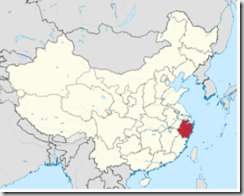
Zhejiang Bans Live Urban Poultry Trading

image

Zhejiang Province


# 8797


Zhejiang Province holds the unfortunate distinction of having detected – by far – the most H7N9 human infections to date (see chart below).

image

Credit Hong Kong’s CHP.


As we saw a couple of weeks ago in CDC: Risk Factors Involved With H7N9 Infection,  even casual exposure to poultry in live bird markets was cited as the primary risk factor . . .  while  people who owned, raised, or slaughtered birds at home, on farms, or in the wild were not found to be at any increased risk.


Adding, at least anecdotally, to the evidence is that the first wave of about 130 human cases tapered off only after aggressive controls on live bird markets were imposed in April and May of 2013 (see The Lancet: Poultry Market Closure Effect On H7N9 Transmission).


Similar measures were taken starting the end of January, 2014 during the peak of the second wave, with similar results.


While H7N9 cases are currently seeing a summer lull, today Zhejiang Province has announced the permanent ban of live poultry trading in `urban areas’.   We’ll have to see exactly what constitutes an `urban area’, and how well these laws are enforced, but for now this seems a prudent step.


This from Xinhua News.


Zhejiang bans urban live poultry trading

2014-07-01 19:09:23


HANGZHOU, July 1 (Xinhua) -- Live poultry trading has been banned in urban areas of east China's Zhejiang Province for good from Tuesday to control the spread of bird flu.

Zhejiang recorded a higher number of human cases of bird flu infections than any other province in 2013.

Many live poultry markets closed when a bird flu case was found. But markets reopened at a later date.

Fearing the spread of bird flu, Zhejiang has decided to completely close all live poultry markets in urban areas.

From now on, only dead and plucked poultry can be traded in urban markets, according to the provincial government.

Agricultural authorities in Zhejiang have begun to advocate standardized poultry cultivation so meat can be traced back to its producers.

Consumers are worried they may not be able to determine whether dead poultry was healthy, whereas they can when buying live poultry.

The authorities will also develop a process where poultry can be killed and plucked by machines on a large scale.

Tuesday, February 18, 2014

Hong Kong Suspends Live Poultry Imports As Live Markets Re-Open

Photo: ©FAO/Tariq Tinazay

Credit FAO


# 8309


Hong Kong’s 3-week suspension of live poultry market trade comes to an end today, and with that comes an announcement from Secretary of Food & Health Dr. Ko Wing-man that an ongoing suspension of live poultry imports will remain in place until facilities for holding and testing imported poultry for avian flu can be created.


While some municipalities on the mainland have announced plans to move away from live poultry markets (see VDU Blog Shanghai and Hangzhou to permanently stop live poultry markets), Hong Kong plans to segregate their locally grown poultry from imported birds, in hopes of keeping their markets open.


We’ve brief video announcement, along with a report from News.gov.hk.


Live poultry imports suspended

February 18, 2014

Secretary for Food & Health Dr Ko Wing Man says live poultry imports will be suspended, but the Cheung Sha Wan wholesale poultry market will resume trading after midnight tonight.

image

Video 1 of 1
Download Video

Display Transcript

Speaking to the media today, Dr Ko said the Government is looking for a suitable site for poultry awaiting bird flu test results, and will have to consider planning and land use as well as local impact.


The import of day-old chicks and chilled and frozen poultry products will not be affected, he said.


On the Cheung Sha Wan wholesale poultry market's re-opening, following a ban imposed on January 27 when a batch of live chickens from Guangdong was confirmed to have H7N9, Dr Ko said the Government is co-operating with Mainland authorities to trace the source of infection.


In another CHP Press Release, Dr. Ko Wing-man is quoted as saying:


“We have estimated that the planning, actual design and construction work of such a facility would at least take a few months' time.”


Meanwhile we’ve seen a precipitous drop in the number of H7N9 cases being reported from the Mainland – coming just days after demands from the powerful poultry lobby to cease reporting individual cases (see Sandman & Lanard On China’s H7N9 Risk Communications).


Hopefully, this drop in cases is due to the recent closure of live markets, and not political pressure to reduce the economic impact on China’s poultry industry.

Monday, January 13, 2014

Zhejiang Announces Two More H7N9 Cases

image

Screenshot from Zhejiang Provincial Department of Health


# 8163

As the screen shot above indicates, this morning (Monday evening in China) – and for the fifth day in a row - Zhejiang Province is announcing the detection of new H7N9 cases, bringing that province’s total since the first of the year to nine. 


As we noted yesterday, Zhejiang province has reported the largest percentage of H7N9 cases in China to date.


While we aren’t seeing much in the way of epidemiological information in these reports, these cases still appear to be sporadic, with no indication of sustained or efficient human-to-human spread of the virus.


Zhejiang Province, two cases of human infection with the H7N9 new bird flu cases

Release date :2014-01-13
Source: Provincial Health Office of Family Planning
  January 13, 2014

Zhejiang Provincial Health and Family Planning Commission January 13 briefing, the province today confirmed two cases of human infection with the new H7N9 avian influenza.

1, the temperature of a patient, female, 41 years old, currently residing in Cixi, Ningbo. January 13 confirmed human cases of avian influenza H7N9 infection. Now is severe, treatment at a hospital in the city of Ningbo.


2, patients Moumou, female, 59 years old, now living in Ningbo Jiangdong District. January 13 confirmed human cases of avian influenza H7N9 infection. Now is severe, treatment at a hospital in the city of Ningbo.


Last spring, when cases were rising in Eastern China, authorities shuttered live bird markets in the affected areas, which resulted in an immediate and dramatic drop in new cases (see The Lancet: Poultry Market Closure Effect On H7N9 Transmission). 


By mid-summer most of these markets had re-opened, and as long as the weather stayed warm, new cases did not reappear.


But now that winter has arrived, we are seeing another marked rise in human infections. While exposure to live birds in markets is still considered the most likely mode of infection, so far authorities have been reluctant to close these markets for more than a day or two for `cleaning & disinfection’.


Attempts in  China, Indonesia, and in other countries attempts to close or strictly regulate live bird markets in the past have been met with tremendous public resistance (see 2009 blog China Announces Plan To Shut Down Live Poultry Markets In Many Cities).  Purchasing live market birds is deeply ingrained in the culture, as it reassures the buyer that the bird is both fresh and healthy.


China’s ambitious plan, announced 4 years ago to `shut live poultry markets in all large and medium-sized cities throughout China’, obviously never happened.


There is certainly an economic impact of closing live markets, particularly in the weeks leading up to the Chinese Lunar New Year’s celebration, when poultry sales are brisk.  And there are societal and cultural considerations I’m sure, as well.


But keeping these markets open, with the virus obviously jumping with relative ease to humans, is playing a dangerous game of `chicken’  with a nasty  virus.


Aside from the human tragedy that each illness brings, every human infection is another opportunity for the virus to better adapt to human physiology, or another chance for it to reassort with an already  `humanized virus’.   No one knows when the `right’ combination will come up, or how many throws of the genetic dice this will take. 


Hundreds. Thousands . . .  Maybe it never happens.


But if it ever does, the costs  of closing these markets now will pale compared to the costs of dealing with even a small epidemic, much less a pandemic.

Thursday, December 12, 2013

H7N9 Update: Shenzhen Orders Temporary Shutdown Of Live Markets

image

Photo Credit – FAO


# 8065


The headline (below) from Friday morning’s edition of the South China Morning Post (SCMP) only tells part of the story, as for most of the poultry markets in Shenzhen, this is only a 1 day closure to allow time  for disinfection.  The two markets where positive H7N9 samples were gathered last Sunday will face a week-long shutdown, for culling of birds, and sterilization. 


Shenzhen poultry markets shut down amid H7N9 bird flu fears

Deadly bird flu strain had been found at both premises in Shenzhen


While certainly better than no shutdown at all, if the virus has become endemic in farmed poultry (see Remarks by Dr. Guan Yi this morning), then the benefits of disinfection will diminish once the next infected bird is brought to market. Other (Chinese language) media reports indicate that stepped up cleaning and disinfection of market stalls will be required going forward. 


While Hong Kong continues to import poultry from other parts of Mainland China, Dr. Ko Wing-man is asking that more sensitive tests be run on poultry before they are shipped.  SCMP quotes the SFH as saying:


"The plasma test is more sensitive than the quick [genetic] test we are now conducting on live chicken," he said. "It will be more accurate in testing any birds that have come into contact with the virus, even if the bird itself is not a carrier or infected case."

University of Hong Kong microbiologist Yuen Kwok-yung believes it is necessary to use the plasma test.


Although most experts believe that exposure to infected live birds is the most likely route of human infection, the lack of conclusive proof to that effect, and the high economic stakes involved in restricting the poultry trade, is making it difficult for officials to clamp down too hard when the number of human cases remains low.