Showing posts with label Pandemic Flu. Show all posts

Thursday, April 09, 2015

UK: 2015 Civil Risks Register

image


# 9917


Since 2008 the UK government has produced, and updated every two years, a National Risk Register For Civil Emergencies – essentially a short list of disaster scenarios (man-made & natural) that the Cabinet Office believe to be genuine threats.  The Cabinet Office describes it as:


The National Risk Register of Civil Emergencies (NRR) is the unclassified version of the National Risk Assessment (NRA), a classified assessment of the risks of civil emergencies facing the UK over the next five years. The NRR is a public resource for individuals and organisations wishing to be better prepared for emergencies.


Since emergency preparedness is a big part of this blog, knowing what governments view as their greatest disaster threats can go a long way in helping us decide how, and for what, we should be preparing.  


There are regional differences that must be considered -  the UK is not prone to major earthquakes, tornadoes, or Hurricanes –  so those who live in areas that are must adjust accordingly.


The UK has divided their disaster risks into three broad categories:

  1. Malicious or Terrorist Attacks
  2. Natural Hazards
  3. Major Accidents


This document bases its assessment on each scenario on the likelihood of it happening over the next five years and on the consequences or impacts to the population. They use what the NRA and NRR consider to be a ‘reasonable worst case’ scenario, while  `highly implausible scenarios’ are excluded.


Plausibility for terrorist attack scenarios are rated from low to high, while (broad) numerical odds are offered for the other types of disasters.  In either case, the impact factor is rated from 1 (low) to 5 (maximum).


Despite the airtime and attention that terrorism gets, the following chart shows that most `terrorist-related’ scenarios cluster the overall impact in the mid-range, with probabilities running from medium-low to high.  A truly catastrophic terrorist attack is only accorded a medium-low probability.

image


When it comes to `high impact and high probability’ events, the following chart (highlight mine) shows that Pandemic Influenza stands alone atop the list.  While thermonuclear war or an asteroid impact could conceivably wreak more havoc on our planet, neither are considered to be anywhere near as likely as a severe pandemic.


 image

From the section on Pandemic Influenza, they write:


Pandemic influenza

2.3 Influenza pandemics are natural phenomena that have occurred over the centuries, and most recently in 2009 in the shape of the H1N1 influenza pandemic. There are other influenza strains in circulation globally, such as H5N1 (avian influenza) which emerged in South East Asia in 1996 and caused millions of deaths among poultry and several hundred human deaths. The consensus view among experts is that there is a high probability of another influenza pandemic occurring. It is impossible to forecast its timing or the nature of its impact.


Emerging infectious diseases

2.4 Over the past 25 years, more than 30 new, or newly recognised, infections have been identified around the world, although the likelihood of a new disease spreading to the UK is low. A recent example of a newly emerged infectious disease is SARS (Severe Acute Respiratory Syndrome), which emerged in Asia in November 2002 and posed a global health threat.


Consequences


2.5 Consequences may include:
  • in the case of pandemic influenza, half the UK population potentially being infected, with between 20,000 and 750,000 additional deaths potentially by its end
  • around 2,000 people infected in the case of a new/emerging infectious disease, with some 100 additional deaths potentially by its end
  • in the absence of early or effective interventions to deal with a pandemic, significant social and economic disruption, significant threats to the continuity of essential services, lower production levels, and shortages and distribution difficulties.


It is no coincidence that a severe pandemic has ranked at the top of almost every list of highly disruptive national security threats in recent years (see 2011 OECD Report: Future Global ShocksUK: Civil Threat Risk Assessment, Influenza Pandemic As A National Security Threat).    


image

Credit - HHS Interim Pre-Pandemic Planning Guidence: Community Strategy For Pandemic Influenza Mitigation In the United States.


Considered just as likely to occur – but carrying a lower impact – are events such as:

  • Severe Space Weather  (see NASA: The Solar Super Storm Of 2012)
  • Weather Extremes (Cold weather & Heavy snow  or Heat wave)
  • Poor Air quality events
  • Explosive Volcanic Eruptions (impacting, but outside of the UK)
  • Storms and Gales

Considered somewhat less  likely, but with potentially higher impacts for the UK, are extreme coastal flooding and widespread electrical outages (see  GridEx 2013 Preparedness Drill). 


Without electricity, gas pumps won’t work, credit & debit cards are useless (got cash?), and refrigerated foods may quickly begin to spoil (in your home, and in the store).  For those who depend on electric heat during the winter or those who rely on medical devices – like oxygen generators – a prolonged outage could have deadly implications.


Our dependence upon our modern infrastructure, just in time deliveries, and a continuous supply of electricity makes all of us particularly vulnerable to any sudden interruption.  And as this risk assessment shows, there are a lot of things that could impact those resources. 


And this list is far from being all-inclusive.  The proverbial Black Swan Event  – the one no one really saw coming – is always a possibility.


Which is why agencies here in the United States -  like the HHS, CDC, FEMA, Ready.gov and others - work each day to convince citizens of the importance of being prepared for the unexpected, and why I devote a fair amount of this blog to everyday preparedness.

image


Given the broad range of potential disaster scenarios it doesn’t make sense to `prepare for a pandemic’ or `prepare for an earthquake’, since neither may show up when the wheel of misfortune is spun for your community. 


Instead, it makes sense to maintain a general level of preparedness against `all threats’.


As a former paramedic, I can’t stress enough the importance of having a good first aid kit at home, and another one in your car.  And just as importantly, learning how to properly use one. Taking a first-aid course, and CPR training, are both investments that could pay off big someday, for you, and for your loved ones. 
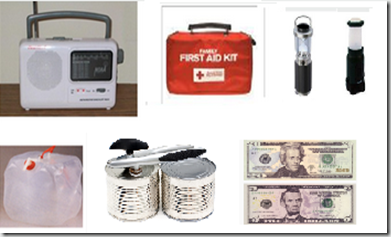
image

Basic kit : NWS radio, First Aid Kit, Lanterns, Water & Food & cash


And every home should have no less than a 72-hour supply of emergency food and water, for all of its occupants (including pets!).  This is a bare minimum, here in the United States many agencies and organizations recommend that households work towards having a 10-day supply of food, water, and emergency supplies on hand (see When 72 Hours Isn’t Enough)

.

Although I’ve covered a great many specifics for becoming better prepared (see NPM14: Infrastructure Failure Preparedness & NPM14: When You’ve Got To `Get Out Of Dodge’ In A Hurry), there is one prep I consider to be the most important of all.


Having – and being – a `disaster buddy’.


In NPM14: In an Emergency, Who Are You Going To Call?, I wrote that a `Disaster Buddy’ is simply someone you have prearranged that you can call on during a crisis, and who in turn, can call on you if they need help.


None of this is to suggest you should be sitting around worrying about the myriad of possible disaster scenarios.  Worrying never solved anything. You should be preparing – sensibly – instead. 


After all, preparing is easy . . . it’s worrying that is hard.

Thursday, September 19, 2013

PLoS One: Selective Vaccination Against An Emerging Influenza Pandemic


image

Photo Credit PHIL


# 7891


In the face of any pandemic threat, the primary focus of public health officials will be to reduce the attack rate (AR); the number of people who become infected. Unless we are lucky enough to have a large quantity of experimental vaccine already stockpiled, these early efforts will revolve around NPIs, or non pharmaceutical interventions (i.e. Hand washing, social distancing, school closures, etc.).


But eventually a vaccine will probably become available, albeit first in limited quantities,  and decisions will have to be made on how best to deploy it.   To whom do we give priority?  


The elderly, who are historically most at risk from influenza?

Children or pregnant women who often suffer disproportionately during a pandemic?

Doctors, Nurses, and emergency responders who are badly needed, and most often exposed?

Essential workers or students?


As an example, during the summer of 2008 the HHS released their model of a pandemic vaccine allocation plan based on `the most up-to-date scientific information available and directly considers the values of our society and the ethical issues involved in planning a phased approach to pandemic vaccination.’  NOTE: The link to this plan is no longer operative and so it may no longer be part of the HHS’s pandemic playbook .

Their stated goals at that time were:

  • Protect persons critical to the pandemic response and who provide care for persons with pandemic illness
  • Protect persons who provide essential community services
  • Protect persons who are at high risk of infection because of their occupation and
  • Protect children

image


Of course, much will probably depend upon the demographics of the pandemic.   If – as we saw in 2009 – it preferentially targets younger people (or any other  specific demographic group), then adjustments would likely be made.


While the tier system above was based on `practical’ considerations, if the goal is to reduce the attack rate, this sort of prioritization system might not be the best solution.  


Which brings us to a study, just published in PLoS One, conducted by researchers at Japan’s Institute of Statistical Mathematics, that attempts to model different vaccine prioritization schemes in order to determine which allocation system reduces the spread of a pandemic the most.


It should be noted that this model is based on the demographics, population movements, and geography of a simplified subset of suburban Tokyo, and the results are not necessarily applicable to other communities or settings.  

Also, the assumptions made on the amount and timing of a vaccine, its effectiveness, and attack rate of the virus are arbitrarily set (albeit with various permutations considered) – and are not necessarily what would be encountered in a genuine pandemic outbreak.


Still, this study does provide some intriguing insights into how a pandemic virus is likely spread in a highly populated area, and provides a strategy to limit its impact.


Research Article

Enhancement of Collective Immunity in Tokyo Metropolitan Area by Selective Vaccination against an Emerging Influenza Pandemic

Masaya M. Saito mail, Seiya Imoto, Rui Yamaguchi, Masaharu Tsubokura, Masahiro Kami, Haruka Nakada, Hiroki Sato, Satoru Miyano, Tomoyuki Higuchi

Abstract

Vaccination is a preventive measure against influenza that does not require placing restrictions on social activities. However, since the stockpile of vaccine that can be prepared before the arrival of an emerging pandemic strain is generally quite limited, one has to select priority target groups to which the first stockpile is distributed. In this paper, we study a simulation-based priority target selection method with the goal of enhancing the collective immunity of the whole population. To model the region in which the disease spreads, we consider an urban area composed of suburbs and central areas connected by a single commuter train line. Human activity is modelled following an agent-based approach. The degree to which collective immunity is enhanced is judged by the attack rate in unvaccinated people.

The simulation results show that if students and office workers are given exclusive priority in the first three months, the attack rate can be reduced from 30% in the baseline case down to 1–2%. In contrast, random vaccination only slightly reduces the attack rate. It should be noted that giving preference to active social groups does not mean sacrificing those at high risk, which corresponds to the elderly in our simulation model. Compared with the random administration of vaccine to all social groups, this design successfully reduces the attack rate across all age groups.


Students and office workers are often the most mobile and interactive members of a society, and therefore have greater opportunities to contract and spread a virus. Once infected, they can bring the virus home, spreading it to other vulnerable cohorts. So in many ways, I can see how this analysis makes sense.


For those interested in methods and materials, and a lot of statistical analysis, the entire research article is available online (open access).


The authors summarize their findings in the discussion section:

We have showed that the AR can be reduced to or less if students and employees are intensively vaccinated in the first 90 days. This is the result of an intervention program that relies solely on vaccinations, and the AR can be further reduced by individual protection efforts (e.g., wearing masks and avoiding crowded places). If the encountered virus is not highly pathogenic, this value is acceptable. In this case, the goal of intervention is to avoid an excess of patients going to medical practitioners. However, early extinction of transmission chains is required in highly pathogenic cases, and vaccination alone is not sufficient. To achieve early extinction by using only the collective immunity induced by vaccinations, administration of the vaccine would need to be carried out at least three times as fast as the typical speed.


The rub to this (and other) pandemic vaccination models is the probable lack of any vaccine during the opening months of a novel pandemic, and the limited supply of vaccine for months after that.


As George E. P. Box, Professor Emeritus of Statistics at the University of Wisconsin, famously declared.


“All models are wrong, but some models are useful.”


So hopefully, even if this model’s assumptions turn out to be wrong, this study is useful and will provide some scientific rationale for vaccine distribution decisions, once a vaccine does become available.

Wednesday, September 18, 2013

NPM13: Pandemic Planning Assumptions

image

Credit - HHS Interim Pre-Pandemic Planning Guidence: Community Strategy For Pandemic Influenza Mitigation In the United States.


Note: This is day 18 of National Preparedness Month.  Follow this year’s campaign on Twitter by searching for the #NPM or #NPM13 hash tag.

This month, as part of NPM13, I’ll be rerunning some updated  preparedness essays (like this one) , along with some new ones.


# 7783


The declassification this week of a 2009 Northern Command Pandemic Plan (see SciAm story Pandemic Flu Plan Predicts 30% of U.S. Could Fall Ill) has caught the attention of a number of news organizations and websites with its estimates that during a moderately severe pandemic 30% of the population could fall ill, 3 million could require hospitalization, and 2 million Americans could die.


Although a certain amount of surprise is registered in these media reports, these are roughly the same numbers that were being openly discussed by local, state, and federal agencies during the pandemic planning phase of 2006-2008.


In fact, in 2008, the HHS outlined their vision of the likely impact in the United States of a severe and a moderate pandemic (see A Tale Of Two Scenarios).   As you’ll see, the numbers of hospitalizations anticipated during a severe pandemic is quite a bit higher than the Northcom plan.


The HHS defined a severe pandemic as:

    • An attack rate of 30% (90 million Americans sickened)
    • 50% (45 million) requiring outpatient medical care
    • 11% (9.9 million) requiring hospitalization
    • 745,000 requiring mechanical ventilation
    • 1.9 million deaths (2.1% fatality ratio)

A moderate (1958/68-like) pandemic is described as follows:

    • An attack rate of 30% (90 million Americans sickened)
    • 50% (45 million) requiring outpatient medical care
    • .9% (865,000) requiring hospitalization
    • 64,875 requiring mechanical ventilation
    • 209,200 deaths (.23% fatality ratio)


In other words, while the number of people affected doesn't change, a severe pandemic is envisioned to be about 10 times worse than a moderate one.


Pandemics, like hurricanes, are measured on a five point scale, with a CAT 5 pandemic – as bad or worse than 1918 – at the top of the scale.  While there are many similarities between the hurricane and pandemic scales, there is one aspect where they differ greatly.


With Hurricanes, there are physical limitations that keep the storms from growing much stronger than 200 mph winds. Category 5 storms start at 156 MPH, and these storms are only capable of intensifying about 35% above that wind speed.


There are no such restraints on a severe pandemic. While a 2% CFR indicates a Cat 5 pandemic, so does a 5% or 10% CFR. Yet, the difference between the impact of these three CFRs would be enormous. Although the 1918 pandemic is often used as a model for the next severe pandemic, doctors and scientists generally admit that the Spanish Flu isn't the worst that nature could throw at us.

image


The thing about pandemics is, even after one starts, you never know how bad it is going to be until it is over.   And even then it can take years to sort our just how bad it really was.  Experts continue to wrestle with the toll of the 2009 H1N1 pandemic. 


A pandemic can start out mild, and over time become more virulent – as did the 1918 H1N1 pandemic -  or it could look really serious at the start, but prove milder than expected (as we saw in 2009). 


While we can’t know when the next pandemic will arrive, or how bad it may be, we can prepare for a `reasonable-worst-case’ scenario – which  is probably somewhere on the order of the 1918 Spanish Flu.  To that end, the HHS has a number of pandemic planning toolkits available on their Flu.gov website.


Pandemic Flu 

The federal government cannot prepare for or respond to the challenge of a flu pandemic alone. Your community can develop strategies that reduce the impact and spread of pandemic flu.

Faith-Based & Community Organizations Pandemic Influenza Preparedness Checklist (PDF – 68.91 KB)

Lista de Preparacion para una Pandemia de Gripe Tanto para Organizaciones Comunitarias como Religiosas (PDF – 268 KB)

Community Strategy for Pandemic Influenza Mitigation (PDF – 10.3 MB)

Plan Now to Be Ready for the Next Flu Pandemic (PDF – 213.55 KB)

The Next Flu Pandemic: What to Expect (PDF – 226.83 KB) (excerpts below)

image

image

Their advice (and this is for before a pandemic threat becomes imminent).

image


Over the past six months I’ve written a number of pandemic preparedness blogs, including what the United States government is doing to prepare for a possible pandemic.  You can revisit these at the following links:


The Pandemic Preparedness Messaging Dilemma
Pandemic Planning For Business
CDC: Pandemic Planning Tips For Public Health Officials
H7N9 Preparedness: What The CDC Is Doing


Admittedly, we may not see another severe pandemic for years, or even decades. But since it is impossible to predict when the next one will occur, it makes sense to incorporate pandemic planning into your family, community or business disaster plans.  


Ready.gov offers the following basic advice for families and individuals.


Pandemic

Inspire others to act by being an example yourself, Pledge to Prepare & tell others about it!

Pledge to Prepare

You can prepare for an influenza pandemic now. You should know both the magnitude of what can happen during a pandemic outbreak and what actions you can take to help lessen the impact of an influenza pandemic on you and your family. This checklist will help you gather the information and resources you may need in case of a flu pandemic.

Plan for a Pandemic

  • Store a two week supply of water and food. During a pandemic, if you cannot get to a store, or if stores are out of supplies, it will be important for you to have extra supplies on hand. This can be useful in other types of emergencies, such as power outages and disasters.
  • Periodically check your regular prescription drugs to ensure a continuous supply in your home.
  • Have any nonprescription drugs and other health supplies on hand, including pain relievers, stomach remedies, cough and cold medicines, fluids with electrolytes, and vitamins.
  • Talk with family members and loved ones about how they would be cared for if they got sick, or what will be needed to care for them in your home.
  • Volunteer with local groups to prepare and assist with emergency response.
  • Get involved in your community as it works to prepare for an influenza pandemic.

Friday, September 13, 2013

ICAAC 2013 Videos: Triple Tamiflu In ICU & Interferon For H7N9

image


# 7761


The 53rd Interscience Conference on Antimicrobial Agents and Chemotherapy (ICAAC) was held this week in Denver Colorado, and once again we’re fortunate to have videos of press conferences being webcast live and archived via MicrobeWorld’s Youtube channel.


Two interviews of particular interest to Flublogia concern research on the use of Triple-dose Oseltamivir (Tamiflu ®) on critically ill patients during the 2009 pandemic,  and research looking at using alpha-Interferon for the treatment of H7N9.


The standard adult dose of Tamiflu for uncomplicated seasonal influenza  is 75mg, twice a day for 5 days – although higher doses over longer periods of time have been proposed (and even tried) when dealing with avian or severe pandemic flu.  


Last May, in Delving Into The Oseltamivir Dosage Study, we looked at a BMJ study that found No benefit of double dose antiviral drug for severe influenza.   This study, however, had a number of limitations:

    • Most of the patients were children under 15
    • Most of the patients had low or normal BMI
    • Only about 1/5th had underlying conditions
    • Very few adults were included in the study
    • Only 17 (of 326 cases) were H5N1, and of those, only 3 survived to day 5 of the trial.
    • The average delay for treatment for H5N1 patients was 7 days vs. 5 days for seasonal flu
    • All H5N1 cases met the criteria for clinical failure


One is left to wonder how well these results would translate to a much older population, one likely to have a higher average BMI, far more (and different) underlying conditions, and in all likelihood would seek treatment sooner than did the patients in this study (average 5-7 days).


While this trial found no value to doubling the dose for seasonal flu, there is insufficient evidence to judge whether doubling the dose for H5N1 (or presumably H7N9) would improve patient survival. And in an accompanying editorial, Ian Barr and Aeron Hurt of the WHO Collaborating Centre for Reference and Research on Influenza, would appear to agree:

What is clear is that double dose oseltamivir is unlikely to significantly improve the clinical outcomes of severe cases of seasonal influenza, although there were probably insufficient data to determine if this was also true for people infected with A(H5N1).

It is worth noting that last April, in CDC Interim Guidance On H7N9 Antiviral Treatment, we saw the CDC’s recommendation that for hospitalized patients:

The optimal duration and dose of therapy are uncertain in severe or complicated influenza. Pending further data, longer courses of treatment (e.g., 10 days of treatment) should be considered for severely ill hospitalized H7N9 patients.


Earlier this summer, we looked at the general effectiveness of oseltamivir, and the need for maintaining stockpiles in New Scientist: Don’t Stop Stockpiling Tamiflu.


All of which brings us to the first ICAAC video:

High Dose Therapy for Influenza Drug - Watch Now


Critically ill patients  with the pandemic H1N1 influenza who received triple the standard dose of the influenza drug oseltamivir were 7 times more likely to completely clear the virus from their system in 5 days than those who received the standard dose. This discussion will address the healthcare implications of these findings, including a rationale for high dose therapy of sensitive strains of influenza.


Dr. Kumar reports that the triple dose of Tamiflu was well tolerated, and believes higher doses may be appropriate for those severely ill from influenza.   For more on the topic of antivirals, and their use for pandemic or avian flu, you may wish to revisit Study: Antiviral Therapy For H5N1  and Hong Kong Finds Success With Higher Tamiflu Doses.


Our next stop is an interview with William M. Mitchell, Vanderbilt University, Nashville, TN who discusses the use of interferon Alpha as a possible treatment of oseltamivir-resistant H7N9.   You may recall that just last week, in Nature: Animal Testing Of Drug Combo Shows Potential For Treating MERS Interferon was also proposed as part of a cocktail to potentially treat the MERS Coronavirus.


According to a press release yesterday from Hemispherx Biopharma, Inc, their findings are based on in vitro experiments, directed against inhibiting the replication of two strains of H7N9 virus in A549 cell lines.  One H7N9 strain (A/Anhui/1/2013) was a `wild type’ that was susceptible to oseltamivir, while the other (A/Shanghai/1/2013) was a patient isolate that had developed Tamiflu resistance.


Dr. Mitchell describes the suppression of the wild-type virus as being roughly equal with both oseltamivir and interferon, but the resistant strain (which greatly thwarted the antivirals) showed an even greater response to interferon alpha.


The caveat here is, these are in vitro experiments.  Clinical trials have not been conducted, but these are promising – if very early – results.  Mitchell suggests that if the need arose during a pandemic outbreak, an Emergency Use Authorization (EUA) might be issued. 


In the following  ICAAC video Dr. Mitchell discusses this research and the potential of using interferon-alpha as a treatment for severe influenza. Note: Mitchell is a board member and shareholder of Hemispherx Biopharma of Philadelphia, which supported this research.


Human Interferon Kills Resistant H7N9 Influenza - Watch Now
During the April 2013 avian influenza A (H7N9) outbreak, more than 130 human infections with H7N9 were reported. Most patients had severe respiratory illness and 44 people have died. Studies suggest that the H7N9 virus has developed resistance to oseltamivir. A human interferon already in use for treatment of genital warts, alpha-n3, has been found to be active against the virus, even the oseltamivir-resistant isolate. Participants will discuss these findings and implications.


You’ll find more videos from this year’s ICAAC on this page, and many more offerings from the American Society for Microbiology Youtube Channel.

Thursday, August 08, 2013

WHO: Homecare Advice For Mild MERS-CoV Cases

 image

Photo Credit CDC


# 7551


Today The World Health Organization released a brief (7 page) document advising on how best to care for `mild’  MERS-CoV cases at home in the event that hospital care is either not feasible, or not desired by the patient.


We’ve already seen a small number of mild cases managed successfully at home, and should this virus ever begin to spread widely, the home care option will likely become even more common.


While acknowledging that hospitalization – at least at this stage of the spread of the virus – is probably preferable for all symptomatic cases, this document recognizes there may be some instances where home care is a reasonable option. They write:


Home care for patients with MERS-CoV infection presenting with mild symptoms


In view of the currently limited knowledge of the disease and its transmission, it may be prudent to hospitalize confirmed and probable (2) symptomatic cases of the MERS-CoV infection. This would ensure both safety and quality of healthcare and public health security.


However, for several possible reasons, including situations when inpatient care is unavailable or
unsafe, or in a case of informed refusal of hospitalization, alternative settings 3 for health care provision may need to be considered.

 
Depending on the local circumstances and resource availability, symptomatic contacts with milder symptoms 4 and without underlying conditions that put the patient at increased risk of developing complications, may be cared for in the home environment.


The same principle of care in the home environment applies to symptomatic patients not requiring or no longer requiring hospitalization. This decision requires careful clinical judgment and should be informed by assessing the safety of the patient’s home environment 5


I’ve included some excerpts, but you’ll want to download and read the entire document.


Rapid advice note on home care for patients with Middle East respiratory syndrome coronavirus (MERS-CoV) infection presenting with mild symptoms and management of contacts

08 August 2013

(EXCERPT)

Because of the possibility of rapid progression to the acute respiratory distress syndrome (ARDS) and other severe, life-threatening complications, even otherwise healthy, symptomatic contacts or probable cases should be placed under close medical observation when receiving care at home.


The patients and the household members should be educated on personal hygiene and basic infection prevention and control measures, and they should adhere to the following recommendations:

  • Limit contact with the ill person as much as possible. The household members should stay in a different room or, if that is not possible, maintain a distance of at least one metre from the ill person (e.g. sleep in a separate bed).
  • Ensure that anyone who is at increased risk of severe disease does not care for the ill person or come into close contact with the ill person. The current groups considered at increased risk for the MERS-CoV infection nclude those with chronic heart, lung or kidney conditions; diabetes; immunosuppression; blood disease; and older adults. If contact with the ill person
    cannot be avoided by those with an increased risk of severe disease, alternative housing should be considered.
  • Perform hand hygiene (12) following all contact with the ill person or his/her immediate environment. Hand hygiene should also be performed before and after preparing food, before eating, after using the toilet, and whenever hands look dirty. Perform hand hygiene using soap and water. If hands are not visibly soiled, alcohol-based hand rub can be used. Assistance for the ill person to perform regular hand hygiene may be provided as needed. Paper towels to dry hands are desirable; if they are not available, use dedicated cloth towels and replace them when they become wet.
  • Respiratory hygiene should be practiced by all, especially the ill person. Respiratory hygiene
    refers to covering the mouth and nose during coughing or sneezing using medical masks, cloth masks, tissues or flexed elbow, followed by hand hygiene.
  • Discard materials used to cover the mouth or nose, or clean them appropriately after use (e.g. wash handkerchiefs using regular soap or detergent and water).
  • The caregiver should wear a medical mask fitted tightly to the face when in the same room with the ill person. Masks should not be touched or handled during use. If the mask gets wet or dirty with secretions, it must be changed immediately. Discard the mask after use and perform hand hygiene after removal of the mask.


(Continue . . . )


Whether we are talking about a greater outbreak of MERS-CoV, or the spread of pandemic flu, the reality is during a genuine epidemic hospitals will quickly reach their capacity, and will be able to admit only the `sickest of the sick’.


Home care will become the norm, not the exception.


Flu.gov warns of Overloaded Health Care Systems during any severe influenza pandemic, writing:


  • Most people have little or no immunity to a pandemic virus. Infection and illness rates soar. A substantial percentage of the world’s population will require some form of medical care.
  • Nations are unlikely to have the staff, facilities, equipment, and hospital beds needed to cope with the number of people who get the pandemic flu.


Anticipating this, a number of state and federal agencies have prepared Home Care Guides for use during a pandemic. 


One of the most comprehensive, comes from the Santa Clara County Health Department, California and is available on CIDRAP’s Public Health Practices website. 


Home Care Guide: Providing Care at Home During Pandemic Flu


Home Care Guide (Vietnamese) Download pdf, 551 KB

Home Care Guide (Spanish)Download pdf, 203 KB

Home Care GuideDownload pdf, 6 MB

The Home Care Guide provides the public with a comprehensive description of how to care for sick family members at home during a pandemic. It includes lists of emergency supplies, guidelines on how to limit the spread of disease at home, instructions on how to take care of sick household members safely and effectively and basic information about pandemic flu. This guide was created prior to the emergence of novel H1N1 flu virus in 2009. Therefore, the fact sheets located under the attachments tab in the guide contain some generalized information about pandemics, as well as information about avian influenza that may need to be updated. The guide is available in English, Spanish, and Vietnamese.

image


Part of the advice in the WHO MERS guidelines, and the Pandemic Flu Homecare guides, is to use facemasks to reduce the spread of infection.  This from the Santa Clara County guide:


image


We obviously don’t  know if another pandemic is in the offing anytime soon, but it is always prudent to be prepared. Besides, most of the information provided in these flu brochures is applicable for dealing with seasonal flu at home, as well. 


So you may want to download one of these guides today, and think about what supplies you may want to have on hand that are available now, but that may be in short supply during an outbreak.


For more on the relative merits of different types of facemasks, you may also want to revisit The Great Mask Debate Revisited.