Showing posts with label H9N2. Show all posts

Saturday, May 23, 2015

FAO: Egypt Reports Third H9N2 Case Of 2015

image


# 10,079


Since we only rarely hear of it infecting humans, and it tends to produce mild to moderate illness when it does, the H9N2 avian influenza virus doesn’t get as much attention as it probably deserves. Despite its relatively benign reputation, H9N2 is a major driver of avian influenza evolution, and reassorts readily (and often) with other viruses.


image


Look at the internal genes of some of the most worrisome avian influenza viruses – H5N1, H7N9, H10N8, etc. – and you’ll find that H9N2 that has lent a good deal of its backbone – it’s internal genes – to the creation of these emerging threats. 


Earlier this year, the WHO warned:


The emergence of so many novel viruses has created a diverse virus gene pool made especially volatile by the propensity of H5 and H9N2 viruses to exchange genes with other viruses. The consequences for animal and human health are unpredictable yet potentially ominous.


Early last year, The Lancet carried a report entitled Poultry carrying H9N2 act as incubators for novel human avian influenza viruses by Chinese researchers Di Liu a, Weifeng Shi b & George F Gao that warned:


Several subtypes of avian influenza viruses in poultry are capable of infecting human beings, and the next avian influenza virus that could cause mass infections is not known. Therefore, slaughter of poultry carrying H9N2—the incubators for wild-bird-origin influenza viruses—would be an effective strategy to prevent human beings from becoming infected with avian influenza.

We call for either a shutdown of live poultry markets or periodic thorough disinfections of these markets in China and any other regions with live poultry markets.


And just last  January (see PNAS: Evolution Of H9N2 And It’s Effect On The Genesis Of H7N9) we looked at a study that found a new, better adapted genotype  (G57) of the H9N2 virus had emerged  – one that evades the poultry vaccines currently in use – and that it has become widespread among vaccinated Chinese poultry since 2010.


Globally, we’ve seen seen a fairly limited number of human infections, including a handful in China between 1998 & 1999, Hong Kong in 1999 (2 cases), 2003 (1 case), and 2007 (1 case), and December of 2013 (see Hong Kong: Isolation & Treatment Of An H9N2 Patient).   In late 2014, two mild cases were reported out of China.


As this virus is most common in areas where testing and surveillance are less than optimal, we really don’t know how many people end up infected by it. 


Although reporting out of Egypt has been inconsistent, last February (see An H9N2 Infection In Egypt & Updated H5N1 Count – FAO/EMPRES) we learned of Egypt’s first H9N2 infection. Late yesterday ProMed Mail carried the following report – gleaned from an FAO report – detailing Egypt’s third H9N2 infection.


Published Date: 2015-05-22 13:44:27


Subject: PRO/AH/EDR> Avian influenza, human (108): Egypt, H9N2, influenza B


Archive Number: 20150522.3378923

AVIAN INFLUENZA, HUMAN (108): EGYPT, H9N2 AND INFLUENZA B
*********************************************************
A ProMED-mail post
http://www.promedmail.org
ProMED-mail is a program of the International Society for Infectious Diseases
http://www.isid.org


Date: Thu 14 May 2015


Source: FAO EMPRES-Animal Health, Global Early Warning System (GLEWS) [edited]
Animal Disease Threats Update


(Disease Events monitored by FAO AGAH/GLEWS between 10 May 2015 and 14 May 2015)
Egypt, confirmed additional infection with H9 LPAI in a human;

  • on 29 Apr 2015, a 7-year-old male with high fever and cough tested positive for H9 on 7 May 2015;
  • the sample tested positive for RNP gene, flu A, avian H9 and flu B and was negative for all other respiratory viruses;
  • the investigation revealed a history of exposure to live bird market poultry. The case was cured and discharged. [MoH and FAO field officer, 12 May 2015]


Note: This is the 3rd case of H9N2 LPAI reported in humans in Egypt since January 2015. The other 2 cases were detected in 2015 in Aswan and Cairo Governorate. The latest case is the 1st recorded human case of co-infection with H9 and flu B in Egypt.

(Continue . .. )


While the direct threat to human health from H9N2 is currently small, its promiscuity and history of reassorting with other avian viruses makes it a serious threat, and one very much worth keeping track of.


Returning briefly to the World Health Organization’s blunt pandemic warning of last February:


Warning: be prepared for surprises

Though the world is better prepared for the next pandemic than ever before, it remains highly vulnerable, especially to a pandemic that causes severe disease. Nothing about influenza is predictable, including where the next pandemic might emerge and which virus might be responsible. The world was fortunate that the 2009 pandemic was relatively mild, but such good fortune is no precedent.

.

Friday, February 13, 2015

An H9N2 Infection In Egypt & Updated H5N1 Count – FAO/EMPRES

image


# 9707


We’ve news of a human H9N2 infection in Aswan, as well as a bit of confirmation of our H5N1 count for Egypt this year, courtesy of the latest FAO/EMPRES Animal Influenza Update # 636  and a head’s up overnight to FluTrackers and myself by @nlintelligence  (see FluTrackers post)


First the H9N2 case, which is described as:


10/02/2015 – H9N2 infection in a human, Aswan
Source: National Authorities


On 10 February 2015, a human case of A (H9N2) influenza was detected by the routine national avian influenza surveillance system in Aswan Governorate. The case was a 3 years old male, avian influenza was suspected on 16 January 2015. Samples tested at Aswan subnational laboratory and subsequently the reference laboratory (NAMRU3) were positive for H9N2 Investigations revealed that the case had a history of contact with apparently healthy backyard poultry. H9N2  positive poultry has been detected in Egypt since 2011, yet this is the first confirmed human case.


Although ubiquitous in Asian poultry, and endemic in Egyptian poultry as well, H9N2 has only rarely been reported in humans. We’ve seen it  reported a handful of times, including in Hong Kong in 1999 (2 cases), 2003 (1 case), and 2007 (1 case), and most recently in December of 2013 (see Hong Kong: Isolation & Treatment Of An H9N2 Patient).

Several additional human H9N2 virus infections were reported from China in 1998-99, and all known cases were mild.  More recently, in 2011 we learned Bangladesh To Share H9N2 Bird Flu Virus after detecting a case there.


Since the virus is most common in areas where testing and surveillance are less than optimal, we really don’t know how many people end up infected by it.  Most cases are mild, and would be indistinguishable from ordinary flu.


Although viewed as having at least some `pandemic potential’ (see H9N2: The Other Bird Flu Threat), perhaps more importantly H9N2 appears to play a central role in the evolution of other HPAI viruses, including H5N1, H7N9, H5N6, and H10N8.


All of which share several important features,  which we’ve discussed previously.


  1. They all first appear to emanate from Mainland China
  2. They all appear to have come about through viral reassortment in poultry
  3. And most telling of all, while their HA and NA genes differ - they all carry the internal genes from the avian H9N2 virus


The avian H9N2 virus – unlike the H5 and H7 avian viruses – is not considered a `reportable’ disease by the OIE since it is viewed as a relatively stable LPAI (Low Pathogenic Avian Influenza), not prone to evolving into a more dangerous HPAI form.


Also included in this FAO/EMPRES report is an update on human H5N1 cases in Egypt, and that – combined with another FAO/EMPES document posted by Flutrackers this morning – appears to corroborate our ongoing count of H5N1 cases for the year.


29/01/2015 to 05/02/2015 - H5N1 infections in humans,
Behera, Cairo, Giza, Dakahlia, Fayoum, Iskandariyah, Menia,
Menoufia, Qina, Sharkia, Sohag and Sharkia Governorates
Source: National Authorities


According to the Ministry of Health, between 9 January and 2 February 2015, 22 new human cases of H5N1 infection were detected of which three have been fatal:


- Cases were reported in 13 out of Egypt’s 27 governorates namely: Alexandria (1), Behera (2), Cairo (3), Dakahlia (1), Fayoum (1), Giza (2), kalyoubia (2), Menia (2), Menoufia (2), Qena (1), Sharkia (3), Sohag (1) and Suez (1);

- Patients affected are aged between 1.6 and 75 years old, 9 of them are children;


- All cases, except one, whose source of infection is still under investigation, had contacts with backyard or market poultry few days prior to illness. Of the 254 confirmed human cases in Egypt since 2006, 93 were fatal, and at least 233 cases had contact with domestic poultry


Sharon Sanders has updated her FluTrackers 2015 Global WHO & Ministries of Health Confirmed H5N1 Human Cases List, which now shows 49 H5N1 cases for the year in Egypt. 

Tuesday, December 30, 2014

PNAS: Evolution Of H9N2 And It’s Effect On The Genesis Of H7N9

image

Photo Credit – FAO


# 9514


We’ve a nifty piece of avian flu research which appears this week in PNAS, that looks at the continued evolution of H9N2 in Chinese poultry, and how that may have prompted  the emergence of the H7N9 virus during the spring of 2013.


A joint effort of several Chinese science institutions and the St. Jude Children's Research Hospital, this study features Jinhua Liu, Ph.D., of the College of Veterinary Medicine at the China Agricultural University, and Dr. Robert Webster as co-corresponding authors.


Regular readers of this blog are aware that the avian H9N2 virus – which has been rife in Asian poultry for the past couple of decades – has been a major contributor to the creation of new avian viruses. Of the viruses we are currently watching with the most concern – H5N1, H7N9, H5N6, and H10N8 – all  share several important features (see Study: Sequence & Phylogenetic Analysis Of Emerging H9N2 influenza Viruses In China):

    • They all first appeared in  Mainland China
    • They all  have come about through viral reassortment in poultry
    • And most telling of all, while their HA and NA genes differ - they all carry the internal genes from the avian H9N2 virus


Last January, The Lancet carried a report entitled Poultry carrying H9N2 act as incubators for novel human avian influenza viruses by Chinese researchers Di Liu a, Weifeng Shi b & George F Gao that warned:

Several subtypes of avian influenza viruses in poultry are capable of infecting human beings, and the next avian influenza virus that could cause mass infections is not known. Therefore, slaughter of poultry carrying H9N2—the incubators for wild-bird-origin influenza viruses—would be an effective strategy to prevent human beings from becoming infected with avian influenza.


Last May, in EID Journal: H7N9 As A Work In Progress, we looked at a study that found the H7N9 avian virus continues to reassort with local H9N2 viruses, making the H7N9 viruses that circulated in wave 2 genetically distinct from those that were seen during the 1st wave.

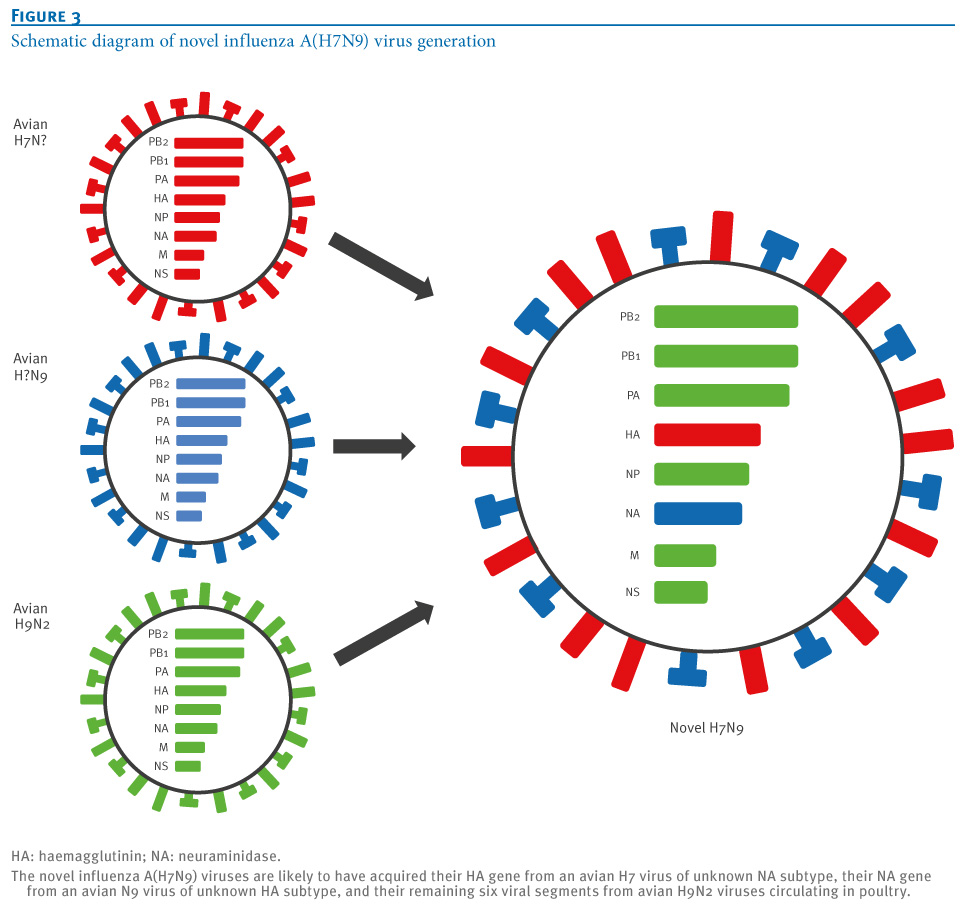
Although categorized by their two surface proteins (HA & NA) Influenza A viruses have 8 gene segments (PB2, PB1, PA, HA, NP, NA, M1, M2, NS1, NS2).
image

H7N9 carries 6 genes from H9N2Credit Eurosurveillance


And while we have only seen a handful of human infections with H9N2 (see Hong Kong: Isolation & Treatment Of An H9N2 Patient), it is also true that in areas where this virus is most common, testing and surveillance for the virus is extremely limited.  Like so many other novel viruses, we can only guess at is true burden in the human population.


While it’s impact on emerging avian flu viruses has been well documented, the reasons behind it’s influence have been less than clear. 


Today, however, we have research that shows a new, better adapted genotype  (G57) of the H9N2 virus has emerged  – one that evades the poultry vaccines currently in use – and that it has become widespread among vaccinated Chinese poultry since 2010.


This spread has provided more opportunities for reassortment, and so we see more avian viruses emerging.


First the Abstract from the study, followed by some excerpts from a St. Jude Children’s Research Hospital press release, after which I’ll return with a bit more.


Evolution of the H9N2 influenza genotype that facilitated the genesis of the novel H7N9 virus

Juan Pua,b,1, Shuoguo Wangc,1, Yanbo Yind,1, Guozhong Zhanga, Robert A. Carterc, Jinliang Wanga, Guanlong Xua, Honglei Suna, Min Wanga, Chu Wena, Yandi Weia, Dongdong Wangd, Baoli Zhue, Gordon Lemmonc, Yuannian Jiaoc, Susu Duanb, Qian Wanga, Qian Dua, Meng Suna, Jinnan Baoa, Yipeng Suna, Jixun Zhaoa, Hui Zhangf, Gang Wuc, Jinhua Liua,2, and Robert G. Websterb,2


Significance

The emergence of human infection with a novel H7N9 avian influenza reassortant in China raises a pandemic concern. However, it is not fully understood how these H9N2 chicken viruses facilitated the genesis of the novel H7N9 viruses. Here we show that a “fittest” genotype (G57) emerged with changed antigenicity and improved adaptability in chickens. It became predominant in vaccinated farm chickens and caused widespread outbreaks before the H7N9 virus emergence, increasing reassortment between H9N2 and other subtype viruses and finally providing all of their internal genes to the novel H7N9 viruses. The prevalence and variation of H9N2 influenza virus in farmed poultry could provide an important early warning of the emergence of novel reassortants with pandemic potential.

Abstract

The emergence of human infection with a novel H7N9 influenza virus in China raises a pandemic concern. Chicken H9N2 viruses provided all six of the novel reassortant’s internal genes. However, it is not fully understood how the prevalence and evolution of these H9N2 chicken viruses facilitated the genesis of the novel H7N9 viruses. Here we show that over more than 10 y of cocirculation of multiple H9N2 genotypes, a genotype (G57) emerged that had changed antigenicity and improved adaptability in chickens. It became predominant in vaccinated farm chickens in China, caused widespread outbreaks in 2010–2013 before the H7N9 viruses emerged in humans, and finally provided all of their internal genes to the novel H7N9 viruses. The prevalence and variation of H9N2 influenza virus in farmed poultry could provide an important early warning of the emergence of novel reassortants with pandemic potential.


Tracing evolution of chicken flu virus yields insight into origins of deadly H7N9 strain


Memphis, Tennessee, December 29, 2014

An international research team has shown how changes in a flu virus that has plagued Chinese poultry farms for decades helped create the novel avian H7N9 influenza A virus that has sickened more than 375 people since 2013. The research appears in the current online early edition of the scientific journal Proceedings of the National Academy of Sciences.

The results underscore the need for continued surveillance of flu viruses circulating on poultry farms and identified changes in the H9N2 virus that could serve as an early warning sign of emerging flu viruses with the potential to trigger a pandemic and global health emergency. The work focused on the H9N2 chicken virus, which causes egg production to drop and leaves chickens vulnerable to deadly co-infections. Scientists at St. Jude Children’s Research Hospital and the China Agricultural University, Beijing, led the study.

Researchers used whole genome sequencing to track the evolution of the H9N2 chicken virus between 1994 and 2013. The analysis involved thousands of viral sequences and showed that the genetic diversity of H9N2 viruses fell sharply in 2009. From 2010 through 2013 an H9N2 virus emerged as the predominant subtype thanks to its genetic makeup that allowed it to flourish despite widespread vaccination of chickens against H9N2 viruses.

Evidence in this study suggests the eruptions set the stage for the emergence of the H7N9 avian virus that has caused two outbreaks in humans since 2013, with 115 confirmed deaths. The H9N2 infected chickens likely served as the mixing vessel where H9N2 and other avian flu viruses from migratory birds and domestic ducks swapped genes, researchers noted. The resulting H7N9 virus included six genes from the H9N2.

"Sequencing the viral genome allowed us to track how H9N2 evolved across time and geography to contribute to the H7N9 virus that emerged as a threat to human health in 2013," said Robert Webster, Ph.D., a member of the St. Jude Department of Infectious Diseases. He and Jinhua Liu, Ph.D., of the College of Veterinary Medicine at the China Agricultural University, are co-corresponding authors.

"The insights gained from this collaboration suggest that tracking genetic diversity of H9N2 on poultry farms could provide an early warning of emerging viruses with the potential to spark a pandemic," Webster said.

(Continue . . .)


If all of this sounds vaguely familiar, last April in Study: Sequence & Phylogenetic Analysis Of Emerging H9N2 influenza Viruses In China, we saw H9N2 viruses collected from two Chinese Provinces (Zhejiang & Guangdong) in late 2011 showed signs of evolving antigenically away from the vaccine strain, with a majority of isolates (14 out of 18) showing an amino acid change in the receptor binding site suggestive of an enhanced ability to bind to human receptor cells.


While poultry vaccination has been adopted by a number of countries to control their avian flu problems, there are distinct downsides to relying on vaccines for the control of avian viruses (for earlier blogs see OIE: Countries That Vaccinate Poultry Need An `Exit Strategy' & Food Insecurity, Economics, And The Control Of H7N9).


While vaccines can often protect poultry against illness - with increasingly diverse and rapidly evolving avian flu viruses - they can’t always prevent infection.  Particularly if they aren’t updated often.


The end result being that subclinical infections can go undetected, viruses continue to circulate unnoticed, and new variants or reassortants continue to emerge. These failures are not limited to the H9N2 vaccines, as we’ve seen similar results with H5 vaccines as well (see EID Journal: Subclinical HPAI In Vaccinated Poultry – China &  Egypt: A Paltry Poultry Vaccine). 


There are, unfortunately, no simple solutions.


Countries like China, Indonesia, Vietnam, and Egypt – places where avian flu viruses are well entrenched in both commercial and home raised poultry - rely heavily on poultry vaccines. They view the immediate culling of infected birds, the standard control practice for most of the rest of the world, as being impractical and fear the social and economic impacts of such a policy.


The problem is, as new avian flu subtypes, clades, and sub clades emerge, the vaccines in use inevitably lose the battle, and over time that can lead to a snowball effect where the number of viruses in circulation escalate rapidly.


Given the recent emergence of H7N9, H10N8, H5N6, H5N8 and H5N3, one has to wonder just how much faster this snowball will roll over the next few years.

Sunday, November 23, 2014

PLoS Path: Genetics, Receptor Binding, and Transmissibility Of Avian H9N2

image

Photo Credit – FAO


# 9364


While the superstars of avian influenza tend to be those viruses that can infect, and sometimes kill, humans (H5N1, H7N9, H10N8) behind each of these deadly viruses is an obscure `parental’ virus called H9N2 that has lent a good deal of its backbone – it’s internal genes – to the creation of these emerging threats.


I’ve previously described H9N2 as the Professor Moriarty of avian flu viruses. 


Whenever something untoward happens with an avian flu strain – if you look deep enough – you often find clues that H9N2 was the viral `mastermind’ behind it all.


Last May, in EID Journal: H7N9 As A Work In Progress, we looked at a study that found the H7N9 avian virus continues to reassort with local H9N2 viruses, making the H7N9 viruses that circulated in wave 2 genetically distinct from those that were seen during the 1st wave.


Although categorized by their two surface proteins (HA & NA) Influenza A viruses have 8 gene segments (PB2, PB1, PA, HA, NP, NA, M1, M2, NS1, NS2).

image

Shift, or reassortment, happens when two different influenza viruses co-infect the same host swap genetic material.  New hybrid viruses may be the result of multiple reassortments, with gene contributions coming from several parental viruses.


Of the three avian flu viruses we are currently watching with the most concern – H5N1, H7N9, and H10N8 – all  share several important features (see Study: Sequence & Phylogenetic Analysis Of Emerging H9N2 influenza Viruses In China):


    • They all first appeared in  Mainland China
    • They all  have come about through viral reassortment in poultry
    • And most telling of all, while their HA and NA genes differ - they all carry the internal genes from the avian H9N2 virus


This ubiquitous, yet fairly benign H9N2 virus is apparently very promiscuous, as we keep finding bits and pieces of it turning up in new reassortant viruses.  Last June, in Eurosurveillance: Genetic Tuning Of Avian H7N9 During Interspecies Transmission, we saw evidence of even more influence of H9N2 on the ongoing evolution of H7N9.


Last January, The Lancet carried a report entitled Poultry carrying H9N2 act as incubators for novel human avian influenza viruses by Chinese researchers Di Liu a, Weifeng Shi b & George F Gao that warned:


Several subtypes of avian influenza viruses in poultry are capable of infecting human beings, and the next avian influenza virus that could cause mass infections is not known. Therefore, slaughter of poultry carrying H9N2—the incubators for wild-bird-origin influenza viruses—would be an effective strategy to prevent human beings from becoming infected with avian influenza.

We call for either a shutdown of live poultry markets or periodic thorough disinfections of these markets in China and any other regions with live poultry markets.


In the past, we’ve looked at the propensity of the H9N2 virus to reassort with other avian flu viruses (see PNAS: Reassortment Of H1N1 And H9N2 Avian viruses & PNAS: Reassortment Potential Of Avian H9N2) which have shown the H9N2 capable of producing `biologically fit’ and highly pathogenic reassortant viruses.


And in 2010 (see Study: The Continuing Evolution Of Avian H9N2) we looked at computer modeling (in silica) that warned the H9N2 virus has been slowly evolving towards becoming a `more humanized’ virus.


And while we have only seen a handful of human infections with this virus (see Hong Kong: Isolation & Treatment Of An H9N2 Patient), it is also true that in areas where this virus is most common, testing and surveillance for the virus is extremely limited.  Like so many other novel viruses, we can only guess at is true burden in the human population.


This week, we’ve a new study that finds a diverse set of H9N9 genotypes have been circulating in Chinese poultry between 2009-2013, with the majority sharing a remarkably stable internal-gene-combination”.  This internal gene structure has been `lent’ to the emerging H7N9 and H10N8 viruses as well.


Perhaps most surprising, of 35 viruses tested, all bound preferentially to alpha 2,6 receptor cells -  the type commonly found in the human upper respiratory tract, rather than to alpha 2,3 receptor cells which are found in the gastrointestinal tract of birds.


This is viewed as one of the crucial steps in the adaptation of an avian influenza virus to a mammalian host (see Nature Comms: Host Adaptation Of Avian Influenza Viruses). 


Additionally, six of nine viruses tested in ferrets transmitted via respiratory droplets (two being highly transmissible) and inoculated ferrets readily developing spontaneous viral mutations conducive to greater virulence and better transmission in mammals. 

 
For more details, follow the link below to read:


Genetics, Receptor Binding Property, and Transmissibility in Mammals of Naturally Isolated H9N2 Avian Influenza Viruses

Xuyong Li equal contributor, Jianzhong Shi equal contributor, Jing Guo equal contributor, Guohua Deng, Qianyi Zhang, Jinliang Wang,  Xijun He, Kaicheng Wang,  Jiming Chen,  Yuanyuan Li,  Jun Fan,  Huiui Kong, Chunyang Gu,  [ ... ], Hualan Chen mail

Abstract

H9N2 subtype influenza viruses have been detected in different species of wild birds and domestic poultry in many countries for several decades. Because these viruses are of low pathogenicity in poultry, their eradication is not a priority for animal disease control in many countries, which has allowed them to continue to evolve and spread. Here, we characterized the genetic variation, receptor-binding specificity, replication capability, and transmission in mammals of a series of H9N2 influenza viruses that were detected in live poultry markets in southern China between 2009 and 2013.

Thirty-five viruses represented 17 genotypes on the basis of genomic diversity, and one specific “internal-gene-combination” predominated among the H9N2 viruses. This gene combination was also present in the H7N9 and H10N8 viruses that have infected humans in China.

All of the 35 viruses preferentially bound to the human-like receptor, although two also retained the ability to bind to the avian-like receptor. Six of nine viruses tested were transmissible in ferrets by respiratory droplet; two were highly transmissible. Some H9N2 viruses readily acquired the 627K or 701N mutation in their PB2 gene upon infection of ferrets, further enhancing their virulence and transmission in mammals.

Our study indicates that the widespread dissemination of H9N2 viruses poses a threat to human health not only because of the potential of these viruses to cause an influenza pandemic, but also because they can function as “vehicles” to deliver different subtypes of influenza viruses from avian species to humans.

(Continue . . . )

Saturday, May 24, 2014

EID Journal: H7N9 As A Work In Progress

image

Schematic Diagram of Novel A(H7N9) Generation- Credit Eurosurveillance


# 8660


It is axiomatic that the only constant with influenza viruses is that they continually change.  And that makes sense, as most hosts develop post-infection antibodies which provide a fair degree of immunity against future infection.  


If flu viruses didn’t change over time, they’d eventually run out of susceptible hosts and die out.


Most often, change comes about gradually, through a process called antigenic drift.


This is the evolutionary process that creates small, incremental changes in the virus over time. Drift is the standard evolutionary path of influenza viruses, and comes about due to replication errors that are common with single-strand RNA viruses (see NIAID Video: Antigenic Drift).


More abrupt changes come from antigenic shift, also called reassortmentFor shift to happen, a host (human, swine, bird) must be infected by two influenza different viruses at the same time.  Shift occurs when one virus swap out chunks of their genetic code with gene segments from another virus.

image


The H7N9 virus which emerged in the spring of 2013 was born out of a series of reassortments between H7 avian viruses and avian H9N2.  This process essentially led to the creation of a new flu strain – one that has since infected hundreds of people in Eastern China.


While not as common as antigenic drift, reassortment often leads to big changes in how a flu virus behaves.


The good news is, most reassortant viruses are evolutionary failures.  They die out quickly because they are not as biologically `fit’ as the viruses they must compete with.  Occasionally, one hits the evolutionary lottery, and the pandemics of 2009, 1968, and 1957 are all believed to have been sparked by reassortant flu viruses. 


Earlier this year, we saw the emergence of another avian reassortment - H5N8 -  several variants of which rapidly spread across South Korea’s poultry operations.  This year China also reported a pair of H10N8 infections – again from a reassortant virus  (see Lancet: Clinical & Epidemiological Characteristics Of A Fatal H10N8 Case). 


The three avian flu viruses we are watching with particular interest – H5N1, H7N9, and H10N8 – all  share several important features (see Study: Sequence & Phylogenetic Analysis Of Emerging H9N2 influenza Viruses In China)::

    • They all first appear to emanate from Mainland China
    • They all appear to have come about through viral reassortment in poultry
    • And most telling of all, while their HA and NA genes differ - they all carry the internal genes from the avian H9N2 virus


What we are finding is that the relatively benign and ubiquitous H7N9 virus, is actually fairly promiscuous; bits and pieces of it keep turning up in new reassortant viruses.


In the past, we’ve looked at the propensity of this H9N2 virus to reassort with other avian flu viruses (see PNAS: Reassortment Of H1N1 And H9N2 Avian viruses & PNAS: Reassortment Potential Of Avian H9N2) which have shown the H9N2 capable of producing `biologically fit’ and highly pathogenic reassortant viruses. And in 2010 (see Study: The Continuing Evolution Of Avian H9N2) we looked at computer modeling (in silica) that warned the H9N2 virus has been slowly evolving towards becoming a `more humanized’ virus.


All of which serves as prelude to an EID journal letter, published yesterday, that finds that the H7N9 avian virus continues to reassort with local H9N2 viruses, making the H7N9 viruses that circulated in wave 2 genetically distinct from those that were seen during the 1st wave.


Volume 20, Number 9—September 2014
Letter

Genetic Changes of Reemerged Influenza A(H7N9) Viruses, China

Article Contents

To the Editor: From March 30, 2013, through April 8, 2014, a total of 401 human infections with novel avian influenza A (H7N9) virus were reported in China (1). In the initial wave from February through May 2013, cases were laboratory confirmed for 133 patients (45 died), mainly in eastern China. From June through early October 2013, only 2 laboratory-confirmed cases were reported in China. One of these, identified on August 10, 2013, was the first case of influenza A(H7N9) virus infection in Guangdong Province (strain A/Guangdong/HZ-01/2013). However, a second wave of influenza A(H7N9) virus infection began on October 14, 2013 (2). As of April 8, 2014, a total of 266 laboratory-confirmed cases had been reported, mainly in Zhejiang Province in eastern China (92 cases, 37 deaths) and Guangdong Province in southern China (99 cases, 30 deaths).

Previous sequencing studies suggested that 6 of the 8 influenza A(H7N9) virus RNA segments were acquired from influenza A(H9N2) virus. This acquisition process involved at least 2 steps of sequential reassortment; the most recent event most likely occurred in the Yangtze River Delta area of eastern China (35). To date, nearly all analyses have been performed by using sequences obtained from viruses isolated during the first wave of infection; changes associated with viruses isolated during the second wave are largely unknown (6). We therefore conducted phylogenetic analyses of whole-genome sequence data for 15 influenza A(H7N9) viruses isolated from human patients in Guangdong from November 4, 2013, through January 15, 2014.

<SNIP>

This study provides evidence that influenza A(H7N9) viruses isolated during the second wave of influenza in Guangdong differ genetically (in 5 of the 8 RNA segments) from that of influenza A(H7N9) viruses isolated during the first wave. High similarity of these 5 segments with those of locally circulating subtype H9N2 viruses suggests that rapid and continued reassortment with circulating subtype H9N2 viruses occurred during the second wave of the influenza A(H7N9) virus epidemic. Because reassortment and genetic changes can contribute to host fitness and infection capacity of reemerged influenza A(H7N9) viruses, studies of pathogenicity and transmission, to reveal the exact role of each genetic alteration, are needed.

Jing Lu1, Jie Wu1, Dawei Guan1, Lina Yi, Xianqiao Zeng, Lirong Zou, Lijun Liang, Hanzhong Ni, Xin Zhang, Jinyan Lin, and Changwen KeComments to Author

Author affiliations: Guangdong Provincial Center for Disease Control and Prevention, Guangzhou, China


Continued antigenic shift (reassortment) is no guarantee that the H7N9 virus will someday adapt more readily to human physiology, but it keeps that door open a bit wider than would antigenic drift alone.  Making it imperative to continue to monitor these new variants closely.


The generation of a pandemic virus is admittedly an exceedingly rare event.


But as any virologist will tell you . . . Shift happens.

Wednesday, April 02, 2014

Study: Sequence & Phylogenetic Analysis Of Emerging H9N2 influenza Viruses In China

image

Poultry Vaccination - Photo Credit OIE


# 8425


Among the avian flu viruses we watch with concern, the H5N1 and H7N9 viruses have gained the most notoriety.  Yet, behind each of these rising stars is an unindicted co-conspirator – the ubiquitous, but little noticed H9N2 avian virus – which has lent crucial internal genes to both of these emerging threats.


We looked at these contributions six weeks ago in The Lancet: H9N2’s Role In Evolution Of Novel Avian Influenzas, but briefly - H5N1, H7N9, and the recently observed H10N8 – all share several important features:

    • They all first appear to emanate from Mainland China
    • They all appear to have come about through viral reassortment in poultry
    • And most telling of all, while their HA and NA genes differ - they all carry the internal genes from the avian H9N2 virus

Since H9N2 rarely causes serious illness in humans, and as it is already pretty much widespread in Asian poultry, it tends to fly below the radar.  Unlike H5 and H7 avian viruses, it isn’t considered enough of a threat by the OIE to be reportable, and vaccination – not culling – is the standard practice to prevent its spread.

Yet, some researchers view it with concern.


Last January, The Lancet carried a report entitled Poultry carrying H9N2 act as incubators for novel human avian influenza viruses by Chinese researchers Di Liu a, Weifeng Shi b & George F Gao that warned:


Several subtypes of avian influenza viruses in poultry are capable of infecting human beings, and the next avian influenza virus that could cause mass infections is not known. Therefore, slaughter of poultry carrying H9N2—the incubators for wild-bird-origin influenza viruses—would be an effective strategy to prevent human beings from becoming infected with avian influenza.

We call for either a shutdown of live poultry markets or periodic thorough disinfections of these markets in China and any other regions with live poultry markets.


In the past, we’ve looked at the propensity of the H9N2 virus to reassort with other avian flu viruses (see PNAS: Reassortment Of H1N1 And H9N2 Avian viruses & PNAS: Reassortment Potential Of Avian H9N2) which have shown the H9N2 capable of producing `biologically fit’ and highly pathogenic reassortant viruses. And in 2010 (see Study: The Continuing Evolution Of Avian H9N2) we looked at computer modeling (in silica) that warned the H9N2 virus has been slowly evolving towards becoming a `more humanized’ virus.


And while we have only seen a handful of human infections with this virus (see Hong Kong: Isolation & Treatment Of An H9N2 Patient), it is also true that in areas where this virus is most common, testing and surveillance for the virus is extremely limited.  Like so many other novel viruses, we can only guess at is true burden in the human population.


All of which brings us to a new study, which appears in the journal Virus Genes, that takes a look at H9N2 viruses collected from two regions in China (Zhejiang & Guangdong Provinces) between October & December 2011,  where poultry vaccination is practiced (Note: an inactivated H9N2 vaccine was introduced in China in 1998).


What they found was an array of viruses that have evolved antigenically away from the vaccine strain, with a majority of isolates (14 out of 18) showing an amino acid change in the receptor binding site suggestive of an enhanced ability to bind to human receptor cells.


H9N2 influenza viruses isolated from poultry in two geographical regions of China

Yu Xue, Jing-Lan Wang, Zhuan-Qiang Yan, Guang-Wei Li, Shun-Yan Chen, Xiang-Bin Zhang, Jian-Ping Qin, Hai-Yan Li, Shuang Chang, Feng Chen, Ying-Zuo Bee, Qing-Mei Xie

Abstract

Subtype H9N2 avian influenza viruses (AIVs) circulating in China have aroused increasing concerns for their impact on poultry and risk to public health. The present study was an attempt to elucidate the phylogenetic relationship of H9N2 AIVs in two geographically distinct regions of China where vaccination is routinely practiced.

A total of 18 emerging H9N2 isolates were identified and genetically characterized. Phylogenetic analysis of hemagglutinin (HA) and neuraminidase (NA) genes confirmed that the isolates belonged to the Y280 lineage. Based on the HA genes, the isolates were subdivided into two subgroups. The viruses from Zhejiang Province were clustered together in Group I, while the isolates from Guangdong Province were clustered together in Group II.

Antigenic characterization showed that the tested viruses were antigenically different when compared to the current used vaccine strain. It was notable that 14 out of total 18 isolates had an amino acid exchange (Q→L) at position 216 (226 by H3 Numbering) in the receptor-binding site, which indicated that the virus had potential affinity of binding to human like receptor.

These results suggest that the emerging viruses have potential risk to public health than previously thought. Therefore, continuous surveillance studies of H9N2 influenza virus are very important to the prognosis and control of future influenza pandemics.

Yu Xue, Jing-Lan Wang, and Zhuan-Qiang Yan have contributed equally to this study.

One of the concerns with long-term vaccination schemes, such as China has employed over the past 16 years, is that the widespread use of vaccines can sometimes drive the development of new viral strains. And a failure to continually update the vaccines being used to match these new strains can further exacerbate the problem, as a poorly matched vaccine may mask symptoms without actually preventing infection.


Last year, in the Journal Clinical and Experimental Vaccine Research, Dong-Hun Lee and Chang-Seon Song penned a study called H9N2 avian influenza virus in Korea: evolution and vaccination, where they wrote:


Compared to human influenza virus, the antigenicity of AIV is relatively stable, which may be due to the lack of immune pressure. However, as large-scale and long-term vaccinations against AIV have been performed in several countries, AIVs have also undergone antigenic drift due to the presence of immune pressure [48].

<SNIP>

Concluding Remarks


Wide use of AIV vaccine in animal population could enhance the immune pressure and drive the mutation resulting in rapid antigenic drift at the antigenic sites [52]. Therefore, improved vaccination strategies and periodic updates of vaccine seed strains are required to increase immunogenicity and cross protective efficacy in chicken farms. These strategies could include: the selection of highly immunogenic vaccine seed strains, the use of effective adjuvants for chickens, and the use of new technology vaccines. Several studies reported that the recent Korean LPAI H9N2 virus underwent antigenic drift and could escape from vaccine protection.

Thus, continued active surveillance of poultry farms and LBMs to reveal new variant LPAI H9N2 viruses in Korea and analyzing appropriate vaccine seed viruses should be considered to prevent new outbreaks.


The use of vaccines to control avian viruses in poultry is not without controversy.  The OIE has repeatedly warned that vaccines are a short-term solution to avian flu problem, and that countries should have an `exit strategy’ away from vaccines.  This from the H7N9 FAQ issued last year:


Does OIE recommend vaccination of animals to control the disease?


When appropriate vaccines are available, vaccination aims to protect the susceptible bird populations from potential infection. Vaccination reduces viral excretions by animals and the virus’ capacity to spread. Vaccination strategies can effectively be used as an emergency effort in the face of an outbreak or as a routine measure in an endemic area. Any decision to use vaccination must include an exit strategy, i.e. conditions to be met to stop vaccination.

Careful consideration must be given prior to implementing a vaccination policy and requires that the recommendations from the World Organisation for Animal Health (OIE) on vaccination and vaccines are closely followed (http://www.oie.int/downld/AVIAN INFLUENZA/Guidelines on AI vaccination.pdf).

In short, vaccination should be implemented when culling policies cannot be applied either because the disease is endemic and therefore widely present, or the infection in affected animals is too difficult to detect.


Unfortunately, after 16 years of use, there are no signs that an exit strategy is likely to be proffered by the Chinese anytime soon.


A legitimate concern due to growing evidence that the use of (particularly mismatched)  vaccines can drive potentially dangerous evolutionary changes in the very viruses they are designed to prevent.


All of which means that while we watch H7N9, H5N1, or H10N8 for signs of pandemic potential, we can’t afford to ignore the evolving threat posed by the H9N2 virus – which either directly or indirectly – could play a substantial role in generating the next pandemic virus.

Wednesday, February 26, 2014

The Lancet: H9N2’s Role In Evolution Of Novel Avian Influenzas

image

Schematic Diagram of Novel A(H7N9) Generation- Credit Eurosurveillance


# 8329


The three novel avian flu strains that currently worry scientists the most – H5N1, H7N9, and the recently observed H10N8 – all share several important features,  which we’ve discussed previously.


  1. They all first appear to emanate from Mainland China
  2. They all appear to have come about through viral reassortment in poultry
  3. And most telling of all, while their HA and NA genes differ - they all carry the internal genes from the avian H9N2 virus


The avian H9N2 virus – unlike the H5 and H7 avian viruses – is not considered a `reportable’ disease by the OIE since it is viewed as a relatively stable LPAI (Low Pathogenic Avian Influenza), not prone to evolving into a more dangerous HPAI form.  It is, however:


  1. Believed ubiquitous across much of Asia’s poultry population
  2. Has occasionally infected humans (see Hong Kong: Isolation & Treatment Of An H9N2 Patient)
  3. And is viewed as having at least some `pandemic potential’ (see H9N2: The Other Bird Flu Threat)


As the diagram at the top of this blog shows, the H7N9 virus is a combination (reassortment) of several different avian flu viruses – with six of its eight genes contributed by the H9N2 virus ( shown in green).  An evolutionary pathway similar to that followed by the H5N1 virus in the mid-1990s, and the recently emerging H10N8 virus in China.

Although categorized by their two surface proteins (HA & NA) Influenza A viruses have 8 gene segments (PB2, PB1, PA, HA, NP, NA, M1, M2, NS1, NS2).

image

Shift, or reassortment, happens when two different influenza viruses co-infect the same host swap genetic material.  New hybrid viruses may be the result of multiple reassortments, with gene contributions coming from several parental viruses.


In the past, we’ve looked at the propensity of the H9N2 virus to reassort with other avian flu viruses (see PNAS: Reassortment Of H1N1 And H9N2 Avian viruses &  PNAS: Reassortment Potential Of Avian H9N2) which have shown the H9N2 capable of producing `biologically fit’ and highly pathogenic reassortant viruses.


In 2010 (see Study: The Continuing Evolution Of Avian H9N2) we looked at computer modeling (in silica) that warned the H9N2 virus has been slowly evolving towards becoming a `more humanized’ virus.


All of which serves as prelude to a brief report appearing today in The Lancet, where Chinese researchers warn of the threat posed by the H9N2 virus, and call for prompt and bold action to prevent the `next pandemic virus’ from emerging from China’s poultry industry. 


The report is a short one, well worth reading,  and quite to the point. I’ve  only excerpted its conclusions (bolding mine).  Follow the link below to read it in its entirety.


Poultry carrying H9N2 act as incubators for novel human avian influenza viruses

Di Liu a, Weifeng Shi b, George F Gao a c 

(EXCERPT)

Although the contribution of H9N2 genes to infection in human beings needs to be determined, these genes probably enable H7N9 virus to survive and be transmitted within poultry, because dynamic reassortments of H7N9 with H9N2 genes have been observed,5 suggesting that H7N9 virus evolved in poultry to become a virus that infects human beings. Hence, reassortment between the prevalent poultry H9N2 viruses (providing genetic segments) and the influenza virus from wild birds could make the influenza evolve to adapt to domestic hosts. Poultry, especially in live markets, would have a pivotal role during the emergence of a novel influenza virus of avian origin.


Several subtypes of avian influenza viruses in poultry are capable of infecting human beings, and the next avian influenza virus that could cause mass infections is not known. Therefore, slaughter of poultry carrying H9N2—the incubators for wild-bird-origin influenza viruses—would be an effective strategy to prevent human beings from becoming infected with avian influenza.


We call for either a shutdown of live poultry markets or periodic thorough disinfections of these markets in China and any other regions with live poultry markets.


The shutdown of live poultry markets has been a stated goal by Chinese authorities for many years due to the H5N1 threat, but thus far, only limited (and usually temporary) shutdowns have been orchestrated. Despite pretty good evidence that the shutdown of live markets last spring helped quell China’s H7N9 outbreak (see The Lancet: Poultry Market Closure Effect On H7N9 Transmission), there remains strong public pressure to keep them open.


Even more problematic is their call to cull H9N2 infected chickens.  


As most infected poultry are asymptomatic, it would require extensive (and expensive) surveillance and testing just to identify these birds. And of course, given the likely incidence of the virus in Asian poultry,  the economic losses would be substantial. 


At least in China, the MOA (Ministry of Agriculture’s) policy has seemed to revolve around deflecting concerns over avian flu in their poultry supply, rather than addressing it in an organized and substantive manner (see  China’s MOA Disputes Poultry As Source Of H7N9 Infections). 


As we saw last year in  EID Journal: Predicting Hotspots for Influenza Virus Reassortment, China ranks as one of the globe’s top breeding grounds for new flu strains. Which makes the control of these emerging viruses in all the more important. 


For more on reassortment risks, you may wish to revisit:


Eurosurveillance:The Evolving Threat From New, Reassorted H7N9 Viruses
Lancet: Clinical & Epidemiological Characteristics Of A Fatal H10N8 Case
Viral Reassortants: Rocking The Cradle Of Influenza

Thursday, February 13, 2014

Eurosurveillance:The Evolving Threat From New, Reassorted H7N9 Viruses

image

The H7N9 Reassortment – Credit Eurosurveillance


# 8296


If there is one constant with influenza viruses, it is their propensity to continually change and evolve. 


As a virus that leaves behind a degree post-infection immunity, were it not to change over time, it would quickly run out of susceptible hosts.


And without a constant supply of hosts, it cannot survive.


Sometimes change comes about gradually, through a process called antigenic drift. 


This is the evolutionary process that creates  small, incremental changes in the virus over time. Drift is the standard evolutionary process of influenza viruses, and comes about due to replication errors that are common with single-strand RNA viruses (see NIAID Video: Antigenic Drift).


More abrupt changes come from antigenic shift, also called reassortment.  For shift to happen, a host (human, swine, bird) must be infected by two influenza different viruses at the same time. 

image


And the H7N9 virus which emerged last spring, sprung forth out of a series of reassortments between H7 avian viruses and avian H9N2.


While successful reassortment is relatively rare, as any virologist will tell you . . . Shift happens.


Shift occurs when one virus swap out chunks of their genetic code with gene segments from another virus.   While far less common than drift, shift can produce abrupt, dramatic, and sometimes pandemic inducing changes to the virus (see NIAID Video: How Influenza Pandemics Occur).


And so one of the things we have been watching for with the H7N9 virus are any signs that it continues to reassort with the H9N2 virus.  Recent studies (see PNAS: Reassortment Of H1N1 And H9N2 Avian viruses) have confirmed this virus’s ability to swap genes with many other flu strains.


Which brings us to a new Rapid Communications from Chinese scientists, published today in the journal Eurosurveillance,  that describes at least three new reassortments of the H7N9 virus. 


Eurosurveillance, Volume 19, Issue 6, 13 February 2014

Rapid communications

Possible pandemic threat from new reassortment of influenza A(H7N9) virus in China

Z Meng1, R Han2, Y Hu1, Z Yuan1, S Jiang1, X Zhang1,3, J Xu 


Avian influenza A(H7N9) virus re-emerged in China in December 2013, after a decrease in the number of new cases during the preceding six months. Reassortment between influenza A(H7N9) and local H9N2 strains has spread from China's south-east coast to other regions. Three new reassortments of A(H7N9) virus were identified by phylogenetic analysis: between A(H7N9) and Zhejiang-derived strains, Guangdong/Hong Kong-derived strains or Hunan-derived A(H9N2) strains. Our findings suggest there is a possible risk that a pandemic could develop.

(Continue . . . )


Although you’ll want to read the entire report, the discussion section nicely sums up their findings, including the discovery of new reassortants in both Guangdong & Zhejiang Provinces, the areas which have reported (by far) the greatest number of cases during this second wave.


Discussion

Our analysis revealed dynamic reassortments between influenza A(H7N9) and A(H9N2) viruses since the outbreak of A(H7N9) virus infection in March 2013.To some extent, the continuous transmission of H7N9 in Chinese poultry has led to increasing diversity and new reassortment of A(H7N9) with local A(H9N2) strains. Our findings suggest that the re-emerged H7N9 infections may be triggered by new reassortment strains, such as those in the Guangdong/Hong Kong transmission of Cluster 3. In this regard, these infections may have implications for the traditional strategies of drug and vaccine development targeted against HA and NA genes [15].In particular, the new reassortments generated by A(H7N9) and local A(H9N2) strains may produce avian influenza virus strains that are more adaptive and have a higher pathogenicity in humans [16], emphasising the importance of continuously monitoring the A(H7N9) epidemic.


To date, 127 cases of A(H7N9) virus infections have been reported in January 2014, almost the same number as reported in the spring of 2013 (n=133) [5,6]. Notably, Zhejiang and Guangdong provinces and the Shanghai metropolitan area, where new reassortment of A(H7N9) strains is being identified, have been the worst affected regions in China in 2014 [1,17,18]. Although the case-fatality rate in January 2014 (24%, 31/127) is not higher than that seen in the spring of 2013 (29%, 39/133) [5,6], the rapidly increasing number of cases of A(H7N9) virus infection in these three regions may raise concerns as to whether there is an  association between circulation of the new A(H7N9) reassortment strains identified and accelerated transmission of A(H7N9) virus in humans. Therefore, it is of the utmost importance to monitor the risk of a potential pandemic initiated by various influenza virus strains.


While most reassortant viruses are evolutionary failures, and are ultimately unable to compete with the existing wild viruses, every once in awhile a new one will appear that is both biologically fit, and capable of sparking an epidemic or even a pandemic.


While the H7N9 virus hasn’t yet gained the ability to transmit efficiently from human to human, as long as it continues to circulate widely in poultry along side H9N2 (or any other compatible flu strains), it will continue to get more free rolls with the genetic dice. 


Although it may make thousands of unsuccessful rolls, it only has to get `lucky’ once, to be a game changer.


For more on the evolution of the H7N9 virus, you may wish to revisit:


Viral Reassortants: Rocking The Cradle Of Influenza
CDC: Genetic Evolution Of The H7N9 Virus
Eurosurveillance: Genetic Analysis Of Novel H7N9 Virus

Thursday, January 02, 2014

Viral Reassortants: Rocking The Cradle Of Influenza

reshuffle


Reassorted viruses can result when two different flu strains inhabit the same host (human, swine, avian, or otherwise) at the same time. Under the right conditions, they can swap one or more gene segments and produce a hybrid virus.


# 8121


Southeast Asia has long been considered `the cradle of influenza, an area of the world where both human and animal influenza viruses circulate more-or-less year round, among more than a billion humans who live in close proximity, and where humans and farm animals live in close contact with one another.


In other words, an ideal birthplace for new flu strains.


During the 20th century, 2 of the 3 major influenza pandemics (1957 Asian Flu, 1968 Hong Kong Flu) originated from this region. Additionally, the highly pathogenic `Asian’ version of H5N1 emerged from China in the mid-1990s, and last year, we saw the emergence of avian H7N9.


All of these viruses came to be through reassortment. A process where – over time - multiple parental viruses mix and match gene segments to create a new virus.


Reassorted viruses can result when two different flu strains inhabit the same host (human, swine, avian, or otherwise) at the same time. Under the right conditions, they can swap one or more gene segments and produce a hybrid virus.


While most reassortant viruses are evolutionary failures, and are unable to compete with the existing wild viruses, every once in awhile a new one appears that is both biologically fit, and capable of sparking an epidemic or pandemic.  Which is why we watch novel influenza viruses – even those that appear to produce `mild’ illness in humans, carefully.


Last year, in EID Journal: Predicting Hotspots for Influenza Virus Reassortment, we looked at a study that identified 6 key geographic regions where reassortments are likely to emerge. 


And high on that list (you guessed it), is Eastern mainland China.


Potential geographic foci of reassortment include the northern plains of India, coastal and central provinces of China, the western Korean Peninsula and southwestern Japan in Asia, and the Nile Delta in Egypt.

image

The  authors conclude by writing:


The potential for reassortment between human and avian influenza viruses underscores the value of a One Health approach that recognizes that emerging diseases arise at the convergence of the human and animal domains (29,40).

Although our analysis focused on the influenza virus, our modeling framework can be generalized to characterize other potential emerging infectious diseases at the human–animal interface.


In 2013 alone, we saw the emergence of a new, highly pathogenic (in humans) avian flu strain called H7N9 in Eastern China, along with previously unrecognized lineage of the H7N7 virus (see Nature: Genesis Of The H7N9 Virus), and a never-seen-in-humans before H10N8 virus (see HK CHP Notified Of Fatal H10N8 Infection In Jiangxi).  Just this week, Hong Kong reported a rare imported case of avian H9N2 infection, from Shenzhen.


And last May, Taiwan reported a never-seen-before human H6N1 infection.

Although our ears tend to perk up when we hear about one of these rare avian (or swine) viruses jumping to humans, we honestly don’t know how often it has happened over the years, and therefore we don’t have a good feel for how dangerous these reassortants really are.   


Quite obviously, we’ve been watching the H5N1 virus making that jump to hundreds of humans over the past decade, and so far, the the virus has remained incapable sparking a pandemic.  But with new clades (viral versions) appearing every year, the jury is still out on the H5N1 virus.  How it will behave tomorrow, or next year, is unknown. 


One of the prime parental contributors to the evolution of the H5N1 and H7N9 avian viruses is the H9N2 virus, which is endemic in poultry across much of Asia, and which has occasionally been known to infect humans.  Recent studies (see PNAS: Reassortment Of H1N1 And H9N2 Avian viruses) have highlighted this virus’s ability to swap genes with other flu strains and produce viable reassortants.


Earlier this week, we saw a rare imported case of H9N2 in Hong Kong and today, we learn of another H9N2 infection, this time in Hunan Province China; that of a 7 year old boy who was sick, and recovered, in November. Here is the Hong Kong CHP notification:


CHP notified by NHFPC of human case of avian influenza A(H9N2) in Hunan

The Centre for Health Protection (CHP) of the Department of Health (DH) was notified by the National Health and Family Planning Commission today (January 2) of a human case of avian influenza A(H9N2) affecting a boy aged 7 in Hunan.

The patient, with poultry contact history, lived in Yongzhou, Hunan. He presented with fever and runny nose since November 19, 2013. He sought medical consultation from a hospital in Yongzhou the next day and recovered after treatment. This case was confirmed yesterday (January 1).

The CHP will liaise with the Mainland health authorities for more case details.

"We will remain vigilant and maintain liaison with the World Health Organization (WHO), the Mainland and overseas health authorities. Local surveillance activities will be modified according to the WHO's recommendations," the spokesman said.

"Travellers with fever or respiratory symptoms should immediately wear masks, seek medical attention and reveal their travel history to doctors," the spokesman advised.

(Continue . . . )


The announcement of a second H9N2 case in less than a week out of mainland China is not particularly alarming, as this (and other) rare flu strains probably infect humans in China far more often than we know.   It is likely that we are hearing of these cases more frequently simply due to the enhanced surveillance and testing that has been put into place since the emergence of H7N9 last spring.


But it is a reminder that these non-humanized flu strains are endemic in livestock and wild birds in many regions of the world, and can occasionally jump to humans or other species.  Giving them increased opportunities to reassort with other flu viruses and to create new, potentially dangerous viral strains.


Which is why we watch reports, such as the one out of Hunan province today, for any signs that one of these viruses has picked up genetic changes that could increase its ability to create a public health threat.