Showing posts with label Reaction. Show all posts

Friday, November 22, 2013

Synthetic Cannabinoids Associated With Severe Illness, Stroke & Psychosis

image 


# 8001


In the 1970s, when I was a paramedic in Phoenix, AZ and in Florida, the street drug of choice was Heroin, and Naloxone (a narcotic antagonist used for treating opiate overdoses) was one of our most utilized meds.  There were a lot of pot smokers as well, but the weed available back then was comparatively mild, and unlikely to put a user in the back of my ambulance.


Today, the drug scene is much different.  Powder Cocaine arrived in the 1980s with a vengeance, and largely supplanted heroin, particularly among upscale users.  Crack cocaine was the option on the street.  Home brew crystal meth took off in the 1990s, and continues today.   And Heroin is back as well, and unlike the `black tar’ of the old days, is pure enough to snort.


Bad stuff, all.  But in recent years another drug has emerged, one that plays on people’s perception that marijuana is relatively harmless (and indeed, legal in some states); synthetic pot. 


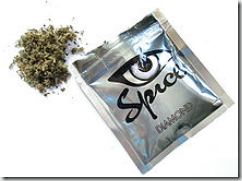
Cheap, and often readily available – usually sold as "herbal incense" or sometimes as  "herbal smoking blends"  with names like `Spice’, `K2’, or `Aroma’  – these synthetics have a growing reputation among ER doctors, and mental health professionals, as extremely dangerous drugs.


Over the summer, authorities in Denver reported at least 75 people treated in local emergency rooms due to bad reactions to `spice’, as reported in this CNN article 3 deaths may be tied to synthetic marijuana in Colorado.


Three reports today, one from yesterday’s MMWR, another on a recent study from the University of South Florida that links smoking  synthetic marijuana to a  risk of stroke in young people, and lastly an older report linking `spice’ and psychosis. 


Notes from the Field: Severe Illness Associated with Synthetic Cannabinoid Use — Brunswick, Georgia, 2013

Weekly

November 22, 2013 / 62(46);939-939

On August 23, 2013, the Georgia Poison Center was notified of eight persons examined in an emergency department in Brunswick, Georgia, after smoking or inhaling fumes from synthetic cannabinoids. The Georgia Poison Center notified the Georgia Drug and Narcotics Agency, which informed the Georgia Department of Public Health (DPH). The Brunswick emergency department was asked to report any additional patients who reported use of synthetic cannabinoid to the Coastal District Health Department. DPH investigators reviewed recent medical records of patients who had gone to the emergency department and found that 22 patients had been examined after using synthetic cannabinoids during August 22–September 9, 2013.

The 22 patients were aged 16–57 years (median: 25 years); 18 (82%) were male. Patients experienced hyperglycemia (13 [59%]), hypokalemia (nine [41%]), acidosis (seven [32%]), tachycardia (13 [59%]), nausea/vomiting (eight [36%]), confusion/disorientation (seven [32%]), aggression (seven [32%]), somnolence/unresponsiveness (seven [32%]), and seizures (three [14%]). Complications included pneumonia (two patients), rhabdomyolysis (one), and myocardial infarction (one). Six (27%) patients were admitted to the intensive care unit; five (23%) required assisted ventilation; none died. Serum from seven of the initial eight patients was tested for synthetic cannabinoid by the Clinical and Environmental Toxicology Laboratory at the University of California, San Francisco. Five tested positive for ADB-PINACA (N-(1-amino-3,3-dimethy-1-oxobutan-2-yl)-1-pentyl-1H-indazole-3-carboxamide), a previously unrecognized synthetic cannabinoid related to indole compounds recently identified in Europe and Japan (1).


Law enforcement authorities removed the synthetic cannabinoid from the implicated Brunswick smoke shop,* which sold all types of tobacco products and smoking paraphernalia. The product, "Crazy Clown," was tested by the Georgia Bureau of Investigation Crime Laboratory, which identified ADB-PINACA, an indazole classified under Georgia law as Schedule 1 on the basis of its close relationship to Schedule 1 compounds already specified. The smoke shop owners were charged on September 10, 2013, with possession of a Schedule 1 controlled substance with intent to distribute; no additional patients who used synthetic cannabinoids have been reported by the ED.

Synthetic cannabinoids are designer drugs often smoked as a marijuana alternative. Despite laws prohibiting synthetic cannabinoid sales, they are still widely available, and recent increases in reports of synthetic cannabinoid use and adverse health effects have occurred (2,3). Common adverse effects include altered mental status and tachycardia. Clinicians examining patients with suspected drug abuse and these symptoms should consider synthetic cannabinoid intoxication (4). Public health authorities can raise awareness of adverse events associated with synthetic cannabinoids and establish mechanisms for surveillance by partnering with poison centers, health-care providers, and law enforcement.


A second `Spice’ story comes this week from researches at USF, who studied a pair of siblings who both suffered ischemic strokes after smoking synthetic pot.


Case studies by USF Health neurologists link smoking “spice” with stroke in healthy, young adults

Written by Anne DeLotto Baier · November 19, 2013 @ 10:33 am · Filed under Hot News, Morsani College of Medicine, Neurosciences & Brain Repair, News Releases, Research

Tampa, FL (Nov. 19, 2013) – Add stroke to the list of severe health hazards that may be associated with smoking synthetic marijuana,  popularly known as spice or K2, a University of South Florida neurology team reports.

An advance online article in the journal Neurology  details case studies by the USF neurologists of two healthy, young siblings who experienced acute ischemic strokes soon after smoking the street drug spice.  Ischemic strokes occur when an artery to the brain is blocked.

Seizures, abnormal heart rhythms, heart attacks, psychosis, hallucinations and other serious adverse effects have been associated with smoking synthetic pot.  Medical journals have also begun to report a growing number of strokes potentially related to the use of natural (non-synthetic) marijuana.

“Since the two patients were siblings, we wondered whether they might have any undiagnosed genetic conditions that predisposed them to strokes at a young age. We rigorously looked for those and didn’t come up with anything,” said senior author W. Scott Burgin, MD, professor of neurology at the USF Health Morsani College of Medicine and director of the Comprehensive Stroke Center at Tampa General Hospital.

“To the best of our knowledge, what appeared to be heart-derived strokes occurred in two people with otherwise healthy hearts.  So more study is needed.”

(Continue . . . )


Citation:
Ischemic stroke after use of the synthetic marijuana “spice,” Melissa J. Freeman, MD; David Z. Rose, MD; Martin A. Myers, MD; Clifton L. Gooch, MD; Andrea C. Bozeman, MS, ARNP-C; and W. Scott Burgin, MD; Neurology; published online before print November 8, 2013, doi: 10.1212/01.wnl.0000437297.05570.a2


And finally, a trend that has been confirmed to me by mental health professionals, is they are increasingly seeing a link between synthetic marijuana use and the admission of patients for psychotic behavior.   This from Medscape in 2011.


Synthetic Cannabis May Pose an Even Greater Psychosis Risk

'Spice' Packs a Bigger Punch than Natural Cannabis

Deborah Brauser

December 13, 2011

December 13, 2011 (Scottsdale, Arizona) — The synthetic cannabis product known as Spice may pose a risk for psychosis in users, including those with no prior history of a psychiatric disorder, new research suggests.

A literature review, Internet sites, and even blogs spanning the past decade suggest that because it lacks the antipsychotic protective agents found in natural cannabis, Spice may pose an even greater risk of psychosis when compared with the natural product.

The results were presented here at the American Academy of Addiction Psychiatry (AAAP) 22nd Annual Meeting & Symposium.

"I would tell clinicians that when there are unexplained causes of psychosis and urine tests are coming back negative, to keep in mind that it could be caused by synthetic cannabis such as Spice," lead author Carlos Alverio, MD, a 4-year psychiatry resident from Boston University School of Medicine, Massachusetts, told Medscape Medical News.

(Continue . . . )

Tuesday, December 13, 2011

Branswell: PLoS One Study On Adverse Reactions To MMR Vaccine


# 6006


I was in the process of reading a paper on reactions following the administration of the MMR vaccine that appears this morning in the PloS One  journal (and considering blogging on it), when luckily I saw that Helen Branswell of the Canadian Press has already covered the story.


The paper can be read at:


Adverse Events following 12 and 18 Month Vaccinations: a Population-Based, Self-Controlled Case Series Analysis


Kumanan Wilson, Steven Hawken, Jeffrey C. Kwong, Shelley Deeks, Natasha S. Crowcroft, Carl Van Walraven, Beth K. Potter, Pranesh Chakraborty, Jennifer Keelan, Michael Pluscauskas, Doug Manuel


Helen’s article appears this morning on the Global News website, and so I’m going to do the smart thing and quickly step aside and let one of the best science writers in the business explain the findings.


MMR vaccine reactions fairly common at 12 months, but serious reactions rare

Helen Branswell,  Monday, December 12, 2011 9:28 PM


Global News | MMR vaccine reactions fairly common at 12 months, but serious reactions rare

Sunday, April 10, 2011

IAEA Fukushima Briefing: April 10th


# 5480


The IAEA (International Atomic Energy Agency) has just released their latest briefing, giving the status of the damaged reactors at the Fukushima Daiichi facility.


I’ve only reproduced the first section of a much longer report, follow the link to read it in its entirety.


IAEA Briefing on Fukushima Nuclear Accident (10 April 2011, 15:00 UTC)


by International Atomic Energy Agency (IAEA) on Sunday, April 10, 2011 at 8:30am

 1. Current Situation

Earthquake of 7th April

External power has been restored at all sites affected by the 7th April earthquake.  The 3 litres of water that were spilled at Onagawa NPP have been cleaned up.


Changes to Fukushima Daiichi Plant Status

Overall, the situation at the Fukushima Daiichi plant remains very serious but there are early signs of recovery in some functions such as electrical power and instrumentation.


In Units 1, 2 and 3, 60,000 tons of contaminated water need to be removed from the turbine buildings and trenches. This water will be transferred to the condensers of each unit and the Radioactive Waste Treatment facility. In addition, temporary storage tanks have been ordered to provide additional capacity for the water and will be located adjacent to the Radioactive Waste Treatment facility. In Unit 2 water transfer from the condenser to the condensate storage tank was completed on 9th April.


Nitrogen gas is being injected into the Unit 1 containment vessel to reduce the possibility of hydrogen combustion within the containment vessel. The pressure in this containment vessel is increasing due to the addition of nitrogen.


In Unit 1 fresh water is being continuously injected into the reactor pressure vessel through feed-water line at an indicated flow rate of 6 m3/h using a temporary electric pump with off-site power. In Units 2 and 3 fresh water is being continuously injected through the fire extinguisher lines at indicated rates of 7 m3/h and 7 m3/h respectively using temporary electric pumps with off-site power.


In Unit 1 the pressure in the RPV is increasing as indicated on both channels of instrumentation. NISA has indicated that some instruments in the reactor vessel may not be working properly. In Units 2 and 3 Reactor Pressure Vessel and Drywell pressures remain at atmospheric pressure.


RPV temperatures remain above cold shutdown conditions, typically less than 95°C.  In Unit 1 temperature at the feed water nozzle of the RPV is 235°C and at the bottom of the RPV is 120°C. In Unit 2 the temperature at the feed water nozzle of the RPV is 145°C. The temperature at the bottom of the RPV was not reported. In Unit 3 the temperature at the feed water nozzle of the RPV is 97°C and at the bottom of the RPV is 109°C.


The concrete pump vehicle sprayed fresh water (90 T) to the spent fuel pool in Unit 4 on 9th April.

There has been no change in status in Units 4,  5 and 6 and the Common Spent Fuel Storage Facility

(Continue . . . )


You can also view the SUMMARY OF REACTOR STATUS report HERE.


image

(Click to view)

Tuesday, May 04, 2010

Pandemics And The `Worried Well’


# 4546


Most people are highly suggestible. 


If you don’t believe that, then just let one person in a group start to yawn and see what happens with the others.   


And when the media starts talking ominously about the symptoms of a new, dreaded disease – like pandemic influenza – it isn’t unusual for people to start running through a mental check list several times a day, to see if they (or a child in their care) might be infected.


In fact, it is the most natural reaction in the world.


Nor is it necessarily a bad thing, since it is important not to expose others if you believe you might be infected.  


But if it results in unneeded panicky trips to your already overburdened Emergency Department, it can cause real problems.


Back in the 1970′s we used to see a phenomenon called the Marcus Welby Syndrome’.


For those that don’t remember, the 1970′s was a time when medical TV shows filled the airwaves. Medical Center, Emergency, and Marcus Welby, to name a few.


So strong was the power of suggestion that each week, we’d see patients come into the ER convinced they had whatever the `disease of the week’ on Marcus Welby was. 

Even when it was something rare – like Hansen’s Disease (Leprosy).


Frankly, the last place I would want to go during a pandemic outbreak is my local emergency room.  If I wasn’t infected when I got there, I’d have a pretty good shot of being exposed while I waited.


Of course, if its a true emergency, you do what you have to do. 


And in fact, I ended up in my local emergency room over Memorial Day weekend last year for a non-flu related medical emergency.


The problem comes when people who are either not sick, or who are only mildly ill and could easily care for themselves or their children at home, show up and clog emergency rooms.   


The so-called, `worried well’. 


And according to a presentation made at this week’s Paediatric Academic Societies (PAS) annual meeting in Vancouver, British Columbia, Canada – that’s exactly what happened in the lead up to the pandemic of 2009. 


Even before the flu had arrived in their community, worried parents were taking their kids to hospital emergency rooms in increasing numbers.


Here is the press release, followed by a link to the Abstract.


American Academy of Pediatrics

Fear of pandemic influenza clogs EDs even when disease is not present

Author of new study calls for responsible media coverage of public health emergencies

VANCOUVER, BRITISH COLUMBIA – A study of emergency department (ED) activity before and during the H1N1 influenza pandemic highlights the role public fear can play in unnecessarily straining medical facilities and will aid in ongoing preparations for public health emergencies, according to the authors.


When EDs experience surges in patient volumes and become overcrowded during a pandemic, the quality and timeliness of medical care suffers, noted William M. McDonnell, MD, JD, who will present study findings Tuesday, May 4 at the Pediatric Academic Societies (PAS) annual meeting in Vancouver, British Columbia, Canada.


To determine how public fear over H1N1 influenza and presence of the disease in the community affected use of a pediatric ED, Dr. McDonnell and his colleagues compared usage rates during three one-week periods. Fear week was a period of heightened public concern before the disease was present in the community. Flu week was a period of active pandemic disease. Control week was a period prior to the onset of concern.


Results showed that parents brought their children to the ED in increased numbers during fear week. Compared to the control week, the number of patients was up by 16.3 percent, and children ages 1-4 years comprised 54 percent of the increase.


When H1N1 later arrived in the community (flu week), the ED saw a second surge in patient volumes. The number of patients increased 22.4 percent compared to the control week, and children ages 5-18 years accounted for 91.7 percent of the increase.


"Our study shows that public fear of disease, even when actual disease is not present, can bring about the problems of emergency department overcrowding," said Dr. McDonnell, assistant professor of pediatrics in the Division of Pediatric Emergency Medicine and adjunct professor of law at S.J. Quinney College of Law, University of Utah. "As we continue developing our public health emergency planning programs, we must ensure that responsible news media coverage of public health issues provides the benefits of a free and vigorous press, without unnecessarily harming the public health."


You can read the abstract Here and you can follow news of the PAS meeting on Twitter at http://twitter.com/PedAcadSoc