Showing posts with label Safety. Show all posts

Tuesday, April 14, 2015

Minnesota DNR Offers Bird Flu Safety Advice To Hunters

image

Credit Wikipedia


# 9939


Although we’ve not seen any indication that any of the recently introduced (or reassorted) North American HPAI H5 viruses (H5N2, H5N8, H5N1) have the capacity to infect and sicken humans - they are related to several viruses that have a pretty nasty track record in that regard -  and so caution is being urged for anyone likely to come in contact with them.


Over the past few months we’ve seen the CDC issue guidance on both Antiviral Chemoprophylaxis For Persons With Exposure To Avian Flu  and Guidance For Testing For Novel Flu – primarily for poultry farmers and cullers who may have had exposure to the virus. Last week the CDC released a consolidated Updated Interim Guidance On Handling & Treatment Of Novel Flu Infections


While the infection risks may be small, with HPAI viruses presumably spreading in wild and migratory birds and spring hunting season opening up in some states, concerns over possible exposure to hunters taking wild game must also be addressed.


Unlike many other states (see Wild Bird Findings confirmed by USDA’s National Veterinary Services Laboratories), Minnesota has yet to report HPAI in wild birds.  But with at least 14 commercial poultry operations -scattered across nine counties - hit by the H5N2 virus, the assumption is that the virus is circulating locally in wild birds.

image

Yesterday the Minnesota DNR (Department of Natural Resources) released the following advice in advance of the opening of their spring turkey hunting season. 


news release

DNR offers guidance for turkey hunters in areas near avian flu

(Released April 13, 2015)

While avian influenza has not yet been found in wild turkeys, hunters are nonetheless reminded of ways to avoid potentially spreading the virus.

To date, highly-pathogenic avian influenza (HPAI) has been found in Cottonwood, Kandiyohi, Lac Qui Parle, Lyon, Meeker, Nobles, Pope, Stearns and Watonwan counties. So far, it has only been confirmed in domestic turkey farms. Waterfowl are the natural reservoirs for the virus.

Wild turkeys are presumed to be susceptible to HPAI. Raptors are known to be susceptible.The virus presents a low risk to humans but it is important to avoid contact with sick birds.

“Turkey hunters can take steps to minimize the risk of spreading HPAI, and they can be excellent scouts in helping identify wild birds like raptors or turkeys that could have been affected,” said Michelle Carstensen, wildlife health program supervisor with the Minnesota Department of Natural Resources.

The USDA makes the following recommendations for turkey hunters to protect themselves and their birds from avian influenza.

In the field

  • Do not harvest or handle wild birds that are obviously sick or found dead.
  • Dress your game birds in the field whenever possible.
  • Use dedicated tools for cleaning game, whether in the field or at home. Do not use those tools around your poultry or pet birds.
  • Always wear rubber gloves when cleaning game.
  • Double bag the internal organs and feathers. Tie the inner bag, and be sure to take off your rubber gloves and leave them in the outer bag before tying it closed. Place the bag in a trash can that poultry and pet birds cannot access. This trash can should also be secure against access by children, pets, or other animals.
  • Wash hands with soap and water immediately after handling game. If soap and water are not available, use alcohol wipes.
  • Wash all tools and work surfaces with soap and water. Then, disinfect them. Do not eat, drink, or smoke while cleaning game.

At home

  • If you clean a bird at home, keep a separate pair of shoes to wear only in your game cleaning area. If this is not possible, wear rubber footwear and clean/disinfect your shoes before entering or leaving the area.
  • Wash all tools and work surfaces with soap and water. Then, disinfect them.
  • Avoid cross-contamination. Keep uncooked game in a separate container, away from cooked or ready-to-eat foods.
  • You should always cook game meat thoroughly; poultry should reach an internal temperature of 165 degrees Fahrenheit to kill disease organisms and parasites.

The risk to the public is very low, and there is no food safety concern, according to the Minnesota Department of Health.

The DNR also advises hunters that if they see any birds that have died in the field or appear sick (ruffled feathers, swollen wattles, discoloration of the feet and impaired balance) notify DNR staff as soon as possible and don’t touch or attempt to move the birds.

If you see a dead or sick wild turkey or raptor, mark the location by GPS if possible and contact DNR with the coordinates. Contacts are:

  • Wildlife Health Program Supervisor Michelle Carstensen at 612-390-9979;
  • Wildlife Health Specialist Erik Hildebrand at 612-597-8141; or
  • Contact your local area wildlife manager by finding their information at www.mndnr.gov/wildlife and clicking on the area contact map.

Additional information about avian influenza is on  the DNR website at www.mndnr.gov/avianinfluenza.


Since HPAI H5 has been reported in one form or another in 15 states this winter, it is likely we’ll see variations on this theme released by other states, and by other agencies in the weeks to come.

Thursday, February 05, 2015

CDC Report On Investigation Into December’s Ebola Lab Incident

image

Credit CDC PHIL


# 9675


All in all, 2014 will go down as a difficult year for CDC labs, with several high profile lab biosafety incidents involving `select agents’, including H5N1 and anthrax last summer (see CDC Announces Another Serious Biosecurity Incident, and Ebola in December (see CDC Reports Potential Ebola Exposure At Lab).


`Select agents’ are those  pathogens that have been deemed to pose a significant biological hazard, and among those, Tier 1 select agents are considered `biological agents and toxins present the greatest risk of deliberate misuse with significant potential for mass casualties or devastating effect to the economy, critical infrastructure, or public confidence, and pose a severe threat to public health and safety:’


While obviously of concern, in all of these incidents the biohazard was contained, and no one ended up being infected. In August, in CDC H5N1 Incident & Lab Safety Progress Reports, we looked at some of the steps being taken by the CDC to increase lab safety and foster a greater `culture of safety’.


But, as we learned on Christmas Eve (see CDC Statement On Ebola Lab Incident), whenever you mix complex systems with human foibles, errors can still occur.  Even in the best of labs.

Last night the CDC released the following report on that incident:


CDC Releases Report on Recent Lab Incident

CDC review shows unlikely exposure, makes recommendations for continued safety improvements

For Immediate Release: Wednesday, February 4, 2015
Contact:
Media Relations, Office of Communication
(404) 639-3286

The Centers for Disease Control and Prevention (CDC) has completed an internal investigation of an incident that occurred in December within the agency’s Ebola virus laboratory, which resulted in no illness and was unlikely to have involved an exposure to live Ebola virus.  CDC’s investigation found that this laboratory incident occurred for two main reasons related to inadequate safeguards: 1) lack of a written study plan that had been approved by a supervisor; and 2) a study plan workflow that was not designed to sufficiently minimize the possibility that human error could result in potential exposure. CDC had already taken many steps to improve safety and will take additional steps as a result of this review. 

In December, CDC reported that a small amount of material from an experiment that was part of an Ebola virus study was securely transported from a select‐agent‐approved BSL‐4 lab to a select‐agent‐approved BSL‐2 lab and may have contained live virus. The material mistakenly transferred during procedures for this study was on a sealed plate but should not have been moved from the BSL-4 laboratory into the BSL‐2 laboratory.  The study involved scientists placing identical oral swab samples from guinea pigs into two sets of tubes—one set of tubes for live virus studies and one set of tubes for studies with inactivated material.  The tubes were identical in brand and size and only differentiated by color caps and labels. Appropriate and approved inactivation procedures, consistent with recently implemented laboratory safety improvements, were used. Unfortunately, however, human error resulted in the swabs being placed into tubes in such a way that another technician mistakenly transported the wrong specimens to the BSL-2 lab.

The report also describes two previous recommendations that had not yet been fully implemented in this lab that could potentially have reduced the likelihood of this incident:  1) installation of a camera system for secondary verification of critical safety control points; and 2) proper use of a required Material Transfer Certificate (MTC) form for materials taken out of CDC’s high containment laboratories to lower biosafety level laboratories, including internal transfers.

CDC’s investigation found that immediate steps were taken to minimize any risk to CDC lab staff and that this incident was reported to appropriate authorities in a timely manner.  In addition, the involved BSL-4 lab has suspended transfers out of the lab until a full review of the incident is completed and appropriate improvements are initiated. CDC is currently installing camera systems in the BSL-4 laboratory and providing clear instructions on the intended use of the MTC form prior to resuming full BSL-4 operations.

The laboratory technician who worked directly with the specimens in the BSL-2 laboratory completed 21 days of direct active monitoring and reported no illness consistent with Ebola.  The agency performed additional laboratory studies on swabs taken the workdays before and after the incident which found it was unlikely that the specimens transferred to the BSL-2 laboratory contained live Ebola virus.  Although the studies determined there was no safety risk to CDC staff or the public, CDC will ensure continuous improvements occur to protect the safety of CDC staff and the broader community.

Among steps CDC is taking or has taken to address this incident:

  • Enhance standard operating procedures for materials intended for inactivation and removal from laboratories to ensure that
    • All materials are in standard, appropriately labeled, easily distinguishable tubes. 
    • Multiple, redundant visual safeguards are used.
  • Ensure CDC scientists have a full understanding of previously recommended laboratory safety improvements, including required use of the MTC form, and that they implement them.
  • Work with CDC scientists from high containment laboratories to establish a peer-review system of written research plans to foster critical thinking on how to optimize workflows in protocols and minimize error.

While the incident described in this report highlights the need for continued enhancements to laboratory safety practices across the agency, CDC has made progress in this area over the past several months. Examples include:

  • Established and recruiting for a new position, the Associate Director for Laboratory Science and Safety, with responsibility for providing agency-wide leadership and accountability for laboratory science, safety, and quality. 
  • Worked with laboratory staff and laboratory leadership to identify other safety improvement measures, including expansion of biosafety training and improvements in research standards and protocols. 
  • Undertaken an inventory of all stored biologic materials.
  • Formed an external laboratory safety working group, under the Advisory Committee to the Director, composed of experts in biosafety and related areas to review and provide input into corrective actions and safeguards across all CDC laboratories.

CDC leaders have expressed their disappointment and have repeatedly stressed the importance of minimizing any potential risk to staff.  CDC’s efforts to improve lab safety are essential—with the safety of employees as the highest priority.  The expertise and world-class knowledge that CDC scientists bring to laboratory work is vital and, while lab work will always carry some risk, it is crucial to saving lives and preventing disease.  CDC is committed to ongoing efforts to identify and implement systems and procedures that will allow the agency to provide maximum protections for laboratory staff and the broader community while conducting its critical laboratory work.

Please see CDC’s laboratory safety site for the full report


Although the CDC’s labs are undoubtedly among the safest in the world, these and other high profile lab incidents (see FDA Statement On Additional 300 Vials Discovered At NIH Campus Lab) have led to numerous calls for greater oversight on the use of select agents, and some restrictions on the type of research that should be permitted. 


The Journal Nature Weighs In On Lab Accidents & Biosafety

Thebulletin.org: Making Viruses Deadlier – An Accident Waiting To Happen.


While scientists engaged in this type of work insist that the risks are negligible (see Scientists For Science: GOF Research `Essential’ & Can be Done `Safely’), many others  (see Updating The Cambridge Working Group) are less convinced.


Some earlier blogs on this highly contentious debate include:


mBio: The Risks & Benefits Of `GOF’ Experimentation On Pathogens With Pandemic Potential

The Laboratory Bio-Safety Backlash Continues

ECDC Comment On Gain Of Function Research

Lipsitch & Galvani: GOF Research Concerns

Friday, August 15, 2014

CDC H5N1 Incident & Lab Safety Progress Reports

image

Transferring H7N9 Into Vials – Credit CDC


# 8959


In the wake of two serious lapses in biosecurity at CDC labs involving both anthrax and H5N1 avian flu CDC Director Dr. Thomas Frieden  promised a complete review of their safety procedures. One of his first actions was to halt the transfer of highly infectious agents from high containment labs until a safety review could be conducted.


In late July, the CDC issued a Statement On Formation Of An External Lab Safety Workgroup, and on the same day announced  New safety protocols in place, first CDC lab resumes transfer of inactivated materials out of high-containment laboratory.


Over the past month seen a good deal of editorializing on the problems of lab safety at the CDC and elsewhere, including in The Journal Nature Weighs In On Lab Accidents & Biosafety & The Laboratory Bio-Safety Backlash Continues, and in testimony before a House Subcommittee.


Today the  CDC has released a progress report on their efforts to get to the bottom of these incidents and improve laboratory safety, along with an internal review of the H5N1 cross-contamination.


For Immediate Release: Friday, August 15, 2014
Contact:
Media Relations
(404) 639-3286

CDC Progress on Laboratory Safety

The Centers for Disease Control and Prevention today released a series of updates and actions taken showing its progress in laboratory safety. CDC reported on its response to the Animal and Plant Health Inspection Service’s (APHIS) Agricultural Select Agent Program’s (ASAP), part of the U.S. Department of Agriculture, summary of findings on the anthrax incident. CDC also reported findings of an internal CDC investigation on the H5N1 flu lab incident, and actions taken in response to findings of both the APHIS and CDC investigations into the H5N1 incident.

“CDC is working intensively to make our labs to be models not only of scientific rigor but also of safety," said CDC Director Tom Frieden, M.D., M.P.H.  “We will implement changes identified in these reviews – and more – so that we can continue the critical laboratory science needed to protect health in the US and around the world.”


Internal report on H5N1 flu lab incident


(Continue . . . .)


This from the H5N1 lab incident executive summary.


What Happened


CDC’s Influenza Division (ID) laboratories had received the H9N2 and H5N1 virus samples as part of ongoing surveillance of human and animal influenza viruses. The virus samples were grown in cell culture and stored for future use. In response to a request from the U.S. Department of Agriculture (USDA), Southeast Poultry Research Laboratory (SEPRL), an aliquot of the H9N2 virus was sent from an ID laboratory to SEPRL on March 12, 2014. Since the H9N2 strain is not a select agent and the ID laboratory was unaware that it had been contaminated, select agent transfer procedures were not followed. On May 23, 2014, SEPRL notified CDC that it had identified an HPAI H5N1 virus (a select agent) in the H9N2 sample. The ID laboratory subsequently confirmed the contamination but did not notify the supervisory chain of command, including branch, division, center, and CDC leadership. The incident was reported to the CDC internal select agent program and to CDC management on July 9, 2014.


Why the Incident Happened

Contamination of the LPAI H9N2 virus culture with the HPAI H5N1 virus occurred at a CDC BSL3-E influenza laboratory. The contamination most likely happened due to the failure of a laboratory scientist to adhere to established best practices and the absence of an approved laboratory team-specific standard operating procedure (SOP) for the work being done. Although several factors contributed to the delay in reporting the incident, the primary factors were 1) a lack of sound professional judgment by those aware of the contamination; and 2) insufficient or ambiguous select agent and institutional reporting requirements. For example, guidance documents from the Federal Select Agent Program and from the CDC internal select agent program do not describe reporting of an unauthorized transfer of a select agent as required reporting of a release.

What Has CDC Done Since the Incident Occurred

In response to this specific incident, CDC has taken the following steps:

  • Conducted an internal review (described in this report)
  • Closed the laboratory involved until enhancements to safety and security can be implemented
  • Included this laboratory in the CDC-wide moratorium on any biological material leaving any CDC BSL-3 or BSL-4 laboratory until adequate, additional approved safety measures are shown to be in place
  • Notified USDA’s Animal and Plant Health Inspection Service (APHIS), which has since conducted an investigation and issued a report on the incident

These specific actions are in addition to broader actions recently undertaken by CDC to improve overall lab safety and security agency-wide. These broad actions include

  • The appointment of a CDC Director of Laboratory Safety to serve as the single point of accountability to improve all laboratory safety protocols, practices, and procedures
  • The establishment of an internal Biosafety Working Group under the direction of the CDC Director of Laboratory Safety
  • The establishment of an external advisory group on biosafety comprising leading scientists and biosafety experts, which will serve as a work group of the Advisory Committee to the CDC Director
  • A review of policies and procedures for laboratory safety and security in all CDC BSL-3 and BSL-4 laboratories

What Additional Steps Are Recommended Moving Forward

Additional recommendations include the following:

  • Reassess all CDC laboratory procedures related to H5N1 and other HPAI viruses, including how and where this work is done at CDC and how it relates to CDC’s mission
  • Develop written, approved policies and procedures to ensure that cross contamination of influenza viruses does not occur in the future
  • Institute comprehensive quality control measures across all CDC laboratories through the performance of exclusivity testing of materials (i.e., testing to exclude the presence of other organisms) before transfer to internal and external laboratories. Materials should be accompanied by a written certificate of analysis that describes the tests and methods used.
  • Broaden exclusivity testing of incoming samples to ensure the safety of laboratory scientists who work with the samples and their derivatives. For the near term, due to technologic constraints, such testing will likely be limited to agents of highest concern based on the likelihood or seriousness of their presence.
  • Ensure that all ID staff are appropriately trained to understand when biosafety events are reportable and to whom they should be reported (both for select agents and non-select agents), and, more broadly, ensure that all CDC laboratory scientists receive such training. A site-specific SOP for event notification should be in place in each laboratory.
  • Institute personnel actions as appropriate

            Despite an impressively detailed `after-action’ review of the events leading up to biosafety lapse, due to a variety of factors, the exact point of cross-contamination has not been conclusively established.


            The entire 16 page report is quite illuminating, shows just how complex the issues are when working in high containment facilities, and is well worth reading in its entirety.  

            Tuesday, July 29, 2014

            The Journal Nature Weighs In On Lab Accidents & Biosafety

            image


            # 8890


            In the wake of revelations regarding laboratory safety lapses both at the FDA and the CDC involving `select agents’ including anthrax, smallpox, and H5N1 avian influenza, and the ongoing Debate Over Gain Of Function research, we are seeing agencies, scientific journals, universities, politicians, consultants, newspaper editorial boards, scientific working groups, and individual scientists all publicly staking out their positions on these issues.


            A little over two weeks ago, the Cambridge Working Group produced a consensus statement, which urges caution, and better regulation and oversight of laboratory research seeking to enhance the virulence, transmissibility, or host range of pathogens with pandemic potential (PPPs).


            While just yesterday, the newly formed coalition Scientists for Science, posted a statement of their own, that called their work `essential’ and dismissed many of the concerns being raised over GOF research as being overstated.


            Not everyone is convinced, however, as evidenced by last week’s ECDC Comment On Gain Of Function Research, which acknowledged the potential public health risks that these types of experiments can pose, and proposed that the overriding concern of researchers should be first, and foremost  `to do no harm.’


            Today the Journal Nature has two articles on Laboratory safety standards (or the lack thereof).  First an article by Declan Butler, on the lack of universal, and consistent standards for laboratories conducting work on potentially dangerous pathogens.


            Biosafety controls come under fire

            Experts call for a stronger safety culture at secure sites after incidents involving anthrax and flu in a US laboratory.

            Declan Butler

            29 July 2014

            Recent accidents involving deadly pathogens at a leading laboratory in the United States highlight the need for a major global rethink of biosafety controls, experts say.

            The Centers for Disease Control and Prevention (CDC) in Atlanta, Georgia, reported two accidents involving anthrax and the deadly H5N1 influenza virus. Biosafety professionals argue that such incidents show that without a strong culture of biosafety, even highly secure facilities are susceptible to errors that could place workers and the public at risk.

            (Continue . . . )


            A second report, this time an editorial, suggests that lab accidents such as the ones making headlines this summer happen far more often than are ever reported, and calls for full transparency.


            Safety doesn’t happen by accident

            To create a strong biosafety culture, information on mishaps involving deadly pathogens must be reported and shared fully and transparently.

            (Continue . . .)

            Thursday, July 24, 2014

            CDC Statement On Formation Of An External Lab Safety Workgroup

            image

            Credit CDC PHIL


            # 8864


            In the wake of two serious breaches in biosecurity at CDC labs involving anthrax and H5N1 avian flu, and a third incident involving long forgotten and improperly stored smallpox at an FDA lab  (see FDA Statement On Additional 300 Vials Discovered At NIH Campus Lab), the CDC has promised a complete review of their safety procedures. 


            Earlier in the week CDC Director Thomas Frieden indicated an external committee of experts would be formed.  Today, the CDC has posted the following announcement, whereby eleven outside experts will provide advice and guidance to the CDC’s new Director of Laboratory Safety.


            In a related story, the CDC also released an announcement on the lifting of the moratorium on shipping inactivated TB samples out of one of their CDC’s Clinical Tuberculosis Laboratory after completing  a safety review (see New safety protocols in place, first CDC lab resumes transfer of inactivated materials out of high-containment laboratory).


            CDC announces the formation of an external laboratory safety workgroup

            CDC announced today the formation of an external laboratory safety workgroup of the Advisory Committee to the Director of CDC. This group will provide advice and guidance to the CDC Director and CDC’s new Director of Laboratory Safety. The specific charge and functions of the workgroup include, but are not limited to:

            • Reviewing and providing input into corrective actions for CDC’s laboratories. These include actions identified by the U.S. Department of Agriculture’s Animal and Plant Health Inspection Services and CDC’s Office of the Associate Director for Science following investigations conducted in response to the June 2014 transfer of potentially viable Bacillus anthracis from a CDC BSL-3 facility to CDC BSL-2 facilities; actions identified in follow up to an inadvertent shipment of an H5N1 influenza-containing laboratory specimen to an external BSL-3 laboratory; and other necessary actions identified through ongoing procedural reviews.
            • Prioritizing implementation of additional safeguards across all CDC laboratories.
            • Identifying potential weaknesses and necessary safeguards based on experiences of non-CDC (e.g., private and/or academic) laboratories.
            • Identifying training and oversight needs to promote and sustain a culture of laboratory safety at CDC.
            • Identifying ways to provide stronger safeguards for laboratories across the United States.
            • Examining HHS lab protocols and reporting to the Secretary through the ACD on:
              • Whether current biosafety and biosecurity rules, processes, and procedures are appropriate.
              • Whether implementation or execution of the current protocols is adequate.
              • Recommendations for improving these protocols or their implementation.

            The group is set to meet for the first time in early August and will meet as frequently as needed.

            image 

            (Continue . . . . )


            Saturday, July 12, 2014

            Kansas DHE Reports Naegleria Fowleri Fatality

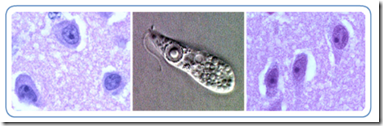
            image

            L & R: Trophozoites of N. fowleri in brain tissue, stained with H&E.

            Center: Ameboflagellate trophozoite of N. fowleri. Credit: DPDx


            # 8828


            Of the many and varied infections reported in North America each year, Naegleria Fowleri is among the rarest, and almost certainly one of the deadliest, that we know of.  Sometimes called the `brain eating amoeba’ in the media, this parasite lurks in warm, often stagnant fresh water, and is usually responsible for 2 or 3 infections every summer.


            Just last month the CDC held a COCA Call On Naegleria Fowleri & Cryptosporidium for clinicians, with guidance on a new investigational drug called miltefosine, which – for the first time on record -  was used to successfully treat a victim of  PAM or Primary amebic meningoencephalitis last summer (see MMWR: CDC Imports Investigational Drug For Amoebic Infections).


            Although infections usually occur while swimming in warm, freshwater lakes and streams, last year we saw a 4 year-old infected in Louisiana, through contact with the municipal water supply. Subsequently we saw the St. Bernard Parish Water Supply Tests Positive For Naegleria Fowleri, which prompted an increase in chlorination.


            Also, in 2011 we saw a new wrinkle when 2 people in Louisiana became infected through the introduction of tap water into their sinuses using a neti pot. These incidents caused the Louisiana Health Department to recommend that people `use distilled, sterile or previously boiled water to make up the irrigation solution’ (see Neti Pots & Naegleria Fowleri).

            Is Rinsing Your Sinuses Safe? - (JPG)

            Photo Credit FDA


            The bottom line is that after introduction of this Free Living Amoeba (FLA) into the nasal passages, it makes a direct bee line to the brain, usually with tragic results. Yesterday, the State of Kansas announced the death of a 9 year-old girl (see local media report) from PAM, although the exact route of exposure is uncertain.

            FOR IMMEDIATE RELEASE


            July 11, 2014

            KDHE Office of Communications
            communications@kdheks.gov, 785-296-0461

            Fatal Primary Amoebic Meningoencephalitis (PAM) Case Reported

            TOPEKA, Kan. - Kansas Department of Health and Environment has been notified of a fatal case of primary amoebic meningoencephalitis (PAM) caused by Naegleria fowleri, a free-living amoeba found in freshwater, in a resident of Johnson County. The investigation indicates there were several potential fresh water exposures in Kansas, so the actual source of the infection cannot be determined.

            Initial laboratory examination has identified the presence of Naegleria fowleri in a specimen from the patient, and additional laboratory testing by the U.S. Centers for Disease Control and Prevention is pending. This is the second known case of PAM caused by Naegleria fowleri in Kansas. The first case occurred in 2011.

            Naegleri fowleri can be found in freshwater environments around the world, but infection causing PAM is extremely rare. From 1962 to 2013, there have been 132 cases reported in the United States, with 34 of those cases occurring from 2004 to 2013. Most cases have occurred in southern-tier states. The risk of infection is very low, but increases during the summer months when water temperatures rise and more people participate in water-related activities. The infection typically occurs when the amoeba enters the body through the nose while the person is swimming underwater or diving and travels to the brain.

            “We are very saddened to learn of this unfortunate circumstance, and our thoughts and prayers are with the family and friends during this difficult time,” said Robert Moser, MD, KDHE Secretary and State Health Officer, “It is important for the public to know that infections like these are extremely rare and there are precautions one can take to lower their risk – such as nose plugs.”

            Symptoms usually appear about five days after infection, but can range between one and seven days, and include headache, fever, nausea and vomiting, stiff neck, confusion, lack of attention to people and surroundings, loss of balance and bodily control, seizures, and hallucinations. This infection cannot be spread from person to person or contracted from a properly maintained swimming pool.

            Though the risk of infection is extremely low, the following precautions might decrease the possibility of infection:

            • Hold your nose shut, use nose clips, or keep your head above water when taking part in water-related activities in bodies of warm freshwater.
            • Avoid putting your head under the water in hot springs and other untreated thermal waters.
            • Avoid water-related activities in warm freshwater during periods of high water temperature.
            • Avoid digging in, or stirring up, the sediment while taking part in water-related activities in shallow, warm freshwater areas.

            There is no known way to control the occurrence of Naeglaria fowleri in freshwater lakes and rivers.

            For more information on healthy swimming visit the CDC website at http://www.cdc.gov/healthyswimming/.


            Naegleria infection happen almost anywhere, but in the United States is most common in the warmer southern states. Every year the State of Florida issues warnings to people on how to avoid this rare, but deadly, parasite.  Here the Florida Department of Health offers some additional common sense safety advice on how to avoid this parasite.

            image

            Photo Credit – Florida DOH

            For more information on the Naegleria parasite, you can also visit the CDC’s Naegleria webpage.

            Tuesday, July 01, 2014

            AAP: Systemic Review Finds Childhood Vaccines Very Safe (Again)

            image


            # 8798


            The American Academy of Pediatrics (AAP) has announced today the early findings of a new systemic review of childhood vaccine safety research that will hopefully be reassuring to parents who still harbor concerns over vaccine safety. 


            While no medicine – including vaccines – are 100% benign, or are without the risk of rare adverse effects, childhood vaccines have an enviable safety record. Something that this study proves out again.


            First the press release from the AAP, then I’ll have a bit more.

            Systematic Review of Vaccine Safety May Allay Parents' Concerns

            7/1/2014
            For Release: July 1, 2014

            A systematic review of research on vaccine safety, published online July 1 in Pediatrics, updates a 2011 Institute of Medicine (IOM) report on the safety of vaccines recommended for children aged six years and younger. The study, "Safety of Vaccines Used for Routine Immunization of U.S. Children: ASystematic Review," to be published in the August 2014 Pediatrics, is part of a larger report on the safety of vaccines for adults, adolescents and children requested by the Agency for Healthcare Research and Quality.

            Researchers from the RAND Corporation conducted a systematic review of the evidence published since the IOM report on vaccines for children under age 6, including DTaP (diphtheria, tetanus and acellular pertussis), hepatitis A, hepatitis B, influenza, meningococcal, MMR (measles, mumps and rubella), and varicella vaccines. The report also reviews the evidence on several childhood vaccines that were not studied in the 2011 IOM report, including Haemophilus influenza type b (Hib), pneumococcal, rotavirus, and inactivated poliovirus vaccines. The evidence is strong that MMR vaccine is not associated with autism, which is consistent with previous reviews on the topic. Researchers also identified strong evidence that MMR, DTaP, Td (tetanus), Hib and hepatitis B vaccines are not associated with childhood leukemia.

            Studies did show an association of several serious adverse events with vaccines, but these events were very rare, such as intussusception after rotavirus vaccine. Researchers conclude the findings may allay concerns of some parents about vaccine safety.


            The internet, and Hollywood, are filled with self-proclaimed experts claiming – despite all evidence to the contrary – that childhood vaccines cause autism.  And sadly, for some percentage of the population – who already distrust `big pharma’ -that message has stuck.


            The real dangers come from the diseases that these vaccines are designed to prevent.


            Just last week we saw a report  (see California DPH: Whooping Cough Epidemic Continues) on the resurgence of  a vaccine preventable disease that was all but wiped out in this country 30 years ago. But Pertussis is back with a vengeance – in part – due to a reluctance of parents to get their kids vaccinated. 


            Similarly, we saw in late May from a CDC Telebriefing: Worst US Measles Outbreak In 20 Years, that this childhood scourge – declared eliminated 14 years ago in the United States – is raging once more:  This from Dr. Anne Schuchat, of the CDC:


            The current increase in measles cases is being driven by unvaccinated people, primarily U.S. residents, who got measles in other countries, brought the virus back to the United States and spread to others in communities where many people are not vaccinated.”

            image


            For those who may be convinced that measles is a `harmless’ childhood illness, we get this little factoid from the CDC:


            About 30% of measles cases develop one or more complications, including

            • Pneumonia, which is the complication that is most often the cause of death in young children.
            • Ear infections occur in about 1 in 10 measles cases and permanent loss of hearing can result.
            • Diarrhea is reported in about 8% of cases.

            These complications are more common among children under 5 years of age and adults over 20 years old.

            Even in previously healthy children, measles can be a serious illness requiring hospitalization. As many as 1 out of every 20 children with measles gets pneumonia, and about 1 child in every 1,000 who get measles will develop encephalitis. (This is an inflammation of the brain that can lead to convulsions, and can leave the child deaf or mentally retarded.) For every 1,000 children who get measles, 1 or 2 will die from it. Measles also can make a pregnant woman have a miscarriage, give birth prematurely, or have a low-birth-weight baby.


            Frustratingly, this push back against childhood vaccines also extends to the yearly flu shot for adults (including pregnant women), which based on some of the research we’ve seen, may actually help reduce the incidence of autism and other developmental diseases in children.


            These studies are admittedly small and less than conclusive, and while they suggest an increase in relative risk over pregnancies without fever or viral infection – in terms of absolute riskthe odds that a mother’s fever or viral infection during pregnancy would result in a developmentally challenged child remains low. 


            Maggie Fox, writing for NBC News, has the story from the AAP as well (Yes, Childhood Vaccines Are Safe, Review Finds)


            For more on the safety of vaccines, you may wish to revisit:


            JPeds: Autism NOT Linked To Timing & Number Of Childhood Vaccines
            IOM Report On Vaccine Safety Concerns

            Thursday, June 26, 2014

            Lightning Safety Awareness Week June 22nd - 28th

            image

            Credit NOAA 


            # 8786


            One of the indelible lessons I learned as a young paramedic – working as I did in the lightning capital of North America (Tampa Bay) – was the absolute folly of standing on wet grass, while wearing steel spiked shoes (this was in 1973 or 1974), and then hoisting a metal rod above one’s head on a hot, humid, and overcast summer’s day.


            Poor Charlie (or whatever his name was), undoubtedly never saw it coming.  


            But he probably should have, as every year lightning claims several dozen lives in the United States, and injures hundreds more, often in open spaces like golf courses and beaches. 


            While Florida leads the nation in Lightning deaths each year, there really isn’t anywhere you can go in North American that is immune.

            image

            Credit Vaisala Inc.


            Fatalists who think that if lightning gets them, they’ll never know it, should understand that only about 10% of those struck by lightning each year die. Among those that survive, many experience serious, and sometimes life long injury or disability.

             image

            This week NOAA is promoting  Lightning Safety Awareness Week: June 22-28, 2014. Below you’ll find links to some of their information.


            Summer is the peak season for one of the nation's deadliest weather phenomena--lightning. Though lightning strikes peak in summer, people are struck year round. In the United States, an average of 51 people are killed each year by lightning, and hundreds more are severely injured.

            when thunder roars go indoors sign

            Safety: Learn what you need to do to stay safe when thunderstorms threaten.

            Description: Side Flash.JPG

            Victims: Learn what happens to people who are struck by lightning and look at fatality statistics for the U.S.

            animation of Charged Cloud

            Science: Learn how thunderstorms develop and what happens during a lightning discharge.

            lightning


            Myths and Facts: Get answers to many of the questions you have always wondered about

            LeonthelightningLion


            Teachers: find curriculum guides, presentations games, activities, and more. Kids: Download games, videos, coloring pages and other fun stuff.
            publications and other resources
            More Resources: Download toolkits, posters, pamphlets, and other information to help communities, organizations, and families stay safe from the dangers of lightning

            Follow us on TwitterFollow us on Twitter
            Follow us on FacebookFollow us on Facebook

            Thursday, June 05, 2014

            Naegleria Fowleri: Rare, Deadly & Avoidable

            image

            Credit CDC


            # 8710


            While exceedingly rare in the United States, nearly every summer we hear of one or two (almost always fatal) infections with Naegleria Fowleria, the so-called `brain eating amoeba’.  Last year, in  mid-August (see Florida Reports Naegleria fowleri Infection) we learned of an 12-year-old boy with the infection, and in July (see Arkansas: Naegleria fowleri Shuts Water Park) the victim was a 12-year-old girl.


            Although most infections occur while swimming in warm, freshwater lakes and streams, last year we saw a 4 year-old infected in Louisiana, through contact with the municipal water supply. Subsequently we saw the  St. Bernard Parish Water Supply Tests Positive For Naegleria Fowleri, which prompted an increase in chlorination.


            Although usually only a danger to swimmers, in 2011 we saw a new wrinkle when 2 people in Louisiana became infected through the introduction of tap water into their sinuses using a neti pot. These incidents caused the Louisiana Health Department to recommend that people `use distilled, sterile or previously boiled water to make up the irrigation solution’ (see Neti Pots & Naegleria Fowleri).

            Is Rinsing Your Sinuses Safe? - (JPG)

            Photo Credit FDA


            The bottom line is that after introduction of this Free Living Amoeba (FLA) into the nasal passages, it makes a direct bee line to the brain, where is causes PAM (Primary Amebic Meningoencephalitis).  Up until recently, there was little that could be done for someone infected, and the illness was almost always fatal.  


            Last year, however, the CDC announced:


            Clinicians: CDC now has an investigational drug called miltefosine available for treatment of free-living ameba (FLA) infections caused by Naegleria fowleri, Balamuthia mandrillaris, and Acanthamoeba species. If you have a patient with suspected FLA infection, please contact the CDC Emergency Operations Center at 770-488-7100 to consult with a CDC expert regarding the use of this drug.

            Although most cases of primary amebic meningoencephalitis (PAM) caused by Naegleria fowleri infection in the United States have been fatal (129/132 in the U.S., 1), there have been four well-documented survivors in North America: one in the U.S. in 1978 2, 3, one in Mexico in 2003 4, and two additional survivors from the U.S. in 2013. It has been suggested that the original U.S. survivor’s strain of Naegleria fowleri was less virulent, which contributed to the patient’s recovery. In laboratory experiments, the original U.S. survivor’s strain did not cause damage to cells as rapidly as other strains, suggesting that it is less virulent than strains recovered from other fatal infections 5.


            Remarkably, after 35 years without seeing a survivor in the United States, last year two children survived this infection. The CDC describes their outcomes:


            The first, a 12-year-old girl, was diagnosed with PAM approximately 30 hours after becoming ill and was started on the recommended treatment within 36 hours. She also received the investigational drug miltefosine 6-8 and her brain swelling was aggressively managed with treatments that included cooling the body below normal body temperature (therapeutic hypothermia). This patient made a full neurologic recovery and returned to school. Her recovery has been attributed to early diagnosis and treatment and novel therapeutics including miltefosine and hypothermia.

            A second child, an 8-year-old male, is also considered a PAM survivor, although he has suffered what is likely to be permanent brain damage. He was also treated with miltefosine but was diagnosed and treated several days after his symptoms began. Cooling of the body below normal body temperature was not used.


            Naegleria infection happen almost anywhere, but in the United States is most common in the warmer southern states. Every year the State of Florida issues warnings to people on how to avoid this rare, but deadly, parasite. 


            This from the Florida DOH.


            FOR IMMEDIATE RELEASE         Contact: Communications Office


            June 4, 2014                  (850) 245-4111


            THE FLORIDA DEPARTMENT OF HEALTH REMINDS RESIDENTS OF THE DANGERS OF NAEGLERIA FOWLERI

            TALLAHASSEE -The Florida Department of Health cautions those who swim frequently in Florida’s lakes, rivers and ponds during warm temperatures about the possible presence of  Naegleria fowleri. Contact with this amoeba is rare, but the organism targets a person’s brain and usually results in death. Adverse health effects on humans can be prevented by avoiding nasal contact with the waters, since the amoeba enters through the nasal passages. Though there are only 34 reported casesin Florida since 1962, Naegleria fowlerican cause Primary Amebic Meningoencephalitis(PAM) disease which usually leads to death once infected.  As a precaution, health officials recommend the following:

            • Avoid water-related activities in bodies of warm freshwater, hot springs and thermally polluted water such as water around power plants.
            • Avoid water-related activities in warm freshwater during periods of high water temperature and low water levels.
            • Hold the nose shut or use nose clips when taking part in water-related activities in bodies of warm freshwater such as lakes, rivers, or hot springs.
            • Avoid digging in or stirring up the sediment while taking part in water-related activities in  shallow, warm freshwater areas.
            • Please note exposure to the amoeba may also occur when using neti pots to rinse your sinuses of cold/allergy-related congestion or conducting religious rituals with tap water.
            • Use only boiled and cooled, distilled, or sterile water for making sinus rinse solutions for neti pots or performing ritual ablutions.

            If you experience any of these symptoms after swimming in any warm body of water, contact your health care provider immediately:headache, fever, nausea, disorientation, vomiting, stiff neck, seizures, loss of balance, or hallucinations. It is essential to seek medical attention right away, as PAM usually becomes fatal within five days of exposure.

            Remember, this disease is rare and effective prevention strategies can allow for a safe and relaxing summer swim season.


            For more information on the Naegleria parasite, you can also visit the CDC’s Naegleria webpage.

            Friday, October 25, 2013

            NIOSH Webinar: Debunking N95 Myths


            image


            #7901


            Roughly 20 million Americans use respirators as part of their work, yet there remain some common myths over how to properly use these protective devices.  We’ve discussed N95 respirator use and safety in the past (see Survival Of The Fit-tested) and the uncertain protective qualities of surgical masks (see The Great Mask Debate Revisited).


            On September 5th, 2013 in NIOSH: 9/5 Is N95 Day, I wrote about a NIOSH (National Institute for Occupational Safety & Health) webinar on Debunking the Myths Regarding N95 Respirator Use.   For those who were unable to watch live, NIOSH has posted a 1 hour video of the presentation, along with the slides, on their website:


            Debunking the Myths Regarding N95 Respirator Use - Thursday, September 5, 2013

            View the video recording of this webinar [92.5.2M]External Web Site Icon

            View the slide presentation of this webinar  [PDF - 2.7M]External Web Site Icon


            This presentation covers 10 major myths regarding N95s, plus a lot more.  


            The infographic below comes from the NIOSH Science Blog Happy N95 Day! A Guide to N95 Resources by Jaclyn Krah, MA.  You’ll find a wealth of additional information in this blog post, including links to NIOSH Safety Videos and OSHA Respiratory Protection Training Videos.

            image

            Thursday, June 27, 2013

            New Scientist: Don’t Stop Stockpiling Tamiflu

            image


            UPDATED :  My thanks to Debra MacKenzie  for her comment, and link to New Scientist article from last week (Evidence that Tamiflu reduces deaths in pandemic flu) that adds even more evidence of the value of oseltamivir in severe, or complicated, influenza infection.


            # 7430


            There’s a short opinion piece appearing in the New Scientist today that implores governments to ignore the side-bar controversies over Roche’s release of clinical trials, and continue to stockpile (and replace) their Tamiflu ® (oseltamivir) supplies.


            Don't stop stockpiling Tamiflu

            • 27 June 2013

            SHOULD countries continue to stockpile the flu drug Tamiflu in case there is a pandemic? Until now many governments have been happy to do so. But as stockpiles reach their "replace by" dates, cash-strapped politicians may be having second thoughts.


            Their uncertainty may be being fuelled by a campaign against Tamiflu (oseltamivir), motivated by the entirely reasonable beef that manufacturer Roche has not released all of its clinical trial data.

            (Continue . . . )


            The stockpiling and use of oseltamivir (Tamiflu) has engendered a good deal of controversy over the past decade, but it is only partially deserved. Over the years Its value has been questioned by Cochrane meta-studies, medical journals, conspiracy theorists, pundits, and the press.


            Roche Pharmaceuticals has been justifiably criticized for their past refusals to release all of the testing data on their best selling antiviral drug, and that has led to critical editorials in the BMJ, and excoriation in the British press.


            We’ve seen media reports of aberrant psychiatric behavior in adolescents taking the drug (see 2007 New Worries On Tamiflu), and there’s been a paucity of `gold standard’ Randomized control trials (RCTs) proving its effectiveness.


            Yet, despite these negatives, there is plenty of evidence to suggest that Tamiflu does work, that it can be lifesaving with severe influenza, and that the risks of side effects have been overstated.


            Which is why the CDC continues to recommend its use – particularly for high-risk influenza patients - or for the treatment of novel flu (see  The CDC Responds To The Cochrane Group’s Tamiflu Study).


            Regardless of one’s feeling about `Big Pharma’, the money they have made, or their parsimonious dispersal of clinical trial data, there are really only two factors that governments should consider. 


            1. Is oseltamivir safe?
            2. Does it reduce morbidity and mortality in severe influenza?


            First the safety issue.


            Everybody seems to remember the press reports of abnormal behavior in adolescents in Japan while taking the drug, but few recall that a study in 2008 found no link between the drug and these events (see
            Japan: No Link Between Tamiflu And Abnormal Behavior).


            In 2010 a review in the journal Eurosurveillance: Adverse Effects of Oseltamivir in Children, looked at the antiviral treatment of a number of students at a primary school in Sheffield, UK during the 2009 pandemic.


            While none of the side effects reported were life-threatening, the nausea, vomiting, abdominal pain and other symptoms were bothersome enough that a minority of those who started the Tamiflu (< 10% ) stopped taking the drug.


            More recently, in Study: Adverse Events Associated With Oseltamivir Outpatient Treatment, researchers writing in the journal Pharmacoepidemiology and Drug Safety, found that `no evidence was identified for an increased risk of neuropsychiatric or other AEs following oseltamivir treatment.’


            The safety record of Tamiflu has been reassuring enough that last December the FDA approved its use in infants as young as two-weeks (see FDA expands Tamiflu’s use to treat children younger than 1 year).


            Admittedly, all drugs have side effects, even over-the-counter medications.  But the side effects of Tamiflu appear, for the most part, to be mild and manageable.


            The second issue, does Tamiflu work? 


            While it’s value for `seasonal flu’ in healthy adults appears marginal – showing only a slight reduction in symptoms and duration of illness - for those with comorbidities, the benefits appear greater.


            In 2010 an observational study appearing in JAMA  (see Study: Antivirals Saved Lives Of Pregnant Women) strongly suggested that Tamiflu was life saving for some patients with pandemic flu.


            And again in 2010, in BMJ: Efficacy of Oseltamivir In Mild H1N1, we saw a study which suggested that the administration of oseltamivir may have significantly reduced the incidence of pneumonia among otherwise healthy pandemic H1N1 patients.


            Quite recently, in December of 2012, in Study: The Benefits Of Antiviral Therapy During the 2009 Pandemic we looked at a meta-analysis of 90 observational studies that appeared in the Journal of Infectious Diseases that spanned nearly 35,000 patients, 85% of whom has laboratory confirmed H1N1.


            Their main finding was antiviral therapy - principally oseltamivir - initiated within 48 hours of onset, reduced the likelihood of severe outcomes, namely admission to a critical care unit or death, by 49 to 65%.


            And lastly, for those who question the value of Tamiflu in an avian flu pandemic, in Study: Antiviral Therapy For H5N1, we saw the largest study to date on outcomes of H5N1 patients who either received, or did not receive, antiviral treatment.


            The research appears in the IDSA’s Journal of Infectious Diseases. The bottom line is essentially out of 308 cases studied, the overall survival rate was a dismal 43.5%.


            But . . . of those who received at least one dose of Tamiflu . . .  60% survived . . .  as opposed to only 24% who received no antivirals.


            Despite the critics, the preponderance of evidence continues to show that antivirals – including Tamiflu – can have a substantial positive therapeutic effect on influenza, particularly in high risk patients.

            Tuesday, May 21, 2013

            Safety: Before And After The Storm

             image

            AREAS UNDER THE GUN AGAIN TODAY

            image


            # 7299


            While it may seem hard to believe after seeing the video coming out of the Midwest over the past 48 hours, 2013 has been – until now – one of the quietest tornado years in decades.


            After a disastrous 2011 (see NOAA: Lessons From The Joplin Tornado), 2012 was a below-average year as well.  But even in a below-average year, major tornadoes can occur.

            image


            For the third day in a row, the Storm Prediction Center  in Norman, Oklahoma has issued an advisory for a `moderate risk’ of severe storms and possible tornadoes for parts of Texas, Oklahoma, Arkansas, and Louisiana, with a `slight risk’ is a swath from Texas to Michigan.


            Some of the major cities under the gun later today include:

            • Dallas, TX
            • Ft. Worth, TX
            • Arlington, TX
            • Plano, TX
            • Garland, TX


            The good news for rescue operations ongoing in Oklahoma is that today they are only under a `slight risk’ of severe weather. 


            For tens of thousands – particularly in and around Moore, OK -  today is a day for cleanup and recovery, amid large scale power outages. 


            This is a dangerous time, during which additional deaths and injuries may occur.


            So today, a review of some safety information for after the storm passes. 


            Perhaps not something that people in the tornado damage zone will be reading today, but hopefully of use for those who may be hit tomorrow, or next month, or later in Hurricane season.


            The Peachtree City, Georgia NOAA weather page has some useful information on after-storm cleanup, including dealing with repair contractors. 


            This is just an excerpt, follow the link for a lot more:


            Safety After the Storm

            Here are just a few safety tips...

            • Be aware of hazards from exposed nails and broken glass.
            • Do not touch downed power lines or objects in contact with downed lines. Report electrical hazards to the police and the utility company.
            • If it is dark when you are inspecting your home, use a flashlight rather than a candle or torch to avoid the risk of fire or explosion in a damaged home.
            • If you see frayed wiring or sparks, or if there is an odor of something burning, you should immediately shut off the electrical system at the main circuit breaker if you have not done so already.
            • If you smell gas or suspect a leak, turn off the main gas valve, open all windows, and leave the house immediately. Notify the gas company, the police or fire departments, or State Fire Marshal's office, and do not turn on the lights, light matches, smoke, or do anything that could cause a spark. Do not return to your house until you are told it is safe to do so.
            • For more information, visit the Centers for Disease and Prevention. They have a wealth of information about what to do in the aftermath of all sorts of events - like tornadoes, floods, hurricanes, and many more.


            The use of generators, and improvised cooking or heating indoors, often results in (preventable) Carbon Monoxide poisonings.  Each year hundreds of Americans are killed, and thousands affected, by CO poisoning.


            In Carbon Monoxide: A Stealthy Killer I wrote in depth on the issue, but a few tips from the CDC include:

            Prevention Guidelines
            You Can Prevent Carbon Monoxide Exposure
            • Do have your heating system, water heater and any other gas, oil, or coal burning appliances serviced by a qualified technician every year.
            • Do install a battery-operated CO detector in your home and check or replace the battery when you change the time on your clocks each spring and fall. If the detector sounds leave your home immediately and call 911.
            • Do seek prompt medical attention if you suspect CO poisoning and are feeling dizzy, light-headed, or nauseous.
            • Don't use a generator, charcoal grill, camp stove, or other gasoline or charcoal-burning device inside your home, basement, or garage or near a window.
            • Don't run a car or truck inside a garage attached to your house, even if you leave the door open.
            • Don't burn anything in a stove or fireplace that isn't vented.
            • Don't heat your house with a gas oven.


            Food safety after a power outage is another concern after the storm, something I covered two years ago in USDA: Food Safety When The Power Goes Out.  

            A few excerpts include:

            The USDA maintains a Food Safety and Inspection website with a great deal of consumer information about how to protect your food supplies during an emergency, and how to tell when to discard food that may no longer be safe to consume.

            First, an audio podcast (5 minutes).


            Surviving a Power Outage: Don't Be in the Dark When it Comes to Food Safety (Jun 2, 2010; 4:45) | Script
            FSIS Food Safety staff discusses tips on how to be food safe during a power outage.

            The USDA also maintains a large repository of food safety information available to be read online, or downloaded as a pdf.


            A Consumer's Guide to Food Safety: Severe Storms and Hurricanes

            Note: This text-only version of the Guide has been optimized for accessibility. The illustrated PDF version (2.1MB) is recommended for printing.


            Chainsaw accidents figure prominently after many weather-related disasters.  The CDC maintains a chainsaw safety webpage.  Excerpts follow:

            Preventing Chain Saw Injuries During Tree Removal After a Disaster
            image
            Be aware of the risk of chain saw injury during tree removal

            Each year, approximately 36,000 people are treated in hospital emergency departments for injuries from using chain saws. The potential risk of injury increases after hurricanes and other natural disasters, when chain saws are widely used to remove fallen or partially fallen trees and tree branches.


            May and June are the peak months for Tornadoes in this country, and September is the peak of the Hurricane season.  


            While it may seem as if the danger has passed once the clouds part, and the sun comes out, the truth is quite the opposite.


            Now is a good time to follow these links and print out the information you may need - before the next big storm hits.


            Yesterday’s storm also highlighted the need for everyone to have a family communications plan in case you and your loved ones are separated in a disaster.


            To make things easier, READY.GOV has developed a Family Emergency Communications Kit, which can be downloaded free from the net. 


            With just a few minutes effort, you can have your own emergency communications plan and emergency meeting place set up.


            image

            Make a Plan

            Your family may not be together when a disaster strikes so it is important to plan in advance: how you will get to a safe place; how you will contact one another; how you will get back together; and what you will do in different situations. Read more about Family Communication during an emergency.

            Ready.gov has made it simple for you to make a family emergency plan. Download the Family Emergency Plan (FEP) (PDF - 750 Kb) and fill out the sections before printing it or emailing it to your family and friends.


            Together with adequate emergency supplies, a solid first aid kit, and an emergency battery operated NWS Weather Radio, preparing now will go a long ways to protecting you, and your family, from a wide variety of potential disasters.