Showing posts with label Variant. Show all posts

Wednesday, August 20, 2014

PNAS: A Vaccine Evading Variant Poliovirus

Syrian kid being vaccinated against polio

Photo Credit WHO


# 8975


For those born after 1960, it is probably difficult to understand the kind of fear that Polio generated in the United States and around the world during the 1950s.  While only one infection in a hundred resulted in paralysis or death, polio was extremely infectious, and the United States routinely saw between 18,000 and 25,000 paralytic cases each year – mostly among young children.


Hospital wards were filled with paralyzed children trapped in iron lungs (a grim technology many younger adults have no memory of), which were used to keep them alive. The following short film clip may be hard for some to look at, but is a reminder of how things were . . . not so very long ago.


 image


In 1954  the first major field trials of the Salk vaccine took place, and the following year – after review of the data - a national vaccination campaign was launched. By 1957, after two years of vaccination - the number of new polio cases in the United States dropped to under 6,000, and by 1964 that number had dropped to just 121 cases.

image


There was suddenly tremendous optimism that modern science had within its power to eliminate even the worst childhood scourges, and indeed over the next decade tremendous progress was made against the lesser threats of measles, mumps, pertussis and chickenpox.


But, as we’ve seen with the recent resurgence of measles, mumps, and pertussis – and the steady decline in the effectiveness of once powerful antibiotics – mankind’s victories over diseases are sometimes fleeting.


Polio – which just a few short years ago seemed on the verge of global eradication – has also made a comeback.  So much so that last May we saw the WHO Declare Polio Spread A Public Health Emergency Of International Concern


As a result, new, strict polio vaccination requirements are being implemented for those countries with `active polio’.


In 2010 there was a particularly severe outbreak of polio in the Republic Of Congo (ROC), primarily in and around the port city of Pointe Noire (see WHO GAR update).  This outbreak was unusual in several respects:

  • The median age of victims was 20 (not under 5 as is normally the case)
  • The fatality rate – normally in the single digits – was 47%
  • Cases occurred among previously vaccinated adults


Yesterday, the journal PNAS published a study by an international group of researchers (including such familiar names as Christian Drosten  and Marion Koopmans) that examined this particular strain of polio, and found genetic changes in it that allowed it to evade the protective effects of the inactivated polio vaccine.


Robustness against serum neutralization of a poliovirus type 1 from a lethal epidemic of poliomyelitis in the Republic of Congo in 2010

Jan Felix Drexler, Gilda Grard, Alexander N. Lukashev, Liubov I. Kozlovskaya, Sindy Böttcher, Gökhan Uslu, Johan Reimerink, Anatoly P. Gmyl, Raphaël Taty-Taty, Sonia Etenna Lekana-Douki, Dieudonné Nkoghe, Anna M. Eis-Hübinger, Sabine Diedrich, Marion Koopmans, Eric M. Leroy, and Christian Drosten

Significance

In 2010, a large outbreak of poliomyelitis involving 445 laboratory-confirmed cases occurred in the Republic of Congo. The 47% case-fatality rate was unusually high. Outbreak severity was attributed to low immunization coverage but vaccine-mediated immunity against the outbreak virus was never investigated. We isolated the poliovirus type 1 responsible for the outbreak and located its evolutionary origins to Southeast Asia. Fatal cases showed evidence for previous vaccination against polioviruses and the outbreak virus was refractive against neutralization by monoclonal and vaccine-derived antibodies. This pointed to immune escape contributing to the severity of the outbreak. Sustained vaccination regimens in polio-free regions, together with clinical and environmental poliovirus surveillance will be necessary to combat antigenetically variant polioviruses in the poliomyelitis eradication endgame.


While people who had previously received the weaker inactivated poliovirus vaccine (IPV) were more vulnerable to this variant poliovirus, those who had recently received the live-attenuated Oral Polio Vaccine (OPV) were still protected. 


This discovery – of essentially a `mutated’ strain of polio – shows that the poliovirus can evolve over time.  While this particular variant appears to have been stamped out, the authors worry that more variants could appear in the future, complicating attempts to eradicate this virus.


In the battle against infectious diseases we’ve seen many wonderful advances made over the past century: Vaccines, antibiotics, even monoclonal antibodies. But no matter how sophisticated our response, the old adage – that nature always bats last – carries with it more than just a grain truth.  


A reminder that a loss of focus, or a break in vigilance, and even once defeated enemies can come back to bite us.

Friday, August 01, 2014

Fair Biosecurity & H3N2 In North Dakota Show Pigs

image


# 8901


County and State Fair season is underway in the northern states and will continue across the nation well into fall. One of the highlights for many visitors are the agricultural exhibits, including livestock exhibitions.  While educational, entertaining, and financially lucrative, there are admittedly some downsides.


Bringing together animals from farms all over the region provides unique opportunities to swap pathogens amongst themselves, and potentially spread them to handlers and the public.


In years past, the concern has centered primarily on swine flu, but the recent emergence of two new swine coronaviruses – PEDV & PDCoV  (see SECD: Another Emerging Coronavirus Threat) have complicated matters as well.  Unlike the swine influenzas, however, SECDs - or Swine Enteric Coronavirus Diseases  are not known to transmit to humans.


While they generally cause mild symptoms in adult pigs, among piglets, the mortality rate can run close to 100%. 


In some regions, fair administrators have implemented a terminal show policy where pigs exhibited at the fair must be sent to market at the show’s end, rather than back home (or worse, to another fair) to prevent the potential spread of porcine diseases. 


This report (and video) from a local Wisconsin TV station.

Terminal show policy in place to control swine virus

The PED virus has had a significant impact on pig populations in the United States in the last two years

Author: Dave Delozier, ddelozier@wisctv.com

Published On: Jul 25 2014 05:44:58 PM CDT

PORTAGE, Wis. -

While most pig exhibitors attend county fairs with the expectation their animal will be sold to market, it is now becoming a certainty.  Because of concerns about the spread of a deadly virus, Porcine Epidemic Diarrhea or PED, county fairs have adopted a terminal show policy.  That means a pig shown at a county fair must be sold to market at the shows end and cannot be taken back to a farm.

(Continue . . . )


Beyond the opportunities for porcine diseases to spread between pigs, fairs also provide lots of human-animal contact, which can lead to the spread of infections from humans-to-pigs, and from pigs-to-humans


Illustrating the two-way nature of disease sharing - shortly after the 2009 H1N1 virus emerged in the human population - it began showing up in pig herds around the world (see Study: Reassortants of H1N1pdm & Swine H1 & H3 Viruses in Japan)

image


With the emergence of several swine variant influenza viruses in the past few years (H1N1v, H1N2v, H3N2v) – all able to jump to humans (albeit, not able to transmit efficiently) -  we are seeing a greater emphasis on fair biosecurity than ever before (see CDC: Measures to Minimize Influenza Transmission at Swine Exhibitions, 2014).

Last week, in EID Journal: H3N2v Swine To Human Transmission At Agricultural Fairs – 2012, we looked at what was the most active year for swine variant transmission to humans, where the authors cautioned:


Swine-to-human transmission and human-to-swine transmission of influenza A virus are known to occur at fairs (28), highlighting the fact that swine in this setting are potentially exposed to multiple lineages of influenza A viruses simultaneously, making fairs ideal locations for genomic reassortment and novel virus formation.


Swine are highly susceptible to a variety of flu viruses (human, swine, avian) - and are viewed as excellent `mixing vessels’, allowing viruses to reassort into new hybrid strains.  This is how the 2009 H1N1 pandemic virus was created, after bouncing around swine herds for a decade or more.

Reassortant pig[6]


State & local  fairs have instituted inspections for any signs of illness in livestock – but as we’ve discussed previously (see Asymptomatic Pigs: Revisited) - pigs can sometimes carry these viruses without showing any outward signs of infection.


While we’ve not seen any reports of human infection with swine variant influenza this summer, fair officials and health departments are understandably on heightened alert, and are taking steps to try to prevent that from happening.  All of which serves as prelude to this announcement (yesterday) by North Dakota’s Department of Health.


Influenza A H3N2 Variant Viruses (H3N2v)

Influenza A H3N2v is a non-human influenza virus that normally circulates in pigs. In 2011, a small number of humans were found to be infected with this virus. From 2011 to 2013, a total of 340 cases of H3N2v was identified in 13 states, resulting in 17 hospitalizations and one death. Most of these cases occured in the summer months, and most reported contact with pigs. Symptoms and severity of H3N2v infections in humans resemble that of seasonal influenza, and include fever, cough, sore throat, body aches, and headache. No cases have been identified at this time for 2014, and no cases in North Dakota have ever been reported.

On July 31, 2014 it was reported that three pigs at the 2014 North Dakota State Fair had been removed for illness and had tested positive for an H3N2 virus. The North Dakota Department of Agriculture put out the following news release:

North Dakota Department of Agriculture
July 31, 2014

For immediate release

Precautions advised regarding influenza


BISMARCK – The North Dakota Department of Agriculture (NDDA) and North Dakota Department of Health (NDDoH) received results from the National Veterinary Services Laboratory confirming that three pigs exhibited at the state fair in Minot have tested positive for an influenza A H3N2 virus strain. Although influenza can be passed from swine to people, there is no evidence at this time that any people have become ill as a result of exposure to these pigs.

 
NDDA animal health division staff inspects all animals displayed at the North Dakota State Fair. The pigs appeared healthy when they arrived at the fair and became ill thereafter. After being tested, they were removed from the fairgrounds by their owners at the recommendation of veterinarians. This is the first time that an influenza virus has been confirmed in swine at a fair in North Dakota.

“Fairs and exhibits are an excellent way to showcase livestock and expose the public to animal agriculture production,” said Agriculture Commissioner Doug Goehring. “When appropriate precautions are taken, there is minimal risk of spreading disease to the public.”

 
However, some influenza viruses can spread from pigs to people and from people to pigs. Spread from infected pigs to humans is thought to happen in the same way that seasonal influenza viruses spread between people; mainly through infected respiratory droplets created when an infected pig coughs. Swine influenza has not been shown to be transmissible to people through eating properly handled and prepared pork or other products derived from pigs.

According to the NDDoH, appropriate precautions to prevent the spread of influenza from pigs to people include the same types of measures used to prevent the spread of influenza between people; frequent hand washing and avoiding contact with those that are ill. Other precautions include not eating or drinking around animals and avoiding contact with material, such as bedding material, which has been in contact with pigs. Any exhibitor or visitor at high risk of serious flu complications, who is planning to attend a fair where pigs will be present, should consider avoiding pigs and swine barns. The NDDoH also encourages those who work with pigs to take precautions to avoid the spread of illness. Use masks and gloves when you work with ill animals to protect yourself against transfer of the virus.


“Washing hands prior to working with or handling animals and likewise after working with animals is a good practice,” State Veterinarian, Dr. Susan Keller said. “Swine producers should contact their veterinarians if they have any questions about influenza-like illnesses in their pigs. Vaccines are available that may prevent illness.”


According to the NDDoH, if you experience symptoms of influenza (fever, cough, sore throat, body aches, headache) after contact with animals, report that contact to your primary health care provider. Conversely, if you have influenza, avoid contact with pigs during your illness and for another week after symptoms have disappeared.


For more information about influenza, including the H3N2v flu, visit the health department’s influenza website at www.ndflu.com or call the North Dakota Department of Health at 701-328-2378. For recommendations for swine producers, visit the NDDA website at www.nd.gov/ndda/disease/h3n2-influenza or call the State Veterinarian’s office at 701-328-2655.


Although only 19 swine variant flu infections were reported last year,  in 2012 more that 300 cases were reported, with nearly all linked to fairgoers, mostly in Indiana & Ohio.  Given the limits of surveillance, and the likelihood that some number of mild or asymptomatic cases went undetected, both numbers probably under represent the true incidence of the disease.


Nevertheless, these swine variant viruses do no yet appear ready for prime time, as they have yet to show signs of sustained and efficient transmission in the community.  


They do, however, bear watching as research has shown only limited community immunity to these variant strains (see CIDRAP: Children & Middle-Aged Most Susceptible To H3N2v).

Friday, September 13, 2013

Arkansas Reports Two H1N1v Infections

image


# 7772


The most common swine flu viruses are H1N1, H1N2, H3N1, H3N2, and H2N3. These viruses, when they jump to humans, are called variant viruses (e.g. H3N2v, H1N2v, H1N1v).  While the public health risk posed by these variant flu viruses appears low right now, emerging flu viruses can abruptly change, and so the CDC keeps a close watch on these variant flu strains.

.


So far – out of nearly 370 cases reported since 2005 - most illnesses have been moderate-to-mild, few patients have required hospitalization, and only 1 death has been attributed to these variant viruses.


Over the past several years, H3N2v has – by far – been the most commonly reported variant strain reported in the United States, making up more than 90% of the reported cases.  This summer, we’ve seen 18 H3N2v cases reported, from Indiana, Illinois, and Michigan.  Since 2005, H1N2v is the least common (n=5), while H1N1v had accounted for 14 cases.  

image

Today, from the Arkansas Department of Health, we learn of two new H1N1v cases.


Friday, Sep 13, 2013

Swine Flu Variant in Arkansas

Little Rock -- Two people in Arkansas have been infected with a strain of influenza (flu) known as H1N1(v) after contact with swine (pigs). These cases have been confirmed by the Centers for Disease Control and Prevention (CDC).

“A few times a year an animal variant of the influenza virus is identified in humans” said Dr. Dirk Haselow, State Epidemiologist. “Viruses of this type typically cause only mild illness in those affected and, in contrast to seasonal flu, are not easily transmitted from person to person” added Haselow. ADH has carefully monitored the patient contacts for several days without evidence of any human to human spread. Both patients identified to date have recovered fully.

When an influenza virus that normally circulates in swine is detected in a person, it is called a variant influenza virus and is labeled with a ‘v’. Influenza viruses such as H1N1(v) and other related variants are not unusual in swine and can be directly transmitted from swine to people and from people to swine. When humans are in close proximity to live swine, such as in barns and livestock exhibits at fairs, movement of these viruses can occur back and forth between humans and animals.

“We are not currently aware of any additional human influenza cases caused by H1N1(v) and do not anticipate making any new public health recommendations regarding human exposure to swine. However, we will continue to assess the situation and conduct aggressive surveillance for additional influenza cases” Haselow emphasized.

Influenza has not been shown to be transmitted by eating properly handled and prepared pork or other products derived from pigs.

"ADH has been carefully following all suspected cases of influenza. We have also worked closely with our veterinary colleagues and the Arkansas Livestock and Poultry Commission to remain informed about potential infections in swine. It is because of this careful surveillance that these cases have come to our attention,” said Haselow.

Case investigations have indicated that the illnesses resulting from H1N1(v) infection have been similar to seasonal influenza. Symptoms include fever, muscle aches, decreased energy, coughing, runny nose, and sore throat. Contact your health care provider if you are experiencing flu-like symptoms and inform the doctor if you have had contact with swine.


To prevent the spread of other infections you can get from animals, the following precautions are recommended:

  • Wash your hands often with soap and running water. Particularly after contact with animals. If soap and water are not available, use an alcohol-based hand rub.
  • Never eat, drink or put things in your mouth in areas where animals are present, and don’t take food or drink into areas where animals are housed.
  • Never take toys, pacifiers, spill-proof cups, baby bottles, strollers or similar items into areas with animals.
  • Avoid close contact with animals that look or act ill.
  • Children younger than 5 years, people 65 years and older, pregnant women, and people with certain chronic medical conditions (like asthma, diabetes, heart disease, weakened immune and nervous systems) are at higher risk for serious complications of infections. These people should consider avoiding exposure to pigs and other animals at petting zoos and barns during fair season.


        Although it is likely (see CID Journal: Estimates Of Human Infection From H3N2v (Jul 2011-Apr 2012)) that the number of confirmed cases (this year, and in previous years) under-represents the total number of variant flu infections that occur each year - for now, the threat to the public from these swine variant viruses appears low.


        The CDC, in a statement on June 28th of 2013, offered this assessment on H3N2v:

        CDC will continue to watch this virus closely to make sure there are no changes in the epidemiology of related human infections. That means watching for any changes in the severity of illness caused by infection with this virus and any signs that the virus is becoming more adept at spreading from person-to-person. Like all influenza viruses, it’s possible that mutations could occur that would allow this virus to become more severe or to spread more easily between people.

        The risk of this virus triggering a full-blown pandemic is considered relatively low, however, because serology studies have suggested that significant numbers of adults have some existing immunity against this virus. Children younger than about 10 years old, however, have little to no immunity against H3N2v virus. Given this, a more likely scenario if H3N2v were to become more transmissible among people would be localized outbreaks in pockets of the population that do not have immunity against this virus, for example, in day care or school settings.


        Recent  blogs on Swine variant influenza include:


        Study: Novel & Variant Swine Influenzas In Korean Pigs
        CDC Updates H3N2v County & State Fair Advice
        CDC HAN Advisory On H3N2v


        For more information, you may wish to visit the CDC’s Variant (Swine Origin) Influenza Viruses in Humans webpage, or visit these related links.


        Thursday, August 29, 2013

        Michigan Reports 1st H3N2v Case Of 2013

        image 

        Credit CDC


        # 7615


        Compared to last year, when more than 300 cases of H3N2v were reported across the country (mostly associated with livestock exposure at county & state fairs),  2013 has seen relatively few cases of swine variant influenza reported.


        Prior to today, just 16 cases have been reported to the CDC over the summer.  Nevertheless, the CDC and local public health departments remain on alert for new cases, and it is likely that some cases go unidentified.


        Last weekend, in CDC Updates H3N2v County & State Fair Advice, we looked at the latest guidance from the CDC for fairgoers and exhibitors.


        On July 5th, the CDC released a HAN Advisory On H3N2v, alerting doctors to the possibility that more cases could turn up this summer.


        Also in July the CDC also released two new interim guidance documents on H3N2v for local public health agencies; one on case definitions, and the other on surveillance and specimen collection.


        The CDC’s most recent assessment of the risk of H3N2v reads:


        CDC Assessment

        It's possible that sporadic infections and even localized outbreaks among people with this virus will continue to occur. While there is no evidence at this time that sustained human-to-human transmission is occurring, all influenza viruses have the capacity to change and it's possible that this virus may become widespread. Illness associated with H3N2v infection so far has been mostly mild with symptoms similar to those of seasonal flu. Like seasonal flu, however, serious illness, resulting in hospitalization and death is possible. In 2012, for example, 309 infections with H3N2v were detected. Of these cases, 16 people were hospitalized and one of these people died. Most of the people who were hospitalized and the person who died had one or more health or age factor that put them at high risk of serious flu-related complications.

        People at high risk of serious complications from seasonal influenza and H3N2v include children younger than 5, people with certain chronic conditions like asthma, diabetes, heart disease, weakened immune systems, pregnant women and people 65 years and older.

        CDC has issued guidance for people attending fairs where swine might be present this fair season, including additional precautions for people who are at high risk of serious flu complications. Limited serologic studies indicate that adults may have some pre-existing immunity to this virus while children do not. Most cases of H3N2v infection have occurred in children who have little immunity against this virus.


        Today Michigan reports their first detection of a swine variant flu infection this year, that of a child who was exposed to an infected pig at the Berrien County Youth Fair, which ran from August 12th to the 17th.


        Here is a link to the Berrien County Health Department’s announcement of today’s case.


        First Case of Influenza A H3N2 Variant Detected for 2013
        FOR IMMEDIATE RELEASE: August 29, 2013

        LANSING – Today, August 29, 2013, the Michigan Departments of Community Health (MDCH), and Agriculture and Rural Development (MDARD), along with the Berrien County Health Department (BCHD) have identified one case of an H3N2 variant (H3N2v) in a child who was a swine exhibitor at the recent Berrien County Youth Fair, which took place August 12-17, 2013.


        The child, who was not hospitalized, is reported to have contracted H3N2v after exposure to swine at the fair. In addition, a sick pig from the fair tested positive for Influenza A H3N2 at the National Veterinary Services Laboratories in Ames, Iowa. MDCH, MDARD, and BCHD are working with the Berrien County Youth Fair (BCYF) board to reach out to swine exhibitors who attended the fair to identify additional illnesses. As a precaution, Michigan public health agencies have conducted an extensive multi-state outreach to meat processing plants that were identified as being in receipt of live swine from the fair. These facilities have been made aware of the potential exposure to their employees, symptoms of illness, and given instruction on seeking care and testing. MDARD has notified managers at eight additional fairs scheduled to take place in the coming weeks, and asked them to reach out to swine exhibitors and the fair veterinarians about the H3N2v case and to use proper safety measures to prevent spreading illnesses.


        “Influenza is common to swine and is not a food safety concern,” said Dr. James Averill, MDARD Animal Industry Division Director and State Veterinarian. “Berrien County Youth Fair had hand washing stations, posters, and good biosecurity practices in place, and it’s important that all fairs continue these practices.”


        Symptoms of H3N2v infection in people are similar to those of seasonal flu viruses and can include fever and respiratory symptoms, such as cough and runny nose, and possibly other symptoms, such as body aches, nausea, vomiting, or diarrhea. Infections with influenza viruses (including variant viruses like H3N2v) can sometimes cause severe disease, even in healthy people. This can include complications, such as pneumonia, which may require hospitalization, and sometimes results in death. People who are at high risk of developing complications if they get influenza include children younger than 5 years of age, people 65 years of age and older, pregnant women, and people with certain long-term health conditions, such as asthma, diabetes, heart disease, weakened immune systems, and neurological or neurodevelopmental conditions.


        “While this variant flu virus has rarely been shown to spread from person to person, we remain on the look-out for such secondary cases. In addition, any individual with flu-like-symptoms at this time, prior to the traditional flu season, should contact their medical provider and local health department,” said Dr. Rick Johansen, Medical Director of the BCHD.


        The incubation period (the time it takes from exposure to illness) for this influenza, like the usual seasonal influenza, is 1 to 7 days; and most commonly 2 days. Therefore, it is unlikely that there will be new cases from direct exposure at the recent Berrien County Youth Fair. Early treatment works best and may be especially important for people with a high risk condition. Currently there is no vaccine for H3N2v and the seasonal flu vaccine will not protect against H3N2v.


        "While Michigan did see a handful of H3N2v cases in 2012, this first case for 2013 should serve as an important reminder of the simple steps that can be taken to protect our health as we would with any flu season," said Dr. Matthew Davis, Chief Medical Executive with the MDCH. "Washing your hands, covering your nose and mouth when you sneeze or cough, and staying home when you feel sick are some of the best ways to protect yourself and others from becoming ill. This serves as a good reminder for Michigan residents that everyone 6 months and older should get a seasonal flu vaccine each year."

        Below are some steps that you can take to protect yourself and prevent the spread of any illness:

        • Avoid close contact with sick people.
        • Cover your nose and mouth with a tissue when you cough or sneeze. Throw the tissue in the trash after you use it.
        • Wash your hands often with soap and water. If soap and water are not available, use an alcohol-based hand rub.
        • Do not eat or drink in livestock barns or show rings.
        • Avoid touching your eyes, nose and mouth. Germs spread this way.
        • If you are sick, stay home from work or school until your illness is over.
        • Avoid contact with pigs if you have flu-like symptoms. Wait 7 days after your illness started or until you have been without fever for 24 hours without the use of fever-reducing medications, whichever is longer. If you must have contact with pigs while you are sick, take the protective actions listed above.
        • Get an annual influenza vaccination.

        For more information about H3N2v, visit www.cdc.gov/flu/swineflu/h3n2v-basics.htm.

        Friday, August 02, 2013

        Illinois Reports H3N2v Infection

        image

        H3N2 Characterization – Credit CDC


        #7536


        While the numbers remain small this summer, yesterday a new state (Illinois) reported a confirmed case of H3N2v (Swine variant) influenza in a human – bringing to 15 the total thus far in 2013 (previous reports: Ohio 1, Indiana 13).


        Until a couple of years ago we rarely saw more than 3 or 4 human cases each year, but 2011 saw a dozen cases reported, and last year (2012) more than 300 infections confirmed - mostly in Midwestern states, and nearly all associated with attendance at county and state fairs.


        Last year’s big spike in cases did not come until August, and so it is a little too soon to know how this year will compare. And a reminder: these numbers are likely an undercount of actual infections, as not everyone who gets sick seeks medical care, or gets tested.


        The most commonly reported strain:  H3N2v –  a reassorted swine H3N2 virus which acquired the M (matrix) gene from the 2009 H1N1 virus - was first detected in humans in July of 2011.


        While this virus appears no more severe than seasonal flu (which can sometimes be very serious) and does not as yet transmit in humans in  a sustained and efficient manner, the CDC is nonetheless monitoring it closely. 


        This from the CDC’s H3N2v BASICs FAQ.

        Why is CDC concerned about H3N2v?

        CDC is concerned about H3N2v for a few reasons.


        First, infections with influenza viruses (including variant viruses like H3N2v) can sometimes cause severe disease, even in healthy people. This can include complications (like pneumonia), which can require hospitalization, and sometimes result in death.


        Second, this virus seems to spread more easily to humans from pigs than other swine influenza viruses.


        Third, influenza viruses are always changing. It’s possible the H3N2v virus could change and begin spreading easily from person to person.


        Fourth, studies conducted by CDC and others have indicated that children younger than about 10 years old have little to no immunity against H3N2v virus. Adults seem to have more immunity, perhaps because they might have been previously exposed to similar viruses in their lifetimes.


        Is H3N2v dangerous?

        Currently, the severity of human illness associated with H3N2v resembles that of seasonal flu.


        Keep in mind that even seasonal influenza can be a serious disease. Sometimes seasonal influenza can lead to complications (like pneumonia). It also can lead to hospitalization and even death.


        Next stop, the State of Illinois announcement on their H3N2v detection, then I’ll return with a little more.


        FOR IMMEDIATE RELEASE

        August 1, 2013

        CONTACT:

        Sabrina L. Miller
        (312) 814-8194

        www.idph.state.il.us

        State Health Department Confirms H3N2v Influenza Case

        Common flu precautions recommended

        CHICAGO – The Illinois Department of Public Health (IDPH) laboratory has confirmed one case of what is known as the H3N2v influenza virus, which has now been reported in three states this year –Illinois, Indiana and Ohio. IDPH is working with local health officials to alert the public on ways to reduce the risk of transmission of this virus. The confirmed case is a Boone County child with mild symptoms who had contact with swine while helping an exhibitor at the DuPage County Fair which was held in late July.


        H3N2v is a variant form of influenza A, which was first detected in swine in 2011 and the first human cases were reported in 2012, including four cases in Illinois. The CDC is currently reporting more than a dozen cases in the U.S. this year. All infections in 2013 have occurred in people following contact with swine, and cases of the virus being transmitted from person to person are rare. So far, the severity of illnesses associated with this virus in people has been similar to the severity of illnesses associated with seasonal flu virus infections.


        “The H3N2v virus is relatively new, but the Illinois Department of Public Health, the Illinois Department of Agriculture and our federal partners are monitoring this situation closely,” said IDPH Director Dr. LaMar Hasbrouck. “We want you to enjoy your time at the state or county fair, so one key thing to do to stay healthy is to wash your hands frequently, especially if you are around swine.”


        Tips to avoid influenza include:

        • Wash your hands frequently with soap and water before and after exposure to animals.
        • Do not take food or drinks into animal areas; do not eat, drink or put anything in your mouth while visiting animal areas.
        • Do not take toys, pacifiers, cups, baby bottles, strollers or similar items into animal areas.
        • Avoid close contact with animals, especially swine.
        • Avoid contact with animals if you have influenza-like symptoms.
        • Use caution when deciding to visit an animal area if you have an underlying health condition or if persons are younger than 5 years or older than 65 years or pregnant.

        Influenza is contracted through droplets when an infected person or animal coughs or sneezes. Those droplets can either be inhaled or can be on a surface you touch with your hand, and then touch your mouth or nose.


        Influenza symptoms include fever, cough, sore throat, runny or stuffy nose, body aches, headache and fatigue. Illness can last a week or two. Certain people have a higher risk of serious infection from influenza including the very young, elderly, pregnant women, people with weakened immune systems and those with asthma, diabetes and heart disease. If you have, or do come into contact with swine and are experiencing influenza symptoms, contact your health care provider.


        On July 5th, the CDC released a HAN Advisory On H3N2v, alerting doctors to the possibility that more cases could turn up this summer.


        Last month the CDC also released two new interim guidance documents on H3N2v for local public health agencies; one on case definitions, and the other on surveillance and specimen collection.


        We’ll be checking the CDC’s  FluView report later today for any other cases that may have been detected over the past week.


        While the public health risk posed by these variant flu viruses appears low right now, emerging flu viruses can abruptly change, and so could that assessment.


        Which is why we always pay particularly close attention whenever a novel (or variant) flu strain tries to jump to humans.

        Wednesday, July 03, 2013

        Indiana Reports 8 More H3N2v Cases

        image

        Credit Wikipedia


        # 7445


        In a follow up to last week’s report (see Indiana Reports 4 H3N2v Infections), Indiana state health authorities have announced 8 more `swine variant’ infections – nearly all linked to the Grant County Fair – have now been diagnosed.


        Last year, more than 300 people were diagnosed with swine variant influenzas in the United States (mostly H3N2v, but a few H1N1v & H1N2v).  Most were relatively mild, although one death was reported.


        The CDC describes Swine Variant viruses in their Key Facts FAQ.

        What is a variant influenza virus?

        When an influenza virus that normally circulates in swine (but not people) is detected in a person, it is called a “variant influenza virus.” For example, if a swine origin influenza A H3N2 virus is detected in a person, that virus will be called an “H3N2 variant” virus or “H3N2v” virus.


        Here is today’s announcement from Indiana’s Health Department (hat tip Ironorehopper on FluTrackers).


        Indiana Swine Influenza Cases Increase to 12

        Start Date: 7/3/2013 Start Time: 12:00 AM

        End Date: 7/3/2013 End Time:  11:59 PM

        Entry Description

        INDIANAPOLIS—State health officials continue to encourage Hoosiers to take steps to protect themselves at county and 4H fairs around the state this summer following detection of 12 cases of variant influenza A (H3N2v), also known as swine influenza. At least 10 individuals had exposure to swine at the Grant and Hancock county fairs and one individual had contact with swine at their home farm.  Variant influenza A H3N2v was identified in Indiana last year, with a total of 138 cases in 2012.


        The Indiana State Department of Health and local health departments continue to investigate these cases. Human infections with swine influenza are rare but have most commonly occurred after close proximity to live infected pigs, such as working with them in barns and livestock exhibits at fairs. Influenza viruses are not transmitted by eating pork and pork products.


        “There’s no reason why Hoosiers shouldn’t enjoy our county and 4H fairs this summer,” said State Health Commissioner William VanNess, M.D. “But now that we know swine influenza is circulating, it’s going to be important to take some extra precautions around the animals.”


        Since there is no vaccine available for people to protect against this variant influenza A virus, the best way to prevent infection is to avoid sources of exposure to the virus. When spending time around animals this summer, State health officials recommend the following:

        • Wash hands with soap and water before and after petting or touching any animal.
        • Never eat, drink or put anything in your mouth when visiting animal areas and avoid face-to-face contact with animals.
        • People at high risk for flu complications should avoid close contact with swine in the fair setting particularly.

        Symptoms of variant influenza A include: fever, cough, sore throat, chills, headache and muscle aches. Diarrhea and nausea may occur in children. Symptoms can begin approximately one to four days after being exposed to the illness and last from two to seven days.


        State health officials recommend contacting your health care provider if you begin experiencing flu-like symptoms. And if you have visited a fair or been around animals, let your health care provider know. Influenza antiviral drugs can treat infection with this type of flu and quick treatment is especially important for people who are at high risk of serious flu complications, including the very young, the elderly, people with chronic health conditions like asthma, diabetes and heart disease and pregnant women.


        According to the State Board of Animal Health, 29 pigs from the Grant and Hancock county fairs have tested positive for influenza.  It is not uncommon for pigs to be infected with swine influenza viruses, but not show any signs of illness. If ill with influenza they typically recover.


        While influenza is not an uncommon diagnosis in pigs, the State Board of Animal Health encourages swine owners to contact a veterinarian if their animals show signs consistent with flu, including coughing, respiratory illness, off-feed and fever. Most county fairs have a private veterinary practitioner on call for on-site assistance.


        The State Board of Animal Health has encouraged county fair officials to do the following:

        • monitor the health of all pigs for any signs of illness at check-in and throughout the event;
        • vaccinate pigs, when appropriate; and,
        • reduce the number of days the swine are housed on site.

        In 2012, the Centers for Disease Control and Prevention (CDC) reported 309 infections with variant influenza A H3N2v in the United States. According to the CDC, most of these infections resulted in mild illness, though 16 people were hospitalized and one person died. Most of the people who were hospitalized and the individual who died had one or more high risk conditions.


        For more information about variant influenza A H3N2v, visit www.StateHealth.in.gov or follow the Indiana State Department of Health on Twitter at @StateHealthIN and on Facebook at www.facebook.com/isdh1.

        Sunday, June 23, 2013

        A Variant Swine Flu Review

        image

        Credit Wikipedia


        # 7421


        Last summer, before anyone had ever heard of MERS-CoV (initially dubbed novel coronavirus or nCoV) and the H7N9 avian flu virus, public health officials across the nation were facing large outbreaks from two emerging disease threats; West Nile Virus (WNV) and Swine Variant Influenza.


        We’ve discussed WNV several times recently (see Texas: First West Nile Case Of 2013, DVBID: 2012 Record Number Of West Nile Fatalities), but swine variant influenza has been pretty much crowded out of the headlines since late last fall.


        With state and county fair season once again upon us (it runs June-November around the nation) – tens of thousands of fairgoers will once again be coming into relatively close contact with farm animals – providing fresh opportunities for swine variant flu viruses to make the jump to humans.


        The CDC describes Swine Variant viruses in their Key Facts FAQ. 


        What is a variant influenza virus?

        When an influenza virus that normally circulates in swine (but not people) is detected in a person, it is called a “variant influenza virus.” For example, if a swine origin influenza A H3N2 virus is detected in a person, that virus will be called an “H3N2 variant” virus or “H3N2v” virus.


        Although the actual number of human variant flu infections that occur each year is unknown, the CDC has reported 1 or 2 cases each year since 2005.


        In 2010, that number jumped to 8, and in 2011, to 12.


        These cases were generally mild, and have primarily involved children under the age of 10.  They have generated enough concern, however, that in late 2011 the CDC announced their intention to work on a candidate vaccine (see H3N2v Vaccine Trials).


        Last summer the floodgates opened, with more than 300 confirmed cases, nearly all linked to county or state fair attendance.


        Indiana reported the most cases (n=138), followed by Ohio (n=106).


        While the H3N2v virus was by far the most commonly reported strain, H1N1v and H1N2v were also detected.


        image


        As to why these swine variant viruses suddenly began jumping to humans with vigor last year? 


        Starting in 2011, the H1N1v virus was found to have acquired the M (matrix) gene from the 2009 H1N1 pandemic virus. Since then, this M gene has been showing up regularly in all three swine variant viruses (H1N1v, H1N2v, H3N2v).


        The CDC has speculated that `This M gene may confer increased transmissibility to and among humans, compared to other variant influenza viruses.’


        In September of last year, the CDC published MMWR: H3N2v Related Hospitalizations In Ohio – Summer 2012 that provided an overview of 11 patients from Ohio that required hospitalization, including the nation’s only H3N2v related fatality.


        The MMWR report provides a summary of the findings, which reads:


        What is already known on this topic?

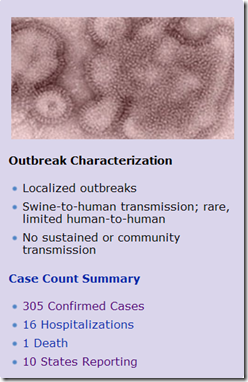
        Beginning in the summer of 2012, CDC reported increases in numbers of cases of human infections with influenza A (H3N2) variant (H3N2v) viruses associated with swine exposure at agricultural fairs. Nationwide, 305 cases, 16 hospitalizations, and one death across 10 states have been reported since July 2012.

        What is added by this report?

        Of 16 patients hospitalized with confirmed H3N2v virus infection, 11 were Ohio residents, including the only H3N2v-associated fatality to date. All but one of the Ohio patients were children, and six were considered high-risk for complications of influenza because they were aged <5 years or had underlying medical conditions; four high-risk persons became ill after indirect contact with pigs. These findings support current CDC recommendations that persons at high risk for complications of influenza should avoid exposure to swine at agricultural fairs this fall.

        What are the implications for public health practice?

        County and state fairs in the United States continue to occur through the month of October, highlighting the potential for continued cases of H3N2v virus infection. Persons at high risk for complications of influenza should avoid exposure to swine at agricultural fairs. Patients with suspected influenza, including H3N2v, who are hospitalized or at increased risk for influenza complications, should receive antiviral treatment with oral oseltamivir or inhaled zanamivir as soon as possible. Antiviral treatment also is encouraged for outpatients with suspected H3N2v who are not at increased risk for influenza complications.


        While fairs have instituted inspections for any signs of illness in livestock – as we discussed last October (see Asymptomatic Pigs: Revisited) - pigs can carry this virus without showing any outward signs of infection.


        The CDC offers the following advice for fairgoers and exhibitors.


        Preventive Actions

        CDC Recommendations For People At High Risk:

        • If you are at high risk of serious flu complications and are going to a fair where pigs will be present, avoid pigs and swine barns at the fair this year. This includes children younger than 5 years, people 65 years and older, pregnant women, and people with certain long-term health conditions (like asthma, diabetes, heart disease, weakened immune systems, and neurological or neurodevelopmental conditions).

        If you are not at high risk, take these precautions:

        • Don’t take food or drink into pig areas; don’t eat, drink or put anything in your mouth in pig areas.
        • Don’t take toys, pacifiers, cups, baby bottles, strollers, or similar items into pig areas.
        • Wash your hands often with soap and running water before and after exposure to pigs. If soap and water are not available, use an alcohol-based hand rub.
        • Avoid close contact with pigs that look or act ill.
        • Take protective measures if you must come in contact with pigs that are known or suspected to be sick. This includes minimizing contact with pigs and wearing personal protective equipment like protective clothing, gloves and masks that cover your mouth and nose when contact is required.
        • To further reduce the risk of infection, minimize contact with pigs and swine barns.


        Swine are highly susceptible to flu viruses - can serve as `mixing vessels’, allowing viruses to reassort into new hybrid strains – and were the originating host of the 2009 H1N1 pandemic virus.


        Reassortant pig[6]


        The variant viruses that now carry the M gene from the 2009 H1N1 virus are reassortants as well.


        The concern with these variant swine flu infections, as it is with any novel flu, is that it gives the virus another opportunity to better adapt to human physiology.


        While humans have a long history of exposure to seasonal H3N2 flu viruses, research has shown only limited community immunity to these variant strains (see CIDRAP: Children & Middle-Aged Most Susceptible To H3N2v).


        The good news is that while some limited community transmission of these variant flu strains appears to have occurred last summer, sustained and efficient human-to-human transmission did not.


        Public health officials will no doubt be alert for any new cases -  and more importantly, for any signs that the behavior of the virus has changed - over the coming months.


        For more on the flu risks from swine reassortments, I’d heartily recommend Helen Branswell’s terrific piece in SciAm  from late 2010 called Flu Factories.

        Flu Factories

        The next pandemic virus may be circulating on U.S. pig farms, but health officials are struggling to see past the front gate

        By Helen Branswell  | December 27, 2010 |


        And for some of my earlier looks at swine influenza, you may wish to revisit:


        H3N2v: When Pigs Flu

        You Say You Want An Evolution?

        The (Swine) Influenza Reassortment Puzzle

        Wednesday, October 24, 2012

        Asymptomatic Pigs: Revisited

        image

        Credit Wikipedia


        # 6660


        A couple of months ago in EID Journal: Flu In Healthy-Looking Pigs we looked at a report indicating that it isn’t always possible to identify pigs carrying an influenza virus based simply on their appearance.


        A dispatch from the EID Journal reported that nearly 1 in 5 healthy-looking pigs they tested at the Minnesota State Fair during the 2009 H1N1 influenza pandemic were actually infected with a flu virus.


        This came out during the midst of several swine variant flu outbreaks this summer, involving several hundred people across 10 states. Viruses apparently contracted from pigs on display at local fairs (see MMWR: H3N2v Related Hospitalizations In Ohio – Summer 2012).


        While fair officials were turning away pigs with overt signs of infection, this report suggested that perhaps those measures might not be sufficient.


        Today, a pair of studies from Ohio State University -  one that finds a surprisingly large percentage of flu infected swine to be asymptomatic - and another that establishes just how closely linked the human and swine variant strains of influenza this summer really were.


        In both cases, the lead author is Andrew Bowman, a  Ph.D. candidate in veterinary preventive medicine at Ohio State.


        First, from the EID Journal, research that found more than 80% of the pigs that tested positive for influenza at the Ohio State fair between 2009 and 2011 showed no signs of illness.


        Subclinical Influenza Virus A Infections in Pigs Exhibited at Agricultural Fairs, Ohio, USA, 2009–2011

        Andrew S. BowmanComments to Author , Jacqueline M. Nolting, Sarah W. Nelson, and Richard D. Slemons
        Author affiliations: The Ohio State University, Columbus, Ohio, USA
        Abstract

        Agricultural fairs are associated with bidirectional, interspecies transmission of influenza virus A between humans and pigs. We examined pigs exhibited at agricultural fairs in Ohio during 2009–2011 for signs of influenza-like illness and collected nasal swab specimens from a representative subset of these animals.


        Influenza virus A was recovered from pigs at 12/53 (22.6%) fairs during the 3-year sampling period. Pigs at 10/12 (83.3%) fairs from which influenza virus A was recovered did not show signs of influenza-like illness. Hemagglutinin, neuraminidase, and matrix gene combinations of the isolates were consistent with influenza virus A concurrently circulating among swine herds in the United States.


        Subclinical influenza virus A infections in pigs at agricultural fairs may pose a risk to human health and create challenges for passive surveillance programs for influenza virus A in swine herds.

        (Continue . . . )


        Ohio State University has published a lengthy press release that discusses both papers.


        Studies: Pigs Look Healthy But Test Positive for Flu at Fairs; Flu Transmission Seen Between Pigs and Humans

        COLUMBUS, Ohio – More than 80 percent of pigs that tested positive for influenza A virus at Ohio county fairs between 2009 and 2011 showed no signs of illness, according to a new study.


        Ohio State University researchers tested 20 pigs each at 53 fair events over those three summers and found at least one flu-positive pig at 12 fairs – almost a quarter of fairs tested.


        The influenza strains identified in pigs in this study include H1N2 and H3N2 viruses – strains that have been circulating in pigs since 1998. In 2011, all of the H3N2 and H1N2 isolates found in pigs at the fairs contained a gene from the 2009 pandemic strain of H1N1, which is similar to the H3N2v strain causing human illness this year.


        Though this finding alone is no cause for panic, it does show how quickly influenza viruses can change, said Andrew Bowman, lead author of the study and a Ph.D. candidate in veterinary preventive medicine at Ohio State.


        In a second study led by Bowman, researchers compared the genomic sequences of influenza A viruses recovered in July 2012 from pigs and people. The analysis, showing a greater than 99 percent genetic similarity among the viruses, confirms that pigs and humans were infected with the same virus, indicating interspecies transmission.

        (Continue . . .)


        This second study appears in the journal Emerging Microbes & Infections.


        Although the timing of the illnesses (and initial sub-typing) in humans and swine at the Ohio State Fair last July strongly suggested interspecies transmission, a >99% genomic match pretty much erases all doubt.


        Molecular evidence for interspecies transmission of H3N2pM/H3N2v influenza A viruses at an Ohio agricultural fair, July 2012

        Andrew S Bowman1, Srinand Sreevatsan2, Mary L Killian3, Shannon L Page4, Sarah W Nelson1, Jacqueline M Nolting1, Carol Cardona2 and Richard D Slemons1


        Evidence accumulating in 2011–2012 indicates that there is significant intra- and inter-species transmission of influenza A viruses at agricultural fairs, which has renewed interest in this unique human/swine interface.


        Six human cases of influenza A (H3N2) variant (H3N2v) virus infections were epidemiologically linked to swine exposure at fairs in the United States in 2011. In 2012, the number of H3N2v cases in the Midwest had exceeded 300 from early July to September, 2012.


        Prospective influenza A virus surveillance among pigs at Ohio fairs resulted in the detection of H3N2pM (H3N2 influenza A viruses containing the matrix (M) gene from the influenza A (H1N1) pdm09 virus). These H3N2pM viruses were temporally and spatially linked to several human H3N2v cases.


        Complete genomic analyses of these H3N2pM isolates demonstrated >99% nucleotide similarity to the H3N2v isolates recovered from human cases. Actions to mitigate the bidirectional interspecies transmission of influenza A virus between people and animals at agricultural fairs may be warranted.

        (Continue . . .)


        While the vast majority of the swine-to-human flu transmissions this year have involved the H3N2v virus, as you can see from the following table, small number of H1N1v and H1N2v infections have been reported as well. 


        image


        Given the limits of surveillance, testing, and reporting – we really don’t know what the normal `background rate’ of these types of novel flu infections are in humans.


        The smattering of reports since 2005 indicate they may be fairly rare, but are certainly not unheard of.


        The majority of human swine variant flu infections this summer were relatively mild (out of 300+ infections, 16 were hospitalized, and 1 died), but it is always of concern anytime a novel influenza virus jumps from another species to humans.


        Each time a novel flu jumps from a pig to a human it gives the virus another opportunity to adapt to human physiology. The CDC’s most recent assessment on the H3N2v virus reads:


        It's possible that sporadic infections and even localized outbreaks among people with this virus will continue to occur.

        While there is no evidence at this time that sustained human-to-human transmission is occurring, all influenza viruses have the capacity to change and it's possible that this virus may become widespread.


        So far, the severity of illnesses associated with this virus in people has been similar to the severity of illnesses associated with seasonal flu virus infections. Limited serologic studies indicate that adults may have some pre-existing immunity to this virus while children do not.


        CDC is closely monitoring human infections with all novel influenza viruses, including H3N2v viruses, and will provide more information as it becomes available.


        With further evidence of asymptomatic influenza infection in pigs, fair officials and public health agencies will need to decide on the best policies to limit future exchanges (in either direction) of flu viruses between people and pigs.

        Tuesday, September 25, 2012

        Ontario Confirms H1N1v Case


        image

        Credit Wikipedia


        # 6779


        While details are somewhat scant this morning, the Province of Ontario, Canada has announced that they have detected a single of case of H1N1v flu infection in a person who had contact with pigs.


        First the press release, then I’ll return with a bit more:


        Case of Influenza A H1N1 Variant Detected in Ontario

        September 25, 2012 8:00 AM

        Today, Dr. Arlene King, Ontario's Chief Medical Officer of Health, issued the following statement on a case of influenza A H1N1 variant detected in Ontario:


        "An Ontario resident has been confirmed as having been infected with an H1N1 variant (H1N1v) influenza virus. An influenza virus that normally circulates in animals is referred to as a variant virus when it infects humans.


        This adult male patient became ill after close contact with pigs. He is being treated and closely monitored in a hospital in southwestern Ontario.


        I would like to reassure Ontarians that this variant influenza virus rarely spreads from animals to humans. Subsequent human-to-human transmission is also rare. I would also like to stress that this is not a food safety issue; the consumption of properly cooked pork continues to be safe.  Proper cooking of meats, including pork, kills all bacteria and viruses.


        Ontarians should remember that hand washing is the single best infection prevention and control measure against respiratory illnesses such as influenza. Individuals should wash their hands often with soap and running water, or use an alcohol-based hand rub if soap and water are not available.


        I also would like to remind Ontarians that it is important to get immunized every year with the seasonal flu vaccine when it becomes available each fall. This will protect you against seasonal influenza viruses that are expected to circulate. Everyone six months of age and older should get the seasonal flu vaccine each year.


        The identification of this case is the result of the strength of our current surveillance system here in Ontario. It is not an unexpected occurrence and there have been a number of human infections with variant influenza viruses in the United States over the past year.


        I would like to thank health officials in Ontario who displayed the utmost vigilance in identifying, treating and closely investigating this case. Protecting the health of Ontarians is a priority and we will continue to monitor the situation."


        H1N1v is one of the `viral contenders’ I wrote about several weeks ago in An Increasingly Complex Flu Field, and until just over a year ago, was the most commonly reported variant swine flu virus detected in humans since 2005.


        In the past twelve months, it has primarily been the H3N2v flu virus that we’ve seen jumping from pigs to humans (300+ cases).  But 2 weeks ago, we saw a single case of H1N1v was reported out of Missouri (see The Return Of H1N1v).


        This was only the second H1N1v case reported in a year, and it was also the second time that the H1N1v virus had been found to carry the M (matrix) gene from the 2009 H1N1 pandemic virus. 


        This M gene  has been showing up regularly in swine variant viruses (H1N1v, H1N2v, H3N2v) for more than a year. The CDC has previously stated that `This M gene may confer increased transmissibility to and among humans, compared to other variant influenza viruses.’


        A couple of cases of H1N1v, hundreds of miles apart, while of concern  .  .  .  does not a pandemic make. 


        But this is further evidence that these variant viruses (H1N1v, H1N2v, H3N2v) continue to evolve, and spread widely in swine, and on occasion manage to make the jump to humans.


        The concern is that over time one of these viruses may become a more human adapted virus, and begin to spread more easily among the population.


        So we watch reports such as this with more than a little bit of interest.


        For more on the flu risks from swine reassortments, I  heartily recommend Helen Branswell’s terrific piece in SciAm  from late 2010 called Flu Factories.

        Flu Factories

        The next pandemic virus may be circulating on U.S. pig farms, but health officials are struggling to see past the front gate

        By Helen Branswell  | December 27, 2010 |


        And for some of my earlier looks at swine influenza, you may wish to revisit:


        H3N2v: When Pigs Flu

        You Say You Want An Evolution?

        The (Swine) Influenza Reassortment Puzzle

        Friday, September 21, 2012

        FluView Week 37 & Variant Flu Update


        image

        Variant Flu Numbers are Unchanged This week


        # 6569


        The CDC has released their weekly FluView and Variant Flu update, and for the first time in a couple of months, there are no new variant (H3N2v,H1N2v, H1N1v) cases reported to the CDC.


        Admittedly, there could be some cases out there that are mild, and are going unreported. 


        But no new cases is a pretty good indication that – as the CDC has been saying all alongthese viruses aren’t spreading efficiently among humans.


        As far as seasonal flu reports are concerned, they remain at very low inter-season levels.


        2011-2012 Influenza Season Week 37 ending September 15, 2012

        All data are preliminary and may change as more reports are received.

        U.S. Virologic Surveillance:

        WHO and NREVSS collaborating laboratories located in all 50 states and Washington, D.C. report to CDC the number of respiratory specimens tested for influenza and the number positive by influenza type and subtype. Region specific data can be found at http://gis.cdc.gov/grasp/fluview/fluportaldashboard.html.

        image

        Similarly, outpatient visits to doctors for ILI (Influenza-like Illness) are low as well.

        image


        Today’s data is current through September 15th, and with schools back in session, and cooler weather on its way, we shouldn’t be surprised to see flu activity pick up in the next few weeks.