Showing posts with label media. Show all posts

Thursday, February 12, 2015

Media Reports Of H5N1 Continue In Egypt

image


# 9701


The disconnect between what is being reported by the Egyptian press, and the number of cases being publically acknowledged by the Egypt’s Ministry of Health, continues with almost daily reports of new H5N1 cases (suspected & confirmed) in the Arabic media which are only rarely listed on the MOH site. 


Of note, the MOH hasn’t released a YTD total of cases, or fatalities, in over three weeks (see The Silence Of The Egyptian MOH).  They do, however, continue to urge people to seek medical care immediate if they suspect bird flu infection.


The last officially acknowledged YTD total came on January 22nd (see Egypt’s MOH Confirms 21st H5N1 Case), but based on local health ministry and media reports, the number of cases since then appears to have incremented significantly. 


How much is anybody’s guess, but Sharon Sanders of FluTrackers has been dutifully trying to keep track, and her conservatively curated FluTrackers H5N1 Case List indicates (as of yesterday) 39 cases, and 16 deaths for the year.


Today the Egyptian media already has reports of four H5N1 cases, all supposedly confirmed by lab tests.  How accurate these reports really are is debatable, but given the restrictive press environment in Egypt, I have doubts many would risk publishing reports like these without substantial corroboration.


First stop, almasryalyoum.com. 


Health Qalubia»: the detention of three persons infected with «bird flu»

2 hours ago | wrote: Abdel-Hakam soldier , Mohammed Mahmoud Khalil

Directorate of Health Affairs announced Balqlliopip, on Thursday, the detention of three people, for being infected «bird flu» preservation, noting that the stable situations, and respond to treatment, where he was given the drug «Tamiflu» and a number of medications.

Said Dr. Mohammed Lachin, Undersecretary of the Ministry of Health Balqlliopip, had been detained three cases hospitals «Banha University, and fevers Banha, and diets», pointing out that samples were taken from the injured, and sent to the central laboratories of the Ministry of Health in Cairo, which proved positive cases, in addition to sampling of their families, and the work of the inquiry Mkhaltin them, to show the extent of the injury or not


And this from elwatannews.com.


The emergence of new cases of bird flu in Assiut

Wrote: Suad Ahmed Thursday 12/02/2015 09:37

Confirmed samples sent by al-Sadr hospital in Assiut Governorate, to the central laboratory in Cairo injury housewife from coast sound of bird flu results.

He explained the source of the Directorate of Health in Assiut, that the situation of a woman named (n, p, P- 24 years) have been converted from the Central Coast Salim hospital on suspicion of being infected with bird flu.

The source added, that Ms. booked Chest Hospital in Assiut, samples were withdrawn and sent to labs central Cairo shows the result of analysis of the received by the health Assiut being infected with the virus


As we tend to see about updates from the MOH every 5 to 7 days, we may or may not get confirmation of these cases.  Hopefully these cases (if, indeed, they are confirmed) will get sorted out in the next WHO GAR update.


Assuming FluTracker’s case count is reasonably close - and these four cases are eventually certified by the WHO – that would mean that in the first 6 weeks of 2015 Egypt has already exceeded their 2011 record (n=39) for the number of cases in a year.  


All the more impressive when you add in the 30 cases racked up in the last six weeks of 2014. 


Whatever the precise count (and even with the best surveillance and reporting, cases will be missed), Egypt’s H5N1 outbreak this winter of 2014-15 is shaping up to be the biggest run of human cases reported from one country that we’ve seen in a decade. 


Egypt appears on pace to rival or even exceed Vietnam’s record of 61 cases and 19 deaths in 2005.


Why, after two years where only 8 cases were reported in Egypt, we are seeing this sudden bloom of cases is unknown.


In January, in CIDRAP: FAO Reports Mutations In H5N1 Virus From Egyptian Poultry, we did see a report that found some signs suggestive of `mammalian adaptations’ in viruses collected from local poultry, but those changes were not present in two human samples tested.


A few days laterthe World Health Organization published their latest WHO H5N1 Update & Risk Assessment, which stated:


Although all influenza viruses evolve over time, preliminary laboratory investigation has not detected major genetic changes in the viruses isolated from the patients or animals compared to previously circulating isolates. The increase in reported human cases is likely a consequence of several factors. These includes increased circulation of influenza A(H5N1) viruses in poultry, lower public health awareness of risks in middle and upper Egypt and seasonal factors such as closer proximity to poultry and longer survival of the viruses in the environment because of cold.


The good news is that we’ve yet to see any evidence that the virus is spreading from person-to-person, and while a handful of small family clusters have been mentioned, the risk still appears to stem from close contact with infected birds.


Still, whatever the current source of infection, anytime we see this many human infections with a novel flu virus, we watch carefully for any signs of changes in the behavior of the virus.


Thursday, October 30, 2014

All The Ebola News Not Fit To Print

image 


# 9266


Earlier this week a `fake’ news story made the rounds of Twitter and Facebook, suggesting that students at an Elementary school in Olanthe, Kansas had been infected with the Ebola virus.   When I was first alerted to the story, I did a quick search, found the offending article, and quickly determined it was fake.  


Unfortunately, the story did what it was intended to to – it went `viral’ – and I’m sure it brought a lot of attention  (and web hits) to the `entertainment site’ which published it as if it were a genuine news story. 


Within a matter of hours Snopes.com  had an entry debunking the story (see Ebola School), and local media and the Olathe Public School district were heavily engaged in damage control (see KC Star Olathe School District becomes target of false Ebola rumor). 


This trend in `fabricated news’ is a disturbing one, particularly when it deals with something as serious as Ebola, but is hardly new. It is the cyber version of the trashy tabloids sold for decades in checkout lanes around the world. But with the way content is delivered online – piecemeal via twitter and social media instead on cheap newsprint - much harder to identify as bogus.


Unlike The Onion, and other satirical sites, there’s little in the article to suggest that some serious leg pulling is going on. 


While arguably the most egregious example of Ebola reporting I’ve seen, I’m finding very little in the media that isn’t – one way or another – biased, misleading, exploitative, or obviously hyped up in order to drive web traffic and sell advertising. 


So much so that – except for the work of a handful of solid science reporters (think Branswell, Fox, Besser, Gale, and a short list of others) – I find very little reportage I can use in this blog without feeling as if I’m compounding a felony.


I have a firm rule:  If the headline, or lede, of an article contains the words `Terrifying’, `Deadly’, `Horrific’, or `Explodes’ or `Explosion’ (unless, of course, the story is about an actual explosion) I won’t bother with it, much less use it in this space. 


There is a lot of stuff out there pretending to be news, that is really just propaganda (for or against just about anything you can imagine), partisan rhetoric, or is little more than a lurid sideshow designed to extract your `one thin dime, 1/10th of a dollar’, by enticing you to follow some salacious click-bait. 


Sadly, even as the technology to quickly deliver content improves, the quality of that content is more suspect than ever.


Making Caveat Lector about Ebola, and just about anything else you see, the watchword of the day.

Saturday, April 05, 2014

Egypt: Media Reports Of Another H5N1 Case

image


# 8436


Just over two weeks ago (see Watching Egypt Again . . .) the newshounds at FluTrackers picked up several Arabic media reports regarding a pair of H5N1 cases; a 56 years old housewife in Beheira (Damanhur) and a 4 year-old child in Damietta (Annaana).  Six days later the World Health Organization  confirmed those reports here.

Today the Arabic media is once again carrying reports (h/t Gert van der Hoek  on this FluTrackers Thread)  of another H5N1 case (again from Damanhur) – that of  an 86 year-old housewife – who is listed in critical condition and on a ventilator.


I’ve checked the Egyptian Ministry of Health website, but so far, I’ve found nothing posted.  These recent cases come after nearly a year without any human infections reported out of Egypt.


A case of bird flu to the housewife in Damanhur


Damanhur – ASHA


Announced the Undersecretary of the Ministry of Health in Beheira Dr. Mohammed grace of God for the emergence of new cases of bird flu to housewife ( 86 years ) resident in Damanhur , pointing out that after the onset of symptoms of the disease have been transferred to a hospital chest and give it a " Tamiflu" and entered into intensive care and put on a respirator industrial poor condition .

The grace of God - in a statement today / Saturday / - "It immediately inform the Directorate positive case of bird flu and the team went Preventive Health Directorate where the work was necessary preventive measures , as the team went to the Veterinary Medical Action veterinary preventive measures .

He explained that he was raised from the infected on a respirator after her condition improved , where she was hospitalized in critical condition due to her diabetes , was given the drug " Tamiflu" and entered the intensive care unit .
 

Last updated : 04/05/2014 16:10 timing Cairo

Wednesday, June 12, 2013

WHO: MERS, Masks, And The Media


image


# 7386


This morning the International Business Times carries an article on MERS-CoV threat in Saudi Arabia that reports the World Health Organization recommends that religious pilgrims wear a mask while among crowds during Ramadan.


In fact, it is the main focus of the story.


Ramadan Mecca Pilgrims to Wear Masks to Avert Coronavirus Epidemic

Health authorities urge pilgrims to wear facemasks to prevent spread of Middle East virus

By Hannah Osborne:   June 11, 2013 5:21 PM GMT


The article quotes Salman Rawaf, professor of public health at Imperial College London, as saying: "The risk [to pilgrims] is there. The advice from the World Health Organisation is wear a mask."

The only problem is - according to Gregory Hartl, the WHO’s spokesperson - it’s incorrect.

image


Admittedly, for reporters who don’t normally cover the health/science/emerging disease beat, navigating the brave new worlds of MERS-CoV or H5N1/H7N9, can be daunting.


Few media outlets now maintain dedicated science and health reporters.  Often, journalists who would normally cover politics or crime (sorry, I’m being redundant)  .  .  .  or even sports, are dragooned into covering emerging disease outbreaks.


Unless they’ve been immersed in the subject for months or even years, few non-science reporters would know when to question (or double-check) a `statement of fact’ from an expert.  


Which is the primary reason I rely mostly on rock solid, knowledgeable, and dependable journalists like Helen Branswell, Maggie Fox, Jason Gale, Maryn Mckenna, Jennifer Yang,  Lisa Schnirring and Robert Roos of CIDRAP - along with a short list of others - in this blog.


Unfortunately, the number of media outlets willing or able to employ science journalists of their caliber seems to dwindle each and every year.


A policy that is both ironic and shortsighted, as we live in an age increasingly dependent upon science and technology.


One where we need more expert reporting on science, not less.

Sunday, June 02, 2013

When The Morning News Goes Viral

image

Villeneuve-sur-Lot -Wikipedia


# 7352


On an otherwise quiet Sunday morning, we’ve several  unusual virus-and-or-disease-related stories crossing the transom. With a heightened media interest in MERS and H7N9, I believe we can expect to see more these types of news reports over the coming months.


Caveat: Most are carried by non-English language media sources and we are forced to make do with somewhat murky machine translations.


Our first stop is France, where about a week ago – eight middle-aged women – all of whom helped prepare raw poultry for a catered affair, were hospitalized with an unknown respiratory infection.


Two reports, first this one from May 31st, followed by an update from late yesterday.


Villeneuve-sur-Lot (47): eight cases monitored in hospital

Eight women of fifty years were hospitalized with the same symptoms after preparing poultry.

Published on 31/05/2013 at 16:36


Since last week, eight women of fifty years are admitted and monitored at Saint-Cyr hospital with symptoms of fever and cough. Working for a caterer they all prepared poultry for two weddings last weekend.


"In a time of emerging viruses, it is probably best to learn," explains Patrick Rolland, the regional branch of the Institute of Health Surveillance (IVS). IVS continues his research, although none of the patients show evidence conclusive coronavirus, H5N1 and H7N9. Further results are expected before making different assumptions.


Fast forward to last night, and we learn that MERS and H7N9 have apparently been excluded and the focus now seems to be on determining a bacterial cause.


Villeneuve-sur-Lot (47): eight women always kept under observation in hospital

We still do not know what the eight admitted to suffering from last Friday with fever and cough patients.

If influenza H5N1 and H7N9 type virus and corona are now apart, we still do not know what's with the eight women of fifty years under observation in the pulmonology department of the hospital in Saint-Cyr-sur Villeneuve -Lot.


Recall that is all knowing and working for a caterer, they had participated in the evisceration of nearly 150 birds in the previous days, for the preparation of two marriages.


Although their status has improved thanks to venous antibiotics, the first samples have failed to establish a diagnosis. It was not until the following samples for antibodies can be detected and thus identify bacteria. The eight women are still pending, hospitalized.


This is a curious enough report that I’ll try to follow up on it when a cause is determined.


Next stop, a genuine MERS-related story out of Saudi Arabia, where a public health official appears to have tried to board a plane carrying a sample of the novel coronavirus (in exactly what kind of container is not stated), to fly to Jeddah.

Apparently the plane was not BSL-3 certified, and airport security thought better of the idea.


My thanks to Sharon Sanders of FluTrackers for finding this report from Alwafd.org.


King Fahd International Airport ..

Saudi prevent carries sample "Corona" of travel


King Fahd Airport
Gateway delegation - rebounds: Saturday, June 1, 2013 11:50

Saudi security authorities prevented in the King Fahd International Airport in Dammam employees in the Ministry of Health of the rise of the plane that he planned to travel to Jeddah on board, because of him pulled from the sample is infected with "Corona".


The general director of the King Fahd International Airport in Dammam Khaled المزعل, in a statement published Saturday, that the traveler was forced to transfer the sample via the shipping company, and did not allow him to carry on the plane, his trip was postponed so check it and boarded the plane without "Corona."


And we finish our morning tour with report out of the island nation of Bahrain (which is connected to Saudi Arabia by a causeway), that tells of a Pakistani – who was being tested for the MERS virus – escaping from a local hospital.


Once again, Sharon Sanders has the original Arabic story here, which suggests the patient initially tested positive for the virus.  But in short order, Bahrain’s MOH came out with a flat denial (h/t Tetano).


Bahrain denies coronavirus case report

Health ministry says test results were negative

By Habib Toumi Bureau Chief

Published: 16:23 June 2, 2013

Manama: Bahrain’s health ministry has denied reports that a Pakistani national who had the coronavirus had fled the country’s main public hospital.


The report said that the Pakistani driver was taken to Salmaniya Medical Complex after officials at the King Fahd Causeway linking Bahrain with Saudi Arabia suspected he had the respiratory virus. However, the report added, he managed to leave the hospital while the medics were waiting for the test results.


The health ministry on Sunday issued a statement in which it said that exhaustive tests proved that the driver had not contracted the coronavirus and that he left the hospital normally.

(Continue. . . )


If nothing else, today’s stories will give you an idea of the kind of stories that the combined volunteer newshounds of flublogia wade through (in English, Arabic, Chinese, Vietnamese, Indonesian, French, etc) each and every day.


Not every report is `breaking news’, of course.  But each must be identified, translated, and analyzed before they can be cataloged on the flu forums, and put into some kind of context. 


Often we don’t know until days, or weeks later, the true significance of these reports. But having the library of these reports can be invaluable.


For more on the work done by the newshounds on the Flu Forums, you may wish to revisit:


Newshounds On The Trail Of The Latest Beijing H7N9 Report

Monday, September 10, 2012

V Said, C Said

image

Photo Credit – FAO


# 6546


Last week, reports of a new strain of the H5N1 virus (see Vietnam Reports A Possible Change In The H5N1 Virus) – which supposedly originated in China -  began to appear in the Vietnamese media.


Dubbed clade 2.3.2.1 C, this virus had recently been reported in seven provinces and cities, namely Haiphong, Ha Tinh, Ninh Binh, Nam Dinh, Bac Kan, Thanh Hoa and Quang Ngai.


Media reports strongly suggested that poultry smuggling out of China had recently introduced the virus to Vietnam.


Although China rarely admits to having a `bird flu problem’, the evidence often suggests the opposite.  Just a few examples include:


  • We’ve seen the recurring phenomenon of H5N1 infected poultry carcasses - apparently dumped into the upper Pearl River by farmers - washing up on the beaches of Hong Kong (see The Winter Of Our Disbelief).
  • Earlier this summer, authorities in Taiwan seized, and destroyed 38 birds being smuggled into their country from China that were infected with the H5N1 virus (see Taiwan Seizes H5N1 Infected Birds).
  • And migratory birds that arrive in Japan, Hong Kong, and South Korea – many originating in China - have been found to be carrying the H5N1 virus (see Global H5N1 Blind Spots).


Today, Xinhua News – the official press agency of the People's Republic of China – has a long story about this newly detected clade of the H5N1 virus, but unlike earlier reports out of Vietnam, makes no mention of it originating in China.


In fact, they point the finger at Vietnam.


New bird flu strain develops unexpectedly in Vietnam

2012-09-10 19:37:08

HANOI, Sept. 10 (Xinhua) -- A new bird flu strain is developing unexpectedly in Vietnam and causing great concern to the government and public.


According to the National Animal Health Diagnosis Center, the new strain of bird flu virus, which is suspected to have higher risk of causing human death than previously known ones, appeared in July and widely spread in August in Vietnam's seven central and northern provinces.


Hoang Van Nam, head of Ministry of Agriculture and Rural Development (MARD)'s Animal Health Department, said that this virus, thought to belong to H5N1 - Clade 2.3.2.1, is different from the two strains of A and B that appeared in Vietnam in 2011, due to its higher pathogenic risk.


According to the department, as of Sept.6, the new virus strain has attacked seven central and northern cities and provinces, including Hai Phong, Thanh Hoa, Ha Tinh, Ninh Binh, Nam Dinh, Bac Can and Quang Ngai, and over 180,000 infected poultry have been culled so far this year.


Apart from the newly-found strain of the virus, the bird flu has developed unexpectedly in the country so far this year. Normally, avian influenza appears shortly before or after the traditional lunar Tet holidays (which often falls in late January and early February). However, it has appeared since July this year and fast spread without warning. In the Central Highlands Dak Lak province, about 30 influenza epidemic spots were found in only one day.

(Continue . . . )


In the global scheme of things, it may not make a lot of difference on which side of a country’s border this new clade of H5N1 originated.  Viruses rarely respect artificial man-made barriers like borders, anyway.


But this story illustrates just how vulnerable news stories can be to government manipulation and `spin’


A reminder that, while we are often dependent upon government operated news agencies, we shouldn’t put too much faith in the details. 


Caveat Lector should always be our guide.

Wednesday, April 11, 2012

Indian Government Responds To Concerns Over H1N1


# 6274


A couple of days ago I wrote about aggressive reporting in the Indian media over the number of H1N1 `swine flu’ cases being reported in many parts of India (see Indian Expert: `Nothing Scary About Outbreak’).


Media speculation has included the mention of `possible mutations’ in the virus, prompting considerable alarm.


The Indian government, which has had made little comment until now, has released a statement indicating that nothing unusual is going on regarding influenza activity in India.


Specifically they deny any signs of unusual mutation in the virus. Here is the text of their statement (slightly reformatted for readability):


No Cause for panic about Pandemic Influenza A H1N1

Ministry of Health and Family Welfare


11-April, 2012 13:53 IST

The situation with respect to instances of H1N1 is well under control and is being monitored. As reported in some section of the press, the virus has not mutated to a more virulent form or changed its character.


Director, National Institute of Virology, Pune has clarified that the presently circulating strain of H1N1 pandemic virus belongs to clade 6 and 7. (Clade is the medical terminology used to describe related organisms descended from a common ancestor). These clades are circulating in many countries. All are treatable with Oseltamivir (an antiviral drug which slows the spread of influenza (flu) virus). The currently available vaccine can be used, as antigenic (antigen is a substance that when introduced into the body stimulates the production of an antibody. Antigens include toxins, bacteria, foreign blood cells, and the cells of transplanted organs) differences are not significant. There is no mutation to suggest change of virus to 'dangerous form'.


World Health Organisation while declaring the Pandemic to be over in August 2010, had conveyed that the influenza H1N1 pandemic virus would take on the behaviour of seasonal influenza virus and continue to circulate for some years to come. Hence, in the post-pandemic period, localized outbreaks of varying magnitude with significant level of H1N1 transmission are expected.


Subsequent to this declaration, our country had experienced major outbreaks during the period August to October, 2010 and again from May, 2011 to July 2011. Now, in March-April, 2012, there is increased number of cases of Pandemic Influenza A H1N1 reported from the State of Andhra Pradesh, Maharashtra, Rajasthan, Karnataka and Tamil Nadu. Small pockets of population who remained unexposed to the pandemic and susceptible would be affected. In first week of March almost 30% of referred samples were positive for H1N1 in Pune which has come down to approx. 10% now.


A large number of these cases would be presenting with mild influenza like illness and as such requires no testing or anti viral drug treatment. However, it is important to get oneself examined at the nearest hospital in the initial part of illness to detect moderate illness and other associated risk factors/ diseases that require hospitalization. The anti viral drug Oseltamivir is available free of cost through the State public health system. They are also available with retail chemists licensed to keep Schedule X drugs. A central stockpile of about 8 million doses of Oseltamivir is also maintained. As the virus is circulating with in the country, there is no need to impose any travel restrictions or screening at inter-state point of entry, railway stations etc.
SBS


While a public statement from the Indian Government is certainly welcome, one does wonder what took them so long to respond.

Friday, August 26, 2011

Monitoring Irene’s Trek Online


# 5788


The internet provides a unique platform for watching Irene’s trek across the mid-Altantic states, with resources that include live coastal radars, NOAA  weather radio broadcasts, streaming radio and TV coverage from cities all across the region,  beach front and traffic webcams and even scanners to listen to local emergency radio traffic.


For those in the path of the storm, or those with friends or family in the affected area, this can help provide valuable information as to what is going on during and after the storm.


And for those who are simply curious as to the impact of this hurricane, this is a convenient way to monitor it.


This afternoon, and probably again later in the weekend, I intend to post some of the web resources I’ll be monitoring as the storm comes ashore. 


Disclaimer: These links are offered without warranty or endorsement (except for the NHC & NOAA links), and you visit them at your own risk

It is always prudent to use up-to-date antivirus software, and decline to install any software from vendors you do not trust, when surfing the net.


The focus today with be on North Carolina, where Irene is expected to make landfall tomorrow morning, but I’ll provide links further up the coast in a later post.


Nearly all of these links are subject to storm related outages and bandwidth limitations, so don’t be surprised if you find some of them offline during the course of the next couple of days.


First stop, of course, is the National Hurricane Center in Miami, Florida that tracks the storm.  You can also visit the Wilmington, NC and Newport/Morehead City, NC National Weather Service Weather Forecast Offices (WFO) for local advisories.


image


Similarly, NOAA Weather Radio All Hazards broadcasts are available online as live streaming audio although they are hosted by other entities, including Weather Underground.


Via Weather Underground we’ve a couple of live radar feeds you can access.  You can just begin to see Irene’s eye in this snapshot taken at 3:00 pm EST today on the Wilmington Radar.

image


A little further north you’ll find the Morehead City radar.

image


Interesting, but often frustrating and requiring patience, are the live streaming webcams scattered across North Carolina. These camera feeds tend to suffer from heavy web traffic, are sometimes poorly maintained, and are prone to going offline when a storm strikes.


Still, there are plenty to choose from, and when you can connect, they can make for interesting viewing.


Raleigh broadcaster WRAL.Com has an interactive map with a number of these cams available.  Fair warning: About half of the ones I checked were not currently accessible.


image


WRAL also has a page with streaming traffic cams from across the state.


Traffic Camera Video tease 540x50

Watch recently captured video from major highways in the Triangle area. Video clips show approximate time that the video was captured. Clips, taken from locations in Wake, Durham and Orange counties, last about 15 seconds are updated about every 4 minutes.


For a list of North Carolina TV stations, some of which will be providing live, 24-hour streaming coverage of Irene’s arrival, you can go to:


North Carolina TV stations


You’ll have to find steaming coverage by trial and error, as some stations may not be streaming.


Live streaming audio is also available from a number of radio stations in North Carolina.  A webpage with links to their websites can be found at:


Streaming Radio Guide


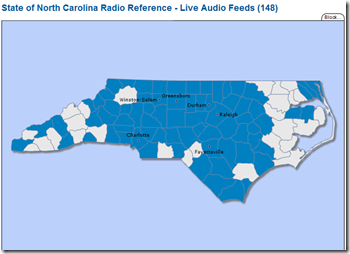
More than 140 local, county and state emergency services frequencies (fire, police, EMS) can be assessed via RadioReference.com.  The interactive maps shows counties with scanner monitoring. Click on the county, and you’ll be presented with a list of feeds.


image


Hurricane City, a well known hurricane tracking site and forum, broadcasts on USTREAM when hurricanes approach the coast and you can watch it HERE.


You’ll also find live hurricane coverage and chaser cam footage from Mark Sudduth’s HurricaneTrack.com.


Emergency Stream provides live, raw, and uncut audio and video feeds from all over the country.  Frankly, there’s no telling what you will find there.  Local TV broadcasts, raw helicopter camera feeds, etc.


 image

Your best option is to select either audio or video feeds, and then the state from the list that appears on the right side of the page. These links are transient, so some channels may be active while others are not. 


Check all of the links, and check back often.


USTREAM, mentioned earlier, provides a venue for all types of broadcasting.  Enter  HURRICANE  or IRENE in the search box for a list of current streaming video. You’ll find everything from storm chaser video to live feeds from hotels on the Altantic beaches.


Since anyone can broadcast on USTREAM, accept anything you see or hear cautiously. Still, USTREAM can be a terrific resource.


I’ll try to have more resources later, and will update this blog post if I find anything tonight. But this should give you a pretty good start on following the storm.

Wednesday, August 10, 2011

Deja Flu


# 4746


Streaking like a meteor across the newswires this morning is the surprise announcement from the AP is that the World Health Organization has declared the Swine Flu Pandemic is over.


The surprise being . . . the pandemic actually ended a year ago.


Obviously it was a mistake, and the AP killed the story less than an hour later.

image


. . . but not before it was picked up and republished by a number of news agencies. This is a snapshot of the NewsNow wire feed as of 7:30 EST today.


image


While the story has been retracted by most news sites, it remains online on several websites and is now making the rounds on twitter.


Begging the question.  Does anyone bother to read this stuff before they send it out?


Sigh.


Thursday, June 16, 2011

OAHPP & ACIP Media Events


# 5633


A brief head’s up on two upcoming media events you can access via the Internet.


First up, later today (June 16th) there will be a free webinar and Teleconference as part of the OAHPP (Ontario Agency for Health Protection and Promotion) Grand Rounds that will provide the latest information on last week’s announced reassortment between the pH1N1 and seasonal H3N2 virus in Canada.


Registration is Free and Easy on the Eventbrite website

The details from the webinar announcement follow:


OAHPP Rounds: pH1N1 – H3N2: A Novel Influenza Virus Reassortment


Thursday, June 16, 2011 from 12:00 PM - 1:00 PM (ET)
Toronto Ont.,

Presenter:

Dr. Jonathan Gubbay- Medical Microbiologist, OAHPP

Discussant:

Dr. Natasha Crowcroft- Director, Surveillance and Epidemiology, OAHPP

Abstract

Dr. Jonathan Gubbay, medical microbiologist at the Toronto Public Health Laboratory, will present on a new influenza virus that has been discovered by the Ontario Agency for Health Protection and Promotion (OAHPP). It is the first Canadian confirmed finding of a patient with a coinfection of seasonal H3N2 and pH1N1 followed by reassortment. To the best of our knowledge, this is the first case ever reported globally. The sample was submitted to OAHPP laboratories and testing identified co-infection and reassortment of the two viruses. These results were validated by National Microbiology Laboratory in Winnipeg.


The new virus is a hybrid of two viruses currently circulating in humans, both of which are covered by the current seasonal influenza vaccine (the H3N2 virus and the H1N1 virus). There have been no reports of additional cases or human-to-human transmission. Dr. Gubbay will be discussing the above case as well as molecular changes within the seasonal H3N2 influenza that have been seen this season.


Dr. Natasha Crowcroft will be the discussant, commenting on the public health significance of this finding.


Also, next week is the CDC’s big ACIP meeting, which has a wide variety of immunization issues on the agenda, including presentations and/or discussions on the Herpes Zoster, Varicella, Meningococcal, MMR, Pertussis, HPV and Influenza vaccines.


CDC's Advisory Committee on Immunization Practices Meeting

Please Note the Need to RSVP

WHAT

Meeting of the Advisory Committee on Immunization Practices (ACIP)

WHEN

Wednesday and Thursday, June 22-23, 2011, from 8:00am to 5:30pm ET

WHERE

Centers for Disease Control and Prevention
1600 Clifton Road NE
Atlanta, GA 30329
Tom Harkin Global Communications Center (Building 19)
For directions to CDC, please visit
http://www.cdc.gov/about/resources/visitGuide.htm#direction.

WEBSTREAM

If you cannot attend the meeting in person, it will be webstreamed. More information can be found at http://www.cdc.gov/vaccines/recs/acip/downloads/internet-access-instruc.pdf.

BACKGROUND

An agenda for the meeting can be found at http://www.cdc.gov/vaccines/recs/acip/.

Sunday, December 26, 2010

Influenza: Predictably Unpredictable


# 5179


What a difference a few months can make.


Back during the summer of 2010, when the H1N1 `swine' flu pandemic was at its lowest ebb, many media outlets, internet pundits, and politicians were bashing the World Health Organization and other health agencies around the world for the `pandemic that wasn’t’, their `scare tactics’, and their `wasteful spending’ on vaccines and antivirals.


One such hyperbolic headline from August of 2010 proclaimed:


£1.2bn spent to beat swine flu... and just 26 lives saved

Last updated at 9:56 AM on 3rd August 2010


The author of this report, in the very first sentence, refers to `the swine flu pandemic that never was’ and tells us of a `study’ that found that all of the antivirals, vaccines, and other pandemic interventions in the UK saved `as few as 26 lives at a cost of up to £46million each’.


An unlikely assertion, but terrific fodder - I suppose -  to base a scathing news story on during the dog days of summer. 


Now that the much-denigrated pandemic H1N1 virus has returned to the UK with a vengeance, and put hundreds into intensive care, the tone of the reporting from this very same newspaper has changed just a tad:


Swine flu epidemic fear as hospital admissions soar by 250 per cent in... Daily Mail 19:14 Sat, 25 Dec 2010

Swine flu: The 24 known victims this winter may be only a fraction... Daily Mail 20:07 Thu, 23 Dec 2010


While the above stories all come from the UK’s Daily Mail, I could just as easily have selected offerings from a number of other reputable news publications, cable news channels, or Internet pundits from around the globe.


This blowing hot & cold in the media over the flu threat comes about because Influenza is doing exactly what influenza does. 


It’s being unpredictable. 


It’s not following the the public’s and media’s preconceived notions of how a pandemic virus should act.


The flu has frustratingly zigged when many officials and the press have gone on record predicting it would zag.


When this happens often enough, we begin to see an inevitable backlash in the press.


Hence, over the summer - when the H1N1 virus was all but in remission - we saw a lot of critical stories about the pandemic being `overblown’. 


Now, somewhat unexpectedly, the UK is seeing unusually heavy flu activity while the rest of the world (with the possible exception of parts of Eastern Europe) is seeing relatively little influenza.


Of course, that could easily change over the next few weeks or months.


There are now concerns that the epidemic threshold in the UK (200 ILI consults per 100,000 population) may be breached in the next week or so. At last count, there were 460 people in critical care, and 27 `flu-related’ fatalities.


In actuality, the number of flu-related deaths is almost certainly far higher.  But, as we’ve discussed before, most flu related fatalities are attributed to other causes; Heart attacks, COPD, pneumonia, etc.


At some point in the future, an estimate of the number of deaths will be calculated.  And that number, while no doubt flawed, will be the `best guess’ available.


Comparisons are even being made to the devastating 1999-2000 flu season, which is estimated to  have claimed more than 20,000 lives and badly strained the NHS.


Will it get that bad?


It certainly could, but I’ve been watching flu for too long to be willing to make predictions.


Ask me again in about 6 weeks.


For now, if you’ve not had your flu shot, it is worth seriously considering.  There are still several months left to the `regular’ influenza season, and flu activity where you live – even if its low right now – could easily pick up later in the season.


Because, as the title says: influenza is predictably unpredictable.

Sunday, December 19, 2010

Egyptian English Media On Bird Flu Cases


SEE BRIEF UPDATE AT BOTTOM


# 5162


An evolving situation we’ve been watching for the past 24 hours has concerned reports in the Arabic media of at least one bird flu fatality, and several other H5N1 suspected cases.   


Today, Al-Masry Al-Youm’s English Edition has a report that appears to confirm some of the stories picked up from the Arabic press by the flu forum newshounds yesterday.


Swine and bird flu infections claim three lives in Daqahlia

EE staff

Sun, 19/12/2010 - 11:48

Egyptian officials on Saturday announced the death of three Daqahlia Governorate residents by swine and bird flu infection.


A Ministry of Health statement claimed two of the cases were H1N1, commonly known as “swine flu," with one H5N1, dubbed "bird flu," case. The ages of the victims ranged between 44-50 years old.


<SNIP DETAILS ON FLU TESTING>


Three were announced H5N1 positive, with six others diagnosed in rudimentary stages of infection.

(Continue . . . )


There is still a certain degree of ambiguity in this report, with the mixing of H1N1 and H5N1 cases in the same paragraphs.


I’ve no idea which virus the `six others diagnosed in rudimentary stages of infection’ referred to in the last paragraph are suspected to have.


Perhaps they aren’t sure. Based on its position in the story, however, H5N1 would seem implied.


For now, I think it safe to say this media report appears to confirm 1 previously undisclosed H5N1 fatality (presumably case #115), and strongly suggests 3 other cases have tested positive.


As for the rest, hopefully we’ll get an official statement from the Ministry of Health in the next day or so that will clarify matters.  


For now, however, it certainly appears that with the arrival of cooler weather, H5N1 activity in Egypt is heating up.


BRIEF UPDATE:  


I continue to hold many of the reservations I expressed yesterday about this report.  Even though this report came from the (usually reliable) English Language edition of Al-Masry Al-Youm, I’m inclined to be a bit skeptical of some of H5N1 case counts provided.


Until we see corroborating stories, or (better yet) a statement from the Ministry of Health, I’m going to consider these reports as somewhat suspect.

Thursday, November 04, 2010

A Cure For The Common Science Story


# 5031


Over the past 72 hours news organizations around the world have been heralding a `breakthrough’ in viral research that they claim could finally provide a cure for the common cold.


A few samples include:


Cure for common cold on cards after medical breakthrough - Telegraph UK


A cure for the common cold may finally be achieved as a result of a remarkable discovery in a Cambridge laboratory - By Steve Connor, Science Editor Independent

Cure for the Common Cold? – Fox / SkyNews

Cambridge laboratory discovers cure for the common cold – Helium


All of this fanfare sprang forth from a press release earlier this week from the UK’s Medical Research Council with a considerably less presuming headline:


MRC scientists redefine how our immune system responds to viruses

Monday 1 November, 2010

Landmark research from the Medical Research Council (MRC) has discovered that antibodies can fight viruses from within infected cells. This finding transforms the previous scientific understanding of our immunity to viral diseases like the common cold, 'winter vomiting' and gastroenteritis. It also gives scientists a different set of rules that pave the way to the next generation of antiviral drugs.

(Continue . . . )


The actual research paper appears in PNAS, with the even more formidable title:


Antibodies mediate intracellular immunity through tripartite motif-containing 21 (TRIM21)

Donna L. Mallery, William A. McEwan, Susanna R. Bidgood, Greg J. Towers, Chris M. Johnson, and Leo C. James


Taking absolutely nothing away from this text-book rewriting research from Cambridge, the trumpeting by the mainstream press of having a cure for the common cold (or any other viral illness) anytime soon is egregiously premature.


What researchers at the MRC Laboratory of Molecular Biology in Cambridge actually did was to preincubate a common respiratory virus (adenovirus) with various antibodies and then added them to HeLa (Henrietta Lacks) cultured cells in vitro.


And to their surprise, they discovered that when these adenoviruses entered the HeLa cells, they carried antibodies on their surface that attracted a protein (TRIM21) that invoked a built-in cellular waste disposal system called proteosomes proteasomes that proceeded to shred the virus.


We’ve this nifty 49 second animation of the process available from the BBC, illustrating this new discovery.


image

Medical Research Council Animation (via BBC) – 49 secs.


From this fascinating piece of research we get the leap to breathless headlines and `forward looking’ speculation proclaiming a `cure for the common cold.


Admittedly, most of these news reports concede near the bottom of the article that it could be years before this research yields a viable treatment. But readers often have to wade through 10 or more paragraphs to get to that revelation.


I suppose it’s a good `hook’ to get people - who might not otherwise be inclined - to read a science article.

And in that regard, perhaps it isn’t all bad


But I find myself cringing inwardly nonetheless over this kind of simplistic (and breathless) science reporting.


While this is certainly new (and for scientists, exciting) research . . . it remains to be seen whether this knowledge will ever lead to a safe and effective antiviral therapy in humans.


And if it does, that day is probably a long way off.


Fortunately, there is a cure for the common science story.


In a far saner analysis, Fergus Walsh at the BBC puts all of this into a reasonable perspective with his blog:


A cure for the common cold? Excuse me while I sneeze.


As does  Nature’s The Great Beyond blog in :


The immunology paper that won't cure the common cold - November 02, 2010


Comforting that, if you look hard enough, you can find good reporting and analysis.


The bad news is, few will bother.


The good news, I suppose, is that in a week or two we’ll get another press release on some obscure bit of scientific research - followed by another hyperbole filled news cycle – that will supplant this latest `scientific breakthrough’ with a new one.


And while that may not do a lot to educate the general public about the real science involved, it will sell a lot of newspapers.

Sunday, October 17, 2010

Good News Is No News


# 4987


The headline from yesterday’s Daily Mail proclaims:

Experts admit swine flu jab `may cause’ deadly nerve disease 

By Jo Macfarlane
Last updated at 11:24 PM on 16th October 2010


And the lede reads:

Health chiefs have for the first time acknowledged that the swine flu jab may be linked to an increased risk of developing a deadly nerve condition.


Breaking news?   Well, hardly.


In fact, I’m having a hard time finding anything `new’ in this story which states that experts from the UK’s Medicines and Healthcare products Regulatory Agency (MHRA) are looking at whether there might be a possible connection between last year’s swine flu shot and Guillain-Barre Syndrome.


According to this story, a recent report from the MHRA stated:


‘Given the uncer­tainties in the available information and as with seasonal flu vaccines, a slightly elevated risk of GBS following H1N1 vaccines cannot be ruled out. Epidemiological studies are ongoing to further assess this possible association.’


Apparently, this one statement –`a slightly elevated risk of GBS cannot be ruled out’. – is the basis for all this journalistic consternation.


According to this Daily Mail report, out of 6 MILLION swine flu shots given last year in the UK, 15 suspected cases of GBS were reported after vaccination.


  • Missing from this report is the fact that every year, about 1500 people in the UK are diagnosed with GBS – most of whom never received the flu vaccine.
  • No mention is made of the burden of deaths and/or hospitalizations in the UK from last year’s influenza pandemic.
  • Also missing is the evidence that getting the flu is a far greater risk factor for developing GBS than is getting the flu shot (more on that later).


But I suppose including these factoids would just clutter up what is otherwise a perfectly good story, wouldn’t it?


First, a little about GBS from the UK’s Guillain-Barre Syndrome Support Group. (Note: CIDP (chronic inflammatory demyelinating poly[radiculo]neuropathy) is considered a related disease).


Who can get GBS and CIDP?

Anyone: young or old, male or female. The illnesses are neither hereditary nor contagious. GBS affects about 1500 people every year in the United Kingdom; the incidence of CIDP is perhaps one tenth that of GBS.

What causes GBS/CIDP?

This is a matter of much research. About sixty percent of patients suffer from a throat or intestinal infection, influenza or stress symptoms in the previous two weeks. These infections trigger an incorrect response in the immune system which attacks the nerves.


While the exact cause of GBS isn’t well understood, scientists have known for decades that it often appears following a respiratory, or intestinal infection.


In 1976, an increased incidence of GBS in the United States was associated with that year’s Swine Flu shot, but repeated studies have failed to establish a link between subsequent flu vaccines and GBS over the past three decades.


For those interested in learning more about the events of that year, I would direct you to my blog essay Deja Flu, All Over Again.


The CDC, along with many other public health agencies, accept that the flu vaccine might carry with it a very low risk of developing GBS. But most years the incidence is so low (perhaps 1 in 500,000 or 1 in a million) as to be nearly impossible to measure.


This from the CDC’s Guillain-Barré syndrome (GBS)  Q&A page.


What causes GBS?

Many things can cause GBS; about two-thirds of people who develop GBS symptoms do so several days or weeks after they have been sick with diarrhea or a respiratory illness. Infection with the bacterium Campylobacter jejuni is one of the most common risk factors for GBS.

People also can develop GBS after having the flu or other infections (such as cytomegalovirus and Epstein Barr virus). On very rare occasions, they may develop GBS in the days or weeks after getting a vaccination.


According to the CDC, here in the United States the background rate of GBS runs from between 80 to 160 new cases per week – regardless of vaccination status.


While there is always some small risk involved in taking a vaccine, in the face of our yearly flu epidemic (or last year, a pandemic) I’ve always maintained that it is a risk worth taking.


No medicine, no drug, and no vaccine is 100% safe for 100% of the people that take it.


Even aspirin and NSAIDs – sold over the counter – contribute to thousands of hospitalizations and deaths each year.   Penicillin, which has saved millions of lives over the years, can cause life threatening anaphylactic responses in some people.


All medicines are a double-edged sword.


That said, last year in excess of 12,000 Americans are believed to have died from the Swine flu, and the CDC estimates there were roughly 274,000 pandemic flu related hospitalizations.


A disproportionate number of those (90%) were under the age of 65.


Despite near-hysterical warnings over the safety of the pandemic vaccine, no deaths were attributed to the Swine flu shot (see CIDRAP VAERS study finds H1N1 vaccine safety similar to seasonal vaccines') and most reported side effects from the vaccine were minor, and temporary.


Only rarely did serious adverse reactions occur.


The truth is, the benefits of the flu shot far exceeded its risks.


As far as GBS is concerned . . . even if (and its a big `if’) vaccines were responsible for a handful of Guillain Barre cases last year . . . the flu almost certainly caused many more.


Two studies for you to ponder.


The first one comes from The American Journal of Epidemiology, and was published before the 2009 pandemic in September of 2008.


Investigation of the Temporal Association of Guillain-Barré Syndrome With Influenza Vaccine and Influenzalike Illness Using the United Kingdom General Practice Research Database

  1. Julia Stowe, Nick Andrews, Lesley Wise and Elizabeth Miller


The entire study is available online, complete with graphs and charts, and supporting information.  But the `money quote’ from the abstract reads:


The authors found no evidence of an increased risk of Guillain-Barré syndrome after seasonal influenza vaccine.


The finding of a greatly increased risk after influenzalike illness is consistent with anecdotal reports of a preceding respiratory illness in Guillain-Barré syndrome and has important implications for the risk/benefit assessment that would be carried out should pandemic vaccines be deployed in the future.


And second, a more recent study that I covered earlier this summer (see Lancet: The Influenza - Guillain Barré Syndrome Connection) that also found that influenzanot the flu shot – was a significant trigger for developing GBS.


The Lancet Infectious Diseases, Volume 10, Issue 9, Pages 643 - 651, September 2010

doi:10.1016/S1473-3099(10)70140-7

Guillain-Barré syndrome after exposure to influenza virus

Original Text

Helmar C Lehmann MD, Prof Hans-Peter Hartung MD, Prof Bernd C Kieseier MD , Prof Richard AC Hughes MD

Summary

Guillain-Barré syndrome (GBS) is an acute, acquired, monophasic autoimmune disorder of peripheral nerves that develops in susceptible individuals after infection and, in rare cases, after immunisation. Exposure to influenza via infection or vaccination has been associated with GBS.


We review the relation between GBS and these routes of exposure. Epidemiological studies have shown that, except for the 1976 US national immunisation programme against swine-origin influenza A H1N1 subtype A/NJ/76, influenza vaccine has probably not caused GBS or, if it has, rates have been extremely low (less than one case per million vaccine recipients).


By contrast, influenza-like illnesses seem to be relevant triggering events for GBS. The concerns about the risk of inducing GBS in mass immunisation programmes against H1N1 2009 do not, therefore, seem justified by the available epidemiological data.


It’s within the realm of possibility that over time we’ll discover that modern flu vaccines may be responsible for causing a small number of GBS cases each year. The evidence for that is scant right now, but as the MHRA stated, it can’t be ruled out.


The evidence, on the other hand, showing that influenza (and influenza-like) viruses can be a trigger for GBS is far greater.


If you want to reduce your (admittedly small) risk of developing GBS this winter, the good news is that getting the flu shot is a pretty good strategy.


But of course, those who get their vaccine knowledge from the `popular press’, instead of The Lancet or The American Journal of Epidemiology , are unlikely to know that.

Thursday, July 08, 2010

Solidarity For Science Bloggers


# 4708


UPDATED:   According to PZ Myers on his Pharyngula blog the powers-that-be at Scienceblogs have reversed course (see PepsiCo has been expelled).


Not everyone who left is likely to return, however.  David Dobbs makes his case for staying away in Why I’m Staying Gone from ScienceBlogs.


Although I’m not on Scienceblogs, a lot of my favorite blogs (and bloggers) are . . . or were, anyway.  So the sad goings on over at that blog portal are of great interest to me, and no doubt to my readers as well.


Two days ago the news broke that the managers of Scienceblogs had `sold’ Pepsi Cola a blog slot on that prestigious venue.  


This was billed as a corporate sponsored blog, called Food Frontiers, that was to highlight the work being done in the nutritional field by PepsiCo researchers.


In other words, thinly veiled PR (public relations) and indirect advertisement.


And, as Maryn McKenna so aptly put it in her blog, `a crapstorm ensued’.

Although many of the resident Sciblings have weighed in on this controversy, I’ll refer you to the postings of two of personal favorites; David Dobbs and Maryn McKenna.


A food blog I can’t digest  -  Neruon Culture

Pepsi: Messy  - Superbug


Maryn has since suspended blogging on Sciblogs pending the resolution of this mess. A number of other science bloggers have done likewise, or have left the site entirely. 


Some of the media coverage includes Carl Zimmer’s blog on Discover  Oh, Pepsi, What Hast Thou Wrought? and a scathing assessment in the UK’s Guardian ScienceBlogs, we have a problem.


While blogging is generally thought of as `free’, it doesn’t come without significant personal cost to the authors. To be done well, and consistently, requires an inordinate investment of time, effort, and usually money.


And most bloggers never see a dime in return.


It takes years of steady blogging to develop a loyal following and a reputation. So moving away from Scienceblogs isn’t something to be done lightly.


It involves not only a lot of effort to move posts and setup shop elsewhere, it also entails the considerable risk that some of your regular readers might not manage to follow you to your new home.


So the decision to exit isn’t an easy one.


Nor is the decision to go on hiatus, as many readers will fall out of the habit of checking for updates.


To help loyal readers along, Chris Clarke on his Coyote Crossing blog has a very useful ScienceBlogs Diaspora RSS feed post, which should help those with RSS feed readers to follow their favorite bloggers wherever they land.


Carl Zimmer at the Discover Blog, The Loom, is also keeping a list of ex-pat Sciblings and where they end up.


If you are a regular reader of these excellent blogs, please take the time to follow and bookmark their new homes.  


And if you don’t already know these blogs, now is a great time to explore their varied offerings. 


You will not only be expanding your horizons, you will be showing solidarity for these science bloggers.


I’m still hoping for some resolution to this fiasco that doesn’t involve the continued exodus of talent from Scienceblogs.  But right now, the prospects appear dim.


Whether a good science blog remains at Scienceblogs, or sets up shop elsewhere, they deserve your support and attention. 


There is far too much drek and pseudo-science online posing as `fact’ and `truth’, so those sites that take evidence-based science seriously should be treasured.


I’ll update this story in the future, but your best source of information on it will be from the ex-pat bloggers who are now setting up shop elsewhere.