Showing posts with label risk assessment. Show all posts

Tuesday, April 14, 2015

WHO H5N1 Risk Assessment (As of 3/31/15)

image


# 9935


Yesterday a (broken) link went up for the World Health Organization’s latest H5N1 summary, along with a new Cumulative number of confirmed human cases of avian influenza A(H5N1) chart.   This morning that link has been fixed, and we get a snapshot of the H5N1 situation – as reported by the Egyptian MOH to WHO – as of two weeks ago.


Before we jump into this report, a brief note regarding case totals:  They are all over the place.


Not only are the actual number of cases likely under reported in Egypt, various agencies have provided different tallies.  Last week, in WHO H5N1 Update For Egypt – Thru March 31st, we saw a report from the WHO’s EMRO division (see chart below) that listed 125 cases, and 33 deaths in Egypt as of the end of March.

image


But yesterday’s WHO cumulative Case chart thru March 31st listed 119 cases, and 30 deaths.

image


It is also worth noting that yesterday’s chart increased Egypt’s 2014 tally to 37 cases and 14 deaths, up from 31 cases and 10 deaths last reported on 3/03/15.   So I suspect that some cases previously listed occurring in 2015 cases – after reviewing their onset dates - have been shifted back into 2014.


The point being that the case data coming out of Egypt is constantly changing and subject to revision. 


Meaning  we should avoid putting too much emphasis on `exact numbers’ for any given cut off date (which are almost certainly wrong) , and look instead at the trends.   Which unfortunately continue to rise.

First some excerpts from the latest WHO Risk Assessment, after which I’ll return with a bit more.


         Summary and assessment as of 31 March 2015

Human infection with avian influenza A(H5) viruses

From 2003 through 31 March 2015, 826 laboratory-confirmed human cases of avian influenza A(H5N1) virus infection have been officially reported to WHO from 16 countries. Of these cases, 440 have died.


Since the last WHO Influenza update on 3 March 2015, 42 new laboratory-confirmed human cases of avian influenza A(H5N1) virus infection, including 11 fatal cases, were reported to WHO from Egypt (37), China (three) and Indonesia (two).


Of the 37 human cases of influenza A(H5N1) virus infection reported from Egypt, 14 had onset of disease in February and the rest had onset of disease in March. The cases were reported from 14 different governorates of Egypt (see table 1 in the annex). The age range of the 37 cases is from one to 77 years, with a median of 24 years and 38% of the cases are under 10 years of age. Almost twice as many females compared to males were affected. Eight of the 37 cases (22%) died and all eight fatal cases were in patients 10 years of age and older. All but one case had exposure to poultry or poultry markets and the exposure history of the one case is still under investigation. All cases were hospitalized and all reportedly received treatment with antiviral medication. Contacts of the cases were followed for 14 days and there have not been reports of cases in any contacts of confirmed cases. The newly-reported cases included one cluster of two confirmed cases in a mother and son from Sharkia governorate. The two cases had onset of illness on the same day and both had exposure to backyard poultry, suggesting common exposure.


Currently, there are reports of an increased number of outbreaks and detections of influenza A(H5N1) viruses in poultry in Egypt compared to previous months and compared to this month in previous years. Although all influenza viruses evolve over time, preliminary laboratory investigation has not detected major genetic changes in the limited number of viruses isolated from the patients and animals compared to previously circulating isolates thus far, but further in depth analysis is ongoing. A new candidate vaccine virus was proposed to better protect against the current circulating H5 clade 2.2.1. viruses (a group which all the recent influenza A( H5N1) virus isolates from Egypt belong to).

For the fourth consecutive month since December 2014, the number of laboratory-confirmed human cases of avian influenza A(H5N1) virus infection in Egypt with disease onsets in each month are the highest numbers reported by any country in a single month. The characteristics of the affected population remain essentially unchanged from previous years in Egypt, with females more commonly affected than males and about one third of the cases occurring in children under ten years of age. The proportion of fatal cases has been consistently lower in Egypt than in other countries, especially in children, although the case fatality rate could change as many cases remain hospitalized.


The increase in the number of human cases is likely attributed to a mixture of factors, including increased circulation of influenza A(H5N1) viruses in poultry, an increasing number of small poultry farms and household flocks, lower public health awareness of risks and seasonal factors such as closer proximity to poultry because of cold weather and possible longer survival of the viruses in the environment.


China reported three human cases of infection with an avian influenza A(H5N1) virus from two provinces. Two cases were reported to have had exposure to live poultry. One of the human cases was a fatal case while the other two cases were still under treatment at the time they were reported. Indonesia reported two fatal human cases of infection with an avian influenza A(H5N1) virus, in a father and a son from Banten province. The investigation surrounding these two cases indicates that they may have had indirect or direct contact with birds near their residence or in another district they visited prior to their onsets of illnesses. Both cases developed severe disease and were hospitalized but passed away. The last human case of infection with an avian influenza A(H5N1) virus in Indonesia was reported in June 2014.


Various influenza A(H5) subtypes, such as influenza A(H5N1), A(H5N2), A(H5N3), A(H5N6) and A(H5N8), have recently been detected in birds in Asia, Europe, and North America, according to reports received by OIE. Although these influenza A(H5) viruses might have the potential to cause disease in humans, so far no human cases of infection have been reported, with exception of the human infections with influenza A(H5N1) viruses and the three human infections with influenza A(H5N6) virus detected in China since 2014.

Overall public health risk assessment for avian influenza A(H5) viruses: The cases reported from these three countries appear to be sporadic cases and the virus is known to be circulating endemically in poultry in these countries. Whenever avian influenza viruses are circulating in poultry, sporadic infections and small clusters of human cases are possible in people exposed to infected poultry or contaminated environments, therefore the additional sporadic human cases would not be unexpected.


Although an increased number of animal-to-human infections have been reported by Egypt over the past few months, these influenza A(H5) viruses do not currently appear to transmit easily among people. As such, the risk of community-level spread of these viruses remains to be low. Although the risk assessment remains unchanged, further studies are needed to understand the risk factors for human infections and the potential role of mild cases if they are occurring. Further analyses on virus isolates from the animal sector and human cases need to be undertaken to better understand if changes in the transmissibility of the virus from animals to humans may be playing a role in the current situation.

(Continue . . . )


While we’ve not seen any evidence of increased or efficient human-to-human transmission of the H5N1 virus in Egypt, it is worrisome that this outbreak has now gone on for five full months, and that in excess of 160 people have been infected.


A couple of weeks ago, in Eurosurveillance: Emergence Of A Novel Cluster of H5N1 Clade 2.2.1.2, we looked at a study that found a new strain of H5N1 has emerged in Egypt and has rapidly become the predominant strain in poultry, and that suggested that genetic changes in this strain may be making it more easily transmitted from birds to humans.


Egypt has also reported heavy rates of poultry infections this winter – even among vaccinated flocks (see Egypt H5N1: Poultry Losses Climbing, Prices Up 25% - which calls into question the effectiveness of the vaccines currently being used.


Whether due to genetic changes to the virus, or simply due to a greater prevalence in Egyptian poultry, this year’s outbreak has reached historic, and unprecedented levels. Heightening concerns that the longer this goes on, the more opportunities the H5N1 virus will have to figure out how to thrive and prosper in a human host.

Monday, February 09, 2015

WHO Summary & Risk Assessment On MERS-CoV

image


# 9693


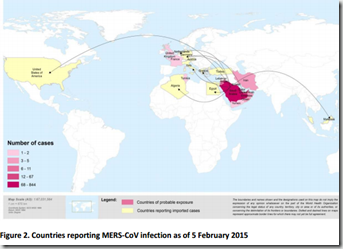
Joining the parade of recently published summaries and risks assessments on the MERS Coronavirus (see ECDC: Updated Rapid Risk Assessment On MERS-CoV & MMWR: MERS Epidemiological Update & Guidance), the World Health Organization has published a 10-page review of MERS cases, recent publications, and the risk assessment.


As before, they find both zoonotic transmission and nosocomial outbreaks to contribute to the ongoing stream of cases, as noted by WHO spokesperson Gregory Hartl on twitter earlier this morning.

image


While you’ll no doubt want to download and read the entire PDF file, I’ve excerpted a few passages below.


MERS-CoV: Summary of current situation, literature update and risk assessment – as of 5 February 2015

(EXCERPTS)

Summary and Risk Assessment


WHO is continuing to work with Ministries of Health in affected countries and with international partners to better understand the reasons for the increase in cases reported in the Spring of 2014. As previously reported, WHO/GOARN missions to SAU and UAE found that the upsurge in cases in both countries was due to several hospital-acquired outbreaks that resulted from a lack of systematic implementation of infection prevention and control measures.


Since mid-May, the numbers of cases in SAU and UAE have sharply declined. However, cases continue to be reported from SAU, some of which reflect nosocomial transmission in hospitals in Taif city, Jubail city, Eastern Region and Riyadh.

Although the number of cases reported from SAU has been relatively small, the cases occurred in several regions across SAU, suggesting that zoonotic transmission is allowing the virus to infect humans residing in several locations across the country, and that human-to-human transmission in healthcare settings continues. The risk of exported cases from SAU remains. Since the last update, three cases with exposure in SAU have been reported by Austria, Jordan and Turkey. No onward transmission has been observed in these three countries.

The WHO team concluded that the cluster of MERS-CoV cases in Kerman, Iran, in May and June 2014, showing epidemiological evidence of healthcare-associated transmission, could possibly have been caused by a combination of factors. These included inconsistent application of infection prevention and control measures in a healthcare setting at the beginning of the outbreak, as well as weakness in the surveillance system to actively follow and identify cases.

Surveillance has been enhanced and preparedness activities have been implemented in Kerman province and other parts of the country and there have been no reports of further cases in the affected hospital, in Kerman province, or the rest of the country.


Also in October, two cases were reported by Qatar. One case became ill while travelling from Qatar to SAU and sought medical treatment in Al-Hasa, SAU, and the other case had reported recent contact with camels and camel milk in Qatar. An estimated 1.4 million people travelled to SAU for Hajj in October 2014. Enhanced surveillance during Hajj, upon exit from the country and in the countries of the returning pilgrims did not identify any MERS-CoV cases.


Investigations in SAU and UAE took place in 2013-2014 to evaluate the role of asymptomatic PCRpositive cases in human-to-human transmission. It has been suggested that there may have been human-to-human transmission from asymptomatic cases in the UAE and SAU; however, in these instances, not all other potential sources of transmission have been ruled out. It is also currently not clear whether asymptomatic cases were asymptomatic at the time of reporting and remained asymptomatic, or later developed symptoms, as the follow-up of a number of recently reported asymptomatic cases have documented mild symptoms. Until more is known, and when resources allow, close monitoring and investigation of all contacts, including asymptomatic contacts, should be conducted.

Risk Assessment

Has the transmission pattern of MERS-CoV changed?


Based on available information from recent cases, there is neither evidence of sustained human-to human transmission in the community nor evidence of airborne transmission. Therefore, the overall transmission patterns previously observed remain unchanged. WHO bases this assessment on the evidence that:

  1. The clinical picture appears to be similar to that observed previously; secondary cases tend to present with milder disease than primary cases, and many of the recently reported secondary cases have been mild, or were people whose tests were positive for MERS-CoV but were asymptomatic;
  2. The cases recently exported to other countries have not resulted in sustained onward transmission to persons in close contact with these cases on airplanes or in the respective countries outside the Middle East ;
  3. Intensive screening of MERS-CoV contacts revealed very few instances of household transmission; and
    IV. There has been no increase in the size or number of observed household clusters.


Can we expect additional cases of MERS-CoV infection in the Middle East? And can we
expect additional cases exported to other countries?

WHO expects that additional cases of MERS-CoV infection will be reported from the Middle East, and it is likely that cases will continue to be exported to other countries by tourists, travellers, migrant workers or pilgrims who might acquire infection after exposure to an animal (for example, while visiting farms or markets) or human source (possibly in a health care setting). Until more is understood about mode of transmission and risk factors for infection, cases resulting from zoonotic transmission will continue to occur, and will eventually lead to limited community transmission within households and possibly significant hospital-associated outbreaks. Among the recently exported cases who reported performing Umrah in SAU, investigation into their activities while in SAU revealed that they had either visited a healthcare facility or had come into contact with camels or raw camel products while in SAU.


(Continue . . . )

Monday, August 18, 2014

WHO Update – Travel & Transport In Relation To Ebola Outbreak

image


# 8966


Last week the World Health Organization –  after seeing a number of air carriers refusing to service African nations – began to push back against the idea that air travel to Ebola-affected countries presented a high risk of infection to passengers and crew (see WHO: Ebola Poses `Low-Risk’ To Air Travelers).


The WHO has also consistently argued against the need for, or effectiveness of, of border closings or travel restrictions to affected countries.


Today the WHO revisits the issue in a press release that also announces the formation of a Travel and Transport Task Force which will `monitor the situation and provide timely information to the travel and tourism sector as well as to travellers’.


Even though it is based on the best available scientific evidence - given the fearsome reputation of Ebola, and the constant hyping of the threat by the media – this is not going to be an easy message to get across.


The problem is, cancellation of flights and/or shipping and trade in and out of Africa not only severely impacts both African and the global economies, it can seriously hamper relief efforts as well.  


This statement was emailed to journalists, but a live link will likely be posted on this page  shortly.


WHO Ebola News
18 August 2014

Travel and Transport in Relation to Ebola Virus Disease (EVD) Outbreak

The current Ebola Virus Disease (EVD) outbreak is believed to have begun in Guinea in December 2013. This outbreak now involves community transmission in Guinea, Liberia and Sierra Leone and recently an ill traveller from Liberia infected a small number of people in Nigeria with whom he had direct contact.


On 8 August 2014, the World Health Organization (WHO) declared the Ebola virus disease outbreak in West Africa a Public Health Emergency of International Concern (PHEIC) in accordance with the International Health Regulations (2005).

In order to support the global efforts to contain the spread of the disease and provide a coordinated international response for the travel and tourism sector, the heads of the World Health Organization (WHO), the International Civil Aviation Organization (ICAO), the World Tourism Organization (UNWTO), Airports Council International (ACI), International Air Transport Association (IATA) and the World Travel and Tourism Council (WTTC) decided to activate a Travel and Transport Task Force which will monitor the situation and provide timely information to the travel and tourism sector as well as to travellers.


The risk of transmission of Ebola virus disease during air travel is low. Unlike infections such as influenza or tuberculosis, Ebola is not spread by breathing air (and the airborne particles it contains) from an infected person. Transmission requires direct contact with blood, secretions, organs or other body fluids of infected living or dead persons or animals, all unlikely exposures for the average traveller. Travellers are, in any event, advised to avoid all such contacts and routinely practice careful hygiene, like hand washing.


The risk of getting infected on an aircraft is also small as sick persons usually feel so unwell that they cannot travel and infection requires direct contact with the body fluids of the infected person.


Most infections in Liberia, Guinea and Sierra Leone, are taking place in the community when family members or friends take care of someone who is ill or when funeral preparation and burial ceremonies do not follow strict infection prevention and control measures.


A second important place where transmission can occur is in clinics and other health care settings, when health care workers, patients, and other persons have unprotected contact with a person who is infected. In Nigeria, cases are related only to persons who had direct contact with a single traveller who was hospitalized upon arrival in Lagos.

It is important to note that a person who is infected is only able to spread the virus to others after the infected person has started to have symptoms. A person usually has no symptoms for two to 21 days (the “incubation period”). Symptoms include fever, weakness, muscle pain, headache and sore throat. This is followed by vomiting, diarrhoea, rash, and in some cases, bleeding.


The risk of a traveller becoming infected with the Ebola virus during a visit to the affected countries and developing disease after returning is very low, even if the visit includes travel to areas in which cases have been reported.


If a person, including a traveller, stayed in the areas where Ebola cases have been recently reported, he/she should seek medical attention at the first sign of illness (fever, headache, achiness, sore throat, diarrhoea, vomiting, stomach pain, rash, red eyes, and in some cases, bleeding). Early treatment can improve prognosis.


Strengthened international cooperation is needed, and should support action to contain the virus, stop transmission to other countries and mitigate the effects in those affected.


Affected countries are requested to conduct exit screening of all persons at international airports, seaports and major land crossings, for unexplained febrile illness consistent with potential Ebola infection. Any person with an illness consistent with EVD should not be allowed to travel unless the travel is part of an appropriate medical evacuation. There should be no international travel of Ebola contacts or cases, unless the travel is part of an appropriate medical evacuation.

Non-affected countries need to strengthen the capacity to detect and immediately contain new cases, while avoiding measures that will create unnecessary interference with international travel or trade.

The World Health Organization (WHO) does not recommend any ban on international travel or trade, in accordance with advice from the WHO Ebola Emergency Committee.

Travel restrictions and active screening of passengers on arrival at sea ports, airports or ground crossings in non-affected countries that do not share borders with affected countries are not currently recommended by WHO.


Worldwide, countries should provide their citizens traveling to Ebola-affected countries with accurate and relevant information on the Ebola outbreak and measures to reduce the risk of exposure.


More information on Ebola outbreak in Western Africa:
http://www.who.int/csr/disease/ebola/en/

WHO media contacts:
Gregory Härtl
Telephone: +41 22 791 4458; Mobile: +41 79 203 6715; Email: hartlg@who.int
Fadéla Chaib
Telephone: + 41 22 791 3228;Mobile:+ 41 79 475 55 56; Email: chaibf@who.int

Thursday, April 24, 2014

WHO Risk Assessment: MERS-CoV (April 24th, 2014)


image

Coronavirus – Credit CDC PHIL


# 8525


The World Health Organization has released an updated Risk Assessment on the MERS coronavirus, which is available in PDF format on their Coronavirus Infections page.  I’ve only posted some extended excerpts, download the full pdf file to read it in its entirety.

WHO RISK ASSESSMENT


Middle East respiratory syndrome coronavirus (MERS‐CoV)
24 April 2014


Summary of available information

Since April 2012, 254 laboratory-confirmed cases of human infection with Middle East respiratory syndrome coronavirus (MERS‐CoV) have been reported to WHO, including 93 deaths. To date, reporting countries in the Middle East include Jordan, Kuwait, Oman, Qatar,Kingdom of Saudi Arabia (KSA) and the United Arab Emirates (UAE); in Europe: France,Germany, Greece, Italy and the United Kingdom (UK); in North Africa: Tunisia; and in Asia:Malaysia and the Philippines.

The occurrence of new cases seems to follow a seasonal pattern, with increasing incidence from March-April onwards. The number of cases sharply increased since mid-March 2014, essentially n KSA and UAE, where two important healthcare-associated outbreaks are occurring.

As much as 75% of the recently reported cases appear to be secondary cases, meaning that they are considered to have acquired the infection from another ifected person. The majority of these secondary cases are mainly healthcare workers who have been infected within the healthcare setting, although several patients who were in the hospital for other reasons are also considered to have been infected with MERS‐CoV in the hospital. The majority of the infected healthcare workers presented with no or minor symptoms. Only four instances of transmission within households have been reported, and no large family cluster has been identified. When human‐to‐human transmission occurred, transmission was not sustained, and to date only two possible tertiary cases have been reported.

The number of cases who acquired the infection in the community has also increased since mid-March. These cases have no reported contacts with other laboratory confirmed cases, and some have reported contacts with animals. Although camels are suspected to be the primary source of infection for humans, the exact routes of direct or indirect exposure remain unknown.

Investigations to identify the source of infection and routes of exposure are still ongoing.Several of the recent cases acquired the infection in KSA or UAE and then travelled to another country, including Greece (1 case), Jordan (1 case), Malaysia (1 case), and the Philippines (1 case). No further transmission has been documented so far. Of note, exported cases occurred in the past that resulted in limited further human‐to‐human transmission (France and UK).

In view of the increasing number of cases – in particular secondary cases, nosocomial outbreaks and exported cases – the WHO risk assessment has been revisited to determine whether transmission pattern has changed and whether sustained community transmission is occurring.

Risk assessment
This risk assessment is based on currently available data and knowledge, and will be updated as more information is made available. The investigations are still ongoing and new findings on, for example, exposures to animal and/or environmental source, transmission chains, risk factors for infection among primary cases and healthcare workers, and serological investigations will be critical to make the risk assessment more robust.

Has the transmission pattern of MERS-CoV changed?

The majority of the cases now reported have likely acquired infection through human‐to‐human transmission and only about a quarter are considered as primary cases, which suggests slightly more human‐to‐human transmission than previously observed.

One hypothesis is that the transmission pattern and transmissibility have not changed and that the occurrence of two large nosocomial outbreaks reflects inadequate infection prevention and control measures, coupled with intensive contact tracing and screening. Several elements would support this hypothesis: i) the clinical picture appears to be similar to what was observed earlier; secondary cases tend to present with a milder disease than that of primary cases;
however, we note that many secondary cases have been reported as asymptomatic; ii) only 2 possible tertiary cases have been reported; iii) the recent exported cases did not transmit further; iv) screening of contacts revealed very few instances of household transmission; and v) no increase in the size or number of household or community clusters has been observed.

An alternative hypothesis is that transmissibility of the virus has increased and is resulting in more human‐to‐human transmission as the basis for the recent upswing in cases. It is possible that current levels of surveillance are missing cases of mild infection within the community. At this point, there is insufficient information on the recent cases to definitively exclude these hypotheses.

Can we expect additional cases of MERS‐CoV infection in the Middle‐East countries?

The way humans become infected from an animal and/or environmental source is still under investigation. More individuals are likely to be infected until the mode of transmission is determined and preventive measures implemented to break transmission from the source to humans. For the third consecutive year, the number of cases increase in March‐April and it is very likely that more primary cases will occur, and consequently further transmission will occur.

Can we expect additional cases exported to other countries and further transmission?

It is very likely that cases will continue to be exported to other countries, through tourists, travellers, guestworkers or pilgrims, who might acquire the infection following an exposure to the animal or environmental source, or to other cases, in a hospital for instance. Whether these cases will further transmit will depend of the capacity of the receiving country to rapidly detect, diagnose and implement appropriate infection prevention and control measures. Of note, further transmission from exported cases did occur in the past, but transmission was not sustained.

(Continue . . . )

Friday, April 18, 2014

ECDC: MERS-CoV Epidemiological Update & Risk Assessment


image

Credit ECDC


# 8492


As part of their larger overall weekly Communicable Disease Threats report, the ECDC today has updated their assessment of the MERS outbreak in the Middle East. 


Middle East respiratory syndrome- coronavirus (MERS CoV) – Multistate


Opening date: 24 September 2012 Latest update: 17 April 2014


Epidemiological summary

Since April 2012 and as of 18 April 2014, 275 laboratory-confirmed cases of MERS-CoV have been reported by local health authorities worldwide, including 98 deaths and 64 healthcare workers. The following countries have reported MERS-CoV cases:


Saudi Arabia: 212 cases / 72 deaths
United Arab Emirates: 33 cases / 9 deaths
Qatar: 7 cases / 4 deaths
Jordan: 4 cases / 3 deaths
Oman: 2 cases / 2 deaths
Kuwait: 3 cases / 1 death
UK: 4 cases / 3 deaths
Germany: 2 cases / 1 death
France: 2 cases / 1 death
Italy: 1 case / 0 death
Tunisia: 3 cases / 1 death
Malaysia: 1 case / 1 death
Philippines: 1 case / 0 death

Fourteen cases have been reported from outside the Middle East: the UK (4), France (2), Tunisia (3), Germany (2), Italy (1), Malaysia (1) and Philippines (1). In France, Tunisia and the UK, there has been local transmission among patients who had not been to the Middle East, but had been in close contact with laboratory-confirmed or probable cases. Person-to-person transmission has occurred both among close contacts and in healthcare facilities.


In the first 18 days of April 2014, 57 cases (21% of total cases) have been reported, 29 of whom are healthcare workers (51%) and 21 are asymptomatic cases. In the United Arab Emirates, a cluster of 14 healthcare workers (including one case exposed in UAE and reported by the Philippines) has been reported during the past week. They all had had contact with a previously reported case, who died on 10 April 2014. Eight of the cases had mild symptoms and six were asymptomatic.


In Saudi Arabia, during the past week, 30 cases have all occurred in Jeddah, including 11 healthcare workers; five cases were fatal and eight were asymptomatic.


The first cases reported in Asia have occurred in people returning from the Middle East:

  • The case from the Philippines is an asymptomatic healthcare worker returning from the United Arab Emirates.
  • The case in Malaysia was in a 54-year-old man who returned from Saudi Arabia after Umrah on 29 March 2014. He developed symptoms (fever, coughing) around 8 April 2014. On 10 April 2014, he was admitted to hospital and died on 13 April 2014. The Malaysian health authorities are conducting prevention and control activities including monitoring close contacts of the case.

ECDC assessment

The source of MERS-CoV infection and the mode of transmission have not been identified, but the continued detection of cases in the Middle East indicates that there is an ongoing source of infection in the region. Dromedary camels are likely an important host species for the virus, and many of the primary cases in clusters have reported direct or indirect camel exposures. Almost all of the recently reported secondary cases, many of whom are asymptomatic or have only mild symptoms, have been acquired in healthcare settings. There is therefore a continued risk of cases presenting in Europe following exposure in the Middle East and international surveillance for MERS-CoV cases is essential. An international case-control study has been designed and proposed by WHO. Results of this or similar epidemiological studies to determine the initial exposures and risk behaviours among the primary cases are urgently needed.


The risk of secondary transmission in the EU remains low and can be reduced further through screening for exposure among patients presenting with respiratory symptoms and their contacts, and strict implementation of infection prevention and control measures for patients under investigation. The case detected in Malaysia last week had participated in the muslim pilgrimage Umrah. However, more details are needed on possible and suspected exposure events and it is possible that these cases were also infected when visiting healthcare facilities in the region.


The Malaysian authorities have asked all passengers travelling on the flights with the case detected in Malaysia on 29 March to be screened for health complaints.


The Philippines authorities have asked all passengers travelling with the Filipino case detected on 15 April to be screened for signs and symptoms of MERS-CoV infection, while the department of health is also actively contact tracing passengers.

(Continue . . . )

Tuesday, March 11, 2014

WHO: Current H7N9 Risk Assessment

image

Two distinct waves of H7N9 – Credit WHO Risk Assessment


# 8368


Since the initial outbreak was announced last spring, the World Health Organization has released total of five Rapid Risk Assessments on the emerging H7N9 virus in China (all available at this link). Today, the WHO updated their assessment with a short announcement (below), which references their latest in-depth analysis of the H7N9 virus, dated February 28th.


WHO Risk Assessment of human infection with avian influenza A(H7N9) virus

On 11 March 2014 WHO conducted a risk assessment in accordance with the WHO recommendations for rapid risk assessment of acute public health events.

Taking into consideration all information available to date to WHO, it is concluded that the public health risk from avian influenza A(H7N9) virus has not changed since the previous assessment of 28 February 2014.


Below you’ll find some excerpts from this most recent analysis, and a link to the entire 4-page document.


WHO RISK ASSESSMENT


Human infections with avian influenza A(H7N9) virus

28 February 2014

Summary of surveillance and investigation findings
Human cases of avian influenza A(H7N9) virus infection to date 


A total of 375  laboratory-confirmed cases of human infection with avian influenza A(H7N9) virus, including 115 deaths, have been reported to WHO: 367 cases by China National Health and Family Planning Commission, two cases by the Taipei Centers for Disease Control (Taipei CDC), five cases by the Centre for Health Protection, China, Hong Kong SAR, and one case in a Chinese traveller, reported from Malaysia. The cases occurred in a first wave (n=133) from February to May 2013; then two cases were reported in July and August; and from October 2013 a second wave of human cases has been occurring (n= 240 to date) (fig 1)1.

Cases have been reported in both men and women, and across a wide age range. The age distribution in the second wave is very similar to the first wave, with most cases occurring in middle-aged and older men, few in children and even fewer in teenagers and young adults. The mean age is slightly lower in the second wave (53 versus 58 years) compared with the first wave. Infections in men are still more frequently reported than those in women. The case fatality rate among reported cases in the second wave is currently similar to that of the 30% reported in the first wave, though it might increase as some patients are still hospitalized
in critical condition. Similar to the first wave, most of the cases in the second wave were considered severe, with the exception of children, who have been primarily presenting with a milder clinical picture. 

Virus characteristics

Comparison of avian influenza A(H7N9) viruses isolated from humans and environmental samples using haemagglutination inhibition assays shows that limited antigenic diversity exists and they remain antigenically similar to the candidate vaccine viruses derived from A/Anhui/1/2013-like viruses. Unlike the surface genes, the internal genes were more diverse through reassortment with avian influenza A(H9N2) viruses. All recent avian influenza A(H7N9) viruses that have been tested remain susceptible to the neuraminidase inhibitor class of antiviral drugs. See also

http://www.who.int/influenza/vaccines/virus/201402_h5h7h9h10_vaccinevirusupdate.pdf.

 
Source of human infection


Although much remains unknown about this virus, such as (1) the animal reservoir(s) in which it is circulating, (2) the main exposures and routes of transmission to humans, and (3) the distribution and prevalence of this virus among people and animals (including the distribution in wild birds), human infection appears to be associated with exposure to infected live poultry or contaminated environments, including markets where live poultry are sold, given the following: 
  • Around 80% of human cases report a history of exposure to birds or live poultry markets. 
  • The viruses isolated from humans are avian influenza viruses and genetically similar to those
    isolated from birds and the environment.
  • Targeted testing of poultry and environment in live poultry markets that are
    epidemiologically linked with human cases of H7N9 infection have revealed more positive
    results than testing in areas not linked with human cases.


Current evidence suggests that these avian influenza A(H7N9) viruses do not transmit easily from poultry or environments to humans, although their transmissibility may be greater compared with highly pathogenic avian influenza A(H5N1) viruses. 

Evidence regarding human-to-human transmission


Information to date suggests that this virus does not transmit easily from human to human, and does not support sustained human-to-human transmission.  The number of clusters of human cases remains comparable to the first wave. Since July, six small family clusters (of 2 to 3 family members) with possible household transmission were reported. With the exception of the family clusters, enhanced surveillance has not revealed additional human infections among contacts of confirmed cases so far in the second wave. Considering that a few cases of H7N9 infection since October were detected through influenza-like illness (ILI) surveillance, continued vigilance is warranted. 

Risk assessment

This 25 February 2014 risk assessment has been prepared in accordance with WHO’s published recommendations for rapid risk assessment of acute public health events and will be updated as more information becomes available. 


Overall, the public health risk from avian influenza A(H7N9) virus has not changed since the previous assessment published on 21 January 20142


.  
What is the likelihood that additional sporadic human cases of infection with avian influenza A(H7N9) viruses will occur?


The understanding of the epidemiology associated with this virus, including the main reservoirs of the virus and the extent of its geographic spread among animals, remains limited. However, it is likely that most human cases were exposed to the H7N9 virus through contact with infected poultry or contaminated environments, including markets (official or illegal) that sell live poultry. As the virus source has not been identified nor  controlled, and the virus continues to be detected in animals and environments, further sporadic human cases are expected in affected and possibly neighbouring areas. 


Other avian influenza viruses such as highly pathogenic avian influenza A(H5N1) have demonstrated a seasonal pattern in which animal outbreaks and human cases have been less frequent in summer months and more frequent in winter months in temperate zones. An increase in avian influenza A(H7N9) virus infections in humans has been noted since October 2013, after a period of relatively few human cases over the summer, indicating that exposure to or infection with these avian influenza A(H7N9) viruses may follow a similar seasonal pattern. 

(Continue . . .)


Tuesday, March 04, 2014

ECDC: 2013-14 Seasonal Influenza Risk Assessment

image

ECDC Weekly Infographic On Influenza


# 8346


Each year, usually in late February, the ECDC releases an updated Risk Assessment on their current influenza season, comparing it to previous years, and to reports coming from other regions around the world. 


Compared to North America, Europe’s flu season got off to a later start and hasn’t been anywhere near as A(H1)pdm09-dominated (or as severe) as what we’ve experienced on this side of the pond this year. 


From the Report:

In contrast to the season in the US with an overwhelming dominance of A(H1)pdm09 virus and substantial numbers of severe cases, A(H1)pdm09 virus is not as dominant in EU/EEA countries, possibly due to differences in prior exposure to A(H1)pdm09 virus or higher vaccination coverage among the age groups most likely to transmit the disease. In countries not yet affected, the pressure on primary and secondary care services is likely to be less intense than in the US.  


This year’s report (13-page PDF file) was posted today on the ECDC website. You’ll find their summary below, along with links to the report.


Seasonal influenza in Europe: ECDC risk assessment for the 2013-2014 season

04 Mar 2014

​Active circulation of influenza has started late in Europe in the 2013-2014 season, with a different timing across EU/EEA countries, states the annual ECDC risk assessment on seasonal influenza. The first countries affected have been Bulgaria, Greece, Portugal and Spain, where the A(H1)pdm09 influenza virus has dominated. Without any specific geographic pattern, influenza activity has since spread rapidly across Europe. In Bulgaria, Portugal and Spain, the season peaked in weeks 4 and 5/2014, while influenza activity still continues to increase in Greece.

Circulating virus types

In week 07/2014, circulating A(H1)pdm09 virus was dominant or co-dominant in 21 reporting countries while A(H3) was dominant in four countries. In contrast to the season in the US with an overwhelming dominance of A(H1)pdm09 virus and substantial numbers of severe cases, A(H1)pdm09 virus is not as dominant in EU/EEA countries. This may be due to differences in prior exposure to A(H1)pdm09 virus or higher vaccination coverage among the age groups most likely to transmit the disease.

Vaccine effectiveness

Data on viruses circulating so far indicate a good match with the current influenza vaccine. North American studies estimate high to moderate vaccine effectiveness, while a mid-season study from one Spanish region, Navarre, suggests lower effectiveness. This warrants further studies to understand the discrepancies. Vaccination of high-risk groups and healthcare workers, in accordance with national guidelines, in countries that are still at an early stage in their influenza season remains the most effective way of reducing serious outcomes and transmission of the disease.


Risk assessment for the remaining season

  • In countries with A(H1)pdm09 circulating, especially in countries where influenza activity has already peaked, a later circulation of A(H3) virus is possible. In the event of A(H3) virus circulation, some severe cases are likely, most probably in people older than those typically infected by A(H1)pdm09 virus.
  • In countries currently with no/low influenza activity, the dominant influenza virus strain and the intensity are unpredictable, but are likely to be similar to that observed in countries that have already passed their intensity peak (Bulgaria, Portugal and Spain). However, differences in vaccination coverage and natural immunity may influence both intensity and the number of severe cases.
  • In the few countries where A(H3) virus has been dominant so far, a second wave or a co-circulation of A(H1)pdm09 virus is possible.

Read full report: Seasonal influenza 2013-2014 in EU/EEA countries

More on seasonal influenza

Weekly infographic on Influenza in Europe 

Wednesday, January 22, 2014

WHO Risk Assessment On H7N9 – January 21st

image

1st & 2nd Wave of H7N9 – WHO Risk Assessment


# 8207


My thanks to @lisaschnirring for tweeting the link to the World Health Organization’s latest risk assessment on the H7N9 virus.   Among the highlights, this month’s assessment finds:


  • the HA and NA genes remain similar to the viruses isolated during the first wave
  • human infection appears to be associated with exposure to live poultry or contaminated environments
  • Information to date does not support sustained human-to-human transmission.
  • the H7N9 virus is expected to be sensitive to neuraminidase inhibitors


I’ve included some excerpts, but follow the link to read the document in its entirety.


WHO RISK ASSESSMENT

Human infections with avian influenza A(H7N9) virus
21 January 2014

Summary of surveillance and investigation findings

Human cases of influenza A(H7N9) virus infection to date 

Laboratory-confirmed cases of human infection with avian influenza A(H7N9) virus have been reported so far to WHO by the China National Health and Family Planning Commission, the Centre for Health Protection, China, Hong Kong SAR, and the Taipei Centers for Disease Control (Taipei CDC).  The cases occurred in an initial wave (n=133) from February to May 2013, then two cases were reported in July and August, and since October 2013 a second wave of human cases has been occurring (n=74 thus far) (fig 1)1 . Cases have been reported in both men and women, and across a wide range of ages. In the first wave most cases have occurred in middle-aged or older men. The age distribution in the second wave thus far is not as skewed to older adult age groups; only one child and no teenagers have been affected. The mean age is slightly lower in the second wave (52 versus 58 years) than in the first wave. Infections in men are still more frequently reported than in women.


Based on current information, the case fatality rate (CFR) during the second wave is yet not equalling the CFR of the first wave. This needs to be monitored closely, as many patients are still hospitalised. Although milder cases have been reported, the clinical presentation of the reported H7N9 virus infection remains primarily rapidly progressing severe pneumonia. Atypical clinical presentation for influenza has not been reported. 

<SNIP>

Risk assessment
This 21 January 2014 risk assessment has been prepared in accordance with WHO’s published recommendations for rapid risk assessment of acute public health events and will be updated as more information becomes available. 


Overall, the public health risk from avian influenza A(H7N9) virus has not changed since the previous assessment published on 20 December 20133

(Continue . . . )


.  

Friday, January 17, 2014

Chinese NHFPC: H7N9 Pandemic `Unlikely’

image


# 8180


With new cases being reported on a daily basis, and China’s biggest holiday and travel season (Lunar New Year) just two weeks away, China’s NHFPC has issued an opinion on the current risks posed by the H7N9 virus, calling a pandemic `unlikely’.


First, this report from Xinhua News, followed by a link and an excerpt from the actual statement.


H7N9 epidemic unlikely: health watchdog

English.news.cn   2014-01-17 20:12:45
 

BEIJING, Jan. 17 (Xinhua) -- China's National Health and Family Planning Commission said on Friday that a large-scale H7N9 epidemic is unlikely, following 28 cases reported nationwide this year.


"Current cases are scattered, and no mutation of the virus has been idntified so far that could affect public health," said a Friday statement from the commission.


The 28 cases of human infection of H7N9 so far were reported in east China's coastal regions of Shanghai, Zhejiang and Jiangsu as well as south China's Guizhou and Guangdong provinces.


Guangdong reported on Thursday two new cases of human H7N9, and another avian flu patient that died on Wednesday after treatment failed.


"The virus is still spreading from birds to human, and the chances of large-scale human H7N9 infection are slim," the statement said, citing experts.


However, the commission noted that cases will keep rising as the country's urban and rural fowl markets are scattered while the transporation and trade of poultry will become more frequent to meet the demand around the upcoming Spring Festival.


The commission urged local health departments to strengthen monitoring and step up treatment of patients while carrying out detailed prevention and control measures and timely risk evaluations.


Here is the (machine translated) statement from the NHFPC .


National Health and Family Planning Commission recently informed people infected with H7N9 bird flu prevention and control work

National Health and Family Planning Commission of the People's Republic 2014-01-17

A recent human infection of H7N9 avian influenza situation and the situation is judged

Into winter quarters in 2013 to strengthen our country and around the ILI unexplained pneumonia surveillance, strengthening of human infection with H7N9 avian influenza. Since January 2014, Zhejiang and Guangdong provinces, five confirmed cases were found in 28 cases cases cases were sporadic. Up to now, monitoring found no public health significance of virus occurrence of variation. Experts judged that since the transmission of the virus is still the birds to people, urban and rural prevalence of live poultry market transactions, backyard poultry in the short term is difficult to eliminate the phenomenon, coupled with the Spring Festival approaching, live poultry transport, trade and consumption of more frequent, our China will continue to appear human infection with H7N9 avian influenza sporadic cases, but the small possibility of a pandemic.

(Continue . . . )


I think that it is fair to say, as long as this virus does not acquire new mutations that allow it to adapt better to transmitting between humans, the pandemic risk remains low.  


When (or even if) such changes will ever occur is unknown.


But given the severity of many of the infections we’ve seen, the presumed lack of global immunity to H7 influenza viruses, and the fact that influenza viruses are constantly evolving - even a low risk of a pandemic makes this virus one to watch closely.

Friday, December 20, 2013

ECDC Epidemiological Update On H7N9 In China

image

Credit ECDC 


# 8093


After a relatively quiet summer, the H7N9 avian flu virus has returned this fall infecting at least a dozen people in China since October.  Public health officials fully expect that we’ll see more cases in the coming months, and are particularly concerned over the travel plans of millions of people across Asia during the upcoming Lunar New Year’s Celebration (Jan 31st).


Today the ECDC has published a new Epidemiological Update on this emerging avian flu virus, which is current through the last reported case in Shenzhen on Wednesday of this week.


After reviewing the data to date, the ECDC’s Risk Assessment at the end of this report illustrates the concern which many scientists and public health officials have regarding this virus.  They warn that public health authorities in the EU should be prepared for the importation of this virus, and close by stating::


ECDC’s view is that if this virus persists in poultry, it will represent a significant long-term threat, either as a zoonosis or perhaps a pandemic virus. Both eventualities should be prepared for.


Follow the link below for the full report (including some excellent graphics), as I’ve only excerpted part of this assessment.


Epidemiological update: A(H7N9) influenza virus, China

20 Dec 2013

​In March 2013, Chinese authorities announced the identification of a novel reassortant A(H7N9) avian influenza virus in patients in eastern China.

Since then, human cases have continued to be reported and, as of 19 December 2013, there have been 147 laboratory-confirmed cases from: Zhejiang (51 cases), Shanghai (34), Jiangsu (27), Fujian (5),  Guangdong (6), Jiangxi (5), Henan (4), Anhui (4), Hunan (3), Beijing (2), Shandong (2), Hong Kong (2), Hebei (1) and Taiwan (1).

Since October 2013, twelve new cases have been reported, ten cases have occurred in two previously affected provinces (Zhejiang and Guangdong) and two cases have been reported in Hong Kong.

Figure 2: Distribution of confirmed cases of avian influenza A(H7N9), by date of reporting, week 14 to 51, 2013 (as of 19 December 2013, n=147)

Most cases have developed severe respiratory disease. Forty-seven patients have died (case-fatality ratio=32%). The average age is 60 years, ranging from 3 to 91 years; 98 of 147 patients are male, and gender is unknown in five cases.


A few small clusters have been detected but almost all cases have occurred sporadically, without obvious epidemiological links. While occasional human-to-human transmission in the clusters cannot be ruled out, there is no confirmed sustained human-to-human transmission. While most cases have developed severe disease, a few mild cases have been detected.


Most human A(H7N9) cases have reported contact with poultry or live bird markets. The most plausible underlying scenario is of a zoonotic avian influenza that has spread or is spreading in poultry in parts of eastern China. It is a severe threat to humans because of its lethal effect in 32% of human cases and genetic features that have human pandemic potential.


ECDC continues to monitor information on avian influenza A(H7N9). The assessment provided in the ECDC rapid risk assessment (RRA) of 8 May 2013 remains valid.


EU citizens living or working in China are strongly advised to avoid live-bird markets. A likely scenario involves travellers who get infected in China and import the disease to Europe. Public health authorities should be prepared for the importation of the disease. However, the occurrence of imported cases would not change ECDC’s risk assessment.


ECDC’s view is that if this virus persists in poultry, it will represent a significant long-term threat, either as a zoonosis or perhaps a pandemic virus. Both eventualities should be prepared for.

(Continue . . . )

Monday, October 21, 2013

ECDC: Joint Scientific Opinion On Likelihood Of H3N2v Spreading To Europe

image

Reassortment of H3N2v - Credit CDC


# 7882


In 2011 a new strain of swine influenza  - originally dubbed trH3N2 but renamed H3N2v (swine variant influenza) in late 2011 – was discovered to have evolved in American pigs.  What made this virus different from the earlier trH3N2 novel strains was that it was a reassortant swine H3N2 which had acquired the matrix (M) gene from the 2009 H1N1 pandemic virus.


We first heard about this new strain on Sept. 2nd, 2011, via an early release from the CDC’s MMWR, which described two young children – one in Indiana and another in Pennsylvania - who were infected by a new swine-origin H3N2 virus (see Swine-Origin Influenza A (H3N2) Virus Infection in Two Children --- Indiana and Pennsylvania, July--August 2011). 


While these first two cases first appeared to be one-off, dead end transmissions, it was only a few days later that Pennsylvania Reported 2 More Novel Flu Cases.  On September 9th, 2011 the CDC updated their SOIV (Swine Origin Influenza Virus) page (see CDC Update On Recent Novel Swine Flu Cases), acknowledging the possibility that limited human-to-human transmission of this trH3N2 virus might be occurring.


By the end of 2011, 12 cases had been reported across 5 states.  While most human infections with this virus have only produced mild to moderate illness - as a precaution - in December of 2011 the CDC announced their intention of Developing A trH3N2 Seed Vaccine.


In 2012 more than 300 swine `variant’ infections were confirmed (see A Variant Swine Flu Review) in the United States, mostly linked to attendance of state and county fairs. Based on recently published studies, this was likely a substantial undercount (see CID Journal: Estimates Of Human Infection From H3N2v (Jul 2011-Apr 2012).


This year has seen far fewer reported infections, with just 19 cases reported thus far.  Exactly why we’ve seen this drop off isn’t clear, although better biosecurity at swine exhibits and improved hygiene by those in direct contact with pigs may be partially responsible.

image


Recently, scientists in Korea revealed they had found an H3N2v virus genetically closely related to the strains seen in the United States (see Study: Novel & Variant Swine Influenzas In Korean Pigs). Other regions  – particularly in Europe and Hong Kong -  have increased surveillance of their swine herds, looking for any signs this variant virus has shown up in their livestock as well.  


All of which serves as prelude to a report from the ECDC today on a recent joint scientific assessment of the risks of H3N2v showing up in European swine.   While they consider the risks to be low, they also acknowledge that:


It is not possible to predict which changes within H3N2v virus might  enable it to develop pandemic properties. Hence, it is not possible at present to set up a specific system to monitor such a risk. Nevertheless, it is recommended to reinforce the monitoring of influenza strains circulating in pigs in EU.


Follow the link below to access the full report.


Joint scientific opinion assesses the likelihood of swine-origin influenza A(H3N2) in the EU as low

21 Oct 2013

Influenza A(H3N2v) risks in EU

​The likelihood of the swine-origin influenza A(H3N2)v appearing in the EU is low. Nevertheless, it is important to reinforce the monitoring of influenza strains circulating in pigs and link this to surveillance of influenza viruses in humans concludes the joint scientific opinion of three EU agencies, European Food Safety Authority, European Medicines Agency and European Centre for Disease Prevention and Control. The opinion assesses and advises on the possible risks posed by influenza A(H3N2)v virus for animal health and the potential implications for animal and human health.

Pigs are an important host in influenza virus ecology since they are susceptible to infections with both avian and human influenza A viruses and can play a role in interspecies transmission. This can lead to co-infection and genetic reassortment of viruses of swine, human or avian origin.

In 2011, the United States of America reported a cluster of cases of human infection with a swine-origin influenza A(H3N2) variant virus H3N2v. In 2012, 309 influenza H3N2v virus infections in humans were identified in the US and 12 cases so far in 2013.


The joint scientific opinion assesses the following:

  • risk of introduction of H3N2v in EU
  • diagnostic capabilities to early detect H3N2v incursion in EU
  • implications and consequences of the possible evolution of H3N2v virus on pig health
  • the use of vaccines in relation to the possible evolution of variants of influenza viruses posing a risk to public and animal health
  • factors to be monitored that would suggest a risk for the emergence of a new pandemic influenza strain from the influenza A(H3N2v) virus


The joint opinion concludes that it is recommended to reinforce the monitoring of influenza strains circulating in pigs in EU because it is not possible to predict nor monitor changes to the H3N2v virus that might enable it to develop pandemic properties.

Links: - Joint scientific opinion on influenza A(H3N2)


Wednesday, October 16, 2013

H7N9: WHO Update & Risk Assessment

image

# 7862


The World Health Organization has published the following GAR (Global Alert & Response) update on yesterday’s announced H7N9 case out of Zhejiang Province, China.  The WHO counts 136 total cases, of which 45 have died.


Human infection with avian influenza A(H7N9) virus – update

Disease outbreak news

16 October 2013 - The National Health and Family Planning Commission, China notified WHO of a new laboratory-confirmed case of human infection with avian influenza A(H7N9) virus. This is the first new confirmed case of human infection with avian influenza A(H7N9) virus since 11 August 2013.


The patient is a 35-year-old man from Zhejiang Province. He was admitted to a hospital on 8 October 2013 and is in a critical condition. Additionally, a previously laboratory-confirmed patient from Hebei has died.


To date, WHO has been informed of a total of 136 laboratory-confirmed human cases with avian influenza A(H7N9) virus infection including 45 deaths. Currently, three patients are hospitalized and 88 have been discharged. So far, there is no evidence of sustainable human-to-human transmission.


The Chinese government continues to take strict monitoring, prevention and control measures, including: strengthening of epidemic surveillance and analysis; deployment of medical treatment; conducting public risk communication and information dissemination; strengthening international cooperation and exchanges; and is continuing to carry out scientific research.


WHO does not advise special screening at points of entry with regard to this event, nor does it currently recommend any travel or trade restrictions.


On October 7th, the World Health Organization published an updated  Influenza at the human-animal interface Summary and assessment,  which contained the following risk assessment on the H7N9 virus.


Avian influenza A(H7N9) in China

Since the last update of 26 August 2013, China has reported no new cases of human infection with avian influenza A(H7N9) virus, but reported one death in a previously reported case. As of 7 October 2013, 135 human cases of influenza A(H7N9) virus infection were reported to WHO. Of these cases, 45 died. Most human cases presented with pneumonia.

Most human A(H7N9) cases have reported contact with poultry or live animal markets. Knowledge about the main virus reservoirs and the extent and distribution of the virus in animals remains limited and, because it causes only subclinical infections in poultry, it is possible that the virus continues to circulate in China and perhaps in neighboring countries. As such, reports of additional human cases and infections in animals would not be unexpected, especially as the Northern Hemisphere autumn approaches.  Although four small family clusters have been reported among previous cases, evidence does not support sustained human-to-human transmission of this virus.

Overall public health risk assessment for avian influenza A(H7N9) virus: Sporadic human cases and small clusters would not be unexpected in previously affected and possibly neighboring areas/countries of China. The current likelihood of community level spread of this virus is considered low.

Continued vigilance is needed within China and neighboring areas to detect infections in animals and humans. WHO advises countries to continue surveillance and other preparedness actions, including ensuring appropriate laboratory capacity. All human infections with non-seasonal influenza viruses such as avian influenza A(H7N9) are reportable to WHO under the IHR (2005).


Current technical information as well as guidance related to avian influenza A(H7N9) can be found at: http://www.who.int/influenza/human_animal_interface/influenza_h7n9/en/index.html

Wednesday, June 19, 2013

ECDC: Updated MERS-CoV Rapid Risk Assessment


image


# 7408


The ECDC, which last updated their MERS-CoV Risk Assessment in mid-May, has published an impressive update today that adds:


  • Updated epidemiological situation including cases in new EU country
  • Guidance on aircraft contact tracing
  • Incubation period extended to 14 days
  • Guidance to travelers to the Middle East.


In this update the authors express – on more than one occasion – their concerns over the lack of data being provided on cases from inside Saudi Arabia (e.g. reservoir host, risk groups, incubation period, mode of transmission, etc.) despite `the requirements formulated in Article 6.2 of the 2005 International Health Regulations.’


Citing the difficulties in making an accurate risk assessment when `insufficient data’ is being provided, the authors warn:

Consequently, it is not possible to estimate the disease risk with any degree of accuracy. As a result, ECDC has to consider a number of underlying scenarios that are compatible with the information available.

At this stage, it is not possible to exclude a future SARS-like scenario, especially in the light of the hospital-related outbreaks in Jordan and Al-Ahsa, Saudi Arabia.


This undercurrent of frustration over the lack of epidemiological data surfaces again in the final statement in their conclusions section, which reads:


  • These conclusions should be viewed in the light of the many uncertainties surrounding the investigation of cases in the Middle East. It is unusual to have such a degree of uncertainty at this stage in an outbreak.


As we’ve come to expect from the ECDC, this risk assessment does a great job summarizing what we know (and don’t know) about this emerging threat, provides some new graphics, and is well worth reading in its entirety.


The news release, along with links to the revised document follow:


Middle East respiratory syndrome coronavirus: updated guidance in ECDC Rapid Risk Assessment

19 Jun 2013

Middle East respiratory syndrome coronavirus: updated guidance in ECDC Rapid Risk Assessment

ECDC

The latest update of ECDC Rapid Risk Assessment on Middle East respiratory syndrome coronavirus(MERS-CoV) addresses:

  • Epidemiological situation since publication of the previous Rapid Risk Assessment on 17 May
  • Guidance on contact tracing, including aircraft contact tracing
  • Extension of the incubation period to 14 days, in line with WHO decision
  • Guidance to EU travellers to the Middle East.


As of 17 June 2013, 64 cases of MERS-CoV have been reported worldwide, including 38 deaths. All cases remain associated with transmission in the Arabian Peninsula and Jordan. This includes indirect association following secondary person-to-person transmission in the UK, Italy, Tunisia and France.


The reports of new infections in Saudi Arabia over the past few weeks indicate that there is an ongoing source of infection and low risk of transmission to humans in the Middle East. The source of infection and the routes of transmission have not yet been determined.


EU citizens travelling to the Middle East need to be aware of the presence of MERS-CoV in this area and of the small risk of infection. EU Member States may consider active information efforts for travellers to risk areas. Travellers who develop symptoms during travel or up to 14 days after their return are encouraged to seek medical attention, sharing their history of travel.


For any confirmed cases of MERS-CoV, close contacts must be monitored for symptoms for 14 days after the last exposure. Countries should trace contacts of confirmed MERS-CoV cases on aircraft.


The five person-to-person transmissions that have been documented in Europe, two of which are nosocomial, indicate that the risk of onward transmissions in Europe is significant, in particular in healthcare settings.

More: