Showing posts sorted by date for query BA.4 BA.5. Sort by relevance Show all posts

Monday, March 02, 2026

Nature Comms: The Risk of Kidney Disease Increases Following SARS-CoV-2 Infection Compared to influenza


Nature Med. Review: Extrapulmonary manifestations of COVID-19

#19,071

Now that 90% of the world's nations are no longer reporting COVID infections, hospitalizations, and deaths (see No News Is . . . Now Commonplace), the current health burden of COVID infection is largely obscured.  
Estimates put the number of U.S. daily infections at > 90K (see Estimated Burden of COVID-19 Illnesses, Medical Visits, Hospitalizations, and Deaths in the US From October 2022 to September 2024), but with limited testing, no one really knows.  

Even though COVID has lost much of its initial lethality, the above study suggests it caused 1.1 million hospitalizations, and 101 300 deaths in the U.S. during the study period.

Also not reliably counted are the long-term impacts of (often repeated) COVID infection.  `Long-COVID' - or Post COVID Syndrome - has been estimated to affect up to 20% of survivors. 


Research also suggests that with each SARS-CoV-2 reinfection, the risks of complications or developing Long COVID increase. With fewer people getting vaccinated/boosted, and fewer still bothering with NPIs, multiple reinfection's are increasingly commonplace. 

While world governments (and the general public) seemingly don't want to hear about it, the evidence of long-term harm from repeated (even mild) COVID infection continues to mount.  

A few (of many) recent studies include:


EHJ: Accelerated Vascular Ageing After COVID-19 Infection: The CARTESIAN Study

To this growing preponderance of evidence we can add a new study, just published in Nature Comms, which finds increases in both acute kidney injury (AKI) and chronic kidney disease (CKD) following COVID infection. 

Those with long memories will recall that we first saw evidence of COVID infection's impact on the kidneys more than 5 years ago (see JASN: Acute Kidney Injury In Hospitalized Patients With COVID-19).

This wasn't entirely surprising, since the SARS-CoV-2 virus enter cells via ACE2 receptors, which are particularly abundant in numerous renal tubules in human kidneys. Many early studies reported a high rate of AKI and CKD following COVID hospitalization. 

Since the full edited version of this study hasn't been posted, I'll simply post the following abstract and summary.  Follow the link to read it in its entirety. 

I'll have a bit more after the break.

The risk of kidney disease increases following SARS-CoV-2 infection compared to influenza
Communications Medicine , Article number: (2026) Cite this article

We are providing an unedited version of this manuscript to give early access to its findings. Before final publication, the manuscript will undergo further editing. Please note there may be errors present which affect the content, and all legal disclaimers apply.

Abstract

Background

Although case reports and observational studies suggest COVID-19 increases the risk of kidney diseases, real-world evidence comparing it with influenza is limited. Our study aims to assess the association between COVID-19 infections and subsequent kidney diseases, using influenza as a positive control and incorporating a negative control to establish clearer associations.

Methods

A large retrospective cohort study with strata matching was conducted using the MarketScan database with records from Jan. 2020 to Dec. 2021. We used the ICD-10 codes to identify individuals and build three cohorts: (1) COVID-19 group, (2) Positive control group: Influenza but no COVID-19, and (3) Negative control group: no COVID-19 / Influenza. The outcomes were acute kidney injury (AKI), chronic kidney disease (CKD), end-stage renal disease (ESRD), and glomerular diseases. Multivariable stratified Cox proportional hazards regression analyses were performed.

Results

The study includes 939,241 individuals with COVID-19, 1,878,482 individuals in the negative control group, and 199,071 individuals with influenza. COVID-19 is significantly associated with increased risks of AKI (adjusted hazards ratio, aHR: 2.74; 95% CI, 2.61-2.87), CKD (aHR: 1.38, 1.32-1.45), ESRD (aHR: 3.22, 2.67-3.88), and glomerular diseases (aHR:1.28, 1.09-1.50), while influenza has no impact on CKD, ESRD, and glomerular diseases. Time-specific analyses indicate that COVID-19 has stronger effects on AKI in the short term but has stable long-term effects on CKD.
Conclusions

In this large real-world study of working-age, commercially insured adults in the United States, COVID-19 infection is associated with a 2.3-fold risk of developing AKI, a 1.4-fold risk of CKD, and a 4.7-fold risk of ESRD compared to influenza. Greater attention to kidney diseases post-COVID-19 is essential to prevent future adverse health outcomes.

Plain Language Summary

COVID-19, caused by the SARS-CoV-2 virus, has been linked to multiple organ complications, with emerging evidence suggesting effects on kidney diseases. However, it is unclear how the risk of kidney disease after COVID-19 compares with influenza, another common viral infection. In this study, we analyzed commercial health insurance data from over three million working-age adults in the United States to compare individuals with COVID-19, those with influenza, and those with neither infection. We found that individuals who had COVID-19 were more likely to develop kidney problems, including short-term injury and long-term chronic disease. These findings suggest that COVID-19 may have a stronger impact on kidney diseases than influenza, highlighting the need for greater attention and monitoring of kidney function after COVID-19 infection.

For a variety of economic, societal, practical, and political reasons the world decided more than 3 years ago that COVID should be treated as a `mild, almost trivial flu-like' illness. 

And while it is true that > 99 out of every 100 COVID cases survives, disability claims have skyrocketed (see CSIRO Pub: Impacts of Long COVID on Disability, Function and Quality of Life for Adults Living in Australia), and chronic illnesses are increasing.

Based on limited data, the WHO estimates that 1 in 6 people who contract COVID will develop some degree of `Long COVID'. Globally, that suggests > 400 million people, and > 20 million in the United States.

Which is one of the reasons why, as recently as late December, we saw a WHO Statement: COVID-19 Still Causes Severe Disease & Renewed Vaccination Recommendations.

 But it is unclear, at this late stage, whether anyone is still listening. 

Thursday, June 26, 2025

WHO TAG-VE Risk Assessment On COVID VUM (Variant Under Monitoring) XFG


#18,771

Over the past few months we've been seeing reports of increasing COVID activity, particularly in Asia, and thirty days ago we looked at a WHO Risk assessment on a recently emerged variant (see WHO TAG-VE Risk Assessment On COVID VUM (Variant Under Monitoring) NB.1.8.1) that was believed behind some of that surge.

But COVID surveillance, testing, and reporting of data has slowed tremendously over the past 3 years. Today, 90% of the world's nations no longer reliably report COVID hospitalizations or deaths, making it very difficult to track changes in the evolution and behavior of new variants.

As the most recent CDC COVID `NOWCAST' (Jun 20th) (see above) warns:

This shows weighted and nowcast estimates for the United States. The table and map show estimates for the 2-week period ending on 6/21/2025 (nowcast) if available.

Due to low numbers of sequences being reported to CDC, precision in the most recent reporting period is low. CDC is moving to longer reporting periods to gather the number of sequences required to provide reliable nowcast estimates.

As a result, the most recent estimates from the CDC on the prevalence of the top 3 COVID variants in the United States (see below) comes with a huge amount of uncertainty.  

The XFG variant; the subject of today's blog, could account for as little as 3% or as high as 41% of recent cases.  This reduction in testing and sequencing of samples, sadly isn't just an American problem. 

While we continue to see compelling evidence that COVID infections increase the risks of developing `long COVID', and other sequelae (see BMC Neurology: Long-term Neurological and Cognitive Impact of COVID-19: A Systematic Review and Meta-analysis in over 4 Million Patients), governments around the globe have opted to minimize the threat, in order to `move on' from the pandemic.

The fact remains that COVID continues to evolve a furious rate - both in humans and in non-human species - and many more COVID variants are expected to continue to come off the evolutionary assembly line going forward.

This morning we have a new risk assessment on the XFG variant from the WHO's TAG-VE (Technical Advisory Group on SARS-CoV-2 Virus Evolution), which currently - and based on limited information - puts the risk from this emerging subvariant as `Low'.


But, at nearly every turn, the WHO admits that the available data is scant, and their confidence in each risk assessment category is LOW. 

I've included some excerpts from a far more detailed 6-page report, follow the link to read it in its entirety. I'll have a brief postscript after the break.
Executive Summary

XFG has been designated a SARS-CoV-2 variant under monitoring (VUM) with increasing proportions globally. Considering the available evidence, the additional public health risk posed by XFG is evaluated as low at the global level. Currently approved COVID-19 vaccines are expected to remain effective to this variant against symptomatic and severe disease.
Several countries in the South-East Asia Region have reported a simultaneous rise in new cases and hospitalisations, where XFG has been widely detected. Current data do not indicate that this variant leads to more severe illness or deaths than other variants in circulation. 

Initial Risk Evaluation of XFG, 25 June 2025

XFG is a SARS-CoV-2 variant that is a recombinant of the lineages LF.7 and LP.8.1.2, with the earliest sample collected on 27 January 2025. XFG is one of seven VUMs tracked by the WHO and was designated as a VUM on 25 June 2025 [1,2]. In comparing JN1 with XFG and NB.1.8.1, the currently dominant SARS-CoV-2 variant, distinct mutational profiles in the Spike protein can be identified; however, some amino acid changes are held in common: 

NB.1.8.1 = JN.1 + [T22N, F59S, G184S, A435S, F456L, T478I, Q493E] - [T478K]

XFG = JN.1 + [T22N, S31P, K182R, R190S, R346T, K444R, V445R, F456L, N487D, Q493E, T572I] -[V445H]

Spike mutations at amino acids 478 and 487 have been shown to enhance the evasion of Class 1/2 antibodies [3]. Using pseudoviruses and plasma from BA.5 breakthrough infections with JN.1 or XDV+F456L infection, XFG showed 1.9-fold reduction in neutralization compared to LP.8.1.1 [3]. In mice previously immunized with SARS-CoV-2 variant vaccines, further immunisation using monovalent KP.2 or monovalent LP.8.1 mRNA vaccines elicited similar or modestly lower neutralising antibody titres against XFG than those elicited by
immunising KP.2 or LP.8.1 antigens [3,4].

As of 22 June 2025, there were 1648 XFG sequences submitted to GISAID [5] from 38 countries, representing 22.7% of the globally available sequences in epidemiological week (EW) 22 of 2025 (26 May to 1 June 2025).

This is a significant rise in proportion from 7.4% four weeks prior in EW19 of 2025 (5 to 11 May 2025), Table 1. Between EW 19 and EW 22 of 2025, XFG increased in proportion in all the three WHO regions that are consistently sharing SARS-CoV-2 sequences, i.e. an increase from 1.6% to 6.0% for the Western Pacific region (WPR), from 7.8% to 26.5% for the Region of the Americas (AMR), and from 10.6% to 16.7% for the European Region (EUR). 

Albeit with fewer sequence submissions, XFG proportion increased from 17.3% to 68.7% in the South-East Asia Region (SEAR), where NB.1.8.1 had rapidly gained dominance earlier in the Spring. In India, XFG has been the dominant variant throughout the Spring and NB.1.8.1 remained very rare. There are only 2 XFG sequences from the African Region (AFR), and 65 from the East Mediterranean Region (EMR). 

 (SNIP)

* Growth advantage

Level of risk: Moderate, as XFG is growing substantially across all WHO regions with consistent SARS-CoV-2 sequence data sharing.

Confidence: Low, as XFG expansion has only begun recently, there are low levels of sequencing data, and

NB.1.8.1 is still growing in proportion in AMR and EUR.

** Antibody escape

Level of risk: Low, as the immune evasion of XFG in available data is of a similar magnitude to prior JN.1 sublineages upon their emergence. Additionally, XFG clusters with other JN.1 sublineages within antigenic cartography data based on sera from immunised mice.

Confidence: Low, as XFG antigenicity has only been assessed in a single study using pseudoviruses with serological data from two cohorts. Additional laboratory studies using sera from different cohorts and regions are needed to further assess the risk of antibody escape.

*** Severity and clinical considerations

Level of risk: Low, as currently there are no reports of elevated disease severity associated with this variant. Available evidence doesn't suggest resistance to Remdesivir and Nirmaltevir.

Confidence: Low. Currently there are no studies assessing the impact of this variant on clinical outcomes.

Although, there is regular co-ordination and data sharing between all WHO Regional Offices, countries reporting of data on severe outcomes such as new hospitalizations, ICU admissions and deaths with the WHO has been decreased substantially.

Therefore, caution should be taken when interpreting trends in routine surveillance of severe cases for increased severity. No studies have been conducted yet on the potential impact of the variant on the activity of antivirals like Remdesivir and Nirmaltevir.

       (Continue . . . )

Admittedly,  I've no reason to suspect that this XFG variant will be any worse than any of the last dozen or so COVID variants to go on a world tour. 

That said, immunity - whether from vaccines or past infections - wanes over time. And far fewer people are getting COVID (and Flu) shots these days, with most people believing the risks of severe illness to be low.

Ultimately, the systematic global dismantling of our surveillance and reporting systems (see No News Is . . . Now Commonplace) leaves us wide open to be sucker punched when some new, or antigenically unique, pathogen inevitably does emerge.  

At which point we'll have to go from covering our eyes, to covering our mouths and noses again. 

Monday, May 26, 2025

WHO TAG-VE Risk Assessment On COVID VUM (Variant Under Monitoring) NB.1.8.1


#18,733

The most recent CDC Nowcast (see above) indicates that COVID variant LP.8.1 is currently responsible for nearly 3/4ths of the COVID cases identified in the United States, but that another variant - XFC - is making some solid inroads.  

Even with limited surveillance, at least 13 other variants are known to be circulating in the United States.  Around the globe, COVID's diversity is even greater. 

COVID continues to evolve a furious rate - both in humans and in non-human species - and many more COVID variants are expected to continue to come off the evolutionary assembly line going forward. While we've not seen any huge changes in its behavior since the arrival of the Omicron lineage in late 2021, there are no guarantees that can't happen again. 

Far fewer people are getting COVID boosters these days, and most people have abandoned masks and other NPIs to prevent infection, believing the risks of severe illness to be low. 

Still, the virus claims hundreds of American lives every weekand studies continue to find persistent and often severe sequelae linked to COVID infection (see Brain, Behavior & Immunity: COVID-19 may Enduringly Impact Cognitive Performance and Brain Haemodynamics in Undergraduate Students).

Over the past few weeks there have been numerous media reports of a surge in COVID cases in China, Hong Kong, and Taiwan much of which has been attributed to an emerging NB.1.8.1 variant (see CBS News  U.S. reports cases of new COVID variant NB.1.8.1 behind surge in China).

Meanwhile, Hong Kong's most recent (May 22nd) COVID report indicates their largest surge in severe and/or fatal COVID cases in nearly a year.  


Other, far less reliable reporting (often from China's dissident press) paint a more dire picture.  The reality is, anything - good or bad - we hear out of China has to be taken with a very large grain of salt.  But it is fair to say their is a surge in COVID cases, and deaths, in Asia right now.

Since the virus is continually evolving, and most people now eschew the booster shots, our collective immunity wanes a little bit more each day.  New surges in COVID are all but inevitable going forward. 

This morning we have a recently released risk assessment on NB.1.8.1 variant from the WHO's TAG-VE (Technical Advisory Group on SARS-CoV-2 Virus Evolution), which currently - and based on limited information - puts the risk from this emerging subvariant as `Low'


I've included some excerpts from a far more detailed report, follow the link to read it in its entirety.  I'll have a brief postscript after the break. 

WHO TAG-VE Risk Evaluation for SARS-CoV-2 Variant Under Monitoring: NB.1.8.1

Executive Summary

NB.1.8.1 has been designated a SARS-CoV-2 variant under monitoring (VUM) with increasing proportions globally, while LP.8.1 is starting to decline. Considering the available evidence, the additional public health risk posed by NB.1.8.1 is evaluated as low at the global level. Currently approved COVID-19 vaccines are expected to remain effective to this variant against symptomatic and severe disease. Despite a concurrent increase in cases and hospitalizations in some countries where NB.1.8.1 is widespread, current data do not indicate thatthis variant leads to more severe illness than other variants in circulation.

Initial Risk Evaluation of NB.1.8.1, 23 May 2025

NB.1.8.1 is a SARS-CoV-2 variant derived from the recombinant variant XDV.1.5.1, with the earliest sample collected on 22 January 2025. NB.1.8.1 is one of six VUMs tracked by the WHO and was designated as a VUM on 23 May 2025 [1,2]. In comparison to the currently dominant SARS-CoV-2 variant, LP.8.1, NB.1.8.1 has the following additional Spike mutations: T22N, F59S, G184S, A435S, V445H, and T478I. When compared to JN.1, NB.1.8.1 has the following mutations: T22N, F59S, G184S, A435S, L455S; F456L, T478I, and Q493E.

Spike mutations at position 445 have been shown to enhance binding affinity to hACE2, which could increase the variant’s transmissibility, mutations at position 435 shown to reduce the neutralisation potency of class 1 and class 1/4 antibodies [3], and mutations at position 478 shown to enhance the evasion of Class 1/2 antibodies [4]. 

Using pseudoviruses and plasma from BA.5 breakthrough infections with JN.1 or XDV+F456Linfection, NB.1.8.1 showed 1.5–1.6-fold reduction in neutralization compared to LP.8.1.1 [4]. In mice previously immunized with SARS-CoV-2 variants, further immunisation using monovalent KP.2 or monovalent LP.8.1  mRNA vaccines elicited similar or modestly lower neutralising antibody titres against NB.1.8.1 than those elicited by immunising KP.2 or LP.8.1 antigens [5,6].

As of 18 May 2025, there were 518 NB.1.8.1 sequences submitted to GISAID [7] from 22 countries, representing 10.7% of the globally available sequences in epidemiological week 17 of 2025 (21 to 27 April 2025). While still low numbers, this is a significant rise in prevalence from 2.5% four weeks prior in epidemiological week 14 of 2025 (31 March to 6 April 2025), Table 1. 

Between epidemiological weeks 14 and 17 of 2025, NB.1.8.1 increased in prevalence in all the three WHO regions that are consistently sharing SARSCoV-2 sequences, i.e. an increase from 8.9% to 11.7% for the Western Pacific region (WPR), from 1.6% to 4.9% for the Region of the Americas (AMR), and from 1.0% to 6.0% for the European Region (EUR). There are only 5 NB.1.8.1 sequences from the South East Asia Region (SEAR), and none from the from the African Region (AFR) and the East Mediterranean Region (EMR).


          (Continue . . . )

Since 90% of the world's countries no longer reliably report COVID statistics (hospitalizations, deaths, etc.), it becomes increasingly difficult to evaluate the impact of emerging COVID strains (see No News Is . . . Now Commonplace).

This WHO TAG-VE report bases its assessment on 3 criteria (see below), in all of which they cite only low confidence in the data. 
* Growth advantage Level of risk: Moderate, as NB.1.8.1 is growing substantially across all WHO regions with consistent SARSCoV-2 sequence data sharing. 
  • Confidence: Low, as NB.1.8.1 expansion has only begun recently, there are low levels of sequencing data and therefore variant proportions exhibit spikes, and the variant has not been detected in some regions.
 ** Antibody escape Level of risk: Low, as the immune evasion of NB.1.8.1 in available data is of a similar magnitude to prior JN.1 sublineages upon their emergence. Additionally, NB.1.8.1 clusters with other JN.1 sublineages within antigenic cartography data based on sera from immunised mice.
  • Confidence: Low, as NB.1.8.1 antigenicity has only been assessed in a single study using pseudoviruses with serological data from two cohorts. Additional laboratory studies using sera from different cohorts and regions are needed to further assess the risk of antibody escape. 
*** Severity and clinical considerations Level of risk: Low, as currently there are no reports of elevated disease severity associated with this variant. Available evidence doesn't suggest resistance to Nirmaltevir. 
  • Confidence: Low. Currently there are no studies assessing the impact of this variant on clinical outcomes. Although, there is regular co-ordination and data sharing between all WHO Regional Offices, countries, and partners, reporting of new hospitalizations, ICU admission data with the WHO has been decreased substantially, therefore caution should be taken when interpreting trends in routine surveillance of severe cases. No studies have been conducted yet on the potential impact of the variant on the activity of antivirals like remdesivir and molnupiravir.

The global decision 2+ years ago to stop - or severely limit - the collection and sharing of COVID data may have been politically or economically expedient, but it has left us vulnerable to being blindsided by the next COVID variant of concern (VOC). 

Whether NB.1.8.1 or XEF, or some other as-yet-unknown variant has what it takes to plunge us back into another global crisis is unknown. 

But if not COVID, something will.  And with our current level of infectious disease denial, we are far from being ready to deal with it. 


Tuesday, April 29, 2025

The Lancet Regional Health - Americas: Enhancing the Response to Avian Influenza in the US and Globally


#18,457

While no one can say with certainty what HPAI H5Nx will do next, its current trajectory - and recent successes in infecting new mammalian species - has many experts and long-time flu watchers more than a little concerned.  

HPAI H5 is now credited with sparking the largest epizootic on record, has spread globally to nearly every corner of the globe, and continues to show signs of mammalian adaptation. 

 A few (of hundreds) of recent studies include:

Nature Reviews: The Threat of Avian Influenza H5N1 Looms Over Global Biodiversity

Travel Med. & Inf. Dis.: Pacific and Atlantic Sea Lion Mortality Caused by HPAI A(H5N1) in South America

EID Journal: Recent Changes in Patterns of Mammal Infection with Highly Pathogenic Avian Influenza A(H5N1) Virus Worldwide
Recently, we've also seen signs of growing antiviral resistance in some H5 viruses (see Emerg. Microbes & Inf: Oseltamivir Resistant H5N1 (Genotype D1.1) found On 8 Canadian Poultry Farms) and as Maggie Fox explained last year in SCI AM - A Bird Flu Vaccine Might Come Too Late to Save Us from H5N1, our pharmaceutical options during the opening months of any pandemic will be limited.

While none of this guarantees that HPAI H5 will spark the next pandemic, it is certainly at the top of our list of contenders. And while many recent cases have been mild, its history suggests it is capable of producing severe and fatal infections. 

But the response of governments (both here in the U.S., and around the globe) has been largely to dismiss the threat as `low', and to treat H5 as more of an agricultural or economic concern than a public health threat. 

Last month, in Nature: Lengthy Delays in H5N1 Genome Submissions to GISAID, we learned that the average delay for submitting non-human sequences was 7 months, and that Canada came in last at 20 months.

We continue to see diplomatically worded pleas to countries to share data (see WHO Guidance: Surveillance for Human Infections with Avian Influenza A(‎H5)‎ Viruses), but our visibility of the global spread of the virus grows increasingly dim (see Flying Blind In The Viral Storm).

Yesterday The Lancet Regional Health - Americas published a viewpoint article penned by some of the most recognizable names in virology - all members of the Global Virus Network (GVN) - which outlines the growing threat, and calls for urgent, proactive measures to prevent widespread outbreaks

This group makes specific recommendations in 10 areas.

  1. Enhanced Surveillance 
  2. Faster Genomic Data Sharing
  3. Improved Farm Biosecurity
  4. Preparedness Plans for the Roll-Out of Tests
  5. Strengthening Public Health Infrastructure
  6. Investment in Phenotype Prediction from Genetic Data
  7. Investment in Rapid Vaccine Development
  8. Preparedness Plan for the Roll-Out of Vaccines and Therapeutics
  9. Preparedness Plan to Allow for Rapid Clinical Studies
  10. International Collaboration 

First the link and some excerpts from the article (which you'll want to read in its entirety), followed by link and excerpts from the GVN press release.  I'll have a bit more after the break. 

Enhancing the response to avian influenza in the US and globally

Maggie L. Bartlett a b, Peter Palese c a, Meghan F. Davis b a, Sten H. Vermund a d, Christian Bréchot a d, Jared D. Evans e a, Lauren M. Sauer e a, Albert Osterhaus f a, Andrew Pekosz b a, Martha Nelson g a, Elyse Stachler h a, Florian Krammer i a, Gage Moreno h a, Gene Olinger j a, Marion Koopmans k a


Summary

The recent emergence of highly pathogenic H5N1 avian influenza virus infections in dairy cows and humans in the U.S. has raised alarms regarding the potential for a pandemic. Over 995 dairy cow herds and at least 70 humans have been affected, including cases of severe disease and the first reported H5N1-related death in the U.S. Sporadic human infections with no known contact with infected animals highlight the possibility of viral adaptation for efficient human-to-human transmission. Concurrently, the virus continues to circulate in wild birds, backyard flocks, and hunted migratory species, further amplifying the risk to humans and domestic animals. 
This article provides an overview of the current outbreak status, emphasizes the importance of robust surveillance systems to detect emerging strains with pandemic potential, and highlights risks to the U.S. dairy and poultry industries. Recommendations for risk mitigation include enhanced biosecurity measures, improved surveillance, decentralized testing, and targeted public health messaging.
The Global Virus Network calls for urgent, proactive measures to prevent widespread outbreaks, leveraging lessons learned from prior pandemics. These measures include targeted vaccination, improved communication strategies to combat vaccine hesitancy, and the incorporation of social sciences to address barriers to public health interventions.

Avian influenza status in early 2025

Recent animal and human infections with highly pathogenic H5N1 avian influenza virus in the US have raised concerns related to an emerging pandemic. From 2024 through April 2025, there have been confirmed cases in 995+ dairy cow herds, 168+ million birds, 1650+ flocks, and at least 70 humans with the epizootic now present in all 50 states and human cases in 13 states and Canada. One mystery is the sporadic H5N1 infections that have occurred in humans with no known contact with infected animals, some of which resulted in severe disease; the first confirmed death in the US is an individual who likely contracted infection from wild birds that died on his property.1 

While the H5N1 outbreak in dairy cows and associated farm workers has not resulted in sustained human-to-human transmission, the possibility of virus adaptation and widespread infections requires proactive and vigilant measures. Particularly given the continued presence of H5N1 in avian species. The recent CDC bird flu report highlights increased evidence of transmission to people underscoring the necessity of stronger surveillance approaches.2

The Global Virus Network (GVN) is an international coalition of virologists helping the international community improve the prevention, detection, and management of viral diseases. We recognize the threat that the H5N1 subtype of influenza A virus poses once efficient human-to-human transmission starts.

Here, we outline the status, information for the public and federal partners, risks, and mitigation opportunities to address the ongoing US epizootic, however, the information and recommendations are applicable globally.

Is the virus mutating?

Current sequence data from circulating highly pathogenic H5N1 avian influenza viruses indicate ongoing mutations and reassortment/mixing of genomic segments.3,4 The massive viral circulation has led to infection of an increasing range of mammals including suspected mammal-to-mammal transmission for minks, sea lions, and cows.5 In mammals, these viruses may acquire mutations that increase their ability to transmit and replicate efficiently in mammals, eventually including humans; however, this has yet to be demonstrated.3,6 Co-circulation of H5N1 viruses with swine or human seasonal influenza viruses, especially during the Northern hemisphere winter season, could lead to reassortant viruses that can efficiently spread in humans. The Pandemic Emergence Score is given by the CDC Influenza Risk Assessment Tool to estimate the risk of a pandemic. The CDC currently considers the virus to have a moderate future pandemic risk when compared to other Influenza A viruses.

What is the situation now? How worried should the public be?
Until recently, human H5N1 infections globally were primarily the result of bird-to-human transmission, typically arising from direct or indirect contact with infected poultry or contaminated environments. These sporadic human infections increase the opportunities for a virus with sustained ability of human-to-human transmission. To understand risk, it’s vital that affected industry workers are kept appraised of health department and CDC advice. The proportion of undiagnosed human infections is unknown at present, and serosurveillance and respiratory surveillance of the population at greatest risk of exposure can enhance our understanding of risk to human health and to detect spillovers quickly. This requires heightened communication efforts to ensure the public is well informed. Measures like personal protective equipment (PPE) for those at risk and biosecurity in poultry farms generally are effective in preventing spread.7,8

         (Continue . . . ) 

The link and a snippet from the GVN press release follows:


Top global virologists publish a comprehensive analysis and advocate for a multi-government initiative in the Lancet Regional Health—Americas

Tampa, FL, USA, April 28, 2025: Today, the Global Virus Network (GVN), representing eminent human and animal virologists from 80+ Centers of Excellence and Affiliates in 40+ countries, published a comprehensive analysis and call-to-action in The Lancet Regional Health—Americas on the North American avian influenza virus, or H5N1, outbreak. The GVN calls on world governments to address the threat of H5N1 avian influenza by enhancing surveillance, implementing biosecurity measures, and preparing for potential human-to-human transmission.

"Understanding the current landscape of H5N1 infections is critical for effective prevention and response," said Sten H. Vermund, MD, PhD, chief medical officer of the GVN and dean of the USF Health College of Public Health at the University of South Florida, USA. "The virus’ ability to infect both animals and humans, combined with recent genetic changes, underscores the importance of proactive surveillance and rapid response measures."


While I agree with the sentiments of this viewpoint, the $64 question is; is anybody listening?

A week ago, we looked at Two Surveys (UK & U.S.) Illustrating The Public's Lack of Concern Over Avian Flu, and on social media conspiracy theories abound about a `manufactured' pandemic. 

Vaccine uptake is down for both COVID and Influenza, (along with Measles and other easily preventable diseases), while we continue to see new records set in the number of pediatric flu deaths each year.


Despite the known dangers of COVID reinfection (see CIDRAP COVID-19 reinfection ups risk of long COVID, new data show), post-pandemic mask wearing is almost non-existent outside of Asia (see Preprint - Continuing to be Cautious: Japanese Contact Patterns during the COVID-19 Pandemic).

While our global `don't test, don't tell' strategy may be politically or economically expedient in the short run - and the public may be comforted by this lack of information - we risk sleepwalking our way into the next pandemic

Just like we did (see The Most Predicted Global Crisis of the 21st Century) with COVID in 2019. 

Saturday, October 19, 2024

Preprint: Sato Lab Virological Characteristics of the SARS-CoV-2 XEC Variant


#18,350

As the CDC graphic above illustrates, this summer's uptick in COVID activity - due to the emergence of the KP.3.1.1 variant last May - has begun to wane.  The pattern with COVID, however, is that variants very rarely hold on to dominance more than 5 or 6 months, and the latest CDC Nowcast shows a new XEC variant is already making move to usurp the throne. 


While KP.3.1.1 still holds on to a 57% share, XEC has been doubling every 2 weeks, growing from an estimated 2.3% a month ago in the United States, to 10.7% last week.  At that rate, XEC could become dominant here by November. 

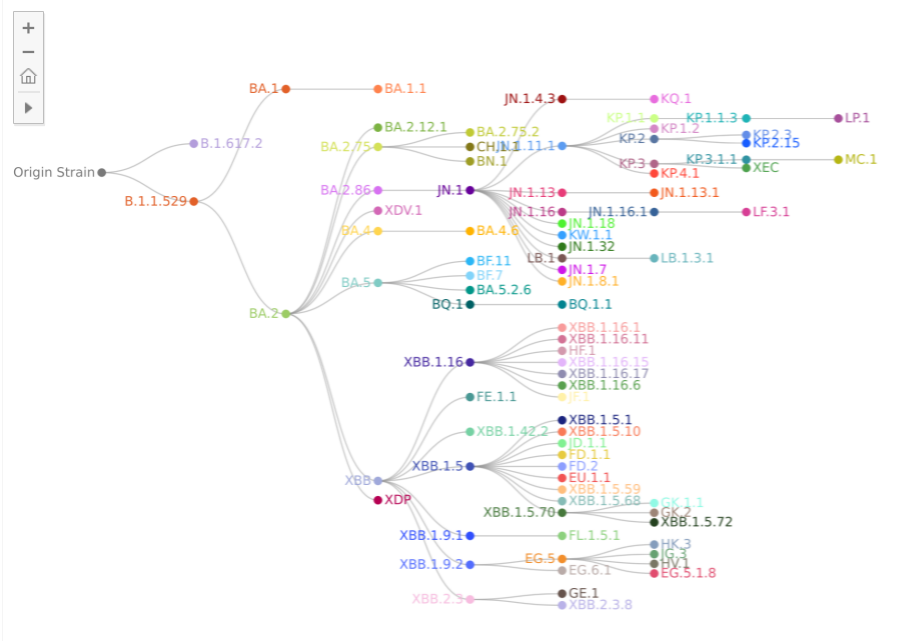
The SARS-CoV-2 virus continues to evolve and diversify (see diagram below), introducing new, often more `biologically fit', variants every few months.  


On Thursday (Oct 17th) The Sato Lab (Kei Sato) @SystemsVirology published a preprint on the bioRxiv server characterizing this XEC variant, finding that it has the `right stuff' to make a run for global dominance in the next few months. 


How long it will hold that position remains to be seen. I've reproduced the abstract below, so follow the link to read the full analysis. 


Yu Kaku, Kaho Okumura, Shusuke Kawakubo, Keiya Uriu, Luo Chen, Yusuke Kosugi, Yoshifumi Uwamino, MST Monira Begum, Sharee Leong, Terumasa Ikeda, Kenji Sadamasu, Hiroyuki Asakura, Mami Nagashima, Kazuhisa Yoshimura, The Genotype to Phenotype Japan (G2P-Japan) Consortium, Jumpei Ito, Kei Sato
doi: https://doi.org/10.1101/2024.10.16.618773

Abstract
The SARS-CoV-2 JN.1 variant (BA.2.86.1.1), arising from BA.2.86.1 with spike protein (S) substitution S:L455S, outcompeted the previously predominant XBB lineages by the beginning of 2024. Subsequently, JN.1 subvariants including KP.2 (JN.1.11.1.2) and KP.3 (JN.1.11.1.3), which acquired additional S substitutions (e.g., S:R346T, S:F456L, and S:Q493E), have emerged concurrently.
As of October 2024, KP.3.1.1 (JN.1.11.1.3.1.1), which acquired S:31del, outcompeted other JN.1 subvariants including KP.2 and KP.3 and is the most predominant SARS-CoV-2 variant in the world. Thereafter, XEC, a recombinant lineage of KS.1.1 (JN.13.1.1.1) and KP.3.3 (JN.1.11.1.3.3), was first identified in Germany on August 7, 2024. XEC acquired two S substitutions, S:T22N and S:F59S, compared with KP.3 through recombination, with a breakpoint at genomic position 21,738-22,599.
We estimated the relative effective reproduction number (Re) of XEC using a Bayesian multinomial logistic model based on genome surveillance data from the USA, the United Kingdom, France, Canada, and Germany, where this variant has spread as of August 2024.
In the USA, the Re of XEC is 1.13-fold higher than that of KP.3.1.1. Additionally, the other countries under investigation herein showed higher Re for XEC. These results suggest that XEC has the potential to outcompete the other major lineage including KP.3.1.1.
We then assessed the virological properties of XEC using pseudoviruses. Pseudovirus infection assay showed that the infectivity of KP.3.1.1 and XEC was significantly higher than that of KP.3. Although S:T22N did not affect the infectivity of the pseudovirus based on KP.3, S:F59S significantly increased it. Neutralization assay was performed using three types of human sera: convalescent sera after breakthrough infection (BTI) with XBB.1.5 or KP.3.3, and convalescent sera after JN.1 infection.
In all serum groups, XEC as well as KP.3.1.1 showed immune resistance when compared to KP.3 with statistically significant differences. In the cases of XBB.1.5 BTI sera and JN.1 infection sera, the 50% neutralization titers (NT50s) of XEC and KP.3.1.1 were comparable. However, we revealed that the NT50 of XEC was significantly (1.3-fold) lower than that of KP.3.1.1. Moreover, both S:T22N and S:F59S significantly (1.5-fold and 1.6-fold) increased the resistance to KP.3.3 BTI sera.
Here we showed that XEC exhibited higher pseudovirus infectivity and higher immune evasion than KP.3. Particularly, XEC exhibited more robust immune resistance to KP.3.3 BTI sera than KP.3.1.1. Our data suggest that the higher Re of XEC than KP.3.1.1 is attributed to this property and XEC will be a predominant SARS-CoV-2 variant in the world in the near future.

         (Continue . . . )

Despite reassurances (4 years ago) that we were only months away from achieving `herd immunity', and predictions the SARS-CoV-2 virus would eventually stabilize, and become a minor `seasonal' threat, COVID shows few signs of taking early retirement. 

While XEC appears to be the latest  contender for the viral throne, there are no guarantees another - more biologically `fit' variant - isn't already spreading somewhere in the world. 

At the same time, we are increasingly concerned over the spillover of novel H5 viruses into humans.  A confluence of events that should have us rethinking our short-sighted and ill-timed decision to dismantle surveillance and reporting systems around the globe.

Thursday, September 26, 2024

EID Journal: Emerging Monkeypox Virus Sublineage C.1 Causing Community Transmission, Vietnam, 2023

Mpox Virus - Credit CDC PHIL


#18,319

While DNA viruses (like Mpox) often evolve at a slower rate than RNA viruses (like influenza or SARS-CoV-2), they are far from static, and longer chains of infection (or infecting different host species) can help promote faster evolution (see Evolution of monkeypox virus from 2017 to 2022: In the light of point mutations).

Another study - published just 3 months before the 2022 international outbreak of Mpox Clade II - warned of the potential for Monkeypox to spread (see PLoS NTD: The Changing Epidemiology of Human Monkeypox—A potential threat?).


The evolution of zoonotic infections to become more transmissible or virulent in humans is a key cause for concern. Particularly, regarding OPXVs such as MPXV, there is concern about the risk that they could evolve into infections capable of causing another smallpox-like pandemic.

Last year we also saw the emergence of a  a new, and reportedly more dangerous clade Ib Mpox virus in the DRC, and more recently its spillover (along with the older clade I & clade II virus) into neighboring countries, which prompted the WHO to declare a second Mpox PHEIC last Month.

At the same time, we are seeing increasing reports of clade II outbreaks (see WHO Mpox Situation Report #37), which cited Europe and the Western Pacific region as reporting large increases in the last reporting month (August). 

Just as clade I continues to evolve, so do clade II viruses.  And at a surprisingly brisk rate.
 
Which brings us to a new dispatch, published yesterday in the CDC's EID Journal, which describes a cluster of an emerging C.1 sublineage of Mpox (Clade IIb) in Vietnam, which produced particularly harsh symptoms (including several deaths) among heavily immunocompromised individuals. 

This C.1 sublineage appears to have emerged in China in 2023 (see Nature Phylogeny and molecular evolution of the first local monkeypox virus cluster in Guangdong Province, China), but has since spread both regionally and internationally.  

You'll find the link and some excerpts from the report below, but you'll want to read it in its entirety (warning: some graphic content). I'll have a postscript when you return. 

Volume 30, Number 11—November 2024
Dispatch
Emerging Monkeypox Virus Sublineage C.1 Causing Community Transmission, Vietnam, 2023

Huynh Thi Thuy Hoa, Nguyen Thanh Dung , Le Manh Hung, Nguyen Thi Thu Hong, Vo Truong Quy, Nguyen Thi Thao, Nguyen Trong Duy, Hoang Truong, Tran Minh Hoang, Nguyen Thi Thanh, Mai Pham Hong Phuoc, Truong Ngoc Trung, Nguyen Nhut Thong, Nguyen Duc Huy, Vu Thi Kim Thoa, Vo Trong Vuong, Ngo Tan Tai, Huynh Kim Nhung, Dao Phuong Linh, Pham Thi Ngoc Thoa, Lam Minh Yen, Tran Ba Thien, Truong Hoang Chau Truc, Le Kim Thanh, Nguyen Thi Han Ny, Vo Tan Hoang, Nghiem My Ngoc, Dinh Nguyen Huy Man, Louise Thwaites, Tsublineage C.1 ran Tan Thanh, Nguyen Van Vinh Chau, Guy Thwaites, Nguyen To Anh, and Le Van Tan

Abstract

We studied a community cluster of 25 mpox cases in Vietnam caused by emerging monkeypox virus sublineage C.1 and imported into Vietnam through 2 independent events; 1 major cluster carried a novel APOBEC3-like mutation. Three patients died; all had advanced HIV co-infection. Viral evolution and its potential consequences should be closely monitored.


To date, most globally reported mpox sequences have come from Europe and North America, where sustained human-to-human transmission has resulted in explosive mpox outbreaks, especially in 2022 (1). A hallmark of the monkeypox virus (MPXV) strain responsible for the ongoing global outbreaks is its high evolution rate, which is driven by the host APOBEC3 (apolipoprotein B mRNA editing enzyme, catalytic polypeptide 3) deaminases, causing a dinucleotide change from TC to TT (2). 

In addition, persons with advanced HIV might experience more severe outcomes (3) and delayed viral clearance, resulting in the emergence of new variants, as has been observed with SARS-CoV-2 (4). However, this possibility has not been well studied for MPXV infection (5).

Vietnam reported its first mpox cases in late 2022 in 2 female travelers returning from United Arab Emirates (6). No additional cases were reported until September 2023, when mpox was diagnosed in a 33-year-old man in Dong Nai Province in southern Vietnam (7). This case marked the start of ongoing community transmission in Vietnam, where the mpox vaccine has not been deployed.

Despite the ongoing challenges of mpox, existing literature has been dominated by reports from Europe and North America, where most cases have been reported (1). We therefore studied the longitudinal clinical, laboratory, and virological features in mpox patients admitted to a tertiary referral hospital in Ho Chi Minh City, Vietnam, in 2023. We also sought to study virus evolution in persons with advanced HIV over the course of hospitalization.

(SNIP)

Our findings emphasize that, although MPXV infections are usually self-limiting, severe clinical complications and death can occur, especially in persons with advanced HIV (3,8). Detecting MPXV in ETA and CSF samples is unusual, although it has been reported previously (3), and this finding supports further study of mpox pathogenesis.

The responsible viruses belonged to sublineage C.1, lineage B.1 of clade IIb, and were imported into Vietnam through 2 independent events, as demonstrated by their phylogenetically forming into 2 different clusters.
Sublineage C.1 has only recently emerged and caused local transmission in China (9). In addition, C.1 sequences from various countries in Asia, Europe, and the Americas have been deposited to GISAID (https://www.gisaid.orgExternal Link), demonstrating its global dispersal.
Those collective findings point to a rapid evolution of MPXV, of which the host APOBEC3 has been shown to be a main driver (2). Alternatively, immune suppression or antivirals might also enable intrahost evolution, as observed in a recent study (5). Similar findings were documented in our metagenomics datasets of longitudinal samples. However, subsequent Sanger sequencing failed to confirm those original findings, likely attributed to sequencing artifacts, emphasizing the importance subsequent Sanger sequencing–based confirmatory experiments.

The tight cluster on the global phylogenetic tree of the 13 sequences sharing 2 nonsynonymous substitutions suggested that those patients shared a transmission network, supporting findings from a recent report (10). Because direct skin-to-skin contact plays a key role in MPXV transmission, public education campaigns should raise awareness about behaviors that increase the risk for MPXV exposure (11). Vaccination remains the most effective tool to control mpox outbreaks (12).

Conclusions

We report the clinical, laboratory, and virological findings in 25 mpox patients infected with an emerging sublineage C.1 that was imported into Vietnam through 2 independent events; 1 major cluster carried a novel APOBEC3-like mutation concerning virus assembly. MPXV evolution and its potential consequences should be closely monitored. Clinicians should be aware of unusual skin lesions in patients with advanced HIV.

Dr. Hoa is a senior infectious disease specialist at the Ho Chi Minh City Hospital for Tropical Diseases. Her research interests focus on infectious diseases, including mpox.

         (Continue . . . )


We have a long history of underestimating viruses, thinking that the way they behaved yesterday, and the day before that, tells us how they will behave tomorrow and all the days that follow.  It may be comforting, but that isn't how viruses - and disease outbreaks - work. 
  • Swine origin H1N1 circulated in pigs for a decade before it suddenly acquired the ability to transmit efficiently in humans, and sparked the 2009 H1N1 pandemic.
  • Ebola had never sparked a regional outbreak in Africa because it was thought `too virulent to spread', until it caused a year-long 3-nation outbreak in 2014, killing tens of thousands. 
  • In early 2020, many `experts' predicted the end of the COVID pandemic within a matter of months', citing its `low mutation rate', and the benefits of `herd immunity'.  
  • Until 2022, Mpox had only rarely been exported outside of Africa, and all outbreaks were quickly contained.  But over the summer of 2022, tens of thousands of cases were reported in scores of nations, and today more than 106,000 cases have now been confirmed. 
  • And until 6 months ago, few scientists would have guessed that HPAI H5N1 could spread across more than a dozen states in dairy cows.
With viruses, we should expect the unexpected.  But somehow, we always seem to be caught flat-footed, shocked, and unprepared.  

Regardless of whether Mpox has what it takes to spark a major global public health crisis, somewhere out there - in a bat, or a pig, or a bird - there is a virus that someday will accrue the right mutations to put the world at grave risk. 

And when that day comes, we'd better have more prepared than just an excuse that `No one could have predicted this would happen. . . . ' 

Thursday, July 18, 2024

Preprint: Virological Characteristics of the SARS-CoV-2 KP.3.1.1 variant

 
#18,192


While the testing and reporting of COVID cases have dropped markedly over the past couple of years - making comparisons to previous years difficult - the CDC's tracking web page (above) shows COVID cases are rising once again across the nation. 

The SARS-CoV-2 virus continues to evolve and diversify (see diagram below), introducing new, often more `biologically fit', variants every few months.  Four months ago JN.1 appeared to be firmly in control, but by May its dominance was under assault by a tag-team of KP2 and KP.3. 


Last month we looked at an analyses of several new variants from Sato Labs (see Preprint: Virological Characteristics of the SARS-CoV-2 KP.3, LB.1 and KP.2.3 variants), which suggested that KP.3 or LB.1 have some distinct fitness advantages.

Limited testing and surveillance around the globe makes it very difficult to accurately gauge the trajectory of these new variants, but the Sato Lab is back today with another analysis, one which finds that the KP.3.1.1 variant appears to have an even bigger advantage over its competition. 

Yesterday The Sato Lab (Kei Sato) @SystemsVirology posted a brief summary( a few excerpts below) of their findings on Twitter/X.


The abstract and link to the full preprint follows.  I'll have a brief postscript after the break.

Virological characteristics of the SARS-CoV-2 KP.3.1.1 variant
Yu Kaku, Keiya Uriu, Kaho Okumura, The Genotype to Phenotype Japan (G2P-Japan) Consortium, Jumpei Ito, Kei Sato
doi: https://doi.org/10.1101/2024.07.16.603835

Preview PDF


Abstract

The SARS-CoV-2 JN.1 variant (BA.2.86.1.1), arising from BA.2.86.1 with spike protein (S) substitution S:L455S, outcompeted the previously predominant XBB lineages by the beginning of 2024. Subsequently, JN.1 subvariants including KP.2 (JN.1.11.1.2) and KP.3 (JN.1.11.1.3), which acquired additional S substitutions e.g., S:R346T, S:F456L, and S:Q493E, have emerged concurrently. 

Thereafter, JN.1 subvariants, such as LB.1 (JN.1.9.2.1), KP.2.3 (JN.1.11.1.2.3), and KP.3.1.1 (JN.1.11.1.3.1.1), which convergently acquired a deletion of Serine at the 31st position in S (S:S31del) in addition to the above substitutions, have emerged and spread as of June 2024. We recently reported the virological features of JN.1 subvariants including KP.2, KP.3, LB.1, and KP.2.3.2,3 

Here, we investigated the virological properties of KP.3.1.1. First, we estimated the relative effective reproduction number (Re) of KP.3.1.1 using a Bayesian multinomial logistic model4 based on genome surveillance data from Spain, the USA, France, Canada, and the UK, where this variant has spread as of June 2024. In Spain, the Re of KP.3.1.1 is over 1.2 fold higher than that of JN.1 and even higher than those of KP.2, KP.3, LB.1, and KP.2.3. Additionally, the other countries under investigation herein show higher Re for KP.3.1.1. 

However, it must be noted there is the possibility of overestimation in these countries due to more limited KP.3.1.1 sequence numbers. These results suggest that KP.3.1.1 will spread worldwide along with other JN.1 sublineages

We then assessed the virological properties of KP.3.1.1 using pseudoviruses. The pseudovirus of KP.3.1.1 had significantly higher infectivity than that of KP.3.
Neutralization of KP.3.1.1 was tested using i) convalescent sera after breakthrough infection (BTI) with XBB.1.5 or EG.5, ii) convalescent sera after the infection with HK.3 or JN.1, and iii) sera after monovalent XBB.1.5 vaccination. The 50% neutralization titer (NT50) against KP.3.1.1 was significantly lower than KP.3 (1.4-1.6 fold) in all four groups of convalescent sera tested. KP.3.1.1 also showed a 1.3 fold lower NT50 against XBB.1.5 vaccine sera than KP.3. Moreover, KP.3.1.1 showed stronger resistance with a 1.3 fold lower NT50 with statistical significances to the convalescent sera infected with EG.5 and HK.3 than KP.2.3. 

Altogether, KP.3.1.1 exhibited a higher Re, higher pseudovirus infectivity, and higher neutralization evasion than KP.3. These results align with our recent report that the JN.1 subvariants with S:S31del (e.g., KP.2.3 and LB.1) exhibited enhanced Re and immune evasion compared to the other JN.1 subvariants without S:S31del (e.g., JN.1, KP.2, and KP.3), highlighting the evolutionary significance of S:S31del in the JN.1 lineages.

         (Continue . . . .)
 

Despite reassurances (4 years ago) that we were only months away from achieving `herd immunity', and predictions the SARS-CoV-2 virus would eventually stabilize, and become a minor `seasonal' threat, COVID shows few signs of taking early retirement. 

While KP.3.1.1 appears to be the newest contender for the viral throne, there are no guarantees another - more biologically `fit' variant - isn't already spreading somewhere in the world. 

At the same time, we are increasingly concerned over the spillover of novel H5 viruses into humans.  A confluence of events that should have us rethinking our short-sighted and ill-timed decision to dismantle surveillance and reporting systems around the globe.