Monday, March 03, 2014

Korea: H5N8 Discovered At NIAS Research Facility

image

H5N8 Spread – Credit OIE 2/28/14


# 8344


The ongoing spread of H5N8 in South Korea continues, with news today that ducks at the National Institute of Animal Science research facility in Cheonan, South Chungcheong have been infected. Korea -  now more than 6 weeks into their battle against this first-ever HPAI H5N8 outbreak – has culled millions of birds in an attempt to control this outbreak.


Previously we’ve only seen low pathogenic outbreaks of H5N8 (see CIDRAP 2008 Low-pathogenic avian flu hits Idaho game farm), although at least one detection of H5N8 in an HPAI form was recorded in China in 2009-10 (see Characterization of three H5N5 and one H5N8 highly pathogenic avian influenza viruses in China).


Despite intensive containment measures, disinfection and culling of farms, and the halting of poultry product transport, the virus has continued to spread across much of the South Korean Peninsula.  Today’s report is not only another setback in efforts to control the virus, it has serious ramifications for the ongoing research at the NIAS facility as well.


This report from the Koran Joongang Daily.


AI discovered at science institute

Cheonan facility culls 16,000 chickens, ducks to stop spread of virus
Mar 04,2014

The avian influenza (AI) virus was found in the carcasses of ducks in a National Institute of Animal Science facility in Cheonan, South Chungcheong, on Sunday, signaling that the virus is still spreading throughout the country.

The Ministry of Agriculture, Food and Rural Affairs said yesterday that it detected the H5N8 strain of the virus in the ducks.

The results of an examination to determine whether the virus is highly pathologic is expected to be released today.


The ministry decided to cull all the 16,000 chickens and ducks bred at the institute’s farm to prevent the disease from spreading.

The state-run institute protects and preserves gene resources of chickens and ducks, and has dispersed them into several facilities throughout Korea to minimize damage from threats such as the bird flu.

It is the first outbreak of bird influenza in the NIAS, but the facility has been in the danger zone, within a three-kilometer (1.8-mile) radius of a duck farm infected by the highly pathogenic AI in Pyeongtaek, Gyeonggi, on Feb. 24.

(Continue . . .)

For earlier reports on Korea’s H5N8 outbreak, you may wish to revisit:


South Korea: 30 Days Into Their H5N8 Outbreak 
Korea: H5N8 Spreads, Debate Over Source Intensifies 
Korea: Migratory Birds Likely Source Of H5N8 Outbreak

WHO H7N9 Update – March 3rd

image

Credit WHO


# 8343


While the number of H7N9 cases being reported out of China has certainly dropped over the past few weeks, we continue to see 2 to 3 cases being reported each day.  The latest update from the World Health Organization contains details on 8 recent cases.


Pediatric (age <18) infections with the H7N9 virus have been relatively uncommon, and usually mild.  Today’s report identifies two pediatric cases (ages 7 & 6) from Zhejiang Province with uncharacteristically severe symptoms.


Human infection with avian influenza A(H7N9) virus – update

Disease outbreak news

3 March 2014 - On 27 February, 28 February and 1 March 2014, the National Health and Family Planning Commission (NHFPC) of China notified WHO of eight additional laboratory-confirmed case of human infection with avian influenza A(H7N9) virus.

Details of the cases reported on 27 February are as follows:
  • A two year-old girl from Jinhua City, Zhejiang Province. She became ill on 23 February, was hospitalised on 25 February and has a mild illness. The patient has a history of exposure to live poultry.
  • A 65 year-old woman from Guangzhou City, Guangdong Province. She became ill 17 February, was hospitalised on 24 February and is currently in a critical condition. The patient has a history of exposure to live poultry.
Details of the cases reported on 28 February are as follows:
  • A 42 year-old man from Huaian City, Jiangsu Province. He became ill on 15 February, was hospitalised on 26 February and is currently in a severe condition. The patient has a history of exposure to live poultry.
  • A 77 year-old man from Yongzhou City, Hunan Province. He became ill on 20 February, was hospitalised on 25 February and is currently in a critical condition. The patient has a history of exposure to live poultry.
  • A 41 year-old man from Yongzhou City, Hunan Province. He became ill on 17 February, was admitted to a hospital on 24 February and is currently in a critical condition. The patient has a history of exposure to live poultry.
Details of the cases reported on 1 March are as follows:
  • A seven year-old girl from Jinhua City, Zhejiang Province. She became ill on 26 February, was hospitalised on 27 February and is currently in a severe condition. The patient has a history of exposure to live poultry.
  • A six year-old girl from Jinhua City, Zhejiang Province. She became ill on 26 February, was hospitalised on 27 February and is currently in a severe condition. The patient has a history of exposure to live poultry.
  • A 32 year-old man from Fuchuan County, Guangxi Province. He became ill on 20 February, was hospitalised on 26 February and is currently in a severe condition.

(Continue . . .)


CDC Telebriefing (March 4th): Improving Antibiotic Prescribing Practices

image


# 8342


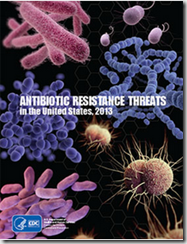
For years we’ve heard dire warnings of a future where most of our most important antibiotics are rendered impotent against drug resistant infections, and increasingly, those predictions are coming true.  Last September the CDC issued a major threat report called Antibiotic resistance threats in the United States, 2013 that provided  a snapshot of the effects of growing antibiotic resistance across the United States.


Among their (conservative) findings:


Each year in the United States, at least 2 million people become infected with bacteria that are resistant to antibiotics and at least 23,000 people die each year as a direct result of these infections. Many more people die from other conditions that were complicated by an antibiotic-resistant infection.


The rise of antibiotic resistance has long been linked to the overuse and misuse of antibiotics. A problem that is wide spread in many parts of the world where antibiotics are not well regulated, but also right here in the United States, where there remains a great variance in prescribing practices among physicians.


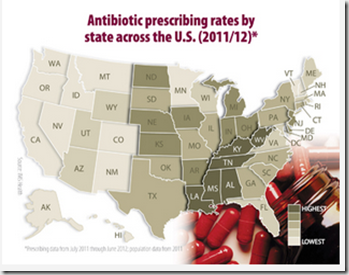
Last November, in AAP/CDC: New Guidance On For Antibiotics For Children, we saw guidelines issued – in part – due to the geographic disparity in the amount of antibiotics being prescribed across this country, with doctors some regions much quicker write ABx scripts than doctors in other areas (see map below).

image


Tp address this growing problem, tomorrow (March 4th) the CDC will hold a Telebriefing on Antibiotic prescribing practices (details below).


CDC Telebriefing: New Vital Signs Report - Are Prescribing Practices Putting Hospital Patients at Risk?

What

Poor antibiotic-prescribing practices in hospitals can needlessly put patients at risk for Clostridium difficile infection (deadly diarrhea) and future drug-resistant infections. This month, the CDC Vital Signs report looks at prescribing practices and variations, and calls on all U.S. hospitals to improve antibiotic-prescribing practices.

Who

Tom Frieden, M.D., M.P.H., Director, Centers for Disease Control and Prevention
John R. Combes, M.D., Senior Vice President, American Hospital Association

When

Tuesday, March 4 at Noon ET   (Content embargoed until 1pm ET)

DIAL-IN:

Media: 888-795-0855
Non-Media: 800-369-1605
International: 1-630-395-0331
PASSCODE: CDC MEDIA

Important Instructions: If you would like to ask a question during the call, press *1 on your touchtone phone. Press *2 to withdraw your question. You may queue up at any time. You will hear a tone to indicate your question is pending.

TRANSCRIPT
A transcript of this media availability will be available following the briefing at CDC’s web site:
www.cdc.gov/media.

###


For more on the importance of proper antibiotic stewardship, you may wish to revisit these earlier blogs.

Chan: World Faces A `Post-Antibiotic Era’

Get Smart About Antibiotics Week

IDSA: Educational Guidelines Lower Antibiotic Use

And for a far more complete discussion of antimicrobial resistance issues, I can think of no better primer than Maryn McKenna’s book SUPERBUG: The Fatal Menace of MRSA.

Superbug (MRSA) Book

Superbug (MRSA) Book

Meanwhile, Maryn’s SUPERBUG Blog, continues to provide the best day-to-day coverage of these issues.

Sunday, March 02, 2014

Study: Efficacy Of Hand Hygiene Alone Against Influenza Infection

image

Photo Credit – CDC


# 8341


As was well illustrated during the opening months of the 2009 H1N1 pandemic – until a vaccine can be developed, produced, and distributed – public health interventions to reduce the spread of a virus are fairly limited, and consist primarily of NPIs – or Non-Pharmaceutical Interventions.

image

Credit CDC Non-Pharmaceutical Interventions

The goal, in those early months before a vaccine becomes available, is to reduce the spread of the virus as much as possible.  In this way, the burden on health care facilities, and toll of absenteeism and on the lives of those effected can be reduced.


image

Source - Community Strategy for Pandemic Influenza Mitigation


NPI’s have been described as being like slices of Swiss cheese, with each containing large holes through which the virus can pass, but when stacked on top of each other, can provide an effective barrier.


While it is known that these measures can help reduce influenza transmission, there are many open questions regarding their relative merits, cost effectiveness, and optimum combination.  


Among the researchers trying to nail down these merits, is Dr. Allison Aiello whose work at the University of Michigan we’ve examined previously. Back in 2010, in Michigan NPI Study: A Closer Look and Study: Effectiveness of NPIs Against ILI's, we looked at a multi-year research project that compared the effectiveness of handwashing and facemasks (alone, and in combination) at reducing the spread of seasonal influenza in a college dorm setting.


Their results?


Neither face mask use and hand hygiene nor face mask use alone was associated with a significant reduction in the rate of ILI, although combined, they produced a 35% to 51% reduction of infection over the control group.


Although this study did not directly study the effectiveness of hand washing alone, the implication here is that alcohol sanitizers and hand washing alone may not be as protective as has been hoped in the past. 


Flash forward four years and Dr. Aiello (now Professor of Epidemiology at UNC)  is back with a study (along with Dr. Benjamin Cowling  and V. W. Y. Wong of the University of Hong Kong) that looked at earlier studies in order to evaluate the effectiveness of hand hygiene alone in preventing influenza infection.


Hand hygiene and risk of influenza virus infections in the community: a systematic review and meta-analysis

V. W. Y. WONGa1, B. J. COWLINGa2 c1 and A. E. AIELLOa3 

SUMMARY

Community-based prevention strategies for seasonal and pandemic influenza are essential to minimize their potential threat to public health. Our aim was to evaluate the efficacy of hand hygiene interventions in reducing influenza transmission in the community and to investigate the possible modifying effects of latitude, temperature and humidity on hand hygiene efficacy. We identified 979 articles in the initial search and 10 randomized controlled trials met our inclusion criteria.

The combination of hand hygiene with facemasks was found to have statistically significant efficacy against laboratory-confirmed influenza while hand hygiene alone did not. Our meta-regression model did not identify statistically significant effects of latitude, temperature or humidity on the efficacy of hand hygiene.

Our findings highlight the potential importance of interventions that protect against multiple modes of influenza transmission, and the modest efficacy of hand hygiene suggests that additional measures besides hand hygiene may also be important to control influenza.


Before proceeding, I would note that the  advice from the CDC, HHS, WHO and just about every other public health agency around to globe to `wash your hands often’ is undoubtedly sage counsel, and can protect you against a wide range of illnesses and disease.


I am, and will continue to be, an inveterate hand washer and you are unlikely to find me out and about without a bottle of alcohol hand-sanitizer within reach.


But as far as influenza (and other common ILIs) are concerned, there isn’t a lot of evidence that handwashing alone offers much of a protection against infection.  Something I wrote about at some length back in 2009 (see Sanitized For Your Protection and The Flaw In The Ointment). 


While it is true that some influenza infections undoubtedly come via fomites (contaminated surfaces which we touch and then transfer to our mouths, eyes, or nose) - and that hand-washing might prevent some of those - most researchers would grant that most influenza is probably transmitted through large droplet or aerosol routes. 


Which would explain why studies have shown that combining handwashing with respiratory protection does appear to provide a significant degree of protection against influenza-like illnesses.


The problem with facemasks and other forms of PPEs (Personal Protective Equipment)– particularly during a severe pandemic – is one of supply. 


Our Strategic National Stockpile contains more than 100 million  N95 and surgical masks (see Caught With Our Masks Down), but the demand for PPEs during a serious pandemic would far exceed the supply. 


At one time the HHS estimated the nation would need 30 billion masks (27 billion surgical, 5 Billion N95) to deal with a major pandemic (see Time Magazine A New Pandemic Fear: A Shortage of Surgical Masks).


Making it difficult for the CDC, WHO, and other public agencies to broadly recommend their use, knowing they would quickly be in short supply.


Still, the CDC has in the past suggested that individuals and businesses may wish to stockpile a small quantity of facemasks (see Minnesota Health Department May 2007: Volume 2, Number 5 (PDF: 127KB/4 pages) as part of their general pandemic preparedness.


CDC officials could not emphasize enough that masks alone will not be sufficient to eliminate the risk of infection during a pandemic. Facemasks (e.g., surgical masks) and respirators (e.g., N95 masks) should be used in combination with other preventive measures, such as hand hygiene and social distancing, to help reduce the risk for influenza infection during a pandemic. 


Respirators (e.g., N95 masks) are still only being recommended for individuals who have unavoidable close contact with infected persons. Whenever possible, rather than relying on the use of facemasks (e.g., surgical masks) and respirators (e.g., N95 masks), close contact and crowded conditions should be avoided during an influenza pandemic. Facemasks (e.g., surgical masks) should be considered for use by individuals who enter crowded settings, both to protect their nose and mouth from other people’s coughs and to reduce the wearers’ likelihood of coughing on others. The time spent in crowded settings should be as short as possible.

Last July, in The Great Mask Debate Revisited I wrote about the pros and cons regarding facemasks, and the various studies comparing the protective qualities of surgical masks vs. N95 masks.  


Neither type should be regarded as perfect protection against infection, and with regards to the more expensive N95s, it takes more than just having a box in your closet (see Survival Of The Fit-tested) to protect you.


The bottom line, is that you hope to avail yourself of the (admittedly, limited) protection afforded by facemasks during a pandemic, your best bet is to buy any supplies well before a pandemic erupts.


As far as the `wash your hands’  meme is concerned, while perhaps oversold for preventing influenza infection, hand washing is simple, cost effective, and has proven benefits as part of basic disease prevention and hygiene.


Which makes it an important component in any public health strategy, regardless of whether we find ourselves in the midst of an influenza epidemic.

Appreciating The Nature Of The Threat

image

National Severe Weather Preparedness Week, March 2-8, 2014


# 8340


After a disastrous 2011 tornado season across much of the Midwest and Southern States that saw over 1700 documented twisters (causing > 550 US fatalities) – and dire predictions that this was the `new normal’ – tornado activity dropped precipitously in 2012 (n=932) and again 2013 (n=811). 


Similarly, predictions for an `above average’ Atlantic Hurricane season last may ( 7 to 11 hurricanes) missed the mark when only two tropical systems reached hurricane strength, and no major hurricanes threatened at all.


My own state of Florida – after being battered badly in the middle of the last decade by hurricanes Charley, Frances, Ivan, Jeanne in 2004 and Katrina & Wilma in 2005 – has come away relatively unscathed since then, enduring only a handful of minor tropical storms.


While welcome news to those of us who live in harm’s way, this recent lull in activity also tends to dampen the public’s impetus to prepare for weather-related emergencies. As history has shown, last year’s tornado and hurricane stats have very little to do with what we will see this year, or next.


image
As the chart  above illustrates, March is the traditional start of tornado season in the United States, and whether 2014 brings an average year, record highs or record lows, it only takes one twister to ruin your entire day.


This week FEMA and NOAA are working together to promote severe weather awareness and preparedness.


Be a Force of Nature: Take the Next Step
National Severe Weather Preparedness Week
March 2-8, 2014

Know your risk. Take action. Be an example.

In 2013, there were seven weather and climate disaster events with losses exceeding $1 billion each across the United States. These events included five severe weather and tornado events, a major flood event, and the western drought/heat wave. Overall, these events killed 109 people and had significant economic effects on the areas impacted.

During National Severe Weather Preparedness Week, March 2-8, 2014, NOAA and FEMA will highlight the importance of preparing for severe weather before it strikes.

Being prepared for severe weather doesn’t have to be complicated or expensive. A few simple steps, such as having a disaster supplies kit, could help save your life.

During National Severe Weather Preparedness Week, we ask that you Be a Force of Nature by knowing your risk, taking action and being an example where you live

image

EF-3 or Greater Tornado Threat – Credit FEMA


The greatest tornado risks are during the spring and summer months in the Midwest and Southeastern states, although twisters can occur just about anywhere, anytime of the year.


No matter where you live, next weekend’s time change (March 9th – `Spring Forward’)  is a good reminder to change your smoke detector batteries, and to double check your NOAA weather radio, flashlights, and first aid kit. 

NOAA Radioimage image

You should also review your family’s emergency communication plan - and if you haven’t already done so - decide where you would go in your home or business if severe weather threatens.


Every home and office should have a NOAA weather radio. Once thought of as mainly a source of local weather information, it has now become an `All-Hazards' alert system as well.

image

In order to receive these broadcasts, you need a special receiver.  Many of these radios have a built in `Tone Alert', and will begin playing once they receive a special alert signal from the broadcaster.


To keep track of severe storm forecasts, you can visit NOAA’s Storm Prediction Center online. There you’ll find interactive maps showing current and anticipated severe weather threats all across the nation.

image

For those on the go who would like an app (android or iPad) that will sound an alert when severe weather threatens your area, the American Red Cross has recently released several.


Sadly, despite scores of major disasters (often weather related) that occur in this country each year, most Americans remain woefully unprepared to deal with emergencies. Agencies like FEMA, READY.GOV and the HHS are constantly trying to get the preparedness message out, so that when (not `if') a disaster does occur, human losses can be minimized.


For more information on how to prepare for emergencies, large and small, the following sites should be of assistance.

FEMA http://www.fema.gov/index.shtm

READY.GOV http://www.ready.gov/

AMERICAN RED CROSS http://www.redcross.org/


Those that take the advice to Have A Plan, Make A Kit, and Be informed  will be better equipped to deal with any eventuality.  Which is why I promote basic preparedness at every opportunity in this blog.

A few of my (many) blogs on that subject include:

  • In An Emergency, Who Has Your Back?
  • When 72 Hours Isn’t Enough
  • When Evacuation Is The Better Part Of Valor
  • Saturday, March 01, 2014

    Chikungunya Update & CDC Webinar Online

    image


    #8339


    Chikungunya (CHKV) is a mosquito-borne virus that - up until a decade ago - was only seen in central Africa.  In 2005 it jumped to  Reunion Island in the Indian Ocean, where it sparked a major epidemic infecting tens of thousands. Since then it has spread rapidly to counties such as India, Thailand, Vietnam, Indonesia, Myanmar, Pakistan, and others in  Asia and  the Western Pacific.


    While rarely fatal, the CDC describes the symptoms of infection as lasting a few days to a few weeks, producing `debilitating illness, most often characterized by fever, headache, fatigue, nausea, vomiting, muscle pain, rash, and joint pain’,  although some may experience `incapacitating joint pain, or arthritis which may last for weeks or months.’ 


    About 10 days ago the CDC held a COCA Call On Chikungunya to inform clinicians of the recent arrival of the Chikungunya virus to the Americas (see ECDC Epidemiological Update: Chikungunya Spreads In Caribbean And Into South America), and to advise them on how to diagnose, report, and treat the illness should it show up in the United States.


    For those unable to watch at the time, that hour-long presentation has now been archived (audio, video & transcript) on the CDC’s COCA CALL website, which you can access below:


    Chikungunya Virus – An Emerging Threat to the Americas

    Continuing Education = Free Continuing Education

    Date: Tuesday, February 18, 2014 

    COCA logoJ. Erin Staples, MD, PhD
    Medical Epidemiologist
    Arboviral Diseases Branch
    National Center for Emerging and Zoonotic Infectious Diseases
    Centers for Disease Control and Prevention

    Overview:

    Chikungunya virus is a mosquito-borne virus that can cause fever and severe polyarthralgia. Outbreaks of the chikungunya have occurred in countries in Africa, Asia, Europe, and the Indian and Pacific Oceans. In late 2013, the first local chikungunya virus transmission in the Americas was reported on islands in the Caribbean. Travelers to areas with ongoing outbreaks are at risk of becoming infected and spreading the virus to new areas, including the United States. During this COCA call, a CDC subject matter expert will provide information on chikungunya virus epidemiology, clinical findings, diagnosis, treatment, and prevention. Additionally, they will describe the importance of early recognition and reporting of suspected cases to mitigate the risk of local transmission.

    Objectives:

    At the conclusion of the session, the participant will be able to accomplish the following:

    • Describe which patients to test for the infection
    • Explain testing, treatment and prevention measures for chikungunya
    • Understand the importance of early recognition and reporting of cases

    Call Materials

    Learn more about Adobe Acrobat Reader Slides: View Now

    Learn more about Windows Media Player Webcast: Watch Now

    Podcast Audio: Listen Now

    Learn more about Adobe Acrobat Reader Transcript: Read Now

    The ECDC’s most recent Communicable Disease Threats Report (Feb 28th) indicates that the transmission of the virus in the Caribbean continues unabated, with more than 8,000 suspected and confirmed cases over the past several months.


    Chikungunya outbreak - The Caribbean, 2013

    Opening date: 9 December 2013 Latest update: 14 February 2014
    Epidemiological summary
    Cases reported as of 28 February 2014:

    • Virgin Islands (UK), 6 confirmed cases;
    • Saint Martin (FR), 2 030 suspected and 765 confirmed or probable cases;
    • Sint Maarten (NL), 115 confirmed autochthonous cases;
    • Martinique, 3940 suspected and 1058 confirmed or probable cases;
    • Saint Barthélemy, 380 suspected and 127 confirmed or probable cases;
    • Guadeloupe, 1 460 suspected and 476 confirmed or probable cases;
    • Dominica, 45 confirmed cases (imported) and 44 autochthonous cases;
    • French Guiana, 17 confirmed cases, 10 of which are autochthonous cases;
    • Anguilla, 11 confirmed cases on the island with one case probably originating from Saint Martin;
    • Aruba, one imported case originating from Sint Maarten;
    • St. Kitts and Nevis one confirmed case.

    ECDC assessment

    Epidemiological data indicate that the outbreak, which started in Saint Martin (FR), is expanding. An increasing number of cases have been observed from most of the affected areas. The vector is endemic in the regions, where it also transmits dengue virus. Vigilance is recommended for the occurrence of imported cases of chikungunya in tourists returning to the EU from the Caribbean, including awareness among clinicians, travel clinics and blood safety authorities. The autochthonous cases in French Guyana are the first autochthonous chikungunya cases in mainland South America.


    Although we’ve seen imported cases of Chikungunya into the United States, thus far onward transmission via local mosquito vectors has not been documented.  Of course, the same could have been said about the West Nile Virus prior to the late 1990s, and Dengue before 2009.


    The most competent vector for the virus is the Aedes Albopictus mosquito (followed by the Aedes aegypti), which arrived in the United States in the 1980s, and can now be found across a wide swath of the country. 

    image

    Aedes albopictus (Asian Tiger) Mosquito - Wikipedia

    Dark blue: Native range
    Dark green: introduced (as of December 2007)


    The risks of CHKV introduction was considered great enough that in 2011, the CDC and PAHO (Pan American Health Organization) put together a 161-page guide on preparing for the arrival of Chikungunya to the Americas (see Preparedness and Response for Chikungunya Virus Introduction in the Americas).


    Now, with the virus literally on our doorstep, officials worry that it is only a matter of time before we begin to see outbreaks  here in the United States (see WSJ report Approach of Mosquito-Borne Virus Has U.S. on Alert).


    With no vaccine available, and limited treatment options, the best strategy is prevention. For public health officials, that means stepping up mosquito control projects and launching public awareness campaigns to reduce transmission.  


    Between the increasingly common West Nile Virus, and rare reports of Dengue or EEE (Eastern Equine Encephalitis), and the prospect of having Chikungunya arrive, this advice from the Florida health department remains very much worth heeding.

    image