Monday, June 30, 2025

ECDC: Updated Reporting Protocol for Zoonotic Influenza Virus


#18,776 

A year ago, in the wake of the discovery of 3 (now > 6 dozen) human infections with H5N1 in the United States, the ECDC issued guidance for member nations on Enhanced Influenza Surveillance to Detect Avian Influenza Virus Infections in the EU/EEA During the Inter-Seasonal Period.

In that summary, the ECDC pointed out:
Sentinel surveillance systems are important for the monitoring of respiratory viruses in the EU/EEA, but these systems are not designed and are not sufficiently sensitive to identify a newly emerging virus such as avian influenza in the general population early enough for the purpose of implementing control measures in a timely way.
A conclusion not unlike what we saw in the 2023's UKHSA Technical Briefing #3, which found that it might take weeks - and hundreds of cases - before community spread of a novel flu could be confirmed using standard surveillance (see UK Novel Flu Surveillance: Quantifying TTD).

Last October, the ECDC released two additional guidance documents:
As with similar guidance we've seen from the U.S. CDC, these are non-binding recommendations, and not all member states have the same capacity for testing and managing of cases. 

The ECDC uses EpiPulse - an online portal for European public health authorities to collect, analyze, and share infectious disease data - integrating several previously independent surveillance platforms; (The European Surveillance System (TESSy), the five Epidemic Intelligence Information System (EPIS) platforms and the Threat Tracking Tool (TTT)

Over the weekend the ECDC published an updated, 28-page protocol for reporting zoonotic influenza infections to the TESSy database. I've reproduced the introduction below:

Introduction

An event of a human case infected with an influenza virus deriving from an animal source should be reported within 24 hours to the Early Warning and Response System (EWRS) which will cover the International Health Regulations (IHR) notification for EU/EEA countries. 

To complement the eventbased surveillance, TESSy reporting allows for a long-term collection of key indicators. Data to TESSy can be uploaded retrospectively when more information becomes available but should be done as soon as feasible to avoid major reporting delays.

This reporting protocol describes data collection for zoonotic influenza viruses. With the data collected, the aim is to support situational risk assessment and trends over time.

For the reporting of case-based data, the record type INFLZOO should be used. Case-based data is the preferential record type for reporting confirmed cases to TESSy. Aggregate data on zoonotic influenza (number of tested samples and number of detected cases by NA and HA subtype) can be uploaded to INFLZOOAGGR. This record type should ideally be used mainly for reported testing data. 

If a country is not able to report to the case-based record type above, then numerator data can also be reported to this record type.

Aim

To support the timely and complete reporting on number of samples tested, number of detected cases and key information of zoonotic influenza cases

Objectives

• To collect data on number of tested people.

• To help assess the onset of the disease, confirmation of the subtype of infection and severity.

• To provide information on exposure, treatment and outcome.

• To provide additional contextual information to help understand the case identification.

• To analyse trends over time.

Record types

The following record types exist for reporting of zoonotic influenza virus in TESSy:

1. INFLZOO for reporting of case-based data of zoonotic influenza virus

2. INFLZOOAGGR for reporting of aggregated data of zoonotic influenza virus

Variables for each record type are outlined in the annex of this reporting protocol.

        (Continue . . . )


Among the changes in this update are expansions to the metadata and codes used in these reports.   A list of changes (which includes animal exposures, exposure activities, and consumption of raw or unpasteurized animal products) follows:


The ECDC continues to urge member countries to improve their surveillance, testing, and reporting of zoonotic or novel flu infections; in humans and in animals. 

Last January, in  ECDC: Avian Flu - Virus mutations and Response Strategies, we looked at two new European avian flu initiatives; 


But as far as what is happening across much of the rest of the world, infectious disease reporting remains sparse, and - for varied economic and political reasons -  only seems to be getting worse (see From Here To Impunity).

A reminder that `no news' isn't necessarily `good news'. 

JID: HPAI H5N1 Subclade 2.3.4.4b Isolated from a European Grey Seal (Halichoerus grypus) is Highly Virulent in Ferrets


Gray Seals - Credit Wikipedia

#18,775

Up until 4 about years ago, HPAI H5N1 was considered mostly a disease of birds, with rare (but often serious) spillovers into humans, and very limited and/or sporadic detections in other mammals (primarily captive felines). 

The host range of H5N1 began to change in 2021-2022, with increased detections in foxes, skunks, and other carnivorous peridomestic mammals (see Ontario: CWHC Reports HPAI H5 Infection With Severe Neurological Signs In Wild Foxes (Vulpes vulpes)).

With these new mammalian host infections, we began to see signs of increased mammalian adaptions within the virus (amino acid changes, including HA-T143A, PB2-E627K PB2 D701N, PB2 Q591K, HA Q226L, etc.)

A few examples:


Due to limited surveillance, testing, and reporting around the globe, we don't have a very good handle on how many different mammalian species have now been infected with clade 2.3.4.4b H5Nx. 

As the following FAO map (zoonotic avian flu reports since Oct 1, 2024) illustrates, semi-robust reporting of avian influenza is pretty much limited to the United States, Southern Canada, Europe, and some parts of Southeast Asia.


Vast swaths of Russia, China, South America, Africa and the Middle East rarely (if ever) report outbreaks, yet there is little doubt that (except for Australia/NZ) the virus is present in - at least in wild birds - most of countries of the world.

The USDA's list of Detections of Highly Pathogenic Avian Influenza in Mammals shows 46 different species, but this excludes livestock (cattle, pigs, goats, alpacas, mink, etc.) and is based primarily on passive surveillance of mostly peridomestic animals. 

The most recent ECDC/EFSA Avian influenza overview March - June 2025 lists more than 90 species (pgs. 28-32). But once again reporting and testing are limited.  

Identifying and tracking H5N1 in terrestrial animals is undoubtedly easier than in marine mammals, yet we've seen numerous reports of H5 infected pinnipeds (seals, sea lions, walruses), particularly from South America (see EID Journal: Mass Mortality of Sea Lions Caused by HPAI A(H5N1) Virus (Peru)).

In last January's Nature Reviews: The Threat of Avian Influenza H5N1 Looms Over Global Biodiversity the authors estimated the loss of hundreds of thousands of marine mammals (seals, sea lions, dolphins, etc.).
 
As the H5N1 virus expands its host range, it also gains access to alternative - and unpredictable - evolutionary pathways. While we focus primarily on HPAI in humans, dairy cows, poultry, and cats . . . we may very well be missing important milestones occurring in deer micecamels, foxes, seals or other mammalian hosts.

All of which brings us to a study, published Saturday, in The Journal of Infectious Diseases by Guilfoyle et al. that finds that a newer HPAI H5N1 subclade 2.3.4.4b virus - isolated from a European grey seal in 2023 - is significantly more virulent in ferrets than is an older (2005) strain from Indonesia.

Researchers found that ferrets infected with the 2023 seal-derived H5N1 virus succumbed more rapidly than with the 2005 virus; exhibiting severe pneumonia, hypothermia, and histopathological changes in their respiratory tract and other organs. 

Aside from the increased pathogenicity (in ferrets) over the 2005 H5N1 strain, they report a couple of other notable findings.
  • First, while fever is a common symptom in humans and ferrets infected with H5N1, ferrets infected with this seal-derived virus developed irreversible hypothermia prior to death. 
  • Second, this increased virulence occurred despite the absence of many of the amino acid changes (e.g. E627K, D701N, or S714R in the PB2 protein, and Q226L and G228S in the HA) known to promote mammalian adaptation.
I've posted the link, abstract, and some excerpts from this open access report.  Follow the link to read in its entirety.  I'll have a brief postscript after the break.


Kate Guilfoyle , Monica Mirolo , Leon de Waal , Geert van Amerongen , Guido van der Net , Theresa Störk , Mara Sophie Lombardo , Wolfgang Baumgärtner , Ásgeir Bjarnason , Hekla Bryndís Jóhannsdóttir ... 

https://doi.org/10.1093/infdis/jiaf348
Published: 28 June 2025 


Abstract

Highly pathogenic avian influenza A viruses subtype H5N1 (HPAIV H5N1), subclade 2.3.4.4b infect multiple avian and mammalian species, posing a potential pandemic risk.
Here we describe the outcomes of infection of ferrets with a HPAIV H5N1 virus, isolated from a European grey seal in 2023, compared with an older HPAIV H5N1 (A/Indonesia/05/2005).
Overall, infection of ferrets with A/grey seal/Netherlands/302603/2023 caused more rapid mortality than infection of ferrets with A/Indonesia/05/2005. Animals developed severe pneumonia and irreversible hypothermia, associated with high levels of virus replication and histopathological changes in the respiratory tract and peripheral organs.
As animal models for severe avian influenza virus infections in humans play a key role in the development of intervention strategies against these infections, these findings highlight the importance of using 
       (SNIP)
It has been well documented in mammalian species that H5N1 viruses primarily infect the respiratory tract when inoculated intratracheally [17], yet lethal pathogenesis is also associated with virus replication in extra-respiratory organs [37].
In our study, ferrets infected with A/grey seal/NL/2023,displayed severe inflammation of liver and spleen that was characterised by a mild to moderate inflammation and diffuse areas of necrosis, with AIV NP antigen present in necrotic hepatocytes and splenocytes. Although virological analyses revealed slightly higher mean levels of replicating virus and RNA copies in the spleen of ferrets infected with A/grey seal/NL/2023 than in the ferrets infected with A/Indo/2005, these differences were not statistically significant.

Hypothermia and tachypnoea were detected prior to the death of three A/grey seal/NL/2023- infected ferrets.. In contrast, high yet stable body temperature and respiration rates were observed in ferrets infected with A/Indo/2005, corroborating previously published results in which all ferrets survived until at least 4 dpi with this virus [17,19, 23, 24].

In conclusion, our data show that intratracheal infection of ferrets with A/grey seal/NL/2023 causes accelerated mortality, as compared to intratracheal infection with A/Indonesia/05/2005. Collectively, our data supports the development and use of updated ferret models, to test preventive and therapeutic intervention strategies for human H5N1 infections. 

       (Continue . . . )
 

While ferrets are admittedly not a perfect analog for humans, they possess a remarkably human-like physiology and respiratory system, and are considered among the best small animal surrogates for influenza research. 

The fact that this 2023 seal-derived H5N1 virus is significantly more virulent in ferrets than the 2005 Indonesian strain is a concern.

It reminds us that just because the North American Bovine (B3.13 genotype) of H5N1 has produced mostly mild illness in humans, there are no guarantees that every strain that is brewing unseen in scores - perhaps hundreds - of new hosts around the world, will prove as benign. 

Sunday, June 29, 2025

Cambodia Reports 2 More Human H5N1 Cases for 2025

 
#18,774

According to my count, the latest update from the ECDC, and FluTracker's list, Cambodia has reported (prior to today) 7 human H5N1 cases, and 5 deaths in 2025.  

Today they report 2 more cases from the same village as last week's case, which they describe as cases #9 & #10.  Whether this is a misprint, or there is another case as yet unannounced, remains to be seen. 

In any event, these two new cases were neighbors of last week's case, and are both reportedly in stable condition.  Both families reportedly had contact with sick or dying chickens.

Unlike the milder 2.3.4.4b clade seen in the United States, Europe, and much of the rest of the world, recent cases from Cambodia and Vietnam have stemmed from a resurgent older, and more virulent, clade (formerly clade 2.3.2.1c but recently redubbed as 2.3.2.1e).
The announcement (see screen shot below) was made overnight on the Cambodian MOH Facebook page. I've provided a translation (emphasis mine).


       (Translation)

Kingdom of Cambodia

Ministry of Health

Press Release

2 more cases of bird flu

The Ministry of Health of the Kingdom of Cambodia would like to inform the public that, following an active investigation to find suspected cases and contacts in Lek village, Daun Keo commune, Puok district, Siem Reap province, the village where the 41-year-old woman tested positive for bird flu, which was reported on June 23, 2025, two more cases of bird flu were found, in a 46-year-old woman and a 16-year-old boy, who were mother and child and were confirmed to be positive for the H5N1 bird flu virus by the National Institute of Public Health. These are the 9th and 10th cases for 2025. 

The two cases live approximately 20 meters away from the 41-year-old patient’s home. Currently, the health status of both patients is stable and they are being treated with Tamiflu with continued close monitoring. Investigations revealed that there were sick and dead chickens in the patient’s home, the neighbor’s home, and in the village. The patient had handled and touched sick and dead chickens and cooked them.

The emergency response teams of the national and sub-national ministries of health have been collaborating with the provincial agriculture departments and local authorities at all levels to actively investigate the outbreak of bird flu and respond according to technical methods and protocols, find sources of transmission in both animals and humans, and search for suspected cases and contacts to prevent further transmission in the community. They have also distributed Tamiflu to close contacts and conducted health education campaigns among residents in the affected villages.

The Ministry of Health would like to remind all citizens to always pay attention to and be vigilant about bird flu because H5N1 bird flu continues to threaten the health of our citizens. We would also like to inform you that if you have a fever, cough, sputum discharge, or difficulty breathing and have a history of contact with sick or dead chickens or ducks within 14 days before the start of the symptoms, do not go to gatherings or crowded places and seek consultation and treatment at the nearest health center or hospital immediately. Avoid delaying this, which puts you at high risk of eventual death.

        (Continue . . . )


Although Cambodia continues to do an admirable job of reporting hospitalized cases, it is entirely possible that some milder infections are going unreported. Severe or critical cases are far more likely to be hospitalized, tested, and confirmed as H5N1 positive.

While we are understandably focused on H5N1 clade 2.3.4.4b - clade 2.3.2.1e in Cambodia, the recently imported (ex India) clade 2.3.2.1a case in Australia, and > 90 H5N6 cases in China - remind us that HPAI H5 continues to evolve along multiple concurrent pathways.

Saturday, June 28, 2025

Virus Research: A 15-year Study of Neuraminidase Mutations and the Increasing of S247N Mutation in Spain


Credit NIAID

#18,773

While current seasonal (and novel) influenza viruses remain largely susceptible to our limited antiviral armamentarium (primarily oseltamivir and other NAIs, and the newer Baloxavir), we are constantly looking for signs of increased resistance. 

A few recent reports include:


Although these detections have been limited, growing antiviral resistance is not an idle concern. Twice over the past 2 decades we've seen two frontline antivirals quickly loose effectiveness against seasonal influenza viruses. 

First in 2005, our preferred influenza anti-viral drug - Amantadine - suddenly lost effectiveness after decades of use (see MMWR Levels of Adamantane Resistance Among Influenza A (H3N2) Viruses and Interim Guidelines for Use of Antiviral Agents --- United States, 2005--06 Influenza Season).

Luckily, there was already an alternative available - Oseltamivir (aka `Tamiflu') - although it was far more expensive.
 
While occasional instances of Oseltamivir resistance had been observed, in nearly every case, it developed after a person was placed on the drug (i.e. `spontaneous mutations’).

Studies suggested that these resistant strains were `less biologically fit, and were therefore unlikely to spread from human-to-human.

And that happy status quo held until `biologically fit'  highly resistant H1N1 viruses emerged in early 2008. By the end of that year - nearly all H1N1 viruses were resistant, forcing the CDC to issue major new guidance for the use of antivirals (see CIDRAP article With H1N1 resistance, CDC changes advice on flu drugs).

This resistance was primarily due to an H275Y mutation - where a single amino acid substitution (histidine (H) to tyrosine (Y)) occurs at the neuraminidase position 275 (Note: some scientists use 'N2 numbering' (H274Y)). 

It seemed as if antiviral crisis was inevitable, but a new swine-origin H1N1 virus - that happened to retain its sensitivity to Tamiflu - swooped in as a pandemic strain in the spring of 2009, supplanting the older resistant H1N1 virus.

Since then oseltamivir has remained effective against 99% of seasonal flu viruses, but over the past couple of years we've seen some new cracks in its veneer. 

Fifteen months ago we saw a worrisome report in The Lancet - Global Emergence of Neuraminidase Inhibitor-Resistant Influenza A(H1N1)pdm09 Viruses with I223V and S247N Mutations - which reported a much higher incidence of oseltamivir resistance among samples tested in Hong Kong in 2023 (along with a concurrent rise in GISAID sequences deposited since last summer).

Instead of the H275Y mutation which caused so much trouble in 2008, these viruses carried dual I223V/S247N mutations. 

While neither of these mutations are anywhere near as impactful as H275Y, they are believed able to work synergistically with other mutations (including H275Y) to dramatically impair antiviral effectiveness (see Viruses: Increase of Synergistic Secondary Antiviral Mutations in the Evolution of A(H1N1)pdm09 Influenza Virus Neuraminidases).

Last summer the authors of the above study wrote:
It seems likely that the viruses have reached the next stage in the evolution of prerequisite viruses that enable the emergence and spread of stable lineages of resistant viruses, in which the substitutions NA-I223V and NA-S247N may have been added in 2023–2024 after the appearance of the two permissive substitutions NA-V241I and NA-N369K in 2011.
If synergistic amino acid changes such as NA-I223V and NA-S247N spread globally, there is the risk that other NA mutations which may have previously caused only slight or moderate reductions in susceptibility could instead cumulatively decrease NAI susceptibility to levels that may be clinically significant and affect treatment efficacy [37]

A year ago, in EID Journal: Multicountry Spread of Influenza A(H1N1)pdm09 Viruses with Reduced Oseltamivir Inhibition, May 2023–February 2024, we saw a report which found this resistance signature has spread from Asia to Europe, and suggested it may be just as `biologically fit' as antiviral susceptible viruses.

All of which brings us to a new study, published this week in Virus Research, which reports a sharp increase in the NA-S247N mutation in seasonal flu viruses collected in Spain over the 2023-2024 flu season.

First the link, abstract, and a few excerpts from this open access report, after which I'll have a postscript. 


Iván Sanz-Muñoz, Alejandro Martín-Toribio, Adrián García-Concejo, Irene Arroyo-Hernantes, Marina Toquero-Asensio,  Javier Sánchez-Martínez , Carla Rodríguez-Crespo , Silvia Rojo-Rello , Marta Domínguez-Gil, Eduardo Tamayo-Gómez, Marta Hernández-Pérez , José M Eiros 

https://doi.org/10.1016/j.virusres.2025.199599

Highlights

• In a landscape of a very narrow arsenal of influenza antivirals, resistance mutations are a significant threat.

• Resistance mutations were present in 0.5-5% in A and B influenza viruses during the last 15 years.

• However, S247N resistance mutation in the NA gene sharply increased during 2023-2024 season.

• While this mutation does not confer strong resistance by itself, their fixation could increase the risk of resistance in the future if other resistance mutations appears or get fixed together with it.

Abstract

The therapeutic arsenal against influenza is extremely limited and resistance often arises due to the emergence of mutations, especially in the neuraminidase (NA) gene. This study aimed to evaluate the evolution of NA mutations over 15 years in Spain. To do so, we used the GISAID database from which we downloaded a total of 11,125 influenza A(H1N1)pdm09, A(H3N2), B/Victoria and B/Yamagata NA virus sequences, and analyzed the resistance mutations using FluSurver software.
Our results showed that the occurrence of NA resistance mutations remained constant in the four viruses during the 15 seasons evaluated, being around 0.5-5%. Most of the resistance was found in the A(H1N1)pdm09 subtype (around 70%), especially from the 2023-2024 season onwards, when a significant increase in the occurrence of S247N mutation was observed.
The occurrence of this type of mutation before 2022 was rare, but in the 2023-2024 season a total of 44 influenza viruses harboring S247N mutations were detected, while in the other years, only two cases were observed. Some studies have described a significant increase in this mutation over the past two seasons and although it appears to confer only slightly reduced inhibition to oseltamivir, its increase is noteworthy and should be a reason for increased their vigilance.

        (SNIP)

To summarize, the prevalence of antiviral drug resistance mutations against NA has remained stable in the influenza viruses analyzed in Spain over the last 15 years, 70% of them being detected in viruses of A(H1N1)pdm09 subtype.

Significantly, a remarkable increase of the S247N mutation has been observed in this subtype during the 2023-2024 influenza seasons. Although this mutation does not significantly reduce susceptibility to antiviral drugs, it may pose, in combination with other mutations such as H275Y, a real risk to the limited therapeutic arsenal currently available against this virus.

The available information shows that this mutation is stable in cell culture and does not negatively affect viral fitness. Therefore, these data should reinforce surveillance efforts through the genotyping of a relevant number of influenza samples each year by every country.

       (Continue . . . )


While this study only reviews data from Spain, it seems to align with other studies we've seen suggesting that the S247N mutation continues to spread globally. 

It will be of particular interest if we should see this trend has continued throughout the 2024-2025 flu season (and beyond). 

While this study deals with seasonal flu, these resistance mutations also increase the threat from novel flu viruses.  

Three months ago, St. Jude Researchers warned Current Antivirals Likely Less Effective Against Severe Infection Caused by Bird Flu in Cows’ Milk, and last February we learned from Emerg. Microbes & Inf: Oseltamivir Resistant H5N1 (Genotype D1.1) found On 8 Canadian Poultry Farms.

Although we've not seen any reports of H275Y in D1.1 samples collected in the United States, last November the CDC did report finding the above mentioned NA-S247N mutation in 3 poultry workers from Washington State, which they stated may slightly reduce the virus's susceptibility to antivirals. 

All of which serve as sobering reminders that evolution never stops - and while our pharmacological victories over bacteria, fungi, and viruses can be lifesaving -  they are often fleeting.

Friday, June 27, 2025

Japan: Suspected Animal-to-Human Transmission of SFTS in Veterinarian's Death


Asian Longhorned Tick - Credit CDC

#18,772

SFTS or Severe Fever with Thrombocytopenia Syndrome - a tickborne Phlebovirus - was first discovered in China in 2009, but has since been found in Japan, South Korea, Vietnam, and Taiwan.

It is believed be carried and transmitted by the Asian Longhorned tick (along with Amblyomma testudinarium & Ixodes nipponensis).
 
Phleboviruses are part of the very large family Bunyaviridae, and SFTS is genetically similar to Heartland Virus (see MMWR: Heartland Virus Disease — United States, 2012–2013).

While SFTS has never been detected in the United States, in 2017 the CDC reported the first detection of its primary vector; the Asian Longhorned tick

Their most recent update indicates it can now be found in 20 states:
As of April 12, 2024, longhorned ticks have been found in Arkansas, Connecticut, Delaware, Georgia, Illinois, Indiana, Kentucky, Maryland, Massachusetts, Missouri, New Jersey, New York, North Carolina, Ohio, Pennsylvania, Rhode Island, South Carolina, Tennessee, Virginia, and West Virginia.  
Admittedly, SFTS doesn't pose anywhere near the public health threat of either COVID or avian flu, but this tickborne virus appears to have a fatality rate in humans ranging from the single digits to > 30%, depending on the region.

Last week it was reported that a veterinarian in Mie Prefecture, treating cats with SFTS, succumbed to the virus (see the Mainichi Veterinarian dies from tick-borne disease after treating infected cats in west Japan).  

According to officials, no evidence of a tick bite was found during the autopsy.  

Somewhat inexplicably, this is being widely reported as the first suspected animal-to-human transmission of SFTS  in Japan. However, nearly 5 years ago the EID Journal reported:

Direct Transmission of Severe Fever with Thrombocytopenia Syndrome Virus from Domestic Cat to Veterinary Personnel

Atsushi Yamanaka, Yumi Kirino, Sho Fujimoto, Naoyasu Ueda, Daisuke Himeji, Miho Miura, Putu E. Sudaryatma, Yukiko Sato, Hidenori Tanaka, Hirohisa Mekata, and Tamaki Okabayashi

Abstract

Two veterinary personnel in Japan were infected with severe fever with thrombocytopenia syndrome virus (SFTSV) while handling a sick cat. Whole-genome sequences of SFTSV isolated from the personnel and the cat were 100% identical. These results identified a nosocomial outbreak of SFTSV infection in an animal hospital without a tick as a vector.

A year earlier (2019), a report in the CMI Journal found that contact with blood or respiratory secretions of an infected patient was linked to infection in multiple HCWs.
Nosocomial person-to-person transmission of severe fever with thrombocytopenia syndrome.

Jung IY1, Choi W2, Kim J3, Wang E2, Park SW2, Lee WJ2, Choi JY4, Kim HY1, Uh Y3, Kim YK5.

Results

Among 25 HCWs who had direct contact with the index patient, five HCWs were confirmed to have SFTS. All five HCWs had contact to blood or bloody respiratory secretions of the index patient without adequate use of personal protective equipment (PPE). No HCW with contact before haemorrhagic manifestations of the index patient contracted SFTS. Overall, the transmission rate was higher for HCWs who had contact after the index patient had haemorrhagic manifestations (33.3%, five of 15 HCWs, vs. 0%, zero of ten HCWs, p 0.041).

Conclusions
In HCWs who are inadequately protected, person-to-person transmission of SFTSV may be associated with contact with blood or bloody respiratory secretions. Therefore, universal precaution and full PPE is highly recommended for protection against SFTSV when there are signs of bleeding.


In 2022, in Nosocomial Outbreak of SFTS Among Healthcare Workers in a Single Hospital in Daegu, Korea, we looked a large (17 HCW) outbreak of SFTS at university hospital in 2020.

Although it is impossible to say with absolute certainty that these nosocomial infections were due to airborne transmission of the virus, the authors considered it likely.

And just over a year ago, in Japan Case Report: 1st Human-to-Human Transmission of SFTS in Japan, Japan's Institute for Infectious Diseases published a case report on that country's first confirmed case of Human-to-Human transmission of the virus; from an elderly patient to an attending doctor.

The report recommended:

In the future, in order to prevent human-to-human infections like the one in this case, standard precautions and route-specific precautions should be more thoroughly implemented in accordance with the SFTS clinical practice guidelines4 

For those looking for a good epidemiological review of SFTS, earlier this year the Am J Trop Med Hyg published the following open access report.

Sakarn Charoensakulchai 1, Keita Matsuno 2,3,4,5, Emi E Nakayama 6, Tatsuo Shioda 6, Hisham A Imad 1,6,7,*

ABSTRACT.

Severe fever with thrombocytopenia syndrome (SFTS) is an emerging infectious disease primarily reported in Asia. This review aims to summarize studies on the epidemiological characteristics of SFTS. Literature from PubMed and Scopus was searched up to February 14, 2024. A total of 76 articles were eligible.

Infections were reported in China, Japan, South Korea, and several other countries in Asia. The incidence of SFTS has been rising and reported from new areas across Asia. The incidence rate was highest in China, ranging from fewer than 0.1 to 4.2 cases per 100,000 population and reaching up to 127.6 cases per 100,000 population in some areas.

Most cases occurred between April and December. Elderly farmers and veterinarians were the most affected group. Key epidemiological factors included direct contact with animals, outdoor work, vegetation near homes, rural or hilly residency, tick bites, and direct contact with blood or saliva from infected animals or humans.

        (Continue . . . )

Like Lassa FeverCCHFNipah, and even the recently discovered Langya virus, SFTS is one of those relatively obscure zoonotic diseases that - while currently lacking pandemic potential - could conceivably become a bigger public health threat over time.

Thursday, June 26, 2025

WHO TAG-VE Risk Assessment On COVID VUM (Variant Under Monitoring) XFG


#18,771

Over the past few months we've been seeing reports of increasing COVID activity, particularly in Asia, and thirty days ago we looked at a WHO Risk assessment on a recently emerged variant (see WHO TAG-VE Risk Assessment On COVID VUM (Variant Under Monitoring) NB.1.8.1) that was believed behind some of that surge.

But COVID surveillance, testing, and reporting of data has slowed tremendously over the past 3 years. Today, 90% of the world's nations no longer reliably report COVID hospitalizations or deaths, making it very difficult to track changes in the evolution and behavior of new variants.

As the most recent CDC COVID `NOWCAST' (Jun 20th) (see above) warns:

This shows weighted and nowcast estimates for the United States. The table and map show estimates for the 2-week period ending on 6/21/2025 (nowcast) if available.

Due to low numbers of sequences being reported to CDC, precision in the most recent reporting period is low. CDC is moving to longer reporting periods to gather the number of sequences required to provide reliable nowcast estimates.

As a result, the most recent estimates from the CDC on the prevalence of the top 3 COVID variants in the United States (see below) comes with a huge amount of uncertainty.  

The XFG variant; the subject of today's blog, could account for as little as 3% or as high as 41% of recent cases.  This reduction in testing and sequencing of samples, sadly isn't just an American problem. 

While we continue to see compelling evidence that COVID infections increase the risks of developing `long COVID', and other sequelae (see BMC Neurology: Long-term Neurological and Cognitive Impact of COVID-19: A Systematic Review and Meta-analysis in over 4 Million Patients), governments around the globe have opted to minimize the threat, in order to `move on' from the pandemic.

The fact remains that COVID continues to evolve a furious rate - both in humans and in non-human species - and many more COVID variants are expected to continue to come off the evolutionary assembly line going forward.

This morning we have a new risk assessment on the XFG variant from the WHO's TAG-VE (Technical Advisory Group on SARS-CoV-2 Virus Evolution), which currently - and based on limited information - puts the risk from this emerging subvariant as `Low'.


But, at nearly every turn, the WHO admits that the available data is scant, and their confidence in each risk assessment category is LOW. 

I've included some excerpts from a far more detailed 6-page report, follow the link to read it in its entirety. I'll have a brief postscript after the break.
Executive Summary

XFG has been designated a SARS-CoV-2 variant under monitoring (VUM) with increasing proportions globally. Considering the available evidence, the additional public health risk posed by XFG is evaluated as low at the global level. Currently approved COVID-19 vaccines are expected to remain effective to this variant against symptomatic and severe disease.
Several countries in the South-East Asia Region have reported a simultaneous rise in new cases and hospitalisations, where XFG has been widely detected. Current data do not indicate that this variant leads to more severe illness or deaths than other variants in circulation. 

Initial Risk Evaluation of XFG, 25 June 2025

XFG is a SARS-CoV-2 variant that is a recombinant of the lineages LF.7 and LP.8.1.2, with the earliest sample collected on 27 January 2025. XFG is one of seven VUMs tracked by the WHO and was designated as a VUM on 25 June 2025 [1,2]. In comparing JN1 with XFG and NB.1.8.1, the currently dominant SARS-CoV-2 variant, distinct mutational profiles in the Spike protein can be identified; however, some amino acid changes are held in common: 

NB.1.8.1 = JN.1 + [T22N, F59S, G184S, A435S, F456L, T478I, Q493E] - [T478K]

XFG = JN.1 + [T22N, S31P, K182R, R190S, R346T, K444R, V445R, F456L, N487D, Q493E, T572I] -[V445H]

Spike mutations at amino acids 478 and 487 have been shown to enhance the evasion of Class 1/2 antibodies [3]. Using pseudoviruses and plasma from BA.5 breakthrough infections with JN.1 or XDV+F456L infection, XFG showed 1.9-fold reduction in neutralization compared to LP.8.1.1 [3]. In mice previously immunized with SARS-CoV-2 variant vaccines, further immunisation using monovalent KP.2 or monovalent LP.8.1 mRNA vaccines elicited similar or modestly lower neutralising antibody titres against XFG than those elicited by
immunising KP.2 or LP.8.1 antigens [3,4].

As of 22 June 2025, there were 1648 XFG sequences submitted to GISAID [5] from 38 countries, representing 22.7% of the globally available sequences in epidemiological week (EW) 22 of 2025 (26 May to 1 June 2025).

This is a significant rise in proportion from 7.4% four weeks prior in EW19 of 2025 (5 to 11 May 2025), Table 1. Between EW 19 and EW 22 of 2025, XFG increased in proportion in all the three WHO regions that are consistently sharing SARS-CoV-2 sequences, i.e. an increase from 1.6% to 6.0% for the Western Pacific region (WPR), from 7.8% to 26.5% for the Region of the Americas (AMR), and from 10.6% to 16.7% for the European Region (EUR). 

Albeit with fewer sequence submissions, XFG proportion increased from 17.3% to 68.7% in the South-East Asia Region (SEAR), where NB.1.8.1 had rapidly gained dominance earlier in the Spring. In India, XFG has been the dominant variant throughout the Spring and NB.1.8.1 remained very rare. There are only 2 XFG sequences from the African Region (AFR), and 65 from the East Mediterranean Region (EMR). 

 (SNIP)

* Growth advantage

Level of risk: Moderate, as XFG is growing substantially across all WHO regions with consistent SARS-CoV-2 sequence data sharing.

Confidence: Low, as XFG expansion has only begun recently, there are low levels of sequencing data, and

NB.1.8.1 is still growing in proportion in AMR and EUR.

** Antibody escape

Level of risk: Low, as the immune evasion of XFG in available data is of a similar magnitude to prior JN.1 sublineages upon their emergence. Additionally, XFG clusters with other JN.1 sublineages within antigenic cartography data based on sera from immunised mice.

Confidence: Low, as XFG antigenicity has only been assessed in a single study using pseudoviruses with serological data from two cohorts. Additional laboratory studies using sera from different cohorts and regions are needed to further assess the risk of antibody escape.

*** Severity and clinical considerations

Level of risk: Low, as currently there are no reports of elevated disease severity associated with this variant. Available evidence doesn't suggest resistance to Remdesivir and Nirmaltevir.

Confidence: Low. Currently there are no studies assessing the impact of this variant on clinical outcomes.

Although, there is regular co-ordination and data sharing between all WHO Regional Offices, countries reporting of data on severe outcomes such as new hospitalizations, ICU admissions and deaths with the WHO has been decreased substantially.

Therefore, caution should be taken when interpreting trends in routine surveillance of severe cases for increased severity. No studies have been conducted yet on the potential impact of the variant on the activity of antivirals like Remdesivir and Nirmaltevir.

       (Continue . . . )

Admittedly,  I've no reason to suspect that this XFG variant will be any worse than any of the last dozen or so COVID variants to go on a world tour. 

That said, immunity - whether from vaccines or past infections - wanes over time. And far fewer people are getting COVID (and Flu) shots these days, with most people believing the risks of severe illness to be low.

Ultimately, the systematic global dismantling of our surveillance and reporting systems (see No News Is . . . Now Commonplace) leaves us wide open to be sucker punched when some new, or antigenically unique, pathogen inevitably does emerge.  

At which point we'll have to go from covering our eyes, to covering our mouths and noses again. 

Wednesday, June 25, 2025

ECDC/EFSA Quarterly Avian Influenza Overview March-June 2025

 
#18,770


Every 3 months the ECDC publishes a highly detailed avian influenza surveillance report, and while they tend to be EU centric, in its 65 pages you'll find ample coverage of outbreaks and infections from around the world on a wide variety of avian subtypes.

Four years ago, following a complex series of genetic changes to the HPAI H5 virus, we began to see a global surge and spread of H5N1, characterized by increased spillovers into mammals (mink, foxes, marine mammals, and eventually even cattle).

These highly detailed quarterly reports make excellent reference material, well worth perusing. I've posted the ECDC summary and link below. I'll have a brief postscript after the break.


European Food Safety Authority,
European Centre for Disease Prevention and Control,
European Union Reference Laboratory for Avian Influenza, Leonidas
Alexakis, Hubert Buczkowski, Mariette Ducatez, Alice Fusaro, Jose L Gonzales, Thijs Kuiken, Gražina Mirinavičiūtė, Karl Ståhl, Christoph Staubach, Olov Svartström, Calogero Terregino, Katriina Willgert, Miguel Melo and Lisa Kohnle

Abstract

Between 8 March and 6 June 2025, 365 highly pathogenic avian influenza (HPAI) A(H5) virus detections were reported in domestic (167) and wild (198) birds across 24 countries in Europe. HPAI A(H5N1) virus detections were predominant and mainly located in western, central and south-eastern Europe. Most detections in wild birds concerned waterfowl, particularly swans and geese, but also gulls were involved. Poultry establishments, particularly domestic ducks and chickens, continued to be affected in large numbers in Hungary and Poland. 
In mammals, HPAI A(H5N1) and A(H5N5) virus detections were reported in a domestic cat, red foxes, Eurasian otters and grey seals. For the first time ever, HPAI A(H5N1) viral infection was detected in a sheep in the United Kingdom. Outside Europe, the United States of America (USA) continued to report A(H5N1) virus detections in dairy cattle, while the virus was found for the first time in a gray fox (USA), a leopard cat (South Korea) and a long-tailed weasel (USA). 

Between 8 March and 6 June 2025, 20 cases of avian influenza virus infection in humans, including four deaths, were reported in six countries: Bangladesh (two A(H5N1) cases), Cambodia (two A(H5N1) cases), China (one A(H10N3), one A(H5N1), and 11 A(H9N2) cases), India (one A(H5N1) case), Mexico (one A(H5N1) case), and Viet Nam (one A(H5N1) case). Most of the A(H5N1) human cases (n = 5/8) reported exposure to poultry prior to detection or onset of illness. Given the widespread circulation of avian influenza viruses in animal populations, human infections remain rare. No human-to-human transmission has been documented during the reporting period. 

The risk of infection with the avian A(H5) clade 2.3.4.4b influenza viruses currently circulating in Europe remains low for the general public in the European Union/European Economic Area (EU/EEA) and low-to-moderate for those occupationally or otherwise exposed to infected animals or contaminated environments.
As impressive as these quarterly reviews are, they can only provide us with an overview. Surveillance and reporting has it's limits - even in higher resource European nations - and this report reflects only what countries were willing or able to publicly divulge.

While HPAI H5 avian flu is believed to be present in most nations (excluding Australia/NZ), the following map shows that vast swaths of the globe are not reporting outbreaks.


Surveillance and testing, even in countries that are releasing data, is often limited. 

As far as human cases are concerned, last summer the ECDC published Enhanced Influenza Surveillance to Detect Avian Influenza Virus Infections in the EU/EEA During the Inter-Seasonal Period which cautioned:

Sentinel surveillance systems are important for the monitoring of respiratory viruses in the EU/EEA, but these systems are not designed and are not sufficiently sensitive to identify a newly emerging virus such as avian influenza in the general population early enough for the purpose of implementing control measures in a timely way.

While the risk assessments provided in this overview (low or very low for the general public) seem reasonable based on the data available, confidence in the quality and completeness of that data is difficult to gauge.

Which is why - despite recent slowdowns in reported cases - we can't afford to become complacent.

Tuesday, June 24, 2025

J. of Infection: Global Spread of H3 Subtype Avian Influenza Viruses With an Accelerated Evolution After Interspecies Transmission

 
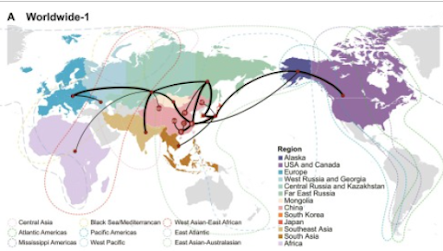
Transmission routes of HA sequences from H3 sublineages at a global scale


#18,769

Although H5N1 is generally perceived as being the biggest avian flu threat today, we continue to see a steady stream of cautionary reports out of China on the growing diversity, and spread, of avian H3 viruses, including occasional spillovers into humans

Avian H3 viruses have sparked human pandemics before; including 1968's H3N2 virus, and a suspected H3N8 pandemic in the early 1900s. More than 57 years after it emerged, H3N2 continues to circulate in humans, and is often the cause of the most severe flu seasons.

While not considered a `reportable' virus in poultry or wild birds, H3Nx viruses have been making considerable inroads into mammalian hosts since the middle of the last century.  

As recently as last week, we looked at Virology: Assessment of the Public Health Risk of Novel Reassortant H3N3 Avian Influenza Viruses That Emerged in Chickens, which reported the H3N3 subtype in China already `. . . exhibits abundant genetic markers for mammalian host adaptation'.

A month ago, in Preprint: Fatal infection of a novel canine/human reassortant H3N2 influenza A virus in the zoo-housed golden monkeys, we saw yet another novel H3 subtype (H3N2) jump species in China.

As the map at the top of this blog illustrates, what happens with avian flu in Chinese wild birds and poultry isn't guaranteed to remain in China. 

Today we've a lengthy and detailed look at the ecology, evolution, and global spread of H3 subtype avian influenza viruses. I've only posted some excerpts. Those looking for a deeper dive will want to follow the link to read it in it's entirety.

I'll have a bit more after the break. 

Global spread of H3 subtype avian influenza viruses with an accelerated evolution after interspecies transmission

Jiaying Yang a b 1, Xiaojing Chen a 1, Xiyan Li b, Ye Zhang b , Jia Liu b, Min Tan b c, Hong Bo b, Wenfei Zhu b, Lei Yang b, Dayan Wang b, Yuelong Shu a c

https://doi.org/10.1016/j.jinf.2025.106542

Under a Creative Commons license

 Highlights

• Multiscale transmission hotspots for H3 subtype avian influenza viruses were identified, such as Alaska, Central Asia, and Guangdong/Guangxi provinces in China.

H3 sublineages evolved faster after introduction from wild birds to domestic poultry.

• Chicken-origin H3N8 G25 viruses exhibited accelerated evolution compared to duck-origin H3 viruses.

Summary

The H3 subtype avian influenza virus (AIV) has been widely spread in birds and known as a natural source of mammalian influenza viruses. Based on data from public databases and our surveillance data, we analysed the ecology, evolution, and spread of H3 AIVs.

Sublineages of H3 AIVs have been detected worldwide, infecting various birds, at least 90 species in wild birds and poultry. Important areas for large-scale and local dissemination of H3 AIVs were identified, such as Alaska, Central Asia, and Chinese provinces.

The H3 viruses have elevated the HA gene substitution rate after introduction from wild birds to domestic poultry, and even faster in domestic chickens. Our results implied an evolutionary mechanism of H3 AIV cross-species transmission, that viruses from wild birds to domestic poultry have accelerated substitution rate by shorter generation time and host selection. Novel chicken H3 viruses, especially H3N8 G25 viruses that have spilled over to humans, require high attention.

       (SNIP)

Regional spread of H3 sublineages

Two sublineages, Asia and EA-North America, had spread intra continentally. The Asia sublineage spanned multiple countries within the eastern Asian continent (Appendix Figure 7). Mongolia might play a key role for virus spatial diffusion. Transmission routes between Mongolia and other Asian regions, including northern China, eastern China, Far East Russia, South Asia, and Southeast Asia, were highly supported (Fig. 3A).

EA-North America sublineage viruses were mainly detected in Alaska (Appendix Figure 8). Statistical evidence supports that viral transmission may occur between Alaska and the Canadian Prairies, as well as between the Canadian Prairies and the Western USA. (Fig. 3B).
        
       (SNIP)
In this study, we have found several hot spots for H3 AIV large-scale spreading, including Alaska, Central Asia, Japan, Eastern China, and Mongolia.
Alaska is an important pathway for H3 AIV to spread between the Eastern Hemisphere and the Western Hemisphere, e.g., sublineage Worldwide-1 and Europe-Asia. Migratory waterfowls, particularly green-winged teals25 and northern pintails26, that could rapidly fly long distances carrying AIVs were frequently monitored in Alaska, where overlaps of flyways may contribute to the intercontinental movement of AIVs between Eurasia and North America27.

        (Continue . . . )


In 2008, in USGS: Genetic Evidence Of The Movement Of Avian Influenza Viruses From Asia To North America, we saw evidence that suggested migratory birds may play a larger role in intercontinental spread of avian influenza viruses than previously thought.

However, as late as November of 2014, the debate over the ability of migratory birds to spread avian flu over long distances was still raging (see Bird Flu Spread: The Flyway Or The Highway?), with many experts and agencies insisting that `Sick birds don't fly'.

Less than a month later, in (December 2014) we saw H5Nx wing its way  from Asia to North America for the first time, dispelling the notion that the Western Hemisphere was somehow protected by vast ocean distances.
 
A few months later, in 2015's USGS: Alaska - A Hotspot For Eurasian Avian Flu Introductions, we looked at how overlapping migratory flyways could facilitate the spread of Chinese avian viruses to North America (and vice-versa).

image

We revisited this risk in 2016 in USGS: Alaska Still A Likely Portal For Introduction Of Avian VirusesThere are also Atlantic Ocean overlaps between the European and North American flyways (see PLoS One: North Atlantic Flyways Provide Opportunities For Spread Of Avian Influenza Viruses).

These migratory flyway overlaps helped funnel H5Nx into North America in late 2014, and H5N1 in 2021 (see Multiple Introductions of H5 HPAI Viruses into Canada Via both East Asia-Australasia/Pacific & Atlantic Flyways).

All of which means that what happens with avian flu in the chicken coops of China, or the flyways of Siberia, is more than just a local concern.  

And if China's scientists are troubled by what they are seeing with H3Nx, we probably should be paying closer attention.