Showing posts with label Lab. Show all posts

Wednesday, May 27, 2015

DOD Inadvertently Ships Live Anthrax To 9 Labs


# 10,104


The past 12 months have not exactly been stellar examples of good government lab biosafety, with several high profile `incidents' (see CDC Statement On Possible Lab Exposure To Anthrax), (see CDC Media Statement on Newly Discovered Smallpox Specimens), and the accidental shipment of live H5N1 to a USDA lab in Georgia (see CDC Announces Another Serious Biosecurity Incident).

While no laboratory workers were harmed in the making of these blunders, it nonetheless led to several heated congressional hearings, new lab safety regulations, and a promise that  labs around the country would work fervently to foster a greater `culture of safety’

We saw a setback on Christmas Eve when we learned of yet another incident (see CDC Statement On Ebola Lab Incident ) where the BSL-4 Ebola virus was inadvertently shipped to a BSL-2 lab.

Once again, no one was infected, but the CDC's review made additional recommendations for continued safety improvements.

Fast forward almost exactly a year since the first incident - involving anthrax - and we have a report this afternoon that a DOD lab has inadvertently shipped live anthrax to labs in 9 states; California, Texas, Wisconsin, Tennessee, Maryland, Virginia, Delaware, New Jersey and New York.

While details are still coming out, this from NBC News.


Live Anthrax Mistakenly Sent to U.S. Labs


Federal health officials say they are investigating the accidental shipment of live anthrax bacteria to labs in nine states. The Centers for Disease Control and Prevention confirms that it's investigating the accidental shipments.

No one's been sickened by the bacteria, which can cause potentially deadly illness although it's easily treated with antibiotics if caught soon enough.

"CDC is investigating the possible inadvertent transfer of a select agent from the U. S. Department of Defense (DOD) to labs in nine states. At this time we do not suspect any risk to the general public," CDC said in a statement sent to NBC News.
(Continue . . . )


I've looked for, but have not found on the CDC media site, the CDC statement.   Presumably we'll learn more in the next few days. 


All of this is likely to renew calls for greater oversight on the use of select agents, and some restrictions on what types of research that should be permitted. Last year, it was quite the  hot topic, as the following blogs attest.

The Journal Nature Weighs In On Lab Accidents & Biosafety
Thebulletin.org: Making Viruses Deadlier – An Accident Waiting To Happen.

While scientists engaged in this type of work insist that the risks are negligible (see Scientists For Science: GOF Research `Essential’ & Can be Done `Safely’), many others  (see Updating The Cambridge Working Group) are less convinced.

Some earlier blogs on this highly contentious debate include:

mBio: The Risks & Benefits Of `GOF’ Experimentation On Pathogens With Pandemic Potential
The Laboratory Bio-Safety Backlash Continues
ECDC Comment On Gain Of Function Research
Lipsitch & Galvani: GOF Research Concerns

Thursday, February 05, 2015

CDC Report On Investigation Into December’s Ebola Lab Incident

image

Credit CDC PHIL


# 9675


All in all, 2014 will go down as a difficult year for CDC labs, with several high profile lab biosafety incidents involving `select agents’, including H5N1 and anthrax last summer (see CDC Announces Another Serious Biosecurity Incident, and Ebola in December (see CDC Reports Potential Ebola Exposure At Lab).


`Select agents’ are those  pathogens that have been deemed to pose a significant biological hazard, and among those, Tier 1 select agents are considered `biological agents and toxins present the greatest risk of deliberate misuse with significant potential for mass casualties or devastating effect to the economy, critical infrastructure, or public confidence, and pose a severe threat to public health and safety:’


While obviously of concern, in all of these incidents the biohazard was contained, and no one ended up being infected. In August, in CDC H5N1 Incident & Lab Safety Progress Reports, we looked at some of the steps being taken by the CDC to increase lab safety and foster a greater `culture of safety’.


But, as we learned on Christmas Eve (see CDC Statement On Ebola Lab Incident), whenever you mix complex systems with human foibles, errors can still occur.  Even in the best of labs.

Last night the CDC released the following report on that incident:


CDC Releases Report on Recent Lab Incident

CDC review shows unlikely exposure, makes recommendations for continued safety improvements

For Immediate Release: Wednesday, February 4, 2015
Contact:
Media Relations, Office of Communication
(404) 639-3286

The Centers for Disease Control and Prevention (CDC) has completed an internal investigation of an incident that occurred in December within the agency’s Ebola virus laboratory, which resulted in no illness and was unlikely to have involved an exposure to live Ebola virus.  CDC’s investigation found that this laboratory incident occurred for two main reasons related to inadequate safeguards: 1) lack of a written study plan that had been approved by a supervisor; and 2) a study plan workflow that was not designed to sufficiently minimize the possibility that human error could result in potential exposure. CDC had already taken many steps to improve safety and will take additional steps as a result of this review. 

In December, CDC reported that a small amount of material from an experiment that was part of an Ebola virus study was securely transported from a select‐agent‐approved BSL‐4 lab to a select‐agent‐approved BSL‐2 lab and may have contained live virus. The material mistakenly transferred during procedures for this study was on a sealed plate but should not have been moved from the BSL-4 laboratory into the BSL‐2 laboratory.  The study involved scientists placing identical oral swab samples from guinea pigs into two sets of tubes—one set of tubes for live virus studies and one set of tubes for studies with inactivated material.  The tubes were identical in brand and size and only differentiated by color caps and labels. Appropriate and approved inactivation procedures, consistent with recently implemented laboratory safety improvements, were used. Unfortunately, however, human error resulted in the swabs being placed into tubes in such a way that another technician mistakenly transported the wrong specimens to the BSL-2 lab.

The report also describes two previous recommendations that had not yet been fully implemented in this lab that could potentially have reduced the likelihood of this incident:  1) installation of a camera system for secondary verification of critical safety control points; and 2) proper use of a required Material Transfer Certificate (MTC) form for materials taken out of CDC’s high containment laboratories to lower biosafety level laboratories, including internal transfers.

CDC’s investigation found that immediate steps were taken to minimize any risk to CDC lab staff and that this incident was reported to appropriate authorities in a timely manner.  In addition, the involved BSL-4 lab has suspended transfers out of the lab until a full review of the incident is completed and appropriate improvements are initiated. CDC is currently installing camera systems in the BSL-4 laboratory and providing clear instructions on the intended use of the MTC form prior to resuming full BSL-4 operations.

The laboratory technician who worked directly with the specimens in the BSL-2 laboratory completed 21 days of direct active monitoring and reported no illness consistent with Ebola.  The agency performed additional laboratory studies on swabs taken the workdays before and after the incident which found it was unlikely that the specimens transferred to the BSL-2 laboratory contained live Ebola virus.  Although the studies determined there was no safety risk to CDC staff or the public, CDC will ensure continuous improvements occur to protect the safety of CDC staff and the broader community.

Among steps CDC is taking or has taken to address this incident:

  • Enhance standard operating procedures for materials intended for inactivation and removal from laboratories to ensure that
    • All materials are in standard, appropriately labeled, easily distinguishable tubes. 
    • Multiple, redundant visual safeguards are used.
  • Ensure CDC scientists have a full understanding of previously recommended laboratory safety improvements, including required use of the MTC form, and that they implement them.
  • Work with CDC scientists from high containment laboratories to establish a peer-review system of written research plans to foster critical thinking on how to optimize workflows in protocols and minimize error.

While the incident described in this report highlights the need for continued enhancements to laboratory safety practices across the agency, CDC has made progress in this area over the past several months. Examples include:

  • Established and recruiting for a new position, the Associate Director for Laboratory Science and Safety, with responsibility for providing agency-wide leadership and accountability for laboratory science, safety, and quality. 
  • Worked with laboratory staff and laboratory leadership to identify other safety improvement measures, including expansion of biosafety training and improvements in research standards and protocols. 
  • Undertaken an inventory of all stored biologic materials.
  • Formed an external laboratory safety working group, under the Advisory Committee to the Director, composed of experts in biosafety and related areas to review and provide input into corrective actions and safeguards across all CDC laboratories.

CDC leaders have expressed their disappointment and have repeatedly stressed the importance of minimizing any potential risk to staff.  CDC’s efforts to improve lab safety are essential—with the safety of employees as the highest priority.  The expertise and world-class knowledge that CDC scientists bring to laboratory work is vital and, while lab work will always carry some risk, it is crucial to saving lives and preventing disease.  CDC is committed to ongoing efforts to identify and implement systems and procedures that will allow the agency to provide maximum protections for laboratory staff and the broader community while conducting its critical laboratory work.

Please see CDC’s laboratory safety site for the full report


Although the CDC’s labs are undoubtedly among the safest in the world, these and other high profile lab incidents (see FDA Statement On Additional 300 Vials Discovered At NIH Campus Lab) have led to numerous calls for greater oversight on the use of select agents, and some restrictions on the type of research that should be permitted. 


The Journal Nature Weighs In On Lab Accidents & Biosafety

Thebulletin.org: Making Viruses Deadlier – An Accident Waiting To Happen.


While scientists engaged in this type of work insist that the risks are negligible (see Scientists For Science: GOF Research `Essential’ & Can be Done `Safely’), many others  (see Updating The Cambridge Working Group) are less convinced.


Some earlier blogs on this highly contentious debate include:


mBio: The Risks & Benefits Of `GOF’ Experimentation On Pathogens With Pandemic Potential

The Laboratory Bio-Safety Backlash Continues

ECDC Comment On Gain Of Function Research

Lipsitch & Galvani: GOF Research Concerns

Wednesday, December 24, 2014

CDC Statement On Ebola Lab Incident

image

Credit CDC PHIL


# 9486


I’ve finally located the CDC’s statement on the Ebola lab incident (see CDC Reports Potential Ebola Exposure At Lab) announced late this afternoon.


Lab Safety Report on Ebola Virus Transfer


The Centers for Disease Control and Prevention is reporting today that a small amount of material from an Ebola virus experiment that was securely transported from a Select-Agent-approved BSL-4 lab to a Select-Agent-approved BSL-2 lab may have contained live virus. The material was on a sealed plate but should not have been moved into the BSL-2 laboratory. We cannot rule out possible exposure of the one laboratory technician who worked with the material in the BSL-2 laboratory.


There was no possible exposure outside the secure laboratory at CDC and no exposure or risk to the public. The event was discovered by the laboratory scientists yesterday, December 23, and reported to leadership within an hour of the discovery.


The event is under internal investigation by CDC, was reported to Secretary of Health and Human Services Sylvia Burwell, and reporting to the internal and national Select Agent Programs has been initiated. CDC will provide a report on the event when the investigation concludes. The BSL-2 laboratory area had already been decontaminated and the material destroyed as a routine procedure before the error was identified. The laboratory was decontaminated for a second time, and is now closed and transfers from the BSL-4 lab have been stopped while the review is taking place.


"I am troubled by this incident in our Ebola research laboratory in Atlanta," said CDC Director Tom Frieden, M.D., M.P.H. "We are monitoring the health of one technician who could possibly have been exposed and I have directed that there be a full review of every aspect of the incident and that CDC take all necessary measures. Thousands of laboratory scientists in more than 150 labs throughout CDC have taken extraordinary steps in recent months to improve safety. No risk to staff is acceptable, and our efforts to improve lab safety are essential -- the safety of our employees is our highest priority."


CDC will continue to provide support during the Ebola epidemic through its research and diagnostic lab work. Skilled lab scientists in the Ebola response are valued contributors to ending this epidemic.

Based on what was learned during the lab science and safety reviews earlier this year, CDC has taken several immediate actions in this incident including closure of the laboratory, notification of staff, initiation of a complete internal review, and notifications of regulatory oversight agencies. This review will give us a clear understanding of what happened in this case and what can be done to further improve laboratory safety.

CDC has established a CDC-wide single point of accountability for laboratory science and safety and this will aid in ensuring accountability in this situation. CDC will also report this event to its external advisory committee which provides ongoing advice and direction for laboratory science and safety.


One person--the BSL-2 lab technician who processed the material and who currently has no symptoms of illness--has been assessed and will be monitored for 21 days, according to CDC guidance. Others who entered the lab have been contacted and were assessed for possible exposure. As of this time we believe exposure requiring monitoring is limited to one individual.


Thursday, June 19, 2014

CDC Statement On Possible Lab Exposure To Anthrax

image

Electron micrograph (SEM) depicted spores from the Sterne strain of Bacillus anthracis bacteria. – Credit CDC


# 8763


Based on the reports thus far, it appears that the risks to those who were potentially exposed to anthrax at a CDC lab facility in Atlanta last week are pretty low.   It has been a week since the likely exposure took place, and thus far, no employees have developed symptoms.


First the statement, then I’ll have a bit more.


Media Statement

For Immediate Release: Thursday, June 19, 2014
Contact:
CDC Media Relations
(404) 639-3286

CDC Lab Determines Possible Anthrax Exposures: Staff Provided Antibiotics/Monitoring

CDC announced today that approximately 75 Atlanta-based staff are being monitored or provided antibiotics because they may have been unintentionally exposed to live Bacillus anthracis (anthrax) after established safety practices were not followed.

Out of an abundance of caution, CDC is taking aggressive steps to protect the health of all involved, including providing protective courses of antibiotics for potentially exposed staff. Based on most of the potential exposure scenarios, the risk of infection is very low. Based on the review to date, CDC believes that other CDC staff, family members, and the general public are not at risk of exposure and do not need to take any protective action.  Although the investigation continues, early reports show that one of its Roybal campus biosafety level 3 (BSL3) labs was preparing B. anthracis samples for research in other CDC labs at lower biosafety levels to yield new means of detecting dangerous pathogens in environmental samples. However, the lab used a procedure that did not adequately inactivate the samples.

The potentially infectious samples were moved and used for experimentation in three CDC Roybal campus laboratories not equipped to handle live B. anthracis.  Workers, believing the samples were inactivated, were not wearing adequate personal protective equipment while handling the material.

Lab safety investigators also determined that, sometime between June 6 and June 13, procedures used in two of the three labs may have aerosolized the spores.  Environmental sampling was done, lab and hallway areas were decontaminated and laboratories will be re-opened when safe to operate.

The unintentional exposure was discovered June 13 when the original bacterial plates were gathered for disposal and B. anthracis colonies (live bacteria) were found on the plates. These plates had appeared negative for B. anthracis at the time samples were distributed to the other CDC laboratories.  The review began immediately to assess the health risk, and those workers handling the plates were immediately notified.

CDC’s guiding principles for laboratory work are to ensure the safety of all staff and the community and be as transparent as possible about our work as we conduct high-quality scientific research to protect people in this country and around the world.

CDC continues its internal review to determine why validated procedures were not used by the lab. Also, CDC has reported the incident to the Federal Select Agent Program.  Given that CDC expert protocols were not followed, disciplinary action(s) will be taken as necessary.  In addition, CDC will review the safety protocol again with all employees who work in this area.

It is CDC’s obligation to ensure that people feel safe and are safe in the workplace and the community as we conduct our life-saving laboratory work. We will report findings of this review and all steps we take to improve lab-safety processes as a result of this incident. 


Mistakes or accidents at high biosecurity-level laboratories are admittedly rare events, but they are not completely unheard of, even at the CDC.  Between 2003 and 2009, US government laboratories reported 395 incidents that involved the potential release of select agents, according to this report from CIDRAP NEWS.


Although it seems likely that this latest incident is contained, it will likely fuel existing biosecurity concerns over controversial Gain of Function (GOF) experiments; those designed to enhance the transmissibility or virulence of dangerous pathogens – including the H5N1 virus (and most recently the 1918 pandemic virus).


While most researchers offer broad assurances on the safety of high security laboratories - as today’s incident shows –even the most professionally run high security lab is vulnerable to human error. Last November, in BMC Medicine: Containing Laboratory Escape Of Pandemic Viruses, we looked at a report that found the risks of seeing an accidental release from one of these labs is far from zero.


For more on the contentious debate over the risk of accidental releases from labs, and the pursuit of GOF research, you may wish to revisit:


Lipsitch & Galvani: GOF Research Concerns.

Laurie Garrett On Biosecurity Reforms

H7N9: Reigniting The `Gain Of Function’ Research Debate

Friday, November 29, 2013

BMC Medicine: Containing Laboratory Escape Of Pandemic Viruses

image

BSL-4 Lab Worker - Photo Credit –USAMRIID


# 8017


While nobody really knows how the H1N1 influenza virus – absent in the human population for 20 years – managed to spark a pseudo-pandemic in 1977,  many researchers suspect it escaped a lab in either Russia or China in the mid-1970s.  Genetically, it was very similar to a strain that had circulated 2 decades earlier, something that would be difficult to occur in the wild, but might well  be explained had the virus been stored in a lab freezer (see EID Journal article Influenza Pandemics of the 20th Century Edwin D. Kilbourne).


The evidence is only circumstantial, so we may never know the truth of the matter.


With the rise of `Gain of Function’  (GOF) research – which aims to enhance the virulence, host range, or transmissibility of dangerous pathogens so that we may better understand their pandemic potential – biosecurity experts have warned that an accident at a BSL-3 or BSL-4 lab could have global ramifications (see mBio: The H5N1 Biosafety Level Debate).


While most researchers involved in this sort of work call the risks both manageable, and negligible, the truth is - lab accidents have occurred in the past, and despite very strict bio-safety rules and procedures, they are likely to happen again in the future. 


In 2009, the United States GAO issued a 104 page report (HIGH-CONTAINMENT LABORATORIES : National Strategy for Oversight Is Needed ) that looked at four high-profile biosecurity breeches {see below), and examined the risks of future lab accidents.


  • Alleged insider misuse of a select agent and laboratory;
  • Texas A&M University’s (TAMU) failure to report to CDC exposures to select agents in 2006
  • Power outages at CDC’s high-containment laboratories in 2007 and 2008
  • The release of foot-and-mouth disease virus in 2007 at the Pirbright facility in the U.K.


The GAO described the risks going forward (bolding mine):


Four highly publicized incidents in high-containment laboratories,  as well as evidence in scientific literature, demonstrate that (1) while laboratory accidents are rare, they do occur, primarily due to human error or systems (management and technical operations) failure, including the failure of safety equipment and procedures, (2) insiders can pose a risk, and (3) it is difficult to control inventories of biological agents with currently available technologies. Taken as a whole, these incidents demonstrate failures of systems and procedures meant to maintain biosafety and biosecurity in high-containment laboratories. For example, they revealed the failure to comply with regulatory requirements, safety measures that were not commensurate with the level of risk to public health posed by laboratory workers and pathogens in the laboratories, and the failure to fund ongoing facility maintenance and monitor the operational effectiveness of laboratory physical infrastructure.


At one of the most secure BSL-4 facilities in the world – USAMRIID (U.S. Army Medical Research Institute of Infectious Diseases) - their safety record is exceedingly good  . . .  but it is not perfect.  This (bolding mine) from their website:


In order to properly assess safety performance over time, USAMRIID compares the number of incidents to the number of times employees entered BSL-3 and BSL-4 laboratories in a given year.  It is important to note that in every incident from 2010-2012, no symptoms were reported and there were no signs of illness.

For instance, in 2012, USAMRIID had 20,402 entries into BSL-3 laboratories. During that time, there were 9 safety incidents within those laboratories; 2 were Potential Biological Exposures (PBE).  A PBE means that some risk of exposure to infectious agents and/or toxins may have occurred, resulting in Occupational Health staff placing the personnel involved on precautionary medical surveillance.  No illness or disease occurred in either case. The 2012 incident rate for BSL-3 laboratories was 0.044 percent.

Looking at BSL-4 laboratories, USAMRIID had 9,154 entries during 2012, with a total of 30 incidents including 6 Potential Biological Exposures (PBE).  A PBE means that some risk of exposure to infectious agents and/or toxins may have occurred, resulting in Occupational Health staff placing the personnel involved on precautionary medical surveillance.  In every case, no illness or disease occurred.  The 2012 incident rate for BSL-4 laboratories was 0.328 percent.


In 2011 CIDRAP NEWS published a report called:


Report: 395 mishaps at US labs risked releasing select agents

By Robert Roos

Sep 28, 2011 (CIDRAP News) – US government laboratories had 395 incidents that involved the potential release of select agents between 2003 and 2009, though only seven related infections were reported, according to a new National Research Council (NRC) report.

The accidents, including animal bites, needle sticks, and other mishaps, are mentioned briefly in an NRC report on the plans for a risk assessment for an Army biodefense lab to be built at Ft. Detrick in Frederick, Md.

"The Centers for Disease Control and Prevention (CDC) reports 395 cases of potential release events at national laboratories working with select agents," the report says.

"Seven LAIs [laboratory-acquired infections] were reported to CDC; four infections involved Brucella melitensis, two involved Francisella tularensis, and one involved an unspecified Coccidioides species," it continues. "CDC plans to publish an analysis of these events." The report does not list the outcomes of the infections.

(Continue . . . )

All of which serves as prelude to a report that was published yesterday in BMC Medicine, that models the ability of a research lab to detect and contain a potentially dangerous biosecurity breech, once it has occurred.


Containing the accidental laboratory escape of potential pandemic influenza viruses

Stefano Merler, Marco Ajelli, Laura Fumanelli and Alessandro Vespignani

BMC Medicine 2013, 11:252  doi:10.1186/1741-7015-11-252

Published: 28 November 2013

Abstract (provisional)

Background

The recent work on the modified H5N1 has stirred an intense debate on the risk associated with the accidental release from biosafety laboratory of potential pandemic pathogens. Here, we assess the risk that the accidental escape of a novel transmissible influenza strain would not be contained in the local community.

Methods

We develop here a detailed agent-based model that specifically considers laboratory workers and their contacts in microsimulations of the epidemic onset. We consider the following non-pharmaceutical interventions: isolation of the laboratory, laboratory workers' household quarantine, contact tracing of cases and subsequent household quarantine of identified secondary cases, and school and workplace closure both preventive and reactive.

Results

Model simulations suggest that there is a non-negligible probability (5% to 15%), strongly dependent on reproduction number and probability of developing clinical symptoms, that the escape event is not detected at all. We find that the containment depends on the timely implementation of non-pharmaceutical interventions and contact tracing and it may be effective (>90% probability per event) only for pathogens with moderate transmissibility (reproductive number no larger than R0 = 1.5). Containment depends on population density and structure as well, with a probability of giving rise to a global event that is three to five times lower in rural areas.

Conclusions

Results suggest that controllability of escape events is not guaranteed and, given the rapid increase of biosafety laboratories worldwide, this poses a serious threat to human health. Our findings may be relevant to policy makers when designing adequate preparedness plans and may have important implications for determining the location of new biosafety laboratories worldwide.

(Continue . . . . )

From a press release via Northeastern University, we get additional background on this research.  Follow the link to read it in its entirety, as I’ve only included an excerpt:


The potential pandemic

November 28, 2013 by Angela Herring

(EXCERPT)

The results of the sim­u­la­tion sug­gest a 5–15 per­cent chance that an acci­dental escape would not be detected, espe­cially in the case of very trans­mis­sible viruses and those where symp­toms are not imme­di­ately spotted. In addi­tion, they found that con­tain­ment would depend on the struc­ture and den­sity of the local pop­u­la­tion sur­rounding a facility.


“Most BSL labs are in big urban areas,” Vespig­nani explained. “In those areas we show that the prob­a­bility of not con­taining the out­break is three to five times larger than what it would be in iso­lated areas.”


While the prob­a­bility of acci­dental release is extremely low—there’s only 0.3 per­cent chance of a virus escaping one of these labs each year—even a single event can trans­late into a vast public health emer­gency, said Ste­fano Merler, one of the researchers who is based at the Kessler Foun­da­tion. More­over, the number of BSL3 and 4 lab­o­ra­to­ries is increasing, cre­ating a greater com­bined risk the world over.

(Continue . . . )


While there are only a few dozen BSL-4 labs around the world, there are literally thousands of BSL-3 capable labs. Admittedly, few are conducting GOF research, but even the release of an un-enhanced pathogen could potentially produce a huge impact.


Although many researchers can justifiably point out their lab’s exemplary safety record, the standards set and met in labs around the world can vary substantially.  And even the finest biosecurity methods can be thwarted by deliberate `bad acts’ by staff.  


Whether researchers doing this sort of research like to admit it it, the risks of seeing an accidental release from one of these labs is far from zero. While a .3% chance of release from any given lab works out to be roughly one every 100 years, with hundreds of of BSL-3 and BSL-4 labs around the world, the odds of seeing an accident in any given year somewhere in the world go up substantially.

.

And if today’s BMC Medicine study is correct, containment – particularly of a high R0 pathogen (highly infectious) – is far from guaranteed.

Monday, March 04, 2013

China: FAO Designates Animal Influenza Reference Lab


image

Photo Credit – FAO

# 6979


This story is being carried widely by the Asian press, and originated with Xinhua News. 


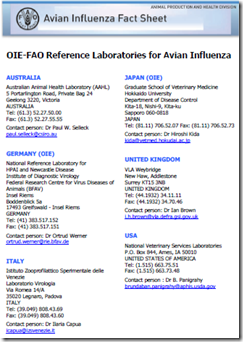
I’m not quite sure what to make of the statement regarding this being only the second FAO recognized animal influenza reference center in the world (paragraph 3), as the OIE-FAO Reference Laboratories for Avian Influenza factsheet lists at least a half dozen labs.


image


Nevertheless, having an FAO approved lab in China is an important step forward, given the considerable risks posed by zoonotic influenza viruses.


FAO sets up animal influenza ref center in N China

Xinhua, March 4, 2013

The Food and Agriculture Organization (FAO) of the United Nations on Monday designated an animal influenza lab in northeast China's Heilongjiang Province as the Reference Center for Animal Influenza of the FAO.


The Animal Influenza Laboratory (AIL), which belongs to the Harbin Veterinary Research Institute (HVRI) of the Chinese Academy of Agricultural Sciences, is located in the provincial capital Harbin.


The AIL is the first FAO-recognized reference center in China and the second in the world, after the Federal Research Institute for Animal Health, Friedrich-Loeffer-Institute of Germany.


The establishment of the reference center shows that the laboratory diagnosis and scientific research level of animal influenza in China has reached internationally-recognized, advanced levels.


The HVRI will share information and jointly carry out animal influenza supervision, prevention and control programs with the FAO, as well as provide data on the epidemiology and influenza virus evolution in Asia and offer consultation on vaccines and immunity, said Dr. Juan Luborth, chief veterinary officer (CVO) of the FAO.


"China and the FAO have cooperated a lot in fields of animal epidemic disease and laboratory biosecurity in recent years. The establishment of the center will push the cooperation into a new stage," said Yu Kangzheng, China's CVO.


China and the FAO will also strengthen cooperation on cross-border animal disease prevention and control, animal hygiene informatization and exchanges of veterinary experiences and information among various countries, Yu said. Endi

Tuesday, December 18, 2012

Hong Kong: H5N1 Vaccine Recommended For Certain Lab Workers

image

BSL-3 – Credit CDC PHIL 


# 6788


While a heated debate continues (see CIDRAP article
H5N1 researchers question proposed HHS funding framework) over the future of research that seeks to enhance the transmissibility, pathogenicity, or host range of the H5N1 virus - there are many labs around the world that are called upon to deal with the virus in a more routine way.


There are laboratories that screen influenza virus samples in regions where H5N1 is endemic, labs that that test samples taken directly from livestock or human subjects suspected of H5N1 infection, along with other research facilities not engaged in `enhanced’ H5N1 research.


Although laboratory bio-safety protocols tremendously lower the risk of accidental infection, that risk is not zero.


Which is why today it was announced that a special advisory committee in Hong Kong has recommended certain high risk laboratory technicians be offered an H5N1 vaccine, to further reduce those risks.


From this release we also gain some insight into Hong Kong’s pandemic strategy, which eschews the stockpiling of a pre-pandemic vaccine (which may not be effective against a newly emerging pandemic strain), and concentrates instead on using stockpiled antivirals until a strain-specific vaccine can be created.


Scientific Committee's recommendations on human influenza H5N1 pre-pandemic and pandemic vaccines 

18 December 2012


A spokesman for the Department of Health (DH) announced today (December 18) that the Scientific Committee on Emerging and Zoonotic Diseases (SC) under the Centre for Health Protection (CHP) of the DH has provided its recommendations on human influenza H5N1 pre-pandemic and pandemic vaccines.


The spokesman said that after reviewing the latest scientific data, including local disease epidemiology, international experience and the World Health Organization (WHO)'s recommendations, the SC recommends providing human influenza H5N1 pre-pandemic vaccine for the protection of specific laboratory workers at higher risk of exposure to avian influenza H5N1 virus during the inter-pandemic phase.


The laboratory workers who are eligible for the vaccination are those involved in:

  • large-scale production or manipulation of highly pathogenic avian influenza (HPAI) H5N1 virus;
  • working with the virus over a long period;
  • working with HPAI H5N1 virus strains that are resistant to licensed antiviral compounds;
  • or working with strains with the potential for increased transmissibility in mammalian species.

"As recommended by the SC, a locally registered human influenza H5N1 pre-pandemic vaccine, which is based on the currently more widely circulating strain and demonstrated cross-reactivity to more clades should be the choice of vaccines," said the spokesman, adding that the DH will proceed with the necessary procedures in procuring the vaccines recommended by the SC.


The spokesman explained that a human influenza H5N1 pre-pandemic vaccine contains antigens that correspond to circulating avian influenza H5N1 virus strains that are thought to have the potential to cause a pandemic.


However, given the uncertainties about the timing and the strain/subtype of the next pandemic, physical stockpiling of additional human influenza H5N1 pre-pandemic vaccine was not recommended by the SC.


As regards pandemic vaccines, the spokesman explained that it is a vaccine against a future pandemic influenza strain with unknown antigenic composition. It will protect against the pandemic influenza strain but will only be available after the emerging virus of the next influenza pandemic has been characterised.


In view of the doubtful benefit based on currently available information, the SC at present does not recommend the option of procuring the pandemic vaccines by advance purchase agreement (APA), that is, a contract with vaccine manufacturers for reserving a certain percentage of vaccine output capacity.


The spokesman stressed, "As part of the preparedness plan for influenza pandemic, the DH has stockpiled sufficient antiviral agents for the treatment of patients as well as chemoprophylaxis for certain target groups including health care workers.


"The DH will continue to monitor the development of pre-pandemic/pandemic vaccines and APA closely and recommendations are subject to review by the SC if new evidence/option becomes available," he added.


The full version of SC's recommendations on human influenza H5N1 pre-pandemic and pandemic vaccine has been uploaded to the CHP website (www.chp.gov.hk) today.

Ends/Tuesday, December 18, 2012


Five or six years ago a number of countries elected to stockpile quantities of an experimental H5N1 vaccine, which typically only have a shelf life of 2 to 3 years, only to see them expire unused.


In a few cases, authorities opted to release some of these vaccines to high risk individuals, and even the general public, rather than see them go to waste.


In September of 2008, roughly 6,000 medical workers in Japan received an experimental pre-pandemic bird flu vaccine as a test for a larger distribution of their stockpile (see Japan: Pre-Pandemic Vaccination Priority List).


And in September of 2010 Taiwan offered a limited number of H5N1 vaccinations to the public (see Taiwan Offers Public Bird Flu Vaccinations).


While it is unknown how effective these early vaccines would be against any newly emerging H5N1 strain, many researchers believe even a fair match would help prime the recipient’s immune system, so that a single booster (instead of two shots) might offer protection (see The Prime Of Our Lives).


The logistics of producing and delivering an emergency pandemic vaccine (likely requiring 2 doses, 28 days apart) to a significant portion of the world’s population remain daunting, and with today’s technology only limited quantities of vaccine would become available after 5 or 6 months.


Ultimately the solution may lie in the development of a universal flu vaccine, one that targets a conserved epitope common across a wide range of flu viruses, that would convey protection against many strains.


Unfortunately, while progress is being made on that front, such a development is still likely years away.

Thursday, November 01, 2012

CDC: Laboratory Test Results From Meningitis Outbreak


# 6687


Last night the CDC posted updated laboratory test results from patients - and un-opened vials of methylprednisolone produced by the New England Compounding Center  – as part of their investigation into a multi-state outbreak of fungal meningitis.


The latest numbers from this outbreak, as of 2pm yesterday, are:

image


Lab tests have isolated Exserohilum rostratum in 52 of the 54 patients with CDC laboratory-confirmed fungal meningitis. Tests by the CDC and FDA have also found Exserohilum rostratum in unopened vials from two of the three recalled lots of injectable steroids produced by NECC.   Tests are pending on the third lot.


Here’s the complete CDC Update:


Laboratory Testing and Results from the Outbreak

October 31, 2012 6:00 PM EDT

CDC laboratory-confirmed results found on this page are from three New England Compounding Center (NECC) preservative-free methylprednisolone  acetate (MPA) lots recalled on September 26, 2012.(1)

CDC’s Fungus Reference Laboratory has the capacity and technology to examine fungal isolates under the microscope and to confirm their identification using DNA sequencing methods.

CDC scientist examines microscopic slides showing Exserohilum rostratum (on screen) during the multistate meningitis outbreak.

CDC's Fungus Reference Laboratory has the capacity and technology to examine fungal isolates under the microscope and to confirm their identification using DNA sequencing methods.

  • For the multistate outbreak, the fungus laboratory is working with the Clinical and Environmental Microbiology Branch, Division of Healthcare Quality Promotion, to detect and identify other microbial pathogens. In addition, the Infectious Diseases Pathology Branch, Division of High-Consequence Pathogens and Pathology, is examining tissues from biopsies and autopsy materials.
  • CDC and the states are testing tissue and fluid samples from patients with probable or confirmed fungal infection. CDC scientists are looking to see if the samples contain fungi and other microbial pathogens, and if so, what type.
  • In addition, FDA and CDC are testing vials of NECC preservative-free MPA to see if they contain fungi and other microbial pathogens and if so, what type.

CDC Laboratory Results

As of October 22, 2012, Exserohilum rostratum has been found in clinical specimens for all but two of the 54 patients with CDC laboratory-confirmed fungal meningitis who meet the confirmed case definition.(2)


Tests at CDC and FDA laboratories on the preservative-free MPA vials have confirmed the presence of the same fungus, Exserohilum rostratum, in unopened vials from two of the three recalled lots.(1) Testing on the third lot of preservative-free MPA is ongoing. These laboratory test results strengthen the link between preservative-free MPA vials and the outbreak.


The fungi found in both patients and in recalled vials are common in the environment but were not recognized as a cause of meningitis before this outbreak.