Showing posts with label WPRO. Show all posts

Monday, April 07, 2014

WPRO World Health Day Video: Small Bite, Big Threat

image

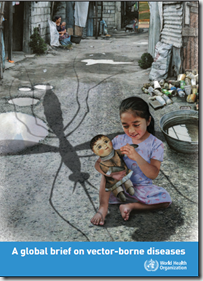
Global brief on vector-borne diseases
pdf, 4.45 Mb


# 8441


Globally, the World Health Organization estimates that one out of two people are at risk of contracting a vector-borne illness; diseases carried by mosquitoes, ticks, biting flies, and freshwater snails.  Globally Malaria infects more than 200 million people each year - killing over 600,000 - while 40% of the world’s population is now at risk of Dengue. 


Add in the considerable burdens of schistosomiasis, lymphatic filariasis, Japanese encephalitis and a bevy of other VBDs (Vector-borne diseases) and you’ll understand why the WHO has dedicated World Health Day: 2014 to highlighting these preventable infections.


While their greatest impact is undoubtedly in the least developed, poorest nations of the world - we’ve seen ample evidence that oceans, borders, and technology cannot prevent their spread around the globe. 


West Nile Virus arrived in North American in 1997 and since then has become endemic across the lower 48 states and into Canada (see WNV: The Economic Costs Of An Invasive Arbovirus), while Dengue fever has made exploratory incursions into Florida (see MMWR: Dengue Fever In Key West), Texas and and only last fall resulted in a case of Locally Acquired Dengue In New York City.


Chikungunya’s recent arrival in the Caribbean (see Chikungunya Update & CDC Webinar Online) now has many researchers concerned that it is well positioned to threaten North America in the months or years ahead. 


The CDC’s: Estimate Of Yearly Lyme Disease Diagnoses In The United States is now believed closer to 300,000 than to the 30,000 cases officially reported each year, while newly discovered vector borne diseases – like the Heartland Virus and SFTS () – provide sobering hints that there are likely many more emerging VBDs yet to be discovered.


As part of World Health Day, WPRO – the Western Pacific Region Office of the World Health Organization – has produced a video on the burden of Vector borne diseases in the Western Pacific, which you can access from the link below:


World Health Day 2014: Small bite, big threat

Video

Summary

For World Health Day 2014, a special film was commissioned to highlight the challenges posed by a number of vector-borne diseases in the Western Pacific Region, along with stories from the frontlines depicting how WHO supports Member States in tackling these diseases. In "Small Bite, Big Threat", filmmaker Mark Hammond captures several stories showing how collaboration between governments and civil society, supported by WHO, is vital in addressing malaria, dengue, schistosomiasis, lymphatic filariasis and Japanese encephalitis.

Authors

WHO Regional Office for the Western Pacific

Publication details

Publication date: 6 April 2014
Languages: English


While exotic diseases like Ebola, Marburg, and Avian Influenza garner the most headlines, in terms of actual impact on human health, they all pale in comparison to VBDs like malaria or dengue.  To learn more about these threats, and how you can help prevent them, set aside some time today to visit the WHO’s World Health Day website:

image


  And for some earlier blogs on VBDs, you may wish to revisit:


ECDC Updates Chikungunya & Zika Virus Outbreaks – March 17th

The Risks Of Chikungunya Outbreaks In The United States

DVBID: 2012 Record Number Of West Nile Fatalities

Friday, September 20, 2013

Joint Cambodian/WHO Statement On Latest H5N1 Cases


image


# 7796


Yesterday morning, in Xinhua News: Cambodia Reports 19th & 20th H5N1 Case Of Year, we saw an early media report on the latest H5N1 cases in Cambodia.   Today the the World Health Organization’s WPRO and the Kingdom of Cambodia issued a joint press release on these latest cases.


19th and 20th new human cases of avian influenza H5N1 in Cambodia in 2013

Joint news release between the Ministry of Health of the Kingdom of Cambodia and the World Health Organization

image

WHO Cambodia

Improper transport of poultry risks the spread of the H5N1 virus.

20 September 2013 - The Ministry of Health (MoH) of the Kingdom of Cambodia wishes to advise members of the public that two new human cases of avian influenza have been confirmed for the H5N1 virus. These are the 19th and 20th cases this year and the 40th and 41st persons to become infected with the H5N1 virus in Cambodia. The 20th case died on 17th September. Of the 41 confirmed cases, 30 were children under 14, and 24 of the 41 were female. In addition, only 9 cases out of the 20 cases this year survived.

The 19th case, a 5-year-old girl from Prey Slek village, Prey Slek commune, Traing district in Takeo province confirmed positive for human H5N1 avian influenza on 14th September by Institut Pasteur du Cambodge. The girl developed fever on 7th September and her family initially sought treatment for her in a private clinic. Her condition later worsened and the girl was admitted to Kantha Bopha Hospital on 12th September with fever, dyspnea, cyanosis, somnolence, cough and chest pain. Laboratory samples were taken and Tamiflu administered on 13th September. The girl recovers and is discharged from the hospital today.

Investigations by the Ministry of Health’s Rapid Response Teams (RRT) in Prey Slek village revealed that the girl came into direct contact with sick and dead chickens in her village.

The 20th case, a 2-year-old girl from Trapaing Chrab village, Thmey commune, Thek Chhou district in Kampot province confirmed positive for human H5N1 avian influenza on 16th September by Institut Pasteur du Cambodge. The child developed fever on 11th September. On 12th September, her parents sought treatment for her in a local village clinic. The child’s condition worsened and on 14thSeptember her parents sought treatment in a clinic in Kampot town. On 15thSeptember, the child was admitted to Kantha Bopha Hospital with fever, dyspnea, somnolence, diarrhea, cough and a distended abdomen. Laboratory samples were taken and Tamiflu administered on 16th September 2013. The child died on 17th September.

The child went to her neighbor’s house, with her mother, to ‘watch’ villagers prepare a meal from chickens that had died earlier. The villagers also shared the meal with the girl’s family.

The Ministry of Health’s RRTs and the Ministry of Agriculture, Forestry and Fishery’s Animal Health Task Force are working together closely in Prey Slek village in Takeo and Trapaing Chrab village in Kampot to investigate and implement control measures. The RRTs are trying to identify the cases’ close contacts, any epidemiological linkage among the 20 cases and initiate preventive treatment as required.The Animal Health Task Force is investigating cases of poultry deaths in the villages.

"Avian influenza H5N1 remains a serious threat to the health of all Cambodians and more so for children, who seem to be most vulnerable and are at high risk. There have been 20 cases of H5N1 infection in humans this year. As we approach the Pchum Ben festival season, when chicken and ducks are prepared for offerings and meals, I urge parents and guardians to take special care to make sure their children are not playing with poultry, or in any areas that may be contaminated with poultry faeces, or feathers or liquid wastes. Parents and guardians must also make sure children thoroughly wash their hands with soap and water before eating and after any contact with poultry. Hands may carry the virus that cannot be seen by the naked eye. Soap kills the virus on hands. If children have fast or difficult breathing, their parents should seek medical attention at the nearest health facility and attending physicians must be made aware of any exposure to sick or dead poultry,” said H.E. Dr. Mam Bunheng, Minister of Health.

A nationwide public health education campaign using radio has been launched before the Pchum Ben festival in early October. Also, public health education campaigns are being conducted in Prey Slek village, Takeo and Trapaing Chrab village in Kampot using information, education and communications materials to inform families on how to protect themselves from contracting avian influenza. The government's message is - wash hands often with soap and water, before eating and after coming into contact with poultry; keep children away from poultry; keep poultry away from living areas; do not eat dead or sick poultry; and all poultry eaten should be well cooked.

H5N1 influenza is a flu that normally spreads between sick poultry, but it can sometimes spread from poultry to humans. Human H5N1 avian influenza is a very serious disease that requires hospitalization. Although the virus currently does not easily spread among humans, if the virus changes it could easily be spread like seasonal influenza. Hence, early recognition of cases is important.

The Ministry of Health will continue to keep the public informed of developments via the MoH website www.cdcmoh.gov.kh where relevant health education materials can also be downloaded.


Although nowhere near the leader for human H5N1 infections (a dubious honor still held by Indonesia), 2013 has seen a steep rise in human infections with the H5N1 virus in Cambodia.


2005 – 4 cases                     2009 – 1 case

2006 – 2 cases                     2010 – 1 case

2007 – 1 case                       2011 – 8 cases

2008 – 1 case                       2012 - 3 cases

2009 – 1 case                       2013 – 20 cases


So far, all of the cases this year appear to be widely scattered, and are attributed to direct contact to infected poultry. There are no indications of human-to-human spread of the virus.


For now, bird flu remains primarily a threat to poultry. The virus remains poorly adapted to human physiology, and despite ample opportunities to cause illness in humans, the virus only causes rare, sporadic infections.


The concern, of course, is that over time the virus will adapt further and someday pose a pandemic threat to humans.

Wednesday, July 03, 2013

WPRO/Cambodia: Statement On H5N1 Cases

image


# 7441


Yesterday, via media reports, we learned of Cambodia’s 13th H5N1 case of the year (see Cambodia Reports 9th H5N1 Fatality Of 2013), that of a young girl who died last week. 


Today we have the World Health Organization  (WPRO) / Cambodian MOH joint release statement on this latest case, along with details of two retrospectively identified cases - #11 that we learned about in late May (see H5N1: Cambodia Finds A Retrospective Case) – and the elusive #12 we’ve been missing until now.


Although nowhere near the leader for human H5N1 infections (a dubious honor still held by Indonesia), 2013 has seen a steep rise in human infections with the H5N1 virus in Cambodia.


2005 – 4 cases                    2009 – 1 case

2006 – 2 cases                    2010 – 1 case

2007 – 1 case                     2011 – 8 cases

2008 – 1 case                     2012 - 3 cases

2009 – 1 case                    2013 - 13 cases

So far, all of the cases this year appear to be widely scattered, and are attributed to direct contact to infected poultry. There are no indications of human-to-human spread of the virus.


13th New Human Case of Avian Influenza H5N1 in Cambodia in 2013

Joint news release of the Ministry of Health of the Kingdom of Cambodia and World Health Organization

Ministry of Health of Cambodia/WHO

PHNOM PENH, 2 July 2013 - The Ministry of Health (MoH) of the Kingdom of Cambodia wishes to advise members of the public that one more new human case of avian influenza has been confirmed positive for the H5N1 virus. This is 13th case this year and the 34th person to become infected with the H5N1 virus in Cambodia. Of the 34 confirmed cases, 23 were children under 14, and 21 of the 34 were female. In addition, there were only 4 cases out of 13 cases this year survived.


The 13th case, a six-year-old girl from Preyleu village, Bantheay Meas commune, Bantheay Meas district in Kampot province was confirmed positive for human H5N1 avian influenza on 28th June 2013 by Institut Pasteur du Cambodge. She developed fever and headache on 24th June. On 26th June her condition worsened with cough and dyspnea and she was taken to a private clinic. On 28th June, the girl was admitted to Kantha Bopha Hospital with fever, dyspnea and cough. In Kantha Bopha Hospital, the girl was treated with Tamiflu but died later in the night.


There have been recent poultry deaths in the village and the girl was likely to be exposed to sick and dead poultry before she became sick.


The 11th case, a five-year-old girl from Tep Rom village, Veal Ponn commune, Thpong district in Kampong Speu province tested positive for influenza A (H1N1) on 30 January 2013. After random retrospective re-testing of samples, it was confirmed on 2nd May that the girl was also infected with the H5N1 human avian influenza virus. The girl has recovered.


The 12th case, a 58-year-old man from Sangkat Chroy Chorng Va, Khan Roeusey Keo, Phnom Penh, tested positive for influenza on 9 January 2013. After routine retrospective testing of samples, it was confirmed on 21st June that the man was also co-infected with the H5N1 human avian influenza virus. He was discharged from the Khmer-Soviet Friendship Hospital and has recovered.


"Avian influenza H5N1 remains a serious threat to the health of all Cambodians. This is the 13th case of H5N1 infection in humans this year. Children also seem to be most vulnerable and are at high risk because they like to play where poultry are found. I urge parents and guardians to keep children away from sick or dead poultry and prevent them from playing with chickens and ducks. Parents and guardians must also make sure children wash their hands with soap and water after any contact with poultry. If they have fast or difficult breathing, they should seek medical attention at the nearest health facility and attending physicians must be made aware of any exposure to sick or dead poultry,” said H.E. Dr. Mam Bunheng, Minister of Health.


The Ministry of Health's Rapid Response Teams (RRT) are currently in the village to identify the girl’s close contacts, any epidemiological linkage among the 13 cases and initiate preventive treatment as required. In addition, a public health education campaign is being conducted in the village to inform families on how to protect themselves from contracting avian influenza. The government's message is - wash hands often; keep children away from poultry; keep poultry away from living areas; do not eat dead or sick poultry; and all poultry eaten should be well cooked.


H5N1 influenza is a flu that normally spreads between sick poultry, but it can sometimes spread from poultry to humans. Human H5N1 avian influenza is a very serious disease that requires hospitalization. Although the virus currently does not easily spread among humans, if the virus changes it could easily be spread like seasonal influenza. Hence, early recognition of cases is important.


Globally since 2003, there have been 632 laboratory confirmed human cases of H5N1 avian influenza with 376 related deaths.


The Ministry of Health will continue to keep the public informed of developments via the MoH website www.cdcmoh.gov.kh where relevant health education materials can also be downloaded.


For more information on human influenza please call the MoH Influenza Hotline numbers: 115 (free call); 012 488 981 or 089 669 567


Although it has taken a backseat to the more active H7N9 virus and MERS-CoV over the past few months, the H5N1 virus is still regarded as a potential pandemic threat by the World Health Organization.


image


For now, bird flu remains primarily a threat to poultry. The virus remains poorly adapted to human physiology, and despite ample opportunities to cause illness in humans, the virus only causes rare, sporadic infections.


The concern, of course, is that over time the virus will adapt further and pose a pandemic threat to humans.

Wednesday, May 08, 2013

WHO WPRO: H7N9 Update

image

Credit WHO


# 7247


Meanwhile, the other emerging virus threat (H7N9) in China continues to simmer, albeit at a lower rate than a week ago, as evidenced by this update from the World Health Organization’s  WPRO office.


Human Infection with Avian Influenza A(H7N9)

as of 8 May 2013
Situation update
  • As of 8 May 2013, a total of 130 cases have been reported (129 from China's National Health and Family Planning Commission, and 1 from Taipei Centers for Disease Control). Of these patients, 31 have died. (Note: The map does not reflect 7 reported deaths and will be updated once information on the location of the reported death cases is confirmed.)
  • WHO expects to continue to see sporadic cases of H7N9 in people.
  • The source and mode of transmission remain unknown, but increasing evidence is pointing to poultry exposure.
  • At this stage, there is no evidence of sustained human-to-human transmission.
  • WHO does not advise special screening at points of entry with regard to this event, nor does it recommend that any travel or trade restrictions be applied.


For some perspective on the slowdown in cases, and what it may – or may not – signify, I’d invite you to read Helen Branswells well-sourced and thoughtful piece from last night called:


Think H7N9 cases are slowing? Too soon to declare virus under control: experts

Helen Branswell / The Canadian Press
May 7, 2013


As we’ve seen with other emerging viruses – from HIV to H5N1, and most recently to nCoV – their spread, and ultimate impact are always difficult to gauge, particularly early in their appearance.

Monday, April 22, 2013

WHO H7N9 Study: Preliminary Age & Sex Distribution


image


# 7173


From the Western Pacific Surveillance and Response Journal (WPSAR) we’ve a preliminary review of the age and gender demographics of H7N9 infection among China’s first 63 cases reported through April 16th.


You’ll recall we touched on a similar analysis by CIDRAP of some of these same issues on Friday in H7N9: The Riddle Of The Ages.


Unlike the previous infection patterns we’ve seen with the H5N1 avian flu in China – which has had its biggest impact in those 15-39 years of age – the H7N9 patients have been conspicuously older.


image

Figure 1. Age group and sex distribution of reported human infections with avian influenza A(H7N9) and A(H5N1) viruses, China, as of 16 April 2013


Another notable trend : H7N9 patients have been predominantly male, by a ratio of 2 to 1. 


This skewing towards elderly males runs counter to China’s population demographics, which is heavily weighted towards young and middle-aged adults and where there are more women than men among the elderly.


Today’s study doesn’t provide us with any answers for why these trends are appearing, but it does provide us with three possible avenues of investigation:


(1) differential exposure between males and females due to gender-associated practices and norms;

(2) biological differences between males and females in the clinical course post exposure/infection; and

(3) differential healthcare-seeking/access behaviour between male and females, leading to surveillance/detection bias.


The study, which was conducted by scientists working with the World Health Organization is open access. Below you’ll find some excerpts (slightly reparagraphed for readability) - follow the link to read it in its entirety.


Human infections with avian influenza A(H7N9) virus in China: preliminary assessments of the age and sex distribution

Perspective

Yuzo Arima,a Rongqiang Zu,a Manoj Murhekar,a Sirenda Vong,b Tomoe Shimadaa and the World Health Organization Regional Office for the Western Pacific Event Management Team*

(EXCERPTS)

Since 31 March 2013, the government of China has been notifying the World Health Organization (WHO) of human infections with the avian influenza A(H7N9) virus, as mandated by the International Health Regulations (2005).


While human infections with other subgroups of H7 influenza viruses (e.g. H7N2, H7N3, and H7N7) have previously been reported, the current event in China is of historical significance as it is the first time that A(H7N9) viruses have been detected among humans and the first time that a low pathogenic avian influenza virus is being associated with human fatalities.


In this rapidly evolving situation, detailed epidemiologic and clinical data from reported cases are limited—making assessments challenging—however, some key questions have arisen from the available data. Age and sex data, as one of the first and most readily available data, may be an important proxy for gender-specific behaviours/conditions and an entry point for response.


Here, we describe the age and sex distribution of the human cases of avian influenza A(H7N9) to better inform risk assessments and potential next steps.


Between 31 March and 16 April 2013, there were 63 reported cases of avian influenza A(H7N9). The median age was 64 years (range 4–87), and 45 cases (71%) were male. Notably, 39 of the 63 cases (62%) were ≥ 60 years of age.


When stratified by age and sex, elderly men were the most affected demographic group (Figure 1).


  • < SNIP  lengthy discussion of possible factors that might influence the age/gender demographics of H7N9 infection>

At this time, it is clear that there are more questions than answers. Based on the basic age and sex distribution, we identify several critical questions and options to guide the ongoing investigation:

  • What are the societal norms and common social practices among elderly men in the affected provinces? Qualitative approaches and involvement of anthropologists/ sociologists specializing in the sociology of health of the Chinese population may be beneficial.
  • What is the age and sex distribution of severe acute respiratory illnesses and key risk factors for respiratory illness (e.g. smoking) in the underlying population in the affected provinces? While detailed case-based clinical information is pending, data from the general population may be helpful for initial assessments.
  • What is the age and sex distribution of healthcare utilization in the Chinese population in the affected provinces? Ruling out any possible selection bias will be an important initial step in understanding both the clinical and epidemiologic spectrum of infection.

In these situations, it is easy to dismiss preliminary epidemiologic assessments as being too low in numbers or with too few variables of interest.


There is a need for further case-based information, such as zoonotic exposures and underlying medical conditions. However, for public health workers engaged in rapid response to acute events, it is essential to operate as observational scientists and assess available information to help formulate the next steps.


Following age and sex distributions closely over time may detect important changes in the epidemiology of this virus and with better understanding, high-risk populations, targeted interventions (e.g. gender-specific risk communication messages), prevention and control measures (e.g. vaccination) and treatment options (e.g. antivirals) may be identified.


While this brief and rapid communication cannot offer answers, we hope that public health practitioners involved in similar responses – at various capacities around the world – may consider these key concerns and questions to help them respond to not only the current virus but also other emerging infectious threats.


Over the past 15 years the study of the H5N1 avian flu virus has produced its share of unusual and unexpected findings (see Study: What Makes Avian Flu So Deadly.  Similarly, the 2009 H1N1 pandemic virus behaved in ways that were not anticipated (see There’s No Flu Like A New Flu).


Now it is H7N9 that is challenging our preconceived notions of how influenza viruses should act. 


The mantra of flu researchers is that influenza viruses are notoriously unpredictable.  H7N9, thus far, appears to be no different.