Friday, September 30, 2011

WHO Report : Antigenic & Genetic Characteristics of H5N1 & H9N2 Viruses


# 5874


The World Health Organization has published a 12-page document (dated 9/29) – that summarizes recent global activity of A(H5N1) and A(H9N2) avian influenza viruses and describes the current status of candidate vaccines under development.


Similar reports have been issued twice each year since 2006.


This latest report may be read, and downloaded at:


Antigenic and genetic characteristics of influenza A(H5N1) and influenza A(H9N2) viruses and candidate vaccine viruses developed for potential use in human vaccines

September 2011

This summary provides a review on the influenza A(H5N1) and A(H9N2) virus activity and virus characterization, and describes the current status of the development of new A(H5N1) and A(H9N2) candidate vaccine viruses. It is meant to provide guidance for national authorities and vaccine companies on the selection of candidate viruses for use in vaccine development.

image

As you can tell by the above chart, the H5N1 virus continues to diversify into additional clades - and there  remain substantial gaps in our knowledge of the virus – particularly among strains circulating in Indonesia.


The spread of the 2.3.2.1 clade of the virus – which was the subject of an FAO announcement (see FAO Warns On Bird Flu) a month ago – is particularly  pronounced in this report with detections in Bangladesh, China Hong Kong SAR, India, Japan, the Republic of Korea, Myanmar, and Vietnam.


This `new’ clade differs antigenically from the poultry vaccines currently being used in many Asian countries, and the concern is that a new wave of bird flu may spread through poultry this winter.


This document summaries this new clade by saying:


Clade 2.3.2.1 (previously part of clade 2.3.2) viruses were detected in wild birds in Bangladesh, Japan and  the  Republic of Korea, and  also  in poultry in  Bangladesh,  China  Hong Kong Special
Administrative Region (China Hong Kong SAR), India, Japan, Myanmar, Republic of Korea and Viet
Nam.

Although  there is some genetic  (Figure 3) and antigenic heterogeneity  among  viruses of this
clade, recently  isolated viruses reacted well with post-infection ferret antisera against either A/Hong
Kong/6841/2010  (an  A/Hubei/1/2010-like virus)  or  A/barn swallow/Hong Kong/D10-1161/2010
(Tables 2 and 3), from which candidate vaccine viruses have been developed (Table 5). 


While newer 2.3.2.1 clade samples reacted well against a couple of candidate vaccines already selected, the 2.3.4.2 clade out of Bangladesh does not. Therefore, the development of a new clade 2.3.4.2 candidate vaccine virus is proposed.


Similarly, after the detection of a human infection by the avian H9N2 virus in Bangladesh earlier this year, a proposal has been made to develop a candidate vaccine for that strain as well.


And lastly, the document addresses the detection of several SOIV (Swine Origin Influenza Virus) infections this year in Indiana, and Pennsylvania.


Swine-Origin Influenza A(H3N2) 

Swine influenza A(H3N2) viruses are enzootic in swine herds of North America and other parts of the
world. Characterisation of recent A(H3N2) viruses from swine in North America indicates that their HA genes have evolved from the human virus precursors that circulated in the mid-1990s. Isolation of swine-origin influenza viruses (SOIV) A(H3N2) from humans has been reported infrequently.  The United States of America reported eight infections due to A(H3N2) SOIV between January 2005 and 15 February 2011. 


A(H3N2) SOIV infections from 16 February 2011 to 19 September  2011

There have been four human infections  with A(H3N2) SOIV  in the states of Indiana (1) and Pennsylvania (3), United States of America, in this period. The HA and neuraminidase genes of these four viruses were similar to those  of swine viruses that circulate  in the United States  of America.


Sequencing data indicated that the  matrix  genes of these viruses were acquired  from an A(H1N1)pdm09 virus, unlike SOIV isolates from previous human cases.

Antigenic analysis indicated that these viruses were distinct from currently circulating human  A(H3N2)  viruses  but  similar to  swine A(H3N2) viruses from previous years as well as to A/Minnesota/11/2010 (H3N2) SOIV (Table 7), from which a candidate vaccine virus is under development.


Avian viruses, like all influenza A viruses, are constantly under pressure to change and mutate, looking for a biological advantage. Most of these mutations, thankfully, are evolutionary dead ends and fail to spread and thrive.


But in this viral version of king-of-the-hill, nature occasionally produces a more `fit’ and competitive virus, and it begins to dominate and spread.


Which is why continual monitoring of the genetic and antigenic changes in these viruses is so crucial.  As avian viruses evolve, new candidate vaccines must be developed, else we could be caught flat footed if a pandemic suddenly began.


Having a candidate vaccine already in hand could save weeks in the time it would take to produce and deploy an emergency vaccine. 


And during a severe pandemic, a few weeks delay could translate into the loss of thousands of lives.

NPM11: Living The Prepared Life


Note: This is the final day of National Preparedness Month.  Follow this year’s campaign on Twitter by searching for the #NPM11 hash tag.


image


This month, as part of NPM11, I’ll be rerunning some edited and updated older preparedness essays, along with some new ones.


# 5873


Since this is National Preparedness Month, I’ve been pleased to highlight the subject of disaster and emergency preparedness over the past 30 days. A search of this blog using the term NPM11 will return more than 15 recent preparedness essays.


I must confess that I never intended my life to revolve around emergency preparedness, but fate – and life choices – often end up driving us in unexpected directions.


Like many lads, I was a Boy Scout and later an Explorer Scout, and the motto `Be Prepared’ was drummed into our heads. But more importantly, as a young boy I lived for several years with my family aboard an ancient (circa 1914) 63’ wooden yacht.


image


It was an exciting lifestyle for a young boy, and while we lived mostly in a Marina, we often went out and stayed `on the hook’ for days at a time.


We were more-or-less self contained, with water holding tanks, generators, propane refrigeration, and even a small workshop aboard.


I learned to fish, swim, and handle a rowboat at a very early age. This was also during the height of the cold war, and the Cuban Missile crisis, and so civil defense and preparedness was instilled in all of us via the media and even my elementary school.


Later, as an adult, I would spend more than a dozen years living aboard a couple of different sailboats, and learned about solar power, navigation & map reading, and efficient food storage.  


image

Me, aboard `Island Time’ in 1987.


During the 1980s I took more than a year off and spent it living `on the hook’ and cruising aboard a smaller sloop.


It takes a lot of thought, and preparation, to get a small boat ready for an extended voyage.  And when you are out of radio range, which we were occasionally, calling for help was not an option.


Being prepared for emergencies was essential.


I also spent the better part of the 1970s working first as an EMT, and then as paramedic. There, I learned first-hand how quickly emergencies (large & small) can strike, and how important it was to have a good first aid kit, and the skills to use it.


image


And then, much later, for about a decade I even`went back to the land’. 


After spending all but one of my first 40 years in Florida, in 1995 I moved to 24 backwoods acres in the Midwest and attempted to carve a modicum of civilization out of the Missouri wilderness.


It was quite a learning experience.


We lived 30 minutes from the closest town, and during the winter, access to the property could be cut off for days, or even weeks, by ice or snow. We heated with wood, which we cut, split, and stacked ourselves and of course, we grew a garden.


I confess - I’m not really much of a backwoodsman - and while I learned a great deal during that time, I finally was able to return to Florida in 2005 (the statute of limitations had expired).


I hardly fit the popular image of a modern `Survivalist’, and no . . .  I’m not preparing for TEOTWAWKI (The End Of The World As We Know It). But experience has taught me that being well prepared for emergencies can pay big dividends.


I recommend - at a bare minimum – that every household should have a disaster plan, a good first aid kit (and the knowledge to use it), and emergency supplies to last a minimum of 72 hours during a disaster. 


Essentially the same advice you get Ready.gov, FEMA, and Red Cross. And if you do those few things, you will have taken important first steps towards being prepared for a disaster.


image


But there are times - as we’ve seen with the earthquake and tsunami in Japan, the tornado outbreaks in the south and Midwest this past spring, and with Hurricane Katrina in 2005 –  When 72 Hours Isn’t Enough.


Even in the wake of a low category Hurricane Irene, many residents of New England were still without power after 7 days.


Personally, I wouldn’t be happy with anything less than a 2-week stash of emergency supplies. But that’s just me, I live in hurricane country, and I’m sort of a belt-and-suspenders type of guy.


Over the years my preparations have provided me with emergency lighting, heat, and the ability to cook when the power was out for days at a time. And I’ve never had to face an empty cupboard during the aftermath of an ice storm or hurricane.


And just as importantly to me, I’ve been able to offer assistance to friends and neighbors during medical emergences and disasters.


I didn’t set out to live `the prepared life’, but time and again it has proven to be a good decision. As a result, I don’t lie awake at night worrying about massive solar flares, tsunamis, earthquakes, or zombie invasion.


I discovered long ago the secret to sleeping soundly at night; that preparing is easy.


It’s worrying that’s hard

World MRSA Day: October 1st, 2011


image


# 5872


While some reductions in the spread of Hospital Acquired Infections (HAIs) have been reported in the past couple of years, MRSA remains a serious public health threat and is increasingly is being found outside the hospital environment.


Although the true burden is likely higher, in 2008 the ABCs (Active Bacterial Core Surveillance) report estimated that MRSA was responsible for nearly 90,000 serious infections and more than 15,000 deaths in the United States each year.


In 2009, Jeanine Thomas - who created the MRSA Survivors Network - pushed for the creation of World MRSA Day, and this year that observance is set for October 1st.


This year, the global theme is "The MRSA Epidemic - A Call to Action.", and the kickoff event will be live-streamed from Loyola University on the internet tomorrow morning. 


World MRSA Day Event to Broadcast Live - October 1, 2011

CHICAGO, Sept. 7, 2011 /PRNewswire via COMTEX/ -- The third annual World MRSA Day kickoff event and Global MRSA Summit at Loyola University Stritch School of Medicine in Maywood, Illinois on October 1, 2011 will broadcast live via web stream starting at 10:30 a.m. central time and can be viewed at www.worldmrsaday.org and www.MRSAsurvivors.org . The event is open to the public, free of charge and entire families are encouraged to attend.

(Continue . . . )


More details are available from the World MRSA Day website, including a couple of video PSAs, and link to the webcast.


For more on MRSA, and many other antibiotic-resistant threats, you can do no better than to visit Maryn McKenna’s terrific Superbug Blog, and to read her book Superbug: The Fatal Menace of MRSA . . . which recently won this year’s  NASW Science in Society Journalism Award.


You’ll find my review of her book HERE.

Thursday, September 29, 2011

MMWR: Clusters Of HEV68 Respiratory Infections 2008-2010


# 5871


There is probably no more nebulous disease description than that of `ILI’ or an influenza-like-illness.  It ranks up there with `malaise’ and `fatigue’ among the most common of human complaints, and is just about as specific.


Nearly all viral (and a fair number of bacterial, parasitic, and fungal) infections present – at least in their prodromal stage – with flu-like symptoms.


The public tends to categorize mild respiratory infections as `colds’ and more severe illnesses as `the flu’, but doctors know there is a whole galaxy of pathogens out there that can mimic influenza.


Which is why doctors usually refer to `picking up a virus’, or having an ILI (Influenza-like Illness or sometimes ARI Acute Respiratory Infection), when rendering a diagnosis. 


Elaborate testing isn’t usually done because of the costs involved, and because knowing the etiology doesn’t really affect treatment. Bed rest, fever reducers, and plenty of fluids is the usual regimen.


Consequently, there are probably still a number of as-yet unidentified respiratory viruses running around out there.


All of which serves as prelude to a report in today’s MMWR on the detection of  HEV68 or Human Enterovirus 68 – that has produced a number of clusters of respiratory illness around the world over the past couple of years.


Enteroviruses encompass a large family of small RNA viruses that include the three Polioviruses, along with myriad non-polio serotypes of Human Rhinovirus, Coxsackievirus, echovirus, and human, porcine, and simian enteroviruses


The few excerpts from today’s MMWR report (follow the link to read it in its entirety):


Clusters of Acute Respiratory Illness Associated with Human Enterovirus 68 --- Asia, Europe, and United States, 2008--2010

Weekly

September 30, 2011 / 60(38);1301-1304

In the past 2 years, CDC has learned of several clusters of respiratory illness associated with human enterovirus 68 (HEV68), including severe disease. HEV68 is a unique enterovirus that shares epidemiologic and biologic features with human rhinoviruses (HRV) (1).


First isolated in California in 1962 from four children with bronchiolitis and pneumonia (2), HEV68 has been reported rarely since that time and the full spectrum of illness that it can cause is unknown. The six clusters of respiratory illness associated with HEV68 described in this report occurred in Asia, Europe, and the United States during 2008--2010.


HEV68 infection was associated with respiratory illness ranging from relatively mild illness that did not require hospitalization to severe illness requiring intensive care and mechanical ventilation. Three cases, two in the Philippines and one in Japan, were fatal. In these six clusters, HEV68 disproportionately occurred among children.


CDC learned of clusters of HEV68 from public health agencies requesting consultation or diagnostic assistance and from reports presented at scientific conferences. In each cluster, HEV68 was diagnosed by reverse transcription--polymerase chain reaction (RT-PCR) testing targeting the 5'-nontranslated region, followed by partial sequencing of the structural protein genes, VP4-VP2, VP1, or both, to give definitive, enterovirus type-specific information.


This report highlights HEV68 as an increasingly recognized cause of respiratory illness. Clinicians should be aware of HEV68 as one of many causes of viral respiratory disease and should report clusters of unexplained respiratory illness to the appropriate public health agency.

(Continue . . . )


image

Occurrence of human enterovirus 68, by month, duration, and geographic location --- Asia, Europe, and United States, 2008—2010


In recent years, with advances in microbiology and sequence-independent amplification of viral genomes, the ability of scientists to identify new viruses has improved greatly and so they are adding new names to the `suspect list’.


About a decade ago the human metapneumovirus (HMPV) was identified in Dutch children with bronchiolitis.  Since then, it has been found to be ubiquitous around the world, and responsible for a significant percentage of childhood respiratory infections . . . yet until 2001, no one knew it existed.


Human Bocavirus-infection (HBoV) wasn’t identified until 2005, when it was detected in 48 (9.1%) of 527 children with gastroenteritis in Spain (cite).  


And the list grows longer every year.


While discovered 40 years ago, according to this MMWR report, testing for HEV68 remains problematic. So we probably don’t have a good handle on how common it really is. 


The summary provided for this release reads:


What is already known on this topic?

Human enterovirus 68 (HEV68) is a unique enterovirus that shares epidemiologic and biologic features with human rhinoviruses.


What is added by this report?

Although isolated cases of HEV68 have been reported since the virus was described in 1962, clusters of cases have been recognized only recently. The clusters described in this report occurred late in the typical enterovirus season and included severe cases, three of which were fatal.


What are the implications for public health practice?

Clinicians should be aware of HEV68 as one of many possible causes of viral respiratory disease. Some diagnostic tests might not detect HEV68 or might misidentify it as a human rhinovirus.


For more on the expanding universe of non-influenza respiratory viruses, you might wish to revisit these earlier blogs:


BMC Study: A Crowded Viral Field
ILI’s Aren’t Always The Flu

Referral: Maryn McKenna On The Listeria Outbreak


# 5870


Everyone’s favorite `scary disease girl’, Maryn McKenna updates us on the ongoing outbreak of listeriosis reported in 18 states due to contaminated cantaloupes.


This outbreak is unique, in that Listeria has never been found in cantaloupe before, and exactly how this contamination occurred is still unknown.


I’ll just step out of the way, and direct you to:


Cantaloupe Outbreak: 13 Dead, 18 States, More To Come

The CDC’s Expert Flu Vaccine Commentary


# 5869


Since the recommendations for seasonal flu vaccines have changed in recent years, and there are some new options available as well, there’s some confusion out there as to what the CDC is currently recommending.


Many people mistakenly believe that since the vaccine formula is unchanged since last year, they don’t need a shot this year. Or that since they had `the flu’ last year, they are already immune.


But the flu shot’s immunity can wear off over time, and the `flu’ you had last year – assuming it was the flu – was only one strain.  The seasonal flu shot has antigens against three different strains (H1N1, H3N2, B).


So yes, if you want to be protected you still need a flu shot.


The general public can get a lot of their questions answered at FLU.GOV, but the CDC also provides information geared for doctors, nurses, and other health care providers.


Their Expert Commentary Series is a collaboration between CDC and Medscape and is `designed to deliver CDC's authoritative guidance directly to Medscape's physicians, nurses, pharmacists, and other healthcare professionals.’

(Note: Free registration required to access)

While aimed primarily at Health Care Professionals, these concise briefings can also prove valuable to those of us who follow public health issues.


Last Friday, the CDC released a 7 minute video expert briefing on this year’s flu vaccination recommendations, presented by Dr. Tim Uyeki, Deputy Chief for Science in the Epidemiology and Prevention Branch of the CDC’s Influenza Division.


You can view the video, and read the transcript at:

From CDC Expert Commentary

Influenza Vaccination 2011-2012: Recommendations

Tim Uyeki, MD, MPH, MPPimage


You can find additional information on this year’s flu vaccine at:

 
MMWR: ACIP Updated Flu Vaccination Recommendations
FDA Approves 2011-2012 Seasonal Influenza Vaccines


And in a personal note, yesterday I popped into my local CVS pharmacy and in less than 10 minutes, got my yearly flu shot.  


It was quick, easy, and relatively painless.


I know some people are still reluctant to get the shot every year, but you’ll find my reasoning on why I consider it worth getting in:


NPM11: Giving Preparedness A Shot In The Arm
Flu Shot Ethics

Wednesday, September 28, 2011

PLoS One: Viremia In The 2009 H1N1 Pandemic Influenza


# 5868


Today, a fascinating study  that associates viremia, and a specific mutation (D222G/N) in the 2009 H1N1 virus, to more severe disease presentation.


Viremia simply refers to the presence of viruses in the blood stream.


While many viruses cause viremia (ie. Dengue, Chikungunya, WNV) – seasonal influenza, being primarily a respiratory disease, isn’t usually one of them.


But as we’ve seen demonstrated over the past several years, the pathogenesis of the 2009 H1N1 virus sometimes deviated from what one normally sees with seasonal flu.


Recently, in mBio: Lethal Synergism of H1N1 Pandemic Influenza & Bacterial Pneumonia we saw how novel H1N1 infection exacerbated lung damage due to bacterial co-infection, when seasonal flu did not.


In April of 2010, in There’s No Flu Like A New Flu, I listed many of the other differences observed between seasonal flu and the novel H1N1 virus, including:


  • Research out of Hong Kong that discovered that the novel H1N1 virus – unlike seasonal flu – easily infect and replicate in the conjunctival tissues of the eye  (see I Only Have Eyes For Flu).


Although the H1N1 pandemic virus of 2009 proved to be relatively mild for the vast majority of those infected, for a very small percentage, it produced serious and sometimes life-threatening illness.


Add to this the fact that this flu, unlike seasonal flu, was also frequently detected in companion animals, and it certainly appears that something was inherently different about the 2009 H1N1 virus.


Today, a new study appears in PLoS One that adds more weight to that argument. The open access study is called:


Clinical and Virological Factors Associated with Viremia in Pandemic Influenza A/H1N1/2009 Virus Infection


Herman Tse, Kelvin K. W. To, Xi Wen, Honglin Chen, Kwok-Hung Chan, Hoi-Wah Tsoi, Iris W. S. Li, Kwok-Yung Yuen

Positive detection of viral RNA in blood and other non-respiratory specimens occurs in severe human influenza A/H5N1 viral infection but is not known to occur commonly in seasonal human influenza infection.

Recently, viral RNA was detected in the blood of patients suffering from severe pandemic influenza A/H1N1/2009 viral infection, although the significance of viremia had not been previously studied. Our study aims to explore the clinical and virological factors associated with pandemic influenza A/H1N1/2009 viremia and to determine its clinical significance.

Methodology/Principal Findings

Clinical data of patients admitted to hospitals in Hong Kong between May 2009 and April 2010 and tested positive for pandemic influenza A/H1N1/2009 was collected. Viral RNA was detected by reverse-transcription polymerase chain reactions (RT-PCR) targeting the matrix (M) and HA genes of pandemic influenza A/H1N1/2009 virus from the following specimens: nasopharyngeal aspirate (NPA), endotracheal aspirate (ETA), blood, stool and rectal swab.

Stool and/ or rectal swab was obtained only if the patient complained of any gastrointestinal symptoms. A total of 139 patients were included in the study, with viral RNA being detected in the blood of 14 patients by RT-PCR.

The occurrence of viremia was strongly associated with a severe clinical presentation and a higher mortality rate, although the latter association was not statistically significant. D222G/N quasispecies were observed in 90% of the blood samples.

Conclusion

Presence of pandemic influenza A/H1N1/2009 viremia is an indicator of disease severity and strongly associated with D222G/N mutation in the viral hemagglutinin protein.


The authors propose several theories as to why the virus was detected in the bloodstream, and gastrointestinal tract.


The detected viral RNA in blood could either reflect extensive pulmonary damage with phagocytic uptake of virus-infected cells or true infection of monocyte-derived dendritic cells and macrophages [26].

On the contrary, viruses in the stool may originate from swallowed respiratory secretions, although viral replication in the epithelial tissue along the gastrointestinal tract cannot be ruled out entirely.


The significance of the H222G/N mutation in the 2009 H1N1 virus has been vigorously debated for nearly two years.


The `Norway’ or D222G/N (D225G/N in influenza H3 Numbering) mutation cited in this study was first linked to more severe disease by Norwegian Scientists in November 2009, although patients carrying these strains can have mild illness as well. 


While we’ve covered this territory a number of times over the past year, a brief (and hopefully simple) review is in order. If you are up to speed on receptor binding, and the history of the D222G/N variant, feel free to skip the next section.


This mutation involves a single amino acid change in the HA1 gene at position 222 from aspartic acid (D) to glycine (G) (or asparagine (N)).


The pdmH1N1 virus carrying this mutation appears to bind more readily to receptor cells (α2-3) found deeper in the lungs, whereas unmutated seasonal flu strains bind preferentially to the (α2-6) receptor cells found in the upper airway.


A virus’s ability to bind to specific cells is controlled by its RBD or Receptor Binding Domain; an area of its genetic code that allows it to attach to, and infect, specific types of host cells.

image

(A Very Simplified Illustration of RBDs)

Like a key into a padlock, the RBD must `fit’ in order to open the cell to infection.


The evidence for the D222G/N  amino acid substitution driving increased virulence has been mixed, with the World Health Organization, the CDC, and the HPA continuing to investigate. 


Complicating matters - viruses can have multiple amino acid changes – and it may be the combination of these changes can unpredictably (at least for now) alter the virus’s behavior. 


Since the D222G/N mutation has been found in patients showing mild disease, it may be that a second (or third) mutation elsewhere in the virus – in concert with D222G/N – is required to produce greater virulence.


There is simply a lot we don’t know yet.


During the first week of January, Eurosurveillance  printed a study looking at fatal and non-fatal cases of influenza in the UK (see Eurosurveillance: Analysis Of Fatal H1N1 Cases In The UK). 


Ellis et al. reported that almost all of the virus samples tested in fatal and non-fatal cases during the early wave of the 2010/11 influenza season showed aspartic acid (D) at position 222.


In other words, no `Norway’ mutation.

Towards the end of January 2011, Eurosurveillance published a letter from an Italian researcher who had found a high percentage of D222G/N mutations in severely ill patients (43%)  – particularly when taking virus samples from the lower respiratory tract (lungs).


In a reply, the authors of the original study concede that in many cases, only upper respiratory swabs were available for this analysis, and that when possible, samples from the lower respiratory system would be useful.


This scholarly debate wasn’t over, as Ellis et al. state in their reply:


The selection and emergence of the D222G mutation as a cause or consequence of more severe lower respiratory tract infection is still to be resolved.


Emergence of this mutant is likely to exacerbate severity of disease, but by itself, may be neither necessary nor sufficient to account for a severe disease outcome, which is invariably a balance between virus virulence factors and host immune response capability.


And so the debate has continued, with some scientists believing the `Norway’ mutation causes more severe illness, while others are less certain.


It will take more samples, more research, and more time to determine the truth in the matter.


Still, this study is another step forward in our understanding of the unusual pathogenesis, and genetic evolution, of the pandemic H1N1 virus.


And since we’ve seen similar severe lung damage, and scattered reports of viremia, among the small number of H5N1 `bird flu’ cases that have been examined, what we can learn about the 2009 H1N1 virus may provide clues on how to tackle a more severe pandemic in the future.

NPM11: The Rehydration Solution


# 5866


Note: This is day 28 of National Preparedness Month.  Follow this year’s campaign on Twitter by searching for the #NPM11 hash tag. As a member of the NPM11 coalition, I’ve been running preparedness articles all month.


The blog that follows is a reprint (slightly edited) of a 2007 essay that has easily proven to be the most downloaded blog the nearly 6 year history of AFD.


While it was written with a severe influenza pandemic in mind, emergency hydration can be lifesaving in a variety of situations including heat stroke and severe vomiting or diarrhea. 


# 5867


Dehydration, and severe diarrheal disease, particularly among children in the third world, is a massive killer. Recognizing this threat, more than 25 years ago the WHO (World Health Organization) came up with what is now called ORS, or an Oral Rehydration Solution.


Hundreds of millions of sachets, or packets of this powder, are shipped each year to various third world countries, and there is no doubt that their use has greatly decreased the loss of life due to cholera, dysentery, and other diseases.


In a Flu Pandemic, the need for ORS will be great throughout the world. In western societies, where modern medical care is common, IV’s are generally used instead of ORS. There are economic and psychological reasons for this, although many doctors argue that ORS would be just as effective for the majority of patients.


Dehydration, from a prolonged bout of flu; with it’s fever, vomiting, and diarrhea, can easily kill patients that might have otherwise survived the virus.


As IV’s may well be in short supply, or simply unavailable during a pandemic, the use of ORS may well be the most beneficial treatment that most patients can receive. Certainly, with home care being the most likely venue for most patients, ORS will play a large role in the treatment of pandemic flu.


There are, however, conflicting opinions as to what constitutes the proper formula for making your own ORS. All formulas use a base of sugar and salt, in an appropriate ratio. Some formulas, however, add potassium and Sodium Bicarbonate.


A little Biochemistry


When the human body becomes dehydrated, it loses both water and essential electrolytes, particularly sodium. This condition can quickly become life threatening.


In the human body, fluids tend to move from a less salty environment to the saltier one. As an example, if someone drowns in fresh water, the water in the lungs is less salty than the blood, and so this water is quickly absorbed from the lungs into the surrounding tissues.


If a person drowns in salt water, the water in the lungs is saltier than the blood, and so additional fluid is pulled into the lungs to `dilute’ the salt water. In other words, the body tries to balance both sides of the equation.


This is an important concept when dealing with rehydration therapy.


Ingesting plain water does not help restore the salt content of the body. But ingesting water with too much salt will draw fluids from the body, and make the dehydration worse.


While many believe the exact ratios of sugar and salt to be writ in stone, the truth is, if you have to err, err on the side of less salt.


Sugar is added to the ORS solution for two reasons. First, it was discovered in the early 1960’s that sugar helped with the transport of fluids across the cellular membranes in the bowel. In 1977, the British Medical Journal Lancet called this `possibly the most important medical discovery of the 20th century’.


Sugar also provides needed calories, and as a carbohydrate, can help prevent ketoacidosis from occurring.


But, as with salt, too much sugar can be detrimental, it can promote diarrhea, and make the loss of fluids worse.


This is one concern regarding the use of commercial sports drinks for rehydration therapy. Many of these commercially available mixtures simply have too much sugar.

Making your own ORS

The bottom line, of course, is how to make a cheap, safe, and effective ORS powder yourself.


image


The simplest formula is 3 Tablespoons of sugar, and 1 teaspoon of salt, dissolved in 1 quart of potable water.


An alternative simple formula is 8 teaspoons of sugar, and 1 teaspoon of salt, dissolved in 1 quart of potable water.


This basic formula has been used effectively for more than 30 years by WHO, UNICEF, and other relief agencies and has saved millions of lives.
 

Over the past year, there has been some debate over the amount of salt and sugar in this formula. The old formula certainly works, and is safe. But some doctors have argued that a lower salt and sugar level might reduce fluid loss by curbing diarrhea.


I’ve elected to create single-serve packets of ORS powder, with each packet designed to be added to 1 liter of water. Two packets would be used for a 2-liter bottle.


I’ve located small plastic baggies, called bagettes sold at Michaels Art Supplies. You will find them in the bead section. Snack sized baggies, though lighter gauge plastic, would work as well. The small 2”x3” bagettes are just a little too small for the amount of powder required. You will need to go to the next size up, which are 3”x5”.


Along with these baggies, you will need table salt and sugar. I am electing to use non-iodized salt, although I am not aware of any reason why iodized salt would present a problem. The only other things you will need are measuring spoons and a felt tipped marker.


Into each baggie I am placing 3 TABLESPOONS of Sugar, and 1 TEASPOON of salt. These do not need to be mixed. I am writing on each Baggie “ORS POWDER- ADD TO 1 LITER OF WATER”.


This is the basic formula recommended by Dr. Grattan Woodson in his GOOD HOME TREATMENT OF INFLUENZA guide.

Home Treatment of Influenza booklet

In his home medical guide, Dr. Woodson writes:


"Preventing or treating dehydration in people with flu will save more lives than any other intervention during the influenza pandemic."


Identification of dehydration


When patients have a fever, vomiting, and/or diarrhea, they lose much more water from the body than is commonly appreciated. Symptoms of dehydration include weakness, dizziness, headache, confusion, and fainting. Signs of dehydration include dryness of the mouth, decreased saliva, lack of or very small urine volume that is dark and highly concentrated, sunken eyes, loss of skin elasticity, low blood pressure, especially upon sitting up or rising from the sitting to the standing position, and fast pulse rate, especially when moving from the lying to sitting or standing positions


Since I make it a practice not to offer specific medical advice in this blog, I would refer you to to Dr. Woodson’s excellent guide for further guidance on the administration (when, how much, etc)  of rehydration fluids.


While you are at it, take a look at the rest of the good doctor’s website for more home care information.


You may elect to add a flavoring to this mixture. Unsweetened Koolaid would add flavor and color, and make the drink more palatable to some. It might, however, prove to be an intestinal irritant to some people. I intend to leave mine unflavored, and will add koolaid to individual liters of solution if desired.


At 15 cents a gallon, the price is right. And for someone who is dehydrated, having this solution on hand can be lifesaving.


CAVEATS


You should never attempt to force fluids by mouth on anyone who is unconscious. An eye dropper may be used to slowly infuse liquids in semi conscious patients but there is a risk of choking.


Better to dilute this powder too much, than too little. DO NOT SKIMP ON THE WATER.


For more complete information on oral rehydration fluids visit the Healthlink Worldwide webpage at

http://rehydrate.org/dd/su19.htm


For more on National Preparedness Month visit:


Tuesday, September 27, 2011

Flu Shot Ethics


image

Photo Credit – CDC PHIL

# 5866


This week I’ll stop by my local pharmacy and get my seasonal flu shot. No, I don’t particularly like taking the time, or spending the $30 (my insurance doesn’t cover it), to do this every year.


And I usually end up with a sore arm for a couple of days.


But I get the shot not only to protect my own health, I do it to protect those around me; family, friends, and even casual contacts I might meet.


People like my Dad, who will be 87 in November.


Last year he contracted an ILI (influenza-like-illness) over the Christmas holidays which evolved into pneumonia, and we almost lost him. 


I don’t know for sure that his flu-cum-pneumonia was vaccine preventable (for reasons why, see BMC Study: A Crowded Viral Field), but when the stakes are this high, I consider it my duty to try to reduce the risks as much as I possibly can.


While I can’t do much (beyond practicing good flu hygiene) about catching the various adenoviruses, rhinoviruses, coronaviruses, Parainfluenzas, or Human metapneumoviruses out there, I can significantly reduce my odds of catching . . . and spreading the flu.


And yes, Dad got the flu vaccine last year.  But at the age of 86, his immune system doesn’t mount as robust of a response to the vaccine as would a younger person.


          *       *       *      *      *      *      *

Earlier this year, NFID - the National Foundation for Infectious Diseases - convened a panel of experts to address the issues of influenza and the elderly that included such familiar names in public health as Arnold Monto, MD; Kristin Nichol, MD, MPH; H. Keipp Talbot, MD, MPH; and William Schaffner, MD.


From that panel a 5-page brief has emerged, called: Understanding the Challenges and Opportunities in Protecting Older Adults from Influenza.

image


Although the elderly generally see less protection from the flu vaccine, older individuals may still mount a robust immune response. In populations 65 and older, the brief points out that:


  • Hospitalization rates for influenza and pneumonia are lower in community-dwelling adults who received the seasonal influenza vaccine.
  • Immunization is associated with reduced hospitalization of older patients for cardiac, respiratory, and cerebrovascular diseases.


While the goal of vaccinating the younger population is to prevent infection, the authors point out that:


. . . the goal in older adults is to prevent severe illness, including exacerbation of underlying conditions, hospitalization, and mortality.


In other words, even if the vaccine doesn’t always prevent infection in the elderly, studies suggest that the vaccine may blunt the seriousness of the illness in those over 65.

          *       *       *      *      *      *      *


But it isn’t just the elderly (and myself) that my flu shot helps to protect. 


By denying the virus a susceptible host, I help limit its ability to spread in my community. And that means I’m helping to protect younger adults, children, and even infants (who, under 6 mos. of age can’t be vaccinated). 


Unfortunately, based on the most recent flu vaccination numbers published by the CDC’s MMWR (see FluVaxView Report ), last year only a little over 1/3rd of the residents in my state took it upon themselves to do the responsible thing and get vaccinated.


image


Even in the top five states (Maryland, Hawaii, Massachusetts, Rhode Island, and South Dakota) coverage was less than 60%.


And among healthcare workers (HCWs) – who have the opportunity to spread the flu to the most vulnerable members of our society – uptake of the vaccine in the United States last year was reported recently to have been just over 60%.


Despite resistance from some HCWs, calls for mandatory flu vaccination among health care workers have been coming from many directions. Earlier this year, the following editorial opinion appeared in The Lancet.


The Lancet, Volume 378, Issue 9788, Pages 310 - 311, 23 July 2011

doi:10.1016/S0140-6736(11)61156-2

Time to mandate influenza vaccination in health-care workers


While strongly advocating HCW influenza vaccination, the CDC has stopped short of mandating them. I blogged on this back on June 23rd, 2010  in  CDC: Proposed Influenza Infection Control Guidance.


Numerous professional medical organizations, however, have adopted policies calling for mandatory vaccination of HCWs.  A few earlier blogs on that include:


APIC Calls For Mandatory Flu Vaccination For HCWs
AAP: Recommends Mandatory Flu Vaccinations For HCWs
SHEA: Mandatory Vaccination Of Health Care Workers
IDSA Urges Mandatory Flu Vaccinations For Healthcare Workers


Today, with another flu season approaching, Katherine Harmon writing for Scientific American asks a number of infectious disease experts:


Are Health Care Workers Who Decline Flu Shots Irresponsible?

More than a third of U.S. health care employees were not vaccinated last flu season. Research shows that the unvaccinated staff have a decent chance of getting sick--and passing that infection on to at-risk patients


While the answers vary in terms of diplomacy, the consensus is that HCWs who do not get vaccinated against influenza are putting their patients at unreasonable (and unnecessary) risk.


Which is why – despite protests from some employees – an increasing number of hospitals and medical offices are making flu vaccination mandatory this year. A few recent headlines illustrating this growing trend include:


Mandatory Flu Shots For Children's Medical Center Employees

Hospital's 'Cocoon Strategy' Aimed At Protecting Young Patients


Local health system mandates flu vaccine for upcoming season


Hospitals Making Flu Vaccine Mandatory for Employees


Increasingly, hospitals are looking at this as both a liability and an economic issue, on top of their concerns over patient welfare. 


But no matter your job description, unless you live alone in a cave somewhere, you have the potential to spread the serious – and sometimes life-threatening – influenza virus.


Getting a flu shot every year can significantly reduce (but not completely eliminate) that risk.


That, and practicing good flu hygiene (covering coughs, sneezes, washing hands, staying home when sick), can literally save lives.


Which makes getting the flu shot not only smart in terms of protecting your own health, but it also makes it, without a doubt, the ethical thing do do. 

Monday, September 26, 2011

NPM11: When You Have To `Get Out Of Dodge’ In A Hurry


Note: This is day 26 of National Preparedness Month.  Follow this year’s campaign on Twitter by searching for the #NPM11 hash tag.

image

This month, as part of NPM11, I’ll be rerunning some edited and updated older preparedness essays, along with some new ones.


# 5865


There is probably no harder decision to be made in the face of a disaster than having to decide whether to evacuate from your home. Home is familiar, and home is where your processions are.


Quite understandably, no one wants to leave home during an emergency if they can avoid it.


In fact, it can be such a traumatic decision that some people will risk everything to avoid evacuating. But as the following photo taken in Crystal Beach after Hurricane Ike, staying home in the face of a flood, a hurricane, or other natural disaster can have deadly consequences.


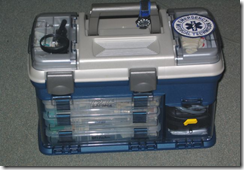
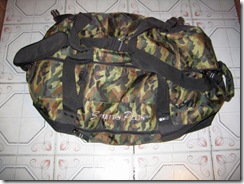
Being able to leave in a hurry means having an emergency `to go’ kit or `BOB’ already equipped, and standing by.


In the vernacular, a `bug-out bag'  or `BOB’ is a bag of emergency supplies, ideally kept at the ready, that one can grab on the way out the door during an emergency.


Some people call it a GOOD bag (Get Out Of Dodge).


Every hurricane season I go through my personal bug out bag, and replace flashlight and radio batteries from last year, and swap out older emergency rations for newer ones.


A BOB isn't supposed to be a survival kit, but rather, is supposed to provide the essentials one might need during the first 72 hours of a forced, and sometimes unexpected, evacuation.


It should contain food, water, any essential prescription medicines, copies of important papers (ID's, insurance, important Phone #s), a first aid kit, portable radio, flashlight, extra batteries, and ideally blankets and extra clothes.


While having to evacuate your home may seem like an unlikely event, every years hundreds of thousands of Americans are forced to do so.  Rivers spill their banks, dams break, brush fires rage out of control, even sudden industrial accidents can force evacuations. 


Unlike with a hurricane, you won’t always have advance warning.


Ready.gov has the following advice on how to prepare for an evacuation order.


Evacuating

There may be conditions under which you will decide to get away, or there may be situations when you are ordered to leave. Plan how you will assemble your family and anticipate where you will go. Choose several destinations in different directions so you have options in an emergency.

Create an evacuation plan:
  • Plan places where your family will meet, both within and outside of your immediate neighborhood.
  • If you have a car, keep a half tank of gas in it at all times in case you need to evacuate.
  • Become familiar with alternate routes and other means of transportation out of your area.
  • If you do not have a car, plan how you will leave if you have to.
  • Take your emergency supply kit unless you have reason to believe it has been contaminated.
  • Lock the door behind you.

Although everyone’s needs will differ, I’ve a brief tour of my Bug Out Bag below:

You should consult the Ready.gov website for specific recommendations about what you should include in your kit.

Everything I’ve got fits into a single duffle bag.


I keep mine stocked (and checked for freshness every 6 months), and easily accessible in my home.  If I had to leave on a moment’s notice, at least I’d be leaving with more than the clothes on my back.


Picture 007s


You’ll notice in the pictures below just about everything is kept in plastic bags. 

Picture 001s

First comes the electronics.  


While I would obviously want to grab my cellphone (and my beloved iPod) on the way out the door, some basics that stay in the bag are an LED Lantern, a battery operated radio, extra batteries, a small pocket knife, and a hand-crank flashlight.


Picture 002s

Next in line is 72 hours of food


I’ve a couple of MREs, a couple of `pouch meals’ that can be eaten warm or cold, some soup mixes, some instant oatmeal, and (don’t forget) something to eat and drink out of, and some plastic utensils.


Picture 009


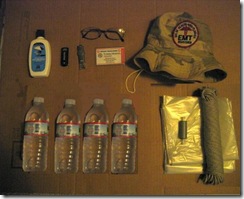
Next come some basic `survival’ items.  


Water (I usually carry 4 or 5 pints), hat, spare glasses, sun block, essential computer backups on flash drives, a copy of my medical history, and some plastic sheeting, duct tape, and some light rope.


With those last three items, I have the makings of an emergency shelter if need be.

Picture 003s

Next comes a combination toiletry kit (toothbrush, paste, floss, toilet paper, small garbage bags)/mini first aid kit.  I’ve also got some aspirin, and 3 prescriptions I’d hate to be caught without in an emergency.


Tucked away inside this kit I also have some quarters, some folding money, and copies of my driver’s license, a list of emergency phone numbers, and copies of some other important papers.


I also threw in a pair of reef-runners.   Light mesh shoes that are good for walking in water.  They dry out quickly.   Admittedly, they are a bit bulky, but this is Hurricane country, and dry shoes could be a godsend in a crisis.


Picture 005s


And lastly, I’ve some dry clothes and a fleece blanket.  Everything, of course, bagged to keep dry.


There you have it.  Total weight, about 22 lbs.


Everything I need to stay warm, dry, nourished, and reasonably comfortable for 72 hours.  Plus the added benefit of having two sources of light, an emergency radio, a little cash, a mini first aid kit, and some basic toiletries.


Things that would take me precious minutes to gather up during an emergency.  Time I simply might not have.


Of course, you’d be hard pressed to put everything for a family of four into one bag.  So each family member should have their own BOB.  


Some items, like the radio, lights, and first aid kit needn’t be duplicated in each bag. 


I keep my BOB within arm’s reach of my first aid kit, and would hopefully be able to grab both, even in an emergency.   Frankly, I’d feel naked without it.


image


Over the years, having a well stocked first aid kit has come in very handy.  It is amazing the peace of mind that comes from being ready for an emergency.


I do these things because preparing is easy.


It’s worrying that is hard.


Note:  For international readers who might be unfamiliar with the Americanism of `get out of dodge’, it comes from the old western radio & TV series Gunsmoke, where the Marshall would warn the bad guys to leave or else . . .


Today, it is often used to mean getting away from any dangerous situation.


New Scientist: Five Easy Mutations


# 5864


A week ago, in SciAm: What Will The Next Influenza Pandemic Look Like?, I referred my readers to an article on pandemic flu that included a snippet about research on the H5N1 virus conducted by Ron Fouchier of the Erasmus Medical Center in the Netherlands.


He basically `mutated the hell’ out of the virus in the lab, and then passed it serially through 10 ferrets, during which time it mutated further to become both easily transmissible and highly virulent.


You can read about this work in Katherine Harmon’s article.


Today, New Scientist has a follow up on this story, with details on this research and reaction from a variety of noted virologists, including Peter Palese, Peter Doherty, Malik Peiris, and Jeffery Taubenberger.


Which, anyway you measure it, it one heck of a line up.


The article is called:


Five easy mutations to make bird flu a lethal pandemic

26 September 2011 by Debora MacKenzie


And is absolutely worth your time to read.


While not everyone agrees that the H5N1 virus can adapt to humans (Peter Palese provides a dissenting opinion), this report serves as a reminder that it may take only a few small changes to change the virulence, transmissibility, or even the host range of an avian influenza strain.

Another Yank From Oxford


# 5863


The 2010-2011 flu season across much of the northern hemisphere was unremarkable, but there were a few notable exceptions. The UK saw a dramatic resurgence of the 2009 H1N1 virus in December of 2010, stressing hospital ICUs across Britain.


According to the HPA’s figures . . . with the exception of the swine flu pandemic of 2009 . . .  last year’s flu epidemic in Great Britain was the worst in nearly a decade.


image

These, and many other flu graphics, are available from HPA Weekly National Influenza Graphs (PDF, 687 KB).


North America in contrast, which was dominated by the H3N2 virus, saw a relatively mild flu epidemic last year.  Despite that, flu claimed thousands of American lives last year.


Giving further evidence that influenza is notoriously unpredictable. Even during the same year, the strains and severity can vary widely across the globe.


Still, this time of year many scientists look towards the slowly waning flu season south of the equator for clues as to how the northern hemisphere will fare this year.


As you might expect, the picture is mixed.  The following graphic comes from the World Health Organization’s  latest influenza surveillance report.


image


Influenza activity in South Africa and much of South America peaked early in their season and is on the decline (influenza B, however, is still circulating in parts of Africa at significant levels).


Australia and New Zealand are reporting continued, and relatively heavy, influenza activity.


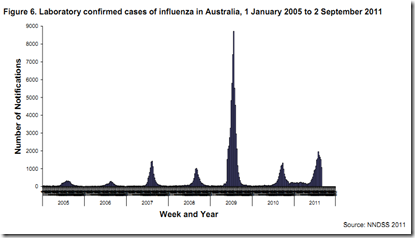
The following graph comes from the latest Australian Influenza Surveillance report, and the pattern is similar to the one we saw in the first graphic from the HPA. 

image

Influenza activity this year (with the exception of the 2009 pandemic) is the highest they’ve recorded in recent years.  According to this report, so far:


. . .  in 2011, 14,222 (71%) cases were reported as influenza A (35% influenza A (untyped), 31%
pandemic (H1N1) 2009
and 5% A/H3N2) and 5,620 (28%) were influenza B.


All of which serves as prelude to a report today in the UK Express Newspaper, featuring interviews with several noted virologists including John Oxford - Scientific Director of Retroscreen Virology Ltd. and a Professor of Virology at St Bartholomew’s and the Royal London Hospital.


In the UK, when the press wants a quote or opinion on influenza or pandemic issues, you’ll find it often comes from Professor Oxford. 


At the start of the influenza pandemic of 2009 Oxford was publicly insisting that the real number of infected from the H1N1 virus in the UK was many times greater than the British government was saying (see A Yank From Oxford).


As it turned out, he was right. 


Today we have:


KILLER FLU TO GRIP BRITAIN

Many Britons have little immunity after two years of relatively limited outbreaks

Monday September 26,2011


Hyperbolic headlines aside (a `killer flu’ hits Britain every year. It’s really just a matter of degree), Professor Oxford is quoted as saying:


“No one is sure why our patterns of flu tend to follow what happens in the southern hemisphere during the summer but it does.


Unfortunately in Australia there has been a sharp outbreak with higher than normal numbers of flu strains A and B.


The chances are the same will happen here.”


He qualifies his statement later by saying that they really won’t know how the UK will fare until later in the year.


But even without the elevated flu levels reported in Australia, Oxford is concerned over a resurgence of Influenza B which as been overshadowed the past couple of years by the A/H1N1 strain.  


Community immunity to the B strain may be declining, and the virus can cause serious illness, particularly in the very young and very old.


Other scientists interviewed in this article are less willing to predict how the upcoming flu season will evolve, although all admit a heavy flu season is possible.


All of this comes amid controversy over the UK government’s decision not to publicly push their “Catch it. Kill it. Bin it” flu hygiene advertising campaign, or run PSAs encouraging vaccination.


Instead, the NHS is relying on a targeted flu vaccination plan for `at-risk’ populations through their network of GPs.


Another controversy is that only about a third of Health Care Workers (HCWs) in Britain voluntarily accepted the flu vaccine last year.


Professor Lindsey Davies, president of the UK Faculty of Public Health, calls that a “complete dereliction of duty” and warns that it could endanger the lives of `at-risk patients such as babies, the elderly, pregnant women and those with breathing trouble.’


Flu apathy, particularly in the wake of a pandemic that failed to live up to some people’s expectations, runs high in the UK and around the world.


Last year’s flu headlines (see The Pandemic Is Ended (But The Malady Lingers On) are all-but-forgotten, replaced by the latest crisis of the week.  It is hard for most people to worry about a flu that may come later this winter when the economy already appears to have pneumonia.


And so we find ourselves on the cusp of another flu season, peering ahead, but without much of a clue as to how it will pan out. 


The only certainty is that the flu will arrive – more or less on schedule – and even if it isn’t severe, it will sicken millions, hospitalize hundreds of thousands, and kill tens of thousands around the world.


Influenza can kill you, even in a `light’ flu season.


Reason enough to get a flu vaccine every year, and to practice good flu hygiene (covering coughs, sneezes, washing hands, staying home when sick, etc.) year round.


No, they are not guaranteed protection.  But they can give you a decided edge against a serious virus.


For more on influenza, vaccines, and prevention, I would invite you to visit:

image