Showing posts with label Camel. Show all posts

Tuesday, March 31, 2015

JVI: Investigating Dromedary Immune Serum As MERS-CoV Treatment

Photo: ©FAO/Ami Vitale

Credit FAO


# 9889


We’ve a study, published  in the Journal of Virology (JVI), that uses the mouse model to explore the possibility of using camel antibodies as a treatment option for MERS-Cov infection.


As we discussed last year in MERS-CoV: The Long Road To A Pharmacological Solution, with no coronavirus-specific therapy in our arsenal, treatment for infection has basically been supportive (e.g. fluids, vasopressors, ventilators and/or ECMO, dialysis, and antibiotics for secondary infections).


We’ve seen some limited testing of Ribavirin & Interferon Treatment of MERS-CoV, but he results from treating humans with this drug combo were far from encouraging.  Other drugs are under investigation, like Biocryst’s experimental antiviral BCX4430, but  it is too early to know how effective it might be.


The therapeutic option with perhaps the most promising future is the use of Convalescent Plasma, taken from patients who have already recovered from infection, but here again, there have been roadblocks, Many MERS survivors – due to advanced age, general health, or low antibody titers – are poor donors.


The idea of using convalescent serum for MERS goes back nearly two years; This is from the World Health Organization Novel coronavirus summary and literature update – as of 8 May 2013.

An international network of clinical experts has been convened to discuss therapeutic options. It concluded that in the absence of clinical evidence for disease-specific interventions, convalescent plasma is the most promising therapy. A memo containing advice for setting up international or regional serum centers, to obtain and share convalescent plasma, has been circulated by WHO to ministries of health in affected countries. WHO and the International Severe Acute Respiratory and Emerging Infection Consortium have developed and shared a set of research protocols and case report forms to help clinical investigators establish studies of pathogenesis and pharmacology. These are available at http://www.prognosis.org/isaric/.


Making headlines last year, and sparking a great deal of Arabic twitter traffic,  was talk that serum antibodies might be harvested from camels, along with camel milk immune proteins, and then used to treat human infections.


It is not that far-fetched, as horse serums have been used for treating humans for more than a century, although their use has declined in recent years due to concerns over adverse reactions and other available options.


As nearly all adult camels in Saudi Arabia have been infected with MERS-CoV, they carry specific antibodies against the virus (see Lancet: Camels Found With Antibodies To MERS-CoV-Like Virus), and could theoretically be an abundant source for convalescent serum.


Fast forward to today, and we have a study in the Journal of Virology (JVI)  and an accompanying press release, that looks at using dromedary convalescent plasma to treat (or protect against) MERS-CoV infection in mice.


Mice are not a perfect analog for humans, and normally are not even susceptible to the MERS virus (nor are most lab animals, including non-human primates, making studies difficult).  Transgenic mice, however, can be rendered susceptible to the virus, and this study found that camel sera was shown to be protective against a MERS-CoV challenge.


The caveat being that what works on mice may not necessarily work in humans. 


But as a `proof of concept’  this is a pretty good start.   Follow the link to the study, and the press release below: 


Passive Immunotherapy With Dromedary Immune Serum In An Experimental Animal Model For MERS Coronavirus Infection.

Jincun Zhao1, Ranawaka A.P.M. Perera2, Ghazi Kayali3, David Meyerholz4, Stanley Perlman1* and Malik Peiris2*

ABSTRACT

The Middle East Respiratory Syndrome (MERS) is a highly lethal pulmonary infection. Sera from MERS convalescent patients may provide some benefit but is not readily available. In contrast, nearly all camels in the Middle East were previously infected with MERS-CoV. Here, we show that sera obtained from MERS immune camels augment the kinetics of MERS-CoV clearance, and reduce the severity of pathological changes in infected lungs, with efficacy proportional to MERS-CoV neutralizing serum antibody titers.


Could antibodies from camels protect humans from MERS?

American Society for Microbiology

Antibodies from dromedary camels protected uninfected mice from Middle East Respiratory Syndrome (MERS), and helped infected mice expunge the disease, according to a study published online March 18th in the Journal of Virology, a journal published by the American Society for Microbiology. MERS, which emerged in humans last year in the Saudi Arabian peninsula, causes severe respiratory disease, with a high mortality rate of 35-40 percent. No specific therapy is currently available.

"Our results suggest that these antibodies might prove therapeutic for MERS patients, and might protect uninfected household members and healthcare workers against MERS," says corresponding author Stanley Perlman, MD, PhD, a professor in the Departments of Microbiology and Pediatrics, the University of Iowa, Iowa City.

Passive immunization, a procedure where you inject a former patient's antibodies into a new patient to fight the disease, has been used in the past, including last year in a small number of cases of Ebola, but in the case of MERS, few former patients are available to donate antibodies. Additionally, their antibody titers are often too low, and many former patients are not healthy enough to donate.

Suspecting that humans and dromedaries were likely infected by the same virus, first author Malik Peiris, D. Phil., Professor of Medical Science, School of Public Health, the University of Hong Kong, SAR, China suggested that camel sera might be used to combat MERS. The vast majority of dromedaries on the Arabian peninsula are infected, and many have high antibody titers. The investigators decided to test dromedary antibodies against virus taken from humans. They tested the antibodies in mouse models infected with the latter virus.

 (Continue . . .)

Saturday, November 08, 2014

Back To The Camel `Shed’

image


# 9300


Sometimes studies are published, and for whatever reason, they don’t get the immediate attention they deserve.  Often, it is because we are otherwise occupied with a bigger story, such as the media was during the last week of September when Ebola was the only infectious disease story people were really interested in.


Little noticed at the time, was the publication in the CDC’s EID Journal of an important study on MERS-CoV shedding by camels, which I wrote about on September 25th in EID Journal: Replication & Shedding Of MERS-CoV In Inoculated Camels.


This study had the bad luck to be published the same week  we saw the CDC Statement On MMWR Ebola Estimates, which predicted potentially 550,000 to 1.4 million Ebola cases in Liberia and Sierra Leone by the end of January if swift action wasn’t taken, the CDC issued a HAN: Acute Neurologic Illness with Focal Limb Weakness of Unknown Etiology in Children, and just 4 days before we learned that Thomas Duncan was America’s first imported Ebola case (see Dallas,Tx Patient Tests Positive For Ebola).


This week, however, that study is back in the news thanks to a press release from the University of Colorado, and with the recent uptick in MERS cases in Saudi Arabia, the Arabic press is taking notice as well.


You can read the full study, and my original post on it, at this link.   The UC press release, follows:


Camels emit dangerous MERS virus, Colorado State University researchers confirm

Feature Story Image

Danielle Adney, left, and Vienna Brown with two of the camels in the MERS vaccine project at CSU.

FORT COLLINS - In a finding with global health implications, a research team led by a doctoral student at Colorado State University has confirmed for the first time that camels vent volumes of the deadly Middle East Respiratory Syndrome (MERS) virus, making them the likeliest suspect for spreading the pathogen to people.

Now the CSU team is testing a vaccine that could keep camels from shedding the MERS virus, which has caused acute respiratory illness in about 900 people across the Arabian Peninsula since it was identified in 2012.

The CSU researchers, partnering with an arm of the National Institutes of Health, demonstrated that infected camels shed large amounts of MERS virus, primarily through their nostrils. They also established for the first time that the virus develops in the animals’ upper respiratory system, and that camels shed infectious virus for up to a week.

The findings were not surprising to many scientists who study viral infectious disease – camels have been a primary suspect as a source of MERS – yet confirming the source is essential to advancing science, knowledge and solutions.


“This is a necessary step in looking at the interaction between the virus and the host species, the camel,” said Mark Pallansch, director of the Division of Viral Diseases in the Center for Disease Control and Prevention’s National Center for Immunization and Respiratory Diseases.

(Continue . . . )


This study not only shows that infected camels can shed massive amounts of the MERS coronavirus from their nasal discharges, that they can do so without showing overt signs of serious illness. 


Over the summer we saw the KSA MOH Reiterate Camel Warnings On MERS, urging breeders and owners to limit their contact with camels, and to use PPEs (masks, gloves, protective clothing) when in close contact with their animals.


And as recently as yesterday, we saw the the Saudi MOH remind citizens to:

  • Avoid contact with camels, especially if they are sick, and their body fluids secretions.
  • If you must be in contact with camels, wear a disposable mask over your mouth and nose, gloves, and a protective medical gown.
  • Boil fresh camel milk, if not pasteurized.
  • Cook camel meat (including liver) well before consumption.

Monday, June 23, 2014

UAE: Undiagnosed Camel Deaths Continue

Photo: ©FAO/Ami Vitale

Credit FAO


# 8770


With dromedaries ranked high on the list of animal suspects for introducing the MERS coronavirus to humans (see WHO Update On MERS-CoV Transmission Risks From Animals To Humans), reports of an increased number of camel deaths in the UAE has understandably caught people’s attention (see last week’s ProMed Mail report UNDIAGNOSED MORTALITY, CAMEL - UNITED ARAB EMIRATES (02): REQUEST FOR INFORMATION).


Thus far we’ve only seen reports of mild illness from MERS-CoV infection in camels (although research in this area is sorely lacking), making it probable that something other than the MERS coronavirus is at work here. 


Still, the UAE has the second highest number of known human MERS infections in the world, and exactly how the virus is being seeded into the community remains unknown.


Yesterday Emirates 24/7 News (h/t Shiloh on FluTrackers) carried a lengthy report on these ongoing camel deaths, that – while it doesn’t answer the basic question as to the cause – does give us a better idea of the scope of the problem.


Dozens of camels die in UAE central region

National Council member claims 200 animals have died in the past few weeks

By Staff

Published Sunday, June 22, 2014

Livestock owners in the UAE’s Central Region fear the outbreak of an unknown virus, following the death of dozens of camels, the Arabic daily ‘Emarat Al Youm’ has reported.

Camel owners say this has caused them considerable financial damage and pushed them to go to expensive private veterinary clinics.

According to Musapah Bel Ajeed Al Ketbi, member of the National Council for the Central Region, about 200 camels had died in the past few weeks.

Al Ketbi told ‘Emarat Al Youm’ that the deaths of camel started in livestock breeding centres in the Central Region and spread to neighbouring Emirates.

An owner of breeding camels had lost two animals in the last two days, each worth about Dh200,000. Municipal vehicles have been carrying six dead camels per day for the past few weeks, he added.


Al Ketbi submitted a query to the Minister of Environment and Water, seeking reasons for the deaths of more than 200 camels in the Central Region and some areas of Dubai and Al Ain.


But  Saif Al Shara’a said  the ministry had not received any complaints from the camel breeders about mass deaths except for individual cases as a result of common diseases.


Al Shara’a added that the ministry had sent a medical team to the Central Region to investigate the matter after receiving Al Ketbi’s query .

(Continue . . .)


We’ve no indication at this time that this increased camel mortality poses any human health risks, or that it is connected in any way to the MERS-CoV.  That said,  according to last week’s ProMed Mail report - the first cases began about 2 years ago – roughly the same time that MERS emerged in humans.


Why it has taken two years for `official notice’ to be taken of this outbreak isn’t clear, but hopefully now some answers will be forthcoming.


History has shown that perhaps 70% of the infectious diseases plaguing humans began in other species, and then adapted to people. This illustrates the importance of promoting the `One Health Concept’, where human, animal, and environmental health are all interconnected (see the One Health Initiative website).


Whether it is the emergence of a novel avian flu strain in China, the spread of a mosquito-borne emerging arbovirus in the Caribbean, or an unexplained illness in camels, what happens in animal health often ends up impacting human health as well.


For more on this inextricable link between human and animal health, you may wish to revisit:


FAO: Surge In Animal Disease Increases Zoonotic Threats

The Third Epidemiological Transition

EID Journal: Predicting Hotspots for Influenza Virus Reassortment

Thursday, June 12, 2014

Eurosurveillance: MERS-CoV Antibodies & RNA In Camel’s Milk – Qatar

Photo: ©FAO/Ami Vitale

Credit FAO


# 8736


Today’s Eurosurveillance Journal is MERS-centric, with no less than four articles or features on this emerging coronavirus.   First, links to today’s studies, then a closer look at one focusing on MERS and camel’s milk.


Seroepidemiology of Middle East respiratory syndrome (MERS) coronavirus in Saudi Arabia (1993) and Australia (2014) and characterisation of assay specificity

by MG Hemida, RA Perera, RA Al Jassim, G Kayali, LY Siu, P Wang, KW Chu, S Perlman, MA Ali, A Alnaeem, Y Guan, LL Poon, L Saif, M Peiris

Middle East respiratory syndrome coronavirus (MERS-CoV) RNA and neutralising antibodies in milk collected according to local customs from dromedary camels, Qatar, April 2014

by CB Reusken, EA Farag, M Jonges, GJ Godeke, AM El-Sayed, SD Pas, VS Raj, KA Mohran, HA Moussa, H Ghobashy, F Alhajri, AK Ibrahim, BJ Bosch, SK Pasha, HE Al-Romaihi, M Al-Thani, SA Al-Marri, MM AlHajri, BL Haagmans, MP Koopmans

Research articles


Assessment of the Middle East respiratory syndrome coronavirus (MERS-CoV) epidemic in the Middle East and risk of international spread using a novel maximum likelihood analysis approach

by C Poletto, C Pelat, D Lévy-Bruhl, Y Yazdanpanah, PY Boëlle, V Colizza

News


The 2014 Hajj and Umrah – current recommendations

by Eurosurveillance editorial team


The study with perhaps the greatest immediate impact looks at a possible route of transmission of the virus from camels to humans.


Eurosurveillance, Volume 19, Issue 23, 12 June 2014

Rapid communications

Middle East respiratory syndrome coronavirus (MERS-CoV) RNA and neutralising antibodies in milk collected according to local customs from dromedary camels, Qatar, April 2014

C B Reusken1,2, E A Farag2,3, M Jonges2,4, G J Godeke4, A M El-Sayed3, S D Pas1, V S Raj1, K A Mohran5, H A Moussa6, H Ghobashy5, F Alhajri5, A K Ibrahim6,7, B J Bosch8, S K Pasha6, H E Al-Romaihi3, M Al-Thani3, S A Al-Marri3, M M AlHajri ()3, B L Haagmans1, M P Koopmans1,4


  • Antibodies to Middle East respiratory syndrome coronavirus (MERS-CoV) were detected in serum and milk collected according to local customs from 33 camels in Qatar, April 2014. At one location, evidence for active virus shedding in nasal secretions and/or faeces was observed for 7/12 camels; viral RNA was detected in milk of five of these seven camels. The presence of MERS-CoV RNA in milk of camels actively shedding the virus warrants measures to prevent putative food-borne transmission of MERS-CoV.

    In April 2014, serum, nasal swabs and rectal swabs were taken from 33 milking dromedary camels at two locations in Qatar (Al Shahaniya and Dukhan), areas with known Middle East respiratory syndrome coronavirus (MERS-CoV) circulation in camels [1] and data not shown. In addition, milk was collected from these animals according to local customs. Serum samples and milk were tested for the presence of MERS-CoV-specific antibodies by protein microarray, with confirmation by virus neutralisation.

    Swabs and milk were tested for the presence of MERS-CoV RNA by real-time reverse transcription (RT)-PCR testing for multiple genomic targets. Antibodies to MERS-CoV were detected in serum and milk from all camels at both locations. At the Dukhan location, none of the 21 animals tested was actively shedding viral RNA from the nose and/or in faeces and no evidence for the presence of MERS-CoV RNA in milk was observed. At the Al Shahaniya location, evidence for active virus shedding was observed for seven of the 12 camels tested. Viral RNA was detected in milk of five of the seven camels with active virus shedding.

  •  


    While important findings, there are a few caveats due.


    First, the degree of RNA detection was pretty low – too low to allow for virus isolation.  And while viral RNA was detected in the some of the milk samples, the milk was collected `according to local customs’ – which means the camel’s udders were not cleaned prior to milking (and milking takes place immediately after calves have suckled), meaning the milk could have been contaminated from outside sources.


    Of course, whether the milk is contaminated during collection or while still in the udder, becomes somewhat moot if people are being infected from consuming it. At this point, however, it isn’t clear whether there were enough infectious virus particles in the raw milk to transmit the disease.


    The low level of virus detection could also have been influenced by the rigors (both time & environmentally related) of shipment of samples to labs outside of Qatar.  It is also possible that the existence of antibodies (detected in milk samples as well) could have affected the amount of virus detected in vitro.


    More research, particularly under better controlled conditions, is needed.  The authors conclude:


    Nevertheless, it can be concluded that the presence of MERS-CoV RNA in raw milk as consumed locally might represent a source for zoonotic transmission of MERS-CoV and prudence is called for. Munster et al. showed that heat treatment (30 minutes at 63 °C) of MERS-CoV-containing camel milk reduced levels of infectious virus below detection level [24]. Boiling milk before consumption could be an easy, achievable local measure to prevent transmission and to preserve consumption of camel milk.


    As always, I would urge my readers to follow the link and read this report in its entirety, as I’ve only hit a few of the highlights. For an earlier look at the potential for milk to carry, and potentially convey, the MERS virus, you may wish to revisit:


    EID Journal: Stability Of MERS-CoV In Milk

    Wednesday, June 11, 2014

    ScienceInsider: When MERS Transmission Studies Clash

    Photo: ©FAO/Ami Vitale

    Credit FAO


    # 8726


    Last week, in More Evidence for Camel-to-Human MERS-CoV Transmission, we looked at a NEJM study that Dr. Ian Mackay rightfully pointed out on his blog, was based on a transmission event that had previously been described by Memish, Drosten, et al. in an EID Journal report published in March.


    The NEJM study was co-authored by Dr Tariq Madani of King Abdulaziz University in Jeddah, who was appointed special MERS advisor by the newly appointed Health Minister, Adel bin Mohammed Faqih,  last April.


    Curiously, there was no mention of the earlier publication by Memish et at. on the same patient/camel testing in the EID Journal, published nearly two months earlier.  I would note that when I checked back yesterday, the editors at the NEJM had belatedly attached a terse note stating:


    Editor’s note: The patient and camels discussed in this article are also described in Memish ZA, Cotten M, Meyer B, et al. Human infection with MERS coronavirus after exposure to infected camels, Saudi Arabia, 2013. Emerg Infect Dis 2014;20:1012-5.


    This story only gets stranger, as we learn from a Science Insider report from Kai Kupferschmidt, who delves deeper into the behind-the-scenes machinations surrounding this study.  Included are observations and comments from Dr. Ian Mackay, Dr. Michael Osterholm, Dr. Christian Drosten, and Dr. Ziad Memish.


    Along the way, we also see concerns expressed over possible contamination issues with the second paper’s test results.


    While this story has the makings of a terrific prime-time soap opera, it doesn’t exactly infuse the reader with a warm fuzzy feeling over the way that MERS research is being conducted in Saudi Arabia.   Follow the link to read:


    Research teams clash over too-similar MERS papers

    Kai Kupferschmidt

    Tuesday, June 10, 2014 - 6:45pm

    A great story can be told again and again. But scientists working on the deadly Middle East respiratory syndrome (MERS) virus are puzzled by two papers appearing in separate journals that not only tell the same story, but also are based on data from the very same patient in Saudi Arabia.

    (Continue . . .)

    Tuesday, June 10, 2014

    Kuwait Tests Camels - Finds 6% Positive For MERS-CoV


    image

    Photo Credit Wikipedia


    # 8725


    In a case of – If you look for MERS in camels, there’s a pretty good chance you will find it – Kuwait announced today that out of a random sampling of 83 camels, 5 tested positive (presumably by PCR testing) for  the virus. 


    This works out to be about a 6% positive rate – not so far off from other samplings we’ve seen.


    Earlier this year (see EID Journal: MERS Coronaviruses in Dromedary Camels, Egypt) we saw a sampling from Egypt that found  4 (3.6%) of nasal swabs (out of 110 tested) were positive for the MERS-CoV virus (via RT-PCR testing).


    A positive PCR test is indicative of a current infection, with active viral shedding.


    Serological tests in Egypt showed that 48 (92.3%) of 52 dromedary serum samples tested revealed titers from between 20 to >640, indicating prior infection.  Two rather important details not revealed in this media report are:


    1. When these samples were taken (Spring is thought more conducive to seeing higher numbers)
    2. The age of the camels sampled, and any age bias discovered among the positive cases (younger camels are thought more likely to have active disease, while older camels are more likely to have antibodies).


    In any event, this adds Kuwait to the growing list of countries that have looked – and found – evidence of either current or past MERS virus infections in their dromedary population. 


    Countries reporting positive results include: Oman, Saudi Arabia, the UAE, Jordan, Qatar, Spain, Egypt and Kenya)


    Kuwait..Discover five Corona between the camel

    Tuesday, June 10, 2014 18: 11

    Way-the President of the Governing Council declared the Director-General of the public authority for Agriculture Affairs and fish resources in Kuwait (governmental) Jassem Al-Bader, Tuesday, five cases of the virus (SK) in the country.

    Al-Badr said in a press release written, that I took random samples of some herds of camels in Kuwait to identify infected and isolation, noting that the number of cases detected with the disease amounted to five cases out of 83 samples examined.


    Badr said that the Commission had taken precautions and protective of all cases, he was contacted by camel owners and visit the site and isolating the infected ones to make sure not to act and not to transfer to any other herd only after FDA approval.


    The meeting between the Commission and the Ministry of health to monitor the health status of the herd together with a continuous coordination to follow up the situation of the other herds for the disease.


    He said that the Commission will take all necessary actions recommended by world organizations such as the World Organisation for animal health and the food and Agriculture Organization and the World Health Organization along with GCC.


    And Kuwait recorded three cases of human infection with coronavirus Kuwaiti Health Ministry announced at the end of last year 2013 and dealt with.


    And officials in the Ministry of Health's all occasion free of human cases of the virus.
    (Anatolia)


    In late May we saw a renewed call by the FAO for Gulf States to increase their surveillance of camels for the MERS virus (see FAO: `Stepped Up’ Investigations Into Role Of Camels In MERS-CoV).

    Thursday, June 05, 2014

    CIDRAP: More Evidence for Camel-to-Human MERS-CoV Transmission

    Photo: ©FAO/Ami Vitale

    Credit FAO 

    *** UPDATED*** 
    See note at bottom


    # 8708


    Since August of last year, when the first evidence was presented (see Lancet: Camels Found With Antibodies To MERS-CoV-Like Virus), researchers have known that some camels on the Arabian peninsula had been exposed to – and likely carried - a MERS-like virus.


    By December, researchers led by Marion Koopmans, DVM, PhD, head of virology at the Laboratory for Infectious Diseases at the RIVM in the Netherlands, determined that the human viruses and the camel viruses collected from a Qatari farm were almost an identical match (see The Lancet: Identification Of MERS Virus In Camels).


    So close, in fact, that they were unable to determine whether the humans or the camels were infected first.


    Since then, we’ve continued to see evidence mount supporting the notion that most camels on the Arabian peninsula – at least when they are young – get infected with the MERS coronavirus, and that they are a likely source of zoonotic spillover into humans (see mBio: MERS-CoV In Saudi Arabian Camels & EID Journal: MERS Coronavirus In A Saudi Dromedary Herd).


    Acceptance of this MERS-camel connection in Saudi Arabia and the Middle East has been slow in coming. We’ve seen tepid warnings about avoiding raw camel products, along side statements from officials that there is no actual `proof’ that camels can transmit the virus to humans (see Saudi MOA Spokesman: Camel Link Unproven).


    For many Saudis, the idea that camels – a beloved national symbol that literally made settlement of that arid region possible – could carry a disease deadly to humans,  is simply unthinkable. 


    A concept made even harder to accept due to the widespread belief in the healthful effects of camel’s milk and urine in the treatment of disease.  While it may not convince everyone, late yesterday the NEJM published a study that finds even more evidence supporting the camel transmission scenario.


    Lisa Schnirring  at CIDRAP NEWS has done a terrific job describing this research, and has comments from two top MERS researchers (Marion Koopmans, DVM, PhD & Matthew Frieman, PhD), making my job here dead simple. I would simply invite you follow the link below to read Lisa’s excellent report:


    Study builds case for camel-human link in MERS

    Lisa Schnirring | Staff Writer | CIDRAP News

    Jun 04, 2014

    In findings that shed more light on the suspected link between camels and humans, an investigation into a fatal human MERS-CoV (Middle East respiratory syndrome coronavirus) infection identified the virus in both the man and his sick camels, with genetic-sequencing showing the viruses to be identical.


    The 44-year-old man, from Jeddah, Saudi Arabia, kept a herd of nine camels near the city and had had contact with the respiratory secretions of one of the animals that was sick, according to a team of scientists from King Abdulaziz University in Jeddah who reported their findings today in an early online edition of the New England Journal of Medicine.

    (Continue . . .)


    Here is the link to the NEJM Abstract and report:


    Brief Report

    Evidence for Camel-to-Human Transmission of MERS Coronavirus

    Esam I. Azhar, Ph.D., Sherif A. El-Kafrawy, Ph.D., Suha A. Farraj, M.Sc., Ahmed M. Hassan, M.Sc., Muneera S. Al-Saeed, B.Sc., Anwar M. Hashem, Ph.D., and Tariq A. Madani, M.D.

    June 4, 2014DOI: 10.1056/NEJMoa1401505

    We describe the isolation and sequencing of Middle East respiratory syndrome coronavirus (MERS-CoV) obtained from a dromedary camel and from a patient who died of laboratory-confirmed MERS-CoV infection after close contact with camels that had rhinorrhea. Nasal swabs collected from the patient and from one of his nine camels were positive for MERS-CoV RNA. In addition, MERS-CoV was isolated from the patient and the camel. The full genome sequences of the two isolates were identical. Serologic data indicated that MERS-CoV was circulating in the camels but not in the patient before the human infection occurred. These data suggest that this fatal case of human MERS-CoV infection was transmitted through close contact with an infected camel.

    (Continue . . .)


    UPDATE:

    My thanks to Dr. Ian Mackay for pointing out that this transmission incident was documented previously by another team of researchers (albeit with less complete sequencing of the camel MERS-CoV genome) in the CDC’s  EID Journal  Volume 20, Number 6—June 2014.


    Dispatch

    Human Infection with MERS Coronavirus after Exposure to Infected Camels, Saudi Arabia, 2013

    Ziad A. Memish, Matthew Cotten, Benjamin Meyer, Simon J. Watson, Abdullah J. Alsahafi, Abdullah A. Al Rabeeah, Victor Max Corman, Andrea Sieberg, Hatem Q. Makhdoom, Abdullah Assiri, Malaki Al Masri, Souhaib Aldabbagh, Berend-Jan Bosch, Martin Beer, Marcel A. Müller, Paul Kellam, and Christian Drosten

    Abstract

    We investigated a case of human infection with Middle East respiratory syndrome coronavirus (MERS-CoV) after exposure to infected camels. Analysis of the whole human-derived virus and 15% of the camel-derived virus sequence yielded nucleotide polymorphism signatures suggestive of cross-species transmission. Camels may act as a direct source of human MERS-CoV infection.

    Tuesday, May 27, 2014

    Mackay’s Compendium Of Camel-MERS Studies

    image

    Credit Ian Mackay VDU Blog


    # 8668


    There’s the old story about the elderly gentleman who marries a young attractive woman, and after a few months friends tell him she is cheating.  He refuses to believe it, but finally agrees to hire a private detective to follow her for a week.


    A week later the P.I. comes back with photos of the wife meeting a strange man at a romantic restaurant, leaving in the man’s car, arriving at a motel, waiting in the car while the man registers, and embracing in front of a motel room door before going inside and turning off the lights. 


    Ever the optimist, the husband says `So what you are telling me is, you didn’t find anything conclusive . . . ‘


    Which pretty much describes at least some of the reaction we’ve seen coming out of the Middle East regarding MERS-CoV and camels.


    Despite compelling research linking the two, as long as there isn’t irrefutable evidence of camel-to-human transmission, some maintain it’s all just speculation. . . .


    Today Dr. Ian Mackay provides an excellent overview (and links) on what we do know about MERS and camels.  Follow the link below to read:


    Camels and MERS: links to peer-reviewed scientific literature...

    I thought this might be a useful page for anyone who would like to know just how much data has been generated that supports a link between camels and MERS-CoV, and studies that have shown near identical viral genomes from camels, and the humans in contact with them.


    Its also worth nothing only 1 ~180nt PCR fragment from 1 bat in 1 study has had a MERS-CoV sequence detected in it and yet they are still considered the most likely ancestor of the MERS-CoV because bats seem to be the ancestral source of many CoVs.

    (Continue . . . )


    image

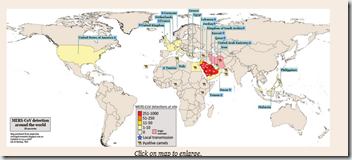
    Ian also has an updated world map (above) which now includes Iran in the MERS mix, and some thoughts on the demographic changes observed in the Jeddah cluster (see Jeddah changed the MERS-CoV age:sex landscape...).

    Friday, May 23, 2014

    FAO: `Stepped Up’ Investigations Into Role Of Camels In MERS-CoV

    Photo: ©FAO/Ami Vitale

    Credit FAO


    # 8658


    For many who live in and around the Middle East, it is extremely difficult to get their head around the idea that camels might be one of the sources of human MERS coronavirus infection.  Camels are not only the most identifiable symbol of the region, they played an immense role in making it possible to people to settle and thrive in an arid and often inhospitable environment.


    Essential beasts of burden, givers of milk and meat, and the literal savior  of uncounted people who’ve trekked the desert, camels have been considered beloved life-givers for thousands of years . . . not threats to health. 


    Camels are also a mainstay of the local economy (milk, meat, camel rides for tourists, etc.), and their sacrifice (and the distribution of their meat to the poor) during the Hajj or Umrah plays an important part in their religion.   All of which – understandably - makes it difficult for many to accept that this new MERS coronavirus could be coming from camels.


    Although we’ve seen some signs of slow acceptance of the idea in recent weeks (see Saudi Ministry Of Agriculture Issues Warnings On Camels), a day hardly goes by without an article appearing in the Arabic press casting doubt on any suspected MERS-camel link.


    All of which means that broad based local surveillance, and research, into the role that camels – and other animals – might play in the spread of MERS has been slow to get off the ground.


    Today the FAO released the following report, where experts at a regional technical consultation meeting in Oman are urging researchers and the appropriate Ministries to step up surveillance and research into any animal-MERS link (including camels), and to increase public awareness of the disease threat.    


    MERS Coronavirus: Stepped up research into role of camels and other animals urged

    Expert meeting in Oman leads to guidance on investigating transmission routes and stemming spread of the disease

    23 May 2014, Muscat, Oman/Rome - Health experts and veterinarians are among those calling for stepped up monitoring, investigations, and immediate reporting of cases of the potentially fatal Middle East Respiratory Syndrome (MERS), an infection that has caused numerous human illnesses and deaths, but whose origins may be linked to animals.

    A declaration at a regional technical consultation meeting, convened by FAO in the Sultanate of Oman, warned countries in the region and beyond of the need for public health and veterinary authorities to carry out coordinated investigations, and share information and results.

    Participants noted the "recent upsurge in human cases in the Arabian Peninsula and the suspected zoonotic transmission involving, in particular, dromedary camels." They agreed on a list of specific recommendations to increase knowledge about the transmission of the virus to humans and to minimize its impact on animal and human health, as well as agriculture and livestock-related livelihoods.

    "It is vitally important for the international community to increase our understanding of ‘where' and ‘how' the virus is transmitted, ‘who' the source is - whether animal or human - and 'when' and ‘why' certain people are spreading the virus," said Juan Lubroth, Chief Veterinary Officer at FAO.

    <SNIP>

    Recommendations

    The recommendations are focused on the potential link with camels or other animal sources. Priorities should be given to:

    1.   raising public awareness of MERS-CoV

    2.   urgent investment in research and surveillance of animals;

    3.   the systematic search for potential sources of human infection from animal sources or the environment;

    4.   joint efforts and coordination among public health authorities.

    Concerted action is also called for in the areas of:

    • good practices in heightening biosecurity measures at farms or at border crossings;
    • underscoring the importance of personal hygiene practiced by people who work around livestock, slaughterhouses and racing animals -- such as frequent hand-washing after touching animals, protective clothing and washing of soiled clothing, shoes and other items;
    • greater region-wide information sharing and closer coordination to manage risks posed by the movement and trade of livestock;
    • possible introduction of animal passports/certificates for racing camels;
    • engagement of the private sector (such as racing associations, breeding enterprises and meat packing operations).

    The guidance emerging from the consultation reflected discussions during the 20-21 May consultation, which was opened by the Minister of Agriculture and Fisheries of Oman, Dr Fuad Jaffer al Sajwani. Participants included the World Organisation for Animal Health (OIE), the World Health Organization (WHO), the Gulf Cooperation Council and renowned experts who are currently collaborating with researchers and authorities of the region.

    The meeting also drew public health and veterinary authorities and other specialists from eleven countries: Ethiopia, Egypt, Bahrain, Jordan, Kuwait, Qatar, Oman, Palestine, Saudi Arabia, Sudan, United Arab Emirates, and Yemen.


    Camels and MERS

    Several studies have reported high proportions of camels with antibodies against MERS-CoV or that of a closely-related virus, both in countries where human cases were detected and also in countries with no reported cases.

    Some of these studies have shown that MERS-CoV has been circulating in camels in Saudi Arabia since at least 1992. Genetic evidence of MERS-CoV infection was found in tests of camel samples from a farm in Qatar and in other studies in Egypt and Saudi Arabia.

    Coronaviruses are widespread in animal species and they can infect livestock and a wide range of wild species, including bats, rodents and wild birds.


    Sunday, May 11, 2014

    Saudi Ministry Of Agriculture Issues Warnings On Camels

    image


    # 8599


    Despite an abundance of scientific evidence linking camels to the carriage and likely spread of the MERS virus (see here, here, & here) the Saudi Ministry of Agriculture has spent months either evading or denying the issue (see Saudi MOA Spokesman: Camel Link Unproven, MERS-CoV Is MOH Problem).


    It was less than two weeks ago when the new Minister of Health suggested people avoid raw camel products  (see Crofsblog Saudi Arabia: Faqih urges avoidance of camel meat and milk), although he gave himself some wiggle room by stating more studies were needed to prove the link.


    Indicative of the widespread outrage and disbelief among camel owners who insist on the innocence of their stock, we’ve seen numerous stories like the one below in the Arabic press.


    Saudi farmers defy warnings on camels amid Mers fear

    Health authorities have called for caution in dealing with camel meat, milk

    By Habib Toumi Bureau Chief Published: 12:42 May 11, 2014   

    Image Credit: A Saudi farmer kisses a young she-camel - Credit: Al Sharq


    For many Saudis, the idea that camels – a beloved national symbol that literally made settlement of that arid region possible – could carry a disease deadly to humans,  is simply unthinkable.   A concept made even harder to accept due to the widespread belief in the healthful effects of camel’s milk and urine in the treatment of disease.


    Today, in an abrupt about face that is likely to stir considerable controversy , the Saudi Ministry of Agriculture has issued a statement urging breeders and owners to limit their contact with camels, and to use PPEs (masks, gloves, protective clothing) when in close contact with their animals.


    Ministry of Agriculture recommends breeders and camel owners to take preventive measures of Corona Virus

    The Agriculture Ministry said in a press release posted on a number of health measures that must be adhered to, including: not to approach direct from camel than it needed with the necessary health precautions and wear respiratory protective masks when dealing with camels, and the need to wash hands with SOAP before and after touching the camels, we recommend wearing protective gloves, especially in cases of birth and dealing with cases of diseased or dead.

    It said it was also a costume favorite for use in hazaeralabl and not going out in that outfit outside hangars, as well as not eating meat and camel milk without heat treatment, good cooking of meat, boil milk before drinking, stress rapidly inform the nearest agricultural or veterinary unit in case of any illness in camel or call toll-free 8002470000.

    The Ministry of agriculture said in its statement that it had prepared a plan to face this disease in 1433, 2012 in cooperation with FAO and the Ministry of health include a comprehensive survey covers all kinds of livestock to the Kingdom to investigate the epidemic, in particular disease virus SK, where proven relationship between cases of camels, the Ministry initiated a human the hopes of all cooperation with them, indicating that they will publish details of the plan later.


    While an important (albeit, belated) step forward by the MOA, we’ll have to wait to see if these new recommendations are eventually embraced by camel owners, or ignored.

    Wednesday, May 07, 2014

    EID Journal: MERS Antibodies In Camels – Kenya 1992-2013

    image

    Photo Credit Wikipedia


    # 8579


    Adding to the list of studies (see here, here, & here) that have found evidence of MERS coronavirus infection in dromedary camels across a wide swath of the Middle East (including Oman, Saudi Arabia, the UAE, Jordan, Qatar, Spain, and Egypt) we now have a study conducted on camels from Kenya, a region that exports many animals to the Arabian peninsula and Egypt for slaughter.


    The authors tested blood samples taken from farmed or nomadic camels and archived serum samples obtained from the International Livestock and Research Institute (ILRI) (Nairobi, Kenya).


    Of 774 dromedaries tested, a total of 228 (29.5%) were rated MERS-CoV positive by the rELISA testing. Younger camels were shown to have the lowest levels of antibodies, and are most likely to carry the live virus. 


    Given that few camels are exported from the Arabian peninsula to the horn of Africa, the finding of high levels of MERS antibodies in East African dromedaries may suggest local acquisition of the virus.  A finding that may lead to a better understanding of the natural ecology and history of the MERS coronavirus.


    Dispatch

    Antibodies against MERS Coronavirus in Dromedary Camels, Kenya, 1992–2013

    Article Contents

    Victor M. Corman1, Joerg Jores1, Benjamin Meyer1, Mario Younan, Anne Liljander, Mohammed Y. Said, Ilona Gluecks, Erik Lattwein, Berend-Jan Bosch, Jan Felix Drexler, Set Bornstein, Christian DrostenComments to Author , and Marcel A. Müller

    Abstract

    Dromedary camels are a putative source for human infections with Middle East respiratory syndrome coronavirus. We showed that camels sampled in different regions in Kenya during 1992–2013 have antibodies against this virus. High densities of camel populations correlated with increased seropositivity and might be a factor in predicting long-term virus maintenance.

    (Continue . . . )


    The materials and methods section of the dispatch is lengthy and detailed, and will be of most interest to researchers, so I’ve skipped ahead to their wrap up:


    Conclusions

    The present study showed that dromedary camels from Kenya have antibodies against MERS-CoV, which complements the current finding that MERS-CoV is a common pathogen in dromedary camel populations (5,6,8,9,13). Our finding of MERS-CoV antibodies in dromedary camels as early as 1992 is consistent with findings of a recent report from Saudi Arabia, which suggested that MERS-CoV has been circulating in dromedary camels for ≥20 years (5).

    To project and potentially control virus spread, the public health community must understand factors determining virus maintenance. Our group and others have demonstrated that young dromedary camels have lower seroprevalences and are more likely to carry infectious virus (5,6). Similar observations have been made for coronaviruses in their original chiropteran hosts wherein strong virus amplification occurred soon after the time of parturition (15). Young, immunologically naive animals may thus facilitate virus amplification in dromedary camel populations.

    We also demonstrated that dromedary camel population density shows a positive correlation with MERS-CoV seropositivity, which suggests efficient MERS-CoV maintenance or spread if herd density is high. Different types of animal husbandry in the Northeastern and Eastern regions of Kenya might be better predictors of virus transmission among camels. Dromedary camels in this area are often nomadic following rainfall patterns, and are taken across borders into neighboring countries, such as Ethiopia, for trade purposes (13). The observed increase in seropositivity from the Western region to the Northeastern and Eastern regions could be attributed to increased animal-to-animal contact in cross-border dromedary camel metapopulations.

    Conversely, dromedary camels that originated in the Northeastern region but had been held in isolation since 1998 were negative for MERS-CoV antibodies, which is consistent with absence of antibodies in dromedary camels bred in isolation in Dubai (6). The combination of nomadic husbandry for a large population and presence of young virus-susceptible animals might facilitate virus maintenance. However, our retrospective study with archived samples could not assess hypotheses for each of the individual variables to determine their relative and absolute degrees of influence on virus circulation.

    Because exportation of dromedary camels is largely unidirectional from eastern Africa into the Arabian Peninsula (11), our findings might facilitate the search for more ancestral MERS-CoV variants to clarify the natural history of acquisition of MERS-CoV by dromedary camels and its putative transmission to humans. Our recent finding of a MERS-CoV ancestor in bats from South Africa (3) highlights the need for wider investigations of viral reservoirs. The fact that no human MERS cases have been observed in eastern Africa could indicate less transmissibility of viruses in regional lineages or lack of detection and reporting of cases. Serosurveys of persons handling dromedary camels in this region could help to determine whether silent or unrecognized infections are being maintained in humans.

    Tuesday, April 29, 2014

    mBio: MERS-CoV Carriage By Dromedaries

    image


    # 8549


    On a day when the new Saudi Minister of Health appears to be taking the MERS-Camel connection more seriously (see Crofsblog Saudi Arabia: Faqih urges avoidance of camel meat and milk), we get a new study appearing in the open-access journal mBio that further implicates camels as the source of the virus.


    Researchers report recovering MERS-CoV from nasal swabs of dromedaries whose complete genetic sequences are indistinguishable from those found in humans.  Furthermore, they found that camels can be simultaneously infected with multiple strains of MERS.


    The study, led by an international team from Columbia University , King Saud University, and the EcoHealth Alliance, found the MERS virus in 3/4ths of the camels they tested. 


    Middle East Respiratory Syndrome Coronavirus Quasispecies That Include Homologues of Human Isolates Revealed through Whole-Genome Analysis and Virus Cultured from Dromedary Camels in Saudi Arabia

    Thomas Briesea, Nischay Mishraa, Komal Jaina, Iyad S. Zalmoutb, Omar J. Jabadoc, William B. Kareshd, Peter Daszakd, Osama B. Mohammedb, Abdulaziz N. Alagailib,e, W. Ian Lipkina

    ABSTRACT

    Complete Middle East respiratory syndrome coronavirus (MERS-CoV) genome sequences were obtained from nasal swabs of dromedary camels sampled in the Kingdom of Saudi Arabia through direct analysis of nucleic acid extracts or following virus isolation in cell culture. Consensus dromedary MERS-CoV genome sequences were the same with either template source and identical to published human MERS-CoV sequences. However, in contrast to individual human cases, where only clonal genomic sequences are reported, detailed population analyses revealed the presence of more than one genomic variant in individual dromedaries. If humans are truly infected only with clonal virus populations, we must entertain a model for interspecies transmission of MERS-CoV wherein only specific genotypes are capable of passing bottleneck selection.

    IMPORTANCE In most cases of Middle East respiratory syndrome (MERS), the route for human infection with the causative agent, MERS coronavirus (MERS-CoV), is unknown. Antibodies to and viral nucleic acids of MERS-CoV have been found in dromedaries, suggesting the possibility that they may serve as a reservoir or vector for human infection. However, neither whole viral genomic sequence nor infectious virus has been isolated from dromedaries or other animals in Saudi Arabia. Here, we report recovery of MERS-CoV from nasal swabs of dromedaries, demonstrate that MERS-CoV whole-genome consensus sequences from dromedaries and humans are indistinguishable, and show that dromedaries can be simultaneously infected with more than one MERS-CoV. Together with data indicating widespread dromedary infection in the Kingdom of Saudi Arabia, these findings support the plausibility of a role for dromedaries in human infection.

    (Continue . . .)


    In an accompanying press release, Columbia University's Mailman School of Public Health quotes authors Thomas Briese, Abdulaziz N. Alagaili, and Ian Lipkin  on the findings:


    "The finding of infectious virus strengthens the argument that dromedary camels are reservoirs for MERS-CoV," says first author Thomas Briese, PhD, associate director of the Center for Infection and Immunity and associate professor of Epidemiology at the Mailman School. "The narrow range of MERS viruses in humans and a very broad range in camels may explain in part the why human disease is uncommon: because only a few genotypes are capable of cross species transmission," adds Dr. Briese.

    "Given these new data, we are now investigating potential routes for human infection through exposure to camel milk or meat products," says co-author Abdulaziz N. Alagaili, PhD, director of the Mammals Research Chair at King Saud University. "This report builds on work published earlier this year when our team found that three-quarters of camels in Saudi Arabia carry MERS virus."

    <SNIP>

    "Although there is no evidence that MERS-CoV is becoming more transmissible, the recent increase in reported cases is a cause for concern," says senior author W. Ian Lipkin, MD, director of the Center for Infection and Immunity and the John Snow Professor of Epidemiology at the Mailman School. "It is essential that investigators commit to data and sample sharing so that this potential threat to global health is addressed by the entire biomedical research community."


    Looks like its time for Ian Mackay to break out his smoking camel graphic again.


    Wednesday, April 23, 2014

    CIDRAP News: Antibody study hints at MERS-CoV in African camels

    image

    Photo Credit Wikipedia


    # 8515


    While the debate over the role of camels in the carriage, and potential spread of the MERS coronavirus rages in Saudi Arabia (see Saudi MOA Spokesman: Camel Link Unproven, MERS-CoV Is MOH Problem) the scientific evidence continues to accumulate that camels are a large part of the MERS equation.


    Some recent examples include:

    EID Journal: MERS Coronavirus In A Saudi Dromedary Herd

    CIDRAP NEWS report WHO sees camels as MERS source, but route uncertain)

    EID Journal: MERS Coronaviruses in Dromedary Camels, Egypt

    mBio: MERS-CoV In Saudi Arabian Camels 

    The Lancet: Identification Of MERS Virus In Camels


    Last night Robert Roos and  Lisa Schnirring, writing for CIDRAP News, brought us details of the latest study that found evidence of MERS antibodies in camels from Nigeria, Tunisia, and Ethiopia – considerably expanding the geographic range of this virus.


    The EID Journal study also raises the possibility that human infections in these regions may have gone undetected -  a distinct possibility in areas where medical resources are low and mortality rates are high – and suggest a retrospective study of  respiratory illnesses of unknown etiology in the region be undertaken to clarify the situation.


    Antibody study hints at MERS-CoV in African camels

    Lisa Schnirring and Robert Roos | Staff Writers | CIDRAP News

    Apr 22, 2014

    •   Using serum samples collected before 2012, researchers found antibodies to MERS-CoV or a very similar virus in camels in Nigeria, Tunisia, and Ethiopia.

    Dromedary camels in widely separated parts of Africa were exposed to the Middle East respiratory syndrome coronavirus (MERS-CoV) or a closely related virus well before the first human case was detected, researchers from the Netherlands and Africa reported yesterday.

    The discovery of MERS-CoV–like antibodies in camels in Nigeria, Tunisia, and Ethiopia expands the geographic range of the virus beyond the Middle East and raises the possibility of unrecognized human cases in Africa, according to the findings, published in an early online report from Emerging Infectious Diseases.

    (Continue . . . )

    Tuesday, April 15, 2014

    EID Journal: MERS Coronavirus In A Saudi Dromedary Herd

    image

    Photo Credit Wikipedia


    # 8476


    Over the past eight months we’ve seen a number of studies linking camels and the MERS virus, starting last August with Lancet: Camels Found With Antibodies To MERS-CoV-Like Virus, and continuing in December with The Lancet: Identification Of MERS Virus In Camels, and most recently with EID Journal: MERS Coronaviruses in Dromedary Camels, Egypt.


    While the precise mechanism by which the MERS Coronavirus has come to infect humans isn’t yet known, increasingly camels are viewed as a probable suspect. 


    In late March CIDRAP News carried a report entitled WHO sees camels as MERS source, but route uncertain which summed up the evidence to that time.


    Despite the mounting evidence, the Saudi Government has been slow to warm to the idea (see last week’s Saudi MOA Spokesman: Camel Link Unproven, MERS-CoV Is MOH Problem), and just yesterday the Saudi Minister of Health issued another denial:


    Saudi Health Minister denies relation between camels, Mers

    Mon 14 Apr 2014 at 17:23

    #

    NNA - Saudi Minister of Public Health said in a statement on Monday that it was still early to say that there was a relation between the coronavirus, known as Mers, and camels, unlike the findings of a study.

    Saudi Arabia is the hotbed of the disease which claimed the lives of 68 out of 189 registered in 2012.


    Here, the Saudi Minister seems to be denying any connection between camels and MERS, not just camels as being a possible route of human infection. 


    Camels are not only ubiquitous in Saudi Arabia, they are part of their national identity, and are fancied by the rich much in the way that thoroughbred races horses are in other parts of the world. So anything that implicates camels as the carrier of a deadly disease would likely be viewed as a political `hot potato’.


    Making things considerably more difficult for the camel-link deniers, we have a new Dispatch – published yesterday in the CDC’s EID Journal – that reports on the examination of both camel calves and adults in two herds in Al-Hasa, where the virus was found to be present in, and shed by, a significant number of the animals. 


    Researchers also found that elevated antibody titers from previous exposures don’t appear to be very protective against reinfection with this virus and viral samples taken over a period of a month remained 100% genetically identical, indicating little or no mutation in the virus while circulating in camels.


    Below you’ll find a link, and some excerpts from the EID study:


    Volume 20, Number 7—July 2014
    Dispatch

    MERS Coronavirus in Dromedary Camel Herd, Saudi Arabia

    Article Contents

    Maged G. Hemida1, Daniel K.W. Chu1, Leo L.M. Poon, Ranawaka A.P.M. Perera, Mohammad A. Alhammadi, Hoi-yee Ng, Lewis Y. Siu, Yi Guan, and Abdelmohsen AlnaeemComments to Author

    Abstract

    A prospective study of a dromedary camel herd during the 2013–14 calving season showed Middle East respiratory syndrome coronavirus infection of calves and adults. Virus was isolated from the nose and feces but more frequently from the nose. Preexisting neutralizing antibody did not appear to protect against infection.

    <SNIP>

    Conclusions

    The unusual genetic stability of MERS-CoV in dromedaries, taken together with its high seroprevalence (7,10–13), raises the hypothesis that dromedaries might be the natural host for this virus. Further longitudinal studies of MERS-CoVs in dromedaries are needed to confirm this hypothesis.

    Genome organization of the dromedary MERS-CoV detected in this study was identical to that of the virus in humans. The virus strains clustered phylogenetically within clade B (9) and were most closely related to the strain MERS-CoV_FRA/UAE and to MERS-CoV detected in Buraidah (Saudi Arabia) and Al-Hasa (Figure). The farm is ≈300 km from United Arab Emirates and 600 km from Buraidah. Dromedaries move between Al-Hasa and Buraidah and, more limitedly, between Al-Hasa and United Arab Emirates.

    The full-genome sequence of MERS-CoV from dromedaries in this study is 99.9% similar to genomes of human clade B MERS-CoV. The spike gene is the major determinant for virus host specificity. In comparison with other publically available human MERS-CoV sequences, we found 6-nt mutations in the spike gene unique to these dromedary viruses. Of these, 3 (S457G, L773F, and V810I) were nonsynonymous. These amino acid changes are located outside the binding interface between MERS-CoV spike protein and human DPP4 receptor, suggesting these amino acid differences are unlikely to affect receptor binding. Thus, these dromedary viruses may retain capacity to infect humans, as Chu et al. suggested for dromedary MERS-CoV in Egypt (4).

    MERS-CoV may be isolated from nasal aspirates and feces, indicating that both could be possible sources of virus transmission to humans and other animals, but virus detection rates were higher in nasal swab specimens. Our preliminary data suggest that preexisting MERS-CoV antibody might not completely protect against re-infection; however, this question needs more investigation.


    Genetic analysis of the MERS virus retrieved from humans suggests multiple introductions or `jumps’ from a host species to humans over the past two years (see PLoS Currents: State Of Knowledge & Data Gaps On MERS-CoV & Genome sequencing identifies multiple chains of MERS Co-V infection in humans). 


    While human-to-human transmission of the virus has been well documented, it does not yet appear to be fully efficient, giving rise to hopes that if you can identify and contain the virus in its host species, you might be able to prevent further outbreaks.


    But for that to happen, you have to be willing to follow the scientific evidence, regardless of how inconvenient those findings might be. 


    Should the virus adapt well enough to humans to sustain transmission without the need for occasional re-seeding, the importance of the host species begins to diminish somewhat. But not entirely, as outbreaks can die out or be brought under control, even after efficient H2H transmission occurs (see SARS and Remembrance).


    Which means that as long as MERS-CoV circulates in the wild, it is imperative that we understand the full ecology of the the virus.