Showing posts with label Interim. Show all posts

Wednesday, November 05, 2014

CDC: Decontamination & Removal Of Contaminated Waste From Residences Where An Ebola Patient Has Stayed

image

October 15th  Outside Nina Pham’s Apartment


# 9287


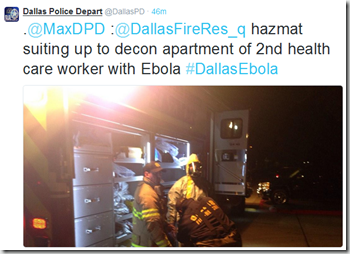
One of the more striking images that emerged out of America’s first couple of brushes with the Ebola virus involved Hazmat-suited responders sealing off and then entering – and attempting to decontaminate – spaces where an Ebola infected individual had stayed. 


Out of an abundance of caution – and no doubt to reassure a nervous public - common areas at apartment buildings were sprayed down with disinfectants, hand rails in hospital parking lots sanitized, and air carriers took planes out of service for repeated cleanings - which in some cases included removing sections of their carpet and seat covers.


According to the Dallas Morning News (see Cleanup crews try to salvage most of Ebola nurses’ belongings), some of the `extreme cleaning’ measures were taken in the apartments of the nurses who were infected while treating America’s index case included:


Cushions were removed from furniture, linens stripped, carpets and padding ripped out, all surfaces were `triple-wiped’ with industrial strength cleaners, and multiple barrels of `potentially contaminated’ personal effects were removed and incinerated. 


While some of this may seem excessive, there isn’t a great deal of data on the environmental persistence of the Ebola virus.  The CDC’s Interim Guidance for Environmental Infection Control in Hospitals for Ebola Virus has this to say:


How long does the Ebola virus persist in indoor environments?

Only one laboratory study, which was done under environmental conditions that favor virus persistence, has been reported. This study found that under these ideal conditions Ebola virus could remain active for up to six days.1 In a follow up study, Ebolavirus was found, relative to other enveloped viruses, to be quite sensitive to inactivation by ultraviolet light and drying; yet sub-populations did persist in organic debris.2

In the only study to assess contamination of the patient care environment during an outbreak, conducted in an African hospital under "real world conditions", virus was not detected by either nucleic acid amplification or culture in any of 33 samples collected from sites that were not visibly bloody. Virus was detected on a blood-stained glove and bloody intravenous insertion site by nucleic acid amplification, which may detect non-viable virus, but not by culture for live, infectious virus.3 Based upon these data and what is known regarding the environmental infection control of other enveloped RNA viruses, the expectation is with consistent daily cleaning and disinfection practices in U.S. hospitals that the persistence of Ebola virus in the patient care environment would be short – with 24 hours3 considered a cautious upper limit.


With the likelihood that we will see more Ebola cases in the United States in the coming weeks and months, there is great need for guidance on residential decontamination that provides for the safety of the public, but that doesn’t unnecessarily involve an all out `scorched-earth’ strategy.


Although those with Ebola are very infectious in the latter stages of their illness – early on – before vomiting and diarrhea set in, we’ve seen very little evidence of significant viral shedding. 


Using this as a line of demarcation between the types of cleanup and decontamination, yesterday the CDC released interim guidance called:


Interim Guidance for the U.S. Residence Decontamination for Ebola Virus Disease (Ebola) and Removal of Contaminated Waste

image

Key Points:

  • Effective disinfectant product(s): Use an Environmental Protection Agency (EPA)-registered hospital disinfectant according to manufacturer’s instructions with a label claim against a non-enveloped virus, such as norovirus, rotavirus, adenovirus, or poliovirus. Currently, no EPA-registered disinfectant products will have a statement on the label that specifically says it can kill Ebola virus. However, any EPA-registered disinfectant that is effective against a non-enveloped virus will also be effective against Ebola virus.

    One simple way to identify an appropriate product effective against Ebola virus is to use a product included in EPA’s List L: Disinfectants for Use Against the Ebola Virus.

  • Level of cleaning and decontamination: Once a person has been confirmed to have Ebola, the way to decontaminate the residence depends on the person’s symptoms at the time they were in the residence:
    1. Cleaning by residents - If the person with Ebola only had a fever with no gastrointestinal (e.g., diarrhea, vomiting) or hemorrhagic (bleeding) symptoms while he or she was in the residence, the person should not be contaminating their environment. Therefore, remaining members of the residence can clean and launder as normal.
    2. Cleaning by contract company - If the person with Ebola had a fever AND diarrhea, vomiting, and/or unexplained bleeding, public health and/or assigned authorities may need to contact a contract company who will assess the residence to determine the proper decontamination and disposal procedures. Remaining members of the residence should avoid contaminated rooms and areas until after the completion of the assessment and decontamination.
  • Which contract companies can conduct the cleaning?: Companies with experience in cleaning biohazard and crimes scenes. OSHA provides guidance for cleaning and decontaminating in non-healthcare settings. Any contract company conducting such work must comply with the its state’s Ebola policies and with OSHA standards for, among others that may apply, bloodborne pathogens (29 CFR 1910.1030), personal protective equipment (PPE) (29 CFR 1910.132), respiratory protection (29 CFR 1910.134), and hazard communication (29 CFR 1910.1200) (e.g., for chemical hazards). In states that operate their own occupational safety and health
  • Transport of waste: Transportation of Ebola-contaminated waste (i.e., materials that cannot be decontaminated and were in contact with the person with Ebola having fever AND diarrhea, vomiting, and/or unexplained bleeding) must be packaged and transported in accordance with regulations on the transportation of Ebola contaminated items provided by the U.S. Department of Transportation (DOT): U.S. DOT Hazardous Materials Regulation for Category A Infectious Substance. If a contract company is handling the waste, requirements in OSHA standards, including Bloodborne Pathogens (29 CFR 1910.1030) may also apply.

(Continue . . . )


Interim guidance is exactly what it says on the tin.  Guidance that is constantly subject to review and revision.  


As we gain more experience with dealing with the Ebola virus in the developed world, we’ll get a much better idea of the risks – and the most effective countermeasures – involved. 

Monday, October 27, 2014

CDC Updates Traveler’s Movement & Monitoring Guidance For Ebola

image

Credit CDC


Update:  Transcript | Audio now available for the CDC’s Monday Afternoon press conference.


# 9257


If there is anything good that can be said to be coming out of the Ebola epidemic, it is that it is forcing us to take a hard look at our emergency response and pandemic preparedness plans – and to work out the kinks – before we find ourselves blindsided by a more rapidly moving and highly virulent pandemic.


CDC interim guidance on Ebola continues to evolve as more is learned about dealing with the virus in modern healthcare settings and in a highly mobile developed nation, and it is not unreasonable to assume that over time that guidance may change further.


Last week the CDC announced a program of Active Post-Arrival Monitoring for Travelers from Impacted Countries, which provided arrivals from Ebola affected countries with a CARE (Check & Report Ebola) Kit and instructions on taking their temperature, and maintaining contact with local health department officials.


While introducing a higher degree of monitoring,  it relied upon the traveler to self-check and to report symptoms on a daily basis during the 21 day incubation period, and imposed no real restrictions on movement or travel. 


Two days later New York City detected their first imported Ebola case – and the newspapers had a field day analyzing that person’s movements around the city prior to calling in that he was ill.  As a result, the Governors of New York and New Jersey announced their own, more restrictive quarantine protocols, which have sparked heated debate.


Today, CDC Director Thomas Frieden held a press conference to announce new, tighter CDC guidelines – that while less restrictive than some of the state plans rolled out over the weekend – he believes are appropriate and not overly onerous. 


Whether individual states will adopt them – or continue to go their own way – is something we will have to wait to see. 


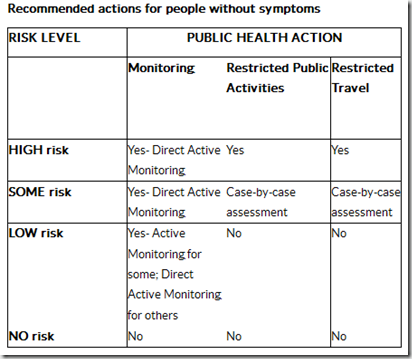
Today’s guidance also includes guidance on monitoring and movement control protocols for people who may have been exposed (i.e. Healthcare workers, family members, etc.) to an Ebola case in this country.  For the purposes of triage, potentially exposed people are divided into 4 risk groups:

  • High Risk
  • Some Risk
  • Low Risk (but not zero)
  • No Risk


Full details on how each risk group would be treated can be viewed at the link below:


Monitoring Symptoms and Controlling Movement to Stop Spread of Ebola

For Immediate Release: Monday, October 27, 2014
Contact:
Media Relations, Office of Communication
(404) 639-3286
Fact Sheet

Purpose

This fact sheet explains CDC’s updated guidance to protect America from Ebola. This updated guidance focuses on strengthening how we monitor people who may have been exposed to Ebola and how medical professionals will oversee their care and, when warranted to protect the public health or our communities, limit their movement or activities. Through these changes, CDC and state and local health departments seek to support people who may have been exposed to Ebola, while also continuing to stop Ebola at its source in West Africa through the valor of our health care workers who serve. These changes will help ensure their symptoms are monitored and a system is in place to quickly recognize when they need to be routed to care. These actions will better protect potentially exposed individuals and the American public as a whole.

Key changes to the movement and monitoring guidance

  • New risk levels are given for people who may have been exposed to Ebola, as well as for those not at risk for the disease.
  • The guidance recommends stricter actions  for escalating level of risk based on the type of exposure.
  • State and local public health authorities are advised to use active monitoring or direct active monitoring rather than having people monitor themselves.
  • Specific guidance is given about monitoring health care workers who cared for patients with Ebola in a country with widespread transmission, and people who visited an Ebola Treatment Unit in one of those countries.
  • Specific guidance is also given about monitoring health care workers who provided care of patients with Ebola in the United States

New risk levels

The new guidance defines four risk levels based on degree of exposure:

High risk—direct contact of infected body fluids through:

  • needle stick, or splashes to eyes, nose, or mouth
  • getting body fluids directly on skin
  • handling body fluids, such as in a laboratory, without wearing personal protective equipment (PPE) or following recommended safety precautions
  • touching a dead body without correctly wearing PPE in a country with widespread Ebola transmission
  • living with and caring for a person showing symptoms of Ebola

Some risk—

  • close contact with a person showing symptoms of Ebola such as in a household, health care facility, or the community (no PPE worn). Close contact means being within 3 feet of the person with Ebola for a long time without wearing PPE.
  • in countries with widespread Ebola transmission: direct contact with a person showing symptoms of Ebola while wearing PPE

Low risk (but not zero)—

  • having been in a country with widespread Ebola transmission within the previous 21 days and having no known exposure
  • being in the same room for a brief period of time (without direct contact) with a person showing symptoms of Ebola
  • having brief skin contact with a person showing symptoms of Ebola when the person was believed to be not very contagious
  • in countries without widespread Ebola transmission: direct contact with a person showing symptoms of Ebola while wearing PPE
  • travel on an airplane with a person showing symptoms of Ebola

No risk—

  • contact with a person who is NOT showing symptoms AFTER that person was in contact with a person with Ebola
  • contact with a person with Ebola BEFORE the person was showing symptoms
  • having traveled to a country with Ebola outbreak MORE than 21 days ago
  • having been in to a country where there is no widespread Ebola transmission (e.g., the United States), and having no other exposures to Ebola

Public health officials will use these risk levels along with assessing symptoms to decide how best to monitor for symptoms and what other restrictions may be needed. The table on the following page provides further information about CDC’s recommended action for each risk level.

(Continue  . . . )

Thursday, October 02, 2014

CDC Updates Interim EMS & Hospital Guidance For Handling EVD

image


# 9137


Since I don’t know the exact sequence of events (see DallasNews Report) that took place on September 26th when the emergency room at Texas Health Presbyterian Hospital failed to take notice of the fact that (an Ebola infected) patient they were treating had only returned very recently from Liberia, I’ll leave it to someone else to go around and shoot  the survivors.


Admittedly, ERs are busy, often hectic places, and no response going to be perfect. 


But now that we’ve seen  two MERS cases walk into American ERs last spring, a fatal H5N1 case hospitalized in Canada last winter, and now this most recent Ebola case, – hospitals,  EMS systems, and walk-in clinics in North America (and around the globe) - have to accept the possibility that any one of them could see the next potential `imported case’ of some exotic emerging infectious disease.


The wildfire of nosocomial MERS-CoV infections in Saudi Arabia and the UAE last spring demonstrated just how easily a `normally hard-to-transmit’  virus like MERS can spread in a hospital setting, given half a chance.  A pattern very similar to what we saw with SARS in 2003.


Given the growing number of infectious disease threats out there, and our increasingly mobile society, the odds of having to deal with hemorrhagic fevers, avian flus, or some other rarely-seen emerging disease threat in  American ERs only grows greater with each passing day.  


Welcome to The New Normal: The Age Of Emerging Disease Threats.


Yesterday the CDC beefed up their Interim Guidance Documents list for hospitals and EMS providers who may come in contact with suspected or confirmed Ebola cases.  


Updated from its initial release last August (see CDC Releases Additional Interim Ebola Guidance) the CDC released Interim Guidance: EMS Systems & 9-1-1 PSAPs: Management of Patients in the U.S. - Updated October 1, 2014


Also released, a Checklist for Patients Being Evaluated for EVD, US[PDF - 1 page] - October 1, 2014

image


And a decision-tree algorithm for Evaluating Returned Travelers for EVD, US[PDF - 1 page] - October 1, 2014

image

Saturday, August 23, 2014

CDC Updated Interim Guidance On Ebola

image

Credit CDC


# 8990


Over time, as the CDC gathers new evidence, their guidance documents on the handling of various diseases evolves.  We saw rapid evolution of advice during the first couple of months of the 2009 H1N1 pandemic, and we are seeing it now with the Ebola virus outbreak in West Africa. 


Often these changes are minor adjustments or clarifications, designed to make earlier guidance clearer.


Just over two weeks ago we saw the CDC Issue New Ebola Case Definitions, along with Interim Guidance for Monitoring and Movement of Persons with Ebola Virus Disease Exposure.  We took a closer look at the CDC’s risk groups in Ebola: Parsing The CDC’s Low Risk vs High Risk Exposures.


Although they incorporate only relatively minor changes, last night the CDC posted updates to both documents. 

The first involves the risks of exposure and the case definition for EVD. A side-by-side comparison with the previous guidance shows relatively minor changes,  mostly to the format, and to some definitions (i.e.. `Low risk’ = `some risk’). 

Case Definition for Ebola Virus Disease (EVD)

Updated: August 22, 2014

Early recognition is critical for infection control. Health care providers should be alert for and evaluate any patients suspected of having Ebola Virus Disease (EVD).

Person Under Investigation (PUI)

A person who has both consistent symptoms and risk factors as follows:

  1. Clinical criteria, which includes fever of greater than 38.6 degrees Celsius or 101.5 degrees Fahrenheit, and additional symptoms such as severe headache, muscle pain, vomiting, diarrhea, abdominal pain, or unexplained hemorrhage; AND
  2. epidemiologic risk factors within the past 21 days before the onset of symptoms, such as contact with blood or other body fluids or human remains of a patient known to have or suspected to have EVD; residence in—or travel to—an area where EVD transmission is active*; or direct handling of bats or non-human primates from disease-endemic areas.

Probable Case

A PUI whose epidemiologic risk factors include high or low risk exposure(s) (see below)

Confirmed Case

A case with laboratory-confirmed diagnostic evidence of Ebola virus infection

Exposure Risk Levels

Levels of exposure risk are defined as follows:

High risk exposures

A high risk exposure includes any of the following:

  • Percutaneous (e.g., needle stick) or mucous membrane exposure to blood or body fluids of EVD patient
  • Direct skin contact with or exposure to blood or body fluids of an EVD patient without appropriate personal protective equipment (PPE)
  • Processing blood or body fluids of a confirmed EVD patient without appropriate PPE or standard biosafety precautions
  • Direct contact with a dead body without appropriate PPE in a country where an EVD outbreak is occurring*

Low1 risk exposures

A low risk exposure includes any of the following

  • Household contact with an EVD patient
  • Other close contact with EVD patients in health care facilities or community settings. Close contact is defined as
    1. being within approximately 3 feet (1 meter) of an EVD patient or within the patient’s room or care area for a prolonged period of time (e.g., health care personnel, household members) while not wearing recommended personal protective equipment (i.e., standard, droplet, and contact precautions; see Infection Prevention and Control Recommendations)
    2. having direct brief contact (e.g., shaking hands) with an EVD case while not wearing recommended personal protective equipment.
  • Brief interactions, such as walking by a person or moving through a hospital, do not constitute close contact

No known exposure

Having been in a country in which an EVD outbreak occurred within the past 21 days and having had no high or low risk exposures

* As of 22 August 2014, countries with EVD outbreaks are Guinea, Liberia, and Sierra Leone. There are also cases of EVD in Lagos, Nigeria. For more information about specific districts where the EVD outbreak is occurring, visit: www.cdc.gov/vhf/ebola/outbreaks/guinea/

1 For purposes of monitoring and movement restrictions of persons with Ebola virus exposure, low risk is interpreted as some risk. See www.cdc.gov/vhf/ebola/hcp/monitoring-and-movement-of-persons-with-exposure.html

The second update, fleshes out the public Health response for those who may have have had an Ebola exposure, but who are currently asymptomatic.  The bottom line is:


At this time, CDC is NOT recommending that asymptomatic contacts of EVD cases be quarantined, either in facilities or at home.


For the purposes of this document, the following definitions are used:


Conditional release

Conditional release means that people are monitored by a public health authority for 21 days after the last known potential Ebola virus exposure to ensure that immediate actions are taken if they develop symptoms consistent with EVD during this period. People conditionally released should self-monitor for fever twice daily and notify the public health authority if they develop fever or other symptoms.

Controlled movement

Controlled movement requires people to notify the public health authority about their intended travel for 21 days after their last known potential Ebola virus exposure. These individuals should not travel by commercial conveyances (e.g. airplane, ship, long-distance bus, or train). Local use of public transportation (e.g. taxi, bus) by asymptomatic individuals should be discussed with the public health authority. If travel is approved, the exposed person must have timely access to appropriate medical care if symptoms develop during travel. Approved long-distance travel should be by chartered flight or private vehicle; if local public transportation is used, the individual must be able to exit quickly.

Quarantine

Quarantine is used to separate and restrict the movement of persons exposed to a communicable disease who don’t have symptoms of the disease for the purpose of monitoring.


Far less draconian than many people might expect, for either High or Low (some) risk exposures – as long as the person remains asymptomatic - the guidance simply recommends:


Conditional release and controlled movement until 21 days after last known potential exposure


It is a lengthy document, and so you’ll want to read it in its entirety on the website.  The decision chart can be expanded using the Chart icon at the bottom of the page.


Interim Guidance for Monitoring and Movement of Persons with Ebola Virus Disease Exposure
Updated: August 22, 2014

The world is facing the biggest and most complex Ebola virus disease (EVD) outbreak in history. On August 8, 2014, the EVD outbreak in West Africa was declared by the World Health Organization (WHO) to be a Public Health Emergency of International Concern (PHEIC) because it was determined to be an ‘extraordinary event’ with public health risks to other States. The possible consequences of further international spread are particularly serious considering the following factors:

  1. the virulence of the virus,
  2. the intensive community and health facility transmission patterns, and
  3. the strained health systems in the currently affected and most at-risk countries.

Coordinated public health actions are essential to stop and reverse the spread of Ebola virus. Due to the complex nature and seriousness of the outbreak, CDC has created guidance for monitoring people exposed to Ebola virus and for evaluating their travel, including the application of movement restrictions when indicated.

(Continue . . .)


The CDC also released an info service (lowest level) HAN Notice with an updated list of Ebola Resources:


HAN 367: CDC Ebola Response Update #3


image

Wednesday, August 20, 2014

CDC Interim Ebola Guidance: Environmental Infection Control In Hospitals

image
Credit CDC PHIL


# 8974


The CDC continues to roll out new interim guidance documents for health care professionals and facilities that at some point may be called upon to deal with an imported Ebola case in the United States.  As always, these are `works in progress’, and are subject to revision over time as more is learned about dealing with this virus.


Although laboratory experiments have shown that the Ebola virus can remain viable on solid surfaces for up to 6 days – at least under ideal environmental conditions -  very limited `real world’  field testing has suggested a far less hardy organism; one that is susceptible to degradation by sunlight, desiccation, and time. 


That said, the precise role of environmental transmission of Ebola is far from settled - and given its lethality and low infectious dose - guidance in these matters tends to err on the side of caution. Also included is a Frequently Asked Questions section (FAQ), which poses (and answers) several interesting questions, including:


  • How should disposable materials (e.g., any single-use PPE, cleaning cloths, wipes, single-use microfiber cloths, linens, food service) and linens, privacy curtains, and other textiles be managed after their use in the patient room?

  • Are wastes generated during delivery of care to Ebola virus-infected patients subject to select agent regulations?

I’ve only reproduced the main body of the guidance, so follow the link to read it, and the accompanying FAQ in its entirety.


Interim Guidance for Environmental Infection Control in Hospitals for Ebola Virus


On August 1, 2014, CDC released guidance titled, Infection Prevention and Control Recommendations for Hospitalized Patients with Known or Suspected Ebola Hemorrhagic Fever in U.S. Hospitals. Ebola viruses are transmitted through direct contact with blood or body fluids/substances (e.g., urine, feces, vomit) of an infected person with symptoms or through exposure to objects (such as needles) that have been contaminated with infected blood or body fluids. The role of the environment in transmission has not been established. Limited laboratory studies under favorable conditions indicate that Ebola virus can remain viable on solid surfaces, with concentrations falling slowly over several days.1, 2 In the only study to assess contamination of the patient care environment during an outbreak, virus was not detected in any of 33 samples collected from sites that were not visibly bloody. However, virus was detected on a blood-stained glove and bloody intravenous insertion site.3 There is no epidemiologic evidence of Ebola virus transmission via either the environment or fomites that could become contaminated during patient care (e.g., bed rails, door knobs, laundry). However, given the apparent low infectious dose, potential of high virus titers in the blood of ill patients, and disease severity, higher levels of precaution are warranted to reduce the potential risk posed by contaminated surfaces in the patient care environment.

As part of the care of patients who are persons under investigation, or with probable or confirmed Ebola virus infections, hospitals are recommended to:

  • Be sure environmental services staff wear recommended personal protective equipment including, at a minimum, disposable gloves, gown (fluid resistant/ impermeable), eye protection (goggles or face shield), and facemask to protect against direct skin and mucous membrane exposure of cleaning chemicals, contamination, and splashes or spatters during environmental cleaning and disinfection activities. Additional barriers (e.g., leg covers, shoe covers) should be used as needed. If reusable heavy-duty gloves are used for cleaning and disinfecting, they should be disinfected and kept in the room or anteroom. Be sure staff are instructed in the proper use of personal protective equipment including safe removal to prevent contaminating themselves or others in the process, and that contaminated equipment is disposed of as regulated medical waste.
  • Use a U.S. Environmental Protection Agency (EPA)-registered hospital disinfectant with a label claim for a non-enveloped virus (e.g., norovirus, rotavirus, adenovirus, poliovirus) to disinfect environmental surfaces in rooms of patients with suspected or confirmed Ebola virus infection. Although there are no products with specific label claims against the Ebola virus, enveloped viruses such as Ebola are susceptible to a broad range of hospital disinfectants used to disinfect hard, non-porous surfaces. In contrast, non-enveloped viruses are more resistant to disinfectants. As a precaution, selection of a disinfectant product with a higher potency than what is normally required for an enveloped virus is being recommended at this time. EPA-registered hospital disinfectants with label claims against non-enveloped viruses (e.g., norovirus, rotavirus, adenovirus, poliovirus) are broadly antiviral and capable of inactivating both enveloped and non-enveloped viruses.
  • Avoid contamination of reusable porous surfaces that cannot be made single use. Use only a mattress and pillow with plastic or other covering that fluids cannot get through. Do not place patients with suspected or confirmed Ebola virus infection in carpeted rooms and remove all upholstered furniture and decorative curtains from patient rooms before use.
  • To reduce exposure among staff to potentially contaminated textiles (cloth products) while laundering, discard all linens, non-fluid-impermeable pillows or mattresses, and textile privacy curtains as a regulated medical waste.

(Continue . . . )

Friday, June 13, 2014

WHO Update On MERS-CoV Transmission Risks From Animals To Humans

Photo: ©FAO/Ami Vitale

Credit FAO


# 8739


Over the past nine months we’ve seen a steady procession of research papers, and cautionary public health statements, implicating camels as one potential source of human infection with the MERS Coronavirus.  


The virus has certainly been found in camels see Kuwait Tests Camels - Finds 6% Positive For MERS-CoV), and  we’ve seen a few instances where camel-to-human transmission is strongly suspected (see CIDRAP: More Evidence for Camel-to-Human MERS-CoV Transmission).


Yesterday, in Eurosurveillance: MERS-CoV Antibodies & RNA In Camel’s Milk – Qatar research supporting the notion that consumption of unpasteurized camel’s milk might be a route to infection. 


Acceptance of this MERS-camel connection in Saudi Arabia and the Middle East has been slow in coming. We’ve seen tepid warnings about avoiding raw camel products, along side statements from officials that there is no actual `proof’ that camels can transmit the virus to humans (see Saudi MOA Spokesman: Camel Link Unproven).


For many Saudis, the idea that camels – a beloved national symbol that literally made settlement of that arid region possible – could carry a disease deadly to humans,  is simply unthinkable. 


Nevertheless, the evidence is mounting, and today the World Health Organization released the following interim statement on the risks of camel-to-human transmission of the virus.


Middle East respiratory syndrome coronavirus (MERS‐CoV)


13 June 2014


Update on MERS‐CoV transmission from animals to humans, and interim recommendations for at‐risk groups


Over the past year, several investigations into the animal source of MERS‐CoV have been conducted. MERS‐CoV genetic sequences from humans and camels in Egypt, Oman, Qatar and Saudi Arabia demonstrate a close link between the virus found in camels and that found in people in the same geographic area. These and other studies have found MERS‐CoV antibodies in camels in Africa and the Middle East. 


Preliminary results from an ongoing investigation in Qatar show that people working closely with camels (e.g. farm workers, slaughterhouse workers and veterinarians) may be at higher risk of MERS‐CoV infection than people who do not have regular close contacts with camels. In Qatar and several other countries, animals, including goats, cows, sheep, water buffalo, swine and wild birds, have been tested for antibodies to MERS‐CoV, with no positive results.


The absence of antibodies in these animals indicates that the likelihood of other animals having a substantial role in transmission of MERS‐CoV is very low. These studies provide evidence that camels are a likely primary source of the MERS‐CoV that is infecting humans.  The current pattern of disease appears to be the result of repeated introductions of the virus from camels to people, resulting in limited human‐to‐human transmission, but not in sustained transmission.

Therefore, discovery of the routes of transmission, whether direct or indirect, between camels and people, is critical to stopping transmission of the virus.  WHO is working with partner agencies with expertise in animal health and food safety, including FAO, OIE and national authorities, to facilitate ongoing investigations. 


Investigation protocols and guidelines for dealing with new cases are available on the WHO website (http://www.who.int/csr/disease/coronavirus_infections/en/). 


General recommendations


As a general precaution, anyone visiting farms, markets, barns or other places where camels are present should practice general hygiene measures, including regular hand washing after touching animals, avoiding touching eyes, nose or mouth with hands, and avoiding contact with sick animals. People may also consider wearing protective gowns and gloves while handling animals. 


The consumption of raw or undercooked animal products, including milk and meat, carries a high risk of infection from a variety of organisms that might cause disease in humans. Animal products processed appropriately through proper cooking or pasteurization are safe for consumption but should also be handled with care, to avoid cross‐contamination with uncooked foods.

Recent studies in Qatar show that MERS‐CoV can be detected in raw milk from infected camels. Whether camels excrete MERS‐CoV in milk or the virus gets into the milk through cross‐contamination during milking is unclear. However, if MERS‐CoV is present, it will be destroyed by pasteurization or cooking. Camel meat and camel milk are nutritious products that can continue to be consumed after cooking, pasteurization, or other heat treatments. Safe alternatives should be developed to the tradition of sales of raw camel milk for direct consumption, along roadsides and farm gates.


Recommendations for at‐risk groups


Until more is understood about MERS, people with diabetes, renal failure, chronic lung disease, and immunocompromised persons are considered at high risk of severe disease from MERS‐CoV infection. Therefore, these people should avoid contact with camels, should not drink raw camel milk or camel urine, and should not eat meat that has not been properly cooked. Such recommendations should also be disseminated to travellers, tourists and pilgrims with above mentioned underlying conditions coming to the region from around the world.


Preliminary results from recent studies in Qatar indicate that people handling or working with camels are at increased risk of infection with MERS‐CoV compared with people who do not have contact with camels. Until more evidence is gathered, it is prudent for camel farm workers, slaughterhouse workers, market workers, veterinarians and those handling camels at racing facilities to practice good personal hygiene, including frequent hand washing after touching animals.

They should wear facial protection where feasible and protective clothing, which should be removed after work and washed daily.  Workers should also avoid exposing family members to soiled work clothing, shoes, or other items that may have come into contact with camel excretions. It is therefore recommended that these clothes and items remain at the workplace for daily washing and that workers have access to and use shower facilities at their workplaces before leaving the premises.


Camels infected with MERS‐CoV may not show any signs of infection. It is therefore not possible to know whether an animal in a farm, market, race track or slaughterhouse is excreting MERS‐CoV that can potentially infect humans. However, infected animals may shed MERS‐CoV through nasal and eye discharge, faeces, and potentially in their milk and urine. The virus may also be found in the organs and meat of an infected animal. Therefore, until more is known about infection in animals, the best protection is to practice good hygiene and avoid direct contact with all of these. Obviously sick animals should never be slaughtered for consumption; dead animals should be safely buried or destroyed. 


People who are not wearing protective gear should avoid contact with any animal that has been confirmed positive for MERS‐CoV until subsequent tests have confirmed that the animal is free of the virus.


Thursday, October 24, 2013

PHAC: Interim Guidelines For Surveillance Of MERS-COV & H7N9 In Canada

Coronavirus

Photo Credit NIAID


# 7896


Although no H7N9 or MERS cases have been detected in North America, and currently the PHAC (Public Health Agency of Canada) considers the risks to Canadians to be low at this time,  Canada – like the United State’s CDC – is gearing up surveillance procedures in order to be able to detect  introduction of the virus at the earliest opportunity.


Yesterday, PHAC released two new Interim guidelines for National Surveillance on these emerging viruses.


October 23, 2013  Interim National Surveillance Guidelines for Human Infection with Avian Influenza A(H7N9)

October 23, 2013I Interim National Surveillance Guidelines for Human Infection with Middle East Respiratory Syndrome Coronavirus (MERS-CoV)


You’ll find that both documents follow the same format, but are customized for each virus.  A few brief excerpts from the MERS-CoV Guidance  follow, but you’ll probably want to examine both documents in their entirety.


Surveillance Goals and Objectives

Given the evidence to date, the main goal of public health response is early detection and containment.

To accomplish this goal, following national surveillance objectives have been developed:

  1. Detect human cases of MERS-CoV infection in Canada
  2. Monitor the incidence and the geographical distribution of new cases over time
  3. Describe and monitor changes in the epidemiological and virological features of the disease(e.g. clinical features and progression, morbidity, mortality, incubation period, mode of transmission, at risk populations)
  4. Notify and disseminate information to stakeholders in order to facilitate timely and appropriate public health activities
Case Definition

The Public Health Agency of Canada has developed case definitions for classification and reporting of human cases of MERS-CoV. They are located on the Public Health Agency of Canada website.

Case Identification and Interview

Laboratory-confirmation of a MERS-CoV case is an immediate trigger to launch a thorough investigation. However, because collection, shipment, and testing of specimens often require several days or longer, the investigation may need to begin before laboratory test results are available for suspected cases. Even if laboratory-confirmation is not possible, an investigation should still be launched if a patient is strongly suspected to have MERS-CoV infection.

The patient and/or family members (if the patient is too ill to be interviewed or has died) should be interviewed within the first 24–48 hours of the investigation to collect basic demographic, clinical, and epidemiological information. A sample case investigation/reporting form for the interview can be found on the Public Health Agency’s website. Provinces and territories may choose to use this form, or a similar form developed for use within their jurisdiction.

Essential Basic Information

Within 24 hours of notification, the following priority data elements (Box 1) should be submitted on the initial case report form or through electronic methods for confirmed and probable cases (within 24 hours of PT notification)Footnote 1.

image

Contact Monitoring

Close contacts of confirmed or probable cases should be identified and monitored for the appearance of respiratory symptoms for 14 days after last exposure to the confirmed or probable case, while the case was symptomatic. Any contact that becomes ill with symptoms compatible with MERS-CoV in that period of time should be tested for MERS-CoV. Ring testing (testing those with closest and most prolonged contact) should be considered, and a subset of those with progressively less contact should be identified to evaluate transmissibility and evidence of asymptomatic infection.

A line-listing of all contacts and exposed persons that records demographic information, date of first and last common exposure or date of contact with the confirmed or probable case, and date of onset if fever or respiratory symptoms develop should be maintained. The common exposures and type of contact with the confirmed or probable case should be thoroughly documented for any contacts that become infected with MERS-CoV.

Additional information can be found in the Interim Guidance for Public Health Management of Human Illness Associated with MERS-CoV.

Enhanced Surveillance

Surveillance in the setting under investigation should be enhanced to detect cases that might arise subsequent to the discovery of the index case. The geographical area targeted will need to be assessed and defined by the suspected exposures of the confirmed case under investigation. The duration of the enhanced surveillance will depend on the findings of the investigation and whether there is evidence indicating that sustained transmission may be occurring in the area. A minimum of one month of enhanced surveillance is a reasonable starting point.

Enhancements include:

  • Establish mechanisms for rapid transfer of specimens to the National Microbiology Laboratory (NML)
  • Inform clinicians in the community of the need for increased vigilance and triggers for identification and notification
  • Increase testing for MERS-CoV of SARI cases at) local health care facilities in the area under investigation.
  • If resources allow, consider some testing of milder cases of influenza-like illness presenting to surveillance sites.

(Continue . . . )

PHAC also updated their Public Health Advisory on MERS-CoV for Canadians earlier today:

Public Health Notice: Middle East Respiratory Syndrome Coronavirus (MERS-CoV)

24 Oct 2013
Information is reviewed on a regular basis and updated as required.

Why you should take note

Since April 2012, cases of the Middle East Respiratory Syndrome Coronavirus (MERS-CoV) have been identified in eight countries: the United Kingdom (UK), Jordan, Qatar, Saudi Arabia, the United Arab Emirates, France, Tunisia and Italy. The initial cases in the UK, France, Tunisia and Italy were linked to travel to the Middle East.

Coronaviruses are the cause of the common cold, but can also be the cause of more severe illnesses with flu-like symptoms, including Severe Acute Respiratory Syndrome (SARS), with some cases resulting in death. This new virus is not the SARS virus. Additional cases of this new strain of coronavirus are expected. Official numbers are available hereExternal site.

Risk to Canadians

The risk to Canadians is low. This virus does not appear to spread easily from person to person.

At the same time, we do not yet fully understand exactly how people become infected with MERS-CoV. Experts are still investigating its source and how it spreads.

In the cases where it has appeared to have spread between people, those cases involved close contacts: family members, co-workers, fellow patients and healthcare workers.

Federal and provincial laboratories have been testing specimens and there are currently no cases in Canada.

Canadians can help protect themselves against these types of viruses by following some general measures:

  • Avoid close contact with anyone showing signs of illness (such as coughing and sneezing);
  • Cough and sneeze in your arm rather than your hand;
  • Wash your hands often and thoroughly;
  • Stay at home when sick.

(Continue . . . )


Note: The United States issued similar interim guidance for MERS-CoV in August (see CDC HAN Update On MERS-CoV) and for H7N9 in June (see CDC: Updated H7N9 Guidance Docs).

Thursday, July 25, 2013

WHO: Interim Travel Advice On MERS-CoV For KSA Pilgrimages

image

Credit Wikipedia


# 7514


The World Health Organization has released interim travel advice for those planning to visit the Kingdom of Saudi Arabia (KSA) for this year’s Umrah or Hajj.  In an emailed media release, the WHO describes this interim advice as:


It provides guidance to national authorities of countries from which pilgrims will be travelling in the coming months for Umra and Hajj for the prevention, detection and management of imported cases of MERS-CoV.


At this time, the risk to an individual pilgrim of contracting MERS-CoV is considered very low. WHO does not recommend the application of any travel or trade restrictions or entry screening.


WHO encourages countries to raise awareness of this travel advice to reduce the risk of MERS-CoV infection among pilgrims and those associated with their travel, including transport operators and ground staff, and about self-reporting of illness by travelers. 


The following interim advice is available on the WHO International Travel and Health web page:


Kingdom of Saudi Arabia - travel advice on MERS-CoV for pilgrimages

World Health Organization interim travel advice on MERS-CoV for pilgrimages to the Kingdom of Saudi Arabia
I. Introduction

An outbreak of the Middle East respiratory syndrome coronavirus (MERS-CoV), first reported in 2012, has affected nine countries to date. WHO is coordinating the global response to this emerging virus according to the International Health Regulations (IHR 2005). This paper provides guidance to national authorities of countries from which pilgrims will be travelling in the coming months for Umra and Hajj for the prevention, detection and management of imported cases of MERS-CoV. At this time, the risk to an individual pilgrim of contracting MERS-CoV is considered very low.

II. Effective communication of risk information

It is important for countries to use all practical and effective means possible to communicate information on a range of issues before, during and after Umra and Hajj to all key groups, including the following:

  • travellers to Umra and Hajj, particularly vulnerable groups within this population;
  • public health officials;
  • health care staff responsible for the care of ill pilgrims;
  • public transportation and tourism industries; and
  • the general public.
2.1. Actions to take before Umra or Hajj
  • Countries should advise pilgrims that pre-existing major medical conditions (e.g. chronic diseases such as diabetes, chronic lung disease, immunodeficiency) can increase the likelihood of illness, including MERS-CoV infection, during travel; thus, pilgrims should consult a health care provider before travelling to review the risk and assess whether making the pilgrimage is advisable.
  • Countries should make information known to departing pilgrims and travel organizations on general travel health precautions,1 which will lower the risk of infection in general, including illnesses such as influenza and traveller’s diarrhoea. Specific emphasis should be placed on:
    • washing hands often with soap and water. When hands are not visibly dirty, a hand rub can be used;
    • adhering to good food-safety practices, such as avoiding undercooked meat or food prepared under unsanitary conditions, and properly washing fruits and vegetables before eating them;
    • maintaining good personal hygiene;
    • avoiding unnecessary contact with farm, domestic, and wild animals.
  • Health advisories should be made available to all departing travellers to Umra or Hajj by working with the travel and tourism sectors and placing such materials at strategic locations (eg. travel agent offices or points of departure in airports).
    • different kinds of communication, such as health alerts on board planes and ships, and banners, pamphlets and radio announcements at international points of entry, can also be used to reach travellers.
    • travel advisories should include current information on MERS-CoV and guidance on how to avoid illness while travelling.
  • Current WHO guidelines, or their national equivalents, on surveillance,2 infection prevention and control measures3 and clinical management4of MERS-CoV should be distributed to health care practitioners and health care facilities.
  • Countries should ensure that there are adequate laboratory services for testing for MERS-CoV and that information on laboratory services and clinical referral mechanisms is known to health care providers and facilities.
  • Medical staff accompanying pilgrims should be up to date on MERS-CoV information and guidance, including how to recognize early signs and symptoms of infection, who is considered to be in a high-risk group, and what to do when a suspected case is identified, as well as on simple health measures to reduce transmission.
2.2. Actions to take during Umra or Hajj
  • Travellers who develop a significant acute respiratory illness with fever and cough (severe enough to interfere with usual daily activities) should be advised to:
    • minimize their contact with others to keep from infecting them;
    • cover their mouth and nose with a tissue when coughing or sneezing and discard the tissue in the trash after use and wash hands afterwards, or, if this is not possible, to cough or sneeze into upper sleeves of their clothing, but not their hands;
    • report to the medical staff accompanying the group or to the local health services.
2.3. Actions to take after Umra or Hajj
  • Returning pilgrims should be advised that if they develop a significant acute respiratory illness with fever and cough (severe enough to interfere with usual daily activities) during the two weeks after their return, they should seek medical attention and immediately notify their local health authority.
  • Persons who have had close contact with a pilgrim or traveller with a significant acute respiratory illness with fever and cough (severe enough to interfere with usual daily activities) and who themselves develop such an illness should be advised to report to local health authorities to be monitored for MERS-CoV.
  • Practitioners and facilities should be alerted to the possibility of MERS-CoV infection in returning pilgrims with acute respiratory illness, especially those with fever and cough and pulmonary parenchymal disease (e.g. pneumonia or the acute respiratory distress syndrome). If clinical presentation suggests the diagnosis of MERS-CoV, laboratory testing,5,6 in accordance with WHO’s case definition7 should be done and infection prevention and control measures implemented. Clinicians should also be alerted to the possibility of atypical presentations in patients who are immunocompromised.
III. Measures at borders and for conveyances

WHO does not recommend the application of any travel or trade restrictions or entry screening.


WHO encourages countries to raise awareness of this travel advice to reduce the risk of MERS-CoV infection among pilgrims and those associated with their travel, including transport operators and ground staff, and about self-reporting of illness by travellers.


As required by the IHR, countries should ensure that routine measures are in place for assessing ill travellers detected on board conveyances (such as planes and ships) and at points of entry, as well as measures for safe transportation of symptomatic travellers to hospitals or designated facilities for clinical assessment and treatment.


If a sick traveller is on board a plane, a passenger locator form8 can be used. This form is useful for collecting contact information for passengers, which can be used for follow-up if necessary.

Thursday, July 04, 2013

CDC Releases Updated H3N2v Guidance

image

Credit CDC


# 7447


Although its pandemic potential and overall threat to public health are currently considered low, the CDC isn’t taking the re-emergence of swine variant influenza lightly. As with any novel flu virus to which a portion of the population has little or no immunity, the absolute risks cannot be fully quantified.


While only rarely detected before 2011, in 2012 more than 300 swine `variant’ infections were confirmed (see A Variant Swine Flu Review) in the United States, mostly linked to attendance of state and county fairs.


Based on recently published studies, this was likely a substantial undercount (see CID Journal: Estimates Of Human Infection From H3N2v (Jul 2011-Apr 2012).


Over the past week, Indiana reported 12 new H3N2v infections (see Indiana Reports 8 More H3N2v Cases), nearly all linked to attendance of the Grant county fair in mid-June.


With the county and state fair season just getting underway, yesterday the CDC released two new interim guidance documents on H3N2v for local public health agencies; one on case definitions, and the other on surveillance and specimen collection.


Interim Guidance on Case Definitions to be Used For Investigations of Influenza A (H3N2)v Virus Cases

Posted on July 3, 2013

This document provides updated interim guidance for state and local health departments conducting investigations of infections with influenza A (H3N2) variant (H3N2v) viruses. Influenza viruses that typically infect swine are referred to as “variant” when they infect humans. The following definitions are for the purpose of investigations of confirmed cases and cases of influenza A (H3N2)v virus infection under investigation. CDC is requesting notification of all confirmed cases of influenza A (H3N2)v virus infection within 24 hours of identification. When possible, state health departments are encouraged to investigate all potential cases of influenza A (H3N2)v virus infection further to determine case status.

Case Definitions for Infection with Influenza A (H3N2)v Virus

Confirmed: Influenza A (H3N2)v virus infection in a patient with laboratory confirmation by:

  • Reverse-transcription polymerase chain reaction (RT-PCR) testing or genetic sequencing results positive for influenza A (H3N2)v virus at the CDC Influenza Division Laboratory

OR

Case Under Investigation: Illness compatible with influenza2 in a patient meeting at least one of the epidemiologic criteria below for whom laboratory confirmation is not known or pending, or for whom test results do not provide a sufficient level of detail to confirm influenza A (H3N2)v virus (e.g., a positive rapid influenza diagnostic test).

  • Recent close contact3 (within 7 days of illness onset) with confirmed cases of influenza A (H3N2)v virus infection

OR

  • Recent contact (within 7 days of illness onset) with swine or recent attendance at an event (such as an agricultural fair) where swine were present. Contact with swine may be direct contact (i.e., touching or handling a pig) or indirect contact (coming within about 6 feet (2 meters) of a pig without known direct contact).

1 This laboratory result is reportable as “presumptive positive” for influenza A (H3N2v) as specified in the CDC Flu rRT-PCR Dx Panel in vitro diagnostic (IVD) package insert. Although State public health laboratories are able to report and act upon this result, all specimens with “presumptive positive” results should be sent to CDC for additional testing. Please see Data Interpretation Update to the CDC Flu rRT-PCR Dx Panel  [27 KB, 1 page] for additional guidance on interpretation of the CDC Flu rRT-PCR Dx Panel.

2 Illness compatible with influenza may present as influenza-like illness (ILI) [fever ≥100°F plus cough or sore throat]. Note that influenza may not cause fever in all patients (especially in patients under 5 years of age, over 65 years of age, or patients with immune-suppression), and the absence of fever should not supersede clinical judgment when evaluating a patient for illness compatible with influenza.

3 Close contact may be regarded as coming within about 6 feet (2 meters) of a confirmed case while the case was ill (beginning 1 day prior to symptom onset and continuing until resolution of illness). This includes healthcare personnel providing care for a confirmed case, family members of a confirmed case, persons who lived with or stayed overnight with a confirmed case, and others who have had similar close physical contact.


Interim Guidance for Enhanced Influenza Surveillance: Additional Specimen Collection for Detection of Influenza A (H3N2) Variant Virus Infections

Posted on July 3, 2013

Summary

This document is an update to interim enhanced surveillance guidance posted in 2012. In anticipation of the 2013 agricultural fair season, states should consider expanding surveillance to include reverse-transcription polymerase chain reaction (RT-PCR) testing of specimens from ILINet providers statewide, of specimens collected from people with ILI reporting recent swine contact or agricultural fair attendance, and of specimens collected from people with unusual or severe presentations of ILI. States should also consider collection of specimens from outbreaks of ILI among children in child-care and school settings, since these settings have been associated with person-to-person H3N2v virus transmission in 2011. CDC will continue to evaluate new information as it becomes available and will update this guidance as needed.

Background

From July-September 2012, 306 infections with an influenza A (H3N2) variant (H3N2v) were identified in 10 states. Influenza viruses that typically infect swine are referred to as “variant” when they infect humans. During the 2012 outbreak, most cases reported agricultural fair attendance and contact with swine prior to illness. Few instances of person-to-person transmission were identified, and there was no evidence of sustained community-wide transmission. Confirmed H3N2v cases were identified primarily among children (<18 years of age), and limited serologic studies indicate that children, primarily those younger than 9 years, have increased susceptibility to H3N2v. However, some adult H3N2v cases were identified.


This document provides interim guidance to state and local health departments for enhanced surveillance and testing by (RT-PCR) for influenza viruses. Use of RT-PCR testing is important in order to identify which influenza A virus subtypes (e.g. H3N2v viruses versus seasonal H1N1 or H3N2 viruses) are circulating. These guidelines have been developed in an effort to facilitate timely detection and investigation of H3N2v cases by targeting patients with influenza-like illness (ILI) for influenza testing by RT-PCR.


CDC would like state and local health departments to consider the following recommendations for influenza surveillance and testing.

  1. All state public health laboratories should use the CDC Human Influenza Real-Time rRT-PCR FLU Diagnostic Panel to screen specimens for InfA, InfB, and RP.
  2. Test all InfA-positive specimens with the CDC Influenza A Subtyping kit using all primer/probe sets: H1, H3, pdmInfA and pdmH1. Detailed guidance for testing can be found in the influenza surveillance diagnostic testing algorithm disseminated recently by Association of Public Health Laboratories  [27 KB, 1 page]. Specimens that are positive for H3N2v virus should be sent to CDC Influenza Division for additional testing as soon as possible.
  3. Conduct contact tracing of confirmed influenza A (H3N2)v cases to gather more information about the epidemiology of the virus and modes of transmission. Contact tracing is essential to evaluate potential person-to-person transmission.
  4. Currently, while seasonal influenza viruses are circulating at low levels, CDC recommends collection of specimens from patients with ILI, and sending these specimens to the state or local laboratory for rRT-PCR testing. States should specifically consider collection of specimens across the state from patients presenting with ILI in the following high priority areas:
    1. All ILINet providers statewide.
    2. Medically attended ILI and acute respiratory infection (ARI), especially in patients who have had recent contact (< 7 days prior to illness onset) with swine or recent attendance at an agricultural event where swine are present.
    3. ILI outbreaks statewide, particularly among children in child care and school settings, since these settings were associated with person-to-person transmission of H3N2v in the past.
    4. Unusual or severe presentations of ILI statewide, including hospitalized persons.
    5. Medically attended ILI and acute respiratory infection (ARI), especially in children in areas where confirmed H3N2v cases have occurred.

CDC will continue to evaluate new information as it becomes available and will update this guidance as needed.