Showing posts with label PPEs. Show all posts

Thursday, November 20, 2014

CDC: Best Practices On Procuring PPEs For Ebola Response

image

Packing PPE Container – Credit CDC


# 9350


One of the realities of living in a just-in-time inventory oriented world is that no one keeps large stockpiles of supplies on hand just in case an unusual demand arises.  Grocery stores which a couple of decades ago might have been restocked once or twice a week now received tailored deliveries (based on real-time data collected from their Point of Sale system) – several times a day.


Hospitals, too, rely on frequent – sometimes daily – deliveries of consumable goods.  Their pharmacy – and their stockroom – are unlikely to carry more than a few days supply of many items.

This parsimony in inventory and procurement extends back through the distributors, to the manufacturers, and even to the suppliers of raw materials to the manufacturers.  In order to be competitive, and to maximize profits, everyone runs as `lean’ as they possibly can – relying on finely tuned forecasts of what will be needed, and when.


The problem comes when consumables – such as PPEs (Personal Protective Equipment) – are suddenly needed in much greater quantities – either due to a genuine outbreak, or the fear of an outbreak.  


In 2009, we saw shortages of N95 masks during the opening months of the pandemic, and were fortunate that the demand tapered off once we realized the virus wasn’t as virulent as first believed (see Caught With Our Masks Down). 


At one time the HHS had estimated the United States could need more than 30 billion masks to deal with a 1918-style pandemic; 27 billion surgical and 5 billion N95s.  In 2009 our National Strategic Stockpile contained less than 120 million masks, or less than 1% of what would be needed.


While we aren’t facing an Ebola epidemic in the United States, and we aren’t likely to actually use a lot of PPEs caring for Ebola cases, an Ebola case could literally turn up unannounced at any hospital in the country, so all 5,000 of them need to have the ability to protect their staff should that happen. 


A couple of weeks ago, in CDC Stockpiling Ebola-Specific PPE Kits For Rapid Deployment) we looked at one stop gap initiative that could get PPEs to just about any hospital in the country in a matter of a few hours.  Still, hospitals are being encouraged to increase their PPE supplies, and the CDC has some advice today.


Best Practices for Procuring Personal Protective Equipment for Ebola Response

 On October 20, 2014, CDC issued new guidance for Personal Protective Equipment (PPE). HHS has been working closely with PPE manufacturers and distributors in order to maintain visibility on availability of PPE.

Since the issuance of the CDC guidance, there has been a sudden increase in demand for PPE. Across the U.S., availability for these products varies by product type and model, requested quantity, manufacturer, distributor, and geographic region.

  • It is important to note that CDC guidance recommends use of either a PAPR or an N95 respirator. Therefore, if a PAPR is not immediately available, a single-use N95 respirator in combination with single-use (disposable) surgical hood extending to the shoulders and a single use (disposable) full face shield can also be worn. Visit the NIOSH Respirator Trusted Source site to identify respirators meeting the requirements specified in the guidance: http://www.cdc.gov/niosh/npptl/topics/respirators/disp_part/RespSource.html.
  • CDC recommends use of either a fluid-resistant or impermeable coverall or a fluid-resistant or impermeable gown. Therefore, if a coverall is not immediately available, a single-use, fluid-resistant or impermeable gown that extends to at least mid-calf in combination with single-use, fluid-resistant or impermeable boot covers that extend to at least mid-calf can be worn.

HHS is working with distributors and manufacturers to understand various ways customers may be able to find supplies needed for training and use in evaluation and/or treatment of patients with suspected or confirmed cases of Ebola. The following options may assist hospitals in obtaining PPE.

  • Work within Healthcare Coalitions, local hospitals, and state and local health departments to create plans for sharing available PPE in the event of a suspected or confirmed case of Ebola. A list of State Public Health Department phone numbers is available./li>
  • Work with your distributor, Group Purchasing Organization (GPO), or Healthcare Coalition to discuss substitute brands, timelines, and terms of your contract to determine if viable alternative products are in stock that can substitute for your request.
  • Contact manufacturers of product to note your interest in purchasing additional product. Manufacturers may not increase production of items unless they are sure of future orders. Reporting your interest to them may assist in their decision-making. There may still be a 6-10 week timeline before product is delivered due to production and shipment times.
  • Consider non-traditional supply partners such as industrial distributors and retailers.
  • While manufacturers report that they are increasing production of PPE products and distributors are identifying ways to provide requested quantities and meet delivery timelines, some products may be available but in lower quantities than requested or with a longer delivery time than requested.
  • If your facility suspects or identifies a case of Ebola, contact your state health department to facilitate additional assistance.

Friday, November 07, 2014

CDC Stockpiling Ebola-Specific PPE Kits For Rapid Deployment

image

Packing PPE Container – Credit CDC


# 9299


The type (and quantities) of PPEs that are required to care for Ebola cases here in the United States are rarely stockpiled by regular hospitals, which makes it a challenge to ensure that all 5,000+ hospitals in this country can adequately handle an `Ebola walk-in’.  


Although states and larger facilities are ordering extra PPE supplies, many are on backorder, and supplies are likely to be limited for the foreseeable future.


To help fill in this `PPE gap’, the CDC has purchased, and is putting into 50 easy-to-deploy containers, enough PPEs for a hospital to treat a single patient for 5 days. This way, if a hospital finds itself with an Ebola patient, but hasn’t been able to acquire sufficient Ebola-specific PPE supplies, the CDC can expedite a shipment from the Strategic National Stockpile.


CDC Increasing Supply of Ebola-specific Personal Protective Equipment for U.S. Hospitals


For Immediate Release: Friday, November 7, 2014
 

The Centers for Disease Control and Prevention (CDC) has ordered $2.7 million in personal protective equipment (PPE) to increase Strategic National Stockpile (SNS) supplies to assist U.S. hospitals caring for Ebola patients. Products are being configured into 50 kits that can be rapidly delivered to hospitals. Each kit can provide the PPE needed by clinical teams to manage the care of one Ebola patient for up to five days.

Purchases are based on PPE guidance for caring for Ebola patients that was issued by CDC on October 20. As product is delivered to SNS facilities, it is assembled into kits by SNS personnel. The kits can be rapidly delivered from the SNS as requested to those hospitals that receive suspected or confirmed Ebola cases but may need additional PPE supplies that otherwise are not immediately available.

Although the number of kits is limited, they will help address short-term PPE needs. Purchases include impermeable gowns, coveralls, and aprons; boot covers; gloves; face shields and hoods; N95 respirators; powered-air purifying respirator systems and ancillaries; and disinfecting wipes.

Since the issuance of the CDC guidance, there has been a sudden increase in demand for PPE. Across the United States, availability for these products varies by product type and model, requested quantity, manufacturer, distributor, and geographic region.

“We are making certain to not disrupt the orders submitted by states and hospitals, but we are building our stocks so that we can assist when needed. Some of these products are not normally used by hospitals for regular patient care,” said Greg Burel, director of CDC’s Division of Strategic National Stockpile.

There are alternatives that can be used in the event certain products are unavailable, and those alternatives are included in CDC’s guidance. CDC continues to coordinate with manufacturers, distributors and health care facilities to monitor the availability of products in the supply chain. No products are being held by manufacturers or distributors specifically for SNS orders, and SNS orders are not being prioritized ahead of orders placed by hospitals.

Hospitals should coordinate with their state public health departments if there is a need to request PPE supplies from CDC to care for an Ebola patient. The state health department will follow the established protocol for submitting this request to CDC. The latest CDC PPE guidance is available at http://www.cdc.gov/vhf/ebola/hcp/procedures-for-ppe.html.

Tuesday, November 04, 2014

CDC Ebola Guidance: Web Based PPE Training

image


# 9285


Perhaps the number one Ebola-related priority for healthcare workers right now is learning how to properly don and doff PPEs (Personal Protective Equipment). Given the complexities, this isn’t something you can practice once, and commit to memory.


It takes practice


I’ve highlighted PPE training several times in recent weeks, including:


Video: The Emory Ebola PPE Doffing Protocol
The Ebola PPE Demonstration Video
UNMC: The Complex Procedures To Don & Doff PPEs For Ebola


Complicating matters, there are a number of acceptable combinations of PPEs that may be used when dealing with Ebola patients, and so there is no one-size-fits-all training video. 


To get past this barrier, late last week the CDC and Johns Hopkins unveiled an interactive PPE web-based training site, where users could pick and choose which types of PPEs their facility will be using, and `generate’ a custom PPE training module.


As an added bonus, instead of having to wade through a 20 minute video, each step is a separate short video clip.


After selecting the the type of PPE you intend to use, you end up with the following menu-driven training module, with each step accessible (and easily re-played) from the list on the left.

image


To begin to set up, and run, your personalized PPE training, go to the following link:


Guidance for Donning and Doffing Personal Protective Equipment (PPE) During Management of Patients with Ebola Virus Disease in U.S. Hospitals

Friday, October 31, 2014

WHO Video: Updated Recommendations For PPEs For Current Ebola Outbreak

image


# 9270


Dr. Edward Kelley, Director, Service Delivery and Safety, at the World Health Organization held a 40 minute press conference in Geneva today to preview some upcoming changes to the WHO’s recommendations for HCWs Personal Protective Equipment (PPEs) when dealing with Ebola.

With well over 500 healthcare workers already infected (albeit, not all while working with patients), finding practical ways to protect those working (often in resource limited places) with Ebola patients becomes a major priority.


While stressing that PPEs are only part of a layered IPC (Infection Protection Control) system, Dr. Kelley cited several areas of PPE safety. The new guidance (which should be posted later today on the WHO website) also stresses training in the donning and doffing of PPEs.


  1. Protection of the mucosa of the eyes, nose and mouth – with an emphasis on masks that do not lie flat against the face, which tend to get moist and deteriorate in high heat environments.
  2. Hand Hygiene including strongly recommending double gloving.
  3. New guidance on the use of gowns and coveralls
  4. Guidance on footwear
  5. Guidance on head covers


Many of these recommendations are clarifications, or incremental changes, but some are clearly more stringent – such as the recommendation for double gloving (nitrile),  the need for masks that are structured to lie away from the face, and recommendations (where appropriate) to provide cover for the head and neck.


I’ll update this blog post with the links to the new guidance documents when they become available.

Note: The PDF File is now online, click the image below:

image


You can watch the press conference by clicking this link, or the image below:


image

Wednesday, October 22, 2014

Video: The Emory Ebola PPE Doffing Protocol

image


# 9332


Earlier today, in The Ebola PPE Demonstration Video we looked at the CDC’s recommended PPE doffing procedure when using an N95 respirator, hood and gown, a technique used at the University of Nebraska Medical Center when treating Ebola cases.


Emory University has also treated Ebola cases, but utilizes PAPRs (Powered Air Purifying Respirators) and a `hazmat’ style suit for PPE, and therefore the doffing procedure is somewhat different.


Yesterday Emory University uploaded the following video showing their protocols for PPE removal for HCWs treating suspected or confirmed Ebola cases.   This video, and the N95 version, should be required viewing for every member of the healthcare community.


Doffing Personal Protective Equipment: Emory Healthcare Preparedness Protocols


image

The Ebola PPE Demonstration Video

image


NOTE: For the PAPR Version used at Emory University, you can watch the Video: The Emory Ebola PPE Doffing Protocol


# 9230


For those who missed it, the 25 minute PPE demonstration provided during yesterday’s Webcast Of HCW Ebola Training Session, has been archived and is available for view on the Greater New York Hospital Association (GNYHA) website.


This demonstration is a `must see’ for every healthcare worker in the country. 


It is only by watching this precise PPE donning and doffing ballet that one can appreciate the importance of having both a system, and a system coordinator.  As an example, I counted 10 points during the PPE doffing routine (N95 version) where the HCW must stop and sanitize their hands.  


Miss just one, and you increase the risk of exposure during this difficult process.


A step by step listing can be viewed on the CDC’s http://www.cdc.gov/vhf/ebola/hcp/procedures-for-ppe.html website.


image


It appears that the excellent presentation by the CDC’s Dr. Arjun Srinivasan will be made available today or tomorrow, but for now the PDF version of his talk is available.

 
Again, I cannot overstress the need for all HCWs – and hospital administrators – to watch and to study this video carefully - so that you and your facility can have the supplies, knowledge and skills to  deal with a potential Ebola patient.

Tuesday, October 21, 2014

Webcast Of HCW Ebola Training Session Today – 10 am EDT

image


# 9227


The first tenet of the CDC’s updated Interim Guidance for HCWS on working with Ebola patients stresses the importance of taking training prior to encountering an Ebola patient:

  1. Prior to working with Ebola patients, all healthcare workers involved in the care of Ebola patients must have received repeated training and have demonstrated competency in performing all Ebola-related infection control practices and procedures, and specifically in donning/doffing proper PPE.


With 5,000 hospitals around the nation, and thousands more clinics and healthcare settings, getting this training out to millions of healthcare workers in short order is a major task.  Fortunately, with the internet, training sessions can be shared with thousands of people at a time. 


Today one of those trainings sessions will be webcast live.


GNYHA/1199SEIU HEP and PQC to Host Ebola Educational Session October 21

On October 21, 2014, the GNYHA/1199SEIU Healthcare Education Project (HEP) and the Partnership for Quality Care (PQC) will host an Ebola educational session for health care workers-both clinical and non-clinical-at the Javits Center in New York City. The PQC is a national organization of health care providers and health care workers modeled in part after HEP.

The entire GNYHA family is invited to attend this extremely important event, including non-union institutions, institutions with non-1199SEIU unions (Civil Service Employees Association, DC-37, New York State Nurses Association, United Federation of Teachers, etc.), and our New Jersey, Connecticut, and Rhode Island members.

Speakers will include New York City Department of Health and Mental Hygiene Commissioner Mary Bassett, MD, MPH; New York State Department of Health Acting Commissioner Howard Zucker, MD, JD; and infection control experts from CDC and GNYHA member hospitals. There will also be a hands-on demonstration of wearing and removing personal protective equipment.

Visit the GNYHA calendar to register for the October 21 Ebola Educational Session.

UPDATE: The October 21 Ebola Educational Session, hosted by the GNYHA/1199SEIU Healthcare Education Project, and the Partnership for Quality Care is available to live stream on the GNYHA website. The event will begin at 10am EST.

Click here to watch the live stream. 

CDC: Updated Interim PPE Guidance For HCWs Dealing With Ebola

image

Credit CDC


# 9225


The updated CDC guidance on donning and doffing PPEs when working with suspected or confirmed Ebola cases - which we previewed last night (see CDC Announces Stricter PPE Recommendations For Ebola) - is fleshed out in the following document posted overnight on the CDC’s Ebola web portal.


When you return you’ll find a short listing of non-CDC online resources (listed on the CDC site) with experience dealing with Ebola.


Guidance on Personal Protective Equipment To Be Used by Healthcare Workers During Management of Patients with Ebola Virus Disease in U.S. Hospitals, Including Procedures for Putting On (Donning) and Removing (Doffing)


On this Page

This guidance is current as of October 20, 2014

The following procedures provide detailed guidance on the types of personal protective equipment (PPE) to be used and on the processes for donning and doffing (i.e., putting on and removing) PPE for all healthcare workers entering the room of a patient hospitalized with Ebola virus disease (Ebola). The guidance in this document reflects lessons learned from the recent experiences of U.S. hospitals caring for Ebola patients and emphasizes the importance of training, practice, competence, and observation of healthcare workers in correct donning and doffing of PPE selected by the facility.

This guidance contains the following key principles:

  1. Prior to working with Ebola patients, all healthcare workers involved in the care of Ebola patients must have received repeated training and have demonstrated competency in performing all Ebola-related infection control practices and procedures, and specifically in donning/doffing proper PPE.
  2. While working in PPE, healthcare workers caring for Ebola patients should have no skin exposed.
  3. The overall safe care of Ebola patients in a facility must be overseen by an onsite manager at all times, and each step of every PPE donning/doffing procedure must be supervised by a trained observer to ensure proper completion of established PPE protocols.

In healthcare settings, Ebola is spread through direct contact (e.g., through broken skin or through mucous membranes of the eyes, nose, or mouth) with blood or body fluids of a person who is sick with Ebola or with objects (e.g., needles, syringes) that have been contaminated with the virus. For all healthcare workers caring for Ebola patients, PPE with full body coverage is recommended to further reduce the risk of self-contamination.

To protect healthcare workers during care of an Ebola patient, healthcare facilities must provide onsite management and oversight on the safe use of PPE and implement administrative and environmental controls with continuous safety checks through direct observation of healthcare workers during the PPE donning and doffing processes.

(Continue . . . .)


External (Non-CDC) Resources on PPE


Sunday, October 19, 2014

NIH: `More Stringent’ PPE Standards For Ebola On The Way

image

Old CDC Ebola PPE Recommendations

http://www.cdc.gov/vhf/ebola/hcp/infection-prevention-and-control-recommendations.html


# 9216


When Thomas Duncan arrived at a Dallas hospital last month the CDC’s recommended PPEs for HCWs dealing with a suspected or confirmed Ebola case included contact (gloves, gown) and droplet protection (surgical masks, eye protection), but full skin covering and the use of  respirators (ie. PAPR, N95) were not for patient care not involving aerosol generating procedures (AGPs).


Some hospitals that received evacuated Ebola cases, such as Emory and UNMC (which have dedicated high containment isolation facilities) were plainly exceeding these standards from the beginning, using PAPRs and full body Hazmat suits for protection.


This disconnect between what the CDC was recommending – and what these high containment facilities were doing - has given rise to concerns among hospitals and healthcare workers that the existing recommendations might not be adequate when dealing with Ebola.


A concern that has only grown since two healthcare workers caring from Mr. Duncan in Dallas were exposed to the virus even though they were – in the words of the hospital – following the CDC’s PPE protocol. 


This morning Dr. Anthony Fauci made the rounds of the Sunday morning news shows, and on FACE THE NATION, revealed that new, `more stringent’ PPE standards are soon to be announced by the CDC.  


While not wishing to preempt the CDC’s announcement, Dr. Fauci suggested that `no exposed skin’, better training, and a `buddy system’ for donning and doffing PPEs  would likely be on the list of new standards.


The CBS news story, and a six minute video clip are available below:


New CDC Ebola guidelines will be "more stringent," NIH expert says

The new protocols that the Centers for Disease Control and Prevention (CDC) are developing for health care workers treating patients with Ebola will be "much more stringent" than previous guidelines, said Dr. Anthony Fauci, the director of the National Institutes of Health [NIH] National Institute of Allergy and Infectious Diseases.

image

(Continue . . . )

Tuesday, October 14, 2014

UNMC: The Complex Procedures To Don & Doff PPEs For Ebola

image


# 9190


Although we don’t know by what mechanism the nurses in Texas and Madrid were inadvertently exposed to the Ebola virus, investigators are looking for possible flaws in the complex procedures of donning or doffing  PPEs as a possible point of contact. 


These breaches have some experts calling for more PPEs, while others suggest less complex or cumbersome procedures may be safer.


A review is underway by the CDC, and infection control specialists at Texas Health Presbyterian Hospital, to try to determine what happened in Dallas, and how PPE protocols might be improved. 


  • One suggestion has been to spray down the outside of PPEs with a disinfectant prior to their removal to help prevent self-contamination, a step that is commonly employed by MSF in West Africa, but which has not been adopted in the United States (gloves are disinfected prior to removal).
  • Another is always having a PPE safety coordinator or `dresser’  whose job is to watch, and correct, HCWs as they don and doff PPEs. 


As you will see from the twin PDFs below - produced by the  Nebraska Medical Center - the steps involved with both procedures are complex and cumbersome. While protective, when dealing with a deadly hemorrhagic fever, any mistake or lapse can have serious ramifications.


Viral Hemorrhagic Fever - Donning & Doffing PPE

Donning

Free Handout - Donning PPE for VHF: Ebola Patient Care


Doffing


Free Poster - Doffing Personal Protective Equipment

View Handout


Thursday, September 18, 2014

CIDRAP Commentary: Health workers need optimal respiratory protection for Ebola

image

Credit CIDRAP


# 9090


Last night CIDRAP published what I suspect will become a highly controversial commentary, which urges a higher standard of PPE (Personal Protective Equipment) for Healthcare Workers (HCWs) dealing with suspected or confirmed Ebola cases.  


In doing so, they also revive the `airborne’ transmission debate.


As things stand now, contact (gloves, gown) and droplet protection (surgical masks, eye protection) are recommended, but not respirators (ie. PAPR, N95) for patient care not involving aerosol generating procedures (AGPs).

image

http://www.cdc.gov/vhf/ebola/hcp/infection-prevention-and-control-recommendations.html


The commentary, by Dr Lisa Brosseau and Dr  Rachel Jones , both from School of Public Health, Division of Environmental and Occupational Health Sciences, at the University of Illinois at Chicago is both lengthy and detailed, and should be read in its entirety, but the gist can be found in the following excerpt:


COMMENTARY: Health workers need optimal respiratory protection for Ebola

Lisa M Brosseau, ScD, and Rachael Jones, PhD

Sep 17, 2014

Healthcare workers play a very important role in the successful containment of outbreaks of infectious diseases like Ebola. The correct type and level of personal protective equipment (PPE) ensures that healthcare workers remain healthy throughout an outbreak—and with the current rapidly expanding Ebola outbreak in West Africa, it's imperative to favor more conservative measures.

The precautionary principle—that any action designed to reduce risk should not await scientific certainty—compels the use of respiratory protection for a pathogen like Ebola virus that has:

  • No proven pre- or post-exposure treatment modalities
  • A high case-fatality rate
  • Unclear modes of transmission

We believe there is scientific and epidemiologic evidence that Ebola virus has the potential to be transmitted via infectious aerosol particles both near and at a distance from infected patients, which means that healthcare workers should be wearing respirators, not facemasks.1

(Continue . . . )


Two weeks ago we saw a much different recommendation appear in The Lancet, where authors Jose M Martin-Moreno, Gilberto Llinás, Juan Martínez Hernández argued against the use of respiratory protection (see Is respiratory protection appropriate in the Ebola response?) for routine (non-AGP) care.


Part and parcel to this debate is the definition of `airborne transmission’.  


For now, there is no evidence that Ebola is `airborne’ in the classical – influenza, measles, chickenpox -  highly efficient – long duration aerosolized sort of way. But short distance droplet transmission appears likely. 


Dr Ian Mackay & company delved into this debate last month in their highly recommended VDU blog : Ebola virus may be spread by droplets, but not by an airborne route: what that means


Given that after decades of research there remain many open questions in the dynamics of influenza transmission and the relative effectiveness of different types of PPEs (see Influenza Transmission, PPEs & `Super Emitters’), one shouldn’t be terribly surprised to find ambiguity and disagreement over the transmissibility of Ebola.


Caught in the middle of this controversy are healthcare workers – both in the United States and Europe where extra PPEs are available, and in Africa where basic PPEs are often in short supply – who are uncertain as to just how big a risk they are taking when treating an Ebola patient.


While it may be some time before the risks of Ebola transmission are fully understood and quantified, there is perhaps some degree of comfort to be taken from MSF’s record of protecting their volunteers treating Ebola patients in the field using basic PPEs. 


While they did report their first infection from an International volunteer yesterday (see MSF: French Volunteer Infected With Ebola, Will Be Evacuated), the circumstances behind this incident are unknown, and it comes after literally tens of thousands of HCW – Ebola patient contacts over the past few months.


(Update:  According to the APSix local staff have been infected, three of whom died, though it was not clear that they had become sick at work and may have contracted the virus from the communities where they lived.)


That said - and being a `belt and suspenders’ kind of guy - I fully understand the desire that many HCWs who will have direct contact with Ebola patients will want to have the maximum protection they can be practically afforded – even if current evidence suggests that a lesser degree of protection is probably adequate.


The bottom line is pretty simple, and has little to do with the `best evidence’. 


If you expect HCWs to step up and put themselves in harm’s way, they need to know you’ll go the extra mile to protect them. 

Monday, August 18, 2014

CDC Guidance: Donning & Removing PPEs

image image

Surgical Facemask N-95 Respirator 


# 8968


Although this information has been published as an update to the CDC’s Ebola Page, the techniques showing how to properly don and to remove PPEs illustrate critical infection control skills, and are valid regardless of the pathogen you are trying to avoid contact with. 


Both graphics are part of a PDF File.


I’ll have a bit more after the the break.


image


image


And passing on a reminder from NIOSH -The National Institute for Occupational Safety & Health - that 9/5 (September 5th) Is N95 Day and that they are the go to agency for information on safety equipment and how to prevent workplace illnesses and injuries.

For more on the use of PPEs in a variety of infectious environments, you may wish to revisit:

MERS: A Close Shave For PPEs

NIOSH Webinar: Debunking N95 Myths

The Great Mask Debate Revisited

Survival Of The Fit-tested


Tuesday, May 20, 2014

CIDRAP Commentary: Protecting HCWs From MERS-CoV

image

Credit CDC


# 8642\


One of the harsh lessons of the SARS outbreak of 2003 is that doctors originally underestimated its ability to infect healthcare workers, while at the same time, overestimated the level of protection offered by standard PPEs (personal protective equipment). 


As a result, many HCWs were infected by the SARS virus, and a number of them died, including two nurses in Toronto: Nelia Laroza, age 52 - and Tecla Lin, age 58.


The Campbell Commission SARS report (2006), a damning account of the failures of hospitals to protect their workers during the 2003 outbreak in Ontario, offers one overriding piece of advice:


Most important, the problems include Ontario’s failure to recognize in hospital worker safety the precautionary principle that reasonable action to reduce risk, like the use of a fitted N95 respirator, need not await scientific certainty. SARS Commission Executive Summary.


Today we are faced with a similar situation.


MERS, much like SARS, is an emerging coronavirus from a zoonotic source, one that can cause a wide spectrum of illness including severe respiratory distress (and possibly death), and one that has spread most efficiently in a hospital environment.


A little over a year ago, in WHO: Interim Infection Control Guidance On nCoV (MERS), we looked at the advice from the World Health Organization on PPEs to be used by HCWs in direct contact with suspected, probable and confirmed MERS-CoV infection:

In addition to Standard Precautions, all  individuals, including visitors and HCWs, when in close contact (within 1 m) or upon entering the room or cubicle of patients with probable or confirmed nCoV infection should always:

  • wear a medical mask;
  • wear eye protection (i.e. goggles or a face shield);
  • wear a clean, non-sterile, long-sleeved gown; and gloves (some procedures may require sterile
    gloves);
  • perform hand hygiene before and after contact with the patient and his or her surroundings and
    immediately after removal of PPE.
 

The CDC recommends the use of fit-tested N95 respirators as a minimum level of protection caregivers, but this upgrade in PPEs is only recommended by the WHO for use during `aerosol generating procedures’. 


Admittedly, in hospitals located in resource limited nations, even these standards might be very difficult to achieve or maintain.


Since then, we’ve seen an explosion of cases in hospitals in Saudi Arabia and the UAE, begging the questions:


Are hospitals and employees not fully and consistently implementing the WHO PPE guidelines?

Or are these guidelines simply inadequate to the task of protecting against this virus?


Last night CIDRAP published a long, and pointed commentary on this issue, which should be required reading by every hospital administrator, nurse, and doctor who may soon be called upon to deal with the arrival of a MERS case.


Not only do the author’s call for an immediate upgrade to the WHO infection control standards for dealing with MERS, they call for upgrades to the CDC’s interim guidance for MERS-CoV infection control as well.


You’ll want to take your time reading this thoughtful analysis. After you return, I’ll have a bit more:


COMMENTARY: Protecting health workers from airborne MERS-CoV—learning from SARS

Lisa M Brosseau, ScD, and Rachael Jones, PhD|

May 19, 2014

Editor's Note: Today's commentary was submitted to CIDRAP by the authors. Dr Brosseau is a Professor and Dr Jones an Assistant Professor in the School of Public Health, Division of Environmental and Occupational Health Sciences, at the University of Illinois at Chicago.

_____________________________________

Although US and European officials recommend airborne precautions for the routine care of MERS-CoV (Middle East respiratory syndrome coronavirus) patients, the World Health Organization (WHO) does not, and that needs to change.


Compelling evidence and prudence dictate higher levels of respiratory protection, and even guidance from the US Centers for Disease Control and Prevention (CDC) falls short. In addition, the example 2 days ago of likely MERS transmission in Indiana after contact in a business setting illustrates that recommendations need to lean toward conservative measures for this unpredictable virus.

(Continue . . .)


Long time readers of this blog are aware that we’ve discussed N95 respirator use and safety often in the past (see Survival Of The Fit-tested) and the uncertain protective qualities of surgical masks (see The Great Mask Debate Revisited). 


Another issue, often revisited, is our finite supply (and likely shortage of) PPEs during any serious pandemic and the likely reluctance of HCWs to work (or worse, their attrition from acquired infection) due to inadequate PPEs.


Our Strategic National Stockpile reportedly contains well over 100 million  N95 and surgical masks (see Caught With Our Masks Down), but the demand for PPEs during a serious pandemic would far exceed the available supply.  At one time the HHS estimated the nation would need 30 billion masks (27 billion surgical, 5 Billion N95) to deal with a major pandemic (see Time Magazine A New Pandemic Fear: A Shortage of Surgical Masks).


In May of 2008 - in OSHA's Proposed Guidance On Respirators And Facemasks, we looked at their preliminary estimates of mask use by hospital and EMS/First Responders in a single pandemic wave

image

Source DRAFT Workplace Stockpiling of Respirators and Facemask for Pandemic Influenza


In 2009 the Minnesota Center for Health Care Ethics and University of Minnesota Center for Bioethics  released draft ethical pandemic guidelines on the rationing of scarce resources, where they estimated their were only enough PPE’s in the state of Minnesota to last 3 weeks into a severe pandemic.


This is perceived as being a big enough problem that recently we saw a report from NIOSH: Options To Maximize The Supply of Respirators During A Pandemic.  


As long as MERS remains a rare infection, and no other pandemic virus rises to the forefront, we’ve ample PPEs (at least in developed countries) to deal with the situation.  But should a major pandemic ever erupt, the world would quickly find itself dealing with serious shortages of disposable protective equipment.


While we aren’t currently facing a pandemic threat, it is inevitable that we will again someday.


Which is why I recommend that everyone’s emergency kit contain at least a few N95 respirators and some surgical facemasks.  Not so much for wearing when outside the home, but for use when caring for a family member at home – whether they have seasonal flu, or something more exotic. 


Masks and respirators should not be regarded as perfect protection against infection, and with regards to the more expensive N95s, it takes more than just having a box in your closet (see Survival Of The Fit-tested) to protect you.


The bottom line, is that you hope to avail yourself of the (admittedly, limited) protection afforded by facemasks during an emergency, your best bet is to buy any supplies well before you need them.

Friday, May 02, 2014

Voting On MERS Transmission: Do The Eyes Have It?


image 

King Fahd Hospital ER – Credit http://riyadhconnect.com


# 8557


Over the past 6 weeks we’ve seen a surge in MERS cases, particularly associated with healthcare facilities in Saudi Arabia and the UAE, and infecting a large number of healthcare workers. Although we’ve seen photographic evidence that HCWs in Saudi Arabia often wear surgical masks (see above), less often do we see doctors and nurses wearing eye protection.


Today, Egyptian cardiologist and board member of their Medical Association, Dr. Khaled Samir, is quoted as saying he believes the reason so many HCWs have been infected is that the virus enters the body through the eyes, and that proper PPEs (Personal Protective Equipment) are in short supply. 


First, some excerpts from the news report, then I’ll be back with a bit more on transocular transmission of viruses.  This from Egyptnews.org.


Dr. Khaled Samir: doctors are more susceptible to the "Corona"

May 2, 2014 in

Said Dr. Khaled Samir cardiologist, chest and treasurer of the Medical Association, said there are many ways to infection with "Corona" flu-like regular, Katts or use tools infected with the virus or the lack of attention to personal hygiene, pointing out that the way the infection most dangerous virus "Corona", is that it may transmitted from person to person through the'' eye''.

Samir added, in a press statement, said Friday that there are special types of masks'''' should be used with this type of infection, expressing regret at the lack of these masks in Egypt, despite the availability of other countries and the use of her doctors with all cases of infection.

The doctor explained that the catcher normal is not a matter of how to prevent transmission of the virus, stressing that it should at least use the mask of anti-virus and wear glasses certain resemble glasses sea, to prevent the doctor himself from infection during the examination of patients suspected of having the "Corona."

(Continue . . . )


While transocular infection from the MERS virus hasn’t been documented, we do know that other respiratory viruses – such as the H7 avian flu virus and the 2009 H1N1pdm virus  – have demonstrated an affinity for the tissues of the eye, and can  present with conjunctivitis (see I Only Have Eyes For Flu).


In Ocular Tropism of Respiratory Viruses by  Belser, Rota & Tumpey, the authors write:


While species D adenoviruses and subtype H7 influenza viruses are known to possess an ocular tropism, documented human ocular disease has been reported following infection with all principal respiratory viruses.


Ocular tropism isn’t the only route to infection through the eyes, as there is a physical bridge as well.


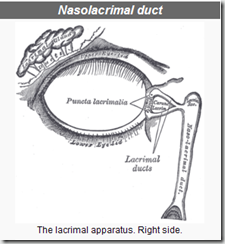
The nasolacrimal system contains a duct that drains the lacrimal gland in the eye into the nasal cavity.  This shortcut to the upper respiratory system is why you can sometimes taste eye drops, and can easily circumvent the protective barrier of a facemask.


image

Credit Wikipedia


While aerosolized or droplet transmission to the eyes is certainly possible, we also (usually, unconsciously) touch our face and eyes dozens of times each hour, and that could also introduce the virus into the eyes, picked up from contaminated surfaces or fomites.   


For HCWs dealing with MERS, the CDC strongly recommends wearing a fit-tested N95 mask, eye protection, gown & gloves (see Survival Of The Fit-tested).  The World Health Organization’s recommended infection control guidelines are not quite as exacting (no doubt due to the wide disparity of resources available among nations), but nonetheless recommend eye protection .


For the past couple of months the WHO has included this reminder in every MERS update (bolding mine):

Droplet precautions should be added to the standard precautions when providing care to all patients with symptoms of acute respiratory infection. Contact precautions and eye protection should be added when caring for probable or confirmed cases of MERS-CoV infection. Airborne precautions should be applied when performing aerosol generating procedures.


Over the past few years the transocular route of viral infection has become more evident, and in 2011 we looked at some intriguing research on the relative efficacy of wearing a mask vs. wearing a mask & eye protection (see PPEs & Transocular Influenza Transmission).


Researchers at Wake Forrest chose to expose 28 volunteers (divided into six groups) for 20 minutes to an aerosolized LAIV (Live Attenuated Influenza Vaccine) in a special air-tight chamber.

The six groups were:

  1. No protective equipment
  2. Ocular exposure only
  3. Surgical mask only
  4. Surgical mask plus eye protection
  5. Fit-tested N-95 only
  6. Fit-tested N-95 plus eye protection


  • Researchers detected flu virus in all 4 subjects in Group 1 (unprotected), and in 3 of 4 in Group 2 (Ocular Exposure only).
  • Somewhat surprisingly, nasal washes of subjects with ocular exposure only were positive for flu virus within 30 minutes, suggesting the virus made its way rapidly to the nasopharynx by way of the nasolacrimal duct.
  • Flu virus was detected in all 10 volunteers who wore surgical masks (groups 3 & 4), regardless of eye protection.
  • N95 wearers (group 5) fared somewhat better, with 3 of 5 testing positive for the virus.
  • The best result came from the wearing of eye protection and an N95 (group 6). Only 1 in 5 subjects wearing that combination of protection showed detectable levels of virus.

      The authors conclude:

      "The eyes could be an entry route for influenza, allowing viral particles easy and fast access to the upper respiratory tract.

      The type of surgical mask tested was inferior to a fit-tested N95 respirator in preventing aerosol delivery; however, none of the tested barrier precautions provided complete protection, including a CDC-recommended fit-tested N95 respirator and the addition of eye protection.”


      Granted, the MERS coronavirus isn’t influenza, and right now we don’t have any direct evidence that it can be efficiently transmitted via the transocular route.  But the notion of transocular transmission would at least seem plausible. 


      And if there have been lapses in the use of eye protection – as suggested by some of the the photos posted online, and Dr. Samir – then this might play some part in the high rate of infection among healthcare workers.


      Questions that can only really be answered by some good old fashioned gumshoe epidemiology.   But hopefully questions that will be answered sooner than later.

      Monday, March 17, 2014

      NIOSH: Options To Maximize The Supply of Respirators During A Pandemic


      image


      # 8383


      Although we only had a taste of in 2009 (due to the relatively mild nature of the pandemic H1N1 virus),  one of the realities we’d face with any severe respiratory outbreak would be coping with a finite supply of disposable PPEs (Personal Protective Equipment) for Health Care Workers (HCWs), such as N95 masks, gloves, and gloves.


      While much would depend upon the severity, infectiousness, and duration of a pandemic wave, at one time the HHS estimated the nation would need 30 billion masks (27 billion surgical, 5 Billion N95) to deal with a major pandemic (see Time Magazine A New Pandemic Fear: A Shortage of Surgical Masks).


      Our Strategic National Stockpile reportedly contains well over 100 million  N95 and surgical masks (see Caught With Our Masks Down), but the demand for PPEs during a serious pandemic would far exceed the available supply. 


      In May of 2008 - in OSHA's Proposed Guidance On Respirators And Facemasks, we looked at their preliminary estimates of mask use by hospital and EMS/First Responders in a single pandemic wave

      image 

      (Click to Enlarge) Source DRAFT Workplace Stockpiling of Respirators and Facemask for Pandemic Influenza


      The numbers of HCW's that will be working during a pandemic are unknown, but according to the CDC, there are 18 million Health Care Workers in this country. It is probably safe to assume that many HCW's who now have limited contact with critically ill patients would be called upon to treat flu victims during an emergency.


      If just 1/3rd of these health-care workers were to provide direct care during a pandemic, and each required 480 N95 masks, then we'd need nearly 3 billion masks.  And of course there will be plenty of non-HCW related positions that would presumably involve potential virus exposure (police, firefighters, national guard, etc).


      Whatever the actual demand for masks and respirators would end up being during a severe pandemic, it will very likely exceed the available supply.


      In 2009 the Minnesota Center for Health Care Ethics and University of Minnesota Center for Bioethics  released draft ethical pandemic guidelines on the rationing of scarce resources, where they estimated their were only enough PPE’s in the state of Minnesota to last 3 weeks into a severe pandemic.


      Strategies to maximize the existing supply of respirators during a pandemic emergency are of great importance, and this past week NIOSH (the National Institute For Occupational Safety & Health) released updated guidelines on two ways to do just that.


      First stop, an overview from NIOSH, followed by excerpts from the actual guidance document.


      PANDEMIC PLANNING

      Options to Prolong Existing and Surge Capacity Supplies of Respirators during Infection with Novel Influenza A Viruses Associated with Severe Disease

      This webpage provides options for prolonging existing and surge capacity supplies of respirators during an infectious disease outbreak or pandemic. These options are for use by professionals with responsibility to manage a healthcare institution’s respiratory protection program.

      Supplies of NIOSH-certified and FDA-cleared Surgical N95 filtering facepiece respirators can become depleted during an influenza pandemic or wide-spread respiratory pathogen outbreak. When facing depleted inventories as a result of these types of events, healthcare facilities should consider a combination of approaches to conserve supplies of N95 respirators:

      • Minimize the number of individuals who need to use respiratory protection through the preferential use of engineering and administrative controls;
      • Use alternatives to N95 respirators (e.g., other classes of filtering facepiece respirators, elastomeric half-mask and full facepiece air purifying respirators, powered air purifying respirators) where feasible;
      • Implement practices allowing extended use and/or limited reuse of N95 respirators; and
      • Prioritize the use of N95 respirators for those personnel at the highest risk of contracting or experiencing complications of infection.

      Page last updated: March 14, 2014


      The two primary strategies explored in the guidance document are `extended use’ and `reuse’ of disposable N95 respirators.  These are defined as:


      Extended use refers to the practice of wearing the same N95 respirator for repeated close contact encounters with several patients, without removing the respirator between patient encounters.

      Reuse1 refers to the practice of using the same N95 respirator for multiple encounters with patients but removing it ('doffing') after each encounter. The respirator is stored in between encounters to be put on again ('donned') prior to the next encounter with a patient.


      Admittedly, neither is ideal, but extended use and/or reuse of respirators could help conserve and maximize the availability of finite supplies of  PPEs.  While both options are explored in depth, the guidance suggests: 


      Extended use is favored over reuse because it is expected to involve less touching of the respirator and therefore less risk of contact transmission.


      It is important to note that these are not `one size fits all’ recommendations, with the guidance further advising:


      The decision to implement these practices should be made on a case by case basis taking into account respiratory pathogen characteristics (e.g., routes of transmission, prevalence of disease in the region, infection attack rate, and severity of illness) and local conditions (e.g., number of disposable N95 respirators available, current respirator usage rate, success of other respirator conservation strategies, etc.).


      Given the complexity of the issues, and the length of this guidance document, I've only excerpted the opening paragraphs.  Follow the link below to read it in its entirety.


      PANDEMIC PLANNING

      Recommended Guidance for Extended Use and Limited Reuse of N95 Filtering Facepiece Respirators in Healthcare Settings

      Background

      This document recommends practices for extended use and limited reuse of NIOSH-certified N95 filtering facepiece respirators (commonly called “N95 respirators”). The recommendations are intended for use by professionals who manage respiratory protection programs in healthcare institutions to protect health care workers from job-related risks of exposure to infectious respiratory illnesses.

      Supplies of N95 respirators can become depleted during an influenza pandemic (1-3) or wide-spread outbreaks of other infectious respiratory illnesses.(4) Existing CDC guidelines recommend a combination of approaches to conserve supplies while safeguarding health care workers in such circumstances. These existing guidelines recommend that health care institutions:

      • Minimize the number of individuals who need to use respiratory protection through the preferential use of engineering and administrative controls;
      • Use alternatives to N95 respirators (e.g., other classes of filtering facepiece respirators, elastomeric half-mask and full facepiece air purifying respirators, powered air purifying respirators) where feasible;
      • Implement practices allowing extended use and/or limited reuse of N95 respirators, when acceptable; and
      • Prioritize the use of N95 respirators for those personnel at the highest risk of contracting or experiencing complications of infection.

      This document focuses on one of the above strategies, the extended use and limited reuse of N95 respirators only; please consult the CDC or NIOSH website for guidance related to implementing the other recommended approaches for conserving supplies of N95 respirators.

      There are also non-emergency situations (e.g., close contact with patients with tuberculosis) where N95 respirator reuse has been recommended in healthcare settings and is commonly practiced.(5-9) This document serves to supplement previous guidance on this topic.

      (Continue . . . )


      One of the great (but rarely voiced) concerns about a particularly severe pandemic is that when the personal protective equipment runs out, many HCWs will decide they are no longer willing to work without basic respiratory protection.


      Even were they to agree to work without protection, the attrition rate from infection would likely reduce their numbers quickly, rendering any noble gesture on their part short-lived. 


      So any steps that can increase the useful life of existing PPEs, and give hospitals time to restock their supplies (which, admittedly, may be very difficult in a pandemic), are crucial if healthcare facilities are to remain operational.


      For more on the thorny issues of HCWs working during a pandemic, you may wish to revisit:


      Study: Willingness of Physicians To Work During A Severe Pandemic

      Downton Abbey Rekindles An Old HCW Debate

      UK Poll: Will HCW’s Work In A Pandemic?