Tuesday, October 31, 2023

EID Journal: Mass Mortality of Sea Lions Caused by HPAI A(H5N1) Virus (Peru)

#17,743

Although we've known for decades that marine mammals (seals, whales, sea lions, otters, etc.) are susceptible to influenza viruses (see UK: HAIRS Risk Assessment On Avian Flu In Seals- and have followed sporadic outbreaks (see here, here, here, and here) over the years - we've never seen anything like the losses due to HPAI H5 over the past 12 months in South America. 

Preprint: First Mass Mortality of Marine Mammals Caused by Highly Pathogenic Influenza Virus (H5N1) in South America

Chile: SERNSPESCA Reports > 4,300 Marine Animal Deaths

Argentina: SENASA Reports More Sea Lion Deaths From H5N1 - Issues Health Guidelines

Hundreds of thousands of birds have died, along with tens of thousands of marine mammals. But the numbers we get are undoubtedly major under-counts, as there are thousands of miles of remote, and hard to access shorelines up and down the South American Continent, and many mammals likely die unnoticed at sea.

The $64 question - as yet unanswered - is how this virus is managing to spread so rapidly among marine mammals in South America (and elsewhere).  

Direct contact with infected birds is high on the list, but there are other pathways, including the concerning possibility of mammal-to-mammal transmission.  Parsing out whether - or how often - that is happening, is no easy task. 

Another concern, as we've seen with spillovers of HPAI H5 into terrestrial mammals (see Pathogens: Zoonotic Mutation of Highly Pathogenic Avian Influenza H5N1 Virus Identified in the Brain of Multiple Wild Carnivore Species), is the high incidence of neurological manifestations in these marine mammals.

From the same authors who penned the first report from Peru last February on the mass mortality of marine mammals in Peru, we get the following research letter published yesterday in the CDC's EID Journal.  

This report covers their work during January–April 2023. Since then, the number of marine mammal deaths has expanded substantially - both in Peru - and throughout South America. Follow the link for photos and videos (viewer discretion advised), appendix, and references. 

I'll have a brief postscript after the break. 
Research Letter
Mass Mortality of Sea Lions Caused by Highly Pathogenic Avian Influenza A(H5N1) Virus

Víctor Gamarra-Toledo1 , Pablo I. Plaza1, Roberto Gutiérrez, Giancarlo Inga-Diaz, Patricia Saravia-Guevara, Oliver Pereyra-Meza, Elver Coronado-Flores, Antonio Calderón-Cerrón, Gonzalo Quiroz-Jiménez, Paola Martinez, Deyvis Huamán-Mendoza, José C. Nieto-Navarrete, Sandra Ventura, and Sergio A. Lambertucci

Abstract

We report a massive mortality of 5,224 sea lions (Otaria flavescens) in Peru that seemed to be associated with highly pathogenic avian influenza A(H5N1) virus infection. The transmission pathway may have been through the close contact of sea lions with infected wild birds. We recommend evaluating potential virus transmission among sea lions.


The panzootic (2020–2023) caused by the highly pathogenic avian influenza (HPAI) A(H5N1) caused numerous global outbreaks in 2022 (1). At the end of the year, the H5N1 virus reached South America, causing alarming bird mortalities in Peru (2). Comprehensive surveys suggest the virus killed >100,000 wild birds by the end of March 2023 only in protected areas (and >200,000 birds including other areas); particularly affected were Peruvian boobies (Sula variegata), guanay cormorants (Leucocarbo bougainvilliorum), and Peruvian pelicans (Pelecanus thagus) (3). The large biomass of infected wild birds may have led to a spillover event affecting marine mammals cohabiting with them, as reported in other parts of the world (4). Here, we report the death of several thousand sea lions (Otaria flavescens) on the coast of Peru within a few months; the sea lions manifested neurologic and respiratory signs. Clinical signs we observed suggest they were affected by HPAI H5N1, which was later confirmed by government and scientific reports (5,6).

During January–April 2023, we performed detailed surveillance of dead and agonal sea lions in protected marine areas of Peru (Figure). We found 5,224 animals dead or dying on beaches (Table). The synchronized high mortality rate we observed was concerning; up to 100 dead animals were found floating together in the sea, and 1,112 animals died on 1 island that has one of highest populations of sea lions in Peru (San Gallan, Ica, Reserva Nacional Paracas; Table). Those unprecedented massive mortalities for this region and even the entire world killed ≈5% of Peru’s population of this species in a few months (Figure, panels A, B; Appendix Figure) (7).

National health authorities implemented restrictions regarding the manipulation of sick animals; for this reason, we were able to perform 1 necropsy, and the other observations were made by veterinarians at prudent distance. The clinical signs of agonal individuals were mainly neurologic, such as tremors, convulsions, and paralysis (Video 1; Video 2). The animals also showed respiratory signs such as dyspnea, tachypnea, and nasal and buccal secretions (Figure, panel C). The body condition of the necropsied sea lion ranged from good to very good. We observed substantial quantities of whitish secretions filling the upper respiratory tract (trachea and pharynx) (Figure, panel C). Lungs were congestive, with hemorrhagic focus compatible with interstitial pneumonia. Brain was also congestive, with hemorrhagic focus compatible with encephalitis (Figure, panel D).

Given the epidemiologic situation produced by HPAI H5N1 in wild birds that cohabit with the sea lions (2,3), the most plausible diagnosis causing this mass mortality event was acute disease caused by the virus. Clinical signs observed were similar to those reported in marine mammals infected with HPAI H5N1 in the United States (4). Official information from the Peru government and associated scientific research confirmed that not only birds but also sea lions tested positive for H5N1 virus (3,5,6). As of April 2023, sea lion deaths have surpassed 5,000 in Peru; thousands of sea lions with similar clinical signs died in Chile (8). This massive mortality event associated with HPAI H5N1 could be attributed to the large aggregations of sea lions that occur during the December–May breeding season (9).

In conclusion, sea lions in Peru experienced a deadly outbreak of disease that has caused mass deaths in several regions of the coastline (Figure). The sea lion mass mortality we described is compatible with systemic HPAI H5N1 that resulted in acute encephalitis and pneumonia. The source of the H5N1 virus affecting these sea lions was most probably the large number of infected live birds or their carcasses on the Peru coastline (2,3). Sea lions may be infected by close contact with those carcasses and through consuming them (Figure, panel E). The potential for direct transmission among sea lions from their colonial breeding behavior, in which they congregate by hundreds in the same area, should be evaluated, as should the large number of animals affected and the findings that many animals died simultaneously in groups in both Peru and Chile.
Recent research described potential mammal-to-mammal infection in minks (Neovison vison) (10). In fact, unique mutations that merit further surveillance were found through viral sequencing of some of the deceased sea lions we surveyed (5).

Further research is required to confirm the HPAI H5N1 virus as the main factor affecting the sea lions and to address the transmission pathway in this social species. We call for more attention to human–infected animal interaction in this geographic region (Figure, panel F) to identify any rise in infections and prevent a new pandemic.


Mr. Gamarra-Toledo is a biologist and research associate at the Museum of Natural History, Universidad Nacional de San Agustín de Arequipa, Peru. His primary research interest is wildlife conservation in coastal ecosystems of Peru. Dr. Plaza is a veterinarian and research associate at the Conservation Biology Research Group of the Laboratorio Ecotono, Instituto de Investigaciones en Biodiversidad y Medioambiente, Consejo Nacional de Investigaciones Científicas y Técnicas, Argentina. His primary research interests are wildlife health and epidemiology, human-wildlife interactions, and animal conservation.


Four months ago, in Avian Flu's New Normal: When the Extraordinary Becomes OrdinaryI wrote about the numbing effect that comes with the constant barrage of HPAI H5 reports from around the world.  

As a result, Hundreds of dead sea lions on a South American beach from avian flu have gone from being an ominous warning sign to a grim statistic. The announcement last week that HPAI H5 had finally reached Antarctica was so anticipated that it had lost much of its impact.

Although the future course and impact of HPAI H5 is unknowable, recent trends suggest that complacency is a luxury we cannot afford. 

Monday, October 30, 2023

CDC Approves ACIP Recommendation For Routine Mpox Vaccination For At-Risk Adults


#17,742

While the U.S. Mpox epidemic reached its peak in the summer of 2022, and has declined sharply since, the virus continues to pick up momentum in other parts of the world, most recently in Asia (see graphic above). 

More than 1 million doses of the JANNEOS Mpox vaccine have been administered in the United States, but uptake has dropped sharply as cases have declined, leaving a large segment of the at-risk population still vulnerable. 

Mpox continues to spread in Africa and internationally, meaning the current low levels of infection being reported here in the United States could begin to rise again (see CDC HAN: Potential Risk for New Mpox Cases).

Last week the CDC's vaccine advisory group ACIP voted to recommend the routine vaccination of at-risk adults (see below).

ACIP approved the following recommendations by majority vote and they have been adopted by the CDC Director. They will be published in MMWR and reflected in CDC’s print and digital resources in the coming months.

October 25-26, 2023

Mpox Vaccines

ACIP recommends vaccination* with the 2-dose§ JYNNEOS vaccine series for persons aged 18 years and older at risk for mpox¶

*This is an interim recommendation that ACIP will revisit in 2-3 years

§Dose 2 administered 28 days after dose 1

¶Persons at risk: Gay, bisexual, and other men who have sex with men, transgender or nonbinary people who in the past 6 months have had one of the following:
  • A new diagnosis of ≥1 sexually transmitted disease
  • More than one sex partner
  • Sex at a commercial sex venue
  • Sex in association with a large public event in a geographic area where mpox transmission is occurring
  • Sexual partners of persons with the risks described in above
  • Persons who anticipate experiencing any of the above
Combined Immunization Schedules

Approve the Recommended Child and Adolescent Immunization Schedule, United States, 2024 and the Recommended Adult Immunization Schedule, United States, 2024.

These recommendations have been adopted by the CDC Director on October 26, 2023 and are now official.


Ten days ago, in CDC EID Journal: Two Reports On Tecovirimat Resistance in Mpox Patients, we looked at concerns over reports of growing resistance to the TPOXX antiviral, particularly among immunocompromised individuals receiving extended treatment.

Although Mpox continues to simmer more than boil, we've seen evidence that the virus continues to evolve and adapt (see EID Journal: Monkeypox Virus Evolution before 2022 Outbreak), making the emergence of new Mpox variants always a possibility.

Since the eradication of smallpox in the 1970s, there is a general feeling that poxviruses are a thing of the past, a relic of the 20th century. But viruses have been around far longer than humans, and nature is nothing if not persistent, making it unwise to bet against their long-term success.

In this same meeting, last week ACIP also recommended : 

Meningococcal Vaccines

Pfizer’s MenABCWY vaccine may be used when both MenACWY and MenB are indicated at the same visit.*

*1) Healthy individuals aged 16–23 years (routine schedule) when shared clinical decision-making favors administration of MenB vaccination, 2) individuals aged 10 years and older at increased risk of meningococcal disease (e.g., due to persistent complement deficiencies, complement inhibitor use, or functional or anatomic asplenia) due for both vaccines. 


Sunday, October 29, 2023

Microorganisms Review Article: Emerging Infectious Diseases Are Virulent Viruses—Are We Prepared?

#17,741

Although its timing, origins, and impact are unknowable, the next pandemic threat is out there - evolving and adapting - just waiting for conditions to be right to begin its world tour.  While respiratory viruses like novel influenza and coronaviruses are the most obvious threat, the next pandemic could easily come from a far different source (e.g. Mpox, Zika, Ebola, Dengue, etc.). 

Unfortunately, we always appear to be preparing to fight the last pandemic.  

After the 2009 H1N1 pandemic proved to be relatively mild (except, of course, for those who had severe illness), the idea that we could see another 1918-like pandemic was pretty much abandoned. Pandemic planning became passé, and repeated warnings of global unpreparedness (see herehere, here, and here) were largely ignored. 

Nearly a decade later, in August of 2019 - just a few months before the emergence of COVID - in WHO: Survey Of Pandemic Preparedness In Member States, we saw the dismal results of a two-year survey of global pandemic preparedness.
  • Sadly, only just over half (n=104, or 54%) of member states responded. And of those, just 92 stated they had a national pandemic plan. Nearly half (48%) of those plans were created prior to the 2009 pandemic, and have not been updated since. 
  • It gets worse, as only 40% of the responding countries have tested their pandemic preparedness plans - through simulated exercises - in the past 5 years.
The WHO: Survey stated - that even among high and upper-middle income nations (United States, Canada, UK, Western Europe, etc.) - pandemic planning was `far from optimal' - which becomes even more sobering when you realize these grades are all based on self-reporting.

Six months later, when a severe coronavirus pandemic finally did emerge, we learned just how unprepared the world really was to deal with it (see The Most Predicted Global Crisis of the 21st Century).  

Fast forward another 4 years, and not only have most nations dismantled their COVID surveillance and reporting systems, the sharing of other infectious disease data has decreased as well (see Flying Blind In The Viral Storm).

Last April, in Lancet Preprint: National Surveillance for Novel Diseases - A Systematic Analysis of 195 Countries, we looked at an independent analysis which suggests that many nations have substantially overstated their compliance with the 2005 IHR regulations, and that surveillance and reporting are far less robust than advertised. 

All of which brings us to a lengthy, and highly detailed review article in the journal Microorganisms, which looks at an array of potential pandemic threats (see chart below), and discusses our readiness to deal with them. 


The full article is well worth reading, and the underlying message - that `International collaboration, data sharing, and interdisciplinary research are key to staying ahead of viral threats' - is well taken.  
 
But in far too many countries, `Don't test, don't tell'  has - for political, economic, and societal reasons - become unofficial policy.  Even when disease reports are provided, they sometimes come weeks or months after the fact, and are often lacking in detail. 

While we have the advantages of modern technology, unless and until all nations take surveillance, testing, and timely sharing of information seriously, we will remain unnecessarily vulnerable to being blindsided by the next pandemic.  

Follow the link below to read the full report. 


Emerging Infectious Diseases Are Virulent Viruses—Are We Prepared? An Overview
Jasmine J. Han 1,*Hannah A. Song 2Sarah L. Pierson 3Jane Shen-Gunther 4 and Qingqing Xia 3,*


Abstract

The recent pandemic caused by SARS-CoV-2 affected the global population, resulting in a significant loss of lives and global economic deterioration. COVID-19 highlighted the importance of public awareness and science-based decision making, and exposed global vulnerabilities in preparedness and response systems.

Emerging and re-emerging viral outbreaks are becoming more frequent due to increased international travel and global warming. These viral outbreaks impose serious public health threats and have transformed national strategies for pandemic preparedness with global economic consequences. At the molecular level, viral mutations and variations are constantly thwarting vaccine efficacy, as well as diagnostic, therapeutic, and prevention strategies. Here, we discuss viral infectious diseases that were epidemic and pandemic, currently available treatments, and surveillance measures, along with their limitations.

(SNIP)

6. Discussion

Historically, virus outbreaks have initiated the public response to vaccine development and clinical trials for treatment. The recent COVID-19 pandemic and the recent mpox outbreak showcased the possible effects of constantly changing viruses on society. A genomic mutation develops a new deadly variant by changing its route of transmission and becoming highly infectious with a low viral load. However, our ability to anticipate, respond to, and mitigate the impacts of emerging and re-emerging viruses is more promising than ever due to scientific and medical advancements in this modern era. In addition, with technological advancements in bioinformatics, a rapid, streamlined means of sequencing newly emerging viruses is possible through an automated workflow pipeline [129]. This will facilitate the expedited identification of emerging viruses, resulting in earlier public and medical responses to confine their outbreak. The continuously evolving mutation of viruses may challenge the effectiveness of available vaccines.

In addition, non-invasive environmental surveillance tools for early detection have been developed that are currently used by either research groups or the government, such as wastewater monitoring [130,131] and vector sampling [132]. This method was supported by the provided evidence that non-water-borne viruses can be detected during wastewater monitoring. For example, airborne viruses (coronavirus [121] and influenza [133]) and vector-borne viruses (Zika virus [134] and West Nile virus [135]) were detected via wastewater-based epidemiological studies.

However, whether non-airborne viruses can be detected via bioaerosol monitoring is unclear. Since virus-containing aerosols can be generated through various mechanisms, such as respiratory activities (talking, coughing, and sneezing), medical procedures (intubation, dental procedures, and bronchoscopy), environmental disturbance (vacuuming, cleaning, and sweeping), animal activities, and industrial processes, bioaerosol surveillance can be considered a powerful tool to screen viruses that linger in the air, especially indoor air. Admittedly, this method has some limitations; for example, the potential for a virus to become aerosolized depends on various factors, the virus detection rate can be very low, and some viruses are more capable of remaining infectious in aerosols and surviving airborne conditions than others. In the era characterized by the swift advancement of science and technology, technological limitations are expected to be addressed soon.

Under these circumstances, the means that can prepare us for the next infectious disease challenge become critical. International collaboration, data sharing, and interdisciplinary research are key to staying ahead of viral threats. To prepare for the next outbreak in global public health, research and public effort ought to focus on the availability of reliable surveillance systems for emerging threats, expedited vaccine development as the viral infection emerges and becomes epidemic, public awareness and receptivity towards the benefits of mass vaccination, and practicing good citizenship surrounding the public health measures of testing and quarantines. The information summarized in this review will aid authorities in designing and adopting effective prevention and control strategies to counter the next emerging or re-emerging virus.

The topic that we summarized is an overview of a quickly changing field that expands exponentially with new research findings. Here, we attempted to provide the current research topics and past knowledge of emerging and re-emerging viruses for readers to further explore their interested field of study. Thus, the limitation of this approach lies in the lack of an in-depth description of each topic and virus discussed.


7. Conclusions
COVID-19 disease highlighted the importance of science-based decision making and exposed global vulnerabilities in the prevention and preparedness of pandemic infection and response systems. During the pandemic, medical advancements in developing a new vaccine in a timely manner and improved treatment methods becoming available for viral infections were successes. The development and usage of a vaccine have been proven effective at providing valid protection to individuals, but public awareness and receptivity towards mass vaccination are a challenge. Furthermore, the threat of new variants is constantly challenging the vaccine’s effectiveness.

One of the major challenges faced during the last pandemic was the lack of an effective surveillance system that can provide early warnings about outbreaks. From past experiences, we learned that proactive surveillance, rapid diagnostics, and effective communication networks are pivotal in containing and managing emerging threats. In a world bound by shared vulnerabilities, our collective action and unwavering determination hold the key to safeguarding future generations against the threats that emerge from the virus realm. As we peer into the future, preparedness is not an option but a mandate.

Saturday, October 28, 2023

CDC Statement On COVID Variant JN.1

How CDC tracks emerging variants
View Infographic

#17,740

As I mentioned in my last blog (see WHO COVID Update - Variant Evolution Paper & CDC Nowcast), while XBB lineage variants are overwhelmingly in control in the United States, in Europe a new lineage (BA.2.86) has been making inroads for several months, and is of concern because it boasts a large number of mutations in its spike protein. 

While BA.2.86 hasn't taken off as quickly as some initially feared, it has spawned a new variant - JN.1 - which carries the L455S mutation, and it appears to have an added growth advantage; at least based on early reports from France. 

While it is too soon to predict what impact - if any - JN.1 will have this winter, yesterday the CDC released the following statement:

Variants Happen

October 27, 2023, 4:00 PM EDT
 
CDC is posting updates on respiratory viruses every week; for the latest information, please visit CDC Respiratory Virus Updates.


The SARS-CoV-2 virus has many variants

Viruses are constantly changing over time. These changes – or variants – happen when viruses infect cells and begin to reproduce, and some of the resulting copies contain errors. Sometimes these changes enable the new variant to spread more quickly or effectively. In this case, that new variant may become more common relative to other variants that are circulating.

Because these viral changes continue to happen, CDC is constantly tracking their emergence and spread and closely studying new variants. Our process begins with genomic surveillance. CDC works with partners in the United States and around the world to track changes to the SARS-CoV-2 virus and publish those findings.

CDC recently published two new reports describing how multiple types of genomic surveillance were used to track a new variant in August 2023 – Early Detection and Surveillance of the SARS-CoV-2 Variant BA.2.86 and Notes from the Field: Early Identification of the SARS-CoV-2 Omicron BA.2.86 Variant by the Traveler-Based Genomic Surveillance Program. CDC also works to understand how these changes might affect how the virus spreads, as well as how it responds to vaccines and treatments.

Some recent variants have more changes than others

Occasionally a variant appears that is very different from previous variants, much like Omicron when it was first detected. In these cases, it’s not always clear right away whether these very different changes will affect how the virus spreads or its health impact. For example, when scientists first identified the BA.2.86 variant in August 2023, they found that it appeared to be very different from other recently identified variants. This raised concerns that this variant might be more likely to spread and infect people, even people with immunity from vaccines and previous infections. However, later scientific data showed that the BA.2.86 variant has not evaded our immunity or spread quickly.

What about JN.1?

We are learning about a new variant called JN.1. JN.1 was first detected in September 2023 in the United States and has been detected in 11 other countries. With this limited information, it is too early to tell whether it will spread more widely. Neither JN.1 nor BA.2.86 is common in the United States right now. In fact, JN.1 has been detected so rarely that it makes up fewer than 0.1 percent of SARS-CoV-2 viruses.

Even though BA.2.86 and JN.1 sound very different because of the way variants are named, there is only a single change between JN.1 and BA.2.86 in the spike protein. The spike protein – called a “spike” because it looks like tiny spikes on the virus’ surface – plays a crucial role in helping the virus infect people. Because of this, the spike protein is also the part of a virus that vaccines target, meaning vaccines should work against JN.1 and BA.2.86 similarly. For example, initial scientific data show that the updated 2023-2024 COVID-19 vaccines help our immune systems block BA.2.86. We expect JN.1 will be similar. We also expect treatments and testing to remain effective based on analysis conducted by the SARS-CoV-2 Interagency Group (a group of scientific experts representing many government agencies).

What does this mean for me?

While new variants like BA.2.86 and JN.1 attract attention, right now, 99 percent of SARS-CoV-2 variants are part of the XBB group of the Omicron variant, which is what this year’s updated vaccines are based on. CDC is continuing to track the spread and impact of BA.2.86 and JN.1, as well as other variants as they come and go.

For as long as we have COVID-19, we’ll have new variants. Nearly all represent relatively small changes compared with previous variants. CDC and other agencies monitor for impacts of new variants on vaccines, tests, and treatments, and will alert the public quickly if anything concerning is detected. Most of the time, new variants make little to no impact.

Regardless of the variant, all SARS-CoV-2 viruses spread the same way. So it’s important to protect yourself and others by staying up to date with COVID-19 vaccines, improving ventilation and staying home when you’re sick.


Although the CDC is putting a lot of stock in the protection provided by the new COVID vaccines, thus far their uptake has been disappointing. Data presented by the CDC on Thursday shows only 7.1% of adults have gotten the jab, and only about 2% of children and adolescents. 

Equally dismal are the number of people who plan to get the vaccine in the near future. 

Their second recommendation -  improving indoor ventilation - is always a good idea, but that become problematic for most of the country as winter sets in.  Staying home while sick makes sense as well, but schools and employers are far less forgiving of taking sick days than they were a year or two ago. 

Noticeably absent from the above recommendations are the use of face masks, even though the virus is airborne, and masks (when properly and consistently worn) have a proven track record of reducing the transmission of COVID and other respiratory viruses.  

While not currently politically popular, if you follow the CDC link on protecting yourself, you'll find that face masks are still listed, along with social distancing.    

Prevention Actions to Add as Needed

There are some additional prevention actions that may be done at any level, but CDC especially recommends considering in certain circumstances or at medium or high COVID-19 hospital admission levels.


Masks are made to contain droplets and particles that you breathe, cough, or sneeze out. A variety of masks are available. Some masks provide a higher level of protection than others.

Respirators (for example, N95) are made to protect you by fitting closely on the face to filter out particles, including the virus that causes COVID-19. They can also block droplets and particles you breathe, cough, or sneeze out so you do not spread them to others. Respirators (for example, N95) provide higher protection than masks.

When wearing a mask or respirator (for example, N95), it is most important to choose one that you can wear correctly, that fits closely to your face over your mouth and nose, that provides good protection, and that is comfortable for you.

Increasing Space and Distance


Small particles that people breathe out can contain virus particles. The closer you are to a greater number of people, the more likely you are to be exposed to the virus that causes COVID-19. To avoid this possible exposure, you may want to avoid crowded areas, or keep distance between yourself and others. These actions also protect people who are at high risk for getting very sick from COVID-19 in settings where there are multiple risks for exposure.

Our increasingly laissez faire attitude towards COVID vaccination obviously doesn't guarantee we'll see a major wave of illness and death this winter, but it does increase the chances. Even if XBB variants continue to rule, we know community immunity declines over time, and reinfections are likely. 

Monoclonal antibodies - which were once touted as a game-changer for the treatment of COVID - are no longer effective.  Resistance to Paxlovid remains low, but that happy state of affairs may not last forever (see Paxlovid Resistance: Is It Just a Matter of Time Now?).

Meaning that if we do see another severe COVID wave down the road, treatment options are likely to be limited.  While we'd all like to move on from the pandemic, it is still too soon to give up on preventing (or limiting) the spread of COVID in the community. 

Unfortunately, having declared victory, that's a lesson we may be forced to learn again. 

WHO COVID Update - Variant Evolution Paper & CDC Nowcast

 
Weekly COVID New Hospitalizations

#17,739

Given the relative lack of reporting these past few months, one could be forgiven for believing the COVID threat has passed, but the SARS-CoV-2 virus continues to simmer - and evolve rapidly - around the globe. 

Most countries - in an attempt to `move on' from the pandemic - have intentionally scaled back their testing and reporting (see No News Is . . . Now Commonplace). As a result, the picture we get doesn't necessarily represent reality. 

The World Health Organization - faced with dwindling data - moved to monthly Epidemiological reporting on COVID at the end of September.  Their latest update (Edition 160) was published yesterday.

While they report: 

Globally, the number of new cases decreased by 42% during the 28-day period of 25 September to 22 October 2023 as compared to the previous 28-day period, with over half a million new cases reported. The number of new deaths decreased by 43% as compared to the previous 28-day period, with over 4700 new fatalities reported. As of 22 October 2023, over 771 million confirmed cases and over six million deaths have been reported globally.

There is an important caveat.  Only 18% of the world's nations (n=41) reported ICU admission data in the last month (at least once), and of those, only 22 nations (9%) reported consistently.  

The WHO report warns:

Reported cases do not accurately represent infection rates due to the reduction in testing and reporting globally. During this 28-day period, only 40% (93 of 234) of countries reported at least one case to WHO – a proportion that has been declining since mid-2022.

It is important to note that this statistic does not reflect the actual number of countries where cases exist. Additionally, data from the previous 28-day period are continuously being updated to incorporate retrospective changes in reported COVID-19 cases and deaths made by countries. 

Data presented in this report are therefore incomplete and should be interpreted considering these limitations. Some countries continue to report high burdens of COVID-19, including increases in newly reported cases and, more importantly, increases in hospitalizations and deaths – the latter of which are considered more reliable indicators given reductions in testing.

Even the 10% of countries that are reporting regularly have scaled back testing and reporting, and so comparisons to what was being reporting a year ago are difficult to make.  

While we don't appear to be seeing huge numbers of cases in the United States right now, numbers in Europe and Southeast Asia are increasing. Meanwhile, we get zero information out of China, and very little from Africa or the Eastern Mediterranean regions. 

This lack of surveillance is a concern because the SARS-CoV-2 virus continues to evolve at a rapid rate, and new - and unpredictable - variants continue to emerge.  A little over two months ago we saw the emergence of a new `branch' on its family tree (BA.2.86) which boasted the biggest antigenic change since Omicron. 

A detailed report on the rates of evolutionary changes in endemic human viruses appeared last week in Cell Host & Microbe (excerpt below) which finds SARS-CoV-2 to be evolving at more than twice the rate of influenza A/H3N2. 

An atlas of continuous adaptive evolution in endemic human viruses

Kathryn E. Kistler 3, Trevor Bedford

Open Access Published: October 24, 2023 DOI: https://doi.org/10.1016/j.chom.2023.09.012

Highlights

• Ongoing adaptive evolution in human endemic viruses is largely in surface proteins

• Immune evasion drives continuous adaptive evolution in many endemic human viruses

• Antigenic evolution occurs in several viral families

SARS-CoV-2 is accumulating protein-coding changes faster than other endemic viruses

Summary

Through antigenic evolution, viruses such as seasonal influenza evade recognition by neutralizing antibodies. This means that a person with antibodies well tuned to an initial infection will not be protected against the same virus years later and that vaccine-mediated protection will decay. To expand our understanding of which endemic human viruses evolve in this fashion, we assess adaptive evolution across the genome of 28 endemic viruses spanning a wide range of viral families and transmission modes. Surface proteins consistently show the highest rates of adaptation, and ten viruses in this panel are estimated to undergo antigenic evolution to selectively fix mutations that enable the escape of prior immunity. Thus, antibody evasion is not an uncommon evolutionary strategy among human viruses, and monitoring this evolution will inform future vaccine efforts. Additionally, by comparing overall amino acid substitution rates, we show that SARS-CoV-2 is accumulating protein-coding changes at substantially faster rates than endemic viruses.

          (Continue . . . )

 
This rapid evolution has led to tremendous diversity among COVID variants. A year ago the CDC was tracking 1 hugely dominant strain (BA.5 at 68%), and a half dozen `contenders', but today they are tracking more than 30 variants in circulation in the United States alone, and no variant has captured more than a 25% share since early summer. 

That trend could be about to change, as the latest CDC Nowcast (below) shows variant HV.1 doubling over the past 4 weeks, while EG.5 is starting to lose ground. Further back in the pack, HK.3 also appears to be gaining, but it remains to be seen which of these variants will prevail. 


As mentioned earlier, a new and antigenically distinct variant (BA.2.86) has appeared, and while it doesn't show up yet on the CDC's Nowcast, it - and a close relative JN.1 - are being closely monitored.  

It isn't known whether they can successfully compete with the XBB lineage of variants, or even what their impact might be if they were to spread widely. 

But they are a reminder that COVID continues to evolve, and we can't afford to become complacent, even if we aren't hearing about the virus as much as we used to.  

As we've seen often in the past, no news isn't necessarily good news. 

Friday, October 27, 2023

EID Journal: Influenza Resurgence after Relaxation of Public Health and Social Measures, Hong Kong, 2023


#17,738

As I've done every year for more than 2 decades, yesterday I got my annual flu shot.  As I stood in a  short queue of people at the pharmacy, one lady picking up a prescription was coughing noticeably.  

But since I'd recently had my updated XBB COVID shot - and was wearing a KN-95 face mask - I wasn't terribly concerned. 

Face masks have been de rigueur in Japan, and much of Asia, for decades during respiratory season (see 2019 pre-pandemic HK CDW: Surgical Masks For Respiratory Protection), but their use elsewhere really only took off with the arrival of COVID in the spring of 2020. 

Unfortunately anti-mask sentiment today is almost as strong as anti-vaccine rhetoric. For many, I suspect mask wearing is too much of a reminder of the first two miserable years of the pandemic. So much so that many simply refuse to wear them. 

While I certainly don't enjoy wearing them (especially during our oppressive summer months), I've never stopped wearing them in indoor, crowded, environments. And given the benefits - and my age - I imagine I'll continue to do so for some time to come. 

Of course, everyone has to make their own risk-reward calculation. What might be a devastating (even fatal) respiratory infection for me at the age of 70  (see PloS One: Early Risk of Acute Myocardial Infarction Following Hospitalization for Severe Influenza), might be viewed as far less risky by someone much younger.  

There remains some heated debate over just how effective masking really is in reducing respiratory infections. Much, of course, depends on the type of mask, and whether it is worn properly and consistently. 
 
Some people insist on citing a misinterpreted Cochrane study (see Cochrane Statement On Misinterpretations Of Their Mask Study) as `proof' they don't work, while ignoring other studies (see
MMWR: Relative Effectiveness Of Different Mask Types In Preventing COVID Infection) showing they that they are effective.

Today we've a new study, this time from Hong Kong, on the effectiveness of face masks in preventing influenza infection

During the first 3 years of the COVID pandemic, Hong Kong had one of the most restrictive mask mandates in the world, and during that time influenza was practically non-existent.  But within days of removing that mandate (March 1, 2023), Hong Kong saw an explosive rise in influenza infections. 

Considering the simultaneous abandonment of other public health and social measures (PHSMs), parsing out how much of an impact face masks had in preventing influenza isn't an easy task, and a precise calculation is probably impossible.  

But after considerable statistical gymnastics (see details below), the authors estimated that face masks provided a 25% reduction in influenza transmission.  

When you add that layer of protection to getting the yearly flu vaccine, rigorous hand hygiene, and avoiding crowds whenever possible, you should be able to reduce your risk of infection significantly. 

Volume 29, Number 12—December 2023
Research Letter
Influenza Resurgence after Relaxation of Public Health and Social Measures, Hong Kong, 2023

Weijia Xiong, Benjamin J. Cowling, and Tim K. Tsang

Author affiliations: The University of Hong Kong School of Public Health, Pokfulam, Hong Kong, China (W. Xiong, B.J. Cowling, T.K. Tsang); Hong Kong Science and Technology Park, Pak Shek Kok, Hong Kong (B.J. Cowling, T.K. Tsang)


Abstract

Soon after a mask mandate was relaxed (March 1, 2023), the first post–COVID-19 influenza season in Hong Kong lasted 12 weeks. After other preventive measures were accounted for, mask wearing was associated with an estimated 25% reduction in influenza transmission. Influenza resurgence probably resulted from relaxation of mask mandates and other measures.


To control COVID-19, Hong Kong, China, put in place several public health and social measures (PHSMs), including mandatory mask wearing, school closures, hand hygiene, and avoidance of gatherings. In early 2020, those measures also reduced influenza transmission (1), and according to laboratory surveillance records, influenza virus did not circulate in the community for 3 years (2). From mid-2022 through 2023, PHSMs were progressively relaxed, and on March 1, 2023, the local mask mandate was lifted. We investigated the effects of PHSMs on influenza transmission in Hong Kong.


We collected weekly influenza-like illness consultation rates reported by private general practitioners and the weekly proportion of sentinel respiratory specimens that tested positive for influenza virus in Hong Kong during October 2010–May 2023. We established a proxy for influenza virus activity by multiplying rates of influenza-like illness by the proportion of influenza-positive samples following previous studies (3,4) (Appendix). We found that weekly influenza activity had decreased to almost zero since March 2020, when PHSMs against COVID-19 began (Figure). Before mandatory on-arrival quarantine of travelers started on September 26, 2022, only sporadic influenza-positive samples were detected by surveillance, all from travelers or children who had recently received live-attenuated influenza vaccine (5). After travel restrictions were removed, sporadic influenza detections increased, but overall activity remained low. After mandatory indoor and outdoor mask wearing restrictions were lifted on March 1, 2023, influenza transmission increased substantially; the first influenza season after COVID-19 in Hong Kong started and peaked on April 9, ended on May 25, and lasted for 12 weeks (6).

Because various other PHSMs were implemented concurrently with the mask mandate, resurgence of influenza activity could not be attributed to relaxation of the mask mandate alone. Therefore, we used a previous approach that estimated the time-varying effective reproductive number (Rt) (7) and a multivariable log-linear regression model on Rt that could allow for adjustment of other factors affecting influenza transmission, including depletion of susceptible persons, seasonal differences, and meteorologic predictors and preventive measures (Appendix). Because the predominating influenza strain in 2023 was influenza A(H1N1)pdm09, we identified previous influenza A(H1N1)pdm09 epidemics that had occurred during 2010–2020. To construct a preventive score, we used data from cross-sectional telephone surveys among the general adult population in Hong Kong from 2020 to 2023 as a proxy for the intensity of preventive measures, other than mask wearing, against COVID-19 (1). The preventive score included the average proportion of persons who avoided visiting crowded places, avoided going to healthcare facilities, avoided touching public objects, or used protective measures when touching public objects, and washed hands immediately after going out. Before 2020, the proportion of those preventive measures was established as baseline. When constructing a preventive score, we compared the Akaike information criterion of 4 combinations of those protective measures. Meteorologic variables provided by the Hong Kong Observatory (http://hko.gov.hkExternal Link) were temperature, wind speed, and relative and absolute humidity. To quantify the effects of meteorologic variables, we fitted the models to data before the COVID-19 pandemic.

Among the 9 epidemics of 2010–2023, the estimated Rt varied from 0.62 to 1.38 (median 1.02) (Appendix Figure 1). The estimated Rt showed a decreasing pattern in each season, ranging from ≈1.2 at the beginning of an epidemic period to 0.8 at the end of an epidemic period. After model selection (Appendix), we found that a model of absolute humidity, mask wearing, and preventive score 3 (Table) explained 92% of the observed variance in estimated Rt (Appendix Table 1). Changes in absolute humidity (Appendix Figure 2, panel A), the proportion of mask wearing, and preventive score 3 (Appendix Figure 2, panel B) strongly correlated with changes in Rt. After adjusting for other factors, such as depletion of susceptible persons, between-season effects, and absolute humidity, we found that mask wearing was associated with a 25% (range 1%–43%) reduction in Rt and that other preventive measures (combined) were associated with a 77% (range 60%–88%) reduction (Table).

We found that that influenza increased after PHSMs were relaxed and influenza transmission increased shortly after the mask mandate was relaxed. Our results are consistent with those of several studies that found that PHSMs against COVID-19 may reduce influenza transmission (8) and that mask wearing may have a low to moderate protective effect against influenza virus transmission in the community (9,10).

A limitation of our analysis was that we used results of survey reports to generate a proxy of intensity of implemented PHSMs over time, which may not be accurate. Also, we used a proxy measure of influenza activity based on surveillance data, and the reliability of our analysis depended on the accuracy of this proxy. In addition, influenza vaccination coverage (Appendix Figure 5) was not included in the model because our model included the effect of vaccination via season-specific intercept. Nevertheless, our study results suggest that the resurgence of influenza after relaxation of PHSMs was most likely affected by the lifting of mask mandate and other PHSMs.

Ms. Xiong is a PhD candidate at the School of Public Health, University of Hong Kong. Her research interests are infectious disease epidemiology and modeling and development of statistical approaches for infectious disease analysis.


Thursday, October 26, 2023

Vaccines: Vaccination and Antiviral Treatment against Avian Influenza H5Nx Viruses (Review Article)


#17,737

With more and more countries moving to - or at least considering - the use of poultry vaccines to control HPAI H5 (see USDA Bans Import Of French Poultry Over HPAI Vaccine Concerns), it is worth looking back at the experience of those countries that have been using these methods for almost two decades. 

The two biggest consumers of poultry vaccines over that time have been China and Egypt, with Vietnam, Indonesia, and Hong Kong accounting for a much smaller uptake.  

The concern with poultry vaccines is that while they can often prevent symptomatic illness in birds, they don't always prevent infection.  That can allow the virus to spread asymptomatically - potentially exposing unwary humans - and the virus may evolve into vaccine-escape strains.  

In China, the largest manufacturer and consumer of poultry vaccines, we've seen both successes and failures.   

China's massive H5+H7 poultry vaccination program over the summer of 2017 quickly shut down their H7N9 epizootic and seasonal human epidemics (2013-2017) - arguably saved their poultry industry - and also greatly reduced the number of HPAI H5N6 infections for the next several years.  

Given how dire the situation was with H7N9, and how close the virus appeared to sparking a human pandemic, this was a remarkable success.  

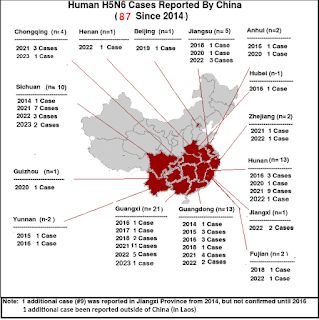
But H5 viruses continues to circulate - apparently asymptomatically in poultry - and H5N6 has spilled over into humans more than 60 times over the past 3 years (see map below).  


A 2021 study (see J. Virus Erad.: Ineffective Control Of LPAI H9N2 By Inactivated Poultry Vaccines - China)) by researchers from Shanghai and the Netherlands found the current inactivated virus vaccines used in China against H9N2 to be no match for this rapidly evolving pathogen. 

They warned:

The failure of vaccination might be because of inefficient application, low dose, and low vaccination coverage (especially in the household sector).11,12 Moreover, the continuing transmission in combination with the intensive long-term usage of the inactivated virus vaccine may have led to antigenic changes leading to immune escape.

And over the years we've looked at a number of studies on vaccine-escape HPAI H5 viruses in China, including:


Arguably, poultry vaccination in Egypt has been even more problematic. In 2012 we looked at a study (see Egypt: A Paltry Poultry Vaccine) that examined the effectiveness of six commercially available H5 poultry vaccines then being used in Egypt. Of those, only one (based on a locally acquired H5N1 seed virus) actually appeared to offer protection.

In 2018, a follow up study (see Sci. Reports: Efficacy Of AI Vaccines Against The H5N8 Virus in Egypt), indicated that very little had changed in 6 years.  

Despite their heavy reliance on vaccines (albeit often of dubious quality), new reassortant HPAI viruses continue to emerge from the region. In the spring of 2019, a new, novel H5N2 appeared in Egypt (see Viruses: A Novel Reassortant H5N2 Virus In Egypt), which identified it as clade 2.3.4.4.

Eight months later, yet another novel H5N2 (a reassortment of H5N8 & H9N2) was described in the EID Journal (see Novel Reassortant HPAI A(H5N2) Virus in Broiler Chickens, Egypt).
While a properly applied, well-matched, and frequently updated poultry vaccination program should be an effective strategy against avian flu - at least in captive birds -  far too often less rigorous standards have prevailed. 

All of which brings us to a lengthy, cautionary and informative review - published in the journal Viruses - on Egypt's poultry vaccination journey which began in 2006. 
 
The authors  strongly suggest that inadequate or outdated vaccines - and the illegal use of antivirals (i.e. Amantadine) in poultry feed - have helped to drive HPAI viral evolution in Egypt.  

Due to its length, I've only posted some excerpts. Follow the link to read the review in its entirety.  I'll have a postscript when you return. 


Open Access Review


Vaccines 2023, 11(11), 1628; https://doi.org/10.3390/vaccines11111628
Received: 24 August 2023 Published: 24 October 2023

Abstract

Despite the panzootic nature of emergent highly pathogenic avian influenza H5Nx viruses in wild migratory birds and domestic poultry, only a limited number of human infections with H5Nx viruses have been identified since its emergence in 1996. Few countries with endemic avian influenza viruses (AIVs) have implemented vaccination as a control strategy, while most of the countries have adopted a culling strategy for the infected flocks.

To date, China and Egypt are the two major sites where vaccination has been adopted to control avian influenza H5Nx infections, especially with the widespread circulation of clade 2.3.4.4b H5N1 viruses. This virus is currently circulating among birds and poultry, with occasional spillovers to mammals, including humans.

Herein, we will discuss the history of AIVs in Egypt as one of the hotspots for infections and the improper implementation of prophylactic and therapeutic control strategies, leading to continuous flock outbreaks with remarkable virus evolution scenarios.

Along with current pre-pandemic preparedness efforts, comprehensive surveillance of H5Nx viruses in wild birds, domestic poultry, and mammals, including humans, in endemic areas is critical to explore the public health risk of the newly emerging immune-evasive or drug-resistant H5Nx variants. 

          (SNIP)


In Egypt, the HPAI H5N1 was documented in domestic poultry in early 2006 (Figure 3) shortly after its detection in wild migratory birds in Damietta Governorate in late 2005 [22]. This virus continued to circulate, leading to accumulated amino acid substitutions in the surface immunogenic glycoproteins (HA and NA), and the virus was declared as endemic in Egypt in 2008 [17,23]. From late 2009 to 2011, two vaccine-escape H5N1 mutant subclades, namely 2.2.1 and 2.2.1.1, co-circulated and were detected in poultry [17].

Meanwhile, the H5N1 viruses of subclades 2.2.1 and 2.2.1.1 continued to change under improper vaccination circumstances to form new phylogenetic clusters, namely 2.2.1.2 and 2.2.1.2a [17,24,25].

6. Conclusions and Perspectives

Despite the fact that the risk of H5Nx virus transmission to the public is still low, close monitoring of these AIVs and persons exposed to them is imperative [275]. These AIVs are continuously evolving in endemic areas with improper control plans in place, and under inadequate immune and drug pressures. 

Taking into consideration the COVID-19 scenarios and the evolution of immunoescape variants in certain geographical areas, followed by the devastating spatiotemporal transmission of these SARS-CoV-2 variants of concern (VoCs) in a few days/months to all continents, we urge global health systems within the “One Health” approach to detect signals of potential variants of interest (VOIs) or variants of concern (VOCs) for the newly emerging avian influenza H5Nx viruses and rapidly assess their risk(s).

Likewise, the application of evolution-driving control strategies, including vaccination, in certain geographical areas of the world must be subjected to assertive regulations, including safe farming practices and implementation of locally matching vaccine strains, because these viruses can affect the country of origin, neighboring countries, and may pave the way for a devastating pandemic if a virus acquires the minimum essential substitutions that support viral infection and person-to-person airborne transmission. Therefore, international collaboration to implement unified control strategies against AIVs must be urgently established and applied properly among the different sectors of the One Health approach

          (Continue . . . )


Although inadequate poultry vaccination campaigns have likely contributed to our current HPAI H5N1 crisis, where we'd be had those vaccines not been used is impossible to know.  It is fair to say, however, that their use (proper or otherwise) has consequences.

If we decide to go down the poultry vaccination road, we need to learn from the mistakes of the past 20 years. Poultry vaccines aren't a quick, easy, or cheap fix.  

While they may prevent huge losses in the poultry industry - if improperly applied - they also have the capacity to make matters far worse.  And they will do little to protect us from the HPAI H5 viruses that are already endemic and evolving in wild and migratory birds, and are increasingly spilling over into mammals.  

This is obviously a complex and controversial topic.  For more on the pros and cons of poultry vaccination, you may wish to revisit:

WOAH: Rethinking Avian Influenza Prevention and Control Efforts

The Great Poultry Vaccination Divide

MPR: Poultry AI Vaccines Are Not A `Cure-all’

New Scientist: The Downsides To Using HPAI Poultry Vaccines