Showing posts with label Fatalities. Show all posts

Wednesday, November 19, 2014

Egypt: 2nd H5N1 Fatality In Two Days

image

Credit Wikipedia


# 9342


Over the past three days we’ve seen 3 H5N1 human infections announced out of Egypt; one child and two adults (see here and here).  It should be noted that this is not the same (H5N8) strain that has recently turned up in Europe, which is believed to present a vastly lower public health threat.


On Monday we learned that the first adult announced– a 19 y.o. – had died.  Late yesterday, it was announced that the second adult (age 30) had died as well.


While the reasons aren’t well understood, the pattern of H5N1 infection in Egypt differs from the rest of the world. Not only has Egypt’s CFR (Case Fatality Rate) consistently run half that of most Asian nations, they often report milder cases, and greater survival rates, among children (see Eurosurveillance Age-specific infection and death rates for human A(H5N1) avian influenza in Egypt.)


Although we see frequent reports of H5N1 outbreaks in commercial flocks in Egypt, most of the human infections have come from home-raised birds, and the result has been that most of the victims have been housewives and their children.  


Despite the risks, government attempts to curtail the raising of backyard poultry have met with considerable resistance. 


Two reports this morning.  The first from Reuters on the second fatality, and the second a local media report on the distribution of the antiviral oseltamivir (Tamiflu ®) to local hospitals and clinics as part of their response.


Egyptian woman dies of bird flu, second death in two days

Published on Nov 19, 2014 6:24 AM

CAIRO (Reuters) - An Egyptian woman died on Tuesday of H5N1 bird flu after coming into contact with infected birds, the second death from the disease in two days and the third death in the country this year, state newspaper Al-Ahram reported.

(Continue . . .)


Eastern Health: we provided "Tamiflu" in all hospitals to cope with bird flu

Wednesday, November 19th, 2014 - 7:05 Tamiflu East - Iman Muhanna

Dr Ahmad Fawzi, Director of Preventive Sharqia Medicine, said, "It's been taking preventive measures to curb bird flu in the case of his appearance," asserting that the drug "Tamiflu" is available in hospitals to handle speed in the case of the emergence of any case infected, and also room for insulation, has been prepared for the same purpose.

The "MFE" in a special statement, that he was forming operations room at the Diwan of the Directorate for the speed to deal with any situation proves positive own analyzes, and provide the necessary treatment even have similar healing, and that neighbor organizing a number of lectures and seminars to raise awareness against generally viral diseases in schools,

Friday, October 10, 2014

Early Season Flu Fatalities In NC, SC & ID

image


# 9177


Although flu season often doesn’t get started in earnest until after Thanksgiving, some years we see earlier starts than others.  Over the past couple of weeks I’ve seen a smattering of flu reports from New Mexico, California, and New Hampshire – but this week we’ve seen several flu fatalities announced – including among children.


A reminder that influenza is a genuine killer – claiming thousands of lives in the United States each year – and that it is well past time to get that yearly flu shot.   It can take about 2 weeks for the shot to reach maximum effectiveness.


As we’ve discussed before, flu vaccines – while considered very safe – are only moderately effective against influenza. Their VE (vaccine effectiveness) can vary widely between flu shot recipients, and is often substantially reduced among those older than 65 or with immune problems. 


But as an added incentive, we recently saw a study - that while far from conclusive - suggesting that the Flu Vaccine May Reduce Heart Attack Risk.


Frankly, getting your seasonal flu shot each year should be part of your overall preparedness plan. During a disaster or prolonged emergency you are likely to be tired, stressed, and your immune systems could be weakened.

The last thing you need during a crisis is to be sick with the flu on top of it.


While we can’t predict what kind of flu season lies ahead, taking care to practice good flu hygiene (covering coughs & sneezes, washing hands, staying home when sick) and getting the flu shot are your best protections against getting hit by the flu.


Several reports, first from North Carolina’s Department of Health and Human Services:


NC DHHS Reports First Flu Death of the Season

For Immediate Release
Thursday, October 9, 2014
Contact:
news@dhhs.nc.gov
              919-855-4840

Raleigh - The N.C. Department of Health and Human Services is reporting the state's first flu death for the 2014-2015 flu season. An elementary school-aged child in the Triangle region of the State died last week because of complications from an influenza infection. The child was at risk for complications from the flu because of underlying medical conditions.


From neighboring South Carolina’s Department of Health and Environmental Control, we get:


October 7, 2014

S.C. suffers season's first flu-related death

COLUMBIA, S.C. - The S.C. Department of Health and Environmental Control (DHEC) announced today that it has been notified of the state's first flu-associated death of the season.

"Tragically, an individual from the Midlands region has become our first lab-confirmed, influenza-associated death of the season," said Linda Bell, M.D. and state epidemiologist. "We are in the beginning stages of our state's flu season. It is important to get vaccinated now. The vaccine takes about two weeks to build up your body's protection against the virus, and vaccination is - by far - the best way to prevent the spread of the flu."


And from Idaho’s Department of Health, word of two recent flu fatalities:

NEWS RELEASE--FOR IMMEDIATE RELEASE                                                             DATE: October 9, 2014

Contact: 
Tom Shanahan
Public Information Officer
(208) 334-0668

First Influenza Deaths Reported in Idaho

Two Idaho adults over the age of 60, a woman from Ada County and a woman from Kootenai County, died recently from influenza-related illnesses. These are the first deaths in Idaho attributed to influenza this season. In Idaho’s last flu season, 19 people died from flu-related illnesses.


Given the lag in reporting on both flu activity, and deaths, it is likely that these cases represent just the tip of this season’s early season iceberg.

Thursday, February 20, 2014

WHO On H7N9 Case Counts & Fatalities

image 


# 8318


A follow up to my earlier report on China’s Ministry of Agriculture’s H7N9 cases counts and fatalities (see China’s MOA: H7N9 Fatalities Higher Than Previously Announced) comes courtesy of sharp-eyed Lisa Schnirring at CIDRAP NEWS who spotted what I read right past this morning in the WHO’s Recommended Composition Of 2014-15 Northern Hemisphere Flu Vaccine report.


Embedded halfway down  the second page is a brief synopsis with an even higher H7N9 fatality count (112 vs. 109)  than we saw announced earlier today from the China’s MOA, although with an increase in the number of overall cases (355 vs. 347) the resultant CFR (Case Fatality Ratio) is only marginally higher.


Zoonotic influenza infections caused by A(H5N1), A(H7N9), A(H9N2) and A(H10N8) viruses


From 24 September 2013 to 17 February 2014, 15 confirmed human cases of A(H5N1), 9 of which were fatal, were reported from Cambodia, Canada, China, Indonesia and Viet Nam. Highly pathogenic avian influenza A(H5N1) is present in poultry in each of  these countries except Canada. Since December 2003, a total of 652 cases with 387 deaths have been confirmed in 16 countries. To date there has been no evidence of sustained human-to-human transmission.

During this period 220  additional  human  cases of avian influenza A(H7N9) virus infection have been reported. All cases were in China with the exception of a single case detected in Malaysia in an individual travelling from Guangdong Province, China. Since February 2013, a total of 355 cases with 112 deaths have been reported3

Two cases of A(H9N2) were reported in this period, one each in China,  and China Hong Kong Special Administrative Region. The associated disease in both cases was mild with both viruses belonging to the A/chicken/Hong Kong/Y280/97 genetic lineage.

Three cases of A(H10N8) with two deaths were reported from Jiangxi Province, China during this period.  


While these numbers are not an exact match (likely due to different report cutoff dates), this is a very useful confirmation of the Chinese MOA report from earlier today, which indicated a mortality rate of over 31% among known cases. 


There are, almost certainly, some unknown number of  mild or asymptomatic cases not being counted. So this doesn’t tell us the absolute CFR (case fatality ratio) of this infection, only the current mortality rate among patients ill enough to be hospitalized.


Given that there are a number of already counted cases that are currently hospitalized, but whose outcome is not yet known, it is also possible this ratio could go higher.


What we don’t seem to have at this point is a sense of whether this mortality rate has remained more-or-less constant since the outbreak began a year ago, or if it has increased during this second wave.


For now, despite the high mortality rate of this virus, the good news is that it hasn’t shown the ability to transmit efficiently between humans.  But, like all influenza viruses, what we can say about it today may not hold true next week, or next year.

Monday, August 19, 2013

Cambodia Reports H5N1 Fatality

image

Battambang Province – Credit Wikipedia

While the rest of the cases reported this year in Cambodia have all come from the southern provinces –today’s reported fatality comes from Battambang Province in the country’s northwest - along the border with Thailand.


# 7579


One of the two children reported to be infected with the H5N1 avian flu virus last week (see Cambodia: 15th & 16th H5N1 Case Of 2013) has died, according to the following report from AFP. 


Cambodian boy dies from bird flu: WHO

POSTED: 19 Aug 2013 2:49 PM

A nine-year-old boy has died from bird flu in Cambodia -- the 10th victim in the country this year -- the World Health Organisation said on Monday, warning that the kingdom's deadliest outbreak of the virus could continue.

PHNOM PENH: A nine-year-old boy has died from bird flu in Cambodia, the 10th victim this year, the World Health Organisation said on Monday, warning that the kingdom's deadliest outbreak of the virus could continue.


The boy, from the northwestern province of Battambang, died in a children's hospital in the nearby tourist hub of Siem Reap on Sunday night after falling ill last month, the WHO in Cambodia said in a statement.

(Continue . . . )


From last week’s joint Cambodian-WHO press release we learned the following details of this case:


 The 15th case, a 9-year-old boy from Damnak Dangkor Village, Raing Kesey commune, Sang Ke district in Battambang province was confirmed positive for human H5N1 avian influenza on 9th August 2013 by Institut Pasteur du Cambodge.


The boy developed fever and vomiting on 26th July. He was given home-treatment by a health centre staff. On 2nd August, his condition became worse and his parents took him to a private clinic in Battambang. The private clinic referred him to the Battambang Provincial Hospital the same day. On 4th August, he was transferred to the Jayavarman V11 Hospital in Siem Reap with fever, cough, vomit, abdominal pain and dyspnea and treated with Tamiflu on 9th August. The boy is currently in a stable condition. There were recent deaths among chickens and ducks in the village. The boy carried dead and sick ducks and chickens from a cage for food preparation by his sister before he became sick.


Today’s report marks the 10th fatality this year from the virus in Cambodia.


For now, H5N1 remains poorly adapted to humans, only causing sporadic infections in Southeast Asia and the Middle East, and is primarily a threat to poultry. 


That status could change, of course.


So we watch these cases around the world with great interest, looking for any signs that the virus is evolving, and that it is moving towards becoming a bigger public health threat.

Tuesday, July 02, 2013

Cambodia Reports 9th H5N1 Fatality Of 2013


image

Cambodia – Kampot Province – Credit Wikipedia


# 7439


A reminder this morning that the H5N1 virus, while not making many headlines of late, remains endemic in poultry and wild birds in some regions of the world, and occasionally jumps to humans with devastating effect.


Although I’ve yet to locate the `joint statement’ referenced in the news report below, AFP and Xinhua News are both reporting on the death of a 6 year-old girl from Kampot Province due to H5N1.


The last WHO Human Case update (June 4th) lists  11 cases (and 8 deaths) in Cambodia this year (which included a retrospective case reported in May), yet this report cites 13 cases and now, 9th deaths.

Thus far, I’ve been unable to locate a `12th case’ for 2013 in Cambodia (prior to this one).


This from Xinhua News:


Cambodian young girl dies of bird flu

English.news.cn   2013-07-02 19:43:37

PHNOM PENH, July 2 (Xinhua) -- A six-year-old girl from Cambodia 's Southwestern Kampot province died of Avian Influenza H5N1, bringing the death toll to nine and the number of the cases to 13 so far this year, a joint statement by the World Health Organization and Cambodian Health Ministry said Tuesday.


The girl was confirmed positive for human H5N1 avian influenza on Friday last week by the Institut Pasteur du Cambodge, the statement said, adding that she developed fever and headache last Monday and her condition worsened with cough and dyspnea.


The girl was taken to a private clinic until, last Friday, she was admitted to Kantha Bopha Hospital with fever, dyspnea and cough, it said.


"In Kantha Bopha Hospital, the girl was treated with Tamiflu, but died later in the night," it said. "There have been recent poultry deaths in the girl's village and the girl was likely to be exposed to sick and dead poultry before she became sick."


"Avian influenza H5N1 remains a serious threat to the health of all Cambodians. This is the 13th case of H5N1 infection in humans this year," Health Minister Mam Bunheng said in the statement.

(Continue . . . )


For now, H5N1 remains primarily an avian adapted virus - and only rarely infects humans – usually as the result of direct contact with infected birds.


When I find a link to the joint statement, or a clarification on the number of cases, I’ll update this post.

Tuesday, April 09, 2013

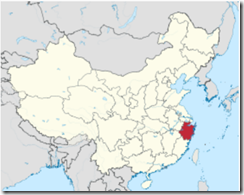
9th Fatality Reported From H7N9


 image

Anhui Province – Credit Wikipedia


# 7103


For a couple of hours the newshounds in Flublogia have been aware of reports of a 9th bird flu fatality related to the H7N9 outbreak, but exactly which patient that involved wasn’t clear from the translations.


A couple of new reports have now come in (see FluTrackers Thread) that suggest this 9th fatality is the 35-year old woman from Chuzhou City, Anhui Province, who fell ill on March 15th.


This was the third reported case, which we learned about on March 31st (see China: Two Deaths From H7N9 Avian Flu). This summary of today’s cases and fatalities from Xinhua News.


9 dead of H7N9 bird flu in China

Updated: 2013-04-10 00:12


( Xinhua)

BEIJING - Two patients from East China's Anhui and Jiangsu provinces who were confirmed as H7N9 cases days ago died of the avian influenza on Tuesday afternoon, said health authorities.


This has brought the total number of deaths caused by the H7N9 bird flu in the country to nine, the National Health and Family Planning Commission announced in a daily update on H7N9 cases across China.


The agency also said that, during the 25-hour period ending 6 p.m. on Tuesday, China has confirmed four new cases of H7N9 avian influenza, with two each in east China's Zhejiang province and Shanghai city.


China officially confirmed the occurrence of human infection with the H7N9 virus late last month.


So far, China has reported a total of 28 H7N9 cases, including nine which ended in fatalities.


A total of 13 cases, including five ending in fatalities, have been reported in Shanghai. Eight cases, including one death, have been reported in Jiangsu, and two cases, including one death, in Anhui. Five cases have been reported in Zhejiang, with two deaths.


No epidemiological link between those cases has been identified to date, the agency said, adding that those who have had close contact with people infected by H7N9 have been placed under medical observation.


It said the country's confirmed H7N9 cases were isolated and there has been no sign of human-to-human transmission.

China Reports 8th H7N9 Fatality

image 


# 7100


An 83 year-old patient that was described as being in critical condition with the H7N9 virus on April 2nd (see Statement From Jiangsu Province Health Department On H7N9) has died, according to an announcement this morning from the Jiangsu Health Department.


This makes the 8th known fatality (out of 24 cases identified to date) from this emerging virus. Many of the other surviving patients are describes as being in serious or critical condition.


This from Jiangsu Department of Health:


Jiangsu Province, one cases of human infection with the H7N9 avian influenza confirmed cases died after death


Published :2013 -4-9

Jiangsu Provincial Health Department Bulletin, April 9, Jiangsu Province, one cases of human infection with the H7N9 avian influenza confirmed cases died after death.


Patients Shen, male, 83 years old, Suzhou Wujiang District. Disease, on March 20 for medical treatment at a hospital in Suzhou. April 2 confirmed human infection of H7N9 avian influenza. Provincial expert group has organized a consultation, guiding clinical treatment. On the afternoon of April 9, died after rescue invalid.


The question of whether there are mild, and as yet undetected cases, from this virus remains unanswered.


Until we get a better idea of the total number of infections, it is impossible to accurately gauge the mortality rate from this virus.

Friday, April 05, 2013

China Reports 6th H7N9 Fatality


image

Zhejiang Province – Credit Wikipedia


# 7074


Considering that H7 avian viruses have generally been viewed as `rare and mild in humans’, the reassortant H7N9 virus spreading in Eastern China continues to play against type, with the sixth fatality being reported this morning out of Zhejiang Province.


This report from the Chinese News agency Xinhua.


Sixth death from H7N9 bird flu reported

English.news.cn   2013-04-05 12:17:21

HANGZHOU, April 5 (Xinhua) -- East China's Zhejiang Province on Friday morning reported that a man has died from the H7N9 bird flu, bringing the death toll from the new deadly strain to six in the country.


The city has reported three infections to date, and two have died, the Health Bureau of Zhejiang Province said Friday.


According to the health bureau, the 64-year-old man surnamed Zhang, who is a peasant farmer of Huzhou City, died at hospital after rescue efforts failed on Thursday night and it was confirmed he was infected with the H7N9 strain.


So far, 55 people who had a close contact with Zhang have shown no abnormal symptoms.


China has confirmed 14 H7N9 cases -- six in Shanghai, four in Jiangsu, three in Zhejiang and one in Anhui, in the first known human infections of the lesser-known strain.


Shanghai authorities on Thursday reported four deaths, with Zhejiang now reporting two.


Six deaths are admittedly worrisome, but we currently lack sufficient data to gauge the CFR or Case Fatality Ratio, of this virus.


At this time we don’t have any idea how many total cases  there are in China.


If there are a lot of mild cases out there not being treated in hospitals, then we are only seeing the the sickest of the sick, and the CFR would be lower than current numbers suggest.


If not . . . well, that would be a good news-bad news situation.  It would suggest the virus isn’t transmitting among humans (good), but that it carries a high CFR (bad).


In truth, the number of cases (and fatalities) for nearly every disease go underreported.  Health officials must then estimate the total disease burden based on mathematical models.


surveillance

As the pyramid chart above indicates, only a tiny fraction of infectious disease cases  are actually reported to health authorities. - Credit CDC


Fifteen years after it first emerged, the debate over the true CFR of the H5N1 avian flu virus is still hotly debated (see The Great CFR Divide).


And even when it comes to seasonal flu, the best we can do each year is to estimate the total number of cases and try to extrapolate a mortality rate.


As more data comes in, we should get a better `feel’ for the mortality rate of this virus , and if human-to-human transmission is established, eventually an estimate of the basic reproductive number (R0) of this virus.


R0 (pronounced R-naught) is the the number of new cases in a susceptible population likely to arise from a single infection.


With an  R0 below 1.0, a virus (as an epidemic) begins to sputter and dies out. 


Above 1.0, and an epidemic can have `legs’.


But those numbers will – of necessity – be estimates, and often vary over time, and by geographic location.


For now, our understanding of the threat posed by this H7 virus remains limited.  It could easily fade back into the woodwork, or it could become a contender. 


The next few days should provide better clues as to where all of this is going.


Stay tuned.

Friday, March 22, 2013

CDC: About 90% Of Pediatric Flu Fatalities Were Unvaccinated


image


# 7023


While we’ve seen less than sterling flu vaccine effectiveness (VE) numbers over the past few years (see CIDRAP: A Comprehensive Flu Vaccine Effectiveness Meta-Analysis) and downright disappointing results this year among seniors – (see Helen Branswell’s article Flu shot gave minimal help to seniors), the effectiveness of the vaccine has generally been better for kids.


The CIDRAP meta-analysis published in 2011 found:


TIV showed efficacy in preventing influenza during 8 of 12 flu seasons (67%) with a combined efficacy of 59% among healthy adults (aged 18–65 years).

And among children aged 2-7, the LAIV proved even more protective, showing efficacy in 9 out of 12 flu seasons (75%) with a pooled efficacy of 83%. 


This year, the the CDC has estimated flu vaccine effectiveness in children at 64% (aged 6 months to 17 years old).  While lower than hoped for, this is still a moderate level of protection. 


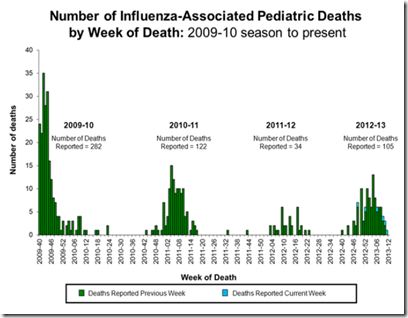
Today we learn that of the 105 pediatric deaths reported thus far during this flu season, roughly 90% were unvaccinated.


image

CDC FLuView  Week 11


As the chart above shows – after an unusually mild 2011-2012 flu season – we are once again seeing a `normal’ number of pediatric flu fatalities.


This from the CDC.


CDC Reports About 90 Percent of Children Who Died From Flu This Season Not Vaccinated

March 22, 2013 – The number of influenza-associated pediatric deaths reported to CDC during the current season surpassed 100 this week as an additional 6 deaths were reported in FluView. This brings the total number of influenza-associated pediatric deaths reported to CDC, to date, to 105 for the 2012-2013 season.


Pediatric deaths are defined as flu-associated deaths that occur in people younger than 18 years. An early look at this season’s reports indicates that about 90 percent occurred in children who had not received a flu vaccination this season.


This review also indicated that 60 percent of deaths occurred in children who were at high risk of developing serious flu-related complications, but 40 percent of these children had no recognized chronic health problems. The proportions of pediatric deaths occurring in children who were unvaccinated and those who had high-risk conditions are consistent with what has been seen in previous seasons.


Children younger than 5 years of age and children of any age with certain chronic health conditions, including asthma or other lung disorders, heart disease, or a neurologic or neurodevelopmental disorder are at high risk of developing serious complications from flu infection.


CDC began tracking flu-associated pediatric deaths after the 2003-2004 flu season – a season that, like the current flu season, started early and was intense. In addition, it took a high toll on children. In the 2003-2004 season, 153 pediatric deaths were reported to CDC from 40 states. Flu-associated pediatric deaths became nationally reportable the following season. Since that time, reported pediatric deaths during regular influenza seasons have ranged from 34 deaths (during 2011-2012) to 122 deaths (during 2010-2011). However, during the 2009 H1N1 influenza pandemic, which lasted from April 15, 2009 to October 2, 2010, 348 pediatric deaths were reported to CDC.


Annual influenza vaccination has been recommended for all children 6 months to 18 years of age since the 2008-2009 influenza season. (Universal vaccination – or vaccination across all age groups – was implemented during 2010-2011.) While vaccination rates among children have risen slightly since that time, they remain relatively low.


According to CDC survey data, only about 40 percent of children had received a 2012-2013 influenza vaccine by mid-November of 2012. The final estimated vaccination rate among children during the 2011-2012 season was 52 percent.


Across all age groups, this season’s vaccine was found to be about 60 percent effective in preventing medically attended influenza illness. This number was lower among people 65 and older, but flu vaccination reduced a child’s risk of having to go to the doctor because of flu by more than 60 percent.


CDC recommends annual flu vaccination as the first and best step in preventing influenza. CDC recommends antiviral drugs as a second line of defense against flu for those people who are seriously ill and those who are at high risk of flu complications, even if they have been vaccinated.


The March 22 FluView also highlights that while influenza activity is declining in the United States, it is ongoing in much of the country. Learn more about protecting children against flu by visiting CDC’s website at Flu Information for Parents with Young Children. For more information about pediatric deaths in the United States, see CDC’s FluView Interactive tool.

Thursday, February 21, 2013

Cambodia Reports 8th H5N1 Case Of The Year


image

# 6953


Overnight Xinhua News has reported that an eighth human case of H5N1 infection – a two year old boy from Kampot Province in southern Cambodia – died on Tuesday. 


This latest case, once confirmed by the World Health Organization, would take Cambodia’s total to 29 human cases, of which 26 have proved fatal.


While we await an official statement from the Cambodian Health Ministry & the WHO Western Pacific Regional Office (WPRO), we have this report via Xinhua News.


Cambodia reports 7th death of bird flu this year

English.news.cn   2013-02-21 11:41:57
 

PHNOM PENH, Feb. 21 (Xinhua) -- Cambodia reported on Thursday that another 2-year-old boy died of Avian Influenza H5N1, bringing the death toll to seven and the number of cases to eight in 2013.


The toddler lived in Angkor Chey district of Southwestern Kampot province. He died of the virus in the early hours of Tuesday morning at the Kantha Bopha Hospital in Phnom Penh, 18 hours after he was admitted, Dr. Denis Laurent, deputy director of Kantha Bopha Children's Hospital, told Xinhua over telephone on Thursday.


"He passed away even though our doctors did all their best to save him," he said.


Last week, a 3-year-old girl from the same district also died of the virus at the hospital.


The country sees the worst outbreak of the virus this year since the disease was first identified in Jan. 2004. To date, the country has reported 29 human cases of the virus, killing 26 people.

(Continue . . . )


No word is provided in this report on this child’s likely route of exposure.


To date, most cases have had a history of direct contact with infected birds. While Cambodia is experiencing an unusual level of H5N1 activity, so far we’ve not seen any evidence of human-to-human transmission. 


For now, H5N1 remains primarily an avian adapted virus - and only rarely infects humans – usually as the result of direct contact with infected birds.


The concern is that over time, the virus may adapt better to human physiology and someday pose a larger public health threat.

Monday, July 23, 2012

MMWR: Tornado Fatalities During April 2011 Outbreak


image

Credit FEMA


# 6445


During a three day period (Apr 25th-28th) of 2011 a storm system of epic proportions spawned 351 confirmed tornadoes across five southern states, killing 338 persons in Alabama, Arkansas, Georgia, Mississippi, and Tennessee. 


This was the the third deadliest tornado outbreak in U.S. History. More than a dozen of these twisters reached intensities of 4 or 5 on the Enhanced Fujita [EF] scale, which can produce near total devastation.


NOAA releases aerial imagery of Tuscaloosa, Ala. tornado damage

April 30, 2011

Before and after imagery depicting tornado damage in the vicinity of the intersection of 15th St. E. and McFarland Blvd. E. in southeast Tuscaloosa, AL.

Before and after imagery depicting tornado damage in the vicinity of the intersection of 15th St. E. and McFarland Blvd. E. in southeast Tuscaloosa, AL. The before imagery is courtesy of Google, the after imagery was acquired from an altitude of 5,000 feet above ground level by the NOAA King Air April 29, 2011.


Despite an early and accurate forecast, and the issuance of timely tornado watches and warnings, the death toll from this super-swarm of tornadoes was woefully high. 


Late last week the CDC released an analysis of these storm fatalities in their MMWR that stresses the importance of safe rooms.  Due to the length of the report, I’ve only reproduced the synopsis and a few excerpts. 


Follow the link to read:


Tornado-Related Fatalities — Five States, Southeastern United States, April 25–28, 2011

Weekly

July 20, 2012 / 61(28);529-533

(Media Synopsis)

Individuals who work or live in a tornado-prone area should develop a tornado safety plan prior to severe weather.

During April 25–28, 2011, the third deadliest tornado disaster occurred in the southeastern U.S. despite modern advances in tornado forecasting, advanced warning times, and media coverage.  CDC reviewed data from the American Red Cross, death certificates and the National Weather Service to describe the fatalities by demographic characteristics, shelter used, cause of death, and tornado severity in the affected states of Alabama, Arkansas, Georgia, Mississippi and Tennessee. Of the 338 deaths, approximately one-third were older adults, almost half occurred in single-family homes, and a quarter happened in mobile homes.  One-half of the 27 tornadoes were rated powerful (EF-4 or EF-5) and were responsible for almost 90 percent of the deaths. The use of safe rooms is crucial to preventing tornado-related deaths.


What is already known on this topic?

Known risk factors for death and injury from tornadoes are sheltering in mobile homes, proximity to the path of a tornado registering 4 or 5 on the Enhanced Fujita (EF) scale, being an older adult (aged ≥65 years), lack of accessibility to a safe room (e.g., a basement or reinforced shelter), and night-time tornado impacts. The southeastern United States is considered particularly vulnerable to tornado fatalities because of the high concentration of mobile homes and frequency of EF-4 and EF-5 tornadoes. Traumatic injury, including head injury, is the leading cause of death during tornadoes.

What is added by this report?

Although extensive public health warnings were broadcast before the tornadoes touched down, this was the third-deadliest tornado disaster in U.S. history, with 338 confirmed fatalities. Head injury was the cause of death in nearly 22% of fatalities. Approximately 47% of the fatalities were in single-family homes. A composite of the multistate deadly tornado tracks was created from the National Weather Service's tornado survey points in a geographic information system (GIS); more than 90% of the geocoded addresses were spatially linked to a deadly tornado.

What are the implications for public health practice?

To prevent tornado-related fatalities, public health messaging needs to specify what constitutes a safe room and to increase awareness that these should be used during all tornadoes. Spatial analysis of health impacts of tornadoes using GIS provides a better understanding of risk factors and the underlying characteristics of the affected population for public health preparedness and response.


Thankfully, this year has provided a far less violent spring storm season in the United States, although during the first 6 months of the year we have seen 68 storm-related fatalities (cite).


While I preach preparedness, there is admittedly one potentially fatal gap in my preparedness plan.  I have no `safe room’ in my current dwelling, and frankly, no good way to create one in what we euphemistically call a `manufactured home’.


When I lived in Missouri – which gets its fair share of tornadoes – having a full basement/storm shelter was both practical and a great comfort.


But here in Florida – where the water table is so high – basements are largely impractical. Luckily, Florida is less at risk for the really big tornadoes. We are, however, are a frequent target for hurricanes.


image

EF-3 or Greater Tornado Threat – Credit FEMA


Those living in tornado prone areas should seriously consider the possibility of creating one of these potentially life-saving additions to their home. To that end, FEMA has a good deal of advice on exactly how to construct a safe room – either above or below ground.


Residential Safe Rooms

Having a safe room in your home can protect your family and save the lives of those you care about.

Find answers to your Questions about Building a Safe Room, including:

  • What is the cost of installing a safe room?

  • Can I install a safe room in an existing home?

  • Can I build the safe room myself?

  • Where is the best location for the safe room?

  • Where can I find plans for safe room construction?

  • And more....

Building a Safe Room in Your House

For more details about how you can build a safe room in your home, go to the Taking Shelter From the Storm: Building a Safe Room For Your Home or Small Business (FEMA 320) page before downloading it from the FEMA Library.

Residential Funding Opportunities

Grants, funding opportunities and various initiatives are available for individuals wishing to build a residential safe room.  See the resources below for additional information:

Examples and Case Studies

Learn how others have benefited from safe rooms.  See the following resources on the best practices case study web page.


Having a good (and well rehearsed) family emergency plan is essential for any emergency. Even with a safe room, family members could become separated (they may be sent to different hospitals or shelters) in the post-disaster chaos.


Some may be injured and unable to provide information about their families.


So it is important to set up a plan, including meeting places and out-of-state contacts, and individual wallet information cards -  before you need it. To that end READY.GOV has some advice, and tools, to help you do just that.


Plan to Protect Yourself & Your Family

 
Family Emergency Plan


(PDF - 3Mb)

Prepare yourself and your family for a disaster by making an emergency plan.


Download the Family Emergency Plan (FEP) (PDF - 3 Mb), print the pages and fill them in offline.


Your emergency planning should also address the care of pets, aiding family members with access and functional needs and safely shutting off utilities.


You may also want to inquire about emergency plans at work, daycare and school. If no plans exist, consider volunteering to help create one. Read more about school and workplace plans.


Once you’ve collected this important information, gather your family members and discuss the information to put in the plan. Practice your plan at least twice a year and update it according to any issues that arise.


Together with adequate emergency supplies, a solid first aid kit, and an emergency battery operated NWS Weather Radio, these steps will go a long ways to protecting you, and your family, from a wide variety of potential disasters.


For more on all of this, a partial list of some of my preparedness blogs include:


Inside My New Bug Out Bag
Picking Up The Pieces
When 72 Hours Isn’t Enough
In An Emergency, Who Has Your Back?
An Appropriate Level Of Preparedness
The Gift Of Preparedness 2011


But the time to make these preps is now, before the storm clouds gather.
 

Monday, March 19, 2012

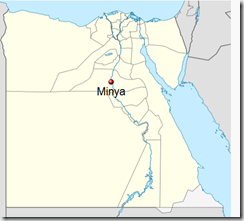
WHO: Egypt Reports Another Bird Flu Fatality


# 6234


For the sixth time since the start of the year Egypt has reported a human H5N1 infection - and as in the case of two others this year from that nation - this one proved fatal.


This update from the World Health Organization’s GAR (Global Alert & Response) page.


Avian influenza – situation in Egypt – update

19 March 2012 - The Ministry of Health and Population of Egypt has notified WHO of a new cases of human infection with avian influenza A (H5N1) virus.

The case is a 40 year-old female from Dakahlia Governorate. She developed symptoms on 6 March 2012, was hospitalised on 12 March 2012. She was in critical condition and received oseltamivir upon admission. She died on 15 March 2012.

The case was laboratory confirmed by the Central Public Health Laboratories(NIC).

Investigations into the source of infection indicate that the case had exposure to sick backyard poultry.

Of the 164 cases confirmed to date in Egypt, 58 have been fatal.


Up until the `Arab Spring’ revolution of a year ago, we often caught wind of H5N1 cases in the press – sometimes days before the Ministry of Health would make an official announcement.


That happens far less often today, although the newshounds on the flu forums continue to scour the Arabic press, looking for reports.


While we’ve seen 19 confirmed cases from 6 countries already this year, bird flu remains very difficult for humans to contract. The concern is that the virus will mutate, and better adapt to humans, over time.

Sunday, January 22, 2012

China Reports 2nd Bird Flu Fatality In A Month


image


# 6093


On the heels of recent human H5N1 infections reported in Indonesia, Egypt, Vietnam, and Cambodia -  China has announced their second bird flu fatality in less than a month.


This time it reportedly involves a 39-year-old man living in Guizhou, a province in southern China.


The AP and AFP are reporting this patient, who was described as being in critical condition several hours ago, as having died on Sunday (AP link)


Here is the official notification from the Hong Kong Centre For Health Protection.


Notification of a human case of H5N1 in Guizhou

The Centre for Health Protection (CHP) of the Department of Health received notification from the Ministry of Health (MoH) today (January 22) concerning a confirmed human case of influenza A (H5N1) in Guizhou.


A CHP spokesman said the patient was a 39-year-old man living in Guizhou. He developed symptoms on January 6 and was admitted to a hospital on the same day. He is now in critical condition. The man did not report obvious exposure history to poultry before the onset of symptoms.


Laboratory tests on the patient's specimen by the Chinese Centre for Disease Control and Prevention yielded a positive result for H5N1.


The CHP is maintaining close liaison with the MoH to obtain more information on the case. We will heighten our vigilance and continue to maintain stringent port health measures in connection with this development, the spokesman said.


The spokesman reminded members of the public to remain vigilant against avian influenza infection and to observe the following measures:

  • Avoid direct contact with poultry and birds or their droppings; if contacts have been made, they should wash hands thoroughly with soap and water;
  • Poultry and eggs should be thoroughly cooked before eating;
  • Wash hands frequently;
  • Cover nose and mouth while sneezing or coughing, hold the spit with tissue and put it into covered dustbins;
  • Avoid crowded places and contact with sick people with fever;
  • Wear a mask when you have respiratory symptoms or need to take care of patients with fever;
  • When you have fever and influenza-like illnesses during a trip or when coming back to Hong Kong, you should consult doctors promptly and reveal your travel history.


For further information on avian influenza, please visit the CHP website: www.chp.gov.hk.

Ends/Sunday, January 22, 2012
Issued at HKT 15:44
NNNN


Despite the standard cautions about exposure to poultry listed above, the AFP report indicates - that like the case in Guangdong province in late December - this victim claimed no known contact with poultry over the past 30 days.


The report goes on to say that 71 contacts of this victim are being monitored, but none have developed any signs of illness.


This recent spate of cases comes amid the traditional Lunar New Years celebration, a 6-week period which sees hundreds of millions of Asians returning to home and family to celebrate each year.


The Lunar New Year occurs on January 23rd this year, and as they do every year, public health officials will be on the lookout for any signs of unusual disease outbreaks in the wake of this mass migration.


The recent spike in human H5N1 infections is something we see each winter, but fortunately we’ve yet to see any signs of sustained human-to-human transmission of this virus.


Nevertheless, as these cases continue to trickle in scientists keep watch for any signs that might indicate the virus is adapting better to humans.

Monday, November 14, 2011

MOH: 3rd Bird Flu Fatality in Bali


 image

# 5960


Just over a month ago we learned of the deaths of two young siblings on the island of Bali from the H5N1 virus (see Bird Flu Claims Two Lives On Bali).


A week later, their mother (who had previously tested negative for the virus) was briefly hospitalized, but left the hospital against medical advice.


She died within 24 hours at home.  For details see here.


Although the H5N1 bird flu virus was strongly suspected in the mother’s death, up until now we’ve had no official confirmation of that fact.


Today, Depkes – the Indonesian Ministry of Health – has posted an announcement (curiously back dated to Nov. 3rd)  announcing that lab tests confirmed the mother died from the virus as well.


Ida at BFIC has a translation for us.


Indonesia ::: MOH confirms 180th H5N1 case

Posted by Ida on November 14, 2011

Indonesia Ministry of Health, the General Directorate of Infectious Disease and Environmental Health, through the National Institute of Health Research & Development laboratory, confirmed an additional H5N1 case in human.


Victim is a 29-year-old female with initial NP, resident of Bangli regency, Bali province. She is a mother of 2 former H5N1 cases (5-year-old female, and 10.5-year-old male).


Victim felt weakness, coughing and breathing difficulty on 15 Oct 2011, and sought for help to an emergency unit in nearby regional hospital. While she was about to be transferred to referral hospital, victim escaped and was found in a place of alternative healer on the next day.


Her condition was getting worse and died in her house on 17 Oct.


Epidemiological investigation showed that victim lived in area where many people rearing poultries. Also, large number of poultries belong to victim’s family and their neighbors died recently.


(Continue . . .)


The details of epidemiological investigations out of  Indonesia often read as if they were part of the same boilerplate press release; almost always pointing to possible contact with sick or dying poultry in the neighborhood.


While 8-days between the first child’s death and the mother’s is consistent with secondary transmission of the virus, it alone does not constitute proof. 


The mother was treated with antivirals after her children were hospitalized, which might have delayed the onset of her illness.


It is also possible that she was infected at a later date by the same source (ie. neighborhood chickens) as were the children.


Despite the suspicious circumstances surrounding this cluster, proving H-2-H (human to human) transmission is always difficult, even with rigorous investigation. Frankly, if any other plausible explanation is available, it is usually embraced by the MOH.


As we’ve seen in the past, clusters in Indonesia often involve blood relatives, suggesting some sort of inheritable trait may affect susceptibility to the H5N1 virus (see Host Genetic Susceptibility to Avian Influenza).


But regardless of the manner in which this cluster evolved, it appears to have died out with these three victims. No epidemiologically linked cases have been reported on the island since then.


Although we continue to see isolated human infections around the world, and the virus continues to evolve (see H5N1: An Increasingly Complex Family Tree), for now H5N1 is primarily a threat to poultry.


The concern, of course, is that over time that could change.


For more on the potential for the H5N1 virus to adapt to humans, you may wish to revisit a couple of these recent blogs.


New Scientist: Five Easy Mutations
Professor Peter Doherty On Bird Flu
Robert Webster on The Bird Flu Threat

Thursday, May 12, 2011

Indonesia Announces Bird Flu Fatality


# 5553


A brief announcement from Depkes, the Indonesian Ministry of Health, on the death of an 8 year-old girl last month from the H5N1 bird flu virus.


IDA at BFIC has more.


West Jakarta ::: H5N1 confirmed

Posted by Ida on May 12, 2011

Center of Health Research and Development Laboratory, Indonesia Ministry of Health confirmed a bird flu H5N1 patient on April 2011.Victim is an 8 years old female from West Jakarta.


Victim started to develop signs such as fever, cough and chest pain on 1 April 2011. She was then admitted to a bird flu referral hospital in Jakarta on 8 April 2011. She received treatment according to the standard procedure and died on 8 April 2011 in the hospital.


Source: Indonesia Ministry of Health website. http://www.depkes.go.id/index.php?Itemid=1


A machine translation of the announcement reads:


BIRD FLU CASE UNTIL APRIL 2011

Based on the results of Research and Development Laboratory of Health Ministry of Health, JZ (P, 8 years), who West Jakarta has tested positive for H5N1 virus (bird flu).


JZ (P, 8 years) experienced onset of illness on April 1, 2011 with symptoms of fever, cough and chest pain. Patients treated at AI referral hospitals in Jakarta on 8 April 2011 and have handled cases


Although we continue to see isolated human infections around the world, for now H5N1 is primarily a threat to poultry.


The virus remains poorly adapted to human physiology, and despite ample opportunities in places like Egypt and Indonesia, only causes rare, sporadic infections.


Nevertheless, the H5N1 virus has an extraordinarily high mortality rate (50%+), and so we watch it carefully for any signs that it may be adapting to humans.

Thursday, April 21, 2011

Cambodia Reports 5th Bird Flu Fatality


UPDATED (See bottom) 13:30 EDT 4/21/11


# 5510


AFP is reporting this morning on Cambodia’s 5th bird flu cae of 2011, once again a child (age 5) , who died on April 16th in Prey Veng province.


Of the 5 cases this year, 4 have been in children. All of the cases this year have been fatal.


Prey Veng Province was the site of the 2nd and 3rd cases, reported back in February.


image


It was just Monday of this week that IRIN carried a report called CAMBODIA: Bird flu risk "under control", say health experts.


While the appearance of a 5th case doesn’t necessarily negate that assessment, after several years of little reported H5N1 activity, in less than 3 months Cambodia has tripled their total number of known bird flu cases.


Making Cambodia well worth keeping an eye on.


UPDATE:   The World Health Organization has posted an update on this latest case, reported earlier today in the media.


Avian influenza – situation in Cambodia - update 3

21 April 2011 - The Ministry of Health (MoH) of the Kingdom of Cambodia has announced a confirmed case of human infection with avian influenza A(H5N1) virus.

The case was a 5 year old girl from Pea Raing district, Prey Veng Province. She developed symptoms on 11 April, was initially treated by local private practitioners with no effect and was later admitted to Kantha Bopha Children Hospital on 13 April. Despite all intensive care, she died on 16 April, four days after admission.

There have been reports of poultry die off in her village. The girl is the fifteenth person in Cambodia to become infected with the H5N1 virus and the thirteenth to die from complications of the disease. All five cases of H5N1 infections in humans in Cambodia this year have been fatal.

Specimens from 53 contacts of the cases were collected and are being tested by the National Institute for Public Health laboratory.


Tuesday, March 08, 2011

Japan: Investigating Pediatric Vaccines


UPDATED:  0850hrs EST  03/08/11

Reuters is reporting that while the Japanese suspension on the use of both vaccines remains in effect, a government panel has been unable to find any apparent link between the use of these two vaccines and the four deaths.  


Japan panel finds no link to vaccines, deaths: report


They state, however, that further investigation is warranted.


# 5361


Over the past couple of days concerns have been raised in Japan – and around the world - over the safety of two widely used pediatric vaccines (Pfizer’s Prevnar & Sanofi’s ActHIB) after the sudden deaths of four recently vaccinated children.


Prevnar is a pneumococcal conjugate vaccine, while ActHib is a Haemophilus influenzae type b vaccine.


Both are viewed as highly successful in the prevention of serious childhood infections.


The four children – aged 6 months to 2 years – all died within a day or two of receiving one or both vaccines, although no direct link between their deaths and the vaccines has been established. 


Both vaccines have been given to millions of children over the past decade, and both have an excellent safety profile. 


But when you give tens of millions of vaccinations each year, a small number of unexpected – and most probably unrelated – serious medical events are apt to occur within a few days among those receiving a shot.


And it should be noted that at least two of these children reportedly had serious underlying medical conditions.


Nevertheless, Japan has suspended the use of both vaccines pending an investigation. A step that has not been followed by other countries.


First, a brief report from Vaccine Daily News on the suspension of these vaccines.


 Japan suspends use of two vaccines

by Jeffrey Bigongiari on March 7, 2011


Next we get a piece by Matthew Herper in Forbes on this vaccine scare, which includes reassuring comments from Dr. William Schaffner (Chairman of the department of medicine at Vanderbilt University School of Medicine) and Dr. Paul Offit, a vaccine researcher at Children’s Hospital in Philadelphia.


Don’t Be Frightened By Japan’s Vaccine Scare

Mar. 7 2011 - 5:35 pm |


While it is within the realm of possibility that one or both of these vaccines contributed to these child deaths (hence the investigation), the track record of both of these vaccines is very good – making that unlikely.


And even if causation is found, the spectacular success of the HiB vaccine in preventing childhood illness and deaths in this country cannot be overstated. 


image


There is no such thing, of course, as a completely benign – 100% safe – vaccine.   Side effects – even serious ones – while rare, can occur.


All drugs have a risk/reward benefit that must be taken into consideration before taking.  But the evidence is that the Hib and Prevnar vaccines are overwhelmingly safe, and save thousands of lives each year.


We’ll obviously await word on the investigation into these deaths with considerable interest, but for now, we’ve no compelling evidence to implicate these vaccines in these fatalities.

Saturday, January 01, 2011

Egypt: Two New Bird Flu Cases


# 5197


Kudos to newshound Treyfish who just found, and posted on FluTrackers, a news report from Youm7 announcing two new H5N1 cases in Egypt.


The first case involves a 25 year-old woman who died on December 29th, from the Qena Governate, and the second regards a 27 year-old man from Ismailia who is in stable condition.


Assuming these cases are confirmed by the World Health Organization, and that no new cases from last year emerge, Egypt will have recorded 28 new H5N1 infections in 2010 and 12 new fatalities (42% fatality rate).


This represents a decrease in the total number of officially recognized cases (compared to 39 in 2009), but a significant increase in fatalities (there were just 4 in 2009).


"Health" announces the death of a new case of bird flu in Qena

Saturday, January 1, 2011 - 17:47

Dr. Abdel Rahman Shahin 

Dr. Abdel Rahman Shahin

Written by Amira Abdel-Salam

Dr. Abdel Rahman Shahin, official spokesman of the Ministry of Health, that the team monitoring the epidemic, Ministry of Health discovered two cases of bird flu, the first old lady (25 years), from Qena Governorate, and died on 29 December last year, the second man from age (27 years), from Ismailia, which is under treatment at a hospital in Ismailia and stable condition.


This brings the number of cases to 118 cases and 39 cases the number of deaths since the onset of the disease in 2006 until now.


Since the beginning of 2009 Sharon Sanders of FluTrackers keeps an excellent listing of human H5N1 cases officially announced by the Egyptian MOH. 


You can view the latest version here.

Wednesday, October 27, 2010

Indonesia: Suspected Bird Flu Fatality


# 5013


Last night, as I was about to retire for the evening, I spotted a pair of very brief reports on the death of an `alleged’ bird flu patient on Monday at M Djamil hospital in West Sumatera.


These reports were posted by bgw in MT on the Flu Wiki and Treyfish on Flutrackers.


Since details were somewhat scant - I decided to wait until morning to post it - when hopefully more information would become available.


Ida at the Bird Flu Information Corner has obliged, with a translation of a report from Antara-Sumbar.


While her doctors suspect H5N1 - based on her rapid death, symptoms, and X-rays – confirmatory test results have not been received.


I’ve only posted an excerpt from Ida’s translation. Follow the link to read it in it’s entirety.


image


Pasaman Barat, West Sumatera ::: A girl possibly die of bird flu

Posted by Ida on October 27, 2010

Pasaman Barat – A 5-year-old girl, Indri Rahmi Wati, resident of Kampung Sungai Janiah, Jorong Sungai Janiah Nagari Talu, Kecamatan Talamu Kabupaten Pasaman Barat (Pasbar) had died in M Djamil hospital, West Sumatera, on Monday (25/10).


She was suspected of having bird flu H5N1 infection.


Patient had received medical help for four hours at internal medicine isolation unit of M Djamil hospital before the death.


Head of Health Service in Pasbar, Yandra Fery confirmed the existence of bird flu suspect patient in Pasbar.


Indri, had been admitted to Talu public health center and then transferred to Jambak Pasbar regional hospital. Since her condition was deteriorating, the hospital referred her to M Djamil hospital, where she was immediately treated at internal medicine unit.

(Continue . . . )


Currently outbreaks of H5N1 occur primarily in birds, although sporadic,widely scattered human cases are reported around the world as well – most commonly in Egypt and Indonesia.


Most (but not all) have been linked to close contact with infected poultry or birds. The source of infection in a small number of human cases isn’t known.


While the virus has yet to adapt well enough to human hosts to transmit effectively between people, scientists still fear the virus could mutate into a pandemic strain someday.