Showing posts with label H10N8. Show all posts

Friday, April 10, 2015

J. Virology: Genetics, Receptor Binding & Virulence (in Mice) Of Avian H10N8

image

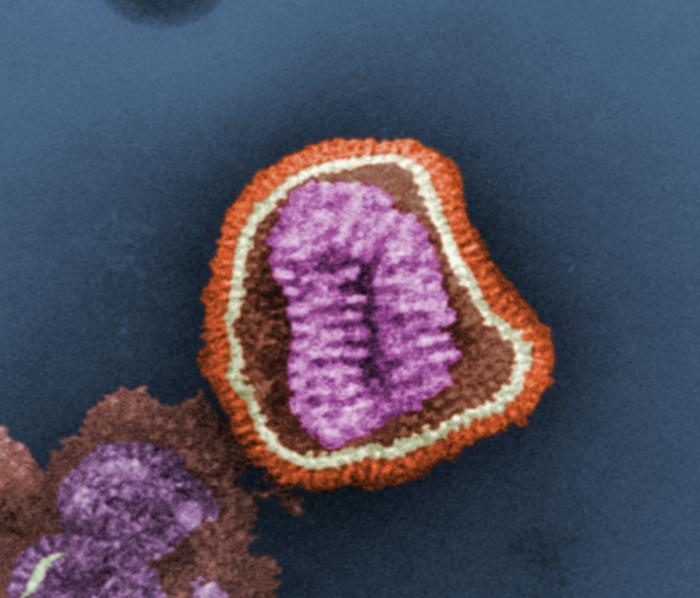
Flu Virus binding to Receptor Cells – Credit CDC


# 9924


With all of the attention being given to the H7 and H5 avian flu strains this winter (see The Transmission Potential Of A(H7N9) In China & WHO: H5 Currently The Most Obvious Avian Flu Threat) it is easy to forget there are other avian subtypes on our radar as well. 


We’ve seen a handful of scattered H9N2 infections over the years, and even a one-off H6N1 in Taiwan in 2013. There’s a reservoir of mixed-host (avian, swine, equine, canine, etc.) H1, H2 & H3 viruses worthy of our attentions, as well.


But bringing up the rear are the H10 avian viruses, which have made a splash in the past few years.


Last fall, in Avian H10N7 Linked To Dead European Seals, we looked at the die off of thousands of harbor seals due to a combination of avian H10N7 influenza, pneumonia, and bacterial infection.  While known human infections with avian H10 viruses are limited, we’ve discussed them previously on several occasions. 


A little over a month ago, in TSRI: H10N8 and H6N1 Bind Poorly To Human Receptor Cells, we saw an encouraging report suggesting that neither subtype was poised to pose a serious pandemic threat, although they warned that these viruses bind differently than other avian viruses we’ve seen, and that our understanding of how these viruses mutate isn’t complete enough to warrant complacency.


All of which serves a prelude to a new study, published on April 8th in the Journal of Virology, that examines the genetic diversity, and behavior, of eight H10N8 viruses collected between 2009 and 2013. 


Worth noting:

  • The genetic diversity (5 genotypes) detected among ducks and chickens
  • Seven of the eight viruses replicated well in the lungs of mice
  • Differences in virulence (in mice) between duck and chicken genotypes
  • Dual binding to both Human (a2,6) and avian (a2,3) receptor cells, albeit with marked preference for avian receptors.
  • The role that H9N2 has played in its evolution


The entire study, including an array of graphs and charts, is available at:


Genetics, receptor binding, and virulence in mice of H10N8 influenza viruses isolated from ducks and chickens in live poultry markets in China

Guohua Denga, Jianzhong Shia,  Jing Wanga, Huihui Konga,  Pengfei Cuia, Fang Zhanga,  Dan Tana, Yasuo Suzukib, Liling Liua, Yongping Jianga, Yuntao Guana and Hualan Chena

ABSTRACT

We analyzed eight H10N8 viruses isolated from ducks and chickens in live poultry markets from 2009 to 2013 in China. These viruses showed distinct genetic diversity and formed five genotypes: the four duck isolates formed four different genotypes, whereas the four chicken viruses belong to a single genotype. The viruses bound to both human- and avian-type receptors, and four of the viruses caused 12.7% – 22.5% body weight loss in mice.

SUMMARY

In summary, our genetic studies indicate that the four duck viruses belong to four different genotypes, suggesting that they were introduced into ducks independently; the four chicken viruses belong to one genotype and appear to be hybrids of a duck virus and the local H9N2 viruses (Table 1).

The ability of H10N8 viruses to bind to human-type receptors facilitates their infection of humans, as occurred with the H7N9 viruses (28).

The more efficient replication in mice of the viruses isolated in Jiangxi province than the three duck viruses isolated in Hunan province suggests that the internal genes of the H9N2 viruses may have further increased the replicative ability and virulence of H10N8 viruses in mammals; of cause, the surface proteins may have also contributed to the difference of the virulence.


Although the viruses in our studies were all isolated from healthy birds, two H10 influenza viruses, A/turkey/England/384/79 and A/mandarin duck/Singapore/805/F-72/7/93, were reported to be highly pathogenic in chickens (3, 30). Therefore, it is important to continue monitoring the evolution of H10N8 influenza viruses and to evaluate their potential to cause disease in poultry and pandemics in humans.


As we’ve seen with the H5N1 and H7N9 viruses, H10N8 continues to evolve and the ubiquitous H9N2 virus appears to play a substantial role in its evolution.  An LPAI virus in chickens, H10N8 (like H7N9) can spread stealthily between flocks without the typical warning signs that HPAI viruses provide, making it more difficult to detect and eradicate.


While the general consensus is that the H10 family of avian viruses aren’t `ready for primetime’, H10N8 has already shown the ability to produce serious (even fatal) illness in humans, which elevates its profile when compared to many other less virulence avian strains.


Add in its growing genetic diversity, and its ability to reassort with other avian flu viruses, and H10N8 deservedly holds a second tier position on our list of avian flu viruses to watch.

Thursday, March 12, 2015

TSRI: H10N8 and H6N1 Bind Poorly To Human Receptor Cells

image

Flu Virus binding to Receptor Cells – Credit CDC


# 9818


Considering the recent spate of worrisome H5 and H7N9 bird flu news, I’m happy to report that at least two recently emerged avian viruses haven’t yet acquired one of the main traits that would allow them to become serious pandemic threats; the ability to bind preferentially to human receptor cells.

While our gaze has been focused primarily on H5N1 and H7N9, in the summer of 2013 Taiwan reported the first known human infection with an avian H6N1 virus, and a few months later mainland China reported the first three cases of H10N8 (two fatal). 


While only four cases were recorded, they – along with H5N6, and the globe-trotting H5N8 avian virus and its descendents – have shown just how quickly new subtypes can emerge.


Luckily, turning up in a small handful of cases is a far cry from being ready for prime time.

Human adapted influenza viruses have an RBS - Receptor Binding Site (the area of its genetic sequence that allows it to attach to, and infect, host cells) that – like a key slipping into a padlock -`fit’ the receptor cells commonly found in the human upper respiratory tract; the alpha 2,6 receptor cell.


While avian adapted flu viruses, like the H5N1 virus, bind preferentially to the alpha 2,3 receptor cells found in the gastrointestinal tract of birds.

Although there are some alpha 2,3 cells deep in the lungs of humans, for an influenza to be successful in a human host, most researchers believe it needs to able to bind to the a 2,6 receptor cell.  


There are other requirements – some we know about, others we don’t – that determine how well a virus can infect, replicate, and transmit in humans.  The ability to replicate at the lower temperatures found in the upper respiratory system is one of them. 


But first, and foremost, the virus must be able to bind to human receptor cells.


And here, the news on these two viruses remains encouraging.  


The journal Cell, Host & Microbe carries a pair of studies this week that look at the binding properties of these viruses, and both find they fall short.  While behind a pay wall,  we do have a press release from the The Scripps Research Institute (TSRI)  which provides some welcome details.


Links to the studies, and excerpts from the press release, follow:


Structure and Receptor Binding of the Hemagglutinin from a Human H6N1 Influenza Virus

Netanel Tzarum, Robert P. de Vries, Xueyong Zhu, Wenli Yu, Ryan McBride, James C. Paulson, Ian A. Wilson

Highlights

  • The human H6N1 HA receptor binding site is distinct from other avian and human HAs
  • The HA of a human H6N1 influenza virus retains avian receptor specificity
  • The interactions of H6 HA with avian receptor analogs differ from other HAs
  • Additional mutations are required to switch H6 HA to human receptor specificity

(Continue . . .)


A Human-Infecting H10N8 Influenza Virus Retains a Strong Preference for Avian-type Receptors

Heng Zhang, Robert P. de Vries, Netanel Tzarum, Xueyong Zhu, Wenli Yu, Ryan McBride, James C. Paulson, Ian A. Wilson

Highlights

  • Human influenza H10N8 HA has negligible binding to human-like receptors
  • Human influenza H10N8 HA retains strong binding to avian-like receptors
  • The human receptor orientation in H10 HA differs from most human HA complexes
  • Mutations that switch specificity in pandemic viruses do not alter H10 specificity

          (Continue . . .)


While ostensibly good news, the press release from Scripps warns that both of these viruses bind differently than other avian viruses we’ve seen, and that our understanding of how these viruses mutate isn’t complete enough to warrant complacency.


Scripps Research Institute Study Shows Two New Flu Strains Do Not Yet Easily Infect Humans

But Great Versatility of Viruses Suggests Continued Caution

LA JOLLA, CA—March 11, 2015—Scientists at The Scripps Research Institute (TSRI) have analyzed a key protein from two influenza strains that recently began causing sporadic infections among people in China and Taiwan.

The analyses suggest that the flu viruses, variants of subtypes H10N8 and H6N1, have not acquired changes that would allow them to infect people easily and cause a much-feared pandemic.

Yet the studies also highlight the versatility that bird flu viruses apparently have in attaching to host cells.

“These bird flu viruses seem able to bind to receptors on host cells in different ways and thus can probably mutate in different ways to jump to humans—so we shouldn’t be complacent about our ability to predict the viral changes required to get a pandemic,” said Ian A. Wilson, Hansen Professor of Structural Biology and chair of TSRI’s Department of Integrative Structural and Computational Biology.

<SNIP>

Difficult to Predict

How did such bird viruses end up causing infections of people? “We suspect that sporadic cases of human infection by a bird flu virus can occur, even without a change in the receptor specificity, if the dose of the viral exposure is high enough and/or it gets deep into the lungs, where there are some flu-virus receptors like those found in birds,” said Tzarum, a research associate in the Wilson laboratory who was first author of the H6N1 paper.

Flu viruses with these HAs thus remain essentially bird viruses, with limited ability to infect humans. Yet further mutations that would enable a switch in preference to human receptors—and a potential global pandemic—are still possible.

The new TSRI analyses also show that, at the atomic scale, these new bird flu HAs bind to host-cell receptors in ways not observed in studies of other bird flu viruses—implying that the mutations required for the switch to human receptors may be different for different strains and inherently hard to know in advance.

“There appear to be no general rules for this switch among bird flu viruses,” said Tzarum.

Determining whether a bird flu strain has truly jumped the species barrier will therefore continue to require detailed receptor-binding and structural studies like these, Wilson said.

(Continue . . . )

Thursday, January 15, 2015

JVI: The Emergence & Evolution Of H10 Avian Viruses In Chinese Poultry

image


# 9578


After nearly a decade during which time HPAI H5N1 virus pretty much ruled the bird flu roost, the past few years has seen the emergence of at least a half dozen new avian influenza subtypes, all of which appear to have originated when wild bird viruses reassorted in Chinese poultry.


Included in this rogue’s gallery are H7N9, H5N2, H5N3, H5N5, H5N6, H5N8, H7N7 and H10N8.


In a case of good timing  - just two weeks before China announced their first H7N9 outbreak - we saw a report published in the EID Journal: Predicting Hotspots for Influenza Virus Reassortment, that pegged Eastern China as one of the world’s most fertile regions for producing new flu subtypes (see also Viral Reassortants: Rocking The Cradle Of Influenza). 


We’ve seen numerous H5s, H7s, and H10s emerge out of China over the past few years, and almost all of them have a common denominator: 


While their HA and NA genes differ, their internal genes all carry contributions from the H9N2 avian virus.


H9N2 is considered a low path avian virus, and despite aggressive vaccination policies in China, it has become rife in Asian poultry.


Last month, in PNAS: Evolution Of H9N2 And It’s Effect On The Genesis Of H7N9, we looked at a study that found a new, better adapted genotype  (G57) of the H9N2 virus had emerged  – one that evades the poultry vaccines currently in use – and that it has become widespread among vaccinated Chinese poultry since 2010. 


Poorly matched flu vaccines can often inhibit symptoms without actually preventing infection.  As a result, subclinical infections go undetected - allowing drifted viruses to circulate unnoticed - and new variants or reassortants to emerge.


These failures are not unique to the H9N2 vaccines, as we’ve seen this process described recently with H5 vaccines as well (see EID Journal: Subclinical HPAI In Vaccinated Poultry – China & Egypt: A Paltry Poultry Vaccine). 


While the growing constellation of H5 viruses, along with H7N9, are currently viewed as our biggest avian flu threats, in late 2013 and early 2014 we saw three H10N8 infections in China (2 fatal), all linked to poultry exposure (see HK CHP Notified Of Fatal H10N8 Infection In Jiangxi).

Human infections with H10 viruses have only rarely been reported in the past, with H10N7 detected in two children in Egypt in 2004 (see Avian Influenza Virus A (H10N7) Circulating among Humans in Egypt) and among a handful of abattoir workers in Australia in 2012 (see EID Journal: Human Infection With H10N7 Avian Influenza).  


But unlike these recent H10N8 cases, their illnesses were described as mild, and of short duration.


A side note, we also looked at a recent outbreak of H10N7 in European seals (see Avian H10N7 Linked To Dead European Seals), with warnings to the public to avoid contact.


Suddenly H10 viruses were on our radar, and while it wasn’t immediately clear how much of a threat they posed (to the poultry industry, or to human health), scientists were eager to investigate.  A couple of recent examples include:


Yesterday the Journal of Virology published a paper, authored by some of the biggest names in avian flu research, that looks at the emergence, evolution, and spread of H10 avian influenza viruses in China.  Not only have they found the incursion of new H10N8 viruses into Chinese poultry, they’ve also found H10N6 variants as well.


While the full study is behind a pay wall, we have the following abstract.


Emergence and evolution of H10 subtype influenza viruses in poultry in China

Chi Ma, Tommy Tsan-Yuk Lam, Yujuan Chai, Jia Wang, Xiaohui Fan, Wenshan Hong, Yu Zhanga,, Lifeng Li, Yongmei Liu, David K. Smith, Richard J. Webby, Joseph S.M. Peiris, Huachen Zhua,* and Yi Guan*

ABSTRACT

The H10N8 human infection cases identified in late 2013 and early 2014 in Jiangxi, China have raised concerns over its origin, prevalence and development in this region. Our long term influenza surveillance in the past 12 years on poultry and migratory birds in southern China showed that H10 influenza viruses have been introduced from migratory to domestic ducks over several winter seasons at sentinel duck farms at Poyang Lake where domestic ducks share their water body with over-wintering migratory birds.

H10 viruses were never detected in terrestrial poultry in our survey areas until August 2013 when they were identified at live poultry markets in Jiangxi. Since then, we have isolated 124 H10N8 or H10N6 viruses from chickens at the local markets, revealing an ongoing outbreak.

Phylogenetic analysis of H10 and related viruses showed that the chicken H10N8 viruses were generated through multiple reassortments between H10 and N8 viruses from domestic ducks and the enzootic chicken H9N2 viruses. These chicken reassortant viruses were highly similar to the human isolate, indicating the market chickens were the source of the human infection.

Recently, the H10 viruses further reassorted, apparently with H5N6 viruses, and generated an H10N6 variant. The emergence and prevalence of H10 viruses in chickens and the occurrence of human infections provide direct evidence of the threat from the current influenza ecosystem in China.

(Continue . . .)

For now it isn’t at all clear how much of a threat H10N8, H10N6, or any other H10 subtype poses, but the fact that we continue to see this surge in new avian subtypes is a genuine concern.


Simply put, the greater the number of avian viruses in circulation, the more opportunities there will be for new subtypes, clades,and variant viruses to form.


And anytime you add complexity to a system, your chances of seeing an unwanted result go up.

Monday, October 27, 2014

BMC: H10N8 Antibodies In Animal Workers – Guangdong Province, China

Photo: ©FAO/Tariq Tinazay

Credit FAO


# 9255


Avian H10 viruses haven’t garnered a lot of attention until relatively recently, as they rarely produce symptoms in poultry, and human infections have been both rare, and mild.  All of that changed last winter when China reported three fatal H10N8 infections (see Jiangxi Province Reports 3rd H10N8 Case) in quick succession.


LPAI (Low Path Avian Influenza) H10N8 had been previously reported in a duck sampled back in 2012 from Guangdong province, but was otherwise not well described. 


Human infections with a close cousin – H10N7 – had previously been reported in two children in Egypt in 2004 (see Avian Influenza Virus A (H10N7) Circulating among Humans in Egypt) and among abattoir workers in Australia in 2012 (see EID Journal: Human Infection With H10N7 Avian Influenza).  


In both cases illness was described as mild, and of short duration.


A side note, we also looked at a recent outbreak of H10N7 in European seals (see Avian H10N7 Linked To Dead European Seals), with warnings to the public to avoid contact.


Since testing for novel flu viruses among humans is only very rarely done, we don’t have a good handle on how often these `oddball’ avian flu viruses actually jump to humans. 


While probably fairly rare – and largely restricted to those who have a lot of contact with wild or domesticated birds – it is is likely more common than we might otherwise think. For more on prior research on seroprevalence of other rare avian influenzas see A Little Background On H11 Avian Influenzas.


In any event, the 2012 detection of H10N8 in a Guangdong duck, followed last year by the infection and deaths of three people from this emerging virus, inspired a group of Chinese scientists go to back and test hundreds of archived blood samples taken prior to the first known human case, to look for signs of previous H10N8 infection.


Although the seroprevalence for this virus appears very low, out of 827 sera tested  they found 21 mildly reactive , with three showing titers of  at least 1:40.  One, with an MN antibody titer of 1:80, was strongly suggestive of prior infection.  With this baseline, future seroprevalence studies of animal workers might provide an indirect early warning system, should this virus continue to spread stealthily in the poultry population.


The study appears in BMC Medicine. (Note there appears to be a temporary problem with the link)


Antibodies against H10N8 Avian Influenza Virus among Animal Workers in Guangdong Province before November 30, 2013, the First Recognized Human H10N8 Case


BMC Medicine 2014, 12:205 doi:10.1186/s12916-014-0205-3


Wenbao Qi, Shuo Su , Chencheng Xiao, Pei Zhou, Huanan Li, Changwen Ke , Gregory C Gray, Guihong Zhang , Ming Liao 

Abstract


Background
Considered an epicenter of pandemic influenza virus generation, southern China has recently seen an increasing number of human H7N9 infections. However, it is not the only threat. On 30 November 2013, a human H10N8 infection case was first described in China. The origin and genetic diversity of this novel virus is similar to that of H7N9 virus. As H10N8 avian influenza virus (AIV) was first identified from a duck in Guangdong Province during 2012 and there is also evidence of H10N8 infected dogs in this region, we sought to examine archived sera from animal workers to see if there was evidence of subclinical human infections before the first human H10N8 cases.


Methods

We studied archived serum samples (cross-sectional study, convenience sample) collected between May and September 2013 from 710 animal workers and 107 non-animal exposed volunteers living in five cities of Guangdong Province. Study participants’ sera were tested by horse red blood cells (RBCs) hemagglutination inhibition (HI) and microneutralization (MN) assays according to World Health Organization guidelines. The A/Jiangxi-Donghu/346-1/2013(H10N8) virus was used. Sera which have an HI assay ≥1:20 were further tested with the MN assay. Questionnaire data were examined for risk factor associations with positive serological assays. Risk factor analyses failed to identify specific factors associated with probable H10N8 infections.


Results

Among the 827 sera, only 21 animal workers had an HI titer ≥1:20 (18 had an HI titer of 1:20 and 3 had an HI titer of 1:40). None of these 21 subjects reported experiencing any influenza symptoms during the three months before enrollment. Among the three subjects with HI titers of 1:40, two had MN antibody titers of 1:40, and one had a MN antibody titer of 1:80 (probable H10N8 infections).


Conclusions

Study data suggest that animal workers may have been infected with the H10N8 virus before the first recognized H10N8 human infection cases. It seems prudent to continue surveillance or H10N8 viruses among animal workers.


Tuesday, July 29, 2014

EID Dispatch: Human Infection with Influenza Virus A(H10N8) From LPMs

Photo: ©FAO/Tariq Tinazay

Credit FAO


# 8878


While H5N1 pretty much hogged the avian flu limelight in the ten years from 2003 until the spring of 2013, the past 18 months have seen a sharp increase in the number of emerging novel avian flu subtypes that have infected humans and/or poultry.


Since then we’ve seen an Expanding Array Of Novel Flu Strains, including the H7N9 epidemic in China, the 1st Known Human Infection With H5N6, Taiwan reported Infection With Avian H6N1, and last winter no fewert han three cases of H10N8 infection were reported in China.


Thus far, out of this new group of viruses, only H7N9 has shown genuine signs of pandemic potential.  But as we discussed last month (see EID Journal: Mutations Of A(H10N8) Virus in Chicken Eggs and MDCK Cells) there are hints that this new virus `might be undergoing rapid adaptation to mammals and developing antiviral drug resistance’.


Admittedly, last May we saw reassuring media reports suggesting that the H10N8 virus – while worthy of watching – wasn’t `currently’ considered a big pandemic threat (see H10N8 bird flu unlikely to threaten public health), based on receptor binding testing done by the MRC National Institute for Medical Research (MRC-NIMR).


But the only real constant with influenza viruses is that they are constantly changing. What can be said about a virus today may not hold true tomorrow, or a year from now.


Over the past year we’ve become increasingly aware of two factors that may help drive the evolution of novel avian flu strains. 

  • The first being the ongoing genetic reassortments with the ubiquitous and relatively stable LPAI H9N2 virus, which  provided its internal genes to the H5N1, H7N9, and H10N8 viruses (see The Lancet: H9N2’s Role In Evolution Of Novel Avian Influenzas) and continues to aid and abet the creation of new clades.
  • The second piece of the puzzle involves the genetic mixing that goes on in LPMs (Live Poultry Markets) – combined with enhanced human-poultry interaction – that appears to be exacerbating both the evolution of avian viruses, and their jumping to humans. 

Last month, in CDC: Risk Factors Involved With H7N9 Infection, we looked at a case-control study done on the H7N9 epidemic in China that pretty much nailed LPMs as the predominant risk factor for infection.


While even casual exposure to poultry in live bird markets was cited as the primary risk factor, people who owned, raised, or slaughtered birds at home, on farms, or in the wild were not found to be at any increased risk.


All of which serves as prelude for a dispatch, published yesterday in the CDC’s EID Journal, called:


Dispatch

Human Infection with Influenza Virus A(H10N8) from Live Poultry Markets, China, 2014

Tao Zhang, Yuhai Bi, Huaiyu Tian, Xiaowen Li, Di Liu, Ying Wu, Tao Jin, Yong Wang, Quanjiao Chen, Ze Chen, Jianyu Chang, George F. Gao, and Bing XuComments to Author

Abstract

Human infection with avian influenza virus A(H10N8) was initially reported in China in December 2013. We characterized H10N8 strains from a human patient and from poultry in live markets that infected persons had visited. Results of genome sequencing and virus characterization suggest that the virus strains that infected humans originated from these markets.

Avian influenza virus (AIV) is classified into 16 subtypes on the basis of hemagglutinin (HA) and 9 subtypes on the basis of neuraminidase (NA); additional bat-derived influenza-like genomes, H17N10 and H18N11, have recently been reported (1). Birds can be infected with AIV through direct contact with infected hosts or through contact with contaminated surfaces or materials, including water and food. In China, H10N8 virus was isolated from the environment of Dongting Lake in Hunan Province in 2007 (2) and from a duck in a live poultry market (LPM) in Guangdong Province in 2012 (3). This AIV was not then known to directly infect humans or other mammals.

In December 2013, H10N8 virus infection in a person was reported in Nanchang, Jiangxi Province, China (4); 2 more human cases followed. The initial reported case was in a 73-year-old woman who visited a local LPM 4 days before the onset of her illness (4). Because genetic information on AIV is essential for understanding of the biology of these viruses, their spread among avian species, and their potential transmission to humans, in January 2014, we conducted surveillance of several LPMs in Nanchang, including those visited by the 3 reported case-patients, to determine the source of these infections.

<SNIP>

Conclusions

Our results provide evidence that the novel avian influenza virus A(H10N8) that infected humans in Nanchang, Jiangxi Province, China, could have derived from strains circulating in LPMs. In the LPMs, the sale of freshly slaughtered poultry, live poultry transportation, and mixed trading of different domestic animals provide environments conducive to genome segment reassortment, gene mutation, and interspecies transmission of AIVs (8,9). Human-infecting H7N9 virus strains are believed to be directly related to those found in the live poultry traded in LPMs (10,11); closure of LPMs has been shown to partly control the spread of these infections (8). Moreover, serologic evidence recently confirmed the infection of dogs with an H10 subtype influenza virus in close proximity to LPMs in Guangdong Province (12). Other recent research has shown that the internal genes of the H5N1, H7N9, and H10N8 viruses are constantly reacquired from poultry H9N2 viruses (9,13,14). Taken together, these data suggest that LPMs act as gene sources, facilitating reassortment of AIV genome segments (15).

In summary, exposure to infected and/or virus-carrying poultry or to contaminated environments in LPMs and the emergence of mammal-adapted and drug-resistant viruses puts humans at high risk for infection with novel influenza viruses. Measures to improve poultry farming practices must be enforced, including strict biosecurity measures for the trade and transport of live birds, proper disposal of diseased and dead birds, and even closure of LPMs.


While the jury is still out as to whether an H5, H7, or H10 avian flu virus could actually adapt to humans well enough to spark a pandemic (see Are Influenza Pandemic Viruses Members Of An Exclusive Club?) – given the likely lack of  immunity mankind has to these avian strains -  few scientists are willing to ignore the possibility.


All of which makes enhanced surveillance and biosecurity measures (such as LPM closures) in influenza hotspots like Eastern China all the more important, particularly considering the ease with which viruses can now spread globally via international travel and trade. 

Tuesday, June 10, 2014

EID Journal: Mutations Of A(H10N8) Virus in Chicken Eggs and MDCK Cells

image

Jiangxi Province – Credit Wikipedia – Site of 3 H10N8 Cases


# 8723


As part of the growing `alphabet soup’ of novel flu viruses, H10N8  sprang into the limelight last December when it was detected for the first time in a human host in Jiangxi Province, China (see HK CHP Notified Of Fatal H10N8 Infection In Jiangxi). 


Previously, (related versions ofH10N8 had only been seen in wild and domestic birds in China,  Italy, Canada, South Korea, Sweden, Japan, and the USA (cite).


In the `close, but no cigar category’,  two years ago in EID Journal: Human Infection With H10N7 Avian Influenza, we learned that the H10N7 avian flu virus had been detected in two poultry abattoir workers in Australia from 2010. Although 7 abattoir workers reported symptoms, only 2 tested positive for the H10 virus.


While a one-off detection of a novel influenza virus infection is of interest, the plot thickened in January – and again in February – when two more (epidemiologically unrelated) cases of H10N8 infection emerged in Jiangxi Province (see  Jiangxi Province Reports Second H10N8 Infection & Jiangxi Province Reports 3rd H10N8 Case).


Reports of cases stopped after three, likely as the result of the closure of live markets in China to contain the much larger H7N9 avian flu epidemic last winter.


Last month we saw reassuring media reports suggesting that the H10N8 virus – while worthy of watching – wasn’t `currently’ considered a big pandemic threat (see H10N8 bird flu unlikely to threaten public health), based on receptor binding testing done by the MRC National Institute for Medical Research (MRC-NIMR).


The operative word was `currently’, as it is axiomatic that the only true constant with influenza viruses is that they continually change.


Most often, change comes about gradually, through a process called antigenic drift which produce small, incremental changes in the virus over time. Drift is the standard evolutionary path of influenza viruses, and comes about due to replication errors that are common with single-strand RNA viruses (see NIAID Video: Antigenic Drift).


More abrupt changes come from antigenic shift, also called reassortment.  For shift to happen, a host (human, swine, bird) must be infected by two influenza different viruses at the same time.  Shift occurs when one virus swap out chunks of their genetic code with gene segments from another virus.

image


The three avian flu viruses we are watching with particular interest in China – H5N1, H7N9, and H10N8 – all  share several important features (see Study: Sequence & Phylogenetic Analysis Of Emerging H9N2 influenza Viruses In China):


    • They all first appear to emanate from Mainland China
    • They all appear to have come about through viral reassortment in poultry
    • And most telling of all, while their HA and NA genes differ - they all carry the internal genes from the avian H9N2 virus


What we are finding is that the relatively benign and ubiquitous H9N2 virus, is actually fairly promiscuous; bits and pieces of it keep turning up in new reassortant viruses.  And perhaps even more ominously, these reassortants continue to reassort again and again (see EID Journal: H7N9 As A Work In Progress).


All of which serves as prelude to a new EID study, published yesterday, that looks at the evolution and mutations picked up by the H10N8 virus when passaged through Chicken eggs and MDCK cells.  MDCK (Madin-Darby canine kidney) are a line of mammalian epithelial cells often used in research. 


(Note link below now fixed)


Volume 20, Number 9—September 2014
Dispatch

Mutations of Novel Influenza A(H10N8) Virus in Chicken Eggs and MDCK Cells

Jian Yang1, Ting Zhang1, Li Guo1, Yongfeng Hu1, Jinlin Li, Haoxiang Su, Yan Xiao, Xianwen Ren, Jie Dong, Lilian Sun, Yan Xiao, Li Li, Fan Yang, Jianwei Wang2, Hui Yuan2, and Qi Jin2Comments to Author

Abstract

The recent emergence of human infection with influenza A(H10N8) virus is an urgent public health concern. Genomic analysis showed that the virus was conserved in chicken eggs but presented substantial adaptive mutations in MDCK cells. Our results provide additional evidence for the avian origin of this influenza virus.

Influenza A virus remains a major threat to public health worldwide. The 2000s witnessed the epidemic of human infections with the avian influenza A(H5N1) and A(H7N9) viruses in China (1,2) and a global pandemic of human influenza caused by a novel swine-origin influenza A(H1N1) virus (3). More recently, the first human case of a novel influenza A(H10N8) virus infection was reported in China, and 2 additional human cases have been confirmed in the same province (4,5). The emergence of the novel influenza A(H10N8) virus has become an urgent public health concern (6).


A preliminary genomic analysis showed that the emerging influenza virus was genetically distinct from the avian influenza A(H10N8) viruses previously identified in China, and scientists have postulated that the virus resulted from multiple reassortments of subtype H9N2 strains that circulated widely in poultry in China (4).

Nevertheless, no identical influenza A(H10N8) virus was detected in the live-poultry market visited by the first patient before the onset of her illness, and the origin of the novel A(H10N8) virus remains unclear. We compared the genomic mutations of the virus cultured in embryonated chicken eggs and in MDCK cells in an attempt to find additional evidence to support the possible avian origin of the virus.

<SNIP METHODS & MATERIALS>

Conclusions

We investigated the genomic mutations and heterogeneities of the novel influenza A(H10N8) virus during culture in embryonated chicken eggs and MDCK cells compared with the genome sequence obtained directly from the clinical specimen. The viral genome was highly conserved during culture in embryonated chicken eggs, and no mutations were identified. This result suggests that the novel A(H10N8) virus might have been highly adapted to an avian-like host before it was transmitted to the human host (i.e., the first patient). In contrast, substantial genetic mutations were observed in the viral genome during culture in MDCK cells; this finding implies an ongoing adaptive microevolution of the virus in a mammalian environment.

Taken together, our results favor the proposal that the novel influenza A(H10N8) virus has an avian origin; however, more research is required to establish the definite origin of the emerging influenza virus. Furthermore, the substitutions E627K (in the PB2 protein) and R292K (in the NA protein) observed in the cultures of the MDCK cells indicate that the virus might be undergoing rapid adaptation to mammals and developing antiviral drug resistance. Although only 3 human cases of infection with the novel A(H10N8) virus have been reported, the potential for this virus to threaten public health should not be underestimated.


The bottom line is that H10N8 sample remained stable when passaged through chicken eggs, suggesting it is highly adapted to – and likely emerged from – an avian source.


When passaged through mammalian cells, however, the virus quickly picked up mutations, suggesting it `might be undergoing rapid adaptation to mammals and developing antiviral drug resistance’.

This obviously makes H10N8 a concern, but perhaps of equal interest is the fact that we continue to see new, `oddball’ flu viruses turn up – particularly in Asia.


While most reassortant viruses end up as evolutionary failures, and are ultimately unable to compete with the existing wild viruses, every once in awhile a new one will appear that is biologically fit enough to carve out a niche of its own.


Although none of these oddball viruses has shown the ability to transmit efficiently from human to human, as long as they circulate in poultry or wild birds along side H9N2 (or any other compatible flu strains), they will continue to get more opportunities to roll the genetic dice. 


And while failure is the most common result, one of these viruses only has to get `lucky’ once, to be a game changer.


For more on all of this you may wish to revisit:


EID Journal: Predicting Hotspots for Influenza Virus Reassortment 

Viral Reassortants: Rocking The Cradle Of Influenza

Thursday, February 13, 2014

Jiangxi Province Reports 3rd H10N8 Case


image

Jiangxi Province – Credit Wikipedia – Site of 3 H10N8 Cases


# 8295


Over the past couple of months a new avian flu virus – H10N8 – has emerged in mainland China, infecting and killing two people since last December.  A little over a week ago, in Lancet: Clinical & Epidemiological Characteristics Of A Fatal H10N8 Case, we saw an analysis of this virus that warned `The pandemic potential of this novel virus should not be underestimated.’


Over the past hour news of a third H10N8 infection has filtered through the Chinese media, and very recently the Jiangsu Provincial MOH has posted the following statement (h/t Sharon Sanders on FluTrackers).


Jiangxi 1 new confirmed cases of human infection with avian influenza H10N8

Jiangxi Provincial Health and Family Planning Commission www.jxwst.gov.cn 2014 年 2 月 13, 2008 Source: Office of Emergency Committee

Recently, Nanchang, Jiangxi Province monitoring found one case of severe pneumonia cases. February 13, 2014, the provincial health planning committee then China Disease Prevention and Control Center laboratory test reports, the case for the specimens showed H10N8 avian influenza virus nucleic acid positive. Ministry of Health and Family Planning Organization expert consultation, based on the cases of clinical manifestations, laboratory and epidemiological findings, such as the diagnosis of the human cases of avian influenza infection H10N8 confirmed cases.

Hu patient, male, 75 years old, who lives in Nanchang. The patients with fever, fatigue and other symptoms on February 4 hospitalized, February 5 aggravate lung infection, Feb. 8 died.


While three cases does not a public health emergency make, this reaffirms that this virus continues to circulate in Jiangxi province – probably in poultry – and that it occasionally jumps to humans.


While we watch H7N9 and H5N1 with the most concern, as we recently discussed in The Expanding Array Of Novel Flu Strains, we could just as easily be blindsided by a novel virus coming out of left field.


All of which highlights the need for continual and enhanced surveillance of humans, livestock, and wild birds for emerging viral threats.

Wednesday, February 05, 2014

Lancet: Clinical & Epidemiological Characteristics Of A Fatal H10N8 Case


image

Jiangxi Province – Credit Wikipedia – Site of 2 H10N8 Cases


# 8268


Last night Robert Roos, editor of CIDRAP NEWS, wrote a detailed piece on a study that appeared yesterday in The Lancet, on the recently detected human infection from H10N8 in China. Overnight, a number of other media outlets have picked up on this report, along with an embedded warning from the author’s that this virus – like H5N1 and H7N9 – needs to be watched closely for signs of spread and adaptation.


Over the past couple of months I’ve blogged several times on the emergence of this novel virus, including:

Jiangxi Province Reports Second H10N8 Infection

HK CHP Notified Of Fatal H10N8 Infection In Jiangxi


Since I’m unlikely to produce anything as clear and concise as Robert already has,  I’ll direct you to his piece and a link to the study/abstract, after which I’ll be back with a bit more.


Study: H10N8 virus in first human case is novel strain

Robert Roos | News Editor | CIDRAP News

Feb 04, 2014

influenza_virus-cdc.jpg

Influenza virus

CDC / Erskine L. Palmer & M. L. Martin

Highly magnified view of influenza virus structure.

Chinese scientists reported today that the first human infection with an H10N8 avian influenza virus involved a new strain that carries genes from H9N2 viruses and has a mutation associated with adaptation to mammals.


Writing in The Lancet, the scientists detailed the results of their genomic analysis of the virus, which was isolated from a 73-year-old Chinese woman who died Dec 6. Her illness was the first known human case involving that strain.


A second human case in China was reported by the country's government news agency on Jan 27. "The pandemic potential of this novel virus should not be underestimated," the Lancet authors warn.

(Continue . . . )


The Lancet article may be accessed here:


Chen H, Yuan H, Gao R, et al. Clinical and epidemiological characteristics of a fatal case of avian influenza A H10N8 virus infection: a descriptive study. Lancet 2014 (published online Feb 4) [Abstract]

See also:

Feb 4 Lancet press release

Feb 4 Lancet commentary on the study


Of considerable interest is the fact that H9N2 – an avian flu virus that is commonly found across much of Asia – contributed six of H10N8’s internal genes.  A contribution very similar to that which H9N2 has made to other emerging avian viruses over the years, including H5N1 and H7N9.


As I wrote last month in Viral Reassortants: Rocking The Cradle Of Influenza, we continue to see new, emerging, `reassorted’ flu viruses from many places around the world, but particularly from Southeast Asia.

reshuffle

Reassorted viruses can result when two different flu strains inhabit the same host (human, swine, avian, or otherwise) at the same time. Under the right conditions, they can swap one or more gene segments and produce a hybrid virus.


While most of these reassortant viruses are evolutionary failures, and are unable to compete with the existing wild viruses, every once in awhile a new one appears that is a genuine contender. 


Which is why we watch novel influenza viruses – even those that appear only rarely, carefully.


Last year we saw the emergence of H7N9 in Eastern China, along with previously unrecognized lineage of the H7N7 virus (see Nature: Genesis Of The H7N9 Virus).  Last December, Hong Kong reported a rare case of avian H9N2 infection -  imported from Shenzhen - and  last May, Taiwan reported a never-seen-before human H6N1 infection.


And it is likely that other, novel reassorted viruses were produced last year – and may even have infected humans - without being detected.  Since surveillance for novel viruses is limited, we honestly don’t know how often this happens.


But it is probably more common than we know.


The good news is that pandemic viruses only appear rarely.  The bad news is that nature’s laboratory is open 24/7, and it is constantly trying to produce the next `successful’ virus.


All of which highlights the need for continual and enhanced surveillance of humans, livestock, and wild birds for emerging viral threats. Because it isn’t a question of if another pandemic will emerge.


It’s only a matter of when.

Saturday, January 25, 2014

Jiangxi Province Reports Second H10N8 Infection

image

Jiangxi Province – Credit Wikipedia


# 8219


Our winter of oddball or unusual avian influenza virus infections (and outbreaks)  continues today with word from Jiangxi Province, China that – for the second time in just 5 weeks – they’ve detected a human infection with the H10N8 virus. While I was away from my desk this morning, Crof published a report via the China Times (see China: A second case of H10N8 reported).


Last December, as you may recall, we saw the HK CHP Notified Of Fatal H10N8 Infection In Jiangxi, which was the first time that virus had been isolated in a human host.


Two weeks later we saw the report Hong Kong: Isolation & Treatment Of An H9N2 Patient, which while considerably more common than H10N8, is still rarely seen in humans.  Add to that the upstart outbreak of a highly pathogenic H5N8 avian virus in Korean ducks last week, and the alphabet soup of unusual virus designations continues to simmer.


First the announcement from the Jiangxi Provincial Ministry of Health, then I’ll return with a bit more.


Jiangxi confirmed cases of avian influenza H10N8 found one case of human infection

Jiangxi Provincial Health and Family Planning Commission www.jxwst.gov.cn 2014 年 1 月 25, 2008 Source: Office of Emergency Management Office

Recently, Nanchang, Jiangxi Province monitoring found one case of severe pneumonia, January 25, 2014, by the National Family Planning Health Organization expert consultation, diagnosis H10N8 avian flu case confirmed cases of the human infection.

Patients Zhang, female, 55 years old, who lives in Nanchang Hi-tech Development Zone. The patient appeared in the January 8, sore throat, dizziness, fatigue and other symptoms, January 15 hospitalized patients currently in critical condition. The epidemiological investigation, the patient had a history of exposure bazaars. All close contacts through medical observation does not appear abnormal.

Expert Tip: prevention of respiratory diseases in winter and spring, pay attention to the ground ventilation to reduce stay in crowded, poor air circulation spaces; wash their hands and avoid touching your eyes, nose and mouth; direct contact with live poultry, birds or After the stool, must wash their hands; buy fresh, live, pay attention to prove that view when frozen poultry quarantine. If fever and respiratory symptoms should wear a mask, a doctor as soon as possible.


Since testing for non-seasonal influenza viruses is rarely done, we honestly don’t know how often these rare influenza strains actually infect humans.  But it is probably more common than surveillance numbers suggest.


With the ongoing H7N9 virus threat in China, the screening of severe pneumonia cases for non-seasonal influenza A viruses is in overdrive, and so cases like today’s – that might well have slipped by unnoticed in  the past – are coming to our attention.


As to whether H10N8 is a transient blip on the surveillance radar, or an emerging human health threat, we’ll have to wait for more data.  


The upside to  the  the enhanced surveillance for novel flu viruses in China, and around the world is - that the better the surveillance - the sooner we’ll know when a new threat does appear.

Tuesday, December 17, 2013

HK CHP Notified Of Fatal H10N8 Infection In Jiangxi

image

Jiangxi Province – Credit Wikipedia


# 8083


While we watch primarily for H7N9 and H5N1 avian influenza infections, over the years we’ve seen a handful of other avian strains infecting humans.   


In 2003, an outbreak of H7N7 at a poultry farm in the Netherlands went on to infect at least 89 people (mostly mildly, but 1 death), and many more may have been infected subclinically.

In Egypt - in 2004 -  2 infants were shown to be infected by the H10N7 avian flu virus.

In 2006 1 person in the UK was confirmed to have contracted H7N3, and the following year, 4 people tested positive for H7N2 – both following local outbreaks in poultry.

And in 2012, in EID Journal: Human Infection With H10N7 Avian Influenza, we learned of H10N7 avian influenza virus detected in two poultry abattoir workers in Australia from 2010. Although 7 abattoir workers reported symptoms, only 2 tested positive for the H10 virus.


We honestly don’t know how often these seldom seen influenza strains infect humans, as testing is rarely done.  With the heightened alert for H7N9 in China, however, more testing that normal is going on, which probably explains why Hong Kong’s CHP has been notified of another `oddball’ avian flu strain that infected, and killed, an immunocompromised patient in Jiangxi;  H10N8.


CHP notified by NHFPC of human fatal case of avian influenza A(H10N8) in Jiangxi

The Centre for Health Protection (CHP) of the Department of Health (DH) today (December 17) received notification from the National Health and Family Planning Commission (NHFPC) of a human fatal case of avian influenza A(H10N8) affecting a woman aged 73 in Jiangxi.

The immunocompromised patient with underlying illnesses was admitted to a local hospital on November 30 for treatment. Her clinical diagnosis was severe pneumonia and she passed away on December 6.

According to the relevant authority, the patient had visited a local live poultry market. Her home and close contacts, who are under medical surveillance, have remained asymptomatic and no abnormalities have been found so far.

"Influenza A(H10) is currently not a local statutorily notifiable infectious disease but the Public Health Laboratory Services Branch of the CHP is capable of detecting this virus by culture or genetic testing. No confirmed human cases have been recorded so far in Hong Kong," a spokesman for the CHP said.

The CHP will follow-up with the World Health Organization (WHO) and the Mainland health authorities to obtain more information on the case.

"Locally, enhanced disease surveillance, port health measures and health education against avian influenza have been proceeding. We will remain vigilant and maintain liaison with the WHO and relevant health authorities. Local surveillance activities will be modified upon the WHO's recommendations," the spokesman remarked.

All border control points have implemented disease prevention and control measures. Suspected cases of infectious disease will be immediately referred to public hospitals for follow-up investigation.

The spokesman urged travellers not to visit live poultry markets and avoid direct contact with poultry, birds and their droppings during travel. If contact has been made, they should thoroughly wash their hands with soap and water. If fever or respiratory symptoms develop, they should immediately wear facial masks, seek medical attention and reveal their travel history to doctors.

Members of the public should remain vigilant and are reminded to take heed of the following preventive advice against avian influenza:


* Poultry and eggs should be thoroughly cooked before eating;
* Wash hands frequently with soap, especially before touching the mouth, nose or eyes, handling food or eating; after going to the toilet or touching public installations or equipment such as escalator handrails, elevator control panels or door knobs; or when hands are dirtied by respiratory secretions after coughing or sneezing;
* Cover the nose and mouth while sneezing or coughing, and hold the spit with a tissue and put it into a covered dustbin;
* Avoid crowded places and contact with fever patients; and
* Wear a mask when respiratory symptoms develop or when taking care of fever patients.
     The public may visit the CHP's avian influenza page (
www.chp.gov.hk/en/view_content/24244.html) and its website (www.chp.gov.hk/files/pdf/global_statistics_avian_influenza_e.pdf) for more information on avian influenza-affected areas.

Ends/Tuesday, December 17, 2013
Issued at HKT 22:05