Showing posts with label H7. Show all posts

Friday, May 08, 2015

Mexico: H7 Reported In Chiapas Nature Preserve, Nearby Zoo Closed

image


# 10,023


While the United States and Canadian poultry industry has been busy fighting HPAI H5 avian flu viruses, in Mexico the concern (thus far) has been for outbreaks of HPAI H7. 


Just shy of a month ago, we learned of two southern Mexican states – Oaxaca & Pueblo - recently hit by the H7N3 virus (see OIE: Mexico Reports HPAI H7N3 In Two States) – an avian strain which forced the culling of more than 22 million Mexican birds between 2012-13.


Beyond the tremendous economic damage to the Mexican economy, we also saw a couple of mild human infections with the virus back in 2012 (see MMWR: Mild H7N3 Infections In Two Poultry Workers - Jalisco, Mexico), resulting in conjunctivitis without fever or respiratory symptoms.


Although H7 avian viruses have had only a limited track record of causing human infection - until the H7N9 virus appeared in China just over two years ago (causing 200+ deaths) – H7 viruses were viewed as capable of only causing mild illness. 


Except for China’s unusual H7N9 virus, most H7 avian viruses are considered really only threat to the poultry industry.


That said, H7 flu strains - like all influenza viruses - are constantly mutating and evolving.  What is mild, or relatively benign today in humans, may not always remain so.


      All of which brings us to a pair of media reports (hat tip Gert Van der Hoek  on FluTrackers) indicating that roughly 30 grouse at a Chiapas Nature preserve have been found to be infected with H7 avian flu, and that a nearby zoo has been abruptly closed for `remodeling’ and over `animal health’ concerns.


      I’ve checked both the SENASICA and SAGARPA websites, and thus far have not found any official statement on this outbreak.  Similarly SENASICA’s Twitter feed has yet to mention it either.   


      Nevertheless, this story is being carried by multiple new agencies, and hopefully we’ll get a clarification from the Mexican authorities, or an OIE notification, in the next day or so. 


      Bird flu detected in 30 wild birds in Chiapas

      SENASICA confirms that birds were eradicated Zoo near Tuxtla Gutierrez area and calls on farms extreme caution.

      Source Beatriz Gonzalez May 7, 2015 15:58 pm

      Bird flu detected in 30 wild birds in Chiapas

      Vigilance against bird flu (Image: SENASICA).

      Mexico, DF.-In Chiapas , some 30 birds of origin wild , were eradicated by personnel of the National Health Service, Food Safety and Quality (SENASICA), because they were infected with the virus of bird flu .

      The authorities indicated that there is an outbreak, since this did not occur in a farm, but birds known as "grouse" were in a large nature reserve, near the Zoo Tuxtla Gutierrez. 

      SENASICA said that a fence a 10 kilometer radius of the reserve was established, and nearby farms were asked extreme security measures to prevent the spread of the virus.

      Meanwhile, Tuxtla Gutierrez Zoo closed its doors as a measure of protection to species.


        Burying the lede somewhat – as it doesn’t mention the H7 outbreak until the middle of the third paragraph – is this report from SDPNoticias.com.

        Regional zoo in Chiapas closed for renovations and maintenance

        Writing SDPnoticias.com Thu 07 May 2015 17:02

        Tuxtla Gutierrez, Chiapas.- Authorities regional zoo "Miguel Alvarez del Toro" (ZooMAT) in Chiapas, announced that from 12 to 25 May this year, the space is closed to the public for reasons of remodeling, major maintenance and animal health actions.

        Through a statement, the authorities unveiled that "ZooMAT is subject to a gradual transformation to optimize quality service to the public and provide greater comfort to the species housed in each of its campuses. However, work has intensified, implying the need to temporarily close its facilities not involve the safety of visitors ".

        It was also reported that birds found in total freedom inside the reserve, specifically chachalacas a detected outbreak of influenza H7, so the measures of health security will be strengthened to prevent birds sheltered in enclosures exhibition at risk of being infected.

         (Continue . . . )


        Although Mexico has been spared from dealing with the HPAI H5 virus currently affecting the United States, they may be at increased risk of seeing it next fall when the migratory birds now nestled in their northern breeding grounds head south.


        That said, there is nothing that says H7 viruses couldn’t hitch a ride on a northbound bird as well.

        Wednesday, December 31, 2014

        Hong Kong: Update On Investigation Into H7 Infected Poultry

        Photo: ©FAO/Tariq Tinazay

        Credit FAO


        # 9518


        This time last year Hong Kong’s SFH (Secretary of Food & Health), Dr. Ko Wing-man was taking a lot of heat from mainland Chinese officials over his insistence on performing both serological and PCR spot checks on shipments of imported poultry from neighboring provinces (see Dr. Ko Wing-man On H7N9 Testing Of Poultry).


        While serological tests can determine if a bird has ever been exposed to and infected by a specific virus (very handy for viruses like H7N9 that produce no symptoms in birds), PCR testing must be used to determine if a bird is actively infected, and able to spread the virus.


        Mainland officials have lobbied extensively against serological testing, feeling that a positive result would unfairly malign their poultry industry, and cause unnecessary culling of their product.


        In the past 24 hours, a new batch of poultry arrived in Hong Kong and a handful of tested samples showed a positive result via serology, but negative by PCR.  The positive serological results were viewed (rightfully so) as a red flag, which led Hong Kong to perform PRC testing on a larger number of birds, and last night the results were announced (see Imported Poultry PCR Positive For H7 Avian Flu).


        Today Hong Kong is busy culling birds, and doing contact tracing and surveillance on those people who may have been exposed to infected birds. Two reports,  first a statement by Dr. Ko Wing-man on the situation, followed by a progress report on local contact tracing efforts.


        SFH on result of H7 PCR tests of imported live chickens

        Following is the transcript of remarks made by the Secretary for Food and Health, Dr Ko Wing-man, at a media session on result of H7 Polymerase Chain Reaction (PCR) tests (genetic testing) of imported live chickens at the lobby of West Wing, Central Government Offices, this morning (December 31):


        Reporter: (On the testing result of samples from a consignment of imported live chickens)


        Secretary for Food and Health: On December 30, the Government found in a consignment of imported live chickens a number of samples tested positive in H7 avian influenza (AI) serology tests, whilst all swab samples collected from the same consignment of live chickens were tested negative in H7 Polymerase Chain Reaction tests. According to our risk management mechanism, we collected 120 additional swab samples from the same consignment of live chickens to conduct PCR tests. Shortly before now, the results were back. A number of samples were tested positive for H7 AI. Accordingly, we kicked off a number of public health measures to prevent the risk of spreading of H7N9 virus.

        Firstly, the Agriculture, Fisheries and Conservation Department (AFCD) has declared the Cheung Sha Wan Temporary Wholesale Poultry Market as an infected place. It will be closed for 21 days. This will mean that supply of live poultry from the Mainland will also have to be suspended for the same period of time. After the 21-day suspension period, the index registered farm of this particular consignment of poultry has to be verified that it is safe in terms of bio-security measures before resuming supply of live chicken to Hong Kong.

        AFCD will also arrange to cull all the live poultry, around 15 000 in total, in the Cheung Sha Wan Temporary Wholesale Poultry Market, starting this morning.

        AFCD will then conduct inspections and collect additional samples for testing from all of the 29 registered live poultry farms in Hong Kong to ensure that they are not affected by H7 AI. We will then channel the local live chickens to the Ta Kwu Ling Checkpoint before they could be dispatched to the retail points.  

        Reporter: (On whether the Mainland authorities could step up their inspections at poultry farms)


        Secretary for Food and Health: Hong Kong Government is always in very close collaboration with the relevant Mainland authorities. Our Mainland counterparts have been doing a lot in terms of safeguarding the health of live poultry to be supplied to Hong Kong. In fact, the supply chain of live poultry for Hong Kong is entirely segregated from other live poultry on the Mainland. You are right that this is not the first time that we have detected a positive H7 AI specimen from the live poultry supplied from the Mainland. This time is special. It is the first time that we have utilised the serology tests which helped us in detecting a batch of live poultry affected by H7 virus.    
        (Please also refer to the Chinese portion of the transcript.) 

        Ends/Wednesday, December 31, 2014
        Issued at HKT 09:23


        Update on contact tracing for imported live chickens positive for avian influenza A(H7)


        The Centre for Health Protection (CHP) of the Department of Health today (December 31) reported the latest updates on contact tracing after samples of live chickens imported from the Mainland tested positive for avian influenza A(H7) virus, and again urged the public to maintain strict personal, food and environmental hygiene both locally and during travel.

        In collaboration with the Food and Environmental Hygiene Department and the Agriculture, Fisheries and Conservation Department, the CHP's epidemiological investigations have so far identified one close contact who is a poultry worker at Cheung Sha Wan Temporary Wholesale Poultry Market (CSWTWPM), and 77 other contacts including a lorry driver who transported the involved consignment of live chickens, poultry workers and staff at CSWTWPM and Man Kam To Animal Inspection Station, and workers involved in the poultry culling operation.

        The CHP is tracing these contacts and will monitor their health conditions. Among them, a member of staff at CSWTWPM developed sore throat and his specimen tested negative for influenza A virus.

        "Enhanced surveillance of suspected human cases in public and private hospitals is ongoing," a spokesman for the CHP remarked.

        "Poultry workers, who have prolonged exposure to live poultry, might have higher risks of contracting the virus from infected poultry and hence increased risks of genetic reassortment of the virus. Poultry workers have been recommended by the CHP's Scientific Committee on Vaccine Preventable Diseases as one of the priority groups and have been covered in the Government Vaccination Programme under which they are eligible for free influenza vaccination. We advise them to get vaccinated early as it is one of the effective means to prevent influenza-associated complications and hospitalisations," the spokesman added.

        Letters to doctors and hospitals will be issued to alert them to the latest situation.

        The National Health and Family Planning Commission and the health authorities of Guangdong and Macau have been informed.

        Poultry workers and cullers in doubt may call the CHP's avian influenza hotline (2125 1111) for enquiries and it operates from 9am to 6pm.

        Ends/Wednesday, December 31, 2014
        Issued at HKT 18:11

        Tuesday, December 30, 2014

        Hong Kong: Imported Poultry PCR Positive For H7 Avian Flu

        image


        # 9517


        Several hours ago, in Hong Kong: Positive H7 Serological Test On Imported Chickens, we saw a report that several chickens among a batch of imported poultry from mainland China had tested positive (by serology) for H7, but that they were not PCR positive, which would indicate active infection.


        Extended PCR testing was immediately ordered on 120 birds from this shipment, and apparently those results show some of the birds to be actively infected with the H7 virus. 


        Although it is nearly 4am in Hong Kong, the announcement  was quickly published on the HK Government Info Website, along with the steps that would be immediately taken to prevent further spread of the virus.


        Live poultry imported from Mainland tested positive for H7 avian influenza virus


        The Government today (December 31) confirmed that a number of samples from a consignment of live chickens from a registered farm in Huicheng District of Huizhou in Guangdong were positive in H7 avian influenza (AI) Polymerase Chain Reaction (PCR) tests.


        The Secretary for Food and Health, Dr Ko Wing-man, said that the Hong Kong Special Administrative Region Government (HKSARG) had decided to implement contingency measures in accordance with the Preparedness Plan for Influenza Pandemic on the Serious Response Level to prevent the virus from spreading and safeguard public health.

        The Agriculture, Fisheries and Conservation Department (AFCD) has declared the Cheung Sha Wan Temporary Wholesale Poultry Market as an infected place. All of the some 15 000 live poultry in the market will be culled starting from this morning. The market will also be closed for 21 days (counting from the next day following completion of the culling operation) for thorough cleansing and disinfection. During the closure period, trading of live poultry will be suspended.

        "During the closure of the wholesale market, AFCD would inspect all local farms and collect more samples for testing. Upon confirmation that all local chicken farms are not affected by AI, local chickens could be dispatched to retail points via the Ta Kwu Ling Checkpoint," Dr Ko said.

        In accordance with the consensus reached with the Mainland on the handling of H7 AI cases, the HKSAR Government has notified the relevant Mainland authorities of the incident to facilitate investigation of the source of infection. Supply of live poultry from the index registered farm would be suspended, during which the relevant inspection and quarantine authorities will conduct investigation at the farm concerned and ascertain that the farm has met all of the biosecurity and management requirements. Upon expiry of the 21-day suspension period, the relevant inspection and quarantine authorities will notify the HKSAR Government of the investigation result. The farm concerned will resume supply of live poultry to Hong Kong only upon acceptance of the investigation result by both sides.  


        AFCD, the Food and Environmental Hygiene Department and the  Centre for Food Safety (CFS) will also strengthen the surveillance and control measures against H7N9 along the supply chain of live poultry.

        Dr Ko stressed, "The HKSAR Government has built up a resilient and stringent system and collaborated closely with the Mainland authorities for the surveillance and control of AI. We have since April 2013 introduced the PCR testing for H7 AI, and since January 2014 introduced the H7 serological testing to strengthen early warning against AI."

        "All live poultry supplied to Hong Kong markets, whether locally reared or imported, are subject to stringent inspection and quarantine procedures.  Animal health certificates would be issued only if the test results are satisfactory. Prior to leaving the farms, the poultry are put under quarantine and are required to pass PCR and serology tests for AI to show that the poultry carry sufficient level of antibodies against H5; are free of any AI virus and do not bear AI clinical symptoms.

        "After the live poultry have entered Hong Kong, CFS will collect blood and swab samples from the live poultry at the Man Kam To Animal Inspection Station and pass the samples to AFCD's Veterinary Laboratory for testing. The detection of positive H7 AI samples in imported live poultry in the current case demonstrates that the testing system has achieved what it is designed to do, namely reducing the risk of infected birds entering our retail markets and performing its gate-keeping role for protecting public health," he added.


        The Centre for Health Protection (CHP) of the Department of Health would contact poultry wholesalers and workers in the Man Kam To Animal Inspection Station and the Cheung Sha Wan Temporary Wholesale Poultry Market to follow up on their health condition. CHP and the Hospital Authority will remind all doctors in Hong Kong and healthcare workers in public hospitals to stay vigilant and should report immediately if there is any suspected avian influenza case.


        Dr Ko appealed to the public again to maintain good personal and environmental hygiene, including washing hands frequently, wearing masks when feeling unwell, avoiding contact with live poultry or visiting live poultry markets in the affected districts, revealing their travel history to doctors and not bringing poultry to Hong Kong illegally, which are important and effective measures for preventing diseases.

        Ends/Wednesday, December 31, 2014
        Issued at HKT 02:37
        NNNN


        Tuesday, October 15, 2013

        NSW: H7 Avian Influenza Reported In Poultry

        image


        # 7860


        With the caveat that all H7 viruses are not created equal - and that with the exception of H7N9 - H7 viruses are generally considered to pose only a low threat to human health, Australian authorities are reporting an outbreak of an H7 virus (N subtype not specified) at a poultry farm in New South Wales. 


        First the report from the NSW  Department of Primary Industries, after which I’ll return with more.


        Avian Influenza confirmed at Young egg farm

        15 Oct 2013

        H7 Avian Influenza has been confirmed in a flock of 400,000 layer hens near Young, NSW Chief Veterinary Officer Ian Roth said today.

        "The results were confirmed by the NSW Department of Primary Industries’ (DPI) State Veterinary Diagnostic Laboratories at the Elizabeth Macarthur Agricultural Institute and CSIRO’s Australian Animal Health Laboratory," Mr Roth said.

        "The results confirm that this virus is the H7 Avian Influenza strain, NOT the highly pathogenic H5N1 strain that has gained worldwide attention.

        "The property has been quarantined and DPI's First Response Team has been activated to oversee the response and work with the property owners and the egg industry.

        "The remaining birds on the property will now be culled in-line with national agreements.

        "Control restrictions are now in place within a 10km radius of the quarantined egg farm and extensive surveillance and tracing is now underway to ensure the virus does not spread.”

        "The NSW Food Authority has confirmed that there are no food safety issues and that poultry and eggs remain safe to eat.

        "There is no evidence that eating food from farms that have been affected by avian influenza have ever caused human illness," NSW Food Authority Chief Scientist, Lisa Szabo said.

        Mr Roth said Australia has previously had a small number of outbreaks of H7 Avian Influenza viruses which were all quickly and successfully eradicated.

        "Late last year, the DPI and Livestock Health and Pest Authority (LHPA) successfully eradicated an outbreak of H7 Avian Influenza at an egg farm near Maitland," Mr Roth said.

        People who notice sick or dead birds should contact their local veterinarian or call the Emergency Animal Disease Watch Hotline 1800 675 888.


        Although human infection with H7 viruses have been only rarely reported, and (with the exception of H7N9 in China) have caused mostly mild symptoms, H7 viruses over the past decade have been increasingly viewed as having at least some public health implications.


        In 2008 we saw a study in  PNAS that suggested the H7 virus might just be inching its way towards better adaptation to humans (see Contemporary North American influenza H7 viruses possess human receptor specificity: Implications for virus transmissibility).


        You can read more about this in a couple of blogs from 2008, H7's Coming Out Party and H7 Study Available Online At PNAS.


        The emergence of a highly pathogenic (in humans) H7N9 in China last spring has increased these concerns, as has the revelation that a new H7N7 strain emerged in Chinese poultry at roughly the same time (see Nature: Genesis Of The H7N9 Virus).


        Ten years ago, the largest known H7 outbreak of human cases (at least until H7N9 in China) was recorded in the Netherlands. In that outbreak, the culprit was H7N7 (albeit from a different lineage than the H7N7 virus described in this Nature Journal letter above).


        Details on that cluster were reported in the December 2005 issue of the Eurosurveillance Journal (see Human-to-human transmission of avian influenza A/H7N7, The Netherlands, 2003). Roughly 30 million birds residing on more than 1,000 farms were culled to control the outbreak. One person - a veterinarian who visited an infected farm – died a week later of respiratory failure.


        The rest of the symptomatic cases were relatively mild.


        The Fraser Valley, British Columbia H7N3 outbreak of 2004 resulted in at least two human infections, as reported in this EID Journal report: Sporadic human cases of avian H7 virus infection linked to outbreaks in poultry have also been reported the UK, Mexico, and most recently Italy (see ECDC Update & Assessment: Human Infection By Avian H7N7 In Italy).


        Again, cases were generally mild, with conjunctivitis being the most commonly reported symptom.


        While most H7 viruses are currently considered primarily a threat to the poultry industry, H7 flu strains - like all influenza viruses - are constantly mutating and evolving. What is mild, or relatively benign today in humans, may not always remain so. 


        Which is why we take note of outbreaks such as the one reported today in NSW.


        For more on the history of H7 viruses, you may wish to revisit A Brief History Of H7 Avian Flu Infections.

        Sunday, March 31, 2013

        A Brief History Of H7 Avian Flu Infections


        image

        Site of recent H7N9 infections


        # 7044


        While it is far too soon to know if the breaking story out of Shanghai overnight (see China: Two Deaths From H7N9 Avian Flu) will have `legs’, the news of an H7 strain causing serious illness in humans is of some note.


        In the past, when other H7 strains have been identified jumping to humans, they’ve generally only caused mild illness. 


        Often little more than conjunctivitis. 


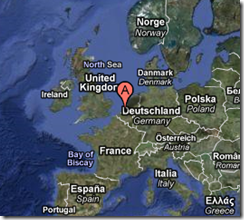
        Ten years ago, the largest known H7 cluster was recorded in the Netherlands. In that outbreak, the culprit was H7N7.


        Details on this cluster are reported in the December 2005 issue of the Eurosurveillance Journal.


        Human-to-human transmission of avian influenza A/H7N7, The Netherlands, 2003

        M Du Ry van Beest Holle, A Meijer, M Koopmans3 CM de Jager, EEHM van de Kamp, B Wilbrink, MAE. Conyn-van Spaendonck, A Bosman

        An outbreak of highly pathogenic avian influenza A virus subtype H7N7 began in poultry farms in the Netherlands in 2003. Virus infection was detected by RT-PCR in 86 poultry workers and three household contacts of PCR-positive poultry workers, mainly associated with conjunctivitis.


        Roughly 30 million birds residing on more than 1,000 farms were culled to control the outbreak. One person - a veterinarian who visited an infected farm – died a week later of respiratory failure.


        The rest of the symptomatic cases were relatively mild.


        The Fraser Valley H7N3 outbreak of 2004 resulted in at least two human infections, as reported in this EID Journal report:


        Human Illness from Avian Influenza H7N3, British Columbia

        Abstract

        Avian influenza that infects poultry in close proximity to humans is a concern because of its pandemic potential. In 2004, an outbreak of highly pathogenic avian influenza H7N3 occurred in poultry in British Columbia, Canada. Surveillance identified two persons with confirmed avian influenza infection. Symptoms included conjunctivitis and mild influenzalike illness.


        More recently, in Mexico we saw two mild human cases last summer (see see MMWR: Mild H7N3 Infections In Two Poultry Workers - Jalisco, Mexico).  The World Health Organization published this Summary and assessment as of 10 September 2012.


        Sporadic human cases of influenza A(H7N3) virus infection linked with outbreaks in poultry have been reported previously in Canada, Italy and the UK, with H7N2 in US and the UK, and with H7N7 in the UK and the Netherlands. Most H7 infections in humans have been mild with the exception of one fatal case in the Netherlands, in a veterinarian who had close contact with infected birds.


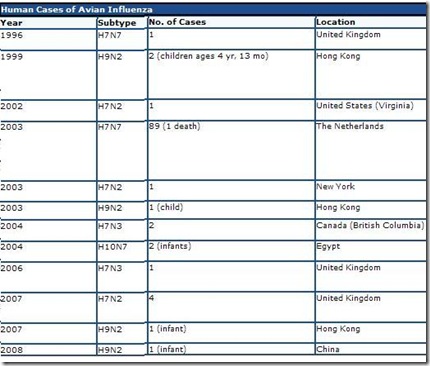
        While global surveillance and reporting on novel avian viruses in humans is spotty at best, some other known H7 cases include:

        image

          Chart lifted and edited from CIDRAP’s excellent overview Avian Influenza (Bird Flu): Implications for Human Disease  showing known H7 avian flu infections in humans over the two decades.


          Of course – H7 flu strains - like all influenza viruses, are constantly mutating and evolving. What is mild, or relatively benign today, may not always remain so.


          In 2008 we saw a study in  PNAS that suggested the H7 virus might just be inching its way towards better adaptation to humans (see Contemporary North American influenza H7 viruses possess human receptor specificity: Implications for virus transmissibility).


          You can read more about this in a couple of blogs from 2008, H7's Coming Out Party and H7 Study Available Online At PNAS.


          Among the avian influenzas, H5N1 virus gets the bulk of the headlines, due to its high fatality rate. While a matter of some controversy (see Revisiting The H5N1 CFR Debate), among known human cases, the mortality rate has been a staggering 60%.


          Other strains that have demonstrated at least some ability to infect humans include H7, H9, H10, and H11.


          Currently, H5s and H7s are both reportable diseases (to the OIE) in poultry, due to their ability to mutate from a low pathogenic virus to highly pathogenic virus.


          But up until now, their ability to spark serious illness in humans has been limited. Which makes China’s announcement of 3 human infections - all resulting in serious and/or fatal illness - of particular interest.


          We will obviously be following the H7N9 story with interest. Whether this story has significant public health implications is something we may not know for some time.


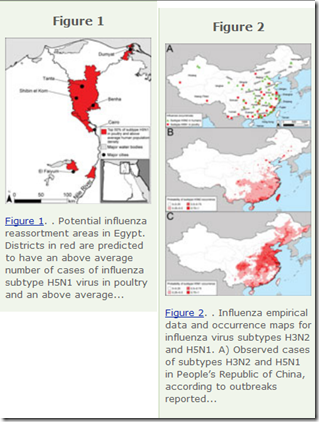
          A final note - proving that timing is everything - a couple of weeks ago, in EID Journal: Predicting Hotspots for Influenza Virus Reassortment, we saw a study that looked at those areas around the world with the greatest potential of spawning new flu strains. 


          The Shanghai region was one of those areas identified.


          Potential geographic foci of reassortment include the northern plains of India, coastal and central provinces of China, the western Korean Peninsula and southwestern Japan in Asia, and the Nile Delta in Egypt.

          image

          Tuesday, March 19, 2013

          Netherlands: Second Outbreak Of Bird Flu In A Week

          image

          Credit  http://www.rijksoverheid.nl/ministeries/ez

          # 7015


          Last week, in Netherlands: Bird Flu (Probably H7) Reported In Lochem, we learned of an outbreak of avian influenza that resulted in the culling of 85,000 birds.


          Today, the Netherland’s Ministry of Economic Affairs reports a new outbreak (also likely H7), this time on an organic farm in Zeewolde, more than 100 km to the west of the first outbreak.


          A hat tip to @martinenserink of Science Magazine for tweeting the announcement. The following is a machine translation:


          Bird flu in Zeewolde

          Newsflash | 19/03/2013

          In Zeewolde is one organic farm with 24,000 hens bird flu (avian influenza, AI) was adopted. This company has 2 stables with outdoor access. It is probably the mild H7 variant.


          Because a low pathogenic (mild) H7 variant can mutate into a highly pathogenic (highly contagious and lethal to chickens) variant, the company is both a low and a high pathogenic variant cleared. This is based on European rules. The depopulation is by the Dutch Food and Consumer Product Safety Authority (nVWA).

          Measures

          From Tuesday, March 19, 2013 at 13.00 is in an area of ​​over one kilometer around the holding in Zeewolde one for the transport of poultry, eggs, poultry manure and used. Within this area are no other poultry.

          Documents and publications

          Room Letter about bird flu in Zeewolde

          Letter from Secretary Dijksma (EZ) to the House about an outbreak of bird flu (Avian influenza, AI) on a ...

          Papers | 19/03/2013 | EZ

          Scheme avian influenza outbreak in Zeewolde

          Regulation of the Minister of Economic Affairs of 19 March 2013, No WJZ/13047850, amending the Regulations ...

          Scheme | 19/03/2013 | EZ

          Map of the 1 kilometer zone Zeewolde

          Map of the area from 19 March 2013, 13.00 hours a transport ban applies to poultry, eggs, poultry manure and used ...

          Brochure | 19/03/2013 | EZ

          Tuesday, March 20, 2012

          Netherlands: LPAI H7 Bird Flu Identified In Turkeys


          image

          Photo Credit – FAO


          UPDATE:  The OIE REPORT filed for this incident now identifies this as an H5N2 (not H7 as previously reported) avian influenza strain. (Link)

          # 6336


          Although this news broke yesterday, I was away from my desk most of the day, and was unable to blog it.  Early reports had suggested an H5 strain, but the most recent reporting (via Reuters) is that a low pathogenic H7 avian influenza virus is the culprit.


          My thanks to the reader who forwarded this Reuters story to me. I’ll return with a little background on the H7 avian viruses.


          Dutch cull 42,700 turkeys after bird flu found

          Reuters

          12:06 p.m. CDT, March 19, 2012

          AMSTERDAM (Reuters) - Dutch authorities said 42,700 turkeys have been culled at a farm in the south of the country after a mild variant of the H7 bird flu strain was reported over the weekend.

          (Continue . . . )


          While we pay greatest attention to the H5N1 virus due to its observed high mortality in the roughly 600 human cases we’ve identified, there are other – less deadly -avian influenza strains that have been known to infect humans.


          Currently, H5s and H7s are both reportable diseases in poultry, due to their ability to mutate from a low pathogenic virus to highly pathogenic virus.


          Below you’ll find a chart lifted and edited from CIDRAP’s excellent overview Avian Influenza (Bird Flu): Implications for Human Disease  showing non-H5N1 avian flu infections in humans over the past decade.


          CIDRAP FluA


          Perhaps the most notorious outbreak of H7 in humans occurred in 2003 in the Netherlands.  It  produced (mostly mild) symptoms in at least 89 people, but did cause 1 fatality. 


          CIDRAP describes it this way:

          During an outbreak of H7N7 avian influenza in poultry, infection spread to poultry workers and their families in the area (see References: Fouchier 2004, Koopmans 2004, Stegeman 2004). Most patients had conjunctivitis, and several complained of influenza-like illness. The death occurred in a 57-year-old veterinarian. Subsequent serologic testing demonstrated that additional case-patients had asymptomatic infection.


          In 2006 and 2007 there were a small number of human infections in Great Britain caused by H7N3 (n=1)  and H7N2 (n=4), again producing mild symptoms.


          Since surveillance is – at best - haphazard (or even non-existent) in many parts of the world,  how often this really happens is unknown.


          For now, H7 avian influenzas pose only a minor public health threat


          Since the H7 viruses generally produce mild symptoms in humans, you may be wondering why all the fuss over an outbreak of H7?


          First, eradicating the virus can be time consuming, and horrendously expensive.  In 2003 outbreak in the Netherlands mentioned above required the culling of 30 million birds.


          And second, the H7s, like all influenza viruses, are constantly mutating and evolving.


          While considered mild today, there are no guarantees that the virus won’t pick up virulence over time, or reassort with another `humanized’ virus and spark a pandemic.


          In fact, four years ago we saw a PNAS article that suggested that some `humanization’ of the virus was occurring.


          Contemporary North American influenza H7 viruses possess human receptor specificity: Implications for virus transmissibility


          As we all know, the last pandemic came out of left field; from a region of the world (North America), host species (swine), and influenza strain (H1N1) considered unlikely to spark a global epidemic.


          Which is why even relatively benign avian strains are regarded as potential threats, and dealt with swiftly.

          Friday, March 25, 2011

          Netherlands: H7 Bird Flu Detected


          # 5445


          Due to its high mortality rate, H5N1 gets most of the world’s attention when it comes to bird flu.  While human infections remain rare, among those diagnosed, roughly 60% succumb to the virus.


          But H5 isn’t the only avian flu strain we worry about.


          There are other – less deadly strains – including the H7s, H9s and H11s that have demonstrated the potential to jump to humans.


          Currently, H5s and H7s are both reportable diseases in poultry, due to their ability to mutate from a low pathogenic virus to highly pathogenic virus.


          Today, we’ve news of an outbreak of bird flu on a poultry farm near Kapelle, in the Netherlands.  The virus has been identified as H7, but the exact subtype has not yet been established.


          image


          First a translation of the statement from the Dutch Ministry of Economic Affairs, Agriculture and Innovation, after which I’ll return with more.


          Bird flu in Zeeland

          News item | 03/25/2011

          In Zeeland Schore, Chapel congregation is a poultry farm with 127,500 laying hens found bird flu. The H7 is a variant.


          Because a low pathogenic H7 variant can mutate into highly pathogenic (highly contagious and lethal for chickens variant), the company both a low and a highly pathogenic variant in accordance with European regulations are removed. The new Food Safety Authority to carry out culling on March 25. In the afternoon of March 25 is known whether a low or a highly pathogenic variant,.


          As of March 25, 2011, is 8.00 hours in an area of ​​one kilometer around the company a ban on transporting poultry, eggs, poultry and poultry manure and litter.


          The infection probably comes from wild birds excrete the virus in their faeces.


          Below you’ll find a chart lifted and edited from CIDRAP’s excellent overview Avian Influenza (Bird Flu): Implications for Human Disease  showing non-H5N1 avian flu infections in humans over the past decade.


          CIDRAP FluA


          Perhaps the most notorious outbreak of H7 in humans occurred in 2003 in the Netherlands.  It  produced (mostly mild) symptoms in at least 89 people, but did cause 1 fatality. 


          CIDRAP describes it this way:


          During an outbreak of H7N7 avian influenza in poultry, infection spread to poultry workers and their families in the area (see References: Fouchier 2004, Koopmans 2004, Stegeman 2004). Most patients had conjunctivitis, and several complained of influenza-like illness. The death occurred in a 57-year-old veterinarian. Subsequent serologic testing demonstrated that additional case-patients had asymptomatic infection.


          In 2006 and 2007 there were a small number of human infections in Great Britain caused by H7N3 (n=1)  and H7N2 (n=4), again producing mild symptoms.


          Since surveillance is – at best - haphazard (or even non-existent) in many parts of the world,  how often this really happens is unknown.


          For now, H7 avian influenzas pose only a minor public health threat


          Since the H7 viruses generally produce mild symptoms in humans, you may be wondering why all the fuss over an outbreak of H7?


          The H7s, like all influenza viruses, are constantly mutating and evolving.  


          While considered mild today, there are no guarantees that the virus won’t pick up virulence over time, or reassort with another `humanized’ virus and spark a pandemic.


          Three years ago, we saw a study in PNAS that indicated that the H7 virus might be moving more towards adapting to humans.


          Contemporary North American influenza H7 viruses possess human receptor specificity: Implications for virus transmissibility


          You can read more about this in a couple of blogs from 2008, H7's Coming Out Party and H7 Study Available Online At PNAS.


          For more on pandemic threats beyond H5N1 you may wish to revisit:


          It Isn’t Just Swine Flu