Showing posts with label Turkey. Show all posts

Monday, May 04, 2015

OIE: H5N1 Confirmed In Kastamonu Province, Turkey

image


# 10,007


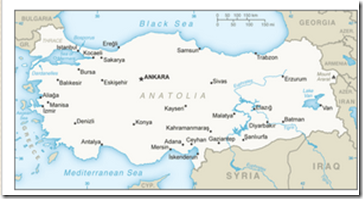
On Sunday, in Media Reports: Bird Flu (H5N1?) In Turkish Poultry, we saw reports (later confirmed by the FAO) of an unidentified HPAI outbreak in the Bandırma district of the province of Balıkesir (bullseye on the map above).  While HPAI is strongly suspsected, we’ve not seen an official lab report as yet.

Today, however, the OIE has confirmed an outbreak of HPAI H5N1 in a small backyard flock in Kastamonu Province several hundred kilometers further east.


We’ve recently seen HPAI H5N1 showing up in countries in Eastern Europe, including Russia, Bulgaria, and Hungary after an absence of several years.   This becomes Turkey’s first official H5N1 outbreak since 2008.


image

image


Source of the outbreak(s) or origin of infection

  • Unknown or inconclusive

Epidemiological comments
Highly pathogenic avian influenza H5N1 was detected as a result of analysis. Protection and surveillance zones have been established in the area surrounding the outbreak. 92 backyard poultry were destroyed in a 3 km radius area. All holdings containing backyard poultry were cleaned and disinfected after destruction process. Monitoring activities continue in the 10 km radius surveillance zone surrounding the 3 km radius protection zone
.


For reasons that are not entirely clear, H5N1 is on the move again in 2015 after several years of relative quiescence.  It has been reported in at number of countries that have not seen it in five years or longer (Nigeria, Niger, Burkina Faso, Bulgaria, Hungary, Romania, Russia, Turkey) and it continues to cause the largest, and most sustained, human outbreak of the virus we’ve seen to date in Egypt.

Thursday, April 09, 2015

APHIS: 2nd South Dakota Turkey Farm Hit By HPAI H5N2

image


# 9923


APHIS HPAI avian flu notifications continue to come in on practically a daily basis (8 farms hit in 9 days), with a second farm in South Dakota now reporting the virus.  This makes the 16th commercial poultry operation in the United States to be hit by either HPAI H5N2 or HPAI H5N8 in 2015.


image

Mashup of Commercial Farms only – Source USDA


Here is the APHIS notification on the latest outbreak, in Kingsbury County SD.


USDA Confirms Highly Pathogenic H5N2 Avian Influenza in Kingsbury County, South Dakota

Last Modified: Apr 9, 2015

 CDC considers the risk to people from these HPAI H5 infections in wild birds, backyard flocks and commercial poultry, to be low

WASHINGTON, April 9, 2015 -- The United States Department of Agriculture’s (USDA) Animal and Plant Health Inspection Service (APHIS) has confirmed the presence of highly pathogenic H5N2 avian influenza (HPAI) in a commercial turkey flock in Kingsbury County, South Dakota.  This is the second confirmation in a commercial flock in South Dakota.  The flock of 34,000 turkeys is located within the Central flyway where this strain of avian influenza has previously been identified. CDC considers the risk to people from these HPAI H5 infections in wild birds, backyard flocks and commercial poultry, to be low.  No human infections with the virus have been detected at this time.

Samples from the turkey flock, which experienced increased mortality, were tested at the South Dakota State University Animal Disease Research & Diagnostic Laboratory and the APHIS National Veterinary Services Laboratories in Ames, Iowa confirmed the findings. NVSL is the only internationally recognized AI reference laboratory in the United States.   APHIS is working closely with the South Dakota Board of Animal Health on a joint incident response. State officials quarantined the premises and birds on the property will be depopulated to prevent the spread of the disease. Birds from the flock will not enter the food system.

The United States has the strongest AI surveillance program in the world.  As part of the existing USDA avian influenza response plans, Federal and State partners as well as industry are responding quickly and decisively to these outbreaks by following these five basic steps: 1) Quarantine – restricting movement of poultry and poultry-moving equipment into and out of the control area; 2) Eradicate – humanely euthanizing the affected flock(s); 3) Monitor region – testing wild and domestic birds in a broad area around the quarantine area; 4)  Disinfect – kills the virus in the affected flock locations; and 5) Test – confirming that the poultry farm is AI virus-free.  USDA also is working with its partners to actively look and test for the disease in commercial poultry operations, live bird markets and in migratory wild bird populations.

(Continue . . . )

Saturday, March 07, 2015

MERS: Watching Turkey Again . . .

image


# 9790


With the very strong caveat that all we have right now are multiple media reports – and I find nothing on the Turkish MOH site – the Turkish press is lit up this morning with reports of three suspected MERS cases isolated in the Province of Van after returning from doing Umrah in Saudi Arabia.


First, an English language report from an Azerbaijani news source, which unlike the other reports, doesn’t call these `suspected cases’Caveat lector.

Three coronavirus cases revealed in Turkey

7 March 2015, 12:27 (GMT+04:00)

Three cases of infection with a coronavirus were revealed in the Turkish province of Van, the Sabah newspaper reported March 7.

Reportedly, two of the infected are women. The infected are the Turkish citizens and have previously come from pilgrimage in Saudi Arabia. No further details were disclosed.

(Continue . . .)


From the Turkish language press we get a couple of somewhat more detailed, but less definitive, reports.


3 people were quarantined on suspicion of Van MERS

2 female 3 people indicated that they returned from Umrah in Van, taken on suspicion of MERS disease quarantine at the hospital in the city.

Saturday, March 7, 2015 09:11

According to the information received, returned from a visit to Umrah 71 years old Gift Aydin name a couple that can not be learned, headaches since a week, cough, nausea, vomiting, shortness of breath and fever increases, on Dursun Centenary College with a private hospital in the city, was admitted to Odabaş Medical Center.

A 'also according to the news, and then tests the chest in the interviews conducted with experts and infection specialists, it was decided that one of the referral to the suspicion of MERS disease Van Regional Training and Research Hospital.

Future releases will be made regarding the patients quarantined in hospital health status learned, after referral to the couple's Van Regional Training and Research Hospital, a private hospital patients, relatives and staff of the mask he wore, and the cleaning staff hospital of the inner and outer parts of the start washing was observed.

(Continue . . .)


Van MERS virus will be quarantined

Saturday March 7, 2015 12:01


pilgrimage return Mers virus was found in the van. 3 people returning from a pilgrimage to the Mers were quarantined virus cases. Cough and was taken to hospital due to high fever. Out that it is the Mers were immediately quarantined and began to treat the virus. 1 week finds headache, evil 3 people at home who was hospitalized with fever and cough cause with the help of neighbors.

(Continue . . .)


While MERS may be suspected – understandable, given their recent travel history – influenza and other respiratory illnesses are rife this time of year, and so the diagnosis will have to wait for laboratory confirmation.  Still, if MERS is confirmed in one or more of these pilgrims, it wouldn’t be the first time for Turkey.


Last October we learned of Turkey’s first imported MERS case (see Turkey Announces MERS Fatality – ex KSA).


Native to the Arabian peninsula, MERS has managed to travel well beyond the region via international travel, with 13 countries outside of the Middle East seeing imported cases over the past two years.  With an incubation period of up to 15 days, it is all to easy for someone to become exposed in the region and travel – asymptomatically for a week or longer – before falling ill.

image

Credit - ECDC risk assessment on MERS-CoV


While the yearly Hajj pilgrimage, which sees in excess of 2 million visitors to Saudi Arabia over a few short weeks, is viewed as the biggest mass gathering MERS risk, millions of other religious pilgrims travel to the Holy cities throughout the year.


All able bodied Muslims are required to make at least one major pilgrimage to Mecca during their lifetime, at the time of the hajj. This is known as the fifth pillar of Islam, and is one of the duties incumbent upon all Muslims.


The faithful may also make `lesser pilgrimages’, called  omra (or Umrah), at other times of the year. These minor pilgrimages don’t absolve the faithful of making the hajj journey unless they take place during Ramadan (this year: June 17h-July 17th).


As a result, the Kingdom of Saudi Arabia (KSA) receives more than 6 million visitors each year. Most will arrive during the month of Ramadan and during the Hajj ( which begins the last week of September this year), but Umrah pilgrims come and go by  the tens of thousands each month.


With the expected spring surge in MERS cases – particularly in Saudi Arabia - the next few months will probably hold the greatest prospects for seeing additional exported MERS cases from the region.

Friday, March 06, 2015

APHIS: HPAI H5N2 In A Minnesota Turkey Farm

image

1st Detection of HPAI H5 In the Mississippi Flyway


# 9786


In what can only be viewed as an troubling sign for the poultry industry, the recently arrived HPAI H5N2 avian flu virus – a new reassortant of the H5N8 virus which first appeared in Asia in early 2014 – has dramatically leapfrogged hundreds of miles east and has infected a commercial turkey farm in Minnesota.


Although this subtype is not known to infect humans, this is a highly pathogenic virus in domestic poultry, and it continues to spread quickly around the world via asymptomatic wild and migratory birds.


Since November we’ve seen H5N8 and/or H5N2/H5N1 turn up in six western states as well as in British Columbia – all of which lie either beneath, or adjacent to, the Pacific Flyway.  


While these flyways are predominately north-south corridors, their overlapping allows for a lateral (east-west) movement of avian viruses as well – often via shared nesting areas and ponds – something we’ve looked at recently in The North Atlantic Flyway Revisited & FAO On The Potential Threat Of HPAI Spread Via Migratory Birds.


image

Credit FAO

The Mississippi Americas Flyway covers 2/3rds of North America, and is overlapped by the Pacific Flyway on its western border, and the the Atlantic Americas Flyway on the east.


With HPAI H5 now detected in the upper Midwest, the concern has to be how much farther will these viruses spread, and how well entrenched will they become in North American birds.


We’ve the following announcement, issued late yesterday, from the USDA’s APHIS, after which I’ll be back with a bit more:

USDA Confirms H5N2 Avian Influenza in Commercial Turkey Flock in Minnesota


First Finding in the Mississippi Flyway

The United States Department of Agriculture’s (USDA) Animal and Plant Health Inspection Service (APHIS) has confirmed the presence of highly pathogenic H5N2 avian influenza in a commercial turkey flock in Pope County, Minnesota. This is the first finding in the Mississippi flyway. It is the same strain of avian influenza that has been confirmed in backyard and wild birds in Washington, Oregon and Idaho as part of the ongoing incident in the Pacific flyway.

Samples from the turkey breeder replacement flock, which experienced increased mortality, were tested at the University of Minnesota Veterinary Diagnostic Laboratory and the APHIS National Veterinary Services Laboratories in Ames, Iowa confirmed the finding. APHIS is partnering closely with the Minnesota Board of Animal Health on a joint incident response. State officials quarantined the affected premises and the remaining birds on the property will be depopulated to prevent the spread of the disease. Birds from the involved flock will not enter the food system.

CDC considers the risk to people from these HPAI H5 infections in wild birds, backyard flocks, and commercial poultry, to be low. No human infections with these viruses have been detected at this time. The Minnesota Department of Health is working directly with poultry workers at the affected facility to ensure they are taking the proper precautions. As a reminder, the proper handling and cooking of poultry and eggs to an internal temperature of 165 ˚F kills bacteria and viruses.

Federal and State partners are working jointly on additional surveillance and testing in the nearby area, following existing avian influenza response plans. The United States has the strongest AI surveillance program in the world, and USDA is working with its partners to actively look for the disease in commercial poultry operations, live bird markets, and in migratory wild bird populations.

USDA will be informing OIE and international trading partners of this finding. USDA also continues to communicate with trading partners to encourage adherence to OIE standards and minimize trade impacts. OIE trade guidelines call on countries to base trade restrictions on sound science and, whenever possible, limit restrictions to those animals and animal products within a defined region that pose a risk of spreading disease of concern. These virus strains can travel in wild birds without them appearing sick. People should avoid contact with sick/dead poultry or wildlife. If contact occurs, wash your hands with soap and water and change clothing before having any contact with healthy domestic poultry and birds.

All bird owners, whether commercial producers or backyard enthusiasts, should continue to practice good biosecurity, prevent contact between their birds and wild birds, and to report sick birds or unusual bird deaths to State/Federal officials, either through your state veterinarian or through USDA’s toll-free number at 1-866-536-7593. Additional information on biosecurity for backyard flocks can be found at healthybirds.aphis.usda.gov

(Continue . . . )


Over the past year we’ve seen the unprecedented global spread of HPAI H5 viruses (primarily H5N8 & H5N2), with novel reassortants winging their way from Asia, to Europe and North America via wild and migratory birds.


While none of these North American reassortants appears to pose a threat to human health, the CDC remains cautious and has issued specific guidance documents (see CDC Interim Guidance For Testing For Novel Flu  & CDC Interim Guidance On Antiviral Chemoprophylaxis For Persons With Exposure To Avian Flu).


The concern – beyond HPAI H5’s considerable threat to the poultry industry – is that these viruses are constantly changing.  They can hook up with other influenza viruses and reassort – producing new hybrid strains - possibly with unpredictable results. 

image

Shift, or reassortment, happens when two different influenza viruses co-infect the same host swap genetic material. 


This  rapid emergence and spread of a variety of H5 avian viruses (H5N1, H5N2, H5N2, H5N5, H5N6, H5N8) over the past 12 months recently prompted the World Health Organization to issue a pointed warning (see WHO: H5 Currently The Most Obvious Avian Flu Threat).


While no one can predict the future for any of these viruses - the greater the diversity of novel viruses in circulation - the greater the chances of someday seeing one successfully adapt to humans.

.

For more on this rapidly expanding array of novel flu viruses you may wish to revisit:


The Expanding Array Of Novel Flu Strains

EID Journal: Predicting Hotspots for Influenza Virus Reassortment

Viral Reassortants: Rocking The Cradle Of Influenza

Wednesday, October 22, 2014

ECDC Epidemiological Update – MERS In Turkey (ex KSA)

image


# 9231


Although there is nothing confirmed yet, Turkish media is reporting that several `suspected’ MERS cases with recent travel history to Saudi Arabia are under investigation (see FluTrackers thread), and the Turkish MOH has stated they are following up on contacts of their single confirmed imported case (see Turkey Announces MERS Fatality – ex KSA).


Today the ECDC published the following epidemiological update on this latest exported MERS case from Saudi Arabia.


Epidemiological update: MERS-CoV case imported to Turkey

22 Oct 2014

​On 18 October 2014, the Ministry of Health Turkey reported that a Turkish citizen working in Saudi Arabia died on 11 October 2014, ten days after onset of a confirmed MERS-CoV infection. The case returned to Turkey on 10 October 2014. It is assumed that the case was symptomatic during the flight. The local health authorities are conducting contact tracing.

Worldwide situation

Overall, 906 laboratory-confirmed cases of MERS-CoV have been reported to the public health authorities worldwide, including 361 deaths as of 21 October 2014 (Figure 1).

Figure 1. Distribution of confirmed cases of MERS-CoV reported as of 21 October 2014, by date and place of probable infection (n=906)

Most of the cases have occurred in the Middle East (Saudi Arabia, United Arab Emirates, Qatar, Jordan, Oman, Kuwait, Egypt, Yemen, Lebanon and Iran) (Table 1).

Between 1 September and 21 October 2014, the health authorities in Saudi Arabia reported 29 cases, 15 of which were in Taif. Twenty-four of them (83%) are male, of which 20 (83%) above 40 years of age. Comorbidities were reported in 20 of the 29 cases. Four cases were reported among healthcare workers. Several cases had contact with animals, including camels, and some reported having drunk camel milk.

On 20 October, the Ministry of Health of Saudi Arabia issued a press release about the implementation of measures to control the cluster of cases in Taif, in particular addressing the dialysis units. 

<SNIP>

Conclusions

• The incidence of cases in September and October 2014 is slightly higher than in July and August 2014. This pattern was also observed in 2012 and 2013. The majority of MERS-CoV cases are still being reported from the Arabian Peninsula, specifically from Saudi Arabia, and all cases have epidemiological links to the outbreak epicentre.

• According to the pattern observed in 2012 and 2013, more cases could be observed in the coming weeks.

• The latest importation to the EU (Austria) and to Turkey are not unexpected and do not indicate a significant change in the epidemiology of the disease. Importation of MERS-CoV cases to the EU remains possible. However, the risk of sustained human-to-human transmission remains very low in Europe.

Saturday, October 18, 2014

Turkey Announces MERS Fatality – ex KSA

image


# 9210


Overnight ProMed Mail carried a brief reports on a reported fatality in Turkey from the MERS virus (see MERS-COV (38):TURKEY ex SAUDI ARABIA, FATAL, REQUEST FOR INFORMATION), with the following brief announcement:


MERS-CoV, Ankara, Turkey, New Death
---------------------------------------------
MoH Turkey announced the laboratory results as MERS-Cov positive for a recently dead patient in Ankara. The Turkish-originated male patient, who was an expat in Saudi Arabia, was suffering from respiratory problems prior to his travel to Turkey on [6 Oct 2014]. The patient died in the hospital on [11 Oct 2014].


A further search of the Turkish language press finds a number of longer, albeit syntax-challenged-when-translated reports on this case.  The following (machine translated) report from AVRUPA, indicates this individual was symptomatic prior to arriving on October 6th, and that efforts are  underway to contact those he may have come in contact with.


In Turkey, 'the first death from Mers Virus

Ministry of Health, the patient returned to work in Saudi Arabia, a Turkish citizen, has announced that MERS died due to virus

Turkey of the deceased passenger and crew on the plane on his entry to the official Turkish citizens to family physicians, continued efforts to inform the embassies of foreign nationals in the specified statement;

"Hatay is population registered a citizens for the purpose of work to Saudi Arabia Turkey has died in hospital receiving treatment. The Ministry of public health Authority received the patient sample Microbiology Reference Laboratory according to the result of the analysis in question have been found to carry the virus of MERS. As a result of the research work in patient s. Arabia, Turkey is the last 10 days in advance of the return of the ongoing health complaints were found to be returned to Turkey, and in the history of the 06.10.2014 of the plane after landing refers to a health institution information directly from exception is taken. He is in intensive care with severe conditions, treated the patient has lost his life in the history of the 11.10.2014. Turkey in Ankara of samples taken from the patient, institution of public health Microbiology Reference Laboratory examination of the patient is MERS-CoV 17.10.2014 (today) has been understood. ''

the statement said.


Hatay province is located on the border with civil-war wracked Syria, a region where surveillance and disease control is precarious at best.


As we’ve discussed several times over the summer, the triple threat of exported Ebola, MERS, and Avian Flu this fall and winter has the potential to severely test public health agencies around the globe.  All three can present with non-descript viral symptoms early on, and all three require specific (and often difficult to obtain) lab tests in order to diagnose.


Between the rise in these emerging diseases, and the continued growth of global travel, the odds of any hospital ER in the world seeing an `exotic’ infectious disease – like MERS or Ebola – goes up a little every day.  


While we are being constantly assured that MERS is under control in Saudi Arabia, this is the second exported case of the virus we’ve seen in the past few weeks (see WHO Update On Austrian (Imported) MERS Case), and Saudi Arabia has reported roughly 18 cases as well.  Qatar also evacuated a citizen from KSA with MERS earlier this month (see KUNA: Qatar Announces MERS Case).


While Asia’s avian flu season has yet to take off for the fall, we are probably only a month or two away from seeing outbreaks of H7N9, and sporadic human cases of H5N1 and possibly H5N6 and H10N8. 


Given the number of new subtypes that have emerged over the past couple of years in this region, seeing a new influenza virus reassortant would not be a total surprise either (see Viral Reassortants: Rocking The Cradle Of Influenza).


As we discussed in The New Normal: The Age Of Emerging Disease Threats, the reality of life in this second decade of the 21st century is that disease threats that once were local, can now spread globally in a matter of hours or days.


Vast oceans and prolonged travel times no longer protect us against infected travelers crossing borders. 


And despite the media hype over airport screening, we have no technology that can realistically, or reliably detect infected individuals and prevent them from entering a country (see Head ‘Em Off At The Passenger Gate?). And if we’ve learned nothing else from the recent introduction of Ebola into the United States, it is that we have badly overestimated our ability to deal with imported disease threats.


We live in an age where emerging viral threats may subside for a few months, and fall off the newspaper headlines, but they aren’t going to go away.


We’ve been lulled into a false sense of security since the last pandemic was relatively mild, and the feeling is they only come around every 30 or 40 years.  But viruses don’t read calendars, or play by `mostly likely worst-case scenario rules’  that are adopted by most planning committees.


The time has come to take pandemic planning seriously again, not so much because of Ebola, but because there’s a growing list of pathogens with pandemic potential queuing up around the globe.


For more on pandemic preparedness, you may wish to revisit:

The Global Reach Of Infectious Disease
HSPH Video: The Next Pandemic: Are We Ready?
Pandemic Preparedness: Taking Our Cue From The Experts

Saturday, September 07, 2013

Arabic Media Reporting Suspected MERS Cases In Turkey

image


# 7738


Sharon Sanders of FluTrackers has picked up a media report from the usually reliable Al Sharq, that indicates Turkey is investigating five suspected MERS-CoV cases. 


Our only source on this story at present is a syntax-challenged report appearing in Arabic press. I tend to view these reports cautiously, as machine translations are inexact, and can sometimes be misleading.


If and when more information is available, I’m certain FluTrackers will have it on this thread.  Meanwhile, here are excerpts from today’s report:


Saudi Ambassador in Turkey: the death of a Saudi suspected of being infected with «Corona» .. And medical evacuation for three cases to Riyadh

Revealed the Saudi ambassador in Turkey just Mirdad for the death of Saudi woman in middle age in Trabzon Hospital suspected of being infected with HIV Coruna.


He said in a statement to Asharq »that there are five cases suffered ill and was hospitalized, including diseased heart was the work of entrepreneur has emerged, as has been the transfer of three other cases, medical evacuation to the Kingdom, in addition to the case of death.


He explained that the four cases and اجهتهن problems in communicating with the medical staff in the hospital by virtue of that they do not speak English or Turkish, and the hospital staff does not speak Arabic or English, called the embassy to intervene; since sent the President of the Consular Section and one of the translators of assets at the embassy to Trabzon and a process of translation and other actions that helped them communicate.


He explained that if the death was of a woman in middle age and was accompanied by her son and daughter did not write God a cure for the ill and their health status, and the Embassy to transfer her body to Istanbul, and provided the embassy for her two children and condolences, and revealed to them the situation they were in their mother and understanding all the details. As has been their help in booking travel arrangements were for them and then they went to Riyadh.


And that there is a state was suffering a disease of the heart and put her pacemaker and discharged from the hospital.


Between Mirdad that there is suspicion of Corona's disease is not confirmed, pointing to the attention of the Turkish Ministry of Health SUBJECT after communication with the embassy.

(Continue . . .)


As this article points out, while MERS is suspected, it has not been confirmed.