Showing posts with label Birdflu. Show all posts

Monday, April 15, 2013

H7N9: Anhui Reports 1 New Case – Totals Cases 64, 14 Fatalities


image

Anhui Province – Credit Wikipedia


# 7143


Case reports continue to trickle in this morning, with Anhui Province now reporting a single case as well.


Xinhua News is reporting 63 cases,`A total of 63 H7N9 cases have been reported across China, with 24 in Shanghai, 17 in Jiangsu, 16 in Zhejiang, three in Anhui, two in Henan and one in Beijing.


But if you include the asymptomatic 4 year-old who tested positive in Beijing yesterday, this should bring the total to 64 confirmed cases and 14 deaths.


From the Anhui Provincial Health Department.


Anhui Province new case of human infection with H7N9 avian influenza

Published :2013-04-15 Source: Read 433 times

Anhui Provincial Health Department Bulletin, April 15 in Anhui Province confirmed case of human infection of H7N9 avian influenza. So far, Anhui Province reported a total of three cases of human infection with the H7N9 avian flu, and 1 died.

Patients Chen, male, 60 years old, Tianchang people, retirees, a company in the local guard. Patients with disease, Tianchang a hospital on April 11 to April 10. April 14, Chuzhou CDC influenza the network laboratory detection of influenza virus in patients with Universal nucleic acid positive, H7 subtypes positive; April 15, the provincial CDC detects review man infected with the H7N9 avian influenza virus nucleic acid positive. The same day, the provincial expert group based on national human infection with the H7N9 avian flu clinic program (2013 Edition) ", and the diagnosis of the cases of human infection of H7N9 avian influenza confirmed cases. Patients in critical condition, has been transferred to a hospital in Chuzhou isolation treatment. Close contact with a total of 25 people, until now, were not unusual.

(The Information Office of the Provincial Health Department)

Saturday, April 13, 2013

Beijing Confirms First H7N9 Case


image

Location of Beijing (red) to Affected Provinces


# 7124


While I was away from my desk for a few hours this evening, confirmation of the suspected case in Beijing (see  H7N9: Watching A Suspect Case In Beijing and FluTrackers Thread ) was announced by Beijing’s Department of Health – bringing the current total of infected to 44 – and considerably expanding the known geographic range of the virus.


We have a report from CIDRAP, an article from Xinhua News, and lastly excerpts from the Health Department Statement (machine translated), which is quite lengthy.


Burning the midnight oil, and making some sense of all of this, is Lisa Schnirring of CIDRAP NEWS who has the details, along with some reactions from Michael T. Osterholm, CIDRAP’s Director regarding what this might signify.


Beijing reports first H7N9 infection

Lisa Schnirring * Staff Writer

Apr 13, 2013 (CIDRAP News) – Beijing health authorities today confirmed an H7N9 infection in a 7-year-old girl who lives in the city, the first case to be detected outside of eastern China, according to Chinese media sources.


All of the earlier cases were reported from Shanghai and surrounding provinces. Beijing is more than 650 miles in a straight line north and slightly west of Shanghai. The event raises more questions about the virus in birds and the threat it poses to humans.

(Continue . . . )


From the Chinese State News agency Xinhua:


image

Beijing reports first case of H7N9 infection

English.news.cn   2013-04-13 09:22:36
 

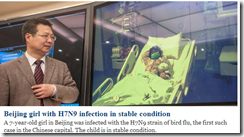
• A 7-year-old girl in Beijing was infected with the H7N9 strain of bird flu, the first such case in Beijing.

• The child is being treated at the Beijing Ditan Hospital, and is in stable condition.

• The new case raised the number of H7N9 infections in China to 44.

BEIJING, April 13 (Xinhua) -- A seven-year-old girl in Beijing was infected with the H7N9 strain of bird flu, the first such case in the Chinese capital, local health authorities said Saturday.


The case was confirmed following a test by the Chinese Center for Disease Control and Prevention early on Saturday.


The child is being treated at the Beijing Ditan Hospital, and is in stable condition, Zhong Dongbo, deputy director of the Beijing Municipal Health Bureau, said in a press briefing.


The girl developed flu symptoms, including fever, cough, sore throat and headache, Thursday morning. She was brought to the Beijing Ditan Hospital to seek medical treatment around noon and was then hospitalized for lung infection.


The child received the drug Tamiflu as well as intravenous drips on Thursday night and later was transferred to an intensive care unit after condition worsened. After an oxygen therapy and other treatment, her suffocation and coughing symptoms eased markedly and body temperature fell to 37 degrees Celsius from 40.2 degrees Celsius, a spokesman with the Beijing Ditan Hospital said.


Two people who have had close contact with the child have not shown any flu symptoms, a spokesman said. He added that the girl's parents were engaged in live poultry trading in a township of Shunyi District in Beijing's northeastern suburbs.


The new case raised the number of H7N9 infections in China to 44, with all the other 43 in the eastern parts of the country. The first known human infections have claimed the lives of 11 people, according to the National Health and Family Planning Commission.


And lastly, from Beijing’s Health Department website, excerpts from their press release:


Beijing with a day and a half time confirmed case of human infection of H7N9 avian influenza patient's condition continued cases of stability not found

The time :2013 -04-13 Source: Beijing Municipal Health Bureau views: 281

In the early morning of April 13, the China CDC review, the city comprehensive judgment first case of human infection with the H7N9 avian influenza confirmed cases. The patients are in stable condition, two close contacts found no abnormalities. The case, the situation is as follows:


The patients Yaomou, female, 7 years old, living in the old village center of Houshayu Town Street, Shunyi District. The patients parents live engaged in the live birds trafficking work. Children symptoms such as fever, sore throat, cough, headache in the morning of April 11, 11:00 to Ditan Hospital emergency department visits, admitted to the hospital for lung infection in 13:00.


Based on further examination results and the progression of the disease after admission, the hospital on 12 May 0100: 50 cases of influenza surveillance reported to the Chaoyang District CDC, 3:00 specimens sent to Chaoyang District CDC. At 10:00 on the 12th Chaoyang District CDC confirmed influenza A universal primer nucleic acid testing positive, and the specimens were sent at 11:00 Beijing CDC review detection. At 15:30 on the 12th Beijing Municipal Center for Disease Control detected the H7N9 avian influenza virus nucleic acid in accordance with the provisions of the National Health and Family Planning Commission, and suspected cases of the samples sent to China CDC review of detection.


In the early morning of the 13th, the Chinese Center for Disease Control feedback the outcome of the review. Clinical expert in Beijing, according to the Chinese Center for Disease Control and the Beijing CDC pathogen detection and review results, combined with the patient's clinical manifestations, epidemiological investigation, in accordance with the National Health and Family Planning Commission to develop the people infected with the H7N9 avian flu clinics program (2013, second edition) ", the overall judgment of the cases of human infection of H7N9 avian influenza confirmed cases.


The children admitted to hospital, hospital to be anti-infection and symptomatic treatment. Confirmed cases of influenza surveillance, hospital give children Tamiflu antiviral rehydration supportive care, after given ECG are too sick to go to the ICU ward, give suck in at 23:50 on the 11th (15 hours from the time of onset) oxygen therapy; same time, Chinese proprietary Yinqiao the Powder Plus White Tiger Decoction given in Chinese medicine services. After active treatment, children with cough hold your breath symptoms improved, body temperature down to 37 ° C from the highest of 40.2 ℃, lung wet rales disappeared. The patient's condition is stable.


Recognized as suspected cases, the Beijing Municipal Center for Disease Control, Shunyi District and Chaoyang District CDC disposal to investigate the scene, confirmed that two close contacts and medical observation measures. As of now, the two close contacts found no abnormalities.


The first case of human infection with the H7N9 avian influenza diagnosis and treatment process, from the first visit to the diagnosis process, only a day and a half's time, children with the disease will soon be effectively controlled, fully display the city early prevention and control work results.

(Continue . . . )


The discovery of a confirmed case in the nation’s capital - hundreds of kilometers away from the other cases - raises the stakes in this outbreak.


The critical step at this stage is nailing down the source (or sources) of infection, and stopping this spillover into humans before it gives the virus an opportunity to mutate into a more easily spread pathogen.


Stay tuned.

Tuesday, April 09, 2013

Vietnam Reports H5N1 Fatality


image

Dong Thap province


# 7098


While our attention continues to be focused on the H7N9 virus recently emerged out of China, the H5N1 bird flu virus continues to show up sporadically in humans as well. 


In the past week we’ve seen Cambodia’s 10th case of the year, and over the weekend a report on Bangladesh’s first known fatality from the virus.


This morning, news that Vietnam has recorded its first H5N1 fatality in more than a year; a 4 year-old boy from Dong Thap province who fell ill on March 243th, and died on April 4th.


Reports indicate he developed a high fever after his family bought and slaughtered a chicken.  The following account is from the Associated Press.


Vietnam confirms first human death from H5N1 bird flu in more than a year


Up until this latest case, Vietnam had recorded 123 infections with the H5N1 virus, and 61 deaths.  In 2012, Vietnam reported 4 cases, 2 of which proved fatal.


With all of the news regarding the H7N9 virus over the past 9 days, it is important to remember that the H5N1 threat (and indeed, the threat from the novel coronavirus (NCoV), and other emerging pathogens) have not gone away.


Less than two weeks ago, in WER: Update On Human Cases Of Influenza At Human-Animal Interface, we saw the following analysis of the threat posed by the the more familiar H5N1 avian flu virus.


Influenza viruses are unpredictable. Their constant evolving nature raises concerns that these viruses could adapt or reassort with other influenza viruses, thereby gaining potential to become more transmissible to or more pathogenic in humans.


Continued monitoring of the occurrence of human infections with non-seasonal influenza viruses and ongoing characterization of the viruses to assess their pandemic risk are therefore critically important for public health.


Close collaboration with animal health partners allows information regarding viruses circulating in animal populations and human populations worldwide to be shared to improve assessment of global influenza risks to health.


WHO continues to stress the importance of global
monitoring of influenza viruses and recommends all
Member States to strengthen routine influenza surveillance. All human infections with non-seasonal influenza viruses should be reported to WHO under the International Health Regulations (2005).


The bulk of this epidemiological analysis focuses on the 32 lab-confirmed H5N1 cases reported last year, but attention is also paid to a pair of H7N3 last year in Mexico, and a spate of swine H1N1v, H1N2v, and H3N2v (variant) infections across North America, as well.


The full report is called: 


Update on human cases of influenza at the human–animal interface, 2012


It is possible, as officials look for this emerging H7N9 virus in pneumonia cases across Asia, that we’ll also see an uptick in detections of H5N1 as well.

Sunday, April 07, 2013

Shanghai: 2 Additional H7N9 Cases – Count Now At 20

image

Credit Wikipedia


# 7087


A statement this morning from Shanghai’s Municipal Health Bureau describing two new H7N9 cases, one from Shanghai and the other from neighboring Anhui Province.


The latest cases are described as:


Shen, age 59, M, Retiree, Onset March 25th

Lee, age 67, M, ? , Onset March 30th


These latest two cases raise the total number of confirmed H7N9 cases in China to 20. 


Shanghai new confirmed cases of human infection with the H7N9 avian influenza in two cases

As of today (7th) 17:00, the city newly diagnosed cases of human infection of H7N9 avian influenza. Up to now, Shanghai has found 10 cases of human infection of H7N9 avian influenza confirmed cases, including four cases of death, and the other six cases being treated in isolation.


2 new cases as follows:


Patients Shen, male, 59 years old, Anhui, retirees. Patients March 25, recurrent fever, cough, and themselves to a nearby pharmacy to buy medication, did not improve the patient to Tang town, Pudong New Area Community Health Center and Pudong New Area People's Hospital on March 30-April 1, has treatment. April 4, patients go to Yan Chai Hospital Pudong Branch of treatment, diagnosis of severe pneumonia, in being active treatment. On the evening of April 6, Shanghai Municipal Center for Disease Control laboratory test results for the H7N9 avian influenza virus nucleic acid positive. In accordance with the relevant requirements, the Shanghai Municipal Health and Family Planning Commission organized municipal clinical expert group to discuss the cases, experts based on the clinical manifestations, laboratory testing and epidemiological data, the diagnosis of the cases of human infection confirmed cases of the H7N9 avian flu . After investigation, the close contacts of cases total of four people, until now, were not unusual.


Patients Lee, male, 67 years old, the people of Shanghai. Patients March 29, body aches, fever, South hospital on March 30 to the First People's Hospital, the diagnosis of the upper left pneumonia. In the early morning of April 7, Shanghai Disease Prevention and Control Center laboratory test results for the H7N9 avian influenza virus nucleic acid positive. In accordance with the relevant requirements, the Shanghai Municipal Health and Family Planning Commission organized municipal clinical expert group to discuss the cases, experts based on the clinical manifestations, laboratory testing and epidemiological data, the diagnosis of the cases of human infection confirmed cases of the H7N9 avian flu . The patient's condition is stable and under active treatment. After investigation, the close contacts of the cases total of 2 people, until now, were not unusual.


As of this afternoon, the city had a total of 10 confirmed cases, 194 close contacts carried out under medical observation. All close contacts, accumulated a fever with cough or sore throat and other symptoms in close contact, 2 people in Shanghai Public Health Clinical Center, treatment, laboratory tests have been to exclude the H7N9 avian flu.

Saturday, April 06, 2013

WHO Update On H7N9 Cases In Shanghai – April 6th

image

Map Credit ECDC


# 7087


An indication of just how closely the World Health Organization  is following events in China is that It’s been less than four hours since the announcement from Shanghai Health Bureau Of Two New H7N9 Cases and we already have an update posted on their GAR (Global Alert & Response) page.


Of particular interest, the 66 year-old is being described as `mild case’, something we’ve rarely seen with this virus to date.


Human infection with influenza A(H7N9) virus in China - update

6 April 2013 - As of 6 April 2013 (16:45 CET), the Chinese health authorities notified WHO of an additional two laboratory-confirmed cases of human infection with influenza A(H7N9) virus.


Both of these cases are from Shanghai. The first patient is a 74-year-old man, who became ill on 28 March 2013, and is now in critical condition. The other is a 66-year-old man who became ill on 29 March 2013 and is considered a mild case.


To date, a total of 18 cases have been laboratory confirmed with influenza A(H7N9) virus in China, including six deaths, ten severe cases and two mild cases.


More than 530 close contacts of the confirmed cases are being closely monitored. In Jiangsu, investigation is ongoing into a contact of an earlier confirmed case who developed symptoms of illness.


The Chinese government is actively investigating this event and has heightened disease surveillance. Retrospective testing of recently reported cases with severe respiratory infection may uncover additional cases that were previously unrecognized. An inter-government task force has been formally established, with the National Health and Family Planning Commission leading the coordination along with the Ministry of Agriculture and other key ministries. The animal health sector has intensified investigations into the possible sources and reservoirs of the virus.


WHO is in contact with national authorities and is following the event closely. The WHO-coordinated international response is also focusing on work with WHO Collaborating Centres for Reference and Research on Influenza and other partners to ensure that information is available and that materials are developed for diagnosis and treatment and vaccine development. No vaccine is currently available for this subtype of the influenza virus. Preliminary test results provided by the WHO Collaborating Centre in China suggest that the virus is susceptible to the neuraminidase inhibitors (oseltamivir and zanamivir).


At this time there is no evidence of ongoing human-to-human transmission.


WHO does not advise special screening at points of entry with regard to this event, nor does it recommend that any travel or trade restrictions be applied.


For the latest updates you can follow @WHO on twitter.

Shanghai Health Bureau: Two New H7N9 Cases

image

Credit Wikipedia


UPDATE:  Within an hour of this news breaking the World Health Organization  @WHO issued the following announcement on Twitter:

image


# 7086


My thanks to posts by Shiloh & Treyfish on FluTrackers  this morning (see thread) that led me to this press release from Shanghai’s Municipal Health Bureau  describing two new H7N9 cases diagnosed in Shanghai.


The patients are listed as:


Zhou, age 74, M, Farmer, Onset March 28th

Yang, age 66, M, Retiree, Onset March 29th


Shanghai new confirmed cases of human infection with the H7N9 avian influenza in two cases


As of today (April 6) 18:30 city newly diagnosed two cases of human infection with the H7N9 avian influenza. Until now, a total of eight cases of human infection with the H7N9 avian influenza confirmed cases, including four cases of death, the other four cases is where.


New cases are as follows:


Patients Zhou, male, 74 years old, the people of Shanghai, farming. Patients 28 March conscious weakness, shortness of breath, fever, March 31 to Fengxian District Chinese Medicine Hospital for treatment, transferred to East hospital on April 5, diagnosed with severe pneumonia, being active treatment. In the morning of April 6, the Shanghai Municipal Center for Disease Control laboratory test results for the H7N9 avian influenza virus nucleic acid positive. Organization municipal clinical expert in accordance with the relevant requirements, the Shanghai Municipal Health and Family Planning Commission to discuss the cases, the experts based on the clinical performance of laboratory testing and epidemiological data, the diagnosis of the cases of human infection of H7N9 avian influenza confirmed cases . After investigation, a total of five people in the close contacts of the cases, were not found until now an exception.


Patients Yang, male, 66 years old, the people of Shanghai, retirees. Patients chills symptoms on March 29, on April 2 to the Tenth People's Hospital for treatment, diagnosis of acute upper respiratory tract infection, given symptomatic treatment. April 4 patients symptoms were not relieved, and a cough, fever symptoms, once again to the Tenth People's Hospital for treatment, diagnosis of left lower pneumonia. In the morning of April 6, the Shanghai Municipal Center for Disease Control laboratory test results for the H7N9 avian influenza virus nucleic acid positive. Organization municipal clinical expert in accordance with the relevant requirements, the Shanghai Municipal Health and Family Planning Commission to discuss the cases, the experts based on the clinical performance of laboratory testing and epidemiological data, the diagnosis of the cases of human infection of H7N9 avian influenza confirmed cases . The patient's condition is stable and under active treatment. After investigation, the close contacts of the cases to a total of six people, until now, were not unusual.


This should increase the total to 18 cases, 6 fatal across four provinces in Eastern China.  

Friday, April 05, 2013

CDC Teleconference Transcript & Interim Guidance On H7N9 Case Definitions

image

Credit NIAID


# 7083


The audio file, and transcript from today’s CDC  teleconference are now online, and the CDC has posted interim guidance documents on this novel virus.


While there remains a great deal about this emerging virus we don’t know, and its future impact remains uncertain, the CDC, ECDC, Hong Kong’s CHP, and the World Health Organization have been publishing information as quickly as they can verify it.


Events and the 24/7 internet news cycle often leap frog ahead of more traditional media channels, which is undoubtedly the reason that today the World Health Organization made the following surprise announcement via @WHO:

image


In addition, the CDC’s updated H7N9 information now features:


Avian Influenza A (H7N9) Virus

On April 1, 2013, the World Health Organization (WHO) first reported 3 human infections with a new influenza A (H7N9) virus in China. Additional cases have been reported since. At this time, no cases of H7N9 outside of China have been reported. The new H7N9 virus has not been detected in people or birds in the United States.


Most reported cases have severe respiratory illness and, in some cases, have died. According to WHO, no person-to-person spread of the H7N9 virus has been found at this time, and the reported cases are not linked to each other. An investigation by Chinese health authorities is ongoing to find out the source of these infections and detect any more cases.


This new H7N9 virus is an avian (bird) influenza (flu) virus. Human infections with avian influenza (AI, or “bird flu”) are rare but have occurred in the past, most commonly after exposure to infected poultry. However, this is the first time that this bird flu subtype (H7N9) has been found in people. This virus is very different from other H7N9 viruses previously found in birds.


This is a “novel” (non-human) virus and therefore has the potential to cause a pandemic if it were to change to become easily and sustainably spread from person-to-person. So far, this virus has not been determined to have that capability. However, influenza viruses constantly change and it’s possible this virus could gain that ability. CDC takes routine preparedness actions whenever a new virus with pandemic potential is identified, including developing a candidate vaccine virus to make a vaccine if it were to be needed. There is no licensed H7 vaccine available at this time.


CDC is following this situation closely and coordinating with domestic and international partners.

In addition, CDC is:

  • Issuing guidance to U.S. clinicians and public health departments on how to test for this virus
  • Modifying test kits so that this specific virus can be easily and accurately identified
  • Reviewing genetic sequences of the virus to learn more about it
  • Gathering more information to make a more extensive assessment of the public health risk posed by this virus

The sequences of the first three viruses were posted to GISAID by China and are publicly available. Some of the genetic changes have been associated with increased transmissibility of other AI viruses to mammals based on animal studies involving ferrets in the past. So far, all three viruses seem to be susceptible to the influenza antiviral drugs oseltamivir and zanamivir, but they are resistant to the adamantanes.


This is an evolving situation and there is still much to learn. CDC will provide updated information as it becomes available.


General information about avian influenza viruses and how they spread is available at Avian Influenza A Virus Infections in Humans.

Additional Information

CDC has issued a Health Alert Network (HAN) to notify clinicians of the current H7N9 situation in China.

WHO has posted Frequently Asked Questions on human infection with A(H7N9) avian influenza virus, China.


The Chinese Center for Disease Control and Prevention has posted a Question & Answer document related to this situation available at "Questions and Answers about human infection withA(H7N9) avian influenza virus."


The European Centre for Disease Prevention and Control has published a rapid assessment on the emergence of the H7N9 virus in China available at "Rapid risk assessment: Severe respiratory disease associated with a novel influenza A virus, A(H7N9) ChinaExternal Web Site Icon."


Interim Guidance on Case Definitions to be Used for Novel Influenza A (H7N9) Case Investigations in the United States

This document provides interim guidance for state and local health departments conducting investigations of infections with novel influenza A (H7N9) viruses. The following definitions are for the purpose of investigations of confirmed and probable cases, and cases of novel influenza A (H7N9) virus infection under investigation. CDC is requesting notification of all confirmed and probable cases of novel influenza A (H7N9) virus infection within 24 hours of identification. When possible, state health departments are encouraged to investigate all potential cases of novel influenza A (H7N9) virus infection further to determine case status.

Case Definitions

Confirmed Case: A patient with novel influenza A (H7N9) virus infection that is confirmed by CDC’s Influenza Laboratory or a CDC certified public health laboratory using methods agreed upon by CDC and CSTE.1


Probable Case: A patient with illness compatible with influenza for whom laboratory diagnostic testing is positive for influenza A, negative for H1, negative for H1pdm09, and negative for H3 by real-time reverse transcriptase polymerase chain reaction (RT-PCR), and therefore unsubtypeable.


Case Under Investigation: A patient with illness compatible with influenza meeting either of the following exposure criteria and for whom laboratory confirmation is not known or pending, or for whom test results do not provide a sufficient level of detail to confirm novel influenza A virus infection.

  • A patient who has had recent contact (within ≤ 10 days of illness onset) with a confirmed or probable case of infection with novel influenza A (H7N9) virus.

OR

  • A patient who has had recent travel (within ≤ 10 days of illness onset) to a country where human cases of novel influenza A (H7N9) virus have recently been detected2 or where novel influenza A (H7N9) viruses are known to be circulating in animals.

Cases under investigation with severe respiratory illness (including radiographically-confirmed pneumonia, acute respiratory distress syndrome (ARDS), or other severe respiratory illness) of unknown etiology may be prioritized for diagnostic testing.

1 Confirmation of all novel influenza A (H7N9) viruses will initially be performed by CDC’s Influenza Laboratory. Once appropriate diagnostic testing methodology has been identified by CDC, confirmation may be made by public health laboratories following CDC-approved protocols for detection of novel influenza A (H7N9) virus, or by laboratories using an FDA-authorized test specific for detection of novel influenza A (H7N9) virus.

2 Countries that have recently reported novel influenza A (H7N9) human cases include: China.

For more information, please see the CDC Avian Influenza A (H7N9) Virus information page.

Friday, March 01, 2013

Cambodian Efforts To Control Bird Flu


image


# 6977


Although nowhere near the top of the heap for human H5N1 infections (a dubious honor still held by Indonesia), it is sobering to note that 30% of all of the known cases reported in Cambodia over the past 8 years have all occurred during the past 8 weeks.


2005 – 4 cases                    2009 – 1 case

2006 – 2 cases                    2010 – 1 case

2007 – 1 case                     2011 – 8 cases

2008 – 1 case                     2012 - 3 cases

2009 – 1 case                     2013 - 9 cases


So far, all of the cases this year appear to be widely scattered, and attributed to direct contact to infected poultry. There are no indications of human-to-human spread of the virus.


Still, concerns are running high in Cambodia, as evidenced by the following story that appears in today’s Sun Daily out of Malaysia.


Cambodia orders action to stop deadly bird flu

 Last updated on 1 March 2013 - 06:22pm


PHNOM PENH (March 1, 2013): Phnom Penh on Friday ordered urgent action to stem the "worrying" number of bird flu deaths in Cambodia, following a surge in the number of fatalities from the virus.

(Continue . . . )


This AFP report goes on to say that Prime Minister Hun Sen has ordered the police, agriculture & health departments to work together against this virus.


Orders include a mass disinfection of all poultry operations across the nation, better surveillance, and stopping the cross border smuggling of poultry.


Avian flu viruses tend to proliferate in poultry during the winter and spring months, and increase the chances of human infection.  The chart below clearly shows that seasonal pattern.


image

Source WHO Influenza At The Human-Animal Interface


Despite many opportunities to do so, the virus has not managed to adapt well enough to humans to pose a pandemic threat.  Nevertheless, the potential for this status quo to change exists, and so the World Health Organization provides the following risk assessment:


Public health risk assessment of avian influenza A(H5N1) viruses:

Any time influenza viruses are circulating in poultry, sporadic infections or small clusters of human cases are possible especially in people exposed to infected poultry kept in households.


However, currently, this H5N1 virus does not appear to transmit easily among people and therefore the risk of community level spread of this virus remains low. Therefore, the public health risk associated with this virus remains unchanged.


Editor’s Note:  I’ll be away from my desk, and on the road, much of the next three days and so my blogging schedule will be light. 

For the latest infectious disease developments check in with Crof at Crofsblog, FluTrackers, and Maryn McKenna’s  Superbug blog.

Wednesday, February 13, 2013

China: H5N1 Patient Dies

image

Credit Wikipedia


# 6931


One of the two H5N1 patients reported on Sunday (see China: Two H5N1 Cases Reported In Guiyang) has died, according to this report from Xinhua News.


One H5N1 patient dies in SW China


English.news.cn   2013-02-13 14:04:22

GUIYANG, Feb. 13 (Xinhua) -- One of two people confirmed by the Ministry of Health to have contracted avian influenza H5N1 died in a hospital in southwest China's city of Guiyang Wednesday morning.


The patient, a 21-year-old woman, died of multiple organ failure at the Guizhou Provincial People's Hospital at 9:41 a.m. Wednesday.


The woman and the other patient, a 31-year-old man, are both Guiyang residents. They developed symptoms on Feb. 2 and 3, respectively. Both of them tested positive for the H5N1 virus on Sunday, according to the ministry.


Epidemic control experts have not found any indication that the patients had close contact with birds, nor have they found any epidemiological connection between the two cases.


People who have had close contact with the two patients have been put under medical observation. None have exhibited symptoms.


The human-transmissible form of avian influenza, also known as bird flu, is an acute respiratory infectious disease mainly caused by the deadly H5N1 virus subtype. Main symptoms include high fever and pneumonia.


Human infections of bird flu are usually caused by transmission from poultry to humans. There have been no reported cases of sustained human-to-human transmission.


Cambodia: 7th H5N1 Case, 6th Fatality

image


# 6930


Cambodia’s outbreak of H5N1 continues with a 7th case announced overnight by the Western Pacific Regional Office (WPRO) of the World Health Organization, who unfortunately has died.


First the joint statement from the WHO and Cambodia’s Ministry of Health.


Seventh new human case of avian influenza H5N1 in Cambodia in 2013

Joint news release of the Ministry of Health of the Kingdom of Cambodia and World Health Organization

PHNOM PENH, 13 February 2013 - The Ministry of Health (MoH) of the Kingdom of Cambodia wishes to advise members of the public that one more new human case of avian influenza has been confirmed positive for the H5N1 virus.


The seventh case, a 3-year-old girl from Trapeang Kamphleanh village, Ang Phnom Toch commune, Angkor Chey district in Kampot province, was found positive for influenza H5N1 on 11th February 2013 by Institut Pasteur du Cambodge. She developed fever and a red rash on 3rd February 2013 and was initially treated by local private practitioners. Her condition worsened and she was admitted to Kantha Bopha Hospital on 6th February 2013 with fever, abdominal pain and somnolence and died on 13 February 2013. There is evidence of recent deaths among poultry in the village and the girl had history of coming into contact with poultry prior to becoming sick.


The girl is the seventh person this year and twenty-eighth person to become infected with H5N1 virus, and the twenty-fifth person to die from complications of the disease in Cambodia. Of the twenty-eight confirmed cases, 19 were children under 14, and nineteen of the twenty-eight were female.

(Continue . . . )


Somewhat confusingly, an early media report from Xinhua News overnight identified this case as a 4 year-old from Kampot Province, and gave her condition as stable.


In today’s announcement, Cambodia’s Minister of Health made this statement.


"Avian influenza H5N1 remains a serious threat to the health of Cambodians, especially children. This is the seventh case of H5N1 infection in humans this year, and children still seem to be most vulnerable. Children are at high risk because they may play where poultry are found and I urge parents and guardians to keep children away from sick or dead poultry and prevent them from playing with chickens and ducks. Parents and guardians must also make sure children wash their hands with soap and water after any contact with poultry. If they have fast or difficult breathing, they should seek medical attention at the nearest health facility and attending physicians must be made aware of any exposure to sick or dead poultry”, said HE Dr. Mam Bunheng, Minister of Health.


So far at least, the H5N1 bird flu virus remains primarily an avian-adapted virus. It only rarely infects humans, and human-to-human transmission – while it is believed to have occurred – remains a rare event.


Still, the concern remains that given enough opportunities, this virus might better adapt to human physiology and become more efficient in transmitting between people.

Monday, January 28, 2013

VOA News On 4th Cambodian H5N1 Case

image


# 6889


A second reliable news source, the  Voice of America, corroborates the report of the 4th Cambodian H5N1 case in recent weeks, which I blogged about earlier this morning (see Irin News: Reporting 4th Cambodian H5N1 Case for details).


This from the VOA.


New Bird Flu Case Raises Fears in Cambodia

Robert Carmichael

January 28, 2013

PHNOM PENH — Two Cambodians have already died from bird flu in 2013, making a worrying start to the year.


Now a two-year-old Cambodian girl is in a serious condition in Phnom Penh after being hospitalized with the H5N1 virus, also known as avian, or bird, flu.


Sonny Inbaraj Krishnan, the communications officer for the World Health Organization in Phnom Penh, says the development has health professionals concerned.


“This is the fourth case this month of human influenza H5N1," Krishnan said. "Last year we had three cases, so within one month in the new year we've got four cases, and we're quite concerned about that.”


(Continue . . .)

Wednesday, September 19, 2012

Vietnam: Ministry Bans Transport Of Waterfowl Over H5N1 Fears

image

Photo Credit – FAO


# 6564


Over the past few weeks we’ve seen a growing number of reports out of Vietnam regarding a newly emerging sub-clade of the H5N1 virus (see Vietnam Reports A Possible Change In The H5N1 Virus). 


While the origin of this virus is in dispute (see V Said, C Said), what is clear is the concern being expressed by officials over this new threat.


This new sub-clade has been dubbed 2.3.2.1 C, and is the third variation of the 2.3.2.1 clade that has been circulating for several years in South East Asia and China. Just over a year ago (see FAO Warns On Bird Flu) concerns were raised over this clade, as the poultry vaccine currently in use was ineffective against it.


The myriad of H5N1 viruses we have today have all essentially evolved from clade 0, first identified in 1996. You can see the history of the virus in the chart below. H5N1 – like all flu strains – is a constantly moving target, continually evolving, looking for an evolutionary advantage.


Some less successful clades have died out along the way, but many co-circulate around the globe today.


image

(click to load larger image)


All of which means we are not watching just one H5N1 virus strain, we are watching at least 20 genetically separate clades of the virus, with many minor variants of each clade thrown in the mix.


Which brings us to today’s report from the SGGP (Sài Gòn Giải Phóng), the official newspaper of the Vietnamese government.

Ministry fears spread of virus, bans transport of water fowl

Wednesday, Sep 19, 2012


The Ministry of Agriculture and Rural Development has decided to stop transport of live water-fowl from North and Central Vietnam to the South, in an effort to curb spread of the new highly toxic strain of avian flu virus.


Pham Van Dong, deputy director of the Department of Animal Health, stated this at a meeting held yesterday in Hanoi by the National Steering Committee for Avian Flu Prevention and Control.


The new strain, 2.3.2.1 C, which has been detected, is highly toxic and therefore extremely deadly.


The virus strain has recently spread to Vietnam and is now present in affected areas in the northern and central provinces of Hai Phong, Ha Tinh, Ninh Binh, Nam Dinh, Bac Kan, Thanh Hoa and Quang Ngai.


Fearing the virus may spread to South Vietnam, the Department of Animal Health was asked to isolate the virus and ban transport of live water-fowl from infected areas.


Dong said that slaughterhouses practicing good hygiene should be mentioned to localities from the central province of Thua Thien-Hue to Ho Chi Minh City.


Because the new strain is different from the earlier A/H5N1 virus, the ministry has urged for experiments and tests to confirm whether the vaccine used to combat A/H5N1 is also effective against the new strain. If the existing vaccine is ineffective, studies on new vaccines should be conducted soon.


The Central Veterinary Diagnosis Center has been asked to study the new strain to help find a specific medication to fight the virus.


Although the above story describes this new strain (2.3.2.1 C) as `highly toxic and therefore extremely deadly’ this would appear to be referring mainly to its effect on poultry.


Vietnam has reported only 4 human infections this year (2 fatal), and none have been reported since last March (see WHO Update Avian influenza – situation in Viet Nam – update).


Thus far, we have scant hard data on the threat this new clade poses to humans.


While we continue to see isolated human infections around the world, H5N1 remains largely an avian-adapted virus, and for now primarily a threat to poultry.


The concern, of course, is that with continual changes to the virus, one of these days it may adapt to human or mammalian physiology.


And so the world remains at Pre-pandemic Phase III on the H5N1 virus, and we continue to watch for signs that the virus is moving towards becoming a bigger threat.

Sunday, June 03, 2012

Hong Kong: Progress Reports On H5N1 Investigation


# 6363


Via the Centre For Health Protection in Hong Kong we get an update on the investigation of the 2 year-old from Guangdong Province hospitalized with H5N1, which indicates that so far, no additional H5N1 infections have been detected.


No doubt complicating matters is the fact that Hong Kong is experiencing an unusually heavy, late season surge in seasonal influenza (see Hong Kong: Flu Activity Continues To Rise).


The most recent Flu Express report from the CHP indicates that flu activity (week 21) in Hong Kong is at the highest level of the year.


image


Updates on H5N1 case


  • The Centre for Health Protection (CHP) of the Department of Health today (June 3) provided further updates on the Influenza A (H5N1) case involving a two-year-old boy.

  • The CHP's epidemiological investigation found that the boy had been to Anhui, China with parents from May 20 to 22, during which he had no direct poultry contact. He had visited a wet market with live poultry near his residence in Guangzhou in mid-May.

  • The boy is currently receiving isolation treatment at Princess Margaret Hospital (PMH). His condition remained serious.

  • The CHP continued contact tracing work. Apart from the boy's parents, the CHP had traced contacts with the patient in the private medical clinic in Mong Kok, ambulance and Caritas Medical Centre (CMC), totalling around 80 people. Among them, two healthcare workers from CMC developed some respiratory symptoms and nasopharyngeal aspirates taken from them were tested negative for Influenza A (H5).

  • Earlier, laboratory tests of the boy's parents, two health care workers of the private clinic and another patient who attended the same clinic were all tested negative for Influenza A (H5).

  • The CHP has issued letters to doctors yesterday, reminding them to pay special attention to patients who have visited wet markets or had poultry contact in Guangzhou. They are also reminded to report any suspected H5 cases to the CHP.


  • As at noon today, a total of 10 public enquiries have been received on the DH hotline (2125 1111).

  • Investigation continues.

Ends/Sunday, June 3, 2012
Issued at HKT 14:54

Tuesday, May 01, 2012

Indonesia MOH Reports Bird Flu Fatality


image

Riau, Indonesia


# 6309


Last week we were following conflicting reports of a 2-year-old in Bali suspected of having died from the H5N1 virus (see Bali: Suspected Bird Flu Fatality), but today’s report is on a different toddler, this time from Riau.


A hat tip to Gert van der Hoek on FluTrackers for picking up this announcement from the Indonesian Ministry of Health.


Bird Flu Case Report


MAY 1, 2012 | 8:49 PM
Ministry of Health, "Directorate General of Disease Control and Environmental Health" announced one new case of H5N1 have been confirmed by the Center for Biomedical and Health Technology base, Balitbangkes.


Case on behalf of MAF (Female, 2 years) from Siak, Pekanbaru, Riau province.

Dated 17 April 2012 symptoms of fever, dated 20 April 2012 the case to the Private Clinic but no improvement so the evening went to the hospital Z.

On 21 April 2012 cases admitted to hospital and treated in EB Hospital. Treating physician to report to the Command Post Riau Provincial Health Office. On 27 April 2012 patient was referred to hospital AA. The situation gets worse case and the case died on 27 April 2012 at 23:45 pm in the Hospital AA.


Epidemiological investigations have been carried into the homes of people and the environment by the local health office team, acquired risk factors, namely the possibility of contact with poultry (quail eggs) for the case of parents selling quail eggs.


With the increase of these cases, the cumulative number of bird flu in Indonesia since 2005 until this news was broadcast on 189 cases with 157 deaths.

Friday, March 09, 2012

Indonesia MOH Announces Bird Flu Fatality


image


# 6213


The Indonesian Ministry of Health has published details on a recent H5N1 fatality in Bengkulu, Bengkulu province on the island of Sumatra.


The victim is a 24-year-old female (?) who died on March 1st, who is described as an employee of the District Hospital Dr. M. Jonah. 


The epidemiological investigation, however, appears centered on poultry deaths in his neighborhood as opposed to any workplace exposure.


The following is a Google translation from the MOH website (the gender of this patient has previously been reported to be female, so the gender given below may be a translation error)


Bird Flu Case Update

March 9, 2012 | 7:43 pm

Ministry of Health, through the Directorate General of Disease Control and Environmental Health announced a new case of H5N1 have been confirmed by the Center for Basic Biomedical and Health Technology, Agency for Healthcare Research.


Case on behalf of M (Male, 24 years old) Queen of district residents Samban, the city of Bengkulu, Bengkulu province, and the employee at the District Hospital Dr. M. Jonah. Symptoms of fever cases since February 23, 2012. He then admitted to hospitals for treatment and DR. M. Jonah the next day. Because of cough, shortness of breath, and accompanied by a decrease in consciousness, then the case was transferred to the intensive care unit (ICU). Finally, the case died on March 1, 2012 at 22:45 pm.


Epidemiological investigations have been carried into the homes of people and the environment by the Integrated Team Ministry of Health, Public Health Service and the local Animal Husbandry Department. Based on these investigations, obtained the possibility that the patient has risk factors for contact environments where there are sudden deaths of poultry in the neighborhood.


With the increase of these cases, the cumulative number of bird flu in Indonesia since 2005 until this news was broadcast on 187 cases with 155 deaths.


Thursday, March 08, 2012

Media Report: 4th Vietnamese H5N1 Case Of 2012

image

Photo Credit Wikipedia


# 6209


The Thanh Nien Daily is reporting on Vietnam’s 4th known H5N1 infection of 2012, that of a 32-year-old male, known as N.D.T, from Dak Lak Province.  This would appear to be the same case that Crof mentioned overnight (here), but with a few more details.


Unlike the other cases we’ve seen this year from Vietnam, which have all come from the southern provinces, this one hails from the Central Highlands region.


Vietnam reports 4th bird flu infection 

Last Updated: Wednesday, March 07, 2012 07:10:00

Vietnam’s fourth bird flu (H5N1) patient of the year, and the first in the Central Highlands region, is being treated at the Hospital for Tropical Diseases in Ho Chi Minh City, the hospital’s deputy director Le Manh Hung told Thanh Nien Wednesday.


The 32-year-old male patient, known as N.D.T, from Dak Lak Province, was admitted to the hospital on Monday with high fever, fatigue and respiratory problems.


He was put on a breathing machine and kept in quarantine.

(Continue . . . )


While we continue to see a steady trickle of human H5N1 cases coming out of regions where the virus is endemic, most of these cases have been `one-off’ infections, with no sign of onward transmission.


For now, it remains difficult for humans to contract this virus, as it is far better adapted to avian physiology.


The concern, of course, is that over time, that may change.

Thursday, January 26, 2012

Hong Kong: H5N1 Infected Goose Carcass Found On Beach


#6102


With an avian punctuality usually reserved for the arrival of swallows to Capistrano or the buzzards to Hinckley, Ohio - January once again finds an H5N1 infected bird carcass on the beaches of Hong Kong.


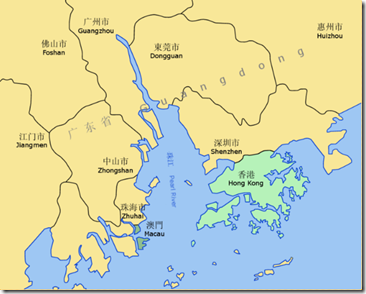
Located adjacent to mainland China - which has a long history of H5N1 outbreaks in poultry and in wild birds – Hong Kong sits at the outflow of the Pearl River to the sea.


image

Photo Credit- Wikipedia


The Pearl River Delta serves as a catchment area for dozens of tributaries flowing out of the highly industrialized and economically booming Guangdong Province, has been described as one of the more heavily polluted waterways in the world.


Industries, and farms, are known to use these rivers as a convenient disposal system, and what gets dumped upstream flows out to the sea past Lantau island.


In the winter of 2009, we saw a number of decomposed poultry carcasses wash up on the beaches of Hong Kong, presumably carried to the sea via the Pearl River, which flows out of Guangdong Province, China.


Some of my blog coverage of those events included:


Hong Kong Authorities Investigating More Dead Birds
All Eyes On Mainland China
More Concerns Surface Over China


Chinese authorities denied knowledge of any bird flu outbreaks in Guangdong Province and eventually the number of dead birds showing up on shore declined.


Again, over the winter of 2010-2011 we saw multiple reports of badly decomposed poultry carcasses washing up on Hong Kong beaches.


H5N1 Infected Chicken Carcass On Hong Kong Beach
Hong Kong: More H5N1 Infected Chickens Wash Up On Beach


And today, via Hong Kong’s Centre for Health Protection, we get this report of a badly decomposed goose carcass on the beach near Sham Tseng.


While this report doesn’t explicitly state that the carcass washed ashore, that has been the pattern observed in past years.


Goose carcass found in Sham Tseng tests positive for H5N1 virus

Ends/Thursday, January 26, 2012

A spokesman for the Agriculture, Fisheries and Conservation Department (AFCD) said today (January 26) that a goose carcass found in Sham Tseng was confirmed to be H5N1 positive after laboratory testing.


The goose carcass was found and collected at Anglers' Beach, 13 milestone, Castle Peak Road, Sham Tseng, on January 20. It was highly decomposed when found and required a series of tests before H5N1 avian influenza was confirmed today.


The spokesman said there were no poultry farms within 3 kilometres of where the dead goose was found. AFCD staff have conducted inspections and found no evidence of any backyard poultry being kept there. AFCD will continue to monitor the situation and conduct inspections of the area.


In view of the case, the AFCD has phoned poultry farmers to remind them to strengthen precautionary and biosecurity measures against avian influenza. Letters have been issued to farmers, pet bird shop owners and licence holders of pet poultry and racing pigeons reminding them that proper precautions must be taken.


The spokesman said the department would conduct frequent inspections of poultry farms and the wholesale market to ensure that proper precautions against avian influenza have been implemented. The department will continue its wild bird monitoring and surveillance.


"People should avoid personal contact with wild birds and live poultry and their droppings. They should clean their hands thoroughly after coming into contact with them. The public can call 1823 for follow-up if they come across suspicious sick or dead birds, including the carcasses of wild birds and poultry," the spokesman said.

(Continue . . . )


Admittedly one infected carcass doesn’t tell us much about what may –or may not – be going on upstream from Hong Kong, but it will be interesting to see if – as in years past – more of them continue to show up over the next few months.

Wednesday, January 04, 2012

Branswell: WHO on H5N1 Research Controversy


# 6051


Note: I’ve been otherwise occupied today, dealing with unexpected family matters and haven’t had an opportunity to post.


So I’m happy to report that Crof over at Crofsblog  has posted a number of stories, including one from Helen Branswell on the World Health Organization, and the incredibly complex and controversial issues they must consider regarding bird flu research projects around the world.


As always with a Branswell story, you’ll want to follow the link and read it in its entirety.


Controversial bird flu studies raise complex problem, defy easy solutions: WHO

Helen Branswell,  Wednesday, January 04, 2012 2:49 PM

Read it on Global News: Global Calgary | Controversial bird flu studies raise complex problem, defy easy solutions: WHO


I hope to be back blogging regularly tomorrow, but in the meantime check Crof, Arkanoid Legent, and A Times Memory – along with FluTrackers and the Flu Wiki – for breaking flu & infectious disease news.

Monday, January 02, 2012

Referral: A Summary Of Worldwide H5N1 Cases in 2011


# 6048


One of the senior moderators at FluTrackers, who goes by the moniker Laidback Al, has put together an impressive overview of human H5N1 cases reported during the year just past.


Al, who is well known at FluTrackers for his skill with maps and charts, uses visual representations of the data to good effect here.


I’ve posted just a snippet from the abstract and smaller versions of a couple of his graphics below, but I encourage everyone to go to the thread and read it in its entirety.


This is as fine of an overview of the situation as you are apt to find anywhere, and I’ve already downloaded a copy and put in into the reference folder on my desktop.


It’s a keeper, and highly recommended.


A Summary of Worldwide Human H5N1 Cases in 2011


Laidback Al, Senior Moderator, www.FluTrackers.com
January 1, 2012


Abstract – In 2011, 59 human cases of H5N1 were reported from around the world, a 23% increase over 2010. Five countries reported cases in 2011, Bangladesh, Cambodia, China, Egypt, and Indonesia. Almost half of the 59 cases (about 45%) were children under 10 years old. The fatality rate did not appreciably decline in 2011, about half of all the reported cases died. Four small family clusters were noted during the year. The source of exposure for all of the cluster cases has been reported as exposure to sick and dying poultry. None of these clusters resulted in sustained human to human transmission. Based on an analysis of the 2011 data, the potential for a virulent H5N1 pandemic has not diminished.

image


image

(Continue . . . )

Thursday, October 20, 2011

Host Genetic Susceptibility to Avian Influenza


 image

Photo Credit – CDC PHIL


# 5912


There is a belief, at least among some researchers, that there exists some – as yet unidentified -  genetic propensity for contracting the H5N1 virus.


This idea is based primarily on the observation that - despite ample opportunities for exposure – relatively few humans have been infected, and that the few clusters of human-to-human transmissions we've seen appear to happen primarily among blood relatives.


While this idea has been around for a number of years, it hasn’t exactly been universally embraced. 


In 2007 the CDC’s Emerging Infectious Diseases Journal published a study suggested that mere chance could account for family clustering.


Little Evidence for Genetic Susceptibility to Influenza A (H5N1) from Family Clustering Data

Virginia E. Pitzer , Sonja J. Olsen†, Carl T. Bergstrom‡, Scott F. Dowell†, and Marc Lipsitch

Abstract

The apparent clustering of human cases of influenza A (H5N1) among blood relatives has been considered as evidence of genetic variation in susceptibility. We show that, by chance alone, a high proportion of clusters are expected to be limited to blood relatives when infection is a rare event.


While this article proposed a plausible alternative theory for family clustering, it didn’t disprove that host genetics played a role in transmission.


In 2008, in the Journal of Infectious Diseases, we saw a study that suggested there might be a heritable susceptibility to death from the influenza virus.


Evidence for a heritable predisposition to death due to influenza.


Albright FS, Orlando P, Pavia AT, Jackson GG, Cannon Albright LA.

Abstract (extract)

Evidence for a heritable contribution to death due to influenza was examined using a resource consisting of a genealogy of the Utah population linked to death certificates in Utah over a period of 100 years. The relative risks of death due to influenza were estimated for the relatives of 4,855 individuals who died of influenza.


Both close and distant relatives of individuals who died of influenza were shown to have a significantly increased risk of dying of influenza, consistent with a combination of shared exposure and genetic effects. These data provide strong support for a heritable contribution to predisposition to death due to influenza.


While interesting, this study doesn’t provide us with a smoking gene. However, the following year a PLoS ONE  research article (doi:10.1371/journal.pone.0004857) came a bit closer.  


Entitled Host Genetic Background Strongly Influences the Response to Influenza A Virus Infections by Srivastava B, Błażejewska P, Heßmann M, Bruder D, Geffers R, et al., it reports on the results of experiments utilizing seven inbred strains of lab mice that were exposed to influenza A viruses.


From the abstract:


The genetic make-up of the host has a major influence on its response to combat pathogens. For influenza A virus, several single gene mutations have been described which contribute to survival, the immune response and clearance of the pathogen by the host organism.


While mouse models are often useful, what happens in mice doesn’t always correspond to what happens with human physiology.


Another (as far as I can tell, unpublished) study, conducted in Thailand, Singapore, and Indonesia by the South East Asia Infectious Disease Clinical Research Network, looks at whether:


. . .  host genetic factors may shed light on key pathogenic interactions between H5N1 and human cells . . .  ”


The overview of the study is available on clinicaltrials.gov at:


Host Genetic Susceptibility to Avian Influenza A/H5N1


Hopefully this will provide us with more clues as to why some people appear susceptible to the H5N1 virus, while others less so.


All of which serves as prelude for a study that appeared yesterday in the journal Clinical Infectious Diseases, which provides more evidence supporting the notion that host genetics influences acquisition and transmission of the H5N1 virus.


This study looked at 113 sporadic and 26 cluster outbreaks of the H5N1 virus in Indonesia through July 30th, 2009 and found  human transmission of bird flu to be heavily influenced by host genetic susceptibility.


Below you’ll find a link to the abstract, and an excerpt (slightly reformatted for readability) of the results. Go read it, and when you return I’ll have a little more.


Risk Factors for Cluster Outbreaks of Avian Influenza A H5N1 Infection, Indonesia

Tjandra Y. Aditama, Gina Samaan, Rita Kusriastuti1, Wilfried H. Purba, Misriyah, Hari Santoso, Arie Bratasena, Anas Maruf, Elvieda Sariwati, Vivi Setiawaty, Alex R. Cook, Mark S. Clements, Kamalini Lokuge, Paul M. Kelly, and I. Nyoman Kandun

(EXCERPT)

Risk factors for cluster outbreaks were the number of first-degree blood-relatives to the index case (adjusted odds ratio [aOR], 1.50; 95% confidence interval [CI]: 1.20–1.86) and index cases having direct exposure to sources of AI H5N1 virus (aOR, 3.20; 95% CI: 1.15–8.90).


Risk factors for secondary case infection were being aged between 5 and 17 years (aOR, 8.32; 95% CI: 1.72–40.25), or 18 and 30 years (aOR, 6.04; 95% CI: 1.21–30.08), having direct exposure to sources of AI H5N1 virus (aOR, 3.48; 95% CI: 1.28–9.46), and being a first-degree relative to an index case (aOR, 11.0; 95% CI: 1.43–84.66).


Siblings to index cases were 5 times more likely to become secondary cases (OR, 4.72; 95% CI: 1.67–13.35).


In Indonesia, young age (under 30) and being a blood relative to the index case in a cluster, were both found to significantly increase the odds of catching the virus.


While it is more than a little tempting to hope that some unidentified human genetic quirk limits the ability of the H5N1 virus to ever become a pandemic, the whole point of viral evolution is to figure out a host’s defenses.


What may have served as a limiting factor in the past, doesn’t provide a guarantee for the future.


Determining what (if any) genetic factors influence transmission could provide vital clues of just how big of a pandemic threat the H5N1 virus really presents, and might even lead to more effective treatments and prevention.


The difficulty, of course, is that studies like this take time to mount and to interpret, and the virus never sleeps.