Showing posts with label FluTrackers. Show all posts

Wednesday, April 08, 2015

FluTrackers: Zhejiang Province Reports 10 H7N9 Cases In March

image

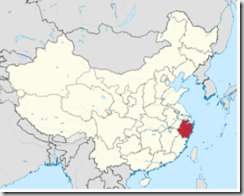
Zhejiang Province – Credit Wikipedia


#  9913


With the exception of a couple of cases reported out of Shanghai over the past week, we’ve heard almost nothing out of China regarding H7N9 cases since early March (see H7N9: No News Is . . . . Curious).  Compared to the first two waves, reporting this year has been more sporadic and less detailed, and so the hope has been that some end of month `bulk announcements’ might be forthcoming.


Today Sharon Sanders of FluTrackers has picked up just such a report, this time from the Zhejiang Provincial Health and Family Planning Commission, that has buried deep inside a (Chinese language) spreadsheet; notification that Zhejiang Province detected 10 H7N9 cases during the Month of March.


Since Sharon has done the detective work here, I’ll link you to her post on FluTrackers.


China - 10 H7N9 cases including 10 deaths reported by Zhejiang province for March 2015 - 8 new cases not previously known - April 8, 2015


Zhejiang Provincial Health and Family Planning Commission announced in March 2015 the province's legal infectious diseases

Release Date: 2015-04-08
Source: Ministry of Health and Family Planning Disease Control Department
 

March 2015 (at 0:00 on March 1, 2015 to March 31 24), the province reported a total of 20,029 cases of notifiable infectious diseases, the death of 43 people. Among them, the Group reported no cases of infectious diseases. B infectious diseases, in addition to SARS, polio, highly pathogenic avian influenza, rabies, Japanese encephalitis, anthrax, diphtheria, leptospirosis, schistosomiasis incidence and deaths foreign reports, the remaining 17 kinds of infectious disease cases were reported in 10,210 cases, 43 deaths; reported incidence of the top five diseases were: tuberculosis, syphilis, viral hepatitis, gonorrhea, measles, accounting for reported cases of class B infectious diseases 94.1% of the total.


The same period, the province's Class C infectious diseases were reported in 9819 cases and no deaths reported. The top three reported cases of diseases were other infectious diarrhea, hand-foot-mouth disease and influenza accounted for 93.9% of the total reported cases of class C infectious diseases.
Schedule:
March 2015 in Zhejiang Province of notifiable infectious disease, mortality tables

Zhejiang Provincial Health and Family Planning Commission
April 7, 2015

Click image for larger version

Name:	zhejiangh7n9march15.JPG
Views:	1
Size:	13.1 KB
ID:	19071

http://www.zjwst.gov.cn/art/2015/4/8...62_438460.html
machine translation


Interestingly, although included in the spreadsheet, there is no specific mention of H7N9 in the summary report. Kudos to Sharon for drilling down deep into the data to uncover this information.


Since we’ve seen nothing reported out of Guangdong Province – this year’s hotspot for H7N9 -  since March 7th, it will be interesting to see what ends up posted in their End of Month Epidemiological report as well.  Their reports tend to come out around the middle of the month.


Stay tuned.

Monday, March 16, 2015

Egypt’s H5N1 Bird Flu Beat Goes On . . . .

image

Credit WHO


# 9835


Despite the fact that Egypt is more than 4 months into the worst H5N1 outbreak since the virus emerged in the mid-1990s, with at last count – 115 human cases since November 1st – we get very little day-to-day information about the crisis.  


Unfortunately, no news doesn’t always equal good news.


The Egyptian Ministry of Health stopped reporting publicly on a regular basis in late January (see The Silence Of The Egyptian MOH), and the media’s coverage has been both sparse and confused.


The last `official’ number we received was from the World Health Organization’s March 3rd update, which showed 88 cases and 26 deaths for the year (see below), based on reports provided to them by the Egyptian MOH. 

image

Excerpted from WHO Case Count Table – March 3rd


Exactly how current Egypt’s last notification to the WHO was, and how many cases have been detected since this update, are open questions. Based on media reports, new cases continue to emerge, but details are often absent and the YTD totals remain murky at best.


Sharon Sanders, whose conservatively curated 2015 Egypt H5N1 Case List had  94 cases and 26 deaths as of this morning, but also has several `probable's’ in waiting. 


Today, however, the FAO published notifications of 17 recent human H5N1 cases from Egypt (see below), that appear to be recent enough not to have been included in the last WHO update.  Some of these, Sharon believes she’s already captured on her list, but others appear to be `new’.


As these FAO updates lack identifying details, like age and gender, accurately matching them up to the FluTracker’s list isn’t possible at this time, but it is a pretty good indication that Egypt’s bird flu outbreak continues to steamroll along.


Sharon estimates that perhaps 9 of these cases will end up added to her list, once the WHO publishes a usable line listing. 


All of which puts Egypt’s probable YTD case count something north of 100, and growing.  Shattering Vietnam’s record year (2005) which saw 61 cases and 19 deaths, and Indonesia’s 2006 total of 55 cases and 45 deaths.


The `good news’, as far as we can tell from FAO, WHO, and Egyptian statements is that these human infections appear to be caused by direct contact with infected birds. 


A couple of small `family clusters’ have been mentioned in recent months, but there’s been nothing at this point to indicate the virus is transmitting easily, or efficiently, from person-to-person.


Below you’ll find a listing of today’s FAO notifications:


  1. 16/03/2015: Egypt - Influenza – Avian Confirmed Influenza - Avian in Kafr-el-sheikh, for human
  2. 16/03/2015: Egypt - Influenza – Avian Confirmed Influenza - Avian in Al Jizah (giza), for human
  3. 16/03/2015: Egypt - Influenza – Avian Confirmed Influenza - Avian in Al Daqahliyah (dakahlia), for human
  4. 16/03/2015: Egypt - Influenza – Avian  Confirmed Influenza - Avian in Ash Sharqiyah (sharkia), for human
  5. 16/03/2015: Egypt - Influenza – Avian  Confirmed Influenza - Avian in Al Buhayrah (behera), for human
  6. 16/03/2015: Egypt - Influenza – Avian Confirmed Influenza - Avian in Al Buhayrah (behera), for human
  7. 16/03/2015: Egypt - Influenza – Avian Confirmed Influenza - Avian in Ash Sharqiyah (sharkia), for human
  8. 16/03/2015: Egypt - Influenza – Avian Confirmed Influenza - Avian in Al Minya (menia), for human
  9. 16/03/2015: Egypt - Influenza – Avian Confirmed Influenza - Avian in Qina, for human
  10. 16/03/2015: Egypt - Influenza – Avian Confirmed Influenza - Avian in Qina, for human
  11. 16/03/2015: Egypt - Influenza – Avian Confirmed Influenza - Avian in Al Buhayrah (behera), for human
  12. 16/03/2015: Egypt - Influenza – Avian Confirmed Influenza - Avian in Al Minya (menia), for human
  13. 16/03/2015: Egypt - Influenza – Avian  Confirmed Influenza - Avian in Al Qalyubiyah (kalyoubia), for human
  14. 16/03/2015: Egypt - Influenza – Avian Confirmed Influenza - Avian in Al Qahirah (cairo), for human
  15. 16/03/2015: Egypt - Influenza – Avian Confirmed Influenza - Avian in Al Jizah (giza), for human
  16. 16/03/2015: Egypt - Influenza – Avian  Confirmed Influenza - Avian in Al Buhayrah (behera), for human
  17. 16/03/2015: Egypt - Influenza – Avian  Confirmed Influenza - Avian in Ash Sharqiyah (sharkia), for human

Wednesday, April 23, 2014

The Fog Of MERS

surveillance

Credit CDC


# 8517


We are now two years into the MERS outbreak on the Arabian Peninsula, with roughly 350 human infections announced to date. Of those, nearly 30%  have been reported over the past month.  A spike in case reports that has many scientists wondering if the virus is better adapting to human hosts (see Osterholm On NPR Shots).


Given limited (and sometimes, totally absent) surveillance for the virus in the Middle East and the wide variability of illness it produces in humans (from asymptomatic to severe, or even fatal), the actual number of infections is undoubtedly much higher.


As with any disease, we usually only see the tip of the pyramid, and must rely on various tools (like seroprevalence studies) to estimate the true burden.   Tools that have yet to be well utilized in this MERS outbreak.


Although no surveillance system can expect to capture all of the cases, keeping epidemiological line listings remains an important tool.  It can show trends, geospatial clustering, epidemiological links between cases, and can suggest the rate at which an infection is spreading. 


Even under the best of conditions maintaining a line listing is a difficult job, but in the case of MERS, far too often the case data announced by the Ministries of Health in the region have either been delayed or have not contained the kind of information (onset dates, previous contacts, date of lab confirmation, etc.) that would be particularly useful.


Compared to the H7N9 information we’ve seen coming from the Chinese Authorities, the quality of data on MERS cases has been very uneven and disappointing.


Despite the difficulties involved, Sharon Sanders and the newshounds on FluTrackers have been maintaining an extensive 2012-2014 Case List of MoH/WHO Novel Coronavirus nCoV Announced Cases for the past 15 months. Case are linked to the MOH or WHO announcements, and are updated (when possible) with outcomes.  Cases are also grouped by `cluster’ and by country.


Almost from the beginning, however, it was apparent that there were `gaps’ in the reporting of cases out of the Middle East, and so Sharon posted the following announcement at the top of the list nearly a year ago.

image


As the number of cases has grown rapidly over the past month, we’ve seen some `blind’ announcements coming from various MOH’s, where batches of  `new cases’ are announced without any identifying details (age, gender, location, etc.).


When cases are eventually reported to the World Health Organization and posted on their Global Alert & Response webpage, there is no way to link those cases with earlier `blind’ reports.


Although the number of these `unable to match’ cases is small right now, keeping any sort of `count’ of cases grows more difficult with each passing day.  `Creeping errors’ are inevitable, and so today Sharon Sanders (who deserves the `Dogged Determination Award’ for curating this list for well over a year) made the following announcement on her list.


PLEASE NOTE: Due to apparent redundant case reporting, we are no longer tracking case totals. April 23, 2014


FluTrackers will continue to accrue and post cases, and that information will continue to be incredibly useful to bloggers, journalists, and researchers.  But there are limits as to what can be done when data is released haphazardly, or without adequate detail, by health ministries.


As to whether this signals a new, more serious `phase’ in the MERS outbreak  . . .  well, it is possible.


Unfortunately, the outside world isn’t being given enough information to make that determination.

Sunday, February 09, 2014

Zhejiang, Jiangsu, Guangdong, Hunan & Anhui Report Weekend H7N9 Cases

image

Credit CDC


# 8280


With the twin caveats that reporting during the weekend may not be as robust as during the week, and substantial pressure has been placed on the provinces to curb their reporting of cases (see Sandman & Lanard On China’s H7N9 Risk Communications), H7N9 case reports have dropped by roughly 50% over the past two days – although it is too soon to call it a trend.


The following 7 cases have been added to FluTrackers  H7N9 Case Line Listing over the past 48 hours, with 2 cases from Zhejiang, 2 from Guangdong, and one each from Anhui, Jiangsu, and Hunan provinces.


#325 - Man, 61, Xiaoshan District, Hangzhou, confirmed on Feb. 7, now in critical condition in a Hangzhou a hospital for treatment. Zhejiang province


#326 - Man, 38, Suining County of Shaoyang City. Hunan province


#327 - Man, 53, confirmed on February 8 pm, exposoure to diseased poultry, currently in a hospital for treatment of Taizhou, serious condition - Jiangsu province


#328 - Man, 66, Susong County, confirmed on February 8, now in a Anqing City Hospital for treatment. Anhui


#329 - Woman, 81, Luohu District, Shenzhen, confirmed on February 8, died on February 7. Guangdong province Death


#330 - Boy, 11, student, Huaiji County, Zhaoqing City, confirmed on February 8, currently in stable condition, treated at a local hospital sentinel. Guangdong province


#331 - Man, 68, Shaoxing Bridge District, confirmed on February 9, in severe condition, in a Shaoxing hospital for treatment. Zhejiang province


Of note, the 66 year-old from Susong county is the first reported case from Anhui province during this second wave, raising that province’s total to just 5 cases.  

image

Credit ECDC - Distribution of confirmed A(H7N9) cases by place of reporting, week 08/2013 to 06/2014, China (n=308)


After reporting scattered cases last spring, thus far Jiangxi, Henan, Shandong, and Hubei provinces have yet to report new cases during this second wave.

Thursday, January 30, 2014

Zhejiang, Guangdong & Jiangsu Provinces Report H7N9 Cases

image

Credit CDC


# 8249


So far this morning three provinces have announced a total of six new H7N9 cases, with five of those reported in serious or critical condition, and one death.  Unlike yesterday, which saw two pediatric cases (under age 18), today’s cases are all in their 60s and 70s.


First stop, Zhejiang province logs in with four new cases.


Zhejiang Province, four new cases of human infection of bird flu H7N9

Source: Ministry of Health and Family Planning Commission

January 30, 2014

Zhejiang Provincial Health and Family Planning Commission January 30 briefing, the province today added four cases of human infection with H7N9 avian influenza.

1, water certain patients, male, 75 years old, farmer, Yinzhou District, Ningbo people. January 29 confirmed human cases of avian influenza H7N9 infection. Is now in critical condition, a hospital for treatment in Ningbo.

2, patients Lin Moumou, male, 76 years old, retired, Zhenhai District, Ningbo people. January 29 confirmed human cases of avian influenza H7N9 infection. Now the condition is severe, in Ningbo, a hospital for treatment.

3, in certain patients, male, 78 years old, farmer, Yuhang District of Hangzhou people. January 29 confirmed human cases of avian influenza H7N9 infection. Is now in critical condition, in Hangzhou, a hospital for treatment.

4, the patient Moumou, male, 64 years old, retired, Jiangbei District, Ningbo people. January 29 confirmed human cases of avian influenza H7N9 infection. Is now in critical condition, a hospital for treatment in Ningbo.

Next up, Guangdong province, which reports a single new case and the death of a previously announced case.


Province added one case of human infection of bird flu H7N9

2014-01-30 11:32:35 Ministry of Health and Family Planning Commission | Views ( 333 ) | Text background color:

Ministry of Health and Family Planning Commission January 30 briefing, Jiangmen add one case of human infection with H7N9 avian influenza.


Daimou cases, female, 67 years old, live in Jiangmen City Xinhui District towns. January 24 the incidence of rescue in Jiangmen designated hospital January 28 died. January 29, the provincial CDC to review its throat swabs, the result is positive for H7N9 avian influenza virus nucleic acid.

Also, Meizhou City, January 24 confirmed cases of Hemou, on at 9:00 on January 30 after she died.


And our last stop (for now) is Jiangsu province,which also reports a single case.

Province 1 new confirmed cases of human infection with H7N9 avian influenza

Published :2014-01-30 

Provincial Health Department, the province confirmed cases of new H7N9 bird flu case of human infection.

Patients Qianmou, female, 75 years old. January 30 afternoon, Nanjing infected human H7N9 avian influenza cases diagnosed. Treatment in a hospital in Nanjing is currently in a critical condition.


Keeping excellent track of all of these cases is Sharon Sanders and the newshounds on FluTrackers.  Their (absolutely indispensible) H7N9 Case Line Listing already has these latest six cases added.


#268 - Man, 75, farmer, Yinzhou District, Ningbo. Confirmed on January 29, now in critical condition in a hospital for treatment in Ningbo. Zhejiang province


#269 - Man, 76, retired, Zhenhai District, Ningbo. Confirmed on January 29, now in serious condition in a Ningbo hospital for treatment. Zhejiang province


#270 - Man, 78, farmer, Yuhang District of Hangzhou. Confirmed on January 29, now in critical condition, in a Hangzhou hospital for treatment. Zhejiang province


#271 - Man, 64, retired, Jiangbei District, Ningbo. Confirmed on January 29, now in critical condition in a hospital for treatment in Ningbo. Zhejiang province


#272 - Woman, 67, Jiangmen City Xinhui District. Hospitalized on January 24, the patient died in a Jiangmen designated on January 28. Confirmed by CDC on January 29. Guangdong province Death


#273 - Woman, 75. Confirmed on January 30, currently in a hospital in Nanjing in critical condition. Jiangsu province

Friday, December 20, 2013

The Cost Of Fluing Business – Revisited

image


# 8095


Two years ago I mentioned to my readers that FluTrackers – a non-profit, all volunteer group of infectious disease newshounds – could really use your financial support. No one receives a salary, but the server (and other) costs run more than $700 a month, most of which is donated by the volunteers there.


Most of my readers also frequent FluTrackers . . . and those that don’t, well much of what I do here is dependant upon the work of the newshounds there.  I couldn’t possibly cover the vast expanse of media outlets and journals all by myself (see Newshounds: They Cover The Pandemic Front)


After 8 years of self-funding, the ability of FluTrackers to continue as it does today is in jeopardy.  Editor-in-Chief & President (and principal financial contributor) Sharon Sanders penned an appeal this morning asking for financial support, which I have reproduced below.  


I know how tough things are financially right now for everyone, but  I’m hoping that some of my readers will find a way to help.


Please donate to us so that we can stay online - and independent

It is expensive to carry the traffic to the FluTrackers server. While all of us donate our time, FluTrackers has fixed expenses that are incurred to remain independent. We maintain 1 dedicated server and 1 shared server (as a backup). We could let facebook and the various blog programs carry us for free but they do not provide the flexibility of the software that we use.

This year we have had incredible traffic on the server - over 50 million page views by users. Some of these page views are from denial of service attacks. I am not sure of the amount - maybe 10%. But, nevertheless, it is a cost to retain capacity on the server to sustain these attacks and still stay online.

There are still 11 days remaining in the year so the year end numbers will be a bit larger.


The above number DO NOT include bots from the google, msn, yahoo, baidu, etc. search engines. So the traffic to the server is actually higher. For instance, in November there were an additional 2,645,455 page views from search engine bots not including the user viewed pages of 1,252,138. The server worked to provide service for a total of 3,897,593 page views in November.


I know everyone is experiencing financial hardship in these depression/recession years. If you have $10 that you can spare, and you use our service, please consider donating to us. If you pay United States income taxes, it may be possible to deduct a donation to us on your tax form as we are a 503(c)(3) charity. Please check with your tax adviser.

We are all volunteers. FluTrackers does not pay any salaries. We do not accept any government or corporate money. We do not accept advertisements.

And we do not sell anything.

We are an independent media. One of the few in the world.

Thank you to the entire team here at FluTrackers. It remains an honor to work among you.

To everyone who views us, thank you for everything that you are doing to promote public health and human rights.


Happy Holidays and Happy New Year.

Saturday, September 07, 2013

KSA: MOH Announces New 4 New MERS Cases

image


# 7739


Today, the Saudi MOH has posted an update announcing 2 new (asymptomatic) cases, and 2 deaths which do not appear to have been previously announced.


An English language report has not yet been posted, but we do have the following machine translation off the MOH website.


(Health) of two infected (Corona) new Batin and the death of two other city, Riyadh

11/03/1434

A continuation of the work of Investigation epidemiological and follow-up carried out by the Ministry of Health for HIV (Corona) new strain of AIDS Middle East respiratory (MERS-CoV), announced the Ministry of Health for the registration of cases of HIV infection first citizen at the age of 18 years old, and the other for a girl aged 3 years, Mkhaltin case Batin area confirmed they did not show any symptoms and their good health status, praise be to God.

The ministry also announced for the registration of the cases of the death of the virus, the first resident in Medina at the age of 56 years, and works in the health sector, and the second of a citizen in Riyadh at the age of 53 years suffering from multiple chronic illnesses, Tgmdahma God rest in peace.


Trying to keep track of the newly announced MERS cases (both suspected & confirmed) is becoming more difficult with each passing day. The problem isn’t so much the number of cases, but the paucity of information we have on each case. 


This makes it much harder to go back and match up an earlier announced case when a fatality is reported, or to match an earlier `suspected’ case with confirmed ones.


While we can’t know about the asymptomatic or misdiagnosed cases that haven’t been reported, Sharon Sanders at FluTrackers maintains the most dependable and most current case list that I’ve seen.


FluTracker’s Master MERS-CoV List


FluTracker’s MERS-CoV LIst By Country Of Origin

The leapfrogging of media reports and announcements from the MOH, apparent delays in reporting, and the likelihood that some cases are not being caught by surveillance makes it impossible to know with any certainty how many cases have really occurred.


But what is apparent from the reports we are getting is that the MERS coronavirus continues to circulate and infect humans in the Middle East and that we are seeing a growing number of health-care workers infected.

Wednesday, August 21, 2013

The Hunt For Details On The New Qatari MERS Case

image


# 7583


Late yesterday afternoon (EDT) sparse news reports began to appear on the wires indicating that Qatar had diagnosed a MERS-CoV case (see Crofsblog  Qatar: New MERS case & Qatar: Still no real news on the new MERS case).  Repeated checks to the Qatar’s Supreme Council of Health since that time have failed to turn up any official announcement.


Overnight FluTrackers has managed to compile a list of news stories on this thread, but still, no official statement from the Qatari government.


Perhaps the closest thing we have right now is the following, from the Qatar News Agency (h/t Sharon Sanders on FluTrackers).


Supreme Council of Health announces cases of "Corona"

Doha, August 20 / Qena / Supreme Council of Health registered new cases of Corona virus that causes respiratory syndrome Middle East for a patient diagonal at the age of 59 years.


The council said in a press statement today that the patient was out of the country and felt symptoms before coming to the state, and upon arrival it was detected and diagnosed with the disease in the National Influenza Laboratory, stressing that "the patient Atqly treatment right now is in stable condition" ..


The statement emphasized the continued tightening of surveillance and monitoring procedures and infection control for all cases of acute respiratory infections, especially for those coming from the travel .. He pointed out that all the samples are examined at the National Influenza Laboratory in coordination with HMC.


The Supreme Council is keen to inform the health of citizens and residents to new information or health and epidemiology of infectious diseases and provide them with the latest developments and to provide appropriate support when needed.


The Council has recently launched an electronic page awareness about HIV Corona, through his website, a hotline devoted to inquire about the virus or any other infectious disease around the clock at (66,740,948)


A related report printed today in Al-Sharq, also posted by Sharon on Flutrackers, carries an interview with Dr. Mohammad Al-Hajri, Director of Health Protection and Communicable Diseases for Qatar, which primarily provides assurances that the health sector and Qatar’s government are working together to protect the public against this virus.


The upshot is that 16 hours after the first announcement all we really know is that a 59 year-old Qatari has been diagnosed with MERS-CoV, that he fell ill while out of the country, and was hospitalized when he returned to Qatar. 

Where he was when he fell ill, what contacts he may have had, even an onset date, are not given.


A final note that may be of some assistance to others looking for information. After multiple visits to Qatar’s Supreme Council of Health Website overnight I found my browser blocked from accessing the site.


I was directed to an error page that read:


The requested URL was rejected. Please consult with your administrator


I was able to restore access by deleting numerous cookies left behind by the sch.gov.qa website on my computer.


Quick Update:   I just talked to Sharon Sanders at FluTrackers, and she reports that her access to the Qatar Supreme Health Council site has been blocked as well.

Monday, July 15, 2013

The Price Of Vigilance Revisited

image

# 7481


As a one-man-band using Google’s gratis blogger platform, the costs of running this blog are negligible, so I don’t seek donations or run advertisements of any sort.


But for larger concerns, like ProMed Mail and FluTrackers – while they offer their services to the world without charge - there are considerable expenses involved. 


Server costs alone can run hundreds of dollars each month.Then there are accounting fees, legal fees, filing fees, Internet access, telephone expenses. . . .


This morning, Dr. Ian MacKay in his Virology Down Under blog took notice of ProMed’s current fund raising drive (see ProMED in need...), and asked if I’d lend my voice to the appeal.


As I’ve done so in previous years (see The Price Of Vigilance), I’m happy to do so again. I’ve also written of  FluTrackers need for donations as well (see The Cost Of Fluing Business).


FluTrackers.com Inc. is a 501(c)(3) charity, and donations can be made via credit card or Paypal via their front page.

image


Both organizations do remarkable work, almost entirely by dedicated volunteers scattered around the world, and both could use your financial support.

Tuesday, May 07, 2013

A Confusing Coronavirus Picture In Saudi Arabia

image


# 7240


While the welcomed weekend communications by Dr. Ziad Memish – KSA’s Deputy Minister of Public Health - have added valuable line listing details on their coronavirus cases, our understanding of the scope of that outbreak remains very limited.


The sparse epidemiological comments he’s provided so far suggest some degree of human-to-human transmission has occurred and ties that to a single single health care facility.


But an article overnight by respected journalists Ellen Knickmeyer and Betsy McKay in the Wall Street Journal, and some hard-to-decipher translated Arabic news items on FluTrackers, raise questions over exactly what is going on with this outbreak.


Our first stop, the WSJ piece, which quotes a hospital's executive director as confirming that some coronavirus cases were being treated at his facility, but denying that his facility was the only one treating coronavirus patients.


If his statements are accurate, this would suggest a bigger problem than the Saudis are currently owning up to. 


This article also contains reaction from CIDRAP Director Michael Osterholm. Follow the link to read:


  • Updated May 6, 2013, 6:34 p.m. ET

Virus's Toll in Saudi Arabia Raises Fears of Faster Spread

Saudi Arabia Reports 7 Deaths in Outbreak of SARS-Like Disease

By ELLEN KNICKMEYER in Hofuf, Saudi Arabia, and BETSY MCKAY in Atlanta

Saudi Arabia's announcements in the past five days of seven new deaths from a SARS-like virus have heightened fears that the Mideast outbreak is entering a more-aggressive phase.


On Monday, security guards, their faces covered by green medical masks, stood watch outside the intensive-care unit at a small hospital in Hofuf, in the country's Eastern province, that is treating some of the victims in the most lethal surge yet of the year-old outbreak of a novel coronavirus.

(Continue . . .)


Other reporting in Arabic papers – which suffer greatly from the limitations of machine translation – paint a confused picture as well.


Caveat: Given the cryptic nature of machine translations in general, I have deep reservations over drawing too much from these type of reports, so I present them without endorsement. 


One such report, captured and translated last night on FluTrackers, mentions a press conference held by the KSA’s MOH, where they supposedly announced the virus had picked up `three-gene mutations, suggesting that there is a shift in the virus’.

This article also mentions multiple hospitals in regards to this outbreak, but the translation is so syntax-challenged, I’d be reluctant to draw any firm conclusions from it.


There are also reports of wild rumors, and of panicked parents keeping kids home from school, and the worried well showing up at hospitals.


So we are left with a lot of questions, and very few answers. 


  • Does this outbreak extend beyond one facility?  
  • Has the virus really `mutated’?
  • Has the virus become more easily transmissible?
  • Do the Saudis have it contained?


I certainly don’t pretend to know the answer to any of these questions.  


We may simply be seeing a public relations backfire created as a direct, and 100% foreseeable, consequence of an overly secretive Saudi risk communications policy.


If there’s one thing you can count on in a crisis, it’s that rumors and speculation will rush in to fill any information void.


The other possibility is that this outbreak is somehow substantially worse than we are being told. But if that’s true, it seems unlikely that they could keep it hidden for very long.


Which puts us in a watchful waiting mode, looking for any indication – one way or the other – of how this outbreak is playing out.

Saturday, May 04, 2013

FluTrackers: Preliminary Analysis Of 27 Coronavirus Cases

image

Credit Laidback Al on FluTrackers


# 7228


Laidback Al is back at it on FluTrackers, making it easier for all of us to sort out and keep track of the now-year-long slow emergence of the novel coronavirus on the Arabian peninsula.


He provides maps, details, and commentary in his latest analysis, and it is well worth downloading and keeping as a reference.


Preliminary Overview of 27 NCoV Cases, May 3, 2013

Laidback Al, Senior Moderator, www.FluTrackers.com

A novel betacoronavirus (NCoV) infecting humans was first identified in late of 2012. Through April 15, 2013, a total of 17 cases have been reported from various countries. Incomplete case patient data on the first 17 NCoV cases can be found at this ECDC link.


In the past three days, another 10 cases have been reported, all from Saudi Arabia (FT Link). This discussion presents an over view of the first 27 cases of NCoV. The publicly available information on these cases is limited and sometimes official sources provide conflicting data. The data and discussions presented here are based on the information available as of May 3, 2013.


Quote:


Coronaviruses are a large, diverse group of viruses that affect many animal species. A few of these viruses cause a wide range of respiratory illness in humans, typically with "common cold" symptoms. Genetic sequence data indicate that this new virus is a beta-coronavirus similar to bat coronaviruses, but not similar to any other coronavirus previously described in humans, including the coronavirus that caused severe acute respiratory syndrome (SARS) . . . (link)


This coronavirus is referred to as betacoronavirus 2c EMC2012, but it is also cited in the research literature as HCoV-EMC/2012, NCoV, HCoV, and HCoV-EMC.


“HCoV-EMC/2012 is the sixth coronavirus known to infect humans and the first human virus within betacoronavirus lineage C” (link). As noted by the CDC article this coronavirus shares similarities with bat coronavirus (link). Sequence analysis of fecal specimens of bats in Ghana and Europe led researchers to conclude that EMC/2012 originated from bats (link).

(Continue . . .)


Al, who provides an abundance of charts, graphs and maps on Flutrackers, frequently produces these in-depth overviews. 


Two recent ones well worth revisiting, include:


H7N9: A Demographic and Geographic Overview
H5N1 in 2012: The Year in Review

Monday, April 22, 2013

H7N9: A Demographic and Geographic Overview


# 7176


Regular readers of this blog are already aware of the infectious disease news gathering and analysis that are the daily work product of the volunteers at flu forums like FluTrackers and the Flu WIki.


I’ve written of their work often, most recently in Newshounds On The Trail Of The Latest Beijing H7N9 Report.


One of the creative talents, as senior moderator at FluTrackers is Laidback Al, who produces and updates maps and charts for the site, and from time to time, generates detailed analyses of disease outbreaks. 


As an example, each January Al produces a terrific review of the previous year’s H5N1 cases (see H5N1 in 2012: The Year in Review).


Today Al has produced a new text and graphical report on the first 100 cases in the H7N9 outbreak in China, called:


A Demographic and Geographic Overview of the first 100+ Human Cases of Influenza A(H7N9) in the People’s Republic of China, April 22, 2013


Abstract


A novel influenza virus was discovered infecting humans in mid-February in the People’s Republic of China (China) and was reported publicly on March 31, 2013. This influenza virus, Influenza A (H7N9), has infected more than 100 individuals in China since mid-February. It has not yet been reported outside of China. Among the reported cases, it is virulent with a high mortality rate. Men are twice as likely to contract the virus as women. Most reported cases are elderly individuals. Although limited human-to-human transmission may have occurred among these cases, the reported data does not indicate sustained human-to-human transmission.


Introduction


Since the first official report of human infections of Influenza A(H7N9) in China on March 31, 2013 (link) more than 100 human cases of influenza A(H7N9) have been reported from China to the World Health Organization (WHO) as a reportable disease under International Health Regulations. Data incorporated into this discussion is primarily based on provincial and municipal Departments of Health announcements, official media reports, and updates by WHO. There is no official line list of human cases infected with H7N9 that is publicly available although the Western Pacific Region of WHO published a table of cases that was current through April 17, but has now removed that page from the web.


The information discussed here is based on information compiled by members of FluTrackers.com. FluTrackers (FT) is also maintaining a current numbered list of cases (FluTrackers link). The case numbering sequence used by FluTrackers is based on the date of official report, not onset dates. This list corresponds to the cases reported to WHO by China (WHO archive link), although this discussion includes the asymptomatic 4-year-old boy from Shunyi district, Beijing who tested positive for H7N9 but is not included in the official case count (FT Case Number 61).

image

(Continue . . . )

I’ve just reproduced a small sampling of this report, and I invite you to visit this link to view it in its entirety.

Saturday, April 13, 2013

Keeping Track Of The H7N9 Outbreak

image

ECDC Map


# 7129


With the confirmed case count nearing 50, and those numbers in all likelihood to rise, keeping track of individual cases, and outcomes, has become a demanding, and at times, frustrating job.


Gleaning data from press releases and news stories (which can vary in the type, and reliability, of data), flublogians around the world are trying various means to keep information straight and organized.  


Aiding flu-literate journalists like Helen Branswell, Maggie Fox, Jason Gale, and Dr. Richard Besser and bloggers like Crof and Maryn McKenna, and myself, there’s a small army of (mostly volunteer) analysts crunching numbers and making charts available online.


Dr. Ian M. Mackay from the University of Queensland in Australia maintains the  Virology Down Under website and blog, where he is keeps tabs of mew cases and analyzes the data  (link).


As you can see by his terrific chart below, the dataset is beginning to get crowded.  But the trend in onset dates revealed by this graphic provides a much better sense of how this outbreak is progressing. You’ll find more than just charts on the VDU H7N9 website, and so it is worth visiting every day.


Timeline-H7N9-WEEKS


Similarly, the newshounds on FluTrackers are continually scouring the Internet for new case reports, which Sharon Sanders uses to update their running list of confirmed and suspected cases.


2013 Human Case List for Confirmed and Suspected H7N9 Type Influenza*


#1 - Man, 87, onset date February 19, died March 4 - Shanghai Death+
#2 - Man, 27, onset date February 19, died March 10 - possible pork contact - Shanghai Death
#3 - Woman, 35, onset date March 15, hospitalized in critical condition - possible poultry contact - Chuzhou City, Anhui Province Death++
#4 - Woman, 45, onset date March 19, hospitalized March 27 - poultry culler - Jiangning district of Nanjing, Jiangsu province
#5 - Woman, 48, onset date March 19, hospitalized March 30 - Shuyang county of Suqian City, Jiangsu province
#6 - Man, 83, onset date March 20 - hospitalized March 29 - Wujiang district of Suzhou, Jiangsu province Death
#7 - Woman, 32, onset date March 21 - hospitalized March 28 - Binhu district of Wuxi City, Jiangsu province
#8 - Man, 38, onset date March 7, hospitalized March 18, died March 27 - reported to be a cook - Taicang, Zhejiang province Death
#9 - Man, 67, onset date March 25, hospitalized March 25, died April 2? Hangzhou, Zhejiang province
#10 - Man, 64, onset date hospitalized March 29, Zhejiang province Death
#11 - Man, 48, onset date March 28, engaged in chickens and ducks transportation work - Shanghai Death
#12 - Woman, 67, onset date March 22, hospitalized on March 25 in critical condition - Shanghai
#13 - Woman, 52, onset date March 27, died on April 3 - Shanghai Death
#14 - Child, 4, onset date March 31, mild case. Shanghai
#15 - Woman, 61, onset date March 20, from a retirement home - in critical condition Qinhuai District, Nanjing, Jiangsu province
#16 - Man, 79, onset date March 21, from a retirement home. Qinhuai District in Nanjing, Jiangsu province, in critical condition
#17 - Man, 74, onset date March 28, hospitalized March 3, farmer, died April 11 Shanghai Death note
#18 - Man, 66, onset date March 29, hospitalized April 2, in treatment - from a retirement home, Shanghai
#19 - Man, 59, onset on March 25, hospitalized on March 30 Shanghai
#20 - Man, 67 - onset on March 29. Hospitalized on March 30 - in treatment - Shanghai
#21 - Man, 55, onset date March 28, hospitalized April 1 in stable condition - poultry worker - Anhui province
#22 - Age 64, onset date: April 1. Hospitalized on April 7. - Shanghai Death
#23 - Man, 85, onset date March 28, hospitalized April 8 in critical condition, retirement home, Nanjing Shimonosek Jiangsu province
#24 - Woman, 25, pregnant, onset date: March 30. - In critical condition. Zhenjiang City area, Jiangsu province
#25 - Woman, 51, onset date March 13, hospitalized, Huzhou City, Zhejiang Province
#26 - Man, 79, onset date March 29, hospitalized in critical condition, Hangzhou, Zhejiang Province
#27 - Man, 62, onset date April 1, hospitalized April 5, retired Shanghai
#28 - Man, 77, onset date April 3, hospitalized April 7, retired Shanghai
#29 - Man, 65, hospitalized - a farmer Hangzhou, Zhejiang Province
#30 - Man, 70, onset date March 29, Wuxi Huishan, Jiangsu province
#31 - Man, 74, onset date April 2, Jiangyin City, Wuxi City, Jiangsu province
#32 - Woman, 76, onset date April 1, hospitalized April 5, Shanghai
#33 - Woman, 81, hospitalized April 4, farmer , Shanghai
#34 - Man, 31, chef, Yangzhou City, Jiangsu province
#35 - Man, 56, teacher, Suzhou Industrial Park, Jiangsu province
#36 - Man, 74, onset date March 31, hospitalized April 5, died April 11 retiree, Shanghai Death
#37 - Woman, 83, onset date April 2, hospitalized April 7, Shanghai
#38 - Man, 68, onset date April 4, hospitalized April 9, Shanghai
#39 - Man, 53, onset date April 3, hospitalized April 10, Shanghai
#40 - Man, 86, onset date April 3, hospitalized April 6, Shanghai
#41 - Man, 66, onset date April 8, hospitalized April 9, Hangzhou, Zhejiang province
#42 - Man, 74, onset date April 6, hospitalized April 11, Hangzhou, Zhejiang province
#43 - Woman, 54, onset date April 6, hospitalization April 12, Huzhou, Zhejiang province
#44 - Child, 7, hospitalized April 11 Shunyi District Beijing
#45 - Woman, 77, Nanjing former Baixia District, Jiangsu province
#46 - Man, 72, Changshu, Jiangsu province
#47 - Man, 56, onset date April 1, hospitalized April 4; his wife was confirmed positive on April 4, Shanghai
#48 - Man , 65, onset date April 3, hospitalized April 9. Zhejiang Province
#49 - Man , 38, onset date April 6, hospitalized April 11. Zhejiang Province


Laidback Al on FluTrackers also updates charts and maps on this outbreak on this thread.


Another graphical representation of cases, along with links to individual news reports, can be found on Healthmap’s H7N9 page.


image


And the ECDC continues to provide almost daily epidemiological updates (April 13th edition), including charts and maps, on this emerging virus.  Check the ECDC home page for new updates.


image


image


There are dozens of newshounds on flu forums like FluTrackers and The Flu Wiki, scores of people on twitter, and likely hundreds working behinds the scenes at public health organizations like Hong Kong’s CHP, the World Health Organization, the CDC, China’s CDC, and the ECDC who make it their job to keep the numbers straight, and the information flowing.


Admittedly, given the non-stop internet news cycle, and the leapfrogging of updates, it can still be difficult to keep abreast of the latest case counts. 


But without the efforts and generosity of the people mentioned above, and many more like them, it would probably be impossible.


At some point, if this outbreak grows substantially, it may become impractical to keep track of each individual case.


Nevertheless , the work being done right now is invaluable to those of us trying to make sense of the situation. And so a tip of my hat, and a world of thanks, to all those who are pitching in to keep the information rolling.
Wednesday, April 10, 2013

Three Graphic Descriptions Of China’s H7N9 Outbreak

image

Credit NIAID


# 7106


One of the hallmarks of the bird flu outbreak in China is how quickly the numbers change. Almost before a news article, blog post, or expert assessment can be created and published, the case count changes.


Still, stopping to examine the cases and trends as they existed 12 or even 24 hours ago has real value. When we look more than just the latest case totals, we can sometimes see patterns that can improve our understanding of an outbreak.


With that in mind, a look at three graphic analyses of the H7N9 outbreak, all based on information that is current as of the last 24 hours.


These charts will undoubtedly be updated and revised as new data comes in, and so they should be checked often.


First stop, the terrific timeline chart being maintained by Professor Ian MacKay on the Virus Down Under H7N9 website.


image


After seeing only a couple of cases in January, the number of new cases jumped markedly between March 18th and April 1st. Recent reports indicate new infections continuing into the first week of April.


Be sure to check out the narrative provided on this webpage as well.


Next stop is a An Overview of Human Cases of H7N9 in China, April 9, 2013, created by Laidback Al on FluTrackers. 


Al produces a variety of maps and charts at FT, and each January creates a detailed look at the previous year’s Avian flu activity (see H5N1 in 2012: The Year in Review).


Follow this link to view Al’s graphic characterization of China’s H7N9 outbreak.

image


And last stop, the latest Epidemiological Assessment of novel influenza A virus A(H7N9) in China released this morning from the ECDC.


image

image


While these graphs and charts may not provide us with the answers we seek regarding this outbreak, sometimes looking at the data in a fresh way can help us to ask the right kind of questions.


And from there, we may gain a better insight into what this virus is doing, and where this outbreak may be headed.

Monday, January 14, 2013

Updating The New York H5N? Report

image

Photo Credit – FAO


# 6856


Two days ago in (Presumably) LPAI H5N1 Found In New York, I blogged on a report from National Chicken Council’s Washington Report indicating that (presumably Low Pathogenic) H5N1 avian influenza had been detected at a New York live bird market, resulting in a halt of poultry exports to Japan & Taiwan.


Since then, a lot of people have been trying to track down details on this story, with very little success.


At least until this afternoon, when Sharon Sanders of FluTrackers managed to get responses from two members of the National Chicken Council who informed her that:


The USDA notified them of a laboratory confirmed low pathogenic H5N1 trace picked up from routine surveillance from a live market in one of the boroughs of New York City. This occurrence was approximately 2 weeks ago and they characterized this market as some type of neighborhood venue that sells non-commercially grown poultry i.e. not from a large commercial grower.


They also further clarified that the test came back positive for H5, but the N1 component was not detected.


Shortly after 5pm today, the USDA’s APHIS (Animal and Plant Health Inspection Service) forwarded the following information to Flutrackers and ProMed Mail  (along with a number of other recipients).


On behalf of Veterinary Services, APHIS, US Dept of Agriculture, I’d like to provide the following additional information on the 12Jan13 posting “PRO/AH/EDR> Avian influenza (H5N1:low path) - USA: (NY) poultry, RFI”:

· A Muscovy duck from a Brooklyn, NY Live Bird Market tested positive by rRT-PCR specific for the hemagglutinin H5 gene and negative for the neuraminidase N1 gene of avian influenza virus.

· Virus isolation is pending and we do not have an N-type at this time.

· The amino acid sequencing at the hemagglutinin protein cleavage site is compatible with North American low pathogenic avian influenza.

·  The market underwent an immediate sell down, closure and cleaning and disinfection (C&D). The C&D was completed on 1/11/13.

· Tracing and testing of the source flocks is underway.


To read how this whole detective story has unfolded over the past 48 hours, I would invite you to read this thread on FluTrackers. 

Kudos to the entire FluTrackers Team for staying on top of this story.


As I wrote on Saturday, the discovery of LPAI H5N1 in the United States is neither terribly unusual, nor is it a public health concern.  But as LPAI viruses can be progenitors of more virulent HPAI strains, steps will have to be taken to contain and eradicate this virus.