Showing posts with label epidemiology. Show all posts

Wednesday, May 28, 2014

BMC Medicine: Comparison of Official, Public & `Crowd Sourced’ H7N9 Line Lists

 image

Figure 1 - Source BMC Medicine


# 8673


The internet has provided new and more efficient ways to accrue, organize, and access epidemiological data and has spawned multiple projects to identify, quantify, and dissect disease outbreaks. 


Over the year’s we’ve looked at a number of these projects, including the efforts of volunteer flu forums (including FluTrackers & The Flu Wiki), crowd-sourced data-gathering platforms like Flu Near YouHealthmap, ProMed Mail, and  Google’s Flu Trends, and of course the analysis and work product of scientist-bloggers like Dr. Ian Mackay, Andrew Rambaut, and Maia Majumder.


Last April, ECDC director Marc Sprenger noted the contribution of these, and other `crowd epidemic intelligence’ efforts online, in a Eurosurveillance  editorial called - Middle East Respiratory Syndrome coronavirus – two years into the epidemic  M Sprenger, D Coulombier – by writing:


Interestingly, over the past two years, voices on social media have been increasingly important for reports about the MERS-CoV situation as they have kept the topic high on the agenda of by raising pertinent questions, curating content on blogs, and reporting on cases in near-real time via Twitter. We have seen the MERS CoV debate on Twitter engage bloggers and journalists along with public health organisations, epidemiologists and doctors alike, often resulting in faster reporting and better understanding of the situation. This debate relates to a new phenomenon called ‘crowd epidemic intelligence’ [12] and is particularly important given the many unknowns about the MERS epidemic.


Regular readers of this blog are no doubt familiar with how often I refer to FluTracker’s MERS and H7N9 case lists, and so I was gratified to see among the references cited in this article was:


Of course, FluTrackers maintains just one of several such lists, which brings us to a new study – published today in BMC Medicine – that  compares  the `official’ Chinese CDC line list of H7N9 cases to 5 publicly-sourced listings:

  • Health Map
  • Virginia  Tech
  • Bloomberg  News
  • The University of Hong Kong
  • FluTrackers

This is an open-access study, so follow the link to read it in its entirety:

Accuracy of epidemiological inferences based on publicly available information: retrospective comparative analysis of line lists of human cases infected with influenza A(H7N9) in China


Eric HY Lau, Jiandong Zheng, Tim K Tsang, Qiaohong Liao, Bryan Lewis, John S Brownstein, Sharon Sanders, Jessica Y Wong, Sumiko R Mekaru, Caitlin Rivers, Peng Wu, Hui Jiang, Yu Li, Jianxing Yu, Qian Zhang, Zhaorui Chang, Fengfeng Liu, Zhibin Peng, Gabriel M Leung, Luzhao Feng, Benjamin J Cowling and Hongjie Yu


BMC Medicine 2014, 12:88 doi:10.1186/1741-7015-12-88
Published: 28 May 2014

Abstract


Background


Appropriate  public  health  responses  to  infectious  disease  threats  should  be  based  on  best available evidence,  which requires timely reliable data for appropriate  analysis. During the early stages of epidemics, analysis  of  ‘line  lists’  with  detailed  information  on  laboratory confirmed cases can provide important insights into the epidemiology of  a specific disease.


The  objective  of  the  present  study  was  to  investigate  the  extent to  which  reliable epidemiologic  inferences could  be  made  from  publicly-available  epidemiologic  data  of  human infection with influenza A(H7N9) virus.


Methods


We  collated  and  compared  six  different  line  lists  of  laboratory-confirmed  human  cases  of influenza A(H7N9) virus infection in the 2013 outbreak in China, including the official line list constructed by the Chinese Center for Disease Control and Prevention plus five other line lists  by  Health Map,  Virginia  Tech,  Bloomberg  News,  the  University  of  Hong  Kong  and FluTrackers, based on publicly-available information.

We characterized clinical severity and transmissibility  of  the  outbreak,  using  line  lists  available  at specific dates to estimate epidemiologic parameters, to replicate real-time inferences on the hospitalization fatality risk, and the impact of live poultry market closure.


Results


Demographic information was mostly complete (less than 10% missing for all variables) in different  line  lists,  but  there  were  more  missing  data  on  dates  of hospitalization,  discharge and  health  status  (more  than  10%  missing  for  each  variable).  The  estimated  onset  to hospitalization  distributions  were  similar  (median  ranged  from  4.6  to  5.6  days)  for  all  line lists. Hospital fatality risk was consistently around 20% in the early phase of the epidemic for all line lists and approached the final estimate of 35% afterwards for the official line list only.

Most of the line lists estimated >90% reduction in incidence rates after live poultry market closures in Shanghai, Nanjing and Hangzhou.


Conclusions


We demonstrated that analysis of  publicly-available data on H7N9 permitted  reliable assessment of  transmissibility and  geographical  dispersion,  while  assessment of clinical severity was less straightforward. Our results highlight the potential value in constructing a minimum  dataset  with  standardized  format  and  definition,  and  regular  updates  of  patient status. Such an approach could be particularly useful for diseases that spread across multiple countries.

(Continue . . . )

Thursday, May 15, 2014

Serological Testing Of 2012 Jordanian MERS Outbreak

Coronavirus

Photo Credit NIAID


# 8625


Our first indication that a novel coronavirus was circulating in Saudi Arabia came from a September 2012 letter posted in ProMed Mail (NOVEL CORONAVIRUS - SAUDI ARABIA: HUMAN ISOLATE) by Dr. Ali Mohamed Zaki - an Egyptian Virologist working In Saudi Arabia. Retrospective analysis, however, showed the MERS coronavirus to have been involved in a pneumonia outbreak at a hospital in Jordan in April of that year.


That outbreak, which made headlines in the Middle East and was monitored by FluTrackers at the time, appeared to involve at least 11 people, 2 of whom died. 


Testing for `the usual pathogenic suspects’  found no identifiable cause for the illness. This happens more often than most people might imagine,  but since the outbreak appeared to be contained, it was temporarily forgotten.


After a handful of novel coronavirus cases were identified during the fall of 2012, retrospective testing was done on some of the samples taken from that outbreak, and in December 2012 (see Background and summary of novel coronavirus infection) we learned that at least 2 of those cases tested positive for nCoV (the old name for MERS-CoV).


Making this Jordanian hospital outbreak the earliest identified human infections from this emerging coronavirus.


Serological testing at the time was still in its infancy (in late 2012, only 9 cases had been identified), and so while more cases from this hospital were suspected, verifying that fact wasn’t possible at the time.


Fast forward to June of 2013 and Helen Branswell brought us her report on the research by Dr. Mohammad Al-Abdallat &  Dr. Mark Pallansch et al., that found evidence that at least 10 people had been infected during that earliest outbreak (see MERS-CoV: Early Serological Results).

Helen interviewed Dr. Pallansch, Director of the CDC’s division of viral diseases, on the limitations of testing at the time:


He explained that there are still questions about the accuracy of blood tests for MERS, because labs like the CDC which have developed tests have been unable to validate them to this point. To do that, a lab needs both samples known to be negative and samples known to be positive to be sure the test finds only true cases. The only country with lots of positive blood samples is Saudi Arabia, and it is still working out an agreement with the CDC to share blood samples.

So the U.S. agency is using three different tests on the samples. They believe the tests are specific, meaning that positive results are likely true positives, Pallansch said. But they haven't been able to assess the sensitivity of the tests, meaning they cannot be sure that a negative result is a true negative.


All of which serves as prelude to a new study by these same researchers, which appeared yesterday in the journal Clinical Infectious Diseases, that seeks to further update, describe, and quantify this outbreak.


Hospital-associated outbreak of Middle East Respiratory Syndrome Coronavirus: A serologic, epidemiologic, and clinical description

Mohammad Mousa Al-Abdallat*,1, Daniel C. Payne*,2, Sultan Alqasrawi1,  Brian Rha2,3, Rania A. Tohme4, Glen R. Abedi2, Mohannad Al Nsour5,  Ibrahim Iblan6,  Najwa Jarour1, Noha H. Farag7,  Aktham Haddadin8,  Tarek Al-Sanouri8,  Azaibi Tamin2,  Jennifer L. Harcourt2,  David T. Kuhar9,  David L. Swerdlow2,  Dean D. Erdman2, Mark A. Pallansch2, Lia M. Haynes2,  Susan I. Gerber2, the Jordan MERS-CoV Investigation Team

Abstract

Background. In April 2012, the Jordan Ministry of Health (JMoH) investigated an outbreak of lower respiratory illnesses at a hospital in Jordan; two fatal cases were retrospectively confirmed by rRT-PCR to be the first detected cases of Middle East Respiratory Syndrome (MERS-CoV).

Methods. Epidemiologic and clinical characteristics of selected potential cases were assessed through serum blood specimens, medical chart reviews and interviews with surviving outbreak members, household contacts, and healthcare personnel. Cases of MERS-CoV infection were identified using three U.S. Centers for Disease Control and Prevention (CDC) serologic tests for detection of anti-MERS-CoV antibodies.

Results. Specimens and interviews were obtained from 124 subjects. Seven previously unconfirmed individuals tested positive for anti-MERS-CoV antibodies by at least two of three serologic tests, in addition to two fatal cases identified by rRT-PCR. The case fatality rate among the nine total cases was 22%. Six cases were healthcare workers at the outbreak hospital, yielding an attack rate of 10% among potentially exposed outbreak hospital personnel. There was no evidence of MERS-CoV transmission at two transfer hospitals having acceptable infection control practices.

Conclusion. Novel serological tests allowed for the detection of otherwise unrecognized cases of MERS-CoV infection among contacts of a Jordan hospital-associated respiratory illness outbreak in April 2012, resulting in a total of nine test-positive cases. Serologic results suggest that further spread of this outbreak to transfer hospitals did not occur. Most cases had no major, underlying medical conditions; none were on hemodialysis. Our observed case fatality was lower than has been reported from outbreaks elsewhere.


Since people who are infected with a virus only shed that virus at detectable levels for a limited amount of time (usually days, sometimes weeks) there is a narrow window of opportunity to test them using standard rRT-PCR techniques.


Creating, and validating serological tests - which can detect antibodies showing that a person has previously been infected - is our best hope for determining just how widespread a viral illness really is in any population.


Today’s study reconfirms a good deal of what was previously known, or suspected, about the Jordanian hospital outbreak. If confirms that at least 9 people were infected in this cluster.  It also indicates that the virus did not spread efficiently beyond the environs of the hospital, and suggests an attack rate of 10% among hospital employees. 


While it may seem more important to be able to detect where a virus currently is (detecting active infections via  rRT-PCR testing or viral culture), you really can’t begin to understand a virus’s behavior, or where it might be going, until you can figure out where it’s been.

Friday, August 30, 2013

JID: A Pair Of H7N9 Studies

image


# 7617


The IDSA’s Journal of Infectious Diseases published a pair of new studies on the H7N9 virus yesterday that don’t exactly break new ground, but do add to what we’ve learned from earlier studies.


While full access to these studies requires a subscription, we can glean the basics from their abstracts.


The first looks at the transmissibility and pathogenicity of the H7N9 virus in ferrets, and finds (as we’ve seen previously in Nature: Limited Airborne Transmission Of H7N9 Between Ferrets & Science: H7N9 Transmissibility Study In Ferrets) that this emerging avian flu virus could be transmitted between ferrets (albeit at low levels) via respiratory droplets.


The Novel Avian-Origin Human A (H7N9) Influenza Virus Could be Transmitted between Ferrets via Respiratory Droplets

Lili Xu1,†, Linlin Bao1,†, Wei Deng1,†, Libo Dong3,†, Hua Zhu1, Ting Chen1, Qi Lv1, Fengdi Li1, Jing Yuan1, Zhiguang Xiang1, Kai Gao1, Yanfeng Xu1, Lan Huang1, Yanhong Li1, Jiangning Liu1, Yanfeng Yao1, Pin Yu1, Xiyan Li2, Weijuan Huang2, Xiang Zhao2, Yu Lan2, Junfeng Guo2, Weidong Yong1, Qiang Wei1, Honglin Chen3, Lianfeng Zhang1 and Chuan Qin1,*

Abstract

The outbreak of human infections caused by the novel avian-origin H7N9 subtype influenza viruses in China since March 2013 underscores the need to better understand the pathogenicity and transmissibility of these viruses in mammals.


In a ferret model, the H7N9 influenza virus was found to be less pathogenic than a H5N1 virus but was comparable with the 2009 pandemic H1N1 virus, based on the clinical signs, mortality, virus dissemination, and histopathological analyses. The H7N9 virus could replicate in the upper and lower respiratory tract, heart, liver, and olfactory bulb.


It is worth noting that the H7N9 virus exhibited low level of transmission between ferrets via respiratory droplets. There were four mutations in the virus isolated from the contact ferret which were D678Y in PB2, R157 K in HA(H3 numbering), I109T in NP, and T10I in NA. These data emphasized that the avian-origin H7N9 subtype influenza virus has the ability to transmit between mammals, highlighting the potential of human-to-human transmissibility.


The second study looks for the source of human infection with the H7N9 virus, and finds – as we’ve seen suggested before (see OIE Statement On Live Markets And H7N9) – that live market birds appear to be the major contributing factor.


Relationship between domestic and wild birds in live poultry market and a novel human H7N9 virus in China

Chengmin Wang1,*, Jing Wang2,*, Wen Su1, Shanshan Gao1, Jing Luo1, Min Zhang1, Li Xie2,*, Shelan Liu3, Xiaodong Liu4, Yu Chen4, Yaxiong Jia4, Hong Zhang1, Hua Ding2 and Hongxuan He1,#†

Abstract

To trace the source of the avian H7N9 viruses, we collected 99 samples from 4 live poultry markets and the family farms of 3 patients in Hangzhou city of Zhejiang province, China.


We found almost all positive samples came from chickens and ducks in live poultry markets. These results strongly suggest that the live poultry markets are the major source of recent human infections with H7N9 in Hangzhou city, Zhejiang province of China.


Therefore, control measures are needed, not only in the domestic bird population, but also in the live poultry markets to reduce human H7N9 infection risk.

Although the vast majority of positive H7N9 bird and environmental samples have come from live bird markets - not poultry farms - there remain many questions over how this virus could have spread so rapidly and across such a wide swath of China, only via live market birds.


Many observers still believe we are missing pieces to this epidemiological puzzle.


If the virus makes a return visit this fall, nailing down (and hopefully, interrupting) the source of transmission will be the top priority for public health authorities.

Saturday, July 20, 2013

Extreme Zombie Epidemiology

image


# 7499


If you’ve ever wondered what a scientist thinks about after watching a zombie flick, today’s your lucky day.


Dr. Ian MacKay, fresh from viewing this summer’s blockbuster movie World War Z, provides us with some irreverent thoughts on zombie outbreak epidemiology this morning in his blog Virology Down Under.


After you read his blog, return and I’ll have a bit more.


World War Z: a study in extreme epidemiology.

I saw this at the movies Thursday night. I really enjoyed the movie - really delivers on its zombie promise and adds the story of a father trying to look after his family.


It struck me though that it's also a great story of what would happen if, instead of anthropomorphising viruses into beings that wish to do things...you gave them a pair of legs and let them decide what to do...which it turns out is to transmit, transmit, transmit! So, some irreverent thoughts on how a Z virus might fit in the current context of virus outbreaks..

(Continue . . . )


Although a the probability of seeing a zombie plague is conceded to be exceedingly low, what little scientific evidence we have does suggests it would be a high impact event (cite The Walking Dead, Night of the Living Dead, et al.)


The growing popularity of zombies inspired the CDC to cast the rising of the dead as the ultimate preparedness meme in 2011, and within hours the message had gone viral (see The CDC And The Zombie Apocalypse).


Preparedness 101: Zombie Apocalypse

Categories: Zombies

May 16th, 2011 11:48 am ET  -  Ali S. Khan

Banner - Zombie Apocalypse

Walking Dead fans, check out our latest post: http://go.usa.gov/Q4JExternal Web Site Icon

There are all kinds of emergencies out there that we can prepare for. Take a zombie apocalypse for example. That’s right, I said z-o-m-b-i-e a-p-o-c-a-l-y-p-s-e. You may laugh now, but when it happens you’ll be happy you read this, and hey, maybe you’ll even learn a thing or two about how to prepare for a real emergency.

(Continue . . . )

And while their tongues may have been planted firmly in cheek when they wrote it, researchers at the University of Ottawa have done the math when it comes to modeling a zombie outbreak.

WHEN ZOMBIES ATTACK!: MATHEMATICAL MODELLING OF AN OUTBREAK OF ZOMBIE INFECTION

Philip Munz, Ioan Hudea, Joe Imad, Robert J. Smith


For those not willing to endure the entire 18-page paper, the bad news is:


In summary, a zombie outbreak is likely to lead to the collapse of civilisation, unless it is dealt with quickly. While aggressive quarantine may contain the epidemic, or a cure may lead to coexistence of humans and zombies, the most effective way to contain the rise of the undead is to hit hard and hit often. As seen in the movies, it is imperative that zombies are dealt with quickly, or else we are all in a great deal of trouble.


Deserving of the `understatement of the year award’.


Although zombie outbreaks aren’t real (as far as we know), the value of social distancing, sheltering-in-place, and general preparedness they teach have real value in many disaster scenarios.


Because, let’s face it. 


If you are prepared for a zombie apocalypse, you really are prepared to deal with just about anything.

Friday, April 26, 2013

Eurosurveillance: H7N9 Virus-Host Interactions & Age Shift

image

H7N9 Age Curve - Credit CIDRAP 


# 7194


One of the ongoing mysteries surrounding the H7N9 outbreak in China is the disproportionate skewing of known cases towards elderly males – even though all ages in the community are assumed to be equally immunologically naive to this emerging virus.


This excellent chart by Laidback Al clearly shows the disproportionate impact H7N9 is having on the elderly, while the largest segment of the Chinese population –  middle-aged adults - are far less represented in the case counts.


image


Source FluTrackers Demographic and Geographic Overview of H7N9

For some additional discussion on this unusual patterning of cases, you may wish to revisit H7N9: The Riddle Of The Ages and last Monday’s WHO H7N9 Study: Preliminary Age & Sex Distribution.


While many epidemiologists are investigating exposure differences to poultry or other birds that might explain this age/sex shift, researchers from Canada are exploring a different scenario.


One that harkens back to a mystery still unresolved from the 2009 pandemic – the observation (particularly in Canada) that people who received the 2008 flu shot seemed to be more susceptible to catching the H1N1 pandemic strain the following spring.


The so-called `Canadian Problem’.


Fair warning, this letter from the Eurosurveillance  Journal offers up a hypothesis based on an extremely complex and poorly understood phenomenon. 


None of what follows is exactly `light’ reading.


Rather than mangle the author’s words by excerpting portions here, I would invite you to follow the link and read it in its entirety.


After you return, I’ll take a stab at trying to make it easier to understand (wish me luck).


Eurosurveillance, Volume 18, Issue 17, 25 April 2013

Letters

Virus-host interactions and the unusual age and sex distribution of human cases of influenza A(H7N9) in China, April 2013

D M Skowronski, N Z Janjua, T L Kwindt, G De Serres


What follows is a layman’s explanation of some poorly understood areas of our immune system. Real scientists may want to avert their eyes. 


Normally, after you’ve been infected by most viruses, you develop neutralizing antibodies that can recognize that pathogen and protect you from being infected again. Variances in individual immune systems and time since exposure can weaken these defenses.


But this is the reason why influenza viruses must continually mutate, else they’d run out of susceptible hosts.


But sometimes, the system doesn’t work as designed.


Sometimes - and for reasons that aren’t well understood - an earlier viral infection can set the host up for a more serious infection when exposed at a later date to a similar virus.


The classic example is with Dengue (DENV), which comes in four flavors (serotypes) – and which typically produces a mild illness with the first infection, regardless of which serotype is acquired.


The problem usually comes later, when a person is infected with a different serotype.


They often (but not always) experience a more severe illness, which can even progress into DHF (Dengue Hemorrhagic Fever).


The prevailing theory is that the host’s immune system - which already has neutralizing antibodies to the first DENV infection - mistakenly identifies the second DENV infection as being the same strain.


Rather than creating new neutralizing antibodies to fight the infection, it deploys its existing cross reactive, but non-neutralizing (read: ineffective) antibodies to the field of battle.


Sometimes called OAS or Original Antigenic Sin, this is the immunological equivalent of taking a knife to a gun fight.


Original Antigenic Sin was coined in 1960 by Thomas Francis, Jr. in the article On the Doctrine of Original Antigenic Sin) that postulates that when the body’s immune system is exposed to and develops an immunological memory to one virus, it may be less able to mount a defense against a subsequent exposure to a second slightly different version of the virus.

OAS has been described in relation to influenza viruses, Dengue Fever, and HIV. You can find a terrific background piece on OAS from 2009 by Robert Roos in my blog entitled CIDRAP On Original Antigenic Sin.


And if mistakenly sending the wrong antibodies into the fray isn’t bad enough, sometimes non-neutralizing antibodies can actually enhance a virus’s ability to enter a host’s cells via a process called ADE or Antibody-dependent enhancement.


The result can be either an increased susceptibility to infection, a more severe course of illness, or both.


In this paper, the authors are suggesting that researchers look beyond simple socio-cultural behaviors to explain the age shift with H7N9, and consider what potential immunological effects that decades of exposures to a variety of influenza viruses might be having on an older population.


It is, as they say, complicated.  And not without controversy.


For more on this fascinating, but unresolved `Canadian problem’ - which the authors suggest may have some bearing on the epidemiology of H7N9 - you may wish to revisit:


ICAAC: Ferreting Out The `Canadian Problem’


EID Journal: Revisiting The `Canadian Problem’


Flu Vaccines & The Temporary Immunity Hypothesis

Wednesday, April 17, 2013

Chinese MOA: No H7N9 Positive Birds Found On Farms


image

Photo Credit – WHO


# 7153


While infected poultry are considered the prime suspects for the spread of the H7N9 avian flu virus in Eastern China, so far, only a handful of live-market birds (and 1 wild pigeon) have actually tested positive for the virus.


This report from Xinhua indicates that out of thousands of samples tested, only 39 have returned positive results. And of those, all but one were found at live markets, and none were found on commercial farms.


H7N9 still confined to live poultry markets: authorities

English.news.cn   2013-04-17 19:27:40

BEIJING, April 17 (Xinhua) -- Animal infections of the H7N9 avian flu have only been detected in live poultry markets and a single wild pigeon, agricultural authorities said Wednesday.


Of the 47,801 samples collected from more than 1,000 poultry markets, habitats, farms and slaughterhouses across the country, 39 samples have tested positive for the virus, the Ministry of Agriculture said in a statement.


Of the 39 positive samples, 38 came from live poultry markets in east China's Jiangsu and Zhejiang provinces, central China's Anhui Province and the city of Shanghai.


A wild pigeon tested positive for the virus in Jiangsu.


The virus has not been detected in pigs, the ministry said.


Unstated in this report is the type of testing that has been performed, and the supposed sensitivity of those tests. 


In a related report filed by Dr. Richard Besser for ABC News this morning, he describes the poultry testing methods he observed being used in Hong Kong:


Hong Kong Screening Chinese Poultry for Bird Flu

By RICHARD BESSER (@DrRichardBesser) , M.D.

HONG KONG, April 17, 2013

(EXCERPT)


They selected 30 chickens at random from the thousand or so in the truck. Each bird had the same fate: a sample of blood was drawn; a cloacal swab was obtained; and the bird was returned to its cage. The whole operation from the time the truck pulled in to when it departed with a fresh seal took no more than 30 minutes. By law, the seal cannot be removed until at least five hours later, when the rapid testing for H7N9 is completed.


But I still have a few unanswered questions: How good is the rapid test for H7N9? And is testing 30 chickens enough? Perhaps you need to test more to be certain that the flock is clean.


Good questions that might just as easily apply to the test results we are getting from China’s Ministry of Agriculture.


For now, the mystery as to how this virus has jumped to nearly 80 people remains unanswered.

Report: 40% Of H7N9 Cases Have `No Clear History Of Poultry Exposure’


image

Photo Credit – FAO


# 7152


Although infected poultry remains the number one suspect as the primary vector of the H7N9 virus in China, testing of birds has so far only turned up a small number of positive samples.  


Adding to the mystery, overnight two media outlets (Reuters & Forbes) are both reporting that at least 40% of the human cases have `no clear history of poultry exposure’.


Two reports.  First from Russell Flannery, senior editor and the Shanghai bureau chief of Forbes magazine:


40% Of Chinese Sick With H7N9 Bird Flu Had No Contact With Poultry – Report

Forty percent of China’s H7N9 bird flu cases involve individuals that have had no clear-cut contact with poultry, the Beijing News newspaper reported today.

(Continue . . .)


Similarly, Reuters is reporting that Zeng Guang, chief epidemiologist at China’s Disease Prevention and Control Centre (CDPCC), is the source of the `40%’ quote. 


He is also quoted as saying, “How did these people get infected? It’s a mystery.”


The Reuters report goes on to say:


According to a Reuters analysis of the infections, based on state media reports, only 10 out of the 77 victims as of Tuesday have had contact with poultry.


The CDPCC declined to comment when asked by Reuters.


You can read the entire Reuters report at:


China's bird flu death toll rises to 16, government warns of spread

BEIJING | Wed Apr 17, 2013 3:03am EDT


In this follow-up report, again from Reuters, WHO spokesperson Gregory Härtl is quoted as confirming that, "there are people who have no history of contact with poultry”.


WHO says no poultry contact in some China bird flu cases

GENEVA/BEIJING (Reuters) - The World Health Organization said on Wednesday that a number of people who have tested positive for a new strain of bird flu in China have had no history of contact with poultry, adding to the mystery about the virus that has killed 16 people to date.

(Continue . . .)


As far as what to make of all of this - based on some `mammalian changes’ to the virus - there’s been speculation that another `intermediate host’ might be spreading the virus.


But credible evidence of such a host/vector has yet to be produced.


As far as the `no clear history of poultry exposure’  qualifier is concerned, it raises serious questions. 


But as anyone who has taken a lot of medical histories can tell you - getting details like that accurately – particularly from sick patients or their distressed friends & relatives, can be challenging.


Trying to glean accurate epidemiological data from sparse media reports, even more so.


At this point – the primary source of infection remains infected poultry (with perhaps some limited human-to-human transmission among close family contacts).


But the possibility of another route of infection cannot be ignored, particularly at this early stage in the investigation. 


All of which makes broader surveillance and testing of potential hosts a high priority.


An international team of experts, including members from the CDC and the World Health Organization, will soon be on the ground in China (see China: MOH Invites Outside Experts On H7N9).


Hopefully they’ll be able to provide a clearer picture of how this virus is transmitting in the days ahead.

Friday, March 15, 2013

EID Journal: Deep Sequencing and Phylogenetic Analysis of NCoV


image

Coronavirus – Credit CDC PHIL


# 7008


Like police detectives on the trail of a shadowy killer, epidemiologists, virologists, and microbiologists are using every scientific tool in their arsenal to profile, identify, and (with luck) halt the transmission of the novel coronavirus (NCoV) that has recently emerged in a handful of patients in the Middle East.


Some of these efforts involve old fashioned shoe-leather detective work; conducting patient interviews and contact tracing.


Other disease detectives concentrate primarily on the physical evidence, conducting experiments in the lab.


The result is, practically every day, new clues are revealed, and new avenues of investigation are opened.  


This week alone we’ve seen reports on NCoV’s receptor binding (see Nature: Receptor For NCoV Found) and a detailed epidemiological investigation into last month’s family cluster (see Eurosurveillance: H2H Transmission of NCoV In UK Family Cluster).


Yesterday, the CDC’s EID Journal added a fairly technical report to NCoV’s dossier entitled:


Full-Genome Deep Sequencing and Phylogenetic Analysis of Novel Human Betacoronavirus

 Matthew Cotten, Tommy T. Lam, Simon J. Watson, Anne L. Palser, Velislava Petrova, Paul Grant, Oliver G. Pybus, Andrew Rambaut, Yi Guan, Deenan Pillay, Paul KellamComments to Author , and Eleni

Abstract

A novel betacoronavirus associated with lethal respiratory and renal complications was recently identified in patients from several countries in the Middle East. We report the deep genome sequencing of the virus directly from a patient’s sputum sample.


Our high-throughput sequencing yielded a substantial depth of genome sequence assembly and showed the minority viral variants in the specimen. Detailed phylogenetic analysis of the virus genome (England/Qatar/2012) revealed its close relationship to European bat coronaviruses circulating among the bat species of the Vespertilionidae family.


Molecular clock analysis showed that the 2 human infections of this betacoronavirus in June 2012 (EMC/2012) and September 2012 (England/Qatar/2012) share a common virus ancestor most likely considerably before early 2012, suggesting the human diversity is the result of multiple zoonotic events.


Since it was first proposed by Pauling and Zuckerkandl in 1962 ("Molecular disease, evolution, and genetic heterogeneity"), molecular biologists have been refining the Molecular Clock Hypothesis (MCH). 


One that proposes the speed of evolutionary change in different organisms is reasonably constant, can be measured, and can be used to extrapolate (roughly) how long it has been since two or more related organisms diverged from a common ancestor.


What is called their tMRCA  (Time To Most Recent Common Ancestor).


You can read a nice history and explanation of this hypothesis in:


The Molecular Clock and Estimating Species Divergence

By: Simon Ho, Ph.D. (Australia National University) © 2008 Nature Education


The problem is calibration, as individual species mutate at vastly different rates.


Fortunately, scientists are getting much better at determining how fast many different organism’s genetic clock runs, and research since the 2003 SARS outbreak has helped to quantify the approximate speed of change among human coronaviruses.


Using this information, and comparing the whole genome of two novel human NCoVs samples taken from patients last summer (England/Qatar/2012 & EMC/2012), their analysis has led to two possible scenarios.


From the discussion portion of this paper:


In the interest of public health, it is critical to determine whether these CoV infections in humans are the consequence of a single zoonotic event followed by ongoing human-to-human transmissions or whether the 3 geographic sites of infection (Jordan, Saudi Arabia, and Qatar) represent independent transmissions from a common nonhuman reservoir.


The large genetic diversity of CoV maintained in animal reservoirs suggests that viruses that independently moved to humans from animals at different times and places are likely to be reasonably dissimilar in their genomes, possibly making the multiple transmission events model less likely.

Further information is needed to confirm this point because the currently available data are limited.


If we calibrate our molecular clock analysis using the evolutionary rate of Zhao et al. (20) estimated for SARS-CoV, we dated the tMRCA of EMC/2012 and England/Qatar/2012 viruses to early 2011.


Therefore, if both sequenced viruses and the other cases descended from a single zoonotic event, then this tMRCA suggests that the novel virus has been circulating in human population for >1 year without detection and would suggest most infections were mild or asymptomatic.The rate would have to be considerably faster, of a magnitude observed for human influenza A virus, for the tMRCA to be compatible with the earliest known cases in April 2012.


Perhaps more probable, therefore, is that the 13 known cases of this disease represent >1 independent zoonotic transmission from an unknown source.


Viral sequence data from other patients infected with this novel human betaCoV will help to more accurately estimate the estimate a genomic evolutionary rate specific to this virus, which will then yield a tMRCA estimate closer to the actual time.


So while the authors admit it is possible that these two cases are linked by a largely mild or asymptomatic chain of undetected human transmission, they believe it is more probable that NCoV has spilled over from more than one zoonotic sources over the past year in the Middle East.


Probabilities aside, determining which of these two scenarios is correct remains the top priority of epidemiologists investigating this virus.


The authors conclude by writing:


Precise identification of the origin of this virus, defining its mode of evolution, and determining the mechanisms of viral pathogenesis will require full-genome sequences from all cases of human infection and substantially more sampling and sequencing from Vespertilionidae bats and other related animals.


The sequencing method reported here markedly shortens the time required to process the clinical sample to genome assembly to 1 week and will provide a useful tool to study this novel virus.

Friday, March 01, 2013

Revisiting The Seasonality Of MRSA

 image

Credit CDC PHIL


# 6976


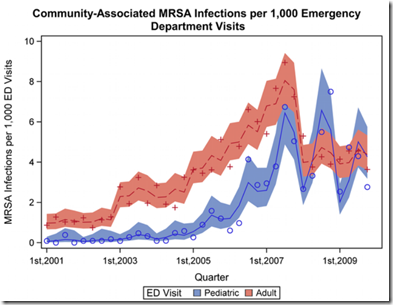
Just shy of two years ago, in MRSA: It’s Got Seasonality, we looked at a PLoS One study that found a significant spike in CA-MRSA infections reported by Rhode Island Emergency rooms during the 3rd & 4th quarters of the year.


Seasonality of MRSA Infections

Mermel LA, Machan JT, Parenteau S (2011) Seasonality of MRSA Infections. PLoS ONE 6(3): e17925. doi:10.1371/journal.pone.0017925


The authors reported that pediatric patients saw roughly 1.85 times as many community-associated CA-MRSA infections and 2.94 times as many hospital-associated HA-MRSA infections in the second two quarters of the year as opposed to the first two quarters.


image


While a similar pattern was observed for adults, it was less pronounced, with 1.14 times as many CA-MRSA infections in the 3rd & 4th quarters, but no detectable increase in adult HA-MRSA infections.


The authors suggested that factors such as excessive hydration of the skin (sweating), summer insect bites, and warm, humid environments conducive to bacterial survival and spread may partially account for the rise, but summer conditions alone cannot not account for the increases.


Temperatures in the 2nd quarter of the year in Rhode Island are normally much higher than during the 4th quarter. 


Fast forward a couple of years, and a new study in the American Journal of Epidemiology finds a similar - but not quite identical – pattern across the United States between 2005 and 2009.


The Changing Epidemiology of Methicillin-Resistant Staphylococcus aureus in the United States: A National Observational Study

Eili Y. Klein, Lova Sun, David L. Smith and Ramanan Laxminarayan*


While the abstract is free, the complete study is behind a subscription/pay wall. Luckily, the following press release from Johns Hopkins Medicine gives us a pretty good overview.


Strains of antibiotic-resistant 'Staph' bacteria show seasonal preference; children at higher risk in summer

Strains of potentially deadly, antibiotic-resistant Staphylococcus aureus bacteria show seasonal infection preferences, putting children at greater risk in summer and seniors at greater risk in winter, according to results of a new nationwide study led by a Johns Hopkins researcher.


It's unclear why these seasonal and age preferences for infection with methicillin-resistant Staph aureus (MRSA) occur, says Eili Klein, Ph.D., lead author on the study and a researcher at the Johns Hopkins Center for Advanced Modeling in the Social, Behavioral and Health Sciences.


But he says that increased use of antibiotics in the winter may be one of the reasons. The winter strain that infects seniors at a greater rate is generally acquired in the hospital and resistant to more antibiotics. On the other hand, the summer strain of MRSA, which is seen with growing frequency in children, is largely a community-transmitted strain that is resistant to fewer antibiotics.


"Overprescribing antibiotics is not harmless," Klein notes. "Inappropriate use of these drugs to treat influenza and other respiratory infections is driving resistance throughout the community, increasing the probability that children will contract untreatable infections."


In fact, the study found that while MRSA strains exhibit a seasonal pattern, overall MRSA infections have not decreased over the last five years, despite efforts to control their spread.


A report on the study, which used sophisticated statistical models to analyze national data for 2005-2009, appears today in the online issue of the American Journal of Epidemiology.


As the researchers report, hospitalizations from infections tied to MRSA doubled in the United States between 1999 and 2005. The ballooning infection numbers were propelled by MRSA acquired in community settings, not hospital or other health care settings, as had been the case prior to 1999.


Specifically, the study found that a strain of MRSA typically seen in community settings is more likely to cause infection during the summer months, peaking around July/August. The authors' data analysis showed children were most at risk of becoming infected with this strain, typically from a skin or soft tissue wound or ailment.


In fact, in examining data for one year — 2008 — the research team found that 74 percent of those under the age of 20 who developed an infection with MRSA had a community-associated MRSA infection.


Meanwhile, the health care-associated MRSA strain, which is typically seen in hospitals, nursing homes and other health care settings, was found to be most prevalent in the winter months, peaking in February/March. Patients aged 65 or older are more likely to acquire a MRSA infection from this strain.


"Our analysis ... shows significant seasonality of MRSA infections and the rate at which they affect different age groups," write the authors of the report titled "The changing epidemiology of methicillin-resistant Staphylococcus aureus in the United States: A national observational study."


Klein said additional research on seasonal patterns of MRSA infections and drug resistance may help with developing new treatment guidelines, prescription practices and infection control programs.


Unlike with the smaller Rhode Island study, these researchers found an increase in HA-MRSA among adults (particularly over the age of 65) that peaked during the 1st quarter. A trend, the authors suggest, that may be linked to the increased use of antibiotics during the winter.


From the Abstract, the authors sum up:


We observed significant differences in infection type by age, with HA-MRSA–related hospitalizations being more common in older individuals. We also noted significant seasonality in incidence, particularly in children, with CA-MRSA peaking in the late summer and HA-MRSA peaking in the winter, which may be caused by seasonal shifts in antibiotic prescribing patterns.

Saturday, February 09, 2013

The CDC’s Solve The Outbreak App


image  

# 6918


The disease detectives at the CDC are the investigators at the Epidemic Intelligence Service (EIS).  EIS officers conduct epidemiologic investigations, research, and public health surveillance both in the United States and around the world.


Maryn McKenna’s 2004 book, Beating Back The Devil, provided a fascinating inside look at their operations, and is well worth digging up a copy.


A couple of days ago the CDC released an iPad app called Solve the Outbreak which lets you take on the role of a an EIS trainee, and conduct your own disease outbreak investigations.


Do you want to be a disease detective?

This application will allow you to interact with and solve a disease outbreak. You will think like an officer in the Epidemic Intelligence Service (EIS). Each outbreak will include a series of clues that will ask you to guess the cause of the outbreak along the way, earning points for each answer. At the end of the outbreak, you will be awarded a badge based on your efforts: Trainee, Apprentice, Investigator, and the highest award, Disease Detective. The app provides a game-like interface and works to incorporate tips and definitions along the way, to make learning about epidemiology fun. Outbreaks may be fictional or based of a real event that CDC employees have worked on.

Check out these fun features:

  • Learn more about the work CDC does.
  • Solve mysterious outbreaks the EIS way.
  • Increase your knowledge of diseases and outbreaks.
  • A fun interactive way to learn about epidemiology.
  • Share your success at solving outbreaks on Facebook or Twitter.
  • Review data and epi-curves outlining how the outbreak spread.
  • Work quickly and save lives.

Download it free today
Available on the App Store


I downloaded this app yesterday and spent a few minutes with it this morning, running through the first outbreak scenario (three are included).

image


While game play is limited (I ran thru the first scenario - undoubtedly the easiest - in about 10 minutes), this app does a nice job of illustrating the thought processes and epidemiological techniques used in outbreak investigations. 


There are short tutorials included, a glossary, and links to additional information available online from the CDC.


All of which makes this both a fun and educational app for anyone with an interest in epidemiology. Its biggest shortcoming is only having three outbreak puzzles to solve, but perhaps if it proves a popular download, they’ll release an update with more.


NOTE: Upon further review (I finished all three scenarios) the app indicates that additional outbreaks will be released.

Monday, July 23, 2012

MIT: Contagion Dynamics Of International Air Travel


# 6446


In 2009, about 6 weeks before news of the outbreak of H1N1 in Mexico was announced, I came across a fascinating video on Youtube which inspired a blog called How The Next Pandemic Will Arrive.


I wrote:


There is a lot we don't currently know about the next pandemic.  We don't know when it will arrive.  We don't know what virus will cause it.  And we don't know how bad it will be.


But there is one thing almost certain.


It will arrive in most countries by airplane.


Not exactly an earth shattering revelation, given that air travel is an obvious mode of viral spread. But my timing was excellent.


By the end of following month the new H1N1 virus was winging its way around the globe in large part due to spring break vacationers returning from Mexico.


While obviously a major factor, the dynamics of disease spread through airports is only partially understood.  


We’ve a new study, appearing in PloS One, that looks at the early spread of a pandemic virus through air travel, and through the use of Monte Carlo simulations, finds some airports contributing more to the spread of a pandemic than the number of travelers passing through it might suggest.


The study, conducted by researchers at MIT, is called:


A Metric of Influential Spreading during Contagion Dynamics through the Air Transportation Network

Christos Nicolaides, Luis Cueto-Felgueroso, Marta C. González, Ruben Juanes

Abstract

The spread of infectious diseases at the global scale is mediated by long-range human travel. Our ability to predict the impact of an outbreak on human health requires understanding the spatiotemporal signature of early-time spreading from a specific location.


Here, we show that network topology, geography, traffic structure and individual mobility patterns are all essential for accurate predictions of disease spreading. Specifically, we study contagion dynamics through the air transportation network by means of a stochastic agent-tracking model that accounts for the spatial distribution of airports, detailed air traffic and the correlated nature of mobility patterns and waiting-time distributions of individual agents.


From the simulation results and the empirical air-travel data, we formulate a metric of influential spreading––the geographic spreading centrality––which accounts for spatial organization and the hierarchical structure of the network traffic, and provides an accurate measure of the early-time spreading power of individual nodes.


I would invite those with a better grasp of statistical analysis than I to read the entire study, but for the rest of us, we have the following report from MIT News.


Monday, July 23

New model of disease contagion ranks U.S. airports in terms of their spreading influence

Airports in New York, Los Angeles and Honolulu are judged likeliest to play a significant role in the growth of a pandemic.

Denise Brehm, Civil and Environmental Engineering

World map shows flight routes from the 40 largest U.S. airports.


Image: Christos Nicolaides, Juanes Research Group

Public health crises of the past decade — such as the 2003 SARS outbreak, which spread to 37 countries and caused about 1,000 deaths, and the 2009 H1N1 flu pandemic that killed about 300,000 people worldwide — have heightened awareness that new viruses or bacteria could spread quickly across the globe, aided by air travel.


<SNIP>


Outsize role for Honolulu


For example, a simplified model using random diffusion might say that half the travelers at the Honolulu airport will go to San Francisco and half to Anchorage, Alaska, taking the disease and spreading it to travelers at those airports, who would randomly travel and continue the contagion.


In fact, while the Honolulu airport gets only 30 percent as much air traffic as New York's Kennedy International Airport, the new model predicts that it is nearly as influential in terms of contagion, because of where it fits in the air transportation network: Its location in the Pacific Ocean and its many connections to distant, large and well-connected hubs gives it a ranking of third in terms of contagion-spreading influence.


Kennedy Airport is ranked first by the model, followed by airports in Los Angeles, Honolulu, San Francisco, Newark, Chicago (O'Hare) and Washington (Dulles). Atlanta's Hartsfield-Jackson International Airport, which is first in number of flights, ranks eighth in contagion influence. Boston's Logan International Airport ranks 15th.

(Continue . . . )


Complicating matters - attempts to identify and quarantine air travelers with fevers, or other signs of illness - have proved notoriously difficult.


Last April, in EID Journal: Airport Screening For Pandemic Flu In New Zealand, we looked at a study that found that the screening methods used at New Zealand’s airport were inadequate to slow the entry of the 2009 pandemic flu into their country, detecting less than 6% of those infected.


Unlike some other countries in 2009, New Zealand did not employ thermal scanners, which look for arriving passengers or crew with elevated temperatures. 

(Thermal Imaging for SARS in 2003)


But even countries that employed thermal scanners and far more strict interdiction techniques during the summer of 2009 failed to keep the flu out.


Just as the pandemic was ramping up, in Vietnam Discovers Passengers Beating Thermal Scanners, we saw evidence of flyers taking fever-reducers to beat the airport scanners in order to get home.


In December of 2009, in Travel-Associated H1N1 Influenza in Singapore, I wrote about a NEJM Journal Watch of a new study that has been published, ahead of print, in the CDC’s  EID Journal  entitled:


Epidemiology of travel-associated pandemic (H1N1) 2009 infection in 116 patients, Singapore. Emerg Infect Dis 2010 Jan; [e-pub ahead of print]. Mukherjee P et al

Travel-Associated H1N1 Influenza in Singapore

Airport thermal scanners detected only 12% of travel-associated flu cases; many travelers boarded flights despite symptoms.

And finally, in June of 2010  CIDRAP carried this piece on a study of thermal scanners in New Zealand in 2008 (before the pandemic) presented at 2010’s ICEID.


Thermal scanners are poor flu predictors

Thermal scanners for screening travelers do moderately well at detecting fever, but do a poor job at flagging influenza, according to researchers from New Zealand who presented their findings today at the International Conference on Emerging Infectious Diseases (ICEID) in Atlanta.


As far as the transmission of the influenza virus aboard an airliner, in May of 2010 we saw a study in the BMJ that looked at that very topic (see BMJ: Flu Transmission Risks On Airplanes)


BMJ 2010;340:c2424

Research

Transmission of pandemic A/H1N1 2009 influenza on passenger aircraft: retrospective cohort study


Conclusions


A low but measurable risk of transmission of pandemic A/H1N1 exists during modern commercial air travel. This risk is concentrated close to infected passengers with symptoms. Follow-up and screening of exposed passengers is slow and difficult once they have left the airport.


Another study, conducted by researchers at UCLA and published in BMC Medicine in late 2009:


Calculating the potential for within-flight transmission of influenza A (H1N1)

Bradley G Wagner, Brian J Coburn and Sally Blower*

Results

The risk of catching H1N1 will essentially be confined to passengers travelling in the same cabin as the source case. Not surprisingly, we find that the longer the flight the greater the number of infections that can be expected. We calculate that H1N1, even during long flights, poses a low to moderate within-flight transmission risk if the source case travels First Class.


(Continue . . .)


While it may prove impossible to halt the spread of a pandemic via airline passengers, knowing which airports are the most likely to contribute to the spread of a new virus could aid in attempts to slow its progress.


Which makes research like what we’ve seen out of MIT today of more than just academic interest.

Monday, January 02, 2012

China Seeks To Reassure On Bird Flu


image

Guilty as charged?     Photo Credit – FAO


# 6047


The news wires this morning are filled with reports on the investigation into the death of a Shenzhen bus driver late last week from the H5N1 virus (see Shenzhen Bird Flu Suspect Dies).


The substance of most of these reports appear to be based on the details released in a Xinhua News Service report overnight.

Xinhua is the official news service (some would say press agency) of the Chinese government.


The gist of the report (linked below) is that health officials have reportedly identified the H5N1 strain, and have determined through genetic analysis that while pathogenic in humans, it is `not transmissible’.


First the Xinhua report (emphasis mine), then I’ll return with a little more.


Authorities identify virus leading to Guangdong bird flu death

Source: Xinhua  |   2012-1-2  HEALTH authorities in south Guangdong province have identified the type of the virus that led to the death of a bus driver, but the cause of the bird flu remains unclear, a local disease control center confirmed today.


The receptor of the virus, a highly pathogenic H5N1, is poultry, according to a statement released by the Shenzhen Disease Control Center.


Though it is highly pathogenic to human beings, the virus can not spread among people, the center said in the statement, adding that there is no need for Shenzhen citizens to panic.


Genetic analysis also indicated that the virus was spread directly from poultry to human, according to the statement.


A 39-year-old man surnamed Chen in Bao'an district of Shenzhen was hospitalized for fever on December. 21 and tested positive for the H5N1 avian influenza virus. Chen died of multiple organ failure Saturday afternoon.


Health authorities are trying to figure out where Chen acquired the virus.


The Guangdong Department of Agriculture announced Saturday that no epidemic of bird flu among poultry had been reported in the province.


This reassuring missive – complete with the standard admonishment `not to panic’ – is unfortunately both contradictory, and lacking in detail. 


We are told in two places that the route of infection is unclear, and in another that genetic analysis shows it was from direct contact with infected poultry.


But at the same time we are assured by the Agriculture Department that no outbreaks of H5N1 have been reported in poultry anywhere in the Province.


The `receptor’ of the virus – by that I assume they mean the RBD (Receptor Binding Domain) – is stated as being `poultry’. 


I’m assuming they mean avian in nature (an affinity for alpha 2,3 receptor cells).


A virus’s ability to bind to specific cells is controlled by its RBD or Receptor Binding Domain; an area of its genetic code that allows it to attach to, and infect, specific types of host cells.


image

(A Very Simplified Illustration of RBDs)

Like a key into a padlock, the RBD must `fit’ in order to open the cell to infection.


Humans, unlike birds, have mostly alpha 2,6 receptor cells in their upper respiratory tract, making it difficult for avian viruses to attach. Humans do have some a2,3 receptor cells deep in the lungs and in their gastrointestinal tract.


The declaration that the `virus can not spread among people’ would therefore seem a bit strong, as we’ve seen limited transmission of avian-adapted viruses among humans in the past.


That this virus is not yet well adapted to human physiology - and therefore unlikely to be spread from one human to another - is probably a more reasonable assessment.


The lack of additional cases thus far in the province is obviously a good sign, and if that trend continues, would lend credence to the government’s claim that this is not an easily transmissible strain.  


But a lack of scientific detail - along with an overly reassuring tone and China’s chequered history on the reporting of previous disease outbreaks - makes it difficult to come away from this report completely assuaged.