Thursday, February 27, 2014

Assessment Of Hand Hygiene Strategies In US Healthcare Facilities

image

Credit WHO Hand Hygiene Campaign


# 8332


One hundred and sixty-seven years ago, a Hungarian physician named Ignaz Semmelweis published a controversial medical book called Etiology, Concept and Prophylaxis of Childbed Fever.


Childbed, or puerperal fever, was a major cause of mortality and morbidity among postpartum women, and Semmelweis demonstrated in his Viennese hospital that its incidence could be greatly reduced by having doctors wash their hands before performing gynecological exams.


His theories were considered radical (Pasteur wouldn’t come up with his `germ theory’ for another 17 years), and went against all currently accepted medical science. Besides, it was outrageous to suggest that doctors might actually be causing disease and death among their patients.


Today, while we know the importance of good hand hygiene – both inside and outside of medical settings – each year lapses in good hand cleansing practices lead to hundreds of thousands of avoidable hospital acquired infections (HAI’s) around the world, causing uncounted misery and costing tens of thousands of lives.


Which is the reason that the CDC, the ECDC, and the World Health Organization (among others) have promoted enhanced hand hygiene as the first – and most basic – step in reducing HAIs.  A few of their campaigns I’ve covered in the past include:


Aye, There’s The Rub
Study: Exam Gloves, Dispensers & Bacterial Contamination
Fomite to Fingers To Face: A Triple Play Combination
A Movement With Five Moments
Global Clean Your Hands Day


Although alcohol hand sanitizers are not without their limitations – particularly when dealing with norovirus and C.diff  (see CDC C. Diff FAQ & CMAJ: Hand Sanitizers May Be `Suboptimal’ For Preventing Norovirus) – their speed, availability, and ease of use make them an important part of any health facility's infection control program.


Yet, despite ongoing awareness campaigns, the latest report published in the American Journal of Infection Control indicates that there are still significant lapses in the WHO hand hygiene guidelines, even in the United States.

image


Between April and December 2011  health-care facilities around the world were invited to participate in a Hand hygiene self-assessment framework on the completion of the above Framework. The first analysis of that data (Summary report of the Framework global survey) was released in May of 2012, is available on the WHO website.


Between July and December of 2011, 2238 US facilities participating in the WHO global campaign were invited to complete the Hand Hygiene Self-Assessment Framework online.  Disappointingly, only 168 facilities (7.5%) responded, which limits the conclusions that can be drawn.


First a press release from Columbia University Medical Center, then a link to the study.


One in 5 US hospitals don't put hand sanitizer everywhere needed to prevent infections

Research from WHO and Columbia University School of Nursing

(NEW YORK, NY, February 27, 2014) – Approximately one in five U.S. health facilities don't make alcohol-based hand sanitizer available at every point of care, missing a critical opportunity to prevent health care-associated infections, according to new research from Columbia University School of Nursing and the World Health Organization (WHO) published in the American Journal of Infection Control. The study, which examined compliance with WHO hand hygiene guidelines in the U.S., also found that only about half of the hospitals, ambulatory care, and long-term care facilities had set aside funds in their budgets for hand hygiene training.

A research team jointly led by Laurie Conway, RN, MS, CIC, PhD student at Columbia Nursing, and Benedetta Allegranzi, MD, lead of the WHO infection control program Clean Care is Safer Care, surveyed compliance with WHO hand hygiene guidelines at a sample of 168 facilities in 42 states and Puerto Rico. Overall, 77.5% of facilities reported that alcohol-based sanitizer was continuously available at every point of care, the study found. About one in ten facilities reported that senior leaders such as the chief executive officer, medical director, and director of nursing didn't make a clear commitment to support hand hygiene improvement, according to the study.

"When hospitals don't focus heavily on hand hygiene, that puts patients at unnecessary risk for preventable health care-associated infections," says Conway. "The tone for compliance with infection control guidelines is set at the highest levels of management, and our study also found that executives aren't always doing all that they can to send a clear message that preventing infections is a priority."

(Continue . . . )


The full AJIC report is linked below:


Status of the implementation of the World Health Organization multimodal hand hygiene strategy in United States of America health care facilities

Results

Of 2,238 invited facilities, 168 participated in the survey (7.5%). A detailed analysis of 129, mainly nonteaching public facilities (80.6%), showed that most had an advanced or intermediate level of hand hygiene implementation progress (48.9% and 45.0%, respectively). The total Hand Hygiene Self-Assessment Framework score was 36 points higher for facilities with staffing levels of infection preventionists > 0.75/100 beds than for those with lower ratios (P = .01) and 41 points higher for facilities participating in hand hygiene campaigns (P = .002).

Conclusion

Despite the low response rate, the survey results are unique and allow interesting reflections. Whereas the level of progress of most participating facilities was encouraging, this may reflect reporting bias, ie, better hospitals more likely to report. However, even in respondents, further improvement can be achieved, in particular by embedding hand hygiene in a stronger institutional safety climate and optimizing staffing levels dedicated to infection prevention. These results should encourage the launch of a coordinated national campaign and higher participation in the WHO global campaign.

(Read entire study online . . . )


This oft quoted assessment from the CDC on the burden of Hospital Acquired Infections in the United States is from 2010.

A new report from CDC updates previous estimates of healthcare-associated infections. In American hospitals alone, healthcare-associated infections account for an estimated 1.7 million infections and 99,000 associated deaths each year. Of these infections:

  • 32 percent of all healthcare-associated infection are urinary tract infections
  • 22 percent are surgical site infections
  • 15 percent are pneumonia (lung infections)
  • 14 percent are bloodstream infections


We live in a germ laden world, and you don’t have to work in a hospital or a doctor’s office to be concerned with good hand hygiene. For more on all of this I’d invite you to visit:


http://www.globalhandwashingday.org/


And can also visit the CDC’s hand hygiene website, where you will find many resources, including information on how to complete the Hand Hygiene Self-Assessment Framework.


image

Wednesday, February 26, 2014

Vietnam Girds Against H7N9 As H5N1 Spreads

image

Photo Credit – FAO


# 8331


Vietnam has dealt with the deadly H5N1 avian flu virus for more than a decade, winning temporary battles, but never the war. In recent weeks we’ve seen a steady resurgence in the number of  provinces reporting infected poultry, which I last blogged about on the Feb. 15th (see Vietnam: H5N1 Poultry Outbreaks Spread To 8 Provinces).


Although media sources are reporting a range of figures, today the Bernama news agency is reporting that the avian virus has spread to 21 provinces:


Bird Flu Hits 21 Provinces In Vietnam

HANOI, Feb 26 (Bernama) - Bird flu has hit 21 provinces and cities across Vietnam with around 64,000 infected chickens culled, according to latest statistics from the Animal Health Department.

The number of birds killed in the central province of Khanh Hoa and the northwestern province of Lao Cai has reached almost 20,000, members of the National Steering Committee for Bird Flu Prevention and Control heard at a meeting here on Wednesday.

Vietnam News Agency (VNA) reports the outbreak was attributed to the complicated weather in the first two months of the year, and the increase in shipping and trading of poultry during the recently-ended Lunar New Year (Tet) festival.

(Continue . . .)


Complicating matters, less than a month ago we learned that the H7N9 virus had shown up in Guangxi Province, expanding its range southward, and moving it closer to Northern Vietnam (see  Guangxi Province Reports Their First H7N9 Case). 


This prompted the FAO earlier this month to issue a statement on H7N9’s Cross Border Threat advising neighboring countries to act now to prepare for possible outbreaks


Today, veteran science writer Declan Butler has a cautionary piece appearing in Nature News on Vietnam’s vulnerability to this new avian threat, and the steps they are taking to combat it.  Follow the link below to read:


Vietnam on high alert over flu risk

H7N9 avian influenza may spread from China for first time.

26 February 2014

The H7N9 avian-influenza virus that has killed more than 100 people in China in the past year has for the first time been detected in a province bordering Vietnam, raising the prospect that the disease may take hold across Asia and beyond. It was found in poultry in the live-bird markets of southern China’s Guangxi province in late January, and has caused three known human cases in the region.

The news comes as a surge in human H7N9 flu cases in China since the start of the year shows signs of abating, possibly because of the re­introduction of control measures. Vietnam, which had already prepared response plans for such an H7N9 outbreak, has placed itself on high alert. “There is a very high likelihood of H7N9 entering the poultry sector in Vietnam,” says Peter Horby, a researcher at the Oxford University Clinical Research Unit in Hanoi.

(Continue . . . )


In a related story, Thanh Nien News is reporting:


Vietnam fears lack of equipment to cope with H7N9

Wednesday, February 26, 2014 10:24

Vietnamese health authorities have expressed concerns over the lack of equipment to cope with the possible outbreak of the new virulent H7N9 strain of bird flu.

Health Minister Nguyen Thi Kim Tien told an online conference Sunday that nine of the 28 thermometers at border gates across the country used for anti-bird flu work are currently out of order.

Meanwhile, H7N9 can enter the country at any time, she said.

According to a representative from the US Food and Agriculture Organization (FAO), the shut-down of poultry markets in China has led to poultry being sold to other countries at low prices, while it is difficult for Vietnam to control the imports of poultry via the border with China.

Takeshi Kasai, World Health Organization (WHO) representative to Vietnam, said H7N9 can enter Vietnam via smuggled poultry or humans.

Authorities in Lang Son Province, which borders China, said they are maintaining 14 checkpoints to control the import of poultry around-the-clock at border areas.

Currently, 17 provinces around Vietnam have reported outbreaks of the H5N1 strain of bird flu.


Given the history of a porous border with China, considerable illicit poultry trade, and the devastating effects from the introduction of the H5N1 virus more than a decade ago,  Vietnamese officials are understandably on guard against this new virus.


The history with avian flu viruses has been, that once they become entrenched in a region’s poultry population, they can be extraordinarily difficult to eradicate.


And while H5N1 and H7N9 are currently the two viruses that are viewed with the most concern, we’ve seen evidence of other novel reassortants appearing in Chinese poultry (H10N8, H5N5, even a new version of H7N7, etc) which conceivably could eventually spread beyond their borders as well.

Referral: Dr. Ian Mackay On The mBio MERS-CoV Study

image


# 8330


Yesterday, in relatively broad terms, I wrote about mBio: MERS-CoV In Saudi Arabian Camels.  Today, Dr. Ian Mackay takes a deeper look at these findings in his VDU blog.


Follow the link below to read:


Dromedary camels are a host of MERS-CoV...

Wednesday, 26 February 2014

Yes. Not a "MERS-CoV-like" virus or "something very closely related to but slightly different" from MERS-CoV. Camels. Are. A. Host.

There was already plenty of evidence to suggest this (see some of my previous posts on this linked below), and none to really dissuade me from thinking otherwise. And yesterday we saw a new paper by Ian Lipkin and his collaborating crew from King Saud University in Saudi Arabia that make this issue more obvious than ever.

So let's stop messing around. There is an elephant in the MERS-room...and its a camel!

(Continue . . .)

The Lancet: H9N2’s Role In Evolution Of Novel Avian Influenzas

image

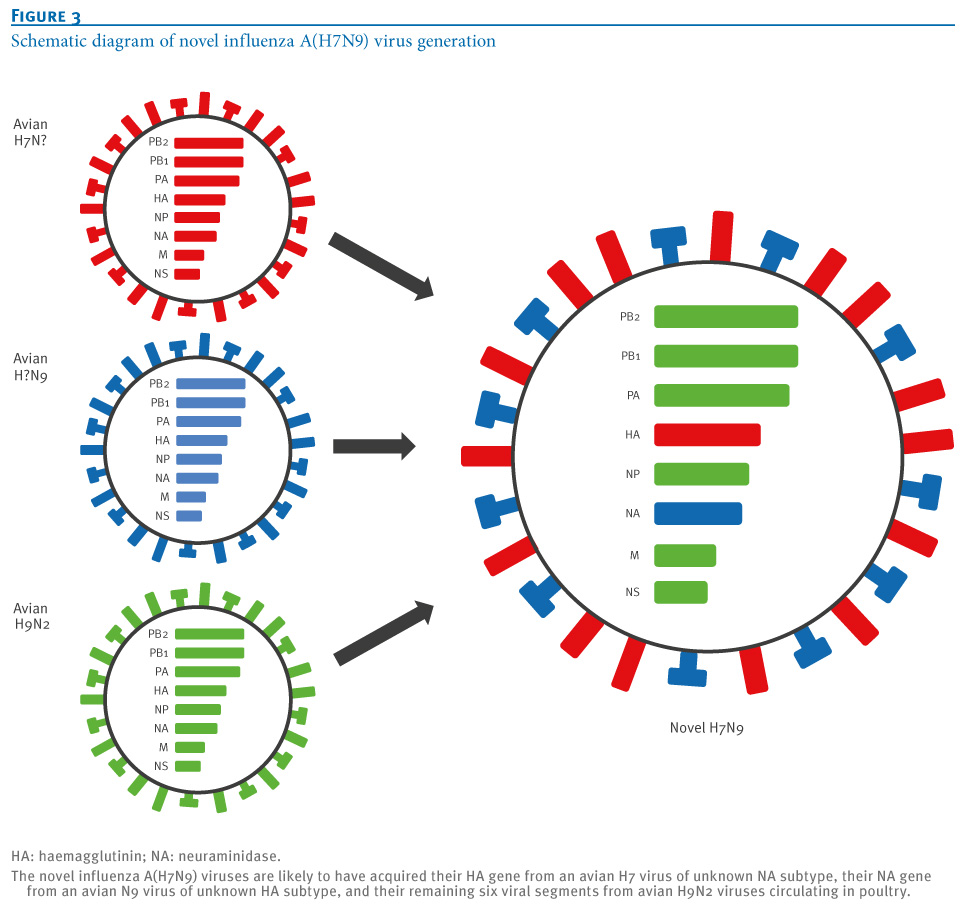
Schematic Diagram of Novel A(H7N9) Generation- Credit Eurosurveillance


# 8329


The three novel avian flu strains that currently worry scientists the most – H5N1, H7N9, and the recently observed H10N8 – all share several important features,  which we’ve discussed previously.


  1. They all first appear to emanate from Mainland China
  2. They all appear to have come about through viral reassortment in poultry
  3. And most telling of all, while their HA and NA genes differ - they all carry the internal genes from the avian H9N2 virus


The avian H9N2 virus – unlike the H5 and H7 avian viruses – is not considered a `reportable’ disease by the OIE since it is viewed as a relatively stable LPAI (Low Pathogenic Avian Influenza), not prone to evolving into a more dangerous HPAI form.  It is, however:


  1. Believed ubiquitous across much of Asia’s poultry population
  2. Has occasionally infected humans (see Hong Kong: Isolation & Treatment Of An H9N2 Patient)
  3. And is viewed as having at least some `pandemic potential’ (see H9N2: The Other Bird Flu Threat)


As the diagram at the top of this blog shows, the H7N9 virus is a combination (reassortment) of several different avian flu viruses – with six of its eight genes contributed by the H9N2 virus ( shown in green).  An evolutionary pathway similar to that followed by the H5N1 virus in the mid-1990s, and the recently emerging H10N8 virus in China.

Although categorized by their two surface proteins (HA & NA) Influenza A viruses have 8 gene segments (PB2, PB1, PA, HA, NP, NA, M1, M2, NS1, NS2).

image

Shift, or reassortment, happens when two different influenza viruses co-infect the same host swap genetic material.  New hybrid viruses may be the result of multiple reassortments, with gene contributions coming from several parental viruses.


In the past, we’ve looked at the propensity of the H9N2 virus to reassort with other avian flu viruses (see PNAS: Reassortment Of H1N1 And H9N2 Avian viruses &  PNAS: Reassortment Potential Of Avian H9N2) which have shown the H9N2 capable of producing `biologically fit’ and highly pathogenic reassortant viruses.


In 2010 (see Study: The Continuing Evolution Of Avian H9N2) we looked at computer modeling (in silica) that warned the H9N2 virus has been slowly evolving towards becoming a `more humanized’ virus.


All of which serves as prelude to a brief report appearing today in The Lancet, where Chinese researchers warn of the threat posed by the H9N2 virus, and call for prompt and bold action to prevent the `next pandemic virus’ from emerging from China’s poultry industry. 


The report is a short one, well worth reading,  and quite to the point. I’ve  only excerpted its conclusions (bolding mine).  Follow the link below to read it in its entirety.


Poultry carrying H9N2 act as incubators for novel human avian influenza viruses

Di Liu a, Weifeng Shi b, George F Gao a c 

(EXCERPT)

Although the contribution of H9N2 genes to infection in human beings needs to be determined, these genes probably enable H7N9 virus to survive and be transmitted within poultry, because dynamic reassortments of H7N9 with H9N2 genes have been observed,5 suggesting that H7N9 virus evolved in poultry to become a virus that infects human beings. Hence, reassortment between the prevalent poultry H9N2 viruses (providing genetic segments) and the influenza virus from wild birds could make the influenza evolve to adapt to domestic hosts. Poultry, especially in live markets, would have a pivotal role during the emergence of a novel influenza virus of avian origin.


Several subtypes of avian influenza viruses in poultry are capable of infecting human beings, and the next avian influenza virus that could cause mass infections is not known. Therefore, slaughter of poultry carrying H9N2—the incubators for wild-bird-origin influenza viruses—would be an effective strategy to prevent human beings from becoming infected with avian influenza.


We call for either a shutdown of live poultry markets or periodic thorough disinfections of these markets in China and any other regions with live poultry markets.


The shutdown of live poultry markets has been a stated goal by Chinese authorities for many years due to the H5N1 threat, but thus far, only limited (and usually temporary) shutdowns have been orchestrated. Despite pretty good evidence that the shutdown of live markets last spring helped quell China’s H7N9 outbreak (see The Lancet: Poultry Market Closure Effect On H7N9 Transmission), there remains strong public pressure to keep them open.


Even more problematic is their call to cull H9N2 infected chickens.  


As most infected poultry are asymptomatic, it would require extensive (and expensive) surveillance and testing just to identify these birds. And of course, given the likely incidence of the virus in Asian poultry,  the economic losses would be substantial. 


At least in China, the MOA (Ministry of Agriculture’s) policy has seemed to revolve around deflecting concerns over avian flu in their poultry supply, rather than addressing it in an organized and substantive manner (see  China’s MOA Disputes Poultry As Source Of H7N9 Infections). 


As we saw last year in  EID Journal: Predicting Hotspots for Influenza Virus Reassortment, China ranks as one of the globe’s top breeding grounds for new flu strains. Which makes the control of these emerging viruses in all the more important. 


For more on reassortment risks, you may wish to revisit:


Eurosurveillance:The Evolving Threat From New, Reassorted H7N9 Viruses
Lancet: Clinical & Epidemiological Characteristics Of A Fatal H10N8 Case
Viral Reassortants: Rocking The Cradle Of Influenza

Tuesday, February 25, 2014

Zika, Dengue & Unusual Rates Of Guillain Barre Syndrome In French Polynesia

image


# 8328


Increasingly arboviruses (those transmitted by mosquitoes, ticks, biting flies, etc) are viewed as a growing public health threat – not just in those tropical regions where they are often endemic – but also in North America, Europe, and Australia. 


In recent years West Nile Virus has invaded and spread widely across North America, Dengue fever has gained a tentative foothold in both Southern Florida and Texas, and with a growing Chikungunya outbreak in the Caribbean (see last week’s COCA Call On Chikungunya) many epidemiologists believe that it may be only a matter of time before it spreads to the United States.


There are other, even more exotic viral fevers to be concerned with, including Rift Valley Fever, Yellow Fever, Japanese Encephalitis, and one that perhaps,  few people have  heard of; the Zika Virus (ZIKAV). 


Zika Fever, which is spread by the Aedes Mosquito, was first identified in Uganda in 1947, but has in recent years spread into parts of Asia and the South Pacific. 


While generally regarded as  a `mild’ disease, we only have a limited amount of experience with large outbreaks.


In 2009, the CDC’s EID Journal carried a report called Zika Virus Outside Africa by Edward B. Hayes that focused on that virus’ recent arrival in the Yap Islands of the South Pacific, where it quickly spread to roughly 70% of the island’s inhabitants.

image

While most cases had reported relatively mild symptoms, the author cautioned that until the WNV began causing neuroinvasive symptoms in Romania and North America, it too was considered a fairly innocuous viral infection.


In 2011, the EID Journal carried a remarkable Dispatch on the first Probable Non–Vector-borne Transmission of Zika Virus, Colorado, USA, involving two researchers infected in Africa, one of whon returned to the Untied States and passed the virus (presumably via sexual contact) to his wife.  This was the first instance where sexual transmission of an Arbovirus was suspected, the author’s writing:


Results also support ZIKV transmission from patient 1 to patient 3. Patient 3 had never traveled to Africa or Asia and had not left the United States since 2007. ZIKV has never been reported in the Western Hemisphere. Circumstantial evidence suggests direct person-to-person, possibly sexual, transmission of the virus.


In recent months French Polynesia has been dealing with an outbreak of both Zika and Dengue, prompting the CDC  to issue a travel watch notice:


Zika Fever in French Polynesia (Tahiti)

Watch - Level 1, Practice Usual Precautions

Updated: February 13, 2014

What is the current situation?

The French Polynesia Department of Health has confirmed an outbreak of Zika fever in the islands of Tahiti, Moorea, Raiatea, Tahaa, Bora Bora, Huahine, Nuku Hiva, Hiva Oa, Ua Pou, Hao, Rangiroa, Fakarava, Tikehau, Takaroa Ahe and Arutua. As of February 7, 2014, 396 laboratory confirmed cases and 8,262 suspected cases have been reported. No deaths have been reported. The Department of Health is working to improve surveillance.

What is Zika fever?

Zika fever is an illness caused by a virus that spread through mosquito bites. It is closely related to dengue virus and causes a similar illness. Symptoms of Zika fever may include fever, headache, red eyes, rash, muscle aches, and joint pains. The illness is usually mild and lasts 4-7 days.

Who is at risk?

Travelers who go to certain places in Africa, Asia, and the Western Pacific are at risk of getting Zika virus (see map). The mosquito that carries Zika virus can bite during the day and night, both indoors and outdoors, and often lives around buildings in urban areas.

(Continue . . .)


All of which brings us to the most recent report from Le Centre d’Hygiène et de Salubrité Publique  (CHSP) in French Polynesia updating their Dengue, Zika Virus outbreak situation, along with an accompanying large number of Guillain Barre Syndrome (GBS) and autoimmune cases.


Bulletins health surveillance in French Polynesia and related documents

Bulletin surveillance is issued every Friday by the Bureau of Health Intelligence Directorate of Public Health. It shows the weekly evolution of the main syndromes associated with infectious diseases in the country, as well as laboratory-confirmed dengue and influenza. It also provides information on local, regional epidemiological events, and international related to these pathologies or other epidemic problems (diarrhea, leptospirosis, ..). This newsletter is intended primarily for health professionals.

YEAR 2014

Week 08 to come and on the situation in February 21, 2014 Outbreak of dengue and zika current

Dengue surveillance and zika in French Polynesia

Data updated to 21 February 2014

(EXCERPT)

Page 4

Zika monitoring in French Polynesia

(02/21/2014) SUSPECTED OF NEUROLOGICAL COMPLICATIONS OR AUTOIMMUNE

Balance sheet as at 21 February (Figure 3): 74 cases of complications

* 67 cases are considered neurological complications:

  • 41 Guillain-Barré syndrome (GBS),
  • 26 cases of other neurological complications.

* 7 cases of autoimmune complications,

  • 4 immune thrombocytopenic purpura (ITP)
  • 2 ophthalmologic complications
  • 1 cardiac complication.

Of the 41 cases of GBS, 4 patients are still hospitalized in intensive care and 14 are currently in the center of rehabilitation Te Tiare. No deaths occurred.

Investigations are currently underway to identify the causes of this increase in cases of GBS and other autoimmune manifestations to determine the possible association with outbreaks of dengue 1, dengue 3 andzika that simultaneously affect French Polynesia.


Guillain-Barre Syndrome (GBS) is a neurological disorder with a background rate – at least in the United States and Europe – of about 1 in every 50 to 100 thousand population each year.   At those rates, and with a population of under 300,000, French Polynesia might reasonably expect to see 3 to 10 cases a year -  not 41 in four months.


Yesterday the ECDC updated their weekly Communicable Disease Threats Report with the following on the Zika Outbreak in the South Pacific.


Zika virus infection outbreak - The Pacific - 2013-2014
Opening date: 9 January 2014 Latest update: 6 February 2014
Epidemiological summary

It is estimated that more than 29 000 cases have sought medical care with Zika-like symptoms in French Polynesia since the beginning of the outbreak in October 2013. Health authorities in the territory report a concurrent significant increase in neurological syndromes and autoimmune illnesses. There is a simultaneous dengue outbreak in the region. The cause of the complications and their possible links with ZIKAV or dengue virus infections are being investigated. No neurological complications have been reported to date in New Caledonia.


Public health control measures, including increased surveillance and the promotion of measures to avoid mosquito bites, have been implemented in both affected territories.

ECDC assessment

This is the first documented outbreak of ZIKAV infection in French Polynesia and New Caledonia. ZIKAV infection is considered an emerging infectious disease with the potential to spread to new areas where the Aedes mosquito vector is present. There is a risk for the disease spreading further in the Pacific, and for sporadic imported cases in Europe from endemic areas. Vigilance must be enhanced towards imported cases of ZIKAV infection in the EU Member States and EU overseas countries and territories and outermost regions, in particular where effective vectors are present. Early detection of cases is essential to reduce the risk of autochthonous transmission. Clinicians and travel medicine clinics should be aware of the situation in the Pacific islands and include ZIKAV infection in their differential diagnosis.


There is no available vaccine against ZIKAV infection. Travellers can protect themselves by preventing mosquito bites. ZIKAV infection is a mild illness and has not been known to have neurological complications. The reported complications in French Polynesia are not confirmed to be caused by ZIKAV infections. However, there is a temporal association with the simultaneous outbreaks of ZIKAV and dengue. It is important to determine the cause of this increase and a possible association with the ongoing transmission of DENV-1, DENV-3 and ZIKAV.


This unusual spike in GBS and autoimmune disease in the South Pacific may be due to the Zika Virus, Dengue virus, a combination or coinfection by both, or perhaps . . . something completely unrelated.


But in any event, it is unusual enough to have elicited the attention of public health officials around the world, and so we’ll keep an eye on it as well.

mBio: MERS-CoV In Saudi Arabian Camels

image

Photo Credit Wikipedia


# 8327


While the rate of new MERS-CoV infections being reported on the Arabian peninsula has dropped in the past couple of months, scientific interest in the source, epidemiology, and evolution of the virus has not.  Today, the open access journal mBio carries a major study that appears to answer one of the big questions regarding this emerging disease, pegging dromedary camels as (at least one of) the virus’s reservoir hosts.


Overnight Crof carried a report  by NPR’s Richard Knox (see Deadly MERS Virus Circulates Among Arabian Camels) which – in addition to characterizing this study – provides a fascinating look at the often contentious nature of recent MERS research collaborations in Saudi Arabia.   Highly recommended.


As you’ll probably recall, while the source of the MERS coronavirus has remained elusive, both bats and camels have been considered prime suspects, with serological tests over the past year pointing in both species’ direction.  Given the past association of coronaviruses with bats, they were among the first suspects, but as recently as last month the OIE had this to say about their role.


Did MERS CoV come from bats?

Although a relative to this virus had already been detected in bat species, and a fragment of viral genetic material matching the MERS CoV was recently found in one bat from Saudi Arabia, more evidence is needed to directly link the MERS CoV to bats or other animal species.


Last August, the first serological evidence was presented (see Lancet: Camels Found With Antibodies To MERS-CoV-Like Virus) that dromedaries (single-humped camels) carried a  MERS-Like virus, although the virus was not isolated or matched 100% to the MERS coronavirus. 


In late November, additional support for the camel connection came when Qatari officials announced that the MERS virus had been detected in Camels on a farm where two people had become infected (see Qatar Supreme Council of Health Statement On MERS-CoV In Camels), and that further investigations were underway by the local Health Ministry and RIVM laboratory and Erasmus Medical Centre in the Netherlands.


In December, The Lancet published a study (see Identification Of MERS Virus In Camels), led by Marion Koopmans, DVM, PhD, head of virology at the Laboratory for Infectious Diseases at the RIVM in the Netherlands, that determined that the human viruses and the camel viruses from the Qatari farm were almost an identical match.


So close, in fact, that they were unable to determine whether the humans or the camels were infected first.


While not eliminating bats from the equation (or even possibly, other animal hosts), today we have the most compelling study to date showing that camels have been a long-standing reservoir for the MERS coronavirus in Saudi Arabia.


First some excerpts from the American Society for Microbiology press release, followed by the link to the study, after which I’ll be back with a bit more.


MERS virus widespread in Saudi Arabian camels

Coronavirus has been infecting the animals for at least 20 years

The coronavirus responsible for Middle East Respiratory Syndrome (MERS) is prevalent in camels throughout Saudi Arabia and has been around for at least 20 years, according to a study to be published on February 25 in mBio®, the online open-access journal of the American Society for Microbiology.

"Our study shows the MERS coronavirus (MERS-CoV) is widespread," says senior study author W. Ian Lipkin of Columbia University, New York. "Adult camels were more likely to have antibodies to the virus while juveniles were more likely to have active virus. This indicates that infection in camels typically occurs in early life, and that if people get the virus from camels the most likely source is young camels."

MERS, a serious viral respiratory illness, has been identified in 182 people from 2012 through Feb. 7, according to the World Health Organization; 79 people have died from the condition. While most infections have occurred in Saudi Arabia, the origin of disease, in most cases, has remained unknown. Efforts to identify an animal source of infection have focused on bats and camels. The first known case of MERS was in a Saudi Arabian man who had four pet camels.

In the study, investigators from the United States and Saudi Arabia conducted a comprehensive survey of dromedary camels throughout Saudi Arabia. They collected blood samples and rectal and nasal swabs from camels, sheep and goats in November and December of 2013. Using mobile laboratory equipment, they tested blood samples for antibodies reactive with MERS-CoV, and the swabs and blood for active virus. They also analyzed archived blood samples from dromedary camels taken from 1992 through 2010.

Overall, 74% of camels sampled countrywide had antibodies to MERS-CoV. More than 80% of adult camels throughout the country had antibodies to the virus, while in camels age two or younger the prevalence ranged from 90% in the east to 5% in the southwest. Antibodies to the virus were seen in camel serum samples dating back to 1992, which strongly suggests that either MERS-CoV or a closely related virus has been circulating in the Saudi Arabian animals for at least two decades.

The researchers also found that active virus was frequently detected in nasal swabs in 35% of young camels and 15% of adult camels countrywide. It was less frequently found in rectal swabs and not in blood, indicating that the virus most likely is spread by respiratory secretions.

While they speculate that camels are potential reservoirs for human transmission, the authors say the current study does not prove that. "Our findings suggest that continuous, longer-term surveillance will be necessary to determine the dynamics of virus circulation in dromedary camel populations."

Lead authors for the paper were Abdulaziz Alagaili of King Saud University and the Saudi Wildlife Authority in Riyadh and Thomas Briese of Columbia University.


The link, and abstract to the open access study follow:


Middle East Respiratory Syndrome Coronavirus Infection in Dromedary Camels in Saudi Arabia

Abdulaziz N. Alagailia,b, Thomas Briesec, Nischay Mishrac, Vishal Kapoorc, Stephen C. Sameroffc, Emmie de Witd, Vincent J. Munsterd, Lisa E. Hensleye, Iyad S. Zalmouta, Amit Kapoorc, Jonathan H. Epsteinf, William B. Kareshf, Peter Daszakf, Osama B. Mohammeda, W. Ian Lipkinc

ABSTRACT

The Middle East respiratory syndrome (MERS) is proposed to be a zoonotic disease; however, the reservoir and mechanism for transmission of the causative agent, the MERS coronavirus, are unknown. Dromedary camels have been implicated through reports that some victims have been exposed to camels, camels in areas where the disease has emerged have antibodies to the virus, and viral sequences have been recovered from camels in association with outbreaks of the disease among humans. Nonetheless, whether camels mediate transmission to humans is unresolved. Here we provide evidence from a geographic and temporal survey of camels in the Kingdom of Saudi Arabia that MERS coronaviruses have been circulating in camels since at least 1992, are distributed countrywide, and can be phylogenetically classified into clades that correlate with outbreaks of the disease among humans. We found no evidence of infection in domestic sheep or domestic goats.

IMPORTANCE This study was undertaken to determine the historical and current prevalence of Middle East respiratory syndrome (MERS) coronavirus infection in dromedary camels and other livestock in the Kingdom of Saudi Arabia, where the index case and the majority of cases of MERS have been reported.

(Continue . . . )


Today’s study seems to nail down that MERS-CoV is a common, likely mild or asymptomatic, infection in young camels in Saudi Arabia and suggests that they may well be the source of at least some portion of the human infections we’ve seen over the past two years.


Still, the majority of human cases have reported no recent camel exposure, leaving a large and disconcerting gap in the epidemiology of the disease.  


It has been speculated that other animal species may harbor and transmit the virus, but that has yet to be proven.  Nor has fomite (contaminated inanimate objects) transmission, even though last September in Eurosurveillance: Environmental Stability Of MERS-CoV) we saw remarkable evidence of the viability of the virus on surfaces, and in the air.


Another possibility, that the virus is circulating stealthily at low levels among the human population – often only causing mild or asymptomatic disease – can’t be ignored either. 


Despite the insistence of the Saudi Ministry of Health to the contrary, many researchers feel the kind of in-depth epidemiological investigations needed to answer these – and other -  vital questions have not been done. 


According to Dick Knox’s NPR report, after much delay, Saudi officials – with support from the World Health Organization – are about to commence a much needed case control study. 


One that will hopefully provide badly needed answers before the MERS virus decides to stage a major comeback.