Showing posts with label Red Cross. Show all posts

Monday, July 22, 2013

Red Cross Update On Gansu Earthquake

image

Credit USGS


# 7504


For the second day in a row we’ve got a major earthquake to talk about, this time in central China, where two shallow, but strong temblors (USGS rated as 5.9 & 5.6) and a series of aftershocks have caused serious damage and loss of life over the past 12 hours(note: China reported the first quake at 6.6 magnitude).


Regardless of the magnitude, reports indicate thousands of buildings have been either flattened or seriously damaged, hundreds of people have been injured, and thousands are homeless.


The following is the first bulletin issued by Hong Kong’s Red Cross.


Gansu Earthquake 2013: Information Bulletin 1

22 July 2013

Situation Update


A 6.6-magnitude earthquake jolted a juncture region of Min and Zhang Counties, Dingxi Prefecture of Gansu Province on 22 July, at 07:45 a.m. After the earthquake, many aftershocks have been recorded with the hardest one measuring 5.6 magnitude on the Richter scale. The Ministry of Civil Affairs has activated the national emergency response at Level 3. According to the Ministry of Civil Affairs, as of 22 July 14:30, 56 people died, 412 injured, 14 missing, about 27,300 people have been evacuated, and more than 22,000 houses were collapsed or damaged. With the situation further revealed, it is expected more damage reports will be received.


Red Cross Society of China Actions
In response to the situation, the Red Cross Society of China (RCSC) National Headquarters (NHQ) and the Gansu Red Cross have jointly deployed a relief team to conduct needs assessment and coordinate relief works in the field. Relief materials including 200 tents, 1,000 family kits, 5,000 sets of clothing, and 3,000 quilts have been mobilized to support the relief operation in Gansu.


Hong Kong Red Cross Actions
After the earthquake, the HKRC has immediately deployed relief personnel to the affected areas in Gansu to conduct needs assessment and plan for further relief actions. No appeal has been launched in Hong Kong at this moment.

Emergency Tracing Service Enquiry
For emergency tracing service, please call 2507-7135 or email to
tracing@redcross.org.hk.

Wednesday, March 06, 2013

National Severe Weather Preparedness Week

image

Credit NOAA 


# 6984


March 3rd thru 9th, 2013 is National Severe Weather Preparedness Week - and being a second generation Floridian who has spent years living aboard boats - I have a well honed respect for the power of storms. 


Each year I devote a number of blogs to weather preparedness, including a full week of articles in May in advance of the upcoming hurricane season.


After a disastrous 2011 tornado season, one that saw more than 1,700 confirmed twisters claiming more than 550 lives, 2012 was thankfully a far quieter year.  Still, nearly 1,000 tornadoes were reported, causing well over $1.6 Billion dollars in damage, and killing 69 Americans.


Add to that hurricanes, severe thunderstorms, derecho winds, hail, and lightning . . .  and every year produces ample outbreaks severe weather across the United States.


Despite the lull, last year more than 450 deaths and 2,600 injuries were attributed to various weather-related causes across the nation.


NOAA’s Weather-Ready Nation website lists a Calendar of events designed to raise awareness, and preparation, for weather-related emergencies.


Be a Force of Nature when it comes to extreme weather by learning about potential hazards. Help advance the Weather-Ready Nation by being prepared for the worst. NOAA’s National Weather Service and its partners encourage individuals, families, businesses and communities to know their risk, take action, and be an example when it comes to dangerous weather.

In addition to these national events, many states have their own awareness weeks for particular weather hazards. See the Weather Awareness Events Calendar for information from your state.


The focus this week is:

Be a Force of Nature: National Severe Weather Preparedness Week March 3-9, 2013 

Know your risk. Take action. Be an example.

New: Presidential Message for National Severe Weather Preparedness Week 2013

Be a Force of Nature this year with National Severe Weather Preparedness Week, March 3-9, 2013.


During this week, NOAA and FEMA are highlighting the importance of planning and practicing how and where to take shelter before severe weather strikes. Being prepared to act quickly can be a matter of life and death.


Being a force of nature goes beyond taking appropriate preparedness action. It’s about inspiring others to do the same. We’re asking people not only to be prepared, but also to encourage their social network to act by texting, tweeting, or posting a Facebook status update.


Be a Force of Nature Toolkit – get involved


You, too, can Be a Force of Nature in your community. Tweet, write a blog post, develop a presentation – we have everything you need to get started. Be a local hero and spread the word about preparing for severe weather.


No matter where you live, this weekend’s time change is a good reminder to change your smoke detector batteries, and to double check your NOAA weather radio, flashlights, and first aid kit


NOAA Radioimage image


You should also review your family’s emergency communication plan - and if you haven’t already done so - decide where you would go in your home or business if severe weather threatens.


Every home and office should have a NOAA weather radio. Once thought of as mainly a source of local weather information, it has now become an `All-Hazards' alert system as well.


image


In order to receive these broadcasts, you need a special receiver.  Many of these radios have a built in `Tone Alert', and will begin playing once they receive a special alert signal from the broadcaster.


To keep track of severe storm forecasts, you can visit NOAA’s Storm Prediction Center online. There you’ll find interactive maps showing current and anticipated severe weather threats all across the nation.

image


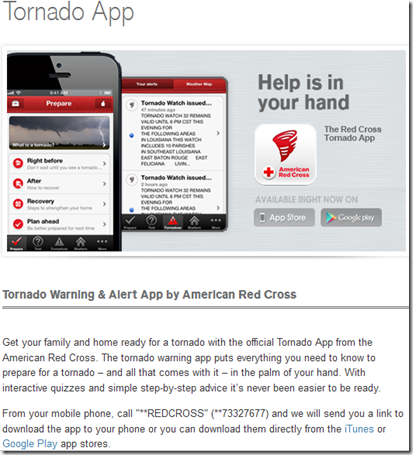
For those on the go who would like an app (android or iPad) that will sound an alert when tornado warnings are issued in your area, the American Red Cross has recently released one.


image


Sadly, despite scores of major disasters (often weather related) that occur in this country each year, most Americans remain woefully unprepared to deal with emergencies.


Agencies like FEMA, READY.GOV and the HHS are constantly trying to get the preparedness message out, so that when (not `if') a disaster does occur, human losses can be minimized.


For more information on how to prepare for emergencies, large and small, the following sites should be of assistance.


FEMA http://www.fema.gov/index.shtm

READY.GOV http://www.ready.gov/

AMERICAN RED CROSS http://www.redcross.org/

Thursday, December 27, 2012

Resolve To Be Ready: 2013


image


# 6806


Despite some of the negative images that `doomsday survivalist’ type TV shows have fostered, Ready.gov, FEMA, the HHS, and the CDC all promote the idea that everyone should be prepared to deal with a variety of emergencies and disasters.


They know that every year tens of thousands of people across the nation are forced to deal with house fires, floods, severe storms, and medical emergencies. And the potential exists for even larger disasters like hurricanes, earthquakes, and even a pandemic. 


Being better prepared - as an individual, family, and community - can save lives and reduce misery.


With the start of a new year, many of us will be making New Year’s resolutions – which makes this the perfect time to join FEMA & Ready.gov’s  Resolve to Be Ready in 2013 campaign.


This year, with the rapid proliferation of `smart phones’ & tablets, the focus is on incorporating these technologies into preparedness.


Resolve to be Ready

Led by FEMA's Ready campaign in partnership with Citizen Corps and the Ad Council, this year's emphasis includes integrating technology into individuals, families and businesses preparedness plans. A 2012 Nielson report revealed that nearly 55 percent of mobile phone owners in the United States own smartphones. As a simple resolution, Ready is asking all smartphone owners to turn the technology in their purses and pockets into a life-saving tool during and after an emergency or disaster.


Below are additional ways the Ready campaign recommends implementing technology into your emergency plans:

  • Learn how to send updates via text and internet from your mobile phone to your contacts and social channels in case voice communications are not available;
  • Store your important documents such as personal and financial records in the cloud, in a secure and remote area, or on a flash or jump drive that you can keep readily available so they can be accessed from anywhere; and
  • Create an Emergency Information Document by using Ready's Family Emergency Plan template in Google Docs (use Google Chrome to view) or by downloading the Ready Family Emergency Plan to record your emergency plans.
  • Download the Resolve 2B Ready 2013 Toolkit for tips and actions you can take.

A good starting place is FEMA’s App – available for Android, Blackberry, & Apple - which they describe as:

image

Government disaster response at the touch of a button. Learn how to respond to disasters, keep your family safe, apply for assistance, and help others in case of floods, hurricanes, earthquakes, terrorism, or other disasters. We continue to add new relevant information, in both English and Spanish, working to ensure that Americans have easy access to the tools they need to prepare for and, when needed, recover from a disaster in their community. Future enhancements include the ability to check on the status of an application and update an existing application.


In October I highlighted some of the smart phone apps available from the American Red Cross (see Red Cross Apps). They include:

Wildfire App

First Aid App

Hurricane App

Shelter Finder App

Earthquake App


To become better prepared as an individual, family, business owner, or community requires more than just downloading an app, so I would invite you visit the following preparedness sites to learn the basics.


FEMA http://www.fema.gov/index.shtm

READY.GOV http://www.ready.gov/

AMERICAN RED CROSS http://www.redcross.org/


And finally, some of my own preparedness articles may be of interest:


When 72 Hours Isn’t Enough

In An Emergency, Who Has Your Back?

An Appropriate Level Of Preparedness

The Gift of Preparedness 2012

Saturday, November 03, 2012

Unreasonable Expectations

 image 

Breezy Point and Rockaway, NY - Credit FEMA


# 6692


A couple of headlines from the local/regional section of the New York Times tell the tale.


Hardship Strains Emotions in New York
By JAMES BARRON and KEN BELSON

The region approached a breaking point on Friday as the collective spirit that prevailed in the first few days after Hurricane Sandy gave way to angry complaints of neglect and unequal treatment.

Anger Grows at Response by Red Cross
By DAVID M. HALBFINGER

The American Red Cross struggled on Friday to reassure beleaguered New York City residents that its disaster-relief efforts were at last getting up to speed.


These are difficult times for many victims of Sandy, and millions are cold, hungry, and miserable. With a winter storm forecast for the middle of next week and millions still without power, patience is understandably in short supply.  


Despite years of warnings, I’m sure many never really believed this could happen in New York City.


But it can, and it will again.  If not in New York, in another major American city. it’s really only a matter of time.


For years the American Red Cross, FEMA, Ready.gov, and just about everyone else in emergency services has urged that individuals and families be prepared to deal for at least 72 hours after a major disaster. 


The operative words being, `at least’.  And with good reason. 


The logistics of delivering emergency assistance to millions of people - while hampered by bad weather, crippled communications, damaged infrastructure, and stressed supply chains - all within the first three days of a major disaster, are daunting, and in some cases impossible.


With hurricanes and storms, agencies usually know several days in advance and are able to  pre-position equipment, personnel, and supplies.


Some disasters, like earthquakes, come without warning. And so response times may be even longer.


Federal officials know that it would be better if every individual and family had 5 days - or even a week’s worth - of food & water and other essentials in their home.  


But so few follow the advice to prepare for 72 hours, asking for more is thought to be unlikely to do much good.


Since I’m not on the ground in New York or New Jersey, I can’t speak to the criticisms being lodged against relief workers there.  Some of these complaints may be valid.


I suspect some stem from the public’s unreasonable expectations of what can actually be done in the hours and days immediately following a disaster.


Having worked in emergency services, I’m confident that the vast majority of responders are doing the best they can, under extraordinarily stressful circumstances, with the resources they have available.


Many of these relief worker’s homes and families have been impacted by this storm, and yet they are devoting their time and energy to helping others. 


It’s their job, I’m sure some will argue.  And that’s true.  But many of these people are volunteers.


The lesson here is that large scale disasters are messy, complicated affairs. The government possesses no magic wand that can erase the damage and eliminate the suffering overnight.


To expect that to happen, and to expect it will all to go flawlessly in a chaotic environment, is more than just unreasonable. It’s a fantasy.  Some problems can’t be fixed immediately, no matter how much money, and how many resources, you throw at it.


Knowing that, and knowing – despite the best efforts of the combined agencies responding – that it may be 3, 5, or even 7 days before emergency aid can get fully deployed, the best option is to be ready to deal with the first week after a disaster.


Last year in When 72 Hours Isn’t Enough, I highlighted  a colorful, easy-to-follow, 100 page `survival guide’ released by Los Angeles County, that covers everything from earthquake and tsunami preparedness, to getting ready for a pandemic.


The guide may be downloaded here (6.5 Mbyte PDF).

While designed specifically for the nearly 10 million residents of Los Angeles County, this guide would be a valuable asset for anyone interested in preparing for a variety of hazards.
image


And in Los Angeles, the advice is to have emergency supplies (food, water, etc) to last up to 10 days. In my humble opinion, 2-weeks in an earthquake zone isn’t overkill.


And I can’t overstress the importance of having, and being, a Disaster Buddy.


True, help will begin to arrive within 48 to 72 hours of most disasters, but as we saw with Hurricane Katrina, and now Sandy, relief efforts can take time. Having extra supplies means you are in a better position to offer help to a friend, a neighbor, a relative, or your community.


And in the wake of a major disaster, you’ll find there are better things to be doing with your time than queuing up for hours waiting for water and food distributions.


While the standard advice to prepare for 3 days is a good start, if you are capable of doing more (and not everyone is), you really should.


During a crisis, relief agencies will have their hands full trying to help those who were unable to prepare, or who lost their preps due to the disaster.


By being better prepared, you take some of the burden off relief agencies, which will allow them to concentrate their efforts on helping those less able to help themselves.


And by being prepared, you are in a better position to help others.


And that’s a win-win situation.


For you, your family, and your community.

Sunday, July 29, 2012

Uganda: Ebola Sudan And A Timely Dispatch From The EID Journal


image

Credit Wikipedia


# 6458


For the past week the newshounds on FluTrackers have been watching reports of a `mystery disease’ in Uganda which had killed more than a dozen people, and that has now been identified as Ebola Sudan.


This morning Ronan Kelly posted the following update from the IFRC (International Federation of Red Cross  and Red Crescent Societies).


28 July 2012

Ebola outbreak

Uganda - Information Bulletin no. 1

The situation

A deadly outbreak of Ebola has been confirmed in Kibaale Western Uganda by the Ministry of Health of
Uganda. So far, 20 cases have been reported, 13 people are reported dead, 3 cases have been admitted to Kagadi hospital and 3 patients confirmed still in the village (about 200 km from the capital Kampala).  Kibaale district, in which the cases have been conformed, has a total population of about 646,700 people.

 
According to the World Health organization (WHO), there is no treatment and no vaccine against Ebola,
which is transmitted by close personal contact and, depending on the strain, kills up to 90 percent of those who contract the virus.  WHO has also stated that the origin of the outbreak had not yet been confirmed, but 18 of the 20 cases are understood to be linked to one family.


Ebola was first discovered in Zaire and Sudan in 1976 and since then has become almost legendary for its incredibly high fatality rate and gruesome hemorrhagic symptoms. 


Despite its rarity, movies like 1995’s Outbreak with Dustin Hoffman, and books like Tom Clancy’s Executive Orders and The Hot Zone by Richard Preston, have helped to turn Ebola into the ultimate nightmare disease in the eyes of the public.


While the zoonotic reservoir for the Ebola virus has yet to be firmly established, bats are considered to be the most likely candidate. 


There are currently five known strains of the disease, of which four are highly pathogenic in humans. The odd virus out - Ebola Reston - which can infect and kill non-human primates, has not been shown to produce disease in man.


Almost as if a harbinger, concurrent with this week’s outbreak we’ve a dispatch that appears in the August edition of the CDC’s EID Journal regarding a single case of Ebola Sudan detected in a 12-year old girl from Uganda last year.


This dispatch provides an excellent background on the epidemiological detective work that goes on during an Ebola outbreak, along with cooperation between the CDC’s Viral Special Pathogens Branch and the Uganda Virus Research Institute.


Reemerging Sudan Ebola Virus Disease in Uganda, 2011

Trevor Shoemaker, Adam MacNeilComments to Author , Stephen Balinandi, Shelley Campbell, Joseph Francis Wamala, Laura K. McMullan, Robert Downing, Julius Lutwama, Edward Mbidde, Ute Ströher, Pierre E. Rollin, and Stuart T. Nichol

Abstract

Two large outbreaks of Ebola hemorrhagic fever occurred in Uganda in 2000 and 2007. In May 2011, we identified a single case of Sudan Ebola virus disease in Luwero District. The establishment of a permanent in-country laboratory and cooperation between international public health entities facilitated rapid outbreak response and control activities.

<SNIP>

Conclusions

We were unable to identify an epidemiologic link to any suspected EHF cases before the girl’s illness onset, or to conclusively identify a suspected environmental source of infection in and around the village in which she lived. This suggests that her exposure was zoonotic in nature and must have occurred in the vicinity of her residence, since her relatives reported that she did not travel. The fact that an additional family member had serologic evidence of an epidemiologically unrelated EBOV infection further supports the notion that zoonotic exposures have occurred in the vicinity of the case-patient’s village.

(Continue . . . )


Spread of these Viral Hemorrhagic Fevers (which include Ebola, Marburg & Lassa) has thus far been geographically limited. The illness strikes quickly, with profound and debilitating symptoms, and that helps to limit human-to-human spread.


But as Maryn Mckenna pointed out in her 2010 blog Lassa fever: Coming to an airport near you, with our increasingly mobile population, opportunities for exotic tropical diseases like VHF to hop on an airplane and arrive in any major city in the world are increasing.


Despite this potential, the threat of seeing a major Ebola outbreak outside of equatorial Africa right now is pretty low. Not zero, of course. 


But pretty low, nonetheless.


A interesting side note to Ebola  story is that the one strain of that doesn’t cause illness in man (Ebola Reston) has been shown to cause serious illness in pigs. 


Ebola Reston was first discovered in crab-eating macaques, imported from the Philippines, at a research laboratory in Reston, Virginia (USA) (hence the name) in 1989. This discovery was recounted in the book, The Hot Zone, by Richard Preston.


Since pigs and humans share many commonalities in their physiology (if that induces discomfiture in you, think how the pig feels) any disease that jumps to (and causes illness) in swine is of concern to scientists. 


While humans can be infected by the this non-lethal strain (3 researchers in Reston developed high antibody titers to the virus), it has not been shown to cause human illness.


In 2009, the World Health Organization reported the following on Ebola Reston infections in humans and pigs in the Philippines.


Ebola Reston in pigs and humans in the Philippines

3 February 2009 - On 23 January 2009, the Government of the Philippines announced that a person thought to have come in contact with sick pigs had tested positive for Ebola Reston Virus (ERV) antibodies (IgG). On 30 January 2009 the Government announced that a further four individuals had been found positive for ERV antibodies: two farm workers in Bulacan and one farm worker in Pangasinan - the two farms currently under quarantine in northern Luzon because of ERV infection was found in pigs - and one butcher from a slaughterhouse in Pangasinan. The person announced on 23 January to have tested positive for ERV antibodies is reported to be a backyard pig farmer from Valenzuela City - a neighbourhood within Metro Manila.

(Continue . . .)


The good news is, none of the human cases developed signs of illness.


The bad news is, that viruses can, and do, mutate over time. And we have no idea what changes would be needed to turn Ebola Reston into a pathogenic virus for humans.


Which is why the FAO, OIE, and the WHO have made it a point to track and study this virus (see FAO/OIE/WHO joint mission to the Philippines to investigate Ebola Reston virus in pigs), and why we continue to watch outbreaks of disease around the world closely for signs of changes in virulence, host range, and behavior.

Wednesday, December 21, 2011

Promoting Pandemic Preparedness In Resource Poor Nations


# 6027


With the release yesterday of the 2011 TFAH  report (see TFAH: 2011 Ready or Not Report) we are reminded of just how complex the problems are in protecting a nation during a natural disaster, pandemic, or bioterrorism attack.


Although total preparedness for a severe pandemic eludes even the richest of countries, there are many places in the world where pandemic preparedness barely exists at all.


In many regions antivirals, vaccines, antibiotics and professional medical care are scarce or unavailable altogether, and even the lack of soap and clean water can complicate the most basic of advice given during a pandemic; to wash your hands.


History has shown that resource poor nations are apt to suffer greater losses during a pandemic, although a lack of good record keeping has obscured the full impact.


While the overall fatality rate during the 1918 pandemic in the United States was estimated to be about 2.5% (and less than 1% in some northern European countries), in places like India and Asia some anecdotal reporting suggests as many as 10% of those infected died.


Agencies like the World Health Organization, USAID, and NGO’s like CARE and Save The Children are engaged in a daily battle against disease and poverty around the world. The already have to contend with the death and suffering caused by poverty, cholera, malaria, TB, HIV, and scores of other diseases. 


Adding a pandemic into this mix, even a `mild’ one, would undoubtedly stretch their resources even thinner  - and despite their best efforts – could potentially claim hundreds of thousands of lives around the world.


This reality has inspired agencies and NGOs to create initiatives like the H2P project – a three-year effort which ran from October 2007 through September 2010 - geared towards promoting community & district-level pandemic flu preparedness and response in developing countries.


That project came through the hard work of a number of NGO’s and partner organizations, including USAID, IFRC, CORE Group (including American Red Cross, CARE, & Save the Children), AED, InterAction, & several UN agencies, including WHO, WFP, & UN OCHA:


Recently, Rudolph von Bernuth, Director of Programmes at Save the Children International, addressed a UN/USAID conference in Rome where he warned of the dangers and challenges of inadequate pandemic preparedness in resource-poor populations.


You can read his entire speech at this link on Save the Children’s Avian & Pandemic Flu Updates & Guidelines webpage, but I’ve excerpted a small portion below:


We believe that it is important to look at preparedness from the perspective of the resource-poor districts and communities in which we work around the world, and ask:


What kind of actions is it realistic to hope that these communities and districts should be able take in response to a severe wave of pandemic flu?


What kind of support will these communities and districts need to take these actions?


Are developing country governments and organizations around the world prepared today to provide this kind of support?


We believe, that in a severe pandemic scenario, when all countries around the world, and all organizations responding to the pandemic, are themselves struck or preparing to be struck, that it is not realistic to hope that most resource-poor communities will receive substantial quantities of additional supplies like vaccine, anti-virals, or antibiotics.


In the face of these likely deficits in pharmacological supplies and assistance from outside sources, Save the Children is advocating:


. . .  the most important guidance includes that on non-pharmaceutical interventions (NPIs) to reduce flu transmission at household and community levels, along with guidance on home-based care of the ill.


Basic, but potentially lifesaving, interventions. 


Promoting pandemic preparedness in many resource poor nations has not been easy, or entirely successful, as internal resistance and donor constraints have limited what they can do.


But the threat of a severe pandemic has not diminished, and when one comes - ready or not – the world will have to deal with it.


And in many places around the world, much of that burden will be shouldered by NGOs.


As this is the time of year when many people give thought to making gifts or donations to worthy causes, I hope you’ll indulge my mentioning that agencies like the Red Cross, Red Crescent, CARE, Save The Children, UNICEF, and others are working around the world to combat poverty and disease, and are on the front lines every day.

They could use your support.

These NGO’s do a great deal with very little, and even small donations can help make a difference.   You can find their websites and blogs in my sidebar.

Saturday, September 24, 2011

NPM11: Disaster Preparedness For Pets


Note: This is day 24 of National Preparedness Month.  Follow this year’s campaign on Twitter by searching for the #NPM11 hash tag.

image

This month, as part of NPM11, I’ll be rerunning some edited and updated older preparedness essays, along with some new ones.


# 5861


image

Katrina Headed For New Orleans in 2005


When Hurricane Katrina set its course towards the city of New Orleans in 2005, hundreds of thousands of people were told to evacuate on very short notice. Many of these evacuees were pet owners, and they quickly learned that evacuation busses – and  most emergency shelters – were unable to accommodate their beloved animals.


For many, this led to an agonizing decision.


To stay and ride out the storm, or leave their pets behind with food and water for a couple of days, and pray they would be allowed to return in that time.


Something that we know, became impossible for most residents.


In the days and weeks that followed the storm, thousands of animals were rescued from miserable conditions by volunteers, such as those working for the North Shore Animal League.  You can read a number of these rescue accounts by clicking on the image below:

image


In the wake of the tragic images and heartbreaking stories of loss coming from Hurricanes Katrina and Rita that year, Congress passed what is called the PETS Act, which amends the existing Emergency Assistance and Disaster Relief Act to:


“. . . . ensure that State and local emergency preparedness operational plans address the needs of individuals with household pets and service animals following a major disaster or emergency.”


The PETS Act authorizes FEMA to provide rescue, care, shelter, and essential needs for individuals with household pets and service animals, and to the household pets and animals themselves following a major disaster or emergency.”  - PETS Act FAQ


Which means that most counties now have some availability of Pet-Friendly emergency shelters . . .  but space is always limited, some require advance registration, and not all pets owners can be accommodated.


A quick look at my own county’s (Pasco, Fl  Pop. roughly 500K) plan shows that they `will designate one of its schools as an animal shelter. Pet owners, however, will stay at a separate, nearby shelter The shelter is for dogs and cats only.’


And neighboring Pinellas County (pop 900K) has plans for 3 pet-friendly shelters (pre-registration required), which they believe will accommodate a total of about 700 dogs and cats.


Which means you can’t count on getting into a pet-friendly shelter at the last minute.  These shelters should be your last resort, not your first option.  You need to be planning now on how you will provide for your pets during a disaster.


May 14th was National Animal Disaster Preparedness Day, and FEMA asked that you take the time to develop a plan.  They provide advice on how to do that at:


Information for Pet Owners


From the Humane Society of the United States (HSUS), we get this advice (a h/t to Readymom for letting me know the old Humane Society link was dead):


Make a Disaster Plan for Your Pets

Plan ahead and keep your family members—people and pets—safe in case of an emergency or disaster

Get ready: Planning and disaster preparedness


And from the American Red Cross, we get this checklist for keeping your pets safe during and after disaster.


image

(Click image to Enlarge)

And lastly, I’ve found a couple of sites that attempt to provide state and national contact information for pet owners looking for evacuation information.


While I’m sure the following sites make every attempt to be accurate and up-to-date, you’d be well advised to confirm the availability of any pet-friendly services in your area, since local plans can change.


For Floridians, a county-by-county list of pet-friendly evacuation shelters:


FloridaPets.net 2010 Pet-Friendly Emergency Shelter Guide


Another site with good information, and a national listing of contact information for pet-friendly emergency shelters is:


Pet Evacuation, Pet Friendly Emergency Shelters, Disaster Preparedness for Pets


Disaster preparedness, for your family and for your pets, isn’t something to start thinking about once the ground starts shaking, the water starts rising, or storm warnings are raised in your area.


To give yourself, your family and your pets the best chances for survival in any disaster,  Ready.gov is quick to remind us to:


image

Saturday, September 03, 2011

NPM11: The Ethics Of Preparation


Note: This is day 3 of National Preparedness Month.  Follow this year’s campaign on Twitter by searching for the #NPM11 hash tag.

image

This month, as part of NPM11, I’ll be rerunning some edited and updated older preparedness essays, along with some new ones.


# 5810


Over the years - when talking about emergency preparedness - a few people I’ve met have felt that it was somehow unfair, or even unethical, for those with greater financial means to prepare for disasters while those with fewer resources are be unable to do so.


A noble and egalitarian sounding idea, I suppose.


But the reality is that when more people are prepared before a crisis, fewer people will be competing for finite and sometimes slow-to-arrive emergency assistance in the days following a disaster.


And when you as an individual, family, or business are prepared, you are in a better position to offer help to friends, neighbors, relatives, or your community.


Which makes prepping not only ethical, but extremely practical as well.  


And it isn’t just me saying that.


In October, 2008 I wrote a blog which highlighted the John's Hopkins Study entitled Ethics and Severe Pandemic Influenza: Maintaining Essential Functions through a Fair and Considered Response.


It included the following snippet from the summary provided on  the Johns Hopkins Berman Institute of Bioethics website.


. . .  individuals and families who can afford it should do their best to prepare for any disaster. The paper notes, the more initiative the general public exercises in stockpiling several weeks' worth of food, water, paper goods, batteries medicines, and other needed supplies, the less vulnerable they will be to a break in the supply chain.


It is important for leaders to communicate to the middle class and the wealthy that it is their responsibility to prepare for self-sufficiency in order to free up scarce supplies and allow first responders to direct their attention towards those too poor or vulnerable to prepare themselves.


While this may not have been the main thrust of this paper's message, it is a powerful component. One that bloggers such as myself have been trying to promote for several years.


As long as our supply chains are intact, grocery store shelves are full and capable of being restocked, and no major shortages exist it is not hoarding, selfish, or unethical to be stockpiling a reasonable amount of emergency supplies for you, your family, and others you might be able to assist during a disaster.


During a crisis, relief agencies will have their hands full trying to help those who were unable to prepare, or who lost their preps due to a disaster.


By being prepared in advance, you take some of that burden off these agencies, which will allow them to concentrate their efforts on helping those less able to help themselves.


And by being prepared, you are in a better position to help others as well.


And that’s a win-win situation. For you, your family, and your whole community.


The American Red Cross sponsors a Do More Than Cross Your Fingers preparedness campaign. Spokesperson Jamie Lee Curtis has made a video that can get you started. 

image

You can also follow the Red Cross on Twitter by subscribing to @RedCross.


While 72 hours is considered the minimum amount of  time for which you and your family should be prepared, there is nothing that says you shouldn’t strive to do better than that.


A week or more of emergency supplies is a laudable, and easily obtainable, goal. 


The Red Cross isn’t alone in promoting disaster preparedness. Over the past decade, personal and community preparedness has become a national goal.


For more information, visit:


FEMA http://www.fema.gov/index.shtm

READY.GOV http://www.ready.gov/


It’s really the ethical thing to do.

Monday, August 01, 2011

MMWR: Out-of-Hospital Cardiac Arrest Surveillance


image 

# 5728


Over the years I’ve written often about the importance of learning CPR, and on occasion, of my own experiences as a paramedic and as an American Red Cross and American Heart Association CPR instructor.


The first four or five minutes of any cardiac arrest are the most critical. And resuscitation efforts that are started after that time period are less likely to produce a good outcome.


Quite simply, since EMS response times are often longer than 5 minutes - when someone suffers cardiac arrest outside of the hospital – the patient’s ultimate survival hinges greatly on whether bystander CPR is started before help arrives.


Last week the CDC’s  MMWR released a surveillance summary that illustrates this point with data gleaned over the past 5 years from 911 Call Centers, EMS services, and Hospitals on OHCA’s (Out Of Hospital Cardiac Arrests).


Out-of-Hospital Cardiac Arrest Surveillance --- Cardiac Arrest Registry to Enhance Survival (CARES), United States, October 1, 2005--December 31, 2010

Surveillance Summaries

July 29, 2011 / 60(SS08);1-19

Bryan McNally, MD, Rachel Robb, MMSc,Monica Mehta, MPH,Kimberly Vellano, MPH,Amy L. Valderrama, PhD, Paula W. Yoon, ScD, Comilla Sasson, MD, Allison Crouch, MPH, Amanda Bray Perez, BS, Robert Merritt, MA, Arthur Kellermann, MD

Abstract

Problem/Condition: Each year, approximately 300,000 persons in the United States experience an out-of-hospital cardiac arrest (OHCA); approximately 92% of persons who experience an OHCA event die. An OHCA is defined as cessation of cardiac mechanical activity that occurs outside of the hospital setting and is confirmed by the absence of signs of circulation. Whereas an OHCA can occur from noncardiac causes (i.e., trauma, drowning, overdose, asphyxia, electrocution, primary respiratory arrests, and other noncardiac etiologies), the majority (70%--85%) of such events have a cardiac cause.


The majority of persons who experience an OHCA event, irrespective of etiology, do not receive bystander-assisted cardiopulmonary resuscitation (CPR) or other timely interventions that are known to improve the likelihood of survival to hospital discharge (e.g., defibrillation). Because nearly half of cardiac arrest events are witnessed, efforts to increase survival rates should focus on timely and effective delivery of interventions by bystanders and emergency medical services (EMS) personnel. This is the first report to provide summary data from an OHCA surveillance registry in the United States.

(Continue . . . .)


The entire report is detail rich and worth reading, but briefly:


In 2004 the CDC, in collaboration with the Emergency Department at the Emory University School of Medicine, began a pilot program called the Cardiac Arrest Registry to Enhance Survival (CARES).


This registry – which has since expanded to include 46 EMS agencies in 36 communities in 20 states – evaluates patients who received resuscitative efforts, including CPR or defibrillation, outside of the hospital following a coronary related cardiac arrest.


In evaluating 31,689 OCHA events, the registry found that the mean patient age was 64, 61.1% were male, and nearly half (47.3%) were witnessed by a bystander or EMS personnel.  Two thirds occurred at a home or residence, 13.5% in a nursing home or assisted living facility, and roughly 20% in public locations.


Just over 20% were pronounced dead at the scene by EMS personnel, while 26.3% survived to be admitted to the hospital.


Overall, the survival rate to hospital discharge was 9.6%.


Although 36.7% of these cardiac arrests were witnessed by bystanders, less than half (43.8%) of those received bystander CPR, and only 3.7% of those were treated with an AED prior to the arrival of EMS.


Among those who received bystander CPR or AED treatment, the survival rate to hospital discharge was 11.2% as opposed to just 7% for those who received no CPR.  


A 60% improvement in the survival rate.


In conclusion, the authors write:


The data provided in this report indicate the need for prompt and effective resuscitation efforts. Provision of optimal care at the scene is essential to survival. If a pulse is not restored before EMS transport, additional efforts at the receiving hospital almost invariably fail (23).


Education of public officials and community members about the importance of increasing rates of bystander CPR far beyond the current 33.3% and promoting use of early defibrillation by lay and professional rescuers are critical to improving survival of OHCA events. CARES data can be used at the community level to target interventions (e.g., bystander CPR training and AED placement) and assess their effectiveness. CDC uses CARES data for cardiovascular surveillance efforts and makes data available to the public at http://apps.nccd.cdc.gov/NCVDSS_DTM. As statewide CARES registries become available, the data will be used for state-specific OHCA surveillance efforts.


With expansion to state-level surveillance, CARES will enable local and state public health departments and EMS agencies to better coordinate their efforts. Such coordination can improve the quality of EMS care and thus increase the proportion of persons who survive an OHCA event.


Luckily, today CPR is easier to do than ever.


Compression-only CPR is now the standard for laypeople, and so you don’t have to worry about doing mouth-to-mouth.


This from the American Heart Association.

  • Sudden cardiac arrest is a leading cause of death in the U.S.
  • Everyone should know how to perform CPR in an emergency.
  • Immediate, effective CPR could more than double a victim's chance of survival.
  • Push on the chest at a rate of at least 100 beats per minute.
  • Push to the beat of "Stayin' Alive" and you could save a life.
  • Click here for more information on Hands-Only CPR.

AHA-Stayin-Alive-Web-Page_2STEPS_2


While it won’t take the place of an actual class, you can watch how it is done on in this brief instructional video from the American Heart Association.


A CPR class only takes a few hours, and it could end up helping you save the life of someone you love.


To find a local CPR course contact your local chapter of the American Red Cross, the American Heart Association, or (usually) your local fire department or EMS can steer you to a class.


For more on the recent changes to bystander CPR, you may wish to visit these recent blogs.


CPR As A Requirement For High School Graduation

AHA Unveils 2010 CPR Guidelines

JAMA: Compression Only CPR

MMWR: Sudden Cardiac Arrest Awareness Month

Saturday, June 04, 2011

CPR Week: Stayin’ Alive


# 5602


I lost count of how many times I’ve done CPR decades ago. Since I did nearly all of my paramedic work in three infamous cardiac cities (St. Petersburg, Phoenix, Bradenton) working codes (cardiac arrests) was pretty much a daily experience.


Even with our defibrillators, cardiac meds, and telemetry most of these attempts to resuscitate failed.  


It was simply a matter of timing.


Once the heart stops, the patient has maybe 4 to 6 minutes before irreparable damage occurs. Only rarely does an ambulance or rescue squad arrive within that window of opportunity.


There were some happy endings, of course.  Not as many as I’d have liked, but sometimes we got lucky.


And a lot of those `saves’ could be credited to quick acting bystanders who began CPR before we arrived. 


The American Heart Association reminds us that this is CPR WEEK, and that everyone should learn how to do Hands-Only CPR.


  • Sudden cardiac arrest is a leading cause of death in the U.S.
  • Everyone should know how to perform CPR in an emergency.
  • Immediate, effective CPR could more than double a victim's chance of survival.
  • Push on the chest at a rate of at least 100 beats per minute.
  • Push to the beat of "Stayin' Alive" and you could save a life.
  • Click here for more information on Hands-Only CPR.

AHA-Stayin-Alive-Web-Page_2STEPS_2


Today, CPR is easier to do than ever.


Compression-only CPR is now the standard for laypeople, and so you don’t have to worry about doing mouth-to-mouth.


While it won’t take the place of an actual class, you can watch how it is done on in this brief instructional video from the American Heart Association.


A class only takes a few hours, and it could end up helping you save the life of someone you love.


To find a local CPR course contact your local chapter of the American Red Cross, the American Heart Association, or (usually) your local fire department or EMS can steer you to a class.


For more on the recent changes to bystander CPR, you may wish to visit these recent blogs.


CPR As A Requirement For High School Graduation

AHA Unveils 2010 CPR Guidelines

JAMA: Compression Only CPR

MMWR: Sudden Cardiac Arrest Awareness Month

Monday, May 09, 2011

A Bad Way To Start Your Day


# 5545

image

STEMI on EKG- credit Wikidoc.org 


Admittedly, there is no good time to have a heart attack, but new research is casting light on the fact that the time of day when a person has a myocardial infarction may affect its severity.


Last November (see A Different Kind Of Holiday Tradition) I wrote about the seasonality of heart attacks (they spike as much as 33% during the holiday season - between Thanksgiving and mid-January).


The reasons for this are not entirely clear, but may be due to a variety of factors:


Colder temperatures, increased respiratory infections, over indulgence in food and alcohol, diminished activity levels, forgetting to take prescription medicines, and the combined stressors of shopping, running up debt for gifts, traveling, meal preparation, and/or the stress that comes from dysfunctional family gatherings.


But as any paramedic will tell you, mornings are prime time for cardiac calls anytime of the year.


In fact studies have shown that people are 40% more likely to experience a heart attack between 4am-10am than any other time of the day (cite). 


But now there is growing evidence that myocardial infarctions that occur in the morning may cause more heart muscle damage than those that occur during other times of the day as well.


First the study which appears in the BMJ Heart Journal, then some discussion.


Heart doi:10.1136/hrt.2010.212621

Circadian variations of infarct size in acute myocardial infarction

Aida Suárez-Barrientos, Pedro López-Romero, David Vivas1,Francisco Castro-Ferreira, Ivan Núñez-Gil, Eduardo Franco, Borja Ruiz-Mateos, Juan Carlos García-Rubira, Antonio Fernández-Ortiz, Carlos Macaya, Borja Ibanez

Abstract

Background The circadian clock influences a number of cardiovascular (patho)physiological processes including the incidence of acute myocardial infarction. A circadian variation in infarct size has recently been shown in rodents, but there is no clinical evidence of this finding.


Objective To determine the impact of time-of-day onset of ST segment elevation myocardial infarction (STEMI) on infarct size.


<SNIP>


Conclusions Significant circadian oscillations in infarct size were found in patients according to time-of-day of STEMI onset. The infarct size was found to be significantly larger with STEMI onset in the dark-to-light transition period (6:00–noon). If confirmed, these results may have a significant impact on the interpretation of clinical trials of cardioprotective strategies in STEMI.


Essentially, researchers looked at cardiac enzyme levels of more than 800 patients in Madrid, Spain who were having an STEMI (ST segment elevation myocardial infarction).


STEMIs are serious heart attacks that affect a large portion of cardiac muscle and show up on EKGs (ST segment elevation) and produce a spike in cardiac enzymes (indicative of muscle damage).


The peak levels of cardiac enzymes released - Creatine kinase (CK) and troponin-I (TnI) – provide a good indication of the amount of coronary muscle damage.


By comparing peak enzyme levels in patients with their time of coronary onset, researchers were able to determine what time of day the most severe heart attacks occurred. 


And the results  showed that heart attacks that began during the dark-to-light transition period (6:00–noon), showed roughly 20% more tissue death, compared with heart attacks with onsets between 6pm and midnight.


The current theory as to why this might be is that the body’s circadian rhythm influences the production of cardio-protective proteins called salvage kinases, which are released in greater quantities later in the day.


The hope is that this kind of research will eventually lead to new therapies and treatments which might reduce the amount of muscle damage during heart attacks.


For now, the best defense is to remember to take your prescribed medications and to pay attention to the signs and symptoms of a heart attack, and not delay calling 9-1-1.


From the CDC’s Heart Attack Information page:

Symptoms of a Heart Attack

The five major symptoms of a heart attack are—

  • Pain or discomfort in the jaw, neck, or back.
  • Feeling weak, light-headed, or faint.
  • Chest pain or discomfort.
  • Pain or discomfort in arms or shoulder.
  • Shortness of breath.

If you think that you or someone you know is having a heart attack, you should call 9–1–1 immediately.


And while you are thinking about gifts for your family and friends this year, one gift you can give them is to take a CPR course – so you can help save their life if their heart should stop due to a heart attack, electrocution, anaphylactic reaction or drowning.


Compression-only CPR is now the standard for laypeople, and is easier to do than the old way.


While it won’t take the place of an actual class, you can watch how it is done on in this brief instructional video from the American Heart Association.


A class only takes a few hours, and it could end up helping you save the life of someone you love.


To find a local CPR course contact your local chapter of the American Red Cross, the American Heart Association, or (usually) your local fire department or EMS can steer you to a class.

Wednesday, March 16, 2011

Preparedness Doesn’t Come In A Bottle


# 5405


The immediate preparedness reaction, apparently, for tens of thousands of Americans watching the nuclear drama unfold in Japan this week is to go out and buy a supply of Potassium Iodide.


U.S. Drug Stores Report Sudden Increase in Potassium Iodide Sales

Published March 15, 2011

One drug supplier says it has sold 250,000 anti-radiation pills to people in the U.S. concerned about possible exposure from Japanese nuclear reactors.

(Continue . . .)


Potassium Iodide (KI) isn’t a miracle anti-radiation pill, but it can be useful in preventing one specific type of radiation poisoning caused by radioactive iodine being absorbed into the thyroid gland.


image


And I’ve no problem with people sticking a bottle into their emergency kit, particularly if they live near a nuclear reactor. 


But that assumes they already have an adequate emergency kit and an emergency plan.


Running out and buying Potassium Iodide wouldn’t be the first thing on my preparedness list.  In fact, it would be very near the bottom of my personal list of things to get.


And I live only about 60 miles from a nuclear power plant.


Of far more immediate concern should be a supply of emergency drinking water, food, first aid supplies, an emergency radio, and a comprehensive family or business disaster plan.


As the following story from the UK’s Guardian Newspaper shows us, food and water are a major concern even 250 kilometers from the worst of the quake damage and nuclear crises.


Japan's nuclear emergency prompts panic buying in Tokyo

guardian.co.uk, Tuesday 15 March 2011 08.52 GMT


FEMA, Ready.gov, and the Red Cross, along with other emergency agencies recommend having a minimum of 72-hours of emergency supplies in every home. 


As the post-quake conditions in northern Japan illustrate - that may not always be sufficient.


Five days into the Japanese disaster, thousands of Japanese families are being told to shelter-in-place in their homes.  Many are cold and hungry, living without electricity or running water.  


Many are are running desperately short of food. 


Which is why I personally advocate keeping a 2-week emergency supply, and believe that for people living in earthquake or hurricane country, 4 weeks isn’t unreasonable.


Since the next disaster may strike without warning, and may happen to you or your family, the time to prepare is now . . . before it happens


Ready.gov will help get you started.

image


You can also visit:

FEMA http://www.fema.gov/index.shtm

AMERICAN RED CROSS http://www.redcross.org/


And once you have the minimum 72-hour kit and a PLAN, you can begin to work to expand your preparedness level.  


To help you along, a few of my recent preparedness essays include:


Planning To Survive
In An Emergency, Who Has Your Back?
Inside My Bug Out Bag
Those Who Forget Their History . . .
The Gift Of Preparedness
Red Cross Unveils `Do More Than Cross Your Fingers’ Campaign


Once you have your basic emergency kit, a 2 week supply of food, a decent first aid kit, a disaster plan, and a bug-out bag . . . then, sure . . .  go ahead and buy that bottle of Potassium Iodide.


After all, being a little more prepared couldn’t hurt.